LOCA - Hardy Tube Test
Overview
The Hardy Tube Tests were performed to investigate the high temperature strain and rupture behavior of Zircaloy-4 tubing to estimate the consequences of a hypothetical loss-of-coolant accident (LOCA). The transient-temperature tests were developed to study the effects of internal pressure and heating rate. The objective of the analysis is to validate the BISON code's prediction of clad deformation at high temperatures of Zircaloy-4 tube for internal pressures from 0.3 - 13.8 MPa at a heating rates of 25 K/sec and 100k/sec.
Test Description
Rod Design Specifications
The geometry of the cladding tube used for the Hardy test is shown in Table 1. The tubing material is Zircaloy-4 in a stress relieved condition with 50% cold work. The Zircaloy tubing has an outer diameter of 0.0152654 m (0.601 in) and a wall thickness of 0.000381 m (0.015 in). A schematic diagram of the apparatus used for the Hardy tube test is shown in Figure 1 (Hardy, 1973). The transient-temperature test was designed to measure the expansion characteristics as a function of internal pressure and heating rate.
Table 1: Hardy Tube Test Rod Specifications
| Cladding Tube | Measurement | Unit |
|---|---|---|
| Material | Zircaloy-4 | |
| Cold Work | 50 | |
| Length | 0.5 | m |
| Inner diameter | 14.5054 | mm |
| Outer diameter | 15.2654 | mm |
| Wall thickness | 0.381 | mm |
| Fill gas pressure | 0.3 - 13.8 | MPa |
Table 2: Boundary Conditions
| Unit | ||
|---|---|---|
| Initial Temperature | 600 | K |
| Heating rate | 25 or 100 | K/sec |
| External Pressure | ~0 | MPa |
| Temperature range | 600-1600 | K |
| Internal gas pressure (MPa) | 25K/sec | 100K/sec |
| 0.3 | X | X |
| 0.5 | X | |
| 0.7 | X | X |
| 1.0 | X | |
| 1.4 | X | X |
| 2.1 | X | X |
| 2.8 | X | |
| 3.8 | X | X |
| 5.5 | X | X |
| 13.8 | X |
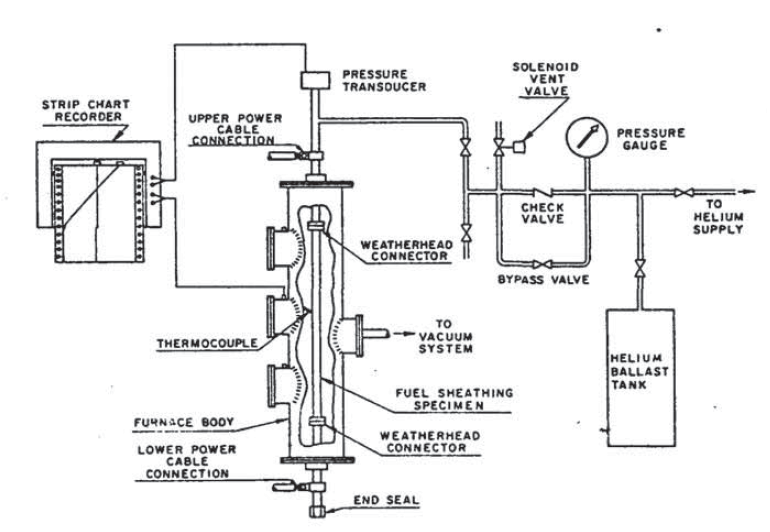
Figure 1: Schematic diagram of the Hardy Tube Test apparatus (Hardy, 1973)
Test Procedure
The tubes were placed in the evacuated testing apparatus and pressurized to the specification of the test. Most of the tubes were heated from room temperature but the report notes that in preliminary testing they did not see a difference in tube performance when starting from room temperature or preheating to ~600K. The tubes were heat at either 25K/sec or 100K/sec, depending on the test, until burst.
Model Description
Geometry and Mesh
The geometry of the tube and mesh are shown in Figure 2. A closed end axisymmetric tube was used for the mesh with 50 axial elements and 2 radial. The choice of elements use was from a mesh refinement that was completed for this case. The elements are quad8.
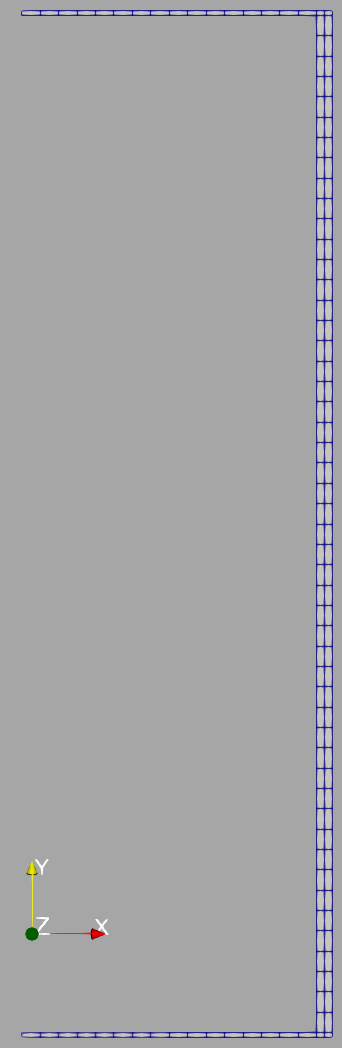
Figure 2: Scaled view of the axisymmetric element mesh used for all simulations.
Boundary and Initial Conditions
The tubes were subjected to the constant internal pressures listed in Table 2 and a vacuum environment on the exterior. A temperature profile was prescribed that was linearly varying with a maximum at the tube mid-height. The total temperature variation was 1.5%. This was done due to lack of experiment information on temperature variations.
Material and Behavioral Models
The following models were used for the Zircaloy-4 cladding that allow for representing ballooning and burst under LOCA conditions:
ZryCreepLOCAUpdate: High-temperature creep model based on the correlations from (Neitzel and Rosinger, 1980) (Erbacher et al., 1982). This allows for outward creep deformation of the cladding tube under the effect of internal pressurization and high temperature leading to cladding ballooning. The model accounts for the effect of crystallographic phase transition. A phase change region from 840-975K was used in this simulation to match what was assumed in the report.
ZryElasticityTensor: elastic properties of the cladding
ZryThermalExpansionMATPROEigenstrain: MATPRO model for thermal expansion in zirconium alloy
ZRPhase: Crystallographic phase transition model which computes the volume fraction of phase for Zr-based cladding materials as a function of time and temperature. The model is based on (Massih, 2009) (Massih and Jernkvist, 2009).
ZryCladdingFailure: Evaluates the onset of cladding burst (Erbacher et al., 1982) (Marcello et al., 2014), and takes into account the effect of Zirconium phase transition and oxidation. The combined_overstress_and_overstrain criterion was used for all cases.
MaterialTimeStepPostprocessor: limits the timestep by a physical merit, in this case inelastic creep strain.
Input files
The BISON input for the Hardy Tube Test are provided with the code distribution at bison/assessment/LWR/validation/LOCA_Hardy_cladding_test/analysis.
Results Comparison
A temperature transient thermal-mechanical analysis of the Zircaloy-4 tube was conducted using BISON. In each case, the internal pressures were kept constant while the temperature of the clad was raised with a linear bias from 600 K to 1600 K at rates of 25K/sec or 100K/sec.
An accuracy-controlling time step criterion was implemented through the MaterialTimeStep postprocessor. The maximum time step size was 1 second and the minimum time step size was 1e-7 second.
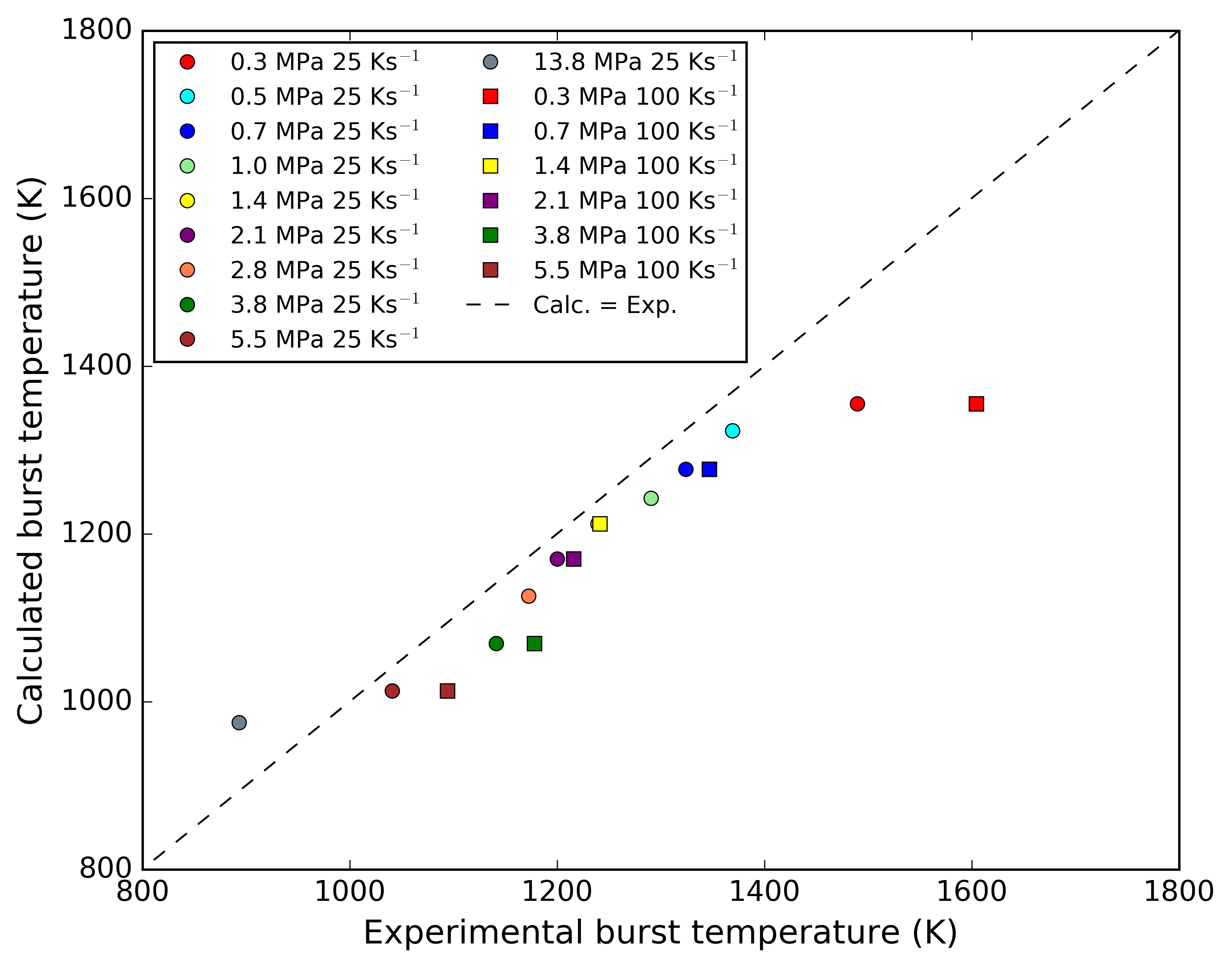
Figure 3: Calculated vs. measured tube burst temperatures
As can be seen in Figure 3 BISON results compare reasonably with the experiment measurements. With the exception of the 13.8Mpa case, the plot shows a systematic trend of BISON under-predicting the burst temperature. The same trend has been seen in the REBEKA and PUZRY BISON LOCA burst calculations.
References
- F. J. Erbacher, H. J. Neitzel, H. Rosinger, H. Schmidt, and K. Wiehr.
Burst criterion of Zircaloy fuel claddings in a loss-of-coolant accident.
In Zirconium in the Nuclear Industry, Fifth Conference, ASTM STP 754, D.G. Franklin Ed., 271–283. American Society for Testing and Materials, 1982.[BibTeX]
- D.G. Hardy.
High Temperature Expansion and Rupture Behaviour of Zircaloy Tubing.
In CSNI Proceeding of the Specialist Meeting on Safety of Water Reactor Fuel Elements in Saclay. Saclay, France, October 22-24, 1973.[BibTeX]
- V. Di Marcello, A. Schubert, J. van de Laar, and P. Van Uffelen.
The TRANSURANUS mechanical model for large strain analysis.
Nuclear Engineering and Design, 276:19–29, 2014.[BibTeX]
- A.R. Massih.
Transformation kinetics of zirconium alloys under non-isothermal conditions.
Journal of Nuclear Materials, 384:330–335, 2009.[BibTeX]
- Ali R Massih and Lars Olof Jernkvist.
Transformation kinetics of alloys under non-isothermal conditions.
Modelling and Simulation in Materials Science and Engineering, 17(5):055002, 2009.[BibTeX]
- H. J. Neitzel and H. Rosinger.
The development of a burst criterion for zircaloy fuel cladding under loca conditions.
Technical Report KfK 4343, Kernforschungszentrum Karlsruhe GmbH (Germany, Kernforschungszentrum Karlsruhe, Germany, 1980.[BibTeX]