LOCA ANL Cladding Burst Tests
Overview
BISON simulations were conducted on LOCA burst experiments performed at Argonne National Laboratory (ANL). The experiments that were simulated were all Zircaloy-2 cladding and consisted of non-irradiated and irradiated tubes. The purpose of simulating these experiment is to help validate the BISON simulation results against real experiments. A description of the experiment and the BISON produced results are in the following sections.
Test Description
Rod Design Specifications
Of the series of LOCA burst tests that were conducted at ANL, three were isolated for BISON simulation. These rodlets were not irradiated and are tested out of a hot cell, known from now as OCL. The geometry of the cladding used in this experiment can be seen in the Table 1
Table 1: Cladding geometry for the ANL burst tests
| Cladding material | Inner diameter (mm) | Outer diameter (mm) | Thickness (m) |
|---|---|---|---|
| Zircaloy-2 | 9.76 | 11.18 | 710 |
Operating Conditions and Irradiation History
The OCL series simulated consisted of three rods identified as OCL5, OCL8 and OCL11. All three of this rodlets were made from non-irradiated archival Zircaloy-2 cladding. These rodlets were loaded with zirconia pellets to simulate fuel conductivity. These pellets had an outer diameter of 4.78mm which allowed for a loose fitting 100 cold radial gap (Monteleone, 2003) (Snell, 2005) (Billone et al., 2008).
The testing apparatus, which can be seen below in Figure 1, holds the specimen in a vertical configuration while it is heated with four radiant bulbs that provide even heating for 270 mm axially. The cladding interior is pressurized with helium to 8.28 MPa and held near there during the test with a high pressure inlet and upper and lower pressure transducers. The testing apparatus was designed such that the atmosphere external to the cladding could be controlled. The testing configurations were an argon environment, a high temperature steam environment and a cold water quench.
For experiments OCL5 and OCL8 the temperature was controlled via the radiant lights and started with a rise to about 570 K followed by a hold time of about 25 minutes. At the end of the hold the temperature was raised by 5 K per second until burst, at which time the rodlet was cooled back to room temperature at 3 K per second. Both OCL5 and OCL8 were in a argon atmosphere. Experiment OCL11 was heated in the same manner but after burst the rod was heated to about 1470 K and held of 5 minutes before being cooled at 3 K per second. This experiment was conducted in a stream environment.
A graphical depiction of the temperature profile can be seen below in Figure 2. The plot was left incomplete intentionally as the final cooling could be slow or a fast quench.
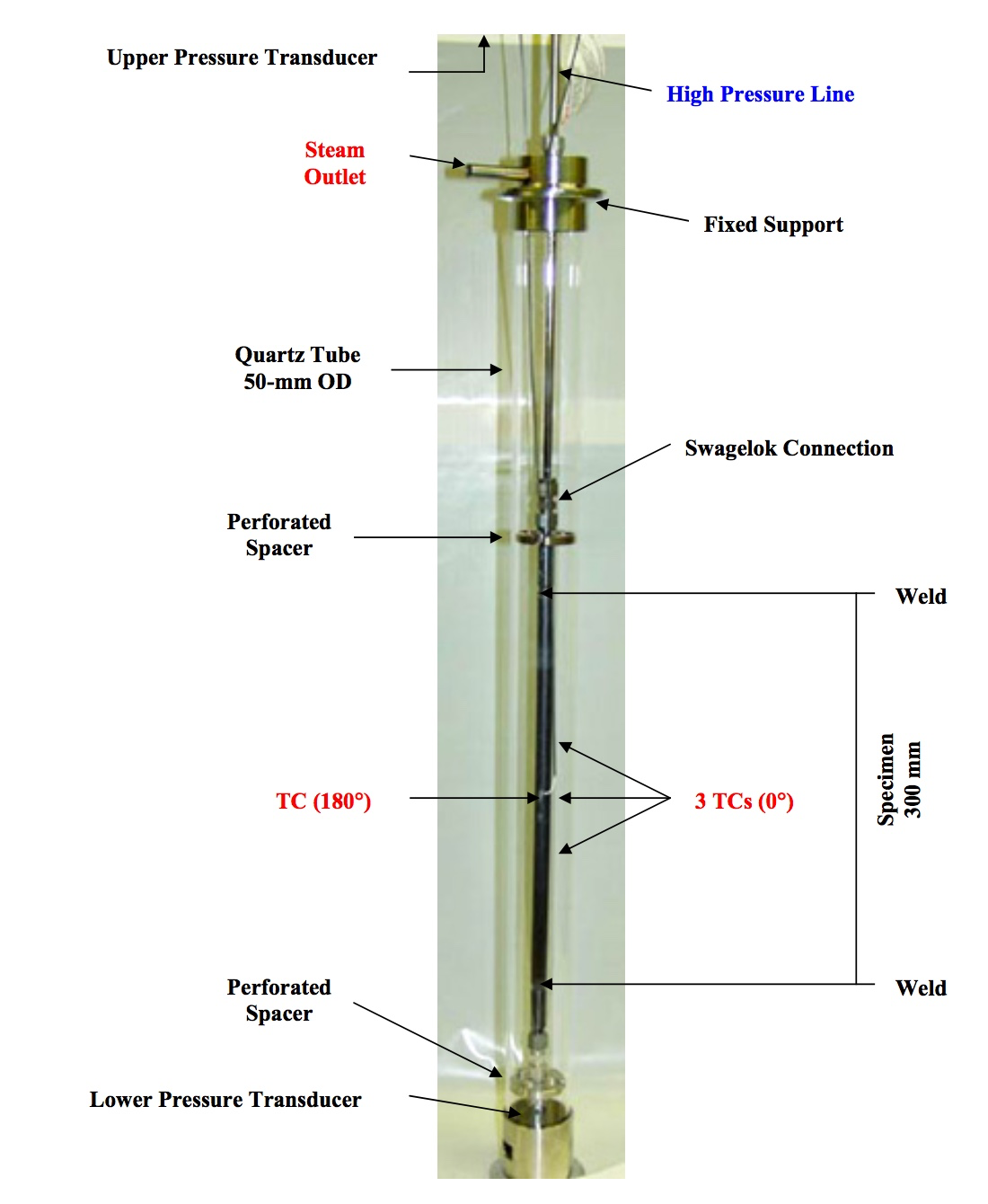
Figure 1: Diagram of the ANL LOCA burst testing apparatus c/o (Billone et al., 2008)
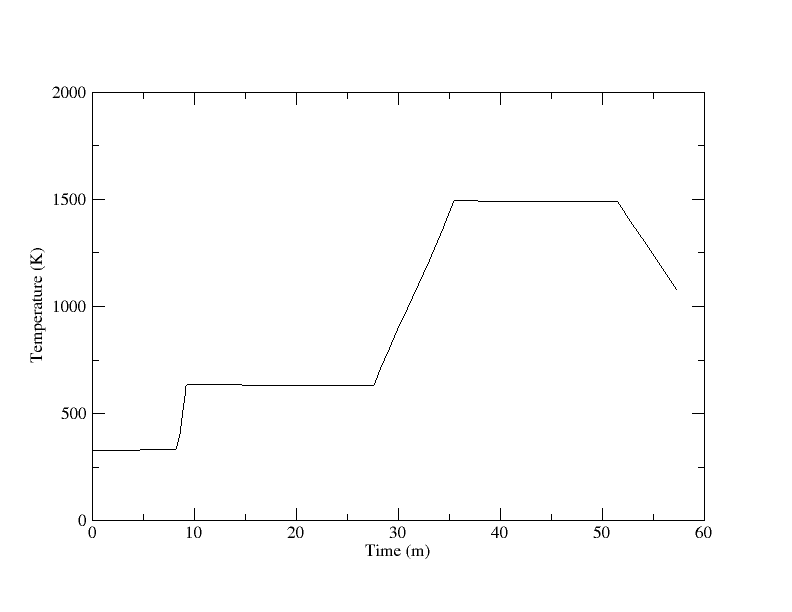
Figure 2: Experiment temperature profile.
Geometry and Mesh
Cladding was simulated with a mesh of the following characteristics:
2 higher order elements radially
257 higher order elements axially
These numbers came from the "coarse" option in the FuelPinMeshGenerator. The "medium" option was also simulated but did not affect the results so coarse was used to conserve runtime.
Input files
The BISON input and all supporting files (power histories, axial power profile, fast neutron flux history, etc.) for this case are provided with the code distribution at bison/assessment/LWR/validation/LOCA_ANL_cladding_burst_tests.
Material and Behavioral Models
The following material and behavioral models were used in these simulations:
ZryThermal: Thermal properties for Zircalloy from MATPRO
ZryCreepLOCAUpdate and ZryElasticityTensor: Calculates the Erbacher secondary thermal creep under loss-of-coolant accident conditions, the Limback-Andersson primary thermal creep, and the Hoope irradiation creep for Zircaloy cladding
ZryThermalExpansionMATPROEigenstrain: thermal expansion of Zircaloy with the MATPRO model
ZrPhase: relative amounts of the and material phases present in the zircaloy
ZryCladdingFailure: Models the failure of Zircaloy-4 cladding due to burst under LOCA conditions, combined failure criterion used
The fuel was modeled as a simple isotropic material, using the following material and behavioral models:
HeatConductionMaterial: isotropic thermal properties
ComputeFiniteStrainElasticStress and UO2ElasticityTensor: elastic mechanical behavior
ComputeThermalExpansionEigenstrain: thermal expansion with a constant instanteous thermal expansion coefficient
Details and references for all of these models listed above can be found on the linked BISON documentation pages.
Boundary and Operating Conditions
BISON inputs for the ANL experiments fell into two basic categories; unirradiated cladding burst in an argon environment and unirradiated cladding burst in a steam environment. The BISON LOCA simulations were all driven with Dirichlet boundary conditions for the cladding interior pressure and cladding exterior temperature profile. The cladding interior was held at 8.23 MPa with helium while the cladding surface was heated following the profile mentioned before (Figure 2). Initial runs had a flat axial temperature profile as the report claimed that the heat was provided in that manner. Unfortunately this resulted in a heavily ballooned cladding that did not actually burst. It was decided that a slightly peaked axial profile needed to be added to force a defect. It is very likely that the heat was not uniformly delivered, so this is an acceptable assumption. The cladding exterior pressure was held at 101300 Pa and was either inert atmosphere for the argon tests or modeled as slow flowing steam in the case of OCL11.
Results Comparison
Figure 3 and Figure 4 show the BISON calculated results for the OCL5/8 and the OCL11 tests, respectively. As there was no difference in the rod or testing procedure for OCL5 and OCL8, any experimental result differences must be due to material differences, which are not predictable.
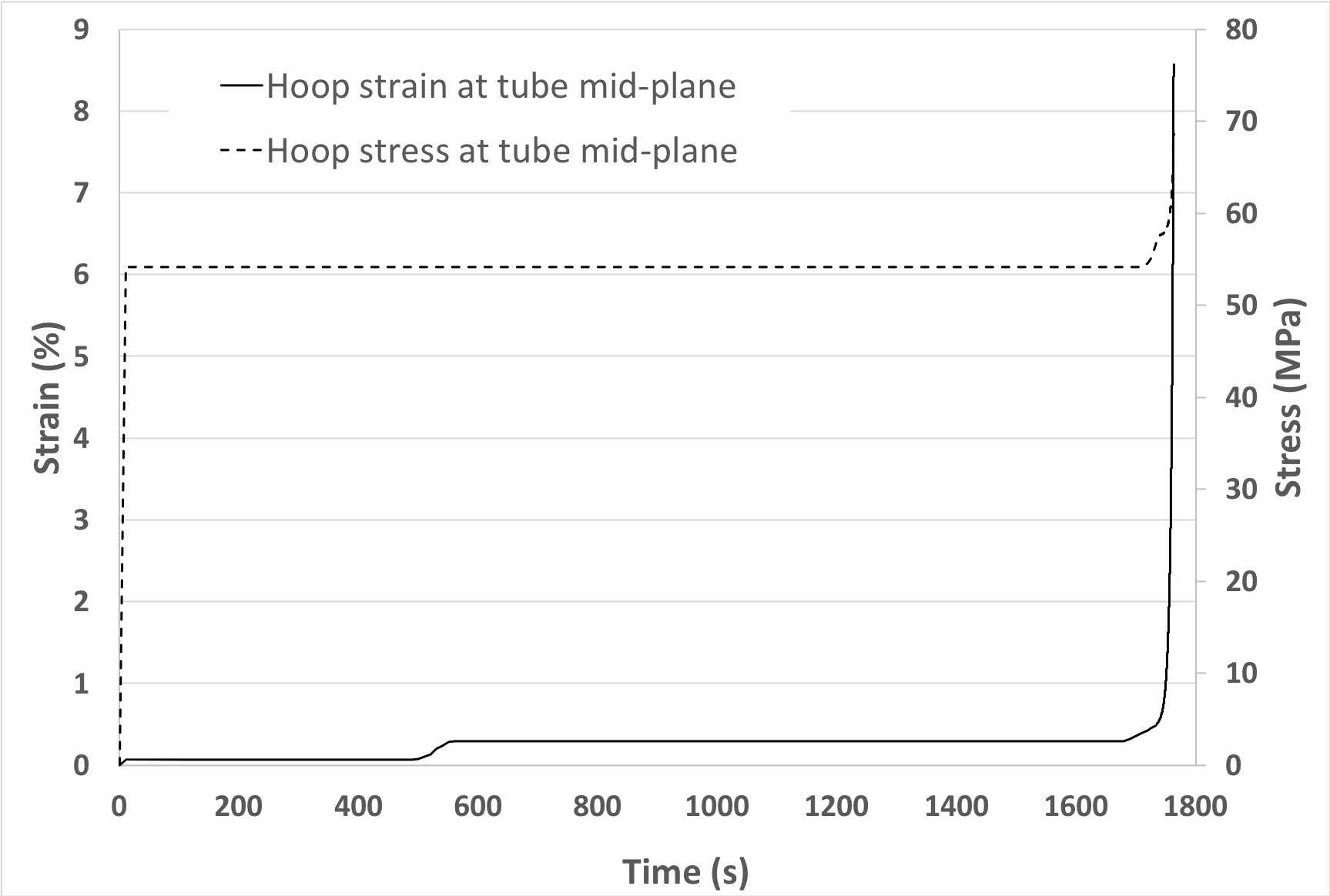
Figure 3: Results of BISON calculated hoop strain and stress from a mid-plane element on the cladding surface for OCL5
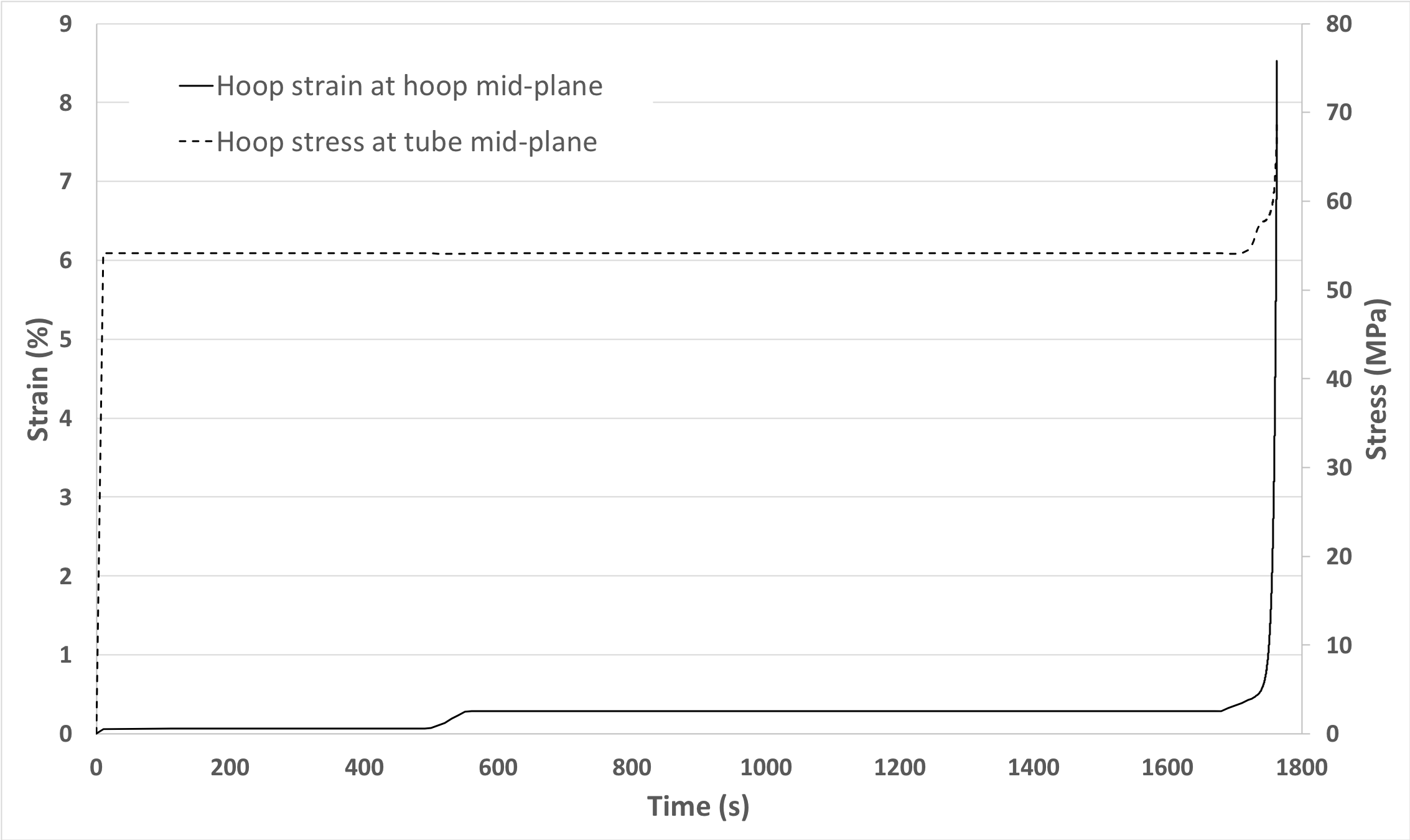
Figure 4: Results of BISON calculated hoop strain and stress from a mid-plane element on the cladding surface for OCL11
Burst temperatures from the experiment and BISON calculations are presented below in Table 3. The time differences in Table 2 assume that the temperature rise was 5 K per second as stated in the report.
Table 2: Experimental and calculated burst time differences for the ANL simulations.
| Test label | Experimental burst temperature (K) | Calculated burst temperature (K) | Temperature Difference (K) |
|---|---|---|---|
| OCL5 | 1006 +/-5 | 1057 | 51 +/-5 |
| OCL8 | 1039 +/-17 | 1057 | 18 +/-17 |
| OCL11 | 1026 +/-22 | 1057 | 31 +/-22 |
Table 3: Experimental and calculated burst time differences for the ANL simulations.
| Test label | Temperature Difference (K) | Median time difference (s) |
|---|---|---|
| OCL5 | 51 +/-5 | +10.2 |
| OCL8 | 18 +/-17 | +3.6 |
| OCL11 | 28 +/-22 | +5.6 |
Discussion
The mimicking of results here is due to the fact that they are all the same cladding material, Zircaloy-2, and they were all driven with the same boundary condtions. OCL11 is tested in a steam environment, which was modeled with BISON, but there is not currently an option available that allows for mechanical material degradation caused by oxide growth in the cladding. The oxide model does affect the thermal conductivity of the cladding but a thermal boundary condition was imposed on the cladding for this test. The BISON burst predictions are within a reasonable time difference from the experimental values.
References
- M. Billone, Y. Yan, T. Burtseva, and R. Daum.
Cladding Embrittlement During Postulated Loss-of-Coolant Accidents.
Technical Report, U.S. Nuclear Regulatory Commission, 2008.[BibTeX]
- S. Monteleone.
Proceeding of the 2002 Nuclear Safety Research Conference.
Technical Report, U.S. Nuclear Regulatory Commission Office of Nuclear Regulatory Research, 2003.[BibTeX]
- M. Snell.
Proceeding of the Nuclear Fuels Sessions of the 2004 Nuclear Safety Research Conference.
Technical Report, U.S. Nuclear Regulatory Commission Office of Nuclear Regulatory Research, 2005.[BibTeX]