- eigenstrain_nameMaterial property name for the eigenstrain tensor computed by this model. IMPORTANT: The name of this property must also be provided to the strain calculator.
C++ Type:std::string
Controllable:No
Description:Material property name for the eigenstrain tensor computed by this model. IMPORTANT: The name of this property must also be provided to the strain calculator.
UO2RelocationEigenstrain
Accounts for cracking and relocation of fuel pellet fragments in the radial direction and is necessary for accurate modeling of LWR fuel. The linear heat rate must either be a functionor a variable.
Description
One way to model the effect of UO cracking on gap width is fuel relocation, as done in UO2RelocationEigenstrain. Thermal gradients in a LWR fuel pellet result in corresponding stress gradients that exceed the fuel fracture stress, causing radial cracks. The free surfaces of the crack result in a overall increase of fuel pellet diameter, and we can model this effect by applying a radial strain to the fuel pellet. This relocation strain is similar to a volumetric strain, but relocation strain acts only in the radial direction.
Three models are available to account for relocation strain, set by the argument passed to the flag 'relocation_model'. These models are:
ESCORE legacy, and
The ESCORE modified model is the default model in UO2RelocationEigenstrain.
During continued operation, the cladding generally creeps inward and comes into contact with the fuel exerting compressive forces on the pellets. These forces tend to move the fractured sections of the pellet back into their original positions, which is known as relocation recovery. The effects of relocation recovery may be included as described below.
ESCORE modified Relocation model
The modified ESCORE model, ESCORE_modified, is based on the legacy ESCORE model, described below, yet the modified model allows for lower pellet average linear heating rate values than the limits in the legacy model. The lower average linear heating rate of 6kW/ft for the legacy ESCORE model has been observed to be much larger than the average linear heating rate expected to cause cracking in the fuel (Oguma, 1983).
The relation calculating the relocation strain is based on the relocation model from M. A. Kramman (1987), given as (1) This relocation model is a function of power, as-fabricated pellet diameter, as-fabricated gap thickness, and burnup, and the variable definitions are given in Table 1. The model is applicable between pellet average linear heating rates of 1.52 and 22 kW/ft and for burnup levels between 0 and 11,500 MWd/MTU. Mean-diameter measurements were used in the correlation development.
Table 1: Variable Definitions for the Relocation UO Models
| Model Expression | Parameter Description |
|---|---|
| Effective radial strain due to relocation | |
| As-fabricated cold diameter of the pellet (in) | |
| Pellet average linear heating rate (kW/ft) | |
| Pellet average fuel burnup (MWd/MTU) | |
| As-fabricated cold diametral gap (in) |
!alert! note title=Diametral Gap as Fuel Pellet Geometry Parameter The UO2RelocationEigenstrain model uses the diametral gap to determine the spacing between the fuel pellets and clad. The use of the diametral gap measure is in contrast to other BISON classes which use the radial gap measure. !alert-end!
where q is the linear heating rate (kW/m).
Note that the pellet average linear heating rate has units of kW/ft in the empirical model. However, this quantity is passed into the model as a function with units of W/m. The conversion is handled inside the model. The default value for the relocation threshold has been changed from the 19685 W/m (6kW/ft) used in original ESCORE model (M. A. Kramman, 1987) to 5000 W/m (1.52 kW/ft) to better match experimental IFA data (Swiler et al., 2013).
The fuel relocation strain is applied incrementally by calculating the relocation strain at the burnup for the current step and subtracting the relocation strain at the previous burnup. In other applications of this model, the addition of relocation strain is stopped when the gap is closed. In BISON, the relocation strain is stopped at a specified burnup or specified time.
Legacy ESCORE Relocation model
The original ESCORE relocation model, ESCORE_legacy, applies a higher relocation strain threshold value, = 6 kW/ft and a different relation for linear heat rate in the pellet: These values are used in Eq. (1). Because the 6 kW/ft relocation strain threshold associated with this formulation has been determined to be too low, this relation for is retained as a legacy option in the code.
GAPCON Relocation model
It is also possible to use the GAPCON model, GAPCON, for relocation (Lassmann and Blank, 1988). This model is given as The parameters in this model have the same definitions as given in Table 1.
Relocation Recovery model
The effect of relocation recovery is controlled by the parameter model_relocation_recovery which by default is false. If this parameter is set to true, additional parameters must be included in the input to specify the behavior of relocation recovery. The main parameters that a user should set are max_relocation_recovery_fraction which specifies the fraction of the relocation strain applied prior to initial contact of the cladding and fuel that can be recovered, the postprocessor specifying the volumetric swelling increment and the coupled variable for contact pressure. In order to define these inputs, additional blocks in the AuxVariables, AuxKernels and PostProcessors sections will be required. Also, since the contact pressure is layered quantity, a UserObjects block will also need to be included. The regression test referenced below includes all the necessary changes to activate relocation recovery.
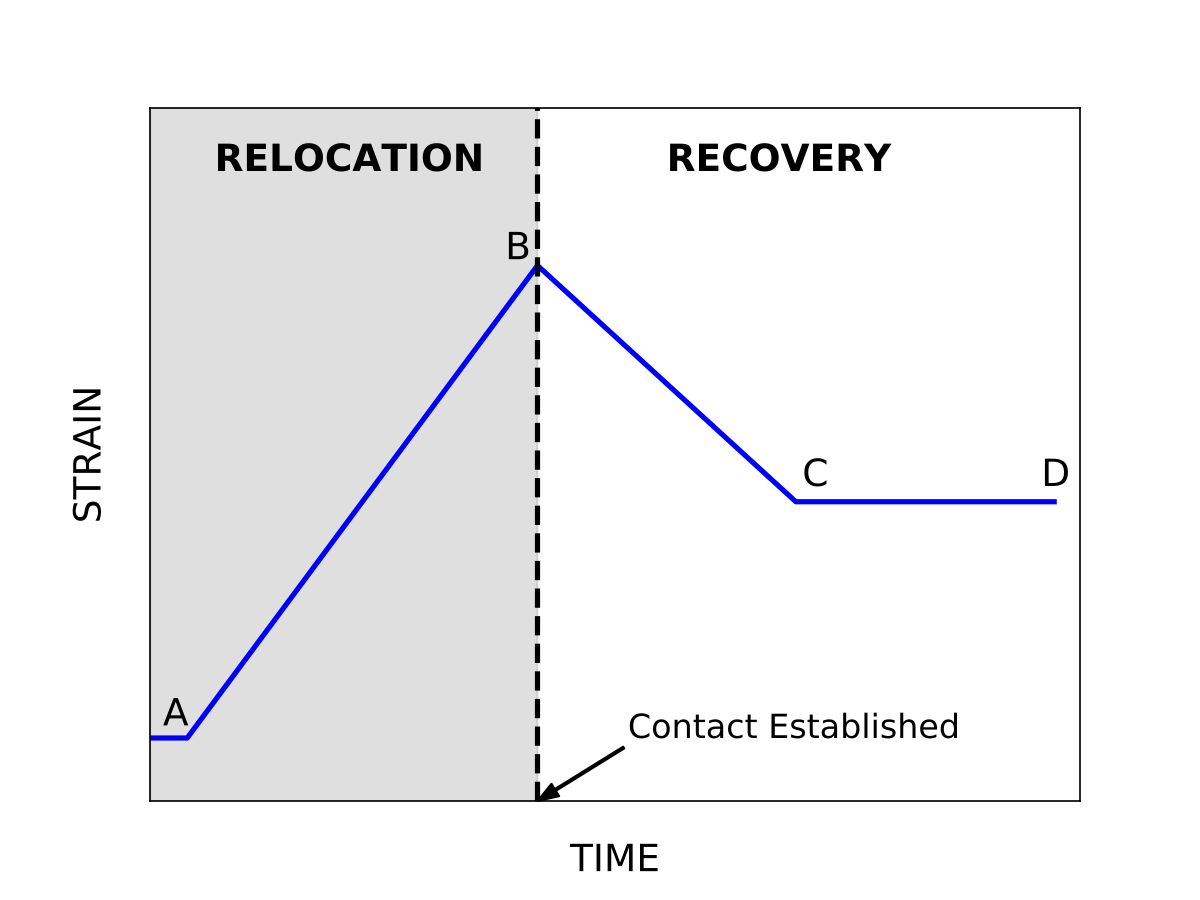
Figure 1: An ideal relocation recovery curve: segment 'AB' is the relocation phase, segment 'BC' is the recovery phase and segment 'CD' represents the completion of the relocation recovery process.
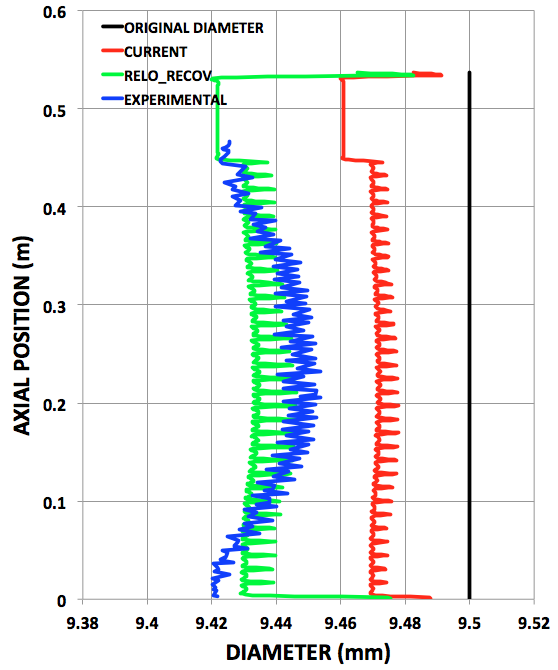
Figure 2: Comparison of final diameters determined from various methods.
Figure 1 shows a schematic of the relocation and relocation recovery processes. The relocation phase is ended once contact between the fuel and the cladding is detected and the maximum value of the relocation strain is established. Thereafter, as long as contact is maintained recovery is active until the max_relocation_recovery_fraction has been recovered. If the cladding comes out of contact with the fuel prior to the maximum being recovered, the recovery process is stopped until contact is reestablished. However, once the maximum fraction of the relocation strain has been recovered, no further recovery is possible. Figure 2 illustrates the effects of relocation recovery on the cladding diameter at the end of a typical base irradiation. As one can see, without including relocation recovery the cladding diameter is overestimated.
Example Input Syntax
[Materials<<<{"href": "../../../syntax/Materials/index.html"}>>>]
  [relocation]
    type = UO2RelocationEigenstrain<<<{"description": "Accounts for cracking and relocation of fuel pellet fragments in the radial direction and is necessary for accurate modeling of LWR fuel. The linear heat rate must either be a functionor a variable.", "href": "UO2RelocationEigenstrain.html"}>>>
    block<<<{"description": "The list of blocks (ids or names) that this object will be applied"}>>> = 1
    burnup<<<{"description": "Coupled Burnup variable in FIMA"}>>> = burnup
    diameter<<<{"description": "As fabricated cold diameter of pellet in meters"}>>> = 0.00254
    rod_ave_lin_pow<<<{"description": "linear power function."}>>> = q
    diametral_gap<<<{"description": "As fabricated cold diametral pellet-cladding gap in meters."}>>> = 0.0000254
    burnup_relocation_stop<<<{"description": "Burnup at which relocation strain stops (in FIMA)"}>>> = 1.0e12
    eigenstrain_name<<<{"description": "Material property name for the eigenstrain tensor computed by this model. IMPORTANT: The name of this property must also be provided to the strain calculator."}>>> = relocation_eigenstrain
    relocation_activation1<<<{"description": "First activation linear power in W/m term in relocation model"}>>> = 19685.039
    relocation_model<<<{"description": "Type of relocation model formulation."}>>> = ESCORE_legacy
  []
[]The eigenstrain name must also be passed to the strain calculator, and an example parameter setting is shown below:
[Physics<<<{"href": "../../../syntax/Physics/index.html"}>>>]
  [SolidMechanics<<<{"href": "../../../syntax/Physics/SolidMechanics/index.html"}>>>]
    [QuasiStatic<<<{"href": "../../../syntax/Physics/SolidMechanics/QuasiStatic/index.html"}>>>]
      [all]
        strain<<<{"description": "Strain formulation"}>>> = finite
        eigenstrain_names<<<{"description": "List of eigenstrains to be applied in this strain calculation"}>>> = relocation_eigenstrain
      []
    []
  []
[]The additional parameters required for using relocation recovery are illustrated in the example below:
[Materials<<<{"href": "../../../syntax/Materials/index.html"}>>>]
  [fuel_relocation]
    type = UO2RelocationEigenstrain<<<{"description": "Accounts for cracking and relocation of fuel pellet fragments in the radial direction and is necessary for accurate modeling of LWR fuel. The linear heat rate must either be a functionor a variable.", "href": "UO2RelocationEigenstrain.html"}>>>
    block<<<{"description": "The list of blocks (ids or names) that this object will be applied"}>>> = pellet
    burnup_function<<<{"description": "Burnup function"}>>> = burnup
    rod_ave_lin_pow<<<{"description": "linear power function."}>>> = power_history
    axial_power_profile<<<{"description": "axial power peaking function."}>>> = axial_peaking_factors
    burnup_relocation_stop<<<{"description": "Burnup at which relocation strain stops (in FIMA)"}>>> = 1e12
    relocation_activation1<<<{"description": "First activation linear power in W/m term in relocation model"}>>> = 5000
    relocation_model<<<{"description": "Type of relocation model formulation."}>>> = ESCORE_modified
    eigenstrain_name<<<{"description": "Material property name for the eigenstrain tensor computed by this model. IMPORTANT: The name of this property must also be provided to the strain calculator."}>>> = fuel_relocation_strain
    fuel_pin_geometry<<<{"description": "Name of the UserObject that reads the pin geometry from the mesh."}>>> = pin_geometry
    model_relocation_recovery<<<{"description": "option to turn on the modeling of relocation recovery"}>>> = true
    max_relocation_recovery_fraction<<<{"description": "Maximum fraction of relocation strain that can be recovered"}>>> = 0.5
    relocation_scaling_factor<<<{"description": "A scaling factor for the diametral scalar effective relocation strain"}>>> = 1
    volumetric_swelling_increment<<<{"description": "The name of the postprocessor used for computing the volumetric swelling strain increment which controls the recovery strain during relocation recovery"}>>> = vol_swell_increment
    layered_average_contact_pressure<<<{"description": "Coupled contact pressure variable"}>>> = layered_average_contact_pressure
    outputs<<<{"description": "Vector of output names where you would like to restrict the output of variables(s) associated with this object"}>>> = all
    output_properties<<<{"description": "List of material properties, from this material, to output (outputs must also be defined to an output type)"}>>> = 'relocation_strain recovered_relocation_strain'
  []
[]Input Parameters
- axial_directionyCoordinate axis of the axial direction of the fuel stack (0, 1, or 2 for x, y, or z
Default:y
C++ Type:MooseEnum
Options:x, y, z
Controllable:No
Description:Coordinate axis of the axial direction of the fuel stack (0, 1, or 2 for x, y, or z
- axial_power_profileaxial power peaking function.
C++ Type:FunctionName
Unit:(no unit assumed)
Controllable:No
Description:axial power peaking function.
- base_nameOptional parameter that allows the user to define multiple mechanics material systems on the same block, i.e. for multiple phases
C++ Type:std::string
Controllable:No
Description:Optional parameter that allows the user to define multiple mechanics material systems on the same block, i.e. for multiple phases
- blockThe list of blocks (ids or names) that this object will be applied
C++ Type:std::vector<SubdomainName>
Controllable:No
Description:The list of blocks (ids or names) that this object will be applied
- boundaryThe list of boundaries (ids or names) from the mesh where this object applies
C++ Type:std::vector<BoundaryName>
Controllable:No
Description:The list of boundaries (ids or names) from the mesh where this object applies
- burnupCoupled Burnup variable in FIMA
C++ Type:std::vector<VariableName>
Unit:(no unit assumed)
Controllable:No
Description:Coupled Burnup variable in FIMA
- burnup_functionBurnup function
C++ Type:FunctionName
Unit:(no unit assumed)
Controllable:No
Description:Burnup function
- burnup_relocation_stop1e+12Burnup at which relocation strain stops (in FIMA)
Default:1e+12
C++ Type:double
Unit:(no unit assumed)
Controllable:No
Description:Burnup at which relocation strain stops (in FIMA)
- computeTrueWhen false, MOOSE will not call compute methods on this material. The user must call computeProperties() after retrieving the MaterialBase via MaterialBasePropertyInterface::getMaterialBase(). Non-computed MaterialBases are not sorted for dependencies.
Default:True
C++ Type:bool
Controllable:No
Description:When false, MOOSE will not call compute methods on this material. The user must call computeProperties() after retrieving the MaterialBase via MaterialBasePropertyInterface::getMaterialBase(). Non-computed MaterialBases are not sorted for dependencies.
- constant_onNONEWhen ELEMENT, MOOSE will only call computeQpProperties() for the 0th quadrature point, and then copy that value to the other qps.When SUBDOMAIN, MOOSE will only call computeQpProperties() for the 0th quadrature point, and then copy that value to the other qps. Evaluations on element qps will be skipped
Default:NONE
C++ Type:MooseEnum
Options:NONE, ELEMENT, SUBDOMAIN
Controllable:No
Description:When ELEMENT, MOOSE will only call computeQpProperties() for the 0th quadrature point, and then copy that value to the other qps.When SUBDOMAIN, MOOSE will only call computeQpProperties() for the 0th quadrature point, and then copy that value to the other qps. Evaluations on element qps will be skipped
- contact_recovered_relocation_strain0.001The amount of recovered relocation strain in the hard pellet cladding contact
Default:0.001
C++ Type:double
Unit:(no unit assumed)
Controllable:No
Description:The amount of recovered relocation strain in the hard pellet cladding contact
- declare_suffixAn optional suffix parameter that can be appended to any declared properties. The suffix will be prepended with a '_' character.
C++ Type:MaterialPropertyName
Unit:(no unit assumed)
Controllable:No
Description:An optional suffix parameter that can be appended to any declared properties. The suffix will be prepended with a '_' character.
- diameterAs fabricated cold diameter of pellet in meters
C++ Type:double
Unit:(no unit assumed)
Controllable:No
Description:As fabricated cold diameter of pellet in meters
- diametral_gapAs fabricated cold diametral pellet-cladding gap in meters.
C++ Type:double
Unit:(no unit assumed)
Controllable:No
Description:As fabricated cold diametral pellet-cladding gap in meters.
- fuel_pin_geometryName of the UserObject that reads the pin geometry from the mesh.
C++ Type:UserObjectName
Controllable:No
Description:Name of the UserObject that reads the pin geometry from the mesh.
- layered_average_contact_pressureCoupled contact pressure variable
C++ Type:std::vector<VariableName>
Unit:(no unit assumed)
Controllable:No
Description:Coupled contact pressure variable
- linear_heat_rate_variableVariable holding the average linear heating rate in pellet in W/m
C++ Type:std::vector<VariableName>
Unit:(no unit assumed)
Controllable:No
Description:Variable holding the average linear heating rate in pellet in W/m
- max_relocation_recovery_fraction0Maximum fraction of relocation strain that can be recovered
Default:0
C++ Type:double
Unit:(no unit assumed)
Controllable:No
Description:Maximum fraction of relocation strain that can be recovered
- model_relocation_recoveryFalseoption to turn on the modeling of relocation recovery
Default:False
C++ Type:bool
Controllable:No
Description:option to turn on the modeling of relocation recovery
- relocation_activation15000First activation linear power in W/m term in relocation model
Default:5000
C++ Type:double
Unit:(no unit assumed)
Controllable:No
Description:First activation linear power in W/m term in relocation model
- relocation_activation245931.8Second activation linear power in W/m term in relocation model; The linear power at which relocation transitions from the initial regime to the secondary regime.
Default:45931.8
C++ Type:double
Unit:(no unit assumed)
Controllable:No
Description:Second activation linear power in W/m term in relocation model; The linear power at which relocation transitions from the initial regime to the secondary regime.
- relocation_activation332808.4Third activation linear power in W/m term in relocation model; The linear power offset in the secondary regime.
Default:32808.4
C++ Type:double
Unit:(no unit assumed)
Controllable:No
Description:Third activation linear power in W/m term in relocation model; The linear power offset in the secondary regime.
- relocation_modelESCORE_modifiedType of relocation model formulation.
Default:ESCORE_modified
C++ Type:MooseEnum
Options:ESCORE_modified, ESCORE_legacy, GAPCON
Controllable:No
Description:Type of relocation model formulation.
- relocation_scaling_factor1A scaling factor for the diametral scalar effective relocation strain
Default:1
C++ Type:double
Unit:(no unit assumed)
Controllable:No
Description:A scaling factor for the diametral scalar effective relocation strain
- rod_ave_lin_powlinear power function.
C++ Type:FunctionName
Unit:(no unit assumed)
Controllable:No
Description:linear power function.
- time_relocation_stop1.79769e+308Time at which relocation strain stops (in seconds)
Default:1.79769e+308
C++ Type:double
Unit:(no unit assumed)
Controllable:No
Description:Time at which relocation strain stops (in seconds)
- volumetric_swelling_incrementThe name of the postprocessor used for computing the volumetric swelling strain increment which controls the recovery strain during relocation recovery
C++ Type:PostprocessorName
Unit:(no unit assumed)
Controllable:No
Description:The name of the postprocessor used for computing the volumetric swelling strain increment which controls the recovery strain during relocation recovery
Optional Parameters
- control_tagsAdds user-defined labels for accessing object parameters via control logic.
C++ Type:std::vector<std::string>
Controllable:No
Description:Adds user-defined labels for accessing object parameters via control logic.
- enableTrueSet the enabled status of the MooseObject.
Default:True
C++ Type:bool
Controllable:Yes
Description:Set the enabled status of the MooseObject.
- implicitTrueDetermines whether this object is calculated using an implicit or explicit form
Default:True
C++ Type:bool
Controllable:No
Description:Determines whether this object is calculated using an implicit or explicit form
- seed0The seed for the master random number generator
Default:0
C++ Type:unsigned int
Controllable:No
Description:The seed for the master random number generator
- use_displaced_meshFalseWhether or not this object should use the displaced mesh for computation. Note that in the case this is true but no displacements are provided in the Mesh block the undisplaced mesh will still be used.
Default:False
C++ Type:bool
Controllable:No
Description:Whether or not this object should use the displaced mesh for computation. Note that in the case this is true but no displacements are provided in the Mesh block the undisplaced mesh will still be used.
Advanced Parameters
- output_propertiesList of material properties, from this material, to output (outputs must also be defined to an output type)
C++ Type:std::vector<std::string>
Controllable:No
Description:List of material properties, from this material, to output (outputs must also be defined to an output type)
- outputsnone Vector of output names where you would like to restrict the output of variables(s) associated with this object
Default:none
C++ Type:std::vector<OutputName>
Controllable:No
Description:Vector of output names where you would like to restrict the output of variables(s) associated with this object
Outputs Parameters
- prop_getter_suffixAn optional suffix parameter that can be appended to any attempt to retrieve/get material properties. The suffix will be prepended with a '_' character.
C++ Type:MaterialPropertyName
Unit:(no unit assumed)
Controllable:No
Description:An optional suffix parameter that can be appended to any attempt to retrieve/get material properties. The suffix will be prepended with a '_' character.
- use_interpolated_stateFalseFor the old and older state use projected material properties interpolated at the quadrature points. To set up projection use the ProjectedStatefulMaterialStorageAction.
Default:False
C++ Type:bool
Controllable:No
Description:For the old and older state use projected material properties interpolated at the quadrature points. To set up projection use the ProjectedStatefulMaterialStorageAction.
Material Property Retrieval Parameters
Input Files
- (examples/3D_rodlet_3pellets/smeared/smearedTest3D.i)
- (assessment/LWR/validation/Calvert_Cliffs-1_PROTOTYPE/analysis/BFL009/BFL009.i)
- (assessment/LWR/validation/Super_Ramp/analysis/Super_Ramp_Base.i)
- (assessment/LWR/validation/IFA_431/analysis/IFA_431_General.i)
- (examples/multiapp/pin2.i)
- (assessment/LWR/validation/IFA_535/analysis/rod_809/IFA_535_rod_809.i)
- (assessment/LWR/validation/Riso_GE7_ZX115/analysis/Riso_GE7_1pt5.i)
- (assessment/LWR/validation/LOCA_IFA_650/analysis/IFA_650_4/IFA_650_4_part1.i)
- (assessment/LWR/validation/HbepR1/analysis/A184/HbepR1_A184.i)
- (examples/1.5D_restart/Smeared_1.5D.i)
- (assessment/LWR/validation/Calvert_Cliffs-1_PROTOTYPE/analysis/UFE067/UFE067.i)
- (test/tests/solid_mechanics/uo2_eigenstrains/uo2_relocation/relocation_activation_circle_rz.i)
- (test/tests/solid_mechanics/uo2_eigenstrains/ad_uo2_relocation/relocation_attached_rz.i)
- (assessment/LWR/validation/IFA_681/analysis/rod1/IFA_681_rod1.i)
- (test/tests/fuelrodlinevaluesampler/example_problem_smeared_test.i)
- (workshop/bison_example/Smeared.i)
- (assessment/LWR/validation/US_PWR_16_x_16/analysis/TSQ002/RefinementStudy/TSQ002_1pt5_tenslice.i)
- (assessment/LWR/validation/HbepR1/analysis/A364/HbepR1_A364.i)
- (test/tests/solid_mechanics/uo2_eigenstrains/ad_uo2_relocation/relocation_attached_rz_time.i)
- (assessment/LWR/validation/US_PWR_16_x_16/analysis/TSQ002/TSQ002.i)
- (test/tests/solid_mechanics/uo2_eigenstrains/ad_uo2_relocation/jacobian_test.i)
- (test/tests/solid_mechanics/uo2_eigenstrains/uo2_relocation/relo_recov_uo2.i)
- (assessment/LWR/validation/RIA_CABRI_REP_Na4/analysis/REP_Na_4/REP_Na_4.i)
- (assessment/LWR/validation/LOCA_IFA_650/analysis/IFA_650_10/IFA_650_10_part1.i)
- (assessment/LWR/validation/Tribulation/analysis/BN3X15/BN3X15.i)
- (assessment/LWR/validation/Tribulation/analysis/BN1X4/BN1X4.i)
- (assessment/LWR/validation/US_PWR_16_x_16/analysis/TSQ022/TSQ022_1pt5.i)
- (assessment/LWR/validation/LOCA_Studsvik/analysis/rod_191/Studsvik_191_part2.i)
- (assessment/LWR/validation/IFA_636/analysis/IFA_636_solid_swell/IFA_636_solid_swell.i)
- (assessment/LWR/validation/HBEP/analysis/BK370/HBEP_BK370.i)
- (assessment/LWR/validation/US_PWR_16_x_16/analysis/TSQ002/RefinementStudy/TSQ002_1pt5_hundredslice.i)
- (assessment/LWR/validation/Calvert_Cliffs-1_PROTOTYPE/analysis/BFM073/BFM073.i)
- (assessment/LWR/validation/FUMEXII_Regate/analysis/Regate_smeared.i)
- (test/tests/example_problem_test/example_problem_test.i)
- (assessment/LWR/validation/LOCA_IFA_650/analysis/IFA_650_4/IFA_650_4_part1_gas_communication.i)
- (assessment/LWR/validation/US_PWR_16_x_16/analysis/TSQ002/TSQ002_1pt5.i)
- (assessment/LWR/validation/Calvert_Cliffs-1_PROTOTYPE/analysis/BFM034/BFM034.i)
- (test/tests/solid_mechanics/uo2_eigenstrains/uo2_relocation/relocation_attached_rz.i)
- (assessment/LWR/benchmark/FUMEXII_simplified_cases/analysis/27_2c/27_2c.i)
- (assessment/LWR/validation/Calvert_Cliffs-1_PROTOTYPE/analysis/BFM156/BFM156.i)
- (test/tests/solid_mechanics/uo2_eigenstrains/uo2_relocation/reloc_recov_escore_mod_rz.i)
- (assessment/LWR/benchmark/FUMEXII_simplified_cases/analysis/27_2a/27_2a.i)
- (test/tests/solid_mechanics/uo2_eigenstrains/uo2_relocation/relocation_circle_rz_var.i)
- (assessment/LWR/validation/LOCA_IFA_650/analysis/IFA_650_4/IFA_650_4_part2.i)
- (assessment/LWR/benchmark/FUMEXII_simplified_cases/analysis/27_2b/27_2b.i)
- (examples/2D-RZ_rodlet_10pellets/smeared_cracking/SmearedCracking.i)
- (examples/2D-RZ_rodlet_10pellets/2D_discrete_finiteStrain_mortar/2D_discrete_finiteStrain_mortar.i)
- (assessment/LWR/validation/LOCA_Studsvik/analysis/rod_191/Studsvik_191_part1.i)
- (examples/multiapp/pin1.i)
- (workshop/bison_example/Discrete.i)
- (assessment/LWR/validation/Riso_Base_sub.i)
- (examples/3D_rodlet_3pellets/discrete_half_symm/3d_3pellets.i)
- (assessment/LWR/validation/FUMEXII_Regate/analysis/discrete/Regate_discrete.i)
- (examples/accident_tolerant_fuel/uo2_coated_zircaloy/uo2_coated_zircaloy.i)
- (assessment/LWR/validation/LOCA_Studsvik/analysis/rod_196/Studsvik_196_part1_1p5d_fr_ffrd.i)
- (assessment/LWR/validation/IFA_535/analysis/rod_810/IFA_535_rod_810.i)
- (assessment/LWR/validation/US_PWR_16_x_16/analysis/TSQ022/TSQ022.i)
- (test/tests/solid_mechanics/uo2_eigenstrains/uo2_relocation/relocation_escore_legacy_rz.i)
- (test/tests/solid_mechanics/uo2_eigenstrains/uo2_relocation/relocation_circle_rz.i)
- (assessment/LWR/validation/OSIRIS_H09/analysis/OSIRIS_H09.i)
- (examples/2D_plane_strain_fretting_wear/fretting-wear-initial-dyn-exc.i)
- (assessment/LWR/validation/LOCA_Studsvik/analysis/rod_196/Studsvik_196_part2.i)
- (assessment/LWR/validation/IFA_562/analysis/IFA_562_Base.i)
- (examples/3D_rodlet_3pellets/discrete_full/3d_3pellets_mortar.i)
- (assessment/LWR/validation/LOCA_IFA_650/analysis/IFA_650_9/IFA_650_9_part1.i)
- (examples/spent_fuel/full_life_cycle_coarse/discrete.i)
- (assessment/LWR/validation/LOCA_IFA_650/analysis/IFA_650_10/IFA_650_10_part2.i)
- (test/tests/solid_mechanics/uo2_eigenstrains/uo2_relocation/relocation_escore_mod_rz.i)
- (assessment/LWR/validation/HbepR1/analysis/H8364/HbepR1_H8364.i)
- (assessment/LWR/validation/Calvert_Cliffs-1_PROTOTYPE/analysis/BFM043/BFM043.i)
- (assessment/LWR/validation/IFA_597_3/analysis/rod_7/IFA_597_rod7_frictionless.i)
- (workshop/bison_example/Discrete_mortar.i)
- (assessment/LWR/validation/Calvert_Cliffs-1_PROTOTYPE/analysis/BFL031/BFL031.i)
- (test/tests/solid_mechanics/uo2_eigenstrains/uo2_relocation/relocation_only_smear.i)
- (assessment/LWR/validation/Calvert_Cliffs-1_PROTOTYPE/analysis/BFG092/BFG092.i)
- (test/tests/solid_mechanics/uo2_eigenstrains/uo2_relocation/relocation_vary_q_rz.i)
- (assessment/LWR/validation/RE_Ginna_Rodlets/analysis/RE_Ginna_Rodlets_Base.i)
- (assessment/LWR/validation/HBEP/analysis/BK365/HBEP_BK365.i)
- (assessment/LWR/validation/IFA_515_RodA1/analysis/IFA515.i)
- (assessment/LWR/validation/LOCA_Studsvik/analysis/rod_196/Studsvik_196_part1.i)
- (assessment/LWR/validation/IFA_681/analysis/rod3/IFA_681_rod3.i)
- (examples/2D-RZ_rodlet_10pellets/smeared_cracking/ADSmearedCracking.i)
- (examples/3D_rodlet_3pellets/discrete_quarter_symm/3d_3pellets_mortar.i)
- (assessment/LWR/validation/IFA_681/analysis/rod2/IFA_681_rod2.i)
- (examples/2D-RZ_rodlet_10pellets/2D_discrete_finiteStrain_mortar_friction/2D_discrete_finiteStrain_mortar_friction.i)
- (examples/temperature_tables/layered1D_cases/1pt5D.i)
- (assessment/LWR/benchmark/FUMEXII_simplified_cases/analysis/27_2d/27_2d.i)
- (examples/3D_rodlet_3pellets/discrete_quarter_symm/3d_3pellets.i)
- (assessment/LWR/validation/IFA_519/analysis/IFA_519_Base.i)
- (assessment/LWR/validation/LOCA_IFA_650/analysis/IFA_650_9/IFA_650_9_part2.i)
- (test/tests/solid_mechanics/uo2_eigenstrains/uo2_relocation/relocation_one_elem_rz.i)
- (examples/restart/Quad8.i)
- (assessment/LWR/validation/IFA_677/analysis/IFA_677_Base.i)
- (assessment/LWR/validation/IFA_535/analysis/rod_811/IFA_535_rod_811.i)
- (assessment/LWR/validation/Calvert_Cliffs-1_PROTOTYPE/analysis/BFM071/BFM071.i)
- (examples/accident_tolerant_fuel/uo2_fecral/uo2_fecral.i)
- (examples/Burnup_profile_displaced_mesh/RadialProfileSampler.i)
- (assessment/LWR/benchmark/AREVA_idealized_case/analysis/AREVA_idealized_case.i)
- (assessment/LWR/validation/LOCA_IFA_650/analysis/IFA_650_4/IFA_650_4_part3_gas_communication.i)
- (assessment/LWR/validation/Calvert_Cliffs-1_PROTOTYPE/analysis/UFE019/UFE019.i)
- (examples/2D-RZ_rodlet_10pellets/quad8/Quad8.i)
- (assessment/LWR/validation/Calvert_Cliffs-1_PROTOTYPE/analysis/BFM070/BFM070.i)
- (assessment/LWR/validation/LOCA_IFA_650/analysis/IFA_650_4/IFA_650_4_part2_gas_communication.i)
- (examples/2D-RZ_rodlet_10pellets/2D_discrete_finiteStrain/2D_discrete_finiteStrain.i)
- (examples/1.5D_rodlet_10pellets/1_5D.i)
- (assessment/LWR/validation/US_PWR_16_x_16/analysis/TSQ002/RefinementStudy/TSQ002_1pt5_twentyslice.i)
- (assessment/LWR/validation/Super_Ramp/analysis/PK62/PK62_weighted_gap_VCP.i)
- (test/tests/fuelrodlinevaluesampler/example_problem_smeared_test2.i)
- (test/tests/solid_mechanics/uo2_eigenstrains/uo2_relocation/relocation_gapcon_rz.i)
- (examples/2D_plane_strain_fretting_wear/fretting-wear-initial.i)
- (assessment/LWR/validation/IFA_535/analysis/rod_812/IFA_535_rod_812.i)
- (assessment/LWR/validation/IFA_597_3/analysis/rod_8/IFA_597_rod8_frictionless.i)
- (assessment/LWR/validation/RIA_CABRI_REP_Na4/analysis/REP_Na_4/RIA/REP_Na_4_RIA.i)
- (assessment/LWR/validation/IFA_432/analysis/IFA_432_Base.i)
- (assessment/LWR/validation/RIA_CABRI_REP_Na/analysis/REP_Na_Base.i)
- (assessment/LWR/validation/IFA_534/analysis/IFA_534_Base.i)
- (test/tests/solid_mechanics/uo2_eigenstrains/uo2_relocation/relo_recov_fuel_rod.i)
- (assessment/LWR/validation/Tribulation/analysis/BN1X3/BN1X3.i)
- (test/tests/radial_power_factor/twoSlices.i)
- (assessment/LWR/validation/Calvert_Cliffs-1_PROTOTYPE/analysis/BFJ027/BFJ027.i)
- (examples/2D-RZ_rodlet_10pellets/fuel_pin_geometry/fuelpingeo.i)
- (examples/1.5D_rodlet_10pellets/1_5D_friction.i)
- (workshop/bison_example/Smeared_mortar.i)
- (assessment/LWR/validation/OSIRIS_J12/analysis/OSIRIS_J12.i)
- (assessment/LWR/validation/US_PWR_16_x_16/analysis/TSQ002/RefinementStudy/TSQ002_1pt5_fortyslice.i)
- (assessment/LWR/validation/HBEP/analysis/BK363/HBEP_BK363.i)
- (assessment/LWR/validation/IFA_636/analysis/IFA_636/IFA_636.i)
- (assessment/LWR/validation/LOCA_IFA_650/analysis/IFA_650_2/IFA_650_2.i)
- (assessment/LWR/validation/IFA_597_3/analysis/rod_7/IFA_597_rod7_glued.i)
- (examples/2D_plane_strain_rod/planestrain.i)
- (test/tests/solid_mechanics/uo2_eigenstrains/uo2_relocation/relocation_circle.i)
- (assessment/LWR/validation/Calvert_Cliffs-1_PROTOTYPE/analysis/BEN013/BEN013.i)
- (examples/2D-RZ_rodlet_10pellets/smeared_smallStrain/Smeared_smallStrain.i)
- (assessment/LWR/validation/IFA_716/analysis/IFA_716_Base.i)
- (test/tests/solid_mechanics/uo2_eigenstrains/uo2_relocation/relocation_attached_rz_time.i)
- (assessment/LWR/validation/US_PWR_16_x_16/analysis/TSQ002/cracking/TSQ002_cracking.i)
References
- K. Lassmann and H. Blank.
Modelling of fuel rod behavior and recent advances of the TRANSURANUS code.
Nuclear Engineering Design, 106:291–313, 1988.[BibTeX]
@ARTICLE{lassmann88, author = "Lassmann, K. and Blank, H.", title = "Modelling of Fuel Rod Behavior and Recent Advances of the {TRANSURANUS} Code", journal = "Nuclear Engineering Design", year = "1988", volume = "106", pages = "291-313" } - Eds. M. A. Kramman, H. R. Freeburn.
Escore–the epri steady-state core reload evaluator code: general description.
Technical Report EPRI NP-5100, Electric Power Research Institute, February 1987.[BibTeX]
@TechReport{kramman87, author = "M. A. Kramman, H. R. Freeburn, Eds.", month = "February", year = "1987", title = "ESCORE--the EPRI steady-state core reload evaluator code: General description", institution = "Electric Power Research Institute", number = "EPRI NP-5100" } - M. Oguma.
Cracking and relocation behavior of nuclear-fuel pellets during rise to power.
Nuclear Engineering and Design, 76(1):35–45, 1983.
doi:10.1016/0029-5493(83)90045-6.[BibTeX]
@article{oguma_1983, author = "Oguma, M.", title = "Cracking and relocation behavior of nuclear-fuel pellets during rise to power", year = "1983", journal = "Nuclear Engineering and Design", volume = "76", number = "1", pages = "35-45", doi = "10.1016/0029-5493(83)90045-6" } - L. P. Swiler, R. L. Williamson, and D. M. Perez.
Calibration of a fuel relocation model in BISON.
In Proceedings of the International Conference on Mathematics and Computational Methods Applied to Nuclear Science and Engineering. Sun Valley, Idaho, May 5-9, 2013.[BibTeX]
@inproceedings{swilerMC2013,
    author = "Swiler, L. P. and Williamson, R. L. and Perez, D. M.",
    address = "Sun Valley, Idaho",
    booktitle = "Proceedings of the International Conference on Mathematics and Computational Methods Applied to Nuclear Science and Engineering",
    month = "May 5-9,",
    title = "Calibration of a Fuel Relocation Model in {BISON}",
    year = "2013"
}
(test/tests/solid_mechanics/uo2_eigenstrains/uo2_relocation/relocation_circle.i)
# ---------------------------------------------------------------------------------
#
# This test examines the relocation strain model in an cartesian quarter circle model, using directly
#   provided geometry options for the pellet diameter (0.1in) and the clad-pellet gap (0.001in).
#   This test is a companion test to the axisymmetric model relocation_circle_rz.i
#
# The test uses the legacy ESCORE model (which activates at averge linear power rates above 6 kW/ft)
#   and an initial relocation activation value of 19685.039 kW/m.
#
# The test applies a constant q (8 kW/ft or 26246 W/m) and a burnup function of .12 * time FIMA,
#   which varies linearily with time.
#
# With a constant time step increment of 0.1s, the relocation strain increment is
#  \frac{\Delta D}{D_o} = 0.8 * (q - q1) * \frac{gap}{diameter} * (0.005 * (0.12 * dt)^{0.3} - 0.2 * diameter + 0.3)
#   from the theory manual for the legacy ESCORE model.
#
# Results:
#   Time (s)   Burnup Value (MWd/MTU)   Analytical Relocation Strain (m/m)   BISON Relocation Strain (m/m)
#     0.0               0.0                       0.002822                        0.0 (return before calculation in zeroth step)
#     0.1           11400.0                       0.003653                        0.003653
#     0.2           22800.0                       0.003845                        0.003845
#     0.3           34200.0                       0.003977                        0.003977
#     0.4           45600.0                       0.004081                        0.004081
#     0.5           57000.0                       0.004169                        0.004169
#     0.6           68400.0                       0.004244                        0.004244
#     0.7           79800.0                       0.004312                        0.004312
#
# In the finite strain simulation, the BISON results match the analytical expected solution for relocation strain
#  The values of the total strain differ from the relocation strain values due to the dilatational volumetric strain
#  factor applied to the relocation strain when the eigenstrain stored.
# ---------------------------------------------------------------------------------------

[Mesh]
  [mesh]
    type = FileMeshGenerator
    file = quarterCircle.e
  []
[]

[GlobalParams]
  displacements = 'disp_x disp_y disp_z'
[]

[Variables]
  [disp_x]
    order = FIRST
    family = LAGRANGE
  []
  [disp_y]
    order = FIRST
    family = LAGRANGE
  []
  [disp_z]
    order = FIRST
    family = LAGRANGE
  []
[]

[AuxVariables]
  [burnup]
    order = FIRST
    family = LAGRANGE
  []
  [relocation_strain]
    order = CONSTANT
    family = MONOMIAL
  []
  [elastic_strain_rr]
    order = CONSTANT
    family = MONOMIAL
  []
  [total_strain_rr]
    order = CONSTANT
    family = MONOMIAL
  []
[]

[Functions]
  [burnup]
    type = ParsedFunction
    expression = '0.12*t'
  []
  [q]
    type = ParsedFunction
    expression = '26246.71916'
  []
[]

[Physics/SolidMechanics/QuasiStatic]
  [all]
    strain = finite
    eigenstrain_names = relocation_eigenstrain
  []
[]

[AuxKernels]
  [burnup]
    type = FunctionAux
    variable = burnup
    function = burnup
    execute_on = linear
  []
  [reloc_strain]
    type = MaterialRealAux
    variable = relocation_strain
    property = relocation_strain
    execute_on = timestep_end
  []
  [elastic_strain_rr]
    type = RankTwoAux
    index_j = 0
    index_i = 0
    rank_two_tensor = elastic_strain
    variable = elastic_strain_rr
    execute_on = timestep_end
  []
  [total_strain_rr]
    type = RankTwoAux
    index_j = 0
    index_i = 0
    rank_two_tensor = total_strain
    variable = total_strain_rr
    execute_on = timestep_end
  []
[]

[BCs]
  [bottom_x]
    type = DirichletBC
    variable = disp_x
    boundary = 4
    value = 0.0
  []
  [bottom_y]
    type = DirichletBC
    variable = disp_y
    boundary = 3
    value = 0.0
  []
  [bottom_z]
    type = DirichletBC
    variable = disp_z
    boundary = 2
    value = 0.0
  []
[]

[Materials]
  [elasticity_tensor]
    type = ComputeIsotropicElasticityTensor
    block = 1
    youngs_modulus = 1e11
    poissons_ratio = 0.0
  []

  [stress]
    type = ComputeFiniteStrainElasticStress
    block = 1
  []

  [relocation]
    type = UO2RelocationEigenstrain
    block = 1
    burnup = burnup
    diameter = 0.00254
    rod_ave_lin_pow = q
    diametral_gap =0.0000254
    burnup_relocation_stop = 1.0e12
    eigenstrain_name = relocation_eigenstrain
    relocation_activation1 = 19685.039
    relocation_model = ESCORE_legacy
  []

  [density]
    type = StrainAdjustedDensity
    block = 1
    strain_free_density = 10963.0
  []
[]

[Executioner]
  type = Transient

  solve_type = 'PJFNK'

  petsc_options = '-snes_ksp '
  petsc_options_iname = '-pc_type -pc_factor_mat_solver_package'
  petsc_options_value = 'lu superlu_dist'

  l_max_its = 60
  nl_rel_tol = 1e-8
  nl_abs_tol = 1e-10
  l_tol = 1e-5

  start_time = 0.0
  dt = 0.1
  end_time = 0.7
[]

[Postprocessors]
  [relocation_strain_ave]
    type = ElementAverageValue
    variable = relocation_strain
  []
  [elastic_strain_rr_ave]
    type = ElementAverageValue
    variable = elastic_strain_rr
  []
  [total_strain_rr_ave]
    type = ElementAverageValue
    variable = total_strain_rr
  []
  [disp_x_2]
    type = NodalVariableValue
    nodeid = 2
    variable = disp_x
  []
  [disp_z_2]
    type = NodalVariableValue
    nodeid = 2
    variable = disp_z
  []
[]

[Outputs]
  exodus = true
  file_base = relocation_circle_out
[]
(test/tests/solid_mechanics/uo2_eigenstrains/uo2_relocation/relocation_circle.i)
# ---------------------------------------------------------------------------------
#
# This test examines the relocation strain model in an cartesian quarter circle model, using directly
#   provided geometry options for the pellet diameter (0.1in) and the clad-pellet gap (0.001in).
#   This test is a companion test to the axisymmetric model relocation_circle_rz.i
#
# The test uses the legacy ESCORE model (which activates at averge linear power rates above 6 kW/ft)
#   and an initial relocation activation value of 19685.039 kW/m.
#
# The test applies a constant q (8 kW/ft or 26246 W/m) and a burnup function of .12 * time FIMA,
#   which varies linearily with time.
#
# With a constant time step increment of 0.1s, the relocation strain increment is
#  \frac{\Delta D}{D_o} = 0.8 * (q - q1) * \frac{gap}{diameter} * (0.005 * (0.12 * dt)^{0.3} - 0.2 * diameter + 0.3)
#   from the theory manual for the legacy ESCORE model.
#
# Results:
#   Time (s)   Burnup Value (MWd/MTU)   Analytical Relocation Strain (m/m)   BISON Relocation Strain (m/m)
#     0.0               0.0                       0.002822                        0.0 (return before calculation in zeroth step)
#     0.1           11400.0                       0.003653                        0.003653
#     0.2           22800.0                       0.003845                        0.003845
#     0.3           34200.0                       0.003977                        0.003977
#     0.4           45600.0                       0.004081                        0.004081
#     0.5           57000.0                       0.004169                        0.004169
#     0.6           68400.0                       0.004244                        0.004244
#     0.7           79800.0                       0.004312                        0.004312
#
# In the finite strain simulation, the BISON results match the analytical expected solution for relocation strain
#  The values of the total strain differ from the relocation strain values due to the dilatational volumetric strain
#  factor applied to the relocation strain when the eigenstrain stored.
# ---------------------------------------------------------------------------------------

[Mesh]
  [mesh]
    type = FileMeshGenerator
    file = quarterCircle.e
  []
[]

[GlobalParams]
  displacements = 'disp_x disp_y disp_z'
[]

[Variables]
  [disp_x]
    order = FIRST
    family = LAGRANGE
  []
  [disp_y]
    order = FIRST
    family = LAGRANGE
  []
  [disp_z]
    order = FIRST
    family = LAGRANGE
  []
[]

[AuxVariables]
  [burnup]
    order = FIRST
    family = LAGRANGE
  []
  [relocation_strain]
    order = CONSTANT
    family = MONOMIAL
  []
  [elastic_strain_rr]
    order = CONSTANT
    family = MONOMIAL
  []
  [total_strain_rr]
    order = CONSTANT
    family = MONOMIAL
  []
[]

[Functions]
  [burnup]
    type = ParsedFunction
    expression = '0.12*t'
  []
  [q]
    type = ParsedFunction
    expression = '26246.71916'
  []
[]

[Physics/SolidMechanics/QuasiStatic]
  [all]
    strain = finite
    eigenstrain_names = relocation_eigenstrain
  []
[]

[AuxKernels]
  [burnup]
    type = FunctionAux
    variable = burnup
    function = burnup
    execute_on = linear
  []
  [reloc_strain]
    type = MaterialRealAux
    variable = relocation_strain
    property = relocation_strain
    execute_on = timestep_end
  []
  [elastic_strain_rr]
    type = RankTwoAux
    index_j = 0
    index_i = 0
    rank_two_tensor = elastic_strain
    variable = elastic_strain_rr
    execute_on = timestep_end
  []
  [total_strain_rr]
    type = RankTwoAux
    index_j = 0
    index_i = 0
    rank_two_tensor = total_strain
    variable = total_strain_rr
    execute_on = timestep_end
  []
[]

[BCs]
  [bottom_x]
    type = DirichletBC
    variable = disp_x
    boundary = 4
    value = 0.0
  []
  [bottom_y]
    type = DirichletBC
    variable = disp_y
    boundary = 3
    value = 0.0
  []
  [bottom_z]
    type = DirichletBC
    variable = disp_z
    boundary = 2
    value = 0.0
  []
[]

[Materials]
  [elasticity_tensor]
    type = ComputeIsotropicElasticityTensor
    block = 1
    youngs_modulus = 1e11
    poissons_ratio = 0.0
  []

  [stress]
    type = ComputeFiniteStrainElasticStress
    block = 1
  []

  [relocation]
    type = UO2RelocationEigenstrain
    block = 1
    burnup = burnup
    diameter = 0.00254
    rod_ave_lin_pow = q
    diametral_gap =0.0000254
    burnup_relocation_stop = 1.0e12
    eigenstrain_name = relocation_eigenstrain
    relocation_activation1 = 19685.039
    relocation_model = ESCORE_legacy
  []

  [density]
    type = StrainAdjustedDensity
    block = 1
    strain_free_density = 10963.0
  []
[]

[Executioner]
  type = Transient

  solve_type = 'PJFNK'

  petsc_options = '-snes_ksp '
  petsc_options_iname = '-pc_type -pc_factor_mat_solver_package'
  petsc_options_value = 'lu superlu_dist'

  l_max_its = 60
  nl_rel_tol = 1e-8
  nl_abs_tol = 1e-10
  l_tol = 1e-5

  start_time = 0.0
  dt = 0.1
  end_time = 0.7
[]

[Postprocessors]
  [relocation_strain_ave]
    type = ElementAverageValue
    variable = relocation_strain
  []
  [elastic_strain_rr_ave]
    type = ElementAverageValue
    variable = elastic_strain_rr
  []
  [total_strain_rr_ave]
    type = ElementAverageValue
    variable = total_strain_rr
  []
  [disp_x_2]
    type = NodalVariableValue
    nodeid = 2
    variable = disp_x
  []
  [disp_z_2]
    type = NodalVariableValue
    nodeid = 2
    variable = disp_z
  []
[]

[Outputs]
  exodus = true
  file_base = relocation_circle_out
[]
(test/tests/solid_mechanics/uo2_eigenstrains/uo2_relocation/relo_recov_fuel_rod.i)
#
# Simple fuel rod example for relocation recovery.
#

initial_fuel_density = 10431.0

[GlobalParams]
  density = ${initial_fuel_density}
  initial_porosity = 0.05
  order = SECOND
  family = LAGRANGE
  energy_per_fission = 3.2e-11 # J/fission
  displacements = 'disp_x disp_y'
[]

[Problem]
  type = ReferenceResidualProblem
  reference_vector = 'ref'
  extra_tag_vectors = 'ref'
[]

[Mesh]
  coord_type = RZ
  [smeared_pellet_mesh]
    type = FuelPinMeshGenerator
    clad_mesh_density = customize
    pellet_mesh_density = customize
    ny_p = 1
    nx_p = 1
    nx_c = 1
    ny_cu = 1
    ny_c = 1
    ny_cl = 1
    pellet_quantity = 1
    pellet_height = 0.01
    pellet_outer_radius = 4.1e-3
    clad_gap_width = 160.0e-6
    clad_thickness = 0.56e-3
    clad_bot_gap_height = 1.0e-3
    bottom_clad_height = 2.24e-3
    top_clad_height = 2.24e-3
    clad_top_gap_height = 1.0e-2
    elem_type = QUAD8
  []
  patch_update_strategy = auto
  partitioner = centroid
  centroid_partitioner_direction = y
  patch_size = 20
[]

[UserObjects]
  [pin_geometry]
    type = FuelPinGeometry
  []
[]

[Variables]
  [temp]
    initial_condition = 293.0
  []
[]

[AuxVariables]
  [fast_neutron_flux]
    block = clad
  []
  [fast_neutron_fluence]
    block = clad
  []
  [grain_radius]
    block = pellet
    initial_condition = 10e-6
  []
  [radial_strain]
    order = CONSTANT
    family = MONOMIAL
  []
  [effective_creep_strain]
    block = clad
    order = CONSTANT
    family = MONOMIAL
  []
  [gap_cond]
    order = CONSTANT
    family = MONOMIAL
  []
  [coolant_htc]
    order = CONSTANT
    family = MONOMIAL
  []
  [layered_average_contact_pressure]
    order = CONSTANT
    family = MONOMIAL
  []
  [gas_swell]
    order = CONSTANT
    family = MONOMIAL
  []
  [volumetric_strain]
    order = CONSTANT
    family = MONOMIAL
  []
  [elastic_strain_rr]
    order = CONSTANT
    family = MONOMIAL
  []
  [total_strain_rr]
    order = CONSTANT
    family = MONOMIAL
  []
  [stress_rr]
    order = CONSTANT
    family = MONOMIAL
  []
  [elastic_strain_yy]
    order = CONSTANT
    family = MONOMIAL
  []
  [total_strain_yy]
    order = CONSTANT
    family = MONOMIAL
  []
  [stress_yy]
    order = CONSTANT
    family = MONOMIAL
  []
  [elastic_strain_zz]
    order = CONSTANT
    family = MONOMIAL
  []
  [total_strain_zz]
    order = CONSTANT
    family = MONOMIAL
  []
  [stress_zz]
    order = CONSTANT
    family = MONOMIAL
  []
  [creep_strain_xx]
    order = CONSTANT
    family = MONOMIAL
    block = 1
  []
  [creep_strain_yy]
    order = CONSTANT
    family = MONOMIAL
    block = 1
  []
  [creep_strain_zz]
    order = CONSTANT
    family = MONOMIAL
    block = 1
  []
  [volumetric_swelling_strain]
    order = CONSTANT
    family = MONOMIAL
  []
[]

[Functions]
  [power_history]
    type = PiecewiseLinear
    x = '0 1.0e4 6.327640e+07 6.33628e7 6.34492e7 1.0e08'
    y = '0 2.5e4   2.5e4         0       2.5e4    2.5e4'
    scale_factor = 1
  []
  [axial_peaking_factors]
    type = ParsedFunction
    expression = 1
  []
  [pressure_ramp]
    type = PiecewiseLinear
    x = '-200 0'
    y = '0 1'
  []
[]

[Physics/SolidMechanics/QuasiStatic]
  [pellets]
    block = pellet
    add_variables = true
    strain = FINITE
    eigenstrain_names = 'fuel_relocation_strain fuel_thermal_strain fuel_volumetric_strain'
    generate_output = 'vonmises_stress stress_xx stress_yy stress_zz'
    extra_vector_tags = 'ref'
  []
  [clad]
    block = clad
    add_variables = true
    strain = FINITE
    eigenstrain_names = 'clad_thermal_eigenstrain clad_irradiation_strain'
    generate_output = 'vonmises_stress stress_xx stress_yy stress_zz'
    extra_vector_tags = 'ref'
  []
[]

[Kernels]
  [gravity]
    type = Gravity
    variable = disp_y
    value = -9.81
  []
  [heat]
    type = HeatConduction
    variable = temp
    extra_vector_tags = 'ref'
  []
  [heat_ie]
    type = HeatConductionTimeDerivative
    variable = temp
    extra_vector_tags = 'ref'
  []
  [heat_source]
    type = NeutronHeatSource
    variable = temp
    extra_vector_tags = 'ref'
    block = pellet
    burnup_function = burnup
  []
[]

[Burnup]
  [burnup]
    block = pellet
    rod_ave_lin_pow = power_history
    axial_power_profile = axial_peaking_factors
    num_radial = 80
    num_axial = 11
    RPF = RPF
    fuel_volume_ratio = 1
    fuel_pin_geometry = pin_geometry
  []
[]

[AuxKernels]
  [fast_neutron_flux]
    type = FastNeutronFluxAux
    variable = fast_neutron_flux
    block = clad
    rod_ave_lin_pow = power_history
    axial_power_profile = axial_peaking_factors
    factor = 3e13
    execute_on = timestep_begin
  []
  [fast_neutron_fluence]
    type = FastNeutronFluenceAux
    variable = fast_neutron_fluence
    block = clad
    fast_neutron_flux = fast_neutron_flux
    execute_on = timestep_begin
  []
  [grain_radius]
    type = GrainRadiusAux
    block = pellet
    variable = grain_radius
    temperature = temp
    execute_on = linear
  []
  [radial_strain]
    type = RankTwoAux
    rank_two_tensor = total_strain
    variable = radial_strain
    index_i = 0
    index_j = 0
    execute_on = timestep_end
  []
  [effective_creep_strain]
    type = MaterialRealAux
    property = effective_creep_strain
    variable = effective_creep_strain
    block = clad
    execute_on = timestep_end
  []
  [conductance]
    type = MaterialRealAux
    property = gap_conductance
    variable = gap_cond
    boundary = 10
    execute_on = 'linear'
  []
  [coolant_htc]
    type = MaterialRealAux
    property = coolant_channel_htc
    variable = coolant_htc
    boundary = 2
    execute_on = 'linear'
  []
  [layered_average_contact_pressure]
    type = SpatialUserObjectAux
    block = pellet
    variable = layered_average_contact_pressure
    execute_on = nonlinear
    user_object = layered_average_contact_pressure
  []
  [gas_swell]
    type = MaterialRealAux
    block = pellet
    variable = gas_swell
    property = gas_swelling
    execute_on = nonlinear
  []
  [volumetric_strain]
    type = RankTwoScalarAux
    block = pellet
    rank_two_tensor = total_strain
    variable = volumetric_strain
    scalar_type = VolumetricStrain
    execute_on = nonlinear
  []
  [elastic_strain_rr]
    type = RankTwoAux
    variable = elastic_strain_rr
    rank_two_tensor = elastic_strain
    index_i = 0
    index_j = 0
    execute_on = nonlinear
  []
  [total_strain_rr]
    type = RankTwoAux
    variable = total_strain_rr
    rank_two_tensor = total_strain
    index_i = 0
    index_j = 0
    execute_on = nonlinear
  []
  [stress_rr]
    type = RankTwoAux
    variable = stress_rr
    rank_two_tensor = stress
    index_i = 0
    index_j = 0
    execute_on = nonlinear
  []
  [elastic_strain_yy]
    type = RankTwoAux
    variable = elastic_strain_yy
    rank_two_tensor = elastic_strain
    index_i = 2
    index_j = 2
    execute_on = nonlinear
  []
  [total_strain_yy]
    type = RankTwoAux
    variable = total_strain_yy
    rank_two_tensor = total_strain
    index_i = 2
    index_j = 2
    execute_on = nonlinear
  []
  [stress_yy]
    type = RankTwoAux
    variable = stress_yy
    rank_two_tensor = stress
    index_i = 2
    index_j = 2
    execute_on = nonlinear
  []
  [elastic_strain_zz]
    type = RankTwoAux
    variable = elastic_strain_zz
    rank_two_tensor = elastic_strain
    index_i = 1
    index_j = 1
    execute_on = nonlinear
  []
  [total_strain_zz]
    type = RankTwoAux
    variable = total_strain_zz
    rank_two_tensor = total_strain
    index_i = 1
    index_j = 1
    execute_on = nonlinear
  []
  [stress_zz]
    type = RankTwoAux
    variable = stress_zz
    rank_two_tensor = stress
    index_i = 1
    index_j = 1
    execute_on = nonlinear
  []
  [volumetric_swelling_strain]
    type = MaterialRealAux
    variable = volumetric_swelling_strain
    property = volumetric_swelling_strain
    block = pellet
    execute_on = nonlinear
  []
  [creep_strain_xx]
    type = RankTwoAux
    rank_two_tensor = creep_strain
    variable = creep_strain_xx
    index_i = 0
    index_j = 0
    block = clad
    execute_on = nonlinear
  []
  [creep_strain_yy]
    type = RankTwoAux
    rank_two_tensor = creep_strain
    variable = creep_strain_yy
    index_i = 1
    index_j = 1
    block = clad
    execute_on = nonlinear
  []
  [creep_strain_zz]
    type = RankTwoAux
    rank_two_tensor = creep_strain
    variable = creep_strain_zz
    index_i = 2
    index_j = 2
    block = clad
    execute_on = nonlinear
  []
[]

[Contact]
  [pellet_clad_mechanical]
    primary = 5
    secondary = 10
    formulation = kinematic
    model = frictionless
    penalty = 1e7
  []
[]
[ThermalContact]
  [thermal_contact]
    type = GasGapHeatTransfer
    variable = temp
    primary = 5
    secondary = 10
    initial_moles = initial_moles
    gas_released = fis_gas_released
    contact_pressure = contact_pressure
    quadrature = true
  []
[]

[BCs]
  [no_x_all]
    type = DirichletBC
    variable = disp_x
    boundary = 12
    value = 0.0
  []
  [no_y_clad_bottom]
    type = DirichletBC
    variable = disp_y
    boundary = 1
    value = 0.0
  []
  [no_y_fuel_bottom]
    type = DirichletBC
    variable = disp_y
    boundary = 1020
    value = 0.0
  []
  [Pressure]
    [coolantPressure]
      boundary = '1 2 3'
      factor = 15.5e6
      function = pressure_ramp
    []
  []
  [PlenumPressure]
    [plenumPressure]
      boundary = 9
      initial_pressure = 0.5e6
      startup_time = 0
      R = 8.3143
      output_initial_moles = initial_moles
      temperature = ave_temp_interior
      volume = gas_volume
      material_input = fis_gas_released
      output = plenum_pressure
    []
  []
[]

[CoolantChannel]
  [convective_clad_surface]
    boundary = '1 2 3'
    variable = temp
    inlet_temperature = 580
    inlet_pressure = 15.5e6
    inlet_massflux = 3800
    rod_diameter = 0.948e-2
    rod_pitch = 1.26e-2
    linear_heat_rate = power_history
    axial_power_profile = axial_peaking_factors
  []
[]

[Materials]
  [fuel_thermal]
    type = UO2Thermal
    block = pellet
    thermal_conductivity_model = NFIR
    temperature = temp
    burnup_function = burnup
  []
  [fuel_elasticity_tensor]
    type = ComputeIsotropicElasticityTensor
    block = pellet
    youngs_modulus = 2.0e11
    poissons_ratio = 0.345
  []
  [elastic_stress]
    type = ComputeSmearedCrackingStress
    block = pellet
    cracking_stress = 1.68e8
    inelastic_models = 'fuel_creep'
    softening_models = exponential_softening
    shear_retention_factor = 0.1
    max_stress_correction = 0
    cracked_elasticity_type = DIAGONAL
    output_properties = crack_damage
    outputs = exodus
  []
  [exponential_softening]
    type = ExponentialSoftening
  []
  [fuel_creep]
    type = UO2CreepUpdate
    block = pellet
    temperature = temp
    fission_rate = fission_rate
    initial_grain_radius = 10e-6
    oxygen_to_metal_ratio = 2.0
  []
  [fuel_thermal_expansion]
    type = ComputeThermalExpansionEigenstrain
    block = pellet
    thermal_expansion_coeff = 10.0e-6
    temperature = temp
    stress_free_temperature = 295.0
    eigenstrain_name = fuel_thermal_strain
  []
  [fuel_relocation]
    type = UO2RelocationEigenstrain
    block = pellet
    burnup_function = burnup
    rod_ave_lin_pow = power_history
    axial_power_profile = axial_peaking_factors
    burnup_relocation_stop = 1e12
    relocation_activation1 = 5000
    relocation_model = ESCORE_modified
    eigenstrain_name = fuel_relocation_strain
    fuel_pin_geometry = pin_geometry
    model_relocation_recovery = true
    max_relocation_recovery_fraction = 0.5
    relocation_scaling_factor = 1
    volumetric_swelling_increment = vol_swell_increment
    layered_average_contact_pressure = layered_average_contact_pressure
    outputs = all
    output_properties = 'relocation_strain recovered_relocation_strain'
  []
  [fuel_volumetric_swelling]
    type = UO2VolumetricSwellingEigenstrain
    gas_swelling_model_type = SIFGRS
    block = pellet
    temperature = temp
    burnup_function = burnup
    initial_fuel_density = ${initial_fuel_density}
    eigenstrain_name = fuel_volumetric_strain
  []
  [clad_thermal]
    type = HeatConductionMaterial
    block = clad
    thermal_conductivity = 16.0
    specific_heat = 330.0
  []
  [clad_elasticity_tensor]
    type = ZryElasticityTensor
    block = clad
  []
  [clad_stress]
    type = ComputeMultipleInelasticStress
    tangent_operator = elastic
    inelastic_models = 'clad_zrycreep'
    block = clad
  []
  [clad_zrycreep]
    type = ZryCreepLimbackHoppeUpdate
    block = clad
    temperature = temp
    fast_neutron_flux = fast_neutron_flux
    fast_neutron_fluence = fast_neutron_fluence
    model_irradiation_creep = true
    model_primary_creep = true
    model_thermal_creep = true
    zircaloy_material_type = stress_relief_annealed
  []
  [thermal_expansion]
    type = ZryThermalExpansionMATPROEigenstrain
    block = clad
    temperature = temp
    stress_free_temperature = 295.0
    eigenstrain_name = clad_thermal_eigenstrain
  []
  [irradiation_swelling]
    type = ZryIrradiationGrowthEigenstrain
    block = clad
    fast_neutron_fluence = fast_neutron_fluence
    zircaloy_material_type = stress_relief_annealed
    eigenstrain_name = clad_irradiation_strain
  []
  [fission_gas_release]
    type = UO2Sifgrs
    block = pellet
    temperature = temp
    burnup_function = burnup
    grain_radius = grain_radius
    gbs_model = true
  []
  [clad_density]
    type = StrainAdjustedDensity
    block = clad
    strain_free_density = 6551.0
  []
  [fuel_density]
    type = StrainAdjustedDensity
    block = pellet
    strain_free_density = ${initial_fuel_density}
  []
[]

[Preconditioning]
  [SMP]
    type = SMP
    off_diag_row = 'disp_x disp_y'
    off_diag_column = 'disp_y disp_x'
  []
[]

[UserObjects]
  [layered_average_contact_pressure]
    type = LayeredSideAverage
    variable = contact_pressure
    direction = y
    num_layers = 1
    execute_on = timestep_end
    boundary = 10
  []
  #  [avg_gap]
  #    type = LayeredAverage
  #    block = pellet
  #    variable= penetration
  #    direction = y
  #    num_layers = 1
  #    execute_on = timestep_end
  #  []
[]

[Executioner]
  type = Transient
  solve_type = 'PJFNK'
  petsc_options = '-snes_ksp_ew'
  petsc_options_iname = '-pc_type -pc_factor_mat_solver_package'
  petsc_options_value = 'lu       superlu_dist'

  line_search = 'none'
  verbose = false

  l_max_its = 50
  l_tol = 8e-3
  nl_max_its = 15
  nl_rel_tol = 1e-4
  nl_abs_tol = 1e-10
  start_time = -200
  n_startup_steps = 1
  end_time = 1.0e8
  dtmax = 2e6
  dtmin = 1

  [TimeStepper]
    type = IterationAdaptiveDT
    dt = 2e2
    optimal_iterations = 10
    iteration_window = 2
    time_t = '0 1.0e4 6.327640e+07 6.33628e7 6.34492e7 1.0e08'
    time_dt = '2e2 1e3   1e3         1e3       1e3    1e3'
    linear_iteration_ratio = 100
    growth_factor = 2
    cutback_factor = .5
  []
  [Quadrature]
    order = FIFTH
    side_order = SEVENTH
  []
[]

[Postprocessors]
  [ave_temp_interior]
    type = SideAverageValue
    boundary = 9
    variable = temp
    execute_on = 'initial linear'
  []
  [clad_inner_vol]
    type = InternalVolume
    boundary = 7
    execute_on = 'initial timestep_end'
  []
  [pellet_volume]
    type = InternalVolume
    boundary = 8
    execute_on = 'initial timestep_end'
  []
  [avg_clad_temp]
    type = SideAverageValue
    boundary = 7
    variable = temp
    execute_on = 'initial timestep_end'
  []
  [fis_gas_produced]
    type = ElementIntegralFisGasGeneratedSifgrs
    block = pellet
    execute_on = 'linear'
  []
  [fis_gas_released]
    type = ElementIntegralFisGasReleasedSifgrs
    block = pellet
    execute_on = 'linear'
  []
  [fis_gas_grain]
    type = ElementIntegralFisGasGrainSifgrs
    block = pellet
    outputs = exodus
    execute_on = 'linear'
  []
  [fis_gas_boundary]
    type = ElementIntegralFisGasBoundarySifgrs
    block = pellet
    outputs = exodus
    execute_on = 'linear'
  []
  [gas_volume]
    type = InternalVolume
    boundary = 9
    execute_on = 'initial linear'
  []
  [flux_from_clad]
    type = SideDiffusiveFluxIntegral
    variable = temp
    boundary = 5
    diffusivity = thermal_conductivity
  []
  [flux_from_fuel]
    type = SideDiffusiveFluxIntegral
    variable = temp
    boundary = 10
    diffusivity = thermal_conductivity
  []
  [rod_total_power]
    type = ElementIntegralPower
    variable = temp
    burnup_function = burnup
    block = pellet
  []
  [rod_input_power]
    type = FunctionValuePostprocessor
    function = power_history
    scale_factor = 0.1186 # rod height
  []
  [average_vonMises_fuel]
    type = ElementAverageValue
    variable = vonmises_stress
    block = pellet
  []
  [average_vonMises_clad]
    type = ElementAverageValue
    variable = vonmises_stress
    block = clad
  []
  [average_strain_rr_fuel]
    type = ElementAverageValue
    variable = radial_strain
    block = pellet
  []
  [average_strain_rr_clad]
    type = ElementAverageValue
    variable = radial_strain
    block = clad
  []
  [average_creep_strain_clad]
    type = ElementAverageValue
    variable = effective_creep_strain
    block = clad
  []
  [num_lin_it]
    type = NumLinearIterations
  []
  [num_nonlin_it]
    type = NumNonlinearIterations
  []
  [tot_lin_it]
    type = CumulativeValuePostprocessor
    postprocessor = num_lin_it
  []
  [tot_nonlin_it]
    type = CumulativeValuePostprocessor
    postprocessor = num_nonlin_it
  []
  [alive_time]
    type = PerfGraphData
    section_name = Root
    data_type = TOTAL
  []
  [reloc_strain]
    type = ElementAverageValue
    variable = relocation_strain
    block = pellet
    execute_on = timestep_end
  []
  [contact_pressure]
    type = ElementAverageValue
    variable = contact_pressure
    block = pellet
    execute_on = nonlinear
  []
  [average_contact_pressure]
    type = ElementAverageValue
    variable = layered_average_contact_pressure
    block = pellet
    execute_on = timestep_end
  []
  [clad_crp_zz]
    type = SideAverageValue
    boundary = 5
    variable = creep_strain_zz
    execute_on = timestep_end
  []
  [clad_crp_xx]
    type = SideAverageValue
    boundary = 5
    variable = creep_strain_xx
    execute_on = timestep_end
  []
  [clad_creep_increment]
    type = SideAverageIncrementTensorComponent
    boundary = 5
    variable = creep_strain_zz
    execute_on = timestep_end
  []
  [ave_burnup]
    type = ElementAverageValue
    variable = burnup
    block = pellet
    execute_on = timestep_end
  []
  [gas_swelling]
    type = ElementAverageValue
    variable = gas_swell
    block = pellet
    execute_on = timestep_end
  []
  [volumetric_strain]
    type = ElementAverageValue
    variable = volumetric_strain
    block = pellet
    execute_on = timestep_end
  []
  [elastic_strain_rr]
    type = ElementAverageValue
    variable = elastic_strain_rr
    block = pellet
    execute_on = nonlinear
  []
  [total_strain_rr]
    type = ElementAverageValue
    variable = total_strain_rr
    block = pellet
    execute_on = nonlinear
  []
  [stress_rr]
    type = ElementAverageValue
    variable = stress_rr
    block = pellet
    execute_on = timestep_end
  []
  [elastic_strain_yy]
    type = ElementAverageValue
    variable = elastic_strain_yy
    block = pellet
    execute_on = nonlinear
  []
  [total_strain_yy]
    type = ElementAverageValue
    variable = total_strain_yy
    block = pellet
    execute_on = nonlinear
  []
  [stress_yy]
    type = ElementAverageValue
    variable = stress_yy
    block = pellet
    execute_on = timestep_end
  []
  [elastic_strain_zz]
    type = ElementAverageValue
    variable = elastic_strain_zz
    block = pellet
    execute_on = nonlinear
  []
  [total_strain_zz]
    type = ElementAverageValue
    variable = total_strain_zz
    block = pellet
    execute_on = timestep_end
  []
  [stress_zz]
    type = ElementAverageValue
    variable = stress_zz
    block = pellet
    execute_on = timestep_end
  []
  [thermal_strain_rr]
    type = DifferencePostprocessor
    value1 = total_strain_rr
    value2 = elastic_strain_rr
    execute_on = timestep_end
  []
  [thermal_strain_yy]
    type = DifferencePostprocessor
    value1 = total_strain_yy
    value2 = elastic_strain_yy
    execute_on = timestep_end
  []
  [thermal_strain_zz]
    type = DifferencePostprocessor
    value1 = total_strain_zz
    value2 = elastic_strain_zz
    execute_on = timestep_end
  []
  [vol_swell_increment]
    type = SideAverageIncrementTensorComponent
    boundary = 10
    variable = volumetric_swelling_strain
    execute_on = nonlinear
  []
  [recov_strain]
    type = ElementAverageValue
    variable = recovered_relocation_strain
    block = pellet
    execute_on = timestep_end
  []
[]

# [VectorPostprocessors]
#   [clad]
#     type = NodalValueSampler
#     variable = disp_x
#     boundary = 2
#     sort_by = y
#     outputs = 'outfile_clad_radial_displacement'
#   []
#   [pellet]
#     type = NodalValueSampler
#     variable = disp_x
#     boundary = 10
#     sort_by = y
#     outputs = 'outfile_fuel_radial_displacement'
#   []
# []

[Outputs]
  perf_graph = true
  exodus = true
  color = false
  csv = true
  [console]
    type = Console
    max_rows = 25
  []
  [chkfile]
    type = CSV
    show = 'reloc_strain recov_strain'
    execute_on = 'FINAL'
  []
  # [outfile_clad_radial_displacement]
  #   type = CSV
  #   execute_on = 'FINAL'
  # []
  # [outfile_fuel_radial_displacement]
  #   type = CSV
  #   execute_on = 'FINAL'
  # []
[]
(examples/3D_rodlet_3pellets/smeared/smearedTest3D.i)
initial_fuel_density = 10431.0

[GlobalParams]
  density = ${initial_fuel_density} # initial fuel density 95.0% of theoretical (10980 kg/m3)
  displacements = 'disp_x disp_y disp_z'
  order = SECOND
  family = LAGRANGE
  energy_per_fission = 3.2e-11 # J/fission
[]

[Mesh]
  patch_size = 20
  patch_update_strategy = iteration
  partitioner = centroid
  centroid_partitioner_direction = y
  [mesh]
    type = FileMeshGenerator
    file = smearedTest3.e
  []
[]

[Problem]
  type = ReferenceResidualProblem
  reference_vector = 'ref'
  extra_tag_vectors = 'ref'
  group_variables = 'disp_x disp_y disp_z'
[]

[Variables]
  [temp]
    initial_condition = 580
  []
[]

[AuxVariables]
  [fast_neutron_flux]
    block = clad
  []
  [fast_neutron_fluence]
    block = clad
  []
  [grain_radius]
    block = pellet_type_1
    initial_condition = 10e-6
  []
  [gap_cond]
    order = CONSTANT
    family = MONOMIAL
  []
  [coolant_htc]
    order = CONSTANT
    family = MONOMIAL
  []
  [hoop_inelastic_strain]
    order = CONSTANT
    family = MONOMIAL
    block = clad
  []
[]

[Functions]
  [power_history]
    type = PiecewiseLinear
    data_file = powerhistory.csv
    scale_factor = 1
  []
  [axial_peaking_factors]
    type = ParsedFunction
    expression = 1
  []
  [pressure_ramp]
    type = PiecewiseLinear
    x = '-200 0'
    y = '0 1'
  []
[]

[Kernels]
  [gravity]
    type = Gravity
    variable = disp_y
    value = -9.81
  []
  [heat]
    type = HeatConduction
    variable = temp
    extra_vector_tags = 'ref'
  []
  [heat_ie]
    type = HeatConductionTimeDerivative
    variable = temp
    extra_vector_tags = 'ref'
  []
  [heat_source]
    type = NeutronHeatSource
    variable = temp
    block = pellet_type_1
    fission_rate = fission_rate
    extra_vector_tags = 'ref'
  []
[]

[Physics/SolidMechanics/QuasiStatic]
  [pellets]
    block = pellet_type_1
    add_variables = true
    strain = FINITE
    eigenstrain_names = 'fuel_relocation_eigenstrain fuel_thermal_strain fuel_volumetric_swelling_eigenstrain'
    generate_output = 'vonmises_stress hydrostatic_stress stress_xx stress_yy stress_zz strain_xx strain_yy strain_zz'
    extra_vector_tags = 'ref'
  []
  [clad]
    block = clad
    add_variables = true
    strain = FINITE
    eigenstrain_names = 'clad_thermal_eigenstrain clad_irradiation_strain'
    generate_output = 'vonmises_stress stress_xx stress_yy stress_zz creep_strain_xx creep_strain_yy creep_strain_xy creep_strain_zz strain_xx strain_yy strain_zz'
    extra_vector_tags = 'ref'
  []
[]

[Burnup]
  [burnup]
    block = pellet_type_1
    rod_ave_lin_pow = power_history
    axial_power_profile = axial_peaking_factors
    num_radial = 80
    num_axial = 11
    a_lower = 2.49e-3
    a_upper = 2.621e-2
    fuel_inner_radius = 0
    fuel_outer_radius = 0.0041
    fuel_volume_ratio = 1.0
    RPF = RPF
  []
[]

[AuxKernels]
  [fast_neutron_flux]
    type = FastNeutronFluxAux
    variable = fast_neutron_flux
    block = clad
    rod_ave_lin_pow = power_history
    axial_power_profile = axial_peaking_factors
    factor = 3e13
    execute_on = timestep_begin
  []
  [fast_neutron_fluence]
    type = FastNeutronFluenceAux
    variable = fast_neutron_fluence
    block = clad
    fast_neutron_flux = fast_neutron_flux
    execute_on = timestep_begin
  []
  [grain_radius]
    type = GrainRadiusAux
    block = pellet_type_1
    variable = grain_radius
    temperature = temp
    execute_on = linear
  []
  [conductance]
    type = MaterialRealAux
    property = gap_conductance
    variable = gap_cond
    boundary = 10
  []
  [coolant_htc]
    type = MaterialRealAux
    property = coolant_channel_htc
    variable = coolant_htc
    boundary = 2
  []
  [hoop_inelastic_strain]
    type = RankTwoScalarAux
    rank_two_tensor = creep_strain
    variable = hoop_inelastic_strain
    scalar_type = HoopStress
    execute_on = timestep_end
  []
[]

[Contact]
  [pellet_clad_mechanical]
    primary = 5
    secondary = 10
    formulation = kinematic
    penalty = 1e14
    normalize_penalty = true
    model = frictionless
    normal_smoothing_distance = 0.1
  []
[]

[ThermalContact]
  [thermal_contact]
    type = GasGapHeatTransfer
    variable = temp
    primary = 5
    secondary = 10
    initial_moles = initial_moles
    gas_released = fission_gas_released
    tangential_tolerance = 1e-4
    contact_pressure = contact_pressure
    quadrature = true
    normal_smoothing_distance = 0.1
  []
[]

[BCs]
  [no_x_all]
    type = DirichletBC
    variable = disp_x
    boundary = 12
    value = 0.0
  []
  [no_z_all]
    type = DirichletBC
    variable = disp_z
    boundary = 13
    value = 0.0
  []
  [no_y_clad_bottom]
    type = DirichletBC
    variable = disp_y
    boundary = 1
    value = 0.0
  []
  [no_y_fuel_bottom]
    type = DirichletBC
    variable = disp_y
    boundary = 1020
    value = 0.0
  []
  [Pressure]
    [coolantPressure]
      boundary = '1 2 3'
      factor = 15.5e6
      function = pressure_ramp
    []
  []
  [PlenumPressure]
    [plenumPressure]
      boundary = 9
      initial_pressure = 2.0e6
      startup_time = 0
      R = 8.3143
      output_initial_moles = initial_moles
      temperature = interior_temp
      volume = gas_volume
      material_input = fission_gas_released
      output = plenum_pressure
    []
  []
[]

[CoolantChannel]
  [convective_clad_surface]
    boundary = '1 2 3'
    variable = temp
    inlet_temperature = 580 # K
    inlet_pressure = 15.5e6 # Pa
    inlet_massflux = 3800 # kg/m^2-sec
    rod_diameter = 0.948e-2 # m
    rod_pitch = 1.26e-2 # m
    linear_heat_rate = power_history
    axial_power_profile = axial_peaking_factors
  []
[]

[Materials]
  [fuel_thermal]
    type = UO2Thermal
    block = pellet_type_1
    thermal_conductivity_model = NFIR
    temperature = temp
    burnup_function = burnup
    initial_porosity = 0.05
  []
  [fuel_elastic_stress]
    type = ComputeFiniteStrainElasticStress
    block = pellet_type_1
  []
  [fuel_elasticity_tensor]
    type = ComputeIsotropicElasticityTensor
    block = pellet_type_1
    youngs_modulus = 2.0e11
    poissons_ratio = 0.345
  []
  [fuel_relocation]
    type = UO2RelocationEigenstrain
    block = pellet_type_1
    burnup_function = burnup
    diameter = 0.0082
    rod_ave_lin_pow = power_history
    axial_power_profile = axial_peaking_factors
    diametral_gap =160e-6
    relocation_activation1 = 5000
    burnup_relocation_stop = 0.02
    eigenstrain_name = 'fuel_relocation_eigenstrain'
  []
  [fuel_swelling]
    type = UO2VolumetricSwellingEigenstrain
    block = pellet_type_1
    burnup_function = burnup
    temperature = temp
    initial_fuel_density = 10431.0
    eigenstrain_name = 'fuel_volumetric_swelling_eigenstrain'
  []
  [fuel_thermal_expansion]
    type = ComputeThermalExpansionEigenstrain
    block = pellet_type_1
    thermal_expansion_coeff = 10.0e-6
    temperature = temp
    stress_free_temperature = 580.0
    eigenstrain_name = 'fuel_thermal_strain'
  []
  [fission_gas_release]
    type = UO2Sifgrs
    block = pellet_type_1
    temperature = temp
    fission_rate = fission_rate
    grain_radius = grain_radius
    gbs_model = true
  []
  [fuel_density]
    type = StrainAdjustedDensity
    block = pellet_type_1
    strain_free_density = ${initial_fuel_density}
  []

  [clad_thermal]
    type = HeatConductionMaterial
    block = clad
    thermal_conductivity = 16.0
    specific_heat = 330.0
  []
  [clad_elasticity_tensor]
    type = ZryElasticityTensor
    block = clad
  []
  [clad_stress]
    type = ComputeMultipleInelasticStress
    tangent_operator = elastic
    inelastic_models = 'clad_zrycreep'
    block = clad
  []
  [clad_zrycreep]
    type = ZryCreepLimbackHoppeUpdate
    block = clad
    temperature = temp
    fast_neutron_flux = fast_neutron_flux
    fast_neutron_fluence = fast_neutron_fluence
    model_irradiation_creep = true
    model_primary_creep = true
    model_thermal_creep = true
  []
  [thermal_expansion]
    type = ZryThermalExpansionMATPROEigenstrain
    block = clad
    temperature = temp
    stress_free_temperature = 580.0
    eigenstrain_name = clad_thermal_eigenstrain
  []
  [irradiation_swelling]
    type = ZryIrradiationGrowthEigenstrain
    block = clad
    fast_neutron_fluence = fast_neutron_fluence
    zircaloy_material_type = stress_relief_annealed
    eigenstrain_name = clad_irradiation_strain
  []
  [clad_density]
    type = StrainAdjustedDensity
    block = clad
    strain_free_density = 6551.0
  []
[]

[Preconditioning]
  [SMP]
    type = SMP
    full = true
  []
[]

[Executioner]

  type = Transient
  solve_type = 'PJFNK'

  petsc_options = '-snes_ksp_ew'
  petsc_options_iname = '-pc_type -pc_factor_mat_solver_package -ksp_gmres_restart'
  petsc_options_value = ' lu       superlu_dist                  51'

  line_search = 'none'

  l_max_its = 50
  l_tol = 8e-3

  nl_max_its = 15
  nl_rel_tol = 1e-5
  nl_abs_tol = 1e-10

  start_time = -200
  end_time = 3.0e7

  dtmax = 2e6
  dtmin = 1

  [TimeStepper]
    type = IterationAdaptiveDT
    dt = 200
    optimal_iterations = 15
    iteration_window = 3
    linear_iteration_ratio = 100
  []

  [Quadrature]
    order = fifth
    side_order = seventh
  []
[]

[Postprocessors]
  [interior_temp]
    type = SideAverageValue
    boundary = 7
    variable = temp
    execute_on = 'initial linear'
  []
  [clad_inner_vol]
    type = InternalVolume
    boundary = 7
    outputs = exodus
  []
  [pellet_volume]
    type = InternalVolume
    boundary = 8
    outputs = exodus
  []
  [avg_clad_temp]
    type = SideAverageValue
    boundary = 7
    variable = temp
  []
  [fis_gas_produced]
    type = ElementIntegralFisGasGeneratedSifgrs
    block = pellet_type_1
  []
  [fission_gas_released]
    type = ElementIntegralFisGasReleasedSifgrs
    block = pellet_type_1
  []
  [fis_gas_grain]
    type = ElementIntegralFisGasGrainSifgrs
    block = pellet_type_1
    outputs = exodus
  []
  [fis_gas_boundary]
    type = ElementIntegralFisGasBoundarySifgrs
    block = pellet_type_1
    outputs = exodus
  []
  [gas_volume]
    type = InternalVolume
    boundary = 9
    execute_on = 'initial linear'
  []
  [flux_from_clad]
    type = SideDiffusiveFluxIntegral
    variable = temp
    boundary = 5
    diffusivity = thermal_conductivity
  []
  [flux_from_fuel]
    type = SideDiffusiveFluxIntegral
    variable = temp
    boundary = 10
    diffusivity = thermal_conductivity
  []
  [average_fissionrate]
    type = ElementAverageValue
    block = 3
    variable = fission_rate
  []
  [rod_total_power] # should be 1/4 of the rod_input_power as we are using in quarter symmetry
    type = ElementIntegralPower
    variable = temp
    fission_rate = fission_rate
    block = pellet_type_1
  []
  [rod_input_power]
    type = FunctionValuePostprocessor
    function = power_history
    scale_factor = 0.02372
  []
  [average_fission_rate]
    type = AverageFissionRate
    rod_ave_lin_pow = power_history
  []
[]

[PerformanceMetricOutputs]
[]

[Outputs]
  perf_graph = true
  exodus = true
  [console]
    type = Console
    max_rows = 25
  []
  [chkfile]
    type = CSV
    execute_on = FINAL
    show = 'fission_gas_released plenum_pressure interior_temp gas_volume'
  []
[]
(assessment/LWR/validation/Calvert_Cliffs-1_PROTOTYPE/analysis/BFL009/BFL009.i)
################################################################################
#
# Description: Calvert Cliffs BFL009
#
# Boundary condition: Inlet temperature and mass flux
#
# External files:
#                power history file BFL009_power.csv
#                axial peaking factor file BFL009_axial_peaking.csv
#                flux boundary condition file BFL009_fast_flux.csv
#
################################################################################

initial_fuel_density = 10460.45

[GlobalParams]
  density = ${initial_fuel_density} #95.332 %TD  Assume TD = 10972.65 kg/cm3
  displacements = 'disp_x disp_y'
  order = SECOND
  energy_per_fission = 3.2e-11
[]

[Problem]
  type = ReferenceResidualProblem
  reference_vector = 'ref'
  extra_tag_vectors = 'ref'
  converge_on = 'disp_x disp_y temp'
[]

[Mesh]
  coord_type = RZ
  patch_size = 20
  patch_update_strategy = auto
  partitioner = centroid
  centroid_partitioner_direction = y
  [mesh]
    type = FileMeshGenerator
    file = BFL009_mesh.e
  []
[]

[Variables]
 [disp_x]
  []
  [disp_y]
  []
  [temp]
    initial_condition = 293
  []
[]

[AuxVariables]
  [gap_conductance]
    block = 'mechanical_secondary_subdomain'
  []
  [fast_neutron_flux]
    block = 1
  []
  [fast_neutron_fluence]
    block = 1
  []
  [grain_radius]
     block = 3
     initial_condition = 3.85e-6
  []
  [effective_creep_strain]
    block = 1
    order = CONSTANT
    family = MONOMIAL
  []
  [oxide_thickness]
    order  = CONSTANT
    family = MONOMIAL
  []
[]

[Functions]
  [power_history]
    type = PiecewiseConstant
    data_file = BFL009_power.csv
    direction = right
    format = columns
  []
  [axial_peaking_factors]
    type = PiecewiseBilinear
    data_file = BFL009_axial_peaking.csv
    scale_factor = 1
    axis = 1
  []
  [pressure_ramp]
    type = PiecewiseLinear
    x = '-100 0 167148794 167149154'
    y = '0.0065315 1 1 0.0065315'
  []
  [temp_ramp]
    type = PiecewiseLinear
    x = '-100 0 167148794 167149154'
    y = '293 557.15 557.15 293'
  []
  [flux]
    type = PiecewiseLinear
    data_file = BFL009_fast_flux.csv
    format = columns
  []
[]

[Physics/SolidMechanics/QuasiStatic]
  [pellets]
    block = 3
    strain = FINITE
    eigenstrain_names = 'fuel_relocation_strain fuel_thermal_strain fuel_volumetric_strain'
    generate_output = 'vonmises_stress hydrostatic_stress stress_xx stress_yy stress_zz strain_xx strain_yy strain_zz'
    extra_vector_tags = 'ref'
  []
  [clad]
    block = 1
    strain = FINITE
    eigenstrain_names = 'clad_thermal_eigenstrain clad_irradiation_strain'
    generate_output = 'vonmises_stress stress_xx stress_yy stress_zz creep_strain_xx creep_strain_yy creep_strain_xy creep_strain_zz strain_xx strain_yy strain_zz'
    extra_vector_tags = 'ref'
  []
[]

[Kernels]
  [heat]
    type = HeatConduction
    variable = temp
    extra_vector_tags = 'ref'
    block = '1 3'
  []
  [heat_ie]
    type = HeatConductionTimeDerivative
    variable = temp
    extra_vector_tags = 'ref'
    block = '1 3'
  []
  [heat_source]
    type = NeutronHeatSource
    variable = temp
    block = 3
    fission_rate = fission_rate
    extra_vector_tags = 'ref'
  []
[]

[AuxKernels]
  [gap_conductance]
    type = GapConductanceMortar
    primary_boundary = 5
    secondary_boundary = 10
    primary_subdomain = 'mechanical_primary_subdomain'
    secondary_subdomain = 'mechanical_secondary_subdomain'
    heat_flux = thermal_contact_thermal_lm
    temperature = temp
    variable = gap_conductance
  []
  [fast_neutron_flux]
    type = FastNeutronFluxAux
    variable = fast_neutron_flux
    block = 1
    axial_power_profile = axial_peaking_factors
    function = flux
    factor = 4.8e17 #n/m2-s
    execute_on = timestep_begin
  []
  [grain_radius]
    type = GrainRadiusAux
    block = 3
    variable = grain_radius
    temperature = temp
    execute_on = linear
  []
  [fast_neutron_fluence]
    type = FastNeutronFluenceAux
    variable = fast_neutron_fluence
    fast_neutron_flux = fast_neutron_flux
    execute_on = timestep_begin
  []
  [effective_creep_strain]
    type = MaterialRealAux
    property = effective_creep_strain
    variable = effective_creep_strain
    block = 1
    execute_on = timestep_end
  []
  [oxide]
    type = MaterialRealAux
    property = oxide_scale_thickness
#      temperature = temp
#      fast_neutron_flux = fast_neutron_flux
    variable = oxide_thickness
    boundary = 2
#      use_coolant_channel = true   # true when oxide_thickness is coupled with coolant channel model
#      oxide_scale_factor = 1.0     # a scale factor to increase oxidation rate
#      model_option = 1
#      lithium_concentration = 1.5 # average Li concentration
#      tin_content = 1.45  # %
#      execute_on  = timestep_end
  []
[]

[Burnup]
  [burnup]
    block = 3
    rod_ave_lin_pow = power_history
    axial_power_profile = axial_peaking_factors
    num_radial = 81
    num_axial = 11
    a_lower = 0.00478
    a_upper = 3.47696
    fuel_inner_radius = 0.0013589
    fuel_outer_radius = 0.00478155 # m
    fuel_volume_ratio = 1
    isotopes = 'U235 U238 Pu239 Pu240 Pu241 Pu242'
    isotope_fractions = '0.0367 .9633 0 0 0 0'
    RPF = RPF
  []
[]

[Contact]
  [mechanical]
    model = coulomb
    formulation = mortar
    primary = 5
    secondary = 10
    friction_coefficient = 0.4
    c_normal = 1e+12
    c_tangential = 1e+24
    tangential_lm_scaling = 1.0e-16
    normal_lm_scaling = 1.0e-10
  []
[]

[ThermalContactMortar]
  [thermal_contact]
    secondary_variable = temp
    primary_boundary = '5'
    secondary_boundary = '10'
    initial_moles = initial_moles
    gas_released = fission_gas_released
    jump_distance_model = LANNING
    plenum_pressure = plenum_pressure
    contact_pressure = mechanical_normal_lm
    roughness_primary = 2e-6
    roughness_secondary = 1e-6
    roughness_coef = 3.2
    thermal_lm_scaling = 1.0e-2
  []
[]

[BCs]
  [no_x_all]
    type = DirichletBC
    variable = disp_x
    boundary = 12
    value = 0.0
  []
  [no_y_clad_bottom]
    type = DirichletBC
    variable = disp_y
    boundary = '1'
    value = 0.0
  []
  [no_y_fuel_bottom]
    type = DirichletBC
    variable = disp_y
    boundary = 20
    value = 0.0
  []
  [Pressure]
    [coolantPressure]
      boundary = '1 2 3'
      factor = 15.51320391e6
      function = pressure_ramp
    []
  []
  [PlenumPressure]
    [plenumPressure]
      boundary = '9 13'
      initial_pressure = 2.72342913e6
      startup_time = 0
      R = 8.3143
      output_initial_moles = initial_moles
      temperature = plenum_temperature
      volume = plenum_volume
      material_input = fission_gas_released
      output = plenum_pressure
      displacements = 'disp_x disp_y'
    []
  []
[]

[CoolantChannel]
  [convective_clad_surface]
    boundary = '1 2 3'
    variable = temp
    inlet_temperature = temp_ramp
    inlet_pressure    = 15.51320391e6
    inlet_massflux    = 3682.143     # kg/m^2-sec
    rod_diameter      = 0.011176   # m
    rod_pitch         = 1.473e-2  # m
    linear_heat_rate  = power_history
    axial_power_profile = axial_peaking_factors
    oxide_thickness  = oxide_thickness
  []
[]

[Materials]
  [fuel_density]
     type = StrainAdjustedDensity
     block = 3
     strain_free_density = ${initial_fuel_density}
  []
  [fuel_thermal]
    type = UO2Thermal
    block = 3
    thermal_conductivity_model = NFIR
    temperature = temp
    burnup = burnup
  []
  [fuel_elasticity_tensor]
    type = UO2ElasticityTensor
    block = 3
    temperature = temp
  []
  [fuel_elastic_stress]
    type = ComputeFiniteStrainElasticStress
    block = 3
  []
  [fuel_thermal_expansion]
    type = ComputeThermalExpansionEigenstrain
    block = 3
    thermal_expansion_coeff = 10.0e-6
    temperature = temp
    stress_free_temperature = 293.0
    eigenstrain_name = fuel_thermal_strain
  []
  [fuel_relocation]
    type = UO2RelocationEigenstrain
    block = 3
    burnup_function = burnup
    diameter = 0.0095631 #Fuel pellet diameter in m
    rod_ave_lin_pow = power_history
    axial_power_profile = axial_peaking_factors
    diametral_gap =190.5e-6
    relocation_activation1 = 5000
    burnup_relocation_stop = 0.029
    eigenstrain_name = fuel_relocation_strain
  []
  [fuel_volumetric_swelling]
    type = UO2VolumetricSwellingEigenstrain
    block = 3
    temperature = temp
    burnup = burnup
    initial_fuel_density = 10460.45
    total_densification = 0.01
    initial_porosity = 0.05
    eigenstrain_name = fuel_volumetric_strain
  []
  [ZryOxidation]
    type = ZryOxidation
    boundary = 2
    clad_inner_radius = 0.0048768
    clad_outer_radius = 0.005588
    use_coolant_channel = true
    temperature = temp
    fast_neutron_flux = fast_neutron_flux
  []
  [clad_thermal]
    type = HeatConductionMaterial
    block = 1
    thermal_conductivity = 16.0
    specific_heat = 330.0
  []
  [clad_elasticity_tensor]
    type = ZryElasticityTensor
    block = clad
  []
  [clad_stress]
    type = ComputeMultipleInelasticStress
    tangent_operator = elastic
    inelastic_models = 'clad_zrycreep'
    block = clad
  []
  [clad_zrycreep]
    type = ZryCreepLimbackHoppeUpdate
    block = clad
    temperature = temp
    fast_neutron_flux = fast_neutron_flux
    fast_neutron_fluence = fast_neutron_fluence
    model_irradiation_creep = true
    model_primary_creep = true
    model_thermal_creep = true
  []
  [thermal_expansion]
    type = ZryThermalExpansionMATPROEigenstrain
    block = clad
    temperature = temp
    stress_free_temperature = 293.0
    eigenstrain_name = clad_thermal_eigenstrain
  []
  [irradiation_swelling]
    type = ZryIrradiationGrowthEigenstrain
    block = clad
    fast_neutron_fluence = fast_neutron_fluence
    zircaloy_material_type = stress_relief_annealed
    eigenstrain_name = clad_irradiation_strain
  []
  [clad_density]
    type = StrainAdjustedDensity
    block = 1
    strain_free_density = 6551.0
  []
  [fission_gas_release]
    type = UO2Sifgrs
    block = 3
    temperature = temp
    fission_rate = fission_rate
    grain_radius = grain_radius
    gbs_model = true
    burnup = burnup
    transient_option = MICROCRACKING
  []
[]

[Dampers]
  [limitT]
    type = BoundingValueNodalDamper
    variable = temp
    max_value = 3200
    min_value = 273
  []
[]

[Preconditioning]
  [SMP]
    type = SMP
    full = true
  []
[]

[Executioner]
  type = Transient

  petsc_options = '-snes_converged_reason -ksp_converged_reason -snes_ksp_ew'
  petsc_options_iname = '-pc_type -pc_factor_mat_solver_package -mat_mffd_err -pc_factor_shift_type '
                        '-pc_factor_shift_amount'
  petsc_options_value = 'lu    superlu_dist   1e-5        NONZERO               1e-12'
  line_search = 'none'

  verbose = true

  l_max_its = 100
  l_tol = 8e-3

  nl_max_its = 100
  nl_rel_tol = 1e-4
  nl_abs_tol = 1e-8

  start_time = -100
  end_time = 167149154

  dtmax = 1e6
  dtmin = 1
  [TimeStepper]
    type = IterationAdaptiveDT
    dt = 1e2
    optimal_iterations = 200
    linear_iteration_ratio = 100
    timestep_limiting_function = power_history
    max_function_change = 3e20
    force_step_every_function_point = true
  []
[]

[Postprocessors]
  [avg_gap_conductance]
    type = ElementAverageValue
    block = 'mechanical_secondary_subdomain'
    variable = gap_conductance
    execute_on = 'initial timestep_end'
  []
  [clad_inner_vol]
    type = InternalVolume
    boundary = 7
  []
  [fis_gas_grain]
    type = ElementIntegralFisGasGrainSifgrs
    block = 3
    outputs = exodus
  []
  [fis_gas_boundary]
    type = ElementIntegralFisGasBoundarySifgrs
    block = 3
    outputs = exodus
  []
  [flux_from_clad]
    type = SideDiffusiveFluxIntegral
    variable = temp
    boundary = 5
    diffusivity = thermal_conductivity
  []
  [flux_from_fuel]
    type = SideDiffusiveFluxIntegral
    variable = temp
    boundary = 10
    diffusivity = thermal_conductivity
  []
  [average_fission_rate]
    type = ElementAverageValue
    block = 3
    variable = fission_rate
  []
  [rod_ave_lin_pow]
    type = ElementIntegralPower
    block = 3
    fission_rate = fission_rate
    variable = temp
  []
  [disp_y_2984]
    type = NodalVariableValue
    nodeid = 2983
    variable = disp_y
  []
[]

[StandardLWRFuelRodOutputs]
  temperature = temp
  fuel_pellet_blocks = 3
[]

[PerformanceMetricOutputs]
[]

[Outputs]
  perf_graph = true
  exodus = true
  csv = true
  color = false
  print_linear_residuals = true
  [console]
    type = Console
    max_rows = 40
  []
  [chkfile]
    type = CSV
    show = 'average_centerline_fuel_temperature fission_gas_released_percentage maximum_clad_elongation maximum_fuel_elongation'
    execute_on = 'FINAL'
  []
[]

[Debug]
  show_var_residual = 'disp_x disp_y temp'
  show_var_residual_norms = true
[]
(assessment/LWR/validation/Super_Ramp/analysis/Super_Ramp_Base.i)
#This is a partial input file base with information/features common to several experiments within this assessment
#NOTE: This file will NOT run on its own, it requires a PK#X.params file and a PK##.params file to run

# physical constants
R = 8.3143 # (J/K*mol) -- THIS SHOULD BE EDITED TO USE PHYSICALCONSTANTS' VALUE

# fuel isotope fractions and fission energy
energy_per_fission = 3.28451e-11 # (J/fission)
isotope_fraction_Pu239 = 0.0
isotope_fraction_Pu240 = 0.0
isotope_fraction_Pu241 = 0.0
isotope_fraction_Pu242 = 0.0

# rod geometry
clad_bot_gap_height = 1.0e-3 # (m)

# variable and kernel initial values
initial_temperature = 293.15 # (K)
gravity_constant = -9.81 # (m/s^2)

# fuel/cladding contact
friction_coefficient = 0.4
c_normal = 1e+12
c_tangential = 1e+24
tangential_lm_scaling = 1.0e-16
normal_lm_scaling = 1.0e-10
roughness_secondary = 1.0e-6 # (m)
roughness_primary = 2.0e-6 # (m)
roughness_coef = 3.2
jump_distance_model = LANNING
contact_pressure = mechanical_normal_lm
thermal_lm_scaling = 1.0e-2

# plenum parameters
initial_pressure = 2.25e6 # (Pa)
startup_time = 0 # (s)

# fuel/clad material properties
fuel_cracking_stress = 1.68e8
stress_free_temperature = 293.15 # (K)
clad_density = 6550.0 # (kg/m^3)

# numerical options
l_max_its = 100
l_tol = 1e-4
nl_max_its = 30
start_time = 0.0 # s
dtmin = 1.0 # s


[GlobalParams]
  density = ${fuel_density}
  displacements = 'disp_x disp_y'
  order = SECOND
  family = LAGRANGE
  energy_per_fission = ${energy_per_fission}
  volumetric_locking_correction = false
  initial_porosity = ${initial_fuel_porosity}
[]

[Problem]
  type = ReferenceResidualProblem
  reference_vector = 'ref'
  extra_tag_vectors = 'ref'
  converge_on = 'disp_x disp_y temperature'
[]

[Mesh]
  coord_type = RZ
  [smeared_pellet_mesh]
    type = FuelPinMeshGenerator
    pellet_quantity = ${number_pellets}
    pellet_height = ${pellet_height}
    pellet_outer_radius = ${pellet_outer_radius}
    pellet_mesh_density = customize
    nx_p = 11
    ny_p = 84
    clad_mesh_density = customize
    nx_c = 4
    ny_c = 84
    clad_gap_width = ${clad_gap_width}
    clad_thickness = ${clad_thickness}
    clad_bot_gap_height = ${clad_bot_gap_height}
    bottom_clad_height = ${bottom_clad_height}
    top_clad_height = ${top_clad_height}
    clad_top_gap_height = ${clad_top_gap_height}
    ny_cu = 3
    ny_cl = 3
    elem_type = QUAD8
  []
  patch_size = 10
  patch_update_strategy = iteration
  partitioner = centroid
  centroid_partitioner_direction = y
[]

[Variables]
  [temperature]
    initial_condition = ${initial_temperature}
  []
[]

[Functions]
  [power_history]
    type = PiecewiseLinear
    data_file = ${power_history_data_file}
    format = columns
  []
  [axial_power_factors]
    type = PiecewiseBilinear
    data_file = ${axial_power_factors_data_file}
    axis = 1
  []
  [clad_out_temp]
    type = PiecewiseLinear
    data_file = ${clad_out_temp_data_file}
    format = columns
  []
  [axial_temp_factors]
    type = PiecewiseBilinear
    data_file = ${axial_temp_factors_data_file}
    axis = 1
  []
  [clad_temp_bc]
    type = CompositeFunction
    functions = 'clad_out_temp axial_temp_factors'
  []
  [coolant_pressure]
    type = PiecewiseLinear
    data_file = ${coolant_pressure_data_file}
    format = columns
  []
  [fast_flux]
    type = PiecewiseLinear
    data_file = ${fast_neutron_flux_data_file}
    format = columns
  []
[]

[AuxVariables]
  [gap_conductance]
    block = 'mechanical_secondary_subdomain'
  []
  [fast_neutron_flux]
    block = clad
  []
  [fast_neutron_fluence]
    block = clad
  []
  [grain_radius]
    block = pellet
    initial_condition = ${initial_grain_radius}
  []
  [porosity]
    order = CONSTANT
    family = MONOMIAL
    block = pellet
    initial_condition = ${initial_fuel_porosity}
  []
  [pellet_id]
    order = CONSTANT
    family = MONOMIAL
    block = pellet
  []
  [oxide_thickness]
    order = CONSTANT
    family = MONOMIAL
  []
  [creep_strain_mag]
    order = CONSTANT
    family = MONOMIAL
    block = clad
  []
  [gas_gen_3]
    order = CONSTANT
    family = MONOMIAL
    block = pellet
  []
  [gas_grn_3]
    order = CONSTANT
    family = MONOMIAL
    block = pellet
  []
  [gas_bdr_3]
    order = CONSTANT
    family = MONOMIAL
    block = pellet
  []
  [gas_rel_3]
    order = CONSTANT
    family = MONOMIAL
    block = pellet
  []
  [bbl_bdr_2]
    order = CONSTANT
    family = MONOMIAL
    block = pellet
  []
  [prs_bbl_bdr]
    order = CONSTANT
    family = MONOMIAL
    block = pellet
  []
  [prseq_bbl_bdr]
    order = CONSTANT
    family = MONOMIAL
    block = pellet
  []
  [rad_bbl_bdr]
    order = CONSTANT
    family = MONOMIAL
    block = pellet
  []
  [GBCoverage]
    order = CONSTANT
    family = MONOMIAL
    block = pellet
  []
  [sat_coverage]
    order = CONSTANT
    family = MONOMIAL
    block = pellet
  []
  [eff_diff_coeff]
    order = CONSTANT
    family = MONOMIAL
    block = pellet
  []
  [deltav_v0_bd]
    order = CONSTANT
    family = MONOMIAL
    block = pellet
  []
  [gaseous_porosity]
    order = CONSTANT
    family = MONOMIAL
    block = pellet
  []
  [thermal_conductivity]
    order = CONSTANT
    family = MONOMIAL
    block = pellet
  []
  [layered_average_contact_pressure]
    order = CONSTANT
    family = MONOMIAL
  []
  [volumetric_swelling_strain]
    order = CONSTANT
    family = MONOMIAL
  []
  [gap_cond]
    order = CONSTANT
    family = MONOMIAL
  []
[]

[Physics/SolidMechanics/QuasiStatic]
  [pellets]
    block = pellet
    temperature = temperature
    add_variables = true
    strain = FINITE
    eigenstrain_names = 'fuel_relocation_strain fuel_thermal_strain
      fuel_volumetric_strain'
    generate_output = 'vonmises_stress hydrostatic_stress stress_xx stress_yy
      stress_zz strain_xx strain_yy strain_zz'
    extra_vector_tags = 'ref'
  []
  [clad]
    block = clad
    temperature = temperature
    add_variables = true
    strain = FINITE
    cylindrical_axis_point1 = '0 0 0'
    cylindrical_axis_point2 = '0 1 0'
    eigenstrain_names = 'clad_thermal_eigenstrain clad_irradiation_strain'
    generate_output = 'vonmises_stress stress_xx stress_yy stress_zz
      creep_strain_xx creep_strain_yy creep_strain_xy creep_strain_zz strain_xx
      strain_yy strain_zz hoop_stress'
    extra_vector_tags = 'ref'
  []
[]

[Kernels]
  [heat]
    type = HeatConduction
    variable = temperature
    extra_vector_tags = 'ref'
    block = '1 3'
  []
  [heat_ie]
    type = HeatConductionTimeDerivative
    variable = temperature
    extra_vector_tags = 'ref'
    block = '1 3'
  []
  [heat_source]
    type = NeutronHeatSource
    variable = temperature
    block = pellet
    burnup_function = burnup
    extra_vector_tags = 'ref'
  []
  [gravity]
    type = Gravity
    variable = disp_y
    value = ${gravity_constant}
    block = '1 3'
  []
[]

[AuxKernels]
  [gap_conductance]
    type = GapConductanceMortar
    primary_boundary = 5
    secondary_boundary = 10
    primary_subdomain = 'mechanical_primary_subdomain'
    secondary_subdomain = 'mechanical_secondary_subdomain'
    heat_flux = thermal_contact_thermal_lm
    temperature = temperature
    variable = gap_conductance
  []
  [fast_neutron_flux]
    type = FastNeutronFluxAux
    variable = fast_neutron_flux
    block = clad
    function = fast_flux
    execute_on = timestep_begin
  []
  [fast_neutron_fluence]
    type = FastNeutronFluenceAux
    variable = fast_neutron_fluence
    fast_neutron_flux = fast_neutron_flux
    execute_on = timestep_begin
  []
  [grain_radius]
    type = GrainRadiusAux
    block = pellet
    variable = grain_radius
    temperature = temperature
    execute_on = linear
  []
  [porosity]
    type = PorosityAuxUO2
    block = pellet
    variable = porosity
    execute_on = linear
  []
  [pelletid]
    type = PelletIdAux
    block = pellet
    variable = pellet_id
    fuel_pin_geometry = pin_geometry
    number_pellets = ${number_pellets}
    execute_on = initial
  []
  [oxi_thickness]
    type = MaterialRealAux
    variable = oxide_thickness
    property = oxide_scale_thickness
    boundary = 2
  []
  [creep_strain_mag]
    type = MaterialRealAux
    property = effective_creep_strain
    variable = creep_strain_mag
    execute_on = timestep_end
  []
  [fggen]
    type = MaterialRealAux
    variable = gas_gen_3
    property = gas_concentration_generated_total
  []
  [fggrn]
    type = MaterialRealAux
    variable = gas_grn_3
    property = gas_concentration_intra_total
  []
  [fgbdr]
    type = MaterialRealAux
    variable = gas_bdr_3
    property = gas_concentration_GB_bubble_volume
  []
  [fgrel]
    type = MaterialRealAux
    variable = gas_rel_3
    property = gas_concentration_release_total
  []
  [nbbl2]
    type = MaterialRealAux
    variable = bbl_bdr_2
    property = bubble_GB_surface_density
  []
  [prsbbl]
    type = MaterialRealAux
    variable = prs_bbl_bdr
    property = bubble_GB_pressure
  []
  [prseqbbl]
    type = MaterialRealAux
    variable = prseq_bbl_bdr
    property = bubble_GB_pressure_equilibrium
  []
  [radbbl]
    type = MaterialRealAux
    variable = rad_bbl_bdr
    property = bubble_radius_GB
  []
  [frcvrg]
    type = MaterialRealAux
    variable = GBCoverage
    property = GBCoverage
  []
  [stcvrg]
    type = MaterialRealAux
    variable = sat_coverage
    property = sat_coverage
  []
  [diffc]
    type = MaterialRealAux
    variable = eff_diff_coeff
    property = eff_diff_coeff
  []
  [dvv0bd]
    type = MaterialRealAux
    variable = deltav_v0_bd
    property = deltav_v0_bubble_GB
  []
  [gaspor]
    type = MaterialRealAux
    variable = gaseous_porosity
    property = gaseous_porosity
  []
  [fuel_conductivity]
    type = MaterialRealAux
    variable = thermal_conductivity
    property = thermal_conductivity
  []
  [layered_average_contact_pressure]
    type = SpatialUserObjectAux
    block = pellet
    variable = layered_average_contact_pressure
    execute_on = nonlinear
    user_object = layered_average_contact_pressure
  []
  [volumetric_swelling_strain]
    type = MaterialRealAux
    variable = volumetric_swelling_strain
    property = volumetric_swelling_strain
    block = pellet
    execute_on = nonlinear
  []
[]

[Burnup]
  [burnup]
    block = pellet
    rod_ave_lin_pow = power_history
    axial_power_profile = axial_power_factors
    num_radial = 80
    num_axial = 20
    isotopes = 'U235 U238 Pu239 Pu240 Pu241 Pu242'
    isotope_fractions = '${isotope_fraction_U235} ${isotope_fraction_U238} ${isotope_fraction_Pu239} ${isotope_fraction_Pu240} ${isotope_fraction_Pu241} ${isotope_fraction_Pu242}'
    RPF = RPF
    fuel_pin_geometry = pin_geometry
    fuel_volume_ratio = 1.0
  []
[]

[Contact]
  [mechanical]
    model = coulomb
    formulation = mortar
    primary = 5
    secondary = 10
    friction_coefficient = ${friction_coefficient}
    c_normal = ${c_normal}
    c_tangential = ${c_tangential}
    tangential_lm_scaling = ${tangential_lm_scaling}
    normal_lm_scaling = ${normal_lm_scaling}
  []
[]

[ThermalContactMortar]
  [thermal_contact]
    secondary_variable = temperature
    primary_boundary = '5'
    secondary_boundary = '10'
    initial_moles = initial_moles
    gas_released = fission_gas_released
    roughness_secondary = ${roughness_secondary}
    roughness_primary = ${roughness_primary}
    roughness_coef = ${roughness_coef}
    plenum_pressure = plenum_pressure
    jump_distance_model = ${jump_distance_model}
    contact_pressure = ${contact_pressure}
    thermal_lm_scaling = ${thermal_lm_scaling}
  []
[]

[PlenumTemperature]
  [plenum_temp]
    boundary = 5
    inner_surfaces = 5
    outer_surfaces = 10
    temperature = temperature
  []
[]

[BCs]
  [no_x_all]
    type = DirichletBC
    variable = disp_x
    boundary = 12
    value = 0.0
  []
  [no_y_clad_bottom]
    type = DirichletBC
    variable = disp_y
    boundary = 1
    value = 0.0
  []
  [no_y_fuel_bottom]
    type = DirichletBC
    variable = disp_y
    boundary = 1020
    value = 0.0
  []
  [temp]
    type = FunctionDirichletBC
    boundary = '1 2 3'
    variable = temperature
    function = clad_temp_bc
  []
  [Pressure]
    [coolantPressure]
      boundary = '1 2 3'
      function = coolant_pressure
    []
  []
  [PlenumPressure]
    [plenumPressure]
      boundary = 9
      initial_pressure = ${initial_pressure}
      startup_time = ${startup_time}
      R = ${R}
      output_initial_moles = initial_moles
      temperature = plenum_temp
      volume = plenum_volume
      material_input = fission_gas_released
      output = plenum_pressure
    []
  []
[]

[Materials]
  [fuel_thermal]
    type = UO2Thermal
    block = pellet
    thermal_conductivity_model = NFIR
    temperature = temperature
    burnup_function = burnup
  []
  [fuel_volumetric_swelling]
    type = UO2VolumetricSwellingEigenstrain
    gas_swelling_model_type = SIFGRS
    block = pellet
    temperature = temperature
    burnup_function = burnup
    initial_fuel_density = ${fuel_density}
    eigenstrain_name = fuel_volumetric_strain
  []
  [fuel_elasticity_tensor]
    type = UO2ElasticityTensor
    block = pellet
    density = ${fuel_density}
    temperature = temperature
    matpro_youngs_modulus = true
    matpro_poissons_ratio = true
  []
  [fuel_creep]
    type = UO2CreepUpdate
    block = pellet
    temperature = temperature
    burnup_function = burnup
    initial_grain_radius = ${initial_grain_radius}
  []
  [fuel_stress]
    type = ComputeSmearedCrackingStress
    block = pellet
    cracking_stress = ${fuel_cracking_stress}
    inelastic_models = 'fuel_creep'
    softening_models = exponential_softening
    shear_retention_factor = 0.1
    max_stress_correction = 0
    cracked_elasticity_type = DIAGONAL
    output_properties = crack_damage
    outputs = exodus
  []
  [exponential_softening]
    type = ExponentialSoftening
  []
  [fuel_relocation]
    type = UO2RelocationEigenstrain
    block = pellet
    burnup_function = burnup
    rod_ave_lin_pow = power_history
    axial_power_profile = axial_power_factors
    relocation_activation1 = 5000
    relocation_model = ESCORE_modified
    eigenstrain_name = fuel_relocation_strain
    fuel_pin_geometry = pin_geometry
    model_relocation_recovery = true
    max_relocation_recovery_fraction = 0.5
    relocation_scaling_factor = 1
    volumetric_swelling_increment = vol_swell_increment
    layered_average_contact_pressure = layered_average_contact_pressure
    outputs = all
    output_properties = 'relocation_strain recovered_relocation_strain'
  []
  [fuel_thermal_expansion]
    type = UO2ThermalExpansionMATPROEigenstrain
    block = pellet
    temperature = temperature
    stress_free_temperature = ${stress_free_temperature}
    eigenstrain_name = fuel_thermal_strain
  []
  [fission_gas_release]
    type = UO2Sifgrs
    block = pellet
    hydrostatic_stress = hydrostatic_stress
    diff_coeff_option = TURNBULL_D1_4D2_D3
    transient_option = MICROCRACKING_BURNUP
    res_param_option = HETEROGENEOUS_WHITE
    ig_bubble_model = NUCLEATION_RESOLUTION
    ig_diff_algorithm = polypole2
    temperature = temperature
    burnup_function = burnup
    grain_radius = grain_radius
    gbs_model = true
    pellet_id = pellet_id
    pellet_brittle_zone = pbz
    ath_model = true
    rod_ave_lin_pow = power_history
    axial_power_profile = axial_power_factors
  []
  [fuel_density]
    type = StrainAdjustedDensity
    block = pellet
    strain_free_density = ${fuel_density}
  []

  [clad_thermal]
    type = ZryThermal
    block = clad
    temperature = temperature
  []
  [clad_elasticity_tensor]
    type = ZryElasticityTensor
    block = clad
    fast_neutron_fluence = fast_neutron_fluence
    temperature = temperature
    matpro_youngs_modulus = true
    matpro_poissons_ratio = true
  []
  [clad_stress]
    type = ComputeMultipleInelasticStress
    tangent_operator = nonlinear
    inelastic_models = 'clad_zrycreep'
    block = clad
  []
  [clad_zrycreep]
    type = ZryCreepLimbackHoppeUpdate
    block = clad
    temperature = temperature
    fast_neutron_flux = fast_neutron_flux
    fast_neutron_fluence = fast_neutron_fluence
    model_irradiation_creep = true
    model_primary_creep = true
    model_thermal_creep = true
    zircaloy_material_type = stress_relief_annealed
  []
  [thermal_expansion]
    type = ZryThermalExpansionMATPROEigenstrain
    block = clad
    temperature = temperature
    stress_free_temperature = ${stress_free_temperature}
    eigenstrain_name = clad_thermal_eigenstrain
  []
  [irradiation_swelling]
    type = ZryIrradiationGrowthEigenstrain
    block = clad
    fast_neutron_fluence = fast_neutron_fluence
    zircaloy_material_type = stress_relief_annealed
    eigenstrain_name = clad_irradiation_strain
  []
  [clad_density]
    type = StrainAdjustedDensity
    block = clad
    strain_free_density = ${clad_density}
  []
  [clad_oxidation]
    type = ZryOxidation
    boundary = 2
    temperature = temperature
    normal_operating_temperature_model = epri_kwu_ce
    high_temperature_model = leistikow
    fuel_pin_geometry = pin_geometry
  []
[]

[Preconditioning]
  [SMP]
    type = SMP
    full = true
  []
[]

[Executioner]
  type = Transient

  petsc_options = '-snes_converged_reason -ksp_converged_reason -snes_ksp_ew'
  petsc_options_iname = '-pc_type -pc_factor_mat_solver_package -mat_mffd_err -pc_factor_shift_type -pc_factor_shift_amount'
  petsc_options_value = ${petsc_options_value}
  line_search = 'none'
  verbose = true

  l_max_its = ${l_max_its}
  l_tol = ${l_tol}

  nl_max_its = ${nl_max_its}
  nl_rel_tol = ${nl_rel_tol}
  nl_abs_tol = ${nl_abs_tol}

  start_time = ${start_time}
  n_startup_steps = 1
  end_time = ${end_time}
  dtmax = ${dtmax}
  dtmin = ${dtmin}

  [TimeStepper]
    type = IterationAdaptiveDT
    dt = 100
    optimal_iterations = ${optimal_iterations}
    iteration_window = ${iteration_window}
    timestep_limiting_function = power_history
    force_step_every_function_point = true
  []
[]

[Postprocessors]
  [avg_gap_conductance]
    type = ElementAverageValue
    block = 'mechanical_secondary_subdomain'
    variable = gap_conductance
    execute_on = 'initial timestep_end'
  []
  [central_fuel_temp]
    type = NodalVariableValue
    variable = temperature
    nodeid = 3110 #Mesh dependent!
    execute_on = 'initial timestep_end'
  []
  [max_fuel_temp]
    type = NodalExtremeValue
    block = pellet
    value_type = max
    variable = temperature
    execute_on = 'initial timestep_end'
  []
  [max_clad_temp]
    type = NodalExtremeValue
    block = clad
    value_type = max
    variable = temperature
    execute_on = 'initial timestep_end'
  []
  [midplane_hoop_strain_inner_clad]
    type = ElementalVariableValue
    elementid = 209 # Mesh dependent
    variable = strain_zz
    execute_on = 'initial timestep_end'
  []
  [midplane_hoop_stress_inner_clad]
    type = ElementalVariableValue
    elementid = 209 # Mesh dependent
    variable = hoop_stress
    execute_on = 'initial timestep_end'
  []
  [midplane_contact_pressure]
    type = NodalVariableValue
    variable = contact_pressure
    nodeid = 3141 # Mesh dependent
    execute_on = 'initial timestep_end'
  []
  [total_rod_integral_power]
    type = ElementIntegralPower
    variable = temperature
    burnup_function = burnup
    block = pellet
  []
  [total_rod_input_power]
    type = FunctionValuePostprocessor
    function = power_history
    scale_factor = ${scale_factor}
  []
  [vol_swell_increment]
    type = SideAverageIncrementTensorComponent
    boundary = 10
    variable = volumetric_swelling_strain
    execute_on = nonlinear
  []
  [midplane_clad_outer_temp]
    type = NodalVariableValue
    nodeid = 757 # Mesh dependent
    variable = temperature
  []
  [midplane_clad_inner_temp]
    type = NodalVariableValue
    nodeid = 747 # Mesh dependent
    variable = temperature
  []
[]

[StandardLWRFuelRodOutputs]
  fuel_pellet_blocks = 3
[]

[PerformanceMetricOutputs]
[]

[Outputs]
  perf_graph = true
  color = false
  [csv]
    type = CSV
    file_base = '${id}_csv'
  []
  [exodus]
    type = Exodus
    file_base = '${id}_exodus'
  []
  [console]
    type = Console
    max_rows = 25
  []
  [chkfile]
    type = CSV
    file_base = '${id}_chkfile'
    show = 'average_burnup fission_gas_released_percentage central_fuel_temp midplane_contact_pressure'
    execute_on = 'FINAL'
  []
[]

[UserObjects]
  [pin_geometry]
    type = FuelPinGeometry
  []
  [pbz]
    type = PelletBrittleZone
    block = pellet
    pellet_id = pellet_id
    temperature = temperature
    fuel_pin_geometry = pin_geometry
    number_pellets = ${number_pellets}
    execute_on = 'initial linear'
  []
  [layered_average_contact_pressure]
    type = LayeredSideAverage
    variable = contact_pressure
    direction = y
    num_layers = 1
    execute_on = timestep_end
    boundary = 10
  []
[]
(assessment/LWR/validation/IFA_431/analysis/IFA_431_General.i)
# This is a partial input file base with information/features common to all the fuel rods in this assessment with
# no action option.
# NOTE: This file will not run on its own, it is used to create a complete input file in the rod-specific input files.

# Fuel material properties
fuel_thermal_expansion_coeff = 10e-6 # K^-1

# Cladding material properties
cladding_thermal_conductivity = 16.0 # W/m-K
cladding_specific_heat = 330.0 # J/kg-K
cladding_density = 6551.0 # kg/m^3

# Relocation
relocation_activation1 = 5000 # W/m


[GlobalParams]
  volumetric_locking_correction = false
[]

[Variables]
  [disp_x]
  []
  [disp_y]
  []
  [temperature]
    initial_condition = ${initial_temperature}
  []
[]

[AuxVariables]
  [fast_neutron_flux]
    block = 1
  []
  [fast_neutron_fluence]
    block = 1
  []
  [grain_radius]
    block = '3 4 5'
    initial_condition = ${initial_grain_radius}
  []
[]

# Specify that we need solid mechanics (divergence of stress)
[Physics/SolidMechanics/QuasiStatic]
  [fuel]
    block = '3 4 5'
    strain = FINITE
    incremental = true
    temperature = temperature
    eigenstrain_names = 'fuel_relocation_eigenstrain fuel_thermal_eigenstrain
      fuel_volumetric_swelling_eigenstrain'
    generate_output = 'stress_xx stress_yy stress_zz vonmises_stress hydrostatic_stress'
    extra_vector_tags = 'ref'
  []
  [clad]
    block = 1
    strain = FINITE
    incremental = true
    temperature = temperature
    eigenstrain_names = 'clad_irradiation_growth_eigenstrain
      clad_thermal_eigenstrain'
    generate_output = 'stress_xx stress_yy stress_zz vonmises_stress'
    extra_vector_tags = 'ref'
  []
[]

[Kernels]
  [heat]
    type = HeatConduction
    variable = temperature
    extra_vector_tags = 'ref'
  []
  [heat_ie]
    type = HeatConductionTimeDerivative
    variable = temperature
    extra_vector_tags = 'ref'
  []
  [heat_source]
    type = NeutronHeatSource
    variable = temperature
    extra_vector_tags = 'ref'
    block = '3 4 5'
    burnup_function = burnup
  []
[]

[AuxKernels]
  [fast_neutron_flux]
    type = FastNeutronFluxAux
    variable = fast_neutron_flux
    block = clad
    rod_ave_lin_pow = power_history
    axial_power_profile = axial_peaking_factor
    factor = ${fast_neutron_flux_factor}
    execute_on = timestep_begin
  []
  [fast_neutron_fluence]
    type = FastNeutronFluenceAux
    variable = fast_neutron_fluence
    block = clad
    fast_neutron_flux = fast_neutron_flux
    execute_on = timestep_begin
  []
  [grain_radius]
    type = GrainRadiusAux
    block = '3 4 5'
    variable = grain_radius
    temperature = temperature
    execute_on = linear
  []
[]

[Burnup]
  [burnup]
    block = '3 4 5'
    rod_ave_lin_pow = power_history
    axial_power_profile = axial_peaking_factor
    num_radial = 81
    num_axial = 21
    fuel_volume_ratio = ${fuel_volume_ratio}
    isotopes = 'U235 U238 Pu239 Pu240 Pu241 Pu242'
    isotope_fractions = '0.1 .9 0 0 0 0'
    RPF = RPF
  []
[]

[Materials]
  [fuel_thermal] # temperature and burnup dependent thermal properties of UO2 (BISON kernel)
    type = UO2Thermal
    block = '3 4 5'
    thermal_conductivity_model = NFIR
    initial_porosity = ${initial_fuel_porosity}
    temperature = temperature
    burnup_function = burnup
  []
  [fuel_elastic_stress]
    type = ComputeFiniteStrainElasticStress
    block = '3 4 5'
  []
  [fuel_elasticity_tensor]
    type = UO2ElasticityTensor
    block = '3 4 5'
    temperature = temperature
  []
  [fuel_elasticity_and_creep]
    type = ComputeThermalExpansionEigenstrain
    block = '3 4 5'
    temperature = temperature
    stress_free_temperature = ${stress_free_temperature}
    thermal_expansion_coeff = ${fuel_thermal_expansion_coeff}
    eigenstrain_name = 'fuel_thermal_eigenstrain'
  []
  [fuel_relocation]
    type = UO2RelocationEigenstrain
    block = '3 4 5'
    burnup_function = burnup
    rod_ave_lin_pow = power_history
    axial_power_profile = axial_peaking_factor
    diameter = ${fuel_diameter}
    diametral_gap = ${diametral_gap}
    burnup_relocation_stop = ${burnup_relocation_stop}
    relocation_activation1 = ${relocation_activation1}
    eigenstrain_name = 'fuel_relocation_eigenstrain'
  []
  [clad_thermal]
    type = HeatConductionMaterial
    block = 1
    thermal_conductivity = ${cladding_thermal_conductivity}
    specific_heat = ${cladding_specific_heat}
  []
  [clad_inelastic_stressUpdate] # thermoelasticity, plasticity, and thermal and irradiation creep for Zr4
    type = ZryCreepLimbackHoppeUpdate
    block = 1
    temperature = temperature
    fast_neutron_flux = fast_neutron_flux
    fast_neutron_fluence = fast_neutron_fluence
    zircaloy_material_type = stress_relief_annealed
  []
  [clad_elasticity_tensor]
    type = ZryElasticityTensor
    block = 1
    temperature = temperature
    fast_neutron_fluence = fast_neutron_fluence
  []
    [clad_inelastic_stress] # thermoelasticity, plasticity, and thermal and irradiation creep for Zr4
    type = ComputeMultipleInelasticStress
    block = 1
    tangent_operator = elastic
    inelastic_models = clad_inelastic_stressUpdate
  []
  [clad_thermal_eigenstrain] # thermoelasticity, plasticity, and thermal and irradiation creep for Zr4
    type = ZryThermalExpansionMATPROEigenstrain
    block = 1
    temperature = temperature
    stress_free_temperature = ${stress_free_temperature}
    eigenstrain_name = 'clad_thermal_eigenstrain'
  []
  [clad_irradiation_eigenstrain] # thermoelasticity, plasticity, and thermal and irradiation creep for Zr4
    type = ZryIrradiationGrowthEigenstrain
    block = 1
    fast_neutron_fluence = fast_neutron_fluence
    zircaloy_material_type = stress_relief_annealed
    eigenstrain_name = 'clad_irradiation_growth_eigenstrain'
  []
  [clad_density]
    type = StrainAdjustedDensity
    block = 1
    strain_free_density = ${cladding_density}
  []
  [fuel_density]
    type = StrainAdjustedDensity
    block = '3 4 5'
    strain_free_density = ${initial_fuel_density}
  []
  [fuel_swelling]
    type = UO2VolumetricSwellingEigenstrain
    block = '3 4 5'
    burnup = burnup
    temperature = temperature
    initial_fuel_density = ${initial_fuel_density}
    total_densification = ${total_densification}
    #incremental_form = true
    eigenstrain_name = 'fuel_volumetric_swelling_eigenstrain'
  []
  [fission_gas_release]
    type = UO2Sifgrs
    block = '3 4 5'
    temperature = temperature
    burnup_function = burnup
    grain_radius = grain_radius
    gbs_model = true
  []
[]

[StandardLWRFuelRodOutputs]
  temperature = temperature
[]
(examples/multiapp/pin2.i)
## In this example the multiapp system is called to run another BISON simulation.
## (input1.i calls input2.i) An application of this might be multiple fuel pins
## in an assembly. This example also demonstrates the internal mesh maker.


initial_fuel_density = 10200

[GlobalParams]
  density = ${initial_fuel_density}
  displacements = 'disp_x disp_y'
  order = FIRST
  family = LAGRANGE
  energy_per_fission = 3.2e-11 # J/fission
  a_lower = 0.06951
  a_upper = 3.72711
  initial_porosity = 0.04
[]

# ==================================================== #
# Mesh (and Geometry, internally-meshed)
# ==================================================== #
[Mesh]
  coord_type = RZ
  [smeared_pellet_mesh]
    type = FuelPinMeshGenerator
    clad_mesh_density = customize
    pellet_mesh_density = customize
    clad_thickness = 0.0005
    pellet_outer_radius = 0.0041
    clad_bot_gap_height = 0.00152
    clad_top_gap_height = 0.16
    pellet_quantity = 1
    pellet_height = 3.6576
    clad_gap_width = 8.0e-05
    bottom_clad_height = 0.0167
    top_clad_height = 0.0167
    nx_p = 6 # number of radial elements in the fuel
    ny_p = 48 # number of axial elements in the fuel
    nx_c = 3 # number of elements in the clad thickness
    ny_c = 48 # number of elements in the axially in the clad
    ny_cu = 1
    ny_cl = 1
    intervals = '0.03866 0.08211 0.08211 0.08211 0.08212 0.08211 0.08211 0.08211 0.0381 0.08065 0.08065 0.08065 0.08065 0.08065 0.08065 0.0381 0.08065 0.08065 0.08065 0.08065 0.08065 0.08065 0.0381 0.08065 0.08065 0.08065 0.08065 0.08065 0.08065 0.0381 0.08065 0.08065 0.08065 0.08065 0.08065 0.08065 0.0381 0.08065 0.08065 0.08065 0.08065 0.08065 0.08065 0.0381 0.079212 0.079212 0.079212 0.079212 0.079212'
    elem_type = QUAD4
  []
  partitioner = centroid
  centroid_partitioner_direction = y
  patch_size = 10
  patch_update_strategy = auto
[]

[DefaultElementQuality]
  aspect_ratio_upper_bound = 493
[]

# ==================================================== #
# Dimensions and Primary Variables
# ==================================================== #
[Problem]
  type = ReferenceResidualProblem
  reference_vector = 'ref'
  extra_tag_vectors = 'ref'
  group_variables = 'disp_x disp_y'
[]

[Variables]
  [disp_x]
  []
  [disp_y]
  []
  [temp]
    initial_condition = 3.000000e+02
  []
[]

[Physics/SolidMechanics/QuasiStatic]
  [pellets]
    block = 3
    add_variables = false
    strain = FINITE
    eigenstrain_names = 'fuel_relocation_strain fuel_thermal_strain fuel_volumetric_strain'
    generate_output = 'vonmises_stress hydrostatic_stress stress_xx stress_yy stress_zz strain_xx strain_yy strain_zz'
    extra_vector_tags = 'ref'
  []
  [clad]
    block = 1
    add_variables = false
    strain = FINITE
    eigenstrain_names = 'clad_thermal_eigenstrain clad_irradiation_strain'
    generate_output = 'vonmises_stress stress_xx stress_yy stress_zz creep_strain_xx creep_strain_yy creep_strain_xy creep_strain_zz strain_xx strain_yy strain_zz'
    extra_vector_tags = 'ref'
  []
[]

# ==================================================== #
# Auxiliary Variables
# ==================================================== #
[AuxVariables]
  # ================================================== #
  # Nodal Quantities
  # ================================================== #
  [htcl]
    initial_condition = 500.0
  []
  [htcv]
    initial_condition = 0.0
  []
  [Tl]
    initial_condition = 565.0
  []
  [Tv]
    initial_condition = 565.0
  []
  [burnup]
    block = 3
  []
  [fast_neutron_flux]
    block = 1
  []
  [fast_neutron_fluence]
    block = 1
  []
  [grain_radius]
    block = 3
    initial_condition = 5.240000e-06
  []

  # ================================================== #
  # Constant Monomial Quantities (Non-Mechanics)
  # ================================================== #
  [pellet_id]
    order = CONSTANT
    family = MONOMIAL
    block = 3
  []
  [axial_fission_rate]
    order = CONSTANT
    family = MONOMIAL
  []
  [axial_burnup]
    order = CONSTANT
    family = MONOMIAL
  []
  [axial_temperature]
    order = CONSTANT
    family = MONOMIAL
  []
  [gap_conductivity]
    order = CONSTANT
    family = MONOMIAL
  []
  [porosity]
    order = CONSTANT
    family = MONOMIAL
    initial_condition = 0.04
  []
[]

# ==================================================== #
# Time- and Space-Dependent Source and BCs
# ==================================================== #
[Functions]
  [linear_heat_rate_profile]
    type = PiecewiseLinear
    x = '-100 0 5000'
    y = '0 0 25000'
    scale_factor = 1
  []
  [axial_peaking_factors]
    type = ParsedFunction
    expression = 1
  []
  [coolant_temperature]
    type = PiecewiseLinear
    x = '-100 0'
    y = '293 565'
    axis = y
  []
  [coolant_pressure_ramp]
    # used in coolantPressure BC
    type = PiecewiseLinear
    scale_factor = 1
    x = '0 10000.0'
    y = '0 1.0'
  []
[]

# ==================================================== #
# Burnup Equation Set
# ==================================================== #
[Burnup]
  [burnup]
    block = 3
    rod_ave_lin_pow = linear_heat_rate_profile
    axial_power_profile = axial_peaking_factors
    num_radial = 80
    num_axial = 49
    fuel_inner_radius = 0.0
    fuel_outer_radius = 0.0041
    fuel_volume_ratio = 1.0
    isotopes = 'U235 U238'
    isotope_fractions = '3.100e-02 9.690e-01'
    RPF = RPF
  []
[]

# ==================================================== #
# Primary Kernels used in Heat Transfer
# ==================================================== #
[Kernels]
  [gravity]
    type = Gravity
    variable = disp_y
    value = -9.81
  []
  [heat]
    # gradient term in heat conduction equation
    type = HeatConduction
    variable = temp
    extra_vector_tags = 'ref'
  []
  [heat_ie]
    # time term in heat conduction equation
    type = HeatConductionTimeDerivative
    variable = temp
    extra_vector_tags = 'ref'
  []
  [heat_source]
    type = NeutronHeatSource
    fission_rate = fission_rate
    variable = temp
    extra_vector_tags = 'ref'
    block = 3
  []
[]

[AuxKernels]
  # ================================================== #
  # Pre-Defined Types
  # ================================================== #
  [pelletid]
    type = PelletIdAux
    block = 3
    variable = pellet_id
    number_pellets = 1
    execute_on = initial
  []
  [fast_neutron_flux]
    type = FastNeutronFluxAux
    variable = fast_neutron_flux
    block = 1
    rod_ave_lin_pow = linear_heat_rate_profile
    axial_power_profile = axial_peaking_factors
    factor = 1.27e+14 # (n/m2-s per W/m)
    execute_on = timestep_begin
  []
  [fast_neutron_fluence]
    type = FastNeutronFluenceAux
    variable = fast_neutron_fluence
    block = 1
    fast_neutron_flux = fast_neutron_flux
    execute_on = timestep_begin
  []
  [fuel_porosity]
    type = PorosityAuxUO2
    block = 3
    variable = porosity
    execute_on = linear
  []
  [grain_radius]
    type = GrainRadiusAux
    block = 3
    variable = grain_radius
    temperature = temp
    execute_on = linear
  []
  [gap_conductance]
    type = MaterialRealAux
    property = gap_conductance
    variable = gap_conductivity
    boundary = 10
    execute_on = linear
  []
  [conductance]
    type = MaterialRealAux
    property = gap_conductance
    variable = gap_conductivity
    boundary = 10
    execute_on = linear
  []
  # ================================================== #
  # Other General Types
  # ================================================== #
  [axial_burnup]
    type = SpatialUserObjectAux
    block = 3
    variable = axial_burnup
    user_object = axial_burnup
    execute_on = timestep_begin
  []
  [axial_temperature]
    type = SpatialUserObjectAux
    block = 3
    variable = axial_temperature
    user_object = axial_temperature
    execute_on = timestep_begin
  []
[]

# ==================================================== #
# Mechanical and Thermal Contact
# ==================================================== #
[Contact]
  [pellet_clad_mechanical]
    primary = 5
    secondary = 10
    penalty = 1e14
    normalize_penalty = true
    normal_smoothing_distance = 0.1
    model = frictionless
    formulation = Kinematic
  []
[]

[ThermalContact]
  [thermal_contact]
    type = GasGapHeatTransfer
    variable = temp
    primary = 5
    secondary = 10
    roughness_coef = 3.200000e+00
    roughness_primary = 1.8e-06
    roughness_secondary = 8e-07
    jump_distance_model = LANNING
    plenum_pressure = plenum_pressure
    contact_pressure = contact_pressure
    initial_moles = initial_moles
    gas_released = fission_gas_released
    tangential_tolerance = 0.0001
    normal_smoothing_distance = 0.1
    order = FIRST
  []
[]

[BCs]
  [no_x_all]
    type = DirichletBC
    variable = disp_x
    boundary = 12
    value = 0.0
  []
  [no_y_fuel_bottom]
    type = DirichletBC
    variable = disp_y
    boundary = 20
    value = 0.0
  []
  [no_y_clad_bottom]
    type = DirichletBC
    variable = disp_y
    boundary = 1
    value = 0.0
  []
  [convective_clad_surface_bottom]
    type = ConvectiveFluxBC
    boundary = '1 2 3'
    variable = temp
    rate = 38200.0 #convection coefficient (h)
    initial = 565.0
    final = 585.0
    duration = 1.0e4 #duration of initial power ramp
  []
  [Pressure]
    [coolantPressure]
      boundary = '1 2 3'
      factor = 1.55132e+07
      function = coolant_pressure_ramp
    []
  []
  [PlenumPressure]
    # apply plenum pressure on clad inner walls and pellet surfaces
    [plenumPressure]
      boundary = 9
      initial_pressure = 1.99948e+06
      startup_time = 0
      R = 8.314462
      output_initial_moles = initial_moles
      temperature = ave_temp_interior
      volume = gas_volume
      material_input = fission_gas_released
      output = plenum_pressure
    []
  []
[]

# ==================================================== #
# Specification of Material Properties
# ==================================================== #
[Materials]
  [fuel_thermal]
    type = UO2Thermal
    thermal_conductivity_model = NFIR
    block = 3
    temperature = temp
    burnup = burnup
  []
  [fuel_elasticity_tensor]
    type = ComputeIsotropicElasticityTensor
    block = 3
    youngs_modulus = 2.0e11
    poissons_ratio = 0.345
  []
  [fuel_elastic_stress]
    type = ComputeFiniteStrainElasticStress
    block = 3
  []
  [fuel_thermal_expansion]
    type = ComputeThermalExpansionEigenstrain
    block = 3
    thermal_expansion_coeff = 10.0e-6
    temperature = temp
    stress_free_temperature = 300.0
    eigenstrain_name = fuel_thermal_strain
  []
  [fuel_relocation]
    type = UO2RelocationEigenstrain
    block = 3
    burnup = burnup
    rod_ave_lin_pow = linear_heat_rate_profile
    axial_power_profile = axial_peaking_factors
    relocation_activation1 = 5000
    relocation_model = ESCORE_modified
    eigenstrain_name = fuel_relocation_strain
    diameter = 0.008192
    diametral_gap =0.000168
    # Average burnup at which fuel comes into contact with clad at 25kW/m
    burnup_relocation_stop = 0.0315
  []
  [fuel_volumetric_swelling]
    type = UO2VolumetricSwellingEigenstrain
    gas_swelling_model_type = SIFGRS
    block = 3
    temperature = temp
    burnup = burnup
    initial_fuel_density = 10200.0
    eigenstrain_name = fuel_volumetric_strain
    total_densification = 0.01
  []
  [fission_gas_release]
    type = UO2Sifgrs
    axial_power_profile = axial_peaking_factors
    block = 3
    burnup = burnup
    fission_rate = fission_rate
    hydrostatic_stress = hydrostatic_stress
    grain_radius = grain_radius
    pellet_brittle_zone = pbz
    pellet_id = pellet_id
    rod_ave_lin_pow = linear_heat_rate_profile
    temperature = temp
  []
  [fuel_density]
    type = StrainAdjustedDensity
    block = 3
    strain_free_density = ${initial_fuel_density}
  []

  [clad_thermal]
    type = ZryThermal
    block = 1
    temperature = temp
  []
  [clad_elasticity_tensor]
    type = ZryElasticityTensor
    block = 1
  []
  [clad_stress]
    type = ComputeMultipleInelasticStress
    tangent_operator = elastic
    inelastic_models = 'clad_zrycreep'
    block = 1
  []
  [clad_zrycreep]
    type = ZryCreepLimbackHoppeUpdate
    block = 1
    temperature = temp
    fast_neutron_flux = fast_neutron_flux
    fast_neutron_fluence = fast_neutron_fluence
    model_irradiation_creep = true
    model_primary_creep = true
    model_thermal_creep = true
  []
  [thermal_expansion]
    type = ZryThermalExpansionMATPROEigenstrain
    block = 1
    temperature = temp
    stress_free_temperature = 300.0
    eigenstrain_name = clad_thermal_eigenstrain
  []
  [irradiation_swelling]
    type = ZryIrradiationGrowthEigenstrain
    block = 1
    fast_neutron_fluence = fast_neutron_fluence
    zircaloy_material_type = stress_relief_annealed
    eigenstrain_name = clad_irradiation_strain
  []
  [clad_density]
    type = StrainAdjustedDensity
    block = 1
    strain_free_density = 7833
  []
[]

# ==================================================== #
# User Objects for Output Processing
# ==================================================== #
[UserObjects]
  [pbz]
    type = PelletBrittleZone
    block = 3
    pellet_id = pellet_id
    temperature = temp
    pellet_radius = 0.0041
    number_pellets = 1
    execute_on = linear
  []
  [averagefissionrate]
    type = LayeredAverage
    block = 3
    variable = fission_rate
    direction = y
    num_layers = 49
    execute_on = timestep_begin
  []
  [average_temp]
    type = LayeredAverage
    block = 3
    variable = temp
    direction = y
    num_layers = 49
    execute_on = timestep_begin
  []
  [averagebu]
    type = LayeredAverage
    block = 3
    variable = burnup
    direction = y
    num_layers = 49
    execute_on = timestep_begin
  []
  [casl_average_fission_rate]
    variable = fission_rate
    type = LayeredAverage
    block = 3
    direction = y
    bounds = '0.01822 0.05688 0.13899 0.2211 0.30321 0.38533 0.46744 0.54955 0.63166 0.66976 0.75041 0.83106 0.91171 0.99236 1.07301 1.15366 1.19176 1.27241 1.35306 1.43371 1.51436 1.59501 1.67566 1.71376 1.79441 1.87506 1.95571 2.03636 2.11701 2.19766 2.23576 2.31641 2.39706 2.47771 2.55836 2.63901 2.71966 2.75776 2.83841 2.91906 2.99971 3.08036 3.16101 3.24166 3.27976 3.35897 3.43818 3.5174 3.59661 3.67582'
    execute_on = timestep_begin
  []
  [surface_temp]
    type = LayeredSideAverage
    boundary = 2
    variable = temp
    direction = y
    bounds = '0.01822 0.05688 0.13899 0.2211 0.30321 0.38533 0.46744 0.54955 0.63166 0.66976 0.75041 0.83106 0.91171 0.99236 1.07301 1.15366 1.19176 1.27241 1.35306 1.43371 1.51436 1.59501 1.67566 1.71376 1.79441 1.87506 1.95571 2.03636 2.11701 2.19766 2.23576 2.31641 2.39706 2.47771 2.55836 2.63901 2.71966 2.75776 2.83841 2.91906 2.99971 3.08036 3.16101 3.24166 3.27976 3.35897 3.43818 3.5174 3.59661 3.67582'
    use_displaced_mesh = 0
    execute_on = timestep_begin
  []
  [axial_temperature]
    type = LayeredAverage
    block = 3
    variable = temp
    direction = y
    bounds = '0.01822 0.05688 0.13899 0.2211 0.30321 0.38533 0.46744 0.54955 0.63166 0.66976 0.75041 0.83106 0.91171 0.99236 1.07301 1.15366 1.19176 1.27241 1.35306 1.43371 1.51436 1.59501 1.67566 1.71376 1.79441 1.87506 1.95571 2.03636 2.11701 2.19766 2.23576 2.31641 2.39706 2.47771 2.55836 2.63901 2.71966 2.75776 2.83841 2.91906 2.99971 3.08036 3.16101 3.24166 3.27976 3.35897 3.43818 3.5174 3.59661 3.67582'
    execute_on = timestep_begin
  []
  [axial_burnup]
    type = LayeredAverage
    block = 3
    variable = burnup
    direction = y
    bounds = '0.01822 0.05688 0.13899 0.2211 0.30321 0.38533 0.46744 0.54955 0.63166 0.66976 0.75041 0.83106 0.91171 0.99236 1.07301 1.15366 1.19176 1.27241 1.35306 1.43371 1.51436 1.59501 1.67566 1.71376 1.79441 1.87506 1.95571 2.03636 2.11701 2.19766 2.23576 2.31641 2.39706 2.47771 2.55836 2.63901 2.71966 2.75776 2.83841 2.91906 2.99971 3.08036 3.16101 3.24166 3.27976 3.35897 3.43818 3.5174 3.59661 3.67582'
    execute_on = timestep_begin
  []
  [integral_temperature]
    type = LayeredAverage
    block = 3
    variable = temp
    direction = y
    num_layers = 1
    execute_on = timestep_begin
  []
  [integral_burnup]
    type = LayeredAverage
    block = 3
    variable = burnup
    direction = y
    num_layers = 1
    execute_on = timestep_begin
  []
  [average]
    type = LayeredAverage
    block = 3
    variable = temp
    direction = y
    bounds = '0.01822 0.05688 0.13899 0.2211 0.30321 0.38533 0.46744 0.54955 0.63166 0.66976 0.75041 0.83106 0.91171 0.99236 1.07301 1.15366 1.19176 1.27241 1.35306 1.43371 1.51436 1.59501 1.67566 1.71376 1.79441 1.87506 1.95571 2.03636 2.11701 2.19766 2.23576 2.31641 2.39706 2.47771 2.55836 2.63901 2.71966 2.75776 2.83841 2.91906 2.99971 3.08036 3.16101 3.24166 3.27976 3.35897 3.43818 3.5174 3.59661 3.67582'
    execute_on = timestep_begin
  []
  [axial_surface_temperature]
    type = LayeredSideAverage
    boundary = 2
    variable = temp
    direction = y
    bounds = '0.01822 0.05688 0.13899 0.2211 0.30321 0.38533 0.46744 0.54955 0.63166 0.66976 0.75041 0.83106 0.91171 0.99236 1.07301 1.15366 1.19176 1.27241 1.35306 1.43371 1.51436 1.59501 1.67566 1.71376 1.79441 1.87506 1.95571 2.03636 2.11701 2.19766 2.23576 2.31641 2.39706 2.47771 2.55836 2.63901 2.71966 2.75776 2.83841 2.91906 2.99971 3.08036 3.16101 3.24166 3.27976 3.35897 3.43818 3.5174 3.59661 3.67582'
    use_displaced_mesh = 0
    execute_on = timestep_begin
  []
  [rod_avg_fast_fluence]
    type = LayeredSideAverage
    boundary = 2
    variable = fast_neutron_fluence
    direction = y
    num_layers = 1
    use_displaced_mesh = 0
    execute_on = timestep_begin
  []
  [casl_clad_surface_heat_flux]
    type = LayeredSideDiffusiveFluxAverage
    variable = temp
    boundary = 2
    direction = y
    bounds = '0.01822 0.05688 0.13899 0.2211 0.30321 0.38533 0.46744 0.54955 0.63166 0.66976 0.75041 0.83106 0.91171 0.99236 1.07301 1.15366 1.19176 1.27241 1.35306 1.43371 1.51436 1.59501 1.67566 1.71376 1.79441 1.87506 1.95571 2.03636 2.11701 2.19766 2.23576 2.31641 2.39706 2.47771 2.55836 2.63901 2.71966 2.75776 2.83841 2.91906 2.99971 3.08036 3.16101 3.24166 3.27976 3.35897 3.43818 3.5174 3.59661 3.67582'
    diffusivity = thermal_conductivity
    execute_on = timestep_begin
  []
[]

[Dampers]
  [BoundingValueNodalDamper]
    type = BoundingValueNodalDamper
    variable = temp
    max_value = 3200
    min_value = 293
  []
[]

# ==================================================== #
# Solver Options
# ==================================================== #
[Executioner]
  type = Transient
  solve_type = 'PJFNK'

  petsc_options_iname = '-pc_type -pc_factor_mat_solver_package -ksp_gmres_restart'
  petsc_options_value = 'lu       superlu_dist                  51'

  verbose = true
  line_search = 'none'

  # controls for linear iterations
  l_max_its = 100
  l_tol = 8e-3

  # controls for nonlinear iterations
  nl_max_its = 15
  nl_rel_tol = 1e-6
  nl_abs_tol = 1e-10

  # ================================================== #
  # Time Step Control
  # ================================================== #
  start_time = -100
  end_time = 5e6
  dtmin = 0.1
  dtmax = 1e6
  dt = 10

  [TimeStepper]
    type = IterationAdaptiveDT
    dt = 1.0e2
    optimal_iterations = 1000

    time_t = '0 1.0e4 53200 1.0e5'
    time_dt = '1.0e3 1.0e3 1.0e3 1.0e5'
  []
[]

[Postprocessors]
  # ================================================== #
  # Required for Fission Gas Release Models
  # ================================================== #
  [ave_temp_interior]
    # used to compute temperature of plenum
    type = SideAverageValue
    boundary = 9
    variable = temp
    outputs = exodus
    execute_on = 'initial linear'
  []
  [fission_gas_released]
    type = ElementIntegralFisGasReleasedSifgrs
    block = 3
    outputs = exodus
    execute_on = linear
  []
  [gas_volume]
    type = InternalVolume
    boundary = 9
    outputs = exodus
    execute_on = 'initial linear'
  []
  [fis_gas_grain]
    type = ElementIntegralFisGasGrainSifgrs
    block = 3
    outputs = exodus
    execute_on = linear
  []
  [fis_gas_boundary]
    type = ElementIntegralFisGasBoundarySifgrs
    block = 3
    outputs = exodus
    execute_on = linear
  []
  [_dt]
    type = TimestepSize
    execute_on = timestep_end
  []
  [num_lin_it]
    type = NumLinearIterations
  []
  [num_nonlin_it]
    type = NumNonlinearIterations
  []
  [tot_lin_it]
    type = CumulativeValuePostprocessor
    postprocessor = num_lin_it
  []
  [tot_nonlin_it]
    type = CumulativeValuePostprocessor
    postprocessor = num_nonlin_it
  []
  [alive_time]
    type = PerfGraphData
    section_name = Root
    data_type = TOTAL
  []
[]

# ==================================================== #
# Location and format of output
# ==================================================== #
[Outputs]
  perf_graph = true
  exodus = true
  file_base = pin2_output
  time_step_interval =  1
  [console]
    type = Console
    max_rows = 25
    output_linear = true
  []
[]
(assessment/LWR/validation/IFA_535/analysis/rod_809/IFA_535_rod_809.i)
initial_fuel_density = 10398.06

[GlobalParams]
  density = ${initial_fuel_density} #Assuming 10980 as the theoretical density
  displacements = 'disp_x disp_y'
  temperature = temp
  order = SECOND
  family = LAGRANGE
  energy_per_fission = 3.2e-11 # J/fission
  volumetric_locking_correction = false
[]

# Specify coordinate system type
[Problem]
  type = ReferenceResidualProblem
  reference_vector = 'ref'
  extra_tag_vectors = 'ref'
  group_variables = 'disp_x disp_y'
[]

# Set problem dimension (2d-rz here) and import mesh file
[Mesh]
  coord_type = RZ
  patch_size = 20 # 50
  patch_update_strategy = auto
  [mesh]
    type = FileMeshGenerator
    file = ifa535_rod809.e
  []
[]

# Define dependent variables, element order and shape function family, and initial conditions
[Variables]
  [disp_x]
  []
  [disp_y]
  []
  [temp]
    initial_condition = 293.0
  []
[]

# Define auxillary variables, element order and shape function family
[AuxVariables]
  [fast_neutron_flux]
    block = 'clad'
  []
  [fast_neutron_fluence]
    block = 'clad'
  []
  [grain_radius]
    block = 'pellet_type_1'
    initial_condition = 9.36e-6 # 2D grain radius 6um
  []
  [gap_cond]
    order = CONSTANT
    family = MONOMIAL
  []
[]

# Define functions to control power and boundary conditions
[Functions]
  [power_profile]
    type = PiecewiseLinear # reads and interpolates an input file containing rod average linear power vs time
    data_file = ifa535_809_power_history.csv
    format = columns
    scale_factor = 1
  []
  [axial_peaking_factors] # reads and interpolates an input file containing the axial power profile vs time
    type = PiecewiseBilinear
    data_file = ifa535_809_axial_peaking.csv
    scale_factor = 1
    axis = 1
  []
  [pressure_ramp] # reads and interpolates input data defining amplitude curve for coolant pressure
    type = PiecewiseLinear
    x = '-100      0 226494828 226496628 226498428 226516428 233159868 233159888'
    y = ' 0.0303   1 1         0.0303    0.0303    1         1         0.0303'
  []
  [flux] # reads and interpolates input data defining fast neutron flux
    type = PiecewiseLinear
    data_file = ifa535_809_fast_flux.csv
    format = columns
  []
  [clad_temp_bc]
    type = PiecewiseLinear
    data_file = ifa535_809_clad_bc.csv
    format = columns
  []
[]

[Physics/SolidMechanics/QuasiStatic]
  [fuel]
    block = pellet_type_1
    strain = FINITE
    eigenstrain_names = 'fuel_thermal_strain fuel_relocation_eigenstrain
      fuel_volumetric_strain'
    generate_output = 'vonmises_stress hydrostatic_stress stress_xx stress_yy
      stress_zz strain_xx strain_yy strain_zz'
    extra_vector_tags = 'ref'
  []
  [clad]
    block = clad
    strain = FINITE
    incremental = true
    eigenstrain_names = 'clad_thermal_strain clad_irradiation_growth'
    generate_output = 'vonmises_stress stress_xx stress_yy stress_zz
      creep_strain_xx creep_strain_yy creep_strain_xy creep_strain_zz strain_xx
      strain_yy strain_zz'
  []
[]

# Define kernels for the various terms in the PDE system (in all cases here, the axisymmetric (RZ) version is specified)
[Kernels]
  [heat] # gradient term in heat conduction equation
    type = HeatConduction
    variable = temp
    extra_vector_tags = 'ref'
  []
  [heat_ie] # time term in heat conduction equation
    type = HeatConductionTimeDerivative
    variable = temp
    extra_vector_tags = 'ref'
  []
  [heat_source_] # source term in heat conduction equation
    type = NeutronHeatSource
    variable = temp
    block = 'pellet_type_1' # fission rate applied to the fuel (block 2) only
    burnup_function = burnup
    extra_vector_tags = 'ref'
  []
[]

[Burnup]
  [burnup]
    order = CONSTANT
    family = MONOMIAL
    block = 'pellet_type_1'
    rod_ave_lin_pow = power_profile
    axial_power_profile = axial_peaking_factors
    num_radial = 80
    num_axial = 11
    a_upper = 0.48724
    a_lower = 0.01924
    fuel_inner_radius = 0
    fuel_outer_radius = 0.00527
    fuel_volume_ratio = 1
    RPF = RPF
  []
[]

# Define auxilliary kernels for each of the aux variables
[AuxKernels]
  [fast_neutron_flux]
    type = FastNeutronFluxAux
    variable = fast_neutron_flux
    block = 'clad'
    axial_power_profile = axial_peaking_factors
    function = flux
    execute_on = timestep_begin
  []
  [fast_neutron_fluence]
    type = FastNeutronFluenceAux
    variable = fast_neutron_fluence
    block = 'clad'
    fast_neutron_flux = fast_neutron_flux
    execute_on = timestep_begin
  []
  [grain_radius]
    type = GrainRadiusAux
    block = 'pellet_type_1'
    variable = grain_radius
    temperature = temp
    execute_on = linear
  []
  [conductance]
    type = MaterialRealAux
    property = gap_conductance
    variable = gap_cond
    boundary = 10
  []
[]

# Define mechanical contact between the fuel (sideset=10) and the clad (sideset=5)
[Contact]
  [pellet_clad_mechanical]
    primary = 5
    secondary = 10
    formulation = penalty
    penalty = 1e9
    model = frictionless
    normal_smoothing_distance = 0.1
  []
[]

# Define thermal contact between the fuel (sideset=10) and the clad (sideset=5)
[ThermalContact]
  [thermal_contact]
    type = GasGapHeatTransfer
    variable = temp
    primary = 5
    secondary = 10
    initial_moles = initial_moles # coupling to a postprocessor which supplies the initial plenum/gap gas mass
    gas_released = fission_gas_released # coupling to a postprocessor which supplies the fission gas addition
    roughness_secondary = 0.81e-6
    roughness_primary = 1.0e-6
    roughness_coef = 3.2
    plenum_pressure = plenum_pressure
    jump_distance_model = LANNING
    refab_time = 226498428
    refab_gas_types = He
    refab_fractions = 1
    contact_pressure = contact_pressure
    quadrature = true
    normal_smoothing_distance = 0.1
  []
[]

# Define boundary conditions
[BCs]
  # pin pellets and clad along axis of symmetry (y)
  [no_x_all]
    type = DirichletBC
    variable = disp_x
    boundary = 12
    value = 0.0
  []
  # pin clad bottom in the axial direction (y)
  [no_y_clad_bottom]
    type = DirichletBC
    variable = disp_y
    boundary = '1'
    value = 0.0
  []
  # pin fuel bottom in the axial direction (y)
  [no_y_fuel_bottom]
    type = DirichletBC
    variable = disp_y
    boundary = 20
    value = 0.0
  []
  [temp]
    type = FunctionDirichletBC
    boundary = '1 2 3'
    variable = temp
    function = clad_temp_bc
  []
  [Pressure]
    #  apply coolant pressure on clad outer walls
    [coolantPressure]
      boundary = '1 2 3'
      factor = 3.2e6
      function = pressure_ramp # use the pressure_ramp function defined above
    []
  []
  [PlenumPressure]
    #  apply plenum pressure on clad inner walls and pellet surfaces
    [plenumPressure]
      boundary = 9
      initial_pressure = 0.1e6
      startup_time = 0
      R = 8.3143
      output_initial_moles = initial_moles # coupling to post processor to get inital fill gas mass
      temperature = plenum_temperature # coupling to post processor to get gas temperature approximation
      volume = plenum_volume # coupling to post processor to get gas volume
      material_input = fission_gas_released # coupling to post processor to get fission gas added
      output = plenum_pressure # coupling to post processor to output plenum/gap pressure
      refab_time = 226498428
      refab_pressure = 0.7e6
      refab_temperature = 449.05
      refab_volume = 9.6e-6
      displacements = 'disp_x disp_y'
    []
  []
[]

# Define material behavior models and input material property data
[Materials]
  [swelling]
    type = UO2VolumetricSwellingEigenstrain
    block = 'pellet_type_1'
    burnup_function = burnup
    initial_fuel_density = 10398.06
    eigenstrain_name = fuel_volumetric_strain
  []
  [density_clad]
    type = StrainAdjustedDensity
    block = 'clad'
    strain_free_density = 6551.0
  []
  [density_fuel]
    type = StrainAdjustedDensity
    block = 'pellet_type_1'
    strain_free_density = ${initial_fuel_density}
  []
  [fuel_thermal] # temperature and burnup dependent thermal properties of UO2 (BISON kernel)
    type = UO2Thermal
    block = 'pellet_type_1'
    temperature = temp
    burnup_function = burnup
    thermal_conductivity_model = NFIR
  []
  [fuel_elasticity_tensor]
    type = UO2ElasticityTensor
    block = 'pellet_type_1'
  []
  [fuel_elastic_stress]
    type = ComputeFiniteStrainElasticStress
    block = 'pellet_type_1'
  []
  [fuel_thermal_expansion]
    type = ComputeThermalExpansionEigenstrain
    block = 'pellet_type_1'
    thermal_expansion_coeff = 10.0e-6
    stress_free_temperature = 293.0
    eigenstrain_name = fuel_thermal_strain
  []
  [fuel_relocation]
    type = UO2RelocationEigenstrain
    block = 'pellet_type_1'
    burnup_function = burnup
    diameter = 0.01054 #Fuel pellet diameter in m
    rod_ave_lin_pow = power_profile
    axial_power_profile = axial_peaking_factors
    diametral_gap =2.44e-4
    burnup_relocation_stop = 0.029
    relocation_activation1 = 5000 #initial relocation activation power in W/m
    eigenstrain_name = fuel_relocation_eigenstrain
  []
  [clad_thermal]
    type = HeatConductionMaterial
    block = 'clad'
    thermal_conductivity = 16.0
    specific_heat = 330.0
  []
  [clad_elasticity_tensor]
    type = ZryElasticityTensor
    block = clad
  []
  [clad_stress]
    type = ComputeMultipleInelasticStress
    tangent_operator = elastic
    inelastic_models = 'clad_zrycreep'
    block = clad
  []
  [clad_zrycreep]
    type = ZryCreepLimbackHoppeUpdate
    block = clad
    temperature = temp
    fast_neutron_flux = fast_neutron_flux
    fast_neutron_fluence = fast_neutron_fluence
    model_irradiation_creep = true
    model_primary_creep = true
    model_thermal_creep = true
  []
  [thermal_expansion]
    type = ComputeThermalExpansionEigenstrain
    block = clad
    thermal_expansion_coeff = 5.0e-6
    stress_free_temperature = 293.0
    eigenstrain_name = clad_thermal_strain
  []
  [irradiation_swelling]
    type = ZryIrradiationGrowthEigenstrain
    block = clad
    fast_neutron_fluence = fast_neutron_fluence
    zircaloy_material_type = stress_relief_annealed
    eigenstrain_name = clad_irradiation_growth
  []
  [fission_gas_release]
    type = UO2Sifgrs
    block = 'pellet_type_1'
    temperature = temp
    burnup_function = burnup
    grain_radius = grain_radius
    gbs_model = true
    transient_option = MICROCRACKING
  []
[]

[Dampers]
  [limitT]
    type = BoundingValueNodalDamper
    max_value = 3200
    min_value = 200
    variable = temp
  []
[]

[Executioner]
  type = Transient
  petsc_options = '-snes_ksp_ew'
  petsc_options_iname = '-pc_type -pc_factor_mat_solver_package'
  petsc_options_value = ' lu       superlu_dist'
  line_search = 'none'
  # controls for linear iterations
  l_max_its = 60
  l_tol = 8e-3

  # controls for nonlinear iterations
  nl_max_its = 40
  nl_rel_tol = 1e-4
  nl_abs_tol = 1e-8

  # time control
  start_time = -100
  end_time = 233159888
  dtmax = 5e5
  dtmin = 1

  # direct control of time steps vs time (optional)
  [TimeStepper]
    type = IterationAdaptiveDT
    dt = 1.0e2
    force_step_every_function_point = true
    timestep_limiting_function = power_profile
    optimal_iterations = 25
    iteration_window = 6
  []

  [Quadrature]
    order = FIFTH
    side_order = SEVENTH
  []
[]

# Define postprocessors (some are required as specified above; others are optional; many others are available)
[Postprocessors]
  [clad_inner_vol] # volume inside of cladding
    type = InternalVolume
    boundary = 7
    outputs = exodus
  []
  [avg_clad_temp] # average temperature of cladding interior
    type = SideAverageValue
    boundary = 7
    variable = temp
  []
  [ave_fission_rate]
    type = ElementAverageValue
    variable = fission_rate
    block = 'pellet_type_1'
  []
  [clad_elong]
    type = NodalVariableValue
    variable = disp_y
    nodeid = 2359 #Global node ID 9739
  []
  [input_rod_power]
    type = FunctionValuePostprocessor
    function = power_profile
  []
[]

[StandardLWRFuelRodOutputs]
  fuel_pellet_blocks = pellet_type_1
  temperature = temp
[]

[PerformanceMetricOutputs]
[]

[Outputs]
  perf_graph = true
  csv = true
  exodus = true
  sync_times = 5556726
  [console]
    type = Console
    max_rows = 25
  []
  [chkfile]
    type = CSV
    show = 'average_centerline_fuel_temperature fission_gas_released_percentage maximum_clad_elongation maximum_fuel_elongation'
    execute_on = 'FINAL'
  []
[]

[Debug]
  show_var_residual = 'disp_x disp_y temp'
  show_var_residual_norms = true
[]
(assessment/LWR/validation/Riso_GE7_ZX115/analysis/Riso_GE7_1pt5.i)
[GlobalParams]
  displacements = 'disp_x'
  order = SECOND
  family = LAGRANGE
  energy_per_fission = 3.2e-11
  volumetric_locking_correction = false
[]

[Problem]
  type = ReferenceResidualProblem
  reference_vector = 'ref'
  extra_tag_vectors = 'ref'
[]

[Mesh]
  coord_type = RZ
  [layered1D_mesh]
    type = Layered1DMeshGenerator
    pellet_inner_radius = 0.0
    pellet_outer_radius = 0.005205
    clad_gap_width = 110.0e-6
    clad_thickness = 8.15e-4
    fuel_height = 0.74952
    plenum_height = 0.15665 # Add volume from below the pellet stack = 0.01494 - 0.00224 = 0.0127
    # Nominal plenum height = 0.14395 + 0.0127 = 0.15665
    slices_per_block = 10
  []
  patch_update_strategy = iteration
  partitioner = centroid
  centroid_partitioner_direction = y
[]

[UserObjects]
  [pin_geometry]
    type = Layered1DFuelPinGeometry
    mesh_generator = layered1D_mesh
  []
[]

[Variables]
  [temperature]
    initial_condition = 293.0 # set initial temperature to ambient
    scaling = 1e3
  []
[]

[AuxVariables]
  [fast_neutron_flux]
    block = clad
  []
  [fast_neutron_fluence]
    block = clad
  []
  [grain_radius]
    block = fuel
    initial_condition = 9.4e-6 # from Riso GE7 report, Table 2-1, R = 1.56*l/2, l is 2D average size, Mendelson, J.Am.Cerm.Soc.(1969) eqn 13
  []
  [gap_cond]
    order = CONSTANT
    family = MONOMIAL
  []
[]

[Functions]
  [power_history]
    type = PiecewiseLinear # reads and interpolates an input file containing rod average linear power vs time
    data_file = riso_ge7_zx115_linear_power.csv
    scale_factor = 1
    format = columns
  []
  [axial_peaking_factors] # reads and interpolates an input file containing the axial power profile vs time
    type = PiecewiseBilinear
    data_file = riso_ge7_zx115_peaking_factors.csv
    scale_factor = 1
    axis = 1
  []
  [pressure_ramp] # reads and interpolates input data defining amplitude curve for coolant and fill gas pressure
    type = PiecewiseLinear
    x = '-100 0 161748936 161756676 161813271 161814651'
    y = '.013995 1  1     .994475   .994475   .013995'
  []
  [clad_wall_temperature]
    type = PiecewiseLinear
    data_file = riso_ge7_zx115_clad_temperature.csv
    format = columns
  []
  [fast_neutron_flux_function]
    type = PiecewiseLinear
    data_file = riso_ge7_zx115_fast_flux.csv
    format = columns
  []
  [clad_axial_pressure]
    type = CladdingAxialPressureFunction
    plenum_pressure = plenum_pressure
    coolant_pressure = pressure_ramp
    coolant_pressure_scaling_factor = 7.24e6
    fuel_pin_geometry = pin_geometry
  []
  [fuel_axial_pressure]
    type = ParsedFunction
    expression = plenum_pressure
    symbol_names = plenum_pressure
    symbol_values = plenum_pressure
  []
[]

[Physics/SolidMechanics/Layered1D]
  [fuel]
    add_variables = true
    add_scalar_variables = true
    out_of_plane_strain_name = strain_yy
    fuel_pin_geometry = pin_geometry
    block = fuel
    out_of_plane_pressure_function = fuel_axial_pressure
    strain = finite
    eigenstrain_names = 'fuel_thermal_strain fuel_relocation_strain
        fuel_volumetric_strain'
    generate_output = 'stress_xx stress_yy stress_zz vonmises_stress
          hydrostatic_stress strain_xx strain_xy strain_yy strain_zz'
    mesh_generator = layered1D_mesh
    extra_vector_tags = 'ref'
  []
  [clad]
    add_variables = true
    add_scalar_variables = true
    out_of_plane_strain_name = strain_yy
    fuel_pin_geometry = pin_geometry
    block = clad
    out_of_plane_pressure_function = clad_axial_pressure
    strain = finite
    eigenstrain_names = 'clad_thermal_eigenstrain clad_irradiation_strain'
    generate_output = 'stress_xx stress_yy stress_zz vonmises_stress
        strain_xx strain_xy strain_yy strain_zz creep_strain_xx creep_strain_xy
        creep_strain_yy creep_strain_zz'
    mesh_generator = layered1D_mesh
    extra_vector_tags = 'ref'
  []
[]

[Kernels]
  [heat]
    type = HeatConduction
    variable = temperature
    extra_vector_tags = 'ref'
  []
  [heat_ie]
    type = HeatConductionTimeDerivative
    variable = temperature
    extra_vector_tags = 'ref'
  []
  [heat_source]
    type = NeutronHeatSource
    variable = temperature
    block = fuel # fission rate applied to the fuel only
    fission_rate = fission_rate
    extra_vector_tags = 'ref'
  []
[]

[Burnup]
  [burnup]
    block = fuel
    density = 10431.0
    rod_ave_lin_pow = power_history
    axial_power_profile = axial_peaking_factors
    num_radial = 80
    num_axial = 11
    a_upper = 0.76446
    a_lower = 0.01494
    fuel_inner_radius = 0
    fuel_outer_radius = 0.005205
    fuel_volume_ratio = 1.0
    RPF = RPF
  []
[]

[AuxKernels]
  [fast_neutron_flux]
    type = FastNeutronFluxAux
    variable = fast_neutron_flux
    block = clad
    factor = 1
    function = fast_neutron_flux_function
    execute_on = timestep_begin
  []
  [fast_neutron_fluence]
    type = FastNeutronFluenceAux
    variable = fast_neutron_fluence
    fast_neutron_flux = fast_neutron_flux
    execute_on = timestep_begin
  []
  [grain_radius]
    type = GrainRadiusAux
    block = fuel
    variable = grain_radius
    temperature = temperature
    execute_on = linear
  []
  [conductance]
    type = MaterialRealAux
    property = gap_conductance
    variable = gap_cond
    boundary = 10
  []
[]

# Define mechanical contact between the fuel (sideset=10) and the clad (sideset=5)
[Contact]
  [pellet_clad_mechanical]
    primary = 5
    secondary = 10
    penalty = 1e14
    formulation = penalty
    normalize_penalty = true
    model = frictionless
  []
[]

# Define thermal contact between the fuel (sideset=10) and the clad (sideset=5)
[ThermalContact]
  [thermal_contact]
    type = GasGapHeatTransfer
    variable = temperature
    primary = 5
    secondary = 10
    initial_moles = initial_moles # coupling to a postprocessor which supplies the initial plenum/gap gas mass
    gas_released = fis_gas_released # coupling to a postprocessor which supplies the fission gas addition
    roughness_coef = 3.2
    roughness_secondary = 1e-6
    roughness_primary = 2e-6
    plenum_pressure = plenum_pressure
    contact_pressure = contact_pressure
    jump_distance_model = LANNING
    quadrature = true
    #    normal_smoothing_distance = 0.1  # This option is not applicable in 1.5D
  []
[]

[BCs]
  [no_x_all]
    type = DirichletBC
    variable = disp_x
    boundary = 12
    value = 0.0
  []
  [temperature]
    type = FunctionDirichletBC
    variable = temperature
    boundary = 2
    function = clad_wall_temperature
  []
  [Pressure]
    [coolantPressure]
      boundary = 2
      factor = 7.24e6
      function = pressure_ramp # use the pressure_ramp function defined above
    []
  []
  [PlenumPressure]
    [plenumPressure]
      boundary = 9
      initial_pressure = 0.29e6
      startup_time = 0
      R = 8.3143
      output_initial_moles = initial_moles # coupling to post processor to get initial fill gas mass
      temperature = ave_temp_interior # coupling to post processor to get gas temperature approximation
      volume = gas_volume # coupling to post processor to get gas volume
      material_input = fis_gas_released # coupling to post processor to get fission gas added
      output = plenum_pressure # coupling to post processor to output plenum/gap pressure
      displacements = 'disp_x'
    []
  []
[]

[Materials]
  [fuel_thermal]
    type = UO2Thermal
    block = fuel
    temperature = temperature
    burnup = burnup
    thermal_conductivity_model = NFIR
    initial_porosity = 0.05
  []
  [fuel_elasticity_tensor]
    type = ComputeIsotropicElasticityTensor
    block = fuel
    youngs_modulus = 2.0e11
    poissons_ratio = 0.345
  []
  [fuel_elastic_stress]
    type = ComputeFiniteStrainElasticStress
    block = fuel
  []
  [fuel_thermal_expansion]
    type = ComputeThermalExpansionEigenstrain
    block = fuel
    temperature = temperature
    thermal_expansion_coeff = 10.0e-6
    stress_free_temperature = 293.0
    eigenstrain_name = fuel_thermal_strain
  []
  [fuel_relocation]
    type = UO2RelocationEigenstrain
    block = fuel
    burnup = burnup
    diameter = 0.01041 # fuel pellet diameter in meters
    rod_ave_lin_pow = power_history
    axial_power_profile = axial_peaking_factors
    diametral_gap = 220.e-6
    relocation_activation1 = 5000
    burnup_relocation_stop = 0.03 # turn off relocation just before contact
    relocation_model = ESCORE_modified
    eigenstrain_name = fuel_relocation_strain
  []
  [fuel_volumetric_swelling]
    type = UO2VolumetricSwellingEigenstrain
    gas_swelling_model_type = SIFGRS
    block = fuel
    burnup = burnup
    temperature = temperature
    initial_fuel_density = 10431.0
    eigenstrain_name = fuel_volumetric_strain
  []

  [clad_thermal]
    type = HeatConductionMaterial
    block = clad
    thermal_conductivity = 16.0
    specific_heat = 330.0
    temp = temperature
  []
  [clad_density]
    type = StrainAdjustedDensity
    block = clad
    strain_free_density = 6551.0
  []
  [fuel_density]
    type = StrainAdjustedDensity
    strain_free_density = 10431.0
    block = fuel
  []
  [clad_elasticity_tensor]
    type = ZryElasticityTensor
    block = clad
  []
  [clad_stress]
    type = ComputeMultipleInelasticStress
    tangent_operator = elastic
    inelastic_models = 'clad_zrycreep'
    block = clad
  []
  [clad_zrycreep]
    type = ZryCreepLimbackHoppeUpdate
    block = clad
    fast_neutron_flux = fast_neutron_flux
    fast_neutron_fluence = fast_neutron_fluence
    temperature = temperature
    model_irradiation_creep = true
    model_primary_creep = true
    model_thermal_creep = true
  []
  [thermal_expansion]
    type = ZryThermalExpansionMATPROEigenstrain
    block = clad
    temperature = temperature
    stress_free_temperature = 293.0
    eigenstrain_name = clad_thermal_eigenstrain
  []
  [irradiation_swelling]
    type = ZryIrradiationGrowthEigenstrain
    block = clad
    fast_neutron_fluence = fast_neutron_fluence
    zircaloy_material_type = stress_relief_annealed
    eigenstrain_name = clad_irradiation_strain
  []
  [fission_gas_release]
    type = UO2Sifgrs
    block = fuel
    temperature = temperature
    fission_rate = fission_rate
    grain_radius = grain_radius
    gbs_model = true
  []
[]

[Dampers]
  [limitT]
    type = BoundingValueNodalDamper
    max_value = 3200
    min_value = 200
    variable = temperature
  []
[]

[Executioner]
  type = Transient
  petsc_options = '-snes_ksp_ew'
  petsc_options_iname = '-pc_type -pc_factor_mat_solver_package'
  petsc_options_value = ' lu       superlu_dist'

  line_search = 'none'
  verbose = true

  l_max_its = 40
  l_tol = 1e-4
  nl_max_its = 100
  nl_rel_tol = 1e-4
  nl_abs_tol = 1e-10

  start_time = -100
  #  end_time = 161756676    # End of base irradiation
  end_time = 161814651 # Whole power history, rounded to dtmin
  dtmax = 1e6
  dtmin = 1

  [TimeStepper]
    type = IterationAdaptiveDT
    dt = 100
    optimal_iterations = 12
    iteration_window = 2
    linear_iteration_ratio = 100
  []
  [Quadrature]
    side_order = FIFTH
    order = SEVENTH
  []
[]

[Postprocessors]
  [ave_temp_interior] # average temperature of the cladding interior and all pellet exteriors
    type = LayeredSideAverageValuePostprocessor
    boundary = 9
    variable = temperature
    execute_on = 'initial linear'
    fuel_pin_geometry = pin_geometry
  []
  [average_centerline_fuel_temperature]
    type = LayeredAxisymmetricCenterlineAverageValuePostprocessor
    boundary = 12
    variable = temperature
    execute_on = 'timestep_end'
    fuel_pin_geometry = pin_geometry
  []
  [clad_inner_vol] # volume inside of cladding
    type = LayeredInternalVolumePostprocessor
    boundary = 7
    component = 0
    fuel_pin_geometry = pin_geometry
    out_of_plane_strain = strain_yy
    execute_on = 'initial linear'
  []
  [pellet_volume] # fuel pellet total volume
    type = LayeredInternalVolumePostprocessor
    boundary = 8
    component = 0
    fuel_pin_geometry = pin_geometry
    out_of_plane_strain = strain_yy
    execute_on = 'initial linear'
  []
  [avg_clad_temp] # average temperature of cladding interior
    type = LayeredSideAverageValuePostprocessor
    boundary = 7
    variable = temperature
    fuel_pin_geometry = pin_geometry
    execute_on = 'initial timestep_end'
  []
  [max_fuel_temperature]
    type = NodalExtremeValue
    block = fuel
    value_type = max
    variable = temperature
    execute_on = 'initial timestep_end'
  []
  [min_fuel_temperature]
    type = NodalExtremeValue
    block = fuel
    value_type = min
    variable = temperature
    execute_on = 'initial timestep_end'
  []
  [max_clad_temperature]
    type = NodalExtremeValue
    block = clad
    value_type = max
    variable = temperature
    execute_on = 'initial timestep_end'
  []
  [min_clad_temperature]
    type = NodalExtremeValue
    block = clad
    value_type = min
    variable = temperature
    execute_on = 'initial timestep_end'
  []
  [fis_gas_generated]
    type = LayeredElementIntegralFisGasGeneratedSifgrsPostprocessor
    block = fuel
    fuel_pin_geometry = pin_geometry
  []
  [fis_gas_released]
    type = LayeredElementIntegralFisGasReleasedSifgrsPostprocessor
    block = fuel
    fuel_pin_geometry = pin_geometry
  []
  [fis_gas_grain]
    type = LayeredElementIntegralFisGasGrainSifgrsPostprocessor
    block = fuel
    outputs = exodus
    fuel_pin_geometry = pin_geometry
  []
  [fis_gas_boundary]
    type = LayeredElementIntegralFisGasBoundarySifgrsPostprocessor
    block = fuel
    outputs = exodus
    fuel_pin_geometry = pin_geometry
  []
  [gas_volume] # gas volume
    type = LayeredInternalVolumePostprocessor
    boundary = 9
    execute_on = 'initial linear'
    component = 0
    fuel_pin_geometry = pin_geometry
    out_of_plane_strain = strain_yy
  []
  [flux_from_clad] # area integrated heat flux from the cladding
    type = LayeredSideFluxIntegralPostprocessor
    variable = temperature
    boundary = 5
    diffusivity = thermal_conductivity
    fuel_pin_geometry = pin_geometry
  []
  [flux_from_fuel] # area integrated heat flux from the fuel
    type = LayeredSideFluxIntegralPostprocessor
    variable = temperature
    boundary = 10
    diffusivity = thermal_conductivity
    fuel_pin_geometry = pin_geometry
  []
  [average_fission_rate]
    type = ElementAverageValue
    block = fuel
    variable = fission_rate
  []
  [rod_input_power]
    type = FunctionValuePostprocessor
    function = power_history
    scale_factor = 0.74952 # rod height
  []
  [rod_ave_lin_pow]
    type = LayeredElementIntegralPowerPostprocessor
    block = fuel
    fission_rate = fission_rate
    variable = temperature
    fuel_pin_geometry = pin_geometry
  []
  [average_burnup]
    type = RodAverageBurnup
    burnup_function = burnup
  []
  [fis_gas_percent]
    type = FGRPercent
    fission_gas_released = fis_gas_released
    fission_gas_generated = fis_gas_generated
  []
  [max_penetration]
    type = NodalExtremeValue
    block = fuel
    value_type = max
    variable = penetration
    execute_on = 'initial timestep_end'
  []
  [min_penetration]
    type = NodalExtremeValue
    block = fuel
    value_type = min
    variable = penetration
    execute_on = 'initial timestep_end'
  []
  [max_contact_pressure]
    type = NodalExtremeValue
    block = fuel
    value_type = max
    variable = contact_pressure
  []
  [min_contact_pressure]
    type = NodalExtremeValue
    block = fuel
    value_type = min
    variable = contact_pressure
  []
  [vonmises_stress_fuel]
    type = ElementAverageValue
    block = fuel
    variable = vonmises_stress
  []
  [vonmises_stress_clad]
    type = ElementAverageValue
    block = clad
    variable = vonmises_stress
  []

  # Nodal comparisons
  [contact_pressure]
    type = NodalVariableValue
    variable = contact_pressure
    nodeid = 262 #coords (0.005205, 0.340524)
    use_displaced_mesh = true
  []
  [penetration]
    type = NodalVariableValue
    variable = penetration
    nodeid = 262 #coords (0.005205, 0.340524)
    use_displaced_mesh = true
  []
  [FCT]
    type = NodalVariableValue
    variable = temperature
    nodeid = 231 #coords (0.0, 0.340524) Glb node id 232
    execute_on = 'initial timestep_end'
  []
[]

[VectorPostprocessors]
  [clad_dia]
    type = NodalValueSampler
    variable = disp_x
    boundary = 2
    sort_by = y
    outputs = 'outfile_1'
  []
  [pellet_dia]
    type = NodalValueSampler
    variable = disp_x
    boundary = 10
    sort_by = y
    outputs = 'outfile_fuel_radial_displacement'
  []
[]

[PerformanceMetricOutputs]
[]

[Outputs]
  perf_graph = true
  csv = true
  exodus = true
  color = false
  sync_times = '161756676   161760846   161765136   161765976   161767595.9   161767655.9   161767716.1   161767775.9   161767839   161767896.1   161768000.3   161770475.9   161770583.9   161771136.1   161771189.8   161772036.1   161772083.5   161772936.1   161772958.2   161773056   161773093.9   161773836.1   161773889.8   161774736.1   161774758.2   161796696.1   161796702.4   161797236.1   161797283.5   161797356   161797523.4   161797716   161797788.6   161797835.9   161797876.9   161797956.1   161798019.3   161812536.1   161812595.9   161812716.1   161812836   161813270.9'
  [outfile_1]
    type = CSV
    execute_on = 'FINAL'
  []
  [outfile_fuel_radial_displacement]
    type = CSV
    execute_on = 'FINAL'
  []
  [chkfile]
    type = CSV
    show = 'average_burnup fis_gas_percent FCT rod_ave_lin_pow'
    execute_on = 'FINAL'
  []
  [console]
    type = Console
    max_rows = 25
  []
[]

[Debug]
  show_var_residual = 'disp_x temperature'
  show_var_residual_norms = true
[]
(assessment/LWR/validation/LOCA_IFA_650/analysis/IFA_650_4/IFA_650_4_part1.i)
initial_fuel_density = 10452.96

[GlobalParams]
  density = ${initial_fuel_density}
  initial_porosity = 0.048
  order = SECOND
  family = LAGRANGE
  displacements = disp_x
  temperature = temperature
  energy_per_fission = 3.2e-11 #J/fission
[]

[Problem]
  type = ReferenceResidualProblem
  reference_vector = 'ref'
  extra_tag_vectors = 'ref'
  acceptable_multiplier = 10
[]

[Mesh]
  coord_type = RZ
  [layered1D_mesh]
    type = Layered1DMeshGenerator
    slices_per_block = 30
    pellet_outer_radius = 4.565e-3
    clad_gap_width = 0.085e-3
    clad_thickness = 0.725e-3
    fuel_height = 0.480
    plenum_height = 0.291185
    pellet_mesh_density = customize
    clad_mesh_density = customize
    nx_p = 11
    nx_c = 5
  []
  patch_update_strategy = auto
  partitioner = centroid
  centroid_partitioner_direction = y
[]

[Variables]
  [disp_x]
  []
  [temperature]
    initial_condition = 295.0
  []
[]

[Functions]
  [power_history]
    type = PiecewiseLinear
    data_file = power_history.csv
    scale_factor = 1.0
    format = columns
  []
  [axial_peaking_factors]
    type = PiecewiseBilinear
    data_file = axial_peaking_factors.csv
    axis = 1
    scale_factor = 1
  []
  [pressure_ramp]
    type = PiecewiseLinear
    data_file = coolant_pressure.csv
    scale_factor = 1
    format = columns
  []
  [average_htc]
    type = PiecewiseLinear
    data_file = average_coolant_htc.csv
    format = columns
    scale_factor = 1
  []
  [forced_times]
    type = PiecewiseLinear
    data_file = timestep_limiting.csv
    scale_factor = 1
    format = columns
  []
  [heat_sink_temperature]
    type = PiecewiseBilinear
    data_file = heater_temp.csv
    scale_factor = 1
    axis = 1
  []
  [clad_outer_temperature]
    type = PiecewiseBilinear
    data_file = clad_surface_temp.csv
    scale_factor = 1
    axis = 1
  []
  [heat_transfer_mode]
    type = PiecewiseConstant
    x = '-200  172489073 172489661'
    y = '9  9          8       '
    direction = 'right'
  []
  [clad_axial_pressure]
    type = CladdingAxialPressureFunction
    plenum_pressure = plenum_pressure
    coolant_pressure = pressure_ramp
    coolant_pressure_scaling_factor = 1.0
    fuel_pin_geometry = fuel_pin_geometry
  []
  [fuel_axial_pressure]
    type = ParsedFunction
    expression = plenum_pressure
    symbol_names = plenum_pressure
    symbol_values = plenum_pressure
  []
[]

[AuxVariables]
  [disp_y]
  []
  [disp_z]
  []
  [fast_neutron_flux]
    block = clad
  []
  [fast_neutron_fluence]
    block = clad
  []
  [grain_radius]
    block = fuel
    initial_condition = 5.0e-6
  []
  [hoop_stress]
    order = CONSTANT
    family = MONOMIAL
  []
  [effective_creep_strain]
    block = clad
    order = CONSTANT
    family = MONOMIAL
  []
  [fract_beta_phase]
    order = CONSTANT
    family = MONOMIAL
  []
  [oxide_thickness]
    order = CONSTANT
    family = MONOMIAL
  []
  [burst]
    order = CONSTANT
    family = MONOMIAL
  []
  [gap_conductance]
    order = CONSTANT
    family = MONOMIAL
  []
  [coolant_htc]
    order = CONSTANT
    family = MONOMIAL
  []
  [creep_rate]
    order = CONSTANT
    family = MONOMIAL
  []
  [layered_maximum_clad_radius]
    order = CONSTANT
    family = MONOMIAL
  []
[]

[Kernels]
  [heat]
    type = HeatConduction
    variable = temperature
    extra_vector_tags = 'ref'
  []
  [heat_ie]
    type = HeatConductionTimeDerivative
    variable = temperature
    extra_vector_tags = 'ref'
  []
  [heat_source]
    type = NeutronHeatSource
    variable = temperature
    block = fuel
    burnup_function = burnup
    axial_relocation_object = axial_relocation
    extra_vector_tags = 'ref'
  []
[]

[Physics]
  [SolidMechanics]
    [Layered1D]
      [fuel]
        add_scalar_variables = true
        out_of_plane_strain_name = strain_yy
        fuel_pin_geometry = fuel_pin_geometry
        out_of_plane_pressure_function = fuel_axial_pressure
        strain = finite
        block = fuel
        eigenstrain_names = 'fuel_thermal_strain fuel_swelling_strain fuel_relocation_strain axial_relocation_eigenstrain'
        decomposition_method = EigenSolution
        generate_output = 'stress_xx stress_yy stress_zz vonmises_stress'
        extra_vector_tags = 'ref'
        group_scalar_vars_in_reference_residual = true
        mesh_generator = layered1D_mesh
      []
      [clad]
        add_scalar_variables = true
        out_of_plane_strain_name = strain_yy
        fuel_pin_geometry = fuel_pin_geometry
        strain = finite
        out_of_plane_pressure_function = clad_axial_pressure
        block = clad
        eigenstrain_names = 'clad_thermal_strain clad_irradiation_strain'
        generate_output = 'stress_xx stress_yy stress_zz vonmises_stress strain_zz creep_strain_zz'
        decomposition_method = EigenSolution
        extra_vector_tags = 'ref'
        group_scalar_vars_in_reference_residual = true
        mesh_generator = layered1D_mesh
      []
    []
  []
[]

[Burnup]
  [burnup]
    block = fuel
    rod_ave_lin_pow = power_history
    axial_power_profile = axial_peaking_factors
    num_radial = 80
    num_axial = 11
    fuel_pin_geometry = fuel_pin_geometry
    fuel_volume_ratio = 1.0
    order = CONSTANT
    family = MONOMIAL
    RPF = RPF
    isotopes = 'U235 U238 Pu239 Pu240 Pu241 Pu242'
    isotope_fractions = '0.035 0.965 0 0 0 0'
  []
[]

[AuxKernels]
  [fast_neutron_flux]
    type = FastNeutronFluxAux
    block = clad
    variable = fast_neutron_flux
    rod_ave_lin_pow = power_history
    axial_power_profile = axial_peaking_factors
    factor = 3e13
    execute_on = timestep_begin
  []
  [fast_neutron_fluence]
    type = FastNeutronFluenceAux
    block = clad
    variable = fast_neutron_fluence
    fast_neutron_flux = fast_neutron_flux
    execute_on = timestep_begin
  []
  [grain_radius]
    type = GrainRadiusAux
    block = fuel
    variable = grain_radius
    temperature = temperature
    execute_on = linear
  []
  [hoop_stress]
    type = RankTwoScalarAux
    rank_two_tensor = stress
    variable = hoop_stress
    scalar_type = HoopStress
    execute_on = timestep_end
  []
  [effective_creep_strain]
    type = MaterialRealAux
    block = clad
    variable = effective_creep_strain
    property = effective_creep_strain
    execute_on = 'timestep_end'
  []
  [fract_bphase]
    type = MaterialRealAux
    block = clad
    variable = fract_beta_phase
    property = fract_beta_phase
    execute_on = 'initial linear'
  []
  [oxide_thickness]
    type = MaterialRealAux
    boundary = 2
    variable = oxide_thickness
    property = oxide_scale_thickness
    execute_on = 'initial linear'
  []
  [hasburst]
    type = MaterialRealAux
    boundary = 2
    variable = burst
    property = failed
    execute_on = timestep_end
  []
  [conductance]
    type = MaterialRealAux
    boundary = 10
    property = gap_conductance
    variable = gap_conductance
    execute_on = 'initial linear'
  []
  [coolant_htc]
    type = MaterialRealAux
    property = coolant_channel_htc
    variable = coolant_htc
    boundary = 2
    execute_on = 'initial linear'
  []
  [creep_rate]
    type = MaterialRealAux
    block = clad
    variable = creep_rate
    property = creep_rate
    execute_on = timestep_end
  []
[]

[AxialRelocation]
  [relocation]
    mesh_generator = layered1D_mesh
    rod_ave_lin_pow = power_history
    axial_direction = y
    fuel_blocks = fuel
    clad_blocks = clad
    contact_pressure_variable = contact_pressure
    out_of_plane_strain_variable = strain_yy
    penetration_variable = penetration
    clad_inner_volume_addition = 0
    burnup_variable = burnup
    temperature = temperature
    axial_relocation_output_options = MASS_FRACTION
  []
[]

[CoolantChannel]
  [convective_clad_surface] # apply convective boundary to clad outer surface
    boundary = 2
    variable = temperature
    heat_transfer_mode = heat_transfer_mode
    heat_transfer_coefficient = average_htc # Calculated from an initial simulation of the base irradiation using the inlet_pressure, inlet_massflux, and inlet_temperature commented out below.
    inlet_temperature = heat_sink_temperature # K
    effective_emissivity = 0.75
    # inlet_temperature = 580
    # inlet_pressure    = 15.3e6   # Pa
    # inlet_massflux    = 3800     # kg/m^2-sec
    rod_diameter = 0.01075 # m
    rod_pitch = 1.26e-2 # m
    compute_enthalpy = false
    linear_heat_rate = power_history
    axial_power_profile = axial_peaking_factors
    output_properties = 'coolant_channel_htype coolant_channel_hmode'
  []
[]

[Contact]
  [pellet_clad_mechanical]
    primary = 5
    secondary = 10
    penalty = 1e7
    formulation = kinematic
    model = frictionless
  []
[]

[ThermalContact]
  [thermal_contact]
    type = GasGapHeatTransfer
    variable = temperature
    primary = 5
    secondary = 10
    initial_moles = initial_moles
    gas_released = fis_gas_released
    plenum_pressure = plenum_pressure
    contact_pressure = contact_pressure
    jump_distance_model = LANNING
    roughness_coef = 3.2
    refab_gas_types = 'He Ar'
    refab_fractions = '0.05 0.95'
    refab_time = 172387800
    refab_type = 0
  []
[]

[BCs]
  [no_x_all]
    type = DirichletBC
    variable = disp_x
    boundary = 12
    value = 0.0
  []
  [Pressure]
    [coolantPressure]
      boundary = 2
      function = pressure_ramp
      factor = 1.0
    []
  []
  [clad_outer_temp]
    type = FunctionDirichletBC
    boundary = 2
    variable = temperature
    function = clad_outer_temperature
  []
  [PlenumPressure]
    [plenumPressure]
      boundary = 9
      initial_pressure = 2.0e6
      startup_time = 0
      R = 8.3143
      output_initial_moles = initial_moles
      temperature = plenum_temp
      volume = 'clad_volume pellet_volume'
      material_input = fis_gas_released
      output = plenum_pressure
      refab_time = 172387800
      refab_pressure = 4.0e6
      refab_temperature = 295.0
      refab_volume = 2.15e-05
    []
  []
[]

[LayeredPlenumTemperature]
  [plenum_temp]
    boundary = 5
    fuel_pin_geometry = fuel_pin_geometry
    out_of_plane_strain = strain_yy
    inner_surfaces = '5'
    outer_surfaces = '10'
    temperature = temperature
  []
[]

[Controls]
  [period0]
    type = TimePeriod
    disable_objects = 'BCs/clad_outer_temp'
    start_time = -200.0
    end_time = 172387800.0
  []
[]

[UserObjects]
  [terminator]
    type = Terminator
    expression = 'burst > 0'
    execute_on = timestep_end
  []
[]

[Materials]
  [fuel_thermal]
    type = UO2Thermal
    block = fuel
    thermal_conductivity_model = STAICU
    hbs_porosity_correction = KAMPF
    model_hbs_formation = true
    temperature = temperature
    burnup_function = burnup
    axial_relocation_object = axial_relocation
    gap_thermal_conductivity = layered_average_gap_conductivity
  []
  [relocation]
    type = UO2RelocationEigenstrain
    block = fuel
    burnup_function = burnup
    rod_ave_lin_pow = power_history
    axial_power_profile = axial_peaking_factors
    fuel_pin_geometry = fuel_pin_geometry
    burnup_relocation_stop = 0.024
    relocation_activation1 = 5000.0
    relocation_model = ESCORE_modified
    eigenstrain_name = fuel_relocation_strain
  []
  [fuel_thermal_strain]
    type = ComputeThermalExpansionEigenstrain
    block = fuel
    thermal_expansion_coeff = 10.0e-6
    stress_free_temperature = 295.0
    eigenstrain_name = fuel_thermal_strain
  []
  [fuel_swelling]
    type = UO2VolumetricSwellingEigenstrain
    gas_swelling_model_type = SIFGRS
    block = fuel
    burnup_function = burnup
    initial_fuel_density = 10452.96
    eigenstrain_name = fuel_swelling_strain
  []
  [fission_gas_release]
    type = UO2Sifgrs
    block = fuel
    temperature = temperature
    burnup_function = burnup
    grain_radius = grain_radius
    transient_option = MICROCRACKING_BURNUP
    diff_coeff_option = TURNBULL_D1_D2
    gbs_model = true
  []
  [fuel_elasticity_tensor]
    type = UO2IsotropicDamageElasticityTensor
    block = fuel
    fragmentation_model = BARANI
    temperature = temperature
    rod_ave_lin_pow = power_history
    axial_relocation_object = axial_relocation
    crumbling_scale_factor = 0.0001
  []
  [fuel_stress]
    type = ComputeMultipleInelasticStress
    tangent_operator = elastic
    inelastic_models = 'fuel_creep'
    block = fuel
  []
  [fuel_creep]
    type = UO2CreepUpdate
    block = fuel
    temperature = temperature
    burnup_function = burnup
    initial_grain_radius = 5.0e-6
  []
  [HBS]
    type = HighBurnupStructureFormation
    block = fuel
    burnup_function = burnup
    temperature = temperature
    output_properties = 'hbs_volume_fraction'
    outputs = 'exodus'
  []
  [clad_elasticity_tensor]
    type = ZryElasticityTensor
    block = clad
  []
  [stress]
    type = ComputeMultipleInelasticStress
    tangent_operator = elastic
    inelastic_models = 'zrycreep'
    block = clad
  []
  [zrycreep]
    type = ZryCreepLOCAUpdate
    fast_neutron_flux = fast_neutron_flux
    fast_neutron_fluence = fast_neutron_fluence
    model_irradiation_creep = true
    model_primary_creep = true
    model_thermal_creep = true
    max_inelastic_increment = 5e-4
    zircaloy_material_type = stress_relief_annealed
    block = clad
  []
  [thermal_expansion]
    type = ZryThermalExpansionMATPROEigenstrain
    block = clad
    stress_free_temperature = 295.0
    eigenstrain_name = clad_thermal_strain
  []
  [irradiation_swelling]
    type = ZryIrradiationGrowthEigenstrain
    block = clad
    fast_neutron_fluence = fast_neutron_fluence
    zircaloy_material_type = stress_relief_annealed
    eigenstrain_name = clad_irradiation_strain
  []
  [clad_phase]
    type = ZrPhase
    block = clad
    temperature = temperature
    numerical_method = 2
  []
  [clad_oxidation]
    type = ZryOxidation
    boundary = 2
    temperature = temperature
    clad_inner_radius = 4.65e-03
    clad_outer_radius = 5.375e-03
    normal_operating_temperature_model = epri_kwu_ce
    high_temperature_model = cathcart
    use_coolant_channel = true
  []
  [clad_failure_criterion]
    type = ZryCladdingFailure
    boundary = 2
    failure_criterion = overstrain
    hoop_stress = hoop_stress
    hoop_creep_strain = creep_strain_zz
    effective_strain_rate_creep = creep_rate
    temperature = temperature
    fraction_beta_phase = fract_beta_phase
  []
  [clad_thermal]
    type = ZryThermal
    block = clad
    temperature = temperature
  []
  [fuel_density]
    type = StrainAdjustedDensity
    block = fuel
    strain_free_density = ${initial_fuel_density}
  []
  [clad_density]
    type = StrainAdjustedDensity
    block = clad
    strain_free_density = 6551.0
  []
[]

[Postprocessors]
  [ave_temp_interior]
    type = LayeredSideAverageValuePostprocessor
    boundary = 9
    variable = temperature
    execute_on = 'initial linear'
    fuel_pin_geometry = fuel_pin_geometry
  []
  [pellet_volume_2]
    type = LayeredInternalVolumePostprocessor
    boundary = 8
    component = 0
    fuel_pin_geometry = fuel_pin_geometry
    out_of_plane_strain = strain_yy
    execute_on = 'initial linear'
  []
  [avg_clad_temp]
    type = LayeredSideAverageValuePostprocessor
    boundary = 7
    variable = temperature
    fuel_pin_geometry = fuel_pin_geometry
    execute_on = 'initial linear'
  []
  [fis_gas_produced]
    type = LayeredElementIntegralFisGasGeneratedSifgrsPostprocessor
    block = fuel
    fuel_pin_geometry = fuel_pin_geometry
  []
  [fis_gas_released]
    type = LayeredElementIntegralFisGasReleasedSifgrsPostprocessor
    block = fuel
    fuel_pin_geometry = fuel_pin_geometry
  []
  [fis_gas_grain]
    type = LayeredElementIntegralFisGasGrainSifgrsPostprocessor
    block = fuel
    outputs = exodus
    fuel_pin_geometry = fuel_pin_geometry
  []
  [fis_gas_boundary]
    type = LayeredElementIntegralFisGasBoundarySifgrsPostprocessor
    block = fuel
    outputs = exodus
    fuel_pin_geometry = fuel_pin_geometry
  []
  [fission_gas_release]
    type = FGRPercent
    fission_gas_released = fis_gas_released
    fission_gas_generated = fis_gas_produced
  []
  [average_coolant_htc]
    type = LayeredSideAverageValuePostprocessor
    boundary = 2
    variable = coolant_htc
    execute_on = 'initial linear'
    fuel_pin_geometry = fuel_pin_geometry
  []
  [average_burnup]
    type = RodAverageBurnup
    burnup_function = burnup
  []
  [temp_clad_max]
    type = NodalExtremeValue
    block = clad
    value_type = max
    variable = temperature
    execute_on = 'initial timestep_end'
  []
  [betaph_fract_max]
    type = ElementExtremeValue
    value_type = max
    variable = fract_beta_phase
    block = clad
    execute_on = 'initial timestep_end'
  []
  [burst]
    type = ElementExtremeValue
    value_type = max
    variable = burst
    block = clad
    execute_on = 'initial timestep_end'
  []
  [timestep_material]
    type = MaterialTimeStepPostprocessor
    block = clad
    execute_on = 'initial timestep_end'
  []
  [peak_hoop_strain]
    type = ElementExtremeValue
    value_type = max
    variable = strain_zz
    block = clad
  []
  [zry_burst_opening_area]
    type = ZryBurstOpening
    fuel_pin_geometry = fuel_pin_geometry
    peak_hoop_strain = peak_hoop_strain
    estimate = limiting
    opening_shape = rectangle
    output = area
  []
[]

[Dampers]
  [limitT]
    type = BoundingValueNodalDamper
    variable = temperature
    max_value = 3200.0
    min_value = 0.0
  []
  [limitX]
    type = MaxIncrement
    max_increment = 1e-5
    variable = disp_x
  []
[]

[Executioner]
  type = Transient
  solve_type = 'PJFNK'

  petsc_options = '-snes_ksp_ew'
  petsc_options_iname = '-pc_type -pc_factor_mat_solver_package -ksp_gmres_restart'
  petsc_options_value = 'lu       superlu_dist                  51'

  line_search = 'none'

  l_max_its = 50
  l_tol = 1e-3
  nl_max_its = 30
  nl_rel_tol = 1e-4
  nl_abs_tol = 1e-8
  dtmax = 5e5
  dtmin = 1e-5
  start_time = -200.0
  end_time = 172387800 # End base irradiation
  #  end_time = 172489043 # Begin Blowdown
  # end_time = 172489661 # End

  [TimeStepper]
    type = IterationAdaptiveDT
    dt = 200
    timestep_limiting_postprocessor = timestep_material
    optimal_iterations = 20
    iteration_window = 4
    linear_iteration_ratio = 100
    timestep_limiting_function = forced_times
    force_step_every_function_point = true
    max_function_change = 2000
    time_t = '172387800 172388043 172488043 172489043 172489073 172489661'
    time_dt = '1.0e04    1.0e04    10.0        5.0         0.5        5.0'
  []
[]

[VectorPostprocessors]
  [clad_radial_disp]
    type = NodalValueSampler
    variable = disp_x
    boundary = 2
    sort_by = y
    outputs = 'outfile_1'
  []
  [clad_out_temp]
    type = NodalValueSampler
    variable = temperature
    boundary = 2
    sort_by = y
    outputs = 'outfile_temp_1'
  []
  [mass_fraction]
    type = LineValueSampler
    start_point = '0 0.01124 0'
    end_point = '0 0.47524 0'
    num_points = 30
    sort_by = y
    variable = layered_mass_fraction
    outputs = 'outfile_mass_1'
  []
[]

[PerformanceMetricOutputs]
[]

[Outputs]
  csv = true
  color = false
  perf_graph = true
  [exodus]
    type = Exodus
    file_base = IFA_650_4_part1_out
    execute_on = 'initial timestep_end'
  []
  [checkpoint]
    type = Checkpoint
    time_step_interval =  1
    num_files = 1
  []
  [outfile_1]
    type = CSV
    execute_on = 'FINAL'
    create_final_symlink = true
  []
  [outfile_temp_1]
    type = CSV
    execute_on = 'FINAL'
    create_final_symlink = true
  []
  [outfile_mass_1]
    type = CSV
    execute_on = 'FINAL'
    create_final_symlink = true
  []
[]
(assessment/LWR/validation/HbepR1/analysis/A184/HbepR1_A184.i)
initial_fuel_density = 10490

[GlobalParams]
  density = ${initial_fuel_density} #94.882 %TD  Assume TD = 10972.65 kg/cm3
  displacements = 'disp_x disp_y'
  order = SECOND
  family = LAGRANGE
  energy_per_fission = 3.2e-11
  temperature = temp
  volumetric_locking_correction = false
[]

# Specify coordinate system type
[Problem]
  type = ReferenceResidualProblem
  reference_vector = 'ref'
  extra_tag_vectors = 'ref'
[]

# Set problem dimension (2d-rz here) and import mesh file
[Mesh]
  coord_type = RZ
  [smeared_pellet_mesh]
    type = FuelPinMeshGenerator
    clad_mesh_density = customize
    clad_thickness = 7.95e-4
    pellet_mesh_density = customize
    ny_p = 200
    nx_c = 4
    nx_p = 12
    pellet_outer_radius = .0049695
    ny_cu = 3
    ny_c = 200
    clad_bot_gap_height = 2.54e-3
    pellet_quantity = 1
    pellet_height = 3.68
    ny_cl = 3
    clad_top_gap_height = 0.24682
    clad_gap_width = 1.005e-4
    elem_type = QUAD8
  []
  patch_size = 100 # 1000 lowering this and setting the strategy to auto will reduce the amount of memory required to run the job.
  patch_update_strategy = iteration #auto
  partitioner = centroid # this will help with run time
  centroid_partitioner_direction = y # this will help with run time
[]

# Define dependent variables, element order and shape function family, and initial conditions
[Variables]
  [disp_x]
  []
  [disp_y]
  []
  [temp]
    initial_condition = 273 #K
  []
[]

# Define auxillary variables, element order and shape function family
[AuxVariables]
  [buavg]
    order = CONSTANT
    family = MONOMIAL
  []
  [fast_neutron_flux]
    block = 1
  []
  [fast_neutron_fluence]
    block = 1
  []
  [grain_radius]
    block = 3
    initial_condition = 5.148e-6
  []
  [creep_strain_mag]
    order = CONSTANT
    family = MONOMIAL
  []
  [gap_cond]
    order = CONSTANT
    family = MONOMIAL
  []
  [oxide_thickness]
    order = CONSTANT
    family = MONOMIAL
  []
[]

# Define functions to control power and boundary conditions
[Functions]
  [power_history]
    type = PiecewiseConstant
    data_file = A184-power.csv
    format = columns
  []
  [axial_peaking_factors]
    type = PiecewiseBilinear
    data_file = A184-axial-profile.csv
    scale_factor = 1
    axis = 1
  []
  [pressure_ramp] # reads and interpolates input data defining amplitude curve for coolant and fill gas pressure
    type = PiecewiseLinear
    x = '-100      0 166323600 166327200' #
    y = '0.014429  1 1         0.014429'
  []
  [temp_ramp]
    type = PiecewiseBilinear
    data_file = A184-axial-tempprofile.csv
    scale_factor = 1
    axis = 1
  []
[]

# Specify that we need solid mechanics (divergence of stress)
[Physics/SolidMechanics/QuasiStatic]
  [fuel]
    block = 3
    strain = FINITE
    incremental = true
    eigenstrain_names = 'fuel_relocation_eigenstrain fuel_thermal_eigenstrain
      fuel_volumetric_swelling_eigenstrain'
    extra_vector_tags = 'ref'
    generate_output = 'stress_xx stress_yy stress_zz
    vonmises_stress hydrostatic_stress'
  []
  [clad]
    block = 1
    strain = FINITE
    incremental = true
    eigenstrain_names = 'clad_irradiation_growth_eigenstrain
    clad_thermal_eigenstrain'
    extra_vector_tags = 'ref'
    generate_output = 'stress_xx stress_yy stress_zz creep_strain_xx
    creep_strain_xy creep_strain_yy vonmises_stress creep_strain_zz'
  []
[]

# Define kernels for the various terms in the PDE system
[Kernels]
  [heat] # gradient term in heat conduction equation
    type = HeatConduction
    variable = temp
    extra_vector_tags = 'ref'
  []
  [heat_ie] # time term in heat conduction equation
    type = HeatConductionTimeDerivative
    variable = temp
    extra_vector_tags = 'ref'
  []
  [heat_source] # source term in heat conduction equation
    type = NeutronHeatSource
    variable = temp
    block = 3 # fission rate applied to the fuel (block 2) only
    fission_rate = fission_rate # coupling to the fission_rate aux variable
    extra_vector_tags = 'ref'
  []
[]

# Define auxilliary kernels for each of the aux variables
[AuxKernels]
  [buavg]
    type = SpatialUserObjectAux
    block = 3
    variable = buavg
    execute_on = timestep_end
    user_object = integral_burnup
  []
  [fast_neutron_flux]
    type = FastNeutronFluxAux
    variable = fast_neutron_flux
    block = 1
    axial_power_profile = axial_peaking_factors
    rod_ave_lin_pow = power_history
    factor = 1.68664e13 #n/m2-s
    execute_on = timestep_begin
  []
  [grain_radius]
    type = GrainRadiusAux
    block = 3
    variable = grain_radius
    temperature = temp
    execute_on = linear
  []
  [fast_neutron_fluence]
    type = FastNeutronFluenceAux
    variable = fast_neutron_fluence
    fast_neutron_flux = fast_neutron_flux
    execute_on = timestep_begin
  []
  [creep_strain_mag]
    type = MaterialRealAux
    property = effective_creep_strain
    variable = creep_strain_mag
    block = 1
    execute_on = timestep_end
  []
  [conductance]
    type = MaterialRealAux
    property = gap_conductance
    variable = gap_cond
    boundary = 10
  []
  [oxide]
    type = MaterialRealAux
    property = oxide_scale_thickness
    variable = oxide_thickness
    boundary = 2
  []
[]
[Burnup]
  [burnup]
    block = 3
    rod_ave_lin_pow = power_history
    axial_power_profile = axial_peaking_factors
    num_radial = 81
    num_axial = 11
    a_lower = 0.00478
    a_upper = 3.68478
    fuel_inner_radius = 0.0
    fuel_outer_radius = .0049695 # m
    fuel_volume_ratio = 1.0
    isotopes = 'U235 U238 Pu239 Pu240 Pu241 Pu242'
    isotope_fractions = '0.0233 .9767 0 0 0 0'
    RPF = RPF
  []
[]

# Define mechanical contact between the fuel (sideset=10) and the clad (sideset=5)
[Contact]
  [pellet_clad_mechanical]
    primary = 5
    secondary = 10
    penalty = 1e14
    normalize_penalty = true
    model = frictionless
    normal_smoothing_distance = 0.1
  []
[]

# Define thermal contact between the fuel (sideset=10) and the clad (sideset=5)
[ThermalContact]
  [thermal_contact]
    type = GasGapHeatTransfer
    variable = temp
    primary = 5
    secondary = 10
    initial_moles = initial_moles # coupling to a postprocessor which supplies the initial plenum/gap gas mass
    gas_released = fission_gas_released # coupling to a postprocessor which supplies the fission gas addition
    jump_distance_model = LANNING
    plenum_pressure = plenum_pressure
    contact_pressure = contact_pressure
    roughness_primary = 1.1e-6
    roughness_secondary = 3.5e-7
    roughness_coef = 3.2
    normal_smoothing_distance = 0.1
    quadrature = true
  []
[]

# Define boundary conditions
[BCs]
  # pin pellets and clad along axis of symmetry (y)
  [no_x_all]
    type = DirichletBC
    variable = disp_x
    boundary = 12
    value = 0.0
  []
  # pin clad bottom in the axial direction (y)
  [no_y_clad_bottom]
    type = DirichletBC
    variable = disp_y
    boundary = '1'
    value = 0.0
  []
  # pin fuel bottom in the axial direction (y)
  [no_y_fuel_bottom]
    type = DirichletBC
    variable = disp_y
    boundary = '1020'
    value = 0.0
  []
  [Pressure]
    #  apply coolant pressure on clad outer walls
    [coolantPressure]
      boundary = '1 2 3'
      factor = 7.0e6 # Pa
      function = pressure_ramp
    []
  []
  [coolant_temp]
    type = FunctionDirichletBC
    boundary = '1 2 3'
    variable = temp
    function = temp_ramp
  []
  [PlenumPressure]
    #  apply plenum pressure on clad inner walls and pellet surfaces
    [plenumPressure]
      boundary = 9 # clad interior + fuel exterior
      initial_pressure = 0.375e6 # Pa
      startup_time = 0
      R = 8.3143
      output_initial_moles = initial_moles # coupling to post processor to get initial fill gas mass
      temperature = plenum_temperature # coupling to post processor to get gas temperature approximation
      volume = plenum_volume # coupling to post processor to get gas volume
      material_input = fission_gas_released # coupling to post processor to get fission gas added
      output = plenum_pressure # coupling to post processor to output plenum/gap pressure
      displacements = 'disp_x disp_y'
    []
  []

[]

# Define material behavior models and input material property data
[Materials]
  [fuel_thermal] # temperature and burnup dependent thermal properties of UO2 (BISON kernel)
    type = UO2Thermal
    block = 3
    thermal_conductivity_model = NFIR
    initial_porosity = 0.04
    temperature = temp
    burnup = burnup
  []
  [ZryOxidation]
    type = ZryOxidation
    boundary = 2
    clad_inner_radius = 0.00507
    clad_outer_radius = 0.005865
    use_coolant_channel = true
    fast_neutron_flux = fast_neutron_flux
  []
  [fuel_elastic_stress]
    type = ComputeFiniteStrainElasticStress
    block = 3
  []
  [fuel_elasticity_tensor]
    type = UO2ElasticityTensor
    block = 3
  []
  [fuel_thermal_expansion]
    type = ComputeThermalExpansionEigenstrain
    block = 3
    stress_free_temperature = 273
    thermal_expansion_coeff = 10e-6
    eigenstrain_name = 'fuel_thermal_eigenstrain'
  []
  [fuel_relocation]
    type = UO2RelocationEigenstrain
    block = 3
    burnup = burnup
    diameter = 0.00939 # fuel pellet diameter in meters
    diametral_gap = 100.5e-6
    rod_ave_lin_pow = power_history
    axial_power_profile = axial_peaking_factors
    burnup_relocation_stop = .047 # turn off relocation
    relocation_activation1 = 5000
    eigenstrain_name = 'fuel_relocation_eigenstrain'
  []
  [clad_thermal]
    type = HeatConductionMaterial
    block = 1
    thermal_conductivity = 16.0
    specific_heat = 330.0
  []
  [clad_inelastic_stressUpdate]
    type = ZryCreepLimbackHoppeUpdate
    block = 1
    fast_neutron_flux = fast_neutron_flux
    fast_neutron_fluence = fast_neutron_fluence
    zircaloy_material_type = RECRYSTALLIZATION_ANNEALED
  []
  [clad_elasticity_tensor]
    type = ZryElasticityTensor
    block = 1
    fast_neutron_fluence = fast_neutron_fluence
  []
  [clad_inelastic_stress]
    type = ComputeMultipleInelasticStress
    block = 1
    tangent_operator = elastic
    inelastic_models = clad_inelastic_stressUpdate
  []
  [clad_thermal_eigenstrain]
    type = ZryThermalExpansionMATPROEigenstrain
    block = 1
    stress_free_temperature = 273
    eigenstrain_name = 'clad_thermal_eigenstrain'
  []
  [clad_irradiation_eigenstrain]
    type = ZryIrradiationGrowthEigenstrain
    block = 1
    fast_neutron_fluence = fast_neutron_fluence
    zircaloy_material_type = RECRYSTALLIZATION_ANNEALED
    eigenstrain_name = 'clad_irradiation_growth_eigenstrain'
  []
  [clad_density]
    type = StrainAdjustedDensity
    block = 1
    strain_free_density = 6551.0
  []
  [fuel_density]
    type = StrainAdjustedDensity
    block = 3
    strain_free_density = ${initial_fuel_density}
  []
  [fuel_swelling]
    type = UO2VolumetricSwellingEigenstrain
    block = 3
    burnup = burnup
    initial_fuel_density = 10490
    total_densification = .0043
    eigenstrain_name = 'fuel_volumetric_swelling_eigenstrain'
  []
  [fission_gas_release]
    type = UO2Sifgrs
    block = 3
    temperature = temp
    fission_rate = fission_rate
    grain_radius = grain_radius
    gbs_model = true
    burnup = burnup
    transient_option = MICROCRACKING
  []
[]
[UserObjects]
  [integral_burnup] # Added the computation of the average fuel rod burnup
    type = LayeredAverage
    block = 3
    variable = burnup
    direction = y
    num_layers = 1
  []
[]

[Dampers]
  [limitT]
    type = MaxIncrement
    variable = temp
    max_increment = 50
  []
[]

[Executioner]
  type = Transient
  petsc_options = '-snes_ksp_ew'
  petsc_options_iname = '-pc_type -pc_factor_mat_solver_package'
  petsc_options_value = ' lu       superlu_dist'
  line_search = 'none'
  verbose = true
  # controls for linear iterations
  l_max_its = 100
  l_tol = 8e-3
  # controls for nonlinear iterations
  nl_max_its = 50
  nl_rel_tol = 1e-3
  nl_abs_tol = 1e-10
  # time control
  start_time = -100
  end_time = 166327200
  dtmax = 1e6
  dtmin = 0.1
  [TimeStepper]
    type = IterationAdaptiveDT
    dt = 1e2
    optimal_iterations = 200
    linear_iteration_ratio = 100
    timestep_limiting_function = power_history
    max_function_change = 3e20
    force_step_every_function_point = true
  []
  [Quadrature]
    order = FIFTH
    side_order = SEVENTH
  []
[]

# Define postprocessors (some are required as specified above; others are optional; many others are available)
[Postprocessors]
  # Fuel postprocessors
  [fis_gas_grain]
    type = ElementIntegralFisGasGrainSifgrs
    block = 3
    outputs = exodus
  []
  [fis_gas_boundary]
    type = ElementIntegralFisGasBoundarySifgrs
    block = 3
    outputs = exodus
  []
  [flux_from_fuel] # area integrated heat flux from the fuel
    type = SideDiffusiveFluxIntegral
    variable = temp
    boundary = 10
    diffusivity = thermal_conductivity
  []
  [average_fission_rate]
    type = ElementAverageValue
    block = 3
    variable = fission_rate
  []
  [rod_ave_lin_pow]
    type = ElementIntegralPower
    block = 3
    fission_rate = fission_rate
    variable = temp
  []
  # Clad postprocessor (The rest are created with StandardLWRFuelRodOutputs)
  [clad_inner_vol] # volume inside of cladding
    type = InternalVolume
    boundary = 7
  []
  [clad_fuel_gap]
    type = NodalExtremeValue
    variable = penetration
    boundary = 10
  []
  [flux_from_clad] # area integrated heat flux from the cladding
    type = SideDiffusiveFluxIntegral
    variable = temp
    boundary = 5
    diffusivity = thermal_conductivity
  []
[]

[PerformanceMetricOutputs]
[]

[StandardLWRFuelRodOutputs]
  temperature = temp
  fuel_pellet_blocks = 3
[]

[Outputs]
  perf_graph = true
  exodus = true
  csv = true
  color = true
  print_linear_residuals = true
  [console]
    type = Console
    max_rows = 40
  []
  [chkfile]
    type = CSV
    show = 'average_burnup fission_gas_released_percentage rod_ave_lin_pow'
    output_limiting_function = power_history
    sync_only = true
  []
[]
[Debug]
  show_var_residual = 'disp_x disp_y temp'
  show_var_residual_norms = true
[]
(examples/1.5D_restart/Smeared_1.5D.i)
# Model is of a 10 pellet stack of fuel modeled in 1.5d


initial_fuel_density = 10431.0

[GlobalParams]
  density = ${initial_fuel_density}
  initial_porosity = 0.05
  order = SECOND
  family = LAGRANGE
  energy_per_fission = 3.2e-11 # J/fission
  displacements = disp_x
  temperature = temp
[]

[Mesh]
  coord_type = RZ
  [layered1D_mesh]
    type = Layered1DMeshGenerator
    slices_per_block = 10
    clad_gap_width = 8.0e-5
    clad_thickness = 0.00056
    fuel_height = 0.1186
    plenum_height = 0.027
  []
  patch_update_strategy = auto
  partitioner = centroid
  centroid_partitioner_direction = y
[]

[UserObjects]
  [pin_geometry]
    type = Layered1DFuelPinGeometry
    mesh_generator = layered1D_mesh
  []
[]

[Variables]
  [temp]
    initial_condition = 580.0 # set initial temp to coolant inlet
  []
[]

[AuxVariables]
  [disp_y]
  []
  [disp_z]
  []
  [fast_neutron_flux]
    block = clad
  []
  [fast_neutron_fluence]
    block = clad
  []
  [grain_radius]
    block = fuel
    initial_condition = 10e-6
  []
  [stress_xx]
    order = CONSTANT
    family = MONOMIAL
  []
  [stress_yy]
    order = CONSTANT
    family = MONOMIAL
  []
  [stress_zz]
    order = CONSTANT
    family = MONOMIAL
  []
  [vonmises]
    order = CONSTANT
    family = MONOMIAL
  []
  [creep_strain_rate]
    order = CONSTANT
    family = MONOMIAL
  []
  [creep_strain]
    order = CONSTANT
    family = MONOMIAL
  []
  [strain_xx]
    order = CONSTANT
    family = MONOMIAL
  []
  [gap_cond]
    order = CONSTANT
    family = MONOMIAL
  []
  [coolant_htc]
    order = CONSTANT
    family = MONOMIAL
  []
  [solid_swell]
    order = CONSTANT
    family = MONOMIAL
    block = fuel
  []

  [gas_swell]
    order = CONSTANT
    family = MONOMIAL
    block = fuel
  []

  [densification]
    order = CONSTANT
    family = MONOMIAL
    block = fuel
  []
  [volumetric_swelling_strain]
    order = CONSTANT
    family = MONOMIAL
    block = fuel
  []
  [relocation]
    order = CONSTANT
    family = MONOMIAL
    block = fuel
  []
[]

[Functions]
  [power_history]
    type = PiecewiseLinear # reads and interpolates an input file containing rod average linear power vs time
    data_file = powerhistory.csv
    scale_factor = 1
  []
  [axial_peaking_factors] # reads and interpolates an input file containing the axial power profile vs time
    type = PiecewiseBilinear
    data_file = peakingfactors.csv
    scale_factor = 1
    axis = 1 # (0,1,2) => (x,y,z)
  []
  [pressure_ramp] # reads and interpolates input data defining amplitude curve for fill gas pressure
    type = PiecewiseLinear
    x = '-200 0'
    y = '0 1'
  []
  [clad_axial_pressure]
    type = CladdingAxialPressureFunction
    plenum_pressure = plenum_pressure
    coolant_pressure = pressure_ramp
    coolant_pressure_scaling_factor = 15.5e6
    fuel_pin_geometry = pin_geometry
  []
  [fuel_axial_pressure]
    type = ParsedFunction
    expression = plenum_pressure
    symbol_names = plenum_pressure
    symbol_values = plenum_pressure
  []
[]

[Kernels]
  [heat] # gradient term in heat conduction equation
    type = HeatConduction
    variable = temp
  []
  [heat_ie] # time term in heat conduction equation
    type = HeatConductionTimeDerivative
    variable = temp
  []
  [heat_source] # source term in heat conduction equation
    type = NeutronHeatSource
    variable = temp
    block = fuel # fission rate applied to the fuel (block 2) only
    burnup_function = burnup
  []
[]

[Physics]
  [SolidMechanics]
    [Layered1D]
      [fuel]
        add_variables = true
        add_scalar_variables = true
        out_of_plane_strain_name = strain_yy
        fuel_pin_geometry = pin_geometry
        block = fuel
        out_of_plane_pressure_function = fuel_axial_pressure
        strain = finite
        eigenstrain_names = 'fuelthermal_strain swell reloc'
        mesh_generator = layered1D_mesh
      []
      [clad]
        add_variables = true
        add_scalar_variables = true
        out_of_plane_strain_name = strain_yy
        fuel_pin_geometry = pin_geometry
        block = clad
        out_of_plane_pressure_function = clad_axial_pressure
        strain = finite
        eigenstrain_names = 'clad_thermal_eigenstrain clad_irradiation_strain'
        mesh_generator = layered1D_mesh
      []
    []
  []
[]

[Burnup]
  [burnup]
    block = fuel
    rod_ave_lin_pow = power_history # using the power function defined above
    axial_power_profile = axial_peaking_factors # using the axial power profile function defined above
    num_radial = 80
    num_axial = 11
    a_lower = 0.00324 # mesh dependent!
    a_upper = 0.12184 # mesh dependent!
    fuel_inner_radius = 0
    fuel_outer_radius = .0041
    fuel_volume_ratio = 1.0 #0.987775 # for use with dished pellets (ratio of actual volume to cylinder volume)
    order = CONSTANT
    family = MONOMIAL
    RPF = RPF
  []
[]

[AuxKernels]
  [fast_neutron_flux]
    type = FastNeutronFluxAux
    variable = fast_neutron_flux
    block = clad
    rod_ave_lin_pow = power_history
    axial_power_profile = axial_peaking_factors
    factor = 3e13
    execute_on = timestep_begin
  []
  [fast_neutron_fluence]
    type = FastNeutronFluenceAux
    variable = fast_neutron_fluence
    block = clad
    fast_neutron_flux = fast_neutron_flux
    execute_on = timestep_begin
  []
  [grain_radius]
    type = GrainRadiusAux
    block = fuel
    variable = grain_radius
    temperature = temp
    execute_on = linear
  []
  [stress_xx] # computes stress components for output
    type = RankTwoAux
    rank_two_tensor = stress
    variable = stress_xx
    index_i = 0
    index_j = 0
    execute_on = timestep_end
  []
  [stress_yy]
    type = RankTwoAux
    rank_two_tensor = stress
    variable = stress_yy
    index_i = 1
    index_j = 1
    execute_on = timestep_end
  []
  [stress_zz]
    type = RankTwoAux
    rank_two_tensor = stress
    variable = stress_zz
    index_i = 2
    index_j = 2
    execute_on = timestep_end
  []
  [vonmises]
    type = RankTwoScalarAux
    rank_two_tensor = stress
    variable = vonmises
    scalar_type = VonMisesStress
    execute_on = timestep_end
  []
  [creep_strain]
    type = MaterialRealAux
    property = effective_creep_strain
    variable = creep_strain
    block = clad
    execute_on = timestep_end
  []
  [strain_xx]
    type = RankTwoAux
    rank_two_tensor = total_strain
    variable = strain_xx
    index_i = 0
    index_j = 0
    execute_on = timestep_end
  []
  [creep_strain_rate]
    type = MaterialRealAux
    property = creep_rate
    variable = creep_strain_rate
    block = clad
  []
  [solid_swell]
    type = MaterialRealAux
    variable = solid_swell
    property = solid_swelling
    execute_on = timestep_end
    block = fuel
  []
  [gas_swell]
    type = MaterialRealAux
    variable = gas_swell
    property = gas_swelling
    execute_on = timestep_end
    block = fuel
  []
  [densification]
    type = MaterialRealAux
    variable = densification
    property = densification
    execute_on = timestep_end
    block = fuel
  []
  [volumetric_swelling_strain]
    type = MaterialRealAux
    variable = volumetric_swelling_strain
    property = volumetric_swelling_strain
    execute_on = timestep_end
    block = fuel
  []
  [relocation_strain]
    type = MaterialRealAux
    variable = relocation
    property = relocation_strain
    execute_on = timestep_end
    block = fuel
  []
[]

[Contact]
  [pellet_clad_mechanical]
    primary = 5
    secondary = 10
    formulation = kinematic
    model = frictionless
    penalty = 1e7
  []
[]

[ThermalContact]
  [thermal_contact]
    type = GasGapHeatTransfer
    variable = temp
    primary = 5
    secondary = 10
    initial_moles = initial_moles # coupling to a postprocessor which supplies the initial plenum/gap gas mass
    gas_released = fis_gas_released # coupling to a postprocessor which supplies the fission gas addition
    contact_pressure = contact_pressure
  []
[]

[BCs]
  [no_x_all] # pin pellets and clad along axis of symmetry (y)
    type = DirichletBC
    variable = disp_x
    boundary = 12
    value = 0.0
  []
  [Pressure] # apply coolant pressure on clad outer walls
    [coolantPressure]
      boundary = 2
      function = pressure_ramp # use the pressure_ramp function defined above
      factor = 15.5e6
    []
  []
  [PlenumPressure] # apply plenum pressure on clad inner walls and pellet surfaces
    [plenumPressure]
      boundary = 9
      initial_pressure = 2.0e6
      startup_time = 0
      R = 8.3143
      output_initial_moles = initial_moles # coupling to post processor to get initial fill gas mass
      temperature = ave_temp_interior # coupling to post processor to get gas temperature approximation
      volume = gas_volume # coupling to post processor to get gas volume
      material_input = fis_gas_released # coupling to post processor to get fission gas added
      output = plenum_pressure # coupling to post processor to output plenum/gap pressure
    []
  []
[]

[CoolantChannel]
  [convective_clad_surface] # apply convective boundary to clad outer surface
    boundary = 2
    variable = temp
    inlet_temperature = 580 # K
    inlet_pressure = 15.5e6 # Pa
    inlet_massflux = 3800 # kg/m^2-sec
    rod_diameter = 0.948e-2 # m
    rod_pitch = 1.26e-2 # m
    linear_heat_rate = power_history
    axial_power_profile = axial_peaking_factors
  []
[]

[Materials]
  [fuel_thermal]
    type = UO2Thermal
    block = fuel
    thermal_conductivity_model = NFIR
    temperature = temp
    burnup_function = burnup
  []

  [fuel_elasticity_tensor]
    type = ComputeIsotropicElasticityTensor
    block = fuel
    youngs_modulus = 2.0e11
    poissons_ratio = 0.345
  []
  [fuel_stress]
    type = ComputeFiniteStrainElasticStress
    block = fuel
  []

  [relocation]
    type = UO2RelocationEigenstrain
    block = fuel
    burnup_function = burnup
    diameter = 0.0082
    rod_ave_lin_pow = power_history
    axial_power_profile = axial_peaking_factors
    diametral_gap =160.0e-6
    burnup_relocation_stop = 0.024
    relocation_activation1 = 5000.0
    #relocation_activation2 = 22965.879
    #relocation_activation3 = 16404.199
    relocation_model = ESCORE_modified
    eigenstrain_name = reloc
  []
  [fuel_thermal_strain]
    type = ComputeThermalExpansionEigenstrain
    block = fuel
    thermal_expansion_coeff = 10.0e-6
    stress_free_temperature = 295.0
    eigenstrain_name = fuelthermal_strain
  []
  [fuel_swelling]
    type = UO2VolumetricSwellingEigenstrain
    gas_swelling_model_type = SIFGRS
    block = fuel
    burnup_function = burnup
    #    complete_burnup = 5
    #    total_densification = 0.01
    initial_fuel_density = 10431.0
    eigenstrain_name = swell
  []

  [fuel_density]
    type = StrainAdjustedDensity
    block = fuel
    strain_free_density = ${initial_fuel_density}
  []

  [clad_thermal]
    type = HeatConductionMaterial
    block = clad
    thermal_conductivity = 16.0
    specific_heat = 330.0
  []
  [clad_elasticity_tensor]
    type = ZryElasticityTensor
    block = clad
  []
  [stress]
    type = ComputeMultipleInelasticStress
    tangent_operator = elastic
    inelastic_models = 'zrycreep'
    block = clad
  []
  [zrycreep]
    type = ZryCreepLimbackHoppeUpdate
    fast_neutron_flux = fast_neutron_flux
    fast_neutron_fluence = fast_neutron_fluence
    #absolute_tolerance = 1.0e-13
    model_irradiation_creep = true
    model_primary_creep = true
    model_thermal_creep = true
    zircaloy_material_type = stress_relief_annealed
    block = clad
    #max_iterations = 50
  []
  [thermal_expansion]
    type = ZryThermalExpansionMATPROEigenstrain
    block = clad
    stress_free_temperature = 295.0
    eigenstrain_name = clad_thermal_eigenstrain
  []
  [irradiation_swelling]
    type = ZryIrradiationGrowthEigenstrain
    block = clad
    fast_neutron_fluence = fast_neutron_fluence
    zircaloy_material_type = stress_relief_annealed
    eigenstrain_name = clad_irradiation_strain
  []

  [clad_density]
    type = StrainAdjustedDensity
    block = clad
    strain_free_density = 6551.0
  []

  [fission_gas_release]
    type = UO2Sifgrs
    block = fuel
    temperature = temp
    burnup_function = burnup
    grain_radius = grain_radius
    gbs_model = true
  []
[]

#[Preconditioning]
#  [SMP]
#    type = SMP
#    full = true
#  []
#[]

[Dampers]
  [limitT]
    type = MaxIncrement
    max_increment = 100.0
    variable = temp
  []
  [limitX]
    type = MaxIncrement
    max_increment = 1e-5
    variable = disp_x
  []
[]

[Executioner]
  type = Transient
  solve_type = 'PJFNK'

  petsc_options = '-snes_ksp_ew'
  petsc_options_iname = '-pc_type -pc_factor_mat_solver_package' # -mat_superlu_dist_fact'
  petsc_options_value = 'lu superlu_dist' # SamePattern_SameRowPerm'

  line_search = 'none'

  l_max_its = 50
  l_tol = 8e-3
  nl_max_its = 25
  nl_rel_tol = 1e-5
  nl_abs_tol = 1e-7 #1e-8 #1e-10
  start_time = -200
  n_startup_steps = 1
  end_time = 8.0e7
  dtmax = 2e6
  dtmin = 1

  [TimeStepper]
    type = IterationAdaptiveDT
    dt = 2e2
    optimal_iterations = 8
    iteration_window = 2
    linear_iteration_ratio = 100
    growth_factor = 2
    cutback_factor = .5
  []
  # [Quadrature]
  #   order = THIRD
  #   side_order = FIFTH
  # []
  # [Predictor]
  #   type = SimplePredictor
  #   scale = 1.0
  # []
[]

[Postprocessors]
  [ave_temp_interior] # average temperature of the cladding interior and all pellet exteriors
    type = LayeredSideAverageValuePostprocessor
    boundary = 9
    variable = temp
    execute_on = 'initial linear'
    fuel_pin_geometry = pin_geometry
  []
  [clad_inner_vol] # volume inside of cladding
    type = LayeredInternalVolumePostprocessor
    boundary = 7
    component = 0
    fuel_pin_geometry = pin_geometry
    out_of_plane_strain = strain_yy
    execute_on = 'initial linear'
    #outputs = exodus
  []
  [pellet_volume] # fuel pellet total volume
    type = LayeredInternalVolumePostprocessor
    boundary = 8
    #    scale_factor = -1
    component = 0
    fuel_pin_geometry = pin_geometry
    out_of_plane_strain = strain_yy
    execute_on = 'initial linear'
    #outputs = exodus
  []
  [avg_clad_temp] # average temperature of cladding interior
    type = LayeredSideAverageValuePostprocessor
    boundary = 7
    variable = temp
    fuel_pin_geometry = pin_geometry
    execute_on = 'initial linear'
  []
  [fis_gas_produced] # fission gas produced (moles)
    type = LayeredElementIntegralFisGasGeneratedSifgrsPostprocessor
    block = fuel
    fuel_pin_geometry = pin_geometry
  []
  [fis_gas_released] # fission gas released to plenum (moles)
    type = LayeredElementIntegralFisGasReleasedSifgrsPostprocessor
    block = fuel
    fuel_pin_geometry = pin_geometry
  []
  [fis_gas_grain]
    type = LayeredElementIntegralFisGasGrainSifgrsPostprocessor
    block = fuel
    outputs = exodus
    fuel_pin_geometry = pin_geometry
  []
  [fis_gas_boundary]
    type = LayeredElementIntegralFisGasBoundarySifgrsPostprocessor
    block = fuel
    outputs = exodus
    fuel_pin_geometry = pin_geometry
  []
  [fission_gas_release]
    type = FGRPercent
    fission_gas_released = fis_gas_released
    fission_gas_generated = fis_gas_produced
  []

  [gas_volume]
    type = LayeredInternalVolumePostprocessor
    boundary = 9
    execute_on = 'initial linear'
    component = 0
    out_of_plane_strain = strain_yy
    #    addition = 2.853e-7 # plenum
    fuel_pin_geometry = pin_geometry
  []
  [flux_from_clad] # area integrated heat flux from the cladding
    type = LayeredSideFluxIntegralPostprocessor
    variable = temp
    boundary = 5
    diffusivity = thermal_conductivity
    fuel_pin_geometry = pin_geometry
  []
  [flux_from_fuel] # area integrated heat flux from the fuel
    type = LayeredSideFluxIntegralPostprocessor
    variable = temp
    boundary = 10
    diffusivity = thermal_conductivity
    fuel_pin_geometry = pin_geometry
  []
  [_dt] # time step
    type = TimestepSize
  []
  [num_lin_it]
    type = NumLinearIterations
  []
  [num_nonlin_it]
    type = NumNonlinearIterations
  []
  [tot_lin_it]
    type = CumulativeValuePostprocessor
    postprocessor = num_lin_it
  []
  [tot_nonlin_it]
    type = CumulativeValuePostprocessor
    postprocessor = num_nonlin_it
  []
  [alive_time]
    type = PerfGraphData
    section_name = Root
    data_type = TOTAL
  []

  [rod_total_power]
    type = LayeredElementIntegralPowerPostprocessor
    variable = temp
    burnup_function = burnup
    block = fuel
    fuel_pin_geometry = pin_geometry
  []
  [rod_input_power]
    type = FunctionValuePostprocessor
    function = power_history
    scale_factor = 0.1186 # rod height
  []

  [ave_fuel_temp]
    type = ElementAverageValue
    block = fuel
    variable = temp
  []
  [central_fuel_temp]
    type = NodalVariableValue
    nodeid = 262 #Mesh dependent (0.0041, 0.05661)
    variable = temp
  []
  [max_fuel_temp]
    type = NodalExtremeValue
    block = fuel
    value_type = max
    variable = temp
  []
  [max_clad_temp]
    type = NodalExtremeValue
    block = clad
    value_type = max
    variable = temp
  []

  ### Comparisons for 1.5D work, mesh specific ####################    # von Mises Stress
  [top_vonMises_fuel]
    type = ElementalVariableValue
    elementid = 171 # mesh dependent (contains pt. 0.0041, 0.09219)
    variable = vonmises
  []
  [center_vonMises_fuel]
    type = ElementalVariableValue
    elementid = 123 # mesh dependent (contains pt. 0.0041, 0.05661)
    variable = vonmises
  []
  [bottom_vonMises_fuel]
    type = ElementalVariableValue
    elementid = 75 # mesh dependent (contains pt. 0.0041, 0.02103)
    variable = vonmises
  []
  [average_vonMises_fuel]
    type = ElementAverageValue
    variable = vonmises
    block = fuel
  []
  [top_vonMises_clad_inner]
    type = ElementalVariableValue
    elementid = 28 # mesh dependent (contains pt. 0.00418, 0.09219)
    variable = vonmises
  []
  [top_vonMises_clad_outer]
    type = ElementalVariableValue
    elementid = 31 # mesh dependent (contains pt. 0.00474, 0.09219)
    variable = vonmises
  []
  [center_vonMises_clad_inner]
    type = ElementalVariableValue
    elementid = 16 # mesh dependent (contains pt. 0.00418, 0.05661)
    variable = vonmises
  []
  [center_vonMises_clad_outer]
    type = ElementalVariableValue
    elementid = 19 # mesh dependent (contains pt. 0.00474, 0.05661)
    variable = vonmises
  []
  [bottom_vonMises_clad_inner]
    type = ElementalVariableValue
    elementid = 4 # mesh dependent (contains pt. 0.00418, 0.02103)
    variable = vonmises
  []
  [bottom_vonMises_clad_outer]
    type = ElementalVariableValue
    elementid = 7 # mesh dependent (contains pt. 0.00474, 0.02103)
    variable = vonmises
  []
  [average_vonMises_clad]
    type = ElementAverageValue
    variable = vonmises
    block = clad
  []

  # radial stress
  [top_stress_rr_fuel]
    type = ElementalVariableValue
    elementid = 171 # mesh dependent (contains pt. 0.0041, 0.09219)
    variable = stress_xx
  []
  [center_stress_rr_fuel]
    type = ElementalVariableValue
    elementid = 123 # mesh dependent (contains pt. 0.0041, 0.05661)
    variable = stress_xx
  []
  [bottom_stress_rr_fuel]
    type = ElementalVariableValue
    elementid = 75 # mesh dependent (contains pt. 0.0041, 0.02103)
    variable = stress_xx
  []
  [average_stress_rr_fuel]
    type = ElementAverageValue
    variable = stress_xx
    block = fuel
  []
  [top_stress_rr_clad_inner]
    type = ElementalVariableValue
    elementid = 28 # mesh dependent (contains pt. 0.00418, 0.09219)
    variable = stress_xx
  []
  [top_stress_rr_clad_outer]
    type = ElementalVariableValue
    elementid = 31 # mesh dependent (contains pt. 0.00474, 0.09219)
    variable = stress_xx
  []
  [center_stress_rr_clad_inner]
    type = ElementalVariableValue
    elementid = 16 # mesh dependent (contains pt. 0.00418, 0.05661)
    variable = stress_xx
  []
  [center_stress_rr_clad_outer]
    type = ElementalVariableValue
    elementid = 19 # mesh dependent (contains pt. 0.00474, 0.05661)
    variable = stress_xx
  []
  [bottom_stress_rr_clad_inner]
    type = ElementalVariableValue
    elementid = 4 # mesh dependent (contains pt. 0.00418, 0.02103)
    variable = stress_xx
  []
  [bottom_stress_rr_clad_outer]
    type = ElementalVariableValue
    elementid = 7 # mesh dependent (contains pt. 0.00474, 0.02103)
    variable = stress_xx
  []
  [average_stress_rr_clad]
    type = ElementAverageValue
    variable = stress_xx
    block = clad
  []

  # radial strain
  [top_strain_rr_fuel]
    type = ElementalVariableValue
    elementid = 171 # mesh dependent (contains pt. 0.0041, 0.09219)
    variable = strain_xx
  []
  [center_strain_rr_fuel]
    type = ElementalVariableValue
    elementid = 123 # mesh dependent (contains pt. 0.0041, 0.05661)
    variable = strain_xx
  []
  [bottom_strain_rr_fuel]
    type = ElementalVariableValue
    elementid = 75 # mesh dependent (contains pt. 0.0041, 0.02103)
    variable = strain_xx
  []
  [average_strain_rr_fuel]
    type = ElementAverageValue
    variable = strain_xx
    block = fuel
  []
  [top_strain_rr_clad_inner]
    type = ElementalVariableValue
    elementid = 28 # mesh dependent (contains pt. 0.00418, 0.09219)
    variable = strain_xx
  []
  [top_strain_rr_clad_outer]
    type = ElementalVariableValue
    elementid = 31 # mesh dependent (contains pt. 0.00474, 0.09219)
    variable = strain_xx
  []
  [center_strain_rr_clad_inner]
    type = ElementalVariableValue
    elementid = 16 # mesh dependent (contains pt. 0.00418, 0.05661)
    variable = strain_xx
  []
  [center_strain_rr_clad_outer]
    type = ElementalVariableValue
    elementid = 19 # mesh dependent (contains pt. 0.00474, 0.05661)
    variable = strain_xx
  []
  [bottom_strain_rr_clad_inner]
    type = ElementalVariableValue
    elementid = 4 # mesh dependent (contains pt. 0.00418, 0.02103)
    variable = strain_xx
  []
  [bottom_strain_rr_clad_outer]
    type = ElementalVariableValue
    elementid = 7 # mesh dependent (contains pt. 0.00474, 0.02103)
    variable = strain_xx
  []
  [average_strain_rr_clad]
    type = ElementAverageValue
    variable = strain_xx
    block = clad
  []

  # effective creep strain
  [top_creep_strain_clad_inner]
    type = ElementalVariableValue
    elementid = 28 # mesh dependent (contains pt. 0.00418, 0.09219)
    variable = creep_strain
  []
  [top_creep_strain_clad_outer]
    type = ElementalVariableValue
    elementid = 31 # mesh dependent (contains pt. 0.00474, 0.09219)
    variable = creep_strain
  []
  [center_creep_strain_clad_inner]
    type = ElementalVariableValue
    elementid = 16 # mesh dependent (contains pt. 0.00418, 0.05661)
    variable = creep_strain
  []
  [center_creep_strain_clad_outer]
    type = ElementalVariableValue
    elementid = 19 # mesh dependent (contains pt. 0.00474, 0.05661)
    variable = creep_strain
  []
  [bottom_creep_strain_clad_inner]
    type = ElementalVariableValue
    elementid = 4 # mesh dependent (contains pt. 0.00418, 0.02103)
    variable = creep_strain
  []
  [bottom_creep_strain_clad_outer]
    type = ElementalVariableValue
    elementid = 7 # mesh dependent (contains pt. 0.00474, 0.02103)
    variable = creep_strain
  []
  [average_creep_strain_clad]
    type = ElementAverageValue
    variable = creep_strain
    block = clad
  []

  ### Nodal displacements
  [top_disp_r_fuel]
    type = NodalVariableValue
    variable = disp_x
    nodeid = 361 # mesh dependent, at (0.0041, 0.09219)
  []
  [center_disp_r_fuel]
    type = NodalVariableValue
    variable = disp_x
    nodeid = 262 # mesh dependent, at (0.0041, 0.05661)
  []
  [bottom_disp_r_fuel]
    type = NodalVariableValue
    variable = disp_x
    nodeid = 163 # mesh dependent, at (0.0041, 0.02103)
  []
  [top_disp_r_clad_inner]
    type = NodalVariableValue
    variable = disp_x
    nodeid = 63 #mesh dependent, at (0.00418, 0.09219)
  []
  [top_disp_r_clad_outer]
    type = NodalVariableValue
    variable = disp_x
    nodeid = 68 #mesh dependent, at (0.00474, 0.09219)
  []
  [center_disp_r_clad_inner]
    type = NodalVariableValue
    variable = disp_x
    nodeid = 36 #mesh dependent, at (0.00418, 0.05661)
  []
  [center_disp_r_clad_outer]
    type = NodalVariableValue
    variable = disp_x
    nodeid = 43 #mesh dependent, at (0.00474, 0.05661)
  []
  [bottom_disp_r_clad_inner]
    type = NodalVariableValue
    variable = disp_x
    nodeid = 9 #mesh dependent, at (0.00418, 0.02103)
  []
  [bottom_disp_r_clad_outer]
    type = NodalVariableValue
    variable = disp_x
    nodeid = 16 #mesh dependent, at (0.00418, 0.02103)
  []

  ### Nodal temperatures
  [top_temp_fuel]
    type = NodalVariableValue
    variable = temp
    nodeid = 361 # mesh dependent, at (0.0041, 0.09219)
  []
  [center_temp_fuel]
    type = NodalVariableValue
    variable = temp
    nodeid = 262 # mesh dependent, at (0.0041, 0.05661)
  []
  [bottom_temp_fuel]
    type = NodalVariableValue
    variable = temp
    nodeid = 163 # mesh dependent, at (0.0041, 0.02103)
  []
  [top_temp_clad_inner]
    type = NodalVariableValue
    variable = temp
    nodeid = 63 #mesh dependent, at (0.00418, 0.09219)
  []
  [top_temp_clad_outer]
    type = NodalVariableValue
    variable = temp
    nodeid = 68 #mesh dependent, at (0.00474, 0.09219)
  []
  [center_temp_clad_inner]
    type = NodalVariableValue
    variable = temp
    nodeid = 36 #mesh dependent, at (0.00418, 0.05661)
  []
  [center_temp_clad_outer]
    type = NodalVariableValue
    variable = temp
    nodeid = 43 #mesh dependent, at (0.00474, 0.05661)
  []
  [bottom_temp_clad_inner]
    type = NodalVariableValue
    variable = temp
    nodeid = 9 #mesh dependent, at (0.00418, 0.02103)
  []
  [bottom_temp_clad_outer]
    type = NodalVariableValue
    variable = temp
    nodeid = 16 #mesh dependent, at (0.00418, 0.02103)
  []

  ### Nodal penetration
  [top_penetration_fuel]
    type = NodalVariableValue
    variable = penetration
    nodeid = 361 # mesh dependent, at (0.0041, 0.09219)
  []
  [center_penetration_fuel]
    type = NodalVariableValue
    variable = penetration
    nodeid = 262 # mesh dependent, at (0.0041, 0.05661)
  []
  [bottom_penetration_fuel]
    type = NodalVariableValue
    variable = penetration
    nodeid = 163 # mesh dependent, at (0.0041, 0.02103)
  []

  ### Nodal contact pressure
  [top_contact_pressure_fuel]
    type = NodalVariableValue
    variable = contact_pressure
    nodeid = 361 # mesh dependent, at (0.0041, 0.09219)
  []
  [center_contact_pressure_fuel]
    type = NodalVariableValue
    variable = contact_pressure
    nodeid = 262 # mesh dependent, at (0.0041, 0.05661)
  []
  [bottom_contact_pressure_fuel]
    type = NodalVariableValue
    variable = contact_pressure
    nodeid = 163 # mesh dependent, at (0.0041, 0.02103)
  []
  ### End of 1.5D comparisons

  [center_eff_creep_rate_inner]
    type = ElementalVariableValue
    elementid = 16 # mesh dependent
    variable = creep_strain_rate
  []
  [center_eff_creep_rate_outer]
    type = ElementalVariableValue
    elementid = 19 # mesh dependent
    variable = creep_strain_rate
  []
  [effective_creep_strain_rate]
    type = ElementAverageValue
    variable = creep_strain_rate
  []

  [solid_swelling]
    type = ElementAverageValue
    variable = solid_swell
    block = fuel
  []
  [gas_swelling]
    type = ElementAverageValue
    variable = gas_swell
    block = fuel
  []
  [densification]
    type = ElementAverageValue
    variable = densification
    block = fuel
  []
  [volumetric_swelling]
    type = ElementAverageValue
    variable = volumetric_swelling_strain
    block = fuel
  []
  [relocation]
    type = ElementAverageValue
    variable = relocation
    block = fuel
  []
[]

[Outputs]
  perf_graph = true
  exodus = true
  color = false
  [console]
    type = Console
    max_rows = 25
  []
[]
(assessment/LWR/validation/Calvert_Cliffs-1_PROTOTYPE/analysis/UFE067/UFE067.i)
################################################################################
#
# Description: Calvert Cliffs UFE067
#
# Boundary condition: Inlet temperature and mass flux
#
# External files:
#                power history file UFE067_power.csv
#                axial peaking factor file UFE067_axial_peaking.csv
#                flux boundary condition file UFE067_fast_flux.csv
#
################################################################################

initial_fuel_density = 10396.59

[GlobalParams]
  density = ${initial_fuel_density} #94.75 %TD  Assume TD = 10972.65 kg/m3
  displacements = 'disp_x disp_y'
  order = SECOND
  energy_per_fission = 3.2e-11
  volumetric_locking_correction = false
[]

[Problem]
  type = ReferenceResidualProblem
  reference_vector = 'ref'
  extra_tag_vectors = 'ref'
  converge_on = 'disp_x disp_y temp'
[]

[Mesh]
  coord_type = RZ
  [smeared_pellet_mesh]
    type = FuelPinMeshGenerator
    clad_mesh_density = customize
    clad_thickness = 7.112e-4
    pellet_mesh_density = customize
    ny_p = 200
    nx_c = 4
    nx_p = 12
    pellet_outer_radius = .00478155
    ny_cu = 3
    ny_c = 200
    clad_bot_gap_height = 2.54e-3
    pellet_quantity = 1
    pellet_height = 3.47218
    ny_cl = 3
    clad_top_gap_height = 0.30013
    clad_gap_width = 9.525e-5
    elem_type = QUAD8
  []
  patch_size = 20
  patch_update_strategy = auto
  partitioner = centroid
  centroid_partitioner_direction = y
[]

[Variables]
  [disp_x]
  []
  [disp_y]
  []
  [temp]
    initial_condition = 293
  []
[]

[AuxVariables]
  [fast_neutron_flux]
    block = 1
  []
  [fast_neutron_fluence]
    block = 1
  []
  [grain_radius]
    block = 3
    initial_condition = 4.2e-6
  []
  [effective_creep_strain]
    block = 1
    order = CONSTANT
    family = MONOMIAL
  []
  [oxide_thickness]
    order = CONSTANT
    family = MONOMIAL
  []
  [gap_conductance]
    block = 'mechanical_secondary_subdomain'
  []
[]

[Functions]
  [power_history]
    type = PiecewiseConstant
    data_file = UFE067_power.csv
    direction = right
    format = columns
  []
  [axial_peaking_factors]
    type = PiecewiseBilinear
    data_file = UFE067_axial_peaking.csv
    scale_factor = 1
    axis = 1
  []
  [pressure_ramp]
    type = PiecewiseLinear
    x = '-100 0 141158832 141159192'
    y = '0.0065315 1 1 0.0065315'
  []
  [temp_ramp]
    type = PiecewiseLinear
    x = '-100 0 141158832 141159192'
    y = '293 557.15 557.15 293'
  []
  [flux]
    type = PiecewiseLinear
    data_file = UFE067_fast_flux.csv
    format = columns
  []
[]

[Physics/SolidMechanics/QuasiStatic]
  [pellets]
    block = 3
    strain = FINITE
    eigenstrain_names = 'fuel_relocation_strain fuel_thermal_strain fuel_volumetric_strain'
    generate_output = 'vonmises_stress hydrostatic_stress stress_xx stress_yy stress_zz strain_xx '
                      'strain_yy strain_zz'
    extra_vector_tags = 'ref'
  []
  [clad]
    block = 1
    strain = FINITE
    eigenstrain_names = 'clad_thermal_eigenstrain clad_irradiation_strain'
    generate_output = 'vonmises_stress stress_xx stress_yy stress_zz creep_strain_xx creep_strain_yy '
                      'creep_strain_xy creep_strain_zz strain_xx strain_yy strain_zz'
    extra_vector_tags = 'ref'
  []
[]

[Kernels]
  [heat]
    type = HeatConduction
    variable = temp
    extra_vector_tags = 'ref'
    block = '1 3'
  []
  [heat_ie]
    type = HeatConductionTimeDerivative
    variable = temp
    extra_vector_tags = 'ref'
    block = '1 3'
  []
  [heat_source]
    type = NeutronHeatSource
    variable = temp
    block = 3
    fission_rate = fission_rate
    extra_vector_tags = 'ref'
  []
[]

[AuxKernels]
  [gap_conductance]
    type = GapConductanceMortar
    primary_boundary = 5
    secondary_boundary = 10
    primary_subdomain = 'mechanical_primary_subdomain'
    secondary_subdomain = 'mechanical_secondary_subdomain'
    heat_flux = thermal_contact_thermal_lm
    temperature = temp
    variable = gap_conductance
  []
  [fast_neutron_flux]
    type = FastNeutronFluxAux
    variable = fast_neutron_flux
    block = 1
    axial_power_profile = axial_peaking_factors
    function = flux
    factor = 4.8e17 #n/m2-s
    execute_on = timestep_begin
  []
  [grain_radius]
    type = GrainRadiusAux
    block = 3
    variable = grain_radius
    temperature = temp
    execute_on = linear
  []
  [fast_neutron_fluence]
    type = FastNeutronFluenceAux
    variable = fast_neutron_fluence
    fast_neutron_flux = fast_neutron_flux
    execute_on = timestep_begin
  []
  [effective_creep_strain]
    type = MaterialRealAux
    property = effective_creep_strain
    variable = effective_creep_strain
    block = clad
    execute_on = timestep_end
  []
  [oxide]
    type = MaterialRealAux
    property = oxide_scale_thickness
    variable = oxide_thickness
    boundary = 2
  []
[]

[Burnup]
  [burnup]
    block = 3
    rod_ave_lin_pow = power_history
    axial_power_profile = axial_peaking_factors
    num_radial = 81
    num_axial = 11
    a_lower = 0.00478
    a_upper = 3.47696
    fuel_inner_radius = 0.0
    fuel_outer_radius = 0.00478155
    fuel_volume_ratio = 1
    isotopes = 'U235 U238 Pu239 Pu240 Pu241 Pu242'
    isotope_fractions = '0.0398 .9602 0 0 0 0'
    RPF = RPF
  []
[]

[Contact]
  [mechanical]
    model = coulomb
    formulation = mortar
    primary = 5
    secondary = 10
    friction_coefficient = 0.4
    c_normal = 1e+12
    c_tangential = 1e+24
    tangential_lm_scaling = 1.0e-16
    normal_lm_scaling = 1.0e-10
  []
[]

[ThermalContactMortar]
  [thermal_contact]
    secondary_variable = temp
    primary_boundary = '5'
    secondary_boundary = '10'
    layer_thickness = layer_thickness_action
    initial_moles = initial_moles
    gas_released = fission_gas_released
    jump_distance_model = LANNING
    plenum_pressure = plenum_pressure
    contact_pressure = mechanical_normal_lm
    roughness_primary = 2e-6
    roughness_secondary = 1e-6
    roughness_coef = 3.2
    thermal_lm_scaling = 1.0e-2
  []
[]

[BCs]
  [no_x_all]
    type = DirichletBC
    variable = disp_x
    boundary = 12
    value = 0.0
  []
  [no_y_clad_bottom]
    type = DirichletBC
    variable = disp_y
    boundary = '1'
    value = 0.0
  []
  [no_y_fuel_bottom]
    type = DirichletBC
    variable = disp_y
    boundary = '1020'
    value = 0.0
  []
  [Pressure]
    [coolantPressure]
      boundary = '1 2 3'
      factor = 15.51320391e6
      function = pressure_ramp
    []
  []
  [PlenumPressure]
    [plenumPressure]
      boundary = 9
      initial_pressure = 2.72342913e6
      startup_time = 0
      R = 8.3143
      output_initial_moles = initial_moles
      temperature = plenum_temperature
      volume = plenum_volume
      material_input = fission_gas_released
      output = plenum_pressure
      displacements = 'disp_x disp_y'
    []
  []
[]

[CoolantChannel]
  [convective_clad_surface]
    boundary = '1 2 3'
    variable = temp
    inlet_temperature = temp_ramp
    inlet_pressure = 15.51320391e6
    inlet_massflux = 3682.143 # kg/m^2-sec
    rod_diameter = 0.011176 # m
    rod_pitch = 1.473e-2 # m
    linear_heat_rate = power_history
    axial_power_profile = axial_peaking_factors
    oxide_thickness = oxide_thickness
  []
[]

[Materials]
  [fuel_density]
    type = StrainAdjustedDensity
    block = 3
    strain_free_density = ${initial_fuel_density}
  []
  [fuel_thermal]
    type = UO2Thermal
    block = 3
    thermal_conductivity_model = NFIR
    temperature = temp
    burnup = burnup
  []
  [fuel_elasticity_tensor]
    type = UO2ElasticityTensor
    block = 3
    temperature = temp
  []
  [fuel_elastic_stress]
    type = ComputeFiniteStrainElasticStress
    block = 3
  []
  [fuel_thermal_expansion]
    type = ComputeThermalExpansionEigenstrain
    block = 3
    thermal_expansion_coeff = 10.0e-6
    temperature = temp
    stress_free_temperature = 293.0
    eigenstrain_name = fuel_thermal_strain
  []
  [fuel_relocation]
    type = UO2RelocationEigenstrain
    block = 3
    burnup_function = burnup
    diameter = 0.0095631 #Fuel pellet diameter in m
    rod_ave_lin_pow = power_history
    axial_power_profile = axial_peaking_factors
    diametral_gap =190.5e-6
    relocation_activation1 = 5000
    burnup_relocation_stop = 0.029
    eigenstrain_name = fuel_relocation_strain
  []
  [fuel_volumetric_swelling]
    type = UO2VolumetricSwellingEigenstrain
    block = 3
    temperature = temp
    burnup = burnup
    initial_fuel_density = 10411.07
    total_densification = 0.01
    initial_porosity = 0.05
    eigenstrain_name = fuel_volumetric_strain
  []
  [ZryOxidation]
    type = ZryOxidation
    boundary = 2
    clad_inner_radius = 0.0048768
    clad_outer_radius = 0.005588
    use_coolant_channel = true
    temperature = temp
    fast_neutron_flux = fast_neutron_flux
  []
  [clad_thermal]
    type = HeatConductionMaterial
    block = 1
    thermal_conductivity = 16.0
    specific_heat = 330.0
  []
  [clad_elasticity_tensor]
    type = ZryElasticityTensor
    block = clad
  []
  [clad_stress]
    type = ComputeMultipleInelasticStress
    tangent_operator = elastic
    inelastic_models = 'clad_zrycreep'
    block = clad
  []
  [clad_zrycreep]
    type = ZryCreepLimbackHoppeUpdate
    block = clad
    temperature = temp
    fast_neutron_flux = fast_neutron_flux
    fast_neutron_fluence = fast_neutron_fluence
    model_irradiation_creep = true
    model_primary_creep = true
    model_thermal_creep = true
  []
  [thermal_expansion]
    type = ZryThermalExpansionMATPROEigenstrain
    block = clad
    temperature = temp
    stress_free_temperature = 293.0
    eigenstrain_name = clad_thermal_eigenstrain
  []
  [irradiation_swelling]
    type = ZryIrradiationGrowthEigenstrain
    block = clad
    fast_neutron_fluence = fast_neutron_fluence
    zircaloy_material_type = stress_relief_annealed
    eigenstrain_name = clad_irradiation_strain
  []
  [clad_density]
    type = StrainAdjustedDensity
    block = 1
    strain_free_density = 6551.0
  []
  [fission_gas_release]
    type = UO2Sifgrs
    block = 3
    temperature = temp
    fission_rate = fission_rate
    grain_radius = grain_radius
    gbs_model = true
    burnup = burnup
    transient_option = MICROCRACKING
  []
[]

[Dampers]
  [limitT]
    type = BoundingValueNodalDamper
    variable = temp
    max_value = 3200
    min_value = 273
  []
[]

[Preconditioning]
  [SMP]
    type = SMP
    full = true
  []
[]

[Executioner]
  type = Transient

  petsc_options = '-snes_converged_reason -ksp_converged_reason -snes_ksp_ew'
  petsc_options_iname = '-pc_type -pc_factor_mat_solver_package -mat_mffd_err -pc_factor_shift_type '
                        '-pc_factor_shift_amount'
  petsc_options_value = 'lu    superlu_dist   1e-5        NONZERO               1e-12'
  line_search = 'none'
  verbose = true

  l_max_its = 60
  l_tol = 8e-3

  nl_max_its = 80
  nl_rel_tol = 1e-4
  nl_abs_tol = 1e-7

  start_time = -100
  end_time = 141159192

  dtmax = 1e6
  dtmin = 1

  [TimeStepper]
    type = IterationAdaptiveDT
    dt = 1e2
    optimal_iterations = 200
    linear_iteration_ratio = 100
    timestep_limiting_function = power_history
    max_function_change = 3e20
    force_step_every_function_point = true
  []
[]

[Postprocessors]
  [avg_gap_conductance]
    type = ElementAverageValue
    block = 'mechanical_secondary_subdomain'
    variable = gap_conductance
    execute_on = 'initial timestep_end'
  []
  [clad_inner_vol]
    type = InternalVolume
    boundary = 7
  []
  [fis_gas_grain]
    type = ElementIntegralFisGasGrainSifgrs
    block = 3
    outputs = exodus
  []
  [fis_gas_boundary]
    type = ElementIntegralFisGasBoundarySifgrs
    block = 3
    outputs = exodus
  []
  [flux_from_clad]
    type = SideDiffusiveFluxIntegral
    variable = temp
    boundary = 5
    diffusivity = thermal_conductivity
  []
  [flux_from_fuel]
    type = SideDiffusiveFluxIntegral
    variable = temp
    boundary = 10
    diffusivity = thermal_conductivity
  []
  [average_fission_rate]
    type = ElementAverageValue
    block = 3
    variable = fission_rate
  []
  [rod_ave_lin_pow]
    type = ElementIntegralPower
    block = 3
    fission_rate = fission_rate
    variable = temp
  []
  [disp_y_3023]
    type = NodalVariableValue
    nodeid = 3022
    variable = disp_y
  []
[]

[StandardLWRFuelRodOutputs]
  temperature = temp
  fuel_pellet_blocks = 3
[]

[PerformanceMetricOutputs]
[]

[Outputs]
  exodus = true
  csv = true
  color = false
  print_linear_residuals = true
  perf_graph = true
  [console]
    type = Console
    max_rows = 40
  []
  [chkfile]
    type = CSV
    show = 'average_centerline_fuel_temperature fission_gas_released_percentage '
           'maximum_clad_elongation maximum_fuel_elongation'
    execute_on = 'FINAL'
  []
[]

[Debug]
  show_var_residual = 'disp_x disp_y temp'
  show_var_residual_norms = true
[]
(test/tests/solid_mechanics/uo2_eigenstrains/uo2_relocation/relocation_activation_circle_rz.i)
# For a q that varies from 0 to 4.5 kW/ft to 8 kW/ft and a final burnup of .12 FIMA,
# with relocation activation contstants of:
# q1 = 3 kW/ft = 9842.5197 W/m
# q2 = 7 kW/ft = 22965.879 W/m
# q3 = 5 kW/ft = 16404.199 W/m
# the relocation strain should be 0.0045715 for q = 4.5 kW/ft
# and 0.0053334 for q = 8 kW/ft.
# BISON gives 0.00457 and 0.00533 respectively.
#
# This purpose for this test is to check that we can change q1, q2, and q3 and
# get the correct strain.
#
# See the BISON theory manual for the relocation strain equation
# and remember to use the proper units when checking calculations
# e.g. q = kW/ft, gap and diameter in inches, and Bu in MWd/MTU.
# Of course, inputs to BISON should always be in SI units.
#
# ---------------------------------------------------------------------------------------

[Mesh]
  coord_type = RZ
  use_displaced_mesh = false
  [mesh]
    type = GeneratedMeshGenerator
    dim = 2
  []
[]

[GlobalParams]
  displacements = 'disp_x disp_y'
[]

[Variables]
  [disp_x]
    order = FIRST
    family = LAGRANGE
  []
  [disp_y]
    order = FIRST
    family = LAGRANGE
  []
[]

[AuxVariables]
  [burnup]
    order = FIRST
    family = LAGRANGE
  []
  [strain_rr]
    order = CONSTANT
    family = MONOMIAL
  []
  [reloc_strain_rr]
    order = CONSTANT
    family = MONOMIAL
  []
[]

[Functions]
  [burnup]
    type = ParsedFunction
    expression = '0.12'
  []
  [q]
    type = PiecewiseLinear
    x = '0.0   0.1   0.2'
    y = '0.0   4.5   8.0 '
    scale_factor = 3280.8 #convert from kW/ft to W/m
  []
[]

[Physics/SolidMechanics/QuasiStatic]
  [all]
    strain = small
    eigenstrain_names = relocation_eigenstrain
  []
[]

[AuxKernels]
  [burnup]
    type = FunctionAux
    variable = burnup
    function = burnup
    execute_on = linear
  []
  [strain_rr]
    type = RankTwoAux
    rank_two_tensor = total_strain
    variable = strain_rr
    index_j = 0
    index_i = 0
    execute_on = timestep_end # for efficiency, only compute at the end of a timestep
  []
  [reloc_strain_rr]
    type = MaterialRealAux
    property = relocation_strain
    variable = reloc_strain_rr
    execute_on = timestep_end # for efficiency, only compute at the end of a timestep
  []
[]

[BCs]
  [r_axis]
    type = DirichletBC
    variable = disp_x
    boundary = left
    value = 0.0
  []
  [z_axis]
    type = DirichletBC
    variable = disp_y
    boundary = bottom
    value = 0.0
  []
[]

[Materials]
  [elasticity_tensor]
    type = ComputeIsotropicElasticityTensor
    block = 0
    youngs_modulus = 1e11
    poissons_ratio = 0.0
  []
  [stress]
    type = ComputeLinearElasticStress
    block = 0
  []
  [relocation]
    type = UO2RelocationEigenstrain
    block = 0
    burnup = burnup
    diameter = 0.00254
    rod_ave_lin_pow = q
    diametral_gap =0.0000254
    burnup_relocation_stop = 1.0e12
    eigenstrain_name = relocation_eigenstrain
    relocation_activation1 = 9842.5197
    relocation_activation2 = 22965.879
    relocation_activation3 = 16404.199
    relocation_model = ESCORE_modified
  []
  [density]
    type = StrainAdjustedDensity
    block = 0
    strain_free_density = 10963.0
  []
[]

[Executioner]
  type = Transient

  solve_type = 'PJFNK'

  petsc_options = '-snes_ksp '
  petsc_options_iname = '-pc_type -pc_factor_mat_solver_package'
  petsc_options_value = 'lu superlu_dist'
  l_max_its = 60
  nl_rel_tol = 1e-8
  nl_abs_tol = 1e-10
  l_tol = 1e-5

  start_time = 0.0
  dt = 0.1
  end_time = 0.2
  num_steps = 2
[]

[Outputs]
  exodus = true
  file_base = relocation_activation_circle_rz_out
[]
(test/tests/solid_mechanics/uo2_eigenstrains/ad_uo2_relocation/relocation_attached_rz.i)
#
# Test relocation with a block of attached elements with spatially varying q and use of the
#   burnup_relocation_stop limit. The power ramps both temporally and spatially from time = 0 to
#   time = 1, and the burn up ramps with time (burnup = 0.12 * dt * 9.5e5 MWD/MTU).
#   The burnup_relocation_stop is set to 0.18, and burnup exceeds this value at time = 1.5s.
#   Therefore the relocation strain should remain constant from time 1.5 until the simulation
#   end at time = 2.0 second.
#
# The zero strain increment from time 1.5s through time 2.0s requires a large nonlinear tolerance
#   in order to achieve convergence in ComputeFiniteStrain.
#
# The mesh consists of five connected elements, with the bottom block experiencing the lowest power
#   value and the top block experiencing the highest power. Because of the axial function used, the
#   value of the power varies across and within the five elements with axial position. An average of
#   the relocation strain in each element (average of the two different relocations at the two different
#   axial positions) is given in the analytical results below.
#
# The test uses the modified ESCORE model (which activates at averge linear power rates above 1.52 kW/ft)
#   and an initial relocation activation value of 5000. kW/m.
#
# The equation used to calculate the relocation strain differs based on the average linear heat rate
#   at the local _qp, but all ESCORE equations use the same function of the burnup (MWD/MTU).
#
#      burnup_term = 0.005 * (0.005 * (0.12 * dt)^0.3 _ 0.2 * diameter + 0.3
#
#   For average linear heat rates of 1.52 kW/ft to 14.0 kW/ft, the relocation strain is
#      \frac{\Delta D}{D_o} = \frac{average_linear_heat_rate}{q2} * 0.8 * 2.0 * \frac{gap}{diameter} * burnup_term
#     from the theory manual for the modified ESCORE model.
#
#   For average linear heat rates above 14.0 kW/Ft, the relocation strain is
#      \frac{\Delta D}{D_o} = \frac{average_linear_heat_rate - q3}{2.0} * 0.8 * \frac{gap}{diameter} * burnup_term
#     from the theory manual for the legacy ESCORE model.
#
#   For average linear heat rates under 1.52 kW/ft, the relocation strain is zero.
#
# Results:(Burnup in (MWD/MTU), Relocation Strain in (m/m))
#                               Element 0               Element 1               Element 2               Element 3               Element 4
#   Time (s)   Burnup     Analytical Relocation   Analytical Relocation   Analytical Relocation   Analytical Relocation   Analytical Relocation
#     0.1       11400        0.000E+00               0.000E+00               0.0000E+00              0.0000E+00              7.4554E-04
#     0.2       22800        0.000E+00               0.000E+00               8.7193E-04              1.2207E-03              1.5695E-03
#     0.3       34200        0.000E+00               4.840E-04               1.3529E-03              1.8940E-03              2.4352E-03
#     0.4       45600        0.000E+00               1.111E-03               1.8511E-03              2.5915E-03              3.3319E-03
#     0.5       57000        3.728E-04               1.418E-03               2.3633E-03              3.3086E-03              4.2539E-03
#     0.6       68400        4.554E-04               1.732E-03               2.8874E-03              4.0424E-03              5.1974E-03
#     0.7       79800        5.398E-04               2.053E-03               3.4221E-03              4.7909E-03              6.1597E-03
#     0.8       91200        6.256E-04               2.380E-03               3.9662E-03              5.5526E-03              7.9594E-03
#     0.9      102600        7.128E-04               2.711E-03               4.5188E-03              6.3264E-03              1.0895E-02
#     1.0      114000        8.012E-04               3.048E-03               5.0794E-03              7.8442E-03              1.4222E-02
#     1.1      125400        8.098E-04               3.080E-03               5.1339E-03              7.9284E-03              1.4375E-02
#     1.2      136800        8.179E-04               3.111E-03               5.1851E-03              8.0073E-03              1.4518E-02
#     1.3      148200        8.255E-04               3.140E-03               5.2333E-03              8.0819E-03              1.4653E-02
#     1.4      159600        8.327E-04               3.167E-03               5.2790E-03              8.1524E-03              1.4781E-02
#  1.5 - 2.0   159600        8.327E-04               3.167E-03               5.2790E-03              8.1524E-03              1.4781E-02
#
#
# In the finite strain simulation, the BISON results match the analytical expected solution,
#   as shown with the postprocessor output in the simulation.
# ---------------------------------------------------------------------------------------

[Mesh]
  coord_type = RZ
  [generated_mesh]
    type = GeneratedMeshGenerator
    dim = 2
    xmin = 0.0
    xmax = 1.0
    nx = 1
    ymin = 0.0
    ymax = 5.0
    ny = 5
  []
[]

[GlobalParams]
  displacements = 'disp_x disp_y'
[]

[Variables]
  [disp_x]
    order = FIRST
    family = LAGRANGE
  []
  [disp_y]
    order = FIRST
    family = LAGRANGE
  []
[]

[AuxVariables]
  [burnup]
    order = FIRST
    family = LAGRANGE
  []
  [relocation_strain]
    order = CONSTANT
    family = MONOMIAL
  []
  [elastic_strain_rr]
    order = CONSTANT
    family = MONOMIAL
  []
  [total_strain_rr]
    order = CONSTANT
    family = MONOMIAL
  []
[]

[Functions]
  [burnup]
    type = ParsedFunction
    expression = '0.12*t'
  []
  [time_q]
    type = PiecewiseLinear
    x = '0.0  1.0  2.0'
    y = '0.0 20.0 20.0'
    scale_factor = 3280.8 #convert from kW/ft to W/M
  []
  [axial_q]
    type = PiecewiseLinear
    x = '0.0 5.0'
    y = '0.0 1.0'
    axis = y
  []
[]

[Physics/SolidMechanics/QuasiStatic]
  [all]
    strain = finite
    eigenstrain_names = relocation_eigenstrain
    use_automatic_differentiation = true
  []
[]

[AuxKernels]
  [burnup]
    type = FunctionAux
    variable = burnup
    function = burnup
    execute_on = linear
  []
  [reloc_strain]
    type = ADMaterialRealAux
    variable = relocation_strain
    property = relocation_strain
    execute_on = timestep_end
  []
  [elastic_strain_rr]
    type = ADRankTwoAux
    index_j = 0
    index_i = 0
    rank_two_tensor = elastic_strain
    variable = elastic_strain_rr
    execute_on = timestep_end
  []
  [total_strain_rr]
    type = ADRankTwoAux
    index_j = 0
    index_i = 0
    rank_two_tensor = total_strain
    variable = total_strain_rr
    execute_on = timestep_end
  []
[]

[BCs]
  [r_axis]
    type = ADDirichletBC
    variable = disp_x
    boundary = left
    value = 0.0
  []
  [z_axis]
    type = ADDirichletBC
    variable = disp_y
    boundary = bottom
    value = 0.0
  []
[]

[Materials]
  [elasticity_tensor]
    type = ADComputeIsotropicElasticityTensor
    block = 0
    youngs_modulus = 1e11
    poissons_ratio = 0.0
  []
  [stress]
    type = ADComputeFiniteStrainElasticStress
    block = 0
  []
  [relocation]
    type = ADUO2RelocationEigenstrain
    block = 0
    burnup = burnup
    diameter = 0.00254
    rod_ave_lin_pow = time_q
    axial_power_profile = axial_q
    diametral_gap = 0.0000254
    burnup_relocation_stop = 0.18 #Put this limit in here to test it.  We'll hit the limit in time 1.5,
    eigenstrain_name = relocation_eigenstrain
    relocation_activation1 = 5000.0
    relocation_model = ESCORE_modified
  []
  [density]
    type = ADStrainAdjustedDensity
    block = 0
    strain_free_density = 10963.0
  []
[]

[Preconditioning]
  [smp]
    type = SMP
    full = true
  []
[]

[Executioner]
  type = Transient

  solve_type = 'NEWTON'

  petsc_options = '-snes_ksp '
  petsc_options_iname = '-pc_type -pc_factor_mat_solver_package'
  petsc_options_value = 'lu superlu_dist'
  l_max_its = 500
  nl_rel_tol = 1e-7
  nl_abs_tol = 1e-4
  l_tol = 1e-5

  dt = 0.1
  start_time = 0.0
  end_time = 2.0
[]

[Postprocessors]
  [relocation_strain]
    type = ElementAverageValue
    variable = relocation_strain
  []
  [elastic_strain_rr]
    type = ElementAverageValue
    variable = elastic_strain_rr
  []
  [total_strain_rr]
    type = ElementAverageValue
    variable = total_strain_rr
  []

  [burnup]
    type = ElementAverageValue
    variable = burnup
  []
  [relocation_0]
    type = ElementalVariableValue
    variable = relocation_strain
    elementid = 0
  []
  [relocation_1]
    type = ElementalVariableValue
    variable = relocation_strain
    elementid = 1
  []
  [relocation_2]
    type = ElementalVariableValue
    variable = relocation_strain
    elementid = 2
  []
  [relocation_3]
    type = ElementalVariableValue
    variable = relocation_strain
    elementid = 3
  []
  [relocation_4]
    type = ElementalVariableValue
    variable = relocation_strain
    elementid = 4
  []
[]

[Outputs]
  exodus = true
  file_base = relocation_attached_rz_out
[]
(assessment/LWR/validation/IFA_681/analysis/rod1/IFA_681_rod1.i)
# Halden test IFA-681, rod 1

initial_fuel_density = 10478

[GlobalParams]
  density = ${initial_fuel_density}. # 95.6% 10960
  displacements = 'disp_x disp_y'
  order = FIRST
  family = LAGRANGE
  energy_per_fission = 3.28451e-11 # J/fission
  volumetric_locking_correction = false
[]

[Problem]
  type = ReferenceResidualProblem
  reference_vector = 'ref'
  extra_tag_vectors = 'ref'
  group_variables = 'disp_x disp_y'
[]

[Mesh]
  coord_type = RZ
  patch_size = 5
  patch_update_strategy = auto
  partitioner = centroid
  centroid_partitioner_direction = y
  [mesh]
    type = FileMeshGenerator
    file = 'mesh_ifa681r1_093_quad4.e'
  []
[]

[Variables]
  [disp_x]
  []
  [disp_y]
  []
  [temp]
    initial_condition = 300.
  []
[]

[Functions]
  [average_lhr]
    type = PiecewiseLinear
    data_file = 'alhr_history_ifa681r1.csv'
    scale_factor = 1.e+03
    format = columns
  []
  [axial_scaling_lhr]
    type = PiecewiseBilinear
    data_file = 'peakfact_lhr_ifa681r1.csv'
    axis = 1
  []
  [radial_power_profile]
    type = PiecewiseBilinear
    data_file = 'radial_power_fact_helios_ifa681r1.csv'
    axis = 0
  []
  [coolant_inlet_temp]
    type = PiecewiseLinear
    data_file = 'coolant_inlet_temp_ifa681r1.csv'
    format = columns
  []
  [fast_flux]
    type = PiecewiseLinear
    data_file = 'fast_nflux_ifa681r1.csv'
    scale_factor = 1.e+17
    format = columns
  []
  [pressure_ramp]
    type = PiecewiseLinear
    x = '-200. 0.'
    y = '   0. 1.'
  []
[]

[AuxVariables]
  [fast_neutron_flux]
    block = 'clad'
  []
  [fast_neutron_fluence]
    block = 'clad'
  []
  [grain_radius]
    initial_condition = 8.5e-06
  []
  [oxide_thickness]
    order = CONSTANT
    family = MONOMIAL
  []
  [thermal_conductivity]
    order = CONSTANT
    family = MONOMIAL
    block = 'pellet_type_3 pellet_type_4'
  []
  [gap_cond]
    order = CONSTANT
    family = MONOMIAL
  []
  [gas_gen_3]
    order = CONSTANT
    family = MONOMIAL
    block = 'pellet_type_3 pellet_type_4'
  []
  [gas_grn_3]
    order = CONSTANT
    family = MONOMIAL
    block = 'pellet_type_3 pellet_type_4'
  []
  [gas_bdr_3]
    order = CONSTANT
    family = MONOMIAL
    block = 'pellet_type_3 pellet_type_4'
  []
  [gas_rel_3]
    order = CONSTANT
    family = MONOMIAL
    block = 'pellet_type_3 pellet_type_4'
  []
  [bbl_bdr_2]
    order = CONSTANT
    family = MONOMIAL
    block = 'pellet_type_3 pellet_type_4'
  []
  [prs_bbl_bdr]
    order = CONSTANT
    family = MONOMIAL
    block = 'pellet_type_3 pellet_type_4'
  []
  [prseq_bbl_bdr]
    order = CONSTANT
    family = MONOMIAL
    block = 'pellet_type_3 pellet_type_4'
  []
  [rad_bbl_bdr]
    order = CONSTANT
    family = MONOMIAL
    block = 'pellet_type_3 pellet_type_4'
  []
  [GBCoverage]
    order = CONSTANT
    family = MONOMIAL
    block = 'pellet_type_3 pellet_type_4'
  []
  [sat_coverage]
    order = CONSTANT
    family = MONOMIAL
    block = 'pellet_type_3 pellet_type_4'
  []
  [deltav_v0_bd]
    order = CONSTANT
    family = MONOMIAL
    block = 'pellet_type_3 pellet_type_4'
  []
  [coolant_htc]
    order = CONSTANT
    family = MONOMIAL
  []
[]

[AuxKernels]
  [fast_neutron_flux]
    type = FastNeutronFluxAux
    variable = fast_neutron_flux
    block = 'clad'
    function = fast_flux
    execute_on = timestep_begin
  []
  [fast_neutron_fluence]
    type = FastNeutronFluenceAux
    block = 'clad'
    variable = fast_neutron_fluence
    fast_neutron_flux = fast_neutron_flux
    execute_on = timestep_begin
  []
  [grain_radius]
    type = GrainRadiusAux
    block = 'pellet_type_3 pellet_type_4'
    variable = grain_radius
    temperature = temp
    execute_on = linear
  []
  [fuel_conductivity]
    type = MaterialRealAux
    variable = thermal_conductivity
    property = thermal_conductivity
  []
  [gap_conductance]
    type = MaterialRealAux
    property = gap_conductance
    variable = gap_cond
    boundary = 10
  []
  [oxi_thickness]
    type = MaterialRealAux
    variable = oxide_thickness
    property = oxide_scale_thickness
    boundary = 2
  []
  [fggen]
    type = MaterialRealAux
    variable = gas_gen_3
    property = gas_concentration_generated_total
  []
  [fggrn]
    type = MaterialRealAux
    variable = gas_grn_3
    property = gas_concentration_intra_total
  []
  [fgbdr]
    type = MaterialRealAux
    variable = gas_bdr_3
    property = gas_concentration_GB_bubble_volume
  []
  [fgrel]
    type = MaterialRealAux
    variable = gas_rel_3
    property = gas_concentration_release_total
  []
  [nbbl2]
    type = MaterialRealAux
    variable = bbl_bdr_2
    property = bubble_GB_surface_density
  []
  [prsbbl]
    type = MaterialRealAux
    variable = prs_bbl_bdr
    property = bubble_GB_pressure
  []
  [prseqbbl]
    type = MaterialRealAux
    variable = prseq_bbl_bdr
    property = bubble_GB_pressure_equilibrium
  []
  [radbbl]
    type = MaterialRealAux
    variable = rad_bbl_bdr
    property = bubble_radius_GB
  []
  [frcvrg]
    type = MaterialRealAux
    variable = GBCoverage
    property = GBCoverage
  []
  [stcvrg]
    type = MaterialRealAux
    variable = sat_coverage
    property = sat_coverage
  []
  [dvv0bd]
    type = MaterialRealAux
    variable = deltav_v0_bd
    property = deltav_v0_bubble_GB
  []
  [coolant_htc]
    type = MaterialRealAux
    property = coolant_channel_htc
    variable = coolant_htc
    boundary = 2
  []
[]

[Physics/SolidMechanics/QuasiStatic]
  [fuel_pellets]
    add_variables = false
    block = 'pellet_type_3 pellet_type_4'
    strain = FINITE
    generate_output = 'hydrostatic_stress stress_xx stress_yy stress_zz vonmises_stress strain_zz'
    eigenstrain_names = 'fuel_volumetric_swelling_eigenstrain fuel_thermal_eigenstrain fuel_relocation_eigenstrain'
    extra_vector_tags = 'ref'
  []
  [clad]
    add_variables = false
    block = 'clad'
    strain = FINITE
    generate_output = 'hydrostatic_stress stress_xx stress_yy stress_zz vonmises_stress strain_zz creep_strain_xx creep_strain_zz'
    eigenstrain_names = 'clad_irradiation_growth_eigenstrain clad_thermal_eigenstrain'
    extra_vector_tags = 'ref'
  []
  [uo2nat]
    add_variables = false
    block = 'pellet_type_2 pellet_type_5'
    strain = FINITE
    generate_output = 'stress_xx stress_yy stress_zz vonmises_stress'
    eigenstrain_names = 'uo2nat_thermal_eigenstrain'
    extra_vector_tags = 'ref'
  []
  [al2o3]
    add_variables = false
    block = 'pellet_type_1 pellet_type_6'
    strain = FINITE
    generate_output = 'stress_xx stress_yy stress_zz vonmises_stress'
    eigenstrain_names = 'al2o3_thermal_eigenstrain'
    extra_vector_tags = 'ref'
  []
[]

[Kernels]
  [heat]
    type = HeatConduction
    variable = temp
    extra_vector_tags = 'ref'
  []
  [heat_ie]
    type = HeatConductionTimeDerivative
    variable = temp
    extra_vector_tags = 'ref'
  []
  [heat_source_]
    type = NeutronHeatSource
    variable = temp
    block = 'pellet_type_3 pellet_type_4'
    fission_rate = fission_rate
    extra_vector_tags = 'ref'
  []
  [gravity]
    type = Gravity
    variable = disp_y
    value = -9.81
    extra_vector_tags = 'ref'
  []
[]

[Burnup]
  [burnup]
    block = 'pellet_type_3 pellet_type_4'
    rod_ave_lin_pow = average_lhr
    axial_power_profile = axial_scaling_lhr
    rpf_input = radial_power_profile
    num_radial = 40
    bias = 0.95
    num_axial = 20
    a_lower = 118.3e-03
    a_upper = 518.7e-03
    fuel_inner_radius = 0.
    fuel_outer_radius = 4.095e-03
    fuel_volume_ratio = 1.
    RPF = RPF
  []
[]

[Contact]
  [pellet_clad_mechanical]
    primary = 5
    secondary = 10
    penalty = 1.0e+7
    model = frictionless
    normal_smoothing_distance = 0.1
  []
[]

[ThermalContact]
  [thermal_contact]
    type = GasGapHeatTransfer
    variable = temp
    primary = 5
    secondary = 10
    initial_moles = initial_moles
    gas_released = fission_gas_released
    plenum_pressure = plenum_pressure
    contact_pressure = contact_pressure
    thermal_accommodation_model = TOPTAN
    gas_thermal_conductivity_model = ADVANCED
    kennard_coefficient = 0.2173
    jump_distance_model = TOPTAN
    roughness_primary = 1.0e-6
    roughness_secondary = 2.0e-6
    gap_conductance_model = TOPTAN
    quadrature = true
    normal_smoothing_distance = 0.1
  []
  [pellet_to_pellet1]
    type = GapHeatTransfer
    variable = temp
    primary = 21
    secondary = 22
    gap_geometry_type = PLATE
    gap_conductivity = 0.15
    quadrature = true
  []
  [pellet_to_pellet2]
    type = GapHeatTransfer
    variable = temp
    primary = 23
    secondary = 24
    gap_geometry_type = PLATE
    gap_conductivity = 0.15
    quadrature = true
  []
  [pellet_to_pellet3]
    type = GapHeatTransfer
    variable = temp
    primary = 25
    secondary = 26
    gap_geometry_type = PLATE
    gap_conductivity = 0.15
    quadrature = true
  []
  [pellet_to_pellet4]
    type = GapHeatTransfer
    variable = temp
    primary = 27
    secondary = 28
    gap_geometry_type = PLATE
    gap_conductivity = 0.15
    quadrature = true
  []
  [pellet_to_pellet5]
    type = GapHeatTransfer
    variable = temp
    primary = 29
    secondary = 30
    gap_geometry_type = PLATE
    gap_conductivity = 0.15
    quadrature = true
  []
[]

[PlenumTemperature]
  [plenum_temp]
    boundary = 5
    inner_surfaces = '5'
    outer_surfaces = '10'
    temperature = temp
  []
[]

[CoolantChannel]
  # Halden HBWR under natural circulation (v=0.4m/s)
  [convective_clad_surface]
    boundary = '1 2 3'
    variable = temp
    inlet_temperature = coolant_inlet_temp
    inlet_pressure = 3.5e+06 # Pa
    inlet_massflux = 360. # kg/m^2-s
    flow_area = 0.000195
    heated_diameter = 0.0261
    heated_perimeter = 0.0298
    hydraulic_diameter = 0.0261
    htc_correlation_type = 2 # Jens-Lottes (recommended for Halden HBWR)
    compute_enthalpy = true
    linear_heat_rate = average_lhr
    axial_power_profile = axial_scaling_lhr
    oxide_thickness = oxide_thickness
  []
[]

[BCs]
  [no_x_all]
    type = DirichletBC
    variable = disp_x
    boundary = 12
    value = 0.0
  []
  [no_y_clad_bottom]
    type = DirichletBC
    variable = disp_y
    boundary = 1
    value = 0.0
  []
  [no_y_fuel_bottom]
    type = DirichletBC
    variable = disp_y
    boundary = 20
    value = 0.0
  []
  [Pressure]
    [coolantPressure]
      boundary = '1 2 3'
      factor = 3.5e+06
      function = pressure_ramp
    []
  []
  [PlenumPressure]
    [plenumPressure]
      boundary = 9
      initial_pressure = 1.e+06
      startup_time = 0.
      R = 8.3143
      output_initial_moles = initial_moles
      temperature = plenum_temp
      volume = plenum_volume
      material_input = fission_gas_released
      output = plenum_pressure
    []
  []
[]

[Materials]
  ## fuel ##
  [fuel_stress]
    type = ComputeFiniteStrainElasticStress
    block = 'pellet_type_3 pellet_type_4'
  []
  [fuel_elasticity_tensor]
    type = ComputeIsotropicElasticityTensor
    block = 'pellet_type_3 pellet_type_4'
    youngs_modulus = 2.0e11
    poissons_ratio = 0.345
  []
  [fuel_thermal_eigenstrain]
    type = ComputeThermalExpansionEigenstrain
    block = 'pellet_type_3 pellet_type_4'
    temperature = temp
    thermal_expansion_coeff = 10.0e-06
    stress_free_temperature = 295.0
    eigenstrain_name = 'fuel_thermal_eigenstrain'
  []
  [fuel_swelling]
    type = UO2VolumetricSwellingEigenstrain
    burnup_function = burnup
    temperature = temp
    gas_swelling_model_type = SIFGRS
    block = 'pellet_type_3 pellet_type_4'
    initial_fuel_density = 10478. # 95.6% 10960
    initial_porosity = 0.044
    eigenstrain_name = 'fuel_volumetric_swelling_eigenstrain'
  []
  [fuel_relocation]
    type = UO2RelocationEigenstrain
    block = 'pellet_type_3 pellet_type_4'
    burnup_function = burnup
    diameter = 8.19e-03
    rod_ave_lin_pow = average_lhr
    axial_power_profile = axial_scaling_lhr
    diametral_gap =170.e-06
    eigenstrain_name = 'fuel_relocation_eigenstrain'
  []
  [fission_gas_release_and_swelling]
    type = UO2Sifgrs
    block = 'pellet_type_3 pellet_type_4'
    temperature = temp
    fission_rate = fission_rate
    grain_radius = grain_radius
    gbs_model = true
    initial_porosity = 0.044
    diff_coeff_option = TURNBULL_D1_D2
    transient_option = NO_TRANSIENT
    rod_ave_lin_pow = average_lhr
    axial_power_profile = axial_scaling_lhr
  []
  [fuel_thermal]
    type = UO2Thermal
    block = 'pellet_type_3 pellet_type_4'
    temperature = temp
    burnup_function = burnup
    thermal_conductivity_model = TOPTAN
    initial_porosity = 0.044
  []
  [fuel_density]
    type = StrainAdjustedDensity
    block = 'pellet_type_3 pellet_type_4'
    strain_free_density = ${initial_fuel_density}
  []
  ## uo2nat ##
  [uo2nat_elasticity_tensor]
    type = ComputeIsotropicElasticityTensor
    block = 'pellet_type_2 pellet_type_5'
    youngs_modulus = 2.0e+11
    poissons_ratio = 0.345
  []
  [uo2nat_stress]
    type = ComputeFiniteStrainElasticStress
    block = 'pellet_type_2 pellet_type_5'
  []
  [uo2nat_thermal_eigenstrain]
    type = ComputeThermalExpansionEigenstrain
    block = 'pellet_type_2 pellet_type_5'
    temperature = temp
    thermal_expansion_coeff = 10.e-06
    stress_free_temperature = 295.0
    eigenstrain_name = 'uo2nat_thermal_eigenstrain'
  []
  [uo2nat_thermal]
    type = HeatConductionMaterial
    block = 'pellet_type_2 pellet_type_5'
    thermal_conductivity = 3.
    specific_heat = 300.
  []
  [uo2nat_density]
    type = StrainAdjustedDensity
    block = 'pellet_type_2 pellet_type_5'
    strain_free_density = ${initial_fuel_density}
  []
  ## al2o3 ##
  [al2o3_elasticity_tensor]
    type = ComputeIsotropicElasticityTensor
    block = 'pellet_type_1 pellet_type_6'
    youngs_modulus = 3.0e+11
    poissons_ratio = 0.21
  []
  [al2o3_stress]
    type = ComputeFiniteStrainElasticStress
    block = 'pellet_type_1 pellet_type_6'
  []
  [al2o3_thermal_eigenstrain]
    type = ComputeThermalExpansionEigenstrain
    block = 'pellet_type_1 pellet_type_6'
    temperature = temp
    thermal_expansion_coeff = 8.1e-06
    stress_free_temperature = 295.0
    eigenstrain_name = 'al2o3_thermal_eigenstrain'
  []
  [al2o3_thermal]
    type = HeatConductionMaterial
    block = 'pellet_type_1 pellet_type_6'
    thermal_conductivity = 18.
    specific_heat = 880.
  []
  [al2o3_density]
    type = StrainAdjustedDensity
    block = 'pellet_type_1 pellet_type_6'
    strain_free_density = 3800.
  []
  ## clad ##
  [clad_elasticity]
    type = ZryElasticityTensor
    block = 'clad'
  []
  [clad_inelastic_stress]
    type = ComputeMultipleInelasticStress
    block = 'clad'
    tangent_operator = elastic
    inelastic_models = 'clad_creep'
  []
  [clad_creep]
    type = ZryCreepLimbackHoppeUpdate
    block = 'clad'
    fast_neutron_flux = fast_neutron_flux
    fast_neutron_fluence = fast_neutron_fluence
    temperature = temp
  []
  [clad_thermal_eigenstrain]
    type = ZryThermalExpansionMATPROEigenstrain
    block = 'clad'
    stress_free_temperature = 295
    temperature = temp
    eigenstrain_name = 'clad_thermal_eigenstrain'
  []
  [clad_irradiation_growth_eigenstrain]
    type = ZryIrradiationGrowthEigenstrain
    block = 'clad'
    fast_neutron_fluence = fast_neutron_fluence
    eigenstrain_name = 'clad_irradiation_growth_eigenstrain'
  []
  [clad_oxidation]
    type = ZryOxidation
    boundary = 2
    temperature = temp
    clad_inner_radius = 4.18e-03
    clad_outer_radius = 4.75e-03
    use_coolant_channel = true
  []
  [clad_thermal]
    type = HeatConductionMaterial
    block = clad
    thermal_conductivity = 16.0
    specific_heat = 330.0
  []
  [clad_density]
    type = StrainAdjustedDensity
    block = clad
    strain_free_density = 6550.0
  []
[]

[Dampers]
  [limitT]
    type = BoundingValueNodalDamper
    variable = temp
    min_value = 295
    max_value = 3000
  []
  [limitX]
    type = MaxIncrement
    max_increment = 1.e-05
    variable = disp_x
  []
[]

[Executioner]
  type = Transient
  solve_type = 'PJFNK'
  petsc_options = '-snes_ksp_ew'
  petsc_options_iname = '-pc_type  -pc_factor_mat_solver_package  -ksp_gmres_restart'
  petsc_options_value = '      lu                   superlu_dist                 100'
  l_tol = 1.e-02
  line_search = 'none'
  l_max_its = 200
  nl_max_its = 30
  nl_rel_tol = 1.e-04
  nl_abs_tol = 1.e-10
  start_time = -200.
  n_startup_steps = 1
  end_time = 223062317.
  num_steps = 20000
  dtmax = 5.e+05
  dtmin = 1.

  [TimeStepper]
    type = IterationAdaptiveDT
    dt = 2.e+02
    optimal_iterations = 25
    iteration_window = 5
    timestep_limiting_function = average_lhr
    force_step_every_function_point = true
  []
[]

[Postprocessors]
  [alhr_input]
    type = FunctionValuePostprocessor
    function = average_lhr
  []
  [gas_volume]
    type = InternalVolume
    boundary = 9
  []
  [fuel_volume]
    type = InternalVolume
    boundary = 8
    outputs = exodus
  []
  [fis_gas_produced]
    type = ElementIntegralFisGasGeneratedSifgrs
    block = 'pellet_type_3 pellet_type_4'
  []
  [fis_gas_released]
    type = ElementIntegralFisGasReleasedSifgrs
    block = 'pellet_type_3 pellet_type_4'
  []
  [avg_gap_conductance]
    type = SideAverageValue
    boundary = 10
    variable = gap_cond
  []
  [TCHoleBot_temp]
    type = NodalVariableValue
    variable = temp
    nodeid = 63 # !! Mesh dependent
  []
  [TC_temp_node1]
    type = NodalVariableValue
    variable = temp
    nodeid = 793
  []
  [TC_temp_node2]
    type = NodalVariableValue
    variable = temp
    nodeid = 785
  []
  [max_clad_temp]
    type = NodalExtremeValue
    block = clad
    value_type = max
    variable = temp
  []
  [max_fuel_temp]
    type = NodalExtremeValue
    block = 'pellet_type_3 pellet_type_4'
    value_type = max
    variable = temp
  []
[]

[StandardLWRFuelRodOutputs]
  fuel_pellet_blocks = 'pellet_type_3 pellet_type_4'
  temperature = temp
[]

[PerformanceMetricOutputs]
[]

[Outputs]
  csv = true
  exodus = true
  perf_graph = true
  [console]
    type = Console
    max_rows = 5
  []
  [chkfile]
    type = CSV
    show = 'average_burnup fission_gas_released_percentage max_fuel_temp'
    execute_on = 'FINAL'
  []
[]
(test/tests/fuelrodlinevaluesampler/example_problem_smeared_test.i)
initial_fuel_density = 10431.0

[GlobalParams]
  density = ${initial_fuel_density}
  displacements = 'disp_x disp_y'
  energy_per_fission = 3.2e-11 # J/fission
  temperature = temp
[]

[Problem]
  type = ReferenceResidualProblem
  reference_vector = 'ref'
  extra_tag_vectors = 'ref'
[]

[Mesh]
  coord_type = RZ
  displacements = 'disp_x disp_y'
  patch_update_strategy = auto
  patch_size = 10 # For contact algorithm
  partitioner = centroid
  centroid_partitioner_direction = y
  [mesh]
    type = FileMeshGenerator
    file = SmearedTwoPelletOneType2D.e
  []
[]

[Variables]
  [temp]
    initial_condition = 580.0 # set initial temp to coolant inlet
  []
[]

[AuxVariables]
  [fast_neutron_flux]
    block = clad
  []
  [fast_neutron_fluence]
    block = clad
  []
  [grain_radius]
    block = pellet_type_1
    initial_condition = 10e-6
  []
  [gap_cond]
    order = CONSTANT
    family = MONOMIAL
  []
  [coolant_htc]
    order = CONSTANT
    family = MONOMIAL
  []
[]

[Functions]
  [power_history]
    type = PiecewiseLinear
    data_file = powerhistory.csv
    scale_factor = 1
  []
  [axial_peaking_factors]
    type = ParsedFunction
    expression = 1
  []
  [pressure_ramp]
    type = PiecewiseLinear
    x = '-200 0'
    y = '0 1'
  []
[]

[Physics/SolidMechanics/QuasiStatic]
  [fuel]
    block = pellet_type_1
    strain = FINITE
    incremental = true
    extra_vector_tags = 'ref'
    add_variables = true
    decomposition_method = EigenSolution
    eigenstrain_names = 'fuel_volumetric_swelling_eigenstrain
      fuel_relocation_eigenstrain fuel_thermal_eigenstrain'
    generate_output = 'stress_xx stress_yy stress_zz vonmises_stress'
  []
  [clad]
    block = clad
    strain = FINITE
    incremental = true
    extra_vector_tags = 'ref'
    add_variables = true
    decomposition_method = EigenSolution
    eigenstrain_names = 'clad_thermal_strain clad_irradiation_growth_eigenstrain'
    generate_output = 'stress_xx stress_yy stress_zz vonmises_stress'
  []
[]

[Kernels]
  [gravity]
    type = Gravity
    variable = disp_y
    value = -9.81
  []
  [heat]
    type = HeatConduction
    variable = temp
    extra_vector_tags = 'ref'
  []
  [heat_ie]
    type = HeatConductionTimeDerivative
    variable = temp
    extra_vector_tags = 'ref'
  []
  [heat_source]
    type = NeutronHeatSource
    variable = temp
    extra_vector_tags = 'ref'
    block = pellet_type_1
    burnup_function = burnup
  []
[]

[UserObjects]
  [pin_geometry]
    type = FuelPinGeometry
  []
[]

[Burnup]
  [burnup]
    block = pellet_type_1
    rod_ave_lin_pow = power_history # using the power function defined above
    axial_power_profile = axial_peaking_factors # using the axial power profile function defined above
    num_radial = 80
    num_axial = 11
    fuel_pin_geometry = 'pin_geometry'
    fuel_volume_ratio = 0.987775 # for use with dished pellets (ratio of actual volume to cylinder volume)
    order = CONSTANT
    family = MONOMIAL
    RPF = RPF
  []
[]

[AuxKernels]
  [fast_neutron_flux]
    type = FastNeutronFluxAux
    variable = fast_neutron_flux
    block = clad
    rod_ave_lin_pow = power_history
    axial_power_profile = axial_peaking_factors
    factor = 3e13
    execute_on = timestep_begin
  []
  [fast_neutron_fluence]
    type = FastNeutronFluenceAux
    variable = fast_neutron_fluence
    block = clad
    fast_neutron_flux = fast_neutron_flux
    execute_on = timestep_begin
  []
  [grain_radius]
    type = GrainRadiusAux
    block = pellet_type_1
    variable = grain_radius
    temperature = temp
    execute_on = linear
  []
  [conductance]
    type = MaterialRealAux
    property = gap_conductance
    variable = gap_cond
    boundary = 10
    execute_on = 'initial timestep_end'
  []
  [coolant_htc]
    type = MaterialRealAux
    property = coolant_channel_htc
    variable = coolant_htc
    boundary = 2
    execute_on = 'initial timestep_end'
  []
[]

[Contact]
  [pellet_clad_mechanical]
    primary = 5
    secondary = 10
    formulation = KINEMATIC
    model = frictionless
    normalize_penalty = true
    penalty = 1e14
  []
[]

[ThermalContact]
  [thermal_contact]
    type = GasGapHeatTransfer
    variable = temp
    primary = 5
    secondary = 10
    initial_moles = initial_moles # coupling to a postprocessor which supplies the initial plenum/gap gas mass
    gas_released = fis_gas_released # coupling to a postprocessor which supplies the fission gas addition
    contact_pressure = contact_pressure
  []
[]

[BCs]
  [no_x_all] # pin pellets and clad along axis of symmetry (y)
    type = DirichletBC
    variable = disp_x
    boundary = 12
    value = 0.0
  []
  [no_y_clad_bottom] # pin clad bottom in the axial direction (y)
    type = DirichletBC
    variable = disp_y
    boundary = '1'
    value = 0.0
  []
  [no_y_fuel_bottom] # pin fuel bottom in the axial direction (y)
    type = DirichletBC
    variable = disp_y
    boundary = '1020'
    value = 0.0
  []
  [Pressure] #  apply coolant pressure on clad outer walls
    [coolantPressure]
      boundary = '1 2 3'
      factor = 15.5e6
      function = pressure_ramp # use the pressure_ramp function defined above
    []
  []
  [PlenumPressure] #  apply plenum pressure on clad inner walls and pellet surfaces
    [plenumPressure]
      boundary = 9
      initial_pressure = 2.0e6
      startup_time = -200
      R = 8.3143
      output_initial_moles = initial_moles # coupling to post processor to get initial fill gas mass
      temperature = ave_temp_interior # coupling to post processor to get gas temperature approximation
      volume = gas_volume # coupling to post processor to get gas volume
      material_input = fis_gas_released # coupling to post processor to get fission gas added
      output = plenum_pressure # coupling to post processor to output plenum/gap pressure
      displacements = 'disp_x disp_y'
      execute_on = 'initial linear'
    []
  []
[]

[CoolantChannel]
  [convective_clad_surface] # apply convective boundary to clad outer surface
    boundary = '1 2 3'
    variable = temp
    inlet_temperature = 580 # K
    inlet_pressure = 15.5e6 # Pa
    inlet_massflux = 3800 # kg/m^2-sec
    rod_diameter = 0.948e-2 # m
    rod_pitch = 1.26e-2 # m
    linear_heat_rate = power_history
    axial_power_profile = axial_peaking_factors
  []
[]

[Materials]
  [fuel_thermal]
    type = UO2Thermal
    block = pellet_type_1
    thermal_conductivity_model = NFIR
    initial_porosity = 0.0
    temperature = temp
    burnup_function = burnup
  []
  [fuel_volumetric_swelling]
    type = UO2VolumetricSwellingEigenstrain
    block = pellet_type_1
    burnup_function = burnup
    initial_fuel_density = 10431.0
    eigenstrain_name = 'fuel_volumetric_swelling_eigenstrain'
  []
  [fuel_elasticity_tensor]
    type = UO2ElasticityTensor
    block = pellet_type_1
  []
  [fuel_thermal_expansion]
    type = UO2ThermalExpansionMartinEigenstrain
    block = pellet_type_1
    stress_free_temperature = 295
    eigenstrain_name = 'fuel_thermal_eigenstrain'
  []
  [hotpressing]
    type = UO2HotPressingCreepUpdate
    block = pellet_type_1
    burnup_function = burnup
    initial_grain_radius = 10.0e-6
  []
  [radial_return_stress]
    type = ComputeMultipleInelasticStress
    tangent_operator = elastic
    inelastic_models = 'hotpressing'
    block = pellet_type_1
  []
  [fuel_relocation]
    type = UO2RelocationEigenstrain
    block = pellet_type_1
    burnup_function = burnup
    fuel_pin_geometry = 'pin_geometry'
    relocation_activation1 = 5000 #TM default value
    rod_ave_lin_pow = power_history
    axial_power_profile = axial_peaking_factors
    burnup_relocation_stop = 1.e20
    eigenstrain_name = 'fuel_relocation_eigenstrain'
  []
  [clad_thermal]
    type = HeatConductionMaterial
    block = clad
    thermal_conductivity = 16.0
    specific_heat = 330.0
  []
  [clad_elasticity_tensor]
    type = ZryElasticityTensor
    block = clad
  []
  [clad_creep_model]
    type = ZryCreepHayesHoppeUpdate
    block = clad
    fast_neutron_flux = fast_neutron_flux
    model_irradiation_creep = true
    model_thermal_creep = true
  []
  [clad_inelastic_stress]
    type = ComputeMultipleInelasticStress
    block = clad
    tangent_operator = elastic
    inelastic_models = 'clad_creep_model'
  []
  [clad_thermal_expansion]
    type = ComputeThermalExpansionEigenstrain
    block = clad
    thermal_expansion_coeff = 5.0e-6
    stress_free_temperature = 295.0
    eigenstrain_name = clad_thermal_strain
  []
  [clad_irradiation_growth]
    type = ZryIrradiationGrowthEigenstrain
    block = clad
    fast_neutron_fluence = fast_neutron_fluence
    zircaloy_material_type = ESCORE_IrradiationGrowthZr4
    eigenstrain_name = clad_irradiation_growth_eigenstrain
  []
  [fission_gas_release]
    type = UO2Sifgrs
    block = pellet_type_1
    temperature = temp
    burnup_function = burnup
    grain_radius = grain_radius
    gbs_model = true
  []
  [clad_density]
    type = StrainAdjustedDensity
    block = clad
    strain_free_density = 6551.0
  []
  [fuel_density]
    type = StrainAdjustedDensity
    block = pellet_type_1
    strain_free_density = ${initial_fuel_density}
  []
[]

[Dampers]
  [BoundingValueNodalDamper]
    type = BoundingValueNodalDamper
    variable = temp
    max_value = 3200
    min_value = 300
  []
[]

[Preconditioning]
  [SMP]
    type = SMP
    coupled_groups = 'disp_x,disp_y'
  []
[]

[Executioner]
  type = Transient
  solve_type = 'PJFNK'

  petsc_options = '-pc_type_asm'
  petsc_options_iname = '-pc_type -pc_factor_mat_solver_package -ksp_gmres_restart'
  petsc_options_value = 'lu       superlu_dist                  51'

  line_search = 'none'

  verbose = true

  l_max_its = 100
  l_tol = 1e-5 #8e-3

  nl_max_its = 15

  nl_rel_tol = 1e-10

  nl_abs_tol = 1e-8

  start_time = -200
  num_steps = 2

  dtmax = 2e6
  dtmin = 1

  [TimeStepper]
    type = IterationAdaptiveDT
    dt = 2.0e2
    optimal_iterations = 6
    iteration_window = 2
  []
[]

[Postprocessors]
  [ave_temp_interior] # average temperature of the cladding interior and all pellet exteriors
    type = SideAverageValue
    boundary = 9
    variable = temp
    execute_on = 'initial linear'
  []
  [clad_inner_vol] # volume inside of cladding
    type = InternalVolume
    boundary = 7
    outputs = exodus
    execute_on = 'initial timestep_end'
  []
  [pellet_volume] # fuel pellet total volume
    type = InternalVolume
    boundary = 8
    outputs = exodus
    execute_on = 'initial timestep_end'
  []
  [avg_clad_temp] # average temperature of cladding interior
    type = SideAverageValue
    boundary = 7
    variable = temp
    execute_on = 'initial timestep_end'
  []
  [fis_gas_produced] # fission gas produced (moles)
    type = ElementIntegralFisGasGeneratedSifgrs
    block = pellet_type_1
    execute_on = timestep_end
  []
  [fis_gas_released] # fission gas released to plenum (moles)
    type = ElementIntegralFisGasReleasedSifgrs
    block = pellet_type_1
    execute_on = timestep_end
  []
  [fis_gas_grain]
    type = ElementIntegralFisGasGrainSifgrs
    block = pellet_type_1
    outputs = exodus
    execute_on = timestep_end
  []
  [fis_gas_boundary]
    type = ElementIntegralFisGasBoundarySifgrs
    block = pellet_type_1
    outputs = exodus
    execute_on = timestep_end
  []
  [gas_volume] # gas volume
    type = InternalVolume
    boundary = 9
    component = 1
    execute_on = 'initial linear'
  []
  [flux_from_clad] # area integrated heat flux from the cladding
    type = SideDiffusiveFluxIntegral
    variable = temp
    boundary = 5
    diffusivity = thermal_conductivity
    execute_on = 'initial timestep_end'
  []
  [flux_from_fuel] # area integrated heat flux from the fuel
    type = SideDiffusiveFluxIntegral
    variable = temp
    boundary = 10
    diffusivity = thermal_conductivity
    execute_on = 'initial timestep_end'
  []
  [_dt] # time step
    type = TimestepSize
    execute_on = timestep_end
  []
  [nonlinear_its] # number of nonlinear iterations at each timestep
    type = NumNonlinearIterations
    execute_on = timestep_end
  []
  [rod_total_power]
    type = ElementIntegralPower
    variable = temp
    burnup_function = burnup
    block = pellet_type_1
    execute_on = 'initial timestep_end'
  []
  [rod_input_power]
    type = FunctionValuePostprocessor
    function = power_history
    scale_factor = 0.02372 # rod height
    execute_on = 'initial timestep_end'
  []
[]

[VectorPostprocessors]
  [fuel_vonmises]
    type = FuelRodLineValueSampler
    variable = vonmises_stress
    material = 'fuel'
    fraction = 0.51
    num_points = 20
    orientation = 'horizontal'
    fuel_pin_geometry = 'pin_geometry'
    outputs = chkfile
  []
  [clad_vonmises]
    type = FuelRodLineValueSampler
    variable = vonmises_stress
    material = 'clad'
    fraction = 0.51
    num_points = 9
    orientation = 'horizontal'
    fuel_pin_geometry = 'pin_geometry'
    outputs = chkfile
  []
[]

[Outputs]
  exodus = true
  color = false
  csv = true
  [console]
    type = Console
    output_linear = true
    max_rows = 25
  []
  [chkfile]
    type = CSV
    execute_on = 'FINAL'
  []
[]
(workshop/bison_example/Smeared.i)
# This model is a higher order, discrete 10 pellet fuel stack (pellet_type_1).

initial_fuel_density = 10431.0

[GlobalParams]
  density = ${initial_fuel_density}
  initial_porosity = 0.05
  order = SECOND
  family = LAGRANGE
  energy_per_fission = 3.2e-11  # J/fission
  volumetric_locking_correction = true
  displacements = 'disp_x disp_y'
[]

[Problem]
  type = ReferenceResidualProblem
  reference_vector = 'ref'
  extra_tag_vectors = 'ref'
[]

[Mesh]
  coord_type = RZ
  patch_update_strategy = always
  patch_size = 100 # For contact algorithm
  partitioner = centroid
  centroid_partitioner_direction = y
  [file]
    file = smeared.e
    type = FileMeshGenerator
  []
[]

[Variables]
  [temp]
    initial_condition = 293.0
  []
[]

[AuxVariables]
  [fast_neutron_flux]
    block = clad
  []
  [fast_neutron_fluence]
    block = clad
  []
  [grain_radius]
    block = pellet_type_1
    initial_condition = 10e-6
  []
  [radial_strain]
    order = CONSTANT
    family = MONOMIAL
  []
  [effective_creep_strain]
    block = clad
    order = CONSTANT
    family = MONOMIAL
  []
  [gap_cond]
    order = CONSTANT
    family = MONOMIAL
  []
  [coolant_htc]
    order = CONSTANT
    family = MONOMIAL
  []
[]

[Functions]
  [power_history]
    type = PiecewiseLinear
    data_file = powerhistory.csv
    scale_factor = 1
  []
  [axial_peaking_factors]
    type = PiecewiseBilinear
    data_file = peakingfactors.csv
    scale_factor = 1
    axis = 1 # (0,1,2) => (x,y,z)
  []
  [pressure_ramp]
    type = PiecewiseLinear
    x = '-200 0'
    y = '0 1'
  []
[]

[Physics/SolidMechanics/QuasiStatic]
  [pellets]
    block = pellet_type_1
    add_variables = true
    strain = FINITE
    eigenstrain_names = 'fuel_relocation_strain
                         fuel_thermal_strain
                         fuel_volumetric_strain'
    generate_output = 'vonmises_stress stress_xx
                       stress_yy stress_zz'
    extra_vector_tags = 'ref'
  []
  [clad]
    block = clad
    add_variables = true
    strain = FINITE
    eigenstrain_names = 'clad_thermal_eigenstrain
                         clad_irradiation_strain'
    generate_output = 'vonmises_stress stress_xx
                       stress_yy stress_zz'
    extra_vector_tags = 'ref'
  []
[]

[Kernels]
  [gravity]
    type = Gravity
    variable = disp_y
    value = -9.81
  []
  [heat]
    type = HeatConduction
    variable = temp
    extra_vector_tags = 'ref'
  []
  [heat_ie]
    type = HeatConductionTimeDerivative
    variable = temp
    extra_vector_tags = 'ref'
  []
  [heat_source]
    type = NeutronHeatSource
    variable = temp
    extra_vector_tags = 'ref'
    block = pellet_type_1
    burnup_function = burnup
  []
[]

[Burnup]
  [burnup]
    block = pellet_type_1
    rod_ave_lin_pow = power_history
    axial_power_profile = axial_peaking_factors
    num_radial = 80
    num_axial = 11
    a_lower = 0.00324 # mesh dependent!
    a_upper = 0.12184 # mesh dependent!
    fuel_inner_radius = 0
    fuel_outer_radius = .0041
    fuel_volume_ratio = 0.987775
    RPF = RPF
    # N235 = N235
    # N236 = N236
    # N238 = N238
    # N239 = N239
    # N240 = N240
    # N241 = N241
    # N242 = N242
  []
[]

[AuxKernels]
  [fast_neutron_flux]
    type = FastNeutronFluxAux
    variable = fast_neutron_flux
    block = clad
    rod_ave_lin_pow = power_history
    axial_power_profile = axial_peaking_factors
    factor = 3e13
    execute_on = timestep_begin
  []
  [fast_neutron_fluence]
    type = FastNeutronFluenceAux
    variable = fast_neutron_fluence
    block = clad
    fast_neutron_flux = fast_neutron_flux
    execute_on = timestep_begin
  []
  [grain_radius]
    type = GrainRadiusAux
    block = pellet_type_1
    variable = grain_radius
    temperature = temp
    execute_on = linear
  []
  [radial_strain]
    type = RankTwoAux
    rank_two_tensor = total_strain
    variable = radial_strain
    index_i = 0
    index_j = 0
    execute_on = timestep_end
  []
  [effective_creep_strain]
    type = MaterialRealAux
    property = effective_creep_strain
    variable = effective_creep_strain
    block = clad
    execute_on = timestep_end
  []
  [conductance]
    type = MaterialRealAux
    property = gap_conductance
    variable = gap_cond
    boundary = 10
    execute_on = 'linear'
  []
  [coolant_htc]
    type = MaterialRealAux
    property = coolant_channel_htc
    variable = coolant_htc
    boundary = 2
    execute_on = 'linear'
  []
[]

[Contact]
  [pellet_clad_mechanical]
    primary = 5
    secondary = 10
    formulation = kinematic
    model = frictionless
    penalty = 1e7
  []
[]

[ThermalContact]
  [thermal_contact]
    type = GasGapHeatTransfer
    variable = temp
    primary = 5
    secondary = 10
    initial_moles = initial_moles
    gas_released = fis_gas_released
    contact_pressure = contact_pressure
    quadrature = true
  []
[]

[BCs]
  [no_x_all]
    type = DirichletBC
    variable = disp_x
    boundary = 12
    value = 0.0
  []
  [no_y_clad_bottom]
    type = DirichletBC
    variable = disp_y
    boundary = '1'
    value = 0.0
  []
  [no_y_fuel_bottom]
    type = DirichletBC
    variable = disp_y
    boundary = '1020'
    value = 0.0
  []
  [Pressure]
    [coolantPressure]
      boundary = '1 2 3'
      factor = 15.5e6
      function = pressure_ramp
    []
  []
  [PlenumPressure]
    [plenumPressure]
      boundary = 9
      initial_pressure = 2.0e6
      startup_time = 0
      R = 8.3145
      output_initial_moles = initial_moles
      temperature = ave_temp_interior
      volume = gas_volume
      material_input = fis_gas_released
      output = plenum_pressure
    []
  []
[]

[CoolantChannel]
  [convective_clad_surface]
    boundary = '1 2 3'
    variable = temp
    inlet_temperature = 580      # K
    inlet_pressure    = 15.5e6   # Pa
    inlet_massflux    = 3800     # kg/m^2-sec
    rod_diameter      = 0.948e-2 # m
    rod_pitch         = 1.26e-2  # m
    linear_heat_rate  = power_history
    axial_power_profile = axial_peaking_factors
  []
[]

[Materials]
  [fuel_thermal]
    type = UO2Thermal
    block = pellet_type_1
    thermal_conductivity_model = NFIR
    temperature = temp
    burnup_function = burnup
  []
  [fuel_elasticity_tensor]
    type = ComputeIsotropicElasticityTensor
    block = pellet_type_1
    youngs_modulus = 2.0e11
    poissons_ratio = 0.345
  []
  [fuel_elastic_stress]
    type = ComputeFiniteStrainElasticStress
    block = pellet_type_1
  []
  [fuel_thermal_expansion]
    type = ComputeThermalExpansionEigenstrain
    block = pellet_type_1
    thermal_expansion_coeff = 10.0e-6
    temperature = temp
    stress_free_temperature = 295.0
    eigenstrain_name = fuel_thermal_strain
  []
  [fuel_relocation]
    type = UO2RelocationEigenstrain
    block = pellet_type_1
    burnup_function = burnup
    rod_ave_lin_pow = power_history
    axial_power_profile = axial_peaking_factors
    diametral_gap =160.0e-6
    diameter = 0.0082
    burnup_relocation_stop = 0.035
    relocation_activation1 = 5000
    relocation_model = ESCORE_modified
    eigenstrain_name = fuel_relocation_strain
  []
  [fuel_volumetric_swelling]
    type = UO2VolumetricSwellingEigenstrain
    gas_swelling_model_type = SIFGRS
    block = pellet_type_1
    temperature = temp
    burnup_function = burnup
    initial_fuel_density = 10431.0
    eigenstrain_name = fuel_volumetric_strain
  []

  [clad_thermal]
    type = HeatConductionMaterial
    block = clad
    thermal_conductivity = 16.0
    specific_heat = 330.0
  []
  [clad_elasticity_tensor]
    type = ZryElasticityTensor
    block = clad
  []
  [clad_stress]
    type = ComputeMultipleInelasticStress
    tangent_operator = elastic
    inelastic_models = 'clad_zrycreep'
    block = clad
  []
  [clad_zrycreep]
    type = ZryCreepLimbackHoppeUpdate
    block = clad
    temperature = temp
    fast_neutron_flux = fast_neutron_flux
    fast_neutron_fluence = fast_neutron_fluence
    model_irradiation_creep = true
    model_primary_creep = true
    model_thermal_creep = true
    zircaloy_material_type = stress_relief_annealed
  []
  [thermal_expansion]
    type = ZryThermalExpansionMATPROEigenstrain
    block = clad
    temperature = temp
    stress_free_temperature = 295.0
    eigenstrain_name = clad_thermal_eigenstrain
  []
  [irradiation_swelling]
    type = ZryIrradiationGrowthEigenstrain
    block = clad
    fast_neutron_fluence = fast_neutron_fluence
    zircaloy_material_type = stress_relief_annealed
    eigenstrain_name = clad_irradiation_strain
  []
  [fission_gas_release]
    type = UO2Sifgrs
    block = pellet_type_1
    temperature = temp
    burnup_function = burnup
    grain_radius = grain_radius
    gbs_model = true
  []
  [clad_density]
    type = StrainAdjustedDensity
    block = clad
    strain_free_density = 6551.0
  []
  [fuel_density]
    type = StrainAdjustedDensity
    block = pellet_type_1
    strain_free_density = ${initial_fuel_density}
  []
[]

[Dampers]
  [limitT]
    type = MaxIncrement
    max_increment = 100.0
    variable = temp
  []
  [limitX]
    type = MaxIncrement
    max_increment = 1e-5
    variable = disp_x
  []
[]

[Executioner]
  type = Transient
  solve_type = 'PJFNK'

  petsc_options = '-snes_ksp_ew'
  petsc_options_iname = '-pc_type -pc_factor_mat_solver_package'
  petsc_options_value = 'lu       superlu_dist'

  line_search = 'none'

  l_max_its = 50
  l_tol = 8e-3
  nl_max_its = 15
  nl_rel_tol = 1e-4
  nl_abs_tol = 1e-10
  start_time = -200
  n_startup_steps = 1
  end_time = 8.0e7
  dtmax = 1e6
  dtmin = 1

  [TimeStepper]
    type = IterationAdaptiveDT
    dt = 2e2
    optimal_iterations = 8
    iteration_window = 2
    linear_iteration_ratio = 100
    growth_factor = 2
    cutback_factor = .5
  []
  [Quadrature]
    order = FIFTH
    side_order = SEVENTH
  []
[]

[Postprocessors]
  [ave_temp_interior]
    type = SideAverageValue
    boundary = 9
    variable = temp
    execute_on = 'initial linear'
  []
  [clad_inner_vol]
    type = InternalVolume
    boundary = 7
    execute_on = 'initial timestep_end'
  []
  [pellet_volume]
    type = InternalVolume
    boundary = 8
    execute_on = 'initial timestep_end'
  []
  [avg_clad_temp]
    type = SideAverageValue
    boundary = 7
    variable = temp
    execute_on = 'initial timestep_end'
  []
  [fis_gas_produced]
    type = ElementIntegralFisGasGeneratedSifgrs
    block = pellet_type_1
    execute_on = 'linear'
  []
  [fis_gas_released]
    type = ElementIntegralFisGasReleasedSifgrs
    block = pellet_type_1
    execute_on = 'linear'
  []
  [fis_gas_grain]
    type = ElementIntegralFisGasGrainSifgrs
    block = pellet_type_1
    outputs = exodus
    execute_on = 'linear'
  []
  [fis_gas_boundary]
    type = ElementIntegralFisGasBoundarySifgrs
    block = pellet_type_1
    outputs = exodus
    execute_on = 'linear'
  []
  [fission_gas_release]
    type = FGRPercent
    fission_gas_released = fis_gas_released
    fission_gas_generated = fis_gas_produced
    execute_on = 'linear'
  []
  [gas_volume]
    type = InternalVolume
    boundary = 9
    execute_on = 'initial linear'
  []
  [flux_from_clad]
    type = SideDiffusiveFluxIntegral
    variable = temp
    boundary = 5
    diffusivity = thermal_conductivity
  []
  [flux_from_fuel]
    type = SideDiffusiveFluxIntegral
    variable = temp
    boundary = 10
    diffusivity = thermal_conductivity
  []
  [rod_total_power]
    type = ElementIntegralPower
    variable = temp
    burnup_function = burnup
    block = pellet_type_1
  []
  [rod_input_power]
    type = FunctionValuePostprocessor
    function = power_history
    scale_factor = 0.1186 # rod height
  []


  [num_lin_it]
    type = NumLinearIterations
  []
  [num_nonlin_it]
    type = NumNonlinearIterations
  []
  [tot_lin_it]
    type = CumulativeValuePostprocessor
    postprocessor = num_lin_it
  []
  [tot_nonlin_it]
    type = CumulativeValuePostprocessor
    postprocessor = num_nonlin_it
  []
  [alive_time]
    type = PerfGraphData
    section_name = Root
    data_type = TOTAL
  []

  [fuel_centerline_temp]
    type = NodalVariableValue
    variable = temp
    nodeid = 616
  []
  [fuel_surface_temp]
    type = NodalVariableValue
    variable = temp
    nodeid = 587
  []
  [clad_surface_temp]
    type = NodalVariableValue
    variable = temp
    nodeid = 1440
  []
  [penetration_mid]
    type = NodalVariableValue
    variable = penetration
    nodeid = 587
  []
  [average_burnup]
    type = RodAverageBurnup
    burnup_function = burnup
  []
[]

[VectorPostprocessors]
  [clad]
    type = NodalValueSampler
    variable = disp_x
    boundary = 2
    sort_by = y
    outputs = 'outfile_clad_radial_displacement'
  []
  [pellet]
    type = NodalValueSampler
    variable = disp_x
    boundary = 10
    sort_by = y
    outputs = 'outfile_fuel_radial_displacement'
  []
[]

[Outputs]
  perf_graph = true
  exodus = true
  color = false
  csv = true
  [outfile_clad_radial_displacement]
    type = CSV
    execute_on = 'timestep_end'
  []
  [outfile_fuel_radial_displacement]
    type = CSV
    execute_on = 'FINAL'
  []
[]
(assessment/LWR/validation/US_PWR_16_x_16/analysis/TSQ002/RefinementStudy/TSQ002_1pt5_tenslice.i)
# Model is of a 10 slice pellet stack in 1.5D
# Top plenum height of 295.07 mm + bot_gap_height = 1.e-3 in 2D mesh


initial_fuel_density = 10431

[GlobalParams]
  density = ${initial_fuel_density} #95% of TD (TD assumed to be 10980)
  displacements = disp_x
  temperature = temp
  order = SECOND
  family = LAGRANGE
  energy_per_fission = 3.2e-11 # J/fission
  volumetric_locking_correction = false
[]

[Mesh]
  coord_type = RZ
  [layered1D_mesh]
    type = Layered1DMeshGenerator
    pellet_inner_radius = 0.0
    pellet_outer_radius = 0.0041275
    clad_gap_width = 8.89e-5
    clad_thickness = 6.35e-4
    fuel_height = 3.81381
    plenum_height = 0.29607
    slices_per_block = 10
  []
  patch_update_strategy = auto
  partitioner = centroid
  centroid_partitioner_direction = y
[]

[UserObjects]
  [pin_geometry]
    type = Layered1DFuelPinGeometry
    mesh_generator = layered1D_mesh
  []
[]

[Variables]
  [temp]
    initial_condition = 300.0 # set initial temp to ambient
  []
[]

[AuxVariables]
  [grain_radius]
    block = fuel
    initial_condition = 8.7945e-6 #  ((11.6+11.2+11.2+11.1)/4)/2*1.56
  []
  [fast_neutron_flux]
    block = clad
  []
  [fast_neutron_fluence]
    block = clad
  []
  [stress_xx]
    order = CONSTANT
    family = MONOMIAL
  []
  [stress_yy]
    order = CONSTANT
    family = MONOMIAL
  []
  [stress_zz]
    order = CONSTANT
    family = MONOMIAL
  []
  [vonmises_stress]
    order = CONSTANT
    family = MONOMIAL
  []
  [hydrostatic_stress]
    order = CONSTANT
    family = MONOMIAL
    block = fuel
  []
  [strain_xx]
    order = CONSTANT
    family = MONOMIAL
  []
  [creep_strain_xx]
    order = CONSTANT
    family = MONOMIAL
    block = clad
  []
  [creep_strain_xy]
    order = CONSTANT
    family = MONOMIAL
    block = clad
  []
  [creep_strain_yy]
    order = CONSTANT
    family = MONOMIAL
    block = clad
  []
  [creep_strain_zz]
    order = CONSTANT
    family = MONOMIAL
    block = clad
  []
  [gap_cond]
    order = CONSTANT
    family = MONOMIAL
  []
[]

[Functions]
  [power_history]
    type = PiecewiseLinear # reads an input file containing rod average linear power vs time
    data_file = TSQ002_alhr.csv
    format = columns
  []
  [axial_peaking_factors]
    # reads an input file containing the axial power profile vs time
    type = PiecewiseBilinear
    data_file = TSQ002_alhr_peaking.csv
    axis = 1 # (0,1,2) => (x,y,z)
  []
  [pressure_ramp]
    # reads an input data defining amplitude curve for coolant pressure
    type = PiecewiseLinear
    x = '-100 0 141798626 141802226' # -100 @ 101326 Pa, 0 to 141798626 @ 15.517 MPa, 141802226 @ 101326 Pa
    y = '.00653 1 1 .00653'
  []
  [flux]
    type = PiecewiseLinear
    data_file = TSQ002_fast_flux.csv
    format = columns
  []
  [clad_wall_temp]
    type = PiecewiseLinear
    data_file = TSQ002_clad_temp.csv
    format = columns
  []
  [axial_clad_peaking]
    # reads an input file containing the axial power profile vs time
    type = PiecewiseBilinear
    data_file = TSQ002_clad_peaking.csv
    axis = 1 # (0,1,2) => (x,y,z)
  []
  [clad_bc]
    type = CompositeFunction
    functions = 'clad_wall_temp axial_clad_peaking'
  []
  [clad_axial_pressure]
    type = CladdingAxialPressureFunction
    plenum_pressure = plenum_pressure
    coolant_pressure = pressure_ramp
    coolant_pressure_scaling_factor = 15.517e6
    fuel_pin_geometry = pin_geometry
  []
  [fuel_axial_pressure]
    type = ParsedFunction
    expression = plenum_pressure
    symbol_names = plenum_pressure
    symbol_values = plenum_pressure
  []
[]

[Kernels]
  [heat] # gradient term in heat conduction equation
    type = HeatConduction
    variable = temp
  []
  [heat_ie]
    # time term in heat cnduction equation
    type = HeatConductionTimeDerivative
    variable = temp
  []
  [heat_source]
    # source term in heat conduction equation
    type = NeutronHeatSource
    variable = temp
    block = fuel # fission rate applied to the fuel only
    fission_rate = fission_rate # coupling to the fission_rate aux variable
  []
[]

[Physics]
  [SolidMechanics]
    [Layered1D]
      [fuel]
        add_variables = true
        add_scalar_variables = true
        out_of_plane_strain_name = strain_yy
        fuel_pin_geometry = pin_geometry
        block = fuel
        out_of_plane_pressure_function = fuel_axial_pressure
        strain = finite
        eigenstrain_names = 'fuel_thermal_strain fuel_relocation_strain fuel_volumetric_strain'
        mesh_generator = layered1D_mesh
      []
      [clad]
        add_variables = true
        add_scalar_variables = true
        out_of_plane_strain_name = strain_yy
        fuel_pin_geometry = pin_geometry
        block = clad
        out_of_plane_pressure_function = clad_axial_pressure
        strain = finite
        eigenstrain_names = 'clad_thermal_eigenstrain clad_irradiation_strain'
        mesh_generator = layered1D_mesh
      []
    []
  []
[]

[Burnup]
  [burnup]
    block = fuel
    rod_ave_lin_pow = power_history # using the power function defined above
    axial_power_profile = axial_peaking_factors # using the axial power profile function defined above
    fuel_pin_geometry = pin_geometry
    isotopes = 'U235 U238 Pu239 Pu240 Pu241 Pu242'
    isotope_fractions = '0.0348 0.9652 0 0 0 0'
    fuel_volume_ratio = 1.0
    RPF = RPF
  []
[]

[AuxKernels]
  [GrainRadiusAux]
    block = fuel
    execute_on = linear
    temperature = temp
    type = GrainRadiusAux
    variable = grain_radius
  []
  [fast_neutron_flux]
    type = FastNeutronFluxAux
    variable = fast_neutron_flux
    block = clad
    function = flux
    factor = 1
    execute_on = timestep_begin
  []
  [fast_neutron_fluence]
    type = FastNeutronFluenceAux
    variable = fast_neutron_fluence
    block = clad
    fast_neutron_flux = fast_neutron_flux
    execute_on = timestep_begin
  []
  [stress_xx] # computes stress components for output
    type = RankTwoAux
    rank_two_tensor = stress
    variable = stress_xx
    index_i = 0
    index_j = 0
    execute_on = timestep_end
  []
  [stress_yy]
    type = RankTwoAux
    rank_two_tensor = stress
    variable = stress_yy
    index_i = 1
    index_j = 1
    execute_on = timestep_end
  []
  [stress_zz]
    type = RankTwoAux
    rank_two_tensor = stress
    variable = stress_zz
    index_i = 2
    index_j = 2
    execute_on = timestep_end
  []
  [vonmises_stress]
    type = RankTwoScalarAux
    rank_two_tensor = stress
    variable = vonmises_stress
    scalar_type = VonMisesStress
    execute_on = timestep_end
  []
  [hydrostatic_stress]
    type = RankTwoScalarAux
    rank_two_tensor = stress
    variable = hydrostatic_stress
    scalar_type = VonMisesStress
    execute_on = timestep_end
    block = fuel
  []
  [strain_xx]
    type = RankTwoAux
    rank_two_tensor = total_strain
    variable = strain_xx
    index_i = 0
    index_j = 0
    execute_on = timestep_end
  []
  [creep_strain_xx]
    type = RankTwoAux
    rank_two_tensor = creep_strain
    variable = creep_strain_xx
    index_i = 0
    index_j = 0
    block = clad
    execute_on = timestep_end
  []
  [creep_strain_xy]
    type = RankTwoAux
    rank_two_tensor = creep_strain
    variable = creep_strain_xy
    index_i = 0
    index_j = 1
    block = clad
    execute_on = timestep_end
  []
  [creep_strain_yy]
    type = RankTwoAux
    rank_two_tensor = creep_strain
    variable = creep_strain_yy
    index_i = 1
    index_j = 1
    block = clad
    execute_on = timestep_end
  []
  [creep_strain_zz]
    type = RankTwoAux
    rank_two_tensor = creep_strain
    variable = creep_strain_zz
    index_i = 2
    index_j = 2
    block = clad
    execute_on = timestep_end
  []
  [conductance]
    type = MaterialRealAux
    property = gap_conductance
    variable = gap_cond
    boundary = 10
  []
[]

[Contact]
  [pellet_clad_mechanical]
    primary = 5 # clad
    secondary = 10 # fuel
    formulation = kinematic
    penalty = 1e7
    model = frictionless
  []
[]

[ThermalContact]
  [thermal_contact]
    type = GasGapHeatTransfer
    secondary = 10 # fuel
    initial_moles = initial_moles # coupling to a postprocessor which supplies the initial plenum/gap gas mass
    primary = 5 # clad
    gas_released = fis_gas_released # coupling to a postprocessor which supplies the fission gas addition
    variable = temp
    tangential_tolerance = 1e-6
    roughness_coef = 3.2
    roughness_secondary = 1e-6
    roughness_primary = 2e-6
    jump_distance_model = LANNING
    plenum_pressure = plenum_pressure
    contact_pressure = contact_pressure
    quadrature = true
  []
[]

[BCs]
  [no_x_all]
    type = DirichletBC
    variable = disp_x
    boundary = 12
    value = 0.0
  []
  [clad_surface_temperature]
    type = FunctionDirichletBC
    variable = temp
    boundary = '2'
    function = clad_bc
  []
  [Pressure]
    # apply coolant pressure on clad outer walls
    [coolantPressure]
      boundary = '2'
      factor = 15.517e6
      function = pressure_ramp # use the pressure_ramp function defined above
      displacements = 'disp_x'
    []
  []
  [PlenumPressure]
    # apply plenum pressure on clad inner walls and pellet surfaces
    [plenumPressure]
      boundary = 9
      initial_pressure = 2.62e6
      startup_time = 0
      R = 8.3143
      output_initial_moles = initial_moles # coupling to post processor to get initial fill gas mass
      temperature = ave_temp_interior
      volume = gas_volume # coupling to post processor to get gas volume
      material_input = fis_gas_released # coupling to post processor to get fission gas added
      output = plenum_pressure # coupling to post processor to output plenum/gap pressure
      displacements = 'disp_x'
    []
  []
[]

[Materials]
  [fuel_thermal]
    type = UO2Thermal
    block = fuel
    temperature = temp
    burnup = burnup
    thermal_conductivity_model = NFIR
  []
  [fuel_elasticity_tensor]
    type = ComputeIsotropicElasticityTensor
    block = fuel
    youngs_modulus = 2.0e11
    poissons_ratio = 0.345
  []
  [fuel_elastic_stress]
    type = ComputeFiniteStrainElasticStress
    block = fuel
  []
  [fuel_thermal_expansion]
    type = ComputeThermalExpansionEigenstrain
    block = fuel
    thermal_expansion_coeff = 10.0e-6
    stress_free_temperature = 300.0
    eigenstrain_name = fuel_thermal_strain
  []
  [fuel_relocation]
    type = UO2RelocationEigenstrain
    block = fuel
    burnup = burnup
    rod_ave_lin_pow = power_history
    axial_power_profile = axial_peaking_factors
    fuel_pin_geometry = pin_geometry
    relocation_activation1 = 5000
    burnup_relocation_stop = 0.024
    relocation_model = ESCORE_modified
    eigenstrain_name = fuel_relocation_strain
  []
  [fuel_volumetric_swelling]
    type = UO2VolumetricSwellingEigenstrain
    gas_swelling_model_type = SIFGRS
    block = fuel
    burnup = burnup
    initial_fuel_density = 10431.0
    eigenstrain_name = fuel_volumetric_strain
  []
  [fuel_density]
    type = StrainAdjustedDensity
    block = fuel
    strain_free_density = ${initial_fuel_density}
  []
  [fission_gas_release]
    type = UO2Sifgrs
    block = fuel
    temperature = temp
    fission_rate = fission_rate
    grain_radius = grain_radius
    initial_porosity = 0.05
    burnup = burnup
    gbs_model = true
  []

  [clad_thermal]
    type = HeatConductionMaterial
    block = clad
    thermal_conductivity = 16.0
    specific_heat = 330.0
  []
  [clad_elasticity_tensor]
    type = ComputeIsotropicElasticityTensor
    youngs_modulus = 7.5e10
    poissons_ratio = 0.3
    block = clad
  []
  [clad_stress]
    type = ComputeMultipleInelasticStress
    tangent_operator = elastic
    inelastic_models = 'clad_zrycreep'
    block = clad
  []
  [clad_zrycreep]
    type = ZryCreepLimbackHoppeUpdate
    block = clad
    fast_neutron_flux = fast_neutron_flux
    fast_neutron_fluence = fast_neutron_fluence
    model_irradiation_creep = true
    model_primary_creep = true
    model_thermal_creep = true
    zircaloy_material_type = stress_relief_annealed
  []
  [thermal_expansion]
    type = ZryThermalExpansionMATPROEigenstrain
    block = clad
    stress_free_temperature = 300.0
    eigenstrain_name = clad_thermal_eigenstrain
  []
  [irradiation_swelling]
    type = ZryIrradiationGrowthEigenstrain
    block = clad
    fast_neutron_fluence = fast_neutron_fluence
    zircaloy_material_type = stress_relief_annealed
    eigenstrain_name = clad_irradiation_strain
  []
  [clad_density]
    type = StrainAdjustedDensity
    block = clad
    strain_free_density = 6551.0
  []
[]

[Dampers]
  [limitT]
    type = MaxIncrement
    max_increment = 20.0
    variable = temp
  []
[]

[Executioner]
  type = Transient

  petsc_options_iname = '-pc_type'
  petsc_options_value = ' lu'

  line_search = 'none'

  # controls for linear iterations
  l_max_its = 100
  l_tol = 1e-4 #8e-3

  # controls for nonlinear iterations
  nl_max_its = 50
  nl_rel_tol = 1e-4
  nl_abs_tol = 1e-10

  # time control
  start_time = -100
  end_time = 141802226 #141798626+3600
  dtmax = 1e6
  dtmin = 1

  [TimeStepper]
    type = IterationAdaptiveDT
    dt = 100
    iteration_window = 2
    optimal_iterations = 10
  []
  [Quadrature]
    order = fifth
    side_order = seventh
  []
[]

[Postprocessors]
  [ave_temp_interior]
    type = LayeredSideAverageValuePostprocessor
    boundary = 9
    variable = temp
    execute_on = 'initial linear'
    fuel_pin_geometry = pin_geometry
  []
  [clad_inner_vol]
    type = LayeredInternalVolumePostprocessor
    boundary = 7
    component = 0
    fuel_pin_geometry = pin_geometry
    out_of_plane_strain = strain_yy
  []
  [pellet_volume]
    type = LayeredInternalVolumePostprocessor
    boundary = 8
    component = 0
    fuel_pin_geometry = pin_geometry
    out_of_plane_strain = strain_yy
  []
  [avg_clad_temp]
    type = LayeredSideAverageValuePostprocessor
    boundary = 7
    variable = temp
    execute_on = 'initial timestep_end'
    fuel_pin_geometry = pin_geometry
  []
  [max_fuel_temp]
    type = NodalExtremeValue
    block = fuel
    value_type = max
    variable = temp
    execute_on = 'initial timestep_end'
  []
  [min_fuel_temp]
    type = NodalExtremeValue
    block = fuel
    value_type = min
    variable = temp
    execute_on = 'initial timestep_end'
  []
  [max_clad_temp]
    type = NodalExtremeValue
    block = clad
    value_type = max
    variable = temp
    execute_on = 'initial timestep_end'
  []
  [min_clad_temp]
    type = NodalExtremeValue
    block = clad
    value_type = min
    variable = temp
    execute_on = 'initial timestep_end'
  []
  [fis_gas_generated]
    type = LayeredElementIntegralFisGasGeneratedSifgrsPostprocessor
    block = fuel
    fuel_pin_geometry = pin_geometry
  []
  [fis_gas_released]
    type = LayeredElementIntegralFisGasReleasedSifgrsPostprocessor
    block = fuel
    fuel_pin_geometry = pin_geometry
  []
  [fis_gas_grain]
    type = LayeredElementIntegralFisGasGrainSifgrsPostprocessor
    block = fuel
    outputs = exodus
    fuel_pin_geometry = pin_geometry
  []
  [fis_gas_boundary]
    type = LayeredElementIntegralFisGasBoundarySifgrsPostprocessor
    block = fuel
    outputs = exodus
    fuel_pin_geometry = pin_geometry
  []
  [gas_volume]
    type = LayeredInternalVolumePostprocessor
    boundary = 9
    execute_on = 'initial linear'
    component = 0
    fuel_pin_geometry = pin_geometry
    out_of_plane_strain = strain_yy
  []
  [flux_from_clad]
    type = LayeredSideFluxIntegralPostprocessor
    variable = temp
    boundary = 5
    diffusivity = thermal_conductivity
    fuel_pin_geometry = pin_geometry
  []
  [flux_from_fuel]
    type = LayeredSideFluxIntegralPostprocessor
    variable = temp
    boundary = 10
    diffusivity = thermal_conductivity
    fuel_pin_geometry = pin_geometry
  []
  [rod_total_power]
    type = LayeredElementIntegralPowerPostprocessor
    variable = temp
    fission_rate = fission_rate
    block = fuel
    fuel_pin_geometry = pin_geometry
  []
  [rod_input_power]
    type = FunctionValuePostprocessor
    function = power_history
    scale_factor = 3.81 # rod height
  []
  [average_fission_rate]
    type = ElementAverageValue
    variable = fission_rate
    block = fuel
  []
  [average_burnup]
    type = RodAverageBurnup
    burnup_function = burnup
  []
  [FCT]
    type = NodalVariableValue
    variable = temp
    nodeid = 231 # Global node id 232, at coordinates (0.0, 1.71774, 0.0)
  []
  [fis_gas_percent]
    type = FGRPercent
    fission_gas_released = fis_gas_released
    fission_gas_generated = fis_gas_generated
  []
  [max_penetration]
    type = NodalExtremeValue
    block = fuel
    value_type = max
    variable = penetration
  []
  [min_penetration]
    type = NodalExtremeValue
    block = fuel
    value_type = min
    variable = penetration
  []
  [max_contact_pressure]
    type = NodalExtremeValue
    block = fuel
    value_type = max
    variable = contact_pressure
  []
  [min_contact_pressure]
    type = NodalExtremeValue
    block = fuel
    value_type = min
    variable = contact_pressure
  []
  [vonmises_stress_fuel]
    type = ElementAverageValue
    block = fuel
    variable = vonmises_stress
  []
  [vonmises_stress_clad]
    type = ElementAverageValue
    block = clad
    variable = vonmises_stress
  []

  ## Nodal comparison values
  [top_disp_r_fuel]
    type = NodalVariableValue
    variable = disp_x
    nodeid = 427 #coords (0.0041275, 3.62274)
  []
  [top_disp_r_clad]
    type = NodalVariableValue
    variable = disp_x
    nodeid = 81 #coords (0.0042164, 3.62274)
  []
  [plenum_disp_r_clad]
    type = NodalVariableValue
    variable = disp_x
    nodeid = 90 #coords (0.0042164, 3.96053)
  []
  [top_radial_strain_fuel]
    type = ElementalVariableValue
    variable = strain_xx
    elementid = 203
  []
  [top_axial_strain_fuel]
    type = ElementalVariableValue
    elementid = 203
    variable = strain_yy
  []
  [top_radial_strain_clad]
    type = ElementalVariableValue
    variable = strain_xx
    elementid = 36
  []
  [top_axial_strain_clad]
    type = ElementalVariableValue
    variable = strain_yy
    elementid = 36
  []
  [plenum_radial_strain_clad]
    type = ElementalVariableValue
    variable = strain_xx
    elementid = 40
  []
  [plenum_axial_strain_clad]
    type = ElementalVariableValue
    variable = strain_yy
    elementid = 40
  []
[]

[VectorPostprocessors]
  [clad_dia]
    type = NodalValueSampler
    variable = disp_x
    boundary = 2
    sort_by = y
    outputs = 'outfile_1'
  []
  [pellet_dia]
    type = NodalValueSampler
    variable = disp_x
    boundary = 10
    sort_by = y
    outputs = 'outfile_fuel_radial_displacement'
  []
  #Uncomment to print out axial FCT and PST at every timestep
  #[pellet_temp]
  #  type = NodalValueSampler
  #  variable = temp
  #  boundary = 10
  #  sort_by = y
  #  outputs = 'outfile_fuel_surface_temp'
  #[]
  #[pellet_center_temp]
  #  type = NodalValueSampler
  #  variable = temp
  #  boundary = 12
  #  sort_by = y
  #  outputs = 'outfile_FCT'
  #[]

[]

[PerformanceMetricOutputs]
[]

[Outputs]
  perf_graph = true
  csv = true
  exodus = true
  color = false
  [outfile_1]
    type = CSV
    execute_on = 'FINAL'
  []
  [outfile_fuel_radial_displacement]
    type = CSV
    execute_on = 'FINAL'
  []
  #Uncomment to print out axial FCT and PST at every timestep
  #[outfile_fuel_surface_temp]
  #  type = CSV
  #  execute_on = linear
  #[]
  #[outfile_FCT]
  #  type = CSV
  #  execute_on = linear
  #[]

  [console]
    type = Console
    max_rows = 25
  []
[]
(assessment/LWR/validation/HbepR1/analysis/A364/HbepR1_A364.i)
initial_fuel_density = 10490

[GlobalParams]
  density = ${initial_fuel_density} #94.882 %TD  Assume TD = 10972.65 kg/cm3
  displacements = 'disp_x disp_y'
  order = SECOND
  family = LAGRANGE
  energy_per_fission = 3.2e-11
  temperature = temp
  volumetric_locking_correction = false
[]

# Specify coordinate system type
[Problem]
  type = ReferenceResidualProblem
  reference_vector = 'ref'
  extra_tag_vectors = 'ref'
[]

# Set problem dimension (2d-rz here) and import mesh file
[Mesh]
  coord_type = RZ
  [smeared_pellet_mesh]
    type = FuelPinMeshGenerator
    clad_mesh_density = customize
    clad_thickness = 8.0e-4
    pellet_mesh_density = customize
    ny_p = 200
    nx_c = 4
    nx_p = 12
    pellet_outer_radius = .0052195
    ny_cu = 3
    ny_c = 200
    clad_bot_gap_height = 2.54e-3
    pellet_quantity = 1
    pellet_height = 3.68
    ny_cl = 3
    clad_top_gap_height = 0.2461
    clad_gap_width = 1.055e-4
    elem_type = QUAD8
  []
  patch_size = 100 # 1000 lowering this and setting the strategy to auto will reduce the amount of memory required to run the job.
  patch_update_strategy = auto
  partitioner = centroid # this will help with run time
  centroid_partitioner_direction = y # this will help with run time
[]

# Define dependent variables, element order and shape function family, and initial conditions
[Variables]
  [disp_x]
  []
  [disp_y]
  []
  [temp]
    initial_condition = 273 #K
  []
[]

# Define auxillary variables, element order and shape function family
[AuxVariables]
  [buavg]
    order = CONSTANT
    family = MONOMIAL
  []
  [fast_neutron_flux]
    block = 1
  []
  [fast_neutron_fluence]
    block = 1
  []
  [grain_radius]
    block = 3
    initial_condition = 5.148e-6
  []
  [creep_strain_mag]
    order = CONSTANT
    family = MONOMIAL
  []
  [gap_cond]
    order = CONSTANT
    family = MONOMIAL
  []
  [oxide_thickness]
    order = CONSTANT
    family = MONOMIAL
  []
[]

# Define functions to control power and boundary conditions
[Functions]
  [power_history]
    type = PiecewiseConstant
    data_file = A364-power.csv
    format = columns
  []
  [axial_peaking_factors]
    type = PiecewiseBilinear
    data_file = A364-axial-profile.csv
    scale_factor = 1
    axis = 1
  []
  [pressure_ramp] # reads and interpolates input data defining amplitude curve for coolant and fill gas pressure
    type = PiecewiseLinear
    x = '-100   0 166323600 166327200' #
    y = '0.014429 1 1         0.014429'
  []
  [temp_ramp]
    type = PiecewiseBilinear
    data_file = A364-axial-tempprofile.csv
    scale_factor = 1
    axis = 1
  []
[]

# Specify that we need solid mechanics (divergence of stress)
[Physics/SolidMechanics/QuasiStatic]
  [fuel]
    block = 3
    strain = FINITE
    incremental = true
    eigenstrain_names = 'fuel_relocation_eigenstrain fuel_thermal_eigenstrain
      fuel_volumetric_swelling_eigenstrain'
    extra_vector_tags = 'ref'
    generate_output = 'stress_xx stress_yy stress_zz vonmises_stress hydrostatic_stress'
  []
  [clad]
    block = 1
    strain = FINITE
    incremental = true
    eigenstrain_names = 'clad_irradiation_growth_eigenstrain
    clad_thermal_eigenstrain'
    extra_vector_tags = 'ref'
    generate_output = 'stress_xx stress_yy stress_zz creep_strain_xx
    creep_strain_xy creep_strain_yy vonmises_stress creep_strain_zz'
  []
[]

# Define kernels for the various terms in the PDE system
[Kernels]
  [heat] # gradient term in heat conduction equation
    type = HeatConduction
    variable = temp
    extra_vector_tags = 'ref'
  []
  [heat_ie] # time term in heat conduction equation
    type = HeatConductionTimeDerivative
    variable = temp
    extra_vector_tags = 'ref'
  []
  [heat_source] # source term in heat conduction equation
    type = NeutronHeatSource
    variable = temp
    block = 3 # fission rate applied to the fuel (block 2) only
    fission_rate = fission_rate # coupling to the fission_rate aux variable
    extra_vector_tags = 'ref'
  []
[]

# Define auxilliary kernels for each of the aux variables
[AuxKernels]
  [buavg]
    type = SpatialUserObjectAux
    block = 3
    variable = buavg
    execute_on = timestep_end
    user_object = integral_burnup
  []
  [fast_neutron_flux]
    type = FastNeutronFluxAux
    variable = fast_neutron_flux
    block = 1
    axial_power_profile = axial_peaking_factors
    rod_ave_lin_pow = power_history
    factor = 1.68056e13 #n/m2-s
    execute_on = timestep_begin
  []
  [grain_radius]
    type = GrainRadiusAux
    block = 3
    variable = grain_radius
    temperature = temp
    execute_on = linear
  []
  [fast_neutron_fluence]
    type = FastNeutronFluenceAux
    variable = fast_neutron_fluence
    fast_neutron_flux = fast_neutron_flux
    execute_on = timestep_begin
  []
  [creep_strain_mag]
    type = MaterialRealAux
    property = effective_creep_strain
    variable = creep_strain_mag
    block = 1
    execute_on = timestep_end
  []
  [conductance]
    type = MaterialRealAux
    property = gap_conductance
    variable = gap_cond
    boundary = 10
  []
  [oxide]
    type = MaterialRealAux
    property = oxide_scale_thickness
    variable = oxide_thickness
    boundary = 2
  []
[]
[Burnup]
  [burnup]
    block = 3
    rod_ave_lin_pow = power_history
    axial_power_profile = axial_peaking_factors
    num_radial = 81
    num_axial = 11
    a_lower = 0.00478
    a_upper = 3.68478
    fuel_inner_radius = 0.0
    fuel_outer_radius = 0.0052195 # m
    fuel_volume_ratio = 1.0
    isotopes = 'U235 U238 Pu239 Pu240 Pu241 Pu242'
    isotope_fractions = '0.0308 .9692 0 0 0 0'
    RPF = RPF
  []
[]

# Define mechanical contact between the fuel (sideset=10) and the clad (sideset=5)
[Contact]
  [pellet_clad_mechanical]
    primary = 5
    secondary = 10
    penalty = 1e14
    normalize_penalty = true
    model = frictionless
    normal_smoothing_distance = 0.1
  []
[]

# Define thermal contact between the fuel (sideset=10) and the clad (sideset=5)
[ThermalContact]
  [thermal_contact]
    type = GasGapHeatTransfer
    variable = temp
    primary = 5
    secondary = 10
    initial_moles = initial_moles # coupling to a postprocessor which supplies the initial plenum/gap gas mass
    gas_released = fission_gas_released # coupling to a postprocessor which supplies the fission gas addition
    jump_distance_model = LANNING
    plenum_pressure = plenum_pressure
    contact_pressure = contact_pressure
    roughness_primary = 1.1e-6
    roughness_secondary = 0.35e-6
    roughness_coef = 3.2
    normal_smoothing_distance = 0.1
    quadrature = true
  []
[]

# Define boundary conditions
[BCs]
  # pin pellets and clad along axis of symmetry (y)
  [no_x_all]
    type = DirichletBC
    variable = disp_x
    boundary = 12
    value = 0.0
  []
  # pin clad bottom in the axial direction (y)
  [no_y_clad_bottom]
    type = DirichletBC
    variable = disp_y
    boundary = '1'
    value = 0.0
  []
  # pin fuel bottom in the axial direction (y)
  [no_y_fuel_bottom]
    type = DirichletBC
    variable = disp_y
    boundary = '1020'
    value = 0.0
  []
  [Pressure]
    #  apply coolant pressure on clad outer walls
    [coolantPressure]
      boundary = '1 2 3'
      factor = 7.0e6 # Pa
      function = pressure_ramp
    []
  []
  [coolant_temp]
    type = FunctionDirichletBC
    boundary = '1 2 3'
    variable = temp
    function = temp_ramp
  []
  [PlenumPressure]
    #  apply plenum pressure on clad inner walls and pellet surfaces
    [plenumPressure]
      boundary = 9 # clad interior + fuel exterior
      initial_pressure = 0.375e6 # Pa
      startup_time = 0
      R = 8.3143
      output_initial_moles = initial_moles # coupling to post processor to get inital fill gas mass
      temperature = plenum_temperature # coupling to post processor to get gas temperature approximation
      volume = plenum_volume # coupling to post processor to get gas volume
      material_input = fission_gas_released # coupling to post processor to get fission gas added
      output = plenum_pressure # coupling to post processor to output plenum/gap pressure
      displacements = 'disp_x disp_y'
    []
  []

[]

# Define material behavior models and input material property data
[Materials]
  [fuel_thermal] # temperature and burnup dependent thermal properties of UO2 (BISON kernel)
    type = UO2Thermal
    block = 3
    thermal_conductivity_model = NFIR
    initial_porosity = 0.04
    temperature = temp
    burnup = burnup
  []
  [ZryOxidation]
    type = ZryOxidation
    boundary = 2
    clad_inner_radius = 0.005325
    clad_outer_radius = 0.006125
    use_coolant_channel = true
    fast_neutron_flux = fast_neutron_flux
  []
  [fuel_elastic_stress]
    type = ComputeFiniteStrainElasticStress
    block = 3
  []
  [fuel_elasticity_tensor]
    type = UO2ElasticityTensor
    block = 3
  []
  [fuel_thermal_expansion]
    type = ComputeThermalExpansionEigenstrain
    block = 3
    stress_free_temperature = 273
    thermal_expansion_coeff = 10e-6
    eigenstrain_name = 'fuel_thermal_eigenstrain'
  []

  [fuel_relocation]
    type = UO2RelocationEigenstrain
    block = 3
    burnup = burnup
    diameter = 0.010439 # fuel pellet diameter in meters
    diametral_gap = 105.5e-6
    rod_ave_lin_pow = power_history
    axial_power_profile = axial_peaking_factors
    burnup_relocation_stop = .049 # turn off relocation
    relocation_activation1 = 5000
    eigenstrain_name = 'fuel_relocation_eigenstrain'
  []
  [clad_thermal]
    type = HeatConductionMaterial
    block = 1
    thermal_conductivity = 16.0
    specific_heat = 330.0
  []
  [clad_inelastic_stressUpdate]
    type = ZryCreepLimbackHoppeUpdate
    block = 1
    fast_neutron_flux = fast_neutron_flux
    fast_neutron_fluence = fast_neutron_fluence
    zircaloy_material_type = RECRYSTALLIZATION_ANNEALED
  []
  [clad_elasticity_tensor]
    type = ZryElasticityTensor
    block = 1
    fast_neutron_fluence = fast_neutron_fluence
  []
  [clad_inelastic_stress]
    type = ComputeMultipleInelasticStress
    block = 1
    tangent_operator = elastic
    inelastic_models = clad_inelastic_stressUpdate
  []
  [clad_thermal_eigenstrain]
    type = ZryThermalExpansionMATPROEigenstrain
    block = 1
    stress_free_temperature = 273
    eigenstrain_name = 'clad_thermal_eigenstrain'
  []
  [clad_irradiation_eigenstrain]
    type = ZryIrradiationGrowthEigenstrain
    block = 1
    fast_neutron_fluence = fast_neutron_fluence
    zircaloy_material_type = RECRYSTALLIZATION_ANNEALED
    eigenstrain_name = 'clad_irradiation_growth_eigenstrain'
  []
  [clad_density]
    type = StrainAdjustedDensity
    block = 1
    strain_free_density = 6551.0
  []
  [fuel_density]
    type = StrainAdjustedDensity
    block = 3
    strain_free_density = ${initial_fuel_density}
  []
  [fuel_swelling]
    type = UO2VolumetricSwellingEigenstrain
    block = 3
    burnup = burnup
    initial_fuel_density = 10490
    total_densification = .0043
    eigenstrain_name = 'fuel_volumetric_swelling_eigenstrain'
  []
  [fission_gas_release]
    type = UO2Sifgrs
    block = 3
    temperature = temp
    fission_rate = fission_rate
    grain_radius = grain_radius
    gbs_model = true
    burnup = burnup
    transient_option = MICROCRACKING
  []
[]
[UserObjects]
  [integral_burnup] # Added the computation of the average fuel rod burnup
    type = LayeredAverage
    block = 3
    variable = burnup
    direction = y
    num_layers = 1
  []
[]

[Dampers]
  [limitT]
    type = MaxIncrement
    variable = temp
    max_increment = 50
  []
[]

[Executioner]
  type = Transient
  petsc_options = '-snes_ksp_ew'
  petsc_options_iname = '-pc_type -pc_factor_mat_solver_package'
  petsc_options_value = ' lu       superlu_dist'
  line_search = 'none'
  verbose = true
  # controls for linear iterations
  l_max_its = 100
  l_tol = 8e-3
  # controls for nonlinear iterations
  nl_max_its = 50
  nl_rel_tol = 1e-4
  nl_abs_tol = 1e-10
  # time control
  start_time = -100
  end_time = 166327200
  dtmax = 1e6
  dtmin = 0.1
  [TimeStepper]
    type = IterationAdaptiveDT
    dt = 1e2
    optimal_iterations = 200
    linear_iteration_ratio = 100
    timestep_limiting_function = power_history
    max_function_change = 3e20
    force_step_every_function_point = true
  []
  [Quadrature]
    order = FIFTH
    side_order = SEVENTH
  []
[]

# Define postprocessors (some are required as specified above; others are optional; many others are available)
[Postprocessors]
  # Fuel postprocessors
  [fis_gas_grain]
    type = ElementIntegralFisGasGrainSifgrs
    block = 3
    outputs = exodus
  []
  [fis_gas_boundary]
    type = ElementIntegralFisGasBoundarySifgrs
    block = 3
    outputs = exodus
  []
  [flux_from_fuel] # area integrated heat flux from the fuel
    type = SideDiffusiveFluxIntegral
    variable = temp
    boundary = 10
    diffusivity = thermal_conductivity
  []
  [average_fission_rate]
    type = ElementAverageValue
    block = 3
    variable = fission_rate
  []
  [rod_ave_lin_pow]
    type = ElementIntegralPower
    block = 3
    fission_rate = fission_rate
    variable = temp
  []
  # Clad postprocessor (The rest are created with StandardLWRFuelRodOutputs)
  [clad_inner_vol] # volume inside of cladding
    type = InternalVolume
    boundary = 7
  []
  [clad_fuel_gap]
    type = NodalExtremeValue
    variable = penetration
    boundary = 10
  []
  [flux_from_clad] # area integrated heat flux from the cladding
    type = SideDiffusiveFluxIntegral
    variable = temp
    boundary = 5
    diffusivity = thermal_conductivity
  []
[]

[PerformanceMetricOutputs]
[]

[StandardLWRFuelRodOutputs]
  temperature = temp
  fuel_pellet_blocks = 3
[]

[Outputs]
  perf_graph = true
  exodus = true
  csv = true
  color = true
  print_linear_residuals = true
  [console]
    type = Console
    max_rows = 40
  []
  [chkfile]
    type = CSV
    show = 'average_burnup fission_gas_released_percentage rod_ave_lin_pow'
    output_limiting_function = power_history
    sync_only = true
  []
[]
[Debug]
  show_var_residual = 'disp_x disp_y temp'
  show_var_residual_norms = true
[]
(test/tests/solid_mechanics/uo2_eigenstrains/ad_uo2_relocation/relocation_attached_rz_time.i)
#
# Test relocation with a block of attached elements with spatially varying q and use of the
#   time_relocation_stop limit. The power ramps both temporally and spatially from time = 0 to
#   time = 1, and the burn up ramps with time (burnup = 0.12 * dt * 9.5e5 MWD/MTU).
#   The time_relocation_stop is set to 1.5s. Therefore the relocation strain should remain
#   constant from time 1.5 until the simulation end at time = 2.0 second.
#
# The zero strain increment from time 1.5s through time 2.0s requires a large nonlinear tolerance
#   in order to achieve convergence in ComputeFiniteStrain.
#
# The mesh consists of five connected elements, with the bottom block experiencing the lowest power
#   value and the top block experiencing the highest power. Because of the axial function used, the
#   value of the power varies across and within the five elements with axial position. An average of
#   the relocation strain in each element (average of the two different relocations at the two different
#   axial positions) is given in the analytical results below.
#
# The test uses the modified ESCORE model (which activates at averge linear power rates above 1.52 kW/ft)
#   and an initial relocation activation value of 5000. kW/m.
#
# The equation used to calculate the relocation strain differs based on the average linear heat rate
#   at the local _qp, but all ESCORE equations use the same function of the burnup (MWD/MTU).
#
#      burnup_term = 0.005 * (0.005 * (0.12 * dt)^0.3 _ 0.2 * diameter + 0.3
#
#   For average linear heat rates of 1.52 kW/ft to 14.0 kW/ft, the relocation strain is
#      \frac{\Delta D}{D_o} = \frac{average_linear_heat_rate}{q2} * 0.8 * 2.0 * \frac{gap}{diameter} * burnup_term
#     from the theory manual for the modified ESCORE model.
#
#   For average linear heat rates above 14.0 kW/Ft, the relocation strain is
#      \frac{\Delta D}{D_o} = \frac{average_linear_heat_rate - q3}{2.0} * 0.8 * \frac{gap}{diameter} * burnup_term
#     from the theory manual for the legacy ESCORE model.
#
#   For average linear heat rates under 1.52 kW/ft, the relocation strain is zero.
#
# Results:(Burnup in (MWD/MTU), Relocation Strain in (m/m))
#                               Element 0               Element 1               Element 2               Element 3               Element 4
#   Time (s)   Burnup     Analytical Relocation   Analytical Relocation   Analytical Relocation   Analytical Relocation   Analytical Relocation
#     0.1       11400        0.000E+00               0.000E+00               0.0000E+00              0.0000E+00              7.4554E-04
#     0.2       22800        0.000E+00               0.000E+00               8.7193E-04              1.2207E-03              1.5695E-03
#     0.3       34200        0.000E+00               4.840E-04               1.3529E-03              1.8940E-03              2.4352E-03
#     0.4       45600        0.000E+00               1.111E-03               1.8511E-03              2.5915E-03              3.3319E-03
#     0.5       57000        3.728E-04               1.418E-03               2.3633E-03              3.3086E-03              4.2539E-03
#     0.6       68400        4.554E-04               1.732E-03               2.8874E-03              4.0424E-03              5.1974E-03
#     0.7       79800        5.398E-04               2.053E-03               3.4221E-03              4.7909E-03              6.1597E-03
#     0.8       91200        6.256E-04               2.380E-03               3.9662E-03              5.5526E-03              7.9594E-03
#     0.9      102600        7.128E-04               2.711E-03               4.5188E-03              6.3264E-03              1.0895E-02
#     1.0      114000        8.012E-04               3.048E-03               5.0794E-03              7.8442E-03              1.4222E-02
#     1.1      125400        8.098E-04               3.080E-03               5.1339E-03              7.9284E-03              1.4375E-02
#     1.2      136800        8.179E-04               3.111E-03               5.1851E-03              8.0073E-03              1.4518E-02
#     1.3      148200        8.255E-04               3.140E-03               5.2333E-03              8.0819E-03              1.4653E-02
#     1.4      159600        8.327E-04               3.167E-03               5.2790E-03              8.1524E-03              1.4781E-02
#  1.5 - 2.0   159600        8.327E-04               3.167E-03               5.2790E-03              8.1524E-03              1.4781E-02
#
#
# In the finite strain simulation, the BISON results match the analytical expected solution,
#   as shown with the postprocessor output in the simulation.
# ---------------------------------------------------------------------------------------

[Mesh]
  coord_type = RZ
  [generated_mesh]
    type = GeneratedMeshGenerator
    dim = 2
    xmin = 0.0
    xmax = 1.0
    nx = 1
    ymin = 0.0
    ymax = 5.0
    ny = 5
  []
[]

[GlobalParams]
  displacements = 'disp_x disp_y'
[]

[Variables]
  [disp_x]
    order = FIRST
    family = LAGRANGE
  []
  [disp_y]
    order = FIRST
    family = LAGRANGE
  []
[]

[AuxVariables]
  [burnup]
    order = FIRST
    family = LAGRANGE
  []
  [relocation_strain]
    order = CONSTANT
    family = MONOMIAL
  []
  [elastic_strain_rr]
    order = CONSTANT
    family = MONOMIAL
  []
  [total_strain_rr]
    order = CONSTANT
    family = MONOMIAL
  []
[]

[Functions]
  [burnup]
    type = ParsedFunction
    expression = '0.12*t'
  []
  [time_q]
    type = PiecewiseLinear
    x = '0.0  1.0  2.0'
    y = '0.0 20.0 20.0'
    scale_factor = 3280.8 #convert from kW/ft to W/M
  []
  [axial_q]
    type = PiecewiseLinear
    x = '0.0 5.0'
    y = '0.0 1.0'
    axis = y
  []
[]

[Physics/SolidMechanics/QuasiStatic]
  [all]
    strain = finite
    eigenstrain_names = relocation_eigenstrain
    use_automatic_differentiation = true
  []
[]

[AuxKernels]
  [burnup]
    type = FunctionAux
    variable = burnup
    function = burnup
    execute_on = linear
  []
  [reloc_strain]
    type = ADMaterialRealAux
    variable = relocation_strain
    property = relocation_strain
    execute_on = timestep_end
  []
  [elastic_strain_rr]
    type = ADRankTwoAux
    index_j = 0
    index_i = 0
    rank_two_tensor = elastic_strain
    variable = elastic_strain_rr
    execute_on = timestep_end
  []
  [total_strain_rr]
    type = ADRankTwoAux
    index_j = 0
    index_i = 0
    rank_two_tensor = total_strain
    variable = total_strain_rr
    execute_on = timestep_end
  []
[]

[BCs]
  [r_axis]
    type = ADDirichletBC
    variable = disp_x
    boundary = left
    value = 0.0
  []
  [z_axis]
    type = ADDirichletBC
    variable = disp_y
    boundary = bottom
    value = 0.0
  []
[]

[Materials]
  [elasticity_tensor]
    type = ADComputeIsotropicElasticityTensor
    block = 0
    youngs_modulus = 1e11
    poissons_ratio = 0.0
  []
  [stress]
    type = ADComputeFiniteStrainElasticStress
    block = 0
  []
  [relocation]
    type = ADUO2RelocationEigenstrain
    block = 0
    burnup = burnup
    diameter = 0.00254
    rod_ave_lin_pow = time_q
    axial_power_profile = axial_q
    diametral_gap = 0.0000254
    time_relocation_stop = 1.5 #Put this limit in here to test it.  We'll hit the limit in time 1.5,
    eigenstrain_name = relocation_eigenstrain
    relocation_activation1 = 5000.0
    relocation_model = ESCORE_modified
  []
  [density]
    type = ADStrainAdjustedDensity
    block = 0
    strain_free_density = 10963.0
  []
[]

[Preconditioning]
  [smp]
    type = SMP
    full = true
  []
[]

[Executioner]
  type = Transient

  solve_type = 'NEWTON'

  petsc_options = '-snes_ksp '
  petsc_options_iname = '-pc_type -pc_factor_mat_solver_package'
  petsc_options_value = 'lu superlu_dist'
  l_max_its = 500
  nl_rel_tol = 1e-7
  nl_abs_tol = 1e-4
  l_tol = 1e-5

  dt = 0.1
  start_time = 0.0
  end_time = 2.0
[]

[Postprocessors]
  [relocation_strain]
    type = ElementAverageValue
    variable = relocation_strain
  []
  [elastic_strain_rr]
    type = ElementAverageValue
    variable = elastic_strain_rr
  []
  [total_strain_rr]
    type = ElementAverageValue
    variable = total_strain_rr
  []

  [burnup]
    type = ElementAverageValue
    variable = burnup
  []
  [relocation_0]
    type = ElementalVariableValue
    variable = relocation_strain
    elementid = 0
  []
  [relocation_1]
    type = ElementalVariableValue
    variable = relocation_strain
    elementid = 1
  []
  [relocation_2]
    type = ElementalVariableValue
    variable = relocation_strain
    elementid = 2
  []
  [relocation_3]
    type = ElementalVariableValue
    variable = relocation_strain
    elementid = 3
  []
  [relocation_4]
    type = ElementalVariableValue
    variable = relocation_strain
    elementid = 4
  []
[]

[Outputs]
  exodus = true
  file_base = relocation_attached_rz_out
[]
(assessment/LWR/validation/US_PWR_16_x_16/analysis/TSQ002/TSQ002.i)
initial_fuel_density = 10431

[GlobalParams]
  density = ${initial_fuel_density} #95% of TD (TD assumed to be 10980)
  displacements = 'disp_x disp_y'
  order = SECOND
  family = LAGRANGE
  energy_per_fission = 3.2e-11 # J/fission
[]

[Problem]
  type = ReferenceResidualProblem
  reference_vector = 'ref'
  extra_tag_vectors = 'ref'
[]

[Mesh]
  coord_type = RZ
  patch_size = 10
  patch_update_strategy = auto
  partitioner = centroid
  centroid_partitioner_direction = y
  [mesh]
    type = FileMeshGenerator
    file = tsq002_mesh.e
  []
[]

[Variables]
  [disp_x]
  []
  [disp_y]
  []
  [temp]
    initial_condition = 300.0
  []
[]

[AuxVariables]
  [grain_radius]
    block = pellet_type_1
    initial_condition = 8.7945e-6  #  ((11.6+11.2+11.2+11.1)/4)/2*1.56
  []
  [fast_neutron_flux]
    block = clad
  []
  [fast_neutron_fluence]
    block = clad
  []
  [gap_cond]
    order = CONSTANT
    family = MONOMIAL
  []
  [effective_creep_strain]
    block = clad
    order = CONSTANT
    family = MONOMIAL
  []
[]

[Functions]
  [power_history]
    type = PiecewiseLinear
    data_file = TSQ002_alhr.csv
    format = columns
  []
  [axial_peaking_factors]
    type = PiecewiseBilinear
    data_file = TSQ002_alhr_peaking.csv
    axis = 1 # (0,1,2) => (x,y,z)
  []
  [pressure_ramp]
    type = PiecewiseLinear
    x = '-100 0 141798626 141802226'  # -100 @ 101326 Pa, 0 to 141798626 @ 15.517 MPa, 141802226 @ 101326 Pa
    y = '.00653 1 1 .00653'
  []
  [flux]
    type = PiecewiseLinear
    data_file = TSQ002_fast_flux.csv
    format = columns
  []
  [clad_wall_temp]
    type = PiecewiseLinear
    data_file = TSQ002_clad_temp.csv
    format = columns
  []
  [axial_clad_peaking]
    type = PiecewiseBilinear
    data_file = TSQ002_clad_peaking.csv
    axis = 1 # (0,1,2) => (x,y,z)
  []
  [clad_bc]
    type = CompositeFunction
    functions = 'clad_wall_temp axial_clad_peaking'
  []
[]

[Physics/SolidMechanics/QuasiStatic]
  [pellets]
    block = pellet_type_1
    add_variables = false
    strain = FINITE
    eigenstrain_names = 'fuel_relocation_strain fuel_thermal_strain
      fuel_volumetric_strain'
    generate_output = 'vonmises_stress hydrostatic_stress stress_xx stress_yy
      stress_zz strain_xx strain_yy strain_zz'
    extra_vector_tags = 'ref'
  []
  [clad]
    block = clad
    add_variables = false
    strain = FINITE
    eigenstrain_names = 'clad_thermal_eigenstrain clad_irradiation_strain'
    generate_output = 'vonmises_stress stress_xx stress_yy stress_zz
      creep_strain_xx creep_strain_yy creep_strain_xy creep_strain_zz strain_xx
      strain_yy strain_zz'
    extra_vector_tags = 'ref'
  []
[]

[Kernels]
  [heat]
    type = HeatConduction
    variable = temp
    extra_vector_tags = 'ref'
  []
  [heat_ie]
    type = HeatConductionTimeDerivative
    variable = temp
    extra_vector_tags = 'ref'
  []
  [heat_source]
    type = NeutronHeatSource
    variable = temp
    extra_vector_tags = 'ref'
    block = pellet_type_1
    fission_rate = fission_rate
  []
[]

[Burnup]
  [burnup]
    block = pellet_type_1
    rod_ave_lin_pow = power_history
    axial_power_profile = axial_peaking_factors
    a_lower = 0.00324
    a_upper = 3.81705
    fuel_outer_radius = 0.0041275
    fuel_volume_ratio = 1.0
    isotopes = 'U235 U238 Pu239 Pu240 Pu241 Pu242'
    isotope_fractions = '0.0348 0.9652 0 0 0 0'
    RPF = RPF
  []
[]

[AuxKernels]
  [GrainRadiusAux]
     block = pellet_type_1
     execute_on = linear
     temperature = temp
     type = GrainRadiusAux
     variable = grain_radius
   []
  [fast_neutron_flux]
    type = FastNeutronFluxAux
    variable = fast_neutron_flux
    block = clad
    function = flux
    factor = 1
    execute_on = timestep_begin
  []
  [fast_neutron_fluence]
    type = FastNeutronFluenceAux
    variable = fast_neutron_fluence
    block = clad
    fast_neutron_flux = fast_neutron_flux
    execute_on = timestep_begin
  []
  [conductance]
    type = MaterialRealAux
    property = gap_conductance
    variable = gap_cond
    boundary = 10
  []
  [effective_creep_strain]
    type = MaterialRealAux
    property = effective_creep_strain
    variable = effective_creep_strain
    block = clad
  []
[]

[Contact]
  [pellet_clad_mechanical]
    primary = 5
    secondary = 10
    formulation = penalty
    penalty = 1e9
    model = frictionless
    normal_smoothing_distance = 0.1
  []
[]

[ThermalContact]
  [thermal_contact]
    type = GasGapHeatTransfer
    secondary = 10
    initial_moles = initial_moles
    primary = 5
    gas_released = fission_gas_released
    variable = temp
    tangential_tolerance = 1e-6
    roughness_coef = 3.2
    roughness_secondary = 1e-6
    roughness_primary = 2e-6
    jump_distance_model = LANNING
    plenum_pressure = plenum_pressure
    contact_pressure = contact_pressure
    quadrature = true
    normal_smoothing_distance = 0.1
  []
[]

[BCs]
  [no_x_all]
    type = DirichletBC
    variable = disp_x
    boundary = 12
    value = 0.0
  []
  [no_y_clad_bottom]
    type = DirichletBC
    variable = disp_y
    boundary = '1'
    value = 0.0
  []
  [no_y_fuel_bottom]
    type = DirichletBC
    variable = disp_y
    boundary = '1020'
    value = 0.0
  []
  [clad_surface_temperature]
    type = FunctionDirichletBC
    variable = temp
    boundary = '1 2 3'
    function = clad_bc
  []
  [Pressure]
    [coolantPressure]
      boundary = '1 2 3'
      factor = 15.517e6
      function = pressure_ramp
      displacements = 'disp_x disp_y'
    []
  []
  [PlenumPressure]
    [plenumPressure]
      boundary = 9
      initial_pressure = 2.62e6
      startup_time = 0
      R = 8.3143
      output_initial_moles = initial_moles
      temperature = plenum_temperature
      volume = plenum_volume
      material_input = fission_gas_released
      output = plenum_pressure
      displacements = 'disp_x disp_y'
    []
  []
[]

[Materials]
  [fuel_thermal]
    type = UO2Thermal
    block = pellet_type_1
    temperature = temp
    burnup = burnup
    thermal_conductivity_model = NFIR
  []
  [fuel_elasticity_tensor]
    type = ComputeIsotropicElasticityTensor
    block = pellet_type_1
    youngs_modulus = 2.0e11
    poissons_ratio = 0.345
  []
  [fuel_elastic_stress]
    type = ComputeFiniteStrainElasticStress
    block = pellet_type_1
  []
  [fuel_thermal_expansion]
    type = ComputeThermalExpansionEigenstrain
    block = pellet_type_1
    thermal_expansion_coeff = 10.0e-6
    temperature = temp
    stress_free_temperature = 300.0
    eigenstrain_name = fuel_thermal_strain
  []
  [fuel_relocation]
    type = UO2RelocationEigenstrain
    block = pellet_type_1
    burnup = burnup
    diameter = 0.008255
    rod_ave_lin_pow = power_history
    axial_power_profile = axial_peaking_factors
    diametral_gap =0.0001778 #diameteral gap
    relocation_activation1 = 5000
    burnup_relocation_stop = 0.024
    relocation_model = ESCORE_modified
    eigenstrain_name = fuel_relocation_strain
  []
  [fuel_volumetric_swelling]
    type = UO2VolumetricSwellingEigenstrain
    gas_swelling_model_type = SIFGRS
    block = pellet_type_1
    temperature = temp
    burnup = burnup
    initial_fuel_density = 10431.0
    eigenstrain_name = fuel_volumetric_strain
  []
  [fuel_density]
    type = StrainAdjustedDensity
    block = pellet_type_1
    strain_free_density = ${initial_fuel_density}
  []
  [fission_gas_release]
    type = UO2Sifgrs
    block = pellet_type_1
    temperature = temp
    fission_rate = fission_rate
    grain_radius = grain_radius
    initial_porosity = 0.05
    burnup = burnup
    gbs_model = true
  []

  [clad_thermal]
    type = HeatConductionMaterial
    block = clad
    thermal_conductivity = 16.0
    specific_heat = 330.0
  []
  [clad_elasticity_tensor]
    type = ZryElasticityTensor
    block = clad
  []
  [clad_stress]
    type = ComputeMultipleInelasticStress
    tangent_operator = elastic
    inelastic_models = 'clad_zrycreep'
    block = clad
  []
  [clad_zrycreep]
    type = ZryCreepLimbackHoppeUpdate
    block = clad
    temperature = temp
    fast_neutron_flux = fast_neutron_flux
    fast_neutron_fluence = fast_neutron_fluence
    model_irradiation_creep = true
    model_primary_creep = true
    model_thermal_creep = true
  []
  [thermal_expansion]
    type = ZryThermalExpansionMATPROEigenstrain
    block = clad
    temperature = temp
    stress_free_temperature = 300.0
    eigenstrain_name = clad_thermal_eigenstrain
  []
  [irradiation_swelling]
    type = ZryIrradiationGrowthEigenstrain
    block = clad
    fast_neutron_fluence = fast_neutron_fluence
    zircaloy_material_type = stress_relief_annealed
    eigenstrain_name = clad_irradiation_strain
  []
  [clad_density]
    type = StrainAdjustedDensity
    block = clad
    strain_free_density = 6551.0
  []
[]

[Dampers]
  [limitT]
    type = MaxIncrement
    max_increment = 20.0
    variable = temp
  []
[]

[Preconditioning]
  [smp]
    type = SMP
    full = true
  []
[]

[Executioner]
  type = Transient

  petsc_options = '-snes_ksp_ew'
  petsc_options_iname = '-pc_type -pc_factor_mat_solver_package'
  petsc_options_value = ' lu       superlu_dist'

  line_search = 'none'

  l_max_its = 100
  l_tol = 1e-4

  nl_max_its = 50
  nl_rel_tol = 1e-4
  nl_abs_tol = 1e-10

  start_time = -100
  end_time = 141802226 #141798626+3600
  dtmax = 1e6
  dtmin = 1

  [TimeStepper]
    type = IterationAdaptiveDT
    dt = 100
    iteration_window = 2
    optimal_iterations = 10
    linear_iteration_ratio = 100
  []
  [Quadrature]
     order = fifth
     side_order = seventh
  []
[]

[Postprocessors]
  [max_fuel_temp]
    type = NodalExtremeValue
    block = pellet_type_1
    value_type = max
    variable = temp
    execute_on = 'initial timestep_end'
  []
  [min_fuel_temp]
    type = NodalExtremeValue
    block = pellet_type_1
    value_type = min
    variable = temp
    execute_on = 'initial timestep_end'
  []
  [max_clad_temp]
    type = NodalExtremeValue
    block = clad
    value_type = max
    variable = temp
    execute_on = 'initial timestep_end'
  []
  [min_clad_temp]
    type = NodalExtremeValue
    block = clad
    value_type = min
    variable = temp
    execute_on = 'initial timestep_end'
  []
  [fis_gas_grain]
    type = ElementIntegralFisGasGrainSifgrs
    block = pellet_type_1
    outputs = exodus
  []
  [fis_gas_boundary]
    type = ElementIntegralFisGasBoundarySifgrs
    block = pellet_type_1
    outputs = exodus
  []
  [flux_from_clad]
    type = SideDiffusiveFluxIntegral
    variable = temp
    boundary = 5
    diffusivity = thermal_conductivity
  []
  [flux_from_fuel]
    type = SideDiffusiveFluxIntegral
    variable = temp
    boundary = 10
    diffusivity = thermal_conductivity
  []
  [rod_total_power]
    type = ElementIntegralPower
    variable = temp
    fission_rate = fission_rate
    block = pellet_type_1
  []
  [rod_input_power]
    type = FunctionValuePostprocessor
    function = power_history
    scale_factor = 3.81381 # rod height
  []
  [average_fission_rate]
    type = ElementAverageValue
    variable = fission_rate
    block = pellet_type_1
  []
  [FCT]
    type = NodalVariableValue
    nodeid = 30330  #coords (0.0, 2.10133)
    variable = temp
    execute_on = 'initial timestep_end'
  []
  [FCT_slice4]
    type = NodalVariableValue
    nodeid = 37085   #coords (0.0, 1.71896)
    variable = temp
    execute_on = 'initial timestep_end'
  []
  [vonmises_stress_fuel]
    type = ElementAverageValue
    block = pellet_type_1
    variable = vonmises_stress
  []
  [vonmises_stress_clad]
    type = ElementAverageValue
    block = clad
    variable = vonmises_stress
  []

  ## Nodal comparison values
  [gap_slice6]
    type = NodalVariableValue
    variable = penetration
    nodeid = 23579   #coords (0.0041275, 2.48172)
  []
  [gap]
    type = NodalVariableValue
    variable = penetration
    nodeid = 30299  #coords (0.0041275, 2.10133)
  []
  [gap_slice4]
    type = NodalVariableValue
    variable = penetration
    nodeid = 37054  #coords (0.0041275, 1.71896)
  []
  [contact_pressure_slice6]
    type = NodalVariableValue
    variable = contact_pressure
    nodeid = 23579  #coords (0.0041275, 2.48172)
  []
  [contact_pressure]
    type = NodalVariableValue
    variable = contact_pressure
    nodeid = 30299  #coords (0.0041275, 2.10133)
  []
  [contact_pressure_slice4]
    type = NodalVariableValue
    variable = contact_pressure
    nodeid = 37054  #coords (0.0041275, 1.71896)
  []
[]

[StandardLWRFuelRodOutputs]
  temperature = temp
  fuel_pellet_blocks = pellet_type_1
[]

[PerformanceMetricOutputs]
[]

[Outputs]
  perf_graph = true
  csv = true
  exodus = true
  color = false
  [console]
    type = Console
    max_rows = 25
  []
  [chkfile]
    type = CSV
    show = 'average_burnup fission_gas_released_percentage FCT rod_total_power'
    execute_on = 'FINAL'
  []
[]
(test/tests/solid_mechanics/uo2_eigenstrains/ad_uo2_relocation/jacobian_test.i)
#
# Test relocation with a block of attached elements with spatially varying q and use of the
#   burnup_relocation_stop limit. The power ramps both temporally and spatially from time = 0 to
#   time = 1, and the burn up ramps with time (burnup = 0.12 * dt * 9.5e5 MWD/MTU).
#   The burnup_relocation_stop is set to 0.18, and burnup exceeds this value at time = 1.5s.
#   Therefore the relocation strain should remain constant from time 1.5 until the simulation
#   end at time = 2.0 second.
#
# The zero strain increment from time 1.5s through time 2.0s requires a large nonlinear tolerance
#   in order to achieve convergence in ComputeFiniteStrain.
#
# The mesh consists of five connected elements, with the bottom block experiencing the lowest power
#   value and the top block experiencing the highest power. Because of the axial function used, the
#   value of the power varies across and within the five elements with axial position. An average of
#   the relocation strain in each element (average of the two different relocations at the two different
#   axial positions) is given in the analytical results below.
#
# The test uses the modified ESCORE model (which activates at averge linear power rates above 1.52 kW/ft)
#   and an initial relocation activation value of 5000. kW/m.
#
# The equation used to calculate the relocation strain differs based on the average linear heat rate
#   at the local _qp, but all ESCORE equations use the same function of the burnup (MWD/MTU).
#
#      burnup_term = 0.005 * (0.005 * (0.12 * dt)^0.3 _ 0.2 * diameter + 0.3
#
#   For average linear heat rates of 1.52 kW/ft to 14.0 kW/ft, the relocation strain is
#      \frac{\Delta D}{D_o} = \frac{average_linear_heat_rate}{q2} * 0.8 * 2.0 * \frac{gap}{diameter} * burnup_term
#     from the theory manual for the modified ESCORE model.
#
#   For average linear heat rates above 14.0 kW/Ft, the relocation strain is
#      \frac{\Delta D}{D_o} = \frac{average_linear_heat_rate - q3}{2.0} * 0.8 * \frac{gap}{diameter} * burnup_term
#     from the theory manual for the legacy ESCORE model.
#
#   For average linear heat rates under 1.52 kW/ft, the relocation strain is zero.
#
# Results:(Burnup in (MWD/MTU), Relocation Strain in (m/m))
#                               Element 0               Element 1               Element 2               Element 3               Element 4
#   Time (s)   Burnup     Analytical Relocation   Analytical Relocation   Analytical Relocation   Analytical Relocation   Analytical Relocation
#     0.1       11400        0.000E+00               0.000E+00               0.0000E+00              0.0000E+00              7.4554E-04
#     0.2       22800        0.000E+00               0.000E+00               8.7193E-04              1.2207E-03              1.5695E-03
#     0.3       34200        0.000E+00               4.840E-04               1.3529E-03              1.8940E-03              2.4352E-03
#     0.4       45600        0.000E+00               1.111E-03               1.8511E-03              2.5915E-03              3.3319E-03
#     0.5       57000        3.728E-04               1.418E-03               2.3633E-03              3.3086E-03              4.2539E-03
#     0.6       68400        4.554E-04               1.732E-03               2.8874E-03              4.0424E-03              5.1974E-03
#     0.7       79800        5.398E-04               2.053E-03               3.4221E-03              4.7909E-03              6.1597E-03
#     0.8       91200        6.256E-04               2.380E-03               3.9662E-03              5.5526E-03              7.9594E-03
#     0.9      102600        7.128E-04               2.711E-03               4.5188E-03              6.3264E-03              1.0895E-02
#     1.0      114000        8.012E-04               3.048E-03               5.0794E-03              7.8442E-03              1.4222E-02
#     1.1      125400        8.098E-04               3.080E-03               5.1339E-03              7.9284E-03              1.4375E-02
#     1.2      136800        8.179E-04               3.111E-03               5.1851E-03              8.0073E-03              1.4518E-02
#     1.3      148200        8.255E-04               3.140E-03               5.2333E-03              8.0819E-03              1.4653E-02
#     1.4      159600        8.327E-04               3.167E-03               5.2790E-03              8.1524E-03              1.4781E-02
#  1.5 - 2.0   159600        8.327E-04               3.167E-03               5.2790E-03              8.1524E-03              1.4781E-02
#
#
# In the finite strain simulation, the BISON results match the analytical expected solution,
#   as shown with the postprocessor output in the simulation.
# ---------------------------------------------------------------------------------------

[Mesh]
  coord_type = RZ
  [mesh]
    type = GeneratedMeshGenerator
    dim = 2
    xmin = 0.0
    xmax = 1.0
    nx = 1
    ymin = 0.0
    ymax = 5.0
    ny = 5
  []
[]

[GlobalParams]
  displacements = 'disp_x disp_y'
[]

[Variables]
  [disp_x]
    order = FIRST
    family = LAGRANGE
  []
  [disp_y]
    order = FIRST
    family = LAGRANGE
  []
[]

[AuxVariables]
  [burnup]
    order = FIRST
    family = LAGRANGE
  []
  [relocation_strain]
    order = CONSTANT
    family = MONOMIAL
  []
  [elastic_strain_rr]
    order = CONSTANT
    family = MONOMIAL
  []
  [total_strain_rr]
    order = CONSTANT
    family = MONOMIAL
  []
[]

[Functions]
  [burnup]
    type = ParsedFunction
    expression = '0.12*t'
  []
  [time_q]
    type = PiecewiseLinear
    x = '0.0  1.0  2.0'
    y = '0.0 20.0 20.0'
    scale_factor = 3280.8 #convert from kW/ft to W/M
  []
  [axial_q]
    type = PiecewiseLinear
    x = '0.0 5.0'
    y = '0.0 1.0'
    axis = y
  []
[]

[Physics/SolidMechanics/QuasiStatic]
  [all]
    strain = finite
    eigenstrain_names = relocation_eigenstrain
    use_automatic_differentiation = true
  []
[]

[AuxKernels]
  [burnup]
    type = FunctionAux
    variable = burnup
    function = burnup
    execute_on = linear
  []
  [reloc_strain]
    type = ADMaterialRealAux
    variable = relocation_strain
    property = relocation_strain
    execute_on = timestep_end
  []
  [elastic_strain_rr]
    type = ADRankTwoAux
    index_j = 0
    index_i = 0
    rank_two_tensor = elastic_strain
    variable = elastic_strain_rr
    execute_on = timestep_end
  []
  [total_strain_rr]
    type = ADRankTwoAux
    index_j = 0
    index_i = 0
    rank_two_tensor = total_strain
    variable = total_strain_rr
    execute_on = timestep_end
  []
[]

[BCs]
  [r_axis]
    type = DirichletBC
    variable = disp_x
    boundary = left
    value = 0.0
  []
  [z_axis]
    type = DirichletBC
    variable = disp_y
    boundary = bottom
    value = 0.0
  []
[]

[Materials]
  [elasticity_tensor]
    type = ADComputeIsotropicElasticityTensor
    block = 0
    youngs_modulus = 1e11
    poissons_ratio = 0.0
  []
  [stress]
    type = ADComputeFiniteStrainElasticStress
    block = 0
  []
  [relocation]
    type = ADUO2RelocationEigenstrain
    block = 0
    burnup = burnup
    diameter = 0.00254
    rod_ave_lin_pow = time_q
    axial_power_profile = axial_q
    diametral_gap = 0.0000254
    burnup_relocation_stop = 0.18 #Put this limit in here to test it.  We'll hit the limit in time 1.5,
    eigenstrain_name = relocation_eigenstrain
    relocation_activation1 = 5000.0
    relocation_model = ESCORE_modified
  []
  [density]
    type = ADStrainAdjustedDensity
    block = 0
    strain_free_density = 10963.0
  []
[]

[Preconditioning]
  [smp]
    type = SMP
    full = true
  []
[]
[Executioner]
  type = Transient
  num_steps = 1
  dt = 0.1
[]

[Postprocessors]
  [relocation_strain]
    type = ElementAverageValue
    variable = relocation_strain
  []
  [elastic_strain_rr]
    type = ElementAverageValue
    variable = elastic_strain_rr
  []
  [total_strain_rr]
    type = ElementAverageValue
    variable = total_strain_rr
  []

  [burnup]
    type = ElementAverageValue
    variable = burnup
  []
  [relocation_0]
    type = ElementalVariableValue
    variable = relocation_strain
    elementid = 0
  []
  [relocation_1]
    type = ElementalVariableValue
    variable = relocation_strain
    elementid = 1
  []
  [relocation_2]
    type = ElementalVariableValue
    variable = relocation_strain
    elementid = 2
  []
  [relocation_3]
    type = ElementalVariableValue
    variable = relocation_strain
    elementid = 3
  []
  [relocation_4]
    type = ElementalVariableValue
    variable = relocation_strain
    elementid = 4
  []
[]

[Outputs]
  exodus = true
  file_base = relocation_attached_rz_out
[]
(test/tests/solid_mechanics/uo2_eigenstrains/uo2_relocation/relo_recov_uo2.i)
#
# Simple regression test for relocation recovery.
#

[GlobalParams]
  displacements = 'disp_x disp_y'
  order = FIRST
  family = LAGRANGE
[]

[Mesh]
  coord_type = RZ
  displacements = 'disp_x disp_y'
  patch_size = 20
  [mesh]
    type = FileMeshGenerator
    file = pellet_clad.e
  []
[]

# Define dependent variables
[Variables]
  [disp_x]
  []
  [disp_y]
  []
  [temp]
    initial_condition = 573.15
  []
[]

# Define auxillary variables
[AuxVariables]
  [fast_neutron_flux]
    order = FIRST
    family = LAGRANGE
    block = 1
  []
  [fast_neutron_fluence]
    order = FIRST
    family = LAGRANGE
    block = 1
  []
  [burnup]
    order = FIRST
    family = LAGRANGE
  []
  [layered_average_contact_pressure]
    order = CONSTANT
    family = MONOMIAL
  []
  [gas_swell]
    order = CONSTANT
    family = MONOMIAL
  []
  [volumetric_strain]
    order = CONSTANT
    family = MONOMIAL
  []
  [elastic_strain_rr]
    order = CONSTANT
    family = MONOMIAL
  []
  [relocation_strain]
    order = CONSTANT
    family = MONOMIAL
  []
  [total_strain_rr]
    order = CONSTANT
    family = MONOMIAL
  []
  [stress_rr]
    order = CONSTANT
    family = MONOMIAL
  []
  [elastic_strain_yy]
    order = CONSTANT
    family = MONOMIAL
  []
  [total_strain_yy]
    order = CONSTANT
    family = MONOMIAL
  []
  [stress_yy]
    order = CONSTANT
    family = MONOMIAL
  []
  [elastic_strain_zz]
    order = CONSTANT
    family = MONOMIAL
  []
  [total_strain_zz]
    order = CONSTANT
    family = MONOMIAL
  []
  [stress_zz]
    order = CONSTANT
    family = MONOMIAL
  []
  [creep_strain_xx]
    order = CONSTANT
    family = MONOMIAL
    block = 1
  []
  [creep_strain_yy]
    order = CONSTANT
    family = MONOMIAL
    block = 1
  []
  [creep_strain_zz]
    order = CONSTANT
    family = MONOMIAL
    block = 1
  []
  [volumetric_swelling_strain]
    order = CONSTANT
    family = MONOMIAL
  []
[]

# Define functions to control power and boundary conditions
[Functions]
  [pressure_ramp]
    type = PiecewiseLinear
    x = '0    2880 4320   7920 10080 20000'
    y = '1.5  16.0  16.0   5.0  20.0  20.0'
  []
  [plenum_pressure]
    type = PiecewiseLinear
    x = '0 500 2880  4320 7920 10080 20000'
    y = '1  1  2     2     12   2   2'
  []
  [power_profile]
    type = PiecewiseLinear
    x = '0     3600   7200'
    y = '0     50000  50000'
  []
  [axial_peaking_factors]
    type = ParsedFunction
    expression = '1'
  []
  [burnup]
    type = PiecewiseLinear
    x = '0    50000'
    y = '0    0.2'
  []
[]

[Physics/SolidMechanics/QuasiStatic]
  strain = finite
  [fuel]
    block = 2
    eigenstrain_names = 'relocation_eigenstrain volumetric_swelling fuelthermal_strain'
  []
  [clad]
    block = 1
  []
[]

[Kernels]
  [heat]
    type = HeatConduction
    variable = temp
  []

  [heat_ie]
    type = HeatConductionTimeDerivative
    variable = temp
  []
[]

[AuxKernels]
  [fast_neutron_flux]
    type = FastNeutronFluxAux
    variable = fast_neutron_flux
    factor = 3e17
    block = 1
  []
  [fast_neutron_fluence]
    type = FastNeutronFluenceAux
    variable = fast_neutron_fluence
    fast_neutron_flux = fast_neutron_flux
  []
  [burnup]
    type = FunctionAux
    variable = burnup
    function = burnup
    execute_on = nonlinear
  []
  [layered_average_contact_pressure]
    type = SpatialUserObjectAux
    block = 2
    variable = layered_average_contact_pressure
    execute_on = nonlinear
    user_object = layered_average_contact_pressure
  []
  [gas_swell]
    type = MaterialRealAux
    block = 2
    variable = gas_swell
    property = gas_swelling
    execute_on = nonlinear
  []
  [volumetric_strain]
    type = RankTwoScalarAux
    block = 2
    rank_two_tensor = total_strain
    variable = volumetric_strain
    scalar_type = VolumetricStrain
    execute_on = nonlinear
  []
  [reloc_strain]
    type = MaterialRealAux
    block = 2
    variable = relocation_strain
    property = relocation_strain
    execute_on = nonlinear
  []
  [elastic_strain_rr]
    type = RankTwoAux
    variable = elastic_strain_rr
    rank_two_tensor = elastic_strain
    index_i = 0
    index_j = 0
    execute_on = nonlinear
  []
  [total_strain_rr]
    type = RankTwoAux
    variable = total_strain_rr
    rank_two_tensor = total_strain
    index_i = 0
    index_j = 0
    execute_on = nonlinear
  []
  [stress_rr]
    type = RankTwoAux
    variable = stress_rr
    rank_two_tensor = stress
    index_i = 0
    index_j = 0
    execute_on = nonlinear
  []
  [elastic_strain_yy]
    type = RankTwoAux
    variable = elastic_strain_yy
    rank_two_tensor = elastic_strain
    index_i = 2
    index_j = 2
    execute_on = nonlinear
  []
  [total_strain_yy]
    type = RankTwoAux
    variable = total_strain_yy
    rank_two_tensor = total_strain
    index_i = 2
    index_j = 2
    execute_on = nonlinear
  []
  [stress_yy]
    type = RankTwoAux
    variable = stress_yy
    rank_two_tensor = stress
    index_i = 2
    index_j = 2
    execute_on = nonlinear
  []
  [elastic_strain_zz]
    type = RankTwoAux
    variable = elastic_strain_zz
    rank_two_tensor = elastic_strain
    index_i = 1
    index_j = 1
    execute_on = nonlinear
  []
  [total_strain_zz]
    type = RankTwoAux
    variable = total_strain_zz
    rank_two_tensor = total_strain
    index_i = 1
    index_j = 1
    execute_on = nonlinear
  []
  [stress_zz]
    type = RankTwoAux
    variable = stress_zz
    rank_two_tensor = stress
    index_i = 1
    index_j = 1
    execute_on = nonlinear
  []
  [volumetric_swelling_strain]
    type = MaterialRealAux
    variable = volumetric_swelling_strain
    property = volumetric_swelling_strain
    block = 2
    execute_on = nonlinear
  []
  [creep_strain_xx]
    type = RankTwoAux
    rank_two_tensor = creep_strain
    variable = creep_strain_xx
    index_i = 0
    index_j = 0
    block = 1
    execute_on = nonlinear
  []
  [creep_strain_yy]
    type = RankTwoAux
    rank_two_tensor = creep_strain
    variable = creep_strain_yy
    index_i = 1
    index_j = 1
    block = 1
    execute_on = nonlinear
  []
  [creep_strain_zz]
    type = RankTwoAux
    rank_two_tensor = creep_strain
    variable = creep_strain_zz
    index_i = 2
    index_j = 2
    block = 1
    execute_on = nonlinear
  []
[]

[Contact]
  # Define mechanical contact between the fuel (sideset=10) and the clad (sideset=5)
  [pellet_clad_mechanical]
    primary = 1
    secondary = 7
    formulation = kinematic
    model = frictionless
    penalty = 1e10
  []
[]

# Define boundary conditions
[BCs]
  [no_y_clad_bottom]
    type = DirichletBC
    variable = disp_y
    boundary = '2 4 6 8'
    value = 0.0
  []
  [Pressure]
    [coolantPressure]
      boundary = 3
      factor = 1.0e6
      function = pressure_ramp # use the pressure_ramp function defined above
    []
    [plenum1]
      boundary = 1
      factor = 1.0e6
      function = plenum_pressure
    []
    [plenum2]
      boundary = 7
      factor = 0
      function = plenum_pressure
    []
  []
  [temp_bc]
    type = DirichletBC
    variable = temp
    boundary = '1 2 3 4'
    value = 750.0
    preset = false
  []
[]

# Define material behavior models and input material property data
[Materials]
  [elasticity_tensor]
    type = ComputeIsotropicElasticityTensor
    block = 2
    youngs_modulus = 1e11
    poissons_ratio = 0.0
  []
  [stress]
    type = ComputeFiniteStrainElasticStress
    block = 2
  []
  [fuel_swelling]
    type = UO2VolumetricSwellingEigenstrain
    gas_swelling_model_type = MATPRO
    block = 2
    temperature = temp
    burnup = burnup
    total_densification = 0.01
    eigenstrain_name = volumetric_swelling
    initial_fuel_density = 10430.0
  []
  [fuel_thermal_strain]
    type = ComputeThermalExpansionEigenstrain
    block = 2
    thermal_expansion_coeff = 1.0e-6
    temperature = temp
    stress_free_temperature = 293.0
    eigenstrain_name = fuelthermal_strain
  []
  [thermal]
    type = UO2Thermal
    block = 2
    thermal_conductivity_model = NFIR
    temperature = temp
    burnup = burnup
    initial_porosity = 0.05
  []
  [density]
    type = StrainAdjustedDensity
    block = 2
    strain_free_density = 10430.0
  []
  [relocation]
    type = UO2RelocationEigenstrain
    block = 2
    burnup = burnup
    diameter = 0.00984
    rod_ave_lin_pow = power_profile
    axial_power_profile = axial_peaking_factors
    diametral_gap =0.00016
    burnup_relocation_stop = 1.0e12
    model_relocation_recovery = true
    max_relocation_recovery_fraction = 1.0
    relocation_scaling_factor = 1
    volumetric_swelling_increment = vol_swell_increment
    layered_average_contact_pressure = layered_average_contact_pressure
    outputs = all
    output_properties = 'recovered_relocation_strain'
    eigenstrain_name = relocation_eigenstrain
    relocation_model = ESCORE_modified
  []
  [clad_thermal]
    type = HeatConductionMaterial
    block = 1
    thermal_conductivity = 100.0
    specific_heat = 1.0
  []
  [clad_density]
    type = StrainAdjustedDensity
    block = 1
    strain_free_density = 6551.0
  []
  [clad_elasticity_tensor]
    type = ComputeIsotropicElasticityTensor
    block = 1
    youngs_modulus = 1.0e11
    poissons_ratio = 0.3
  []
  [clad_stress]
    type = ComputeMultipleInelasticStress
    block = 1
    tangent_operator = elastic
    inelastic_models = 'zry_creep'
  []
  [zry_creep]
    type = ZryCreepLimbackHoppeUpdate
    block = 1
    temperature = temp
    fast_neutron_fluence = fast_neutron_fluence
    fast_neutron_flux = fast_neutron_flux
    model_primary_creep = true
  []
[]

[UserObjects]
  [layered_average_contact_pressure]
    type = LayeredSideAverage
    variable = contact_pressure
    direction = y
    num_layers = 1
    execute_on = timestep_end
    boundary = 7
    force_postaux = true
  []
[]

[Executioner]
  type = Transient
  # PETSC options
  solve_type = 'PJFNK'
  petsc_options_iname = '-pc_type -pc_factor_mat_solver_package'
  petsc_options_value = 'lu       superlu_dist'
  line_search = 'none'

  # controls for linear iterations
  l_max_its = 100
  l_tol = 1e-3

  # controls for nonlinear iterations
  nl_max_its = 50
  nl_rel_tol = 1e-7
  nl_abs_tol = 1e-9

  # time control
  # Time steps set up to match halden data
  start_time = 0
  end_time = 20000
  num_steps = 1000

  # control for adaptive time steping
  dt = 720
  dtmax = 900
  dtmin = 10
  [Quadrature]
    order = fifth
    side_order = seventh
  []
[]

# Define postprocessors (some are required as specified above; others are optional; many others are available)
[Postprocessors]
  [_dt] # time step
    type = TimestepSize
  []
  [rod_power]
    type = FunctionValuePostprocessor
    function = power_profile
    scale_factor = 0.001
    execute_on = timestep_end
  []
  [reloc_strain]
    type = ElementalVariableValue
    variable = relocation_strain
    elementid = 1
    execute_on = timestep_end
  []
  [contact_pressure]
    type = ElementalVariableValue
    variable = contact_pressure
    elementid = 1
    execute_on = nonlinear
  []
  [average_contact_pressure]
    type = ElementalVariableValue
    variable = layered_average_contact_pressure
    elementid = 1
    execute_on = timestep_end
  []
  [disp_x]
    type = NodalVariableValue
    nodeid = 2
    variable = disp_x
    execute_on = nonlinear
  []
  [disp_y]
    type = NodalVariableValue
    nodeid = 2
    variable = disp_y
    execute_on = timestep_end
  []
  [clad_crp_zz]
    type = SideAverageValue
    boundary = 1
    variable = creep_strain_zz
    execute_on = timestep_end
  []
  [clad_crp_xx]
    type = SideAverageValue
    boundary = 1
    variable = creep_strain_xx
    execute_on = timestep_end
  []
  [clad_creep_increment]
    type = SideAverageIncrementTensorComponent
    boundary = 1
    variable = creep_strain_zz
    execute_on = timestep_end
  []
  [ave_burnup]
    type = ElementAverageValue
    variable = burnup
    block = 2
    execute_on = timestep_end
  []
  [gas_swelling]
    type = ElementAverageValue
    variable = gas_swell
    block = 2
    execute_on = timestep_end
  []
  [volumetric_strain]
    type = ElementAverageValue
    variable = volumetric_strain
    block = 2
    execute_on = timestep_end
  []
  [elastic_strain_rr]
    type = ElementAverageValue
    variable = elastic_strain_rr
    block = 2
    execute_on = nonlinear
  []
  [total_strain_rr]
    type = ElementAverageValue
    variable = total_strain_rr
    block = 2
    execute_on = nonlinear
  []
  [stress_rr]
    type = ElementAverageValue
    variable = stress_rr
    block = 2
    execute_on = timestep_end
  []
  [elastic_strain_yy]
    type = ElementAverageValue
    variable = elastic_strain_yy
    block = 2
    execute_on = nonlinear
  []
  [total_strain_yy]
    type = ElementAverageValue
    variable = total_strain_yy
    block = 2
    execute_on = nonlinear
  []
  [stress_yy]
    type = ElementAverageValue
    variable = stress_yy
    block = 2
    execute_on = timestep_end
  []
  [elastic_strain_zz]
    type = ElementAverageValue
    variable = elastic_strain_zz
    block = 2
    execute_on = nonlinear
  []
  [total_strain_zz]
    type = ElementAverageValue
    variable = total_strain_zz
    block = 2
    execute_on = timestep_end
  []
  [stress_zz]
    type = ElementAverageValue
    variable = stress_zz
    block = 2
    execute_on = timestep_end
  []
  [thermal_strain_rr]
    type = DifferencePostprocessor
    value1 = total_strain_rr
    value2 = elastic_strain_rr
    execute_on = timestep_end
  []
  [thermal_strain_yy]
    type = DifferencePostprocessor
    value1 = total_strain_yy
    value2 = elastic_strain_yy
    execute_on = timestep_end
  []
  [thermal_strain_zz]
    type = DifferencePostprocessor
    value1 = total_strain_zz
    value2 = elastic_strain_zz
    execute_on = timestep_end
  []
  [dispx_outer]
    type = NodalVariableValue
    variable = disp_x
    nodeid = 6
    execute_on = nonlinear
  []
  [vol_swell_increment]
    type = SideAverageIncrementTensorComponent
    boundary = 7
    variable = volumetric_swelling_strain
    execute_on = nonlinear
  []
  [recov_strain]
    type = ElementalVariableValue
    variable = recovered_relocation_strain
    elementid = 1
    execute_on = timestep_end
  []
[]

# Define output file(s)
[Outputs]
  exodus = true
  csv = true
  color = false
  [console]
    type = Console
    max_rows = 25
  []
[]

[Debug]
  show_var_residual = 'disp_x disp_y temp'
  show_var_residual_norms = true
[]
(assessment/LWR/validation/RIA_CABRI_REP_Na4/analysis/REP_Na_4/REP_Na_4.i)
# REP Na 4 Rodlet Base Irradiation


initial_fuel_density = 10476.35

[GlobalParams]
  density = ${initial_fuel_density} # assumed TD = 10970
  order = SECOND
  family = LAGRANGE
  energy_per_fission = 3.2e-11 # J/fission
  displacements = 'disp_x disp_y'
[]

[Problem]
  type = AugmentedLagrangianContactProblem
  reference_vector = 'ref'
  extra_tag_vectors = 'ref'
  maximum_lagrangian_update_iterations = 200
  acceptable_iterations = 30
  acceptable_multiplier = 5
[]

[Mesh]
  coord_type = RZ
  patch_size = 40
  #patch_update_strategy = auto
  #partitioner = centroid
  #centroid_partitioner_direction = y
  [mesh]
    type = FileMeshGenerator
    file = REP_Na4.e
  []
[]

[Variables]
  [disp_x]
  []
  [disp_y]
  []
  [temp]
    initial_condition = 293.15
  []
[]

[UserObjects]
  [pin_geometry]
    type = FuelPinGeometry
    clad_inner_wall = 5
    clad_outer_wall = 2
    clad_top = 3
    clad_bottom = 1
    pellet_exteriors = 8
  []
[]

[AuxVariables]
  [fast_neutron_flux]
    block = 'clad'
  []
  [fast_neutron_fluence]
    block = 'clad'
  []
  [grain_radius]
    block = 'pellet_type_1 pellet_type_2 pellet_type_3'
    initial_condition = 5.0e-6 # Assume Grain size 10 microns
  []
  [gap_cond]
    order = CONSTANT
    family = MONOMIAL
  []
  [fuel_cond]
    order = CONSTANT
    family = MONOMIAL
  []
  [swelling_strain]
    order = CONSTANT
    family = MONOMIAL
    block = 'pellet_type_1 pellet_type_2 pellet_type_3'
  []
  [hoop_creep_strain]
    order = CONSTANT
    family = MONOMIAL
  []
  [hoop_plastic_strain]
    order = CONSTANT
    family = MONOMIAL
  []
  [axial_creep_strain]
    order = CONSTANT
    family = MONOMIAL
  []
  [hoop_elastic_strain]
    order = CONSTANT
    family = MONOMIAL
  []
  [axial_plastic_strain]
    order = CONSTANT
    family = MONOMIAL
  []
  [total_hoop_strain]
    order = CONSTANT
    family = MONOMIAL
  []
  [total_axial_strain]
    order = CONSTANT
    family = MONOMIAL
  []
  [axial_elastic_strain]
    order = CONSTANT
    family = MONOMIAL
  []
  [clad_coolant_htc]
    order = CONSTANT
    family = MONOMIAL
  []
  [coolant_temp]
    order = CONSTANT
    family = MONOMIAL
  []
  [clad_coolant_flux]
    order = CONSTANT
    family = MONOMIAL
  []
  [coolant_channel_hmode]
    order = CONSTANT
    family = MONOMIAL
  []
  [coolant_channel_htype]
    order = CONSTANT
    family = MONOMIAL
  []
  [critical_heat_flux]
    order = CONSTANT
    family = MONOMIAL
  []
  [oxide_thickness]
    order = CONSTANT
    family = MONOMIAL
  []
  [creep_strain_mag]
    order = CONSTANT
    family = MONOMIAL
  []
  [plastic_strain_mag]
    order = CONSTANT
    family = MONOMIAL
    block = 'clad'
  []
  [SED]
    order = CONSTANT
    family = MONOMIAL
    block = 'clad'
  []
  [oxywtfract_total]
    order = CONSTANT
    family = MONOMIAL
  []
  [oxywtfgain_total]
    order = CONSTANT
    family = MONOMIAL
  []
  [fract_beta_phase]
    order = CONSTANT
    family = MONOMIAL
  []
[]

[Functions]
  [power_profile]
    type = PiecewiseLinear # reads and interpolates an input file containing rod average linear power vs time
    data_file = REPNa4_power_history_Full.csv
    format = columns
    scale_factor = 1
  []
  [axial_peaking_factors] # reads and interpolates an input file containing the axial power profile vs time
    type = PiecewiseBilinear
    data_file = REPNa4_axial_peaking_Full.csv
    scale_factor = 1
    axis = 1
  []
  [pressure_ramp] # inlet coolant pressure evolution
    type = PiecewiseLinear
    scale_factor = 1.0
    xy_data = '0               101325
               8640            15499970
               124675200       15499970
               124718400       101325
               125193600       101325
               125193610       101325
               125193650       500008
               125193700       500008
               125193900       500008
               125194000       101325
               125194100       101325'
  []

  [temp_ramp] # inlet coolant temp evolution
    type = PiecewiseLinear
    scale_factor = 0.985
    xy_data = '0               293.15
               8640            591
               20476800        591
               21859200        600
               47692800        600
               51840000        593
               72144000        593
               73440000        586
               96940800        586
               99360000        583
               124675200       583
               124761600       293.15
               125193600       293.15
               125193650       553.15
               125193900.0     553.150
               125194000.0     293.150
               125194100.0     293.150'
  []

  [burnup_GWd]
    type = ParsedFunction
    expression = bu*950
    symbol_names = 'bu'
    symbol_values = 'average_burnup'
  []
[]

[Physics/SolidMechanics/QuasiStatic]
  [pellets]
    block = 'pellet_type_1 pellet_type_2 pellet_type_3'
    strain = FINITE
    eigenstrain_names = 'fuel_thermal_strain fuel_relocation_strain
      fuel_volumetric_strain'
    generate_output = 'vonmises_stress stress_xx stress_yy stress_zz strain_xx
      strain_yy strain_zz axial_stress'
    extra_vector_tags = 'ref'
  []
  [clad]
    block = 'clad'
    strain = FINITE
    cylindrical_axis_point1 = '0 0 0'
    cylindrical_axis_point2 = '0 1 0'
    eigenstrain_names = 'clad_thermal_eigenstrain clad_irradiation_strain'
    generate_output = 'vonmises_stress stress_xx stress_yy stress_zz strain_xx
      strain_yy strain_zz plastic_strain_xx plastic_strain_yy plastic_strain_zz
      creep_strain_xx creep_strain_yy creep_strain_zz elastic_strain_xx
      elastic_strain_yy elastic_strain_zz hoop_stress axial_stress'
    extra_vector_tags = 'ref'
  []
[]

[Kernels]
  [heat] # gradient term in heat conduction equation
    type = HeatConduction
    variable = temp
    extra_vector_tags = 'ref'
  []
  [heat_ie] # time term in heat conduction equation
    type = HeatConductionTimeDerivative
    variable = temp
    extra_vector_tags = 'ref'
  []
  [heat_source_fuel] # source term in heat conduction equation
    type = NeutronHeatSource
    variable = temp
    block = 'pellet_type_1 pellet_type_2 pellet_type_3'
    burnup_function = burnup
    extra_vector_tags = 'ref'
  []
[]

[Burnup]
  [burnup]
    block = 'pellet_type_1 pellet_type_2 pellet_type_3'
    rod_ave_lin_pow = power_profile
    axial_power_profile = axial_peaking_factors
    num_radial = 80
    num_axial = 11
    a_upper = 0.5678974
    a_lower = 0.0045
    fuel_inner_radius = 0
    fuel_outer_radius = 0.0040959
    fuel_volume_ratio = 1
    isotopes = 'U235 U238 Pu239 Pu240 Pu241 Pu242'
    isotope_fractions = '0.0449 0.9551 0 0 0 0'
    RPF = RPF
    order = CONSTANT
    family = MONOMIAL
  []
[]

[AuxKernels]
  [fast_neutron_flux]
    type = FastNeutronFluxAux
    variable = fast_neutron_flux
    axial_power_profile = axial_peaking_factors
    rod_ave_lin_pow = power_profile
    factor = 3e13 #n/m2-s
    block = 'clad'
    execute_on = timestep_begin
  []
  [fast_neutron_fluence]
    type = FastNeutronFluenceAux
    variable = fast_neutron_fluence
    fast_neutron_flux = fast_neutron_flux
    block = 'clad'
    execute_on = timestep_begin
  []
  [grain_radius]
    type = GrainRadiusAux
    block = 'pellet_type_1 pellet_type_2 pellet_type_3'
    variable = grain_radius
    temperature = temp
    execute_on = linear
  []
  [gap_conductance]
    type = MaterialRealAux
    property = gap_conductance
    variable = gap_cond
    boundary = 10
  []
  [fuel_conductance]
    type = MaterialRealAux
    property = thermal_conductivity
    variable = fuel_cond
    block = 'pellet_type_1 pellet_type_2 pellet_type_3'
  []
  [swelling_strain]
    type = MaterialRealAux
    property = volumetric_swelling_strain
    variable = swelling_strain
    block = 'pellet_type_1 pellet_type_2 pellet_type_3'
  []
  [hoop_creep_strain]
    type = RankTwoAux
    rank_two_tensor = creep_strain
    variable = hoop_creep_strain
    index_i = 2
    index_j = 2
    execute_on = timestep_end
    block = 'clad'
  []
  [axial_creep_strain]
    type = RankTwoAux
    rank_two_tensor = creep_strain
    variable = axial_creep_strain
    index_i = 1
    index_j = 1
    execute_on = timestep_end
    block = 'clad'
  []
  [hoop_plastic_strain]
    type = RankTwoAux
    rank_two_tensor = plastic_strain
    variable = hoop_plastic_strain
    index_i = 2
    index_j = 2
    execute_on = timestep_end
    block = 'clad'
  []
  [axial_plastic_strain]
    type = RankTwoAux
    rank_two_tensor = plastic_strain
    variable = axial_plastic_strain
    index_i = 1
    index_j = 1
    execute_on = timestep_end
    block = 'clad'
  []
  [total_hoop_strain]
    type = RankTwoAux
    rank_two_tensor = total_strain
    variable = total_hoop_strain
    index_i = 2
    index_j = 2
    execute_on = timestep_end
    block = 'clad'
  []
  [total_axial_strain]
    type = RankTwoAux
    rank_two_tensor = total_strain
    variable = total_axial_strain
    index_i = 1
    index_j = 1
    execute_on = timestep_end
    block = 'clad'
  []
  [hoop_elastic_strain]
    type = RankTwoAux
    rank_two_tensor = elastic_strain
    variable = hoop_elastic_strain
    index_i = 2
    index_j = 2
    execute_on = timestep_end
    block = 'clad'
  []
  [axial_elastic_strain]
    type = RankTwoAux
    rank_two_tensor = elastic_strain
    variable = axial_elastic_strain
    index_i = 1
    index_j = 1
    execute_on = timestep_end
    block = 'clad'
  []
  [creep_strain_mag]
    type = MaterialRealAux
    property = effective_creep_strain
    variable = creep_strain_mag
    block = clad
    execute_on = timestep_end
  []
  [plastic_strain_mag]
    type = MaterialRealAux
    property = effective_plastic_strain
    variable = plastic_strain_mag
    block = clad
    execute_on = timestep_end
  []
  [clad_coolant_htc]
    type = MaterialRealAux
    property = coolant_channel_htc
    variable = clad_coolant_htc
    boundary = 2
  []
  [coolant_temp]
    type = MaterialRealAux
    property = coolant_temperature
    variable = coolant_temp
    boundary = 2
  []
  [clad_coolant_flux]
    type = MaterialRealAux
    property = output_heat_flux
    variable = clad_coolant_flux
    boundary = 2
  []
  [coolant_channel_hmode]
    type = MaterialRealAux
    property = coolant_channel_hmode
    variable = coolant_channel_hmode
    boundary = 2
  []
  [coolant_channel_htype]
    type = MaterialRealAux
    property = coolant_channel_htype
    variable = coolant_channel_htype
    boundary = 2
  []
  [critical_heat_flux]
    type = MaterialRealAux
    property = critical_heat_flux
    variable = critical_heat_flux
    boundary = 2
  []
  [oxide]
    type = MaterialRealAux
    property = oxide_scale_thickness
    variable = oxide_thickness
    boundary = 2
  []
  [SED]
    type = MaterialRealAux
    variable = SED
    property = strain_energy_density
    execute_on = timestep_end
  []
  [ofract_total]
    type = MaterialRealAux
    property = current_oxygen_weight_frac_total
    variable = oxywtfract_total
    execute_on = timestep_end
    boundary = 2
  []
  [ofgain_total]
    type = MaterialRealAux
    property = oxygen_weight_frac_gained_total
    variable = oxywtfgain_total
    execute_on = timestep_end
    boundary = 2
  []
  [fract_bphase]
    type = MaterialRealAux
    property = fract_beta_phase
    variable = fract_beta_phase
    block = 'clad'
  []
[]

# Define mechanical contact between the fuel (sideset=10) and the clad (sideset=5)
[Contact]
  [pellet_clad_mechanical]
    primary = 5
    secondary = 210 #10
    penalty = 1e9
    model = coulomb
    formulation = augmented_lagrange
    friction_coefficient = 10.0
    tangential_tolerance = 1e-3
    normal_smoothing_distance = 0.1
    al_penetration_tolerance = 1e-6
    al_incremental_slip_tolerance = 1e-6
    al_frictional_force_tolerance = 5e-2
  []

  [pellet_clad_mechanical_2]
    primary = 5
    secondary = 410
    penalty = 1e9
    model = coulomb
    formulation = augmented_lagrange
    friction_coefficient = 0.0
    tangential_tolerance = 1e-3
    normal_smoothing_distance = 0.1
    al_penetration_tolerance = 1e-6
    al_incremental_slip_tolerance = 1e-6
    al_frictional_force_tolerance = 5e-2
  []
[]

# Define thermal contact between the fuel (sideset=10) and the clad (sideset=5)
[ThermalContact]
  [thermal_contact]
    type = GasGapHeatTransfer
    variable = temp
    primary = 5
    secondary = 10
    initial_moles = initial_moles # coupling to a postprocessor which supplies the initial plenum/gap gas mass
    gas_released = fission_gas_released # coupling to a postprocessor which supplies the fission gas addition
    jump_distance_model = LANNING
    plenum_pressure = plenum_pressure
    contact_pressure = contact_pressure
    roughness_primary = 2.0e-6
    roughness_secondary = 0.5e-6
    roughness_coef = 3.2
    normal_smoothing_distance = 0.1
    quadrature = true
    emissivity_primary = 0.800 #Emissivity for fuel
    emissivity_secondary = 0.325 #Emissivity for clad
    refab_time = 125107200
    refab_gas_types = He
    refab_fractions = 1
    contact_coef = 20 #10 default
  []
[]

[BCs]
  # pin pellets and clad along axis of symmetry (y)
  [no_x_all]
    type = DirichletBC
    variable = disp_x
    boundary = 12
    value = 0.0
  []
  # pin clad bottom in the axial direction (y)
  [no_y_clad_bottom]
    type = DirichletBC
    variable = disp_y
    boundary = 1
    value = 0.0
  []
  # pin fuel bottom in the axial direction (y)
  [no_y_fuel_bottom]
    type = DirichletBC
    variable = disp_y
    boundary = 20
    value = 0.0
  []
  [Pressure]
    #  apply coolant pressure on clad outer walls
    [coolantPressure]
      boundary = '1 2 3'
      factor = 1
      function = pressure_ramp # use the pressure_ramp function defined above
    []
  []
  [PlenumPressure]
    #  apply plenum pressure on clad inner walls and pellet surfaces
    [plenumPressure]
      boundary = 9
      initial_temperature = 293.15
      initial_pressure = 2.60e6
      startup_time = 0
      R = 8.3143
      output_initial_moles = initial_moles # coupling to post processor to get initial fill gas mass
      temperature = ave_temp_interior #plenumTemp
      volume = gas_volume # coupling to post processor to get gas volume
      material_input = fission_gas_released # coupling to post processor to get fission gas added
      output = plenum_pressure # coupling to post processor to output plenum/gap pressure
      displacements = 'disp_x disp_y'
      #      extra_vector_tags = 'ref'
      refab_time = 125107200
      refab_pressure = 0.301e6
      refab_temperature = 293.15
      refab_volume = 2.0e-6
    []
  []
[]

[CoolantChannel]
  [convective_clad_surface] # apply convective boundary to clad outer surface
    boundary = '1 2 3'
    variable = temp
    inlet_temperature = temp_ramp # K
    inlet_pressure = pressure_ramp # Pa
    inlet_massflux = 3244.044104 # kg/m^2-sec
    rod_diameter = 0.00951 # m
    rod_pitch = 1.26e-2 # m
    coolant_material = 'water'
    compute_enthalpy = true
    oxide_thickness = oxide_thickness # coupled oxide_thickness
    number_axial_zone = 50
  []
  #
  #    [convective_clad_surface_sodium] # apply convective boundary to clad outer surface
  #      boundary = '1 2 3'
  #      variable = temp
  #      inlet_temperature = temp_ramp      # K
  #      inlet_pressure    = pressure_ramp   # Pa
  #      inlet_massflux    = 3533     # kg/m^2-sec Based on flow rate provided and flow area and estimated density of 885.1 kg/m^3
  #      flow_area = 8.74855e-5         #m^2
  #      heated_diameter = 1.172526e-2   #m
  #      hydraulic_diameter = 4.7e-3     #m
  #      heated_perimeter = 2.984513e-2  #m
  #      coolant_material = 'sodium'
  #      compute_enthalpy = true
  #      heat_transfer_mode = 0
  #      oxide_thickness  = oxide_thickness # coupled oxide_thickness
  #      number_axial_zone = 50
  #      rod_diameter = 0.0095   # m
  #      htc_correlation_type = 2
  #    []
[]

[Materials]
  [fuel_density]
    type = StrainAdjustedDensity
    strain_free_density = ${initial_fuel_density}
    block = 'pellet_type_1 pellet_type_2 pellet_type_3'
  []
  [fuel_thermal]
    type = UO2Thermal
    block = 'pellet_type_1 pellet_type_2 pellet_type_3'
    temperature = temp
    burnup_function = burnup
    thermal_conductivity_model = NFIR
    initial_porosity = 0.045
  []
  [fuel_elasticity_tensor]
    type = UO2ElasticityTensor
    block = 'pellet_type_1 pellet_type_2 pellet_type_3'
    matpro_poissons_ratio = 1
    matpro_youngs_modulus = 1
    temperature = temp
  []
  [fuel_elastic_stress]
    type = ComputeFiniteStrainElasticStress
    block = 'pellet_type_1 pellet_type_2 pellet_type_3'
  []
  [fuel_thermal_expansion]
    type = UO2ThermalExpansionMATPROEigenstrain
    block = 'pellet_type_1 pellet_type_2 pellet_type_3'
    temperature = temp
    stress_free_temperature = 293.15
    eigenstrain_name = fuel_thermal_strain
  []
  [fuel_relocation]
    type = UO2RelocationEigenstrain
    block = 'pellet_type_1 pellet_type_2 pellet_type_3'
    burnup_function = burnup
    rod_ave_lin_pow = power_profile
    axial_power_profile = axial_peaking_factors
    relocation_activation1 = 5000
    burnup_relocation_stop = 0.0208
    relocation_model = ESCORE_modified
    eigenstrain_name = fuel_relocation_strain
    fuel_pin_geometry = 'pin_geometry'
  []
  [fuel_volumetric_swelling]
    type = UO2VolumetricSwellingEigenstrain
    gas_swelling_model_type = SIFGRS
    block = 'pellet_type_1 pellet_type_2 pellet_type_3'
    temperature = temp
    burnup_function = burnup
    initial_fuel_density = 10476.35
    total_densification = 0.00675
    initial_porosity = 0.045
    eigenstrain_name = fuel_volumetric_strain
  []
  [fission_gas_release]
    type = UO2Sifgrs
    block = 'pellet_type_1 pellet_type_2 pellet_type_3'
    temperature = temp
    fission_rate = fission_rate
    initial_porosity = 0.045
    grain_radius = grain_radius
    gbs_model = true
    transient_option = NO_TRANSIENT
  []

  [clad_density]
    type = StrainAdjustedDensity
    block = 'clad'
    strain_free_density = 6550
  []
  [clad_thermal]
    type = ZryThermal
    block = 'clad'
    temperature = temp
  []
  [clad_elasticity_tensor]
    type = ZryElasticityTensor
    temperature = temp
    matpro_poissons_ratio = true
    matpro_youngs_modulus = true
    cold_work_factor = 0.5
    fast_neutron_fluence = fast_neutron_fluence
    block = 'clad'
  []
  [clad_stress]
    type = ComputeMultipleInelasticStress
    tangent_operator = elastic
    inelastic_models = 'clad_zrycreep clad_zryplasticity'
    block = 'clad'
  []
  [clad_zrycreep]
    type = ZryCreepLimbackHoppeUpdate
    block = 'clad'
    temperature = temp
    fast_neutron_flux = fast_neutron_flux
    fast_neutron_fluence = fast_neutron_fluence
    creeprate_scale_factor = 1
    model_irradiation_creep = 1
    model_primary_creep = 1
    model_thermal_creep = 1
    max_inelastic_increment = 0.0002
  []
  [clad_zryplasticity]
    type = ZryPlasticityUpdate
    block = 'clad'
    temperature = temp
    fast_neutron_flux = fast_neutron_flux
    fast_neutron_fluence = fast_neutron_fluence
    cold_work_factor = 0.5
    plasticity_model_type = MATPRO
    zircaloy_alloy_type = 4
    max_inelastic_increment = 0.0002
  []
  [clad_thermal_expansion]
    type = ZryThermalExpansionMATPROEigenstrain
    block = 'clad'
    temperature = temp
    stress_free_temperature = 293.15
    eigenstrain_name = clad_thermal_eigenstrain
  []
  [clad_irradiation_swelling]
    type = ZryIrradiationGrowthEigenstrain
    block = 'clad'
    fast_neutron_fluence = fast_neutron_fluence
    zircaloy_material_type = stress_relief_annealed
    eigenstrain_name = clad_irradiation_strain
  []
  [clad_oxidation]
    type = ZryOxidation
    boundary = 2
    clad_inner_radius = 0.00417789
    clad_outer_radius = 0.00475615
    use_coolant_channel = true
    temperature = temp
    fast_neutron_flux = fast_neutron_flux
    oxygen_weight_fraction_initial = 0.0012
  []
  [phase]
    type = ZrPhase
    block = 'clad'
    numerical_method = 2
    temperature = temp
  []
  [StrainEnergyDensity]
    type = StrainEnergyDensity
    block = 'clad'
    incremental = 1
  []
[]

[Dampers]
  [BoundingValueNodalDamper]
    type = BoundingValueNodalDamper
    max_value = 3200 # The maximum permissible iterative value for the variable.
    min_value = 200 # The minimum permissible iterative value for the variable.
    variable = temp # The name of the variable that this damper operates on
  []
  [contact_slip]
    type = ContactSlipDamper
    primary = 5
    secondary = 10
    min_damping_factor = 0.05
  []
[]

[Preconditioning]
  [SMP]
    type = SMP
    full = true
  []
[]

[Executioner]
  type = Transient

  petsc_options = '-snes_ksp_ew'
  petsc_options_iname = '-pc_type -pc_factor_mat_solver_package'
  petsc_options_value = ' lu       superlu_dist'

  line_search = 'contact'
  contact_line_search_allowed_lambda_cuts = 0
  contact_line_search_ltol = 0.5

  verbose = true
  l_max_its = 100
  l_tol = 1e-3

  nl_max_its = 40
  nl_rel_tol = 1e-4
  nl_abs_tol = 1e-10

  start_time = 0
  end_time = 125193600 #125194100 is the end time for the RIA
  dtmax = 1e6
  dtmin = 1e-7

  [TimeStepper]
    type = IterationAdaptiveDT
    dt = 1.0e3
    optimal_iterations = 100
    iteration_window = 2
    linear_iteration_ratio = 100
    timestep_limiting_function = power_profile
    max_function_change = 1e6
    force_step_every_function_point = true
    timestep_limiting_postprocessor = material_timestep
    time_t = '125193610 125193620 125193630 125193640 125193650 125193660 125193670 125193680'
    time_dt = '10 10 10 10 10 10 10 10'
    growth_factor = 5
  []
  [Quadrature]
    order = FIFTH #SEVENTH
    side_order = SEVENTH #Comment out if order = SEVENTH
  []
[]

[Postprocessors]
  [ave_temp_interior] # average temperature of the cladding interior and all pellet exteriors
    type = SideAverageValue
    boundary = 9 #For RIA the node number is ##***8479***##
    variable = temp
    execute_on = 'initial linear'
  []
  [clad_inner_vol] # volume inside of cladding
    type = InternalVolume
    boundary = 7
    execute_on = 'initial linear'
  []
  [avg_clad_temp] # average temperature of cladding interior
    type = SideAverageValue
    boundary = 7
    variable = temp
    execute_on = 'initial timestep_end'
  []
  [max_fuel_temp]
    type = NodalExtremeValue
    block = 'pellet_type_1 pellet_type_2 pellet_type_3'
    value_type = max
    variable = temp
    execute_on = 'initial timestep_end'
  []
  [min_fuel_temp]
    type = NodalExtremeValue
    block = 'pellet_type_1 pellet_type_2 pellet_type_3'
    value_type = min
    variable = temp
    execute_on = 'initial timestep_end'
  []
  [max_clad_temp]
    type = NodalExtremeValue
    block = 'clad'
    value_type = max
    variable = temp
    execute_on = 'initial timestep_end'
  []
  [min_clad_temp]
    type = NodalExtremeValue
    block = 'clad'
    value_type = min
    variable = temp
    execute_on = 'initial timestep_end'
  []
  [fis_gas_grain]
    type = ElementIntegralFisGasGrainSifgrs
    block = 'pellet_type_1 pellet_type_2 pellet_type_3'
    outputs = exodus
  []
  [fis_gas_boundary]
    type = ElementIntegralFisGasBoundarySifgrs
    block = 'pellet_type_1 pellet_type_2 pellet_type_3'
    outputs = exodus
  []
  [gas_volume] # gas volume
    type = InternalVolume
    boundary = 9
    execute_on = 'initial linear'
  []
  [flux_from_clad] # area integrated heat flux from the cladding
    type = SideDiffusiveFluxIntegral
    variable = temp
    boundary = 5
    diffusivity = thermal_conductivity
  []
  [flux_from_fuel] # area integrated heat flux from the fuel
    type = SideDiffusiveFluxIntegral
    variable = temp
    boundary = 10
    diffusivity = thermal_conductivity
  []
  [1_rod_input_power]
    type = FunctionValuePostprocessor
    function = power_profile
  []
  [3_burnup_GWd]
    type = FunctionValuePostprocessor
    function = burnup_GWd
  []
  [vonmises_stress_fuel]
    type = ElementAverageValue
    block = 'pellet_type_1 pellet_type_2 pellet_type_3'
    variable = vonmises_stress
  []
  [vonmises_stress_clad]
    type = ElementAverageValue
    block = 'clad'
    variable = vonmises_stress
  []
  [z_average_RPF]
    type = ElementAverageValue
    block = 'pellet_type_1 pellet_type_2 pellet_type_3'
    variable = RPF
  []
  [material_timestep]
    type = MaterialTimeStepPostprocessor
    block = 'clad'
  []

  ## Nodal values
  [FCT] #fuel centerline temperature
    type = NodalVariableValue
    variable = temp
    nodeid = 3866 #(0, 0.303375, 0)
  []
  [FST] #fuel surface temperature
    type = NodalVariableValue
    variable = temp
    nodeid = 3823 #(0.0040959, 0.303375, 0)
  []
  [CIST] #clad inner surface temperature
    type = NodalVariableValue
    variable = temp
    nodeid = 9557 #(0.0041779, 0.305106, 0)
  []
  [COST] #clad outer surface temperature
    type = NodalVariableValue
    variable = temp
    nodeid = 9547 #(0.00475615, 0.305106, 0)
  []
  [gap]
    type = NodalVariableValue
    variable = penetration
    nodeid = 3823 #(0.0040959, 0.303375, 0)
    use_displaced_mesh = true
  []

  #######################################
  [qpoint_penetration] #FOCE
    type = ElementalVariableValue
    variable = qpoint_penetration
    elementid = 1200
    use_displaced_mesh = 1
  []

  [penetration] #FOCN
    type = NodalVariableValue
    variable = penetration
    nodeid = 3823
    use_displaced_mesh = 1
  []

  [contact_pressure] #FOCN
    type = NodalVariableValue
    variable = contact_pressure
    nodeid = 3823
    use_displaced_mesh = 1
  []

  [gap_cond] #FOCE
    type = ElementalVariableValue
    variable = gap_cond
    elementid = 1200
    use_displaced_mesh = 1
  []

  [creep_hoop_strain] #COCE
    type = ElementalVariableValue
    variable = hoop_creep_strain
    elementid = 2981
    use_displaced_mesh = 1
  []

  [elastic_hoop_strain] #COCE
    type = ElementalVariableValue
    variable = hoop_elastic_strain
    elementid = 2981
    use_displaced_mesh = 1
  []

  [plastic_hoop_strain] #COCE
    type = ElementalVariableValue
    variable = hoop_plastic_strain
    elementid = 2981
    use_displaced_mesh = 1
  []

  [total_hoop_strain] #COCE
    type = ElementalVariableValue
    variable = total_hoop_strain
    elementid = 2981
    use_displaced_mesh = 1
  []

  [clad_hoop_stress] #COCE
    type = ElementalVariableValue
    variable = hoop_stress
    elementid = 2981
    use_displaced_mesh = 1
  []

  [clad_axial_elongation] #COTN
    type = NodalVariableValue
    variable = disp_y
    nodeid = 10755
    use_displaced_mesh = 1
  []

  [clad_oxide_thickness] #COCE
    type = ElementalVariableValue
    variable = oxide_thickness
    elementid = 2981
    use_displaced_mesh = 1
  []

  [clad_coolant_htc] #COCE
    type = ElementalVariableValue
    variable = clad_coolant_htc
    elementid = 2981
    use_displaced_mesh = 1
  []

  [coolant_temp] #COCE
    type = ElementalVariableValue
    variable = coolant_temp
    elementid = 2981
    use_displaced_mesh = 1
  []

  [clad_coolant_flux] #COCE
    type = ElementalVariableValue
    variable = clad_coolant_flux
    elementid = 2981
    use_displaced_mesh = 1
  []

  [coolant_channel_hmode] #COCE
    type = ElementalVariableValue
    variable = coolant_channel_hmode
    elementid = 2981
    use_displaced_mesh = 1
  []

  [coolant_channel_htype] #COCE
    type = ElementalVariableValue
    variable = coolant_channel_htype
    elementid = 2981
    use_displaced_mesh = 1
  []

  [critical_heat_flux] #COCE
    type = ElementalVariableValue
    variable = critical_heat_flux
    elementid = 2981
    use_displaced_mesh = 1
  []

  [fuel_centerline_temp] #FICN
    type = NodalVariableValue
    variable = temp
    nodeid = 3866
  []

  [fuel_surface_temp] #FOCN
    type = NodalVariableValue
    variable = temp
    nodeid = 3823
  []

  [clad_inner_surface_temp] #CICN
    type = NodalVariableValue
    variable = temp
    nodeid = 9557
  []

  [clad_outer_surface_temp] #COCN
    type = NodalVariableValue
    variable = temp
    nodeid = 9547
  []

  [fuel_axial_elongation] #FOTN
    type = NodalVariableValue
    variable = disp_y
    nodeid = 7739
  []

  [clad_radial_elongation] #COCN
    type = NodalVariableValue
    variable = disp_x
    nodeid = 9547
  []

  [fuel_radial_elongation] #FOCN
    type = NodalVariableValue
    variable = disp_x
    nodeid = 3823
  []

  [SED_PPN_O] #COCE
    type = ElementalVariableValue
    variable = SED
    elementid = 2981
    use_displaced_mesh = 1
  []

  [SED_PPN_I] #CICE
    type = ElementalVariableValue
    variable = SED
    elementid = 2984
    use_displaced_mesh = 1
  []

  [zz_OFract_PPN_O] #COCE
    type = ElementalVariableValue
    variable = oxywtfract_total
    elementid = 2981
    use_displaced_mesh = 1
  []

  [zz_OGain_PPN_O] #COCE
    type = ElementalVariableValue
    variable = oxywtfgain_total
    elementid = 2981
    use_displaced_mesh = 1
  []
  #######################################

  [max_clad_SED]
    type = ElementExtremeValue
    block = 'clad'
    variable = SED
    value_type = max
  []

  #Post processor to calculate radial average enthalpy. This postprocessor isnt available yet in BISON
  [z_RAE]
    type = RadialAverageEnthalpy
    vector_postprocessor = rad_temp
    radial_direction = x
    axial_direction = y
    axial_position = 0.3
    temperature_name = temp
  []
  [peak_RAE]
    type = TimeExtremeValue
    postprocessor = z_RAE
  []
[]

[VectorPostprocessors]
  [clad_dia]
    type = NodalValueSampler
    variable = disp_x
    boundary = 2
    sort_by = y
    outputs = 'outfile_clad_diameter'
  []
  [pellet_dia]
    type = NodalValueSampler
    variable = disp_x
    boundary = 10
    sort_by = y
    outputs = 'outfile_pellet_diameter'
  []

  #Location of peak power node at appoximately 0.3 m in mesh
  [rad_temp]
    type = NodalValueSampler
    block = 3
    sort_by = y
    variable = temp
    execute_on = timestep_end
    outputs = 'outfile_radial_temp'
  []
[]

[StandardLWRFuelRodOutputs]
  fuel_pellet_blocks = 'pellet_type_1 pellet_type_2 pellet_type_3'
  temperature = temp
[]

[PerformanceMetricOutputs]
[]

[Outputs]
  perf_graph = true
  time_step_interval =  1
  csv = true
  #exodus = true
  color = false
  [outfile_clad_diameter]
    type = CSV
    sync_times = '125194100'
    sync_only = true
  []
  [outfile_pellet_diameter]
    type = CSV
    sync_times = '125194100'
    sync_only = true
  []
  [outfile_radial_temp]
    type = CSV
    end_time = -100000
  []

  [console]
    type = Console
    output_linear = true
    max_rows = 10
  []
  [chkfile]
    type = CSV
    show = 'ave_temp_interior fission_gas_released FCT average_burnup peak_RAE'
    execute_on = 'FINAL'
  []
  [exodus]
    type = Exodus
    time_step_interval =  4
    end_time = 125193700
  []
  [exodus_RIA]
    type = Exodus
    time_step_interval =  3
    start_time = 125193695
  []
  [checkpoint_RIA]
    type = Checkpoint
    file_base = recover_files_RIA
    sync_times = '124761600 125107200 125193600 125193650 125193700 125193700.06 125193700.07 125193700.08 125193700.09 125193700.10 125193700.20 125193700.30 125193700.40 125193700.50 125193700.60 125193700.70 125193700.80 125193700.90 125193701.00 125193701.25 125193701.50 125193701.75 125193702.00 125193702.25 125193702.50 125193702.75 125193703.00 125193704.00 125193705.00'
  []
[]

[Debug]
  show_var_residual = 'disp_x disp_y temp'
  show_var_residual_norms = true
  show_material_props = true
[]
(assessment/LWR/validation/LOCA_IFA_650/analysis/IFA_650_10/IFA_650_10_part1.i)
# Halden test IFA-650.10


initial_fuel_density = 10447

[GlobalParams]
  density = ${initial_fuel_density}. # 95.32% of 10960
  displacements = 'disp_x disp_y'
  temperature = temp
  order = FIRST
  family = LAGRANGE
  energy_per_fission = 3.28451e-11 # J/fission
  volumetric_locking_correction = true
[]

[Mesh]
  coord_type = RZ
  patch_size = 5 # For contact algorithm
  patch_update_strategy = auto
  partitioner = centroid
  centroid_partitioner_direction = y
  [mesh]
    type = FileMeshGenerator
    file = mesh_ifa65010.e
  []
[]

[Variables]
  [disp_x]
  []
  [disp_y]
  []
  [temp]
    initial_condition = 300.
  []
[]

[Functions]
  [linear_heat_rate]
    type = PiecewiseLinear
    data_file = lhr_average.csv
    scale_factor = 1.e+03
    format = columns
  []
  [axial_power_peaking_factors]
    type = PiecewiseBilinear
    data_file = lhr_peaking_factors.csv
    scale_factor = 1
    axis = 1 # (0,1,2) => (x,y,z)
  []
  [rod_outer_pressure]
    type = PiecewiseLinear
    data_file = rod_outer_pressure.csv
    scale_factor = 1.e+06
    format = columns
  []
  [clad_outer_temperature]
    type = PiecewiseBilinear
    data_file = temp_outer_clad.csv
    scale_factor = 1.
    axis = 1 # (0,1,2) => (x,y,z)
  []
  [q] # same as linear_heat_rate for the base irradiation
    type = PiecewiseLinear
    data_file = lhr_average.csv
    scale_factor = 1.e+03
    format = columns
  []
  [heat_sink_temperature]
    type = PiecewiseBilinear
    data_file = heat_sink_temperature.csv
    scale_factor = 1.
    axis = 1 # (0,1,2) => (x,y,z)
  []
  [average_coolant_htc]
    type = PiecewiseLinear
    data_file = htc_average.csv
    scale_factor = 1.
    format = columns
  []
  [heat_transfer_mode]
    type = PiecewiseConstant
    x = '0  125690842. 125691189.5'
    y = '9  9          8          '
    direction = 'right'
  []
  [forced_times]
    type = PiecewiseLinear
    data_file = timestep_limiting.csv
    format = columns
  []
[]

[AuxVariables]
  [fast_neutron_flux]
  []
  [fast_neutron_fluence]
  []
  [grain_radius]
    initial_condition = 4.65e-06
  []
  [thermal_conductivity]
    order = CONSTANT
    family = MONOMIAL
  []
  [creep_rate]
    order = CONSTANT
    family = MONOMIAL
  []
  [fract_beta_phase] # Fraction of beta phase in Zry
    order = CONSTANT
    family = MONOMIAL
  []
  [oxide_thickness] # ZrO2 scale thickness (m)
    order = CONSTANT
    family = MONOMIAL
  []
  [oxywtfract_total] # Current oxigen weight fraction (oxide+metal) (/)
    order = CONSTANT
    family = MONOMIAL
  []
  [oxywtfgain_total] # Gained oxigen weight fraction (oxide+metal) (/)
    order = CONSTANT
    family = MONOMIAL
  []
  [burst] # Did cladding burst occur?
    order = CONSTANT
    family = MONOMIAL
  []
  [gap_conductance]
    order = CONSTANT
    family = MONOMIAL
  []
  [coolant_htc]
    order = CONSTANT
    family = MONOMIAL
  []
  [coolant_hflux]
    order = CONSTANT
    family = MONOMIAL
  []
  [coolant_temp]
    order = CONSTANT
    family = MONOMIAL
  []
  [hmode]
    order = CONSTANT
    family = MONOMIAL
  []
  [htype]
    order = CONSTANT
    family = MONOMIAL
  []
  [pellet_id]
    order = CONSTANT
    family = MONOMIAL
  []
[]

[AuxKernels]
  [fast_neutron_flux]
    type = FastNeutronFluxAux
    block = clad
    variable = fast_neutron_flux
    rod_ave_lin_pow = linear_heat_rate
    axial_power_profile = axial_power_peaking_factors
    factor = 3e13
    execute_on = timestep_begin
  []
  [fast_neutron_fluence]
    type = FastNeutronFluenceAux
    block = clad
    variable = fast_neutron_fluence
    fast_neutron_flux = fast_neutron_flux
    execute_on = timestep_begin
  []
  [grain_radius]
    type = GrainRadiusAux
    block = pellet_type_1
    variable = grain_radius
    temperature = temp
    execute_on = linear
  []
  [thcond]
    type = MaterialRealAux
    property = thermal_conductivity
    variable = thermal_conductivity
    block = pellet_type_1
  []
  [creep_rate]
    type = MaterialRealAux
    block = clad
    variable = creep_rate
    property = creep_rate
    execute_on = timestep_end
  []
  [fract_bphase]
    type = MaterialRealAux
    block = clad
    variable = fract_beta_phase
    property = fract_beta_phase
    execute_on = 'initial linear'
  []
  [oxi_thickness]
    type = MaterialRealAux
    boundary = 2
    variable = oxide_thickness
    property = oxide_scale_thickness
    execute_on = 'initial linear'
  []
  [ofract_total]
    type = MaterialRealAux
    boundary = 2
    variable = oxywtfract_total
    property = current_oxygen_weight_frac_total
    execute_on = 'initial linear'
  []
  [ofgain_total]
    type = MaterialRealAux
    boundary = 2
    variable = oxywtfgain_total
    property = oxygen_weight_frac_gained_total
    execute_on = 'initial linear'
  []
  [hasburst]
    type = MaterialRealAux
    boundary = 2
    variable = burst
    property = failed
    execute_on = timestep_end
  []
  [conductance]
    type = MaterialRealAux
    boundary = 10
    property = gap_conductance
    variable = gap_conductance
    execute_on = 'initial linear'
  []
  [coolant_htc]
    type = MaterialRealAux
    property = coolant_channel_htc
    variable = coolant_htc
    boundary = 2
    execute_on = 'initial linear'
  []
  [coolant_hflux]
    type = MaterialRealAux
    property = output_heat_flux
    variable = coolant_hflux
    boundary = 2
    execute_on = 'initial linear'
  []
  [coolant_temp]
    type = MaterialRealAux
    property = coolant_temperature
    variable = coolant_temp
    boundary = 2
    execute_on = 'initial linear'
  []
  [hmode]
    type = MaterialRealAux
    property = coolant_channel_hmode
    variable = hmode
    boundary = 2
    execute_on = 'initial linear'
  []
  [htype]
    type = MaterialRealAux
    property = coolant_channel_htype
    variable = htype
    boundary = 2
    execute_on = 'initial linear'
  []
  [pelletid]
    type = PelletIdAux
    block = pellet_type_1
    variable = pellet_id
    a_lower = 8.5e-03
    a_upper = 448.5e-03
    number_pellets = 44
    execute_on = initial
  []
[]

[Physics/SolidMechanics/QuasiStatic]
  [fuel]
    block = pellet_type_1
    strain = FINITE
    incremental = true
    cylindrical_axis_point1 = '0 0 0'
    cylindrical_axis_point2 = '0 1 0'
    eigenstrain_names = 'fuel_thermal_strain fuel_relocation_eigenstrain
      fuel_volumetric_swelling_eigenstrain'
    generate_output = 'vonmises_stress stress_xx stress_yy stress_zz hoop_stress
      hoop_strain'
  []
  [clad]
    block = clad
    strain = FINITE
    incremental = true
    cylindrical_axis_point1 = '0 0 0'
    cylindrical_axis_point2 = '0 1 0'
    eigenstrain_names = 'clad_thermal_strain clad_irradiation_growth'
    generate_output = 'vonmises_stress stress_xx stress_yy stress_zz hoop_stress
      hoop_strain'
    decomposition_method = EigenSolution
  []
[]

[Kernels]
  [gravity] # body force term in stress equilibrium equation
    type = Gravity
    variable = disp_y
    value = -9.81
  []
  [heat] # gradient term in heat conduction equation
    type = HeatConduction
    variable = temp
  []
  [heat_ie] # time term in heat conduction equation
    type = HeatConductionTimeDerivative
    variable = temp
  []
  [heat_source] # source term in heat conduction equation
    type = NeutronHeatSource
    variable = temp
    block = pellet_type_1
    fission_rate = fission_rate
  []
[]

[Burnup]
  [burnup]
    order = CONSTANT
    family = MONOMIAL
    block = pellet_type_1
    rod_ave_lin_pow = linear_heat_rate
    axial_power_profile = axial_power_peaking_factors
    num_radial = 50
    bias = 0.95
    num_axial = 20
    a_lower = 8.5e-03
    a_upper = 448.5e-03
    fuel_inner_radius = 0.
    fuel_outer_radius = 4.105e-03
    fuel_volume_ratio = 1.
    isotopes = 'U235 U238 Pu239 Pu240 Pu241 Pu242'
    isotope_fractions = '0.04487 0.95513 0 0 0 0'
    RPF = RPF
  []
[]

[Contact]
  [pellet_clad_mechanical]
    primary = 5
    secondary = 10
    penalty = 1.e+07
    model = frictionless
    normal_smoothing_distance = 0.1
  []
[]

[ThermalContact]
  [thermal_contact]
    type = GasGapHeatTransfer
    variable = temp
    primary = 5
    secondary = 10
    initial_moles = initial_moles
    gas_released = fission_gas_released
    plenum_pressure = plenum_pressure
    contact_pressure = contact_pressure
    jump_distance_model = LANNING
    quadrature = true
    normal_smoothing_distance = 0.1
    roughness_secondary = 1.8e-07
    roughness_primary = 2.e-06
    roughness_coef = 3.2
    refab_gas_types = 'He Ar'
    refab_fractions = '0.05 0.95'
    refab_time = 124861061.
    refab_type = 0
  []
[]

#TODO: Add option in StandardLWRFuelRodOutputs to compute plenum temperature this way.
#      We are using 'plenum_temp' rather than 'plenum_temperature', which is generated
#      automatically by StandardLWRFuelRodOutputs, but computed in a different way.
[PlenumTemperature]
  [plenum_temp]
    boundary = 5
    inner_surfaces = '5'
    outer_surfaces = '10'
    temperature = temp
  []
[]

[BCs]
  [no_x_all] # pin pellets and clad along axis of symmetry (y)
    type = DirichletBC
    variable = disp_x
    boundary = 12
    value = 0.
  []
  [no_y_clad_bottom] # pin clad bottom in the axial direction (y)
    type = DirichletBC
    variable = disp_y
    boundary = '1'
    value = 0.
  []
  [no_y_fuel_bottom] # pin fuel bottom in the axial direction (y)
    type = DirichletBC
    variable = disp_y
    boundary = '1020'
    value = 0.
  []
  [clad_outer_temp]
    type = FunctionDirichletBC
    boundary = '1 2 3'
    variable = temp
    function = clad_outer_temperature
  []

  [Pressure] # apply coolant pressure on clad outer walls
    [coolantPressure]
      boundary = '1 2 3'
      function = rod_outer_pressure
    []
  []

  [PlenumPressure] # apply plenum pressure on clad inner walls and pellet surfaces
    [plenumPressure]
      boundary = 9
      initial_pressure = 2.6e+06
      startup_time = 0.
      R = 8.3143
      output_initial_moles = initial_moles
      temperature = plenum_temp
      volume = plenum_volume
      material_input = fission_gas_released
      output = plenum_pressure
      refab_time = 124861061.
      refab_pressure = 4.e+06
      refab_temperature = 293.15
      refab_volume = 1.7e-05
    []
  []
[]

[Controls]
  [period0]
    type = TimePeriod
    disable_objects = 'BCs/clad_outer_temp'
    start_time = 0.
    end_time = 124861061.0
  []
  #[period1]
  #  type = TimePeriod
  #  disable_objects = 'BCs/clad_outer_temp'
  #  start_time = 125690771.0
  #  end_time = 125691189.5
  #[]
[]

[CoolantChannel]
  [convective_clad_surface] # PWR conditions (ignored after base irradiation)
    boundary = '1 2 3'
    variable = temp
    heat_transfer_mode = heat_transfer_mode # prescribe htc until end of blowdown. Then use radiative (+ convective prescribed)
    heat_transfer_coefficient = average_coolant_htc # For base irradiation, using averge htc from a previous simulation. Afterwards, use constant values (from jernkvist) plus radiation from end of blowdown
    effective_emissivity = 0.6 # 0.75 # cf. Jernkvist
    inlet_temperature = heat_sink_temperature # K
    #inlet_pressure = 15.5e+06    # Pa
    #inlet_massflux    = 3800.    # kg/m^2-s
    rod_diameter = 9.5e-03 # m
    rod_pitch = 1.26e-2 # m
    linear_heat_rate = linear_heat_rate
    axial_power_profile = axial_power_peaking_factors
    compute_enthalpy = false #true
    #oxide_thickness = oxide_thickness
    #heat_transfer_mode = 1 # Natural convection
    #htc_correlation_type = 2 # Jens-Lottes (recommended for Halden HBWR)
  []
[]

[Materials]
  [fuel_thermal]
    type = UO2Thermal
    block = pellet_type_1
    thermal_conductivity_model = NFIR
    temperature = temp
    burnup_function = burnup
    initial_porosity = 0.0468
  []
  [fuel_density]
    type = StrainAdjustedDensity
    block = pellet_type_1
    strain_free_density = ${initial_fuel_density}
  []
  [fuel_thermal_expansion]
    type = ComputeThermalExpansionEigenstrain
    block = pellet_type_1
    thermal_expansion_coeff = 10.0e-6
    temperature = temp
    stress_free_temperature = 295.0
    eigenstrain_name = fuel_thermal_strain
  []
  [fuel_elasticity_tensor]
    type = UO2IsotropicDamageElasticityTensor
    block = pellet_type_1
    fragmentation_model = BARANI
    rod_ave_lin_pow = linear_heat_rate
  []
  [fuel_stress]
    type = ComputeMultipleInelasticStress
    block = pellet_type_1
    inelastic_models = 'fuel_creep'
  []
  [fuel_swelling]
    type = UO2VolumetricSwellingEigenstrain
    gas_swelling_model_type = SIFGRS
    block = pellet_type_1
    temperature = temp
    burnup_function = burnup
    initial_porosity = 0.0468
    initial_fuel_density = 10447.
    eigenstrain_name = fuel_volumetric_swelling_eigenstrain
  []
  [fuel_creep]
    type = UO2CreepUpdate
    block = pellet_type_1
    temperature = temp
    fission_rate = fission_rate
    #burnup_function = burnup #TODO For consistency, we should specify burnup_function rather than fission_rate,
    #but keeping it this way to match the SM model
    initial_grain_radius = 4.65e-6
    oxygen_to_metal_ratio = 2.0
  []
  [fuel_relocation]
    type = UO2RelocationEigenstrain
    block = pellet_type_1
    burnup_function = burnup
    diameter = 8.21e-03
    rod_ave_lin_pow = linear_heat_rate
    axial_power_profile = axial_power_peaking_factors
    diametral_gap =150.e-06
    burnup_relocation_stop = 1.e+20
    eigenstrain_name = fuel_relocation_eigenstrain
    relocation_activation1 = 19685.039
  []
  [fission_gas]
    type = UO2Sifgrs
    block = pellet_type_1
    temperature = temp
    burnup_function = burnup
    grain_radius = grain_radius
    gbs_model = true
    initial_porosity = 0.0468
    diff_coeff_option = TURNBULL_D1_D2
    transient_option = MICROCRACKING_BURNUP
    pellet_id = pellet_id
    pellet_brittle_zone = pbz
    ath_model = true
    rod_ave_lin_pow = linear_heat_rate
    axial_power_profile = axial_power_peaking_factors
  []

  [clad_density]
    type = StrainAdjustedDensity
    block = clad
    strain_free_density = 6550.
  []
  [clad_thermal]
    type = HeatConductionMaterial
    block = clad
    thermal_conductivity = 16.
    specific_heat = 330.
  []
  [clad_thermal_expansion]
    type = ZryThermalExpansionMATPROEigenstrain
    block = clad
    temperature = temp
    stress_free_temperature = 300.0 #TODO: It is odd to have different values for fuel and clad, but keeping this way to match SM
    eigenstrain_name = clad_thermal_strain
  []
  [clad_elasticity_tensor]
    type = ComputeIsotropicElasticityTensor
    block = clad
    youngs_modulus = 1.e+11
    poissons_ratio = 0.3
  []
  [zry_thermal_creep]
    type = ZryCreepLOCAUpdate
    block = clad
    temperature = temp
    model_irradiation_creep = false
    model_primary_creep = false
    model_thermal_creep = true
    #TODO: The parameters below really should be provided, but they weren't specified in the SM model.
    # They may have not been included because irradiation creep wasn't modeled. However, they are used in the thermal
    # creep model as well.
    #    fast_neutron_flux = fast_neutron_flux
    #    fast_neutron_fluence = fast_neutron_fluence
  []
  [clad_stress]
    type = ComputeMultipleInelasticStress
    tangent_operator = elastic
    inelastic_models = 'zry_thermal_creep'
    block = clad
  []
  [clad_irradiation_growth]
    type = ZryIrradiationGrowthEigenstrain
    block = clad
    fast_neutron_fluence = fast_neutron_fluence
    zircaloy_material_type = ESCORE_IrradiationGrowthZr4
    eigenstrain_name = clad_irradiation_growth
  []
  [clad_phase]
    type = ZrPhase
    block = clad
    temperature = temp
    numerical_method = 2
  []
  [clad_oxidation]
    type = ZryOxidation
    boundary = 2
    temperature = temp
    clad_inner_radius = 4.18e-03
    clad_outer_radius = 4.75e-03
    normal_operating_temperature_model = epri_kwu_ce
    high_temperature_model = cathcart
    use_coolant_channel = true
  []
  [clad_failure_criterion]
    type = ZryCladdingFailure
    boundary = 2
    failure_criterion = plastic_instability
    hoop_stress = hoop_stress
    effective_strain_rate_creep = creep_rate
    #eff_strain_rate_plast =
    fraction_beta_phase = fract_beta_phase
    fraction_oxygen_gain = oxywtfract_total
    temperature = temp
  []
[]

[Dampers]
  [limitT]
    type = MaxIncrement
    max_increment = 50.0
    variable = temp
  []
  [limitX]
    type = MaxIncrement
    max_increment = 1.e-05
    variable = disp_x
  []
[]

[Executioner]
  type = Transient
  petsc_options = '-snes_ksp_ew'
  petsc_options_iname = '-pc_type -pc_factor_mat_solver_package'
  petsc_options_value = ' lu       superlu_dist'

  l_tol = 1.e-02 # <--- l_tol is ignored when EW is used.
  #l_tol = 8.e-03
  line_search = 'none'
  l_max_its = 200
  nl_max_its = 15
  nl_rel_tol = 1.e-04
  nl_abs_tol = 1.e-10
  start_time = 0.
  n_startup_steps = 1
  #end_time = 124861061. # End of base irradiation
  end_time = 125690771. # Blowdown. End prescribing clad outer temperature.
  #end_time = 125690842. # End of blowdown
  #end_time = 125691189.5
  dtmax = 5.e+05
  dtmin = 0.00000001

  [TimeStepper]
    type = IterationAdaptiveDT
    timestep_limiting_postprocessor = timestep_material
    dt = 1.e+02
    #growth_factor = 1.1
    #optimal_iterations = 4
    #iteration_window = 2
    timestep_limiting_function = forced_times #linear_heat_rate
    max_function_change = 2000.
    force_step_every_function_point = true
    time_t = '121509219. 124861061. 125680151. 125690151. 125690771. 125691027. 125691033.'
    time_dt = '5.e+05     1.e+04     1.e+04     10.        5.         0.5        5.        '
  []
[]

[UserObjects]
  [pbz]
    type = PelletBrittleZone
    block = pellet_type_1
    pellet_id = pellet_id
    temperature = temp
    a_lower = 8.5e-03
    a_upper = 448.5e-03
    pellet_radius = 4.105e-03
    number_pellets = 44
    execute_on = 'initial linear'
  []

  [terminator]
    type = Terminator
    expression = 'burst > 0'
    execute_on = timestep_end
  []
  [fuel_pin_geo]
    type = FuelPinGeometry
    clad_outer_wall = '2'
    clad_inner_wall = '5'
    include_fuel = true
  []
[]

[Postprocessors]
  [alhr_input]
    type = FunctionValuePostprocessor
    function = linear_heat_rate
    execute_on = 'initial timestep_end'
  []
  [temp_clad_max]
    type = NodalExtremeValue
    block = clad
    value_type = max
    variable = temp
    execute_on = 'initial timestep_end'
  []
  [betaph_fract_max]
    type = ElementExtremeValue
    value_type = max
    variable = fract_beta_phase
    block = clad
    execute_on = 'initial timestep_end'
  []
  [oxygen_fract_max]
    type = ElementExtremeValue
    block = clad
    value_type = max
    variable = oxywtfract_total
    execute_on = 'initial timestep_end'
  []
  [oxygen_fgain_max]
    type = ElementExtremeValue
    block = clad
    value_type = max
    variable = oxywtfgain_total
    execute_on = 'initial timestep_end'
  []
  [creep_rate_max]
    type = ElementExtremeValue
    value_type = max
    variable = creep_rate
    block = clad
  []
  [timestep_material]
    type = MaterialTimeStepPostprocessor
    block = clad
  []
  [strain_clad_hoop_max]
    type = ElementExtremeValue
    value_type = max
    variable = hoop_strain
    block = clad
  []
  [stress_clad_hoop_max]
    type = ElementExtremeValue
    value_type = max
    variable = hoop_stress
    block = clad
    execute_on = 'initial timestep_end'
  []
  [burst]
    type = ElementExtremeValue
    value_type = max
    variable = burst
    block = clad
    execute_on = 'initial timestep_end'
  []

  [temp_clad_outer_midplane]
    type = NodalVariableValue
    nodeid = 676 # !! Mesh dependent
    variable = temp
    execute_on = 'initial timestep_end'
  []
  [temp_clad_outer_tclow]
    type = NodalVariableValue
    nodeid = 826 # !! Mesh dependent
    variable = temp
    execute_on = 'initial timestep_end'
  []
  [temp_clad_outer_tchigh]
    type = NodalVariableValue
    nodeid = 511 # !! Mesh dependent
    variable = temp
    execute_on = 'initial timestep_end'
  []
  [temp_clad_outer_plenum_mid]
    type = NodalVariableValue
    nodeid = 241 # !! Mesh dependent
    variable = temp
    execute_on = 'initial timestep_end'
  []
  [temp_clad_inner_midplane]
    type = NodalVariableValue
    nodeid = 679 # !! Mesh dependent
    variable = temp
    execute_on = 'initial timestep_end'
  []
  [temp_clad_outer_max]
    type = NodalExtremeValue
    boundary = '1 2 3'
    value_type = max
    variable = temp
    execute_on = 'initial timestep_end'
  []
  [temp_clad_outer_ave]
    type = SideAverageValue
    boundary = 2
    variable = temp
    execute_on = 'initial timestep_end'
  []
  [temp_fuel_max]
    type = NodalExtremeValue
    block = pellet_type_1
    value_type = max
    variable = temp
    execute_on = 'initial timestep_end'
  []
  [temp_fuel_central]
    type = NodalVariableValue
    variable = temp
    nodeid = 1569 # !! Mesh dependent
    execute_on = 'initial timestep_end'
  []
  [temp_fuel_outer_max]
    type = NodalExtremeValue
    boundary = 10
    value_type = max
    variable = temp
    execute_on = 'initial timestep_end'
  []
  [strain_clad_hoop_outer_midplane]
    type = ElementalVariableValue
    elementid = 536 # !! Mesh dependent
    variable = hoop_strain
    execute_on = 'initial timestep_end'
  []
  [stress_clad_hoop_outer_midplane]
    type = ElementalVariableValue
    elementid = 536 # !! Mesh dependent
    variable = hoop_stress
    execute_on = 'initial timestep_end'
  []
  [contact_pressure_midplane]
    type = ElementalVariableValue
    elementid = 1300 # !! Mesh dependent
    variable = contact_pressure
    execute_on = 'initial timestep_end'
  []
  [oxide_thickness_midplane]
    type = ElementalVariableValue
    elementid = 536 # !! Mesh dependent
    variable = oxide_thickness
    execute_on = 'initial timestep_end'
  []
  [gap_conductance_average]
    type = SideAverageValue
    boundary = 10
    variable = gap_conductance
    execute_on = 'initial timestep_end'
  []
  [coolant_htc_midplane]
    type = ElementalVariableValue
    elementid = 536 # !! Mesh dependent
    variable = coolant_htc
    execute_on = 'initial timestep_end'
  []
  [coolant_htc_average]
    type = SideAverageValue
    boundary = 2
    variable = coolant_htc
    execute_on = 'initial timestep_end'
  []
  [coolant_hflux_midplane]
    type = ElementalVariableValue
    elementid = 536 # !! Mesh dependent
    variable = coolant_hflux
    execute_on = 'initial timestep_end'
  []
  [coolant_hflux_average]
    type = SideAverageValue
    boundary = 2
    variable = coolant_hflux
    execute_on = 'initial timestep_end'
  []
  [peak_hoop_strain]
    type = ElementExtremeValue
    value_type = max
    variable = hoop_strain
    block = clad
  []
  [zry_burst_opening_area]
    type = ZryBurstOpening
    fuel_pin_geometry = fuel_pin_geo
    peak_hoop_strain = peak_hoop_strain
    estimate = limiting
    opening_shape = rectangle
    output = area
  []
[]

[VectorPostprocessors]
  [clad_radial_disp]
    type = NodalValueSampler
    variable = disp_x
    boundary = 2
    sort_by = y
    outputs = 'outfile_1'
  []
  [clad_out_temp]
    type = NodalValueSampler
    variable = temp
    boundary = 2
    sort_by = y
    outputs = 'outfile_temp_1'
  []
[]

[StandardLWRFuelRodOutputs]
  fuel_pellet_blocks = pellet_type_1
  temperature = temp
[]

[PerformanceMetricOutputs]
[]

[Outputs]
  perf_graph = true
  exodus = true
  csv = true
  color = false
  [console]
    type = Console
    output_linear = true
    max_rows = 10
  []
  [checkpoint]
    type = Checkpoint
    time_step_interval =  1
    num_files = 1
  []
  [outfile_1]
    type = CSV
    execute_on = 'FINAL'
  []
  [outfile_temp_1]
    type = CSV
    execute_on = 'FINAL'
  []
[]
(assessment/LWR/validation/Tribulation/analysis/BN3X15/BN3X15.i)
initial_fuel_density = 10414

[GlobalParams]
  density = ${initial_fuel_density} # 94.843 % TD assuming TS 10980
  displacements = 'disp_x disp_y'
  order = SECOND
  family = LAGRANGE
  energy_per_fission = 3.2e-11
  initial_porosity = 0.05157
[]

[Problem]
  type = ReferenceResidualProblem
  reference_vector = 'ref'
  extra_tag_vectors = 'ref'
[]

[Mesh]
  coord_type = RZ
  [smeared_pellet_mesh]
    type = FuelPinMeshGenerator
    pellet_quantity = 1
    pellet_height = 0.9956
    pellet_outer_radius = 0.00402
    pellet_mesh_density = customize
    nx_p = 11
    ny_p = 243
    clad_bot_gap_height = 0.001
    clad_gap_width = 100.0e-6
    clad_thickness = 0.00063
    clad_mesh_density = customize
    nx_c = 4
    ny_c = 249
    bottom_clad_height = 0.00224
    top_clad_height = 0.00224
    clad_top_gap_height = 0.0952
    elem_type = QUAD8
  []
  patch_size = 20
  patch_update_strategy = auto
  partitioner = centroid
  centroid_partitioner_direction = y
[]

[Variables]
  [disp_x]
  []
  [disp_y]
  []
  [temp]
    initial_condition = 293
  []
[]

[AuxVariables]
  [fast_neutron_flux]
    block = clad
  []
  [fast_neutron_fluence]
    block = clad
  []
  [grain_radius]
    block = 3
    initial_condition = 8.39e-6 # 2D grain radius 10.76e-6/2*1.56
  []
  [effective_creep_strain]
    block = clad
    order = CONSTANT
    family = MONOMIAL
  []
  [gap_cond]
    order = CONSTANT
    family = MONOMIAL
  []
[]

[Functions]
  [power_history]
    type = PiecewiseBilinear
    data_file = BN3X15_power.csv
    axis = 1
  []
  [pressure_ramp]
    type = PiecewiseLinear
    x = '-100      0 50807520 50893920  50980320 85442688 85529088  85615488 121321152 121407552'
    y = '0.0073804 1 1        0.0073804 1        1        0.0073804 1        1         0.0073804'
  []
  [flux]
    type = PiecewiseBilinear
    data_file = BN3X15_fast_flux.csv
    axis = 1
  []
  [clad_temp_bc]
    type = PiecewiseBilinear
    data_file = BN3X15_clad_temp.csv
    axis = 1
  []
  [axial_peaking_factors]
    type = ParsedFunction
    expression = 1
  []
  [timestep_function]
    type = PiecewiseLinear
    data_file = BN3X15_time_function.csv
    format = columns
  []
[]

[Physics/SolidMechanics/QuasiStatic]
  [pellets]
    block = 3
    strain = FINITE
    eigenstrain_names = 'fuel_relocation_strain fuel_thermal_strain
      fuel_volumetric_strain'
    generate_output = 'vonmises_stress hydrostatic_stress stress_xx stress_yy
      stress_zz strain_xx strain_yy strain_zz'
    extra_vector_tags = 'ref'
  []
  [clad]
    block = clad
    strain = FINITE
    eigenstrain_names = 'clad_thermal_eigenstrain clad_irradiation_strain'
    generate_output = 'vonmises_stress stress_xx stress_yy stress_zz
      creep_strain_xx creep_strain_yy creep_strain_xy creep_strain_zz strain_xx
      strain_yy strain_zz'
    extra_vector_tags = 'ref'
  []
[]

[Kernels]
  [heat]
    type = HeatConduction
    variable = temp
    extra_vector_tags = 'ref'
  []
  [heat_ie]
    type = HeatConductionTimeDerivative
    variable = temp
    extra_vector_tags = 'ref'
  []
  [heat_source]
    type = NeutronHeatSource
    variable = temp
    extra_vector_tags = 'ref'
    block = 3
    burnup_function = burnup
  []
[]

[AuxKernels]
  [fast_neutron_flux]
    type = FastNeutronFluxAux
    variable = fast_neutron_flux
    block = clad
    function = flux
    factor = 1
    execute_on = timestep_begin
  []
  [grain_radius]
    type = GrainRadiusAux
    block = 3
    variable = grain_radius
    temperature = temp
    execute_on = linear
  []
  [fast_neutron_fluence]
    type = FastNeutronFluenceAux
    variable = fast_neutron_fluence
    fast_neutron_flux = fast_neutron_flux
    execute_on = timestep_begin
  []
  [effective_creep_strain]
    type = MaterialRealAux
    property = effective_creep_strain
    variable = effective_creep_strain
    block = clad
    execute_on = timestep_end
  []
  [conductance]
    type = MaterialRealAux
    property = gap_conductance
    variable = gap_cond
    boundary = 10
  []
[]

[Burnup]
  [burnup]
    block = 3
    rod_ave_lin_pow = power_history
    axial_power_profile = axial_peaking_factors
    num_radial = 81
    num_axial = 11
    isotopes = 'U235 U238 Pu239 Pu240 Pu241 Pu242'
    isotope_fractions = '0.0576 0.9424 0 0 0 0'
    RPF = RPF
    fuel_pin_geometry = pin_geometry
    fuel_volume_ratio = 1.0
  []
[]

[Contact]
  [pellet_clad_mechanical]
    primary = 5
    secondary = 10
    formulation = KINEMATIC
    model = frictionless
    normalize_penalty = true
    penalty = 1e14
    normal_smoothing_distance = 0.1
  []
[]

[ThermalContact]
  [thermal_contact]
    type = GasGapHeatTransfer
    variable = temp
    primary = 5
    secondary = 10
    initial_moles = initial_moles
    gas_released = fission_gas_released
    jump_distance_model = LANNING
    plenum_pressure = plenum_pressure
    contact_pressure = contact_pressure
    roughness_primary = 2e-6
    roughness_secondary = 0.3e-6
    roughness_coef = 3.2
    normal_smoothing_distance = 0.1
    quadrature = true
  []
[]

[BCs]
  [no_x_all]
    type = DirichletBC
    variable = disp_x
    boundary = 12
    value = 0.0
  []
  [no_y_clad_bottom]
    type = DirichletBC
    variable = disp_y
    boundary = 1
    value = 0.0
  []
  [no_y_fuel_bottom]
    type = DirichletBC
    variable = disp_y
    boundary = 1020
    value = 0.0
  []
  [temp]
    type = FunctionDirichletBC
    boundary = '1 2 3'
    variable = temp
    function = clad_temp_bc
  []
  [Pressure]
    [coolantPressure]
      boundary = '1 2 3'
      factor = 13.729e6
      function = pressure_ramp
    []
  []
  [PlenumPressure]
    [plenumPressure]
      boundary = 9
      initial_pressure = 980665
      startup_time = 0
      R = 8.3143
      output_initial_moles = initial_moles
      temperature = plenum_temperature
      volume = plenum_volume
      material_input = fission_gas_released
      output = plenum_pressure
    []
  []
[]

[Materials]
  [fuel_thermal]
    type = UO2Thermal
    block = 3
    thermal_conductivity_model = NFIR
    temperature = temp
    burnup_function = burnup
  []
  [fuel_elasticity_tensor]
    type = ComputeIsotropicElasticityTensor
    block = 3
    youngs_modulus = 2.0e11
    poissons_ratio = 0.345
  []
  [fuel_elastic_stress]
    type = ComputeFiniteStrainElasticStress
    block = 3
  []
  [fuel_thermal_expansion]
    type = ComputeThermalExpansionEigenstrain
    block = 3
    thermal_expansion_coeff = 10.0e-6
    temperature = temp
    stress_free_temperature = 300.0
    eigenstrain_name = fuel_thermal_strain
  []
  [fuel_relocation]
    type = UO2RelocationEigenstrain
    block = 3
    burnup = burnup
    rod_ave_lin_pow = power_history
    axial_power_profile = axial_peaking_factors
    relocation_activation1 = 5000
    burnup_relocation_stop = 0.017
    relocation_model = ESCORE_modified
    eigenstrain_name = fuel_relocation_strain
    fuel_pin_geometry = pin_geometry
  []
  [fuel_volumetric_swelling]
    type = UO2VolumetricSwellingEigenstrain
    gas_swelling_model_type = SIFGRS
    block = 3
    temperature = temp
    burnup = burnup
    initial_fuel_density = 10414
    eigenstrain_name = fuel_volumetric_strain
  []
  [fission_gas_release]
    type = UO2Sifgrs
    block = 3
    temperature = temp
    burnup_function = burnup
    grain_radius = grain_radius
    gbs_model = true
    transient_option = NO_TRANSIENT
  []
  [fuel_density]
    type = StrainAdjustedDensity
    block = 3
    strain_free_density = ${initial_fuel_density}
  []
  [clad_thermal]
    type = HeatConductionMaterial
    block = clad
    thermal_conductivity = 16.0
    specific_heat = 330.0
  []
  [clad_elasticity_tensor]
    type = ZryElasticityTensor
    block = clad
  []
  [clad_stress]
    type = ComputeMultipleInelasticStress
    tangent_operator = elastic
    inelastic_models = 'clad_zrycreep'
    block = clad
  []
  [clad_zrycreep]
    type = ZryCreepLimbackHoppeUpdate
    block = clad
    temperature = temp
    fast_neutron_flux = fast_neutron_flux
    fast_neutron_fluence = fast_neutron_fluence
    model_irradiation_creep = true
    model_primary_creep = true
    model_thermal_creep = true
  []
  [thermal_expansion]
    type = ZryThermalExpansionMATPROEigenstrain
    block = clad
    temperature = temp
    stress_free_temperature = 300.0
    eigenstrain_name = clad_thermal_eigenstrain
  []
  [irradiation_swelling]
    type = ZryIrradiationGrowthEigenstrain
    block = clad
    fast_neutron_fluence = fast_neutron_fluence
    zircaloy_material_type = stress_relief_annealed
    eigenstrain_name = clad_irradiation_strain
  []
  [clad_density]
    type = StrainAdjustedDensity
    block = clad
    strain_free_density = 6551.0
  []
[]

[Preconditioning]
  [SMP]
    type = SMP
    full = true
  []
[]

[Executioner]
  type = Transient

  petsc_options = '-snes_ksp_ew'
  petsc_options_iname = '-pc_type -pc_factor_mat_solver_package'
  petsc_options_value = ' lu       superlu_dist'

  line_search = 'none'

  l_max_its = 60
  l_tol = 8e-3

  nl_max_its = 30
  nl_rel_tol = 1e-4
  nl_abs_tol = 1e-10

  start_time = -100
  end_time = 121407552

  dtmax = 1e6
  dtmin = 1
  [TimeStepper]
    type = IterationAdaptiveDT
    dt = 1e2
    optimal_iterations = 20
    iteration_window = 2
    linear_iteration_ratio = 100
    timestep_limiting_function = timestep_function
    force_step_every_function_point = true
  []
  [Quadrature]
    order = FIFTH
    side_order = SEVENTH
  []
[]

[Postprocessors]
  [fis_gas_grain]
    type = ElementIntegralFisGasGrainSifgrs
    block = 3
    outputs = exodus
  []
  [fis_gas_boundary]
    type = ElementIntegralFisGasBoundarySifgrs
    block = 3
    outputs = exodus
  []
  [flux_from_clad]
    type = SideDiffusiveFluxIntegral
    variable = temp
    boundary = 5
    diffusivity = thermal_conductivity
  []
  [flux_from_fuel]
    type = SideDiffusiveFluxIntegral
    variable = temp
    boundary = 10
    diffusivity = thermal_conductivity
  []
  [average_fission_rate]
    type = ElementAverageValue
    block = 3
    variable = fission_rate
  []
  [rod_ave_lin_pow]
    type = ElementIntegralPower
    block = 3
    burnup_function = burnup
    variable = temp
  []
  [fuel_max_temp]
    type = ElementExtremeValue
    block = 3
    variable = temp
  []
  [fuel_average_temp]
    type = ElementAverageValue
    block = 3
    variable = temp
  []
[]

[StandardLWRFuelRodOutputs]
  temperature = temp
  fuel_pellet_blocks = 3
[]

[PerformanceMetricOutputs]
[]

[Outputs]
  perf_graph = true
  csv = true
  exodus = true
  color = false
  [console]
    type = Console
    max_rows = 40
  []
  [chkfile]
    type = CSV
    show = 'average_burnup fission_gas_released_percentage fuel_average_temp'
    execute_on = 'FINAL'
  []
[]

[Debug]
  show_var_residual = 'disp_x disp_y temp'
  show_var_residual_norms = true
[]

[UserObjects]
  [pin_geometry]
    type = FuelPinGeometry
  []
[]
(assessment/LWR/validation/Tribulation/analysis/BN1X4/BN1X4.i)
initial_fuel_density = 10373

[GlobalParams]
  density = ${initial_fuel_density} # 94.747 % TD assuming TS 10980
  displacements = 'disp_x disp_y'
  order = SECOND
  family = LAGRANGE
  energy_per_fission = 3.2e-11
  initial_porosity = 0.05526
[]

[Problem]
  type = ReferenceResidualProblem
  reference_vector = 'ref'
  extra_tag_vectors = 'ref'
[]

[Mesh]
  coord_type = RZ
  [smeared_pellet_mesh]
    type = FuelPinMeshGenerator
    pellet_quantity = 1
    pellet_height = 0.9976
    pellet_outer_radius = 0.00402
    pellet_mesh_density = customize
    nx_p = 11
    ny_p = 243
    clad_bot_gap_height = 0.001
    clad_gap_width = 100.0e-6
    clad_thickness = 0.00063
    clad_mesh_density = customize
    nx_c = 4
    ny_c = 249
    bottom_clad_height = 0.00224
    top_clad_height = 0.00224
    clad_top_gap_height = 0.0934
    elem_type = QUAD8
  []
  patch_size = 20
  patch_update_strategy = auto
  partitioner = centroid
  centroid_partitioner_direction = y
[]

[Variables]
  [disp_x]
  []
  [disp_y]
  []
  [temp]
    initial_condition = 293
  []
[]

[AuxVariables]
  [fast_neutron_flux]
    block = clad
  []
  [fast_neutron_fluence]
    block = clad
  []
  [grain_radius]
    block = 3
    initial_condition = 8.58e-6 # 2D grain radius 11e-6/2*1.56
  []
  [effective_creep_strain]
    block = clad
    order = CONSTANT
    family = MONOMIAL
  []
  [gap_cond]
    order = CONSTANT
    family = MONOMIAL
  []
[]

[Functions]
  [power_history]
    type = PiecewiseBilinear
    data_file = BN1X4_power.csv
    axis = 1
  []
  [pressure_ramp]
    type = PiecewiseLinear
    x = '-100      0 34462368 34548768  34635168  90055584 90141984'
    y = '0.0073804 1 1        0.0073804 1         1        0.0073804'
  []
  [flux]
    type = PiecewiseBilinear
    data_file = BN1X4_fast_flux.csv
    axis = 1
  []
  [clad_temp_bc]
    type = PiecewiseBilinear
    data_file = BN1X4_clad_temp.csv
    axis = 1
  []
  [axial_peaking_factors]
    type = ParsedFunction
    expression = 1
  []
  [timestep_function]
    type = PiecewiseLinear
    data_file = BN1X4_time_function.csv
    format = columns
  []
[]

[Physics/SolidMechanics/QuasiStatic]
  [pellets]
    block = 3
    strain = FINITE
    eigenstrain_names = 'fuel_relocation_strain fuel_thermal_strain
      fuel_volumetric_strain'
    generate_output = 'vonmises_stress hydrostatic_stress stress_xx stress_yy
      stress_zz strain_xx strain_yy strain_zz'
    extra_vector_tags = 'ref'
  []
  [clad]
    block = clad
    strain = FINITE
    eigenstrain_names = 'clad_thermal_eigenstrain clad_irradiation_strain'
    generate_output = 'vonmises_stress stress_xx stress_yy stress_zz
      creep_strain_xx creep_strain_yy creep_strain_xy creep_strain_zz strain_xx
      strain_yy strain_zz'
    extra_vector_tags = 'ref'
  []
[]

[Kernels]
  [heat]
    type = HeatConduction
    variable = temp
    extra_vector_tags = 'ref'
  []
  [heat_ie]
    type = HeatConductionTimeDerivative
    variable = temp
    extra_vector_tags = 'ref'
  []
  [heat_source]
    type = NeutronHeatSource
    variable = temp
    extra_vector_tags = 'ref'
    block = 3
    burnup_function = burnup
  []
[]

[AuxKernels]
  [fast_neutron_flux]
    type = FastNeutronFluxAux
    variable = fast_neutron_flux
    block = clad
    function = flux
    factor = 1
    execute_on = timestep_begin
  []
  [grain_radius]
    type = GrainRadiusAux
    block = 3
    variable = grain_radius
    temperature = temp
    execute_on = linear
  []
  [fast_neutron_fluence]
    type = FastNeutronFluenceAux
    variable = fast_neutron_fluence
    fast_neutron_flux = fast_neutron_flux
    execute_on = timestep_begin
  []
  [effective_creep_strain]
    type = MaterialRealAux
    property = effective_creep_strain
    variable = effective_creep_strain
    block = clad
    execute_on = timestep_end
  []
  [conductance]
    type = MaterialRealAux
    property = gap_conductance
    variable = gap_cond
    boundary = 10
  []
[]

[Burnup]
  [burnup]
    block = 3
    rod_ave_lin_pow = power_history
    axial_power_profile = axial_peaking_factors
    num_radial = 81
    num_axial = 11
    isotopes = 'U235 U238 Pu239 Pu240 Pu241 Pu242'
    isotope_fractions = '0.0825 0.9175 0 0 0 0'
    RPF = RPF
    fuel_pin_geometry = pin_geometry
    fuel_volume_ratio = 1.0
  []
[]

[Contact]
  [pellet_clad_mechanical]
    primary = 5
    secondary = 10
    formulation = KINEMATIC
    model = frictionless
    normalize_penalty = true
    penalty = 1e14
    normal_smoothing_distance = 0.1
  []
[]

[ThermalContact]
  [thermal_contact]
    type = GasGapHeatTransfer
    variable = temp
    primary = 5
    secondary = 10
    initial_moles = initial_moles
    gas_released = fission_gas_released
    jump_distance_model = LANNING
    plenum_pressure = plenum_pressure
    contact_pressure = contact_pressure
    roughness_primary = 2e-6
    roughness_secondary = 0.3e-6
    roughness_coef = 3.2
    normal_smoothing_distance = 0.1
    quadrature = true
  []
[]

[BCs]
  [no_x_all]
    type = DirichletBC
    variable = disp_x
    boundary = 12
    value = 0.0
  []
  [no_y_clad_bottom]
    type = DirichletBC
    variable = disp_y
    boundary = 1
    value = 0.0
  []
  [no_y_fuel_bottom]
    type = DirichletBC
    variable = disp_y
    boundary = 1020
    value = 0.0
  []
  [temp]
    type = FunctionDirichletBC
    boundary = '1 2 3'
    variable = temp
    function = clad_temp_bc
  []
  [Pressure]
    [coolantPressure]
      boundary = '1 2 3'
      factor = 13.729e6
      function = pressure_ramp
    []
  []
  [PlenumPressure]
    [plenumPressure]
      boundary = 9
      initial_pressure = 1.96133e6
      startup_time = 0
      R = 8.3143
      output_initial_moles = initial_moles
      temperature = plenum_temperature
      volume = plenum_volume
      material_input = fission_gas_released
      output = plenum_pressure
    []
  []
[]

[Materials]
  [fuel_thermal]
    type = UO2Thermal
    block = 3
    thermal_conductivity_model = NFIR
    temperature = temp
    burnup_function = burnup
  []
  [fuel_elasticity_tensor]
    type = ComputeIsotropicElasticityTensor
    block = 3
    youngs_modulus = 2.0e11
    poissons_ratio = 0.345
  []
  [fuel_elastic_stress]
    type = ComputeFiniteStrainElasticStress
    block = 3
  []
  [fuel_thermal_expansion]
    type = ComputeThermalExpansionEigenstrain
    block = 3
    thermal_expansion_coeff = 10.0e-6
    temperature = temp
    stress_free_temperature = 300.0
    eigenstrain_name = fuel_thermal_strain
  []
  [fuel_relocation]
    type = UO2RelocationEigenstrain
    block = 3
    burnup = burnup
    rod_ave_lin_pow = power_history
    axial_power_profile = axial_peaking_factors
    relocation_activation1 = 5000
    burnup_relocation_stop = 0.025
    relocation_model = ESCORE_modified
    eigenstrain_name = fuel_relocation_strain
    fuel_pin_geometry = pin_geometry
  []
  [fuel_volumetric_swelling]
    type = UO2VolumetricSwellingEigenstrain
    gas_swelling_model_type = SIFGRS
    block = 3
    temperature = temp
    burnup = burnup
    initial_fuel_density = 10373
    eigenstrain_name = fuel_volumetric_strain
  []
  [fission_gas_release]
    type = UO2Sifgrs
    block = 3
    temperature = temp
    burnup_function = burnup
    grain_radius = grain_radius
    gbs_model = true
    transient_option = NO_TRANSIENT
  []
  [fuel_density]
    type = StrainAdjustedDensity
    block = 3
    strain_free_density = ${initial_fuel_density}
  []
  [clad_thermal]
    type = HeatConductionMaterial
    block = clad
    thermal_conductivity = 16.0
    specific_heat = 330.0
  []
  [clad_elasticity_tensor]
    type = ZryElasticityTensor
    block = clad
  []
  [clad_stress]
    type = ComputeMultipleInelasticStress
    tangent_operator = elastic
    inelastic_models = 'clad_zrycreep'
    block = clad
  []
  [clad_zrycreep]
    type = ZryCreepLimbackHoppeUpdate
    block = clad
    temperature = temp
    fast_neutron_flux = fast_neutron_flux
    fast_neutron_fluence = fast_neutron_fluence
    model_irradiation_creep = true
    model_primary_creep = true
    model_thermal_creep = true
  []
  [thermal_expansion]
    type = ZryThermalExpansionMATPROEigenstrain
    block = clad
    temperature = temp
    stress_free_temperature = 300.0
    eigenstrain_name = clad_thermal_eigenstrain
  []
  [irradiation_swelling]
    type = ZryIrradiationGrowthEigenstrain
    block = clad
    fast_neutron_fluence = fast_neutron_fluence
    zircaloy_material_type = stress_relief_annealed
    eigenstrain_name = clad_irradiation_strain
  []
  [clad_density]
    type = StrainAdjustedDensity
    block = clad
    strain_free_density = 6551.0
  []
[]

[Preconditioning]
  [SMP]
    type = SMP
    full = true
  []
[]

[Executioner]
  type = Transient

  petsc_options = '-snes_ksp_ew'
  petsc_options_iname = '-pc_type -pc_factor_mat_solver_package'
  petsc_options_value = ' lu       superlu_dist'

  line_search = 'none'

  l_max_its = 60
  l_tol = 8e-3

  nl_max_its = 30
  nl_rel_tol = 1e-4
  nl_abs_tol = 1e-10

  start_time = -100
  end_time = 90141984

  dtmax = 1e6
  dtmin = 1
  [TimeStepper]
    type = IterationAdaptiveDT
    dt = 1e2
    optimal_iterations = 20
    iteration_window = 2
    linear_iteration_ratio = 100
    timestep_limiting_function = timestep_function
    force_step_every_function_point = true
  []
  [Quadrature]
    order = FIFTH
    side_order = SEVENTH
  []
[]

[Postprocessors]
  [fis_gas_grain]
    type = ElementIntegralFisGasGrainSifgrs
    block = 3
    outputs = exodus
  []
  [fis_gas_boundary]
    type = ElementIntegralFisGasBoundarySifgrs
    block = 3
    outputs = exodus
  []
  [flux_from_clad]
    type = SideDiffusiveFluxIntegral
    variable = temp
    boundary = 5
    diffusivity = thermal_conductivity
  []
  [flux_from_fuel]
    type = SideDiffusiveFluxIntegral
    variable = temp
    boundary = 10
    diffusivity = thermal_conductivity
  []
  [average_fission_rate]
    type = ElementAverageValue
    block = 3
    variable = fission_rate
  []
  [rod_ave_lin_pow]
    type = ElementIntegralPower
    block = 3
    burnup_function = burnup
    variable = temp
  []
  [fuel_max_temp]
    type = ElementExtremeValue
    block = 3
    variable = temp
  []
  [fuel_average_temp]
    type = ElementAverageValue
    block = 3
    variable = temp
  []
[]

[StandardLWRFuelRodOutputs]
  temperature = temp
  fuel_pellet_blocks = 3
[]

[PerformanceMetricOutputs]
[]

[Outputs]
  perf_graph = true
  csv = true
  exodus = true
  color = false
  [console]
    type = Console
    max_rows = 40
  []
  [chkfile]
    type = CSV
    show = 'average_burnup fission_gas_released_percentage fuel_average_temp'
    execute_on = 'FINAL'
  []
[]

[Debug]
  show_var_residual = 'disp_x disp_y temp'
  show_var_residual_norms = true
[]

[UserObjects]
  [pin_geometry]
    type = FuelPinGeometry
  []
[]
(assessment/LWR/validation/US_PWR_16_x_16/analysis/TSQ022/TSQ022_1pt5.i)
# Model is of a 10 slice pellet stack in 1.5D
# Top plenum height of 213.45 mm + bot_gap_height = 1.e-3 in 2D mesh


initial_fuel_density = 10431

[GlobalParams]
  density = ${initial_fuel_density} #95% of TD (TD assumed to be 10980)
  displacements = disp_x
  temperature = temp
  order = SECOND
  family = LAGRANGE
  energy_per_fission = 3.2e-11 # J/fission
  volumetric_locking_correction = false
[]

[Mesh]
  coord_type = RZ
  [layered1D_mesh]
    type = Layered1DMeshGenerator
    pellet_inner_radius = 0.0011684 #annular pellets
    pellet_outer_radius = 0.0041275
    clad_gap_width = 8.89e-5
    clad_thickness = 6.35e-4
    fuel_height = 3.81381
    plenum_height = 0.21445
    slices_per_block = 10
  []
  patch_update_strategy = auto
  partitioner = centroid
  centroid_partitioner_direction = y
[]

[UserObjects]
  [pin_geometry]
    type = Layered1DFuelPinGeometry
    mesh_generator = layered1D_mesh
  []
[]

[Variables]
  [temp]
    initial_condition = 300.0 # set initial temp to ambient
  []
[]

[AuxVariables]
  [grain_radius]
    block = fuel
    initial_condition = 8.892e-6 #  ((11.1+10.9+12.2)/3)/2*1.56
  []
  [fast_neutron_flux]
    block = clad
  []
  [fast_neutron_fluence]
    block = clad
  []
  [gap_cond]
    order = CONSTANT
    family = MONOMIAL
  []
[]

[Functions]
  [power_history]
    type = PiecewiseLinear # reads an input file containing rod average linear power vs time
    data_file = TSQ022_alhr.csv
    format = columns
  []
  [axial_peaking_factors]
    # reads an input file containing the axial power profile vs time
    type = PiecewiseBilinear
    data_file = TSQ022_alhr_peaking.csv
    axis = 1 # (0,1,2) => (x,y,z)
  []
  [pressure_ramp]
    # reads an input data defining amplitude curve for coolant pressure
    type = PiecewiseLinear
    x = '-100 0 141789874 141793474' # -100 @ 101326 Pa, 0 to 141789874 @ 15.517 MPa, 141793474 @ 101326 Pa
    y = '.00653 1 1 .00653'
  []
  [flux]
    type = PiecewiseLinear
    data_file = TSQ022_fast_flux.csv
    format = columns
  []
  [clad_wall_temp]
    type = PiecewiseLinear
    data_file = TSQ022_clad_temp.csv
    format = columns
  []
  [axial_clad_peaking]
    # reads an input file containing the axial power profile vs time
    type = PiecewiseBilinear
    data_file = TSQ022_clad_peaking.csv
    axis = 1 # (0,1,2) => (x,y,z)
  []
  [clad_bc]
    type = CompositeFunction
    functions = 'clad_wall_temp axial_clad_peaking'
  []
  [clad_axial_pressure]
    type = CladdingAxialPressureFunction
    plenum_pressure = plenum_pressure
    coolant_pressure = pressure_ramp
    coolant_pressure_scaling_factor = 15.517e6
    fuel_pin_geometry = pin_geometry
  []
  [fuel_axial_pressure]
    type = ParsedFunction
    expression = plenum_pressure
    symbol_names = plenum_pressure
    symbol_values = plenum_pressure
  []
[]

[Kernels]
  [heat] # gradient term in heat conduction equation
    type = HeatConduction
    variable = temp
  []
  [heat_ie]
    # time term in heat cnduction equation
    type = HeatConductionTimeDerivative
    variable = temp
  []
  [heat_source]
    # source term in heat conduction equation
    type = NeutronHeatSource
    variable = temp
    block = fuel # fission rate applied to the fuel only
    fission_rate = fission_rate # coupling to the fission_rate aux variable
  []
[]

[Physics]
  [SolidMechanics]
    [Layered1D]
      [fuel]
        add_variables = true
        add_scalar_variables = true
        out_of_plane_strain_name = strain_yy
        fuel_pin_geometry = pin_geometry
        block = fuel
        out_of_plane_pressure_function = fuel_axial_pressure
        strain = finite
        eigenstrain_names = 'fuel_thermal_strain fuel_relocation_strain
          fuel_volumetric_strain'
        generate_output = 'stress_xx stress_yy stress_zz vonmises_stress hydrostatic_stress
          strain_xx strain_xy strain_yy strain_zz'
        mesh_generator = layered1D_mesh
      []
      [clad]
        add_variables = true
        add_scalar_variables = true
        out_of_plane_strain_name = strain_yy
        fuel_pin_geometry = pin_geometry
        block = clad
        out_of_plane_pressure_function = clad_axial_pressure
        strain = finite
        eigenstrain_names = 'clad_thermal_eigenstrain clad_irradiation_strain'
        generate_output = 'stress_xx stress_yy stress_zz vonmises_stress
          strain_xx strain_xy strain_yy strain_zz creep_strain_xx creep_strain_xy
          creep_strain_yy creep_strain_zz'
        mesh_generator = layered1D_mesh
      []
    []
  []
[]

[Burnup]
  [burnup]
    block = fuel
    rod_ave_lin_pow = power_history # using the power function defined above
    axial_power_profile = axial_peaking_factors # using the axial power profile function defined above
    num_radial = 80
    num_axial = 11
    a_lower = 0.00324 # checked with paraview
    a_upper = 3.81705 # checked with paraview
    fuel_outer_radius = .0041275 # checked with paraview
    fuel_inner_radius = .0011684 # Checked with paraview
    isotopes = 'U235 U238 Pu239 Pu240 Pu241 Pu242'
    isotope_fractions = '0.0348 0.9652 0 0 0 0'
    fuel_volume_ratio = 1.0
    order = Constant
    family = MONOMIAL
    RPF = RPF
  []
[]

[AuxKernels]
  [GrainRadiusAux]
    block = fuel
    execute_on = linear
    temperature = temp
    type = GrainRadiusAux
    variable = grain_radius
  []
  [fast_neutron_flux]
    type = FastNeutronFluxAux
    variable = fast_neutron_flux
    block = clad
    function = flux
    factor = 1
    execute_on = timestep_begin
  []
  [fast_neutron_fluence]
    type = FastNeutronFluenceAux
    variable = fast_neutron_fluence
    block = clad
    fast_neutron_flux = fast_neutron_flux
    execute_on = timestep_begin
  []
  [stress_xx] # computes stress components for output
    type = RankTwoAux
    rank_two_tensor = stress
    variable = stress_xx
    index_i = 0
    index_j = 0
    execute_on = timestep_end
  []
  [stress_yy]
    type = RankTwoAux
    rank_two_tensor = stress
    variable = stress_yy
    index_i = 1
    index_j = 1
    execute_on = timestep_end
  []
  [stress_zz]
    type = RankTwoAux
    rank_two_tensor = stress
    variable = stress_zz
    index_i = 2
    index_j = 2
    execute_on = timestep_end
  []
  [vonmises_stress]
    type = RankTwoScalarAux
    rank_two_tensor = stress
    variable = vonmises_stress
    scalar_type = VonMisesStress
    execute_on = timestep_end
  []
  [hydrostatic_stress]
    type = RankTwoScalarAux
    rank_two_tensor = stress
    variable = hydrostatic_stress
    scalar_type = VonMisesStress
    execute_on = timestep_end
    block = fuel
  []
  [creep_strain_xx]
    type = RankTwoAux
    rank_two_tensor = creep_strain
    variable = creep_strain_xx
    index_i = 0
    index_j = 0
    block = clad
    execute_on = timestep_end
  []
  [creep_strain_xy]
    type = RankTwoAux
    rank_two_tensor = creep_strain
    variable = creep_strain_xy
    index_i = 0
    index_j = 1
    block = clad
    execute_on = timestep_end
  []
  [creep_strain_yy]
    type = RankTwoAux
    rank_two_tensor = creep_strain
    variable = creep_strain_yy
    index_i = 1
    index_j = 1
    block = clad
    execute_on = timestep_end
  []
  [creep_strain_zz]
    type = RankTwoAux
    rank_two_tensor = creep_strain
    variable = creep_strain_zz
    index_i = 2
    index_j = 2
    block = clad
    execute_on = timestep_end
  []

  [conductance]
    type = MaterialRealAux
    property = gap_conductance
    variable = gap_cond
    boundary = 10
  []
[]

[Contact]
  [pellet_clad_mechanical]
    primary = 5 # clad
    secondary = 10 # fuel
    formulation = kinematic # #changed to match 1.5d example problem
    penalty = 1e9
    model = frictionless
    #normal_smoothing_distance = 0.1  # This option does not play nicely with 1.5D
  []
[]

[ThermalContact]
  [thermal_contact]
    type = GasGapHeatTransfer
    secondary = 10 # fuel
    initial_moles = initial_moles # coupling to a postprocessor which supplies the initial plenum/gap gas mass
    primary = 5 # clad
    gas_released = fis_gas_released # coupling to a postprocessor which supplies the fission gas addition
    variable = temp
    tangential_tolerance = 1e-6
    roughness_coef = 3.2
    roughness_secondary = 1e-6
    roughness_primary = 2e-6
    jump_distance_model = LANNING
    plenum_pressure = plenum_pressure
    contact_pressure = contact_pressure
    quadrature = true
    #normal_smoothing_distance = 0.1  # This option does not play nicely with 1.5D
  []
[]

[BCs]
  # No displacement boundary conditions are necessary for annular pellets because of the
  #  axisymmetric stress divergence which creates the additional constraint
  [clad_surface_temperature]
    type = FunctionDirichletBC
    variable = temp
    boundary = '2'
    function = clad_bc
  []
  [Pressure]
    # apply coolant pressure on clad outer walls
    [coolantPressure]
      boundary = '2'
      function = pressure_ramp # use the pressure_ramp function defined above
      factor = 15.517e6
      displacements = 'disp_x'
    []
  []
  [PlenumPressure]
    # apply plenum pressure on clad inner walls and pellet surfaces
    [plenumPressure]
      boundary = 9
      initial_pressure = 2.62e6
      startup_time = 0
      R = 8.3143
      output_initial_moles = initial_moles # coupling to post processor to get initial fill gas mass
      temperature = ave_temp_interior
      volume = gas_volume # coupling to post processor to get gas volume
      material_input = fis_gas_released # coupling to post processor to get fission gas added
      output = plenum_pressure # coupling to post processor to output plenum/gap pressure
      displacements = 'disp_x'
    []
  []
[]

[Materials]
  [fuel_thermal]
    type = UO2Thermal
    block = fuel
    temperature = temp
    burnup = burnup
    thermal_conductivity_model = NFIR
  []
  [fuel_elasticity_tensor]
    type = ComputeIsotropicElasticityTensor
    block = fuel
    youngs_modulus = 2.0e11
    poissons_ratio = 0.345
  []
  [fuel_elastic_stress]
    type = ComputeFiniteStrainElasticStress
    block = fuel
  []
  [fuel_thermal_expansion]
    type = ComputeThermalExpansionEigenstrain
    block = fuel
    thermal_expansion_coeff = 10.0e-6
    stress_free_temperature = 300.0
    eigenstrain_name = fuel_thermal_strain
  []
  [fuel_relocation]
    type = UO2RelocationEigenstrain
    block = fuel
    burnup = burnup
    diameter = 0.008255
    rod_ave_lin_pow = power_history
    axial_power_profile = axial_peaking_factors
    diametral_gap = 0.0001778
    relocation_activation1 = 5000
    burnup_relocation_stop = 0.029
    relocation_model = ESCORE_modified
    eigenstrain_name = fuel_relocation_strain
  []
  [fuel_volumetric_swelling]
    type = UO2VolumetricSwellingEigenstrain
    gas_swelling_model_type = SIFGRS
    block = fuel
    burnup = burnup
    initial_fuel_density = 10431.0
    eigenstrain_name = fuel_volumetric_strain
  []
  [fuel_density]
    type = StrainAdjustedDensity
    block = fuel
    strain_free_density = ${initial_fuel_density}
  []
  [fission_gas_release]
    type = UO2Sifgrs
    block = fuel
    temperature = temp
    fission_rate = fission_rate
    grain_radius = grain_radius
    initial_porosity = 0.05
    burnup = burnup
    gbs_model = true
  []

  [clad_thermal]
    type = HeatConductionMaterial
    block = clad
    thermal_conductivity = 16.0
    specific_heat = 330.0
  []
  [clad_elasticity_tensor]
    type = ZryElasticityTensor
    block = clad
  []
  [clad_stress]
    type = ComputeMultipleInelasticStress
    tangent_operator = elastic
    inelastic_models = 'clad_zrycreep'
    block = clad
  []
  [clad_zrycreep]
    type = ZryCreepLimbackHoppeUpdate
    block = clad
    fast_neutron_flux = fast_neutron_flux
    fast_neutron_fluence = fast_neutron_fluence
    model_irradiation_creep = true
    model_primary_creep = true
    model_thermal_creep = true
    zircaloy_material_type = stress_relief_annealed
  []
  [thermal_expansion]
    type = ZryThermalExpansionMATPROEigenstrain
    block = clad
    stress_free_temperature = 300.0
    eigenstrain_name = clad_thermal_eigenstrain
  []
  [irradiation_swelling]
    type = ZryIrradiationGrowthEigenstrain
    block = clad
    fast_neutron_fluence = fast_neutron_fluence
    zircaloy_material_type = stress_relief_annealed
    eigenstrain_name = clad_irradiation_strain
  []
  [clad_density]
    type = StrainAdjustedDensity
    block = clad
    strain_free_density = 6551.0
  []
[]

[Dampers]
  [limitT]
    type = MaxIncrement
    max_increment = 20.0
    variable = temp
  []
[]

[Executioner]
  type = Transient

  petsc_options_iname = '-pc_type -pc_factor_mat_solver_package'
  petsc_options_value = ' lu       superlu_dist'

  line_search = 'none'

  # controls for linear iterations
  l_max_its = 100
  l_tol = 1e-3

  # controls for nonlinear iterations
  nl_max_its = 100
  nl_rel_tol = 1e-4
  nl_abs_tol = 1e-10

  # time control
  start_time = -100
  end_time = 141793474 #141789874+3600
  dtmax = 1e6
  dtmin = 1

  [TimeStepper]
    type = IterationAdaptiveDT
    dt = 100
    iteration_window = 2
    optimal_iterations = 10
  []

  [Quadrature]
    order = fifth
    side_order = seventh
  []
[]

[Postprocessors]
  [ave_temp_interior]
    type = LayeredSideAverageValuePostprocessor
    boundary = 9
    variable = temp
    execute_on = 'initial linear'
    fuel_pin_geometry = pin_geometry
  []
  [clad_inner_vol]
    type = LayeredInternalVolumePostprocessor
    boundary = 7
    component = 0
    fuel_pin_geometry = pin_geometry
    out_of_plane_strain = strain_yy
  []
  [pellet_volume]
    type = LayeredInternalVolumePostprocessor
    boundary = 8
    component = 0
    fuel_pin_geometry = pin_geometry
    out_of_plane_strain = strain_yy
  []
  [avg_clad_temp]
    type = LayeredSideAverageValuePostprocessor
    boundary = 7
    variable = temp
    execute_on = 'initial timestep_end'
    fuel_pin_geometry = pin_geometry
  []
  [max_fuel_temp]
    type = NodalExtremeValue
    block = fuel
    value_type = max
    variable = temp
    execute_on = 'initial timestep_end'
  []
  [min_fuel_temp]
    type = NodalExtremeValue
    block = fuel
    value_type = min
    variable = temp
    execute_on = 'initial timestep_end'
  []
  [max_clad_temp]
    type = NodalExtremeValue
    block = clad
    value_type = max
    variable = temp
    execute_on = 'initial timestep_end'
  []
  [min_clad_temp]
    type = NodalExtremeValue
    block = clad
    value_type = min
    variable = temp
    execute_on = 'initial timestep_end'
  []
  [fis_gas_generated]
    type = LayeredElementIntegralFisGasGeneratedSifgrsPostprocessor
    block = fuel
    fuel_pin_geometry = pin_geometry
  []
  [fis_gas_released]
    type = LayeredElementIntegralFisGasReleasedSifgrsPostprocessor
    block = fuel
    fuel_pin_geometry = pin_geometry
  []
  [fis_gas_grain]
    type = LayeredElementIntegralFisGasGrainSifgrsPostprocessor
    block = fuel
    outputs = exodus
    fuel_pin_geometry = pin_geometry
  []
  [fis_gas_boundary]
    type = LayeredElementIntegralFisGasBoundarySifgrsPostprocessor
    block = fuel
    outputs = exodus
    fuel_pin_geometry = pin_geometry
  []
  [gas_volume]
    type = LayeredInternalVolumePostprocessor
    boundary = 9
    execute_on = 'initial linear'
    component = 0
    fuel_pin_geometry = pin_geometry
    out_of_plane_strain = strain_yy
  []
  [flux_from_clad]
    type = LayeredSideFluxIntegralPostprocessor
    variable = temp
    boundary = 5
    diffusivity = thermal_conductivity
    fuel_pin_geometry = pin_geometry
  []
  [flux_from_fuel]
    type = LayeredSideFluxIntegralPostprocessor
    variable = temp
    boundary = 10
    diffusivity = thermal_conductivity
    fuel_pin_geometry = pin_geometry
  []
  [rod_total_power]
    type = LayeredElementIntegralPowerPostprocessor
    variable = temp
    fission_rate = fission_rate
    block = fuel
    fuel_pin_geometry = pin_geometry
  []
  [rod_input_power]
    type = FunctionValuePostprocessor
    function = power_history
    scale_factor = 3.81381 # rod height
  []
  [average_fission_rate]
    type = ElementAverageValue
    variable = fission_rate
    block = fuel
  []
  [average_burnup]
    type = RodAverageBurnup
    burnup_function = burnup
  []
  [FCT]
    type = NodalVariableValue
    nodeid = 264 #coords (0.0, 2.10084)
    variable = temp
    execute_on = 'initial timestep_end'
  []
  [FCT_slice4]
    type = NodalVariableValue
    nodeid = 231 #coords (0.0, 1.71945)
    variable = temp
    execute_on = 'initial timestep_end'
  []
  [fis_gas_percent]
    type = FGRPercent
    fission_gas_released = fis_gas_released
    fission_gas_generated = fis_gas_generated
  []
  [vonmises_stress_fuel]
    type = ElementAverageValue
    block = fuel
    variable = vonmises_stress
  []
  [vonmises_stress_clad]
    type = ElementAverageValue
    block = clad
    variable = vonmises_stress
  []

  ## Nodal comparison values
  [gap_slice6]
    type = NodalVariableValue
    variable = penetration
    nodeid = 328 #coords (0.0041275, 2.48222)
  []
  [gap]
    type = NodalVariableValue
    variable = penetration
    nodeid = 295 #coords (0.0041275, 2.10084)
  []
  [gap_slice4]
    type = NodalVariableValue
    variable = penetration
    nodeid = 262 #coords (0.0041275, 1.71945)
  []
  [contact_pressure_slice6]
    type = NodalVariableValue
    variable = contact_pressure
    nodeid = 328 #coords (0.0041275, 2.48222)
  []
  [contact_pressure]
    type = NodalVariableValue
    variable = contact_pressure
    nodeid = 295 #coords (0.0041275, 2.10084)
  []
  [contact_pressure_slice4]
    type = NodalVariableValue
    variable = contact_pressure
    nodeid = 262 #coords (0.0041275, 1.71945)
  []
[]

[VectorPostprocessors]
  [clad_dia]
    type = NodalValueSampler
    variable = disp_x
    boundary = 2
    sort_by = y
    outputs = 'outfile_1'
  []
  [pellet_dia]
    type = NodalValueSampler
    variable = disp_x
    boundary = 10
    sort_by = y
    outputs = 'outfile_fuel_radial_displacement'
  []
[]

[PerformanceMetricOutputs]
[]

[Outputs]
  perf_graph = true
  csv = true
  exodus = true
  color = false
  [outfile_1]
    type = CSV
    execute_on = 'FINAL'
  []
  [outfile_fuel_radial_displacement]
    type = CSV
    execute_on = 'FINAL'
  []
  [chkfile]
    type = CSV
    show = 'average_burnup fis_gas_percent FCT rod_total_power'
    execute_on = 'FINAL'
  []
  [console]
    type = Console
    max_rows = 25
  []
[]
(assessment/LWR/validation/LOCA_Studsvik/analysis/rod_191/Studsvik_191_part2.i)
initial_fuel_density = 10431.0

[GlobalParams]
  density = ${initial_fuel_density}
  initial_porosity = 0.05
  order = SECOND
  family = LAGRANGE
  energy_per_fission = 3.2e-11 # J/fission
  volumetric_locking_correction = false
  displacements = 'disp_x disp_y'
[]

[Problem]
  type = ReferenceResidualProblem
  reference_vector = 'ref'
  extra_tag_vectors = 'ref'
  restart_file_base = 'Studsvik_191_part1_checkpoint_cp/LATEST'
[]

[Mesh]
  coord_type = RZ
  [smeared_mesh]
    type = FuelPinMeshGenerator
    clad_top_gap_height = 0.021861442
    pellet_height = 0.265388558
    pellet_quantity = 1
    clad_bot_gap_height = 0.01275
    pellet_outer_radius = 4.1e-3
    clad_gap_width = 80e-6
    clad_thickness = 0.57e-3
    clad_mesh_density = customize
    pellet_mesh_density = customize
    nx_c = 5
    ny_c = 50
    nx_p = 11
    ny_p = 60
    elem_type = QUAD8
  []
  patch_update_strategy = auto
  patch_size = 10 # For contact algorithm
  partitioner = centroid
  centroid_partitioner_direction = y
[]

[Variables]
  [temperature]
  []
[]

[AuxVariables]
  # Define auxilary variables
  [fast_neutron_flux]
    block = clad
  []
  [fast_neutron_fluence]
    block = clad
  []
  [grain_radius]
    block = pellet
  []
  [creep_strain_rate]
    order = CONSTANT
    family = MONOMIAL
  []
  [effective_creep_strain]
    order = CONSTANT
    family = MONOMIAL
  []
  [creep_strain_mag]
    order = CONSTANT
    family = MONOMIAL
  []
  [hoop_strain]
    order = CONSTANT
    family = MONOMIAL
  []
  [fract_beta_phase] # Fraction of beta phase in Zry
    order = CONSTANT
    family = MONOMIAL
  []
  [scale_thickness] # ZrO2 scale thickness (m)
    order = CONSTANT
    family = MONOMIAL
  []
  [oxywtfract_total] # Current oxigen weight fraction (oxide+metal) (/)
    order = CONSTANT
    family = MONOMIAL
  []
  [oxywtfgain_total] # Gained oxygen weight fraction (oxide+metal) (/)
    order = CONSTANT
    family = MONOMIAL
  []
  [burst_stress] # Hoop stress at cladding burst
    order = CONSTANT
    family = MONOMIAL
  []
  [burst] # Did cladding burst occur?
    order = CONSTANT
    family = MONOMIAL
  []

  [gap_cond]
    order = CONSTANT
    family = MONOMIAL
  []
[]

[Functions]
  [power_history]
    type = PiecewiseLinear
    data_file = power_history.csv
    format = columns
    scale_factor = 1
  []
  [axial_peaking_factors]
    type = ParsedFunction
    expression = 1
  []
  [pressure_ramp] # reads and interpolates input data defining amplitude curve for fill gas pressure
    type = PiecewiseLinear
    x = '-200 0  166755600 166842000'
    y = '0.006537 1 1 0.006537'
    scale_factor = 15.5e6
  []
  [clad_surface_temperature]
    type = PiecewiseBilinear
    axis = 1
    data_file = clad_temperature.csv
  []
  [forced_times]
    type = PiecewiseLinear
    data_file = timestep_limiting.csv
    scale_factor = 1
    format = columns
  []
[]

[Physics/SolidMechanics/QuasiStatic]
  [fuel]
    block = pellet
    add_variables = true
    strain = FINITE
    eigenstrain_names = 'fuel_thermal_eigenstrain fuel_relocation_eigenstrain fuel_volumetric_eigenstrain'
    generate_output = 'vonmises_stress stress_xx stress_yy stress_zz'
    decomposition_method = EigenSolution
    extra_vector_tags = 'ref'
    temperature = temperature
  []
  [clad]
    block = clad
    add_variables = true
    strain = FINITE
    eigenstrain_names = 'clad_thermal_eigenstrain clad_irradiation_eigenstrain'
    generate_output = 'vonmises_stress stress_xx stress_yy stress_zz creep_strain_zz strain_zz'
    extra_vector_tags = 'ref'
    decomposition_method = EigenSolution
    temperature = temperature
  []
[]

[Kernels]
  [gravity]
    type = Gravity
    variable = disp_y
    value = -9.81
  []
  [heat]
    type = HeatConduction
    variable = temperature
    extra_vector_tags = 'ref'
  []
  [heat_ie]
    type = HeatConductionTimeDerivative
    variable = temperature
    extra_vector_tags = 'ref'
  []
  [heat_source]
    type = NeutronHeatSource
    variable = temperature
    extra_vector_tags = 'ref'
    block = pellet
    burnup_function = burnup
  []
[]

[Burnup]
  [burnup]
    block = pellet
    rod_ave_lin_pow = power_history # using the power function defined above
    axial_power_profile = axial_peaking_factors # using the axial power profile function defined above
    num_radial = 80
    num_axial = 11
    fuel_pin_geometry = fuel_pin_geometry
    fuel_volume_ratio = 1.0 # for use with dished pellets (ratio of actual volume to cylinder volume)
    order = CONSTANT
    family = MONOMIAL
    RPF = RPF
    isotopes = 'U235 U238 Pu239 Pu240 Pu241 Pu242'
    isotope_fractions = '0.05 0.95 0 0 0 0'
  []
[]

[AuxKernels]
  # Define auxilliary kernels for each of the aux variables
  [fast_neutron_flux]
    type = FastNeutronFluxAux
    variable = fast_neutron_flux
    block = clad
    rod_ave_lin_pow = power_history
    axial_power_profile = axial_peaking_factors
    factor = 3e13
    execute_on = timestep_begin
  []
  [fast_neutron_fluence]
    type = FastNeutronFluenceAux
    variable = fast_neutron_fluence
    block = clad
    fast_neutron_flux = fast_neutron_flux
    execute_on = timestep_begin
  []
  [grain_radius]
    type = GrainRadiusAux
    block = pellet
    variable = grain_radius
    temperature = temperature
    execute_on = linear
  []
  [creep_strain_rate]
    type = MaterialRealAux
    property = creep_rate
    variable = creep_strain_rate
    block = clad
  []
  [effective_creep_strain]
    type = MaterialRealAux
    property = effective_creep_strain
    variable = effective_creep_strain
    block = clad
    execute_on = timestep_end
  []
  [fract_bphase]
    type = MaterialRealAux
    block = clad
    variable = fract_beta_phase
    property = fract_beta_phase
  []
  [scl_thickness]
    type = MaterialRealAux
    boundary = 2
    variable = scale_thickness
    property = oxide_scale_thickness
  []
  [ofract_total]
    type = MaterialRealAux
    boundary = 2
    variable = oxywtfract_total
    property = current_oxygen_weight_frac_total
  []
  [ofgain_total]
    type = MaterialRealAux
    boundary = 2
    variable = oxywtfgain_total
    property = oxygen_weight_frac_gained_total
  []
  [sigmaburst]
    type = MaterialRealAux
    boundary = 2
    variable = burst_stress
    property = burst_stress
  []
  [hasburst]
    type = MaterialRealAux
    boundary = 2
    variable = burst
    property = failed
    execute_on = timestep_end
  []
  [conductance]
    type = MaterialRealAux
    property = gap_conductance
    variable = gap_cond
    boundary = 10
    execute_on = 'linear'
  []
[]

[Contact]
  [pellet_clad_mechanical]
    primary = 5
    secondary = 10
    formulation = kinematic
    model = frictionless
    penalty = 1e7
  []
[]

[ThermalContact]
  [thermal_contact]
    type = GasGapHeatTransfer
    variable = temperature
    primary = 5
    secondary = 10
    initial_moles = initial_moles
    gas_released = fission_gas_released
    quadrature = true
    contact_pressure = contact_pressure
    refab_gas_types = He
    refab_fractions = 1
    refab_time = 166842000
    refab_type = 0
  []
[]

[BCs]
  [no_x_all]
    type = DirichletBC
    variable = disp_x
    boundary = 12
    value = 0.0
  []
  [no_y_clad_bottom]
    type = DirichletBC
    variable = disp_y
    boundary = '1'
    value = 0.0
  []
  [no_y_fuel_bottom]
    type = DirichletBC
    variable = disp_y
    boundary = '1020'
    value = 0.0
  []
  [Pressure]
    [coolantPressure]
      boundary = '1 2 3'
      function = pressure_ramp
    []
  []
  [PlenumPressure]
    [plenumPressure]
      boundary = 9
      initial_pressure = 3.44738e6
      startup_time = 0
      R = 8.3143
      output_initial_moles = initial_moles
      temperature = plenum_temp
      volume = plenum_volume
      material_input = fission_gas_released
      output = plenum_pressure
      refab_time = 166842000
      refab_pressure = 11e6
      refab_temperature = 295.0
      refab_volume = 1.04e-05
      cladding_failure_status = burst
      equilibrium_pressure = equilibrium_pressure
      additional_volumes = additional_volume
      temperature_of_additional_volumes = addition_temperature
    []
  []

  [clad_temp]
    type = FunctionDirichletBC
    function = clad_surface_temperature
    variable = temperature
    boundary = 2
  []
[]

[UserObjects]
  [fuel_pin_geometry]
    type = FuelPinGeometry
  []
  # [terminator]
  #   type = Terminator
  #   expression = 'burst > 0'
  # []
[]

[PlenumTemperature]
  [plenum_temp]
    boundary = 5
    inner_surfaces = '5'
    outer_surfaces = '10'
    temperature = temperature
  []
[]

[CoolantChannel]
  [convective_clad_surface] # apply convective boundary to clad outer surface
    boundary = 2
    variable = temperature
    inlet_temperature = 580
    inlet_pressure = 15.5e6 # Pa
    inlet_massflux = 3800 # kg/m^2-sec
    rod_diameter = 0.0095 # m
    rod_pitch = 1.26e-2 # m
    compute_enthalpy = false
    linear_heat_rate = power_history
    axial_power_profile = axial_peaking_factors
    output_properties = 'coolant_channel_htype coolant_channel_hmode'
  []
[]

[Materials]
  [uo2_pulverization]
    type = UO2Pulverization
    block = pellet
    layered_average_contact_pressure = contact_pressure
    temperature = temperature
    burnup_function = burnup
    output_properties = pulverized
    outputs = all
  []

  # Define material behavior models and input material property data
  [fuel_thermal] # temperature and burnup dependent thermal properties of UO2 (BISON kernel)
    type = UO2Thermal
    block = pellet
    thermal_conductivity_model = NFIR
    temperature = temperature
    burnup_function = burnup
  []
  [fuel_elasticity_tensor]
    type = UO2IsotropicDamageElasticityTensor
    block = pellet
    fragmentation_model = BARANI
    rod_ave_lin_pow = power_history
    temperature = temperature
  []
  [fuel_elastic_stress]
    type = ComputeMultipleInelasticStress
    tangent_operator = elastic
    inelastic_models = 'fuel_creep'
    block = pellet
  []
  [fuel_creep]
    type = UO2CreepUpdate
    block = pellet
    temperature = temperature
    fission_rate = fission_rate
    initial_grain_radius = 10.0e-6
    oxygen_to_metal_ratio = 2.0
  []
  [fuel_relocation]
    type = UO2RelocationEigenstrain
    block = pellet
    burnup_function = burnup
    rod_ave_lin_pow = power_history
    axial_power_profile = axial_peaking_factors
    fuel_pin_geometry = fuel_pin_geometry
    burnup_relocation_stop = 0.024
    relocation_activation1 = 5000
    relocation_model = ESCORE_modified
    eigenstrain_name = fuel_relocation_eigenstrain
  []
  [fuel_thermal_expansion]
    type = ComputeThermalExpansionEigenstrain
    block = pellet
    thermal_expansion_coeff = 10.0e-6
    temperature = temperature
    stress_free_temperature = 295.0
    eigenstrain_name = fuel_thermal_eigenstrain
  []
  [fuel_volumetric_swelling]
    type = UO2VolumetricSwellingEigenstrain
    gas_swelling_model_type = SIFGRS
    block = pellet
    temperature = temperature
    burnup_function = burnup
    initial_fuel_density = 10431.0
    eigenstrain_name = fuel_volumetric_eigenstrain
  []
  [fission_gas_release]
    type = UO2Sifgrs
    block = pellet
    temperature = temperature
    burnup_function = burnup
    grain_radius = grain_radius
    gbs_model = true
  []

  [clad_density]
    type = StrainAdjustedDensity
    block = clad
    strain_free_density = 6550.
  []
  [clad_thermal]
    block = clad
    type = ZryThermal
    temperature = temperature
  []
  [clad_thermal_expansion]
    type = ZryThermalExpansionMATPROEigenstrain
    block = clad
    temperature = temperature
    stress_free_temperature = 295.0
    eigenstrain_name = clad_thermal_eigenstrain
  []
  [clad_elasticity_tensor]
    type = ZryElasticityTensor
    block = clad
    temperature = temperature
  []
  [zry_thermal_creep]
    type = ZryCreepLOCAUpdate
    block = clad
    temperature = temperature
    model_irradiation_creep = true
    model_primary_creep = true
    model_thermal_creep = true
    max_inelastic_increment = 5e-4
    fast_neutron_flux = fast_neutron_flux
    fast_neutron_fluence = fast_neutron_fluence
    zircaloy_material_type = zirlo
  []
  [clad_stress]
    type = ComputeMultipleInelasticStress
    tangent_operator = elastic
    inelastic_models = 'zry_thermal_creep'
    block = clad
  []
  [clad_irradiation_growth]
    type = ZryIrradiationGrowthEigenstrain
    block = clad
    fast_neutron_fluence = fast_neutron_fluence
    zircaloy_material_type = zirlo
    eigenstrain_name = clad_irradiation_eigenstrain
  []
  [clad_phase]
    type = ZrPhase
    block = clad
    temperature = temperature
    numerical_method = 2
  []
  [clad_oxidation]
    type = ZryOxidation
    boundary = 2
    temperature = temperature
    clad_inner_radius = 4.18e-03
    clad_outer_radius = 4.75e-03
    normal_operating_temperature_model = epri_kwu_ce
    high_temperature_model = leistikow
  []
  [clad_failure_criterion]
    type = ZryCladdingFailure
    boundary = 2
    failure_criterion = overstrain
    #    effective_strain_rate_creep = creep_strain_rate
    #    failure_criterion = combined_overstress_and_plastic_instability
    hoop_stress = stress_zz
    hoop_creep_strain = creep_strain_zz
    fraction_beta_phase = fract_beta_phase
    fraction_oxygen_gain = oxywtfract_total
    temperature = temperature
  []
  [fuel_density]
    type = StrainAdjustedDensity
    block = pellet
    strain_free_density = ${initial_fuel_density}
  []

[]

[Dampers]
  [limitT]
    type = MaxIncrement
    max_increment = 100
    variable = temperature
  []
  [limitX]
    type = MaxIncrement
    max_increment = 1e-5
    variable = disp_x
  []
[]

[Executioner]
  type = Transient
  solve_type = 'PJFNK'

  petsc_options = '-snes_ksp_ew'
  petsc_options_iname = '-pc_type -pc_factor_mat_solver_package'
  petsc_options_value = 'lu       superlu_dist'

  line_search = 'none'

  l_max_its = 50
  l_tol = 8e-3
  nl_max_its = 15
  nl_rel_tol = 1e-4
  nl_abs_tol = 1e-8
  # n_startup_steps = 1
  end_time = 166843509.6
  dtmax = 20
  dtmin = 1e-6

  [TimeStepper]
    type = IterationAdaptiveDT
    timestep_limiting_postprocessor = material_timestep
    dt = 10
    optimal_iterations = 20
    iteration_window = 4
    linear_iteration_ratio = 100
    growth_factor = 2
    cutback_factor = .5
    timestep_limiting_function = forced_times
    force_step_every_function_point = true
  []
  [Quadrature]
    order = FIFTH
    side_order = SEVENTH
  []
[]

[Postprocessors]
  [ave_temp_interior]
    type = SideAverageValue
    boundary = 9
    variable = temperature
    execute_on = 'initial linear'
  []
  [clad_inner_vol]
    type = InternalVolume
    boundary = 7
    #outputs = exodus
    execute_on = 'initial timestep_end'
  []
  [fission_gas_produced] # fission gas produced (moles)
    type = ElementIntegralFisGasGeneratedSifgrs
    block = pellet
    execute_on = 'linear'
  []
  [fission_gas_grain]
    type = ElementIntegralFisGasGrainSifgrs
    block = pellet
    outputs = exodus
    execute_on = 'linear'
  []
  [fission_gas_boundary]
    type = ElementIntegralFisGasBoundarySifgrs
    block = pellet
    outputs = exodus
    execute_on = 'linear'
  []
  [flux_from_clad] # area integrated heat flux from the cladding
    type = SideDiffusiveFluxIntegral
    variable = temperature
    boundary = 5
    diffusivity = thermal_conductivity
  []
  [flux_from_fuel] # area integrated heat flux from the fuel
    type = SideDiffusiveFluxIntegral
    variable = temperature
    boundary = 10
    diffusivity = thermal_conductivity
  []

  [rod_total_power]
    type = ElementIntegralPower
    variable = temperature
    burnup_function = burnup
    block = pellet
  []
  [rod_input_power]
    type = FunctionValuePostprocessor
    function = power_history
    scale_factor = 0.1186 # rod height
  []
  [max_fuel_temp]
    type = NodalExtremeValue
    block = pellet
    value_type = max
    variable = temperature
  []
  [max_clad_temp]
    type = NodalExtremeValue
    block = clad
    value_type = max
    variable = temperature
  []
  [max_clad_hoop_strain]
    type = ElementExtremeValue
    block = clad
    value_type = max
    variable = strain_zz
  []
  [material_timestep]
    type = MaterialTimeStepPostprocessor
    block = clad
  []
  [burst]
    type = ElementExtremeValue
    value_type = max
    variable = burst
    block = clad
    execute_on = 'initial timestep_end'
  []
  [volume_pulverized]
    type = ElementIntegralMaterialProperty
    mat_prop = pulverized
    block = pellet
  []
  [max_fuel_temp_periphery]
    type = NodalExtremeValue
    value_type = max
    variable = temperature
    boundary = 10
  []
  [additional_volume]
    type = FunctionValuePostprocessor
    function = 8.5e-6
    execute_on = 'initial linear'
  []
  [addition_temperature]
    type = FunctionValuePostprocessor
    function = 300.0
    execute_on = 'initial linear'
  []
  [equilibrium_pressure]
    type = FunctionValuePostprocessor
    function = 101325.0
    execute_on = 'initial linear'
  []
[]

[PerformanceMetricOutputs]
[]

[StandardLWRFuelRodOutputs]
  temperature = temperature
  fuel_pellet_blocks = 3
[]

[Outputs]
  perf_graph = true
  exodus = true
  color = false
  csv = true
  [chkfile]
    type = CSV
    execute_on = FINAL
    show = 'volume_pulverized'
  []
[]
(assessment/LWR/validation/IFA_636/analysis/IFA_636_solid_swell/IFA_636_solid_swell.i)
initial_fuel_density = 10551.78

[GlobalParams]
  density = ${initial_fuel_density}
  displacements = 'disp_x disp_y'
  order = SECOND
  family = LAGRANGE
  energy_per_fission = 3.2e-11
  volumetric_locking_correction = false
[]

[Problem]
  type = ReferenceResidualProblem
  reference_vector = 'ref'
  extra_tag_vectors = 'ref'
[]

[Mesh]
  coord_type = RZ
  [smeared_pellet_mesh]
    type = FuelPinMeshGenerator
    pellet_mesh_density = customize
    clad_mesh_density = customize
    pellet_quantity = 1
    pellet_height = 0.392
    pellet_outer_radius = 4.097e-3
    ny_p = 40
    nx_p = 11
    clad_gap_width = 78e-6
    clad_bot_gap_height = 1e-3
    plenum_fuel_ratio = 0.21628
    clad_thickness = 0.5715e-3
    nx_c = 4
    ny_c = 80
    ny_cl = 3
    ny_cu = 3
    elem_type = QUAD8
  []
  patch_size = 10
  patch_update_strategy = auto
  partitioner = centroid
  centroid_partitioner_direction = y
[]

[Variables]
  [disp_x]
  []
  [disp_y]
  []
  [temp]
    initial_condition = 293.0
  []
[]

[AuxVariables]
  [fast_neutron_flux]
    block = clad
  []
  [fast_neutron_fluence]
    block = clad
  []
  [grain_radius]
    block = pellet
    initial_condition = 5e-6
  []
  [creep_strain_mag]
    order = CONSTANT
    family = MONOMIAL
  []
  [gap_cond]
    order = CONSTANT
    family = MONOMIAL
  []
  [deltav_v0_swe]
    order = CONSTANT
    family = MONOMIAL
    block = pellet
  []
[]

[Functions]
  [power_history]
    type = PiecewiseLinear
    data_file = IFA_636_power_history.csv
    format = columns
  []
  [axial_peaking_factors]
    type = PiecewiseBilinear
    data_file = IFA_636_axial_peaking.csv
    axis = 1
  []
  [pressure_ramp]
    type = PiecewiseLinear
    x = '-100 0 213162351 213260400'
    y = '0.0307 1 1 0.0307'
  []
  [clad_temp_bc]
    type = PiecewiseLinear
    data_file = IFA_636_clad_bc.csv
    format = columns
    scale_factor = 1
  []
[]

[Physics/SolidMechanics/QuasiStatic]
  [pellets]
    block = pellet
    strain = FINITE
    temperature = temp
    eigenstrain_names = 'fuel_thermal_eigenstrain fuel_swelling_eigenstrain
      fuel_relocation_eigenstrain'
    extra_vector_tags = 'ref'
    generate_output = 'stress_xx stress_yy stress_zz vonmises_stress'
  []
  [clad]
    block = clad
    strain = FINITE
    temperature = temp
    eigenstrain_names = 'clad_thermal_eigenstrain clad_irradiation_eigenstrain'
    extra_vector_tags = 'ref'
    generate_output = 'stress_xx stress_yy stress_zz vonmises_stress
      creep_strain_xx creep_strain_xy creep_strain_yy creep_strain_zz'
  []
[]

[Kernels]
  [heat]
    type = HeatConduction
    variable = temp
    extra_vector_tags = 'ref'
  []
  [heat_ie]
    type = HeatConductionTimeDerivative
    variable = temp
    extra_vector_tags = 'ref'
  []
  [heat_source]
    type = NeutronHeatSource
    variable = temp
    block = pellet
    burnup_function = burnup
    extra_vector_tags = 'ref'
  []
[]

[AuxKernels]
  [fast_neutron_flux]
    type = FastNeutronFluxAux
    variable = fast_neutron_flux
    block = clad
    axial_power_profile = axial_peaking_factors
    rod_ave_lin_pow = power_history
    factor = 1.6e12
    execute_on = timestep_begin
  []
  [grain_radius]
    type = GrainRadiusAux
    block = pellet
    variable = grain_radius
    temperature = temp
    execute_on = linear
  []
  [fast_neutron_fluence]
    type = FastNeutronFluenceAux
    variable = fast_neutron_fluence
    fast_neutron_flux = fast_neutron_flux
    execute_on = timestep_begin
  []
  [creep_strain_mag]
    type = MaterialRealAux
    property = effective_creep_strain
    variable = creep_strain_mag
    block = clad
    execute_on = timestep_end
  []
  [conductance]
    type = MaterialRealAux
    property = gap_conductance
    variable = gap_cond
    boundary = 10
  []
  [dvv0swe]
    type = MaterialRealAux
    variable = deltav_v0_swe
    property = volumetric_swelling_strain
    execute_on = timestep_end
    block = pellet
  []
[]

[Burnup]
  [burnup]
    block = pellet
    rod_ave_lin_pow = power_history
    axial_power_profile = axial_peaking_factors
    num_radial = 81
    num_axial = 11
    a_lower = 0.00324000
    a_upper = 0.39524
    fuel_volume_ratio = 1
    fuel_inner_radius = 0.0
    fuel_outer_radius = 0.0040975
    isotopes = 'U235 U238 Pu239 Pu240 Pu241 Pu242'
    isotope_fractions = '0.0425 0.9575 0 0 0 0'
    RPF = RPF
    order = CONSTANT
    family = MONOMIAL
  []
[]

[Contact]
  [pellet_clad_mechanical]
    primary = 5
    secondary = 10
    formulation = KINEMATIC
    model = frictionless
    normalize_penalty = true
    penalty = 1e14
    normal_smoothing_distance = 0.1
  []
[]

[ThermalContact]
  [thermal_contact]
    type = GasGapHeatTransfer
    variable = temp
    primary = 5
    secondary = 10
    initial_moles = initial_moles
    gas_released = fission_gas_released
    jump_distance_model = LANNING
    plenum_pressure = plenum_pressure
    contact_pressure = contact_pressure
    roughness_primary = 2e-6
    roughness_secondary = 1e-6
    roughness_coef = 3.2
    normal_smoothing_distance = 0.1
    quadrature = true
  []
[]

[BCs]
  [no_x_all]
    type = DirichletBC
    variable = disp_x
    boundary = 12
    value = 0.0
  []
  [no_y_clad_bottom]
    type = DirichletBC
    variable = disp_y
    boundary = '1'
    value = 0.0
  []
  [no_y_fuel_bottom]
    type = DirichletBC
    variable = disp_y
    boundary = '1020'
    value = 0.0
  []
  [temp]
    type = FunctionDirichletBC
    boundary = '1 2 3'
    variable = temp
    function = clad_temp_bc
  []
  [Pressure]
    [coolantPressure]
      boundary = '1 2 3'
      factor = 3.33e6
      function = pressure_ramp
    []
  []
  [PlenumPressure]
    [plenumPressure]
      boundary = 9
      initial_pressure = 1.0e6
      startup_time = 0
      R = 8.3145
      output_initial_moles = initial_moles
      temperature = plenum_temperature
      volume = plenum_volume
      material_input = fission_gas_released
      output = plenum_pressure
    []
  []
[]

[Materials]
  [swelling]
    type = UO2VolumetricSwellingEigenstrain
    block = pellet
    initial_fuel_density = 10551.78
    burnup_function = burnup
    temperature = temp
    eigenstrain_name = fuel_swelling_eigenstrain
  []
  [fuel_thermal]
    type = UO2Thermal
    block = pellet
    thermal_conductivity_model = NFIR
    temperature = temp
    burnup_function = burnup
    initial_porosity = 0.039
  []
  [fuel_elasticity_tensor]
    type = UO2ElasticityTensor
    block = pellet
    temperature = temp
  []
  [fuel_stress]
    type = ComputeFiniteStrainElasticStress
    block = pellet
  []
  [fuel_thermal_expansion]
    type = ComputeThermalExpansionEigenstrain
    block = pellet
    temperature = temp
    stress_free_temperature = 293.0
    thermal_expansion_coeff = 10e-6
    eigenstrain_name = fuel_thermal_eigenstrain
  []
  [fuel_relocation]
    type = UO2RelocationEigenstrain
    block = pellet
    burnup_function = burnup
    diameter = 0.008194
    diametral_gap =156.0e-6
    rod_ave_lin_pow = power_history
    axial_power_profile = axial_peaking_factors
    burnup_relocation_stop = 0.029
    relocation_activation1 = 5000
    eigenstrain_name = fuel_relocation_eigenstrain
  []
  [fuel_density]
    type = StrainAdjustedDensity
    block = pellet
    strain_free_density = ${initial_fuel_density}
  []
  [fission_gas_release]
    type = UO2Sifgrs
    block = pellet
    temperature = temp
    burnup_function = burnup
    grain_radius = grain_radius
    initial_porosity = 0.039
    gbs_model = true
    transient_option = MICROCRACKING
  []

  [clad_thermal]
    type = HeatConductionMaterial
    block = clad
    thermal_conductivity = 16.0
    specific_heat = 330.0
  []
  [clad_elasticity_tensor]
    type = ZryElasticityTensor
    block = clad
    temperature = temp
  []
  [clad_stress]
    type = ComputeMultipleInelasticStress
    block = clad
    inelastic_models = 'clad_creep'
    tangent_operator = 'elastic'
  []
  [clad_creep]
    type = ZryCreepLimbackHoppeUpdate
    block = clad
    temperature = temp
    fast_neutron_fluence = fast_neutron_fluence
    fast_neutron_flux = fast_neutron_flux
    zircaloy_material_type = stress_relief_annealed
  []
  [clad_thermal_expansion]
    type = ZryThermalExpansionMATPROEigenstrain
    block = clad
    temperature = temp
    stress_free_temperature = 293.0
    eigenstrain_name = clad_thermal_eigenstrain
  []
  [clad_irradition_growth]
    type = ZryIrradiationGrowthEigenstrain
    block = clad
    fast_neutron_fluence = fast_neutron_fluence
    zircaloy_material_type = stress_relief_annealed
    eigenstrain_name = clad_irradiation_eigenstrain
  []
  [clad_density]
    type = StrainAdjustedDensity
    block = clad
    strain_free_density = 6551.0
  []
[]

[Dampers]
  [BoundingValueNodalDamper]
     type = BoundingValueNodalDamper
     max_value = 3200
     min_value = 200
     variable = temp
  []
[]

[Executioner]
  type = Transient

  petsc_options = '-snes_ksp_ew'
  petsc_options_iname = '-pc_type -pc_factor_mat_solver_package'
  petsc_options_value = ' lu       superlu_dist'

  line_search = 'none'

  l_max_its = 50
  l_tol = 8e-3

  nl_max_its = 20
  nl_rel_tol = 1e-4
  nl_abs_tol = 1e-10

  start_time = -100
  end_time = 213260400

  dtmax = 1e6
  dtmin = 1
  [TimeStepper]
    type = IterationAdaptiveDT
    dt = 1e2
    optimal_iterations = 15
    iteration_window = 2
    timestep_limiting_function = power_history
    force_step_every_function_point = true
  []
  [Quadrature]
    order = FIFTH
    side_order = SEVENTH
  []
[]

[Postprocessors]
  [clad_inner_vol]
    type = InternalVolume
    boundary = 7
  []
  [avg_clad_temp]
    type = SideAverageValue
    boundary = 7
    variable = temp
  []
  [fis_gas_grain]
    type = ElementIntegralFisGasGrainSifgrs
    block = pellet
    outputs = exodus
  []
  [fis_gas_boundary]
    type = ElementIntegralFisGasBoundarySifgrs
    block = pellet
    outputs = exodus
  []
  [flux_from_clad]
    type = SideDiffusiveFluxIntegral
    variable = temp
    boundary = 5
    diffusivity = thermal_conductivity
  []
  [flux_from_fuel]
    type = SideDiffusiveFluxIntegral
    variable = temp
    boundary = 10
    diffusivity = thermal_conductivity
  []
  [average_fission_rate]
    type = ElementAverageValue
    block = pellet
    variable = fission_rate
  []
  [rod_ave_lin_pow]
    type = ElementIntegralPower
    block = pellet
    burnup_function = burnup
    variable = temp
  []
  [fuel_disp_y_average]
    type = AverageNodalVariableValue
    boundary = top_of_top_pellet
    variable = disp_y
  []
  [volumetric_strain]
    type = ElementAverageValue
    block = pellet
    variable = deltav_v0_swe
  []
[]

[StandardLWRFuelRodOutputs]
  fuel_pellet_blocks = pellet
  cladding_blocks = clad
  temperature = temp
[]

[PerformanceMetricOutputs]
[]

[Outputs]
  perf_graph = true
  exodus = true
  color = false
  csv = true
  [console]
    type = Console
    max_rows = 40
  []
  [chkfile]
    type = CSV
    show = 'average_burnup fission_gas_released fuel_disp_y_average rod_ave_lin_pow'
    execute_on = 'FINAL'
  []
[]
(assessment/LWR/validation/HBEP/analysis/BK370/HBEP_BK370.i)
initial_fuel_density = 10233

[GlobalParams]
  density = ${initial_fuel_density} #93.2% of TD (TD assumed to be 10980)
  initial_porosity = 0.068
  displacements = 'disp_x disp_y'
  temperature = temp
  order = SECOND
  family = LAGRANGE
  energy_per_fission = 3.2e-11 # J/fission
  volumetric_locking_correction = false
[]

[Problem]
  type = ReferenceResidualProblem
  reference_vector = 'ref'
  extra_tag_vectors = 'ref'
[]

[Mesh]
  coord_type = RZ
  patch_size = 5 # 20 # For contact algorithm
  patch_update_strategy = auto
  partitioner = centroid
  centroid_partitioner_direction = y
  [mesh]
    type = FileMeshGenerator
    file = HBEP.e
  []
[]

[Variables]
  [disp_x]
  []
  [disp_y]
  []
  [temp]
    initial_condition = 300 # set initial temp to ambient
  []
[]

[AuxVariables]
  [grain_radius]
    block = 3
    initial_condition = 10.53e-6 # = 13.5e-6 experimental dia * 1.56 /2
  []
  [fast_neutron_flux]
    block = clad
  []
  [fast_neutron_fluence]
    block = clad
  []
  [creep_strain_hoop]
    order = CONSTANT
    family = MONOMIAL
  []
  [creep_strain_mag]
    order = CONSTANT
    family = MONOMIAL
  []
  [gap_cond]
    order = CONSTANT
    family = MONOMIAL
  []
[]

[Functions]
  [power_history]
    # reads and interpolates an input file containing rod average linear power vs time
    type = PiecewiseLinear
    data_file = BK370_linear_power.csv
    format = columns
  []
  [axial_peaking_factors]
    # reads and interpolates an input file containing the axial power profile vs time
    type = PiecewiseBilinear
    data_file = BK370_power_peaking_factors.csv
    axis = 1 # (0,1,2) => (x,y,z)
  []
  [pressure_ramp]
    # reads and interpolates input data defining amplitude curve for coolant pressure
    type = PiecewiseLinear
    #Ambient for initial build @ 0.101353 MPa, PWR @ 13.73 MPa and PIE @ 0.101353 MPa
    x = '-100     0  108313920 108317520'
    y = '0.007382 1  1 0.007382'
  []
  [flux]
    type = PiecewiseLinear
    data_file = BK370_fast_flux.csv
    format = columns
  []
  [clad_wall_temp]
    type = PiecewiseLinear #PiecewiseConstant
    data_file = BK370_clad_temp.csv
    format = columns
  []
  [axial_clad_peaking]
    # reads and interpolates an input file containing the axial power profile vs time
    type = PiecewiseBilinear
    data_file = BK370_clad_temp_peaking_factors.csv
    axis = 1 # (0,1,2) => (x,y,z)
  []
  [clad_bc]
    type = CompositeFunction
    functions = 'clad_wall_temp axial_clad_peaking'
  []
[]

[Physics/SolidMechanics/QuasiStatic]
  [pellets]
    block = 3
    strain = FINITE
    eigenstrain_names = 'fuel_relocation_eigenstrain fuel_thermal_eigenstrain
      fuel_volumetric_swelling_eigenstrain'
      decomposition_method = EigenSolution
    extra_vector_tags = 'ref'
    generate_output = 'hydrostatic_stress stress_xx stress_yy stress_zz
      vonmises_stress'
  []
  [clad]
    block = clad
    strain = FINITE
    eigenstrain_names = 'clad_irradiation_growth_eigenstrain
    clad_thermal_eigenstrain'
    decomposition_method = EigenSolution
    extra_vector_tags = 'ref'
    generate_output = 'stress_xx stress_yy stress_zz vonmises_stress creep_strain_xx
      creep_strain_yy creep_strain_xy'
  []
[]

[Kernels]
  [heat]
    # gradient term in heat conduction equation
    type = HeatConduction
    variable = temp
    extra_vector_tags = 'ref'
  []
  [heat_ie]
    # time term in heat cnduction equation
    type = HeatConductionTimeDerivative
    variable = temp
    extra_vector_tags = 'ref'
  []
  [heat_source]
    # source term in heat conduction equation
    type = NeutronHeatSource
    variable = temp
    block = 3 # fission rate applied to the fuel only
    burnup_function = burnup
    extra_vector_tags = 'ref'
  []
[]

[Burnup]
  [burnup]
    block = 3
    rod_ave_lin_pow = power_history # using the power function defined above
    axial_power_profile = axial_peaking_factors # using the axial power profile function defined above
    a_lower = 0.00324
    a_upper = 1.02024
    fuel_outer_radius = 4.095e-3
    fuel_inner_radius = 1.24e-3
    fuel_volume_ratio = 1.0
    isotopes = 'U235 U238 Pu239 Pu240 Pu241 Pu242'
    isotope_fractions = '0.0707 0.9293 0 0 0 0'
    RPF = RPF
  []
[]

[AuxKernels]
  [GrainRadiusAux]
    block = 3
    execute_on = linear
    temperature = temp
    type = GrainRadiusAux
    variable = grain_radius
  []
  [fast_neutron_flux]
    type = FastNeutronFluxAux
    variable = fast_neutron_flux
    block = clad
    function = flux
    factor = 1
    execute_on = timestep_begin
  []
  [fast_neutron_fluence]
    type = FastNeutronFluenceAux
    variable = fast_neutron_fluence
    block = clad
    fast_neutron_flux = fast_neutron_flux
    execute_on = timestep_begin
  []
  [creep_strain_hoop]
    type = RankTwoAux
    rank_two_tensor  = creep_strain
    variable = creep_strain_hoop
    index_i = 2
    index_j = 2
    execute_on = timestep_end
    block = clad
  []
  [creep_strain_mag]
    type = MaterialRealAux
    property = effective_creep_strain
    variable = creep_strain_mag
    execute_on = timestep_end
    block = clad
  []
  [conductance]
    type = MaterialRealAux
    property = gap_conductance
    variable = gap_cond
    boundary = 10
  []
[]

[Contact]
  [pellet_clad_mechanical]
    primary = 5 # clad
    secondary = 10 # fuel
    penalty = 1e7
    model = frictionless
    normal_smoothing_distance = 0.1
  []
[]

[ThermalContact]
  [thermal_contact]
    type = GasGapHeatTransfer
    secondary = 10 # fuel
    initial_moles = initial_moles # coupling to a postprocessor which supplies the initial plenum/gap gas mass
    primary = 5 # clad
    gas_released = fission_gas_released # coupling to a postprocessor which supplies the fission gas addition
    variable = temp
    tangential_tolerance = 1e-6
    roughness_coef = 3.2
    roughness_secondary = .955e-6
    roughness_primary = 1.5e-6
    jump_distance_model = LANNING
    plenum_pressure = plenum_pressure
    contact_pressure = contact_pressure
    quadrature = true
    normal_smoothing_distance = 0.1
  []
[]

[BCs]
  [no_x_all]
    type = DirichletBC
    variable = disp_x
    boundary = 12
    value = 0.0
  []
  [no_y_clad_bottom]
    type = DirichletBC
    variable = disp_y
    boundary = '1'
    value = 0.0
  []
  [no_y_fuel_bottom]
    type = DirichletBC
    variable = disp_y
    boundary = '1020'
    value = 0.0
  []
  [clad_surface_temperature]
    type = FunctionDirichletBC
    variable = temp
    boundary = '1 2 3'
    function = clad_bc
  []
  [Pressure]
    # apply coolant pressure on clad outer walls
    [coolantPressure]
      boundary = '1 2 3'
      factor = 13.73e6
      function = pressure_ramp # use the pressure_ramp function defined above
    []
  []
  [PlenumPressure]
    # apply plenum pressure on clad inner walls and pellet surfaces
    [plenumPressure]
      boundary = 9
      initial_pressure = 2.88e6
      startup_time = 0
      R = 8.3143
      output_initial_moles = initial_moles # coupling to post processor to get initial fill gas mass
      temperature = plenum_temperature
      volume = plenum_volume # coupling to post processor to get gas volume
      material_input = fission_gas_released # coupling to post processor to get fission gas added
      output = plenum_pressure # coupling to post processor to output plenum/gap pressure
    []
  []
[]

[Materials]
  [fuel_volumetric_swelling]
    type = UO2VolumetricSwellingEigenstrain
    block = 3
    burnup_function = burnup
    eigenstrain_name = fuel_volumetric_swelling_eigenstrain
    initial_fuel_density = 10233
  []
  [fuel_thermal]
    type = UO2Thermal
    block = 3
    temperature = temp
    burnup_function = burnup
    thermal_conductivity_model = NFIR
  []
  [fuel_elastic_stress]
    type = ComputeFiniteStrainElasticStress
    block = 3
  []
  [fuel_thermal_expansion]
    type = ComputeThermalExpansionEigenstrain
    block = 3
    stress_free_temperature = 300
    thermal_expansion_coeff = 10e-6
    eigenstrain_name = fuel_thermal_eigenstrain
  []
  [fuel_elasticity_tensor]
    type = UO2ElasticityTensor
    block = 3
  []
  [fuel_relocation]
    type = UO2RelocationEigenstrain
    block = 3
    burnup_function = burnup
    diameter = .00819
    rod_ave_lin_pow = power_history
    axial_power_profile = axial_peaking_factors
    diametral_gap =1.7e-4 #diameteral gap
    relocation_activation1 = 5000 # initial relocation activation power set to 5kW/m
    burnup_relocation_stop = .04
    eigenstrain_name = fuel_relocation_eigenstrain
  []
  [clad_thermal]
    type = HeatConductionMaterial
    block = clad
    thermal_conductivity = 16.0
    specific_heat = 330.0
  []
  [clad_creep_stress]
    type = ZryCreepLimbackHoppeUpdate
    block = clad
    fast_neutron_flux = fast_neutron_flux
    fast_neutron_fluence = fast_neutron_fluence
  []
  [clad_inelastic_stress]
    type = ComputeMultipleInelasticStress
    block = clad
    tangent_operator = elastic
    inelastic_models ='clad_creep_stress'
  []
  [clad_elasticity_tensor]
    type = ZryElasticityTensor
    block = clad
  []
  [clad_irradiation_growth]
      type = ZryIrradiationGrowthEigenstrain
      block = clad
      fast_neutron_fluence = fast_neutron_fluence
      eigenstrain_name = clad_irradiation_growth_eigenstrain
  []
  [clad_thermal_expansion]
    type = ZryThermalExpansionMATPROEigenstrain
    block = clad
    stress_free_temperature = 300
    eigenstrain_name = 'clad_thermal_eigenstrain'
  []
  [fission_gas_release]
    type = UO2Sifgrs
    diff_coeff_option = TURNBULL_D1_D2
    transient_option = MICROCRACKING
    block = 3
    temperature = temp
    burnup_function = burnup
    grain_radius = grain_radius
    gbs_model = true
  []
  [clad_density]
    type = StrainAdjustedDensity
    block = clad
    strain_free_density = 6551.0
  []
  [fuel_density]
    type = StrainAdjustedDensity
    block = 3
    strain_free_density = ${initial_fuel_density}
  []
[]

[Dampers]
  [limitT]
    type = MaxIncrement
    max_increment = 50.0
    variable = temp
  []
[]

[Executioner]
  type = Transient

  petsc_options = '-snes_ksp_ew'
  petsc_options_iname = '-pc_type -pc_factor_mat_solver_package'
  petsc_options_value = ' lu       superlu_dist'

  line_search = 'none'

  verbose = true

  # controls for linear iterations
  l_max_its = 50
  l_tol = 8e-3

  # controls for nonlinear iterations
  nl_max_its = 25
  nl_rel_tol = 1e-4
  nl_abs_tol = 1e-10

  # time control
  start_time = -100
  end_time = 108317520
  dtmax = 1e6
  dtmin = 1

  [TimeStepper]
    type = IterationAdaptiveDT
    dt = 100
    iteration_window = 2
    optimal_iterations = 10
    linear_iteration_ratio = 100
    force_step_every_function_point = true
    timestep_limiting_function = power_history
    max_function_change = 2e6
  []

  [Quadrature]
     order = FIFTH
     side_order = SEVENTH
  []
[]

[Postprocessors]
  [clad_inner_vol]
    type = InternalVolume
    boundary = 7
    outputs = exodus
  []
  [fis_gas_grain]
    type = ElementIntegralFisGasGrainSifgrs
    block =3
    outputs = exodus
  []
  [fis_gas_boundary]
    type = ElementIntegralFisGasBoundarySifgrs
    block = 3
    outputs = exodus
  []
  [flux_from_clad]
    type = SideDiffusiveFluxIntegral
    variable = temp
    boundary = 5
    diffusivity = thermal_conductivity
  []
  [flux_from_fuel]
    type = SideDiffusiveFluxIntegral
    variable = temp
    boundary = 10
    diffusivity = thermal_conductivity
  []
  [rod_total_power]
    type = ElementIntegralPower
    variable = temp
    burnup_function = burnup
    block = 3
  []
  [rod_input_power]
    type = FunctionValuePostprocessor
    function = power_history
    scale_factor = 1.017 # rod height
  []
  [average_fission_rate]
    type = ElementAverageValue
    variable = fission_rate
    block = 3
  []
  [FCT]
    type = NodalVariableValue
    variable = temp
    nodeid = 4784
  []
  [maxFuelPenetration]
   type = NodalExtremeValue
   boundary = 10 # pellet_centerline
   variable = penetration
 []
 [minFuelPenetration]
   type = NodalExtremeValue
   boundary = 10 # pellet_centerline
   value_type = min
   variable = penetration
 []
 [clad_fuel_gap]
   type = NodalExtremeValue
   variable = penetration
   boundary = 10
 []
 [max_cont_press]
   type = NodalExtremeValue
   variable = contact_pressure
   boundary = 10
 []
[]

[PerformanceMetricOutputs]
[]

[StandardLWRFuelRodOutputs]
  temperature = temp
  fuel_pellet_blocks = 3
[]

[Outputs]
  perf_graph = true
  csv = true
  exodus = true
  color = false
  [console]
    type = Console
    max_rows = 25
  []
  [chkfile]
    type = CSV
    show = 'average_burnup fission_gas_released_percentage FCT rod_total_power'
    execute_on = 'FINAL'
  []
[]
(assessment/LWR/validation/US_PWR_16_x_16/analysis/TSQ002/RefinementStudy/TSQ002_1pt5_hundredslice.i)
# Model is of a 10 slice pellet stack in 1.5D
# Top plenum height of 295.07 mm + bot_gap_height = 1.e-3 in 2D mesh


initial_fuel_density = 10431

[GlobalParams]
  density = ${initial_fuel_density} #95% of TD (TD assumed to be 10980)
  displacements = disp_x
  temperature = temp
  order = SECOND
  family = LAGRANGE
  energy_per_fission = 3.2e-11 # J/fission
  volumetric_locking_correction = false
[]

[Mesh]
  coord_type = RZ
  [layered1D_mesh]
    type = Layered1DMeshGenerator
    pellet_inner_radius = 0.0
    pellet_outer_radius = 0.0041275
    clad_gap_width = 8.89e-5
    clad_thickness = 6.35e-4
    fuel_height = 3.81381
    plenum_height = 0.29607
    slices_per_block = 100
  []
  patch_update_strategy = auto
  partitioner = centroid
  centroid_partitioner_direction = y
[]

[UserObjects]
  [pin_geometry]
    type = Layered1DFuelPinGeometry
    mesh_generator = layered1D_mesh
  []
[]

[Variables]
  [temp]
    initial_condition = 300.0 # set initial temp to ambient
  []
[]

[AuxVariables]
  [grain_radius]
    block = fuel
    initial_condition = 8.7945e-6 #  ((11.6+11.2+11.2+11.1)/4)/2*1.56
  []
  [fast_neutron_flux]
    block = clad
  []
  [fast_neutron_fluence]
    block = clad
  []
  [stress_xx]
    order = CONSTANT
    family = MONOMIAL
  []
  [stress_yy]
    order = CONSTANT
    family = MONOMIAL
  []
  [stress_zz]
    order = CONSTANT
    family = MONOMIAL
  []
  [vonmises_stress]
    order = CONSTANT
    family = MONOMIAL
  []
  [hydrostatic_stress]
    order = CONSTANT
    family = MONOMIAL
    block = fuel
  []
  [strain_xx]
    order = CONSTANT
    family = MONOMIAL
  []
  [creep_strain_xx]
    order = CONSTANT
    family = MONOMIAL
    block = clad
  []
  [creep_strain_xy]
    order = CONSTANT
    family = MONOMIAL
    block = clad
  []
  [creep_strain_yy]
    order = CONSTANT
    family = MONOMIAL
    block = clad
  []
  [creep_strain_zz]
    order = CONSTANT
    family = MONOMIAL
    block = clad
  []
  [gap_cond]
    order = CONSTANT
    family = MONOMIAL
  []
[]

[Functions]
  [power_history]
    type = PiecewiseLinear # reads an input file containing rod average linear power vs time
    data_file = TSQ002_alhr.csv
    format = columns
  []
  [axial_peaking_factors]
    # reads an input file containing the axial power profile vs time
    type = PiecewiseBilinear
    data_file = TSQ002_alhr_peaking.csv
    axis = 1 # (0,1,2) => (x,y,z)
  []
  [pressure_ramp]
    # reads an input data defining amplitude curve for coolant pressure
    type = PiecewiseLinear
    x = '-100 0 141798626 141802226' # -100 @ 101326 Pa, 0 to 141798626 @ 15.517 MPa, 141802226 @ 101326 Pa
    y = '.00653 1 1 .00653'
  []
  [flux]
    type = PiecewiseLinear
    data_file = TSQ002_fast_flux.csv
    format = columns
  []
  [clad_wall_temp]
    type = PiecewiseLinear
    data_file = TSQ002_clad_temp.csv
    format = columns
  []
  [axial_clad_peaking]
    # reads an input file containing the axial power profile vs time
    type = PiecewiseBilinear
    data_file = TSQ002_clad_peaking.csv
    axis = 1 # (0,1,2) => (x,y,z)
  []
  [clad_bc]
    type = CompositeFunction
    functions = 'clad_wall_temp axial_clad_peaking'
  []
  [clad_axial_pressure]
    type = CladdingAxialPressureFunction
    plenum_pressure = plenum_pressure
    coolant_pressure = pressure_ramp
    coolant_pressure_scaling_factor = 15.517e6
    fuel_pin_geometry = pin_geometry
  []
  [fuel_axial_pressure]
    type = ParsedFunction
    expression = plenum_pressure
    symbol_names = plenum_pressure
    symbol_values = plenum_pressure
  []
[]

[Kernels]
  [heat] # gradient term in heat conduction equation
    type = HeatConduction
    variable = temp
  []
  [heat_ie]
    # time term in heat cnduction equation
    type = HeatConductionTimeDerivative
    variable = temp
  []
  [heat_source]
    # source term in heat conduction equation
    type = NeutronHeatSource
    variable = temp
    block = fuel # fission rate applied to the fuel only
    fission_rate = fission_rate # coupling to the fission_rate aux variable
  []
[]

[Physics]
  [SolidMechanics]
    [Layered1D]
      [fuel]
        add_variables = true
        add_scalar_variables = true
        out_of_plane_strain_name = strain_yy
        fuel_pin_geometry = pin_geometry
        block = fuel
        out_of_plane_pressure_function = fuel_axial_pressure
        strain = finite
        eigenstrain_names = 'fuel_thermal_strain fuel_relocation_strain fuel_volumetric_strain'
        mesh_generator = layered1D_mesh
      []
      [clad]
        add_variables = true
        add_scalar_variables = true
        out_of_plane_strain_name = strain_yy
        fuel_pin_geometry = pin_geometry
        block = clad
        out_of_plane_pressure_function = clad_axial_pressure
        strain = finite
        eigenstrain_names = 'clad_thermal_eigenstrain clad_irradiation_strain'
        mesh_generator = layered1D_mesh
      []
    []
  []
[]

[Burnup]
  [burnup]
    block = fuel
    rod_ave_lin_pow = power_history # using the power function defined above
    axial_power_profile = axial_peaking_factors # using the axial power profile function defined above
    fuel_pin_geometry = pin_geometry
    isotopes = 'U235 U238 Pu239 Pu240 Pu241 Pu242'
    isotope_fractions = '0.0348 0.9652 0 0 0 0'
    fuel_volume_ratio = 1.0
    RPF = RPF
  []
[]

[AuxKernels]
  [GrainRadiusAux]
    block = fuel
    execute_on = linear
    temperature = temp
    type = GrainRadiusAux
    variable = grain_radius
  []
  [fast_neutron_flux]
    type = FastNeutronFluxAux
    variable = fast_neutron_flux
    block = clad
    function = flux
    factor = 1
    execute_on = timestep_begin
  []
  [fast_neutron_fluence]
    type = FastNeutronFluenceAux
    variable = fast_neutron_fluence
    block = clad
    fast_neutron_flux = fast_neutron_flux
    execute_on = timestep_begin
  []
  [stress_xx] # computes stress components for output
    type = RankTwoAux
    rank_two_tensor = stress
    variable = stress_xx
    index_i = 0
    index_j = 0
    execute_on = timestep_end
  []
  [stress_yy]
    type = RankTwoAux
    rank_two_tensor = stress
    variable = stress_yy
    index_i = 1
    index_j = 1
    execute_on = timestep_end
  []
  [stress_zz]
    type = RankTwoAux
    rank_two_tensor = stress
    variable = stress_zz
    index_i = 2
    index_j = 2
    execute_on = timestep_end
  []
  [vonmises_stress]
    type = RankTwoScalarAux
    rank_two_tensor = stress
    variable = vonmises_stress
    scalar_type = VonMisesStress
    execute_on = timestep_end
  []
  [hydrostatic_stress]
    type = RankTwoScalarAux
    rank_two_tensor = stress
    variable = hydrostatic_stress
    scalar_type = VonMisesStress
    execute_on = timestep_end
    block = fuel
  []
  [strain_xx]
    type = RankTwoAux
    rank_two_tensor = total_strain
    variable = strain_xx
    index_i = 0
    index_j = 0
    execute_on = timestep_end
  []
  [creep_strain_xx]
    type = RankTwoAux
    rank_two_tensor = creep_strain
    variable = creep_strain_xx
    index_i = 0
    index_j = 0
    block = clad
    execute_on = timestep_end
  []
  [creep_strain_xy]
    type = RankTwoAux
    rank_two_tensor = creep_strain
    variable = creep_strain_xy
    index_i = 0
    index_j = 1
    block = clad
    execute_on = timestep_end
  []
  [creep_strain_yy]
    type = RankTwoAux
    rank_two_tensor = creep_strain
    variable = creep_strain_yy
    index_i = 1
    index_j = 1
    block = clad
    execute_on = timestep_end
  []
  [creep_strain_zz]
    type = RankTwoAux
    rank_two_tensor = creep_strain
    variable = creep_strain_zz
    index_i = 2
    index_j = 2
    block = clad
    execute_on = timestep_end
  []
  [conductance]
    type = MaterialRealAux
    property = gap_conductance
    variable = gap_cond
    boundary = 10
  []
[]

[Contact]
  [pellet_clad_mechanical]
    primary = 5 # clad
    secondary = 10 # fuel
    formulation = kinematic
    penalty = 1e7
    model = frictionless
  []
[]

[ThermalContact]
  [thermal_contact]
    type = GasGapHeatTransfer
    secondary = 10 # fuel
    initial_moles = initial_moles # coupling to a postprocessor which supplies the initial plenum/gap gas mass
    primary = 5 # clad
    gas_released = fis_gas_released # coupling to a postprocessor which supplies the fission gas addition
    variable = temp
    tangential_tolerance = 1e-6
    roughness_coef = 3.2
    roughness_secondary = 1e-6
    roughness_primary = 2e-6
    jump_distance_model = LANNING
    plenum_pressure = plenum_pressure
    contact_pressure = contact_pressure
    quadrature = true
  []
[]

[BCs]
  [no_x_all]
    type = DirichletBC
    variable = disp_x
    boundary = 12
    value = 0.0
  []
  [clad_surface_temperature]
    type = FunctionDirichletBC
    variable = temp
    boundary = '2'
    function = clad_bc
  []
  [Pressure]
    # apply coolant pressure on clad outer walls
    [coolantPressure]
      boundary = '2'
      factor = 15.517e6
      function = pressure_ramp # use the pressure_ramp function defined above
      displacements = 'disp_x'
    []
  []
  [PlenumPressure]
    # apply plenum pressure on clad inner walls and pellet surfaces
    [plenumPressure]
      boundary = 9
      initial_pressure = 2.62e6
      startup_time = 0
      R = 8.3143
      output_initial_moles = initial_moles # coupling to post processor to get initial fill gas mass
      temperature = ave_temp_interior
      volume = gas_volume # coupling to post processor to get gas volume
      material_input = fis_gas_released # coupling to post processor to get fission gas added
      output = plenum_pressure # coupling to post processor to output plenum/gap pressure
      displacements = 'disp_x'
    []
  []
[]

[Materials]
  [fuel_thermal]
    type = UO2Thermal
    block = fuel
    temperature = temp
    burnup = burnup
    thermal_conductivity_model = NFIR
  []
  [fuel_elasticity_tensor]
    type = ComputeIsotropicElasticityTensor
    block = fuel
    youngs_modulus = 2.0e11
    poissons_ratio = 0.345
  []
  [fuel_elastic_stress]
    type = ComputeFiniteStrainElasticStress
    block = fuel
  []
  [fuel_thermal_expansion]
    type = ComputeThermalExpansionEigenstrain
    block = fuel
    thermal_expansion_coeff = 10.0e-6
    stress_free_temperature = 300.0
    eigenstrain_name = fuel_thermal_strain
  []
  [fuel_relocation]
    type = UO2RelocationEigenstrain
    block = fuel
    burnup = burnup
    rod_ave_lin_pow = power_history
    axial_power_profile = axial_peaking_factors
    fuel_pin_geometry = pin_geometry
    relocation_activation1 = 5000
    burnup_relocation_stop = 0.024
    relocation_model = ESCORE_modified
    eigenstrain_name = fuel_relocation_strain
  []
  [fuel_volumetric_swelling]
    type = UO2VolumetricSwellingEigenstrain
    gas_swelling_model_type = SIFGRS
    block = fuel
    burnup = burnup
    initial_fuel_density = 10431.0
    eigenstrain_name = fuel_volumetric_strain
  []
  [fuel_density]
    type = StrainAdjustedDensity
    block = fuel
    strain_free_density = ${initial_fuel_density}
  []
  [fission_gas_release]
    type = UO2Sifgrs
    block = fuel
    temperature = temp
    fission_rate = fission_rate
    grain_radius = grain_radius
    initial_porosity = 0.05
    burnup = burnup
    gbs_model = true
  []
  [clad_thermal]
    type = HeatConductionMaterial
    block = clad
    thermal_conductivity = 16.0
    specific_heat = 330.0
  []
  [clad_elasticity_tensor]
    type = ComputeIsotropicElasticityTensor
    youngs_modulus = 7.5e10
    poissons_ratio = 0.3
    block = clad
  []
  [clad_stress]
    type = ComputeMultipleInelasticStress
    tangent_operator = elastic
    inelastic_models = 'clad_zrycreep'
    block = clad
  []
  [clad_zrycreep]
    type = ZryCreepLimbackHoppeUpdate
    block = clad
    fast_neutron_flux = fast_neutron_flux
    fast_neutron_fluence = fast_neutron_fluence
    model_irradiation_creep = true
    model_primary_creep = true
    model_thermal_creep = true
    zircaloy_material_type = stress_relief_annealed
  []
  [thermal_expansion]
    type = ZryThermalExpansionMATPROEigenstrain
    block = clad
    stress_free_temperature = 300.0
    eigenstrain_name = clad_thermal_eigenstrain
  []
  [irradiation_swelling]
    type = ZryIrradiationGrowthEigenstrain
    block = clad
    fast_neutron_fluence = fast_neutron_fluence
    zircaloy_material_type = stress_relief_annealed
    eigenstrain_name = clad_irradiation_strain
  []
  [clad_density]
    type = StrainAdjustedDensity
    block = clad
    strain_free_density = 6551.0
  []
[]

[Dampers]
  [limitT]
    type = MaxIncrement
    max_increment = 20.0
    variable = temp
  []
[]

[Executioner]
  type = Transient
  solve_type = 'PJFNK'

  petsc_options_iname = '-pc_type'
  petsc_options_value = ' lu'

  line_search = 'none'

  # controls for linear iterations
  l_max_its = 100
  l_tol = 1e-4 #8e-3

  # controls for nonlinear iterations
  nl_max_its = 50
  nl_rel_tol = 1e-4
  nl_abs_tol = 1e-10

  # time control
  start_time = -100
  end_time = 141802226 #141798626+3600
  dtmax = 1e6
  dtmin = 1

  [TimeStepper]
    type = IterationAdaptiveDT
    dt = 100
    iteration_window = 2
    optimal_iterations = 10
    linear_iteration_ratio = 100
  []
  [Quadrature]
    order = fifth
    side_order = seventh
  []
[]

[Postprocessors]
  [ave_temp_interior]
    type = LayeredSideAverageValuePostprocessor
    boundary = 9
    variable = temp
    execute_on = 'initial linear'
    fuel_pin_geometry = pin_geometry
  []
  [clad_inner_vol]
    type = LayeredInternalVolumePostprocessor
    boundary = 7
    component = 0
    fuel_pin_geometry = pin_geometry
    out_of_plane_strain = strain_yy
  []
  [pellet_volume]
    type = LayeredInternalVolumePostprocessor
    boundary = 8
    component = 0
    fuel_pin_geometry = pin_geometry
    out_of_plane_strain = strain_yy
  []
  [avg_clad_temp]
    type = LayeredSideAverageValuePostprocessor
    boundary = 7
    variable = temp
    execute_on = 'initial timestep_end'
    fuel_pin_geometry = pin_geometry
  []
  [max_fuel_temp]
    type = NodalExtremeValue
    block = fuel
    value_type = max
    variable = temp
    execute_on = 'initial timestep_end'
  []
  [min_fuel_temp]
    type = NodalExtremeValue
    block = fuel
    value_type = min
    variable = temp
    execute_on = 'initial timestep_end'
  []
  [max_clad_temp]
    type = NodalExtremeValue
    block = clad
    value_type = max
    variable = temp
    execute_on = 'initial timestep_end'
  []
  [min_clad_temp]
    type = NodalExtremeValue
    block = clad
    value_type = min
    variable = temp
    execute_on = 'initial timestep_end'
  []
  [fis_gas_generated]
    type = LayeredElementIntegralFisGasGeneratedSifgrsPostprocessor
    block = fuel
    fuel_pin_geometry = pin_geometry
  []
  [fis_gas_released]
    type = LayeredElementIntegralFisGasReleasedSifgrsPostprocessor
    block = fuel
    fuel_pin_geometry = pin_geometry
  []
  [fis_gas_grain]
    type = LayeredElementIntegralFisGasGrainSifgrsPostprocessor
    block = fuel
    outputs = exodus
    fuel_pin_geometry = pin_geometry
  []
  [fis_gas_boundary]
    type = LayeredElementIntegralFisGasBoundarySifgrsPostprocessor
    block = fuel
    outputs = exodus
    fuel_pin_geometry = pin_geometry
  []
  [gas_volume]
    type = LayeredInternalVolumePostprocessor
    boundary = 9
    execute_on = 'initial linear'
    component = 0
    fuel_pin_geometry = pin_geometry
    out_of_plane_strain = strain_yy
  []
  [flux_from_clad]
    type = LayeredSideFluxIntegralPostprocessor
    variable = temp
    boundary = 5
    diffusivity = thermal_conductivity
    fuel_pin_geometry = pin_geometry
  []
  [flux_from_fuel]
    type = LayeredSideFluxIntegralPostprocessor
    variable = temp
    boundary = 10
    diffusivity = thermal_conductivity
    fuel_pin_geometry = pin_geometry
  []
  [rod_total_power]
    type = LayeredElementIntegralPowerPostprocessor
    variable = temp
    fission_rate = fission_rate
    block = fuel
    fuel_pin_geometry = pin_geometry
  []
  [rod_input_power]
    type = FunctionValuePostprocessor
    function = power_history
    scale_factor = 3.81 # rod height
  []
  [average_fission_rate]
    type = ElementAverageValue
    variable = fission_rate
    block = fuel
  []
  [average_burnup]
    type = RodAverageBurnup
    burnup_function = burnup
  []
  [FCT]
    type = NodalVariableValue
    variable = temp
    nodeid = 231 # Global node id 232, at coordinates (0.0, 1.71774, 0.0)
  []
  [fis_gas_percent]
    type = FGRPercent
    fission_gas_released = fis_gas_released
    fission_gas_generated = fis_gas_generated
  []
  [max_penetration]
    type = NodalExtremeValue
    block = fuel
    value_type = max
    variable = penetration
  []
  [min_penetration]
    type = NodalExtremeValue
    block = fuel
    value_type = min
    variable = penetration
  []
  [max_contact_pressure]
    type = NodalExtremeValue
    block = fuel
    value_type = max
    variable = contact_pressure
  []
  [min_contact_pressure]
    type = NodalExtremeValue
    block = fuel
    value_type = min
    variable = contact_pressure
  []
  [vonmises_stress_fuel]
    type = ElementAverageValue
    block = fuel
    variable = vonmises_stress
  []
  [vonmises_stress_clad]
    type = ElementAverageValue
    block = clad
    variable = vonmises_stress
  []

  ## Nodal comparison values
  [top_disp_r_fuel]
    type = NodalVariableValue
    variable = disp_x
    nodeid = 4043 #coords (0.0041275, 3.62274)
  []
  [top_disp_r_clad]
    type = NodalVariableValue
    variable = disp_x
    nodeid = 847 #coords (0.0042164, 3.62274)
  []
  [plenum_disp_r_clad]
    type = NodalVariableValue
    variable = disp_x
    nodeid = 892 #coords (0.0042164, 3.96053)
  []
  [top_radial_strain_fuel]
    type = ElementalVariableValue
    variable = strain_xx
    elementid = 203
  []
  [top_axial_strain_fuel]
    type = ElementalVariableValue
    elementid = 203
    variable = strain_yy
  []
  [top_radial_strain_clad]
    type = ElementalVariableValue
    variable = strain_xx
    elementid = 36
  []
  [top_axial_strain_clad]
    type = ElementalVariableValue
    variable = strain_yy
    elementid = 36
  []
  [plenum_radial_strain_clad]
    type = ElementalVariableValue
    variable = strain_xx
    elementid = 40
  []
  [plenum_axial_strain_clad]
    type = ElementalVariableValue
    variable = strain_yy
    elementid = 40
  []
[]

[VectorPostprocessors]
  [clad_dia]
    type = NodalValueSampler
    variable = disp_x
    boundary = 2
    sort_by = y
    outputs = 'outfile_1'
  []
  [pellet_dia]
    type = NodalValueSampler
    variable = disp_x
    boundary = 10
    sort_by = y
    outputs = 'outfile_fuel_radial_displacement'
  []
  #Uncomment to print out axial FCT and PST at every timestep
  #[pellet_temp]
  #  type = NodalValueSampler
  #  variable = temp
  #  boundary = 10
  #  sort_by = y
  #  outputs = 'outfile_fuel_surface_temp'
  #[]
  #[pellet_center_temp]
  #  type = NodalValueSampler
  #  variable = temp
  #  boundary = 12
  #  sort_by = y
  #  outputs = 'outfile_FCT'
  #[]
[]

[PerformanceMetricOutputs]
[]

[Outputs]
  perf_graph = true
  csv = true
  exodus = true
  color = false
  [outfile_1]
    type = CSV
    execute_on = 'FINAL'
  []
  [outfile_fuel_radial_displacement]
    type = CSV
    execute_on = 'FINAL'
  []
  #Uncomment to print out axial FCT and PST at every timestep
  #[outfile_fuel_surface_temp]
  #  type = CSV
  #  execute_on = linear
  #[]
  #[outfile_FCT]
  #  type = CSV
  #  execute_on = linear
  #[]
  [console]
    type = Console
    max_rows = 25
  []
[]
(assessment/LWR/validation/Calvert_Cliffs-1_PROTOTYPE/analysis/BFM073/BFM073.i)
################################################################################
#
# Description: Calvert Cliffs BFM073
#
#
#
#
# Boundary condition: Inlet temperature and mass flux
#
# External files:
#                power history file BFM073_power.csv
#                axial peaking factor file BFM073_axial_peaking.csv
#                flux boundary condition file BFM073_fast_flux.csv
################################################################################

initial_fuel_density = 10386.93

[GlobalParams]
  density = ${initial_fuel_density} #94.662 %TD  Assume TD = 10972.65 kg/cm3
  displacements = 'disp_x disp_y'
  order = SECOND
  energy_per_fission = 3.2e-11
[]

[Problem]
  type = ReferenceResidualProblem
  reference_vector = 'ref'
  extra_tag_vectors = 'ref'
  converge_on = 'disp_x disp_y temp'
[]

[Mesh]
  coord_type = RZ
  [smeared_pellet_mesh]
    type = FuelPinMeshGenerator
    clad_mesh_density = customize
    clad_thickness = 7.112e-4
    pellet_mesh_density = customize
    ny_p = 200
    nx_c = 4
    nx_p = 12
    pellet_outer_radius = .00478155
    ny_cu = 3
    ny_c = 200
    clad_bot_gap_height = 2.54e-3
    pellet_quantity = 1
    pellet_height = 3.47218
    ny_cl = 3
    clad_top_gap_height = 0.31914
    clad_gap_width = 9.525e-5
    elem_type = QUAD8
  []
  patch_size = 20
  patch_update_strategy = auto
  partitioner = centroid
  centroid_partitioner_direction = y
[]

[Variables]
  [disp_x]
  []
  [disp_y]
  []
  [temp]
    initial_condition = 293
  []
[]

[AuxVariables]
  [gap_conductance]
    block = 'mechanical_secondary_subdomain'
  []
  [fast_neutron_flux]
    block = 1
  []
  [fast_neutron_fluence]
    block = 1
  []
  [grain_radius]
     block = 3
     initial_condition = 3.85e-6
  []
  [effective_creep_strain]
    block = 1
    order = CONSTANT
    family = MONOMIAL
  []
  [oxide_thickness]
    order  = CONSTANT
    family = MONOMIAL
  []
[]

[Functions]
  [power_history]
    type = PiecewiseConstant
    data_file = BFM073_power.csv
    direction = right
    format = columns
  []
  [axial_peaking_factors]
    type = PiecewiseBilinear
    data_file = BFM073_axial_peaking.csv
    scale_factor = 1
    axis = 1
  []
  [pressure_ramp]
    type = PiecewiseLinear
    x = '-100 0 179191453 179191813'
    y = '0.0065315 1 1 0.0065315'
  []
  [temp_ramp]
    type = PiecewiseLinear
    x = '-100 0 179191453 179191813'
    y = '293 557.15 557.15 293'
  []
  [flux]
    type = PiecewiseLinear
    data_file = BFM073_fast_flux.csv
    format = columns
  []
[]

[Physics/SolidMechanics/QuasiStatic]
  [pellets]
    block = 3
    strain = FINITE
    eigenstrain_names = 'fuel_relocation_strain fuel_thermal_strain fuel_volumetric_strain'
    generate_output = 'vonmises_stress hydrostatic_stress stress_xx stress_yy stress_zz strain_xx strain_yy strain_zz'
    extra_vector_tags = 'ref'
  []
  [clad]
    block = 1
    strain = FINITE
    eigenstrain_names = 'clad_thermal_eigenstrain clad_irradiation_strain'
    generate_output = 'vonmises_stress stress_xx stress_yy stress_zz creep_strain_xx creep_strain_yy creep_strain_xy creep_strain_zz strain_xx strain_yy strain_zz'
    extra_vector_tags = 'ref'
  []
[]

[Kernels]
  [heat]
    type = HeatConduction
    variable = temp
    extra_vector_tags = 'ref'
    block = '1 3'
  []
  [heat_ie]
    type = HeatConductionTimeDerivative
    variable = temp
    extra_vector_tags = 'ref'
    block = '1 3'
  []
  [heat_source]
    type = NeutronHeatSource
    variable = temp
    block = 3
    fission_rate = fission_rate
    extra_vector_tags = 'ref'
  []
[]

[AuxKernels]
  [gap_conductance]
    type = GapConductanceMortar
    primary_boundary = 5
    secondary_boundary = 10
    primary_subdomain = 'mechanical_primary_subdomain'
    secondary_subdomain = 'mechanical_secondary_subdomain'
    heat_flux = thermal_contact_thermal_lm
    temperature = temp
    variable = gap_conductance
  []
  [fast_neutron_flux]
    type = FastNeutronFluxAux
    variable = fast_neutron_flux
    block = 1
    axial_power_profile = axial_peaking_factors
    function = flux
    factor = 4.8e17 #n/m2-s
    execute_on = timestep_begin
  []
  [grain_radius]
    type = GrainRadiusAux
    block = 3
    variable = grain_radius
    temperature = temp
    execute_on = linear
  []
  [fast_neutron_fluence]
    type = FastNeutronFluenceAux
    variable = fast_neutron_fluence
    fast_neutron_flux = fast_neutron_flux
    execute_on = timestep_begin
  []
  [effective_creep_strain]
    type = MaterialRealAux
    property = effective_creep_strain
    variable = effective_creep_strain
    block = 1
    execute_on = timestep_end
  []
  [oxide]
    type = MaterialRealAux
    property = oxide_scale_thickness
#      temperature = temp
#      fast_neutron_flux = fast_neutron_flux
    variable = oxide_thickness
    boundary = 2
#      use_coolant_channel = true   # true when oxide_thickness is coupled with coolant channel model
#      oxide_scale_factor = 1.0     # a scale factor to increase oxidation rate
#      model_option = 1
#      lithium_concentration = 1.5 # average Li concentration
#      tin_content = 1.45  # %
#      execute_on  = timestep_end
  []
[]

[Burnup]
  [burnup]
    block = 3
    rod_ave_lin_pow = power_history
    axial_power_profile = axial_peaking_factors
    num_radial = 81
    num_axial = 11
    a_lower = 0.00478
    a_upper = 3.47696
    fuel_inner_radius = 0.0
    fuel_outer_radius = 0.00478155
    fuel_volume_ratio = 1
    isotopes = 'U235 U238 Pu239 Pu240 Pu241 Pu242'
    isotope_fractions = '0.0367 .9633 0 0 0 0'
    RPF = RPF
  []
[]

[Contact]
  [mechanical]
    model = coulomb
    formulation = mortar
    primary = 5
    secondary = 10
    friction_coefficient = 0.4
    c_normal = 1e+12
    c_tangential = 1e+24
    tangential_lm_scaling = 1.0e-16
    normal_lm_scaling = 1.0e-10
  []
[]

[ThermalContactMortar]
  [thermal_contact]
    secondary_variable = temp
    primary_boundary = '5'
    secondary_boundary = '10'
    initial_moles = initial_moles
    gas_released = fission_gas_released
    jump_distance_model = LANNING
    plenum_pressure = plenum_pressure
    contact_pressure = mechanical_normal_lm
    roughness_primary = 2e-6
    roughness_secondary = 1e-6
    roughness_coef = 3.2
    thermal_lm_scaling = 1.0e-2
  []
[]

[BCs]
  [no_x_all]
    type = DirichletBC
    variable = disp_x
    boundary = 12
    value = 0.0
  []
  [no_y_clad_bottom]
    type = DirichletBC
    variable = disp_y
    boundary = '1'
    value = 0.0
  []
  [no_y_fuel_bottom]
    type = DirichletBC
    variable = disp_y
    boundary = '1020'
    value = 0.0
  []
  [Pressure]
    [coolantPressure]
      boundary = '1 2 3'
      factor = 15.51320391e6
      function = pressure_ramp
    []
  []
  [PlenumPressure]
    [plenumPressure]
      boundary = 9
      initial_pressure = 2.72342913e6
      startup_time = 0
      R = 8.3143
      output_initial_moles = initial_moles
      temperature = plenum_temperature
      volume = plenum_volume
      material_input = fission_gas_released
      output = plenum_pressure
      displacements = 'disp_x disp_y'
    []
  []
[]

[CoolantChannel]
  [convective_clad_surface]
    boundary = '1 2 3'
    variable = temp
    inlet_temperature = temp_ramp
    inlet_pressure    = 15.51320391e6
    inlet_massflux    = 3682.143     # kg/m^2-sec
    rod_diameter      = 0.011176   # m
    rod_pitch         = 1.473e-2  # m
    linear_heat_rate  = power_history
    axial_power_profile = axial_peaking_factors
    oxide_thickness  = oxide_thickness
  []
[]

[Materials]
  [fuel_density]
     type = StrainAdjustedDensity
     block = 3
     strain_free_density = ${initial_fuel_density}
  []
  [fuel_thermal]
    type = UO2Thermal
    block = 3
    thermal_conductivity_model = NFIR
    temperature = temp
    burnup = burnup
  []
  [fuel_elasticity_tensor]
    type = UO2ElasticityTensor
    block = 3
    temperature = temp
  []
  [fuel_elastic_stress]
    type = ComputeFiniteStrainElasticStress
    block = 3
  []
  [fuel_thermal_expansion]
    type = ComputeThermalExpansionEigenstrain
    block = 3
    thermal_expansion_coeff = 10.0e-6
    temperature = temp
    stress_free_temperature = 293.0
    eigenstrain_name = fuel_thermal_strain
  []
  [fuel_relocation]
    type = UO2RelocationEigenstrain
    block = 3
    burnup_function = burnup
    diameter = 0.0095631 #Fuel pellet diameter in m
    rod_ave_lin_pow = power_history
    axial_power_profile = axial_peaking_factors
    diametral_gap =190.5e-6
    relocation_activation1 = 5000
    burnup_relocation_stop = 0.029
    eigenstrain_name = fuel_relocation_strain
  []
  [fuel_volumetric_swelling]
    type = UO2VolumetricSwellingEigenstrain
    block = 3
    temperature = temp
    burnup = burnup
    initial_fuel_density = 10386.93
    total_densification = 0.01
    initial_porosity = 0.05
    eigenstrain_name = fuel_volumetric_strain
  []
  [ZryOxidation]
    type = ZryOxidation
    boundary = 2
    clad_inner_radius = 0.0048768
    clad_outer_radius = 0.005588
    use_coolant_channel = true
    temperature = temp
    fast_neutron_flux = fast_neutron_flux
  []
  [clad_thermal]
    type = HeatConductionMaterial
    block = 1
    thermal_conductivity = 16.0
    specific_heat = 330.0
  []
  [clad_elasticity_tensor]
    type = ZryElasticityTensor
    block = clad
  []
  [clad_stress]
    type = ComputeMultipleInelasticStress
    tangent_operator = elastic
    inelastic_models = 'clad_zrycreep'
    block = clad
  []
  [clad_zrycreep]
    type = ZryCreepLimbackHoppeUpdate
    block = clad
    temperature = temp
    fast_neutron_flux = fast_neutron_flux
    fast_neutron_fluence = fast_neutron_fluence
    model_irradiation_creep = true
    model_primary_creep = true
    model_thermal_creep = true
  []
  [thermal_expansion]
    type = ZryThermalExpansionMATPROEigenstrain
    block = clad
    temperature = temp
    stress_free_temperature = 293.0
    eigenstrain_name = clad_thermal_eigenstrain
  []
  [irradiation_swelling]
    type = ZryIrradiationGrowthEigenstrain
    block = clad
    fast_neutron_fluence = fast_neutron_fluence
    zircaloy_material_type = stress_relief_annealed
    eigenstrain_name = clad_irradiation_strain
  []
  [clad_density]
     type = StrainAdjustedDensity
     block = 1
     strain_free_density = 6551.0
  []
  [fission_gas_release]
    type = UO2Sifgrs
    block = 3
    temperature = temp
    fission_rate = fission_rate
    grain_radius = grain_radius
    gbs_model = true
    burnup = burnup
    transient_option = MICROCRACKING
  []
[]

[Dampers]
  [limitT]
    type = MaxIncrement
    variable = temp
    max_increment = 50
  []
[]

[Preconditioning]
  [SMP]
    type = SMP
    full = true
  []
[]

[Executioner]
  type = Transient
  petsc_options = '-snes_converged_reason -ksp_converged_reason -snes_ksp_ew'
  petsc_options_iname = '-pc_type -pc_factor_mat_solver_package -mat_mffd_err -pc_factor_shift_type '
                        '-pc_factor_shift_amount'
  petsc_options_value = 'lu    superlu_dist   1e-5        NONZERO               1e-12'
  line_search = 'none'
  verbose = true

  l_max_its = 100
  l_tol = 8e-3

  nl_max_its = 100
  nl_rel_tol = 1e-4
  nl_abs_tol = 1e-8

  start_time = -100
  end_time = 179191813
  dtmax = 1e6
  dtmin = 1
  [TimeStepper]
    type = IterationAdaptiveDT
    dt = 1e2
    optimal_iterations = 200
    linear_iteration_ratio = 100
    timestep_limiting_function = power_history
    max_function_change = 3e20
    force_step_every_function_point = true
  []
[]

[Postprocessors]
  [avg_gap_conductance]
    type = ElementAverageValue
    block = 'mechanical_secondary_subdomain'
    variable = gap_conductance
    execute_on = 'initial timestep_end'
  []
  [clad_inner_vol]
   type = InternalVolume
    boundary = 7
  []
  [fis_gas_grain]
    type = ElementIntegralFisGasGrainSifgrs
    block = 3
    outputs = exodus
  []
  [fis_gas_boundary]
    type = ElementIntegralFisGasBoundarySifgrs
    block = 3
    outputs = exodus
  []
  [flux_from_clad]
    type = SideDiffusiveFluxIntegral
    variable = temp
    boundary = 5
    diffusivity = thermal_conductivity
  []
  [flux_from_fuel]
    type = SideDiffusiveFluxIntegral
    variable = temp
    boundary = 10
    diffusivity = thermal_conductivity
  []
  [average_fission_rate]
    type = ElementAverageValue
    block = 3
    variable = fission_rate
  []
  [rod_ave_lin_pow]
    type = ElementIntegralPower
    block = 3
    fission_rate = fission_rate
    variable = temp
  []
  [disp_y_3023]
    type = NodalVariableValue
    nodeid = 3022
    variable = disp_y
  []
[]

[StandardLWRFuelRodOutputs]
  temperature = temp
  fuel_pellet_blocks = 3
[]

[PerformanceMetricOutputs]
[]

[Outputs]
  perf_graph = true
  exodus = true
  csv = true
  color = false
  print_linear_residuals = true
  [console]
    type = Console
    max_rows = 40
  []
  [chkfile]
    type = CSV
    show = 'average_centerline_fuel_temperature fission_gas_released_percentage maximum_clad_elongation maximum_fuel_elongation'
    execute_on = 'FINAL'
  []
[]

[Debug]
  show_var_residual = 'disp_x disp_y temp'
  show_var_residual_norms = true
[]
(assessment/LWR/validation/FUMEXII_Regate/analysis/Regate_smeared.i)
initial_fuel_density = 10360

[GlobalParams]
  density = ${initial_fuel_density}
  temperature = temp
  displacements = 'disp_x disp_y'
  order = SECOND
  energy_per_fission = 3.2e-11
  volumetric_locking_correction = false
[]

[Problem]
  type = ReferenceResidualProblem
  reference_vector = 'ref'
  extra_tag_vectors = 'ref'
[]

[Mesh]
  coord_type = RZ
  patch_size = 10
  patch_update_strategy = auto
  partitioner = centroid
  centroid_partitioner_direction = y
  [mesh]
    type = FileMeshGenerator
    file = regate_mesh_smeared.e
  []
[]

[Variables]
 [disp_x]
  []
  [disp_y]
  []
  [temp]
    initial_condition = 293.0
  []
[]

[AuxVariables]
  [fast_neutron_flux]
    block = 1
  []
  [fast_neutron_fluence]
    block = 1
  []
  [grain_radius]
    block = 3
    initial_condition = 4.675e-6
  []
[]

[Functions]
  [power_history]
    type = PiecewiseLinear
    data_file = regate_linear_power.csv
    scale_factor = 1
    format = columns
  []
  [axial_peaking_factors]
    type = PiecewiseBilinear
    data_file = regate_axial_power_peaking_factors.csv
    scale_factor = 1
    axis = 1
  []
  [pressure_ramp]
    type = PiecewiseLinear
    x = '-100      0 98406792  98407164 98407291 98407445 99578736 99580326'
    y = '0.00654   1    1      0.00654  0.00654  0.839    0.839    0.00654'
  []
  [clad_wall_temp]
    type = PiecewiseLinear
    data_file = regate_cladding_temperature.csv
    scale_factor = 1
    format = columns
  []
  [fast_neutron_flux_function]
    type = PiecewiseLinear
    data_file = regate_fast_flux.csv
    format = columns
  []
[]

[Physics/SolidMechanics/QuasiStatic]
  [fuel]
    block = 3
    strain = FINITE
    incremental = true
    eigenstrain_names = 'fuel_relocation_eigenstrain fuel_thermal_eigenstrain
      fuel_volumetric_swelling_eigenstrain'
    extra_vector_tags = 'ref'
    generate_output = 'stress_xx stress_yy stress_zz vonmises_stress'
    decomposition_method = EigenSolution
  []
  [clad]
    block = 1
    strain = FINITE
    incremental = true
    eigenstrain_names = 'clad_irradiation_growth_eigenstrain
    clad_thermal_eigenstrain'
    extra_vector_tags = 'ref'
    generate_output = 'stress_xx stress_yy stress_zz vonmises_stress creep_strain_zz
      creep_strain_xx elastic_strain_zz'
    decomposition_method = EigenSolution
  []
[]

[Kernels]
  [heat]
    type = HeatConduction
    variable = temp
    extra_vector_tags = 'ref'
  []
  [heat_ie]
    type = HeatConductionTimeDerivative
    variable = temp
    extra_vector_tags = 'ref'
  []
  [heat_source]
    type = NeutronHeatSource
    variable = temp
    block = 3
    burnup_function = burnup
    extra_vector_tags = 'ref'
  []
[]

[AuxKernels]
  [fast_neutron_flux]
    type = FastNeutronFluxAux
    variable = fast_neutron_flux
    block = 1
    factor = 1
    function = fast_neutron_flux_function
  []
  [fast_neutron_fluence]
    type = FastNeutronFluenceAux
    variable = fast_neutron_fluence
    fast_neutron_flux = fast_neutron_flux
  []
  [grain_radius]
    type = GrainRadiusAux
    block = 3
    variable = grain_radius
    temperature = temp
    execute_on = linear
  []
[]

[Burnup]
  [burnup]
    block = 3
    rod_ave_lin_pow = power_history
    axial_power_profile = axial_peaking_factors
    num_radial = 80
    num_axial = 20
    a_lower = 0.00324
    a_upper = 0.4444
    fuel_inner_radius = 0
    fuel_outer_radius = 0.004096
    fuel_volume_ratio = 1
    RPF = RPF
    isotopes = 'U235 U238 Pu239 Pu240 Pu241 Pu242'
    isotope_fractions = '0.04487 0.95513 0 0 0 0'
  []
[]

[Contact]
  [pellet_clad_mechanical]
    primary = 5
    secondary = 10
    formulation = KINEMATIC
    model = frictionless
    normalize_penalty = true
    penalty = 1e14
    normal_smoothing_distance = 0.1
  []
[]

[ThermalContact]
  [thermal_contact]
    type = GasGapHeatTransfer
    variable = temp
    primary = 5
    secondary = 10
    initial_moles = initial_moles
    gas_released = fission_gas_released
    jump_distance_model = LANNING
    plenum_pressure = plenum_pressure
    contact_pressure = contact_pressure
    roughness_primary = 2e-6
    roughness_secondary = 1e-6
    roughness_coef = 3.2
    normal_smoothing_distance = 0.1
    quadrature = true
  []
[]

[BCs]
  [no_x_all]
    type = DirichletBC
    variable = disp_x
    boundary = 12
    value = 0.0
  []
  [no_y_clad_bottom]
    type = DirichletBC
    variable = disp_y
    boundary = '1'
    value = 0.0
  []
  [no_y_fuel_bottom]
    type = DirichletBC
    variable = disp_y
    boundary = '1020'
    value = 0.0
  []
  [clad_surface_temperature]
    type = FunctionDirichletBC
    variable = temp
    boundary = '1 2 3'
    function = clad_wall_temp
  []
  [Pressure]
    [coolantPressure]
      boundary = '1 2 3'
      factor = 15.5e6
      function = pressure_ramp
    []
  []
  [PlenumPressure]
    [plenumPressure]
      boundary = 9
      initial_pressure = 2.5e6
      startup_time = 0
      R = 8.3143
      output_initial_moles = initial_moles
      temperature = plenum_temperature
      volume = plenum_volume
      material_input = fission_gas_released
      output = plenum_pressure
    []
  []
[]

[Materials]
  [fuel_volumetric_swelling]
    type = UO2VolumetricSwellingEigenstrain
    block = 3
    burnup_function = burnup
    eigenstrain_name = fuel_volumetric_swelling_eigenstrain
    initial_fuel_density = 10360
  []
  [fuel_thermal]
    type = UO2Thermal
    thermal_conductivity_model = NFIR
    initial_porosity = 0.05246
    block = 3
    temperature = temp
    burnup_function = burnup
  []
  [fuel_elastic_stress]
    type = ComputeFiniteStrainElasticStress
    block = 3
  []
  [fuel_thermal_expansion]
    type = ComputeThermalExpansionEigenstrain
    block = 3
    stress_free_temperature = 293.0
    thermal_expansion_coeff = 10e-6
    eigenstrain_name = fuel_thermal_eigenstrain
  []
  [fuel_elasticity_tensor]
    type = UO2ElasticityTensor
    block = 3
  []
  [fuel_relocation]
    type = UO2RelocationEigenstrain
    block = 3
    burnup_function = burnup
    diameter = 0.008192
    diametral_gap =1.68e-5
    rod_ave_lin_pow = power_history
    axial_power_profile = axial_peaking_factors
    relocation_activation1 = 5000
    burnup_relocation_stop = 0.015
    eigenstrain_name = fuel_relocation_eigenstrain
  []
  [clad_thermal]
    type = HeatConductionMaterial
    block = 1
    thermal_conductivity = 16.0
    specific_heat = 330.0
  []
  [clad_creep_stress]
    type = ZryCreepLimbackHoppeUpdate
    block = 1
    fast_neutron_flux = fast_neutron_flux
    fast_neutron_fluence = fast_neutron_fluence
  []
  [clad_inelastic_stress]
    type = ComputeMultipleInelasticStress
    block = 1
    tangent_operator = elastic
    inelastic_models ='clad_creep_stress plasticity'
  []
  [clad_elasticity_tensor]
    type = ZryElasticityTensor
    block = 1
  []
  [plasticity]
    type = IsotropicPlasticityStressUpdate
    block = 1
    yield_stress = 500e6
    hardening_constant = 2.5e9
  []
  [clad_irradiation_growth]
    type = ZryIrradiationGrowthEigenstrain
    block = 1
    fast_neutron_fluence = fast_neutron_fluence
    eigenstrain_name = clad_irradiation_growth_eigenstrain
  []
  [clad_thermal_expansion]
    type = ZryThermalExpansionMATPROEigenstrain
    block = 1
    stress_free_temperature = 293.0
    eigenstrain_name = 'clad_thermal_eigenstrain'
  []
  [fission_gas_release]
    type = UO2Sifgrs
    block = 3
    temperature = temp
    burnup_function = burnup
    grain_radius = grain_radius
    gbs_model = true
  []
  [clad_density]
    type = StrainAdjustedDensity
    block = 1
    strain_free_density = 6551.0
  []
  [fuel_density]
    type = StrainAdjustedDensity
    block = 3
    strain_free_density = ${initial_fuel_density}
  []
[]

[Dampers]
  [limitT]
    type = MaxIncrement
    variable = temp
    max_increment = 50.0
  []
[]

[Executioner]
  type = Transient

  petsc_options = '-snes_ksp_ew'
  petsc_options_iname = '-pc_type -pc_factor_mat_solver_package'
  petsc_options_value = ' lu       superlu_dist'

  line_search = 'none'

  l_max_its = 100
  l_tol = 1e-4

  nl_max_its = 20
  nl_rel_tol = 1e-4
  nl_abs_tol = 1e-10

  start_time = -100
  end_time = 99580326
  dtmax = 1e6
  dtmin = 1

  [TimeStepper]
    type = IterationAdaptiveDT
    dt = 1.0e2
    optimal_iterations = 12
    iteration_window = 2
    linear_iteration_ratio = 100
    timestep_limiting_function = power_history
    force_step_every_function_point = true
  []
  [Quadrature]
    order = FIFTH
    side_order = SEVENTH
  []
[]

[Postprocessors]
  [clad_inner_vol]
    type = InternalVolume
    boundary = 7
  []
  [fis_gas_grain]
    type = ElementIntegralFisGasGrainSifgrs
    block = 3
    outputs = exodus
  []
  [fis_gas_boundary]
    type = ElementIntegralFisGasBoundarySifgrs
    block = 3
    outputs = exodus
  []
  [flux_from_clad]
    type = SideDiffusiveFluxIntegral
    variable = temp
    boundary = 5
    diffusivity = thermal_conductivity
  []
  [flux_from_fuel]
    type = SideDiffusiveFluxIntegral
    variable = temp
    boundary = 10
    diffusivity = thermal_conductivity
  []
  [average_fission_rate]
    type = ElementAverageValue
    block = 3
    variable = fission_rate
  []
  [rod_ave_lin_pow]
    type = ElementIntegralPower
    block = 3
    burnup_function = burnup
    variable = temp
  []
[]

[PerformanceMetricOutputs]
[]

[StandardLWRFuelRodOutputs]
  fuel_pellet_blocks = 3
[]

[Outputs]
  perf_graph = true
  csv = true
  exodus = true
  color = false
  sync_times = '98407291'
  [console]
    type = Console
    max_rows = 30
  []
  [chkfile]
    type = CSV
    show = 'average_burnup fission_gas_released_percentage rod_ave_lin_pow'
    execute_on = 'FINAL'
  []
[]

[Debug]
  show_var_residual = 'disp_x disp_y temp'
  show_var_residual_norms = true
[]
(test/tests/example_problem_test/example_problem_test.i)
[GlobalParams]
  density = 10431.0
  displacements = 'disp_x disp_y'
  energy_per_fission = 3.2e-11 # J/fission
  temperature = temp
  volumetric_locking_correction = false
[]

[Problem]
  type = ReferenceResidualProblem
  reference_vector = 'ref'
  extra_tag_vectors = 'ref'
[]

[Mesh]
  coord_type = RZ
  patch_update_strategy = auto
  patch_size = 10 # For contact algorithm
  partitioner = centroid
  centroid_partitioner_direction = y
  [mesh]
    type = FileMeshGenerator
    file = 2_pellet_discrete.e
  []
[]

[Variables]
  [temp]
    initial_condition = 580.0
  []
[]

[AuxVariables]
  [fast_neutron_flux]
    block = clad
  []
  [fast_neutron_fluence]
    block = clad
  []
  [grain_radius]
    block = pellet_type_1
    initial_condition = 10e-6
  []
  [gap_cond]
    order = CONSTANT
    family = MONOMIAL
  []
  [coolant_htc]
    order = CONSTANT
    family = MONOMIAL
  []
[]

[Functions]
  [power_history]
    type = PiecewiseLinear
    data_file = powerhistory.csv
    scale_factor = 1
  []
  [axial_peaking_factors]
    type = ParsedFunction
    expression = 1
  []
  [pressure_ramp]
    type = PiecewiseLinear
    x = '-200 0'
    y = '0 1'
  []
[]

[Physics/SolidMechanics/QuasiStatic]
  [fuel]
    block = pellet_type_1
    strain = FINITE
    incremental = true
    extra_vector_tags = 'ref'
    add_variables = true
    decomposition_method = EigenSolution
    eigenstrain_names = 'fuel_volumetric_swelling_eigenstrain
      fuel_relocation_eigenstrain fuel_thermal_eigenstrain'
    generate_output = 'stress_xx stress_yy stress_zz vonmises_stress'
  []
  [clad]
    block = clad
    strain = FINITE
    incremental = true
    extra_vector_tags = 'ref'
    add_variables = true
    decomposition_method = EigenSolution
    eigenstrain_names = 'clad_thermal_strain clad_irradiation_growth_eigenstrain'
    generate_output = 'stress_xx stress_yy stress_zz vonmises_stress'
  []
[]

[Kernels]
  [gravity]
    type = Gravity
    variable = disp_y
    value = -9.81
  []
  [heat]
    type = HeatConduction
    variable = temp
    extra_vector_tags = 'ref'
  []
  [heat_ie]
    type = HeatConductionTimeDerivative
    variable = temp
    extra_vector_tags = 'ref'
  []
  [heat_source]
    type = NeutronHeatSource
    variable = temp
    extra_vector_tags = 'ref'
    block = pellet_type_1
    burnup_function = burnup
  []
[]

[UserObjects]
  [pin_geometry]
    type = FuelPinGeometry
  []
[]

[Burnup]
  [burnup]
    block = pellet_type_1
    rod_ave_lin_pow = power_history
    axial_power_profile = axial_peaking_factors
    num_radial = 80
    num_axial = 11
    fuel_pin_geometry = 'pin_geometry'
    fuel_volume_ratio = 0.987775
    order = CONSTANT
    family = MONOMIAL
    RPF = RPF
  []
[]

[AuxKernels]
  [fast_neutron_flux]
    type = FastNeutronFluxAux
    variable = fast_neutron_flux
    block = clad
    rod_ave_lin_pow = power_history
    axial_power_profile = axial_peaking_factors
    factor = 3e13
    execute_on = timestep_begin
  []
  [fast_neutron_fluence]
    type = FastNeutronFluenceAux
    variable = fast_neutron_fluence
    block = clad
    fast_neutron_flux = fast_neutron_flux
    execute_on = timestep_begin
  []
  [grain_radius]
    type = GrainRadiusAux
    block = pellet_type_1
    variable = grain_radius
    temperature = temp
    execute_on = linear
  []
  [conductance]
    type = MaterialRealAux
    property = gap_conductance
    variable = gap_cond
    boundary = 10
    execute_on = 'initial timestep_end'
  []
  [coolant_htc]
    type = MaterialRealAux
    property = coolant_channel_htc
    variable = coolant_htc
    boundary = 2
    execute_on = 'initial timestep_end'
  []
[]

[Contact]
  [pellet_clad_mechanical]
    primary = 5
    secondary = 10
    formulation = KINEMATIC
    model = frictionless
    normalize_penalty = true
    penalty = 1e14
  []
[]

[ThermalContact]
  [thermal_contact]
    type = GasGapHeatTransfer
    variable = temp
    primary = 5
    secondary = 10
    initial_moles = initial_moles
    gas_released = fis_gas_released
    contact_pressure = contact_pressure
  []
[]

[BCs]

  [no_x_all]
    type = DirichletBC
    variable = disp_x
    boundary = 12
    value = 0.0
  []
  [no_y_clad_bottom]
    type = DirichletBC
    variable = disp_y
    boundary = '1'
    value = 0.0
  []
  [no_y_fuel_bottom]
    type = DirichletBC
    variable = disp_y
    boundary = '1020'
    value = 0.0
  []
  [Pressure]
    [coolantPressure]
      boundary = '1 2 3'
      factor = 15.5e6
      function = pressure_ramp
    []
  []
  [PlenumPressure]
    [plenumPressure]
      boundary = 9
      initial_pressure = 2.0e6
      startup_time = -200
      R = 8.3143
      output_initial_moles = initial_moles
      temperature = ave_temp_interior
      volume = gas_volume
      material_input = fis_gas_released
      output = plenum_pressure
      displacements = 'disp_x disp_y'
      execute_on = 'initial linear'
    []
  []
[]

[CoolantChannel]
  [convective_clad_surface]
    boundary = '1 2 3'
    variable = temp
    inlet_temperature = 580 # K
    inlet_pressure = 15.5e6 # Pa
    inlet_massflux = 3800 # kg/m^2-sec
    rod_diameter = 0.948e-2 # m
    rod_pitch = 1.26e-2 # m
    linear_heat_rate = power_history
    axial_power_profile = axial_peaking_factors
  []
[]

[Materials]
  [fuel_thermal]
    type = UO2Thermal
    block = pellet_type_1
    thermal_conductivity_model = NFIR
    initial_porosity = 0.0
    temperature = temp
    burnup_function = burnup
  []
  [fuel_volumetric_swelling]
    type = UO2VolumetricSwellingEigenstrain
    block = pellet_type_1
    burnup = burnup
    initial_fuel_density = 10431.0
    eigenstrain_name = 'fuel_volumetric_swelling_eigenstrain'
  []
  [fuel_elasticity_tensor]
    type = UO2ElasticityTensor
    block = pellet_type_1
  []
  [fuel_thermal_expansion]
    type = UO2ThermalExpansionMartinEigenstrain
    block = pellet_type_1
    stress_free_temperature = 295
    eigenstrain_name = 'fuel_thermal_eigenstrain'
  []
  [hotpressing]
    type = UO2HotPressingCreepUpdate
    block = pellet_type_1
    burnup_function = burnup
    initial_grain_radius = 10.0e-6
  []
  [radial_return_stress]
    type = ComputeMultipleInelasticStress
    tangent_operator = elastic
    inelastic_models = ' hotpressing'
    block = pellet_type_1
  []
  [fuel_relocation]
    type = UO2RelocationEigenstrain
    block = pellet_type_1
    burnup_function = burnup
    fuel_pin_geometry = 'pin_geometry'
    rod_ave_lin_pow = power_history
    axial_power_profile = axial_peaking_factors
    relocation_activation1 = 5000 #TM default value
    burnup_relocation_stop = 1.e20
    eigenstrain_name = 'fuel_relocation_eigenstrain'
  []
  [clad_thermal]
    type = HeatConductionMaterial
    block = clad
    thermal_conductivity = 16.0
    specific_heat = 330.0
  []
  [clad_elasticity_tensor]
    type = ZryElasticityTensor
    block = clad
  []
  [clad_creep_model]
    type = ZryCreepHayesHoppeUpdate
    block = clad
    fast_neutron_flux = fast_neutron_flux
    model_irradiation_creep = true
    model_thermal_creep = true
  []
  [clad_inelastic_stress]
    type = ComputeMultipleInelasticStress
    block = clad
    tangent_operator = elastic
    inelastic_models = 'clad_creep_model'
  []
  [clad_thermal_expansion]
    type = ComputeThermalExpansionEigenstrain
    block = clad
    thermal_expansion_coeff = 5.0e-6
    stress_free_temperature = 295.0
    eigenstrain_name = clad_thermal_strain
  []
  [clad_irradiation_growth]
    type = ZryIrradiationGrowthEigenstrain
    block = clad
    fast_neutron_fluence = fast_neutron_fluence
    zircaloy_material_type = ESCORE_IrradiationGrowthZr4
    eigenstrain_name = clad_irradiation_growth_eigenstrain
  []
  [fission_gas_release]
    type = UO2Sifgrs
    block = pellet_type_1
    temperature = temp
    burnup_function = burnup
    grain_radius = grain_radius
    gbs_model = true
  []
  [clad_density]
    type = StrainAdjustedDensity
    block = clad
    strain_free_density = 6551.0
  []
  [fuel_density]
    type = StrainAdjustedDensity
    block = pellet_type_1
    strain_free_density = 10431.0
  []
[]

[Dampers]
  [BoundingValueNodalDamper]
    type = BoundingValueNodalDamper
    variable = temp
    max_value = 3200
    min_value = 300
  []
[]

[Preconditioning]
  [SMP]
    type = SMP
    coupled_groups = 'disp_x,disp_y'
  []
[]

[Executioner]
  type = Transient
  solve_type = 'PJFNK'

  petsc_options = '-pc_type_asm'
  petsc_options_iname = '-pc_type -pc_factor_mat_solver_package -ksp_gmres_restart'
  petsc_options_value = 'lu       superlu_dist                  51'

  line_search = 'none'

  verbose = true

  l_max_its = 100
  l_tol = 1e-5 #8e-3

  nl_max_its = 15

  nl_rel_tol = 1e-10

  nl_abs_tol = 1e-8

  start_time = -200
  num_steps = 2

  dtmax = 2e6
  dtmin = 1

  [TimeStepper]
    type = IterationAdaptiveDT
    dt = 2.0e2
    optimal_iterations = 6
    iteration_window = 2
  []
[]

[Postprocessors]
  [ave_temp_interior] # average temperature of the cladding interior and all pellet exteriors
    type = SideAverageValue
    boundary = 9
    variable = temp
    execute_on = 'initial linear'
  []
  [clad_inner_vol] # volume inside of cladding
    type = InternalVolume
    boundary = 7
    outputs = exodus
    execute_on = 'initial timestep_end'
  []
  [pellet_volume] # fuel pellet total volume
    type = InternalVolume
    boundary = 8
    outputs = exodus
    execute_on = 'initial timestep_end'
  []
  [avg_clad_temp] # average temperature of cladding interior
    type = SideAverageValue
    boundary = 7
    variable = temp
    execute_on = 'initial timestep_end'
  []
  [fis_gas_produced] # fission gas produced (moles)
    type = ElementIntegralFisGasGeneratedSifgrs
    block = pellet_type_1
    execute_on = timestep_end
  []
  [fis_gas_released] # fission gas released to plenum (moles)
    type = ElementIntegralFisGasReleasedSifgrs
    block = pellet_type_1
    execute_on = timestep_end
  []
  [fis_gas_grain]
    type = ElementIntegralFisGasGrainSifgrs
    block = pellet_type_1
    outputs = exodus
    execute_on = timestep_end
  []
  [fis_gas_boundary]
    type = ElementIntegralFisGasBoundarySifgrs
    block = pellet_type_1
    outputs = exodus
    execute_on = timestep_end
  []
  [gas_volume] # gas volume
    type = InternalVolume
    boundary = 9
    component = 1
    execute_on = 'initial linear'
  []
  [flux_from_clad] # area integrated heat flux from the cladding
    type = SideDiffusiveFluxIntegral
    variable = temp
    boundary = 5
    diffusivity = thermal_conductivity
    execute_on = 'initial timestep_end'
  []
  [flux_from_fuel] # area integrated heat flux from the fuel
    type = SideDiffusiveFluxIntegral
    variable = temp
    boundary = 10
    diffusivity = thermal_conductivity
    execute_on = 'initial timestep_end'
  []
  [_dt] # time step
    type = TimestepSize
    execute_on = timestep_end
  []
  [nonlinear_its] # number of nonlinear iterations at each timestep
    type = NumNonlinearIterations
    execute_on = timestep_end
  []
  [rod_total_power]
    type = ElementIntegralPower
    variable = temp
    burnup_function = burnup
    block = pellet_type_1
    execute_on = 'initial timestep_end'
  []
  [rod_input_power]
    type = FunctionValuePostprocessor
    function = power_history
    scale_factor = 0.02372 # rod height
    execute_on = 'initial timestep_end'
  []
[]

[Outputs]
  exodus = true
  color = false
  [console]
    type = Console
    output_linear = true
    max_rows = 25
  []
[]
(assessment/LWR/validation/LOCA_IFA_650/analysis/IFA_650_4/IFA_650_4_part1_gas_communication.i)
[GlobalParams]
  density = 10452.96
  initial_porosity = 0.048
  order = SECOND
  family = LAGRANGE
  displacements = disp_x
  temperature = temperature
  energy_per_fission = 3.2e-11 #J/fission
[]

[Problem]
  type = ReferenceResidualProblem
  reference_vector = 'ref'
  extra_tag_vectors = 'ref'
  acceptable_multiplier = 10
[]

[Mesh]
  coord_type = RZ
  [layered1D_mesh]
    type = Layered1DMeshGenerator
    slices_per_block = 30
    slices_within_upper_plenum = 3
    pellet_outer_radius = 4.565e-3
    clad_gap_width = 0.085e-3
    clad_thickness = 0.725e-3
    fuel_height = 0.480
    plenum_height = 0.291185
    pellet_mesh_density = customize
    clad_mesh_density = customize
    nx_p = 11
    nx_c = 5
  []
  patch_update_strategy = auto
  partitioner = centroid
  centroid_partitioner_direction = y
[]

[Variables]
  [disp_x]
  []
  [temperature]
    initial_condition = 295.0
  []
[]

[Functions]
  [power_history]
    type = PiecewiseLinear
    data_file = power_history.csv
    scale_factor = 1.0
    format = columns
  []
  [axial_peaking_factors]
    type = PiecewiseBilinear
    data_file = axial_peaking_factors.csv
    axis = 1
    scale_factor = 1
  []
  [pressure_ramp]
    type = PiecewiseLinear
    data_file = coolant_pressure.csv
    scale_factor = 1
    format = columns
  []
  [average_htc]
    type = PiecewiseLinear
    data_file = average_coolant_htc.csv
    format = columns
    scale_factor = 1
  []
  [forced_times]
    type = PiecewiseLinear
    data_file = timestep_limiting.csv
    scale_factor = 1
    format = columns
  []
  [heat_sink_temperature]
    type = PiecewiseBilinear
    data_file = heater_temp.csv
    scale_factor = 1
    axis = 1
  []
  [clad_outer_temperature]
    type = PiecewiseBilinear
    data_file = clad_surface_temp.csv
    scale_factor = 1
    axis = 1
  []
  [heat_transfer_mode]
    type = PiecewiseConstant
    x = '-200  172489073 172489661'
    y = '9  9          8       '
    direction = 'right'
  []
  [clad_axial_pressure]
    type = CladdingAxialPressureFunction
    plenum_pressure = plenum_pressure
    coolant_pressure = pressure_ramp
    coolant_pressure_scaling_factor = 1.0
    fuel_pin_geometry = fuel_pin_geometry
  []
  [fuel_axial_pressure]
    type = ParsedFunction
    expression = plenum_pressure
    symbol_names = plenum_pressure
    symbol_values = plenum_pressure
  []
[]

[AuxVariables]
  [disp_y]
  []
  [disp_z]
  []
  [fast_neutron_flux]
    block = clad
  []
  [fast_neutron_fluence]
    block = clad
  []
  [grain_radius]
    block = fuel
    initial_condition = 5.0e-6
  []
  [hoop_stress]
    order = CONSTANT
    family = MONOMIAL
  []
  [effective_creep_strain]
    block = clad
    order = CONSTANT
    family = MONOMIAL
  []
  [fract_beta_phase]
    order = CONSTANT
    family = MONOMIAL
  []
  [oxide_thickness]
    order = CONSTANT
    family = MONOMIAL
  []
  [burst]
    order = CONSTANT
    family = MONOMIAL
  []
  [gap_conductance]
    order = CONSTANT
    family = MONOMIAL
  []
  [coolant_htc]
    order = CONSTANT
    family = MONOMIAL
  []
  [creep_rate]
    order = CONSTANT
    family = MONOMIAL
  []
  [gap_thermal_conductivity]
    order = CONSTANT
    family = MONOMIAL
  []
  [layered_maximum_clad_radius]
    order = CONSTANT
    family = MONOMIAL
  []
  [layered_maximum_fuel_radius]
    order = FIRST
    family = LAGRANGE
  []
  [gap_layer_pressure]
    order = CONSTANT
    family = MONOMIAL
  []
  [gap_layer_moles]
    order = CONSTANT
    family = MONOMIAL
  []
  [gap_layer_mole_rate]
    order = CONSTANT
    family = MONOMIAL
  []
  [gap_layer_temperature]
    order = CONSTANT
    family = MONOMIAL
  []
  [gap_layer_volume]
    order = CONSTANT
    family = MONOMIAL
  []
  [plenum_layer_pressure]
    order = CONSTANT
    family = MONOMIAL
  []
  [total_moles]
    order = CONSTANT
    family = MONOMIAL
  []
[]

[Kernels]
  [heat]
    type = HeatConduction
    variable = temperature
    extra_vector_tags = 'ref'
  []
  [heat_ie]
    type = HeatConductionTimeDerivative
    variable = temperature
    extra_vector_tags = 'ref'
  []
  [heat_source]
    type = NeutronHeatSource
    variable = temperature
    block = fuel
    burnup_function = burnup
    axial_relocation_object = axial_relocation
    extra_vector_tags = 'ref'
  []
[]

[Physics]
  [SolidMechanics]
    [Layered1D]
      [fuel]
        add_scalar_variables = true
        out_of_plane_strain_name = strain_yy
        fuel_pin_geometry = fuel_pin_geometry
        out_of_plane_pressure_function = fuel_axial_pressure
        strain = finite
        block = fuel
        eigenstrain_names = 'fuel_thermal_strain fuel_swelling_strain fuel_relocation_strain axial_relocation_eigenstrain'
        decomposition_method = EigenSolution
        generate_output = 'stress_xx stress_yy stress_zz vonmises_stress'
        extra_vector_tags = 'ref'
        group_scalar_vars_in_reference_residual = true
        mesh_generator = layered1D_mesh
      []
      [clad]
        add_scalar_variables = true
        out_of_plane_strain_name = strain_yy
        fuel_pin_geometry = fuel_pin_geometry
        strain = finite
        out_of_plane_pressure_function = clad_axial_pressure
        block = clad
        eigenstrain_names = 'clad_thermal_strain clad_irradiation_strain'
        generate_output = 'stress_xx stress_yy stress_zz vonmises_stress strain_zz creep_strain_zz'
        decomposition_method = EigenSolution
        extra_vector_tags = 'ref'
        group_scalar_vars_in_reference_residual = true
        mesh_generator = layered1D_mesh
      []
    []
  []
[]

[Burnup]
  [burnup]
    block = fuel
    rod_ave_lin_pow = power_history
    axial_power_profile = axial_peaking_factors
    num_radial = 80
    num_axial = 11
    fuel_pin_geometry = fuel_pin_geometry
    fuel_volume_ratio = 1.0
    order = CONSTANT
    family = MONOMIAL
    RPF = RPF
    isotopes = 'U235 U238 Pu239 Pu240 Pu241 Pu242'
    isotope_fractions = '0.035 0.965 0 0 0 0'
  []
[]

[AuxKernels]
  [fast_neutron_flux]
    type = FastNeutronFluxAux
    block = clad
    variable = fast_neutron_flux
    rod_ave_lin_pow = power_history
    axial_power_profile = axial_peaking_factors
    factor = 3e13
    execute_on = timestep_begin
  []
  [fast_neutron_fluence]
    type = FastNeutronFluenceAux
    block = clad
    variable = fast_neutron_fluence
    fast_neutron_flux = fast_neutron_flux
    execute_on = timestep_begin
  []
  [grain_radius]
    type = GrainRadiusAux
    block = fuel
    variable = grain_radius
    temperature = temperature
    execute_on = linear
  []
  [hoop_stress]
    type = RankTwoScalarAux
    rank_two_tensor = stress
    variable = hoop_stress
    scalar_type = HoopStress
    execute_on = timestep_end
  []
  [effective_creep_strain]
    type = MaterialRealAux
    block = clad
    variable = effective_creep_strain
    property = effective_creep_strain
    execute_on = 'timestep_end'
  []
  [layered_maximum_fuel_radius]
    type = SpatialUserObjectAux
    block = fuel
    user_object = layered_maximum_fuel_radius
    variable = layered_maximum_fuel_radius
    execute_on = 'TIMESTEP_BEGIN'
  []
  [gap_layer_pressure]
    type = AxialGasCommunicationAux
    axial_gas_communication = axial_gas_communication
    variable = gap_layer_pressure
    output_option = 'LAYER_PRESSURE'
    execute_on = 'final timestep_end'
  []
  [gap_layer_moles]
    type = AxialGasCommunicationAux
    axial_gas_communication = axial_gas_communication
    output_option = 'LAYER_MOLES'
    variable = gap_layer_moles
    execute_on = 'timestep_end'
  []
  [gap_layer_mole_rate]
    type = AxialGasCommunicationAux
    axial_gas_communication = axial_gas_communication
    output_option = 'PLENUM_MOLE_RATE'
    variable = gap_layer_mole_rate
    execute_on = 'timestep_end'
  []
  [gap_layer_temperature]
    type = SpatialUserObjectAux
    user_object = gap_layer_temperature
    variable = gap_layer_temperature
    execute_on = 'timestep_end'
  []
  [gap_layer_volume]
    type = AxialGasCommunicationAux
    axial_gas_communication = axial_gas_communication
    output_option = 'LAYER_VOLUME'
    variable = gap_layer_volume
    execute_on = 'timestep_end'
  []
  [total_moles]
    type = AxialGasCommunicationAux
    axial_gas_communication = axial_gas_communication
    output_option = 'TOTAL_MOLES'
    variable = total_moles
    execute_on = 'TIMESTEP_END'
  []
  [fract_bphase]
    type = MaterialRealAux
    block = clad
    variable = fract_beta_phase
    property = fract_beta_phase
    execute_on = 'initial linear'
  []
  [oxide_thickness]
    type = MaterialRealAux
    boundary = 2
    variable = oxide_thickness
    property = oxide_scale_thickness
    execute_on = 'initial linear'
  []
  [hasburst]
    type = MaterialRealAux
    boundary = 2
    variable = burst
    property = failed
    execute_on = timestep_end
  []
  [conductance]
    type = MaterialRealAux
    boundary = 10
    property = gap_conductance
    variable = gap_conductance
    execute_on = 'initial linear'
  []
  [coolant_htc]
    type = MaterialRealAux
    property = coolant_channel_htc
    variable = coolant_htc
    boundary = 2
    execute_on = 'initial linear'
  []
  [creep_rate]
    type = MaterialRealAux
    block = clad
    variable = creep_rate
    property = creep_rate
    execute_on = timestep_end
  []
  [gas_th_cond]
    type = MaterialRealAux
    variable = gap_thermal_conductivity
    property = gap_conductivity
    boundary = 10
    execute_on = 'initial linear'
  []
[]

[AxialRelocation]
  [relocation]
    mesh_generator = layered1D_mesh
    rod_ave_lin_pow = power_history
    axial_direction = y
    fuel_blocks = fuel
    clad_blocks = clad
    contact_pressure_variable = contact_pressure
    out_of_plane_strain_variable = strain_yy
    penetration_variable = penetration
    clad_inner_volume_addition = 0
    burnup_variable = burnup
    temperature = temperature
    axial_relocation_output_options = 'MASS_FRACTION PACKING_FRACTION'
    use_axial_gas_communication = true
  []
[]

[CoolantChannel]
  [convective_clad_surface] # apply convective boundary to clad outer surface
    boundary = 2
    variable = temperature
    heat_transfer_mode = heat_transfer_mode
    heat_transfer_coefficient = average_htc # Calculated from an initial simulation of the base irradiation using the inlet_pressure, inlet_massflux, and inlet_temperature commented out below.
    inlet_temperature = heat_sink_temperature # K
    effective_emissivity = 0.75
    # inlet_temperature = 580
    # inlet_pressure    = 15.3e6   # Pa
    # inlet_massflux    = 3800     # kg/m^2-sec
    rod_diameter = 0.01075 # m
    rod_pitch = 1.26e-2 # m
    compute_enthalpy = false
    linear_heat_rate = power_history
    axial_power_profile = axial_peaking_factors
    output_properties = 'coolant_channel_htype coolant_channel_hmode'
  []
[]

[Contact]
  [pellet_clad_mechanical]
    primary = 5
    secondary = 10
    penalty = 1e7
    formulation = kinematic
    model = frictionless
  []
[]

[ThermalContact]
  [thermal_contact]
    type = GasGapHeatTransfer
    variable = temperature
    primary = 5
    secondary = 10
    initial_moles = 0.0170917878663391
    gas_released = fis_gas_released
    plenum_pressure = plenum_pressure
    contact_pressure = contact_pressure
    jump_distance_model = LANNING
    roughness_coef = 3.2
    refab_gas_types = 'He Ar'
    refab_fractions = '0.05 0.95'
    refab_time = 172387800
    refab_type = 0
    output_gas_mixture = true
    outputs = GasMixture
    execution_order_group = -2
  []
[]

[BCs]
  [no_x_all]
    type = DirichletBC
    variable = disp_x
    boundary = 12
    value = 0.0
  []
  [Pressure]
    [coolantPressure]
      boundary = 2
      function = pressure_ramp
      factor = 1.0
    []
  []
  [clad_outer_temp]
    type = FunctionDirichletBC
    boundary = 2
    variable = temperature
    function = clad_outer_temperature
  []
  [PlenumPressure]
    [plenumPressure]
      boundary = 9
      initial_pressure = 2.0e6
      startup_time = 0
      R = 8.3143
      output_initial_moles = initial_moles
      temperature = plenum_temp
      volume = 'clad_volume pellet_volume'
      output = plenum_pressure
      refab_time = 172387800
      refab_pressure = 4.0e6
      refab_temperature = 295.0
      refab_volume = 2.15e-05
      incremental_calculation = true
      execute_on = 'INITIAL LINEAR'
      axial_gas_communication = axial_gas_communication
    []
  []
[]

[LayeredPlenumTemperature]
  [plenum_temp]
    boundary = 5
    fuel_pin_geometry = fuel_pin_geometry
    out_of_plane_strain = strain_yy
    inner_surfaces = '5'
    outer_surfaces = '10'
    temperature = temperature
  []
[]

[Controls]
  [period0]
    type = TimePeriod
    disable_objects = 'BCs/clad_outer_temp'
    start_time = -200.0
    end_time = 172387800.0
  []
[]

[Materials]
  [fuel_thermal]
    type = UO2Thermal
    block = fuel
    thermal_conductivity_model = STAICU
    hbs_porosity_correction = KAMPF
    model_hbs_formation = true
    temperature = temperature
    burnup_function = burnup
    axial_relocation_object = axial_relocation
    gap_thermal_conductivity = layered_average_gap_conductivity
  []
  [relocation]
    type = UO2RelocationEigenstrain
    block = fuel
    burnup_function = burnup
    rod_ave_lin_pow = power_history
    axial_power_profile = axial_peaking_factors
    fuel_pin_geometry = fuel_pin_geometry
    burnup_relocation_stop = 0.024
    relocation_activation1 = 5000.0
    relocation_model = ESCORE_modified
    eigenstrain_name = fuel_relocation_strain
  []
  [fuel_thermal_strain]
    type = ComputeThermalExpansionEigenstrain
    block = fuel
    thermal_expansion_coeff = 10.0e-6
    stress_free_temperature = 295.0
    eigenstrain_name = fuel_thermal_strain
  []
  [fuel_swelling]
    type = UO2VolumetricSwellingEigenstrain
    gas_swelling_model_type = SIFGRS
    block = fuel
    burnup_function = burnup
    initial_fuel_density = 10452.96
    eigenstrain_name = fuel_swelling_strain
  []
  [fission_gas_release]
    type = UO2Sifgrs
    block = fuel
    temperature = temperature
    burnup_function = burnup
    grain_radius = grain_radius
    transient_option = MICROCRACKING_BURNUP
    diff_coeff_option = TURNBULL_D1_D2
    gbs_model = true
  []
  [fuel_elasticity_tensor]
    type = UO2IsotropicDamageElasticityTensor
    block = fuel
    fragmentation_model = BARANI
    temperature = temperature
    rod_ave_lin_pow = power_history
    axial_relocation_object = axial_relocation
    crumbling_scale_factor = 0.0001
  []
  [fuel_stress]
    type = ComputeMultipleInelasticStress
    tangent_operator = elastic
    inelastic_models = 'fuel_creep'
    block = fuel
  []
  [fuel_creep]
    type = UO2CreepUpdate
    block = fuel
    temperature = temperature
    burnup_function = burnup
    initial_grain_radius = 5.0e-6
  []
  [HBS]
    type = HighBurnupStructureFormation
    block = fuel
    burnup_function = burnup
    temperature = temperature
    output_properties = 'hbs_volume_fraction'
    outputs = 'exodus'
  []
  [clad_elasticity_tensor]
    type = ZryElasticityTensor
    block = clad
  []
  [stress]
    type = ComputeMultipleInelasticStress
    tangent_operator = elastic
    inelastic_models = 'zrycreep'
    block = clad
  []
  [zrycreep]
    type = ZryCreepLOCAUpdate
    fast_neutron_flux = fast_neutron_flux
    fast_neutron_fluence = fast_neutron_fluence
    model_irradiation_creep = true
    model_primary_creep = true
    model_thermal_creep = true
    max_inelastic_increment = 5e-4
    zircaloy_material_type = stress_relief_annealed
    block = clad
  []
  [thermal_expansion]
    type = ZryThermalExpansionMATPROEigenstrain
    block = clad
    stress_free_temperature = 295.0
    eigenstrain_name = clad_thermal_strain
  []
  [irradiation_swelling]
    type = ZryIrradiationGrowthEigenstrain
    block = clad
    fast_neutron_fluence = fast_neutron_fluence
    zircaloy_material_type = stress_relief_annealed
    eigenstrain_name = clad_irradiation_strain
  []
  [clad_phase]
    type = ZrPhase
    block = clad
    temperature = temperature
    numerical_method = 2
  []
  [clad_oxidation]
    type = ZryOxidation
    boundary = 2
    temperature = temperature
    clad_inner_radius = 4.65e-03
    clad_outer_radius = 5.375e-03
    normal_operating_temperature_model = epri_kwu_ce
    high_temperature_model = cathcart
    use_coolant_channel = true
  []
  [clad_failure_criterion]
    type = ZryCladdingFailure
    boundary = 2
    failure_criterion = overstrain
    hoop_stress = hoop_stress
    hoop_creep_strain = creep_strain_zz
    effective_strain_rate_creep = creep_rate
    temperature = temperature
    fraction_beta_phase = fract_beta_phase
  []
  [clad_thermal]
    type = ZryThermal
    block = clad
    temperature = temperature
  []
  [fuel_density]
    type = StrainAdjustedDensity
    block = fuel
    strain_free_density = 10452.96
  []
  [clad_density]
    type = StrainAdjustedDensity
    block = clad
    strain_free_density = 6551.0
  []
[]

[UserObjects]
  [terminator]
    type = Terminator
    expression = 'burst > 0'
    execute_on = timestep_end
  []
  [cladding_strain_yy]
    type = LayeredAverage
    block = clad
    num_layers = 11
    direction = y
    variable = strain_yy
    execute_on = 'initial timestep_end'
  []
  [fuel_strain_yy]
    type = LayeredAverage
    block = fuel
    num_layers = 10
    direction = y
    variable = strain_yy
    execute_on = 'initial timestep_end'
  []
  [layered_fuel_average]
    type = LayeredSideAverage
    variable = temperature
    direction = y
    num_layers = 30
    boundary = 2
    direction_min = 0
    direction_max = .48
    use_displaced_mesh = false
    execute_on = 'TIMESTEP_BEGIN'
  []
  [gap_layer_temperature]
    type = LayeredGasGapTemperatureUserObject
    direction = y
    num_layers = 33
    fuel_pin_geometry = fuel_pin_geometry
    gap_temp = gap_value
    variable = temperature
    boundary = '5'
    distance = pt_distance
    execute_on = 'INITIAL TIMESTEP_BEGIN'
    execution_order_group = -1
  []
  [cladding_failure_status]
    type = LayeredSideAverage
    variable = burst
    direction = y
    num_layers = 30
    boundary = 2
    direction_min = 0
    direction_max = .48
    execute_on = 'TIMESTEP_BEGIN'
  []
  [layered_maximum_fuel_radius]
    type = LayeredNodalExtremeValue
    variable = 'outer_fuel_radius'
    direction_min = 0.0
    direction_max = 0.48
    num_layers = 30
    direction = y
    boundary = 10
    value_type = max
    execute_on = 'INITIAL TIMESTEP_END'
  []

  [axial_gas_communication]
    type = AxialGasCommunication
    direction = y
    num_layers = 33
    distance = pt_distance
    fuel_pin_geometry = fuel_pin_geometry
    out_of_plane_strain_fuel = fuel_strain_yy
    out_of_plane_strain_cladding = cladding_strain_yy
    layered_clad_internal_volume = layered_clad_internal_volume
    layered_maximum_clad_radius = layered_maximum_clad_radius
    layered_maximum_fuel_radius = layered_maximum_fuel_radius
    layered_fuel_temperature = layered_fuel_average
    layered_gas_gap_temperature = gap_layer_temperature
    axial_relocation_object = axial_relocation
    cladding_failure_status = cladding_failure_status
    gas_mixture = gas_mixture_thermal_contact
    initial_pressure = 2.0e6
    material_input = 'fis_gas_released'
    execute_on = 'initial timestep_end'
    debug_output = true
    refab_time = 172387800
    refab_pressure = 4.0e6
    refab_temperature = 295.0
    refab_volume = 2.15e-05
  []
[]

[Postprocessors]
  [ave_temp_interior]
    type = LayeredSideAverageValuePostprocessor
    boundary = 9
    variable = temperature
    execute_on = 'initial linear'
    fuel_pin_geometry = fuel_pin_geometry
  []
  [pellet_volume_2]
    type = LayeredInternalVolumePostprocessor
    boundary = 8
    component = 0
    fuel_pin_geometry = fuel_pin_geometry
    out_of_plane_strain = strain_yy
    execute_on = 'initial linear'
  []
  [avg_clad_temp]
    type = LayeredSideAverageValuePostprocessor
    boundary = 7
    variable = temperature
    fuel_pin_geometry = fuel_pin_geometry
    execute_on = 'initial linear'
  []
  [fis_gas_produced]
    type = LayeredElementIntegralFisGasGeneratedSifgrsPostprocessor
    block = fuel
    fuel_pin_geometry = fuel_pin_geometry
  []
  [fis_gas_released]
    type = LayeredElementIntegralFisGasReleasedSifgrsPostprocessor
    block = fuel
    fuel_pin_geometry = fuel_pin_geometry
  []
  [fis_gas_grain]
    type = LayeredElementIntegralFisGasGrainSifgrsPostprocessor
    block = fuel
    outputs = exodus
    fuel_pin_geometry = fuel_pin_geometry
  []
  [fis_gas_boundary]
    type = LayeredElementIntegralFisGasBoundarySifgrsPostprocessor
    block = fuel
    outputs = exodus
    fuel_pin_geometry = fuel_pin_geometry
  []
  [fission_gas_release]
    type = FGRPercent
    fission_gas_released = fis_gas_released
    fission_gas_generated = fis_gas_produced
  []
  [average_coolant_htc]
    type = LayeredSideAverageValuePostprocessor
    boundary = 2
    variable = coolant_htc
    execute_on = 'initial linear'
    fuel_pin_geometry = fuel_pin_geometry
  []
  [average_burnup]
    type = RodAverageBurnup
    burnup_function = burnup
  []
  [temp_clad_max]
    type = NodalExtremeValue
    block = clad
    value_type = max
    variable = temperature
    execute_on = 'initial timestep_end'
  []
  [temp_fuel_max]
    type = NodalExtremeValue
    block = fuel
    value_type = max
    variable = temperature
    execute_on = 'initial timestep_end'
  []
  [betaph_fract_max]
    type = ElementExtremeValue
    value_type = max
    variable = fract_beta_phase
    block = clad
    execute_on = 'initial timestep_end'
  []
  [burst]
    type = ElementExtremeValue
    value_type = max
    variable = burst
    block = clad
    execute_on = 'initial timestep_end'
  []
  [timestep_material]
    type = MaterialTimeStepPostprocessor
    block = clad
    execute_on = 'initial timestep_end'
  []
  [peak_hoop_strain]
    type = ElementExtremeValue
    value_type = max
    variable = strain_zz
    block = clad
  []
  [zry_burst_opening_area]
    type = ZryBurstOpening
    fuel_pin_geometry = fuel_pin_geometry
    peak_hoop_strain = peak_hoop_strain
    estimate = limiting
    opening_shape = rectangle
    output = area
  []
  [plenum_volume]
    type = LayeredInternalVolumePostprocessor
    boundary = 9
    execute_on = 'initial TIMESTEP_BEGIN'
    component = 0
    fuel_pin_geometry = fuel_pin_geometry
    out_of_plane_strain = strain_yy
  []
  [gap_layer_pressure_min]
    type = ElementExtremeValue
    variable = gap_layer_pressure
    value_type = min
    execute_on = 'initial timestep_end'
  []
  [gap_layer_pressure_max]
    type = ElementExtremeValue
    variable = gap_layer_pressure
    value_type = max
    execute_on = 'initial timestep_end'
  []
  [gap_layer_moles]
    type = ElementExtremeValue
    value_type = max
    variable = gap_layer_moles
    execute_on = 'initial timestep_end'
  []
  [plenum_mole_rate]
    type = ElementAverageValue
    variable = gap_layer_mole_rate
    execute_on = 'initial timestep_end'
  []
  [total_moles]
    type = ElementExtremeValue
    value_type = max
    variable = total_moles
    execute_on = 'INITIAL TIMESTEP_END'
  []
[]

[Dampers]
  [limitT]
    type = BoundingValueNodalDamper
    variable = temperature
    max_value = 3200.0
    min_value = 0.0
  []
  [limitX]
    type = MaxIncrement
    max_increment = 1e-5
    variable = disp_x
  []
[]

[Executioner]
  type = Transient
  solve_type = 'PJFNK'

  petsc_options = '-snes_ksp_ew'
  petsc_options_iname = '-pc_type -pc_factor_mat_solver_package -ksp_gmres_restart'
  petsc_options_value = 'lu       superlu_dist                  51'

  line_search = 'none'

  l_max_its = 50
  l_tol = 1e-3
  nl_max_its = 30
  nl_rel_tol = 1e-4
  nl_abs_tol = 1e-8
  dtmax = 5e5
  dtmin = 1e-5
  start_time = -200.0
  end_time = 172387800 # End base irradiation

  [TimeStepper]
    type = IterationAdaptiveDT
    dt = 200
    timestep_limiting_postprocessor = timestep_material
    optimal_iterations = 20
    iteration_window = 4
    linear_iteration_ratio = 100
    timestep_limiting_function = forced_times
    force_step_every_function_point = true
    max_function_change = 2000
    time_t = '172387800 172388043 172488043 172489043 172489073 172489661'
    time_dt = '1.0e04    1.0e04    10.0        5.0         0.5        5.0'
  []
[]

[VectorPostprocessors]
  [clad_radial_disp]
    type = NodalValueSampler
    variable = disp_x
    boundary = 2
    sort_by = y
    outputs = 'outfile_1'
  []
  [clad_out_temp]
    type = NodalValueSampler
    variable = temperature
    boundary = 2
    sort_by = y
    outputs = 'outfile_temp_1'
  []
[]

[PerformanceMetricOutputs]
[]

[Outputs]
  csv = true
  color = false
  perf_graph = true
  exodus = true

  [checkpoint]
    type = Checkpoint
    time_step_interval = 1
    num_files = 1
  []
  [outfile_1]
    type = CSV
    # execute_on = 'FINAL'
    # create_final_symlink = true
    file_base = 'clad/new'
  []
  [outfile_temp_1]
    type = CSV
    execute_on = 'FINAL'
    create_final_symlink = true
  []
  [outfile_mass_1]
    type = CSV
    execute_on = 'FINAL'
    create_final_symlink = true
  []
  [GasMixture]
    type = CSV
    file_base = 'GasMixture/'
  []
[]
(assessment/LWR/validation/US_PWR_16_x_16/analysis/TSQ002/TSQ002_1pt5.i)
# Model is of a 10 slice pellet stack in 1.5D
# Top plenum height of 295.07 mm + bot_gap_height = 1.e-3 in 2D mesh


initial_fuel_density = 10431

[GlobalParams]
  density = ${initial_fuel_density} #95% of TD (TD assumed to be 10980)
  displacements = disp_x
  temperature = temp
  order = SECOND
  family = LAGRANGE
  energy_per_fission = 3.2e-11 # J/fission
  volumetric_locking_correction = false
[]

[Mesh]
  coord_type = RZ
  [layered1D_mesh]
    type = Layered1DMeshGenerator
    pellet_inner_radius = 0.0
    pellet_outer_radius = 0.0041275
    clad_gap_width = 8.89e-5
    clad_thickness = 6.35e-4
    fuel_height = 3.81381
    plenum_height = 0.29607
    slices_per_block = 10
  []
  patch_update_strategy = auto
  partitioner = centroid
  centroid_partitioner_direction = y
[]

[UserObjects]
  [pin_geometry]
    type = Layered1DFuelPinGeometry
    mesh_generator = layered1D_mesh
  []
[]

[Variables]
  [temp]
    initial_condition = 300.0 # set initial temp to ambient
  []
[]

[AuxVariables]
  [grain_radius]
    block = fuel
    initial_condition = 8.7945e-6 #  ((11.6+11.2+11.2+11.1)/4)/2*1.56
  []
  [fast_neutron_flux]
    block = clad
  []
  [fast_neutron_fluence]
    block = clad
  []
  [gap_cond]
    order = CONSTANT
    family = MONOMIAL
  []
[]

[Functions]
  [power_history]
    type = PiecewiseLinear # reads an input file containing rod average linear power vs time
    data_file = TSQ002_alhr.csv
    format = columns
  []
  [axial_peaking_factors]
    # reads an input file containing the axial power profile vs time
    type = PiecewiseBilinear
    data_file = TSQ002_alhr_peaking.csv
    axis = 1 # (0,1,2) => (x,y,z)
  []
  [pressure_ramp]
    # reads an input data defining amplitude curve for coolant pressure
    type = PiecewiseLinear
    x = '-100 0 141798626 141802226' # -100 @ 101326 Pa, 0 to 141798626 @ 15.517 MPa, 141802226 @ 101326 Pa
    y = '.00653 1 1 .00653'
  []
  [flux]
    type = PiecewiseLinear
    data_file = TSQ002_fast_flux.csv
    format = columns
  []
  [clad_wall_temp]
    type = PiecewiseLinear
    data_file = TSQ002_clad_temp.csv
    format = columns
  []
  [axial_clad_peaking]
    # reads an input file containing the axial power profile vs time
    type = PiecewiseBilinear
    data_file = TSQ002_clad_peaking.csv
    axis = 1 # (0,1,2) => (x,y,z)
  []
  [clad_bc]
    type = CompositeFunction
    functions = 'clad_wall_temp axial_clad_peaking'
  []
  [clad_axial_pressure]
    type = CladdingAxialPressureFunction
    plenum_pressure = plenum_pressure
    coolant_pressure = pressure_ramp
    coolant_pressure_scaling_factor = 15.517e6
    fuel_pin_geometry = pin_geometry
  []
  [fuel_axial_pressure]
    type = ParsedFunction
    expression = plenum_pressure
    symbol_names = plenum_pressure
    symbol_values = plenum_pressure
  []
[]

[Kernels]
  [heat] # gradient term in heat conduction equation
    type = HeatConduction
    variable = temp
  []
  [heat_ie]
    # time term in heat cnduction equation
    type = HeatConductionTimeDerivative
    variable = temp
  []
  [heat_source]
    # source term in heat conduction equation
    type = NeutronHeatSource
    variable = temp
    block = fuel # fission rate applied to the fuel only
    fission_rate = fission_rate # coupling to the fission_rate aux variable
  []
[]

[Physics]
  [SolidMechanics]
    [Layered1D]
      [fuel]
        add_variables = true
        add_scalar_variables = true
        out_of_plane_strain_name = strain_yy
        fuel_pin_geometry = pin_geometry
        block = fuel
        out_of_plane_pressure_function = fuel_axial_pressure
        strain = finite
        eigenstrain_names = 'fuel_thermal_strain fuel_relocation_strain
          fuel_volumetric_strain'
        generate_output = 'stress_xx stress_yy stress_zz vonmises_stress
          hydrostatic_stress strain_xx strain_yy strain_zz'
        mesh_generator = layered1D_mesh
      []
      [clad]
        add_variables = true
        add_scalar_variables = true
        out_of_plane_strain_name = strain_yy
        fuel_pin_geometry = pin_geometry
        block = clad
        out_of_plane_pressure_function = clad_axial_pressure
        strain = finite
        eigenstrain_names = 'clad_thermal_eigenstrain clad_irradiation_strain'
        generate_output = 'stress_xx stress_yy stress_zz vonmises_stress
          strain_xx strain_yy strain_zz creep_strain_xx creep_strain_xy
          creep_strain_yy creep_strain_zz'
        mesh_generator = layered1D_mesh
      []
    []
  []
[]

[Burnup]
  [burnup]
    block = fuel
    rod_ave_lin_pow = power_history # using the power function defined above
    axial_power_profile = axial_peaking_factors # using the axial power profile function defined above
    a_lower = 0.00324 # checked with paraview
    a_upper = 3.81705 # checked with paraview
    fuel_outer_radius = .0041275 # checked with paraview
    fuel_volume_ratio = 1.0
    isotopes = 'U235 U238 Pu239 Pu240 Pu241 Pu242'
    isotope_fractions = '0.0348 0.9652 0 0 0 0'
    RPF = RPF
  []
[]

[AuxKernels]
  [GrainRadiusAux]
    block = fuel
    execute_on = linear
    temperature = temp
    type = GrainRadiusAux
    variable = grain_radius
  []
  [fast_neutron_flux]
    type = FastNeutronFluxAux
    variable = fast_neutron_flux
    block = clad
    function = flux
    factor = 1
    execute_on = timestep_begin
  []
  [fast_neutron_fluence]
    type = FastNeutronFluenceAux
    variable = fast_neutron_fluence
    block = clad
    fast_neutron_flux = fast_neutron_flux
    execute_on = timestep_begin
  []
  [conductance]
    type = MaterialRealAux
    property = gap_conductance
    variable = gap_cond
    boundary = 10
  []
[]

[Contact]
  [pellet_clad_mechanical]
    primary = 5 # clad
    secondary = 10 # fuel
    formulation = kinematic # #changed to match 1.5d example problem
    penalty = 1e7 #changed to match 1.5D example problem to 1e7 from 1e9
    model = frictionless
    #normal_smoothing_distance = 0.1  # This option does not play nicely with 1.5D
  []
[]

[ThermalContact]
  [thermal_contact]
    type = GasGapHeatTransfer
    secondary = 10 # fuel
    initial_moles = initial_moles # coupling to a postprocessor which supplies the initial plenum/gap gas mass
    primary = 5 # clad
    gas_released = fis_gas_released # coupling to a postprocessor which supplies the fission gas addition
    variable = temp
    tangential_tolerance = 1e-6
    roughness_coef = 3.2
    roughness_secondary = 1e-6
    roughness_primary = 2e-6
    jump_distance_model = LANNING
    plenum_pressure = plenum_pressure
    contact_pressure = contact_pressure
    quadrature = true
    #normal_smoothing_distance = 0.1  # This option does not play nicely with 1.5D
  []
[]

[BCs]
  [no_x_all]
    type = DirichletBC
    variable = disp_x
    boundary = 12
    value = 0.0
  []
  [clad_surface_temperature]
    type = FunctionDirichletBC
    variable = temp
    boundary = '2'
    function = clad_bc
  []
  [Pressure]
    # apply coolant pressure on clad outer walls
    [coolantPressure]
      boundary = '2'
      factor = 15.517e6
      function = pressure_ramp # use the pressure_ramp function defined above
      displacements = 'disp_x'
    []
  []
  [PlenumPressure]
    # apply plenum pressure on clad inner walls and pellet surfaces
    [plenumPressure]
      boundary = 9
      initial_pressure = 2.62e6
      startup_time = 0
      R = 8.3143
      output_initial_moles = initial_moles # coupling to post processor to get initial fill gas mass
      temperature = ave_temp_interior
      volume = gas_volume # coupling to post processor to get gas volume
      material_input = fis_gas_released # coupling to post processor to get fission gas added
      output = plenum_pressure # coupling to post processor to output plenum/gap pressure
      displacements = 'disp_x'
    []
  []
[]

[Materials]
  [fuel_thermal]
    type = UO2Thermal
    block = fuel
    temperature = temp
    burnup = burnup
    thermal_conductivity_model = NFIR
  []
  [fuel_elasticity_tensor]
    type = ComputeIsotropicElasticityTensor
    block = fuel
    youngs_modulus = 2.0e11
    poissons_ratio = 0.345
  []
  [fuel_elastic_stress]
    type = ComputeFiniteStrainElasticStress
    block = fuel
  []
  [fuel_thermal_expansion]
    type = ComputeThermalExpansionEigenstrain
    block = fuel
    thermal_expansion_coeff = 10.0e-6
    stress_free_temperature = 300.0
    eigenstrain_name = fuel_thermal_strain
  []
  [fuel_relocation]
    type = UO2RelocationEigenstrain
    block = fuel
    burnup = burnup
    diameter = 0.008255
    rod_ave_lin_pow = power_history
    axial_power_profile = axial_peaking_factors
    diametral_gap = 0.0001778 #diameteral gap
    relocation_activation1 = 5000
    burnup_relocation_stop = 0.024
    relocation_model = ESCORE_modified
    eigenstrain_name = fuel_relocation_strain
  []
  [fuel_volumetric_swelling]
    type = UO2VolumetricSwellingEigenstrain
    gas_swelling_model_type = SIFGRS
    block = fuel
    burnup = burnup
    initial_fuel_density = 10431.0
    eigenstrain_name = fuel_volumetric_strain
  []
  [fuel_density]
    type = StrainAdjustedDensity
    block = fuel
    strain_free_density = ${initial_fuel_density}
  []
  [fission_gas_release]
    type = UO2Sifgrs
    block = fuel
    temperature = temp
    fission_rate = fission_rate #fission_rate
    grain_radius = grain_radius
    initial_porosity = 0.05
    burnup = burnup
    gbs_model = true
  []

  [clad_thermal]
    type = HeatConductionMaterial
    block = clad
    thermal_conductivity = 16.0
    specific_heat = 330.0
  []
  [clad_elasticity_tensor]
    type = ZryElasticityTensor
    block = clad
  []
  [clad_stress]
    type = ComputeMultipleInelasticStress
    tangent_operator = elastic
    inelastic_models = 'clad_zrycreep'
    block = clad
  []
  [clad_zrycreep]
    type = ZryCreepLimbackHoppeUpdate
    block = clad
    fast_neutron_flux = fast_neutron_flux
    fast_neutron_fluence = fast_neutron_fluence
    model_irradiation_creep = true
    model_primary_creep = true
    model_thermal_creep = true
    zircaloy_material_type = stress_relief_annealed
  []
  [thermal_expansion]
    type = ZryThermalExpansionMATPROEigenstrain
    block = clad
    stress_free_temperature = 300.0
    eigenstrain_name = clad_thermal_eigenstrain
  []
  [irradiation_swelling]
    type = ZryIrradiationGrowthEigenstrain
    block = clad
    fast_neutron_fluence = fast_neutron_fluence
    zircaloy_material_type = stress_relief_annealed
    eigenstrain_name = clad_irradiation_strain
  []
  [clad_density]
    type = StrainAdjustedDensity
    block = clad
    strain_free_density = 6551.0
  []
[]

[Dampers]
  [limitT]
    type = MaxIncrement
    max_increment = 20.0
    variable = temp
  []
[]

[Executioner]
  type = Transient

  petsc_options_iname = '-pc_type -pc_factor_mat_solver_package'
  petsc_options_value = ' lu       superlu_dist'

  line_search = 'none'

  # controls for linear iterations
  l_max_its = 100
  l_tol = 1e-3

  # controls for nonlinear iterations
  nl_max_its = 100
  nl_rel_tol = 1e-4
  nl_abs_tol = 1e-10

  # time control
  start_time = -100
  end_time = 141802226 #141798626+3600
  dtmax = 1e6
  dtmin = 1

  [TimeStepper]
    type = IterationAdaptiveDT
    dt = 100
    iteration_window = 2
    optimal_iterations = 10
  []

  [Quadrature]
    order = fifth
    side_order = seventh
  []
[]

[Postprocessors]
  [ave_temp_interior]
    type = LayeredSideAverageValuePostprocessor
    boundary = 9
    variable = temp
    execute_on = 'initial linear'
    fuel_pin_geometry = pin_geometry
  []
  [clad_inner_vol]
    type = LayeredInternalVolumePostprocessor
    boundary = 7
    component = 0
    fuel_pin_geometry = pin_geometry
    out_of_plane_strain = strain_yy
  []
  [pellet_volume]
    type = LayeredInternalVolumePostprocessor
    boundary = 8
    component = 0
    fuel_pin_geometry = pin_geometry
    out_of_plane_strain = strain_yy
  []
  [avg_clad_temp]
    type = LayeredSideAverageValuePostprocessor
    boundary = 7
    variable = temp
    execute_on = 'initial timestep_end'
    fuel_pin_geometry = pin_geometry
  []
  [max_fuel_temp]
    type = NodalExtremeValue
    block = fuel
    value_type = max
    variable = temp
    execute_on = 'initial timestep_end'
  []
  [min_fuel_temp]
    type = NodalExtremeValue
    block = fuel
    value_type = min
    variable = temp
    execute_on = 'initial timestep_end'
  []
  [max_clad_temp]
    type = NodalExtremeValue
    block = clad
    value_type = max
    variable = temp
    execute_on = 'initial timestep_end'
  []
  [min_clad_temp]
    type = NodalExtremeValue
    block = clad
    value_type = min
    variable = temp
    execute_on = 'initial timestep_end'
  []
  [fis_gas_generated]
    type = LayeredElementIntegralFisGasGeneratedSifgrsPostprocessor
    block = fuel
    fuel_pin_geometry = pin_geometry
  []
  [fis_gas_released]
    type = LayeredElementIntegralFisGasReleasedSifgrsPostprocessor
    block = fuel
    fuel_pin_geometry = pin_geometry
  []
  [fis_gas_grain]
    type = LayeredElementIntegralFisGasGrainSifgrsPostprocessor
    block = fuel
    outputs = exodus
    fuel_pin_geometry = pin_geometry
  []
  [fis_gas_boundary]
    type = LayeredElementIntegralFisGasBoundarySifgrsPostprocessor
    block = fuel
    outputs = exodus
    fuel_pin_geometry = pin_geometry
  []
  [gas_volume]
    type = LayeredInternalVolumePostprocessor
    boundary = 9
    execute_on = 'initial linear'
    component = 0
    fuel_pin_geometry = pin_geometry
    out_of_plane_strain = strain_yy
  []
  [flux_from_clad]
    type = LayeredSideFluxIntegralPostprocessor
    variable = temp
    boundary = 5
    diffusivity = thermal_conductivity
    fuel_pin_geometry = pin_geometry
  []
  [flux_from_fuel]
    type = LayeredSideFluxIntegralPostprocessor
    variable = temp
    boundary = 10
    diffusivity = thermal_conductivity
    fuel_pin_geometry = pin_geometry
  []
  [rod_total_power]
    type = LayeredElementIntegralPowerPostprocessor
    variable = temp
    fission_rate = fission_rate
    block = fuel
    fuel_pin_geometry = pin_geometry
  []
  [rod_input_power]
    type = FunctionValuePostprocessor
    function = power_history
    scale_factor = 3.81381 # rod height
  []
  [average_fission_rate]
    type = ElementAverageValue
    variable = fission_rate
    block = fuel
  []
  [average_burnup]
    type = RodAverageBurnup
    burnup_function = burnup
  []
  [FCT]
    type = NodalVariableValue
    nodeid = 264 #coords (0.0, 2.10084)
    variable = temp
    execute_on = 'initial timestep_end'
  []
  [FCT_slice4]
    type = NodalVariableValue
    nodeid = 231 #coords (0.0, 1.71945)
    variable = temp
    execute_on = 'initial timestep_end'
  []
  [fis_gas_percent]
    type = FGRPercent
    fission_gas_released = fis_gas_released
    fission_gas_generated = fis_gas_generated
  []
  [vonmises_stress_fuel]
    type = ElementAverageValue
    block = fuel
    variable = vonmises_stress
  []
  [vonmises_stress_clad]
    type = ElementAverageValue
    block = clad
    variable = vonmises_stress
  []

  ## Nodal comparison values
  [gap_slice6]
    type = NodalVariableValue
    variable = penetration
    nodeid = 328 #coords (0.0041275, 2.48222)
  []
  [gap]
    type = NodalVariableValue
    variable = penetration
    nodeid = 295 #coords (0.0041275, 2.10084)
  []
  [gap_slice4]
    type = NodalVariableValue
    variable = penetration
    nodeid = 262 #coords (0.0041275, 1.71945)
  []
  [contact_pressure_slice6]
    type = NodalVariableValue
    variable = contact_pressure
    nodeid = 328 #coords (0.0041275, 2.48222)
  []
  [contact_pressure]
    type = NodalVariableValue
    variable = contact_pressure
    nodeid = 295 #coords (0.0041275, 2.10084)
  []
  [contact_pressure_slice4]
    type = NodalVariableValue
    variable = contact_pressure
    nodeid = 262 #coords (0.0041275, 1.71945)
  []
[]

[VectorPostprocessors]
  [clad_dia]
    type = NodalValueSampler
    variable = disp_x
    boundary = 2
    sort_by = y
    outputs = 'outfile_1'
  []
  [pellet_dia]
    type = NodalValueSampler
    variable = disp_x
    boundary = 10
    sort_by = y
    outputs = 'outfile_fuel_radial_displacement'
  []
[]

[PerformanceMetricOutputs]
[]

[Outputs]
  perf_graph = true
  csv = true
  exodus = true
  color = false
  [outfile_1]
    type = CSV
    execute_on = 'FINAL'
  []
  [outfile_fuel_radial_displacement]
    type = CSV
    execute_on = 'FINAL'
  []
  [chkfile]
    type = CSV
    show = 'average_burnup fis_gas_percent FCT rod_total_power'
    execute_on = 'FINAL'
  []
  [console]
    type = Console
    max_rows = 25
  []
[]
(assessment/LWR/validation/Calvert_Cliffs-1_PROTOTYPE/analysis/BFM034/BFM034.i)
################################################################################
#
# Description: Calvert Cliffs BFM034
#
#
#
#
# Boundary condition: Inlet temperature and mass flux
#
# External files:
#                power history file BFM034_power.csv
#                axial peaking factor file BFM034_axial_peaking.csv
#                flux boundary condition file BFM034_fast_flux.csv
################################################################################

initial_fuel_density = 10386.93

[GlobalParams]
  density = ${initial_fuel_density} #94.662 %TD  Assume TD = 10972.65 kg/cm3
  displacements = 'disp_x disp_y'
  order = SECOND
  energy_per_fission = 3.2e-11
[]

[Problem]
  type = ReferenceResidualProblem
  reference_vector = 'ref'
  extra_tag_vectors = 'ref'
  converge_on = 'disp_x disp_y temp'
[]

[Mesh]
  coord_type = RZ
  [smeared_pellet_mesh]
    type = FuelPinMeshGenerator
    clad_mesh_density = customize
    clad_thickness = 7.112e-4
    pellet_mesh_density = customize
    ny_p = 200
    nx_c = 4
    nx_p = 12
    pellet_outer_radius = .00478155
    ny_cu = 3
    ny_c = 200
    clad_bot_gap_height = 2.54e-3
    pellet_quantity = 1
    pellet_height = 3.47218
    ny_cl = 3
    clad_top_gap_height = 0.31392
    clad_gap_width = 9.525e-5
    elem_type = QUAD8
  []
  patch_size = 20
  patch_update_strategy = auto
  partitioner = centroid
  centroid_partitioner_direction = y
[]

[Variables]
  [disp_x]
  []
  [disp_y]
  []
  [temp]
    initial_condition = 293
  []
[]

[AuxVariables]
  [gap_conductance]
    block = 'mechanical_secondary_subdomain'
  []
  [fast_neutron_flux]
    block = 1
  []
  [fast_neutron_fluence]
    block = 1
  []
  [grain_radius]
    block = 3
    initial_condition = 3.85e-6
  []
  [effective_creep_strain]
    block = 1
    order = CONSTANT
    family = MONOMIAL
  []
  [oxide_thickness]
    order  = CONSTANT
    family = MONOMIAL
  []
[]

[Functions]
  [power_history]
    type = PiecewiseConstant
    data_file = BFM034_power.csv
    direction = right
    format = columns
  []
  [axial_peaking_factors]
    type = PiecewiseBilinear
    data_file = BFM034_axial_peaking.csv
    scale_factor = 1
    axis = 1
  []
  [pressure_ramp]
    type = PiecewiseLinear
    x = '-100 0 179410295 179410655'
    y = '0.0065315 1 1 0.0065315'
  []
  [temp_ramp]
    type = PiecewiseLinear
    x = '-100 0 179410295 179410655'
    y = '293 557.15 557.15 293'
  []
  [flux]
    type = PiecewiseLinear
    data_file = BFM034_fast_flux.csv
    format = columns
  []
[]

[Physics/SolidMechanics/QuasiStatic]
  [pellets]
    block = 3
    strain = FINITE
    eigenstrain_names = 'fuel_relocation_strain fuel_thermal_strain fuel_volumetric_strain'
    generate_output = 'vonmises_stress hydrostatic_stress stress_xx stress_yy stress_zz strain_xx strain_yy strain_zz'
    extra_vector_tags = 'ref'
  []
  [clad]
    block = 1
    strain = FINITE
    eigenstrain_names = 'clad_thermal_eigenstrain clad_irradiation_strain'
    generate_output = 'vonmises_stress stress_xx stress_yy stress_zz creep_strain_xx creep_strain_yy creep_strain_xy creep_strain_zz strain_xx strain_yy strain_zz'
    extra_vector_tags = 'ref'
  []
[]

[Kernels]
  [heat]
    type = HeatConduction
    variable = temp
    extra_vector_tags = 'ref'
    block = '1 3'
  []
  [heat_ie]
    type = HeatConductionTimeDerivative
    variable = temp
    extra_vector_tags = 'ref'
    block = '1 3'
  []
  [heat_source]
    type = NeutronHeatSource
    variable = temp
    block = 3
    fission_rate = fission_rate
    extra_vector_tags = 'ref'
  []
[]

[AuxKernels]
  [gap_conductance]
    type = GapConductanceMortar
    primary_boundary = 5
    secondary_boundary = 10
    primary_subdomain = 'mechanical_primary_subdomain'
    secondary_subdomain = 'mechanical_secondary_subdomain'
    heat_flux = thermal_contact_thermal_lm
    temperature = temp
    variable = gap_conductance
  []
  [fast_neutron_flux]
    type = FastNeutronFluxAux
    variable = fast_neutron_flux
    block = 1
    axial_power_profile = axial_peaking_factors
    function = flux
    factor = 4.8e17 #n/m2-s
    execute_on = timestep_begin
  []
  [grain_radius]
    type = GrainRadiusAux
    block = 3
    variable = grain_radius
    temperature = temp
    execute_on = linear
  []
  [fast_neutron_fluence]
    type = FastNeutronFluenceAux
    variable = fast_neutron_fluence
    fast_neutron_flux = fast_neutron_flux
    execute_on = timestep_begin
  []
  [effective_creep_strain]
    type = MaterialRealAux
    property = effective_creep_strain
    variable = effective_creep_strain
    block = 1
    execute_on = timestep_end
  []
  [oxide]
    type = MaterialRealAux
    property = oxide_scale_thickness
#      temperature = temp
#      fast_neutron_flux = fast_neutron_flux
    variable = oxide_thickness
    boundary = 2
#      use_coolant_channel = true   # true when oxide_thickness is coupled with coolant channel model
#      oxide_scale_factor = 1.0     # a scale factor to increase oxidation rate
#      model_option = 1
#      lithium_concentration = 1.5 # average Li concentration
#      tin_content = 1.45  # %
#      execute_on  = timestep_end
  []
[]

[Burnup]
  [burnup]
    block = 3
    rod_ave_lin_pow = power_history
    axial_power_profile = axial_peaking_factors
    num_radial = 81
    num_axial = 11
    a_lower = 0.00478
    a_upper = 3.47696
    fuel_inner_radius = 0.0
    fuel_outer_radius = 0.00478155 # m
    fuel_volume_ratio = 1
    isotopes = 'U235 U238 Pu239 Pu240 Pu241 Pu242'
    isotope_fractions = '0.0367 .9633 0 0 0 0'
    RPF = RPF
  []
[]

[Contact]
  [mechanical]
    model = coulomb
    formulation = mortar
    primary = 5
    secondary = 10
    friction_coefficient = 0.4
    c_normal = 1e+12
    c_tangential = 1e+24
    tangential_lm_scaling = 1.0e-16
    normal_lm_scaling = 1.0e-10
  []
[]

[ThermalContactMortar]
  [thermal_contact]
    secondary_variable = temp
    primary_boundary = '5'
    secondary_boundary = '10'
    initial_moles = initial_moles
    gas_released = fission_gas_released
    jump_distance_model = LANNING
    plenum_pressure = plenum_pressure
    contact_pressure = mechanical_normal_lm
    roughness_primary = 2e-6
    roughness_secondary = 1e-6
    roughness_coef = 3.2
    thermal_lm_scaling = 1.0e-2
  []
[]

[BCs]
  [no_x_all]
    type = DirichletBC
    variable = disp_x
    boundary = 12
    value = 0.0
  []
  [no_y_clad_bottom]
    type = DirichletBC
    variable = disp_y
    boundary = '1'
    value = 0.0
  []
  [no_y_fuel_bottom]
    type = DirichletBC
    variable = disp_y
    boundary = '1020'
    value = 0.0
  []
  [Pressure]
    [coolantPressure]
      boundary = '1 2 3'
      factor = 15.51320391e6
      function = pressure_ramp
    []
  []
  [PlenumPressure]
    [plenumPressure]
      boundary = 9
      initial_pressure = 2.72342913e6
      startup_time = 0
      R = 8.3143
      output_initial_moles = initial_moles
      temperature = plenum_temperature
      volume = plenum_volume
      material_input = fission_gas_released
      output = plenum_pressure
      displacements = 'disp_x disp_y'
    []
  []
[]

[CoolantChannel]
  [convective_clad_surface]
    boundary = '1 2 3'
    variable = temp
    inlet_temperature = temp_ramp
    inlet_pressure    = 15.51320391e6
    inlet_massflux    = 3682.143     # kg/m^2-sec
    rod_diameter      = 0.011176   # m
    rod_pitch         = 1.473e-2  # m
    linear_heat_rate  = power_history
    axial_power_profile = axial_peaking_factors
    oxide_thickness  = oxide_thickness
  []
[]

[Materials]
  [fuel_density]
    type = StrainAdjustedDensity
    block = 3
    strain_free_density = ${initial_fuel_density}
  []
  [fuel_thermal]
    type = UO2Thermal
    block = 3
    thermal_conductivity_model = NFIR
    temperature = temp
    burnup = burnup
  []
  [fuel_elasticity_tensor]
    type = UO2ElasticityTensor
    block = 3
    temperature = temp
  []
  [fuel_elastic_stress]
    type = ComputeFiniteStrainElasticStress
    block = 3
  []
  [fuel_thermal_expansion]
    type = ComputeThermalExpansionEigenstrain
    block = 3
    thermal_expansion_coeff = 10.0e-6
    temperature = temp
    stress_free_temperature = 293.0
    eigenstrain_name = fuel_thermal_strain
  []
  [fuel_relocation]
    type = UO2RelocationEigenstrain
    block = 3
    burnup_function = burnup
    diameter = 0.0095631 #Fuel pellet diameter in m
    rod_ave_lin_pow = power_history
    axial_power_profile = axial_peaking_factors
    diametral_gap =190.5e-6
    relocation_activation1 = 5000
    burnup_relocation_stop = 0.029
    eigenstrain_name = fuel_relocation_strain
  []
  [fuel_volumetric_swelling]
    type = UO2VolumetricSwellingEigenstrain
    block = 3
    temperature = temp
    burnup = burnup
    initial_fuel_density = 10386.93
    total_densification = 0.01
    initial_porosity = 0.05
    eigenstrain_name = fuel_volumetric_strain
  []
  [ZryOxidation]
    type = ZryOxidation
    boundary = 2
    clad_inner_radius = 0.0048768
    clad_outer_radius = 0.005588
    use_coolant_channel = true
    temperature = temp
    fast_neutron_flux = fast_neutron_flux
  []
  [clad_thermal]
    type = HeatConductionMaterial
    block = 1
    thermal_conductivity = 16.0
    specific_heat = 330.0
  []
  [clad_elasticity_tensor]
    type = ZryElasticityTensor
    block = clad
  []
  [clad_stress]
    type = ComputeMultipleInelasticStress
    tangent_operator = elastic
    inelastic_models = 'clad_zrycreep'
    block = clad
  []
  [clad_zrycreep]
    type = ZryCreepLimbackHoppeUpdate
    block = clad
    temperature = temp
    fast_neutron_flux = fast_neutron_flux
    fast_neutron_fluence = fast_neutron_fluence
    model_irradiation_creep = true
    model_primary_creep = true
    model_thermal_creep = true
  []
  [thermal_expansion]
    type = ZryThermalExpansionMATPROEigenstrain
    block = clad
    temperature = temp
    stress_free_temperature = 293.0
    eigenstrain_name = clad_thermal_eigenstrain
  []
  [irradiation_swelling]
    type = ZryIrradiationGrowthEigenstrain
    block = clad
    fast_neutron_fluence = fast_neutron_fluence
    zircaloy_material_type = stress_relief_annealed
    eigenstrain_name = clad_irradiation_strain
  []
  [clad_density]
    type = StrainAdjustedDensity
    block = 1
    strain_free_density = 6551.0
  []
  [fission_gas_release]
    type = UO2Sifgrs
    block = 3
    temperature = temp
    fission_rate = fission_rate
    grain_radius = grain_radius
    gbs_model = true
    burnup = burnup
    transient_option = MICROCRACKING
  []
[]

[Dampers]
  [limitT]
    type = MaxIncrement
    variable = temp
    max_increment = 50
  []
[]

[Preconditioning]
  [SMP]
    type = SMP
    full = true
  []
[]

[Executioner]
  type = Transient
  petsc_options = '-snes_converged_reason -ksp_converged_reason -snes_ksp_ew'
  petsc_options_iname = '-pc_type -pc_factor_mat_solver_package -mat_mffd_err -pc_factor_shift_type '
                        '-pc_factor_shift_amount'
  petsc_options_value = 'lu    superlu_dist   1e-5        NONZERO               1e-12'
  line_search = 'none'
  verbose = true

  l_max_its = 100
  l_tol = 8e-3

  nl_max_its = 100
  nl_rel_tol = 1e-4
  nl_abs_tol = 1e-8

  start_time = -100
  end_time = 179410655

  dtmax = 1e6
  dtmin = 1
  [TimeStepper]
    type = IterationAdaptiveDT
    dt = 1e2
    optimal_iterations = 200
    linear_iteration_ratio = 100
    timestep_limiting_function = power_history
    max_function_change = 3e20
    force_step_every_function_point = true
  []
[]

[Postprocessors]
  [avg_gap_conductance]
    type = ElementAverageValue
    block = 'mechanical_secondary_subdomain'
    variable = gap_conductance
    execute_on = 'initial timestep_end'
  []
  [clad_inner_vol]
   type = InternalVolume
    boundary = 7
  []
  [fis_gas_grain]
    type = ElementIntegralFisGasGrainSifgrs
    block = 3
    outputs = exodus
  []
  [fis_gas_boundary]
    type = ElementIntegralFisGasBoundarySifgrs
    block = 3
    outputs = exodus
  []
  [flux_from_clad]
    type = SideDiffusiveFluxIntegral
    variable = temp
    boundary = 5
    diffusivity = thermal_conductivity
  []
  [flux_from_fuel]
    type = SideDiffusiveFluxIntegral
    variable = temp
    boundary = 10
    diffusivity = thermal_conductivity
  []
  [average_fission_rate]
    type = ElementAverageValue
    block = 3
    variable = fission_rate
  []
  [rod_ave_lin_pow]
    type = ElementIntegralPower
    block = 3
    fission_rate = fission_rate
    variable = temp
  []
  [disp_y_3023]
    type = NodalVariableValue
    nodeid = 3022
    variable = disp_y
  []
[]

[StandardLWRFuelRodOutputs]
  temperature = temp
  fuel_pellet_blocks = 3
[]

[PerformanceMetricOutputs]
[]

[Outputs]
  perf_graph = true
  exodus = true
  csv = true
  color = false
  print_linear_residuals = true
  [console]
    type = Console
    max_rows = 40
  []
  [chkfile]
    type = CSV
    show = 'average_centerline_fuel_temperature fission_gas_released_percentage maximum_clad_elongation maximum_fuel_elongation'
    execute_on = 'FINAL'
  []
[]

[Debug]
  show_var_residual = 'disp_x disp_y temp'
  show_var_residual_norms = true
[]
(test/tests/solid_mechanics/uo2_eigenstrains/uo2_relocation/relocation_attached_rz.i)
#
# Test relocation with a block of attached elements with spatially varying q and use of the
#   burnup_relocation_stop limit. The power ramps both temporally and spatially from time = 0 to
#   time = 1, and the burn up ramps with time (burnup = 0.12 * dt * 9.5e5 MWD/MTU).
#   The burnup_relocation_stop is set to 0.18, and burnup exceeds this value at time = 1.5s.
#   Therefore the relocation strain should remain constant from time 1.5 until the simulation
#   end at time = 2.0 second.
#
# The zero strain increment from time 1.5s through time 2.0s requires a large nonlinear tolerance
#   in order to achieve convergence in ComputeFiniteStrain.
#
# The mesh consists of five connected elements, with the bottom block experiencing the lowest power
#   value and the top block experiencing the highest power. Because of the axial function used, the
#   value of the power varies across and within the five elements with axial position. An average of
#   the relocation strain in each element (average of the two different relocations at the two different
#   axial positions) is given in the analytical results below.
#
# The test uses the modified ESCORE model (which activates at averge linear power rates above 1.52 kW/ft)
#   and an initial relocation activation value of 5000. kW/m.
#
# The equation used to calculate the relocation strain differs based on the average linear heat rate
#   at the local _qp, but all ESCORE equations use the same function of the burnup (MWD/MTU).
#
#      burnup_term = 0.005 * (0.005 * (0.12 * dt)^0.3 _ 0.2 * diameter + 0.3
#
#   For average linear heat rates of 1.52 kW/ft to 14.0 kW/ft, the relocation strain is
#      \frac{\Delta D}{D_o} = \frac{average_linear_heat_rate}{q2} * 0.8 * 2.0 * \frac{gap}{diameter} * burnup_term
#     from the theory manual for the modified ESCORE model.
#
#   For average linear heat rates above 14.0 kW/Ft, the relocation strain is
#      \frac{\Delta D}{D_o} = \frac{average_linear_heat_rate - q3}{2.0} * 0.8 * \frac{gap}{diameter} * burnup_term
#     from the theory manual for the legacy ESCORE model.
#
#   For average linear heat rates under 1.52 kW/ft, the relocation strain is zero.
#
# Results:(Burnup in (MWD/MTU), Relocation Strain in (m/m))
#                               Element 0               Element 1               Element 2               Element 3               Element 4
#   Time (s)   Burnup     Analytical Relocation   Analytical Relocation   Analytical Relocation   Analytical Relocation   Analytical Relocation
#     0.1       11400        0.000E+00               0.000E+00               0.0000E+00              0.0000E+00              7.4554E-04
#     0.2       22800        0.000E+00               0.000E+00               8.7193E-04              1.2207E-03              1.5695E-03
#     0.3       34200        0.000E+00               4.840E-04               1.3529E-03              1.8940E-03              2.4352E-03
#     0.4       45600        0.000E+00               1.111E-03               1.8511E-03              2.5915E-03              3.3319E-03
#     0.5       57000        3.728E-04               1.418E-03               2.3633E-03              3.3086E-03              4.2539E-03
#     0.6       68400        4.554E-04               1.732E-03               2.8874E-03              4.0424E-03              5.1974E-03
#     0.7       79800        5.398E-04               2.053E-03               3.4221E-03              4.7909E-03              6.1597E-03
#     0.8       91200        6.256E-04               2.380E-03               3.9662E-03              5.5526E-03              7.9594E-03
#     0.9      102600        7.128E-04               2.711E-03               4.5188E-03              6.3264E-03              1.0895E-02
#     1.0      114000        8.012E-04               3.048E-03               5.0794E-03              7.8442E-03              1.4222E-02
#     1.1      125400        8.098E-04               3.080E-03               5.1339E-03              7.9284E-03              1.4375E-02
#     1.2      136800        8.179E-04               3.111E-03               5.1851E-03              8.0073E-03              1.4518E-02
#     1.3      148200        8.255E-04               3.140E-03               5.2333E-03              8.0819E-03              1.4653E-02
#     1.4      159600        8.327E-04               3.167E-03               5.2790E-03              8.1524E-03              1.4781E-02
#  1.5 - 2.0   159600        8.327E-04               3.167E-03               5.2790E-03              8.1524E-03              1.4781E-02
#
#
# In the finite strain simulation, the BISON results match the analytical expected solution,
#   as shown with the postprocessor output in the simulation.
# ---------------------------------------------------------------------------------------

[Mesh]
  coord_type = RZ
  [generated_mesh]
    type = GeneratedMeshGenerator
    dim = 2
    xmin = 0.0
    xmax = 1.0
    nx = 1
    ymin = 0.0
    ymax = 5.0
    ny = 5
  []
[]

[GlobalParams]
  displacements = 'disp_x disp_y'
[]

[Variables]
  [disp_x]
    order = FIRST
    family = LAGRANGE
  []
  [disp_y]
    order = FIRST
    family = LAGRANGE
  []
[]

[AuxVariables]
  [burnup]
    order = FIRST
    family = LAGRANGE
  []
  [relocation_strain]
    order = CONSTANT
    family = MONOMIAL
  []
  [elastic_strain_rr]
    order = CONSTANT
    family = MONOMIAL
  []
  [total_strain_rr]
    order = CONSTANT
    family = MONOMIAL
  []
[]

[Functions]
  [burnup]
    type = ParsedFunction
    expression = '0.12*t'
  []
  [time_q]
    type = PiecewiseLinear
    x = '0.0  1.0  2.0'
    y = '0.0 20.0 20.0'
    scale_factor = 3280.8 #convert from kW/ft to W/M
  []
  [axial_q]
    type = PiecewiseLinear
    x = '0.0 5.0'
    y = '0.0 1.0'
    axis = y
  []
[]

[Physics/SolidMechanics/QuasiStatic]
  [all]
    strain = finite
    eigenstrain_names = relocation_eigenstrain
  []
[]

[AuxKernels]
  [burnup]
    type = FunctionAux
    variable = burnup
    function = burnup
    execute_on = linear
  []
  [reloc_strain]
    type = MaterialRealAux
    variable = relocation_strain
    property = relocation_strain
    execute_on = timestep_end
  []
  [elastic_strain_rr]
    type = RankTwoAux
    index_j = 0
    index_i = 0
    rank_two_tensor = elastic_strain
    variable = elastic_strain_rr
    execute_on = timestep_end
  []
  [total_strain_rr]
    type = RankTwoAux
    index_j = 0
    index_i = 0
    rank_two_tensor = total_strain
    variable = total_strain_rr
    execute_on = timestep_end
  []
[]

[BCs]
  [r_axis]
    type = DirichletBC
    variable = disp_x
    boundary = left
    value = 0.0
  []
  [z_axis]
    type = DirichletBC
    variable = disp_y
    boundary = bottom
    value = 0.0
  []
[]

[Materials]
  [elasticity_tensor]
    type = ComputeIsotropicElasticityTensor
    block = 0
    youngs_modulus = 1e11
    poissons_ratio = 0.0
  []
  [stress]
    type = ComputeFiniteStrainElasticStress
    block = 0
  []
  [relocation]
    type = UO2RelocationEigenstrain
    block = 0
    burnup = burnup
    diameter = 0.00254
    rod_ave_lin_pow = time_q
    axial_power_profile = axial_q
    diametral_gap = 0.0000254
    burnup_relocation_stop = 0.18 #Put this limit in here to test it.  We'll hit the limit in time 1.5,
    eigenstrain_name = relocation_eigenstrain
    relocation_activation1 = 5000.0
    relocation_model = ESCORE_modified
  []
  [density]
    type = StrainAdjustedDensity
    block = 0
    strain_free_density = 10963.0
  []
[]

[Executioner]
  type = Transient

  solve_type = 'PJFNK'

  petsc_options = '-snes_ksp '
  petsc_options_iname = '-pc_type -pc_factor_mat_solver_package'
  petsc_options_value = 'lu superlu_dist'
  l_max_its = 60
  nl_rel_tol = 1e-8
  nl_abs_tol = 7e-5
  l_tol = 1e-5

  start_time = 0.0
  dt = 0.1
  end_time = 2.0
[]

[Postprocessors]
  [relocation_strain]
    type = ElementAverageValue
    variable = relocation_strain
  []
  [elastic_strain_rr]
    type = ElementAverageValue
    variable = elastic_strain_rr
  []
  [total_strain_rr]
    type = ElementAverageValue
    variable = total_strain_rr
  []

  [burnup]
    type = ElementAverageValue
    variable = burnup
  []
  [relocation_0]
    type = ElementalVariableValue
    variable = relocation_strain
    elementid = 0
  []
  [relocation_1]
    type = ElementalVariableValue
    variable = relocation_strain
    elementid = 1
  []
  [relocation_2]
    type = ElementalVariableValue
    variable = relocation_strain
    elementid = 2
  []
  [relocation_3]
    type = ElementalVariableValue
    variable = relocation_strain
    elementid = 3
  []
  [relocation_4]
    type = ElementalVariableValue
    variable = relocation_strain
    elementid = 4
  []
[]

[Outputs]
  exodus = true
  file_base = relocation_attached_rz_out
[]
(assessment/LWR/benchmark/FUMEXII_simplified_cases/analysis/27_2c/27_2c.i)
initial_fuel_density = 10431.0

[GlobalParams]
  density = ${initial_fuel_density}
  displacements = 'disp_x disp_y'
  order = SECOND
  energy_per_fission = 3.2e-11            # J/fission (200 MeV)
  volumetric_locking_correction = false
[]

[Problem]
  type = ReferenceResidualProblem
  reference_vector = 'ref'
  extra_tag_vectors = 'ref'
  group_variables = 'disp_x disp_y'
[]

[Mesh]
  coord_type = RZ
  patch_size = 10
  patch_update_strategy = iteration
  partitioner = centroid
  centroid_partitioner_direction = y
  [mesh]
    type = FileMeshGenerator
    file = FUMEXII27_2c_mesh.e
  []
[]

[Variables]
  [disp_x]
  []
  [disp_y]
  []
  [temp]
    initial_condition = 293
  []
[]

[AuxVariables]
  [grain_radius]
    block = pellet_type_1
    initial_condition = 37.5e-6
  []
  [fast_neutron_flux]
  []
  [fast_neutron_fluence]
  []
  [creep_strain_mag]
    order = CONSTANT
    family = MONOMIAL
  []
[]

[Functions]
  [power_profile]
    type = PiecewiseLinear
    data_file = 27_2c_linear_power.csv # power input as thermal power (BNFL-Case-27-2c-history.txt)
    scale_factor = 1.025641
    format = columns
  []
  [axial_peaking_factors]
    type = PiecewiseBilinear
    data_file = 27_2c_axial_power_peaking_factors.csv
    scale_factor = 1
    axis = 1
  []
  [ave_clad_surface_temp]
    type = PiecewiseLinear
    data_file = 27_2c_clad_outer_temperature.csv
    scale_factor = 1
    format = columns
  []
  [axial_clad_surface_temp_profile]
    type = PiecewiseBilinear
    data_file = 27_2c_axial_temperature_peaking_factors.csv
    scale_factor = 1
    axis = 1
  []
  [pressure_ramp]
    type = PiecewiseLinear
    x = '-100 0 224856734 224865601'
    y = '6.53288e-3 1  1 6.53288e-3'
  []
  [clad_surface_temperature]
    type = CompositeFunction
    functions = 'ave_clad_surface_temp axial_clad_surface_temp_profile'
  []
[]

[Physics/SolidMechanics/QuasiStatic]
  [pellet]
    block = pellet_type_1
    add_variables = false
    strain = FINITE
    eigenstrain_names = 'fuel_relocation_strain fuel_thermal_strain fuel_volumetric_strain'
    generate_output = 'vonmises_stress hydrostatic_stress stress_xx stress_yy stress_zz'
    extra_vector_tags = 'ref'
    decomposition_method = EigenSolution
  []
  [clad]
    block = clad
    add_variables = false
    strain = FINITE
    eigenstrain_names = 'clad_thermal_eigenstrain clad_irradiation_strain'
    generate_output = 'vonmises_stress stress_xx stress_yy stress_zz'
    extra_vector_tags = 'ref'
    decomposition_method = EigenSolution
  []
[]

[Kernels]
  [heat]
    type = HeatConduction
    variable = temp
    extra_vector_tags = 'ref'
  []
 [heat_ie]
    type = HeatConductionTimeDerivative
    variable = temp
    extra_vector_tags = 'ref'
  []
  [heat_source_fuel]
    type = NeutronHeatSource
    variable = temp
    block = pellet_type_1
    burnup_function = burnup
    fraction = 0.975 # Ratio of thermal heat to total heat for the rod
    extra_vector_tags = 'ref'
  []
[]

[Burnup]
  [burnup]
    block = pellet_type_1
    rod_ave_lin_pow = power_profile
    axial_power_profile = axial_peaking_factors
    num_radial = 80
    num_axial = 20
    a_upper = 3.66123981
    a_lower = 0.00324
    fuel_inner_radius = 0.0
    fuel_outer_radius = 0.0041
    fuel_volume_ratio = 1
    isotopes = 'U235 U238 Pu239 Pu240 Pu241 Pu242'
    isotope_fractions = '0.08 0.92 0 0 0 0'
    RPF = RPF
  []
[]

[AuxKernels]
  [GrainRadiusAux]
    block = pellet_type_1
    execute_on = linear
    temperature = temp
    type = GrainRadiusAux
    variable = grain_radius
  []
  [fast_neutron_flux]
    type = FastNeutronFluxAux
    variable = fast_neutron_flux
    rod_ave_lin_pow = power_profile
    axial_power_profile = axial_peaking_factors
    block = clad
    factor = 4.5e13 # (n/m2-s per W/m)
    execute_on = timestep_begin
  []
  [fast_neutron_fluence]
    type = FastNeutronFluenceAux
    variable = fast_neutron_fluence
    fast_neutron_flux = fast_neutron_flux
    execute_on = timestep_begin
  []
  [creep_strain_mag]
    type = MaterialRealAux
    property = effective_creep_strain
    variable = creep_strain_mag
    block = clad
    execute_on = timestep_end
  []
[]

[Contact]
  [pellet_clad_mechanical]
    primary = 5
    secondary = 10
    formulation = kinematic
    model = frictionless
    normalize_penalty = true
    penalty = 1e14
    normal_smoothing_distance = 0.1
  []
[]

[ThermalContact]
  [thermal_contact]
    type = GasGapHeatTransfer
    variable = temp
    primary = 5
    secondary = 10
    initial_moles = initial_moles
    gas_released = fission_gas_released
    jump_distance_model = LANNING
    plenum_pressure = plenum_pressure
    contact_pressure = contact_pressure
    roughness_primary = 2e-6
    roughness_secondary = 1e-6
    roughness_coef = 3.2
    quadrature = true
    normal_smoothing_distance = 0.1
  []
[]

[BCs]
  [no_x_all]
    type = DirichletBC
    variable = disp_x
    boundary = 12
    value = 0.0
  []
  [no_y_clad_bottom]
    type = DirichletBC
    variable = disp_y
    boundary = 1
    value = 0.0
  []
  [no_y_fuel_bottom]
    type = DirichletBC
    variable = disp_y
    boundary = 1020
    value = 0.0
  []
  [clad_surface_temp]
    type = FunctionDirichletBC
    variable = temp
    boundary = '1 2 3'
    function = clad_surface_temperature
  []
  [Pressure]
    [coolantPressure]
      boundary = '1 2 3'
      factor = 15.5e6
      function = pressure_ramp
    []
  []
  [PlenumPressure]
    [plenumPressure]
      boundary = 9
      initial_pressure = 2.5e6          # FUMEXII_27(2c) => 25 bar (2.5 MPa) (He fill)
      startup_time = 0
      R = 8.3143
      output_initial_moles = initial_moles
      temperature = plenum_temperature
      volume = plenum_volume
      material_input = fission_gas_released
      output = plenum_pressure
    []
  []
[]

[Materials]
  [fuel_thermal]
    type = UO2Thermal
    block = pellet_type_1
    temperature = temp
    burnup_function = burnup
    initial_porosity = 0.05
    thermal_conductivity_model = NFIR
  []
  [fuel_elasticity_tensor]
    type = UO2ElasticityTensor
    block = pellet_type_1
    temperature = temp
  []
  [fuel_elastic_stress]
    type = ComputeFiniteStrainElasticStress
    block = pellet_type_1
  []
  [fuel_thermal_expansion]
    type = ComputeThermalExpansionEigenstrain
    block = pellet_type_1
    thermal_expansion_coeff = 10.0e-6
    temperature = temp
    stress_free_temperature = 293.0
    eigenstrain_name = fuel_thermal_strain
  []
  [fuel_relocation]
    type = UO2RelocationEigenstrain
    block = pellet_type_1
    burnup_function = burnup
    rod_ave_lin_pow = power_profile
    axial_power_profile = axial_peaking_factors
    diameter = 0.0082
    diametral_gap =0.00016
    burnup_relocation_stop = 0.026
    relocation_activation1 = 5000
    relocation_model = ESCORE_modified
    eigenstrain_name = fuel_relocation_strain
  []
  [fuel_volumetric_swelling]
    type = UO2VolumetricSwellingEigenstrain
    gas_swelling_model_type = SIFGRS
    block = pellet_type_1
    temperature = temp
    burnup = burnup
    initial_fuel_density = 10431.0
    eigenstrain_name = fuel_volumetric_strain
  []
  [fission_gas_release]
    type = UO2Sifgrs
    block = pellet_type_1
    temperature = temp
    burnup_function = burnup
    grain_radius = grain_radius
    initial_porosity = 0.05
    gbs_model = true
    transient_option = MICROCRACKING
  []
  [fuel_density]
    type = StrainAdjustedDensity
    block = pellet_type_1
    strain_free_density = ${initial_fuel_density}
  []

  [clad_elasticity_tensor]
    type = ZryElasticityTensor
    block = clad
  []
  [clad_stress]
    type = ComputeMultipleInelasticStress
    tangent_operator = elastic
    inelastic_models = 'clad_zrycreep'
    block = clad
  []
  [clad_zrycreep]
    type = ZryCreepLimbackHoppeUpdate
    block = clad
    temperature = temp
    fast_neutron_flux = fast_neutron_flux
    fast_neutron_fluence = fast_neutron_fluence
    model_irradiation_creep = true
    model_primary_creep = true
    model_thermal_creep = true
    zircaloy_material_type = stress_relief_annealed
  []
  [thermal_expansion]
    type = ZryThermalExpansionMATPROEigenstrain
    block = clad
    temperature = temp
    stress_free_temperature = 293.0
    eigenstrain_name = clad_thermal_eigenstrain
  []
  [irradiation_swelling]
    type = ZryIrradiationGrowthEigenstrain
    block = clad
    fast_neutron_fluence = fast_neutron_fluence
    zircaloy_material_type = stress_relief_annealed
    eigenstrain_name = clad_irradiation_strain
  []
  [clad_thermal]
    type = HeatConductionMaterial
    block = clad
    thermal_conductivity = 16.0
    specific_heat = 330.0
  []
  [clad_density]
    type = StrainAdjustedDensity
    block = clad
    strain_free_density = 6551.0
  []
[]

[Preconditioning]
  [SMP]
    type = SMP
    full = true
  []
[]

[Dampers]
   [limitT]
     type = MaxIncrement
     variable = temp
     max_increment = 50.0
   []
[]

[Executioner]
  type = Transient

  petsc_options = '-snes_ksp_ew'
  petsc_options_iname = '-pc_type -pc_factor_mat_solver_package'
  petsc_options_value = ' lu       superlu_dist'

  line_search = 'none'
  verbose = true
  l_max_its = 100
  l_tol = 8e-3

  nl_max_its = 20
  nl_rel_tol = 1e-4
  nl_abs_tol = 1e-10

  start_time = -100
  dtmax = 1e6
  dtmin = 1
  end_time = 204197750

  [TimeStepper]
    type = IterationAdaptiveDT
    dt = 1e2
    optimal_iterations = 15
    linear_iteration_ratio = 100
    iteration_window = 2
    timestep_limiting_function = power_profile
    force_step_every_function_point = true
  []
  [Quadrature]
    order = FIFTH
    side_order = SEVENTH
  []
[]

[Postprocessors]
  [fis_gas_grain]
    type = ElementIntegralFisGasGrainSifgrs
    block ='3'
    outputs = exodus
  []
  [fis_gas_boundary]
    type = ElementIntegralFisGasBoundarySifgrs
    block = '3'
    outputs = exodus
  []
  [int_flux_clad]
    type = SideDiffusiveFluxIntegral
    variable = temp
    boundary = 5
    diffusivity = thermal_conductivity
  []
  [int_flux_fuel]
    type = SideDiffusiveFluxIntegral
    variable = temp
    boundary = 10
    diffusivity = thermal_conductivity
  []
  [average_fissionrate]
    type = ElementAverageValue
    block = pellet_type_1
    variable = fission_rate
  []
  [rod_total_power]
    type = ElementIntegralPower
    variable = temp
    burnup_function = burnup
    block = '3'
  []
[]

[StandardLWRFuelRodOutputs]
  temperature = temp
  fuel_pellet_blocks = pellet_type_1
[]

[PerformanceMetricOutputs]
[]

[Outputs]
  perf_graph = true
  csv = 1
  exodus = true
  color = false
  [console]
    type = Console
    max_rows = 25
  []
  [chkfile]
    type = CSV
    show = 'average_burnup fission_gas_released_percentage rod_total_power'
    execute_on = 'FINAL'
  []
[]

[Debug]
  show_var_residual_norms = true
[]
(assessment/LWR/validation/Calvert_Cliffs-1_PROTOTYPE/analysis/BFM156/BFM156.i)
################################################################################
#
# Description: Calvert Cliffs BFM156
#
# Boundary condition: Inlet temperature and mass flux
#
# External files:
#                power history file BFM156_power.csv
#                axial peaking factor file BFM156_axial_peaking.csv
#                flux boundary condition file BFM156_fast_flux.csv
#
################################################################################

initial_fuel_density = 10411.07

[GlobalParams]
  density = ${initial_fuel_density} #94.882 %TD  Assume TD = 10972.65 kg/cm3
  displacements = 'disp_x disp_y'
  order = SECOND
  energy_per_fission = 3.2e-11
[]

[Problem]
  type = ReferenceResidualProblem
  reference_vector = 'ref'
  extra_tag_vectors = 'ref'
  converge_on = 'disp_x disp_y temp'
[]

[Mesh]
  coord_type = RZ
  [smeared_pellet_mesh]
    type = FuelPinMeshGenerator
    clad_mesh_density = customize
    clad_thickness = 7.112e-4
    pellet_mesh_density = customize
    ny_p = 200
    nx_c = 4
    nx_p = 12
    pellet_outer_radius = .00478155
    ny_cu = 3
    ny_c = 200
    clad_bot_gap_height = 2.54e-3
    pellet_quantity = 1
    pellet_height = 3.47218
    ny_cl = 3
    clad_top_gap_height = 0.34015
    clad_gap_width = 9.525e-5
    elem_type = QUAD8
  []
  patch_size = 20
  patch_update_strategy = auto
  partitioner = centroid
  centroid_partitioner_direction = y
[]

[Variables]
  [disp_x]
  []
  [disp_y]
  []
  [temp]
    initial_condition = 293
  []
[]

[AuxVariables]
  [gap_conductance]
    block = 'mechanical_secondary_subdomain'
  []
  [fast_neutron_flux]
    block = 1
  []
  [fast_neutron_fluence]
    block = 1
  []
  [grain_radius]
    block = 3
    initial_condition = 4.2e-6
  []
  [effective_creep_strain]
    block = 1
    order = CONSTANT
    family = MONOMIAL
  []
  [gap_cond]
    order = CONSTANT
    family = MONOMIAL
  []
  [oxide_thickness]
    order  = CONSTANT
    family = MONOMIAL
  []
[]

[Functions]
  [power_history]
    type = PiecewiseConstant
    data_file = BFM156_power.csv
    direction = right
    format = columns
  []
  [axial_peaking_factors]
    type = PiecewiseBilinear
    data_file = BFM156_axial_peaking.csv
    scale_factor = 1
    axis = 1
  []
  [pressure_ramp]
    type = PiecewiseLinear
    x = '-100 0 177406235 177406595'
    y = '0.0065315 1 1 0.0065315'
  []
  [temp_ramp]
    type = PiecewiseLinear
    x = '-100 0 177406235 177406595'
    y = '293 557.15 557.15 293'
  []
  [flux]
    type = PiecewiseLinear
    data_file = BFM156_fast_flux.csv
    format = columns
  []
[]

[Physics/SolidMechanics/QuasiStatic]
  [pellets]
    block = 3
    strain = FINITE
    eigenstrain_names = 'fuel_relocation_strain fuel_thermal_strain fuel_volumetric_strain'
    generate_output = 'vonmises_stress hydrostatic_stress stress_xx stress_yy stress_zz strain_xx strain_yy strain_zz'
    extra_vector_tags = 'ref'
  []
  [clad]
    block = 1
    strain = FINITE
    eigenstrain_names = 'clad_thermal_eigenstrain clad_irradiation_strain'
    generate_output = 'vonmises_stress stress_xx stress_yy stress_zz creep_strain_xx creep_strain_yy creep_strain_xy creep_strain_zz strain_xx strain_yy strain_zz'
    extra_vector_tags = 'ref'
  []
[]

[Kernels]
  [heat]
    type = HeatConduction
    variable = temp
    extra_vector_tags = 'ref'
    block = '1 3'
  []
  [heat_ie]
    type = HeatConductionTimeDerivative
    variable = temp
    extra_vector_tags = 'ref'
    block = '1 3'
  []
  [heat_source]
    type = NeutronHeatSource
    variable = temp
    block = 3
    fission_rate = fission_rate
    extra_vector_tags = 'ref'
  []
[]

[AuxKernels]
  [gap_conductance]
    type = GapConductanceMortar
    primary_boundary = 5
    secondary_boundary = 10
    primary_subdomain = 'mechanical_primary_subdomain'
    secondary_subdomain = 'mechanical_secondary_subdomain'
    heat_flux = thermal_contact_thermal_lm
    temperature = temp
    variable = gap_conductance
  []
  [fast_neutron_flux]
    type = FastNeutronFluxAux
    variable = fast_neutron_flux
    block = 1
    axial_power_profile = axial_peaking_factors
    function = flux
    factor = 4.8e17 #n/m2-s
    execute_on = timestep_begin
  []
  [grain_radius]
     type = GrainRadiusAux
     block = 3
     variable = grain_radius
     temperature = temp
     execute_on = linear
  []
  [fast_neutron_fluence]
    type = FastNeutronFluenceAux
    variable = fast_neutron_fluence
    fast_neutron_flux = fast_neutron_flux
    execute_on = timestep_begin
  []
  [effective_creep_strain]
    type = MaterialRealAux
    property = effective_creep_strain
    variable = effective_creep_strain
    block = clad
    execute_on = timestep_end
  []
  [oxide]
    type = MaterialRealAux
    property = oxide_scale_thickness
    variable = oxide_thickness
    boundary = 2
   []
[]

[Burnup]
  [burnup]
    block = 3
    rod_ave_lin_pow = power_history
    axial_power_profile = axial_peaking_factors
    num_radial = 81
    num_axial = 11
    a_lower = 0.00478
    a_upper = 3.47696
    fuel_inner_radius = 0.0
    fuel_outer_radius = 0.00478155
    fuel_volume_ratio = 1
    isotopes = 'U235 U238 Pu239 Pu240 Pu241 Pu242'
    isotope_fractions = '0.0367 .9633 0 0 0 0'
    RPF = RPF
  []
[]

[Contact]
  [mechanical]
    model = coulomb
    formulation = mortar
    primary = 5
    secondary = 10
    friction_coefficient = 0.4
    c_normal = 1e+12
    c_tangential = 1e+24
    tangential_lm_scaling = 1.0e-16
    normal_lm_scaling = 1.0e-10
  []
[]

[ThermalContactMortar]
  [thermal_contact]
    secondary_variable = temp
    primary_boundary = '5'
    secondary_boundary = '10'
    initial_moles = initial_moles
    gas_released = fission_gas_released
    jump_distance_model = LANNING
    plenum_pressure = plenum_pressure
    contact_pressure = mechanical_normal_lm
    roughness_primary = 2e-6
    roughness_secondary = 1e-6
    roughness_coef = 3.2
    thermal_lm_scaling = 1.0e-2
  []
[]


[BCs]
  [no_x_all]
    type = DirichletBC
    variable = disp_x
    boundary = 12
    value = 0.0
  []
  [no_y_clad_bottom]
    type = DirichletBC
    variable = disp_y
    boundary = '1'
    value = 0.0
  []
  [no_y_fuel_bottom]
    type = DirichletBC
    variable = disp_y
    boundary = '1020'
    value = 0.0
  []
  [Pressure]
    [coolantPressure]
      boundary = '1 2 3'
      factor = 15.51320391e6
      function = pressure_ramp
    []
  []
  [PlenumPressure]
    [plenumPressure]
      boundary = 9
      initial_pressure = 2.72342913e6
      startup_time = 0
      R = 8.3143
      output_initial_moles = initial_moles
      temperature = plenum_temperature
      volume = plenum_volume
      material_input = fission_gas_released
      output = plenum_pressure
      displacements = 'disp_x disp_y'
    []
  []
[]

[CoolantChannel]
  [convective_clad_surface]
    boundary = '1 2 3'
    variable = temp
    inlet_temperature = temp_ramp
    inlet_pressure    = 15.51320391e6
    inlet_massflux    = 3682.143     # kg/m^2-sec
    rod_diameter      = 0.011176   # m
    rod_pitch         = 1.473e-2  # m
    linear_heat_rate  = power_history
    axial_power_profile = axial_peaking_factors
    oxide_thickness  = oxide_thickness
  []
[]

[Materials]
  [fuel_density]
    type = StrainAdjustedDensity
    block = 3
    strain_free_density = ${initial_fuel_density}
  []
  [fuel_thermal]
    type = UO2Thermal
    block = 3
    thermal_conductivity_model = NFIR
    temperature = temp
    burnup = burnup
  []
  [fuel_elasticity_tensor]
    type = UO2ElasticityTensor
    block = 3
    temperature = temp
  []
  [fuel_elastic_stress]
    type = ComputeFiniteStrainElasticStress
    block = 3
  []
  [fuel_thermal_expansion]
    type = ComputeThermalExpansionEigenstrain
    block = 3
    thermal_expansion_coeff = 10.0e-6
    temperature = temp
    stress_free_temperature = 293.0
    eigenstrain_name = fuel_thermal_strain
  []
  [fuel_relocation]
    type = UO2RelocationEigenstrain
    block = 3
    burnup_function = burnup
    diameter = 0.0095631 #Fuel pellet diameter in m
    rod_ave_lin_pow = power_history
    axial_power_profile = axial_peaking_factors
    diametral_gap =190.5e-6
    relocation_activation1 = 5000
    burnup_relocation_stop = 0.029
    eigenstrain_name = fuel_relocation_strain
  []
  [fuel_volumetric_swelling]
    type = UO2VolumetricSwellingEigenstrain
    block = 3
    temperature = temp
    burnup = burnup
    initial_fuel_density = 10411.07
    total_densification = 0.01
    initial_porosity = 0.05
    eigenstrain_name = fuel_volumetric_strain
  []
  [ZryOxidation]
    type = ZryOxidation
    boundary = 2
    clad_inner_radius = 0.0048768
    clad_outer_radius = 0.005588
    use_coolant_channel = true
    temperature = temp
    fast_neutron_flux = fast_neutron_flux
  []
  [clad_thermal]
    type = HeatConductionMaterial
    block = 1
    thermal_conductivity = 16.0
    specific_heat = 330.0
  []
  [clad_elasticity_tensor]
    type = ZryElasticityTensor
    block = clad
  []
  [clad_stress]
    type = ComputeMultipleInelasticStress
    tangent_operator = elastic
    inelastic_models = 'clad_zrycreep'
    block = clad
  []
  [clad_zrycreep]
    type = ZryCreepLimbackHoppeUpdate
    block = clad
    temperature = temp
    fast_neutron_flux = fast_neutron_flux
    fast_neutron_fluence = fast_neutron_fluence
    model_irradiation_creep = true
    model_primary_creep = true
    model_thermal_creep = true
  []
  [thermal_expansion]
    type = ZryThermalExpansionMATPROEigenstrain
    block = clad
    temperature = temp
    stress_free_temperature = 293.0
    eigenstrain_name = clad_thermal_eigenstrain
  []
  [irradiation_swelling]
    type = ZryIrradiationGrowthEigenstrain
    block = clad
    fast_neutron_fluence = fast_neutron_fluence
    zircaloy_material_type = stress_relief_annealed
    eigenstrain_name = clad_irradiation_strain
  []
  [clad_density]
    type = StrainAdjustedDensity
    block = 1
    strain_free_density = 6551.0
  []
  [fission_gas_release]
    type = UO2Sifgrs
    block = 3
    temperature = temp
    fission_rate = fission_rate
    grain_radius = grain_radius
    gbs_model = true
    burnup = burnup
    transient_option = MICROCRACKING
  []
[]

# [Dampers]
#   [limitT]
#     type = MaxIncrement
#     variable = temp
#     max_increment = 50
#   []
# []

[Preconditioning]
  [SMP]
    type = SMP
    full = true
  []
[]

[Executioner]
  type = Transient

  petsc_options = '-snes_converged_reason -ksp_converged_reason -snes_ksp_ew'
  petsc_options_iname = '-pc_type -pc_factor_mat_solver_package -mat_mffd_err -pc_factor_shift_type '
                        '-pc_factor_shift_amount'
  petsc_options_value = 'lu    superlu_dist   1e-5        NONZERO               1e-12'
  line_search = 'none'

  verbose = true

  l_max_its = 100
  l_tol = 8e-3

  nl_max_its = 100
  nl_rel_tol = 1e-4
  nl_abs_tol = 1e-8

  start_time = -100
  end_time = 177406595

  dtmax = 1e6
  dtmin = 1
  [TimeStepper]
    type = IterationAdaptiveDT
    dt = 1e2
    optimal_iterations = 200
    linear_iteration_ratio = 100
    timestep_limiting_function = power_history
    max_function_change = 3e20
    force_step_every_function_point = true
  []
[]

[Postprocessors]
  [avg_gap_conductance]
    type = ElementAverageValue
    block = 'mechanical_secondary_subdomain'
    variable = gap_conductance
    execute_on = 'initial timestep_end'
  []
  [clad_inner_vol]
   type = InternalVolume
    boundary = 7
  []
  [fis_gas_grain]
    type = ElementIntegralFisGasGrainSifgrs
    block = 3
    outputs = exodus
  []
  [fis_gas_boundary]
    type = ElementIntegralFisGasBoundarySifgrs
    block = 3
    outputs = exodus
  []
  [flux_from_clad]
    type = SideDiffusiveFluxIntegral
    variable = temp
    boundary = 5
    diffusivity = thermal_conductivity
  []
  [flux_from_fuel]
    type = SideDiffusiveFluxIntegral
    variable = temp
    boundary = 10
    diffusivity = thermal_conductivity
  []
  [average_fission_rate]
    type = ElementAverageValue
    block = 3
    variable = fission_rate
  []
  [rod_ave_lin_pow]
    type = ElementIntegralPower
    block = 3
    fission_rate = fission_rate
    variable = temp
  []
  [disp_y_3023]
    type = NodalVariableValue
    nodeid = 3022
    variable = disp_y
  []
[]

[StandardLWRFuelRodOutputs]
  temperature = temp
  fuel_pellet_blocks = 3
[]

[PerformanceMetricOutputs]
[]

[Outputs]
  exodus = true
  csv = true
  color = false
  print_linear_residuals = true
  perf_graph = true
  [console]
    type = Console
    max_rows = 40
  []
  [chkfile]
    type = CSV
    show = 'average_centerline_fuel_temperature fission_gas_released_percentage maximum_clad_elongation maximum_fuel_elongation'
    execute_on = 'FINAL'
  []
[]

[Debug]
  show_var_residual = 'disp_x disp_y temp'
  show_var_residual_norms = true
[]
(test/tests/solid_mechanics/uo2_eigenstrains/uo2_relocation/reloc_recov_escore_mod_rz.i)
#
#  Analytical solution for burnup = 0 and varying linear power from 0 to 25 kW/ft
#  for GAPCON relocation model
#
#  Power (kW/ft)  Relocation Strain
#       0            0.00065957
#       1            0.00081745
#       2            0.00097533
#       3            0.00113322
#       4            0.00129110
#       5            0.00144898
#       6            0.00160687
#       7            0.00176475
#       8            0.00192263
#       9            0.00208052
#      10            0.00223840
#      11            0.00239628
#      12            0.00255417
#      13            0.00271205
#      14            0.00286993
#      15            0.00302782
#      16            0.00318570
#      17            0.00334358
#      18            0.00350147
#      19            0.00365935
#      20            0.00381723
#      21            0.00397512
#      22            0.00413300
#      23            0.00429088
#      24            0.00444877
#      25            0.00460665

[Mesh]
  coord_type = RZ
  displacements = 'disp_x disp_y'
  patch_size = 20
  [mesh]
    type = FileMeshGenerator
    file = pellet_clad.e
  []
[]

[GlobalParams]
  displacements = 'disp_x disp_y'
[]

[Variables]
  [disp_x]
    order = FIRST
    family = LAGRANGE
  []
  [disp_y]
    order = FIRST
    family = LAGRANGE
  []
  [temp]
    order = FIRST
    family = LAGRANGE
    initial_condition = 293.0
  []
[]

[AuxVariables]
  [burnup]
    order = FIRST
    family = LAGRANGE
  []
  [layered_average_contact_pressure]
    order = CONSTANT
    family = MONOMIAL
  []
  [solid_swell]
    order = CONSTANT
    family = MONOMIAL
  []
  [gas_swell]
    order = CONSTANT
    family = MONOMIAL
  []
  [densification]
    order = CONSTANT
    family = MONOMIAL
  []
  [volumetric_strain]
    order = CONSTANT
    family = MONOMIAL
  []
  [elastic_strain_rr]
    order = CONSTANT
    family = MONOMIAL
  []
  [relocation_strain]
    order = CONSTANT
    family = MONOMIAL
  []
  [total_strain_rr]
    order = CONSTANT
    family = MONOMIAL
  []
  [stress_rr]
    order = CONSTANT
    family = MONOMIAL
  []
  [elastic_strain_yy]
    order = CONSTANT
    family = MONOMIAL
  []
  [total_strain_yy]
    order = CONSTANT
    family = MONOMIAL
  []
  [stress_yy]
    order = CONSTANT
    family = MONOMIAL
  []
  [elastic_strain_zz]
    order = CONSTANT
    family = MONOMIAL
  []
  [total_strain_zz]
    order = CONSTANT
    family = MONOMIAL
  []
  [stress_zz]
    order = CONSTANT
    family = MONOMIAL
  []
  [volumetric_swelling_strain]
    order = CONSTANT
    family = MONOMIAL
  []
[]

[Functions]
  [burnup]
    type = PiecewiseLinear
    x = '0.0  40.0'
    y = '0.0  0.08'
  []
  [q]
    type = PiecewiseLinear
    x = '0.0   40.0'
    y = '0.0  20.0'
    scale_factor = 3280.8 #convert from kW/ft to W/M
  []
  [temp_ramp]
    type = PiecewiseLinear
    x = '0.0      40.0'
    y = '293.0  1000.0'
  []
  [dispx_ramp]
    type = PiecewiseLinear
    x = '0.0  20.0  40.0'
    y = '0.0  150e-6 150e-6'
  []
[]

[Physics/SolidMechanics/QuasiStatic]
  strain = finite
  [fuel]
    block = 2
    eigenstrain_names = 'relocation_eigenstrain volumetric_swelling fuelthermal_strain'
  []
  [clad]
    block = 1
  []
[]

[Kernels]
  [heat]
    type = HeatConduction
    variable = temp
  []
  [heat_ie]
    type = HeatConductionTimeDerivative
    variable = temp
  []
[]

[AuxKernels]
  [burnup]
    type = FunctionAux
    block = 2
    variable = burnup
    function = burnup
    execute_on = 'initial linear'
  []
  [layered_average_contact_pressure]
     type = SpatialUserObjectAux
     block = 2
     variable = layered_average_contact_pressure
     execute_on = nonlinear
     user_object = layered_average_contact_pressure
  []
  [solid_swell]
    type =  MaterialRealAux
    block = 2
    variable = solid_swell
    property = solid_swelling
    execute_on = timestep_end
  []
  [gas_swell]
    type = MaterialRealAux
    block = 2
    variable = gas_swell
    property = gas_swelling
    execute_on = timestep_end
  []
  [densification]
    type = MaterialRealAux
    block = 2
    variable = densification
    property = densification
    execute_on = timestep_end
  []
  [volumetric_strain]
    type = RankTwoScalarAux
    block = 2
    rank_two_tensor = total_strain
    variable = volumetric_strain
    scalar_type = VolumetricStrain
    execute_on = timestep_end
  []
  [reloc_strain]
    type = MaterialRealAux
    block = 2
    variable = relocation_strain
    property = relocation_strain
    execute_on = timestep_end
  []
  [elastic_strain_rr]
    type = RankTwoAux
    variable = elastic_strain_rr
    rank_two_tensor = elastic_strain
    index_i = 0
    index_j = 0
    execute_on = timestep_end
  []
  [total_strain_rr]
    type = RankTwoAux
    variable = total_strain_rr
    rank_two_tensor = total_strain
    index_i = 0
    index_j = 0
    execute_on = timestep_end
  []
  [stress_rr]
    type = RankTwoAux
    variable = stress_rr
    rank_two_tensor = stress
    index_i = 0
    index_j = 0
    execute_on = timestep_end
  []
  [elastic_strain_yy]
    type = RankTwoAux
    variable = elastic_strain_yy
    rank_two_tensor = elastic_strain
    index_i = 2
    index_j = 2
    execute_on = timestep_end
  []
  [total_strain_yy]
    type = RankTwoAux
    variable = total_strain_yy
    rank_two_tensor = total_strain
    index_i = 2
    index_j = 2
    execute_on = timestep_end
  []
  [stress_yy]
    type = RankTwoAux
    variable = stress_yy
    rank_two_tensor = stress
    index_i = 2
    index_j = 2
    execute_on = timestep_end
  []
  [elastic_strain_zz]
    type = RankTwoAux
    variable = elastic_strain_zz
    rank_two_tensor = elastic_strain
    index_i = 1
    index_j = 1
    execute_on = timestep_end
  []
  [total_strain_zz]
    type = RankTwoAux
    variable = total_strain_zz
    rank_two_tensor = total_strain
    index_i = 1
    index_j = 1
    execute_on = timestep_end
  []
  [stress_zz]
    type = RankTwoAux
    variable = stress_zz
    rank_two_tensor = stress
    index_i = 1
    index_j = 1
    execute_on = timestep_end
  []
  [volumetric_swelling_strain]
    type = MaterialRealAux
    variable = volumetric_swelling_strain
    property = volumetric_swelling_strain
    block = 2
    execute_on = timestep_end
  []
[]

[Contact]
  # Define mechanical contact between the fuel (sideset=7) and the clad (sideset=1)
  [pellet_clad_mechanical]
    primary = 1
    secondary = 7
    formulation = kinematic
    model = frictionless
    penalty = 1e10
  []
[]

[BCs]
  [no_y_pellet_clad_bottom]
    type = DirichletBC
    variable = disp_y
    boundary = '2 4 6 8'
    value = 0.0
  []
  [y_axis]
    type = DirichletBC
    variable = disp_x
    boundary = 5
    value = 0.0
  []
  [left_temp]
    type = FunctionDirichletBC
    variable = temp
    boundary = '5 6 7 8'
    function = temp_ramp
  []
  [clad_x_disp]
    type = FunctionDirichletBC
    variable = disp_x
    boundary = '1 2 3 4'
    function = dispx_ramp
  []
[]

[Materials]
  [elasticity_tensor]
    type = ComputeIsotropicElasticityTensor
    block = 2
    youngs_modulus = 1e11
    poissons_ratio = 0.0
  []
  [stress]
    type = ComputeFiniteStrainElasticStress
    block = 2
  []
  [relocation]
    type = UO2RelocationEigenstrain
    block = 2
    burnup = burnup
    diameter = 0.00984
    rod_ave_lin_pow = q
    diametral_gap =0.00016
    burnup_relocation_stop = 1.0e12
    model_relocation_recovery = true
    max_relocation_recovery_fraction = 0.5
    relocation_scaling_factor = 1
    layered_average_contact_pressure = layered_average_contact_pressure
    volumetric_swelling_increment = vol_swell_increment
    outputs = all
    output_properties = 'recovered_relocation_strain'
    eigenstrain_name = relocation_eigenstrain
    relocation_model = ESCORE_modified
  []
  [fuel_swelling]
    type = UO2VolumetricSwellingEigenstrain
    gas_swelling_model_type = MATPRO
    block = 2
    temperature = temp
    burnup = burnup
    complete_burnup = 5
    total_densification = 0.0
    eigenstrain_name = volumetric_swelling
    initial_fuel_density = 10430.0
  []
  [fuel_thermal_strain]
    type = ComputeThermalExpansionEigenstrain
    block = 2
    thermal_expansion_coeff = 1.0e-6
    temperature = temp
    stress_free_temperature = 293.0
    eigenstrain_name = fuelthermal_strain
  []
  [thermal]
    type = UO2Thermal
    block = 2
    thermal_conductivity_model = FINK_LUCUTA
    temperature = temp
    burnup = burnup
  []
  [density]
    type = StrainAdjustedDensity
    block = 2
    strain_free_density = 10430.0
  []
  [clad_elasticity]
    type = ComputeIsotropicElasticityTensor
    block = 1
    youngs_modulus = 7.5e10
    poissons_ratio = 0.0
  []
  [clad_stress]
    type = ComputeFiniteStrainElasticStress
    block = 1
  []
  [clad_thermal]
    type = HeatConductionMaterial
    block = 1
    thermal_conductivity = 16.0
    specific_heat = 330.0
  []
  [clad_density]
    type = StrainAdjustedDensity
    block = 1
    strain_free_density = 6551.0
  []
[]

[UserObjects]
  [layered_average_contact_pressure]
    type = LayeredSideAverage
    variable = contact_pressure
    direction = y
    num_layers = 1
    execute_on = timestep_end
    boundary = 7
  []
[]

[Executioner]
  type = Transient
  solve_type = 'PJFNK'
  petsc_options = '-snes_ksp '
  petsc_options_iname = '-pc_type -pc_factor_mat_solver_package'
  petsc_options_value = 'lu superlu_dist'
  l_max_its = 60
  nl_max_its = 30
  nl_rel_tol = 1e-7
  nl_abs_tol = 1e-9
  l_tol = 1e-5

  start_time = 0.0
  dt = 1.0
  end_time = 40.0
[]

[Postprocessors]
  [ave_burnup]
    type = ElementAverageValue
    variable = burnup
    block = 2
  []
  [solid_swelling]
    type = ElementAverageValue
    variable = solid_swell
    block = 2
  []
  [gas_swelling]
    type = ElementAverageValue
    variable = gas_swell
    block = 2
  []
  [densification]
    type = ElementAverageValue
    variable = densification
    block = 2
  []
  [volumetric_strain]
    type = ElementAverageValue
    variable = volumetric_strain
    block = 2
  []
  [relocation_strain]
    type = ElementAverageValue
    variable = relocation_strain
    block = 2
  []
  [average_contact_pressure]
    type = ElementalVariableValue
    variable = layered_average_contact_pressure
    elementid = 1
    execute_on = nonlinear
  []
  [contact_pressure]
    type = ElementalVariableValue
    variable = contact_pressure
    elementid = 1
  []
  [elastic_strain_rr]
    type = ElementAverageValue
    variable = elastic_strain_rr
    block = 2
  []
  [total_strain_rr]
    type = ElementAverageValue
    variable = total_strain_rr
    block = 2
  []
  [stress_rr]
    type = ElementAverageValue
    variable = stress_rr
    block = 2
  []
  [elastic_strain_yy]
    type = ElementAverageValue
    variable = elastic_strain_yy
    block = 2
  []
  [total_strain_yy]
    type = ElementAverageValue
    variable = total_strain_yy
    block = 2
  []
  [stress_yy]
    type = ElementAverageValue
    variable = stress_yy
    block = 2
  []
  [elastic_strain_zz]
    type = ElementAverageValue
    variable = elastic_strain_zz
    block = 2
  []
  [total_strain_zz]
    type = ElementAverageValue
    variable = total_strain_zz
    block = 2
  []
  [stress_zz]
    type = ElementAverageValue
    variable = stress_zz
    block = 2
  []
  [thermal_strain_rr]
    type = DifferencePostprocessor
    value1 = total_strain_rr
    value2 = elastic_strain_rr
  []
  [thermal_strain_yy]
    type = DifferencePostprocessor
    value1 = total_strain_yy
    value2 = elastic_strain_yy
  []
  [thermal_strain_zz]
    type = DifferencePostprocessor
    value1 = total_strain_zz
    value2 = elastic_strain_zz
  []
  [dispx_outer]
    type = NodalVariableValue
    variable = disp_x
    nodeid = 6
  []
  [vol_swell_increment]
    type = SideAverageIncrementTensorComponent
    boundary = 7
    variable = volumetric_swelling_strain
  []
  [recov_strain]
    type = ElementalVariableValue
    variable = recovered_relocation_strain
    elementid = 1
  []
[]

[Outputs]
  exodus = true
  file_base = reloc_recov_escore_mod_rz_0_out
  [chkfile]
    type = CSV
  []
[]

[Debug]
  show_var_residual = 'disp_x disp_y temp'
  show_var_residual_norms = true
[]
(assessment/LWR/benchmark/FUMEXII_simplified_cases/analysis/27_2a/27_2a.i)
initial_fuel_density = 10431.0

[GlobalParams]
  density = ${initial_fuel_density}
  displacements = 'disp_x disp_y'
  order = SECOND
  energy_per_fission = 3.2e-11 # J/fission (200 MeV)
[]

[Problem]
  type = ReferenceResidualProblem
  reference_vector = 'ref'
  extra_tag_vectors = 'ref'
  group_variables = 'disp_x disp_y'
[]

[Mesh]
  coord_type = RZ
  [smeared_pellet_mesh]
    type = FuelPinMeshGenerator
    clad_mesh_density = customize
    clad_thickness = 9.5e-4
    pellet_mesh_density = customize
    ny_p = 8
    nx_c = 4
    nx_p = 12
    pellet_outer_radius = 0.005305
    ny_cu = 3
    ny_c = 8
    clad_bot_gap_height = 1e-3
    pellet_quantity = 1
    pellet_height = 0.0127
    ny_cl = 3
    plenum_fuel_ratio = 0.45
    clad_gap_width = 9.5e-5
    elem_type = QUAD8
  []
  patch_size = 10
  patch_update_strategy = iteration
  partitioner = centroid
  centroid_partitioner_direction = y
[]

[Variables]
  [temp]
    initial_condition = 293.0
  []
[]

[AuxVariables]
  [grain_radius]
    block = 3
    initial_condition = 7.5e-6
  []
  [fast_neutron_flux]
  []
  [fast_neutron_fluence]
  []
  [creep_strain_mag]
    order = CONSTANT
    family = MONOMIAL
  []
[]

[Functions]
  [power_profile]
    type = PiecewiseLinear
    x = '0 100'
    y = '0 15000'
  []
  [axial_peaking_factors]
    type = ParsedFunction
    expression = 1
  []
  [pressure_ramp]
    type = PiecewiseLinear
    x = '-100    0'
    y = '0.02914 1'
  []
[]

[Physics/SolidMechanics/QuasiStatic]
  [pellets]
    block = 3
    add_variables = true
    strain = FINITE
    eigenstrain_names = 'fuel_relocation_strain fuel_thermal_strain fuel_volumetric_strain'
    generate_output = 'vonmises_stress hydrostatic_stress stress_xx stress_yy stress_zz strain_xx strain_yy strain_zz'
    extra_vector_tags = 'ref'
  []
  [clad]
    block = 1
    add_variables = true
    strain = FINITE
    eigenstrain_names = 'clad_thermal_eigenstrain clad_irradiation_strain'
    generate_output = 'vonmises_stress stress_xx stress_yy stress_zz creep_strain_xx creep_strain_yy creep_strain_xy creep_strain_zz strain_xx strain_yy strain_zz'
    extra_vector_tags = 'ref'
  []
[]

[Kernels]
  [heat]
    type = HeatConduction
    variable = temp
    extra_vector_tags = 'ref'
  []
  [heat_ie]
    type = HeatConductionTimeDerivative
    variable = temp
    extra_vector_tags = 'ref'
  []
  [heat_source]
    type = NeutronHeatSource
    variable = temp
    extra_vector_tags = 'ref'
    block = 3
    burnup_function = burnup
  []
[]
# Note: The U235 should be 13% but the model does not currently work above 12%
[Burnup]
  [burnup]
    block = 3
    order = CONSTANT
    family = MONOMIAL
    rod_ave_lin_pow = power_profile
    axial_power_profile = axial_peaking_factors
    num_radial = 80
    num_axial = 20
    a_upper = 0.01594
    a_lower = 0.00324
    fuel_inner_radius = 0.0
    fuel_outer_radius = 0.005305
    fuel_volume_ratio = 1
    isotopes = 'U235 U238 Pu239 Pu240 Pu241 Pu242'
    isotope_fractions = '0.12 0.88 0 0 0 0'
    RPF = RPF
  []
[]

[AuxKernels]
  [GrainRadiusAux]
    block = 3
    execute_on = linear
    temperature = temp
    type = GrainRadiusAux
    variable = grain_radius
  []
  [fast_neutron_flux]
    type = FastNeutronFluxAux
    variable = fast_neutron_flux
    execute_on = timestep_begin
    factor = 1.6e12 # (n/m2-s per W/m) used HALDEN fast flux
    block = 1
    rod_ave_lin_pow = power_profile
    axial_power_profile = axial_peaking_factors
  []
  [fast_neutron_fluence]
    type = FastNeutronFluenceAux
    block = 1
    variable = fast_neutron_fluence
    fast_neutron_flux = fast_neutron_flux
    execute_on = timestep_begin
  []
  [creep_strain_mag]
    type = MaterialRealAux
    property = effective_creep_strain
    block = 1
    variable = creep_strain_mag
    execute_on = timestep_end
  []
[]

[Contact]
  [pellet_clad_mechanical]
    primary = 5
    secondary = 10
    formulation = penalty
    model = frictionless
    normalize_penalty = true
    penalty = 1e14
    normal_smoothing_distance = 0.1
  []
[]

[ThermalContact]
  [thermal_contact]
    type = GasGapHeatTransfer
    variable = temp
    primary = 5
    secondary = 10
    initial_moles = initial_moles
    gas_released = fission_gas_released
    jump_distance_model = LANNING
    roughness_coef = 3.2
    roughness_primary = 2.0e-6
    roughness_secondary = 1.0e-6
    plenum_pressure = plenum_pressure
    contact_pressure = contact_pressure
    quadrature = true
    normal_smoothing_distance = 0.1
  []
[]

[BCs]
  [no_x_all]
    type = DirichletBC
    variable = disp_x
    boundary = 12
    value = 0.0
  []
  [no_y_clad_bottom]
    type = DirichletBC
    variable = disp_y
    boundary = '1'
    value = 0.0
  []
  [no_y_fuel_bottom]
    type = DirichletBC
    variable = disp_y
    boundary = '1020'
    value = 0.0
  []
  [clad_bc]
    type = DirichletBC
    variable = temp
    boundary = '1 2 3'
    value = 516.2 # Clad wall temp = 240+.4162*(LHR)^.75, where temp is C and LHR is kW/m
  []
  [Pressure]
    [coolantPressure]
      boundary = '1 2 3'
      factor = 3.447e6 # Halden coolant pressure
      function = pressure_ramp
    []
  []
  [PlenumPressure]
    [plenumPressure]
      boundary = 9
      initial_pressure = 5.0e5 # FUMEXII => 500 kPa pressure (He fill)
      startup_time = 0
      R = 8.3143
      output_initial_moles = initial_moles
      temperature = plenum_temperature
      volume = plenum_volume
      material_input = fission_gas_released
      output = plenum_pressure
    []
  []
[]

[Materials]
  [fuel_thermal]
    type = UO2Thermal
    block = 3
    temperature = temp
    burnup_function = burnup
    initial_porosity = 0.05
    thermal_conductivity_model = NFIR
  []
  [fuel_elasticity_tensor]
    type = ComputeIsotropicElasticityTensor
    block = 3
    youngs_modulus = 2.0e11
    poissons_ratio = 0.345
  []
  [fuel_elastic_stress]
    type = ComputeFiniteStrainElasticStress
    block = 3
  []
  [fuel_thermal_expansion]
    type = ComputeThermalExpansionEigenstrain
    block = 3
    thermal_expansion_coeff = 10.0e-6
    temperature = temp
    stress_free_temperature = 293.0
    eigenstrain_name = fuel_thermal_strain
  []
  [fuel_relocation]
    type = UO2RelocationEigenstrain
    block = 3
    burnup = burnup
    diameter = 10.61e-3
    rod_ave_lin_pow = power_profile
    axial_power_profile = axial_peaking_factors
    diametral_gap =0.19e-3
    relocation_activation1 = 5000
    burnup_relocation_stop = 0.044
    relocation_model = ESCORE_modified
    eigenstrain_name = fuel_relocation_strain
  []
  [fuel_volumetric_swelling]
    type = UO2VolumetricSwellingEigenstrain
    gas_swelling_model_type = SIFGRS
    block = 3
    temperature = temp
    burnup = burnup
    initial_fuel_density = 10431.0
    eigenstrain_name = fuel_volumetric_strain
  []
  [fission_gas_release]
    type = UO2Sifgrs
    block = 3
    temperature = temp
    burnup_function = burnup
    grain_radius = grain_radius
    gbs_model = true
  []
  [fuel_density]
    type = StrainAdjustedDensity
    block = '3'
    strain_free_density = ${initial_fuel_density}
  []

  [clad_elasticity_tensor]
    type = ZryElasticityTensor
    block = 1
  []
  [clad_stress]
    type = ComputeMultipleInelasticStress
    tangent_operator = elastic
    inelastic_models = 'clad_zrycreep'
    block = 1
  []
  [clad_zrycreep]
    type = ZryCreepLimbackHoppeUpdate
    block = 1
    temperature = temp
    fast_neutron_flux = fast_neutron_flux
    fast_neutron_fluence = fast_neutron_fluence
    model_irradiation_creep = true
    model_primary_creep = true
    model_thermal_creep = true
  []
  [thermal_expansion]
    type = ZryThermalExpansionMATPROEigenstrain
    block = clad
    temperature = temp
    stress_free_temperature = 293.0
    eigenstrain_name = clad_thermal_eigenstrain
  []
  [irradiation_swelling]
    type = ZryIrradiationGrowthEigenstrain
    block = clad
    fast_neutron_fluence = fast_neutron_fluence
    zircaloy_material_type = stress_relief_annealed
    eigenstrain_name = clad_irradiation_strain
  []
  [clad_thermal]
    type = HeatConductionMaterial
    block = 1
    thermal_conductivity = 16.0
    specific_heat = 330.0
  []
  [clad_density]
    type = StrainAdjustedDensity
    block = 1
    strain_free_density = 6551.0
  []
[]

[Preconditioning]
  [SMP]
    type = SMP
    full = true
  []
[]
[Dampers]
  [limitT]
    type = MaxIncrement
    variable = temp
    max_increment = 50.0
  []
[]

[Executioner]
  type = Transient

  petsc_options = '-snes_ksp_ew'
  petsc_options_iname = '-pc_type -pc_factor_mat_solver_package'
  petsc_options_value = ' lu       superlu_dist'

  line_search = 'none'

  l_max_its = 100
  l_tol = 8e-3

  nl_max_its = 20
  nl_rel_tol = 1e-4
  nl_abs_tol = 1e-10

  start_time = -100
  dtmax = 1e6
  dtmin = 1
  end_time = 4.74e8

  [TimeSteppers]
    [ts1]
    type = IterationAdaptiveDT
    dt = 1e2
    optimal_iterations = 12
    iteration_window = 2
    linear_iteration_ratio = 100
    []
  []
  [Quadrature]
    order = FIFTH
    side_order = SEVENTH
  []
[]

[Postprocessors]
  [fis_gas_grain]
    type = ElementIntegralFisGasGrainSifgrs
    block = '3'
    outputs = exodus
  []
  [fis_gas_boundary]
    type = ElementIntegralFisGasBoundarySifgrs
    block = '3'
    outputs = exodus
  []
  [intg_flux_clad]
    type = SideDiffusiveFluxIntegral
    variable = temp
    boundary = 5
    diffusivity = thermal_conductivity
  []
  [intg_flux_fuel]
    type = SideDiffusiveFluxIntegral
    variable = temp
    boundary = 10
    diffusivity = thermal_conductivity
  []
  [fuel_center_temperature]
    type = NodalVariableValue
    nodeid = 467 # GlobalNodeID 468
    variable = temp
    execute_on = 'initial timestep_end'
  []
  [average_fissionrate]
    type = ElementAverageValue
    block = 3
    variable = fission_rate
  []
  [rod_total_power]
    type = ElementIntegralPower
    variable = temp
    burnup_function = burnup
    block = '3'
  []
[]

[VectorPostprocessors]
  [True]
    type = RadialProfile
    quantity = 'N235 N236 N238 N239 N240 N241 N242 RPF'
    height =0.00635
    burnup_function = burnup
  []
[]

[StandardLWRFuelRodOutputs]
  temperature = temp
  fuel_pellet_blocks = 3
[]

[PerformanceMetricOutputs]
[]

[Outputs]
  perf_graph = true
  csv = true
  exodus = true
  color = false
  [console]
    type = Console
    max_rows = 25
  []
  [chkfile]
    type = CSV
    show = 'average_burnup fuel_center_temperature rod_total_power'
    execute_on = 'FINAL'
  []
[]
(test/tests/solid_mechanics/uo2_eigenstrains/uo2_relocation/relocation_circle_rz_var.i)
# ---------------------------------------------------------------------------------
#
# This test examines the relocation strain model in an axisymmetric model, using directly
#   provided geometry options for the pellet diameter (0.1in) and the clad-pellet gap (0.001in).
#   This test is a companion test to the cartesian quarter circle model relocation_circle.i
#
# The test uses the legacy ESCORE model (which activates at averge linear power rates above 6 kW/ft)
#   and an initial relocation activation value of 19685.039 kW/m.
#
# The test applies a constant q (8 kW/ft or 26246 W/m) and a burnup function of .12 * time FIMA,
#   which varies linearily with time.
#
# With a constant time step increment of 0.1s, the relocation strain increment is
#  \frac{\Delta D}{D_o} = 0.8 * (q - q1) * \frac{gap}{diameter} * (0.005 * (0.12 * dt)^{0.3} - 0.2 * diameter + 0.3)
#   from the theory manual for the legacy ESCORE model.
#
# Results:
#   Time (s)   Burnup Value (MWd/MTU)   Analytical Relocation Strain (m/m)   BISON Relocation Strain (m/m)
#     0.0               0.0                       0.002822                        0.0 (return before calculation in zeroth step)
#     0.1           11400.0                       0.003653                        0.003653
#     0.2           22800.0                       0.003845                        0.003845
#     0.3           34200.0                       0.003977                        0.003977
#     0.4           45600.0                       0.004081                        0.004081
#     0.5           57000.0                       0.004169                        0.004169
#     0.6           68400.0                       0.004244                        0.004244
#     0.7           79800.0                       0.004312                        0.004312
#     0.8           91200.0                       0.004372                        0.004372
#     0.9          102600.0                       0.004428                        0.004428
#     1.0          114000.0                       0.004480                        0.004480
#
# In the finite strain simulation, the BISON results match the analytical expected solution.
# ---------------------------------------------------------------------------------------

[Mesh]
  coord_type = RZ
  use_displaced_mesh = false
  [mesh]
    type = GeneratedMeshGenerator
    dim = 2
  []
[]

[GlobalParams]
  displacements = 'disp_x disp_y'
[]

[Variables]
  [disp_x]
    order = FIRST
    family = LAGRANGE
  []
  [disp_y]
    order = FIRST
    family = LAGRANGE
  []
[]

[AuxVariables]
  [burnup]
    order = FIRST
    family = LAGRANGE
  []
  [power]
    order = FIRST
    family = LAGRANGE
  []
  [relocation_strain]
    order = CONSTANT
    family = MONOMIAL
  []
  [elastic_strain_rr]
    order = CONSTANT
    family = MONOMIAL
  []
  [total_strain_rr]
    order = CONSTANT
    family = MONOMIAL
  []
[]

[Functions]
  [burnup]
    type = ParsedFunction
    expression = '0.12*t'
  []
  [q]
    type = ParsedFunction
    expression = '26246.71916'
  []
[]

[Physics/SolidMechanics/QuasiStatic]
  [all]
    strain = small
    eigenstrain_names = relocation_eigenstrain
  []
[]

[AuxKernels]
  [burnup]
    type = FunctionAux
    variable = burnup
    function = burnup
    execute_on = linear
  []
  [power]
    type = FunctionAux
    variable = power
    function = q
    execute_on = 'initial linear'
  []
  [reloc_strain]
    type = MaterialRealAux
    variable = relocation_strain
    property = relocation_strain
    execute_on = timestep_end
  []
  [elastic_strain_rr]
    type = RankTwoAux
    index_j = 0
    index_i = 0
    rank_two_tensor = elastic_strain
    variable = elastic_strain_rr
    execute_on = timestep_end
  []
  [total_strain_rr]
    type = RankTwoAux
    index_j = 0
    index_i = 0
    rank_two_tensor = total_strain
    variable = total_strain_rr
    execute_on = timestep_end
  []
[]

[BCs]
  [r_axis]
    type = DirichletBC
    variable = disp_x
    boundary = left
    value = 0.0
  []
  [z_axis]
    type = DirichletBC
    variable = disp_y
    boundary = bottom
    value = 0.0
  []
[]

[Materials]
  [elasticity_tensor]
    type = ComputeIsotropicElasticityTensor
    block = 0
    youngs_modulus = 1e11
    poissons_ratio = 0.0
  []

  [stress]
    type = ComputeLinearElasticStress
    block = 0
  []

  [relocation]
    type = UO2RelocationEigenstrain
    block = 0
    burnup = burnup
    diameter = 0.00254
    rod_ave_lin_pow = q
    diametral_gap =0.0000254
    burnup_relocation_stop = 1.0e12
    eigenstrain_name = relocation_eigenstrain
    relocation_activation1 = 19685.039
    relocation_model = ESCORE_legacy
  []

  [density]
    type = StrainAdjustedDensity
    block = 0
    strain_free_density = 10963.0
  []
[]

[Postprocessors]
  [relocation_strain_ave]
    type = ElementAverageValue
    variable = relocation_strain
  []
  [elastic_strain_rr_ave]
    type = ElementAverageValue
    variable = elastic_strain_rr
  []
  [total_strain_rr_ave]
    type = ElementAverageValue
    variable = total_strain_rr
  []
  [disp_x_2]
    type = NodalVariableValue
    nodeid = 2
    variable = disp_x
  []
  [disp_y_2]
    type = NodalVariableValue
    nodeid = 2
    variable = disp_y
  []
[]

[Executioner]
  type = Transient
  solve_type = 'PJFNK'

  petsc_options = '-snes_ksp '
  petsc_options_iname = '-pc_type -pc_factor_mat_solver_package'
  petsc_options_value = 'lu superlu_dist'
  l_max_its = 60
  nl_rel_tol = 1e-8
  nl_abs_tol = 1e-10
  l_tol = 1e-5

  start_time = 0.0
  dt = 0.1
  end_time = 1
[]

[Outputs]
  exodus = true
  file_base = relocation_circle_rz_var_out
[]
(assessment/LWR/validation/LOCA_IFA_650/analysis/IFA_650_4/IFA_650_4_part2.i)
initial_fuel_density = 10452.96

[GlobalParams]
  density = ${initial_fuel_density}
  initial_porosity = 0.048
  order = SECOND
  family = LAGRANGE
  displacements = disp_x
  temperature = temperature
  energy_per_fission = 3.2e-11 #J/fission
[]

[Problem]
  type = ReferenceResidualProblem
  reference_vector = 'ref'
  extra_tag_vectors = 'ref'
  acceptable_multiplier = 10
  restart_file_base = 'IFA_650_4_part1_checkpoint_cp/LATEST'
[]

[Mesh]
  coord_type = RZ
  [layered1D_mesh]
    type = Layered1DMeshGenerator
    slices_per_block = 30
    pellet_outer_radius = 4.565e-3
    clad_gap_width = 0.085e-3
    clad_thickness = 0.725e-3
    fuel_height = 0.480
    plenum_height = 0.291185
    pellet_mesh_density = customize
    clad_mesh_density = customize
    nx_p = 11
    nx_c = 5
  []
  patch_update_strategy = auto
  partitioner = centroid
  centroid_partitioner_direction = y
[]

[Variables]
  [disp_x]
  []
  [temperature]
  []
[]

[Functions]
  [power_history]
    type = PiecewiseLinear
    data_file = power_history.csv
    scale_factor = 1.0
    format = columns
  []
  [axial_peaking_factors]
    type = PiecewiseBilinear
    data_file = axial_peaking_factors.csv
    axis = 1
    scale_factor = 1
  []
  [pressure_ramp]
    type = PiecewiseLinear
    data_file = coolant_pressure.csv
    scale_factor = 1
    format = columns
  []
  [average_htc]
    type = PiecewiseLinear
    data_file = average_coolant_htc.csv
    format = columns
    scale_factor = 1
  []
  [forced_times]
    type = PiecewiseLinear
    data_file = timestep_limiting.csv
    scale_factor = 1
    format = columns
  []
  [heat_sink_temperature]
    type = PiecewiseBilinear
    data_file = heater_temp.csv
    scale_factor = 1
    axis = 1
  []
  [clad_outer_temperature]
    type = PiecewiseBilinear
    data_file = clad_surface_temp.csv
    scale_factor = 1
    axis = 1
  []
  [heat_transfer_mode]
    type = PiecewiseConstant
    x = '-200  172489073 172489661'
    y = '9  9          8       '
    direction = 'right'
  []
  [clad_axial_pressure]
    type = CladdingAxialPressureFunction
    plenum_pressure = plenum_pressure
    coolant_pressure = pressure_ramp
    coolant_pressure_scaling_factor = 1.0
    fuel_pin_geometry = fuel_pin_geometry
  []
  [fuel_axial_pressure]
    type = ParsedFunction
    expression = plenum_pressure
    symbol_names = plenum_pressure
    symbol_values = plenum_pressure
  []
[]

[AuxVariables]
  [disp_y]
  []
  [disp_z]
  []
  [fast_neutron_flux]
    block = clad
  []
  [fast_neutron_fluence]
    block = clad
  []
  [grain_radius]
    block = fuel
  []
  [hoop_stress]
    order = CONSTANT
    family = MONOMIAL
  []
  [effective_creep_strain]
    block = clad
    order = CONSTANT
    family = MONOMIAL
  []
  [fract_beta_phase]
    order = CONSTANT
    family = MONOMIAL
  []
  [oxide_thickness]
    order = CONSTANT
    family = MONOMIAL
  []
  [burst]
    order = CONSTANT
    family = MONOMIAL
  []
  [gap_conductance]
    order = CONSTANT
    family = MONOMIAL
  []
  [coolant_htc]
    order = CONSTANT
    family = MONOMIAL
  []
  [creep_rate]
    order = CONSTANT
    family = MONOMIAL
  []
  [layered_maximum_clad_radius]
    order = CONSTANT
    family = MONOMIAL
  []
[]

[Kernels]
  [heat]
    type = HeatConduction
    variable = temperature
    extra_vector_tags = 'ref'
  []
  [heat_ie]
    type = HeatConductionTimeDerivative
    variable = temperature
    extra_vector_tags = 'ref'
  []
  [heat_source]
    type = NeutronHeatSource
    variable = temperature
    block = fuel
    burnup_function = burnup
    axial_relocation_object = axial_relocation
    extra_vector_tags = 'ref'
  []
[]

[Physics]
  [SolidMechanics]
    [Layered1D]
      [fuel]
        add_scalar_variables = true
        out_of_plane_strain_name = strain_yy
        fuel_pin_geometry = fuel_pin_geometry
        out_of_plane_pressure_function = fuel_axial_pressure
        strain = finite
        block = fuel
        eigenstrain_names = 'fuel_thermal_strain fuel_swelling_strain fuel_relocation_strain axial_relocation_eigenstrain'
        decomposition_method = EigenSolution
        generate_output = 'stress_xx stress_yy stress_zz vonmises_stress'
        extra_vector_tags = 'ref'
        group_scalar_vars_in_reference_residual = true
        mesh_generator = layered1D_mesh
      []
      [clad]
        add_scalar_variables = true
        out_of_plane_strain_name = strain_yy
        fuel_pin_geometry = fuel_pin_geometry
        strain = finite
        out_of_plane_pressure_function = clad_axial_pressure
        block = clad
        eigenstrain_names = 'clad_thermal_strain clad_irradiation_strain'
        generate_output = 'stress_xx stress_yy stress_zz vonmises_stress strain_zz creep_strain_zz'
        decomposition_method = EigenSolution
        extra_vector_tags = 'ref'
        group_scalar_vars_in_reference_residual = true
        mesh_generator = layered1D_mesh
      []
    []
  []
[]

[Burnup]
  [burnup]
    block = fuel
    rod_ave_lin_pow = power_history
    axial_power_profile = axial_peaking_factors
    num_radial = 80
    num_axial = 11
    fuel_pin_geometry = fuel_pin_geometry
    fuel_volume_ratio = 1.0
    order = CONSTANT
    family = MONOMIAL
    RPF = RPF
    isotopes = 'U235 U238 Pu239 Pu240 Pu241 Pu242'
    isotope_fractions = '0.035 0.965 0 0 0 0'
  []
[]

[AuxKernels]
  [fast_neutron_flux]
    type = FastNeutronFluxAux
    block = clad
    variable = fast_neutron_flux
    rod_ave_lin_pow = power_history
    axial_power_profile = axial_peaking_factors
    factor = 3e13
    execute_on = timestep_begin
  []
  [fast_neutron_fluence]
    type = FastNeutronFluenceAux
    block = clad
    variable = fast_neutron_fluence
    fast_neutron_flux = fast_neutron_flux
    execute_on = timestep_begin
  []
  [grain_radius]
    type = GrainRadiusAux
    block = fuel
    variable = grain_radius
    temperature = temperature
    execute_on = linear
  []
  [hoop_stress]
    type = RankTwoScalarAux
    rank_two_tensor = stress
    variable = hoop_stress
    scalar_type = HoopStress
    execute_on = timestep_end
  []
  [effective_creep_strain]
    type = MaterialRealAux
    block = clad
    variable = effective_creep_strain
    property = effective_creep_strain
    execute_on = 'timestep_end'
  []
  [fract_bphase]
    type = MaterialRealAux
    block = clad
    variable = fract_beta_phase
    property = fract_beta_phase
    execute_on = 'initial linear'
  []
  [oxide_thickness]
    type = MaterialRealAux
    boundary = 2
    variable = oxide_thickness
    property = oxide_scale_thickness
    execute_on = 'initial linear'
  []
  [hasburst]
    type = MaterialRealAux
    boundary = 2
    variable = burst
    property = failed
    execute_on = timestep_end
  []
  [conductance]
    type = MaterialRealAux
    boundary = 10
    property = gap_conductance
    variable = gap_conductance
    execute_on = 'initial linear'
  []
  [coolant_htc]
    type = MaterialRealAux
    property = coolant_channel_htc
    variable = coolant_htc
    boundary = 2
    execute_on = 'initial linear'
  []
  [creep_rate]
    type = MaterialRealAux
    block = clad
    variable = creep_rate
    property = creep_rate
    execute_on = timestep_end
  []
[]

[AxialRelocation]
  [fuel_relo]
    mesh_generator = layered1D_mesh
    rod_ave_lin_pow = power_history
    axial_direction = y
    fuel_blocks = fuel
    clad_blocks = clad
    contact_pressure_variable = contact_pressure
    out_of_plane_strain_variable = strain_yy
    penetration_variable = penetration
    clad_inner_volume_addition = 3.17755E-06 # Addition of the volume to bring the starting total volume to 21.5cm^3 to begin the transient experiment
    burnup_variable = burnup
    temperature = temperature
    axial_relocation_output_options = MASS_FRACTION
  []
[]

[CoolantChannel]
  [convective_clad_surface] # apply convective boundary to clad outer surface
    boundary = 2
    variable = temperature
    heat_transfer_mode = heat_transfer_mode
    heat_transfer_coefficient = average_htc # Calculated from an initial simulation of the base irradiation using the inlet_pressure, inlet_massflux, and inlet_temperature commented out below.
    inlet_temperature = heat_sink_temperature # K
    effective_emissivity = 0.75
    # inlet_temperature = 580
    # inlet_pressure    = 15.3e6   # Pa
    # inlet_massflux    = 3800     # kg/m^2-sec
    rod_diameter = 0.01075 # m
    rod_pitch = 1.26e-2 # m
    compute_enthalpy = false
    linear_heat_rate = power_history
    axial_power_profile = axial_peaking_factors
    output_properties = 'coolant_channel_htype coolant_channel_hmode'
  []
[]

[Contact]
  [pellet_clad_mechanical]
    primary = 5
    secondary = 10
    penalty = 1e7
    formulation = kinematic
    model = frictionless
  []
[]

[ThermalContact]
  [thermal_contact]
    type = GasGapHeatTransfer
    variable = temperature
    primary = 5
    secondary = 10
    initial_gas_types = 'He Ar'
    initial_fractions = '0.05 0.95'
    initial_moles = initial_moles
    gas_released = fis_gas_released
    plenum_pressure = plenum_pressure
    contact_pressure = contact_pressure
    jump_distance_model = LANNING
    roughness_coef = 3.2
    refab_gas_types = 'He Ar'
    refab_fractions = '0.05 0.95'
    refab_time = 172387800
    refab_type = 0
  []
[]

[BCs]
  [no_x_all]
    type = DirichletBC
    variable = disp_x
    boundary = 12
    value = 0.0
  []
  [Pressure]
    [coolantPressure]
      boundary = 2
      function = pressure_ramp
      factor = 1.0
    []
  []
  [clad_outer_temp]
    type = FunctionDirichletBC
    boundary = 2
    variable = temperature
    function = clad_outer_temperature
  []
  [PlenumPressure]
    [plenumPressure]
      boundary = 9
      initial_pressure = 2.0e6
      startup_time = 0
      R = 8.3143
      output_initial_moles = initial_moles
      temperature = plenum_temp
      volume = 'clad_volume pellet_volume'
      material_input = fis_gas_released
      output = plenum_pressure
      refab_time = 172387800
      refab_pressure = 4.0e6
      refab_temperature = 295.0
      refab_volume = 2.15e-05
    []
  []
[]

[LayeredPlenumTemperature]
  [plenum_temp]
    boundary = 5
    fuel_pin_geometry = fuel_pin_geometry
    out_of_plane_strain = strain_yy
    inner_surfaces = '5'
    outer_surfaces = '10'
    temperature = temperature
  []
[]

[Controls]
  [period1]
    type = TimePeriod
    disable_objects = 'BCs/clad_outer_temp'
    start_time = 172489043
    end_time = 172489661
  []
[]

[UserObjects]
  [terminator]
    type = Terminator
    expression = 'burst > 0'
    execute_on = timestep_end
  []
[]

[Materials]
  [fuel_thermal]
    type = UO2Thermal
    block = fuel
    thermal_conductivity_model = STAICU
    hbs_porosity_correction = KAMPF
    model_hbs_formation = true
    temperature = temperature
    burnup_function = burnup
    axial_relocation_object = axial_relocation
    gap_thermal_conductivity = layered_average_gap_conductivity
  []
  [relocation]
    type = UO2RelocationEigenstrain
    block = fuel
    burnup_function = burnup
    rod_ave_lin_pow = power_history
    axial_power_profile = axial_peaking_factors
    fuel_pin_geometry = fuel_pin_geometry
    burnup_relocation_stop = 0.024
    relocation_activation1 = 5000.0
    relocation_model = ESCORE_modified
    eigenstrain_name = fuel_relocation_strain
  []
  [fuel_thermal_strain]
    type = ComputeThermalExpansionEigenstrain
    block = fuel
    thermal_expansion_coeff = 10.0e-6
    stress_free_temperature = 295.0
    eigenstrain_name = fuel_thermal_strain
  []
  [fuel_swelling]
    type = UO2VolumetricSwellingEigenstrain
    gas_swelling_model_type = SIFGRS
    block = fuel
    burnup_function = burnup
    initial_fuel_density = 10452.96
    eigenstrain_name = fuel_swelling_strain
  []
  [fission_gas_release]
    type = UO2Sifgrs
    block = fuel
    temperature = temperature
    burnup_function = burnup
    grain_radius = grain_radius
    transient_option = MICROCRACKING_BURNUP
    diff_coeff_option = TURNBULL_D1_D2
    gbs_model = true
  []
  [fuel_elasticity_tensor]
    type = UO2IsotropicDamageElasticityTensor
    block = fuel
    fragmentation_model = BARANI
    temperature = temperature
    rod_ave_lin_pow = power_history
    # axial_relocation_object = axial_relocation
    crumbling_scale_factor = 0.0001
  []
  [fuel_stress]
    type = ComputeMultipleInelasticStress
    tangent_operator = elastic
    inelastic_models = 'fuel_creep'
    block = fuel
  []
  [fuel_creep]
    type = UO2CreepUpdate
    block = fuel
    temperature = temperature
    burnup_function = burnup
    initial_grain_radius = 5.0e-6
  []
  [HBS]
    type = HighBurnupStructureFormation
    block = fuel
    burnup_function = burnup
    temperature = temperature
    output_properties = 'hbs_volume_fraction'
    outputs = 'exodus'
  []
  [clad_elasticity_tensor]
    type = ZryElasticityTensor
    block = clad
  []
  [stress]
    type = ComputeMultipleInelasticStress
    tangent_operator = elastic
    inelastic_models = 'zrycreep'
    block = clad
  []
  [zrycreep]
    type = ZryCreepLOCAUpdate
    fast_neutron_flux = fast_neutron_flux
    fast_neutron_fluence = fast_neutron_fluence
    model_irradiation_creep = true
    model_primary_creep = true
    model_thermal_creep = true
    max_inelastic_increment = 5e-4
    zircaloy_material_type = stress_relief_annealed
    block = clad
  []
  [thermal_expansion]
    type = ZryThermalExpansionMATPROEigenstrain
    block = clad
    stress_free_temperature = 295.0
    eigenstrain_name = clad_thermal_strain
  []
  [irradiation_swelling]
    type = ZryIrradiationGrowthEigenstrain
    block = clad
    fast_neutron_fluence = fast_neutron_fluence
    zircaloy_material_type = stress_relief_annealed
    eigenstrain_name = clad_irradiation_strain
  []
  [clad_phase]
    type = ZrPhase
    block = clad
    temperature = temperature
    numerical_method = 2
  []
  [clad_oxidation]
    type = ZryOxidation
    boundary = 2
    temperature = temperature
    clad_inner_radius = 4.65e-03
    clad_outer_radius = 5.375e-03
    normal_operating_temperature_model = epri_kwu_ce
    high_temperature_model = cathcart
    use_coolant_channel = true
  []
  [clad_failure_criterion]
    type = ZryCladdingFailure
    boundary = 2
    failure_criterion = plastic_instability
    hoop_stress = hoop_stress
    # hoop_creep_strain = creep_strain_zz
    effective_strain_rate_creep = creep_rate
    temperature = temperature
    fraction_beta_phase = fract_beta_phase
  []
  [clad_thermal]
    type = ZryThermal
    block = clad
    temperature = temperature
  []
  [fuel_density]
    type = StrainAdjustedDensity
    block = fuel
    strain_free_density = ${initial_fuel_density}
  []
  [clad_density]
    type = StrainAdjustedDensity
    block = clad
    strain_free_density = 6551.0
  []
[]

[Postprocessors]
  [ave_temp_interior]
    type = LayeredSideAverageValuePostprocessor
    boundary = 9
    variable = temperature
    execute_on = 'initial linear'
    fuel_pin_geometry = fuel_pin_geometry
  []
  [pellet_volume_2]
    type = LayeredInternalVolumePostprocessor
    boundary = 8
    component = 0
    fuel_pin_geometry = fuel_pin_geometry
    out_of_plane_strain = strain_yy
    execute_on = 'initial linear'
  []
  [avg_clad_temp]
    type = LayeredSideAverageValuePostprocessor
    boundary = 7
    variable = temperature
    fuel_pin_geometry = fuel_pin_geometry
    execute_on = 'initial linear'
  []
  [fis_gas_produced]
    type = LayeredElementIntegralFisGasGeneratedSifgrsPostprocessor
    block = fuel
    fuel_pin_geometry = fuel_pin_geometry
  []
  [fis_gas_released]
    type = LayeredElementIntegralFisGasReleasedSifgrsPostprocessor
    block = fuel
    fuel_pin_geometry = fuel_pin_geometry
  []
  [fis_gas_grain]
    type = LayeredElementIntegralFisGasGrainSifgrsPostprocessor
    block = fuel
    outputs = exodus
    fuel_pin_geometry = fuel_pin_geometry
  []
  [fis_gas_boundary]
    type = LayeredElementIntegralFisGasBoundarySifgrsPostprocessor
    block = fuel
    outputs = exodus
    fuel_pin_geometry = fuel_pin_geometry
  []
  [fission_gas_release]
    type = FGRPercent
    fission_gas_released = fis_gas_released
    fission_gas_generated = fis_gas_produced
  []
  [average_coolant_htc]
    type = LayeredSideAverageValuePostprocessor
    boundary = 2
    variable = coolant_htc
    execute_on = 'initial linear'
    fuel_pin_geometry = fuel_pin_geometry
  []
  [average_burnup]
    type = RodAverageBurnup
    burnup_function = burnup
  []
  [temp_clad_max]
    type = NodalExtremeValue
    block = clad
    value_type = max
    variable = temperature
    execute_on = 'initial timestep_end'
  []
  [betaph_fract_max]
    type = ElementExtremeValue
    value_type = max
    variable = fract_beta_phase
    block = clad
    execute_on = 'initial timestep_end'
  []
  [burst]
    type = ElementExtremeValue
    value_type = max
    variable = burst
    block = clad
    execute_on = 'initial timestep_end'
  []
  [timestep_material]
    type = MaterialTimeStepPostprocessor
    block = clad
    execute_on = 'initial timestep_end'
  []
  [peak_hoop_strain]
    type = ElementExtremeValue
    value_type = max
    variable = strain_zz
    block = clad
  []
  [zry_burst_opening_area]
    type = ZryBurstOpening
    fuel_pin_geometry = fuel_pin_geometry
    peak_hoop_strain = peak_hoop_strain
    estimate = limiting
    opening_shape = rectangle
    output = area
  []
[]

[Dampers]
  [limitT]
    type = BoundingValueNodalDamper
    variable = temperature
    max_value = 3200.0
    min_value = 0.0
  []
  [limitX]
    type = MaxIncrement
    max_increment = 1e-5
    variable = disp_x
  []
[]

[Executioner]
  type = Transient
  solve_type = 'PJFNK'

  petsc_options = '-snes_ksp_ew'
  petsc_options_iname = '-pc_type -pc_factor_mat_solver_package -ksp_gmres_restart'
  petsc_options_value = 'lu       superlu_dist                  51'

  line_search = 'none'

  l_max_its = 50
  l_tol = 1e-3
  nl_max_its = 100
  nl_rel_tol = 1e-4
  nl_abs_tol = 1e-8
  dtmax = 5e5
  dtmin = 1e-5
  #  end_time = 172387800 # End base irradiation
  #  end_time = 172489043 # Begin Blowdown
  end_time = 172489661 # End

  [TimeStepper]
    type = IterationAdaptiveDT
    dt = 200
    timestep_limiting_postprocessor = timestep_material
    optimal_iterations = 20
    iteration_window = 4
    linear_iteration_ratio = 100
    timestep_limiting_function = forced_times
    force_step_every_function_point = true
    max_function_change = 2000
    time_t = '172387800 172388043 172488043 172489043 172489073 172489661'
    time_dt = '1.0e04    1.0e04    10.0        5.0         3.0       5.0'
  []
[]

[VectorPostprocessors]
  [clad_radial_disp]
    type = NodalValueSampler
    variable = disp_x
    boundary = 2
    sort_by = y
    outputs = 'outfile_2'
  []
  [clad_out_temp]
    type = NodalValueSampler
    variable = temperature
    boundary = 2
    sort_by = y
    outputs = 'outfile_temp_2'
  []
  [mass_fraction]
    type = LineValueSampler
    start_point = '0 0.01124 0'
    end_point = '0 0.47524 0'
    num_points = 30
    sort_by = y
    variable = layered_mass_fraction
    outputs = 'outfile_mass_2'
  []
[]

[PerformanceMetricOutputs]
[]

[Outputs]
  csv = true
  color = false
  exodus = true
  execute_on = 'initial timestep_end'
  perf_graph = true
  [outfile_2]
    type = CSV
    execute_on = 'FINAL'
    create_final_symlink = true
  []
  [outfile_temp_2]
    type = CSV
    execute_on = 'FINAL'
    create_final_symlink = true
  []
  [outfile_mass_2]
    type = CSV
    execute_on = 'FINAL'
    create_final_symlink = true
  []
[]
(assessment/LWR/benchmark/FUMEXII_simplified_cases/analysis/27_2b/27_2b.i)
initial_fuel_density = 10431.0

[GlobalParams]
  density = ${initial_fuel_density} # 95% TD assuming TD=10980
  displacements = 'disp_x disp_y'
  order = SECOND
  energy_per_fission = 3.2e-11
  volumetric_locking_correction = false
  temperature = temp
[]

[Problem]
  type = ReferenceResidualProblem
  reference_vector = 'ref'
  extra_tag_vectors = 'ref'
  group_variables = 'disp_x disp_y'
[]

[Mesh]
  coord_type = RZ
  [smeared_pellet_mesh]
    type = FuelPinMeshGenerator
    clad_mesh_density = customize
    clad_thickness = 9.5e-4
    pellet_mesh_density = customize
    ny_p = 8
    nx_c = 4
    nx_p = 12
    pellet_outer_radius = 0.005305
    ny_cu = 3
    ny_c = 8
    clad_bot_gap_height = 1e-3
    pellet_quantity = 1
    pellet_height = 0.0127
    ny_cl = 3
    plenum_fuel_ratio = 0.45
    clad_gap_width = 9.5e-5
    elem_type = QUAD8
  []
  patch_size = 10
  patch_update_strategy = iteration
  partitioner = centroid
  centroid_partitioner_direction = y
[]

[UserObjects]
  [fuel_pin_geometry]
    type = FuelPinGeometry
  []
[]

[Variables]
  [disp_x]
   initial_condition = 0.0
  []
  [disp_y]
   initial_condition = 0.0
  []
  [temp]
    initial_condition = 293.0
  []
[]

[AuxVariables]
  [grain_radius]
    block = pellet
    initial_condition = 7.5e-6
  []
  [fast_neutron_flux]
  []
  [fast_neutron_fluence]
  []
  [creep_strain_mag]
    order = CONSTANT
    family = MONOMIAL
  []
[]

[Functions]
  [power_profile]
    type = PiecewiseLinear
    x = '0 43200 5e8'
    y = '0 15000 15000'
  []
  [axial_peaking_factors]
    type = ParsedFunction
    expression = 1
  []
  [pressure_ramp]
    type = PiecewiseLinear
    x = '-100 0'
    y = '0 1'
  []
[]

[Physics/SolidMechanics/QuasiStatic]
  [pellet]
    block = pellet
    add_variables = false
    strain = FINITE
    eigenstrain_names = 'fuel_relocation_strain fuel_thermal_strain fuel_volumetric_strain'
    generate_output = 'vonmises_stress hydrostatic_stress stress_xx stress_yy stress_zz'
    extra_vector_tags = 'ref'
    decomposition_method = EigenSolution
  []
  [clad]
    block = clad
    add_variables = false
    strain = FINITE
    eigenstrain_names = 'clad_thermal_eigenstrain clad_irradiation_strain'
    generate_output = 'vonmises_stress stress_xx stress_yy stress_zz'
    extra_vector_tags = 'ref'
    decomposition_method = EigenSolution
  []
[]

[Kernels]
  [heat]
    type = HeatConduction
    variable = temp
    extra_vector_tags = 'ref'
  []
  [heat_ie]
    type = HeatConductionTimeDerivative
    variable = temp
    extra_vector_tags = 'ref'
  []
  [heat_source]
    type = NeutronHeatSource
    variable = temp
    block = pellet
    burnup_function = burnup
    extra_vector_tags = 'ref'
  []
[]
# Note: The U235 should be 13% but the model does not currently work above 12%
[Burnup]
  [burnup]
    block = 3
    order = CONSTANT
    family = MONOMIAL
    rod_ave_lin_pow = power_profile
    axial_power_profile = axial_peaking_factors
    num_radial = 80
    num_axial = 20
    isotopes = 'U235 U238 Pu239 Pu240 Pu241 Pu242'
    isotope_fractions = '0.12 0.88 0 0 0 0'
    RPF = RPF
    fuel_volume_ratio = 1
    fuel_pin_geometry = fuel_pin_geometry
  []
[]

[AuxKernels]
  [GrainRadiusAux]
    block = pellet
    execute_on = linear
    temperature = temp
    type = GrainRadiusAux
    variable = grain_radius
  []
  [fast_neutron_flux]
    type = FastNeutronFluxAux
    variable = fast_neutron_flux
    execute_on = timestep_begin
    factor = 1.6e12 # (n/m2-s per W/m) used HALDEN fast flux
    block = clad
    rod_ave_lin_pow = power_profile
    axial_power_profile = axial_peaking_factors
  []
  [fast_neutron_fluence]
    type = FastNeutronFluenceAux
    block = clad
    variable = fast_neutron_fluence
    fast_neutron_flux = fast_neutron_flux
    execute_on = timestep_begin
  []
  [creep_strain_mag]
    type = MaterialRealAux
    property = effective_creep_strain
    block = clad
    variable = creep_strain_mag
    execute_on = timestep_end
  []
[]

[Contact]
  [pellet_clad_mechanical]
    primary = 5
    secondary = 10
    formulation = KINEMATIC
    model = frictionless
    normalize_penalty = true
    penalty = 1e14
    normal_smoothing_distance = 0.1
  []
[]

[ThermalContact]
  [thermal_contact]
    type = GasGapHeatTransfer
    variable = temp
    primary = 5
    secondary = 10
    initial_moles = initial_moles
    gas_released = fission_gas_released
    jump_distance_model = LANNING
    roughness_coef = 3.2
    roughness_primary = 2.0e-6
    roughness_secondary = 1.0e-6
    plenum_pressure = plenum_pressure
    contact_pressure = contact_pressure
    quadrature = true
    normal_smoothing_distance = 0.1
  []
[]

[BCs]
  [no_x_all]
    type = DirichletBC
    variable = disp_x
    boundary = 12
    value = 0.0
  []
  [no_y_clad_bottom]
    type = DirichletBC
    variable = disp_y
    boundary = 1
    value = 0.0
  []
  [no_y_fuel_bottom]
    type = DirichletBC
    variable = disp_y
    boundary = 1020
    value = 0.0
  []
  [clad_bc]
    type = DirichletBC
    variable = temp
    boundary = '1 2 3'
    value = 516.2 # Clad wall temp = 240+.4162*(LHR)^.75, where temp is C and LHR is kW/m
  []
  [Pressure]
    [coolantPressure]
      boundary = '1 2 3'
      factor = 3.447e6 # Halden coolant pressure
      function = pressure_ramp
    []
  []
  [PlenumPressure]
    [plenumPressure]
      boundary = 9
      initial_pressure = 5.0e5 # FUMEXII => 500 kPa pressure (He fill)
      startup_time = 0
      R = 8.3143
      output_initial_moles = initial_moles
      temperature = plenum_temperature
      volume = plenum_volume
      material_input = fission_gas_released
      output = plenum_pressure
    []
  []
[]

[Materials]
  [fuel_thermal]
    type = UO2Thermal
    block = pellet
    temperature = temp
    burnup_function = burnup
    initial_porosity = 0.05
    thermal_conductivity_model = NFIR
  []
  [fuel_elasticity_tensor]
    type = UO2ElasticityTensor
    block = pellet
    temperature = temp
  []
  [fuel_elastic_stress]
    type = ComputeFiniteStrainElasticStress
    block = pellet
  []
  [fuel_thermal_expansion]
    type = ComputeThermalExpansionEigenstrain
    block = pellet
    thermal_expansion_coeff = 10.0e-6
    temperature = temp
    stress_free_temperature = 293.0
    eigenstrain_name = fuel_thermal_strain
  []
  [fuel_relocation]
    type = UO2RelocationEigenstrain
    block = pellet
    burnup_function = burnup
    rod_ave_lin_pow = power_profile
    axial_power_profile = axial_peaking_factors
    burnup_relocation_stop = 0.065
    relocation_activation1 = 5000
    fuel_pin_geometry = fuel_pin_geometry
    relocation_model = ESCORE_modified
    eigenstrain_name = fuel_relocation_strain
  []
  [fuel_volumetric_swelling]
    type = UO2VolumetricSwellingEigenstrain
    gas_swelling_model_type = SIFGRS
    block = pellet
    temperature = temp
    burnup_function = burnup
    initial_fuel_density = 10431.0
    eigenstrain_name = fuel_volumetric_strain
  []
  [fission_gas_release]
    type = UO2Sifgrs
    block = pellet
    temperature = temp
    burnup_function = burnup
    grain_radius = grain_radius
    gbs_model = true
  []
  [fuel_density]
    type = StrainAdjustedDensity
    block = pellet
    strain_free_density = ${initial_fuel_density}
  []

  [clad_elasticity_tensor]
    type = ZryElasticityTensor
    block = clad
  []
  [clad_stress]
    type = ComputeMultipleInelasticStress
    tangent_operator = elastic
    inelastic_models = 'clad_zrycreep'
    block = clad
  []
  [clad_zrycreep]
    type = ZryCreepLimbackHoppeUpdate
    block = clad
    temperature = temp
    fast_neutron_flux = fast_neutron_flux
    fast_neutron_fluence = fast_neutron_fluence
    model_irradiation_creep = true
    model_primary_creep = true
    model_thermal_creep = true
    creeprate_scale_factor = 1
    zircaloy_material_type = stress_relief_annealed
  []
  [thermal_expansion]
    type = ZryThermalExpansionMATPROEigenstrain
    block = clad
    temperature = temp
    stress_free_temperature = 293.0
    eigenstrain_name = clad_thermal_eigenstrain
  []
  [irradiation_swelling]
    type = ZryIrradiationGrowthEigenstrain
    block = clad
    fast_neutron_fluence = fast_neutron_fluence
    zircaloy_material_type = stress_relief_annealed
    eigenstrain_name = clad_irradiation_strain
  []
  [clad_thermal]
    type = HeatConductionMaterial
    block = clad
    thermal_conductivity = 16.0
    specific_heat = 330.0
  []
  [clad_density]
    type = StrainAdjustedDensity
    block = clad
    strain_free_density = 6551.0
  []
[]

[Preconditioning]
  [SMP]
    type = SMP
    full = true
  []
[]

[Dampers]
  [limitT]
    type = MaxIncrement
    variable = temp
    max_increment = 50.0
  []
[]

[Executioner]
  type = Transient

  petsc_options = '-snes_ksp_ew'
  petsc_options_iname = '-pc_type -pc_factor_mat_solver_package'
  petsc_options_value = ' lu       superlu_dist'

  line_search = 'none'
  verbose = true
  l_max_its = 100
  l_tol = 8e-3

  nl_max_its = 20
  nl_rel_tol = 1e-4
  nl_abs_tol = 1e-10

  start_time = -100
  dtmax = 1e6
  dtmin = 1
  end_time = 409638200

  [TimeSteppers]
    [ts1]
      type = IterationAdaptiveDT
      dt = 1e2
      optimal_iterations = 12
      iteration_window = 2
      linear_iteration_ratio = 100
    []
  []
  [Quadrature]
    order = FIFTH
    side_order = SEVENTH
  []
[]

[Postprocessors]
  [fis_gas_grain]
    type = ElementIntegralFisGasGrainSifgrs
    block = pellet
    outputs = exodus
  []
  [fis_gas_boundary]
    type = ElementIntegralFisGasBoundarySifgrs
    block = pellet
    outputs = exodus
  []
  [intg_flux_clad]
    type = SideDiffusiveFluxIntegral
    variable = temp
    boundary = 5
    diffusivity = thermal_conductivity
  []
  [intg_flux_fuel]
    type = SideDiffusiveFluxIntegral
    variable = temp
    boundary = 10
    diffusivity = thermal_conductivity
  []
  [fuel_center_temperature]
    type = NodalVariableValue
    nodeid = 467 # GlobalNodeID 468
    variable = temp
  []
  [average_fissionrate]
    type = ElementAverageValue
    block = pellet
    variable = fission_rate
  []
  [rod_total_power]
    type = ElementIntegralPower
    variable = temp
    fission_rate = fission_rate
    block = pellet
  []
  [rod_input_power]
    type = FunctionValuePostprocessor
    function = power_profile
    scale_factor = 0.0127 # rod height
  []
[]

[VectorPostprocessors]
  [True]
    type = RadialProfile
    quantity = 'N235 N236 N238 N239 N240 N241 N242 RPF'
    height =0.00635
    burnup_function = burnup
  []
[]

[StandardLWRFuelRodOutputs]
  temperature = temp
  fuel_pellet_blocks = pellet
[]

[PerformanceMetricOutputs]
[]

[Outputs]
  perf_graph = true
  csv = true
  exodus = true
  color = false
  print_linear_residuals = true
  [console]
    type = Console
    max_rows = 25
  []
  [chkfile]
    type = CSV
    show = 'average_burnup fission_gas_released_percentage rod_total_power'
    execute_on = 'FINAL'
  []
  [checkpoint]
    type = Checkpoint
    num_files = 2
    file_base = recover_files
    sync_times = '409638200'
    sync_only = true
  []
[]
[Debug]
  show_var_residual_norms = true
[]
(examples/2D-RZ_rodlet_10pellets/smeared_cracking/SmearedCracking.i)
# This model is a higher order, smeared 10 pellet fuel stack (pellet).


initial_fuel_density = 10431.0

[GlobalParams]
  density = ${initial_fuel_density}
  initial_porosity = 0.05
  order = SECOND
  family = LAGRANGE
  energy_per_fission = 3.2e-11 # J/fission
  displacements = 'disp_x disp_y'
[]

[Problem]
  type = ReferenceResidualProblem
  reference_vector = 'ref'
  extra_tag_vectors = 'ref'
[]

[Mesh]
  coord_type = RZ
  [smeared_pellet_mesh]
    type = FuelPinMeshGenerator
    pellet_quantity = 10
    pellet_height = 0.01186
    pellet_outer_radius = 4.1e-3
    pellet_mesh_density = coarse
    clad_mesh_density = coarse
    clad_gap_width = 160.0e-6
    clad_thickness = 0.56e-3
    clad_bot_gap_height = 1.0e-3
    bottom_clad_height = 2.24e-3
    top_clad_height = 2.24e-3
    clad_top_gap_height = 2.6e-2
    elem_type = QUAD8
  []
  patch_size = 10
  patch_update_strategy = auto
  partitioner = centroid
  centroid_partitioner_direction = y
[]

[UserObjects]
  [pin_geometry]
    type = FuelPinGeometry
  []
[]

[Variables]
  [temp]
    initial_condition = 293.0
  []
[]

[AuxVariables]
  [fast_neutron_flux]
    block = clad
  []
  [fast_neutron_fluence]
    block = clad
  []
  [grain_radius]
    block = pellet
    initial_condition = 10e-6
  []
  [radial_strain]
    order = CONSTANT
    family = MONOMIAL
  []
  [effective_creep_strain]
    block = clad
    order = CONSTANT
    family = MONOMIAL
  []
  [gap_cond]
    order = CONSTANT
    family = MONOMIAL
  []
  [coolant_htc]
    order = CONSTANT
    family = MONOMIAL
  []
[]

[Functions]
  [power_history]
    type = PiecewiseLinear
    x = '0 1.0e4 1.0e08'
    y = '0 2.5e4 2.5e04'
    scale_factor = 1
  []
  [axial_peaking_factors]
    type = ParsedFunction
    expression = 1
  []
  [pressure_ramp]
    type = PiecewiseLinear
    x = '-200 0'
    y = '0 1'
  []
[]

[Physics/SolidMechanics/QuasiStatic]
  [pellets]
    block = pellet
    add_variables = true
    strain = FINITE
    eigenstrain_names = 'fuel_relocation_strain fuel_thermal_strain fuel_volumetric_strain'
    generate_output = 'vonmises_stress stress_xx stress_yy stress_zz'
    extra_vector_tags = 'ref'
  []
  [clad]
    block = clad
    add_variables = true
    strain = FINITE
    eigenstrain_names = 'clad_thermal_eigenstrain clad_irradiation_strain'
    generate_output = 'vonmises_stress stress_xx stress_yy stress_zz'
    extra_vector_tags = 'ref'
  []
[]

[Kernels]
  [gravity]
    type = Gravity
    variable = disp_y
    value = -9.81
  []
  [heat]
    type = HeatConduction
    variable = temp
    extra_vector_tags = 'ref'
  []
  [heat_ie]
    type = HeatConductionTimeDerivative
    variable = temp
    extra_vector_tags = 'ref'
  []
  [heat_source]
    type = NeutronHeatSource
    variable = temp
    extra_vector_tags = 'ref'
    block = pellet
    burnup_function = burnup
  []
[]

[Burnup]
  [burnup]
    block = pellet
    rod_ave_lin_pow = power_history
    axial_power_profile = axial_peaking_factors
    num_radial = 80
    num_axial = 11
    RPF = RPF
    fuel_pin_geometry = pin_geometry
    fuel_volume_ratio = 1.0
  []
[]

[AuxKernels]
  [fast_neutron_flux]
    type = FastNeutronFluxAux
    variable = fast_neutron_flux
    block = clad
    rod_ave_lin_pow = power_history
    axial_power_profile = axial_peaking_factors
    factor = 3e13
    execute_on = timestep_begin
  []
  [fast_neutron_fluence]
    type = FastNeutronFluenceAux
    variable = fast_neutron_fluence
    block = clad
    fast_neutron_flux = fast_neutron_flux
    execute_on = timestep_begin
  []
  [grain_radius]
    type = GrainRadiusAux
    block = pellet
    variable = grain_radius
    temperature = temp
    execute_on = linear
  []
  [radial_strain]
    type = RankTwoAux
    rank_two_tensor = total_strain
    variable = radial_strain
    index_i = 0
    index_j = 0
    execute_on = timestep_end
  []
  [effective_creep_strain]
    type = MaterialRealAux
    property = effective_creep_strain
    variable = effective_creep_strain
    block = clad
    execute_on = timestep_end
  []
  [conductance]
    type = MaterialRealAux
    property = gap_conductance
    variable = gap_cond
    boundary = 10
    execute_on = 'linear'
  []
  [coolant_htc]
    type = MaterialRealAux
    property = coolant_channel_htc
    variable = coolant_htc
    boundary = 2
    execute_on = 'linear'
  []
[]

[Contact]
  [pellet_clad_mechanical]
    primary = 5
    secondary = 10
    formulation = kinematic
    model = frictionless
    penalty = 1e7
  []
[]
[ThermalContact]
  [thermal_contact]
    type = GasGapHeatTransfer
    variable = temp
    primary = 5
    secondary = 10
    initial_moles = initial_moles
    gas_released = fis_gas_released
    contact_pressure = contact_pressure
    quadrature = true
  []
[]

[BCs]
  [no_x_all]
    type = DirichletBC
    variable = disp_x
    boundary = 12
    value = 0.0
  []
  [no_y_clad_bottom]
    type = DirichletBC
    variable = disp_y
    boundary = 1
    value = 0.0
  []
  [no_y_fuel_bottom]
    type = DirichletBC
    variable = disp_y
    boundary = 1020
    value = 0.0
  []
  [Pressure]
    [coolantPressure]
      boundary = '1 2 3'
      factor = 15.5e6
      function = pressure_ramp
    []
  []
  [PlenumPressure]
    [plenumPressure]
      boundary = 9
      initial_pressure = 2.0e6
      startup_time = 0
      R = 8.3143
      output_initial_moles = initial_moles
      temperature = ave_temp_interior
      volume = gas_volume
      material_input = fis_gas_released
      output = plenum_pressure
    []
  []
[]

[CoolantChannel]
  [convective_clad_surface]
    boundary = '1 2 3'
    variable = temp
    inlet_temperature = 580
    inlet_pressure = 15.5e6
    inlet_massflux = 3800
    rod_diameter = 0.948e-2
    rod_pitch = 1.26e-2
    linear_heat_rate = power_history
    axial_power_profile = axial_peaking_factors
  []
[]

[Materials]
  [fuel_thermal]
    type = UO2Thermal
    block = pellet
    thermal_conductivity_model = NFIR
    temperature = temp
    burnup_function = burnup
  []
  [fuel_elasticity_tensor]
    type = ComputeIsotropicElasticityTensor
    block = pellet
    youngs_modulus = 2.0e11
    poissons_ratio = 0.345
  []
  [elastic_stress]
    type = ComputeSmearedCrackingStress
    block = pellet
    cracking_stress = 1.68e8
    inelastic_models = 'fuel_creep'
    softening_models = exponential_softening
    shear_retention_factor = 0.1
    max_stress_correction = 0
    cracked_elasticity_type = DIAGONAL
    output_properties = crack_damage
    outputs = exodus
  []
  [exponential_softening]
    type = ExponentialSoftening
  []
  [fuel_creep]
    type = UO2CreepUpdate
    block = pellet
    temperature = temp
    fission_rate = fission_rate
    initial_grain_radius = 10e-6
    oxygen_to_metal_ratio = 2.0
  []
  [fuel_thermal_expansion]
    type = ComputeThermalExpansionEigenstrain
    block = pellet
    thermal_expansion_coeff = 10.0e-6
    temperature = temp
    stress_free_temperature = 295.0
    eigenstrain_name = fuel_thermal_strain
  []
  [fuel_relocation]
    type = UO2RelocationEigenstrain
    block = pellet
    burnup_function = burnup
    rod_ave_lin_pow = power_history
    axial_power_profile = axial_peaking_factors
    burnup_relocation_stop = 0.035
    relocation_activation1 = 5000
    relocation_model = ESCORE_modified
    eigenstrain_name = fuel_relocation_strain
    fuel_pin_geometry = pin_geometry
  []
  [fuel_volumetric_swelling]
    type = UO2VolumetricSwellingEigenstrain
    gas_swelling_model_type = SIFGRS
    block = pellet
    temperature = temp
    burnup_function = burnup
    initial_fuel_density = 10431.0
    eigenstrain_name = fuel_volumetric_strain
  []
  [clad_thermal]
    type = HeatConductionMaterial
    block = clad
    thermal_conductivity = 16.0
    specific_heat = 330.0
  []
  [clad_elasticity_tensor]
    type = ZryElasticityTensor
    block = clad
  []
  [clad_stress]
    type = ComputeMultipleInelasticStress
    tangent_operator = elastic
    inelastic_models = 'clad_zrycreep'
    block = clad
  []
  [clad_zrycreep]
    type = ZryCreepLimbackHoppeUpdate
    block = clad
    temperature = temp
    fast_neutron_flux = fast_neutron_flux
    fast_neutron_fluence = fast_neutron_fluence
    model_irradiation_creep = true
    model_primary_creep = true
    model_thermal_creep = true
    zircaloy_material_type = stress_relief_annealed
  []
  [thermal_expansion]
    type = ZryThermalExpansionMATPROEigenstrain
    block = clad
    temperature = temp
    stress_free_temperature = 295.0
    eigenstrain_name = clad_thermal_eigenstrain
  []
  [irradiation_swelling]
    type = ZryIrradiationGrowthEigenstrain
    block = clad
    fast_neutron_fluence = fast_neutron_fluence
    zircaloy_material_type = stress_relief_annealed
    eigenstrain_name = clad_irradiation_strain
  []
  [fission_gas_release]
    type = UO2Sifgrs
    block = pellet
    temperature = temp
    burnup_function = burnup
    grain_radius = grain_radius
    gbs_model = true
  []
  [clad_density]
    type = StrainAdjustedDensity
    block = clad
    strain_free_density = 6551.0
  []
  [fuel_density]
    type = StrainAdjustedDensity
    block = pellet
    strain_free_density = ${initial_fuel_density}
  []
[]

[Preconditioning]
  [SMP]
    type = SMP
    off_diag_row = 'disp_x disp_y'
    off_diag_column = 'disp_y disp_x'
  []
[]

[Executioner]
  type = Transient
  solve_type = 'PJFNK'

  petsc_options = '-snes_ksp_ew'
  petsc_options_iname = '-pc_type -pc_factor_mat_solver_package'
  petsc_options_value = 'lu       superlu_dist'

  line_search = 'none'
  verbose = false

  l_max_its = 50
  l_tol = 8e-3
  nl_max_its = 15
  nl_rel_tol = 1e-4
  nl_abs_tol = 1e-10
  start_time = -200
  n_startup_steps = 1
  end_time = 1.0e8
  dtmax = 1e6
  dtmin = 1

  [TimeStepper]
    type = IterationAdaptiveDT
    dt = 2e2
    optimal_iterations = 10
    iteration_window = 2
    linear_iteration_ratio = 100
    growth_factor = 2
    cutback_factor = .5
  []
  [Quadrature]
    order = FIFTH
    side_order = SEVENTH
  []
[]

[Postprocessors]
  [ave_temp_interior]
    type = SideAverageValue
    boundary = 9
    variable = temp
    execute_on = 'initial linear'
  []
  [clad_inner_vol]
    type = InternalVolume
    boundary = 7
    execute_on = 'initial timestep_end'
  []
  [pellet_volume]
    type = InternalVolume
    boundary = 8
    execute_on = 'initial timestep_end'
  []
  [avg_clad_temp]
    type = SideAverageValue
    boundary = 7
    variable = temp
    execute_on = 'initial timestep_end'
  []
  [fis_gas_produced]
    type = ElementIntegralFisGasGeneratedSifgrs
    block = pellet
    execute_on = 'linear'
  []
  [fis_gas_released]
    type = ElementIntegralFisGasReleasedSifgrs
    block = pellet
    execute_on = 'linear'
  []
  [fis_gas_grain]
    type = ElementIntegralFisGasGrainSifgrs
    block = pellet
    outputs = exodus
    execute_on = 'linear'
  []
  [fis_gas_boundary]
    type = ElementIntegralFisGasBoundarySifgrs
    block = pellet
    outputs = exodus
    execute_on = 'linear'
  []
  [gas_volume]
    type = InternalVolume
    boundary = 9
    execute_on = 'initial linear'
  []
  [flux_from_clad]
    type = SideDiffusiveFluxIntegral
    variable = temp
    boundary = 5
    diffusivity = thermal_conductivity
  []
  [flux_from_fuel]
    type = SideDiffusiveFluxIntegral
    variable = temp
    boundary = 10
    diffusivity = thermal_conductivity
  []
  [rod_total_power]
    type = ElementIntegralPower
    variable = temp
    burnup_function = burnup
    block = pellet
  []
  [rod_input_power]
    type = FunctionValuePostprocessor
    function = power_history
    scale_factor = 0.1186 # rod height
  []
  [average_vonMises_fuel]
    type = ElementAverageValue
    variable = vonmises_stress
    block = pellet
  []
  [average_vonMises_clad]
    type = ElementAverageValue
    variable = vonmises_stress
    block = clad
  []
  [average_strain_rr_fuel]
    type = ElementAverageValue
    variable = radial_strain
    block = pellet
  []
  [average_strain_rr_clad]
    type = ElementAverageValue
    variable = radial_strain
    block = clad
  []
  [average_creep_strain_clad]
    type = ElementAverageValue
    variable = effective_creep_strain
    block = clad
  []
  [center_penetration_fuel]
    type = NodalVariableValue
    variable = penetration
    nodeid = 2579 # mesh dependent, at (0.0041, 0.0744)
  []
  [center_contact_pressure_fuel]
    type = NodalVariableValue
    variable = contact_pressure
    nodeid = 2579 # mesh dependent, at (0.0041, 0.0744)
  []
  [num_lin_it]
    type = NumLinearIterations
  []
  [num_nonlin_it]
    type = NumNonlinearIterations
  []
  [tot_lin_it]
    type = CumulativeValuePostprocessor
    postprocessor = num_lin_it
  []
  [tot_nonlin_it]
    type = CumulativeValuePostprocessor
    postprocessor = num_nonlin_it
  []
  [alive_time]
    type = PerfGraphData
    section_name = Root
    data_type = TOTAL
  []
[]

# [VectorPostprocessors]
#   [clad]
#     type = NodalValueSampler
#     variable = disp_x
#     boundary = 2
#     sort_by = y
#     outputs = 'outfile_clad_radial_displacement'
#   []
#   [pellet]
#     type = NodalValueSampler
#     variable = disp_x
#     boundary = 10
#     sort_by = y
#     outputs = 'outfile_fuel_radial_displacement'
#   []
# []

[Outputs]
  perf_graph = true
  exodus = true
  color = false
  csv = true
  [console]
    type = Console
    max_rows = 25
  []
  # [outfile_clad_radial_displacement]
  #   type = CSV
  #   execute_on = 'FINAL'
  # []
  # [outfile_fuel_radial_displacement]
  #   type = CSV
  #   execute_on = 'FINAL'
  # []
[]
(examples/2D-RZ_rodlet_10pellets/2D_discrete_finiteStrain_mortar/2D_discrete_finiteStrain_mortar.i)
# This model is a linear element, 10 discrete fuel pellet stack (pellet_type_1) with a fine mesh.


initial_fuel_density = 10431.0

[GlobalParams]
  # Set initial fuel density, other global parameters
  density = ${initial_fuel_density}
  initial_porosity = 0.05
  energy_per_fission = 3.2e-11 # J/fission
  volumetric_locking_correction = true
  displacements = 'disp_x disp_y'
  family = LAGRANGE
  order = FIRST
[]

[Problem]
  type = ReferenceResidualProblem
  reference_vector = 'ref'
  extra_tag_vectors = 'ref'
  converge_on = 'temperature disp_x disp_y'
[]

[Mesh]
  # Specify coordinate system type
  coord_type = RZ
  # Import mesh file
  patch_update_strategy = always
  patch_size = 100 # For contact algorithm
  partitioner = centroid
  centroid_partitioner_direction = y
  [file]
    file = ../fine10_rz.e
    type = FileMeshGenerator
  []
[]

[Variables]
  # Define dependent variables and initial conditions
  [temperature]
    initial_condition = 580.0 # set initial temp to coolant inlet
  []
  [disp_x]
    block = 'pellet_type_1 clad'
  []
  [disp_y]
    block = 'pellet_type_1 clad'
  []
[]

[AuxVariables]
  # Define auxilary variables
  [pid]
    order = CONSTANT
    family = MONOMIAL
  []
  [fast_neutron_flux]
    block = clad
  []
  [fast_neutron_fluence]
    block = clad
  []
  [grain_radius]
    block = pellet_type_1
    initial_condition = 10e-6
  []
  [creep_strain_rate]
    order = CONSTANT
    family = MONOMIAL
  []
  [effective_creep_strain]
    block = clad
    order = CONSTANT
    family = MONOMIAL
  []
  [gap_cond]
    order = CONSTANT
    family = MONOMIAL
  []
[]

[Functions]
  # Define functions to control power and boundary conditions
  [power_history]
    type = PiecewiseLinear # reads and interpolates an input file containing rod average linear power vs time
    data_file = ../powerhistory.csv
    scale_factor = 1
  []
  [axial_peaking_factors] # reads and interpolates an input file containing the axial power profile vs time
    type = PiecewiseBilinear
    data_file = ../peakingfactors.csv
    scale_factor = 1
    axis = 1 # (0,1,2) => (x,y,z)
  []
  [pressure_ramp] # reads and interpolates input data defining amplitude curve for fill gas pressure
    type = PiecewiseLinear
    x = '-200 0'
    y = '0 1'
  []
[]

[Physics/SolidMechanics/QuasiStatic]
  [pellets]
    block = pellet_type_1
    strain = FINITE
    eigenstrain_names = 'fuel_relocation_strain fuel_thermal_strain fuel_volumetric_strain'
    generate_output = 'vonmises_stress stress_xx stress_yy stress_zz'
    extra_vector_tags = 'ref'
  []
  [clad]
    block = clad
    strain = FINITE
    eigenstrain_names = 'clad_thermal_eigenstrain clad_irradiation_strain'
    generate_output = 'vonmises_stress stress_xx stress_yy stress_zz'
    extra_vector_tags = 'ref'
  []
[]

[Kernels]
  [gravity] # body force term in stress equilibrium equation
    type = Gravity
    variable = disp_y
    value = -9.81
    block = 'pellet_type_1 clad'
  []
  [heat] # gradient term in heat conduction equation
    type = HeatConduction
    variable = temperature
    extra_vector_tags = 'ref'
    block = 'pellet_type_1 clad'
  []
  [heat_ie] # time term in heat conduction equation
    type = HeatConductionTimeDerivative
    variable = temperature
    extra_vector_tags = 'ref'
    block = 'pellet_type_1 clad'
  []
  [heat_source] # source term in heat conduction equation
    type = NeutronHeatSource
    variable = temperature
    extra_vector_tags = 'ref'
    block = pellet_type_1 # fission rate applied to the fuel (block 2) only
    burnup_function = burnup
  []
[]

[ThermalContactMortar]
  [thermal_contact]
    secondary_variable = temperature
    primary_boundary = '5'
    secondary_boundary = '10'
    initial_moles = initial_moles # coupling to a postprocessor which supplies the initial plenum/gap gas mass
    gas_released = fis_gas_released # coupling to a postprocessor which supplies the fission gas addition
  []
[]

[Contact]
  [mechanical]
    model = frictionless
    formulation = mortar
    primary = 5
    secondary = 10
    c_normal = 1e+11
  []
[]

[Burnup]
  [burnup]
    block = pellet_type_1
    rod_ave_lin_pow = power_history # using the power function defined above
    axial_power_profile = axial_peaking_factors # using the axial power profile function defined above
    num_radial = 80
    num_axial = 11
    a_lower = 0.00324 # mesh dependent!
    a_upper = 0.12184 # mesh dependent!
    fuel_inner_radius = 0
    fuel_outer_radius = .0041
    fuel_volume_ratio = 0.987775 # for use with dished pellets (ratio of actual volume to cylinder volume)
    order = CONSTANT
    family = MONOMIAL
    RPF = RPF
    #N235 = N235 # Activate to write N235 concentration to output file
    #N238 = N238 # Activate to write N238 concentration to output file
    #N239 = N239 # Activate to write N239 concentration to output file
    #N240 = N240 # Activate to write N240 concentration to output file
    #N241 = N241 # Activate to write N241 concentration to output file
    #N242 = N242 # Activate to write N242 concentration to output file
  []
[]

[AuxKernels]
  # Define auxilliary kernels for each of the aux variables
  [pidaux]
    type = ProcessorIDAux
    variable = pid
  []
  [fast_neutron_flux]
    type = FastNeutronFluxAux
    variable = fast_neutron_flux
    block = clad
    rod_ave_lin_pow = power_history
    axial_power_profile = axial_peaking_factors
    factor = 3e13
    execute_on = timestep_begin
  []
  [fast_neutron_fluence]
    type = FastNeutronFluenceAux
    variable = fast_neutron_fluence
    block = clad
    fast_neutron_flux = fast_neutron_flux
    execute_on = timestep_begin
  []
  [grain_radius]
    type = GrainRadiusAux
    block = pellet_type_1
    variable = grain_radius
    temperature = temperature
    execute_on = linear
  []
  [creep_strain_rate]
    type = MaterialRealAux
    property = creep_rate
    variable = creep_strain_rate
    block = clad
    execute_on = timestep_end
  []
  [effective_creep_strain]
    type = MaterialRealAux
    property = effective_creep_strain
    variable = effective_creep_strain
    block = clad
    execute_on = timestep_end
  []
[]

[BCs]
  # Define boundary conditions
  [no_x_all] # pin pellets and clad along axis of symmetry (y)
    type = DirichletBC
    variable = disp_x
    boundary = 12
    value = 0.0
  []
  [no_y_clad_bottom] # pin clad bottom in the axial direction (y)
    type = DirichletBC
    variable = disp_y
    boundary = '1'
    value = 0.0
  []
  [no_y_fuel_bottom] # pin fuel bottom in the axial direction (y)
    type = DirichletBC
    variable = disp_y
    boundary = '1020'
    value = 0.0
  []
  [Pressure] # apply coolant pressure on clad outer walls
    [coolantPressure]
      boundary = '1 2 3'
      factor = 15.5e6
      function = pressure_ramp # use the pressure_ramp function defined above
    []
  []
  [PlenumPressure] # apply plenum pressure on clad inner walls and pellet surfaces
    [plenumPressure]
      boundary = 9
      initial_pressure = 2.0e6
      startup_time = 0
      R = 8.3143
      output_initial_moles = initial_moles # coupling to post processor to get initial fill gas mass
      temperature = ave_temp_interior # coupling to post processor to get gas temperature approximation
      volume = gas_volume # coupling to post processor to get gas volume
      material_input = fis_gas_released # coupling to post processor to get fission gas added
      output = plenum_pressure # coupling to post processor to output plenum/gap pressure
    []
  []
[]

[CoolantChannel]
  [convective_clad_surface] # apply convective boundary to clad outer surface
    boundary = '1 2 3'
    variable = temperature
    inlet_temperature = 580 # K
    inlet_pressure = 15.5e6 # Pa
    inlet_massflux = 3800 # kg/m^2-sec
    rod_diameter = 0.948e-2 # m
    rod_pitch = 1.26e-2 # m
    linear_heat_rate = power_history
    axial_power_profile = axial_peaking_factors
  []
[]

[Materials]
  # Define material behavior models and input material property data
  [fuel_thermal] # temperature and burnup dependent thermal properties of UO2 (BISON kernel)
    type = UO2Thermal
    block = pellet_type_1
    thermal_conductivity_model = NFIR
    temperature = temperature
    burnup_function = burnup
  []
  [fuel_elasticity_tensor]
    type = ComputeIsotropicElasticityTensor
    block = pellet_type_1
    youngs_modulus = 2.0e11
    poissons_ratio = 0.345
  []
  [fuel_elastic_stress]
    type = ComputeFiniteStrainElasticStress
    block = pellet_type_1
  []
  [fuel_thermal_expansion]
    type = ComputeThermalExpansionEigenstrain
    block = pellet_type_1
    thermal_expansion_coeff = 10.0e-6
    temperature = temperature
    stress_free_temperature = 295.0
    eigenstrain_name = fuel_thermal_strain
  []
  [fuel_relocation]
    type = UO2RelocationEigenstrain
    block = pellet_type_1
    burnup_function = burnup
    diameter = 0.0082
    rod_ave_lin_pow = power_history
    axial_power_profile = axial_peaking_factors
    diametral_gap =160.0e-6
    burnup_relocation_stop = 0.03
    relocation_activation1 = 5000
    relocation_model = ESCORE_modified
    eigenstrain_name = fuel_relocation_strain
  []
  [fuel_volumetric_swelling]
    type = UO2VolumetricSwellingEigenstrain
    gas_swelling_model_type = SIFGRS
    block = pellet_type_1
    temperature = temperature
    burnup_function = burnup
    initial_fuel_density = 10431.0
    eigenstrain_name = fuel_volumetric_strain
  []
  [fission_gas_release]
    type = UO2Sifgrs
    block = pellet_type_1
    temperature = temperature
    burnup_function = burnup
    grain_radius = grain_radius
    gbs_model = true
  []

  [clad_thermal]
    type = HeatConductionMaterial
    block = clad
    thermal_conductivity = 16.0
    specific_heat = 330.0
  []
  [clad_elasticity_tensor]
    type = ZryElasticityTensor
    block = clad
  []
  [clad_stress]
    type = ComputeMultipleInelasticStress
    tangent_operator = elastic
    inelastic_models = 'clad_zrycreep'
    block = clad
  []
  [clad_zrycreep]
    type = ZryCreepLimbackHoppeUpdate
    block = clad
    temperature = temperature
    fast_neutron_flux = fast_neutron_flux
    fast_neutron_fluence = fast_neutron_fluence
    model_irradiation_creep = true
    model_primary_creep = true
    model_thermal_creep = true
  []
  [thermal_expansion]
    type = ZryThermalExpansionMATPROEigenstrain
    block = clad
    temperature = temperature
    stress_free_temperature = 295.0
    eigenstrain_name = clad_thermal_eigenstrain
  []
  [irradiation_swelling]
    type = ZryIrradiationGrowthEigenstrain
    block = clad
    fast_neutron_fluence = fast_neutron_fluence
    zircaloy_material_type = stress_relief_annealed
    eigenstrain_name = clad_irradiation_strain
  []
  [clad_density]
    type = StrainAdjustedDensity
    block = clad
    strain_free_density = 6551.0
  []
  [fuel_density]
    type = StrainAdjustedDensity
    block = pellet_type_1
    strain_free_density = ${initial_fuel_density}
  []
[]

[Dampers]
  [limitT]
    type = MaxIncrement
    max_increment = 200.0
    variable = temperature
  []
[]

[Preconditioning]
  [SMP]
    type = SMP
    full = true
  []
[]

[Executioner]
  type = Transient
  solve_type = 'PJFNK'
  petsc_options = '-snes_converged_reason -ksp_converged_reason'
  petsc_options_iname = '-pc_type -pc_factor_mat_solver_package -mat_mffd_err -pc_factor_shift_type -pc_factor_shift_amount'
  petsc_options_value = 'lu    superlu_dist   1e-6          NONZERO               1e-13'
  snesmf_reuse_base = false

  line_search = 'none'

  l_max_its = 20
  l_tol = 8e-3
  nl_max_its = 60
  nl_rel_tol = 1e-4
  nl_abs_tol = 1e-12 # LM

  start_time = -200
  n_startup_steps = 1
  end_time = 8.0e7

  dtmax = 2e6
  dtmin = 1
  automatic_scaling = true
  [TimeStepper]
    type = IterationAdaptiveDT
    dt = 2e2
    optimal_iterations = 50
    iteration_window = 2
    growth_factor = 2
    cutback_factor = .5
  []
[]

[Postprocessors]
  [contact_evolution]
    type = NodalVariableValue
    variable = mechanical_normal_lm
    nodeid = 4533
  []
  [temp_evolution]
    type = NodalVariableValue
    variable = temperature
    nodeid = 4533
  []
  # Define postprocessors (some are required as specified above; others are optional; many others are available)
  [ave_temp_interior] # average temperature of the cladding interior and all pellet exteriors
    type = SideAverageValue
    boundary = 9
    variable = temperature
    execute_on = 'initial linear'
  []
  #[centerline_temp]
  #  type = SideAverageValue
  #  boundary = 12
  #  variable = temp
  #  execute_on = linear
  #[]
  [clad_inner_vol] # volume inside of cladding
    type = InternalVolume
    boundary = 7
    #outputs = exodus
    execute_on = 'initial timestep_end'
  []
  [pellet_volume] # fuel pellet total volume
    type = InternalVolume
    boundary = 8
    #outputs = exodus
    execute_on = 'initial timestep_end'
  []
  [avg_clad_temp] # average temperature of cladding interior
    type = SideAverageValue
    boundary = 7
    variable = temperature
    execute_on = 'initial linear'
  []
  [ave_fuel_temp]
    type = ElementAverageValue
    block = pellet_type_1
    variable = temperature
    execute_on = 'initial linear'
  []
  [fis_gas_produced] # fission gas produced (moles)
    type = ElementIntegralFisGasGeneratedSifgrs
    block = pellet_type_1
    execute_on = 'linear'
  []
  [fis_gas_released] # fission gas released to plenum (moles)
    type = ElementIntegralFisGasReleasedSifgrs
    block = pellet_type_1
    execute_on = 'linear'
  []
  [fis_gas_grain]
    type = ElementIntegralFisGasGrainSifgrs
    block = pellet_type_1
    outputs = exodus
    execute_on = 'linear'
  []
  [fis_gas_boundary]
    type = ElementIntegralFisGasBoundarySifgrs
    block = pellet_type_1
    outputs = exodus
    execute_on = 'linear'
  []
  [fission_gas_release]
    type = FGRPercent
    fission_gas_released = fis_gas_released
    fission_gas_generated = fis_gas_produced
    execute_on = 'linear'
  []

  [gas_volume]
    type = InternalVolume
    boundary = 9
    execute_on = 'initial linear'
  []
  [flux_from_clad] # area integrated heat flux from the cladding
    type = SideDiffusiveFluxAverage
    variable = temperature
    boundary = 5
    diffusivity = thermal_conductivity
  []
  [flux_from_fuel] # area integrated heat flux from the fuel
    type = SideDiffusiveFluxAverage
    variable = temperature
    boundary = 10
    diffusivity = thermal_conductivity
  []

  [_dt] # time step
    type = TimestepSize
  []
  [num_lin_it]
    type = NumLinearIterations
  []
  [num_nonlin_it]
    type = NumNonlinearIterations
  []
  [tot_lin_it]
    type = CumulativeValuePostprocessor
    postprocessor = num_lin_it
  []
  [tot_nonlin_it]
    type = CumulativeValuePostprocessor
    postprocessor = num_nonlin_it
  []
  [alive_time]
    type = PerfGraphData
    section_name = Root
    data_type = TOTAL
  []

  [rod_total_power]
    type = ElementIntegralPower
    variable = temperature
    burnup_function = burnup
    block = pellet_type_1
  []
  [rod_input_power]
    type = FunctionValuePostprocessor
    function = power_history
    scale_factor = 0.1186 # rod height
  []
  [max_fuel_temp]
    type = NodalExtremeValue
    block = pellet_type_1
    value_type = max
    variable = temperature
  []
  [max_clad_temp]
    type = NodalExtremeValue
    block = clad
    value_type = max
    variable = temperature
  []
  [average_vonMises_fuel]
    type = ElementAverageValue
    variable = vonmises_stress
    block = pellet_type_1
  []
  [average_vonMises_clad]
    type = ElementAverageValue
    variable = vonmises_stress
    block = clad
  []
  [effective_creep_strain]
    type = ElementAverageValue
    block = clad
    variable = effective_creep_strain
  []
  [effective_creep_strain_rate]
    type = ElementAverageValue
    block = clad
    variable = creep_strain_rate
  []

[]

[VectorPostprocessors]
  [clad_dia]
    type = NodalValueSampler
    variable = disp_x
    boundary = 2
    sort_by = y
    outputs = 'outfile_clad_radial_displacement'
  []
  [pellet_dia]
    type = NodalValueSampler
    variable = disp_x
    boundary = 10
    sort_by = y
    outputs = 'outfile_fuel_radial_displacement'
  []
  [temperature_post]
    type = NodalValueSampler
    variable = temperature
    boundary = '10'
    sort_by = y
  []
  [contact_post]
    type = NodalValueSampler
    variable = mechanical_normal_lm
    boundary = '10'
    sort_by = y
  []
  [disp_x]
    type = NodalValueSampler
    variable = disp_x
    boundary = '10'
    sort_by = y
  []
  [disp_y]
    type = NodalValueSampler
    variable = disp_y
    boundary = '10'
    sort_by = y
  []
[]

[Outputs]
  perf_graph = true
  exodus = true
  color = false
  csv = true
  [console]
    type = Console
    max_rows = 25
  []
  [outfile_clad_radial_displacement]
    type = CSV
    execute_on = 'FINAL'
  []
  [outfile_fuel_radial_displacement]
    type = CSV
    execute_on = 'FINAL'
  []
[]
(assessment/LWR/validation/LOCA_Studsvik/analysis/rod_191/Studsvik_191_part1.i)
initial_fuel_density = 10431.0

[GlobalParams]
  density = ${initial_fuel_density}
  initial_porosity = 0.05
  order = SECOND
  family = LAGRANGE
  energy_per_fission = 3.2e-11 # J/fission
  volumetric_locking_correction = false
  displacements = 'disp_x disp_y'
[]

[Problem]
  type = ReferenceResidualProblem
  reference_vector = 'ref'
  extra_tag_vectors = 'ref'
[]

[Mesh]
  coord_type = RZ
  [smeared_mesh]
    type = FuelPinMeshGenerator
    clad_top_gap_height = 0.021861442
    pellet_height = 0.265388558
    pellet_quantity = 1
    clad_bot_gap_height = 0.01275
    pellet_outer_radius = 4.1e-3
    clad_gap_width = 80e-6
    clad_thickness = 0.57e-3
    clad_mesh_density = customize
    pellet_mesh_density = customize
    nx_c = 5
    ny_c = 50
    nx_p = 11
    ny_p = 60
    elem_type = QUAD8
  []
  patch_update_strategy = auto
  patch_size = 10 # For contact algorithm
  partitioner = centroid
  centroid_partitioner_direction = y
[]

[Variables]
  # Define dependent variables and initial conditions
  [temperature]
    initial_condition = 295.0 # set initial temp to coolant inlet
  []
[]

[AuxVariables]
  # Define auxilary variables
  [fast_neutron_flux]
    block = clad
  []
  [fast_neutron_fluence]
    block = clad
  []
  [grain_radius]
    block = pellet
    initial_condition = 10e-6
  []
  [creep_strain_rate]
    order = CONSTANT
    family = MONOMIAL
  []
  [effective_creep_strain]
    order = CONSTANT
    family = MONOMIAL
  []
  [creep_strain_mag]
    order = CONSTANT
    family = MONOMIAL
  []
  [hoop_strain]
    order = CONSTANT
    family = MONOMIAL
  []
  [fract_beta_phase] # Fraction of beta phase in Zry
    order = CONSTANT
    family = MONOMIAL
  []
  [scale_thickness] # ZrO2 scale thickness (m)
    order = CONSTANT
    family = MONOMIAL
  []
  [oxywtfract_total] # Current oxigen weight fraction (oxide+metal) (/)
    order = CONSTANT
    family = MONOMIAL
  []
  [oxywtfgain_total] # Gained oxygen weight fraction (oxide+metal) (/)
    order = CONSTANT
    family = MONOMIAL
  []
  [burst_stress] # Hoop stress at cladding burst
    order = CONSTANT
    family = MONOMIAL
  []
  [burst] # Did cladding burst occur?
    order = CONSTANT
    family = MONOMIAL
  []

  [gap_cond]
    order = CONSTANT
    family = MONOMIAL
  []
[]

[Functions]
  [power_history]
    type = PiecewiseLinear
    data_file = power_history.csv
    format = columns
    scale_factor = 1
  []
  [axial_peaking_factors]
    type = ParsedFunction
    expression = 1
  []
  [pressure_ramp] # reads and interpolates input data defining amplitude curve for fill gas pressure
    type = PiecewiseLinear
    x = '-200 0  166755600 166842000'
    y = '0.006537 1 1 0.006537'
    scale_factor = 15.5e6
  []
  [forced_times]
    type = PiecewiseLinear
    data_file = timestep_limiting.csv
    scale_factor = 1
    format = columns
  []
[]

[Physics/SolidMechanics/QuasiStatic]
  [fuel]
    block = pellet
    add_variables = true
    strain = FINITE
    eigenstrain_names = 'fuel_thermal_eigenstrain fuel_relocation_eigenstrain fuel_volumetric_eigenstrain'
    generate_output = 'vonmises_stress stress_xx stress_yy stress_zz'
    decomposition_method = EigenSolution
    extra_vector_tags = 'ref'
    temperature = temperature
  []
  [clad]
    block = clad
    add_variables = true
    strain = FINITE
    eigenstrain_names = 'clad_thermal_eigenstrain clad_irradiation_eigenstrain'
    generate_output = 'vonmises_stress stress_xx stress_yy stress_zz creep_strain_zz strain_zz'
    extra_vector_tags = 'ref'
    decomposition_method = EigenSolution
    temperature = temperature
  []
[]

[Kernels]
  [gravity]
    type = Gravity
    variable = disp_y
    value = -9.81
  []
  [heat]
    type = HeatConduction
    variable = temperature
    extra_vector_tags = 'ref'
  []
  [heat_ie]
    type = HeatConductionTimeDerivative
    variable = temperature
    extra_vector_tags = 'ref'
  []
  [heat_source]
    type = NeutronHeatSource
    variable = temperature
    extra_vector_tags = 'ref'
    block = pellet
    burnup_function = burnup
  []
[]

[Burnup]
  [burnup]
    block = pellet
    rod_ave_lin_pow = power_history # using the power function defined above
    axial_power_profile = axial_peaking_factors # using the axial power profile function defined above
    num_radial = 80
    num_axial = 11
    fuel_pin_geometry = fuel_pin_geometry
    fuel_volume_ratio = 1.0 # for use with dished pellets (ratio of actual volume to cylinder volume)
    order = CONSTANT
    family = MONOMIAL
    RPF = RPF
    isotopes = 'U235 U238 Pu239 Pu240 Pu241 Pu242'
    isotope_fractions = '0.05 0.95 0 0 0 0'
  []
[]

[AuxKernels]
  # Define auxilliary kernels for each of the aux variables
  [fast_neutron_flux]
    type = FastNeutronFluxAux
    variable = fast_neutron_flux
    block = clad
    rod_ave_lin_pow = power_history
    axial_power_profile = axial_peaking_factors
    factor = 3e13
    execute_on = timestep_begin
  []
  [fast_neutron_fluence]
    type = FastNeutronFluenceAux
    variable = fast_neutron_fluence
    block = clad
    fast_neutron_flux = fast_neutron_flux
    execute_on = timestep_begin
  []
  [grain_radius]
    type = GrainRadiusAux
    block = pellet
    variable = grain_radius
    temperature = temperature
    execute_on = linear
  []
  [creep_strain_rate]
    type = MaterialRealAux
    property = creep_rate
    variable = creep_strain_rate
    block = clad
  []
  [effective_creep_strain]
    type = MaterialRealAux
    property = effective_creep_strain
    variable = effective_creep_strain
    block = clad
    execute_on = timestep_end
  []
  [fract_bphase]
    type = MaterialRealAux
    block = clad
    variable = fract_beta_phase
    property = fract_beta_phase
  []
  [scl_thickness]
    type = MaterialRealAux
    boundary = 2
    variable = scale_thickness
    property = oxide_scale_thickness
  []
  [ofract_total]
    type = MaterialRealAux
    boundary = 2
    variable = oxywtfract_total
    property = current_oxygen_weight_frac_total
  []
  [ofgain_total]
    type = MaterialRealAux
    boundary = 2
    variable = oxywtfgain_total
    property = oxygen_weight_frac_gained_total
  []
  [sigmaburst]
    type = MaterialRealAux
    boundary = 2
    variable = burst_stress
    property = burst_stress
  []
  [hasburst]
    type = MaterialRealAux
    boundary = 2
    variable = burst
    property = failed
    execute_on = timestep_end
  []
  [conductance]
    type = MaterialRealAux
    property = gap_conductance
    variable = gap_cond
    boundary = 10
    execute_on = 'linear'
  []
[]

[Contact]
  [pellet_clad_mechanical]
    primary = 5
    secondary = 10
    formulation = kinematic
    model = frictionless
    penalty = 1e7
  []
[]

[ThermalContact]
  [thermal_contact]
    type = GasGapHeatTransfer
    variable = temperature
    primary = 5
    secondary = 10
    initial_moles = initial_moles
    gas_released = fission_gas_released
    quadrature = true
    contact_pressure = contact_pressure
    refab_gas_types = He
    refab_fractions = 1
    refab_time = 166842000
    refab_type = 0
  []
[]

[BCs]
  [no_x_all]
    type = DirichletBC
    variable = disp_x
    boundary = 12
    value = 0.0
  []
  [no_y_clad_bottom]
    type = DirichletBC
    variable = disp_y
    boundary = '1'
    value = 0.0
  []
  [no_y_fuel_bottom]
    type = DirichletBC
    variable = disp_y
    boundary = '1020'
    value = 0.0
  []
  [Pressure]
    [coolantPressure]
      boundary = '1 2 3'
      function = pressure_ramp
    []
  []
  [PlenumPressure]
    [plenumPressure]
      boundary = 9
      initial_pressure = 3.44738e6
      startup_time = 0
      R = 8.3143
      output_initial_moles = initial_moles
      temperature = plenum_temp
      volume = plenum_volume
      material_input = fission_gas_released
      output = plenum_pressure
      refab_time = 166842000
      refab_pressure = 11e6
      refab_temperature = 295.0
      refab_volume = 1.04e-05
      cladding_failure_status = burst
      equilibrium_pressure = equilibrium_pressure
      additional_volumes = additional_volume
      temperature_of_additional_volumes = addition_temperature
    []
  []
[]

[UserObjects]
  [fuel_pin_geometry]
    type = FuelPinGeometry
  []
  [terminator]
    type = Terminator
    expression = 'burst > 0'
  []
[]

[PlenumTemperature]
  [plenum_temp]
    boundary = 5
    inner_surfaces = '5'
    outer_surfaces = '10'
    temperature = temperature
  []
[]

[CoolantChannel]
  [convective_clad_surface] # apply convective boundary to clad outer surface
    boundary = 2
    variable = temperature
    inlet_temperature = 580
    inlet_pressure = 15.5e6 # Pa
    inlet_massflux = 3800 # kg/m^2-sec
    rod_diameter = 0.0095 # m
    rod_pitch = 1.26e-2 # m
    compute_enthalpy = false
    linear_heat_rate = power_history
    axial_power_profile = axial_peaking_factors
    output_properties = 'coolant_channel_htype coolant_channel_hmode'
  []
[]

[Materials]
  [uo2_pulverization]
    type = UO2Pulverization
    block = pellet
    layered_average_contact_pressure = contact_pressure
    temperature = temperature
    burnup_function = burnup
    output_properties = pulverized
    outputs = all
  []

  # Define material behavior models and input material property data
  [fuel_thermal] # temperature and burnup dependent thermal properties of UO2 (BISON kernel)
    type = UO2Thermal
    block = pellet
    thermal_conductivity_model = NFIR
    temperature = temperature
    burnup_function = burnup
  []
  [fuel_elasticity_tensor]
    type = UO2IsotropicDamageElasticityTensor
    block = pellet
    fragmentation_model = BARANI
    temperature = temperature
    rod_ave_lin_pow = power_history
  []
  [fuel_elastic_stress]
    type = ComputeMultipleInelasticStress
    tangent_operator = elastic
    inelastic_models = 'fuel_creep'
    block = pellet
  []
  [fuel_creep]
    type = UO2CreepUpdate
    block = pellet
    temperature = temperature
    fission_rate = fission_rate
    initial_grain_radius = 10.0e-6
    oxygen_to_metal_ratio = 2.0
  []
  [fuel_relocation]
    type = UO2RelocationEigenstrain
    block = pellet
    burnup_function = burnup
    fuel_pin_geometry = fuel_pin_geometry
    rod_ave_lin_pow = power_history
    axial_power_profile = axial_peaking_factors
    burnup_relocation_stop = 0.024
    relocation_activation1 = 5000
    relocation_model = ESCORE_modified
    eigenstrain_name = fuel_relocation_eigenstrain
  []
  [fuel_thermal_expansion]
    type = ComputeThermalExpansionEigenstrain
    block = pellet
    thermal_expansion_coeff = 10.0e-6
    temperature = temperature
    stress_free_temperature = 295.0
    eigenstrain_name = fuel_thermal_eigenstrain
  []
  [fuel_volumetric_swelling]
    type = UO2VolumetricSwellingEigenstrain
    gas_swelling_model_type = SIFGRS
    block = pellet
    temperature = temperature
    burnup_function = burnup
    initial_fuel_density = 10431.0
    eigenstrain_name = fuel_volumetric_eigenstrain
  []
  [fission_gas_release]
    type = UO2Sifgrs
    block = pellet
    temperature = temperature
    burnup_function = burnup
    grain_radius = grain_radius
    gbs_model = true
  []

  [clad_density]
    type = StrainAdjustedDensity
    block = clad
    strain_free_density = 6550.
  []
  [clad_thermal]
    block = clad
    type = ZryThermal
    temperature = temperature
  []
  [clad_thermal_expansion]
    type = ZryThermalExpansionMATPROEigenstrain
    block = clad
    temperature = temperature
    stress_free_temperature = 295.0
    eigenstrain_name = clad_thermal_eigenstrain
  []
  [clad_elasticity_tensor]
    type = ZryElasticityTensor
    block = clad
    temperature = temperature
  []
  [zry_thermal_creep]
    type = ZryCreepLOCAUpdate
    block = clad
    temperature = temperature
    model_irradiation_creep = true
    model_primary_creep = true
    model_thermal_creep = true
    max_inelastic_increment = 5e-4
    fast_neutron_flux = fast_neutron_flux
    fast_neutron_fluence = fast_neutron_fluence
    zircaloy_material_type = zirlo
  []
  [clad_stress]
    type = ComputeMultipleInelasticStress
    tangent_operator = elastic
    inelastic_models = 'zry_thermal_creep'
    block = clad
  []
  [clad_irradiation_growth]
    type = ZryIrradiationGrowthEigenstrain
    block = clad
    fast_neutron_fluence = fast_neutron_fluence
    zircaloy_material_type = zirlo
    eigenstrain_name = clad_irradiation_eigenstrain
  []
  [clad_phase]
    type = ZrPhase
    block = clad
    temperature = temperature
    numerical_method = 2
  []
  [clad_oxidation]
    type = ZryOxidation
    boundary = 2
    temperature = temperature
    clad_inner_radius = 4.18e-03
    clad_outer_radius = 4.75e-03
    normal_operating_temperature_model = epri_kwu_ce
    high_temperature_model = leistikow
  []
  [clad_failure_criterion]
    type = ZryCladdingFailure
    boundary = 2
    failure_criterion = overstrain
    #    effective_strain_rate_creep = creep_strain_rate
    #    failure_criterion = combined_overstress_and_plastic_instability
    hoop_stress = stress_zz
    hoop_creep_strain = creep_strain_zz
    fraction_beta_phase = fract_beta_phase
    fraction_oxygen_gain = oxywtfract_total
    temperature = temperature
  []
  [fuel_density]
    type = StrainAdjustedDensity
    block = pellet
    strain_free_density = ${initial_fuel_density}
  []

[]

[Dampers]
  [limitT]
    type = BoundingValueElementDamper
    min_value = 290.0
    max_value = 3000.0
    variable = temperature
  []
  [limitX]
    type = MaxIncrement
    max_increment = 1e-5
    variable = disp_x
  []
[]

[Executioner]
  type = Transient
  solve_type = 'PJFNK'

  petsc_options = '-snes_ksp_ew'
  petsc_options_iname = '-pc_type -pc_factor_mat_solver_package'
  petsc_options_value = 'lu       superlu_dist'

  line_search = 'none'

  l_max_its = 50
  l_tol = 8e-3
  nl_max_its = 15
  nl_rel_tol = 1e-4
  nl_abs_tol = 1e-8
  start_time = -10
  n_startup_steps = 1
  end_time = 166842000
  dtmax = 1e6
  dtmin = 1e-6

  [TimeStepper]
    type = IterationAdaptiveDT
    timestep_limiting_postprocessor = material_timestep
    dt = 10
    optimal_iterations = 20
    iteration_window = 4
    linear_iteration_ratio = 100
    growth_factor = 2
    cutback_factor = .5
    timestep_limiting_function = forced_times
    force_step_every_function_point = true
  []
  [Quadrature]
    order = FIFTH
    side_order = SEVENTH
  []
[]

[Postprocessors]
  [ave_temp_interior]
    type = SideAverageValue
    boundary = 9
    variable = temperature
    execute_on = 'initial linear'
  []
  [clad_inner_vol]
    type = InternalVolume
    boundary = 7
    #outputs = exodus
    execute_on = 'initial timestep_end'
  []
  [fission_gas_produced] # fission gas produced (moles)
    type = ElementIntegralFisGasGeneratedSifgrs
    block = pellet
    execute_on = 'linear'
  []
  [fission_gas_grain]
    type = ElementIntegralFisGasGrainSifgrs
    block = pellet
    outputs = exodus
    execute_on = 'linear'
  []
  [fission_gas_boundary]
    type = ElementIntegralFisGasBoundarySifgrs
    block = pellet
    outputs = exodus
    execute_on = 'linear'
  []
  [flux_from_clad] # area integrated heat flux from the cladding
    type = SideDiffusiveFluxIntegral
    variable = temperature
    boundary = 5
    diffusivity = thermal_conductivity
  []
  [flux_from_fuel] # area integrated heat flux from the fuel
    type = SideDiffusiveFluxIntegral
    variable = temperature
    boundary = 10
    diffusivity = thermal_conductivity
  []

  [rod_total_power]
    type = ElementIntegralPower
    variable = temperature
    burnup_function = burnup
    block = pellet
  []
  [rod_input_power]
    type = FunctionValuePostprocessor
    function = power_history
    scale_factor = 0.1186 # rod height
  []
  [max_fuel_temp]
    type = NodalExtremeValue
    block = pellet
    value_type = max
    variable = temperature
  []
  [max_clad_temp]
    type = NodalExtremeValue
    block = clad
    value_type = max
    variable = temperature
  []
  [max_clad_hoop_strain]
    type = ElementExtremeValue
    block = clad
    value_type = max
    variable = strain_zz
  []
  [material_timestep]
    type = MaterialTimeStepPostprocessor
    block = clad
  []
  [burst]
    type = ElementExtremeValue
    value_type = max
    variable = burst
    block = clad
    execute_on = 'initial timestep_end'
  []
  [volume_pulverized]
    type = ElementIntegralMaterialProperty
    mat_prop = pulverized
    block = pellet
  []
  [max_fuel_temp_periphery]
    type = NodalExtremeValue
    value_type = max
    variable = temperature
    boundary = 10
  []
  [additional_volume]
    type = FunctionValuePostprocessor
    function = 8.5e-6
    execute_on = 'initial linear'
  []
  [addition_temperature]
    type = FunctionValuePostprocessor
    function = 300.0
    execute_on = 'initial linear'
  []
  [equilibrium_pressure]
    type = FunctionValuePostprocessor
    function = 101325.0
    execute_on = 'initial linear'
  []
[]

[PerformanceMetricOutputs]
[]

[StandardLWRFuelRodOutputs]
  temperature = temperature
  fuel_pellet_blocks = 3
[]

[Outputs]
  perf_graph = true
  exodus = true
  color = false
  csv = true
  [checkpoint]
    type = Checkpoint
    num_files = 2
  []
  [chkfile]
    type = CSV
    execute_on = FINAL
    show = 'volume_pulverized'
  []
[]
(examples/multiapp/pin1.i)
## In this example the multiapp system is called to run another BISON simulation.
## (input1.i calls input2.i) An application of this might be multiple fuel pins
## in an assembly. This example also demonstrates the internal mesh maker.


initial_fuel_density = 10200

[GlobalParams]
  density = ${initial_fuel_density}
  displacements = 'disp_x disp_y'
  order = FIRST
  family = LAGRANGE
  energy_per_fission = 3.2e-11 # J/fission
  a_lower = 0.06951
  a_upper = 3.72711
  initial_porosity = 0.04
[]

# ==================================================== #
# Mesh (and Geometry, internally-meshed)
# ==================================================== #
[Mesh]
  coord_type = RZ
  [smeared_pellet_mesh]
    type = FuelPinMeshGenerator
    clad_mesh_density = customize
    pellet_mesh_density = customize
    clad_thickness = 0.0005
    pellet_outer_radius = 0.0041
    clad_bot_gap_height = 0.00152
    clad_top_gap_height = 0.16
    pellet_quantity = 1
    pellet_height = 3.6576
    clad_gap_width = 8.0e-05
    bottom_clad_height = 0.0167
    top_clad_height = 0.0167
    nx_p = 6 # number of radial elements in the fuel
    ny_p = 48 # number of axial elements in the fuel
    nx_c = 3 # number of elements in the clad thickness
    ny_c = 48 # number of elements in the axially in the clad
    ny_cu = 1
    ny_cl = 1
    intervals = '0.03866 0.08211 0.08211 0.08211 0.08212 0.08211 0.08211 0.08211 0.0381 0.08065 0.08065 0.08065 0.08065 0.08065 0.08065 0.0381 0.08065 0.08065 0.08065 0.08065 0.08065 0.08065 0.0381 0.08065 0.08065 0.08065 0.08065 0.08065 0.08065 0.0381 0.08065 0.08065 0.08065 0.08065 0.08065 0.08065 0.0381 0.08065 0.08065 0.08065 0.08065 0.08065 0.08065 0.0381 0.079212 0.079212 0.079212 0.079212 0.079212'
    elem_type = QUAD4
  []
  partitioner = centroid
  centroid_partitioner_direction = y
  patch_size = 10
  patch_update_strategy = auto
[]

[DefaultElementQuality]
  aspect_ratio_upper_bound = 493
[]

# ==================================================== #
# Dimensions and Primary Variables
# ==================================================== #
[Problem]
  type = ReferenceResidualProblem
  reference_vector = 'ref'
  extra_tag_vectors = 'ref'
  group_variables = 'disp_x disp_y'
[]

[Variables]
  [disp_x]
  []
  [disp_y]
  []
  [temp]
    initial_condition = 3.000000e+02
  []
[]

[Physics/SolidMechanics/QuasiStatic]
  [pellets]
    block = 3
    add_variables = false
    strain = FINITE
    eigenstrain_names = 'fuel_relocation_strain fuel_thermal_strain fuel_volumetric_strain'
    generate_output = 'vonmises_stress hydrostatic_stress stress_xx stress_yy stress_zz strain_xx strain_yy strain_zz'
    extra_vector_tags = 'ref'
  []
  [clad]
    block = 1
    add_variables = false
    strain = FINITE
    eigenstrain_names = 'clad_thermal_eigenstrain clad_irradiation_strain'
    generate_output = 'vonmises_stress stress_xx stress_yy stress_zz creep_strain_xx creep_strain_yy creep_strain_xy creep_strain_zz strain_xx strain_yy strain_zz'
    extra_vector_tags = 'ref'
  []
[]

# ==================================================== #
# Auxiliary Variables
# ==================================================== #
[AuxVariables]
  # ================================================== #
  # Nodal Quantities
  # ================================================== #
  [htcl]
    initial_condition = 500.0
  []
  [htcv]
    initial_condition = 0.0
  []
  [Tl]
    initial_condition = 565.0
  []
  [Tv]
    initial_condition = 565.0
  []
  [burnup]
    block = 3
  []
  [fast_neutron_flux]
    block = 1
  []
  [fast_neutron_fluence]
    block = 1
  []
  [grain_radius]
    block = 3
    initial_condition = 5.240000e-06
  []

  # ================================================== #
  # Constant Monomial Quantities (Non-Mechanics)
  # ================================================== #
  [pellet_id]
    order = CONSTANT
    family = MONOMIAL
    block = 3
  []
  [axial_fission_rate]
    order = CONSTANT
    family = MONOMIAL
  []
  [axial_burnup]
    order = CONSTANT
    family = MONOMIAL
  []
  [axial_temperature]
    order = CONSTANT
    family = MONOMIAL
  []
  [gap_conductivity]
    order = CONSTANT
    family = MONOMIAL
  []
  [porosity]
    order = CONSTANT
    family = MONOMIAL
    initial_condition = 0.04
  []
[]

# ==================================================== #
# Time- and Space-Dependent Source and BCs
# ==================================================== #
[Functions]
  [linear_heat_rate_profile]
    type = PiecewiseLinear
    x = '-100 0 5000'
    y = '0 0 25000'
    scale_factor = 1
  []
  [axial_peaking_factors]
    type = ParsedFunction
    expression = 1
  []
  [coolant_temperature]
    type = PiecewiseLinear
    x = '-100 0'
    y = '293 565'
    axis = y
  []
  [coolant_pressure_ramp]
    # used in coolantPressure BC
    type = PiecewiseLinear
    scale_factor = 1
    x = '0 10000.0'
    y = '0 1.0'
  []
[]

# ==================================================== #
# Burnup Equation Set
# ==================================================== #
[Burnup]
  [burnup]
    block = 3
    rod_ave_lin_pow = linear_heat_rate_profile
    axial_power_profile = axial_peaking_factors
    num_radial = 80
    num_axial = 49
    fuel_inner_radius = 0.0
    fuel_outer_radius = 0.0041
    fuel_volume_ratio = 1.0
    isotopes = 'U235 U238'
    isotope_fractions = '3.100e-02 9.690e-01'
    RPF = RPF
  []
[]

# ==================================================== #
# Primary Kernels used in Heat Transfer
# ==================================================== #
[Kernels]
  [gravity]
    type = Gravity
    variable = disp_y
    value = -9.81
  []
  [heat]
    # gradient term in heat conduction equation
    type = HeatConduction
    variable = temp
    extra_vector_tags = 'ref'
  []
  [heat_ie]
    # time term in heat conduction equation
    type = HeatConductionTimeDerivative
    variable = temp
    extra_vector_tags = 'ref'
  []
  [heat_source]
    type = NeutronHeatSource
    fission_rate = fission_rate
    variable = temp
    extra_vector_tags = 'ref'
    block = 3
  []
[]

[AuxKernels]
  # ================================================== #
  # Pre-Defined Types
  # ================================================== #
  [pelletid]
    type = PelletIdAux
    block = 3
    variable = pellet_id
    number_pellets = 1
    execute_on = initial
  []
  [fast_neutron_flux]
    type = FastNeutronFluxAux
    variable = fast_neutron_flux
    block = 1
    rod_ave_lin_pow = linear_heat_rate_profile
    axial_power_profile = axial_peaking_factors
    factor = 1.27e+14 # (n/m2-s per W/m)
    execute_on = timestep_begin
  []
  [fast_neutron_fluence]
    type = FastNeutronFluenceAux
    variable = fast_neutron_fluence
    block = 1
    fast_neutron_flux = fast_neutron_flux
    execute_on = timestep_begin
  []
  [fuel_porosity]
    type = PorosityAuxUO2
    block = 3
    variable = porosity
    execute_on = linear
  []
  [grain_radius]
    type = GrainRadiusAux
    block = 3
    variable = grain_radius
    temperature = temp
    execute_on = linear
  []
  [gap_conductance]
    type = MaterialRealAux
    property = gap_conductance
    variable = gap_conductivity
    boundary = 10
    execute_on = linear
  []
  [conductance]
    type = MaterialRealAux
    property = gap_conductance
    variable = gap_conductivity
    boundary = 10
    execute_on = linear
  []
  # ================================================== #
  # Other General Types
  # ================================================== #
  [axial_burnup]
    type = SpatialUserObjectAux
    block = 3
    variable = axial_burnup
    user_object = axial_burnup
    execute_on = timestep_begin
  []
  [axial_temperature]
    type = SpatialUserObjectAux
    block = 3
    variable = axial_temperature
    user_object = axial_temperature
    execute_on = timestep_begin
  []
[]

# ==================================================== #
# Mechanical and Thermal Contact
# ==================================================== #
[Contact]
  [pellet_clad_mechanical]
    primary = 5
    secondary = 10
    penalty = 1e14
    normalize_penalty = true
    normal_smoothing_distance = 0.1
    model = frictionless
    formulation = Kinematic
  []
[]

[ThermalContact]
  [thermal_contact]
    type = GasGapHeatTransfer
    variable = temp
    primary = 5
    secondary = 10
    roughness_coef = 3.200000e+00
    roughness_primary = 1.8e-06
    roughness_secondary = 8e-07
    jump_distance_model = LANNING
    plenum_pressure = plenum_pressure
    contact_pressure = contact_pressure
    initial_moles = initial_moles
    gas_released = fission_gas_released
    tangential_tolerance = 0.0001
    normal_smoothing_distance = 0.1
    order = FIRST
  []
[]

[BCs]
  [no_x_all]
    type = DirichletBC
    variable = disp_x
    boundary = 12
    value = 0.0
  []
  [no_y_fuel_bottom]
    type = DirichletBC
    variable = disp_y
    boundary = 20
    value = 0.0
  []
  [no_y_clad_bottom]
    type = DirichletBC
    variable = disp_y
    boundary = 1
    value = 0.0
  []
  [convective_clad_surface_bottom]
    type = ConvectiveFluxBC
    boundary = '1 2 3'
    variable = temp
    rate = 38200.0 #convection coefficient (h)
    initial = 565.0
    final = 585.0
    duration = 1.0e4 #duration of initial power ramp
  []
  [Pressure]
    [coolantPressure]
      boundary = '1 2 3'
      factor = 1.55132e+07
      function = coolant_pressure_ramp
    []
  []
  [PlenumPressure]
    # apply plenum pressure on clad inner walls and pellet surfaces
    [plenumPressure]
      boundary = 9
      initial_pressure = 1.99948e+06
      startup_time = 0
      R = 8.314462
      output_initial_moles = initial_moles
      temperature = ave_temp_interior
      volume = gas_volume
      material_input = fission_gas_released
      output = plenum_pressure
    []
  []
[]

# ==================================================== #
# Specification of Material Properties
# ==================================================== #
[Materials]
  [fuel_thermal]
    type = UO2Thermal
    thermal_conductivity_model = NFIR
    block = 3
    temperature = temp
    burnup = burnup
  []
  [fuel_elasticity_tensor]
    type = ComputeIsotropicElasticityTensor
    block = 3
    youngs_modulus = 2.0e11
    poissons_ratio = 0.345
  []
  [fuel_elastic_stress]
    type = ComputeFiniteStrainElasticStress
    block = 3
  []
  [fuel_thermal_expansion]
    type = ComputeThermalExpansionEigenstrain
    block = 3
    thermal_expansion_coeff = 10.0e-6
    temperature = temp
    stress_free_temperature = 300.0
    eigenstrain_name = fuel_thermal_strain
  []
  [fuel_relocation]
    type = UO2RelocationEigenstrain
    block = 3
    burnup = burnup
    rod_ave_lin_pow = linear_heat_rate_profile
    axial_power_profile = axial_peaking_factors
    relocation_activation1 = 5000
    relocation_model = ESCORE_modified
    eigenstrain_name = fuel_relocation_strain
    diameter = 0.008192
    diametral_gap =0.000168
    # Average burnup at which fuel comes into contact with clad at 25kW/m
    burnup_relocation_stop = 0.0315
  []
  [fuel_volumetric_swelling]
    type = UO2VolumetricSwellingEigenstrain
    gas_swelling_model_type = SIFGRS
    block = 3
    temperature = temp
    burnup = burnup
    initial_fuel_density = 10200.0
    eigenstrain_name = fuel_volumetric_strain
    total_densification = 0.01
  []
  [fission_gas_release]
    type = UO2Sifgrs
    axial_power_profile = axial_peaking_factors
    block = 3
    burnup = burnup
    fission_rate = fission_rate
    hydrostatic_stress = hydrostatic_stress
    grain_radius = grain_radius
    pellet_brittle_zone = pbz
    pellet_id = pellet_id
    rod_ave_lin_pow = linear_heat_rate_profile
    temperature = temp
  []
  [fuel_density]
    type = StrainAdjustedDensity
    block = 3
    strain_free_density = ${initial_fuel_density}
  []

  [clad_thermal]
    type = ZryThermal
    block = 1
    temperature = temp
  []
  [clad_elasticity_tensor]
    type = ZryElasticityTensor
    block = 1
  []
  [clad_stress]
    type = ComputeMultipleInelasticStress
    tangent_operator = elastic
    inelastic_models = 'clad_zrycreep'
    block = 1
  []
  [clad_zrycreep]
    type = ZryCreepLimbackHoppeUpdate
    block = 1
    temperature = temp
    fast_neutron_flux = fast_neutron_flux
    fast_neutron_fluence = fast_neutron_fluence
    model_irradiation_creep = true
    model_primary_creep = true
    model_thermal_creep = true
  []
  [thermal_expansion]
    type = ZryThermalExpansionMATPROEigenstrain
    block = 1
    temperature = temp
    stress_free_temperature = 300.0
    eigenstrain_name = clad_thermal_eigenstrain
  []
  [irradiation_swelling]
    type = ZryIrradiationGrowthEigenstrain
    block = 1
    fast_neutron_fluence = fast_neutron_fluence
    zircaloy_material_type = stress_relief_annealed
    eigenstrain_name = clad_irradiation_strain
  []
  [clad_density]
    type = StrainAdjustedDensity
    block = 1
    strain_free_density = 7833
  []
[]

# ==================================================== #
# User Objects for Output Processing
# ==================================================== #
[UserObjects]
  [pbz]
    type = PelletBrittleZone
    block = 3
    pellet_id = pellet_id
    temperature = temp
    pellet_radius = 0.0041
    number_pellets = 1
    execute_on = linear
  []
  [averagefissionrate]
    type = LayeredAverage
    block = 3
    variable = fission_rate
    direction = y
    num_layers = 49
    execute_on = timestep_begin
  []
  [average_temp]
    type = LayeredAverage
    block = 3
    variable = temp
    direction = y
    num_layers = 49
    execute_on = timestep_begin
  []
  [averagebu]
    type = LayeredAverage
    block = 3
    variable = burnup
    direction = y
    num_layers = 49
    execute_on = timestep_begin
  []
  [casl_average_fission_rate]
    variable = fission_rate
    type = LayeredAverage
    block = 3
    direction = y
    bounds = '0.01822 0.05688 0.13899 0.2211 0.30321 0.38533 0.46744 0.54955 0.63166 0.66976 0.75041 0.83106 0.91171 0.99236 1.07301 1.15366 1.19176 1.27241 1.35306 1.43371 1.51436 1.59501 1.67566 1.71376 1.79441 1.87506 1.95571 2.03636 2.11701 2.19766 2.23576 2.31641 2.39706 2.47771 2.55836 2.63901 2.71966 2.75776 2.83841 2.91906 2.99971 3.08036 3.16101 3.24166 3.27976 3.35897 3.43818 3.5174 3.59661 3.67582'
    execute_on = timestep_begin
  []
  [surface_temp]
    type = LayeredSideAverage
    boundary = 2
    variable = temp
    direction = y
    bounds = '0.01822 0.05688 0.13899 0.2211 0.30321 0.38533 0.46744 0.54955 0.63166 0.66976 0.75041 0.83106 0.91171 0.99236 1.07301 1.15366 1.19176 1.27241 1.35306 1.43371 1.51436 1.59501 1.67566 1.71376 1.79441 1.87506 1.95571 2.03636 2.11701 2.19766 2.23576 2.31641 2.39706 2.47771 2.55836 2.63901 2.71966 2.75776 2.83841 2.91906 2.99971 3.08036 3.16101 3.24166 3.27976 3.35897 3.43818 3.5174 3.59661 3.67582'
    use_displaced_mesh = 0
    execute_on = timestep_begin
  []
  [axial_temperature]
    type = LayeredAverage
    block = 3
    variable = temp
    direction = y
    bounds = '0.01822 0.05688 0.13899 0.2211 0.30321 0.38533 0.46744 0.54955 0.63166 0.66976 0.75041 0.83106 0.91171 0.99236 1.07301 1.15366 1.19176 1.27241 1.35306 1.43371 1.51436 1.59501 1.67566 1.71376 1.79441 1.87506 1.95571 2.03636 2.11701 2.19766 2.23576 2.31641 2.39706 2.47771 2.55836 2.63901 2.71966 2.75776 2.83841 2.91906 2.99971 3.08036 3.16101 3.24166 3.27976 3.35897 3.43818 3.5174 3.59661 3.67582'
    execute_on = timestep_begin
  []
  [axial_burnup]
    type = LayeredAverage
    block = 3
    variable = burnup
    direction = y
    bounds = '0.01822 0.05688 0.13899 0.2211 0.30321 0.38533 0.46744 0.54955 0.63166 0.66976 0.75041 0.83106 0.91171 0.99236 1.07301 1.15366 1.19176 1.27241 1.35306 1.43371 1.51436 1.59501 1.67566 1.71376 1.79441 1.87506 1.95571 2.03636 2.11701 2.19766 2.23576 2.31641 2.39706 2.47771 2.55836 2.63901 2.71966 2.75776 2.83841 2.91906 2.99971 3.08036 3.16101 3.24166 3.27976 3.35897 3.43818 3.5174 3.59661 3.67582'
    execute_on = timestep_begin
  []
  [integral_temperature]
    type = LayeredAverage
    block = 3
    variable = temp
    direction = y
    num_layers = 1
    execute_on = timestep_begin
  []
  [integral_burnup]
    type = LayeredAverage
    block = 3
    variable = burnup
    direction = y
    num_layers = 1
    execute_on = timestep_begin
  []
  [average]
    type = LayeredAverage
    block = 3
    variable = temp
    direction = y
    bounds = '0.01822 0.05688 0.13899 0.2211 0.30321 0.38533 0.46744 0.54955 0.63166 0.66976 0.75041 0.83106 0.91171 0.99236 1.07301 1.15366 1.19176 1.27241 1.35306 1.43371 1.51436 1.59501 1.67566 1.71376 1.79441 1.87506 1.95571 2.03636 2.11701 2.19766 2.23576 2.31641 2.39706 2.47771 2.55836 2.63901 2.71966 2.75776 2.83841 2.91906 2.99971 3.08036 3.16101 3.24166 3.27976 3.35897 3.43818 3.5174 3.59661 3.67582'
    execute_on = timestep_begin
  []
  [axial_surface_temperature]
    type = LayeredSideAverage
    boundary = 2
    variable = temp
    direction = y
    bounds = '0.01822 0.05688 0.13899 0.2211 0.30321 0.38533 0.46744 0.54955 0.63166 0.66976 0.75041 0.83106 0.91171 0.99236 1.07301 1.15366 1.19176 1.27241 1.35306 1.43371 1.51436 1.59501 1.67566 1.71376 1.79441 1.87506 1.95571 2.03636 2.11701 2.19766 2.23576 2.31641 2.39706 2.47771 2.55836 2.63901 2.71966 2.75776 2.83841 2.91906 2.99971 3.08036 3.16101 3.24166 3.27976 3.35897 3.43818 3.5174 3.59661 3.67582'
    use_displaced_mesh = 0
    execute_on = timestep_begin
  []
  [rod_avg_fast_fluence]
    type = LayeredSideAverage
    boundary = 2
    variable = fast_neutron_fluence
    direction = y
    num_layers = 1
    use_displaced_mesh = 0
    execute_on = timestep_begin
  []
  [casl_clad_surface_heat_flux]
    type = LayeredSideDiffusiveFluxAverage
    variable = temp
    boundary = 2
    direction = y
    bounds = '0.01822 0.05688 0.13899 0.2211 0.30321 0.38533 0.46744 0.54955 0.63166 0.66976 0.75041 0.83106 0.91171 0.99236 1.07301 1.15366 1.19176 1.27241 1.35306 1.43371 1.51436 1.59501 1.67566 1.71376 1.79441 1.87506 1.95571 2.03636 2.11701 2.19766 2.23576 2.31641 2.39706 2.47771 2.55836 2.63901 2.71966 2.75776 2.83841 2.91906 2.99971 3.08036 3.16101 3.24166 3.27976 3.35897 3.43818 3.5174 3.59661 3.67582'
    diffusivity = thermal_conductivity
    execute_on = timestep_begin
  []
[]

[Dampers]
  [BoundingValueNodalDamper]
    type = BoundingValueNodalDamper
    variable = temp
    max_value = 3200
    min_value = 293
  []
[]

# ==================================================== #
# Solver Options
# ==================================================== #
[Executioner]
  type = Transient
  solve_type = 'PJFNK'

  petsc_options_iname = '-pc_type -pc_factor_mat_solver_package -ksp_gmres_restart'
  petsc_options_value = 'lu       superlu_dist                  51'

  verbose = true
  line_search = 'none'

  # controls for linear iterations
  l_max_its = 100
  l_tol = 8e-3

  # controls for nonlinear iterations
  nl_max_its = 15
  nl_rel_tol = 1e-6
  nl_abs_tol = 1e-10

  # ================================================== #
  # Time Step Control
  # ================================================== #
  start_time = -100
  end_time = 5e6
  dtmin = 0.1
  dtmax = 1e6
  dt = 10

  [TimeStepper]
    type = IterationAdaptiveDT
    dt = 1.0e2
    optimal_iterations = 1000

    time_t = '0 1.0e4 53200 1.0e5'
    time_dt = '1.0e3 1.0e3 1.0e3 1.0e5'
  []
[]

[Postprocessors]
  # ================================================== #
  # Required for Fission Gas Release Models
  # ================================================== #
  [ave_temp_interior]
    # used to compute temperature of plenum
    type = SideAverageValue
    boundary = 9
    variable = temp
    outputs = exodus
    execute_on = 'initial linear'
  []
  [fission_gas_released]
    type = ElementIntegralFisGasReleasedSifgrs
    block = 3
    outputs = exodus
    execute_on = linear
  []
  [gas_volume]
    type = InternalVolume
    boundary = 9
    outputs = exodus
    execute_on = 'initial linear'
  []
  [fis_gas_grain]
    type = ElementIntegralFisGasGrainSifgrs
    block = 3
    outputs = exodus
    execute_on = linear
  []
  [fis_gas_boundary]
    type = ElementIntegralFisGasBoundarySifgrs
    block = 3
    outputs = exodus
    execute_on = linear
  []
  [_dt]
    type = TimestepSize
    execute_on = timestep_end
  []
  [num_lin_it]
    type = NumLinearIterations
  []
  [num_nonlin_it]
    type = NumNonlinearIterations
  []
  [tot_lin_it]
    type = CumulativeValuePostprocessor
    postprocessor = num_lin_it
  []
  [tot_nonlin_it]
    type = CumulativeValuePostprocessor
    postprocessor = num_nonlin_it
  []
  [alive_time]
    type = PerfGraphData
    section_name = Root
    data_type = TOTAL
  []
[]

# ==================================================== #
# Location and format of output
# ==================================================== #
[Outputs]
  perf_graph = true
  exodus = true
  file_base = pin1_output
  time_step_interval =  1
  [console]
    type = Console
    max_rows = 25
    output_linear = true
  []
[]

[MultiApps]
  [sub]
    type = TransientMultiApp
    app_type = BisonApp
    execute_on = timestep_end
    positions = '10 0 0'
    input_files = 'pin2.i'
  []
[]
(workshop/bison_example/Discrete.i)
# This model is a higher order, discrete 10 pellet fuel stack (pellet_type_1).

[GlobalParams]
  density = 10431.0
  initial_porosity = 0.05
  order = SECOND
  family = LAGRANGE
  energy_per_fission = 3.2e-11  # J/fission
  volumetric_locking_correction = true
  displacements = 'disp_x disp_y'
[]

[Problem]
  type = ReferenceResidualProblem
  reference_vector = 'ref'
  extra_tag_vectors = 'ref'
[]

[Mesh]
  coord_type = RZ
  patch_update_strategy = always
  patch_size = 100 # For contact algorithm
  partitioner = centroid
  centroid_partitioner_direction = y
  [file]
    file = discrete.e
    type = FileMeshGenerator
  []
[]

[Variables]
  [temp]
    initial_condition = 293.0
  []
[]

[AuxVariables]
  [fast_neutron_flux]
    block = clad
  []
  [fast_neutron_fluence]
    block = clad
  []
  [grain_radius]
    block = pellet_type_1
    initial_condition = 10e-6
  []
  [radial_strain]
    order = CONSTANT
    family = MONOMIAL
  []
  [effective_creep_strain]
    block = clad
    order = CONSTANT
    family = MONOMIAL
  []
  [gap_cond]
    order = CONSTANT
    family = MONOMIAL
  []
  [coolant_htc]
    order = CONSTANT
    family = MONOMIAL
  []
[]

[Functions]
  [power_history]
    type = PiecewiseLinear
    data_file = powerhistory.csv
    scale_factor = 1
  []
  [axial_peaking_factors]
    type = PiecewiseBilinear
    data_file = peakingfactors.csv
    scale_factor = 1
    axis = 1 # (0,1,2) => (x,y,z)
  []
  [pressure_ramp]
    type = PiecewiseLinear
    x = '-200 0'
    y = '0 1'
  []
[]

[Physics/SolidMechanics/QuasiStatic]
  [pellets]
    block = pellet_type_1
    add_variables = true
    strain = FINITE
    eigenstrain_names = 'fuel_relocation_strain
                         fuel_thermal_strain
                         fuel_volumetric_strain'
    generate_output = 'vonmises_stress stress_xx
                       stress_yy stress_zz'
    extra_vector_tags = 'ref'
  []
  [clad]
    block = clad
    add_variables = true
    strain = FINITE
    eigenstrain_names = 'clad_thermal_eigenstrain
                         clad_irradiation_strain'
    generate_output = 'vonmises_stress stress_xx
                       stress_yy stress_zz'
    extra_vector_tags = 'ref'
  []
[]

[Kernels]
  [gravity]
    type = Gravity
    variable = disp_y
    value = -9.81
  []
  [heat]
    type = HeatConduction
    variable = temp
    extra_vector_tags = 'ref'
  []
  [heat_ie]
    type = HeatConductionTimeDerivative
    variable = temp
    extra_vector_tags = 'ref'
  []
  [heat_source]
    type = NeutronHeatSource
    variable = temp
    extra_vector_tags = 'ref'
    block = pellet_type_1
    burnup_function = burnup
  []
[]

[Burnup]
  [burnup]
    block = pellet_type_1
    rod_ave_lin_pow = power_history
    axial_power_profile = axial_peaking_factors
    num_radial = 80
    num_axial = 11
    a_lower = 0.00324 # mesh dependent!
    a_upper = 0.12184 # mesh dependent!
    fuel_inner_radius = 0
    fuel_outer_radius = .0041
    fuel_volume_ratio = 0.987775
    RPF = RPF
    # N235 = N235
    # N236 = N236
    # N238 = N238
    # N239 = N239
    # N240 = N240
    # N241 = N241
    # N242 = N242
  []
[]

[AuxKernels]
  [fast_neutron_flux]
    type = FastNeutronFluxAux
    variable = fast_neutron_flux
    block = clad
    rod_ave_lin_pow = power_history
    axial_power_profile = axial_peaking_factors
    factor = 3e13
    execute_on = timestep_begin
  []
  [fast_neutron_fluence]
    type = FastNeutronFluenceAux
    variable = fast_neutron_fluence
    block = clad
    fast_neutron_flux = fast_neutron_flux
    execute_on = timestep_begin
  []
  [grain_radius]
    type = GrainRadiusAux
    block = pellet_type_1
    variable = grain_radius
    temperature = temp
    execute_on = linear
  []
  [radial_strain]
    type = RankTwoAux
    rank_two_tensor = total_strain
    variable = radial_strain
    index_i = 0
    index_j = 0
    execute_on = timestep_end
  []
  [effective_creep_strain]
    type = MaterialRealAux
    property = effective_creep_strain
    variable = effective_creep_strain
    block = clad
    execute_on = timestep_end
  []
  [conductance]
    type = MaterialRealAux
    property = gap_conductance
    variable = gap_cond
    boundary = 10
    execute_on = 'linear'
  []
  [coolant_htc]
    type = MaterialRealAux
    property = coolant_channel_htc
    variable = coolant_htc
    boundary = 2
    execute_on = 'linear'
  []
[]

[Contact]
  [pellet_clad_mechanical]
    primary = 5
    secondary = 10
    formulation = kinematic
    model = frictionless
    penalty = 1e7
  []
[]

[ThermalContact]
  [thermal_contact]
    type = GasGapHeatTransfer
    variable = temp
    primary = 5
    secondary = 10
    initial_moles = initial_moles
    gas_released = fis_gas_released
    contact_pressure = contact_pressure
    quadrature = true
  []
[]

[BCs]
  [no_x_all]
    type = DirichletBC
    variable = disp_x
    boundary = 12
    value = 0.0
  []
  [no_y_clad_bottom]
    type = DirichletBC
    variable = disp_y
    boundary = '1'
    value = 0.0
  []
  [no_y_fuel_bottom]
    type = DirichletBC
    variable = disp_y
    boundary = '1020'
    value = 0.0
  []
  [Pressure]
    [coolantPressure]
      boundary = '1 2 3'
      factor = 15.5e6
      function = pressure_ramp
    []
  []
  [PlenumPressure]
    [plenumPressure]
      boundary = 9
      initial_pressure = 2.0e6
      startup_time = 0
      R = 8.3145
      output_initial_moles = initial_moles
      temperature = ave_temp_interior
      volume = gas_volume
      material_input = fis_gas_released
      output = plenum_pressure
    []
  []
[]

[CoolantChannel]
  [convective_clad_surface]
    boundary = '1 2 3'
    variable = temp
    inlet_temperature = 580      # K
    inlet_pressure    = 15.5e6   # Pa
    inlet_massflux    = 3800     # kg/m^2-sec
    rod_diameter      = 0.948e-2 # m
    rod_pitch         = 1.26e-2  # m
    linear_heat_rate  = power_history
    axial_power_profile = axial_peaking_factors
  []
[]

[Materials]
  [fuel_thermal]
    type = UO2Thermal
    block = pellet_type_1
    thermal_conductivity_model = NFIR
    temperature = temp
    burnup_function = burnup
  []
  [fuel_elasticity_tensor]
    type = ComputeIsotropicElasticityTensor
    block = pellet_type_1
    youngs_modulus = 2.0e11
    poissons_ratio = 0.345
  []
  [fuel_elastic_stress]
    type = ComputeFiniteStrainElasticStress
    block = pellet_type_1
  []
  [fuel_thermal_expansion]
    type = ComputeThermalExpansionEigenstrain
    block = pellet_type_1
    thermal_expansion_coeff = 10.0e-6
    temperature = temp
    stress_free_temperature = 295.0
    eigenstrain_name = fuel_thermal_strain
  []
  [fuel_relocation]
    type = UO2RelocationEigenstrain
    block = pellet_type_1
    burnup_function = burnup
    rod_ave_lin_pow = power_history
    axial_power_profile = axial_peaking_factors
    diametral_gap =160.0e-6
    diameter = 0.0082
    burnup_relocation_stop = 0.035
    relocation_activation1 = 5000
    relocation_model = ESCORE_modified
    eigenstrain_name = fuel_relocation_strain
  []
  [fuel_volumetric_swelling]
    type = UO2VolumetricSwellingEigenstrain
    gas_swelling_model_type = SIFGRS
    block = pellet_type_1
    temperature = temp
    burnup_function = burnup
    initial_fuel_density = 10431.0
    eigenstrain_name = fuel_volumetric_strain
  []

  [clad_thermal]
    type = HeatConductionMaterial
    block = clad
    thermal_conductivity = 16.0
    specific_heat = 330.0
  []
  [clad_elasticity_tensor]
    type = ZryElasticityTensor
    block = clad
  []
  [clad_stress]
    type = ComputeMultipleInelasticStress
    tangent_operator = elastic
    inelastic_models = 'clad_zrycreep'
    block = clad
  []
  [clad_zrycreep]
    type = ZryCreepLimbackHoppeUpdate
    block = clad
    temperature = temp
    fast_neutron_flux = fast_neutron_flux
    fast_neutron_fluence = fast_neutron_fluence
    model_irradiation_creep = true
    model_primary_creep = true
    model_thermal_creep = true
    zircaloy_material_type = stress_relief_annealed
  []
  [thermal_expansion]
    type = ZryThermalExpansionMATPROEigenstrain
    block = clad
    temperature = temp
    stress_free_temperature = 295.0
    eigenstrain_name = clad_thermal_eigenstrain
  []
  [irradiation_swelling]
    type = ZryIrradiationGrowthEigenstrain
    block = clad
    fast_neutron_fluence = fast_neutron_fluence
    zircaloy_material_type = stress_relief_annealed
    eigenstrain_name = clad_irradiation_strain
  []
  [fission_gas_release]
    type = UO2Sifgrs
    block = pellet_type_1
    temperature = temp
    burnup_function = burnup
    grain_radius = grain_radius
    gbs_model = true
  []
  [clad_density]
    type = StrainAdjustedDensity
    block = clad
    strain_free_density = 6551.0
  []
  [fuel_density]
    type = StrainAdjustedDensity
    block = pellet_type_1
    strain_free_density = 10431.0
  []
[]

[Dampers]
  [limitT]
    type = MaxIncrement
    max_increment = 100.0
    variable = temp
  []
  [limitX]
    type = MaxIncrement
    max_increment = 1e-5
    variable = disp_x
  []
[]

[Executioner]
  type = Transient
  solve_type = 'PJFNK'

  petsc_options = '-snes_ksp_ew'
  petsc_options_iname = '-pc_type -pc_factor_mat_solver_package'
  petsc_options_value = 'lu       superlu_dist'

  line_search = 'none'

  l_max_its = 50
  l_tol = 8e-3
  nl_max_its = 15
  nl_rel_tol = 1e-4
  nl_abs_tol = 1e-10
  start_time = -200
  n_startup_steps = 1
  end_time = 8.0e7
  dtmax = 1e6
  dtmin = 1

  [TimeStepper]
    type = IterationAdaptiveDT
    dt = 2e2
    optimal_iterations = 8
    iteration_window = 2
    linear_iteration_ratio = 100
    growth_factor = 2
    cutback_factor = .5
  []
  [Quadrature]
    order = FIFTH
    side_order = SEVENTH
  []
[]

[Postprocessors]
  [ave_temp_interior]
    type = SideAverageValue
    boundary = 9
    variable = temp
    execute_on = 'initial linear'
  []
  [clad_inner_vol]
    type = InternalVolume
    boundary = 7
    execute_on = 'initial timestep_end'
  []
  [pellet_volume]
    type = InternalVolume
    boundary = 8
    execute_on = 'initial timestep_end'
  []
  [avg_clad_temp]
    type = SideAverageValue
    boundary = 7
    variable = temp
    execute_on = 'initial timestep_end'
  []
  [fis_gas_produced]
    type = ElementIntegralFisGasGeneratedSifgrs
    block = pellet_type_1
    execute_on = 'linear'
  []
  [fis_gas_released]
    type = ElementIntegralFisGasReleasedSifgrs
    block = pellet_type_1
    execute_on = 'linear'
  []
  [fis_gas_grain]
    type = ElementIntegralFisGasGrainSifgrs
    block = pellet_type_1
    outputs = exodus
    execute_on = 'linear'
  []
  [fis_gas_boundary]
    type = ElementIntegralFisGasBoundarySifgrs
    block = pellet_type_1
    outputs = exodus
    execute_on = 'linear'
  []
  [fission_gas_release]
    type = FGRPercent
    fission_gas_released = fis_gas_released
    fission_gas_generated = fis_gas_produced
    execute_on = 'linear'
  []
  [gas_volume]
    type = InternalVolume
    boundary = 9
    execute_on = 'initial linear'
  []
  [flux_from_clad]
    type = SideDiffusiveFluxIntegral
    variable = temp
    boundary = 5
    diffusivity = thermal_conductivity
  []
  [flux_from_fuel]
    type = SideDiffusiveFluxIntegral
    variable = temp
    boundary = 10
    diffusivity = thermal_conductivity
  []
  [rod_total_power]
    type = ElementIntegralPower
    variable = temp
    burnup_function = burnup
    block = pellet_type_1
  []
  [rod_input_power]
    type = FunctionValuePostprocessor
    function = power_history
    scale_factor = 0.1186 # rod height
  []


  [num_lin_it]
    type = NumLinearIterations
  []
  [num_nonlin_it]
    type = NumNonlinearIterations
  []
  [tot_lin_it]
    type = CumulativeValuePostprocessor
    postprocessor = num_lin_it
  []
  [tot_nonlin_it]
    type = CumulativeValuePostprocessor
    postprocessor = num_nonlin_it
  []
  [alive_time]
    type = PerfGraphData
    section_name = Root
    data_type = TOTAL
  []

  [fuel_centerline_temp]
    type = NodalVariableValue
    variable = temp
    nodeid = 2369
  []
  [fuel_surface_mid_temp]
    type = NodalVariableValue
    variable = temp
    nodeid = 2887
  []
  [fuel_surface_ridge_temp]
    type = NodalVariableValue
    variable = temp
    nodeid = 2862
  []
  [clad_surface_temp]
    type = NodalVariableValue
    variable = temp
    nodeid = 7322
  []
  [penetration_mid]
    type = NodalVariableValue
    variable = penetration
    nodeid = 2887
  []
  [penetration_ridge]
    type = NodalVariableValue
    variable = penetration
    nodeid = 2862
  []
  [average_burnup]
    type = RodAverageBurnup
    burnup_function = burnup
  []
[]

[VectorPostprocessors]
  [clad]
    type = NodalValueSampler
    variable = disp_x
    boundary = 2
    sort_by = y
    outputs = 'outfile_clad_radial_displacement'
  []
  [pellet]
    type = NodalValueSampler
    variable = disp_x
    boundary = 10
    sort_by = y
    outputs = 'outfile_fuel_radial_displacement'
  []
[]

[Outputs]
  perf_graph = true
  exodus = true
  color = false
  csv = true
  [outfile_clad_radial_displacement]
    type = CSV
    execute_on = 'timestep_end'
  []
  [outfile_fuel_radial_displacement]
    type = CSV
    execute_on = 'FINAL'
  []
[]
(assessment/LWR/validation/Riso_Base_sub.i)
# This is a partial input file base with information/features common to several assessments cases for Riso
# This file is a sub-base file and contains blocks that are common to all the Riso cases except Riso_II5_action.i.
# NOTE: This file will NOT run on its own, it requires the Riso_Base.i and a Riso_XX.i file to run, with XX specifying the case to be run.

[Variables]
  [disp_x]
  []
  [disp_y]
  []
  [temperature]
    initial_condition = ${initial_temperature}
  []
[]

[AuxVariables]
  [fast_neutron_flux]
    block = clad
  []
  [fast_neutron_fluence]
    block = clad
  []
  [grain_radius]
     block = ${blocks_fuel}
    initial_condition = ${initial_grain_radius}
  []
  [effective_creep_strain]
    block = clad
    order = CONSTANT
    family = MONOMIAL
  []
  [pellet_id]
    order = CONSTANT
    family = MONOMIAL
    block = ${blocks_fuel}
  []
[]

[Physics/SolidMechanics/QuasiStatic]
  [fuel]
    block = ${blocks_fuel}
    strain = FINITE
    extra_vector_tags = 'ref'
    temperature = temperature
  []
  [clad]
    block = clad
    strain = FINITE
    temperature = temperature
    extra_vector_tags = 'ref'
  []
[]

[Kernels]
  [heat]
    type = HeatConduction
    variable = temperature
    extra_vector_tags = 'ref'
    block = ${blocks_all}
  []
  [heat_ie]
    type = HeatConductionTimeDerivative
    variable = temperature
    block = ${blocks_all}
    extra_vector_tags = 'ref'
  []
  [heat_source]
    type = NeutronHeatSource
    variable = temperature
    extra_vector_tags = 'ref'
    block = ${blocks_fuel}
  []
[]

[Burnup]
  [burnup]
    block = ${blocks_fuel}
    rod_ave_lin_pow = power_history
    axial_power_profile = axial_peaking_factors
    num_radial = ${num_radial_burnup}
    bias = ${bias_radial_burnup}
    num_axial = ${num_axial_burnup}
    a_lower = ${a_lower}
    a_upper = ${a_upper}
    fuel_inner_radius = ${fuel_inner_radius}
    fuel_outer_radius = ${fuel_outer_radius}
    fuel_volume_ratio = ${fuel_volume_ratio}
    isotopes = 'U235 U238 Pu239 Pu240 Pu241 Pu242'
    isotope_fractions = '${isotope_fraction_U235} ${isotope_fraction_U238} ${isotope_fraction_Pu239} ${isotope_fraction_Pu240} ${isotope_fraction_Pu241} ${isotope_fraction_Pu242}'
    RPF = RPF
  []
[]

[AuxKernels]
  [fast_neutron_flux]
    type = FastNeutronFluxAux
    variable = fast_neutron_flux
    block = clad
    function = flux
    factor = ${fast_neutron_flux_factor}
    execute_on = timestep_begin
  []
  [fast_neutron_fluence]
    type = FastNeutronFluenceAux
    block = clad
    variable = fast_neutron_fluence
    fast_neutron_flux = fast_neutron_flux
    execute_on = timestep_begin
  []
  [grain_radius]
    type = GrainRadiusAux
    block = ${blocks_fuel}
    variable = grain_radius
    temperature = temperature
    execute_on = linear
  []
  [effective_creep_strain]
    type = MaterialRealAux
    property = effective_creep_strain
    variable = effective_creep_strain
    block = clad
    execute_on = timestep_end
  []
  [pelletid]
    type = PelletIdAux
    block = ${blocks_fuel}
    variable = pellet_id
    a_lower = ${a_lower}
    a_upper = ${a_upper}
    number_pellets = ${number_pellets}
    execute_on = timestep_begin
  []
[]


[Materials]
  [fuel_thermal]
    type = UO2Thermal
    block = ${blocks_fuel}
    temperature = temperature
    burnup_function = burnup
    thermal_conductivity_model = NFIR
  []
  [fuel_stress]
    type = ComputeFiniteStrainElasticStress
    block = ${blocks_fuel}
  []
  [fuel_elasticity_tensor]
    type = UO2ElasticityTensor
    block = ${blocks_fuel}
    temperature = temperature
  []
  [fuel_thermal_eigenstrain]
    type = ComputeThermalExpansionEigenstrain
    block = ${blocks_fuel}
    temperature = temperature
    thermal_expansion_coeff = ${fuel_thermal_expansion_coeff}
    stress_free_temperature = ${stress_free_temperature}
    eigenstrain_name = 'fuel_thermal_eigenstrain'
  []
  [fuel_swelling]
    type = UO2VolumetricSwellingEigenstrain
    block = ${blocks_fuel}
    burnup_function = burnup
    temperature = temperature
    eigenstrain_name = 'fuel_volumetric_swelling_eigenstrain'
    initial_fuel_density = ${initial_fuel_density}
  []
  [fuel_relocation]
    type = UO2RelocationEigenstrain
    block = ${blocks_fuel}
    burnup_function = burnup
    rod_ave_lin_pow = power_history
    axial_power_profile = axial_peaking_factors
    diameter = ${fuel_diameter}
    diametral_gap = ${diametral_gap}
    burnup_relocation_stop = ${burnup_relocation_stop}
    relocation_activation1 = ${relocation_activation1}
    eigenstrain_name = 'fuel_relocation_eigenstrain'
  []
  [fission_gas_release]
    type = UO2Sifgrs
    block = ${blocks_fuel}
    grain_radius = grain_radius
    burnup_function = burnup
    temperature = temperature
    hydrostatic_stress = hydrostatic_stress
    ath_model = true
    rod_ave_lin_pow = power_history
    gbs_model = true
    ig_bubble_model = NUCLEATION_RESOLUTION
    ig_diff_algorithm = polypole2
    diff_coeff_option = TURNBULL_D1_4D2_D3
    transient_option = MICROCRACKING_BURNUP
    pellet_id = pellet_id
    pellet_brittle_zone = pbz
  []
  [fuel_density]
    type = StrainAdjustedDensity
    block = ${blocks_fuel}
    strain_free_density = ${initial_fuel_density}
  []

  [clad_elasticity_tensor]
    type = ZryElasticityTensor
    block = clad
  []
  [clad_inelastic_stress]
    type = ComputeMultipleInelasticStress
    block = clad
    tangent_operator = elastic
    inelastic_models = clad_creep
  []
  [clad_creep]
    type = ZryCreepLimbackHoppeUpdate
    block = clad
    fast_neutron_flux = fast_neutron_flux
    fast_neutron_fluence = fast_neutron_fluence
    temperature = temperature
  []
  [clad_thermal_eigenstrain]
    type = ZryThermalExpansionMATPROEigenstrain
    block = clad
    stress_free_temperature = ${stress_free_temperature}
    temperature = temperature
    eigenstrain_name = 'clad_thermal_eigenstrain'
  []
  [clad_irradiation_growth_eigenstrain]
    type = ZryIrradiationGrowthEigenstrain
    block = clad
    fast_neutron_fluence = fast_neutron_fluence
    eigenstrain_name = 'clad_irradiation_growth_eigenstrain'
  []
  [clad_density]
    type = StrainAdjustedDensity
    block = clad
    strain_free_density = ${cladding_density}
  []
  [clad_thermal]
    type = HeatConductionMaterial
    block = clad
    thermal_conductivity = ${cladding_thermal_conductivity}
    specific_heat = ${cladding_specific_heat}
  []
[]

[UserObjects]
  [pbz]
    type = PelletBrittleZone
    block = ${blocks_fuel}
    pellet_id = pellet_id
    temperature = temperature
    pellet_radius = ${fuel_outer_radius}
    a_lower = ${a_lower}
    a_upper = ${a_upper}
    number_pellets = ${number_pellets}
    execute_on = linear
  []
[]
(examples/3D_rodlet_3pellets/discrete_half_symm/3d_3pellets.i)
initial_fuel_density = 10431.0

[GlobalParams]
  density = ${initial_fuel_density} #95% TD (TD = 10980)
  displacements = 'disp_x disp_y disp_z'
  order = SECOND
  family = LAGRANGE
  energy_per_fission = 3.2e-11 # J/fission (205 Mev)
[]

[Problem]
  type = ReferenceResidualProblem
  reference_vector = 'ref'
  extra_tag_vectors = 'ref'
  group_variables = 'disp_x disp_y disp_z'
[]

[Mesh]
  partitioner = centroid
  centroid_partitioner_direction = y
  patch_size = 5
  patch_update_strategy = auto
  [mesh]
    type = FileMeshGenerator
    file = DiscreteThreePellets3D.e
  []
[]

[Variables]
  [temp]
    initial_condition = 580.0
  []
[]

[AuxVariables]
  [fission_rate]
    block = 3
  []
  [fast_neutron_flux]
  []
  [fast_neutron_fluence]
  []
  [grain_radius]
    block = 3
    initial_condition = 5e-6
  []
  [gas_swell]
    order = CONSTANT
    family = MONOMIAL
    block = 3
  []
  [hoop_inelastic_strain]
    order = CONSTANT
    family = MONOMIAL
    block = 1
  []
  [gap_conductance]
    order = CONSTANT
    family = MONOMIAL
  []
  [pid]
    order = CONSTANT
    family = MONOMIAL
  []
[]

[Functions]
  [power_history]
    type = PiecewiseLinear
    x = '0 1.0e4 1.0e8'
    y = '0  1.0  1.0'
    scale_factor = 25e3 # 25 kW/m peak power.
  []
  [axial_peaking_factors]
    type = ParsedFunction
    expression = 1
  []
  [coolant_pressure_ramp]
    type = PiecewiseLinear
    x = '-200 0'
    y = '0 1'
  []
[]

[Physics/SolidMechanics/QuasiStatic]
  [pellets]
    block = 3
    add_variables = true
    strain = FINITE
    eigenstrain_names = 'fuel_relocation_eigenstrain fuel_thermal_strain fuel_volumetric_swelling_eigenstrain'
    generate_output = 'vonmises_stress hydrostatic_stress stress_xx stress_yy stress_zz strain_xx strain_yy strain_zz'
    extra_vector_tags = 'ref'
  []
  [clad]
    block = 1
    add_variables = true
    strain = FINITE
    eigenstrain_names = 'clad_thermal_eigenstrain clad_irradiation_strain'
    generate_output = 'vonmises_stress stress_xx stress_yy stress_zz creep_strain_xx creep_strain_yy creep_strain_xy creep_strain_zz strain_xx strain_yy strain_zz'
    extra_vector_tags = 'ref'
  []
[]

[Burnup]
  [burnup]
    block = 3
    rod_ave_lin_pow = power_history
    axial_power_profile = axial_peaking_factors
    num_radial = 80
    num_axial = 11
    a_lower = 2.49e-3
    a_upper = 2.621e-2
    fuel_inner_radius = 0
    fuel_outer_radius = 0.0041
    fuel_volume_ratio = 1.0
    RPF = RPF
  []
[]

[Kernels]
  [heat]
    type = HeatConduction
    variable = temp
    extra_vector_tags = 'ref'
  []
  [heat_ie]
    type = HeatConductionTimeDerivative
    variable = temp
    extra_vector_tags = 'ref'
  []
  [heat_source_fuel]
    type = NeutronHeatSource
    variable = temp
    block = 3
    fission_rate = fission_rate
    extra_vector_tags = 'ref'
  []
[]

[AuxKernels]
  [fissionrate]
    type = FissionRateGeneral
    fission_rate_formulation = GENERIC
    variable = fission_rate
    block = 3
    value = 5.3548e+14
    fission_rate_function = power_history
  []
  [fast_neutron_flux]
    type = FastNeutronFluxAux
    variable = fast_neutron_flux
    block = 1
    rod_ave_lin_pow = power_history
    axial_power_profile = axial_peaking_factors
    factor = 2.34e+13
    execute_on = timestep_begin
  []
  [fast_neutron_fluence]
    type = FastNeutronFluenceAux
    variable = fast_neutron_fluence
    block = 1
    fast_neutron_flux = fast_neutron_flux
    execute_on = timestep_begin
  []
  [grain_radius]
    type = GrainRadiusAux
    block = 3
    variable = grain_radius
    temperature = temp
    execute_on = linear
  []
  [gas_swell]
    type = MaterialRealAux
    block = 3
    variable = gas_swell
    property = deltav_v0_bubble_GB
    execute_on = timestep_end
  []
  [hoop_inelastic_strain]
    type = RankTwoScalarAux
    rank_two_tensor = creep_strain
    variable = hoop_inelastic_strain
    scalar_type = HoopStress
    execute_on = timestep_end
  []
  [pid]
    type = ProcessorIDAux
    variable = pid
  []
  [gap_cond]
    type = MaterialRealAux
    property = gap_conductance
    variable = gap_conductance
    boundary = 10
  []
[]

[Contact]
  [pellet_clad_mechanical]
    primary = 5
    secondary = 10
    formulation = kinematic
    penalty = 1e14
    model = frictionless
    tangential_tolerance = 5e-4
    normal_smoothing_distance = 0.1
    normalize_penalty = true
  []
[]

[ThermalContact]
  [pellet_clad_thermal]
    type = GasGapHeatTransfer
    variable = temp
    primary = 5
    secondary = 10
    gas_released = fis_gas_released_model
    initial_moles = initial_moles
    jump_distance_model = LANNING
    layer_thickness = layer_thickness
    plenum_pressure = plenum_pressure
    contact_pressure = contact_pressure
    roughness_coef = 3.2
    roughness_secondary = 1e-6
    roughness_primary = 2e-6
    emissivity_primary = 0.8
    emissivity_secondary = 0.8
    quadrature = true
    normal_smoothing_distance = 0.1
  []
[]

[BCs]
  [no_x_all]
    type = DirichletBC
    variable = disp_x
    boundary = 1004
    value = 0.0
  []
  [no_y_clad_bottom]
    type = DirichletBC
    variable = disp_y
    boundary = 1
    value = 0.0
  []
  [no_y_fuel_bottom]
    type = DirichletBC
    variable = disp_y
    boundary = 20
    value = 0.0
  []
  [no_z_wedge]
    type = DirichletBC
    variable = disp_z
    boundary = 99
    value = 0.0
  []

  [Pressure]
    [coolantPressure]
      boundary = 2
      factor = 15.5e6
      function = coolant_pressure_ramp
    []
  []

  [PlenumPressure]
    [plenumPressure]
      boundary = 9
      initial_pressure = 2.0e6
      startup_time = 0.0
      material_input = fis_gas_released_model
      output_initial_moles = initial_moles
      R = 8.3143
      temperature = interior_temp
      volume = gas_volume
      output = plenum_pressure
    []
  []
[]

[CoolantChannel]
  [convective_clad_surface]
    boundary = 2
    variable = temp
    inlet_temperature = 580 # K
    inlet_pressure = 15.5e6 # PA
    inlet_massflux = 3880 # kg/m^2-sec
    rod_diameter = 0.95e-2 # m
    rod_pitch = 1.26e-2 # m
    linear_heat_rate = power_history
    axial_power_profile = axial_peaking_factors
  []
[]

[Materials]
  [fuel_thermal]
    type = UO2Thermal
    block = 3
    thermal_conductivity_model = NFIR
    temperature = temp
    burnup_function = burnup
    initial_porosity = 0.05
  []
  [fuel_elastic_stress]
    type = ComputeFiniteStrainElasticStress
    block = 3
  []
  [fuel_elasticity_tensor]
    type = ComputeIsotropicElasticityTensor
    block = 3
    youngs_modulus = 2.0e11
    poissons_ratio = 0.345
  []
  [fuel_relocation]
    type = UO2RelocationEigenstrain
    block = 3
    burnup_function = burnup
    diameter = 0.00836
    rod_ave_lin_pow = power_history
    axial_power_profile = axial_peaking_factors
    diametral_gap =50.0e-6
    relocation_activation1 = 5000
    burnup_relocation_stop = 0.02
    eigenstrain_name = 'fuel_relocation_eigenstrain'
  []
  [fuel_swelling]
    type = UO2VolumetricSwellingEigenstrain
    block = 3
    burnup_function = burnup
    temperature = temp
    initial_fuel_density = 10431.0
    eigenstrain_name = 'fuel_volumetric_swelling_eigenstrain'
  []
  [fuel_thermal_expansion]
    type = ComputeThermalExpansionEigenstrain
    block = 3
    thermal_expansion_coeff = 10.0e-6
    temperature = temp
    stress_free_temperature = 580.0
    eigenstrain_name = 'fuel_thermal_strain'
  []
  [fission_gas_release]
    type = UO2Sifgrs
    block = 3
    temperature = temp
    fission_rate = fission_rate
    grain_radius = grain_radius
    gbs_model = true
    burnup = burnup
    diff_coeff_option = TURNBULL_D1_D2
  []
  [fuel_density]
    type = StrainAdjustedDensity
    block = 3
    strain_free_density = ${initial_fuel_density}
  []

  [clad_thermal]
    type = HeatConductionMaterial
    block = 1
    thermal_conductivity = 16.0
    specific_heat = 330.0
  []
  [clad_elasticity_tensor]
    type = ZryElasticityTensor
    block = 1
  []
  [clad_stress]
    type = ComputeMultipleInelasticStress
    tangent_operator = elastic
    inelastic_models = 'clad_zrycreep'
    block = 1
  []
  [clad_zrycreep]
    type = ZryCreepLimbackHoppeUpdate
    block = 1
    temperature = temp
    fast_neutron_flux = fast_neutron_flux
    fast_neutron_fluence = fast_neutron_fluence
    model_irradiation_creep = true
    model_primary_creep = true
    model_thermal_creep = true
  []
  [thermal_expansion]
    type = ZryThermalExpansionMATPROEigenstrain
    block = 1
    temperature = temp
    stress_free_temperature = 580.0
    eigenstrain_name = clad_thermal_eigenstrain
  []
  [irradiation_swelling]
    type = ZryIrradiationGrowthEigenstrain
    block = 1
    fast_neutron_fluence = fast_neutron_fluence
    zircaloy_material_type = stress_relief_annealed
    eigenstrain_name = clad_irradiation_strain
  []
  [clad_density]
    type = StrainAdjustedDensity
    block = 1
    strain_free_density = 6551.0
  []
[]

[Executioner]
  type = Transient
  solve_type = 'PJFNK'

  petsc_options = '-snes_ksp_ew'
  petsc_options_iname = '-pc_type -pc_factor_mat_solver_package'
  petsc_options_value = 'lu       superlu_dist'

  line_search = 'none'

  l_max_its = 25
  nl_max_its = 40
  nl_rel_tol = 1e-5
  nl_abs_tol = 1e-8

  start_time = -200
  dtmax = 1.0e6
  dtmin = 1.0
  end_time = 3.0e7

  automatic_scaling = true
  compute_scaling_once = true

  [TimeStepper]
    type = IterationAdaptiveDT
    dt = 200
    optimal_iterations = 15
    iteration_window = 3
    growth_factor = 2.0
    cutback_factor = 0.5
  []
  [Quadrature]
    order = fifth
    side_order = seventh
  []
[]

[Postprocessors]
  [clad_inner_vol]
    type = InternalVolume
    boundary = 7
    scale_factor = 2.0 # Half-Symmetry Model Correction
    execute_on = 'INITIAL TIMESTEP_END'
  []
  [pellet_volume]
    type = InternalVolume
    boundary = 8
    scale_factor = 2.0 # Half-Symmetry Model Correction
    execute_on = 'INITIAL TIMESTEP_END'
  []
  [gas_volume]
    type = InternalVolume
    boundary = 9
    scale_factor = 2.0 # Half-Symmetry Model Correction
    execute_on = 'initial linear'
  []
  [interior_temp]
    type = SideAverageValue
    boundary = 7
    variable = temp
    execute_on = 'initial linear'
  []
  [fis_gas_produced_model]
    type = ElementIntegralFisGasGeneratedSifgrs
    block = 3
    execute_on = 'initial timestep_end'
  []
  [fis_gas_produced] # Scaled PostProcessor for Half-Symmetry Model
    type = ScalePostprocessor
    value = fis_gas_produced_model
    scaling_factor = 2.0
    execute_on = 'initial timestep_end'
  []
  [fis_gas_released_model]
    type = ElementIntegralFisGasReleasedSifgrs
    block = 3
    execute_on = 'initial timestep_end'
  []
  [fission_gas_released] # Scaled PostProcessor for Half-Symmetry Model
    type = ScalePostprocessor
    value = fis_gas_released_model
    scaling_factor = 2.0
    execute_on = 'initial timestep_end'
  []
  [fis_gas_grain]
    type = ElementIntegralFisGasGrainSifgrs
    block = 3
    outputs = exodus
  []
  [fis_gas_boundary]
    type = ElementIntegralFisGasBoundarySifgrs
    block = 3
    outputs = exodus
  []
  [power_history]
    type = FunctionValuePostprocessor
    function = power_history
    execute_on = 'initial timestep_end'
  []
  [flux_from_clad_model]
    type = SideDiffusiveFluxIntegral
    variable = temp
    boundary = 5
    diffusivity = thermal_conductivity
  []
  [flux_from_clad] # Scaled PostProcessor for Half-Symmetry Model
    type = ScalePostprocessor
    value = flux_from_clad_model
    scaling_factor = 2.0
    execute_on = 'initial timestep_end'
  []
  [flux_from_fuel_model]
    type = SideDiffusiveFluxIntegral
    variable = temp
    boundary = 10
    diffusivity = thermal_conductivity
  []
  [flux_from_fuel] # Scaled PostProcessor for Half-Symmetry Model
    type = ScalePostprocessor
    value = flux_from_fuel_model
    scaling_factor = 2.0
    execute_on = 'initial timestep_end'
  []
  [average_burnup]
    type = RodAverageBurnup
    burnup_function = burnup
  []
  [average_fissionrate]
    type = ElementAverageValue
    block = 3
    variable = fission_rate
    execute_on = 'initial timestep_end'
  []
  [rod_total_power_model]
    type = ElementIntegralPower
    variable = temp
    fission_rate = fission_rate
    block = 3
    execute_on = 'initial timestep_end'
  []
  [rod_total_power] # Scaled PostProcessor for Half-Symmetry Model
    type = ScalePostprocessor
    value = rod_total_power_model
    scaling_factor = 2.0
    execute_on = 'initial timestep_end'
  []
  [rod_input_power]
    type = FunctionValuePostprocessor
    function = power_history
    scale_factor = 0.03
    execute_on = 'initial timestep_end'
  []
[]

[PerformanceMetricOutputs]
[]

[Outputs]
  perf_graph = true
  time_step_interval =  1
  exodus = true
  [console]
    type = Console
    solve_log = true
    output_linear = true
    max_rows = 25
  []
  [chkfile]
    type = CSV
    execute_on = FINAL
    show = 'plenum_pressure interior_temp gas_volume'
  []
[]
(assessment/LWR/validation/FUMEXII_Regate/analysis/discrete/Regate_discrete.i)
initial_fuel_density = 10360

[GlobalParams]
  density = ${initial_fuel_density}
  temperature = temp
  displacements = 'disp_x disp_y'
  order = SECOND
  energy_per_fission = 3.2e-11
  volumetric_locking_correction = false
[]

[Problem]
  type = ReferenceResidualProblem
  reference_vector = 'ref'
  extra_tag_vectors = 'ref'
[]

[Mesh]
  coord_type = RZ
  patch_size = 10
  patch_update_strategy = auto
  partitioner = centroid
  centroid_partitioner_direction = y
  [mesh]
    type = FileMeshGenerator
    file = regate_mesh.e
  []
[]

[Variables]
 [disp_x]
  []
  [disp_y]
  []
  [temp]
    initial_condition = 293.0
  []
[]

[AuxVariables]
  [fast_neutron_flux]
    block = 1
  []
  [fast_neutron_fluence]
    block = 1
  []
  [grain_radius]
    block = 3
    initial_condition = 4.675e-6
  []
[]

[Functions]
  [power_history]
    type = PiecewiseLinear
    data_file = regate_linear_power.csv
    scale_factor = 1
    format = columns
  []
  [axial_peaking_factors]
    type = PiecewiseBilinear
    data_file = regate_axial_power_peaking_factors.csv
    scale_factor = 1
    axis = 1
  []
  [pressure_ramp]
    type = PiecewiseLinear
    x = '-100      0 98406792  98407164 98407291 98407445 99578736 99580326'
    y = '0.00654   1    1      0.00654  0.00654  0.839    0.839    0.00654'
  []
  [clad_wall_temp]
    type = PiecewiseLinear
    data_file = regate_cladding_temperature.csv
    scale_factor = 1
    format = columns
  []
  [fast_neutron_flux_function]
    type = PiecewiseLinear
    data_file = regate_fast_flux.csv
    format = columns
  []
[]

[Physics/SolidMechanics/QuasiStatic]
  [fuel]
    block = 3
    strain = FINITE
    incremental = true
    eigenstrain_names = 'fuel_relocation_eigenstrain fuel_thermal_eigenstrain
      fuel_volumetric_swelling_eigenstrain'
    extra_vector_tags = 'ref'
    generate_output = 'stress_xx stress_yy stress_zz vonmises_stress'
    decomposition_method = EigenSolution
  []
  [clad]
    block = 1
    strain = FINITE
    incremental = true
    eigenstrain_names = 'clad_irradiation_growth_eigenstrain
    clad_thermal_eigenstrain'
    extra_vector_tags = 'ref'
    generate_output = 'stress_xx stress_yy stress_zz vonmises_stress creep_strain_zz
      creep_strain_xx elastic_strain_zz'
    decomposition_method = EigenSolution
  []
[]

[Kernels]
  [heat]
    type = HeatConduction
    variable = temp
    extra_vector_tags = 'ref'
  []
  [heat_ie]
    type = HeatConductionTimeDerivative
    variable = temp
    extra_vector_tags = 'ref'
  []
  [heat_source]
    type = NeutronHeatSource
    variable = temp
    block = 3
    burnup_function = burnup
    extra_vector_tags = 'ref'
  []
[]

[AuxKernels]
  [fast_neutron_flux]
    type = FastNeutronFluxAux
    variable = fast_neutron_flux
    block = 1
    factor = 1
    function = fast_neutron_flux_function
  []
  [fast_neutron_fluence]
    type = FastNeutronFluenceAux
    variable = fast_neutron_fluence
    fast_neutron_flux = fast_neutron_flux
  []
  [grain_radius]
    type = GrainRadiusAux
    block = 3
    variable = grain_radius
    temperature = temp
    execute_on = linear
  []
[]

[Burnup]
  [burnup]
    block = 3
    rod_ave_lin_pow = power_history
    axial_power_profile = axial_peaking_factors
    num_radial = 80
    num_axial = 20
    a_lower = 0.00324
    a_upper = 0.4444
    fuel_inner_radius = 0
    fuel_outer_radius = 0.004096
    fuel_volume_ratio = 1
    RPF = RPF
    isotopes = 'U235 U238 Pu239 Pu240 Pu241 Pu242'
    isotope_fractions = '0.04487 0.95513 0 0 0 0'
  []
[]

[Contact]
  [pellet_clad_mechanical]
    primary = 5
    secondary = 10
    formulation = kinematic
    model = frictionless
    normalize_penalty = true
    penalty = 1e14
    normal_smoothing_distance = 0.1
  []
[]

[ThermalContact]
  [thermal_contact]
    type = GasGapHeatTransfer
    variable = temp
    primary = 5
    secondary = 10
    initial_moles = initial_moles
    gas_released = fission_gas_released
    jump_distance_model = LANNING
    plenum_pressure = plenum_pressure
    contact_pressure = contact_pressure
    roughness_primary = 2e-6
    roughness_secondary = 1e-6
    roughness_coef = 3.2
    normal_smoothing_distance = 0.1
    quadrature = true
  []
[]

[BCs]
  [no_x_all]
    type = DirichletBC
    variable = disp_x
    boundary = 12
    value = 0.0
  []
  [no_y_clad_bottom]
    type = DirichletBC
    variable = disp_y
    boundary = '1'
    value = 0.0
  []
  [no_y_fuel_bottom]
    type = DirichletBC
    variable = disp_y
    boundary = '1020'
    value = 0.0
  []
  [clad_surface_temperature]
    type = FunctionDirichletBC
    variable = temp
    boundary = '1 2 3'
    function = clad_wall_temp
  []
  [Pressure]
    [coolantPressure]
      boundary = '1 2 3'
      factor = 15.5e6
      function = pressure_ramp
    []
  []
  [PlenumPressure]
    [plenumPressure]
      boundary = 9
      initial_pressure = 2.5e6
      startup_time = 0
      R = 8.3143
      output_initial_moles = initial_moles
      temperature = plenum_temperature
      volume = plenum_volume
      material_input = fission_gas_released
      output = plenum_pressure
    []
  []
[]

[Materials]
  [fuel_volumetric_swelling]
    type = UO2VolumetricSwellingEigenstrain
    block = 3
    burnup_function = burnup
    eigenstrain_name = fuel_volumetric_swelling_eigenstrain
    initial_fuel_density = 10360
  []
  [fuel_thermal]
    type = UO2Thermal
    thermal_conductivity_model = NFIR
    initial_porosity = 0.05246
    block = 3
    temperature = temp
    burnup_function = burnup
  []
  [fuel_elastic_stress]
    type = ComputeFiniteStrainElasticStress
    block = 3
  []
  [fuel_thermal_expansion]
    type = ComputeThermalExpansionEigenstrain
    block = 3
    stress_free_temperature = 293.0
    thermal_expansion_coeff = 10e-6
    eigenstrain_name = fuel_thermal_eigenstrain
  []
  [fuel_elasticity_tensor]
    type = UO2ElasticityTensor
    block = 3
  []
  [fuel_relocation]
    type = UO2RelocationEigenstrain
    block = 3
    burnup_function = burnup
    diameter = 0.008192
    diametral_gap =1.68e-5
    rod_ave_lin_pow = power_history
    axial_power_profile = axial_peaking_factors
    relocation_activation1 = 5000
    burnup_relocation_stop = 0.015
    eigenstrain_name = fuel_relocation_eigenstrain
  []
  [clad_thermal]
    type = HeatConductionMaterial
    block = 1
    thermal_conductivity = 16.0
    specific_heat = 330.0
  []
  [clad_creep_stress]
    type = ZryCreepLimbackHoppeUpdate
    block = 1
    fast_neutron_flux = fast_neutron_flux
    fast_neutron_fluence = fast_neutron_fluence
  []
  [clad_inelastic_stress]
    type = ComputeMultipleInelasticStress
    block = 1
    tangent_operator = elastic
    inelastic_models ='clad_creep_stress plasticity'
  []
  [clad_elasticity_tensor]
    type = ZryElasticityTensor
    block = 1
  []
  [plasticity]
    type = IsotropicPlasticityStressUpdate
    block = 1
    yield_stress = 500e6
    hardening_constant = 2.5e9
  []
  [clad_irradiation_growth]
    type = ZryIrradiationGrowthEigenstrain
    block = 1
    fast_neutron_fluence = fast_neutron_fluence
    eigenstrain_name = clad_irradiation_growth_eigenstrain
  []
  [clad_thermal_expansion]
    type = ZryThermalExpansionMATPROEigenstrain
    block = 1
    stress_free_temperature = 293.0
    eigenstrain_name = 'clad_thermal_eigenstrain'
  []
  [fission_gas_release]
    type = UO2Sifgrs
    block = 3
    temperature = temp
    burnup_function = burnup
    grain_radius = grain_radius
    gbs_model = true
  []
  [clad_density]
    type = StrainAdjustedDensity
    block = 1
    strain_free_density = 6551.0
  []
  [fuel_density]
    type = StrainAdjustedDensity
    block = 3
    strain_free_density = ${initial_fuel_density}
  []
[]

[Preconditioning]
  [SMP]
    type = SMP
    full = true
  []
[]

[Dampers]
  [limitT]
    type = MaxIncrement
    variable = temp
    max_increment = 50.0
  []
[]

[Executioner]
  type = Transient

  petsc_options = '-snes_ksp_ew'
  petsc_options_iname = '-pc_type -pc_factor_mat_solver_package'
  petsc_options_value = ' lu       superlu_dist'

  line_search = 'none'

  l_max_its = 100
  l_tol = 1e-4

  nl_max_its = 20
  nl_rel_tol = 1e-4
  nl_abs_tol = 1e-10

  start_time = -100
  end_time = 99580326
  dtmax = 1e6
  dtmin = 1

  [TimeStepper]
    type = IterationAdaptiveDT
    dt = 1.0e2
    optimal_iterations = 12
    iteration_window = 2
    linear_iteration_ratio = 100
    timestep_limiting_function = power_history
    force_step_every_function_point = true
  []
  [Quadrature]
    order = FIFTH
    side_order = SEVENTH
  []
[]

[Postprocessors]
  [clad_inner_vol]
    type = InternalVolume
    boundary = 7
  []
  [fis_gas_grain]
    type = ElementIntegralFisGasGrainSifgrs
    block = 3
    outputs = exodus
  []
  [fis_gas_boundary]
    type = ElementIntegralFisGasBoundarySifgrs
    block = 3
    outputs = exodus
  []
  [flux_from_clad]
    type = SideDiffusiveFluxIntegral
    variable = temp
    boundary = 5
    diffusivity = thermal_conductivity
  []
  [flux_from_fuel]
    type = SideDiffusiveFluxIntegral
    variable = temp
    boundary = 10
    diffusivity = thermal_conductivity
  []
  [average_fission_rate]
    type = ElementAverageValue
    block = 3
    variable = fission_rate
  []
  [rod_ave_lin_pow]
    type = ElementIntegralPower
    block = 3
    burnup_function = burnup
    variable = temp
  []
[]

[PerformanceMetricOutputs]
[]

[StandardLWRFuelRodOutputs]
  fuel_pellet_blocks = 3
[]

[Outputs]
  perf_graph = true
  csv = true
  exodus = true
  color = false
  sync_times = '98407291'
  [console]
    type = Console
    max_rows = 30
  []
  [chkfile]
    type = CSV
    show = 'average_burnup fission_gas_released_percentage rod_ave_lin_pow'
    execute_on = 'FINAL'
  []
[]

[Debug]
  show_var_residual = 'disp_x disp_y temp'
  show_var_residual_norms = true
[]
(examples/accident_tolerant_fuel/uo2_coated_zircaloy/uo2_coated_zircaloy.i)
initial_fuel_density = 10431.0

[GlobalParams]
  # Set initial fuel density, other global parameters
  density = ${initial_fuel_density}
  order = SECOND
  family = LAGRANGE
  energy_per_fission = 3.2e-11 # J/fission
  displacements = 'disp_x disp_y'
[]

[Problem]
  type = ReferenceResidualProblem
  reference_vector = 'ref'
  extra_tag_vectors = 'ref'
[]

[Mesh]
  coord_type = RZ
  [smeared_pellet_mesh]
    type = FuelPinMeshGenerator
    clad_top_gap_height = 0.026
    pellet_height = 0.1186
    pellet_quantity = 1
    clad_bot_gap_height = 0
    pellet_outer_radius = 4.1e-3
    clad_gap_width = 80e-6
    clad_thickness = 0.57e-3
    coating_thickness = 40e-6
    clad_mesh_density = customize
    pellet_mesh_density = customize
    nx_c = 3
    ny_c = 40
    nx_p = 11
    ny_p = 40
    nx_coating = 2
    elem_type = QUAD8
  []
  patch_update_strategy = auto
  partitioner = centroid
  centroid_partitioner_direction = y
[]

[Variables]
  [disp_x]
  []
  [disp_y]
  []
  [temperature]
    initial_condition = 293.0
  []
[]

[UserObjects]
  [pin_geometry]
    type = FuelPinGeometry
    clad_inner_wall = 5
    clad_outer_wall = 2
    clad_top = 3
    clad_bottom = 1
    pellet_exteriors = 8
  []
[]

[AuxVariables]
  [fast_neutron_flux]
    block = clad
  []
  [fast_neutron_fluence]
    block = clad
  []
  [grain_radius]
    block = pellet
    initial_condition = 10e-6
  []
  [gap_cond]
    order = CONSTANT
    family = MONOMIAL
  []
  [coolant_htc]
    order = CONSTANT
    family = MONOMIAL
  []
  [oxide_thickness]
    order = CONSTANT
    family = MONOMIAL
  []
  [total_hoop_strain]
    order = CONSTANT
    family = MONOMIAL
  []
  [creep_strain_hoop]
    order = CONSTANT
    family = MONOMIAL
  []
  [hoop_stress]
    order = CONSTANT
    family = MONOMIAL
  []
[]

[Functions]
  [power_history]
    type = PiecewiseLinear
    x = '0 1e4 1e8'
    y = '0 2.5e4 2.5e4'
    scale_factor = 1
  []

  [axial_peaking_factors]
    type = ParsedFunction
    expression = 1
  []

  [pressure_ramp]
    type = PiecewiseLinear
    x = '-200 0 1e8'
    y = '6.537e-3 1 1'
    scale_factor = 15.5e6
  []

  [mass_flux_func]
    type = PiecewiseLinear
    x = '-200 0  1e8'
    y = '3800. 3800. 3800.'
  []
[]

[Physics/SolidMechanics/QuasiStatic]
  [pellets]
    block = pellet
    strain = FINITE
    eigenstrain_names = 'fuel_relocation_strain fuel_thermal_strain fuel_volumetric_strain'
    generate_output = 'vonmises_stress stress_xx stress_yy stress_zz'
    extra_vector_tags = 'ref'
  []
  [clad]
    block = clad
    strain = FINITE
    eigenstrain_names = 'clad_thermal_eigenstrain clad_irradiation_strain'
    generate_output = 'vonmises_stress stress_xx stress_yy stress_zz'
    extra_vector_tags = 'ref'
  []
  [coating]
    block = coating
    strain = FINITE
    eigenstrain_names = 'coating_thermal_eigenstrain'
    generate_output = 'vonmises_stress stress_xx stress_yy stress_zz'
    extra_vector_tags = 'ref'
  []
[]

[Kernels]
  [gravity]
    type = Gravity
    variable = disp_y
    value = -9.81
    extra_vector_tags = 'ref'
  []

  [heat]
    type = HeatConduction
    variable = temperature
    extra_vector_tags = 'ref'
  []

  [heat_ie]
    type = HeatConductionTimeDerivative
    variable = temperature
    extra_vector_tags = 'ref'
  []

  [heat_source]
    type = NeutronHeatSource
    variable = temperature
    block = pellet
    burnup_function = burnup
    extra_vector_tags = 'ref'
  []
[]

[Burnup]
  [burnup]
    block = pellet
    rod_ave_lin_pow = power_history
    axial_power_profile = axial_peaking_factors
    num_radial = 81
    num_axial = 11
    fuel_pin_geometry = pin_geometry
    fuel_volume_ratio = 1.0
    RPF = RPF
  []
[]

[AuxKernels]
  [fast_neutron_flux]
    type = FastNeutronFluxAux
    variable = fast_neutron_flux
    block = clad
    rod_ave_lin_pow = power_history
    axial_power_profile = axial_peaking_factors
    factor = 3e13
    execute_on = timestep_begin
  []
  [fast_neutron_fluence]
    type = FastNeutronFluenceAux
    variable = fast_neutron_fluence
    block = clad
    fast_neutron_flux = fast_neutron_flux
    execute_on = timestep_begin
  []
  [grain_radius]
    type = GrainRadiusAux
    block = pellet
    variable = grain_radius
    temperature = temperature
    execute_on = linear
  []
  [hoop_stress]
    type = RankTwoScalarAux
    rank_two_tensor = stress
    variable = hoop_stress
    scalar_type = HoopStress
    execute_on = timestep_end
  []
  [total_hoop_strain]
    type = RankTwoScalarAux
    rank_two_tensor = total_strain
    variable = total_hoop_strain
    scalar_type = HoopStress
    execute_on = timestep_end
  []
  [creep_strain_hoop]
    type = RankTwoScalarAux
    rank_two_tensor = creep_strain
    variable = creep_strain_hoop
    scalar_type = HoopStress
    block = clad
    execute_on = timestep_end
  []
  [conductance]
    type = MaterialRealAux
    property = gap_conductance
    variable = gap_cond
    boundary = 10
  []
  [coolant_htc]
    type = MaterialRealAux
    property = coolant_channel_htc
    variable = coolant_htc
    boundary = 2
  []
[]

[Contact]
  [pellet_clad_mechanical]
    primary = 5
    secondary = 10
    normal_smoothing_distance = 0.1
    penalty = 1e7
  []
[]

[ThermalContact]
  [thermal_contact]
    type = GasGapHeatTransfer
    variable = temperature
    primary = 5
    secondary = 10
    initial_moles = initial_moles
    gas_released = fis_gas_released
    contact_pressure = contact_pressure
    quadrature = true
  []
[]

[BCs]
  [no_x_all]
    type = DirichletBC
    variable = disp_x
    boundary = 12
    value = 0.0
  []

  [no_y_clad_bottom]
    type = DirichletBC
    variable = disp_y
    boundary = 1
    value = 0.0
  []

  [no_y_fuel_bottom]
    type = DirichletBC
    variable = disp_y
    boundary = 1020
    value = 0.0
  []

  [Pressure]
    [coolantPressure]
      boundary = '1 2 3'
      function = pressure_ramp
    []
  []

  [PlenumPressure]
    [plenumPressure]
      boundary = 9
      initial_pressure = 2.0e6
      startup_time = 0
      R = 8.3143
      output_initial_moles = initial_moles
      temperature = ave_temp_interior
      volume = gas_volume
      material_input = fis_gas_released
      output = plenum_pressure
    []
  []

[]

[CoolantChannel]
  [convective_clad_surface]
    boundary = '1 2 3'
    variable = temperature
    inlet_temperature = 580
    inlet_pressure = pressure_ramp
    inlet_massflux = mass_flux_func
    rod_diameter = 9.54e-3
    rod_pitch = 1.26e-2
    linear_heat_rate = power_history
    axial_power_profile = axial_peaking_factors
    oxide_thickness = oxide_thickness
  []
[]

[Materials]
  # Fuel
  [fuel_thermal]
    type = UO2Thermal
    block = pellet
    thermal_conductivity_model = NFIR
    temperature = temperature
    burnup_function = burnup
  []
  [fuel_elasticity_tensor]
    type = ComputeIsotropicElasticityTensor
    block = pellet
    youngs_modulus = 2.0e11
    poissons_ratio = 0.345
  []
  [elastic_stress]
    type = ComputeSmearedCrackingStress
    block = pellet
    cracking_stress = 1.68e8
    inelastic_models = 'fuel_creep'
    softening_models = exponential_softening
    shear_retention_factor = 0.1
    max_stress_correction = 0
    cracked_elasticity_type = DIAGONAL
    output_properties = crack_damage
    outputs = exodus
  []
  [exponential_softening]
    type = ExponentialSoftening
  []
  [fuel_creep]
    type = UO2CreepUpdate
    block = pellet
    burnup_function = burnup
    temperature = temperature
  []
  [fuel_relocation]
    type = UO2RelocationEigenstrain
    block = pellet
    burnup_function = burnup
    rod_ave_lin_pow = power_history
    axial_power_profile = axial_peaking_factors
    fuel_pin_geometry = 'pin_geometry'
    relocation_activation1 = 5000
    relocation_model = ESCORE_modified
    eigenstrain_name = fuel_relocation_strain
  []
  [fuel_thermal_expansion]
    type = UO2ThermalExpansionMATPROEigenstrain
    block = pellet
    temperature = temperature
    stress_free_temperature = 295.0
    eigenstrain_name = fuel_thermal_strain
  []
  [fuel_volumetric_swelling]
    type = UO2VolumetricSwellingEigenstrain
    gas_swelling_model_type = SIFGRS
    block = pellet
    temperature = temperature
    burnup_function = burnup
    initial_fuel_density = 10431.0
    eigenstrain_name = fuel_volumetric_strain
  []
  [fission_gas_release]
    type = UO2Sifgrs
    block = pellet
    temperature = temperature
    burnup_function = burnup
    grain_radius = grain_radius
    gbs_model = true
  []
  [fuel_density]
    type = StrainAdjustedDensity
    block = pellet
    strain_free_density = ${initial_fuel_density}
  []

  # Clad
  [clad_thermal]
    type = ZryThermal
    temperature = temperature
    block = clad
  []
  [clad_elasticity_tensor]
    type = ComputeIsotropicElasticityTensor
    youngs_modulus = 7.5e10
    poissons_ratio = 0.3
    block = clad
  []
  [clad_stress]
    type = ComputeMultipleInelasticStress
    tangent_operator = elastic
    inelastic_models = 'clad_zrycreep clad_plasticity'
    block = clad
  []
  [clad_zrycreep]
    type = ZryCreepLimbackHoppeUpdate
    block = clad
    temperature = temperature
    fast_neutron_flux = fast_neutron_flux
    fast_neutron_fluence = fast_neutron_fluence
    model_irradiation_creep = true
    model_primary_creep = true
    model_thermal_creep = true
    max_inelastic_increment = 1e-4
    zircaloy_material_type = stress_relief_annealed
  []
  [thermal_expansion]
    type = ZryThermalExpansionMATPROEigenstrain
    block = clad
    temperature = temperature
    stress_free_temperature = 295.0
    eigenstrain_name = clad_thermal_eigenstrain
  []
  [irradiation_swelling]
    type = ZryIrradiationGrowthEigenstrain
    block = clad
    fast_neutron_fluence = fast_neutron_fluence
    zircaloy_material_type = stress_relief_annealed
    eigenstrain_name = clad_irradiation_strain
  []
  [clad_plasticity]
    type = ZryPlasticityUpdate
    block = clad
    temperature = temperature
    fast_neutron_flux = fast_neutron_flux
    fast_neutron_fluence = fast_neutron_fluence
    cold_work_factor = 0.5
    plasticity_model_type = MATPRO
    zircaloy_alloy_type = 4
  []
  [clad_density]
    type = StrainAdjustedDensity
    block = clad
    strain_free_density = 6511.0
  []

  # Coating
  [coat_thermal]
    type = ChromiumThermal
    block = coating
    temperature = temperature
  []
  [coating_elasticity_tensor]
    type = ChromiumElasticityTensor
    temperature = temperature
    block = coating
  []
  [coat_stress]
    type = ComputeMultipleInelasticStress
    tangent_operator = elastic
    inelastic_models = 'coat_creep coat_plasticity'
    block = coating
  []
  [coat_creep]
    type = ChromiumCreepUpdate
    temperature = temperature
    block = coating
  []
  [coat_plasticity]
    type = ChromiumPlasticityUpdate
    temperature = temperature
    block = coating
    fast_neutron_fluence = 0.0
    hardening_constant = 2e9
  []
  [coat_thermal_expansion]
    type = ChromiumThermalExpansionEigenstrain
    block = coating
    temperature = temperature
    stress_free_temperature = 293.0
    eigenstrain_name = coating_thermal_eigenstrain
  []
  [density_coat]
    type = StrainAdjustedDensity
    block = coating
    strain_free_density = 7190.0
  []
[]

[Dampers]
  [limitT]
    type = BoundingValueNodalDamper
    max_value = 3200.0
    min_value = 293.0
    variable = temperature
  []
  [limitX]
    type = MaxIncrement
    max_increment = 1e-5
    variable = disp_x
  []
[]

[Executioner]
  type = Transient
  solve_type = 'PJFNK'

  petsc_options_iname = '-pc_type -pc_factor_mat_solver_package -ksp_gmres_restart'
  petsc_options_value = 'lu       superlu_dist                  51'

  line_search = 'none'

  l_max_its = 100
  l_tol = 8e-3

  nl_max_its = 25
  nl_rel_tol = 1e-5
  nl_abs_tol = 1e-10

  start_time = -200
  n_startup_steps = 1
  end_time = 5e7

  dtmax = 1e6
  dtmin = 1

  [TimeStepper]
    type = IterationAdaptiveDT
    dt = 2.0e2
    force_step_every_function_point = true
    timestep_limiting_function = power_history
    max_function_change = 5e5
    optimal_iterations = 10
    iteration_window = 2
    linear_iteration_ratio = 100
    growth_factor = 2.0
    timestep_limiting_postprocessor = material_timestep
  []

  [Quadrature]
    order = FIFTH
    side_order = SEVENTH
  []
[]

[Postprocessors]
  [ave_temp_interior]
    type = SideAverageValue
    boundary = 9
    variable = temperature
    execute_on = 'initial linear'
  []

  [avg_clad_temp]
    type = SideAverageValue
    boundary = 7
    variable = temperature
  []

  [fis_gas_produced]
    type = ElementIntegralFisGasGeneratedSifgrs
    block = pellet
  []

  [fis_gas_released]
    type = ElementIntegralFisGasReleasedSifgrs
    block = pellet
  []
  [fis_gas_grain]
    type = ElementIntegralFisGasGrainSifgrs
    block = pellet
  []
  [fis_gas_boundary]
    type = ElementIntegralFisGasBoundarySifgrs
    block = pellet
  []

  [gas_volume]
    type = InternalVolume
    boundary = 9
    execute_on = 'initial linear'
  []

  [_dt]
    type = TimestepSize
  []

  [num_lin_it]
    type = NumLinearIterations
  []
  [num_nonlin_it]
    type = NumNonlinearIterations
  []
  [tot_lin_it]
    type = CumulativeValuePostprocessor
    postprocessor = num_lin_it
  []
  [tot_nonlin_it]
    type = CumulativeValuePostprocessor
    postprocessor = num_nonlin_it
  []
  [alive_time]
    type = PerfGraphData
    section_name = Root
    data_type = TOTAL
  []

  [rod_total_power]
    type = ElementIntegralPower
    variable = temperature
    burnup_function = burnup
    block = pellet
  []

  [alhr_input]
    type = FunctionValuePostprocessor
    function = power_history
  []
  [average_burnup]
    type = ElementAverageValue
    block = pellet
    variable = burnup
  []
  [oxide_thickness]
    type = ElementExtremeValue
    block = clad
    variable = oxide_thickness
  []
  [fis_gas_percent]
    type = FGRPercent
    fission_gas_released = fis_gas_released
    fission_gas_generated = fis_gas_produced
  []
  [material_timestep]
    type = MaterialTimeStepPostprocessor
    block = clad
  []
[]

[Outputs]
  perf_graph = true
  time_step_interval =  1
  exodus = true
  csv = true
  print_linear_residuals = true
  color = false

  [console]
    type = Console
    max_rows = 25
  []
[]
(assessment/LWR/validation/LOCA_Studsvik/analysis/rod_196/Studsvik_196_part1_1p5d_fr_ffrd.i)
initial_fuel_density = 10431.0

[GlobalParams]
  density = ${initial_fuel_density}
  initial_porosity = 0.05
  order = SECOND
  family = LAGRANGE
  energy_per_fission = 3.2e-11 # J/fission
  volumetric_locking_correction = false
  displacements = 'disp_x'
[]

[Problem]
  type = ReferenceResidualProblem
  reference_vector = 'ref'
  extra_tag_vectors = 'ref'
[]

[Mesh]
  coord_type = RZ
  [layered1D_mesh]
    type = Layered1DMeshGenerator
    slices_per_block = 10
    clad_gap_width = 80e-6
    plenum_height = 0.0393576
    pellet_outer_radius = 3.92e-3
    clad_thickness = 0.57e-3
    fuel_height = 0.2606424
    # nx_c = 2
    # nx_p = 11
    elem_type = EDGE3
  []
  patch_update_strategy = auto
  patch_size = 10 # For contact algorithm
  partitioner = centroid
  centroid_partitioner_direction = y
[]

[Variables]
  # Define dependent variables and initial conditions
  [temperature]
    initial_condition = 295.0 # set initial temp to coolant inlet
  []
[]

[AuxVariables]
  # Define auxilary variables
  [strain_yy_0]
    order = CONSTANT
    family = MONOMIAL
  []
  [tangential_contact_pressure_aux]
    block = fuel
  []
  [fast_neutron_flux]
    block = clad
  []
  [fast_neutron_fluence]
    block = clad
  []
  [grain_radius]
    block = fuel
    initial_condition = 10e-6
  []
  [creep_strain_rate]
    order = CONSTANT
    family = MONOMIAL
  []
  [effective_creep_strain]
    order = CONSTANT
    family = MONOMIAL
  []
  [creep_strain_mag]
    order = CONSTANT
    family = MONOMIAL
  []
  [hoop_strain]
    order = CONSTANT
    family = MONOMIAL
  []
  [fract_beta_phase] # Fraction of beta phase in Zry
    order = CONSTANT
    family = MONOMIAL
  []
  [scale_thickness] # ZrO2 scale thickness (m)
    order = CONSTANT
    family = MONOMIAL
  []
  [oxywtfract_total] # Current oxigen weight fraction (oxide+metal) (/)
    order = CONSTANT
    family = MONOMIAL
  []
  [oxywtfgain_total] # Gained oxygen weight fraction (oxide+metal) (/)
    order = CONSTANT
    family = MONOMIAL
  []
  [burst_stress] # Hoop stress at cladding burst
    order = CONSTANT
    family = MONOMIAL
  []
  [burst] # Did cladding burst occur?
    order = CONSTANT
    family = MONOMIAL
  []

  [gap_cond]
    order = CONSTANT
    family = MONOMIAL
  []
[]

[Functions]
  [power_history]
    type = PiecewiseLinear
    data_file = power_history.csv
    format = columns
    scale_factor = 1
  []
  [axial_peaking_factors]
    type = ParsedFunction
    expression = 1
  []
  [pressure_ramp] # reads and interpolates input data defining amplitude curve for fill gas pressure
    type = PiecewiseLinear
    x = '-200 0  86400  47386400  47472800  47559200  47645600  94945600  95032000'
    y = '0.0065371 1 1 1 1 1 1 1 0.0065371'
    scale_factor = 15.5e6
  []
  [forced_times]
    type = PiecewiseLinear
    data_file = timestep_limiting.csv
    scale_factor = 1
    format = columns
  []
  [clad_axial_pressure]
    type = CladdingAxialPressureFunction
    plenum_pressure = plenum_pressure
    coolant_pressure = pressure_ramp
    coolant_pressure_scaling_factor = 1.0
    fuel_pin_geometry = fuel_pin_geometry
  []
  [fuel_axial_pressure]
    type = ParsedFunction
    expression = plenum_pressure
    symbol_names = plenum_pressure
    symbol_values = plenum_pressure
  []
[]

[Physics]
  [SolidMechanics]
    [Layered1D]
      [fuel]
        block = fuel
        add_variables = true
        add_scalar_variables = true
        strain = FINITE
        out_of_plane_strain_name = strain_yy
        eigenstrain_names = 'fuel_thermal_eigenstrain fuel_volumetric_eigenstrain axial_relocation_eigenstrain'
        generate_output = 'stress_xx stress_yy stress_zz vonmises_stress strain_xx hoop_stress creep_strain_zz strain_zz'
        extra_vector_tags = 'ref'
        fuel_pin_geometry = fuel_pin_geometry
        group_scalar_vars_in_reference_residual = true
        mesh_generator = layered1D_mesh
        decomposition_method = EigenSolution
        temperature = temperature
        out_of_plane_pressure_function = fuel_axial_pressure
        layer_friction_user_object = 1DFriction_secondary
      []
      [clad]
        block = clad
        add_variables = true
        add_scalar_variables = true
        strain = FINITE
        out_of_plane_strain_name = strain_yy
        eigenstrain_names = 'clad_thermal_eigenstrain clad_irradiation_eigenstrain'
        generate_output = 'stress_xx stress_yy stress_zz vonmises_stress strain_xx hoop_stress creep_strain_zz strain_zz'
        extra_vector_tags = 'ref'
        fuel_pin_geometry = fuel_pin_geometry
        group_scalar_vars_in_reference_residual = true
        mesh_generator = layered1D_mesh
        decomposition_method = EigenSolution
        temperature = temperature
        out_of_plane_pressure_function = clad_axial_pressure
        layer_friction_user_object = 1DFriction_primary
      []
    []
  []
[]

[Kernels]
  [heat]
    type = HeatConduction
    variable = temperature
    extra_vector_tags = 'ref'
  []
  [heat_ie]
    type = HeatConductionTimeDerivative
    variable = temperature
    extra_vector_tags = 'ref'
  []
  [heat_source]
    type = NeutronHeatSource
    variable = temperature
    extra_vector_tags = 'ref'
    block = fuel
    burnup_function = burnup
    axial_relocation_object = axial_relocation
  []
[]

[Burnup]
  [burnup]
    block = fuel
    rod_ave_lin_pow = power_history # using the power function defined above
    axial_power_profile = axial_peaking_factors # using the axial power profile function defined above
    num_radial = 80
    num_axial = 11
    fuel_pin_geometry = fuel_pin_geometry
    fuel_volume_ratio = 1.0 # for use with dished fuels (ratio of actual volume to cylinder volume)
    order = CONSTANT
    family = MONOMIAL
    RPF = RPF
    isotopes = 'U235 U238 Pu239 Pu240 Pu241 Pu242'
    isotope_fractions = '0.05 0.95 0 0 0 0'
  []
[]

[AuxKernels]
  # Define auxilliary kernels for each of the aux variables
  [fast_neutron_flux]
    type = FastNeutronFluxAux
    variable = fast_neutron_flux
    block = clad
    rod_ave_lin_pow = power_history
    axial_power_profile = axial_peaking_factors
    factor = 3e13
    execute_on = timestep_begin
  []
  [fast_neutron_fluence]
    type = FastNeutronFluenceAux
    variable = fast_neutron_fluence
    block = clad
    fast_neutron_flux = fast_neutron_flux
    execute_on = timestep_begin
  []
  [grain_radius]
    type = GrainRadiusAux
    block = fuel
    variable = grain_radius
    temperature = temperature
    execute_on = linear
  []
  [creep_strain_rate]
    type = MaterialRealAux
    property = creep_rate
    variable = creep_strain_rate
    block = clad
  []
  [effective_creep_strain]
    type = MaterialRealAux
    property = effective_creep_strain
    variable = effective_creep_strain
    block = clad
    execute_on = timestep_end
  []
  [fract_bphase]
    type = MaterialRealAux
    block = clad
    variable = fract_beta_phase
    property = fract_beta_phase
  []
  [scl_thickness]
    type = MaterialRealAux
    boundary = 2
    variable = scale_thickness
    property = oxide_scale_thickness
  []
  [ofract_total]
    type = MaterialRealAux
    boundary = 2
    variable = oxywtfract_total
    property = current_oxygen_weight_frac_total
  []
  [ofgain_total]
    type = MaterialRealAux
    boundary = 2
    variable = oxywtfgain_total
    property = oxygen_weight_frac_gained_total
  []
  [sigmaburst]
    type = MaterialRealAux
    boundary = 2
    variable = burst_stress
    property = burst_stress
  []
  [hasburst]
    type = MaterialRealAux
    boundary = 2
    variable = burst
    property = failed
    execute_on = timestep_end
  []
  [conductance]
    type = MaterialRealAux
    property = gap_conductance
    variable = gap_cond
    boundary = 10
    execute_on = 'linear'
  []
  [tangential_contact_pressure_aux]
    type = SpatialUserObjectAux
    variable = tangential_contact_pressure_aux
    user_object = 1DFriction_secondary
    block = fuel
    execute_on = 'TIMESTEP_END'
  []
[]

[Contact]
  [pellet_clad_mechanical]
    primary = 5
    secondary = 10
    formulation = kinematic
    model = frictionless
    penalty = 1e7
  []
[]

[ThermalContact]
  [thermal_contact]
    type = GasGapHeatTransfer
    variable = temperature
    primary = 5
    secondary = 10
    initial_moles = initial_moles
    gas_released = 'fission_gas_released he_prod'
    released_gas_types = 'Kr Xe;
                          He'
    released_fractions = '0.153 0.847;
                          1'
    quadrature = true
    contact_pressure = contact_pressure
    refab_gas_types = He
    refab_fractions = 1
    refab_time = 95032000
    refab_type = 0
  []
[]

[BCs]
  [no_x_all]
    type = DirichletBC
    variable = disp_x
    boundary = 12
    value = 0.0
  []
  [Pressure]
    [coolantPressure]
      boundary = '2'
      function = pressure_ramp
    []
  []
  [PlenumPressure]
    [plenumPressure]
      boundary = 9
      initial_pressure = 3.44738e6
      startup_time = 0
      R = 8.3143
      output_initial_moles = initial_moles
      temperature = plenum_temp
      volume = plenum_volume
      material_input = 'fission_gas_released he_prod'
      output = plenum_pressure
      refab_time = 95032000
      refab_pressure = 8.2e6
      refab_temperature = 295.0
      refab_volume = 1.04e-05
      cladding_failure_status = burst
      equilibrium_pressure = equilibrium_pressure
      additional_volumes = additional_volume
      temperature_of_additional_volumes = addition_temperature
    []
  []
[]

[UserObjects]
  [layered_average_hoop_strain]
    type = LayeredAverage
    block = clad
    num_layers = 10
    direction = y
    variable = strain_zz
  []
  [cladding_strain_yy]
    type = LayeredAverage
    block = clad
    num_layers = 11
    direction = y
    variable = strain_yy
    execute_on = 'initial timestep_end'
  []
  [fuel_strain_yy]
    type = LayeredAverage
    block = fuel
    num_layers = 10
    direction = y
    variable = strain_yy
    execute_on = 'initial timestep_end'
  []
  # [fuel_pin_geometry]
  #   type = Layered1DFuelPinGeometry
  #   mesh_generator = layered1D_mesh
  # []
  [terminator]
    type = Terminator
    expression = 'burst > 0'
  []
  # We could have two element UOs to obtain interface stress
  [1DContactStressOOP_fuel]
    type = Layered1DContactInterfaceStress
    direction = y
    stress_name = stress
    num_layers = 10
    # If we do not provide the numbers below, it will look at the mesh, in all blocks to set the layer number. Then, it will
    # be wrong because the cladding has more height and won't be able to identify layers in the fuel.
    direction_min = 0.01306
    direction_max = 0.24761028

    block = fuel
    execute_on = 'LINEAR NONLINEAR'
  []
  [1DContactStressOOP_cladding]
    type = Layered1DContactInterfaceStress
    direction = y
    stress_name = stress
    num_layers = 10
    # If we do not provide the numbers below, it will look at the mesh, in all blocks to set the layer number. Then, it will
    # be wrong because the cladding has more height and won't be able to identify layers in the fuel.
    direction_min = 0.01306
    direction_max = 0.24761028

    block = clad
    execute_on = 'LINEAR NONLINEAR'
  []
  [1DFriction_secondary]
    type = Layered1DFrictionalForce
    force_postaux = true
    contact_pressure = contact_pressure
    direction = y
    boundary = pellet_outer_radial_surface
    num_layers = 10
    interface_oop_stress_provider_fuel = 1DContactStressOOP_fuel
    interface_oop_stress_provider_cladding = 1DContactStressOOP_cladding
    is_secondary_side = true
    tangential_pressure = tangential_contact_pressure_aux
    friction_coefficient = 0.2
    thickness = 0.02606424
    penalty_factor = 1.0e13
    # If we do not provide the numbers below, it will look at the mesh, in all blocks to set the layer number. Then, it will
    # be wrong because the cladding has more height and won't be able to identify layers in the fuel.
    direction_min = 0.01306
    direction_max = 0.24761028

    scalar_var_name_base_fuel = scalar_strain_yy_fuel
    scalar_num_variable_fuel = 10
    scalar_var_name_base_cladding = scalar_strain_yy_clad
    scalar_num_variable_cladding = 10

    execute_on = 'LINEAR NONLINEAR'
  []
  [1DFriction_primary]
    type = Layered1DFrictionalForce
    force_postaux = true
    contact_pressure = contact_pressure
    direction = y

    boundary = clad_inside_right
    num_layers = 10
    # If we do not provide the numbers below, it will look at the mesh, in all blocks to set the layer number. Then, it will
    # be wrong because the cladding has more height and won't be able to identify layers in the fuel.
    direction_min = 0.0165094
    direction_max = 0.24761028

    interface_oop_stress_provider_fuel = 1DContactStressOOP_fuel
    interface_oop_stress_provider_cladding = 1DContactStressOOP_cladding
    is_secondary_side = false
    secondary_side_frictional_user_object = 1DFriction_secondary
    friction_coefficient = 0.2
    thickness = 0.02606424
    penalty_factor = 1.0e13
    scalar_var_name_base_fuel = scalar_strain_yy_fuel
    scalar_num_variable_fuel = 10
    scalar_var_name_base_cladding = scalar_strain_yy_clad
    scalar_num_variable_cladding = 10

    execute_on = 'LINEAR NONLINEAR'
  []
[]

[PlenumTemperature]
  [plenum_temp]
    boundary = 5
    inner_surfaces = '5'
    outer_surfaces = '10'
    temperature = temperature
  []
[]

[CoolantChannel]
  [convective_clad_surface] # apply convective boundary to clad outer surface
    boundary = 2
    variable = temperature
    inlet_temperature = 580
    inlet_pressure = 15.5e6 # Pa
    inlet_massflux = 3800 # kg/m^2-sec
    rod_diameter = 0.00914 # m
    rod_pitch = 1.26e-2 # m
    compute_enthalpy = false
    linear_heat_rate = power_history
    axial_power_profile = axial_peaking_factors
    output_properties = 'coolant_channel_htype coolant_channel_hmode'
  []
[]

[Materials]
  # [uo2_pulverization]
  #   type = UO2Pulverization
  #   block = fuel
  #   layered_average_contact_pressure = contact_pressure
  #   temperature = temperature
  #   burnup_function = burnup
  #   output_properties = pulverized
  #   outputs = all
  # []
  [fuel_dispersal]
    type = UO2Dispersal
    block = fuel
    axial_relocation_object = axial_relocation
    layered_average_burnup = layered_average_burnup
    layered_average_hoop_strain = layered_average_hoop_strain
    dispersal_model = ONE_MM_TWO_PERCENT_STRAIN
  []

  # Define material behavior models and input material property data
  [fuel_thermal] # temperature and burnup dependent thermal properties of UO2 (BISON kernel)
    type = UO2Thermal
    block = fuel
    thermal_conductivity_model = NFIR
    temperature = temperature
    burnup_function = burnup
    axial_relocation_object = axial_relocation
    gap_thermal_conductivity = layered_average_gap_conductivity
  []
  [fuel_elasticity_tensor]
    type = UO2IsotropicDamageElasticityTensor
    block = fuel
    fragmentation_model = BARANI
    temperature = temperature
    rod_ave_lin_pow = power_history
    axial_relocation_object = axial_relocation
  []
  [fuel_elastic_stress]
    type = ComputeMultipleInelasticStress
    tangent_operator = elastic
    inelastic_models = 'fuel_creep'
    block = fuel
  []
  [fuel_creep]
    type = UO2CreepUpdate
    block = fuel
    temperature = temperature
    fission_rate = fission_rate
    initial_grain_radius = 10.0e-6
    oxygen_to_metal_ratio = 2.0
  []
  # [fuel_relocation]
  #   type = UO2RelocationEigenstrain
  #   block = fuel
  #   burnup_function = burnup
  #   fuel_pin_geometry = fuel_pin_geometry
  #   rod_ave_lin_pow = power_history
  #   axial_power_profile = axial_peaking_factors
  #   burnup_relocation_stop = 0.024
  #   relocation_activation1 = 5000
  #   relocation_model = ESCORE_modified
  #   eigenstrain_name = fuel_relocation_eigenstrain
  # []
  [fuel_thermal_expansion]
    type = ComputeThermalExpansionEigenstrain
    block = fuel
    thermal_expansion_coeff = 10.0e-6
    temperature = temperature
    stress_free_temperature = 295.0
    eigenstrain_name = fuel_thermal_eigenstrain
  []
  [fuel_volumetric_swelling]
    type = UO2VolumetricSwellingEigenstrain
    gas_swelling_model_type = SIFGRS
    block = fuel
    temperature = temperature
    burnup_function = burnup
    initial_fuel_density = 10431.0
    eigenstrain_name = fuel_volumetric_eigenstrain
  []
  [fission_gas_release]
    type = UO2Sifgrs
    block = fuel
    temperature = temperature
    burnup_function = burnup
    grain_radius = grain_radius
    gbs_model = true
  []

  [clad_density]
    type = StrainAdjustedDensity
    block = clad
    strain_free_density = 6550.
  []
  [clad_thermal]
    block = clad
    type = ZryThermal
    temperature = temperature
  []
  [clad_thermal_expansion]
    type = ZryThermalExpansionMATPROEigenstrain
    block = clad
    temperature = temperature
    stress_free_temperature = 295.0
    eigenstrain_name = clad_thermal_eigenstrain
  []
  [clad_elasticity_tensor]
    type = ZryElasticityTensor
    block = clad
    temperature = temperature
  []
  [zry_thermal_creep]
    type = ZryCreepLOCAUpdate
    block = clad
    temperature = temperature
    model_irradiation_creep = true
    model_primary_creep = true
    model_thermal_creep = true
    max_inelastic_increment = 5e-4
    fast_neutron_flux = fast_neutron_flux
    fast_neutron_fluence = fast_neutron_fluence
    zircaloy_material_type = zirlo
  []
  [clad_stress]
    type = ComputeMultipleInelasticStress
    tangent_operator = elastic
    inelastic_models = 'zry_thermal_creep'
    block = clad
  []
  [clad_irradiation_growth]
    type = ZryIrradiationGrowthEigenstrain
    block = clad
    fast_neutron_fluence = fast_neutron_fluence
    zircaloy_material_type = zirlo
    eigenstrain_name = clad_irradiation_eigenstrain
  []
  [clad_phase]
    type = ZrPhase
    block = clad
    temperature = temperature
    numerical_method = 2
  []
  [clad_oxidation]
    type = ZryOxidation
    boundary = 2
    temperature = temperature
    clad_inner_radius = 4.18e-03
    clad_outer_radius = 4.75e-03
    normal_operating_temperature_model = epri_kwu_ce
    high_temperature_model = leistikow
  []
  [clad_failure_criterion]
    type = ZryCladdingFailure
    boundary = 2
    failure_criterion = overstrain
    #    effective_strain_rate_creep = creep_strain_rate
    #    failure_criterion = combined_overstress_and_plastic_instability
    hoop_stress = hoop_stress
    hoop_creep_strain = creep_strain_zz
    fraction_beta_phase = fract_beta_phase
    fraction_oxygen_gain = oxywtfract_total
    temperature = temperature
  []
  [fuel_density]
    type = StrainAdjustedDensity
    block = fuel
    strain_free_density = ${initial_fuel_density}
  []
[]

[VectorPostprocessors]
  [cladding_outer]
    type = NodalValueSampler
    boundary = 5
    variable = disp_x
    sort_by = y
  []
[]

[AxialRelocation]
  [relocation]
    rod_ave_lin_pow = power_history
    axial_direction = y
    fuel_blocks = fuel
    clad_blocks = clad
    contact_pressure_variable = contact_pressure
    out_of_plane_strain_variable = strain_yy_0
    penetration_variable = penetration
    clad_inner_volume_addition = 0
    burnup_variable = burnup
    temperature = temperature
    axial_relocation_output_options = MASS_FRACTION
    mesh_generator = layered1D_mesh
    # CHANGE
    gap_thickness_threshold = 0.000050
  []
[]

[Postprocessors]
  [volume_fuel_dispersed]
    type = LayeredElementIntegralMaterialProperty
    block = fuel
    mat_prop = dispersed
    fuel_pin_geometry = fuel_pin_geometry
    execute_on = 'initial timestep_end'
  []
  [mass_fuel_dispersed]
    type = ParsedPostprocessor
    pp_names = volume_fuel_dispersed
    expression = '10431 * volume_fuel_dispersed'
    execute_on = 'initial timestep_end'
  []
[]

[Executioner]
  type = Transient
  solve_type = 'PJFNK'

  petsc_options = '-snes_ksp_ew'
  petsc_options_iname = '-pc_type -pc_factor_mat_solver_package'
  petsc_options_value = 'lu       superlu_dist'

  line_search = 'none'

  l_max_its = 50
  l_tol = 8e-3
  nl_max_its = 15
  nl_rel_tol = 1e-4
  nl_abs_tol = 1e-8
  start_time = -10
  n_startup_steps = 1
  end_time = 95032000
  dtmax = 1e6
  dtmin = 1e-6

  [TimeStepper]
    type = IterationAdaptiveDT
    timestep_limiting_postprocessor = material_timestep
    dt = 10
    optimal_iterations = 20
    iteration_window = 4
    linear_iteration_ratio = 100
    growth_factor = 2
    cutback_factor = .5
    timestep_limiting_function = forced_times
    force_step_every_function_point = true
  []
  [Quadrature]
    order = FIFTH
    side_order = SEVENTH
  []
[]

[Postprocessors]
  [ave_temp_interior]
    type = SideAverageValue
    boundary = 9
    variable = temperature
    execute_on = 'initial linear'
  []
  [clad_inner_vol]
    type = InternalVolume
    boundary = 7
    #outputs = exodus
    execute_on = 'initial timestep_end'
  []
  [fission_gas_produced] # fission gas produced (moles)
    type = ElementIntegralFisGasGeneratedSifgrs
    block = fuel
    execute_on = 'linear'
  []
  [fission_gas_grain]
    type = ElementIntegralFisGasGrainSifgrs
    block = fuel
    outputs = exodus
    execute_on = 'linear'
  []
  [fission_gas_boundary]
    type = ElementIntegralFisGasBoundarySifgrs
    block = fuel
    outputs = exodus
    execute_on = 'linear'
  []
  [flux_from_clad] # area integrated heat flux from the cladding
    type = SideDiffusiveFluxIntegral
    variable = temperature
    boundary = 5
    diffusivity = thermal_conductivity
  []
  [flux_from_fuel] # area integrated heat flux from the fuel
    type = SideDiffusiveFluxIntegral
    variable = temperature
    boundary = 10
    diffusivity = thermal_conductivity
  []

  [rod_total_power]
    type = ElementIntegralPower
    variable = temperature
    burnup_function = burnup
    block = fuel
  []
  [max_fuel_temp]
    type = NodalExtremeValue
    block = fuel
    value_type = max
    variable = temperature
  []
  [max_clad_temp]
    type = NodalExtremeValue
    block = clad
    value_type = max
    variable = temperature
  []
  [max_clad_hoop_strain]
    type = ElementExtremeValue
    block = clad
    value_type = max
    variable = strain_zz
  []
  [material_timestep]
    type = MaterialTimeStepPostprocessor
    block = clad
  []
  [burst]
    type = ElementExtremeValue
    value_type = max
    variable = burst
    block = clad
    execute_on = 'initial timestep_end'
  []
  [he_prod]
    type = IFBAHeProduction
    b10_load = 9.27165354e-5
    b10_enrich = 0.5
    burnup = average_burnup
    zrb2_thick = 10e-6
    fuel_out_rad = 9.32e-3
    ifba_len = 0.3
    u235_enrich = 0.05
  []
  [volume_pulverized]
    type = ElementIntegralMaterialProperty
    mat_prop = pulverized
    block = fuel
  []
  [max_fuel_temp_periphery]
    type = NodalExtremeValue
    value_type = max
    variable = temperature
    boundary = 10
  []
  [additional_volume]
    type = FunctionValuePostprocessor
    function = 8.5e-6
    execute_on = 'initial linear'
  []
  [addition_temperature]
    type = FunctionValuePostprocessor
    function = 300.0
    execute_on = 'initial linear'
  []
  [equilibrium_pressure]
    type = FunctionValuePostprocessor
    function = 101325.0
    execute_on = 'initial linear'
  []
[]

[PerformanceMetricOutputs]
[]

[StandardLWRFuelRodOutputs]
  layered = true
  fuel_pin_geometry = fuel_pin_geometry
  fuel_pellet_blocks = 'fuel'
[]

[Outputs]
  perf_graph = true
  exodus = true
  color = false
  csv = true
  [checkpoint]
    type = Checkpoint
    num_files = 2
  []
  [chkfile]
    type = CSV
    execute_on = FINAL
    show = 'volume_pulverized'
  []
[]
(assessment/LWR/validation/IFA_535/analysis/rod_810/IFA_535_rod_810.i)
initial_fuel_density = 10398.06

[GlobalParams]
  density = ${initial_fuel_density} #Assuming 10980 as the theoretical density
  displacements = 'disp_x disp_y'
  temperature = temp
  order = SECOND
  family = LAGRANGE
  energy_per_fission = 3.2e-11 # J/fission
  volumetric_locking_correction = false
[]

# Specify coordinate system type
[Problem]
  type = ReferenceResidualProblem
  reference_vector = 'ref'
  extra_tag_vectors = 'ref'
  group_variables = 'disp_x disp_y'
[]

# Set problem dimension (2d-rz here) and import mesh file
[Mesh]
  coord_type = RZ
  patch_size = 20 # 50
  patch_update_strategy = auto
  [mesh]
    type = FileMeshGenerator
    file = ifa535_rod810.e
  []
[]

# Define dependent variables, element order and shape function family, and initial conditions
[Variables]
  [disp_x]
  []
  [disp_y]
  []
  [temp]
    initial_condition = 293.0
  []
[]

# Define auxillary variables, element order and shape function family
[AuxVariables]
  [fast_neutron_flux]
    block = 'clad'
  []
  [fast_neutron_fluence]
    block = 'clad'
  []
  [grain_radius]
    block = 'pellet_type_1'
    initial_condition = 9.36e-6 # 2D grain radius 6um
  []
  [gap_cond]
    order = CONSTANT
    family = MONOMIAL
  []
[]

# Define functions to control power and boundary conditions
[Functions]
  [power_profile]
    type = PiecewiseLinear # reads and interpolates an input file containing rod average linear power vs time
    data_file = ifa535_810_power_history.csv
    format = columns
    scale_factor = 1
  []
  [axial_peaking_factors] # reads and interpolates an input file containing the axial power profile vs time
    type = PiecewiseBilinear
    data_file = ifa535_810_axial_peaking.csv
    scale_factor = 1
    axis = 1
  []
  [pressure_ramp] # reads and interpolates input data defining amplitude curve for coolant pressure
    type = PiecewiseLinear
    x = '-100      0 217720944 217722744 217724544 217742544 224388540 224388576'
    y = ' 0.0303   1 1         0.0303    0.0303    1         1         0.0303'
  []
  [flux] # reads and interpolates input data defining fast neutron flux
    type = PiecewiseLinear
    data_file = ifa535_810_fast_flux.csv
    format = columns
  []
  [clad_temp_bc]
    type = PiecewiseLinear
    data_file = ifa535_810_clad_bc.csv
    format = columns
  []
[]

[Physics/SolidMechanics/QuasiStatic]
  [fuel]
    block = pellet_type_1
    strain = FINITE
    eigenstrain_names = 'fuel_thermal_strain fuel_relocation_eigenstrain
      fuel_volumetric_strain'
    generate_output = 'vonmises_stress hydrostatic_stress stress_xx stress_yy
      stress_zz strain_xx strain_yy strain_zz'
    extra_vector_tags = 'ref'
  []
  [clad]
    block = clad
    strain = FINITE
    incremental = true
    eigenstrain_names = 'clad_thermal_strain clad_irradiation_growth'
    generate_output = 'vonmises_stress stress_xx stress_yy stress_zz
      creep_strain_xx creep_strain_yy creep_strain_xy creep_strain_zz strain_xx
      strain_yy strain_zz'
  []
[]

# Define kernels for the various terms in the PDE system (in all cases here, the axisymmetric (RZ) version is specified)
[Kernels]
  [heat] # gradient term in heat conduction equation
    type = HeatConduction
    variable = temp
    extra_vector_tags = 'ref'
  []
  [heat_ie] # time term in heat conduction equation
    type = HeatConductionTimeDerivative
    variable = temp
    extra_vector_tags = 'ref'
  []
  [heat_source_] # source term in heat conduction equation
    type = NeutronHeatSource
    variable = temp
    block = 'pellet_type_1' # fission rate applied to the fuel (block 2) only
    burnup_function = burnup
    extra_vector_tags = 'ref'
  []
[]

[Burnup]
  [burnup]
    order = CONSTANT
    family = MONOMIAL
    block = 'pellet_type_1'
    rod_ave_lin_pow = power_profile
    axial_power_profile = axial_peaking_factors
    num_radial = 80
    num_axial = 11
    a_upper = 0.48724
    a_lower = 0.01924
    fuel_inner_radius = 0
    fuel_outer_radius = 0.00527
    fuel_volume_ratio = 1
    RPF = RPF
  []
[]

# Define auxilliary kernels for each of the aux variables
[AuxKernels]
  [fast_neutron_flux]
    type = FastNeutronFluxAux
    variable = fast_neutron_flux
    block = 'clad'
    axial_power_profile = axial_peaking_factors
    function = flux
    execute_on = timestep_begin
  []
  [fast_neutron_fluence]
    type = FastNeutronFluenceAux
    variable = fast_neutron_fluence
    block = 'clad'
    fast_neutron_flux = fast_neutron_flux
    execute_on = timestep_begin
  []
  [grain_radius]
    type = GrainRadiusAux
    block = 'pellet_type_1'
    variable = grain_radius
    temperature = temp
    execute_on = linear
  []
  [conductance]
    type = MaterialRealAux
    property = gap_conductance
    variable = gap_cond
    boundary = 10
  []
[]

# Define mechanical contact between the fuel (sideset=10) and the clad (sideset=5)
[Contact]
  [pellet_clad_mechanical]
    primary = 5
    secondary = 10
    formulation = penalty
    penalty = 1e9
    model = frictionless
    normal_smoothing_distance = 0.1
  []
[]

# Define thermal contact between the fuel (sideset=10) and the clad (sideset=5)
[ThermalContact]
  [thermal_contact]
    type = GasGapHeatTransfer
    variable = temp
    primary = 5
    secondary = 10
    initial_moles = initial_moles # coupling to a postprocessor which supplies the initial plenum/gap gas mass
    gas_released = fission_gas_released # coupling to a postprocessor which supplies the fission gas addition
    roughness_secondary = 0.81e-6
    roughness_primary = 1.0e-6
    roughness_coef = 3.2
    plenum_pressure = plenum_pressure
    jump_distance_model = LANNING
    refab_time = 226498428
    refab_gas_types = He
    refab_fractions = 1
    contact_pressure = contact_pressure
    quadrature = true
    normal_smoothing_distance = 0.1
  []
[]

# Define boundary conditions
[BCs]
  # pin pellets and clad along axis of symmetry (y)
  [no_x_all]
    type = DirichletBC
    variable = disp_x
    boundary = 12
    value = 0.0
  []
  # pin clad bottom in the axial direction (y)
  [no_y_clad_bottom]
    type = DirichletBC
    variable = disp_y
    boundary = '1'
    value = 0.0
  []
  # pin fuel bottom in the axial direction (y)
  [no_y_fuel_bottom]
    type = DirichletBC
    variable = disp_y
    boundary = 20
    value = 0.0
  []
  [temp]
    type = FunctionDirichletBC
    boundary = '1 2 3'
    variable = temp
    function = clad_temp_bc
  []
  [Pressure]
    #  apply coolant pressure on clad outer walls
    [coolantPressure]
      boundary = '1 2 3'
      factor = 3.2e6
      function = pressure_ramp # use the pressure_ramp function defined above
    []
  []
  [PlenumPressure]
    #  apply plenum pressure on clad inner walls and pellet surfaces
    [plenumPressure]
      boundary = 9
      initial_pressure = 0.1e6
      startup_time = 0
      R = 8.3143
      output_initial_moles = initial_moles # coupling to post processor to get inital fill gas mass
      temperature = plenum_temperature # coupling to post processor to get gas temperature approximation
      volume = plenum_volume # coupling to post processor to get gas volume
      material_input = fission_gas_released # coupling to post processor to get fission gas added
      output = plenum_pressure # coupling to post processor to output plenum/gap pressure
      refab_time = 217722744
      refab_pressure = 3.2e6
      refab_temperature = 449.05
      refab_volume = 9.6e-6
      displacements = 'disp_x disp_y'
    []
  []
[]

# Define material behavior models and input material property data
[Materials]
  [swelling]
    type = UO2VolumetricSwellingEigenstrain
    block = 'pellet_type_1'
    burnup_function = burnup
    initial_fuel_density = 10398.06
    eigenstrain_name = fuel_volumetric_strain
  []
  [density_clad]
    type = StrainAdjustedDensity
    block = 'clad'
    strain_free_density = 6551.0
  []
  [density_fuel]
    type = StrainAdjustedDensity
    block = 'pellet_type_1'
    strain_free_density = ${initial_fuel_density}
  []
  [fuel_thermal] # temperature and burnup dependent thermal properties of UO2 (BISON kernel)
    type = UO2Thermal
    block = 'pellet_type_1'
    temperature = temp
    burnup_function = burnup
    thermal_conductivity_model = NFIR
  []
  [fuel_elasticity_tensor]
    type = UO2ElasticityTensor
    block = 'pellet_type_1'
  []
  [fuel_elastic_stress]
    type = ComputeFiniteStrainElasticStress
    block = 'pellet_type_1'
  []
  [fuel_thermal_expansion]
    type = ComputeThermalExpansionEigenstrain
    block = 'pellet_type_1'
    thermal_expansion_coeff = 10.0e-6
    stress_free_temperature = 293.0
    eigenstrain_name = fuel_thermal_strain
  []
  [fuel_relocation]
    type = UO2RelocationEigenstrain
    block = 'pellet_type_1'
    burnup_function = burnup
    diameter = 0.01054 #Fuel pellet diameter in m
    rod_ave_lin_pow = power_profile
    axial_power_profile = axial_peaking_factors
    diametral_gap =2.44e-4
    burnup_relocation_stop = 0.029
    relocation_activation1 = 5000 #initial relocation activation power in W/m
    eigenstrain_name = fuel_relocation_eigenstrain
  []
  [clad_thermal]
    type = HeatConductionMaterial
    block = 'clad'
    thermal_conductivity = 16.0
    specific_heat = 330.0
  []
  [clad_elasticity_tensor]
    type = ZryElasticityTensor
    block = clad
  []
  [clad_stress]
    type = ComputeMultipleInelasticStress
    tangent_operator = elastic
    inelastic_models = 'clad_zrycreep'
    block = clad
  []
  [clad_zrycreep]
    type = ZryCreepLimbackHoppeUpdate
    block = clad
    temperature = temp
    fast_neutron_flux = fast_neutron_flux
    fast_neutron_fluence = fast_neutron_fluence
    model_irradiation_creep = true
    model_primary_creep = true
    model_thermal_creep = true
  []
  [thermal_expansion]
    type = ComputeThermalExpansionEigenstrain
    block = clad
    thermal_expansion_coeff = 5.0e-6
    stress_free_temperature = 293.0
    eigenstrain_name = clad_thermal_strain
  []
  [irradiation_swelling]
    type = ZryIrradiationGrowthEigenstrain
    block = clad
    fast_neutron_fluence = fast_neutron_fluence
    zircaloy_material_type = stress_relief_annealed
    eigenstrain_name = clad_irradiation_growth
  []
  [fission_gas_release]
    type = UO2Sifgrs
    block = 'pellet_type_1'
    temperature = temp
    burnup_function = burnup
    grain_radius = grain_radius
    gbs_model = true
    transient_option = MICROCRACKING
  []
[]

[Dampers]
  [limitT]
    type = BoundingValueNodalDamper
    max_value = 3200
    min_value = 200
    variable = temp
  []
[]

[Executioner]
  type = Transient
  line_search = 'none'
  petsc_options = '-snes_ksp_ew'
  petsc_options_iname = '-pc_type -pc_factor_mat_solver_package'
  petsc_options_value = ' lu       superlu_dist'

  # controls for linear iterations
  l_max_its = 60
  l_tol = 8e-3

  # controls for nonlinear iterations
  nl_max_its = 40
  nl_rel_tol = 1e-4
  nl_abs_tol = 1e-8

  # time control
  start_time = -100
  end_time = 224388576
  dtmax = 5e5
  dtmin = 1

  # direct control of time steps vs time (optional)
  [TimeStepper]
    type = IterationAdaptiveDT
    dt = 1.0e2
    force_step_every_function_point = true
    timestep_limiting_function = power_profile
    optimal_iterations = 25
    iteration_window = 6
  []

  [Quadrature]
    order = FIFTH
    side_order = SEVENTH
  []
[]

# Define postprocessors (some are required as specified above; others are optional; many others are available)
[Postprocessors]
  [clad_inner_vol] # volume inside of cladding
    type = InternalVolume
    boundary = 7
    outputs = exodus
  []
  [avg_clad_temp] # average temperature of cladding interior
    type = SideAverageValue
    boundary = 7
    variable = temp
  []
  [ave_fission_rate]
    type = ElementAverageValue
    variable = fission_rate
    block = 'pellet_type_1'
  []
  [clad_elong]
    type = NodalVariableValue
    variable = disp_y
    nodeid = 2359 #Global node ID 9739
  []
  [input_rod_power]
    type = FunctionValuePostprocessor
    function = power_profile
  []
[]

[StandardLWRFuelRodOutputs]
  fuel_pellet_blocks = pellet_type_1
  temperature = temp
[]

[PerformanceMetricOutputs]
[]

[Outputs]
  perf_graph = true
  csv = true
  exodus = true
  sync_times = 5556726
  [console]
    type = Console
    max_rows = 25
  []
  [chkfile]
    type = CSV
    show = 'average_centerline_fuel_temperature fission_gas_released_percentage maximum_clad_elongation maximum_fuel_elongation'
    execute_on = 'FINAL'
  []
[]

[Debug]
  show_var_residual = 'disp_x disp_y temp'
  show_var_residual_norms = true
[]
(assessment/LWR/validation/US_PWR_16_x_16/analysis/TSQ022/TSQ022.i)
initial_fuel_density = 10431

[GlobalParams]
  density = ${initial_fuel_density} #95% of TD (TD assumed to be 10980)
  displacements = 'disp_x disp_y'
  order = SECOND
  family = LAGRANGE
  energy_per_fission = 3.2e-11 # J/fission
[]

[Problem]
  type = ReferenceResidualProblem
  reference_vector = 'ref'
  extra_tag_vectors = 'ref'
[]

[Mesh]
  coord_type = RZ
  patch_size = 10 # For contact algorithm
  patch_update_strategy = auto
  partitioner = centroid
  centroid_partitioner_direction = y
  [mesh]
    type = FileMeshGenerator
    file = tsq022_mesh.e
  []
[]

[Variables]
  [disp_x]
  []
  [disp_y]
  []
  [temp]
    initial_condition = 300.0
  []
[]

[AuxVariables]
  [grain_radius]
    block = pellet_type_1
    initial_condition = 8.892e-6  #  ((11.1+10.9+12.2)/3)/2*1.56
  []
  [fast_neutron_flux]
    block = clad
  []
  [fast_neutron_fluence]
    block = clad
  []
  [gap_cond]
    order = CONSTANT
    family = MONOMIAL
  []
  [effective_creep_strain]
    block = clad
    order = CONSTANT
    family = MONOMIAL
  []
[]

[Functions]
  [power_history]
    type = PiecewiseLinear
    data_file = TSQ022_alhr.csv
    format = columns
  []
  [axial_peaking_factors]
    type = PiecewiseBilinear
    data_file = TSQ022_alhr_peaking.csv
    axis = 1 # (0,1,2) => (x,y,z)
  []
  [pressure_ramp]
    type = PiecewiseLinear
    x = '-100 0 141789874 141793474'  # -100 @ 101326 Pa, 0 to 141789874 @ 15.517 MPa, 141793474 @ 101326 Pa
    y = '.00653 1 1 .00653'
  []
  [flux]
    type = PiecewiseLinear
    data_file = TSQ022_fast_flux.csv
    format = columns
  []
  [clad_wall_temp]
    type = PiecewiseLinear
    data_file = TSQ022_clad_temp.csv
    format = columns
  []
  [axial_clad_peaking]
    type = PiecewiseBilinear
    data_file = TSQ022_clad_peaking.csv
    axis = 1 # (0,1,2) => (x,y,z)
  []
  [clad_bc]
    type = CompositeFunction
    functions = 'clad_wall_temp axial_clad_peaking'
  []
[]

[Physics/SolidMechanics/QuasiStatic]
  [pellets]
    block = pellet_type_1
    add_variables = false
    strain = FINITE
    eigenstrain_names = 'fuel_relocation_strain fuel_thermal_strain
      fuel_volumetric_strain'
    generate_output = 'vonmises_stress hydrostatic_stress stress_xx stress_yy
      stress_zz'
    extra_vector_tags = 'ref'
  []
  [clad]
    block = clad
    add_variables = false
    strain = FINITE
    eigenstrain_names = 'clad_thermal_eigenstrain clad_irradiation_strain'
    generate_output = 'vonmises_stress stress_xx stress_yy stress_zz
      creep_strain_yy creep_strain_xy creep_strain_zz'
    extra_vector_tags = 'ref'
  []
[]

[Kernels]
  [heat]
    type = HeatConduction
    variable = temp
    extra_vector_tags = 'ref'
  []
  [heat_ie]
    type = HeatConductionTimeDerivative
    variable = temp
    extra_vector_tags = 'ref'
  []
  [heat_source]
    type = NeutronHeatSource
    variable = temp
    extra_vector_tags = 'ref'
    block = pellet_type_1
    fission_rate = fission_rate
  []
[]

[Burnup]
  [burnup]
    block = pellet_type_1
    rod_ave_lin_pow = power_history
    axial_power_profile = axial_peaking_factors
    a_lower = 0.00324
    a_upper = 3.81705
    fuel_outer_radius = 0.0041275
    fuel_inner_radius = 0.0011684
    fuel_volume_ratio = 1.0
    isotopes = 'U235 U238 Pu239 Pu240 Pu241 Pu242'
    isotope_fractions = '0.0348 0.9652 0 0 0 0'
    RPF = RPF
  []
[]

[AuxKernels]
  [GrainRadiusAux]
     block = pellet_type_1
     execute_on = linear
     temperature = temp
     type = GrainRadiusAux
     variable = grain_radius
   []
  [fast_neutron_flux]
    type = FastNeutronFluxAux
    variable = fast_neutron_flux
    block = clad
    function = flux
    factor = 1
    execute_on = timestep_begin
  []
  [fast_neutron_fluence]
    type = FastNeutronFluenceAux
    variable = fast_neutron_fluence
    block = clad
    fast_neutron_flux = fast_neutron_flux
    execute_on = timestep_begin
  []
  [conductance]
    type = MaterialRealAux
    property = gap_conductance
    variable = gap_cond
    boundary = 10
  []
  [effective_creep_strain]
    type = MaterialRealAux
    property = effective_creep_strain
    variable = effective_creep_strain
    block = clad
  []
[]

[Contact]
  [pellet_clad_mechanical]
    primary = 5
    secondary = 10
    formulation = penalty
    penalty = 1e9
    model = frictionless
    normal_smoothing_distance = 0.1
  []
[]

[ThermalContact]
  [thermal_contact]
    type = GasGapHeatTransfer
    secondary = 10
    initial_moles = initial_moles
    primary = 5
    gas_released = fission_gas_released
    variable = temp
    tangential_tolerance = 1e-6
    roughness_coef = 3.2
    roughness_secondary = 1e-6
    roughness_primary = 2e-6
    jump_distance_model = LANNING
    plenum_pressure = plenum_pressure
    contact_pressure = contact_pressure
    quadrature = true
    normal_smoothing_distance = 0.1
  []
[]

[BCs]
  [no_x_all]
    type = DirichletBC
    variable = disp_x
    boundary = 12
    value = 0.0
  []
  [no_y_clad_bottom]
    type = DirichletBC
    variable = disp_y
    boundary = '1'
    value = 0.0
  []
  [no_y_fuel_bottom]
    type = DirichletBC
    variable = disp_y
    boundary = '1020'
    value = 0.0
  []
  [clad_surface_temperature]
    type = FunctionDirichletBC
    variable = temp
    boundary = '1 2 3'
    function = clad_bc
  []
  [Pressure]
    [coolantPressure]
      boundary = '1 2 3'
      factor = 15.517e6
      function = pressure_ramp
    []
  []
  [PlenumPressure]
    [plenumPressure]
      boundary = 9
      initial_pressure = 2.62e6
      startup_time = 0
      R = 8.3143
      output_initial_moles = initial_moles
      temperature = plenum_temperature
      volume = plenum_volume
      material_input = fission_gas_released
      output = plenum_pressure
      displacements = 'disp_x disp_y'
    []
  []
[]

[Materials]
  [fuel_thermal]
    type = UO2Thermal
    block = pellet_type_1
    temperature = temp
    burnup = burnup
    thermal_conductivity_model = NFIR
  []
  [fuel_elasticity_tensor]
    type = ComputeIsotropicElasticityTensor
    block = pellet_type_1
    youngs_modulus = 2.0e11
    poissons_ratio = 0.345
  []
  [fuel_elastic_stress]
    type = ComputeFiniteStrainElasticStress
    block = pellet_type_1
  []
  [fuel_thermal_expansion]
    type = ComputeThermalExpansionEigenstrain
    block = pellet_type_1
    thermal_expansion_coeff = 10.0e-6
    temperature = temp
    stress_free_temperature = 300.0
    eigenstrain_name = fuel_thermal_strain
  []
  [fuel_relocation]
    type = UO2RelocationEigenstrain
    block = pellet_type_1
    burnup = burnup
    diameter = 0.008255
    rod_ave_lin_pow = power_history
    axial_power_profile = axial_peaking_factors
    diametral_gap =0.0001778
    relocation_activation1 = 5000
    burnup_relocation_stop = 0.029
    relocation_model = ESCORE_modified
    eigenstrain_name = fuel_relocation_strain
  []
  [fuel_volumetric_swelling]
    type = UO2VolumetricSwellingEigenstrain
    gas_swelling_model_type = SIFGRS
    block = pellet_type_1
    temperature = temp
    burnup = burnup
    initial_fuel_density = 10431.0
    eigenstrain_name = fuel_volumetric_strain
  []
  [fuel_density]
    type = StrainAdjustedDensity
    block = pellet_type_1
    strain_free_density = ${initial_fuel_density}
  []
  [fission_gas_release]
    type = UO2Sifgrs
    block = pellet_type_1
    temperature = temp
    fission_rate = fission_rate
    grain_radius = grain_radius
    initial_porosity = 0.05
    burnup = burnup
    gbs_model = true
   []

  [clad_thermal]
    type = HeatConductionMaterial
    block = clad
    thermal_conductivity = 16.0
    specific_heat = 330.0
  []
  [clad_elasticity_tensor]
    type = ZryElasticityTensor
    block = clad
  []
  [clad_stress]
    type = ComputeMultipleInelasticStress
    tangent_operator = elastic
    inelastic_models = 'clad_zrycreep'
    block = clad
  []
  [clad_zrycreep]
    type = ZryCreepLimbackHoppeUpdate
    block = clad
    temperature = temp
    fast_neutron_flux = fast_neutron_flux
    fast_neutron_fluence = fast_neutron_fluence
    model_irradiation_creep = true
    model_primary_creep = true
    model_thermal_creep = true
  []
  [thermal_expansion]
    type = ZryThermalExpansionMATPROEigenstrain
    block = clad
    temperature = temp
    stress_free_temperature = 300.0
    eigenstrain_name = clad_thermal_eigenstrain
  []
  [irradiation_swelling]
    type = ZryIrradiationGrowthEigenstrain
    block = clad
    fast_neutron_fluence = fast_neutron_fluence
    zircaloy_material_type = stress_relief_annealed
    eigenstrain_name = clad_irradiation_strain
  []
  [clad_density]
    type = StrainAdjustedDensity
    block = clad
    strain_free_density = 6551.0
  []
[]

[Dampers]
  [limitT]
    type = MaxIncrement
    max_increment = 20.0
    variable = temp
  []
[]

[Preconditioning]
  [smp]
    type = SMP
    full = true
  []
[]

[Executioner]
  type = Transient

  petsc_options = '-snes_ksp_ew'
  petsc_options_iname = '-pc_type -pc_factor_mat_solver_package'
  petsc_options_value = ' lu       superlu_dist'

  line_search = 'none'

  l_max_its = 100
  l_tol = 1e-3

  nl_max_its = 50
  nl_rel_tol = 1e-4
  nl_abs_tol = 1e-10

  start_time = -100
  end_time = 141793474 #141789874+3600
  dtmax = 1e6
  dtmin = 1

  [TimeStepper]
    type = IterationAdaptiveDT
    dt = 100
    iteration_window = 2
    optimal_iterations = 10
    linear_iteration_ratio = 100
  []

  [Quadrature]
     order = fifth
     side_order = seventh
  []
[]

[Postprocessors]
  [max_fuel_temp]
    type = NodalExtremeValue
    block = pellet_type_1
    value_type = max
    variable = temp
    execute_on = 'initial timestep_end'
  []
  [min_fuel_temp]
    type = NodalExtremeValue
    block = pellet_type_1
    value_type = min
    variable = temp
    execute_on = 'initial timestep_end'
  []
  [max_clad_temp]
    type = NodalExtremeValue
    block = clad
    value_type = max
    variable = temp
    execute_on = 'initial timestep_end'
  []
  [min_clad_temp]
    type = NodalExtremeValue
    block = clad
    value_type = min
    variable = temp
    execute_on = 'initial timestep_end'
  []
  [fis_gas_grain]
    type = ElementIntegralFisGasGrainSifgrs
    block = pellet_type_1
    outputs = exodus
  []
  [fis_gas_boundary]
    type = ElementIntegralFisGasBoundarySifgrs
    block = pellet_type_1
    outputs = exodus
  []
  [flux_from_clad]
    type = SideDiffusiveFluxIntegral
    variable = temp
    boundary = 5
    diffusivity = thermal_conductivity
  []
  [flux_from_fuel]
    type = SideDiffusiveFluxIntegral
    variable = temp
    boundary = 10
    diffusivity = thermal_conductivity
  []
  [rod_total_power]
    type = ElementIntegralPower
    variable = temp
    fission_rate = fission_rate
    block = pellet_type_1
  []
  [rod_input_power]
    type = FunctionValuePostprocessor
    function = power_history
    scale_factor = 3.81381 # rod height
  []
  [average_fission_rate]
    type = ElementAverageValue
    variable = fission_rate
    block = pellet_type_1
  []
  [FCT]
    type = NodalVariableValue
    nodeid = 30330  #coords (0.0011684, 2.10133)
    variable = temp
    execute_on = 'initial timestep_end'
  []
  [FCT_slice4]
    type = NodalVariableValue
    nodeid = 37085   #coords (0.0011684, 1.71896)
    variable = temp
    execute_on = 'initial timestep_end'
  []
  [vonmises_stress_fuel]
    type = ElementAverageValue
    block = pellet_type_1
    variable = vonmises_stress
  []
  [vonmises_stress_clad]
    type = ElementAverageValue
    block = clad
    variable = vonmises_stress
  []

  ## Nodal comparison values
  [gap_slice6]
    type = NodalVariableValue
    variable = penetration
    nodeid = 23579   #coords (0.0041275, 2.48172)
  []
  [gap]
    type = NodalVariableValue
    variable = penetration
    nodeid = 30299  #coords (0.0041275, 2.10133)
  []
  [gap_slice4]
    type = NodalVariableValue
    variable = penetration
    nodeid = 37054  #coords (0.0041275, 1.71896)
  []
  [contact_pressure_slice6]
    type = NodalVariableValue
    variable = contact_pressure
    nodeid = 23579  #coords (0.0041275, 2.48172)
  []
  [contact_pressure]
    type = NodalVariableValue
    variable = contact_pressure
    nodeid = 30299  #coords (0.0041275, 2.10133)
  []
  [contact_pressure_slice4]
    type = NodalVariableValue
    variable = contact_pressure
    nodeid = 37054  #coords (0.0041275, 1.71896)
  []
[]

[StandardLWRFuelRodOutputs]
  temperature = temp
  fuel_pellet_blocks = pellet_type_1
[]

[PerformanceMetricOutputs]
[]

[Outputs]
  perf_graph = true
  csv = true
  exodus = true
  color = false
  [console]
    type = Console
    max_rows = 25
  []
  [chkfile]
    type = CSV
    show = 'average_burnup fission_gas_released_percentage FCT rod_total_power'
    execute_on = 'FINAL'
  []
[]
(test/tests/solid_mechanics/uo2_eigenstrains/uo2_relocation/relocation_escore_legacy_rz.i)
#
#  Analytical solution for burnup = 0 and varying linear power from 0 to 25 kW/ft
#  for GAPCON relocation model
#
#  Power (kW/ft)  Relocation Strain
#       0            0.00065957
#       1            0.00081745
#       2            0.00097533
#       3            0.00113322
#       4            0.00129110
#       5            0.00144898
#       6            0.00160687
#       7            0.00176475
#       8            0.00192263
#       9            0.00208052
#      10            0.00223840
#      11            0.00239628
#      12            0.00255417
#      13            0.00271205
#      14            0.00286993
#      15            0.00302782
#      16            0.00318570
#      17            0.00334358
#      18            0.00350147
#      19            0.00365935
#      20            0.00381723
#      21            0.00397512
#      22            0.00413300
#      23            0.00429088
#      24            0.00444877
#      25            0.00460665

[Mesh]
  coord_type = RZ
  [mesh]
    type = GeneratedMeshGenerator
    dim = 2
    xmin = 0.0
    xmax = 0.004555
    nx = 1
    ymin = 0.0
    ymax = 0.01
    ny = 1
  []
[]

[GlobalParams]
  displacements = 'disp_x disp_y'
[]

[Variables]
  [disp_x]
    order = FIRST
    family = LAGRANGE
  []
  [disp_y]
    order = FIRST
    family = LAGRANGE
  []
[]

[AuxVariables]
  [burnup]
    order = FIRST
    family = LAGRANGE
  []
  [elastic_strain_rr]
    order = CONSTANT
    family = MONOMIAL
  []
  [relocation_strain]
    order = CONSTANT
    family = MONOMIAL
  []
  [total_strain_rr]
    order = CONSTANT
    family = MONOMIAL
  []
  [stress_rr]
    order = CONSTANT
    family = MONOMIAL
  []
[]

[Functions]
  [burnup]
    type = ParsedFunction
    expression = '0.0'
  []
  [q]
    type = PiecewiseLinear
    x = '0.0   2.2'
    y = '0.0  22.0'
    scale_factor = 3280.8 #convert from kW/ft to W/M
  []
[]

[Physics/SolidMechanics/QuasiStatic]
  [all]
    strain = finite
    eigenstrain_names = relocation_eigenstrain
  []
[]

[AuxKernels]
  [burnup]
    type = FunctionAux
    variable = burnup
    function = burnup
    execute_on = 'initial linear'
  []
  [elastic_strain_rr]
    type = RankTwoAux
    variable = elastic_strain_rr
    rank_two_tensor = elastic_strain
    index_i = 0
    index_j = 0
    execute_on = timestep_end
  []
  [reloc_strain]
    type = MaterialRealAux
    variable = relocation_strain
    property = relocation_strain
    execute_on = timestep_end
  []
  [total_strain_rr]
    type = RankTwoAux
    variable = total_strain_rr
    rank_two_tensor = total_strain
    index_i = 0
    index_j = 0
    execute_on = timestep_end
  []
  [stress_rr]
    type = RankTwoAux
    variable = stress_rr
    rank_two_tensor = stress
    index_i = 0
    index_j = 0
    execute_on = timestep_end
  []
[]

[BCs]
  [y_axis]
    type = DirichletBC
    variable = disp_x
    boundary = 'left'
    value = 0.0
  []
  [x_axis]
    type = DirichletBC
    variable = disp_y
    boundary = 'bottom'
    value = 0.0
  []
[]

[Materials]
  [elasticity_tensor]
    type = ComputeIsotropicElasticityTensor
    youngs_modulus = 1e11
    poissons_ratio = 0.0
  []
  [stress]
    type = ComputeFiniteStrainElasticStress
  []
  [relocation]
    type = UO2RelocationEigenstrain
    burnup = burnup
    diameter = 0.00911
    rod_ave_lin_pow = q
    diametral_gap =0.00016
    burnup_relocation_stop = 1.0e12
    eigenstrain_name = relocation_eigenstrain
    relocation_model = ESCORE_legacy
  []
  [density]
    type = StrainAdjustedDensity
    strain_free_density = 10963.0
  []
[]

[Executioner]
  type = Transient

  solve_type = 'PJFNK'

  petsc_options = '-snes_ksp '
  petsc_options_iname = '-pc_type -pc_factor_mat_solver_package'
  petsc_options_value = 'lu superlu_dist'
  l_max_its = 60
  nl_rel_tol = 1e-7
  nl_abs_tol = 1e-9
  l_tol = 1e-5

  start_time = 0.0
  dt = 0.1
  end_time = 2.2
[]

[Postprocessors]
  [relocation_strain]
    type = ElementAverageValue
    variable = relocation_strain
  []
  [elastic_strain_rr]
    type = ElementAverageValue
    variable = elastic_strain_rr
  []
  [total_strain_rr]
    type = ElementAverageValue
    variable = total_strain_rr
  []
  [stress_rr]
    type = ElementAverageValue
    variable = stress_rr
  []
  [dispx_outer]
    type = NodalVariableValue
    variable = disp_x
    nodeid = 2
  []
[]

[Outputs]
  exodus = true
  file_base = relocation_escore_legacy_rz_0_out
  [chkfile]
    type = CSV
  []
[]
(test/tests/solid_mechanics/uo2_eigenstrains/uo2_relocation/relocation_circle_rz.i)
# ---------------------------------------------------------------------------------
#
# This test examines the relocation strain model in an axisymmetric model, using directly
#   provided geometry options for the pellet diameter (0.1in) and the clad-pellet gap (0.001in).
#   This test is a companion test to the cartesian quarter circle model relocation_circle.i
#
# The test uses the legacy ESCORE model (which activates at averge linear power rates above 6 kW/ft)
#   and an initial relocation activation value of 19685.039 kW/m.
#
# The test applies a constant q (8 kW/ft or 26246 W/m) and a burnup function of .12 * time FIMA,
#   which varies linearily with time.
#
# With a constant time step increment of 0.1s, the relocation strain increment is
#  \frac{\Delta D}{D_o} = 0.8 * (q - q1) * \frac{gap}{diameter} * (0.005 * (0.12 * dt)^{0.3} - 0.2 * diameter + 0.3)
#   from the theory manual for the legacy ESCORE model.
#
# Results:
#   Time (s)   Burnup Value (MWd/MTU)   Analytical Relocation Strain (m/m)   BISON Relocation Strain (m/m)
#     0.0               0.0                       0.002822                        0.0 (return before calculation in zeroth step)
#     0.1           11400.0                       0.003653                        0.003653
#     0.2           22800.0                       0.003845                        0.003845
#     0.3           34200.0                       0.003977                        0.003977
#     0.4           45600.0                       0.004081                        0.004081
#     0.5           57000.0                       0.004169                        0.004169
#     0.6           68400.0                       0.004244                        0.004244
#     0.7           79800.0                       0.004312                        0.004312
#     0.8           91200.0                       0.004372                        0.004372
#     0.9          102600.0                       0.004428                        0.004428
#     1.0          114000.0                       0.004480                        0.004480
#
# In the finite strain simulation, the BISON results match the analytical expected solution.
# ---------------------------------------------------------------------------------------

[Mesh]
  coord_type = RZ
  use_displaced_mesh = false
  [mesh]
    type = GeneratedMeshGenerator
    dim = 2
  []
[]

[GlobalParams]
  displacements = 'disp_x disp_y'
[]

[Variables]
  [disp_x]
    order = FIRST
    family = LAGRANGE
  []
  [disp_y]
    order = FIRST
    family = LAGRANGE
  []
[]

[AuxVariables]
  [burnup]
    order = FIRST
    family = LAGRANGE
  []
  [relocation_strain]
    order = CONSTANT
    family = MONOMIAL
  []
  [elastic_strain_rr]
    order = CONSTANT
    family = MONOMIAL
  []
  [total_strain_rr]
    order = CONSTANT
    family = MONOMIAL
  []
[]

[Functions]
  [burnup]
    type = ParsedFunction
    expression = '0.12*t'
  []
  [q]
    type = ParsedFunction
    expression = '26246.71916'
  []
[]

[Physics/SolidMechanics/QuasiStatic]
  [all]
    strain = small
    eigenstrain_names = relocation_eigenstrain
  []
[]

[AuxKernels]
  [burnup]
    type = FunctionAux
    variable = burnup
    function = burnup
    execute_on = linear
  []
  [reloc_strain]
    type = MaterialRealAux
    variable = relocation_strain
    property = relocation_strain
    execute_on = timestep_end
  []
  [elastic_strain_rr]
    type = RankTwoAux
    index_j = 0
    index_i = 0
    rank_two_tensor = elastic_strain
    variable = elastic_strain_rr
    execute_on = timestep_end
  []
  [total_strain_rr]
    type = RankTwoAux
    index_j = 0
    index_i = 0
    rank_two_tensor = total_strain
    variable = total_strain_rr
    execute_on = timestep_end
  []
[]

[BCs]
  [r_axis]
    type = DirichletBC
    variable = disp_x
    boundary = left
    value = 0.0
  []
  [z_axis]
    type = DirichletBC
    variable = disp_y
    boundary = bottom
    value = 0.0
  []
[]

[Materials]
  [elasticity_tensor]
    type = ComputeIsotropicElasticityTensor
    block = 0
    youngs_modulus = 1e11
    poissons_ratio = 0.0
  []

  [stress]
    type = ComputeLinearElasticStress
    block = 0
  []

  [relocation]
    type = UO2RelocationEigenstrain
    block = 0
    burnup = burnup
    diameter = 0.00254
    rod_ave_lin_pow = q
    diametral_gap =0.0000254
    burnup_relocation_stop = 1.0e12
    eigenstrain_name = relocation_eigenstrain
    relocation_activation1 = 19685.039
    relocation_model = ESCORE_legacy
  []

  [density]
    type = StrainAdjustedDensity
    block = 0
    strain_free_density = 10963.0
  []
[]

[Executioner]
  type = Transient

  solve_type = 'PJFNK'

  petsc_options = '-snes_ksp '
  petsc_options_iname = '-pc_type -pc_factor_mat_solver_package'
  petsc_options_value = 'lu superlu_dist'

  l_max_its = 60
  nl_rel_tol = 1e-8
  nl_abs_tol = 1e-10
  l_tol = 1e-5

  start_time = 0.0
  dt = 0.1
  end_time = 1
[]

[Postprocessors]
  [relocation_strain_ave]
    type = ElementAverageValue
    variable = relocation_strain
  []
  [elastic_strain_rr_ave]
    type = ElementAverageValue
    variable = elastic_strain_rr
  []
  [total_strain_rr_ave]
    type = ElementAverageValue
    variable = total_strain_rr
  []
  [disp_x_2]
    type = NodalVariableValue
    nodeid = 2
    variable = disp_x
  []
  [disp_y_2]
    type = NodalVariableValue
    nodeid = 2
    variable = disp_y
  []
[]

[Outputs]
  exodus = true
  file_base = relocation_circle_rz_out
[]
(assessment/LWR/validation/OSIRIS_H09/analysis/OSIRIS_H09.i)
initial_fuel_density = 10465.04

[GlobalParams]
  density = ${initial_fuel_density}  # 95.31% of TD (Assumed TD to be 10980)
  displacements = 'disp_x disp_y'
  order = SECOND
  family = LAGRANGE
  energy_per_fission = 3.2e-11
  volumetric_locking_correction = false
  temperature = temp
[]

[Problem]
  type = ReferenceResidualProblem
  reference_vector = 'ref'
  extra_tag_vectors = 'ref'
[]

[Mesh]
  coord_type = RZ
  patch_size = 10
  patch_update_strategy = auto
  partitioner = centroid
  centroid_partitioner_direction = y
  [mesh]
    type = FileMeshGenerator
    file = H09_mesh.e
  []
[]

[Variables]
  [disp_x]
  []
  [disp_y]
  []
  [temp]
    initial_condition = 293
  []
[]

[AuxVariables]
  [fast_neutron_flux]
    block = 1
  []
  [fast_neutron_fluence]
    block = 1
  []
  [grain_radius]
    block = 3
    initial_condition = 7.0668e-6 # Using centre pellet average grain size of 9.060
  []
  [creep_strain_mag]
    order = CONSTANT
    family = MONOMIAL
  []
  [gap_cond]
    order = CONSTANT
    family = MONOMIAL
  []
[]

[Functions]
  [power_history]
    type = PiecewiseConstant
    data_file = h09_power.csv
    direction = right
    format = columns
  []
  [axial_peaking_factors]
    type = PiecewiseBilinear
    data_file = h09_axial_peaking.csv
    scale_factor = 1
    axis = 1
  []
  [pressure_ramp]
    type = PiecewiseLinear
    x = '-100 0 102133764 102134124'
    y = '0.006533 1 1 0.006533'
  []
  [flux]
    type = PiecewiseBilinear
    data_file = h09_fast_flux.csv
    scale_factor = 1
    axis = 1
  []
  [clad_temp_bc]
     type = PiecewiseBilinear
     data_file = h09_clad_bc.csv
    scale_factor = 1
    axis = 1
  []
[]

[Physics/SolidMechanics/QuasiStatic]
  [fuel]
    block = 3
    strain = FINITE
    incremental = true
    eigenstrain_names = 'fuel_relocation_eigenstrain fuel_thermal_eigenstrain
      fuel_volumetric_swelling_eigenstrain'
    extra_vector_tags = 'ref'
    generate_output = 'stress_xx stress_yy stress_zz vonmises_stress
      hydrostatic_stress'
  []
  [clad]
    block = 1
    strain = FINITE
    incremental = true
    eigenstrain_names = 'clad_irradiation_growth_eigenstrain
      clad_thermal_eigenstrain'
    extra_vector_tags = 'ref'
    generate_output = 'stress_xx stress_yy stress_zz vonmises_stress
      creep_strain_xx creep_strain_yy creep_strain_xy creep_strain_zz'
  []
[]

[Kernels]
  [heat]
    type = HeatConduction
    variable = temp
    extra_vector_tags = 'ref'
  []
  [heat_ie]
    type = HeatConductionTimeDerivative
    variable = temp
    extra_vector_tags = 'ref'
  []
  [heat_source]
     type = NeutronHeatSource
     variable = temp
     extra_vector_tags = 'ref'
     block = 3
     burnup_function = burnup
  []
[]

[AuxKernels]
  [fast_neutron_flux]
    type = FastNeutronFluxAux
    variable = fast_neutron_flux
    block = 1
    function = flux
    factor = 1
    execute_on = timestep_begin
  []
  [grain_radius]
     type = GrainRadiusAux
     block = 3
     variable = grain_radius
     temperature = temp
     execute_on = linear
  []
  [fast_neutron_fluence]
    type = FastNeutronFluenceAux
    variable = fast_neutron_fluence
    fast_neutron_flux = fast_neutron_flux
    execute_on = timestep_begin
  []
  [creep_strain_mag]
    type = MaterialRealAux
    property = effective_creep_strain
    variable = creep_strain_mag
    block = 1
    execute_on = timestep_end
  []
  [conductance]
    type = MaterialRealAux
    property = gap_conductance
    variable = gap_cond
    boundary = 10
  []
[]

[Burnup]
  [burnup]
    block = 3
    rod_ave_lin_pow = power_history
    axial_power_profile = axial_peaking_factors
    num_radial = 81
    num_axial = 11
    a_lower = 0.00324
    a_upper = 3.66362
    fuel_inner_radius = 0.0
    fuel_outer_radius = 0.004095
    fuel_volume_ratio = 1.0
    isotopes = 'U235 U238 Pu239 Pu240 Pu241 Pu242'
    isotope_fractions = '0.03249 .96751 0 0 0 0'
    RPF = RPF
  []
[]

[Contact]
  [pellet_clad_mechanical]
    primary = 5
    secondary = 10
    formulation = penalty
    model = frictionless
    normalize_penalty = true
    penalty = 1e14
    normal_smoothing_distance = 0.1
  []
[]

[ThermalContact]
  [thermal_contact]
    type = GasGapHeatTransfer
    variable = temp
    primary = 5
    secondary = 10
    initial_moles = initial_moles
    gas_released = fission_gas_released
    jump_distance_model = LANNING
    plenum_pressure = plenum_pressure
    contact_pressure = contact_pressure
    roughness_primary = 2e-6
    roughness_secondary = 1e-6
    roughness_coef = 3.2
    normal_smoothing_distance = 0.1
    quadrature = true
  []
[]

[BCs]
  [no_x_all]
    type = DirichletBC
    variable = disp_x
    boundary = 12
    value = 0.0
  []
  [no_y_clad_bottom]
    type = DirichletBC
    variable = disp_y
    boundary = '1'
    value = 0.0
  []
  [no_y_fuel_bottom]
    type = DirichletBC
    variable = disp_y
    boundary = '1020'
    value = 0.0
  []
  [temp]
    type = FunctionDirichletBC
    boundary = '1 2 3'
    variable = temp
    function = clad_temp_bc
  []
  [Pressure]
    [coolantPressure]
      boundary = '1 2 3'
      factor = 15.5e6
      function = pressure_ramp
    []
  []
  [PlenumPressure]
    [plenumPressure]
      boundary = 9
      initial_pressure = 3.1e6
      startup_time = 0
      R = 8.3143
      output_initial_moles = initial_moles
      temperature = plenum_temperature
      volume = plenum_volume
      material_input = fission_gas_released
      output = plenum_pressure
    []
  []
[]

[Materials]
  [fuel_swelling]
    type = UO2VolumetricSwellingEigenstrain
    block = 3
    burnup_function = burnup
    initial_fuel_density = 10465.04
    eigenstrain_name = 'fuel_volumetric_swelling_eigenstrain'
  []
  [fuel_thermal]
    type = UO2Thermal
    block = 3
    thermal_conductivity_model = NFIR
    temperature = temp
    burnup_function = burnup
  []

  [fuel_elastic_stress]
    type = ComputeFiniteStrainElasticStress
    block = 3
  []
  [fuel_elasticity_tensor]
    type = UO2ElasticityTensor
    block = 3
  []
  [fuel_thermal_expansion]
    type = ComputeThermalExpansionEigenstrain
    block = 3
    stress_free_temperature = 293
    thermal_expansion_coeff = 10e-6
    eigenstrain_name = 'fuel_thermal_eigenstrain'
  []
  [fuel_relocation]
    type = UO2RelocationEigenstrain
    block = 3
    burnup_function = burnup
    diameter = 0.00819
    diametral_gap =160.e-6
    rod_ave_lin_pow = power_history
    axial_power_profile = axial_peaking_factors
    relocation_activation1 = 5000
    burnup_relocation_stop = .029
    eigenstrain_name = 'fuel_relocation_eigenstrain'
  []
  [fuel_density]
    type = StrainAdjustedDensity
    block = 3
    strain_free_density = ${initial_fuel_density}
  []
  [fission_gas_release]
    type = UO2Sifgrs
    block = 3
    temperature = temp
    burnup_function = burnup
    grain_radius = grain_radius
    gbs_model = true
    transient_option = MICROCRACKING
  []
  [clad_thermal]
    type = HeatConductionMaterial
    block = 1
    thermal_conductivity = 16.0
    specific_heat = 330.0
  []
  [clad_creep]
    type = ZryCreepLimbackHoppeUpdate
    block = 1
    fast_neutron_flux = fast_neutron_flux
    fast_neutron_fluence = fast_neutron_fluence
    zircaloy_material_type = stress_relief_annealed
  []
  [clad_elasticity_tensor]
    type = ZryElasticityTensor
    block = 1
    fast_neutron_fluence = fast_neutron_fluence
  []
  [clad_inelastic_stress]
    type = ComputeMultipleInelasticStress
    block = 1
    tangent_operator = elastic
    inelastic_models = 'clad_creep'
  []
  [clad_thermal_eigenstrain]
    type = ZryThermalExpansionMATPROEigenstrain
    block = 1
    stress_free_temperature = 293
    eigenstrain_name = 'clad_thermal_eigenstrain'
  []
  [clad_irradiation_eigenstrain]
    type = ZryIrradiationGrowthEigenstrain
    block = 1
    fast_neutron_fluence = fast_neutron_fluence
    zircaloy_material_type = stress_relief_annealed
    eigenstrain_name = 'clad_irradiation_growth_eigenstrain'
  []
  [clad_density]
    type = StrainAdjustedDensity
    block = 1
    strain_free_density = 6551.0
  []
[]

[Dampers]
  [limitT]
     type = MaxIncrement
     variable = temp
     max_increment = 50
  []
[]

[Executioner]
  type = Transient

  petsc_options = '-snes_ksp_ew'
  petsc_options_iname = '-pc_type -pc_factor_mat_solver_package'
  petsc_options_value = ' lu       superlu_dist'

  line_search = 'none'

  l_max_its = 100
  l_tol = 8e-3

  nl_max_its = 20
  nl_rel_tol = 1e-4
  nl_abs_tol = 1e-10

  # time control
  start_time = -100
  end_time = 102134124

  dtmax = 1e6
  dtmin = 1
  [TimeStepper]
    type = IterationAdaptiveDT
    dt = 1e2
    optimal_iterations = 10
    linear_iteration_ratio = 100
    timestep_limiting_function = power_history
    force_step_every_function_point = true
  []
  [Quadrature]
    order = FIFTH
    side_order = SEVENTH
  []
[]

[Postprocessors]
# Fuel postprocessors

  [fis_gas_grain]
    type = ElementIntegralFisGasGrainSifgrs
    block = 3
    outputs = exodus
  []
  [fis_gas_boundary]
    type = ElementIntegralFisGasBoundarySifgrs
    block = 3
    outputs = exodus
  []
  [average_grain_radius]
    type = ElementAverageValue
    block = '3'
    variable = grain_radius
  []
  [flux_from_clad]
    type = SideDiffusiveFluxIntegral
    variable = temp
    boundary = 5
    diffusivity = thermal_conductivity
  []
  [flux_from_fuel]
    type = SideDiffusiveFluxIntegral
    variable = temp
    boundary = 10
    diffusivity = thermal_conductivity
  []
  [average_fission_rate]
    type = ElementAverageValue
    block = 3
    variable = fission_rate
  []
  [rod_ave_lin_pow]
    type = ElementIntegralPower
    block = 3
    burnup_function = burnup
    variable = temp
  []
[]


[PerformanceMetricOutputs]
[]


[StandardLWRFuelRodOutputs]
  fuel_pellet_blocks = 3
[]

[Outputs]
  perf_graph = true
  csv = true
  exodus = true
  color = false
  [console]
    type = Console
    max_rows = 40
  []
  [chkfile]
    type = CSV
    show = 'average_burnup fission_gas_released_percentage rod_ave_lin_pow'
    execute_on = 'FINAL'
  []
[]
(examples/2D_plane_strain_fretting_wear/fretting-wear-initial-dyn-exc.i)
user_start_time = 1.0e5
user_end_time = 1.000002e5

end_dynamic_excitation = 1.000002e5
time_step_dynamics = 2.0e-3
step_number = 1


initial_fuel_density = 10431.0

[GlobalParams]
  temperature = temp
  displacements = 'disp_x disp_y'
  order = FIRST
  family = LAGRANGE
  energy_per_fission = 3.2e-11 # J/fission
  volumetric_locking_correction = true
[]

[Mesh]
  [file]
    type = FileMeshGenerator
    file = fretting-wear-initial_out_cp/LATEST
    skip_partitioning = true
    allow_renumbering = false
  []
  patch_size = 100 # For contact algorithm
[]

[Variables]
  [temp]
  []
[]

[Problem]
  type = ReferenceResidualProblem
  reference_vector = 'ref'
  extra_tag_vectors = 'ref'
  group_variables = 'disp_x disp_y '
  converge_on = 'disp_x disp_y  temp'
  restart_file_base = ./fretting-wear-initial_out_cp/LATEST
  material_coverage_check = false
  kernel_coverage_check = false
[]

[AuxVariables]
  [fission_rate]
    block = pellet_type_1
  []
  [burnup]
    block = pellet_type_1
  []
  [fast_neutron_flux]
    block = 'clad grid'
  []
  [fast_neutron_fluence]
    block = 'clad grid'
  []
  [relocation_strain]
    order = CONSTANT
    family = MONOMIAL
  []
  [worn_depth]
    order = FIRST
    family = LAGRANGE
    block = 'spacer_clad_mechanical_secondary_subdomain'
  []
[]

[Functions]
  [power_history]
    type = PiecewiseLinear # reads and interpolates an input file containing rod average linear power vs time
    data_file = powerhistory.csv
    scale_factor = 1
  []
  [axial_peaking_factors]
    type = ConstantFunction
    value = 1
  []
  [pressure_var] # reads and interpolates input data defining amplitude curve for fill gas pressure
    type = PiecewiseLinear
    x = '0 1e4'
    y = '0 1'
  []
  [pressure_var_variable] # reads and interpolates input data defining amplitude curve for fill gas pressure
    type = ParsedFunction
    expression = 'if(t < 1e4, 1, 1 + sin((t-1e4)*pi/10.0) * (t-1e4))'
  []
[]

[Physics/SolidMechanics/Dynamic]
  [pellets]
    add_variables = true
    newmark_beta = 0.25
    newmark_gamma = 0.5
    block = pellet_type_1
    strain = FINITE
    planar_formulation = PLANE_STRAIN
    eigenstrain_names = 'fuel_relocation_eigenstrain fuel_thermal_eigenstrain
      fuel_volumetric_eigenstrain'
    generate_output = 'vonmises_stress stress_xx stress_yy stress_zz'
    decomposition_method = EigenSolution
    temperature = temp
    extra_vector_tags = 'ref'
  []
  [clad]
    add_variables = true
    newmark_beta = 0.25
    newmark_gamma = 0.5
    block = clad
    strain = FINITE
    planar_formulation = PLANE_STRAIN
    eigenstrain_names = 'clad_thermal_eigenstrain clad_irradiation_eigenstrain'
    generate_output = 'vonmises_stress stress_xx stress_yy stress_zz'
    decomposition_method = EigenSolution
    temperature = temp
    extra_vector_tags = 'ref'
  []
  [grid]
    add_variables = true
    newmark_beta = 0.25
    newmark_gamma = 0.5
    block = grid
    strain = FINITE
    planar_formulation = PLANE_STRAIN
    eigenstrain_names = 'grid_thermal_eigenstrain grid_irradiation_eigenstrain'
    generate_output = 'vonmises_stress stress_xx stress_yy stress_zz'
    decomposition_method = EigenSolution
    temperature = temp
    extra_vector_tags = 'ref'
  []
[]

[Kernels]
  [heat] # gradient term in heat conduction equation
    type = HeatConduction
    variable = temp
    block = 'pellet_type_1 clad grid'
    extra_vector_tags = 'ref'
  []
  [heat_ie] # time term in heat conduction equation
    type = HeatConductionTimeDerivative
    variable = temp
    block = 'pellet_type_1 clad'
    extra_vector_tags = 'ref'
  []
  [heat_source] # source term in heat conduction equation
    type = NeutronHeatSource
    variable = temp
    block = pellet_type_1
    fission_rate = fission_rate
    extra_vector_tags = 'ref'
  []
[]

[Contact]
  # Define mechanical contact between the fuel (sideset=10) and the clad (sideset=5)
  [spacer_clad_mechanical]
    formulation = mortar
    model = coulomb
    primary = 101
    secondary = 102
    c_normal = 1e+12 # 5e13
    c_tangential = 1e+18
    friction_coefficient = 0.4
    # Do not apply dynamic stabilization
    newmark_beta = 0.0001
    newmark_gamma = 0.5
    capture_tolerance = 0.0
    mortar_dynamics = true
    interpolate_normals = false
    normal_lm_scaling = 1.0e-6
    tangential_lm_scaling = 1.0e-6
    generate_mortar_mesh = false
    wear_depth = worn_depth
  []
[]

[Contact]
  # Define mechanical contact between the fuel (sideset=10) and the clad (sideset=5)
  [pellet_clad_mechanical_real]
    formulation = mortar
    model = frictionless
    primary = 7
    secondary = 8
    c_normal = 1e+16 #
    c_tangential = 1e+16
    friction_coefficient = 0.4
    # Do not apply dynamic stabilization
    newmark_beta = 0.0001
    newmark_gamma = 0.5
    capture_tolerance = 0.0
    mortar_dynamics = true
    interpolate_normals = false
    generate_mortar_mesh = false
  []
[]

[ThermalContactMortar]
  [thermal_contact]
    secondary_variable = temp
    primary_boundary = 7
    secondary_boundary = 8
    initial_moles = initial_moles # coupling to a postprocessor which supplies the initial plenum/gap gas mass
    gas_released = fission_gas_released # coupling to a postprocessor which supplies the fission gas addition
    primary_subdomain = 'pellet_clad_mechanical_real_primary_subdomain'
    secondary_subdomain = 'pellet_clad_mechanical_real_secondary_subdomain'
  []
[]

[Burnup]
  [burnup]
    block = pellet_type_1
    rod_ave_lin_pow = power_history # using the power function defined above
    axial_power_profile = axial_peaking_factors # using the axial power profile function defined above
    num_radial = 80
    num_axial = 21
    axial_axis = 2
    density = ${initial_fuel_density}
    a_lower = -1e-3 # mesh dependent!
    a_upper = 1e-3 # mesh dependent!
    fuel_inner_radius = 0
    fuel_outer_radius = .0041
    fuel_volume_ratio = 0.987775 # for use with dished pellets (ratio of actual volume to cylinder volume)

    #N235 = N235 # Activate to write N235 concentration to output file
    #N238 = N238 # Activate to write N238 concentration to output file
    #N239 = N239 # Activate to write N239 concentration to output file
    #N240 = N240 # Activate to write N240 concentration to output file
    #N241 = N241 # Activate to write N241 concentration to output file
    #N242 = N242 # Activate to write N242 concentration to output file
    RPF = RPF
  []
[]

[AuxKernels]
  # Define auxilliary kernels for each of the aux variables
  [worn_depth]
    type = MortarArchardsLawAux
    variable = worn_depth
    primary_boundary = 101
    secondary_boundary = 102
    primary_subdomain = 'spacer_clad_mechanical_primary_subdomain'
    secondary_subdomain = 'spacer_clad_mechanical_secondary_subdomain'
    displacements = 'disp_x disp_y'
    friction_coefficient = 0.5
    energy_wear_coefficient = 0.1e-9
    normal_pressure = spacer_clad_mechanical_normal_lm
    execute_on = 'TIMESTEP_END'
  []
  [fast_neutron_flux]
    type = FastNeutronFluxAux
    variable = fast_neutron_flux
    block = clad
    rod_ave_lin_pow = power_history
    axial_power_profile = axial_peaking_factors
    factor = 3e13
    execute_on = timestep_begin
  []
  [fast_neutron_fluence]
    type = FastNeutronFluenceAux
    variable = fast_neutron_fluence
    block = clad
    fast_neutron_flux = fast_neutron_flux
    execute_on = timestep_begin
  []
  [relocation_strain]
    type = MaterialRealAux
    property = relocation_strain
    variable = relocation_strain
    block = pellet_type_1
    execute_on = timestep_end
  []
[]

[BCs]
  # Define boundary conditions
  [no_y_all] # pin pellets and clad along axis of symmetry (y)
    type = DirichletBC
    variable = disp_y
    boundary = 15
    value = 0.0
  []
  [no_x_all] # pin pellets and clad along axis of symmetry (x)
    type = DirichletBC
    variable = disp_x
    boundary = 16
    value = 0.0
  []

  # Flow-induced vibrations refined_excitation
  [vibration_x] # pin pellets and clad along axis of symmetry (y)
    type = FunctionDirichletBC
    variable = disp_x
    boundary = '112'
    expression = 'if(t < ${end_dynamic_excitation}, 10.0*1.0e-6*sin(2*3.1415926535*20* (t - ${user_start_time})) + 2.0*1.0e-6*sin(2*3.1415926535*35*(t - ${user_start_time})), 0)'
    #expression = '0'
  []
  [vibration_y] # pin pellets and clad along axis of symmetry (y)
    type = FunctionDirichletBC
    variable = disp_y
    boundary = '112'
    expression = 'if(t < ${end_dynamic_excitation}, 10.0*1.0e-6*sin(2*3.1415926535*20*(t-${user_start_time})) + 2.0*1.0e-6*sin(2*3.1415926535*35*(t-${user_start_time})) + 0.9e-4, 0.9e-4)'
    #expression = '5.9e-4'
  []

  [Pressure] #  apply coolant pressure on clad outer walls
    [coolantPressure]
      boundary = '2'
      factor = 15.5e6
      function = pressure_var # use the pressure_ramp function defined above
    []
  []
  [PlenumPressure] #  apply plenum pressure on clad inner walls and pellet surfaces
    [plenumPressure]
      boundary = 9
      initial_pressure = 2.0e6
      R = 8.3143
      output_initial_moles = initial_moles # coupling to post processor to get initial fill gas mass
      temperature = plenum_temperature # coupling to post processor to get gas temperature approximation
      volume = plenum_volume # coupling to post processor to get gas volume
      material_input = fission_gas_released # coupling to post processor to get fission gas added
      output = plenum_pressure # coupling to post processor to output plenum/gap pressure
      displacements = 'disp_x disp_y'
    []
  []
  [convective_clad_surface] # apply convective boundary to clad outer surface
    type = ConvectiveFluxBC
    boundary = '2'
    variable = temp
    rate = 38200.0 #convection coefficient (h)
    initial = 580.0
    final = 580.0
    duration = 1.0e4 #duration of initial power ramp
  []
[]

[Materials]
  # Define material behavior models and input material property data
  [fuel_thermal] # temperature and burnup dependent thermal properties of UO2 (BISON kernel)
    type = UO2Thermal
    thermal_conductivity_model = FINK_LUCUTA
    block = pellet_type_1
    temperature = temp
    burnup = burnup
    initial_porosity = 0.0
  []
  [fuel_solid_mechanics_swelling] # free expansion strains (swelling and densification) for UO2 (BISON kernel)
    type = UO2VolumetricSwellingEigenstrain
    gas_swelling_model_type = MATPRO
    block = pellet_type_1
    burnup = burnup
    initial_fuel_density = 10431.0
    temperature = temp
    eigenstrain_name = 'fuel_volumetric_eigenstrain'
  []
  [fuel_creep]
    type = UO2CreepUpdate
    block = pellet_type_1
    temperature = temp
    fission_rate = fission_rate
    density = 10431.0

    initial_grain_radius = 10.0e-6
    oxygen_to_metal_ratio = 2.0
  []
  [fuel_elasticity_tensor]
    type = ComputeIsotropicElasticityTensor
    block = 'pellet_type_1'
    youngs_modulus = 906e6
    poissons_ratio = 0.345
  []
  [fuel_stress]
    type = ComputeMultipleInelasticStress
    block = pellet_type_1
    inelastic_models = 'fuel_creep'
  []
  [fuel_thermal_expansion]
    type = ComputeThermalExpansionEigenstrain
    block = pellet_type_1
    thermal_expansion_coeff = 10.0e-6
    temperature = temp
    stress_free_temperature = 580.0
    eigenstrain_name = 'fuel_thermal_eigenstrain'
  []
  [fuel_relocation]
    type = UO2RelocationEigenstrain
    block = pellet_type_1
    burnup = burnup
    diameter = 0.0082
    rod_ave_lin_pow = power_history
    axial_power_profile = axial_peaking_factors
    diametral_gap =160e-6
    burnup_relocation_stop = 1.e20
    relocation_activation1 = 5000
    axial_axis = 2
    eigenstrain_name = 'fuel_relocation_eigenstrain'
  []
  [clad_thermal]
    type = HeatConductionMaterial
    block = 'clad'
    thermal_conductivity = 16.0
    specific_heat = 330.0
  []
  [clad_elasticity_tensor]
    type = ZryElasticityTensor
    block = clad
  []
  [clad_creep_model]
    type = ZryCreepHayesHoppeUpdate
    block = clad
    fast_neutron_flux = fast_neutron_flux
    temperature = temp
    zircaloy_material_type = stress_relief_annealed
    model_irradiation_creep = true
    model_thermal_creep = true

  []
  [clad_stress]
    type = ComputeMultipleInelasticStress
    block = clad
    tangent_operator = elastic
    inelastic_models = 'clad_creep_model'
  []
  [clad_thermal_expansion]
    type = ComputeThermalExpansionEigenstrain
    block = clad
    thermal_expansion_coeff = 5.0e-6
    temperature = temp
    stress_free_temperature = 580.0
    eigenstrain_name = 'clad_thermal_eigenstrain'
  []
  [clad_irrgrowth]
    type = ZryIrradiationGrowthEigenstrain
    block = clad
    fast_neutron_fluence = fast_neutron_fluence
    axial_direction = 2
    zircaloy_material_type = ESCORE_IrradiationGrowthZr4
    eigenstrain_name = 'clad_irradiation_eigenstrain'
  []
  [grid_thermal]
    type = HeatConductionMaterial
    block = 'grid'
    thermal_conductivity = 16.0
    specific_heat = 330.0
  []
  [grid_elasticity_tensor]
    type = ZryElasticityTensor
    block = 'grid'
  []
  [grid_creep_model]
    type = ZryCreepHayesHoppeUpdate
    block = 'grid'
    fast_neutron_flux = fast_neutron_flux
    temperature = temp
    zircaloy_material_type = stress_relief_annealed
    model_irradiation_creep = true
    model_thermal_creep = true
  []
  [grid_stress]
    type = ComputeMultipleInelasticStress
    block = 'grid'
    tangent_operator = elastic
    inelastic_models = 'grid_creep_model'
  []
  [grid_thermal_expansion]
    type = ComputeThermalExpansionEigenstrain
    block = 'grid'
    thermal_expansion_coeff = 5.0e-6
    temperature = temp
    stress_free_temperature = 580.0
    eigenstrain_name = 'grid_thermal_eigenstrain'
  []
  [grid_irrgrowth]
    type = ZryIrradiationGrowthEigenstrain
    block = grid
    fast_neutron_fluence = fast_neutron_fluence
    axial_direction = 2
    zircaloy_material_type = ESCORE_IrradiationGrowthZr4
    eigenstrain_name = 'grid_irradiation_eigenstrain'
  []

  [fission_gas_release] # Forsberg-Massih fission gas release mode
    type = UO2Sifgrs
    block = pellet_type_1
    temperature = temp
    fission_rate = fission_rate # coupling to fission_rate aux variable
    grain_radius = 10.0e-6
    #external_pressure = 40e6
  []
  [clad_density]
    type = StrainAdjustedDensity
    block = 'clad'
    density = 6551.0
  []
  [fuel_density]
    type = StrainAdjustedDensity
    block = pellet
    strain_free_density = 10431.0
  []
  [grid]
    type = StrainAdjustedDensity
    block = grid
    density = 6560
  []
[]

[Debug]
  show_var_residual_norms = true
[]

[Executioner]
  type = Transient
  solve_type = 'NEWTON'
  petsc_options = '-snes_converged_reason -ksp_converged_reason'
  petsc_options_iname = '-pc_type -pc_factor_mat_solver_package -mat_mffd_err -pc_factor_shift_type -pc_factor_shift_amount'
  petsc_options_value = 'lu    superlu_dist   1e-6          NONZERO               1e-14'
  snesmf_reuse_base = true

  line_search = 'basic'

  l_max_its = 100
  l_tol = 8e-3

  nl_max_its = 35
  nl_rel_tol = 1e-7
  nl_abs_tol = 1e-11

  [TimeIntegrator]
    type = NewmarkBeta
    beta = 0.25
    gamma = 0.5
  []

  start_time = '${user_start_time}'
  end_time = '${user_end_time}'
  timestep_tolerance = 1e-8

  [TimeStepper]
    type = IterationAdaptiveDT
    dt = '${time_step_dynamics}'
    time_t = '${end_dynamic_excitation}'
    time_dt = '${time_step_dynamics}'
    growth_factor = 1.2
    cutback_factor = 0.75
  []

  dtmax = 3e-2
[]

[Postprocessors]
  # Define postprocessors (some are required as specified above; others are optional; many others are available)
  [average_interior_clad_temperature] # average temperature of cladding interior
    type = SideAverageValue
    boundary = 7
    variable = temp
    execute_on = 'initial timestep_end'
  []
  [average_centerline_fuel_temperature] # average temperature of the cladding interior and all pellet exteriors
    type = SideAverageValue
    boundary = 9
    variable = temp
    execute_on = 'initial linear'
  []
  [plenum_temperature]
    type = SideAverageValue
    boundary = 9
    variable = temp
    execute_on = 'initial timestep_end'
  []
  [plenum_volume] # gas volume
    type = InternalVolume
    boundary = 9
    addition = 1.3e-5 #rough guess of plenum volume/unit length of fuel
    execute_on = 'initial linear'
  []
  [pellet_volume] # fuel pellet total volume
    type = InternalVolume
    boundary = 8
    execute_on = 'initial timestep_end'
  []
  [clad_inner_vol] # volume inside of cladding
    type = InternalVolume
    boundary = 7
    outputs = exodus
    execute_on = 'initial timestep_end'
  []
  [fission_gas_generated] # fission gas produced (moles)
    type = ElementIntegralFisGasGeneratedSifgrs
    block = pellet_type_1
    execute_on = linear
  []
  [fission_gas_released] # fission gas released to plenum (moles)
    type = ElementIntegralFisGasReleasedSifgrs
    block = pellet_type_1
    execute_on = linear
  []
  [flux_from_clad] # area integrated heat flux from the cladding
    type = SideDiffusiveFluxIntegral
    variable = temp
    boundary = 5
    diffusivity = thermal_conductivity
    execute_on = timestep_end
  []
  [flux_from_fuel] # area integrated heat flux from the fuel
    type = SideDiffusiveFluxIntegral
    variable = temp
    boundary = 10
    diffusivity = thermal_conductivity
    execute_on = timestep_end
  []
  [_dt] # time step
    type = TimestepSize
    execute_on = timestep_end
  []
  [num_lin_it]
    type = NumLinearIterations
  []
  [num_nonlin_it]
    type = NumNonlinearIterations
  []
  [tot_lin_it]
    type = CumulativeValuePostprocessor
    postprocessor = num_lin_it
  []
  [tot_nonlin_it]
    type = CumulativeValuePostprocessor
    postprocessor = num_nonlin_it
  []
  [alive_time]
    type = PerfGraphData
    section_name = Root
    data_type = TOTAL
  []
  [rod_total_power]
    type = ElementIntegralPower
    variable = temp
    fission_rate = fission_rate
    block = pellet_type_1
    execute_on = timestep_end
  []
  [rod_input_power]
    type = FunctionValuePostprocessor
    function = power_history
    scale_factor = 0.1186 # rod height
    execute_on = timestep_end
  []
  [fission_gas_released_percentage]
    type = FGRPercent
    fission_gas_released = fission_gas_released
    fission_gas_generated = fission_gas_generated
  []
[]

[VectorPostprocessors]
  [contact_pressure]
    type = NodalValueSampler
    sort_by = x
    use_displaced_mesh = true
    variable = spacer_clad_mechanical_normal_lm
    boundary = 102
  []
  [frictional_pressure]
    type = NodalValueSampler
    sort_by = x
    use_displaced_mesh = true
    variable = spacer_clad_mechanical_tangential_lm
    boundary = 102
  []
  [worn_depth]
    type = NodalValueSampler
    sort_by = x
    use_displaced_mesh = true
    variable = worn_depth
    boundary = 102
    execute_on = TIMESTEP_END
  []
[]

[Outputs]
  perf_graph = true
  exodus = true
  csv = true
  execute_on = 'FINAL'
  [console]
    type = Console
    max_rows = 25
  []
  checkpoint = true
  file_base = 'step_${step_number}'
[]
(assessment/LWR/validation/LOCA_Studsvik/analysis/rod_196/Studsvik_196_part2.i)
initial_fuel_density = 10431.0

[GlobalParams]
  density = ${initial_fuel_density}
  initial_porosity = 0.05
  order = SECOND
  family = LAGRANGE
  energy_per_fission = 3.2e-11 # J/fission
  volumetric_locking_correction = false
  displacements = 'disp_x disp_y'
[]

[Problem]
  type = ReferenceResidualProblem
  reference_vector = 'ref'
  extra_tag_vectors = 'ref'
  restart_file_base = 'Studsvik_196_part1_checkpoint_cp/LATEST'
[]

[Mesh]
  coord_type = RZ
  [smeared_mesh]
    type = FuelPinMeshGenerator
    clad_top_gap_height = 0.0248576
    pellet_height = 0.2606424
    pellet_quantity = 1
    clad_bot_gap_height = 0.0145
    pellet_outer_radius = 3.92e-3
    clad_gap_width = 80e-6
    clad_thickness = 0.57e-3
    clad_mesh_density = customize
    pellet_mesh_density = customize
    nx_c = 5
    ny_c = 50
    nx_p = 11
    ny_p = 60
    elem_type = QUAD8
  []
  patch_update_strategy = auto
  patch_size = 10 # For contact algorithm
  partitioner = centroid
  centroid_partitioner_direction = y
[]

[Variables]
  [temperature]
  []
[]

[AuxVariables]
  # Define auxilary variables
  [fast_neutron_flux]
    block = clad
  []
  [fast_neutron_fluence]
    block = clad
  []
  [grain_radius]
    block = pellet
  []
  [creep_strain_rate]
    order = CONSTANT
    family = MONOMIAL
  []
  [effective_creep_strain]
    order = CONSTANT
    family = MONOMIAL
  []
  [creep_strain_mag]
    order = CONSTANT
    family = MONOMIAL
  []
  [hoop_strain]
    order = CONSTANT
    family = MONOMIAL
  []
  [fract_beta_phase] # Fraction of beta phase in Zry
    order = CONSTANT
    family = MONOMIAL
  []
  [scale_thickness] # ZrO2 scale thickness (m)
    order = CONSTANT
    family = MONOMIAL
  []
  [oxywtfract_total] # Current oxigen weight fraction (oxide+metal) (/)
    order = CONSTANT
    family = MONOMIAL
  []
  [oxywtfgain_total] # Gained oxygen weight fraction (oxide+metal) (/)
    order = CONSTANT
    family = MONOMIAL
  []
  [burst_stress] # Hoop stress at cladding burst
    order = CONSTANT
    family = MONOMIAL
  []
  [burst] # Did cladding burst occur?
    order = CONSTANT
    family = MONOMIAL
  []

  [gap_cond]
    order = CONSTANT
    family = MONOMIAL
  []
[]

[Functions]
  [power_history]
    type = PiecewiseLinear
    data_file = power_history.csv
    format = columns
    scale_factor = 1
  []
  [axial_peaking_factors]
    type = ParsedFunction
    expression = 1
  []
  [pressure_ramp] # reads and interpolates input data defining amplitude curve for fill gas pressure
    type = PiecewiseLinear
    x = '-200 0  86400  47386400  47472800  47559200  47645600  94945600  95032000'
    y = '0.0065371 1 1 1 1 1 1 1 0.0065371'
    scale_factor = 15.5e6
  []
  [clad_surface_temperature]
    type = PiecewiseBilinear
    axis = 1
    data_file = clad_temperature.csv
  []
  [forced_times]
    type = PiecewiseLinear
    data_file = timestep_limiting.csv
    scale_factor = 1
    format = columns
  []
[]

[Physics/SolidMechanics/QuasiStatic]
  [fuel]
    block = pellet
    add_variables = true
    strain = FINITE
    eigenstrain_names = 'fuel_thermal_eigenstrain fuel_relocation_eigenstrain fuel_volumetric_eigenstrain'
    generate_output = 'vonmises_stress stress_xx stress_yy stress_zz'
    decomposition_method = EigenSolution
    extra_vector_tags = 'ref'
    temperature = temperature
  []
  [clad]
    block = clad
    add_variables = true
    strain = FINITE
    eigenstrain_names = 'clad_thermal_eigenstrain clad_irradiation_eigenstrain'
    generate_output = 'vonmises_stress stress_xx stress_yy stress_zz creep_strain_zz strain_zz'
    extra_vector_tags = 'ref'
    decomposition_method = EigenSolution
    temperature = temperature
  []
[]

[Kernels]
  [gravity]
    type = Gravity
    variable = disp_y
    value = -9.81
  []
  [heat]
    type = HeatConduction
    variable = temperature
    extra_vector_tags = 'ref'
  []
  [heat_ie]
    type = HeatConductionTimeDerivative
    variable = temperature
    extra_vector_tags = 'ref'
  []
  [heat_source]
    type = NeutronHeatSource
    variable = temperature
    extra_vector_tags = 'ref'
    block = pellet
    burnup_function = burnup
  []
[]

[Burnup]
  [burnup]
    block = pellet
    rod_ave_lin_pow = power_history # using the power function defined above
    axial_power_profile = axial_peaking_factors # using the axial power profile function defined above
    num_radial = 80
    num_axial = 11
    fuel_pin_geometry = fuel_pin_geometry
    fuel_volume_ratio = 1.0 # for use with dished pellets (ratio of actual volume to cylinder volume)
    order = CONSTANT
    family = MONOMIAL
    RPF = RPF
    isotopes = 'U235 U238 Pu239 Pu240 Pu241 Pu242'
    isotope_fractions = '0.05 0.95 0 0 0 0'
  []
[]

[AuxKernels]
  # Define auxilliary kernels for each of the aux variables
  [fast_neutron_flux]
    type = FastNeutronFluxAux
    variable = fast_neutron_flux
    block = clad
    rod_ave_lin_pow = power_history
    axial_power_profile = axial_peaking_factors
    factor = 3e13
    execute_on = timestep_begin
  []
  [fast_neutron_fluence]
    type = FastNeutronFluenceAux
    variable = fast_neutron_fluence
    block = clad
    fast_neutron_flux = fast_neutron_flux
    execute_on = timestep_begin
  []
  [grain_radius]
    type = GrainRadiusAux
    block = pellet
    variable = grain_radius
    temperature = temperature
    execute_on = linear
  []
  [creep_strain_rate]
    type = MaterialRealAux
    property = creep_rate
    variable = creep_strain_rate
    block = clad
  []
  [effective_creep_strain]
    type = MaterialRealAux
    property = effective_creep_strain
    variable = effective_creep_strain
    block = clad
    execute_on = timestep_end
  []
  [fract_bphase]
    type = MaterialRealAux
    block = clad
    variable = fract_beta_phase
    property = fract_beta_phase
  []
  [scl_thickness]
    type = MaterialRealAux
    boundary = 2
    variable = scale_thickness
    property = oxide_scale_thickness
  []
  [ofract_total]
    type = MaterialRealAux
    boundary = 2
    variable = oxywtfract_total
    property = current_oxygen_weight_frac_total
  []
  [ofgain_total]
    type = MaterialRealAux
    boundary = 2
    variable = oxywtfgain_total
    property = oxygen_weight_frac_gained_total
  []
  [sigmaburst]
    type = MaterialRealAux
    boundary = 2
    variable = burst_stress
    property = burst_stress
  []
  [hasburst]
    type = MaterialRealAux
    boundary = 2
    variable = burst
    property = failed
    execute_on = timestep_end
  []
  [conductance]
    type = MaterialRealAux
    property = gap_conductance
    variable = gap_cond
    boundary = 10
    execute_on = 'linear'
  []
[]

[Contact]
  [pellet_clad_mechanical]
    primary = 5
    secondary = 10
    formulation = kinematic
    model = frictionless
    penalty = 1e7
  []
[]

[ThermalContact]
  [thermal_contact]
    type = GasGapHeatTransfer
    variable = temperature
    primary = 5
    secondary = 10
    initial_moles = initial_moles
    gas_released = 'fission_gas_released he_prod'
    released_gas_types = 'Kr Xe;
                          He'
    released_fractions = '0.153 0.847;
                          1'
    quadrature = true
    contact_pressure = contact_pressure
    refab_gas_types = He
    refab_fractions = 1
    refab_time = 95032000
    refab_type = 0
  []
[]

[BCs]
  [no_x_all]
    type = DirichletBC
    variable = disp_x
    boundary = 12
    value = 0.0
  []
  [no_y_clad_bottom]
    type = DirichletBC
    variable = disp_y
    boundary = '1'
    value = 0.0
  []
  [no_y_fuel_bottom]
    type = DirichletBC
    variable = disp_y
    boundary = '1020'
    value = 0.0
  []
  [Pressure]
    [coolantPressure]
      boundary = '1 2 3'
      function = pressure_ramp
    []
  []
  [PlenumPressure]
    [plenumPressure]
      boundary = 9
      initial_pressure = 3.44738e6
      startup_time = 0
      R = 8.3143
      output_initial_moles = initial_moles
      temperature = plenum_temp
      volume = plenum_volume
      material_input = 'fission_gas_released he_prod'
      output = plenum_pressure
      refab_time = 95032000
      refab_pressure = 8.2e6
      refab_temperature = 295.0
      refab_volume = 1.04e-05
      cladding_failure_status = burst
      equilibrium_pressure = equilibrium_pressure
      additional_volumes = additional_volume
      temperature_of_additional_volumes = addition_temperature
    []
  []

  [clad_temp]
    type = FunctionDirichletBC
    function = clad_surface_temperature
    variable = temperature
    boundary = 2
  []
[]

[UserObjects]
  [fuel_pin_geometry]
    type = FuelPinGeometry
  []
  # [terminator]
  #   type = Terminator
  #   expression = 'burst > 0'
  # []
[]

[PlenumTemperature]
  [plenum_temp]
    boundary = 5
    inner_surfaces = '5'
    outer_surfaces = '10'
    temperature = temperature
  []
[]

[CoolantChannel]
  [convective_clad_surface] # apply convective boundary to clad outer surface
    boundary = 2
    variable = temperature
    inlet_temperature = 580
    inlet_pressure = 15.5e6 # Pa
    inlet_massflux = 3800 # kg/m^2-sec
    rod_diameter = 0.00914 # m
    rod_pitch = 1.26e-2 # m
    compute_enthalpy = false
    linear_heat_rate = power_history
    axial_power_profile = axial_peaking_factors
    output_properties = 'coolant_channel_htype coolant_channel_hmode'
  []
[]

[Materials]
  [uo2_pulverization]
    type = UO2Pulverization
    block = pellet
    layered_average_contact_pressure = contact_pressure
    temperature = temperature
    burnup_function = burnup
    output_properties = pulverized
    outputs = all
  []

  # Define material behavior models and input material property data
  [fuel_thermal] # temperature and burnup dependent thermal properties of UO2 (BISON kernel)
    type = UO2Thermal
    block = pellet
    thermal_conductivity_model = NFIR
    temperature = temperature
    burnup_function = burnup
  []
  [fuel_elasticity_tensor]
    type = UO2IsotropicDamageElasticityTensor
    block = pellet
    fragmentation_model = BARANI
    rod_ave_lin_pow = power_history
    temperature = temperature
  []
  [fuel_elastic_stress]
    type = ComputeMultipleInelasticStress
    tangent_operator = elastic
    inelastic_models = 'fuel_creep'
    block = pellet
  []
  [fuel_creep]
    type = UO2CreepUpdate
    block = pellet
    temperature = temperature
    fission_rate = fission_rate
    initial_grain_radius = 10.0e-6
    oxygen_to_metal_ratio = 2.0
  []
  [fuel_relocation]
    type = UO2RelocationEigenstrain
    block = pellet
    burnup_function = burnup
    fuel_pin_geometry = fuel_pin_geometry
    rod_ave_lin_pow = power_history
    axial_power_profile = axial_peaking_factors
    burnup_relocation_stop = 0.024
    relocation_activation1 = 5000
    relocation_model = ESCORE_modified
    eigenstrain_name = fuel_relocation_eigenstrain
  []
  [fuel_thermal_expansion]
    type = ComputeThermalExpansionEigenstrain
    block = pellet
    thermal_expansion_coeff = 10.0e-6
    temperature = temperature
    stress_free_temperature = 295.0
    eigenstrain_name = fuel_thermal_eigenstrain
  []
  [fuel_volumetric_swelling]
    type = UO2VolumetricSwellingEigenstrain
    gas_swelling_model_type = SIFGRS
    block = pellet
    temperature = temperature
    burnup_function = burnup
    initial_fuel_density = 10431.0
    eigenstrain_name = fuel_volumetric_eigenstrain
  []
  [fission_gas_release]
    type = UO2Sifgrs
    block = pellet
    temperature = temperature
    burnup_function = burnup
    grain_radius = grain_radius
    gbs_model = true
  []

  [clad_density]
    type = StrainAdjustedDensity
    block = clad
    strain_free_density = 6550.
  []
  [clad_thermal]
    block = clad
    type = ZryThermal
    temperature = temperature
  []
  [clad_thermal_expansion]
    type = ZryThermalExpansionMATPROEigenstrain
    block = clad
    temperature = temperature
    stress_free_temperature = 295.0
    eigenstrain_name = clad_thermal_eigenstrain
  []
  [clad_elasticity_tensor]
    type = ZryElasticityTensor
    block = clad
    temperature = temperature
  []
  [zry_thermal_creep]
    type = ZryCreepLOCAUpdate
    block = clad
    temperature = temperature
    model_irradiation_creep = true
    model_primary_creep = true
    model_thermal_creep = true
    max_inelastic_increment = 5e-4
    fast_neutron_flux = fast_neutron_flux
    fast_neutron_fluence = fast_neutron_fluence
    zircaloy_material_type = zirlo
  []
  [clad_stress]
    type = ComputeMultipleInelasticStress
    tangent_operator = elastic
    inelastic_models = 'zry_thermal_creep'
    block = clad
  []
  [clad_irradiation_growth]
    type = ZryIrradiationGrowthEigenstrain
    block = clad
    fast_neutron_fluence = fast_neutron_fluence
    zircaloy_material_type = zirlo
    eigenstrain_name = clad_irradiation_eigenstrain
  []
  [clad_phase]
    type = ZrPhase
    block = clad
    temperature = temperature
    numerical_method = 2
  []
  [clad_oxidation]
    type = ZryOxidation
    boundary = 2
    temperature = temperature
    clad_inner_radius = 4.18e-03
    clad_outer_radius = 4.75e-03
    normal_operating_temperature_model = epri_kwu_ce
    high_temperature_model = leistikow
  []
  [clad_failure_criterion]
    type = ZryCladdingFailure
    boundary = 2
    failure_criterion = overstrain
    #    effective_strain_rate_creep = creep_strain_rate
    #    failure_criterion = combined_overstress_and_plastic_instability
    hoop_stress = stress_zz
    hoop_creep_strain = creep_strain_zz
    fraction_beta_phase = fract_beta_phase
    fraction_oxygen_gain = oxywtfract_total
    temperature = temperature
  []
  [fuel_density]
    type = StrainAdjustedDensity
    block = pellet
    strain_free_density = ${initial_fuel_density}
  []

[]

[Dampers]
  [limitT]
    type = BoundingValueElementDamper
    min_value = 290.0
    max_value = 3000.0
    variable = temperature
  []
  [limitX]
    type = MaxIncrement
    max_increment = 1e-5
    variable = disp_x
  []
[]

[Executioner]
  type = Transient
  solve_type = 'PJFNK'

  petsc_options = '-snes_ksp_ew'
  petsc_options_iname = '-pc_type -pc_factor_mat_solver_package'
  petsc_options_value = 'lu       superlu_dist'

  line_search = 'none'

  l_max_its = 50
  l_tol = 8e-3
  nl_max_its = 15
  nl_rel_tol = 1e-4
  nl_abs_tol = 1e-8
  # n_startup_steps = 1
  end_time = 95033429.6
  dtmax = 20
  dtmin = 1e-6

  [TimeStepper]
    type = IterationAdaptiveDT
    timestep_limiting_postprocessor = material_timestep
    dt = 10
    optimal_iterations = 20
    iteration_window = 4
    linear_iteration_ratio = 100
    growth_factor = 2
    cutback_factor = .5
    timestep_limiting_function = forced_times
    force_step_every_function_point = true
  []
  [Quadrature]
    order = FIFTH
    side_order = SEVENTH
  []
[]

[Postprocessors]
  [ave_temp_interior]
    type = SideAverageValue
    boundary = 9
    variable = temperature
    execute_on = 'initial linear'
  []
  [clad_inner_vol]
    type = InternalVolume
    boundary = 7
    #outputs = exodus
    execute_on = 'initial timestep_end'
  []
  [fission_gas_produced] # fission gas produced (moles)
    type = ElementIntegralFisGasGeneratedSifgrs
    block = pellet
    execute_on = 'linear'
  []
  [fission_gas_grain]
    type = ElementIntegralFisGasGrainSifgrs
    block = pellet
    outputs = exodus
    execute_on = 'linear'
  []
  [fission_gas_boundary]
    type = ElementIntegralFisGasBoundarySifgrs
    block = pellet
    outputs = exodus
    execute_on = 'linear'
  []
  [flux_from_clad] # area integrated heat flux from the cladding
    type = SideDiffusiveFluxIntegral
    variable = temperature
    boundary = 5
    diffusivity = thermal_conductivity
  []
  [flux_from_fuel] # area integrated heat flux from the fuel
    type = SideDiffusiveFluxIntegral
    variable = temperature
    boundary = 10
    diffusivity = thermal_conductivity
  []

  [rod_total_power]
    type = ElementIntegralPower
    variable = temperature
    burnup_function = burnup
    block = pellet
  []
  [rod_input_power]
    type = FunctionValuePostprocessor
    function = power_history
    scale_factor = 0.1186 # rod height
  []
  [max_fuel_temp]
    type = NodalExtremeValue
    block = pellet
    value_type = max
    variable = temperature
  []
  [max_clad_temp]
    type = NodalExtremeValue
    block = clad
    value_type = max
    variable = temperature
  []
  [max_clad_hoop_strain]
    type = ElementExtremeValue
    block = clad
    value_type = max
    variable = strain_zz
  []
  [material_timestep]
    type = MaterialTimeStepPostprocessor
    block = clad
  []
  [burst]
    type = ElementExtremeValue
    value_type = max
    variable = burst
    block = clad
    execute_on = 'initial timestep_end'
  []
  [he_prod]
    type = IFBAHeProduction
    b10_load = 9.27165354e-5
    b10_enrich = 0.5
    burnup = average_burnup
    zrb2_thick = 10e-6
    fuel_out_rad = 9.32e-3
    ifba_len = 0.3
    u235_enrich = 0.05
  []
  [volume_pulverized]
    type = ElementIntegralMaterialProperty
    mat_prop = pulverized
    block = pellet
  []
  [max_fuel_temp_periphery]
    type = NodalExtremeValue
    value_type = max
    variable = temperature
    boundary = 10
  []
  [additional_volume]
    type = FunctionValuePostprocessor
    function = 8.5e-6
    execute_on = 'initial linear'
  []
  [addition_temperature]
    type = FunctionValuePostprocessor
    function = 300.0
    execute_on = 'initial linear'
  []
  [equilibrium_pressure]
    type = FunctionValuePostprocessor
    function = 101325.0
    execute_on = 'initial linear'
  []
[]

[PerformanceMetricOutputs]
[]

[StandardLWRFuelRodOutputs]
  temperature = temperature
  fuel_pellet_blocks = 3
[]

[Outputs]
  perf_graph = true
  exodus = true
  color = false
  csv = true
  [chkfile]
    type = CSV
    execute_on = FINAL
    show = 'volume_pulverized'
  []
[]
(assessment/LWR/validation/IFA_562/analysis/IFA_562_Base.i)
# This is a partial input file that contains characteristics common to the entire asssessment
# NOTE: This file requires information specified in the rod-specific .params files and is NOT meant to be run on its own

# Reference document HWR-247
# Block 1 = cladding, Block 3 and 5 = insulators Block 4  = fuel
# Last update 11/12/2015

# Fuel material properties
initial_fuel_density = 10321.2 # kg/m^3 # initial fuel density 94% of theoretical (10980 kg/m3)
initial_grain_radius = 7.75e-6 # m (grain radius is not reported, number from IFA-515)
initial_fuel_porosity = 0.06 # (-)
fuel_thermal_expansion_coeff = 10.0e-6 # K^-1
fuel_youngs_modulus = 2.0e11 # Pa
fuel_poissons_ratio = 0.345 # (-)

# Insulator material properties
insulator_youngs_modulus = 2.0e11 # Pa
insulator_poissons_ratio = 0.345 # (-)
insulator_thermal_expansion_coeff = 10.0e-6 # K^-1

# Cladding material properties
cladding_thermal_conductivity = 16.0 # W/m-K
cladding_specific_heat = 330.0 # J/kg-K
cladding_density = 6551.0 # kg/m^3

# Rod geometry
a_lower = 0.01101 # m (Checked with Paraview)
a_upper = 0.45351 # m (Checked with Paraview)
fuel_inner_radius = 0.001 # m (Checked with Paraview)
fuel_outer_radius = 0.0029575 # m (Checked with Paraview)
fuel_volume_ratio = 1.0 # (-)
fuel_diameter = 0.005915 # m
diametral_gap = 1.0e-4 # m
rod_power_scale_factor = 0.4425 # m (rod height)

# Neutronics, power, and isotope fractions
energy_per_fission = 3.2e-11 # J/fission (200 MeV per fission)
isotope_fraction_U235 = 0.12
isotope_fraction_U238 = 0.88
isotope_fraction_Pu239 = 0.0
isotope_fraction_Pu240 = 0.0
isotope_fraction_Pu241 = 0.0
isotope_fraction_Pu242 = 0.0
burnup_function = 0 # GWd/tUO2

# Temperature conditions
initial_temperature = 300 # K
stress_free_temperature = 300 # K

# Coolant pressure ramp parameters
pressure_ramp_x = '-100 0'
pressure_ramp_y = '0.0298 1'
pressure_ramp_factor = 3.40e6 # (-)

# Plenum parameters
initial_plenum_pressure = 1.0e6 # Pa
startup_time = 0 # s

# Physical constants
ideal_gas_constant = 8.3143 # J/mol-K

# Contact and relocation
contact_penalty = 1e14 # (-)
roughness_secondary = 1e-6
roughness_primary = 2e-6
kennard_coefficient = 0.2173

# Relocation
relocation_activation1 = 5000 # W/m
burnup_relocation_stop = 0.02524 # FIMA

# Numerical options
damper_max_temperature_value = 3200 # K
damper_min_temperature_value = 200 # K

l_max_its = 50
l_tol = 8e-3
nl_max_its = 40
nl_rel_tol = 1e-4
nl_abs_tol = 1e-10
start_time = -100 # s
end_time = 84612900 # s
dtmax = 1e6 # s
dtmin = 1 # s

TimeStepper_dt = 100 # s
TimeStepper_optimal_iterations = 25
TimeStepper_iteration_window = 6


[GlobalParams]
  density = ${initial_fuel_density}
  displacements = 'disp_x disp_y'
  temperature = temperature
  order = SECOND
  family = LAGRANGE
  energy_per_fission = ${energy_per_fission}
  volumetric_locking_correction = false
[]

[Problem]
  type = ReferenceResidualProblem
  reference_vector = 'ref'
  extra_tag_vectors = 'ref'
  group_variables = 'disp_x disp_y'
[]

[Mesh]
  coord_type = RZ
  patch_size = 20
  patch_update_strategy = auto
  partitioner = centroid
  centroid_partitioner_direction = y
  [mesh]
    type = FileMeshGenerator
    file = ${rod_mesh_file}
  []
[]

[Variables]
  [disp_x]
  []
  [disp_y]
  []
  [temperature]
    initial_condition = ${initial_temperature} # set initial temperature to ambient
  []
[]

[AuxVariables]
  [fast_neutron_flux]
    block = '1'
  []
  [fast_neutron_fluence]
    block = '1'
  []
  [grain_radius]
    block = '4'
    initial_condition = ${initial_grain_radius}
  []
  [creep_strain_mag]
    order = CONSTANT
    family = MONOMIAL
  []
  [gap_cond]
    order = CONSTANT
    family = MONOMIAL
  []
[]

[Functions]
  [power_profile]
    type = PiecewiseLinear
    data_file = ${power_history_data_file}
    format = columns
  []
  [axial_peaking_factors]
    type = ParsedFunction # no axial power profile
    expression = '1'
  []
  [clad_wall_temperature]
    type = PiecewiseLinear
    data_file = ${coolant_temperature_data_file}
    format = columns
  []
  [axial_clad_peaking]
    type = ParsedFunction # no axial clad temperature
    expression = '1'
  []
  [clad_bc]
    type = CompositeFunction
    functions = 'clad_wall_temperature axial_clad_peaking'
  []
  [pressure_ramp]
    type = PiecewiseLinear
    x = ${pressure_ramp_x}
    y = ${pressure_ramp_y}
  []
  [flux]
    type = PiecewiseLinear
    data_file = ${flux_data_file}
    format = columns
  []
[]

[Physics/SolidMechanics/QuasiStatic]
  [fuel]
    block = 4
    strain = FINITE
    incremental = true
    eigenstrain_names = 'fuel_relocation_eigenstrain fuel_thermal_eigenstrain
      fuel_volumetric_swelling_eigenstrain'
    generate_output = 'vonmises_stress stress_xx stress_yy stress_zz'
    extra_vector_tags = 'ref'
    decomposition_method = EigenSolution
  []
  [insulator]
    block = '3 5'
    strain = FINITE
    incremental = true
    eigenstrain_names = 'insulator_thermal_eigenstrain'
    generate_output = 'vonmises_stress stress_xx stress_yy stress_zz'
    extra_vector_tags = 'ref'
    decomposition_method = EigenSolution
  []
  [clad]
    block = 1
    strain = FINITE
    incremental = true
    eigenstrain_names = 'clad_irradiation_growth_eigenstrain
      clad_thermal_eigenstrain'
    generate_output = 'vonmises_stress stress_xx stress_yy stress_zz'
    extra_vector_tags = 'ref'
    decomposition_method = EigenSolution
  []
[]

[Kernels]
  [heat]
    type = HeatConduction
    variable = temperature
    extra_vector_tags = 'ref'
  []
  [heat_ie]
    type = HeatConductionTimeDerivative
    variable = temperature
    extra_vector_tags = 'ref'
  []
  [heat_source]
    type = NeutronHeatSource
    variable = temperature
    extra_vector_tags = 'ref'
    block = 4
    fission_rate = fission_rate
  []
[]
# Note: The U235 should be 13% but the model does not currently work above 12%
[Burnup]
  [burnup]
    order = CONSTANT
    family = MONOMIAL
    block = 4
    rod_ave_lin_pow = power_profile # using the power function defined above
    axial_power_profile = axial_peaking_factors # using the axial power profile function defined above
    num_radial = 80
    num_axial = 20
    a_lower = ${a_lower}
    a_upper = ${a_upper}
    fuel_inner_radius = ${fuel_inner_radius}
    fuel_outer_radius = ${fuel_outer_radius}
    fuel_volume_ratio = ${fuel_volume_ratio}
    isotopes = 'U235 U238 Pu239 Pu240 Pu241 Pu242'
    isotope_fractions = '${isotope_fraction_U235} ${isotope_fraction_U238} ${isotope_fraction_Pu239} ${isotope_fraction_Pu240} ${isotope_fraction_Pu241} ${isotope_fraction_Pu242}'
    RPF = RPF
  []
[]

[AuxKernels]
  [fast_neutron_flux]
    type = FastNeutronFluxAux
    variable = fast_neutron_flux
    block = 1
    function = flux
    axial_power_profile = axial_peaking_factors
    execute_on = timestep_begin
  []
  [fast_neutron_fluence]
    type = FastNeutronFluenceAux
    variable = fast_neutron_fluence
    block = 1
    fast_neutron_flux = fast_neutron_flux
    execute_on = timestep_begin
  []
  [grain_radius]
    type = GrainRadiusAux
    block = '4'
    variable = grain_radius
    temperature = temperature
    execute_on = linear
  []
  [creep_strain_mag]
    type = MaterialRealAux
    property = effective_creep_strain
    variable = creep_strain_mag
    execute_on = timestep_end
    block = 1
  []
  [conductance]
    type = MaterialRealAux
    property = gap_conductance
    variable = gap_cond
    boundary = 10
  []
[]

[Contact]
  [pellet_clad_mechanical]
    primary = 5 # clad
    secondary = 10 # fuel
    formulation = kinematic
    normalize_penalty = true
    penalty = ${contact_penalty}
    model = frictionless
    normal_smoothing_distance = 0.1
  []
[]

[ThermalContact]
  [thermal_contact_clad]
    type = GasGapHeatTransfer
    variable = temperature
    primary = 5 # clad
    secondary = 10 # fuel & insulators
    initial_moles = initial_moles
    gas_released = fission_gas_released
    roughness_secondary = ${roughness_secondary}
    roughness_primary = ${roughness_primary}
    kennard_coefficient = ${kennard_coefficient}
    gap_conductance_model = TOPTAN
    thermal_accommodation_model = TOPTAN
    gas_thermal_conductivity_model = ADVANCED
    jump_distance_model = TOPTAN
    plenum_pressure = plenum_pressure
    contact_pressure = contact_pressure
    quadrature = true
    normal_smoothing_distance = 0.1
  []
[]

[PlenumTemperature]
  [plenum_temp]
    boundary = 5
    inner_surfaces = 5
    outer_surfaces = 10
    temperature = temperature
  []
[]

[BCs]
  [no_x_all]
    type = DirichletBC
    variable = disp_x
    boundary = 12
    value = 0.0
  []
  [no_y_clad_bottom]
    type = DirichletBC
    variable = disp_y
    boundary = '1'
    value = 0.0
  []
  [no_y_fuel_bottom]
    type = DirichletBC
    variable = disp_y
    boundary = '1020'
    value = 0.0
  []
  [clad_surface_temperature]
    type = FunctionDirichletBC
    variable = temperature
    boundary = '1 2 3'
    function = clad_bc
  []
  [Pressure]
    [coolantPressure]
      boundary = '1 2 3'
      factor = ${pressure_ramp_factor} # coolant pressure not reported, using the number from IFA-515
      function = pressure_ramp
    []
  []
  [PlenumPressure]
    [plenumPressure]
      boundary = 9
      initial_pressure = ${initial_plenum_pressure}
      startup_time = ${startup_time}
      R = ${ideal_gas_constant}
      output_initial_moles = initial_moles
      temperature = plenum_temp
      volume = plenum_volume
      material_input = fission_gas_released
      output = plenum_pressure
      displacements = 'disp_x disp_y'
    []
  []
[]

[Materials]
  [fuel_swelling]
    type = UO2VolumetricSwellingEigenstrain
    block = 4
    burnup = burnup
    initial_fuel_density = ${initial_fuel_density}
    eigenstrain_name = 'fuel_volumetric_swelling_eigenstrain'
  []
  [fuel_thermal]
    type = UO2Thermal
    block = '4'
    temperature = temperature
    thermal_conductivity_model = NFIR
    burnup = burnup
    initial_porosity = ${initial_fuel_porosity}
  []
  [insulator_thermal]
    type = UO2Thermal
    block = '3 5'
    temperature = temperature
    thermal_conductivity_model = NFIR
    burnup_function = ${burnup_function}
    initial_porosity = ${initial_fuel_porosity}
  []
  [fuel_elasticity_and_creep]
    type = ComputeThermalExpansionEigenstrain
    block = '4'
    thermal_expansion_coeff = ${fuel_thermal_expansion_coeff}
    stress_free_temperature = ${stress_free_temperature}
    eigenstrain_name = 'fuel_thermal_eigenstrain'
  []
  [fuel_elastic_stress]
    type = ComputeFiniteStrainElasticStress
    block = 4
  []
  [fuel_elasticity_tensor]
    type = ComputeIsotropicElasticityTensor
    block = '4'
    youngs_modulus = ${fuel_youngs_modulus}
    poissons_ratio = ${fuel_poissons_ratio}
  []
  [fuel_relocation]
    type = UO2RelocationEigenstrain
    block = 4
    burnup = burnup
    diameter = ${fuel_diameter}
    diametral_gap = ${diametral_gap}
    rod_ave_lin_pow = power_profile
    axial_power_profile = axial_peaking_factors
    relocation_activation1 = ${relocation_activation1}
    burnup_relocation_stop = ${burnup_relocation_stop}
    eigenstrain_name = 'fuel_relocation_eigenstrain'
  []
  [insulator_elastic_stress]
    type = ComputeFiniteStrainElasticStress
    block = '3 5'
  []
  [insulator_elasticity_tensor]
    type = ComputeIsotropicElasticityTensor
    block = '3 5'
    youngs_modulus = ${insulator_youngs_modulus}
    poissons_ratio = ${insulator_poissons_ratio}
  []
  [insulator_elasticity_and_creep]
    type = ComputeThermalExpansionEigenstrain
    block = '3 5'
    thermal_expansion_coeff = ${insulator_thermal_expansion_coeff}
    stress_free_temperature = ${stress_free_temperature}
    eigenstrain_name = 'insulator_thermal_eigenstrain'
  []
  [clad_thermal]
    type = HeatConductionMaterial
    block = 1
    thermal_conductivity = ${cladding_thermal_conductivity}
    specific_heat = ${cladding_specific_heat}
  []
  [fission_gas_release]
    type = UO2Sifgrs
    block = 4
    temperature = temperature
    fission_rate = fission_rate
    burnup = burnup
    grain_radius = grain_radius
    gbs_model = true
    initial_porosity = ${initial_fuel_porosity}
    transient_option = ${fgr_transient_option}
  []
  [clad_elasticity_tensor]
    type = ZryElasticityTensor
    block = 1
  []
  [clad_inelastic_stress]
    type = ComputeMultipleInelasticStress
    block = 1
    tangent_operator = elastic
    inelastic_models = clad_inelastic_stressUpdate
  []
  [clad_inelastic_stressUpdate]
    type = ZryCreepLimbackHoppeUpdate
    block = 1
    fast_neutron_flux = fast_neutron_flux
    fast_neutron_fluence = fast_neutron_fluence
    zircaloy_material_type = stress_relief_annealed
  []
  [clad_thermal_eigenstrain]
    type = ZryThermalExpansionMATPROEigenstrain
    block = 1
    stress_free_temperature = ${stress_free_temperature}
    eigenstrain_name = 'clad_thermal_eigenstrain'
  []
  [clad_irradiation_eigenstrain]
    type = ZryIrradiationGrowthEigenstrain
    block = 1
    fast_neutron_fluence = fast_neutron_fluence
    zircaloy_material_type = stress_relief_annealed
    eigenstrain_name = 'clad_irradiation_growth_eigenstrain'
  []
  [clad_density]
    type = StrainAdjustedDensity
    block = 1
    strain_free_density = ${cladding_density}
  []
  [fuel_density]
    type = StrainAdjustedDensity
    block = '4 3 5'
    strain_free_density = ${initial_fuel_density}
  []
[]

[Preconditioning]
  [SMP]
    type = SMP
    full = true
  []
[]

[Dampers]
  [limitT]
    type = BoundingValueNodalDamper
    max_value = ${damper_max_temperature_value}
    min_value = ${damper_min_temperature_value}
    variable = temperature
  []
[]

[Executioner]
  type = Transient
  petsc_options = '-snes_ksp_ew'
  petsc_options_iname = '-pc_type -pc_factor_mat_solver_package'
  petsc_options_value = ' lu       superlu_dist'

  line_search = 'none'

  verbose = true

  # controls for linear iterations
  l_max_its = ${l_max_its}
  l_tol = ${l_tol}

  # controls for nonlinear iterations
  nl_max_its = ${nl_max_its}
  nl_rel_tol = ${nl_rel_tol}
  nl_abs_tol = ${nl_abs_tol}

  # time control
  start_time = ${start_time}
  end_time = ${end_time}
  dtmax = ${dtmax}
  dtmin = ${dtmin}

  # control for adaptive time steping
  [TimeStepper]
    type = IterationAdaptiveDT
    dt = ${TimeStepper_dt}
    optimal_iterations = ${TimeStepper_optimal_iterations}
    iteration_window = ${TimeStepper_iteration_window}
    force_step_every_function_point = true
    timestep_limiting_function = power_profile
  []
  [Quadrature]
    order = FIFTH
    side_order = SEVENTH
  []
[]

[Postprocessors]
  [clad_inner_vol]
    type = InternalVolume
    boundary = 7
    outputs = exodus
  []
  [avg_clad_temperature]
    type = SideAverageValue
    boundary = 7
    variable = temperature
    outputs = exodus
  []
  [rod_total_power]
    type = ElementIntegralPower
    variable = temperature
    fission_rate = fission_rate
    block = 4
  []
  [rod_input_power]
    type = FunctionValuePostprocessor
    function = power_profile
    scale_factor = ${rod_power_scale_factor}
  []
  [average_fission_rate]
    type = ElementAverageValue
    block = 4
    variable = fission_rate
  []
  [FCT_ave]
    type = SideAverageValue
    boundary = 13
    variable = temperature
  []
[]

[StandardLWRFuelRodOutputs]
  fuel_pellet_blocks = 4
[]

[PerformanceMetricOutputs]
[]

[Outputs]
  perf_graph = true
  color = true
  print_linear_residuals = true
  [console]
    type = Console
    max_rows = 25
  []
  [chkfile]
    type = CSV
    file_base = '${id}_chkfile'
    show = 'average_centerline_fuel_temperature average_burnup
      fission_gas_released_percentage maximum_clad_elongation
      maximum_fuel_elongation rod_total_power'
    execute_on = 'FINAL'
  []
  [csv]
    type = CSV
    file_base = '${id}_csv'
  []
  [exodus]
    type = Exodus
    file_base = '${id}_exodus'
  []
[]
(examples/3D_rodlet_3pellets/discrete_full/3d_3pellets_mortar.i)
initial_fuel_density = 10431.0

[GlobalParams]
  density = ${initial_fuel_density} #95% TD (TD = 10980)
  displacements = 'disp_x disp_y disp_z'
  order = FIRST
  family = LAGRANGE
  energy_per_fission = 3.2e-11 # J/fission (205 Mev)
  volumetric_locking_correction = true
[]

[Problem]
  type = ReferenceResidualProblem
  reference_vector = 'ref'
  extra_tag_vectors = 'ref'
  group_variables = 'disp_x disp_y disp_z'
  converge_on = 'disp_x disp_y disp_z temp'
[]

[Mesh]
  [file]
    type = FileMeshGenerator
    file = DiscreteThreePellets3D_full_HEX8.e
  []
  partitioner = centroid
  centroid_partitioner_direction = y
  patch_size = 5
  patch_update_strategy = auto
[]

[Variables]
  [temp]
    initial_condition = 580.0
  []
[]

[AuxVariables]
  [fission_rate]
    block = 3
  []
  [fast_neutron_flux]
  []
  [fast_neutron_fluence]
  []
  [grain_radius]
    block = 3
    initial_condition = 5e-6
  []
  [frictional_status]
    family = LAGRANGE
    order = FIRST
  []
  [gas_swell]
    order = CONSTANT
    family = MONOMIAL
    block = 3
  []
  [hoop_inelastic_strain]
    order = CONSTANT
    family = MONOMIAL
    block = 1
  []
  [gap_conductance]
    order = CONSTANT
    family = MONOMIAL
  []
  [pid]
    order = CONSTANT
    family = MONOMIAL
  []
[]

[Functions]
  [power_history]
    type = PiecewiseLinear
    x = '0 1.0e4 1.0e8'
    y = '0  1.0  1.0'
    scale_factor = 25e3 # 25 kW/m peak power.
  []
  [axial_peaking_factors]
    type = ParsedFunction
    expression = 1
  []
  [coolant_pressure_ramp]
    type = PiecewiseLinear
    x = '-200 0'
    y = '0 1'
  []
[]

[Physics/SolidMechanics/QuasiStatic]
  [pellets]
    block = 3
    add_variables = true
    strain = FINITE
    eigenstrain_names = 'fuel_relocation_eigenstrain fuel_thermal_strain fuel_volumetric_swelling_eigenstrain'
    generate_output = 'vonmises_stress hydrostatic_stress stress_xx stress_yy stress_zz strain_xx strain_yy strain_zz'
    extra_vector_tags = 'ref'
    temperature = temp
  []
  [clad]
    block = 1
    add_variables = true
    strain = FINITE
    eigenstrain_names = 'clad_thermal_eigenstrain clad_irradiation_strain'
    generate_output = 'vonmises_stress stress_xx stress_yy stress_zz creep_strain_xx creep_strain_yy creep_strain_xy creep_strain_zz strain_xx strain_yy strain_zz'
    extra_vector_tags = 'ref'
    temperature = temp
  []
[]

[Burnup]
  [burnup]
    block = 3
    rod_ave_lin_pow = power_history
    axial_power_profile = axial_peaking_factors
    num_radial = 80
    num_axial = 11
    a_lower = 2.49e-3
    a_upper = 2.621e-2
    fuel_inner_radius = 0
    fuel_outer_radius = 0.0041
    fuel_volume_ratio = 1.0
    RPF = RPF
  []
[]

[Kernels]
  [heat]
    type = HeatConduction
    variable = temp
    extra_vector_tags = 'ref'
    block = '1 3'
  []
  [heat_ie]
    type = HeatConductionTimeDerivative
    variable = temp
    extra_vector_tags = 'ref'
    block = '1 3'
  []
  [heat_source_fuel]
    type = NeutronHeatSource
    variable = temp
    block = 3
    fission_rate = fission_rate
    extra_vector_tags = 'ref'
  []
[]

[AuxKernels]
  [fissionrate]
    type = FissionRateGeneral
    fission_rate_formulation = GENERIC
    variable = fission_rate
    block = 3
    value = 5.3548e+14
    fission_rate_function = power_history
  []
  [frictional_state]
    type = MortarFrictionalStateAux
    tangent_one = pellet_clad_mechanical_tangential_lm
    tangent_two = pellet_clad_mechanical_tangential_3d_lm
    boundary = 10
    contact_pressure = pellet_clad_mechanical_normal_lm
    variable = frictional_status
    mu = 0.5
  []
  [fast_neutron_flux]
    type = FastNeutronFluxAux
    variable = fast_neutron_flux
    block = 1
    rod_ave_lin_pow = power_history
    axial_power_profile = axial_peaking_factors
    factor = 2.34e+13
    execute_on = timestep_begin
  []
  [fast_neutron_fluence]
    type = FastNeutronFluenceAux
    variable = fast_neutron_fluence
    block = 1
    fast_neutron_flux = fast_neutron_flux
    execute_on = timestep_begin
  []
  [grain_radius]
    type = GrainRadiusAux
    block = 3
    variable = grain_radius
    temperature = temp
    execute_on = linear
  []
  [gas_swell]
    type = MaterialRealAux
    block = 3
    variable = gas_swell
    property = deltav_v0_bubble_GB
    execute_on = timestep_end
  []
  [hoop_inelastic_strain]
    type = RankTwoScalarAux
    rank_two_tensor = creep_strain
    variable = hoop_inelastic_strain
    scalar_type = HoopStress
    execute_on = timestep_end
  []
  [pid]
    type = ProcessorIDAux
    variable = pid
  []
[]

[Contact]
  [pellet_clad_mechanical]
    primary = 5
    secondary = 10
    formulation = mortar
    model = coulomb
    c_normal = 1e+18
    c_tangential = 1e+18
    friction_coefficient = 0.5
  []
[]

[ThermalContactMortar]
  [thermal_contact]
    secondary_variable = temp
    primary_boundary = '5'
    secondary_boundary = '10'
    gas_released = fis_gas_released_model
    initial_moles = initial_moles
    jump_distance_model = LANNING
    plenum_pressure = plenum_pressure
    roughness_coef = 3.2
    roughness_secondary = 1e-6
    roughness_primary = 2e-6
    emissivity_primary = 0.8
    emissivity_secondary = 0.8
  []
[]

[BCs]
  [no_x_all]
    type = DirichletBC
    variable = disp_x
    boundary = 1004
    value = 0.0
  []
  [no_z_all]
    type = DirichletBC
    variable = disp_z
    boundary = 1004
    value = 0.0
  []
  [no_y_clad_bottom]
    type = DirichletBC
    variable = disp_y
    boundary = 1
    value = 0.0
  []
  [no_x_clad_bottom]
    type = DirichletBC
    variable = disp_x
    boundary = 1
    value = 0.0
  []
  [no_z_clad_bottom]
    type = DirichletBC
    variable = disp_z
    boundary = 1
    value = 0.0
  []
  [no_z_fuel_bottom_point]
    type = DirichletBC
    variable = disp_z
    boundary = 1110
    value = 0.0
  []
  [no_z_fuel_bottom_point_y]
    type = DirichletBC
    variable = disp_y
    boundary = 1110
    value = 0.0
  []
  [no_x_fuel_bottom_point]
    type = DirichletBC
    variable = disp_x
    boundary = 1120
    value = 0.0
  []
  [no_x_fuel_bottom_point_y]
    type = DirichletBC
    variable = disp_y
    boundary = 1120
    value = 0.0
  []
  [Pressure]
    [coolantPressure]
      boundary = 2
      factor = 15.5e6
      function = coolant_pressure_ramp
    []
  []

  [PlenumPressure]
    [plenumPressure]
      boundary = 9
      initial_pressure = 2.0e6
      startup_time = 0.0
      material_input = fis_gas_released_model
      output_initial_moles = initial_moles
      R = 8.3143
      temperature = interior_temp
      volume = gas_volume
      output = plenum_pressure
    []
  []
[]

[CoolantChannel]
  [convective_clad_surface]
    boundary = 2
    variable = temp
    inlet_temperature = 580 # K
    inlet_pressure = 15.5e6 # PA
    inlet_massflux = 3880 # kg/m^2-sec
    rod_diameter = 0.95e-2 # m
    rod_pitch = 1.26e-2 # m
    linear_heat_rate = power_history
    axial_power_profile = axial_peaking_factors
  []
[]

[Materials]
  [fuel_thermal]
    type = UO2Thermal
    block = 3
    thermal_conductivity_model = NFIR
    temperature = temp
    burnup_function = burnup
    initial_porosity = 0.05
  []
  [fuel_elastic_stress]
    type = ComputeFiniteStrainElasticStress
    block = 3
  []
  [fuel_elasticity_tensor]
    type = ComputeIsotropicElasticityTensor
    block = 3
    youngs_modulus = 2.0e11
    poissons_ratio = 0.345
  []
  [fuel_relocation]
    type = UO2RelocationEigenstrain
    block = 3
    burnup_function = burnup
    diameter = 0.00836
    rod_ave_lin_pow = power_history
    axial_power_profile = axial_peaking_factors
    diametral_gap =50.0e-6
    relocation_activation1 = 5000
    burnup_relocation_stop = 0.02
    eigenstrain_name = 'fuel_relocation_eigenstrain'
  []
  [fuel_swelling]
    type = UO2VolumetricSwellingEigenstrain
    block = 3
    burnup_function = burnup
    temperature = temp
    initial_fuel_density = 10431.0
    eigenstrain_name = 'fuel_volumetric_swelling_eigenstrain'
  []
  [fuel_thermal_expansion]
    type = ComputeThermalExpansionEigenstrain
    block = 3
    # thermal_expansion_coeff = 10.0e-6 (reference)
    # We are artificially increasing the fuel expansion to simulate mechanical contact within reasonable 'example' time
    thermal_expansion_coeff = 50.0e-6
    temperature = temp
    stress_free_temperature = 580.0
    eigenstrain_name = 'fuel_thermal_strain'
  []
  [fission_gas_release]
    type = UO2Sifgrs
    block = 3
    temperature = temp
    fission_rate = fission_rate
    grain_radius = grain_radius
    gbs_model = true
    burnup = burnup
    diff_coeff_option = TURNBULL_D1_D2
  []
  [fuel_density]
    type = StrainAdjustedDensity
    block = 3
    strain_free_density = ${initial_fuel_density}
  []

  [clad_thermal]
    type = HeatConductionMaterial
    block = 1
    thermal_conductivity = 16.0
    specific_heat = 330.0
  []
  [clad_elasticity_tensor]
    type = ZryElasticityTensor
    block = 1
  []
  [clad_stress]
    type = ComputeMultipleInelasticStress
    tangent_operator = elastic
    inelastic_models = 'clad_zrycreep'
    block = 1
  []
  [clad_zrycreep]
    type = ZryCreepLimbackHoppeUpdate
    block = 1
    temperature = temp
    fast_neutron_flux = fast_neutron_flux
    fast_neutron_fluence = fast_neutron_fluence
    model_irradiation_creep = true
    model_primary_creep = true
    model_thermal_creep = true
  []
  [thermal_expansion]
    type = ZryThermalExpansionMATPROEigenstrain
    block = 1
    temperature = temp
    stress_free_temperature = 580.0
    eigenstrain_name = clad_thermal_eigenstrain
  []
  [irradiation_swelling]
    type = ZryIrradiationGrowthEigenstrain
    block = 1
    fast_neutron_fluence = fast_neutron_fluence
    zircaloy_material_type = stress_relief_annealed
    eigenstrain_name = clad_irradiation_strain
  []
  [clad_density]
    type = StrainAdjustedDensity
    block = 1
    strain_free_density = 6551.0
  []
[]

[Preconditioning]
  [SMP]
    type = SMP
    full = true
  []
[]

[Executioner]
  type = Transient
  solve_type = 'NEWTON'

  petsc_options = '-snes_converged_reason -ksp_converged_reason -snes_ksp_ew'
  petsc_options_iname = '-pc_type -pc_factor_mat_solver_package -mat_mffd_err -pc_factor_shift_type -pc_factor_shift_amount'
  petsc_options_value = 'lu    superlu_dist   1e-6          NONZERO               1e-13'
  line_search = 'basic'

  l_max_its = 10
  nl_max_its = 40
  nl_rel_tol = 1e-7
  nl_abs_tol = 1e-8

  start_time = -200
  dtmin = 1.0
  end_time = 25200

  nl_div_tol = 1e+40
  # For a regular thermal expansion value, use following end_time
  # end_time = 4.0e7

  [TimeStepper]
    type = IterationAdaptiveDT
    dt = 200
    optimal_iterations = 15
    iteration_window = 3
    growth_factor = 2.0
    cutback_factor = 0.5
  []
[]

[Postprocessors]
  [clad_inner_vol]
    type = InternalVolume
    boundary = 7
    scale_factor = 1.0
    execute_on = 'INITIAL TIMESTEP_END'
  []
  [pellet_volume]
    type = InternalVolume
    boundary = 8
    scale_factor = 1.0
    execute_on = 'INITIAL TIMESTEP_END'
  []
  [gas_volume]
    type = InternalVolume
    boundary = 9
    scale_factor = 1.0
    execute_on = 'initial linear'
  []
  [interior_temp]
    type = SideAverageValue
    boundary = 7
    variable = temp
    execute_on = 'initial linear'
  []
  [fis_gas_produced_model]
    type = ElementIntegralFisGasGeneratedSifgrs
    block = 3
    execute_on = 'initial timestep_end'
  []
  [fis_gas_produced]
    type = ScalePostprocessor
    value = fis_gas_produced_model
    scaling_factor = 1.0
    execute_on = 'initial timestep_end'
  []
  [fis_gas_released_model]
    type = ElementIntegralFisGasReleasedSifgrs
    block = 3
    execute_on = 'initial timestep_end'
  []
  [fission_gas_released]
    type = ScalePostprocessor
    value = fis_gas_released_model
    scaling_factor = 1.0
    execute_on = 'initial timestep_end'
  []
  [fis_gas_grain]
    type = ElementIntegralFisGasGrainSifgrs
    block = 3
    outputs = exodus
  []
  [fis_gas_boundary]
    type = ElementIntegralFisGasBoundarySifgrs
    block = 3
    outputs = exodus
  []
  [power_history]
    type = FunctionValuePostprocessor
    function = power_history
    execute_on = 'initial timestep_end'
  []
  [flux_from_clad_model]
    type = SideDiffusiveFluxIntegral
    variable = temp
    boundary = 5
    diffusivity = thermal_conductivity
  []
  [flux_from_clad]
    type = ScalePostprocessor
    value = flux_from_clad_model
    scaling_factor = 1.0
    execute_on = 'initial timestep_end'
  []
  [flux_from_fuel_model]
    type = SideDiffusiveFluxIntegral
    variable = temp
    boundary = 10
    diffusivity = thermal_conductivity
  []
  [flux_from_fuel]
    type = ScalePostprocessor
    value = flux_from_fuel_model
    scaling_factor = 1.0
    execute_on = 'initial timestep_end'
  []
  [average_burnup]
    type = RodAverageBurnup
    burnup_function = burnup
  []
  [average_fissionrate]
    type = ElementAverageValue
    block = 3
    variable = fission_rate
    execute_on = 'initial timestep_end'
  []
  [rod_total_power_model]
    type = ElementIntegralPower
    variable = temp
    fission_rate = fission_rate
    block = 3
    execute_on = 'initial timestep_end'
  []
  [rod_total_power]
    type = ScalePostprocessor
    value = rod_total_power_model
    scaling_factor = 1.0
    execute_on = 'initial timestep_end'
  []
  [rod_input_power]
    type = FunctionValuePostprocessor
    function = power_history
    scale_factor = 0.03
    execute_on = 'initial timestep_end'
  []
[]

[PerformanceMetricOutputs]
[]

[Outputs]
  perf_graph = true
  time_step_interval =  1
  exodus = true
  [checkpoint]
    type = Checkpoint
    time_step_interval =  1
    file_base = ckpoint_mortar_dup
    num_files = 2
  []
  [console]
    type = Console
    solve_log = true
    output_linear = true
    max_rows = 25
  []
  [chkfile]
    type = CSV
    execute_on = FINAL
    show = 'fission_gas_released plenum_pressure interior_temp gas_volume'
  []
[]
(assessment/LWR/validation/LOCA_IFA_650/analysis/IFA_650_9/IFA_650_9_part1.i)
initial_fuel_density = 10430.0

[GlobalParams]
  density = ${initial_fuel_density}
  initial_porosity = 0.048
  order = SECOND
  family = LAGRANGE
  displacements = disp_x
  temperature = temperature
  energy_per_fission = 3.2e-11 #J/fission
[]

[Problem]
  type = ReferenceResidualProblem
  reference_vector = 'ref'
  extra_tag_vectors = 'ref'
  acceptable_multiplier = 10
[]

[Mesh]
  coord_type = RZ
  [layered1D_mesh]
    type = Layered1DMeshGenerator
    slices_per_block = 30
    pellet_outer_radius = 4.565e-3
    clad_gap_width = 0.085e-3
    clad_thickness = 0.725e-3
    fuel_height = 0.480
    plenum_height = 0.262416
    pellet_mesh_density = customize
    clad_mesh_density = customize
    nx_p = 11
    nx_c = 5
  []
  patch_update_strategy = auto
  partitioner = centroid
  centroid_partitioner_direction = y
[]

[Variables]
  [disp_x]
  []
  [temperature]
    initial_condition = 295.0
  []
[]

[Functions]
  [power_history]
    type = PiecewiseLinear
    data_file = power_history.csv
    scale_factor = 1.0
    format = columns
  []
  [axial_peaking_factors]
    type = PiecewiseBilinear
    data_file = axial_peaking_factors.csv
    axis = 1
    scale_factor = 1
  []
  [pressure_ramp]
    type = PiecewiseLinear
    data_file = coolant_pressure.csv
    scale_factor = 1
    format = columns
  []
  [average_htc]
    type = PiecewiseBilinear
    data_file = average_coolant_htc.csv
    axis = 1
    scale_factor = 1
  []
  [forced_times]
    type = PiecewiseLinear
    data_file = timestep_limiting.csv
    scale_factor = 1
    format = columns
  []
  [heat_sink_temperature]
    type = PiecewiseBilinear
    data_file = heater_temp.csv
    scale_factor = 1
    axis = 1
  []
  [clad_outer_temperature]
    type = PiecewiseBilinear
    data_file = clad_surface_temp.csv
    scale_factor = 1
    axis = 1
  []
  [heat_transfer_mode]
    type = PiecewiseConstant
    x = '-200  200412461 200413048'
    y = '9  9          8       '
    direction = 'right'
  []
  [clad_axial_pressure]
    type = CladdingAxialPressureFunction
    plenum_pressure = plenum_pressure
    coolant_pressure = pressure_ramp
    coolant_pressure_scaling_factor = 1.0
    fuel_pin_geometry = fuel_pin_geometry
  []
  [fuel_axial_pressure]
    type = ParsedFunction
    expression = plenum_pressure
    symbol_names = plenum_pressure
    symbol_values = plenum_pressure
  []
[]

[AuxVariables]
  [disp_y]
  []
  [disp_z]
  []
  [fast_neutron_flux]
    block = clad
  []
  [fast_neutron_fluence]
    block = clad
  []
  [grain_radius]
    block = fuel
    initial_condition = 5.0e-6
  []
  [effective_creep_strain]
    block = clad
    order = CONSTANT
    family = MONOMIAL
  []
  [fract_beta_phase]
    order = CONSTANT
    family = MONOMIAL
  []
  [oxide_thickness]
    order = CONSTANT
    family = MONOMIAL
  []
  [burst]
    order = CONSTANT
    family = MONOMIAL
  []
  [gap_conductance]
    order = CONSTANT
    family = MONOMIAL
  []
  [coolant_htc]
    order = CONSTANT
    family = MONOMIAL
  []
  [creep_rate]
    order = CONSTANT
    family = MONOMIAL
  []
  [layered_maximum_clad_radius]
    order = CONSTANT
    family = MONOMIAL
  []
[]

[Kernels]
  [heat]
    type = HeatConduction
    variable = temperature
    extra_vector_tags = 'ref'
  []
  [heat_ie]
    type = HeatConductionTimeDerivative
    variable = temperature
    extra_vector_tags = 'ref'
  []
  [heat_source]
    type = NeutronHeatSource
    variable = temperature
    block = fuel
    burnup_function = burnup
    axial_relocation_object = axial_relocation
    extra_vector_tags = 'ref'
  []
[]

[Physics]
  [SolidMechanics]
    [Layered1D]
      [fuel]
        add_scalar_variables = true
        out_of_plane_strain_name = strain_yy
        fuel_pin_geometry = fuel_pin_geometry
        out_of_plane_pressure_function = fuel_axial_pressure
        strain = finite
        block = fuel
        eigenstrain_names = 'fuel_thermal_strain fuel_swelling_strain
          fuel_relocation_strain axial_relocation_eigenstrain'
        decomposition_method = EigenSolution
        cylindrical_axis_point1 = '0 0 0'
        cylindrical_axis_point2 = '0 1 0'
        generate_output = 'stress_xx stress_yy stress_zz vonmises_stress
          hoop_stress'
        extra_vector_tags = 'ref'
        group_scalar_vars_in_reference_residual = true
        mesh_generator = layered1D_mesh
      []
      [clad]
        add_scalar_variables = true
        out_of_plane_strain_name = strain_yy
        fuel_pin_geometry = fuel_pin_geometry
        strain = finite
        out_of_plane_pressure_function = clad_axial_pressure
        block = clad
        cylindrical_axis_point1 = '0 0 0'
        cylindrical_axis_point2 = '0 1 0'
        eigenstrain_names = 'clad_thermal_strain clad_irradiation_strain'
        generate_output = 'stress_xx stress_yy stress_zz vonmises_stress
          strain_zz creep_strain_zz hoop_stress'
        decomposition_method = EigenSolution
        extra_vector_tags = 'ref'
        group_scalar_vars_in_reference_residual = true
        mesh_generator = layered1D_mesh
      []
    []
  []
[]

[Burnup]
  [burnup]
    block = fuel
    rod_ave_lin_pow = power_history
    axial_power_profile = axial_peaking_factors
    num_radial = 80
    num_axial = 11
    fuel_pin_geometry = fuel_pin_geometry
    fuel_volume_ratio = 1.0
    order = CONSTANT
    family = MONOMIAL
    RPF = RPF
    isotopes = 'U235 U238 Pu239 Pu240 Pu241 Pu242'
    isotope_fractions = '0.035 0.965 0 0 0 0'
  []
[]

[AuxKernels]
  [fast_neutron_flux]
    type = FastNeutronFluxAux
    block = clad
    variable = fast_neutron_flux
    rod_ave_lin_pow = power_history
    axial_power_profile = axial_peaking_factors
    factor = 3e13
    execute_on = timestep_begin
  []
  [fast_neutron_fluence]
    type = FastNeutronFluenceAux
    block = clad
    variable = fast_neutron_fluence
    fast_neutron_flux = fast_neutron_flux
    execute_on = timestep_begin
  []
  [grain_radius]
    type = GrainRadiusAux
    block = fuel
    variable = grain_radius
    temperature = temperature
    execute_on = linear
  []
  [effective_creep_strain]
    type = MaterialRealAux
    block = clad
    variable = effective_creep_strain
    property = effective_creep_strain
    execute_on = 'timestep_end'
  []
  [fract_bphase]
    type = MaterialRealAux
    block = clad
    variable = fract_beta_phase
    property = fract_beta_phase
    execute_on = 'initial linear'
  []
  [oxide_thickness]
    type = MaterialRealAux
    boundary = 2
    variable = oxide_thickness
    property = oxide_scale_thickness
    execute_on = 'initial linear'
  []
  [hasburst]
    type = MaterialRealAux
    boundary = 2
    variable = burst
    property = failed
    execute_on = timestep_end
  []
  [conductance]
    type = MaterialRealAux
    boundary = 10
    property = gap_conductance
    variable = gap_conductance
    execute_on = 'initial linear'
  []
  [coolant_htc]
    type = MaterialRealAux
    property = coolant_channel_htc
    variable = coolant_htc
    boundary = 2
    execute_on = 'initial linear'
  []
  [creep_rate]
    type = MaterialRealAux
    block = clad
    variable = creep_rate
    property = creep_rate
    execute_on = timestep_end
  []
[]

[AxialRelocation]
  [rel]
    rod_ave_lin_pow = power_history
    axial_direction = y
    fuel_blocks = fuel
    clad_blocks = clad
    contact_pressure_variable = contact_pressure
    out_of_plane_strain_variable = strain_yy
    penetration_variable = penetration
    clad_inner_volume_addition = 0
    burnup_variable = burnup
    temperature = temperature
    gap_thickness_threshold = 0.00039
    axial_relocation_output_options = 'MASS_FRACTION'
    mesh_generator = layered1D_mesh
  []
[]

[CoolantChannel]
  [convective_clad_surface] # apply convective boundary to clad outer surface
    boundary = 2
    variable = temperature
    heat_transfer_mode = heat_transfer_mode
    heat_transfer_coefficient = average_htc # Calculated from an initial simulation of the base irradiation using the inlet_pressure, inlet_massflux, and inlet_temperature commented out below.
    inlet_temperature = heat_sink_temperature # K
    effective_emissivity = 0.75
    # inlet_temperature = 580
    # inlet_pressure    = 15.3e6   # Pa
    # inlet_massflux    = 3800     # kg/m^2-sec
    rod_diameter = 0.01075 # m
    rod_pitch = 1.26e-2 # m
    compute_enthalpy = false
    linear_heat_rate = power_history
    axial_power_profile = axial_peaking_factors
    output_properties = 'coolant_channel_htype coolant_channel_hmode'
  []
[]

[Contact]
  [pellet_clad_mechanical]
    primary = 5
    secondary = 10
    penalty = 1e7
    formulation = kinematic
    model = frictionless
  []
[]

[ThermalContact]
  [thermal_contact]
    type = GasGapHeatTransfer
    variable = temperature
    primary = 5
    secondary = 10
    initial_moles = initial_moles
    gas_released = fis_gas_released
    plenum_pressure = plenum_pressure
    contact_pressure = contact_pressure
    jump_distance_model = LANNING
    roughness_coef = 3.2
    refab_gas_types = 'He Ar'
    refab_fractions = '0.05 0.95'
    refab_time = 199159200
    refab_type = 0
  []
[]

[BCs]
  [no_x_all]
    type = DirichletBC
    variable = disp_x
    boundary = 12
    value = 0.0
  []
  [Pressure]
    [coolantPressure]
      boundary = 2
      function = pressure_ramp
      factor = 1.0
    []
  []
  [clad_outer_temp]
    type = FunctionDirichletBC
    boundary = 2
    variable = temperature
    function = clad_outer_temperature
  []
  [PlenumPressure]
    [plenumPressure]
      boundary = 9
      initial_pressure = 2.0e6
      startup_time = 0
      R = 8.3143
      output_initial_moles = initial_moles
      temperature = plenum_temp
      volume = 'clad_volume pellet_volume'
      material_input = fis_gas_released
      output = plenum_pressure
      refab_time = 199159200
      refab_pressure = 4.0e6
      refab_temperature = 295.0
      refab_volume = 1.9e-05
    []
  []
[]

[LayeredPlenumTemperature]
  [plenum_temp]
    boundary = 5
    fuel_pin_geometry = fuel_pin_geometry
    out_of_plane_strain = strain_yy
    inner_surfaces = '5'
    outer_surfaces = '10'
    temperature = temperature
  []
[]

[Controls]
  [period0]
    type = TimePeriod
    disable_objects = 'BCs/clad_outer_temp'
    start_time = -200.0
    end_time = 199159200.0
  []
[]

[UserObjects]
  [terminator]
    type = Terminator
    expression = 'burst > 0'
    execute_on = timestep_end
  []
[]

[Materials]
  [fuel_thermal]
    type = UO2Thermal
    block = fuel
    thermal_conductivity_model = STAICU
    hbs_porosity_correction = KAMPF
    model_hbs_formation = true
    temperature = temperature
    burnup_function = burnup
    axial_relocation_object = axial_relocation
    gap_thermal_conductivity = layered_average_gap_conductivity
  []
  [relocation]
    type = UO2RelocationEigenstrain
    block = fuel
    burnup_function = burnup
    rod_ave_lin_pow = power_history
    axial_power_profile = axial_peaking_factors
    fuel_pin_geometry = fuel_pin_geometry
    burnup_relocation_stop = 0.024
    relocation_activation1 = 5000.0
    relocation_model = ESCORE_modified
    eigenstrain_name = fuel_relocation_strain
  []
  [fuel_thermal_strain]
    type = ComputeThermalExpansionEigenstrain
    block = fuel
    thermal_expansion_coeff = 10.0e-6
    stress_free_temperature = 295.0
    eigenstrain_name = fuel_thermal_strain
  []
  [fuel_swelling]
    type = UO2VolumetricSwellingEigenstrain
    gas_swelling_model_type = SIFGRS
    block = fuel
    burnup_function = burnup
    initial_fuel_density = 10430.0
    eigenstrain_name = fuel_swelling_strain
  []
  [fission_gas_release]
    type = UO2Sifgrs
    block = fuel
    temperature = temperature
    burnup_function = burnup
    grain_radius = grain_radius
    transient_option = MICROCRACKING_BURNUP
    diff_coeff_option = TURNBULL_D1_D2
    gbs_model = true
  []
  [fuel_elasticity_tensor]
    type = UO2IsotropicDamageElasticityTensor
    block = fuel
    fragmentation_model = BARANI
    temperature = temperature
    rod_ave_lin_pow = power_history
    axial_relocation_object = axial_relocation
    crumbling_scale_factor = 0.0001
  []
  [fuel_stress]
    type = ComputeMultipleInelasticStress
    tangent_operator = elastic
    inelastic_models = 'fuel_creep'
    block = fuel
  []

  [fuel_creep]
    type = UO2CreepUpdate
    block = fuel
    temperature = temperature
    burnup_function = burnup
    initial_grain_radius = 5.0e-6
  []

  [HBS]
    type = HighBurnupStructureFormation
    block = fuel
    burnup_function = burnup
    temperature = temperature
    output_properties = 'hbs_volume_fraction'
    outputs = 'exodus'
  []

  [clad_elasticity_tensor]
    type = ZryElasticityTensor
    block = clad
  []
  [stress]
    type = ComputeMultipleInelasticStress
    tangent_operator = elastic
    inelastic_models = 'zrycreep'
    block = clad
  []
  [zrycreep]
    type = ZryCreepLOCAUpdate
    fast_neutron_flux = fast_neutron_flux
    fast_neutron_fluence = fast_neutron_fluence
    model_irradiation_creep = true
    model_primary_creep = true
    model_thermal_creep = true
    max_inelastic_increment = 5e-4
    zircaloy_material_type = stress_relief_annealed
    block = clad
  []
  [thermal_expansion]
    type = ZryThermalExpansionMATPROEigenstrain
    block = clad
    stress_free_temperature = 295.0
    eigenstrain_name = clad_thermal_strain
  []
  [irradiation_swelling]
    type = ZryIrradiationGrowthEigenstrain
    block = clad
    fast_neutron_fluence = fast_neutron_fluence
    zircaloy_material_type = stress_relief_annealed
    eigenstrain_name = clad_irradiation_strain
  []
  [clad_phase]
    type = ZrPhase
    block = clad
    temperature = temperature
    numerical_method = 2
  []
  [clad_oxidation]
    type = ZryOxidation
    boundary = 2
    temperature = temperature
    clad_inner_radius = 4.65e-03
    clad_outer_radius = 5.375e-03
    normal_operating_temperature_model = epri_kwu_ce
    high_temperature_model = cathcart
    use_coolant_channel = true
  []
  [clad_failure_criterion]
    type = ZryCladdingFailure
    boundary = 2
    failure_criterion = plastic_instability
    hoop_stress = hoop_stress
    effective_strain_rate_creep = creep_rate
    temperature = temperature
    fraction_beta_phase = fract_beta_phase
  []
  [clad_thermal]
    type = ZryThermal
    block = clad
    temperature = temperature
  []
  [fuel_density]
    type = StrainAdjustedDensity
    block = fuel
    strain_free_density = ${initial_fuel_density}
  []
  [clad_density]
    type = StrainAdjustedDensity
    block = clad
    strain_free_density = 6551.0
  []
[]

[Postprocessors]
  [ave_temp_interior]
    type = LayeredSideAverageValuePostprocessor
    boundary = 9
    variable = temperature
    execute_on = 'initial linear'
    fuel_pin_geometry = fuel_pin_geometry
  []
  [pellet_volume_2]
    type = LayeredInternalVolumePostprocessor
    boundary = 8
    component = 0
    fuel_pin_geometry = fuel_pin_geometry
    out_of_plane_strain = strain_yy
    execute_on = 'initial linear'
  []
  [avg_clad_temp]
    type = LayeredSideAverageValuePostprocessor
    boundary = 7
    variable = temperature
    fuel_pin_geometry = fuel_pin_geometry
    execute_on = 'initial linear'
  []
  [fis_gas_produced]
    type = LayeredElementIntegralFisGasGeneratedSifgrsPostprocessor
    block = fuel
    fuel_pin_geometry = fuel_pin_geometry
  []
  [fis_gas_released]
    type = LayeredElementIntegralFisGasReleasedSifgrsPostprocessor
    block = fuel
    fuel_pin_geometry = fuel_pin_geometry
  []
  [fis_gas_grain]
    type = LayeredElementIntegralFisGasGrainSifgrsPostprocessor
    block = fuel
    outputs = exodus
    fuel_pin_geometry = fuel_pin_geometry
  []
  [fis_gas_boundary]
    type = LayeredElementIntegralFisGasBoundarySifgrsPostprocessor
    block = fuel
    outputs = exodus
    fuel_pin_geometry = fuel_pin_geometry
  []
  [fission_gas_release]
    type = FGRPercent
    fission_gas_released = fis_gas_released
    fission_gas_generated = fis_gas_produced
  []
  [average_coolant_htc]
    type = LayeredSideAverageValuePostprocessor
    boundary = 2
    variable = coolant_htc
    execute_on = 'initial linear'
    fuel_pin_geometry = fuel_pin_geometry
  []
  [average_burnup]
    type = RodAverageBurnup
    burnup_function = burnup
  []
  [temp_clad_max]
    type = NodalExtremeValue
    block = clad
    value_type = max
    variable = temperature
    execute_on = 'initial timestep_end'
  []
  [betaph_fract_max]
    type = ElementExtremeValue
    value_type = max
    variable = fract_beta_phase
    block = clad
    execute_on = 'initial timestep_end'
  []
  [burst]
    type = ElementExtremeValue
    value_type = max
    variable = burst
    block = clad
    execute_on = 'initial timestep_end'
  []
  [timestep_material]
    type = MaterialTimeStepPostprocessor
    block = clad
    execute_on = 'initial timestep_end'
  []
  [peak_hoop_strain]
    type = ElementExtremeValue
    value_type = max
    variable = strain_zz
    block = clad
  []
  [zry_burst_opening_area]
    type = ZryBurstOpening
    fuel_pin_geometry = fuel_pin_geometry
    peak_hoop_strain = peak_hoop_strain
    estimate = limiting
    opening_shape = rectangle
    output = area
  []
[]

[Dampers]
  [limitT]
    type = BoundingValueNodalDamper
    variable = temperature
    max_value = 3200.0
    min_value = 0.0
  []
  [limitX]
    type = MaxIncrement
    max_increment = 1e-5
    variable = disp_x
  []
[]

[Executioner]
  type = Transient
  solve_type = 'PJFNK'

  petsc_options = '-snes_ksp_ew'
  petsc_options_iname = '-pc_type -pc_factor_mat_solver_package -ksp_gmres_restart'
  petsc_options_value = 'lu       superlu_dist                  51'

  line_search = 'none'

  l_max_its = 50
  l_tol = 1e-3
  nl_max_its = 30
  nl_rel_tol = 1e-4
  nl_abs_tol = 1e-8
  dtmax = 5e5
  dtmin = 1e-5
  start_time = -200.0
  end_time = 199159200 # End base irradiation
  #  end_time = 200412431 # Begin Blowdown
  # end_time = 200413048 # End

  [TimeStepper]
    type = IterationAdaptiveDT
    dt = 200
    timestep_limiting_postprocessor = timestep_material
    optimal_iterations = 20
    iteration_window = 4
    linear_iteration_ratio = 100
    timestep_limiting_function = forced_times
    force_step_every_function_point = true
    max_function_change = 2000
    time_t = '199159200 200312431 200411431 200412431 200412461 200413048'
    time_dt = '1.0e04    1.0e04    10.0        5.0         0.5        5.0'
  []
[]

[VectorPostprocessors]
  [clad_radial_disp]
    type = NodalValueSampler
    variable = disp_x
    boundary = 2
    sort_by = y
    outputs = 'outfile_1'
  []
  [clad_out_temp]
    type = NodalValueSampler
    variable = temperature
    boundary = 2
    sort_by = y
    outputs = 'outfile_temp_1'
  []
  [mass_fraction]
    type = LineValueSampler
    start_point = '0 0.01124 0'
    end_point = '0 0.47524 0'
    num_points = 30
    sort_by = y
    variable = layered_mass_fraction
    outputs = 'outfile_mass_1'
  []
[]

[PerformanceMetricOutputs]
[]

[Outputs]
  csv = true
  color = false
  perf_graph = true
  [exodus]
    type = Exodus
    file_base = IFA_650_9_part1_out
    execute_on = 'initial timestep_end'
  []
  [checkpoint]
    type = Checkpoint
    time_step_interval =  1
    num_files = 1
  []
  [outfile_1]
    type = CSV
    execute_on = 'FINAL'
    create_final_symlink = true
  []
  [outfile_temp_1]
    type = CSV
    execute_on = 'FINAL'
    create_final_symlink = true
  []
  [outfile_mass_1]
    type = CSV
    execute_on = 'FINAL'
    create_final_symlink = true
  []
[]
(examples/spent_fuel/full_life_cycle_coarse/discrete.i)
# This model is a linear element, 10 discrete fuel pellet stack (pellet_type_1) with a fine mesh.
# Modifying the base model to simulate the complete fuel life cycle from
# irradiation through dry storage
# Irradiation Time 3 years (6% burnup, ~ 60 MWd/kgU)
# Spent Fuel Pool 3 years
# Vacuum Drying 24 hours
# Dry Cask Storage (DCSS) 5 years
#
irrad_ramp = 8.64e4
irrad_end = 9.46944e7
cool_start = 9.47808e7
cool_end = 4.101408e8
dry_start = 4.101409e8
# dry_end = 4.102272e8   # 24 hour drying
dry_end = 4.101696e8    # 8 hour drying
# store_end = 5.679072e8 # 5 yrs storage
store_end = 4.732416e8 # 2 yrs storage
#


initial_fuel_density = 10431.0

[GlobalParams]
  # Set initial fuel density, other global parameters
  density = ${initial_fuel_density}
  initial_porosity = 0.05
  displacements = 'disp_x disp_y'
  order = FIRST
  family = LAGRANGE
  energy_per_fission = 3.2e-11  # J/fission
  temperature = temp
  volumetric_locking_correction = false
[]

[Problem]
  type = ReferenceResidualProblem
  reference_vector = 'ref'
  extra_tag_vectors = 'ref'
[]

[Mesh]
  # Specify coordinate system type
  coord_type = RZ
  # Import mesh file
  patch_update_strategy = auto
  patch_size = 20 # For contact algorithm
  partitioner = centroid
  centroid_partitioner_direction = y
  [mesh]
    type = FileMeshGenerator
    file = coarse10_rz.e
  []
[]

[Variables]
  # Define dependent variables and initial conditions
  [temp]
    initial_condition = 298.0     # set initial temp to coolant inlet
  []
[]

[AuxVariables]
  # Define auxilary variables
  [oxide_thickness]
    order = CONSTANT
    family = MONOMIAL
  []
  [fast_neutron_flux]
    block = clad
  []
  [fast_neutron_fluence]
    block = clad
  []
  [max_fission_rate]
    order = CONSTANT
    family = MONOMIAL
  []
  [grain_radius]
    block = pellet_type_1
    initial_condition = 10e-6
  []
  [creep_strain_mag]
    order = CONSTANT
    family = MONOMIAL
  []
  [gap_cond]
    order = CONSTANT
    family = MONOMIAL
  []
[]

[Functions]
  # Define functions to control power and boundary conditions
  [power_history]
    type = PiecewiseLinear
    x = '0 ${irrad_ramp}  ${irrad_end}  ${cool_start}'
    y = '0  25e3    25e3      0'
  []
  [axial_peaking_factors]
    type = PiecewiseLinear
    axis = y
    x = '0.00324 0.0151 0.10998 0.12184'
    y = '1.0     1.0     1.0    1.0'
  []
  [pressure_ramp]              # reads and interpolates input data defining amplitude curve for fill gas pressure
    type = PiecewiseLinear
    x = '-200 0'
    y = '0 1'
  []
  [coolant_pressure]
    type = PiecewiseLinear
    #             ---- irrad ----             --- pool ---           - storage -
    x = '0    ${irrad_ramp} ${irrad_end} ${cool_start} ${cool_end} ${dry_start} ${dry_end} ${store_end}'
    y = '1e5     15.5e6        15.5e6         2e5          2e5          1e5        1e5         1e5'
  []
  [coolant_temperature]
    type = PiecewiseLinear
    #             ---- irrad ----             --- pool ---           - storage -
    x = '0    ${irrad_ramp} ${irrad_end} ${cool_start} ${cool_end} ${dry_start} ${dry_end} ${store_end}'
    y = '300      587            587          308          308          308         308        308'
  []
  [coolant_htc]
    type = PiecewiseLinear
    # From CoolantChannel model, HTC falls from 37000 to 22000 as the oxide grows.
    # Coolant flow is maintained until after CZP, then 1 more day. Flow is then reduced until the
    # correct htc for natural convection is achieved (~400 W/m2-K).
    # Drying is handled by DryCaskHeatFlux.
    x = '0    ${irrad_ramp}  7e7   ${irrad_end} ${cool_start} ${cool_end} ${dry_start} ${dry_end} ${store_end}'
    y = '37e3      37e3     25e3       22e3           400         400           0           0           0'
  []
[]

[Physics/SolidMechanics/QuasiStatic]
  [fuel]
    block = pellet_type_1
    add_variables = true
    strain = FINITE
    eigenstrain_names = 'fuel_relocation_strain fuel_thermal_strain fuel_volumetric_strain'
    generate_output = 'vonmises_stress stress_xx stress_yy stress_zz'
    decomposition_method = EigenSolution
    extra_vector_tags = 'ref'
  []
  [clad]
    block = clad
    add_variables = true
    strain = FINITE
    eigenstrain_names = 'clad_thermal_strain clad_irradiation_growth_strain'
    generate_output = 'vonmises_stress stress_xx stress_yy stress_zz'
    decomposition_method = EigenSolution
    extra_vector_tags = 'ref'
  []
[]

[Kernels]
  # Define kernels for the various terms in the PDE system
  [gravity]       # body force term in stress equilibrium equation
    type = Gravity
    variable = disp_y
    value = -9.81
  []
  [heat]         # gradient term in heat conduction equation
    type = HeatConduction
    variable = temp
    extra_vector_tags = 'ref'
  []
  [heat_ie]       # time term in heat conduction equation
    type = HeatConductionTimeDerivative
    variable = temp
    extra_vector_tags = 'ref'
  []
  [heat_source]  # source term in heat conduction equation
    type = NeutronHeatSource
    variable = temp
    extra_vector_tags = 'ref'
    block = pellet_type_1 # fission rate applied to the fuel (block 2) only
    fission_rate = fission_rate
    decay_heat_function = decay_heat_function
    max_fission_rate = max_fission_rate
  []
[]

[Burnup]
  [burnup]
    block = pellet_type_1
    rod_ave_lin_pow = power_history          # using the power function defined above
    axial_power_profile = axial_peaking_factors     # using the axial power profile function defined above
    num_radial = 80
    num_axial = 11
    a_lower = 0.00324    # mesh dependent!
    a_upper = 0.12184    # mesh dependent!
    fuel_inner_radius = 0
    fuel_outer_radius = .0041
    fuel_volume_ratio = 0.987775 # for use with dished pellets (ratio of actual volume to cylinder volume)
    order = CONSTANT
    family = MONOMIAL
    RPF = RPF
    #N235 = N235 # Activate to write N235 concentration to output file
    #N238 = N238 # Activate to write N238 concentration to output file
    #N239 = N239 # Activate to write N239 concentration to output file
    #N240 = N240 # Activate to write N240 concentration to output file
    #N241 = N241 # Activate to write N241 concentration to output file
    #N242 = N242 # Activate to write N242 concentration to output file
  []
[]

[AuxKernels]
  # Define auxilliary kernels for each of the aux variables
  [oxide_thickness]
    type = MaterialRealAux
    boundary = 2
    variable = oxide_thickness
    property = oxide_scale_thickness
  []
  [fast_neutron_flux]
    type = FastNeutronFluxAux
    variable = fast_neutron_flux
    block = clad
    rod_ave_lin_pow = power_history
    axial_power_profile = axial_peaking_factors
    factor = 3e13
    execute_on = timestep_begin
  []
  [fast_neutron_fluence]
    type = FastNeutronFluenceAux
    variable = fast_neutron_fluence
    block = clad
    fast_neutron_flux = fast_neutron_flux
    execute_on = timestep_begin
  []
  [max_fission_rate]
    type = MaxFissionRateAux
    variable = max_fission_rate
    block = pellet_type_1
    fission_rate = fission_rate
    execute_on = timestep_begin
  []
  [grain_radius]
    type = GrainRadiusAux
    block = pellet_type_1
    variable = grain_radius
    temperature = temp
    execute_on = nonlinear
  []
  [creep_strain_mag]
    type = MaterialRealAux
    block = clad
    property = effective_creep_strain
    variable = creep_strain_mag
    execute_on = timestep_end
  []
  [conductance]
    type = MaterialRealAux
    property = gap_conductance
    variable = gap_cond
    boundary = 10
  []
[]

[Contact]
  # Define mechanical contact between the fuel (sideset=10) and the clad (sideset=5)
  [pellet_clad_mechanical]
    primary = 5
    secondary = 10
    formulation = kinematic
    model = frictionless
  []
[]

[ThermalContact]
  # Define thermal contact between the fuel (sideset=10) and the clad (sideset=5)
  [thermal_contact]
    type = GasGapHeatTransfer
    variable = temp
    primary = 5
    secondary = 10
    initial_moles = initial_moles       # coupling to a postprocessor which supplies the initial plenum/gap gas mass
    gas_released = fission_gas_released     # coupling to a postprocessor which supplies the fission gas addition
    plenum_pressure = plenum_pressure
    contact_pressure = contact_pressure
    quadrature = true
  []
[]

[BCs]
# Define boundary conditions
  [no_x_all] # pin pellets and clad along axis of symmetry (y)
    type = DirichletBC
    variable = disp_x
    boundary = 12
    value = 0.0
  []
  [no_y_clad_bottom] # pin clad bottom in the axial direction (y)
    type = DirichletBC
    variable = disp_y
    boundary = '1'
    value = 0.0
  []
  [no_y_fuel_bottom] # pin fuel bottom in the axial direction (y)
    type = DirichletBC
    variable = disp_y
    boundary = '1020'
    value = 0.0
  []
  [Pressure] # apply coolant pressure on clad outer walls
    [coolantPressure]
      boundary = '1 2 3'
      factor = 1.0
      function = coolant_pressure
    []
  []
  [PlenumPressure] # apply plenum pressure on clad inner walls and pellet surfaces
    [plenumPressure]
      boundary = 9
      initial_pressure = 2.0e6
      startup_time = 0
      R = 8.3143
      output_initial_moles = initial_moles       # coupling to post processor to get initial fill gas mass
      temperature = plenum_temperature            # coupling to post processor to get gas temperature approximation
      volume = plenum_volume                        # coupling to post processor to get gas volume
      material_input = fission_gas_released          # coupling to post processor to get fission gas added
      output = plenum_pressure                   # coupling to post processor to output plenum/gap pressure
      displacements = 'disp_x disp_y'
    []
  []
  [convective_clad_surface] # apply convective boundary to clad outer surface
    type = ConvectiveFluxFunction
    boundary = '1 2 3'
    variable = temp
    coefficient = 'coolant_htc'
    T_infinity = 'coolant_temperature'
  []
  [cask_cooling]
    type = DryCaskHeatFlux
    variable = temp
    boundary = '1 2 3'
    bwr_or_pwr = 'pwr'
    fill_gas = 'helium'
    ambient_temperature = 298
    cask_effective_htc = 3.1 # W/K from each assembly to ambient
    start_time = ${cool_end}
    drying_duration = 86400
  []
[]

[Controls]
  [DCSS]
    type = TimePeriod
    disable_objects = 'BCs/convective_clad_surface'
    start_time = ${cool_end}
    end_time = 1e9
  []
[]

[Materials]
  # Define material behavior models and input material property data
  [fuel_thermal]                       # temperature and burnup dependent thermal properties of UO2 (BISON kernel)
    type = UO2Thermal
    block = 'pellet_type_1'
    thermal_conductivity_model = NFIR
    temperature = temp
    burnup_function = burnup
  []
  [ZryOxidation]
    type = ZryOxidation
    boundary = '2'
    clad_inner_radius = 0.00418
    clad_outer_radius = 0.00474
    normal_operating_temperature_model = epri_kwu_ce
    high_temperature_model = leistikow
    use_coolant_channel = true
    fast_neutron_flux = fast_neutron_flux
    outputs = all
  []
  [fuel_volumetric_swelling]
    type = UO2VolumetricSwellingEigenstrain
    block = 'pellet_type_1'
    burnup_function = burnup
    initial_fuel_density = 10431.0
    gas_swelling_model_type = SIFGRS
    eigenstrain_name = fuel_volumetric_strain
  []
  [fuel_elasticity_tensor]
    type = UO2ElasticityTensor
    block = 'pellet_type_1'
  []
  [fuel_elastic_stress]
    type = ComputeFiniteStrainElasticStress
    block = 'pellet_type_1'
  []
  [fuel_thermal_expansion]
    type = ComputeThermalExpansionEigenstrain
    block = 'pellet_type_1'
    thermal_expansion_coeff = 10.0e-6
    stress_free_temperature = 298.0
    eigenstrain_name = fuel_thermal_strain
  []
  [fuel_relocation]
    type = UO2RelocationEigenstrain
    block = 'pellet_type_1'
    burnup_function = burnup
    diameter = 0.0082
    rod_ave_lin_pow = power_history
    axial_power_profile = axial_peaking_factors
    diametral_gap =160e-6
    burnup_relocation_stop = 0.3
    relocation_activation1 = 5000
    eigenstrain_name = fuel_relocation_strain
  []
  [clad_thermal]
    type = HeatConductionMaterial
    block = 'clad'
    thermal_conductivity = 16.0
    specific_heat = 330.0
  []
  [clad_elasticity_tensor]
    type = ZryElasticityTensor
    block = 'clad'
  []
  [clad_creep_model]
    type = ZryCreepLimbackHoppeUpdate
    block = 'clad'
    fast_neutron_flux = fast_neutron_flux
    fast_neutron_fluence = fast_neutron_fluence
    zircaloy_material_type = stress_relief_annealed
    model_irradiation_creep = true
    model_primary_creep = true
    model_thermal_creep = true
  []
  [clad_inelastic_stress]
    type = ComputeMultipleInelasticStress
    block = 'clad'
    tangent_operator = elastic
    inelastic_models = 'clad_creep_model'
  []
  [clad_thermal_expansion]
    type = ZryThermalExpansionMATPROEigenstrain
    block = clad
    stress_free_temperature = 298.0
    eigenstrain_name = clad_thermal_strain
  []
  [clad_irradiation_growth]
     type = ZryIrradiationGrowthEigenstrain
     block = clad
     fast_neutron_fluence = fast_neutron_fluence
     zircaloy_material_type = stress_relief_annealed
     eigenstrain_name = clad_irradiation_growth_strain
  []
  [fission_gas_release]
    type = UO2Sifgrs
    block = pellet_type_1
    temperature = temp
    burnup_function = burnup
    grain_radius = grain_radius
    gbs_model = true
  []
  [clad_density]
    type = StrainAdjustedDensity
    block = clad
    strain_free_density = 6551.0
  []
  [fuel_density]
    type = StrainAdjustedDensity
    block = pellet_type_1
    strain_free_density = ${initial_fuel_density}
  []
[]

[Dampers]
  [BoundingValueNodalDamper]
    type = BoundingValueNodalDamper
    variable = temp
    max_value = 3200
    min_value = 0
  []
  [limitX]
    type = MaxIncrement
    max_increment = 1e-5
    variable = disp_x
  []
[]

[Executioner]

  # PETSC options:
  #   petsc_options
  #   petsc_options_iname
  #   petsc_options_value
  #
  # controls for linear iterations
  #   l_max_its
  #   l_tol
  #
  # controls for nonlinear iterations
  #   nl_max_its
  #   nl_rel_tol
  #   nl_abs_tol
  #
  # time control
  #   start_time
  #   dt
  #   optimal_iterations
  #   iteration_window
  #   linear_iteration_ratio

  type = Transient
  solve_type = 'PJFNK'

  petsc_options = '-snes_ksp_ew'
  petsc_options_iname = '-pc_type -pc_factor_mat_solver_package'
  petsc_options_value = 'lu superlu_dist'

  line_search = 'none'

  l_max_its = 50
  l_tol = 1e-3
  nl_max_its = 35
  nl_rel_tol = 1e-4
  nl_abs_tol = 1e-8
  start_time = -200
  n_startup_steps = 1
  end_time = ${store_end}
  dtmax = 2e6
  dtmin = 1

  [TimeStepper]
    type = IterationAdaptiveDT
    dt = 2e2
    optimal_iterations = 20
    iteration_window = 6
    time_t = '0    ${irrad_ramp} ${irrad_end} ${cool_start} ${cool_end} ${dry_start} ${dry_end} ${store_end}'
    time_dt ='1e3       1e4          1e3           100          100          100          100       100'
    growth_factor = 1.5
    cutback_factor = .6
  []

  [Quadrature]
    order = fifth
    side_order = seventh
  []
[]

[Postprocessors]
  # Define postprocessors (some are required as specified above; others are optional; many others are available)
  [clad_inner_vol]              # volume inside of cladding
    type = InternalVolume
    boundary = 7
    outputs = exodus
    execute_on = 'initial timestep_end'
  []
  [fis_gas_grain]
    type = ElementIntegralFisGasGrainSifgrs
    block = pellet_type_1
    outputs = exodus
    execute_on = linear
  []
  [fis_gas_boundary]
    type = ElementIntegralFisGasBoundarySifgrs
    block = pellet_type_1
    outputs = exodus
    execute_on = linear
  []
  [flux_from_clad]           # area integrated heat flux from the cladding
    type = SideDiffusiveFluxIntegral
    variable = temp
    boundary = 5
    diffusivity = thermal_conductivity
    execute_on = timestep_end
  []
  [flux_from_fuel]          # area integrated heat flux from the fuel
    type = SideDiffusiveFluxIntegral
    variable = temp
    boundary = 10
    diffusivity = thermal_conductivity
    execute_on = timestep_end
  []
  [_dt]                     # time step
    type = TimestepSize
  []
  [num_lin_it]
    type = NumLinearIterations
  []
  [num_nonlin_it]
    type = NumNonlinearIterations
  []
  [tot_lin_it]
    type = CumulativeValuePostprocessor
    postprocessor = num_lin_it
  []
  [tot_nonlin_it]
    type = CumulativeValuePostprocessor
    postprocessor = num_nonlin_it
  []
  [alive_time]
    type = PerfGraphData
    section_name = Root
    data_type = TOTAL
  []
  [decay_heat_function]
    type = DecayHeatFunction
    time_at_shutdown = ${cool_start}
    table_or_sum = sum
  []
  [peak_clad_temp]
    type = NodalExtremeValue
    variable = temp
    block = 'clad'
    execute_on = 'timestep_end'
  []
  [max_clad_hoop_stress]
    type = ElementExtremeValue
    variable = stress_zz
    block = 'clad'
    value_type = 'max'
    execute_on = 'timestep_end'
  []
  [rod_total_power]
    type = ElementIntegralPower
    variable = temp
    burnup_function = burnup
    block = pellet_type_1
  []
  [rod_input_power]
    type = FunctionValuePostprocessor
    function = power_history
    scale_factor = 0.1186 # rod height
  []
  [peak_oxide_thickness]
    type = ElementExtremeValue
    variable = oxide_thickness
    block = 'clad'
    value_type = 'max'
    execute_on = 'timestep_end'
  []
[]

[VectorPostprocessors]
  [clad_surf_props]
    type = LineValueSampler
    variable = 'oxide_thickness temp stress_zz'
    start_point = '0.00467 0.0001 0'
    end_point = '0.00467 0.1279 0'
    num_points = 100
    sort_by = y
    outputs = 'outfile_1'
  []
[]

[PerformanceMetricOutputs]
[]

[StandardLWRFuelRodOutputs]
  fuel_pellet_blocks = pellet_type_1
[]

[Outputs]
  perf_graph = true
  exodus = true
  color = false
  csv = true
  [console]
    type = Console
    max_rows = 25
  []
  [outfile_1]
    type = CSV
    execute_on = 'FINAL'
  []
  [chkfile]
    type = CSV
    show = 'peak_clad_temp peak_oxide_thickness max_clad_hoop_stress'
    execute_on = final
  []
[]
(assessment/LWR/validation/LOCA_IFA_650/analysis/IFA_650_10/IFA_650_10_part2.i)
# Halden test IFA-650.10


initial_fuel_density = 10447

[GlobalParams]
  density = ${initial_fuel_density}. # 95.32% of 10960
  displacements = 'disp_x disp_y'
  temperature = temp
  order = FIRST
  family = LAGRANGE
  energy_per_fission = 3.28451e-11 # J/fission
  volumetric_locking_correction = true
[]

[Problem]
  restart_file_base = 'IFA_650_10_part1_checkpoint_cp/LATEST'
[]

[Mesh]
  coord_type = RZ
  patch_size = 10 # For contact algorithm
  patch_update_strategy = auto
  partitioner = centroid
  centroid_partitioner_direction = y
  [mesh]
    type = FileMeshGenerator
    file = mesh_ifa65010.e
  []
[]

[Variables]
  [disp_x]
  []
  [disp_y]
  []
  [temp]
  []
[]

[Functions]
  [linear_heat_rate]
    type = PiecewiseLinear
    data_file = lhr_average.csv
    scale_factor = 1.e+03
    format = columns
  []
  [axial_power_peaking_factors]
    type = PiecewiseBilinear
    data_file = lhr_peaking_factors.csv
    scale_factor = 1
    axis = 1 # (0,1,2) => (x,y,z)
  []
  [rod_outer_pressure]
    type = PiecewiseLinear
    data_file = rod_outer_pressure.csv
    scale_factor = 1.e+06
    format = columns
  []
  [clad_outer_temperature]
    type = PiecewiseBilinear
    data_file = temp_outer_clad.csv
    scale_factor = 1.
    axis = 1 # (0,1,2) => (x,y,z)
  []
  [q] # same as linear_heat_rate for the base irradiation
    type = PiecewiseLinear
    data_file = lhr_average.csv
    scale_factor = 1.e+03
    format = columns
  []
  [heat_sink_temperature]
    type = PiecewiseBilinear
    data_file = heat_sink_temperature.csv
    scale_factor = 1.
    axis = 1 # (0,1,2) => (x,y,z)
  []
  [average_coolant_htc]
    type = PiecewiseLinear
    data_file = htc_average.csv
    scale_factor = 1.
    format = columns
  []
  [heat_transfer_mode]
    type = PiecewiseConstant
    x = '0  125690842. 125691189.5'
    y = '9  9          8          '
    direction = 'right'
  []
  [forced_times]
    type = PiecewiseLinear
    data_file = timestep_limiting.csv
    format = columns
  []
[]

[AuxVariables]
  [fast_neutron_flux]
  []
  [fast_neutron_fluence]
  []
  [grain_radius]
  []
  [thermal_conductivity]
    order = CONSTANT
    family = MONOMIAL
  []
  [creep_rate]
    order = CONSTANT
    family = MONOMIAL
  []
  [fract_beta_phase] # Fraction of beta phase in Zry
    order = CONSTANT
    family = MONOMIAL
  []
  [oxide_thickness] # ZrO2 scale thickness (m)
    order = CONSTANT
    family = MONOMIAL
  []
  [oxywtfract_total] # Current oxigen weight fraction (oxide+metal) (/)
    order = CONSTANT
    family = MONOMIAL
  []
  [oxywtfgain_total] # Gained oxigen weight fraction (oxide+metal) (/)
    order = CONSTANT
    family = MONOMIAL
  []
  [burst] # Did cladding burst occur?
    order = CONSTANT
    family = MONOMIAL
  []
  [gap_conductance]
    order = CONSTANT
    family = MONOMIAL
  []
  [coolant_htc]
    order = CONSTANT
    family = MONOMIAL
  []
  [coolant_hflux]
    order = CONSTANT
    family = MONOMIAL
  []
  [coolant_temp]
    order = CONSTANT
    family = MONOMIAL
  []
  [hmode]
    order = CONSTANT
    family = MONOMIAL
  []
  [htype]
    order = CONSTANT
    family = MONOMIAL
  []
  [pellet_id]
    order = CONSTANT
    family = MONOMIAL
  []
[]

[AuxKernels]
  [fast_neutron_flux]
    type = FastNeutronFluxAux
    block = clad
    variable = fast_neutron_flux
    rod_ave_lin_pow = linear_heat_rate
    axial_power_profile = axial_power_peaking_factors
    factor = 3e13
    execute_on = timestep_begin
  []
  [fast_neutron_fluence]
    type = FastNeutronFluenceAux
    block = clad
    variable = fast_neutron_fluence
    fast_neutron_flux = fast_neutron_flux
    execute_on = timestep_begin
  []
  [grain_radius]
    type = GrainRadiusAux
    block = pellet_type_1
    variable = grain_radius
    temperature = temp
    execute_on = linear
  []
  [thcond]
    type = MaterialRealAux
    property = thermal_conductivity
    variable = thermal_conductivity
    block = pellet_type_1
  []
  [creep_rate]
    type = MaterialRealAux
    block = clad
    variable = creep_rate
    property = creep_rate
    execute_on = timestep_end
  []
  [fract_bphase]
    type = MaterialRealAux
    block = clad
    variable = fract_beta_phase
    property = fract_beta_phase
    execute_on = 'initial linear'
  []
  [oxi_thickness]
    type = MaterialRealAux
    boundary = 2
    variable = oxide_thickness
    property = oxide_scale_thickness
    execute_on = 'initial linear'
  []
  [ofract_total]
    type = MaterialRealAux
    boundary = 2
    variable = oxywtfract_total
    property = current_oxygen_weight_frac_total
    execute_on = 'initial linear'
  []
  [ofgain_total]
    type = MaterialRealAux
    boundary = 2
    variable = oxywtfgain_total
    property = oxygen_weight_frac_gained_total
    execute_on = 'initial linear'
  []
  [hasburst]
    type = MaterialRealAux
    boundary = 2
    variable = burst
    property = failed
    execute_on = timestep_end
  []
  [conductance]
    type = MaterialRealAux
    boundary = 10
    property = gap_conductance
    variable = gap_conductance
    execute_on = 'initial linear'
  []
  [coolant_htc]
    type = MaterialRealAux
    property = coolant_channel_htc
    variable = coolant_htc
    boundary = 2
    execute_on = 'initial linear'
  []
  [coolant_hflux]
    type = MaterialRealAux
    property = output_heat_flux
    variable = coolant_hflux
    boundary = 2
    execute_on = 'initial linear'
  []
  [coolant_temp]
    type = MaterialRealAux
    property = coolant_temperature
    variable = coolant_temp
    boundary = 2
    execute_on = 'initial linear'
  []
  [hmode]
    type = MaterialRealAux
    property = coolant_channel_hmode
    variable = hmode
    boundary = 2
    execute_on = 'initial linear'
  []
  [htype]
    type = MaterialRealAux
    property = coolant_channel_htype
    variable = htype
    boundary = 2
    execute_on = 'initial linear'
  []
  [pelletid]
    type = PelletIdAux
    block = pellet_type_1
    variable = pellet_id
    a_lower = 8.5e-03
    a_upper = 448.5e-03
    number_pellets = 44
    execute_on = initial
  []
[]

[Physics/SolidMechanics/QuasiStatic]
  [fuel]
    block = pellet_type_1
    strain = FINITE
    incremental = true
    cylindrical_axis_point1 = '0 0 0'
    cylindrical_axis_point2 = '0 1 0'
    eigenstrain_names = 'fuel_thermal_strain fuel_relocation_eigenstrain
      fuel_volumetric_swelling_eigenstrain'
    generate_output = 'vonmises_stress stress_xx stress_yy stress_zz hoop_stress
      hoop_strain'
  []
  [clad]
    block = clad
    strain = FINITE
    incremental = true
    cylindrical_axis_point1 = '0 0 0'
    cylindrical_axis_point2 = '0 1 0'
    eigenstrain_names = 'clad_thermal_strain clad_irradiation_growth'
    generate_output = 'vonmises_stress stress_xx stress_yy stress_zz hoop_stress
      hoop_strain'
    decomposition_method = EigenSolution
  []
[]

[Kernels]
  [gravity] # body force term in stress equilibrium equation
    type = Gravity
    variable = disp_y
    value = -9.81
  []
  [heat] # gradient term in heat conduction equation
    type = HeatConduction
    variable = temp
  []
  [heat_ie] # time term in heat conduction equation
    type = HeatConductionTimeDerivative
    variable = temp
  []
  [heat_source] # source term in heat conduction equation
    type = NeutronHeatSource
    variable = temp
    block = pellet_type_1
    fission_rate = fission_rate
  []
[]

[Burnup]
  [burnup]
    order = CONSTANT
    family = MONOMIAL
    block = pellet_type_1
    rod_ave_lin_pow = linear_heat_rate
    axial_power_profile = axial_power_peaking_factors
    num_radial = 50
    bias = 0.95
    num_axial = 20
    a_lower = 8.5e-03
    a_upper = 448.5e-03
    fuel_inner_radius = 0.
    fuel_outer_radius = 4.105e-03
    fuel_volume_ratio = 1.
    isotopes = 'U235 U238 Pu239 Pu240 Pu241 Pu242'
    isotope_fractions = '0.04487 0.95513 0 0 0 0'
    RPF = RPF
  []
[]

[Contact]
  [pellet_clad_mechanical]
    primary = 5
    secondary = 10
    penalty = 1.e+07
    model = frictionless
    normal_smoothing_distance = 0.1
  []
[]

[ThermalContact]
  [thermal_contact]
    type = GasGapHeatTransfer
    variable = temp
    primary = 5
    secondary = 10
    initial_moles = initial_moles
    gas_released = fission_gas_released
    plenum_pressure = plenum_pressure
    contact_pressure = contact_pressure
    jump_distance_model = LANNING
    quadrature = true
    normal_smoothing_distance = 0.1
    roughness_secondary = 1.8e-07
    roughness_primary = 2.e-06
    roughness_coef = 3.2
    refab_gas_types = 'He Ar'
    refab_fractions = '0.05 0.95'
    refab_time = 124861061.
    refab_type = 0
  []
[]

#TODO: Add option in StandardLWRFuelRodOutputs to compute plenum temperature this way.
#      We are using 'plenum_temp' rather than 'plenum_temperature', which is generated
#      automatically by StandardLWRFuelRodOutputs, but computed in a different way.
[PlenumTemperature]
  [plenum_temp]
    boundary = 5
    inner_surfaces = '5'
    outer_surfaces = '10'
    temperature = temp
  []
[]

[BCs]
  [no_x_all] # pin pellets and clad along axis of symmetry (y)
    type = DirichletBC
    variable = disp_x
    boundary = 12
    value = 0.
  []
  [no_y_clad_bottom] # pin clad bottom in the axial direction (y)
    type = DirichletBC
    variable = disp_y
    boundary = '1'
    value = 0.
  []
  [no_y_fuel_bottom] # pin fuel bottom in the axial direction (y)
    type = DirichletBC
    variable = disp_y
    boundary = '1020'
    value = 0.
  []
  [clad_outer_temp]
    type = FunctionDirichletBC
    boundary = '1 2 3'
    variable = temp
    function = clad_outer_temperature
  []

  [Pressure] # apply coolant pressure on clad outer walls
    [coolantPressure]
      boundary = '1 2 3'
      function = rod_outer_pressure
    []
  []

  [PlenumPressure] # apply plenum pressure on clad inner walls and pellet surfaces
    [plenumPressure]
      boundary = 9
      initial_pressure = 2.6e+06
      startup_time = 0.
      R = 8.3143
      output_initial_moles = initial_moles
      temperature = plenum_temp
      volume = plenum_volume
      material_input = fission_gas_released
      output = plenum_pressure
      refab_time = 124861061.
      refab_pressure = 4.e+06
      refab_temperature = 293.15
      refab_volume = 1.7e-05
    []
  []
[]

[Controls]
  #[period0]
  #  type = TimePeriod
  #  disable_objects = 'BCs/clad_outer_temp'
  #  start_time = 0.
  #  end_time = 124861061.0
  #[]
  [period1]
    type = TimePeriod
    disable_objects = 'BCs/clad_outer_temp'
    start_time = 125690771.0
    end_time = 125691189.5
  []
[]

[CoolantChannel]
  [convective_clad_surface] # PWR conditions (ignored after base irradiation)
    boundary = '1 2 3'
    variable = temp
    heat_transfer_mode = heat_transfer_mode # prescribe htc until end of blowdown. Then use radiative (+ convective prescribed)
    heat_transfer_coefficient = average_coolant_htc # For base irradiation, using averge htc from a previous simulation. Afterwards, use constant values (from jernkvist) plus radiation from end of blowdown
    effective_emissivity = 0.6 # 0.75 # cf. Jernkvist
    inlet_temperature = heat_sink_temperature # K
    #inlet_pressure = 15.5e+06    # Pa
    #inlet_massflux    = 3800.    # kg/m^2-s
    rod_diameter = 9.5e-03 # m
    rod_pitch = 1.26e-2 # m
    linear_heat_rate = linear_heat_rate
    axial_power_profile = axial_power_peaking_factors
    compute_enthalpy = false #true
    #oxide_thickness = oxide_thickness
    #heat_transfer_mode = 1 # Natural convection
    #htc_correlation_type = 2 # Jens-Lottes (recommended for Halden HBWR)
  []
[]

[Materials]
  [fuel_thermal]
    type = UO2Thermal
    block = pellet_type_1
    thermal_conductivity_model = NFIR
    temperature = temp
    burnup_function = burnup
    initial_porosity = 0.0468
  []
  [fuel_density]
    type = StrainAdjustedDensity
    block = pellet_type_1
    strain_free_density = ${initial_fuel_density}
  []
  [fuel_thermal_expansion]
    type = ComputeThermalExpansionEigenstrain
    block = pellet_type_1
    thermal_expansion_coeff = 10.0e-6
    temperature = temp
    stress_free_temperature = 295.0
    eigenstrain_name = fuel_thermal_strain
  []
  [fuel_elasticity_tensor]
    type = UO2IsotropicDamageElasticityTensor
    block = pellet_type_1
    fragmentation_model = BARANI
    rod_ave_lin_pow = linear_heat_rate
  []
  [fuel_stress]
    type = ComputeMultipleInelasticStress
    block = pellet_type_1
    inelastic_models = 'fuel_creep'
  []
  [fuel_swelling]
    type = UO2VolumetricSwellingEigenstrain
    gas_swelling_model_type = SIFGRS
    block = pellet_type_1
    temperature = temp
    burnup_function = burnup
    initial_porosity = 0.0468
    initial_fuel_density = 10447.
    eigenstrain_name = fuel_volumetric_swelling_eigenstrain
  []
  [fuel_creep]
    type = UO2CreepUpdate
    block = pellet_type_1
    temperature = temp
    fission_rate = fission_rate
    #burnup_function = burnup #TODO For consistency, we should specify burnup_function rather than fission_rate,
    #but keeping it this way to match the SM model
    initial_grain_radius = 4.65e-6
    oxygen_to_metal_ratio = 2.0
  []
  [fuel_relocation]
    type = UO2RelocationEigenstrain
    block = pellet_type_1
    burnup_function = burnup
    diameter = 8.21e-03
    rod_ave_lin_pow = linear_heat_rate
    axial_power_profile = axial_power_peaking_factors
    diametral_gap =150.e-06
    burnup_relocation_stop = 1.e+20
    eigenstrain_name = fuel_relocation_eigenstrain
    relocation_activation1 = 19685.039
  []
  [fission_gas]
    type = UO2Sifgrs
    block = pellet_type_1
    temperature = temp
    burnup_function = burnup
    grain_radius = grain_radius
    gbs_model = true
    initial_porosity = 0.0468
    diff_coeff_option = TURNBULL_D1_D2
    transient_option = MICROCRACKING_BURNUP
    pellet_id = pellet_id
    pellet_brittle_zone = pbz
    ath_model = true
    rod_ave_lin_pow = linear_heat_rate
    axial_power_profile = axial_power_peaking_factors
  []

  [clad_density]
    type = StrainAdjustedDensity
    block = clad
    strain_free_density = 6550.
  []
  [clad_thermal]
    type = HeatConductionMaterial
    block = clad
    thermal_conductivity = 16.
    specific_heat = 330.
  []
  [clad_thermal_expansion]
    type = ZryThermalExpansionMATPROEigenstrain
    block = clad
    temperature = temp
    stress_free_temperature = 300.0 #TODO: It is odd to have different values for fuel and clad, but keeping this way to match SM
    eigenstrain_name = clad_thermal_strain
  []
  [clad_elasticity_tensor]
    type = ComputeIsotropicElasticityTensor
    block = clad
    youngs_modulus = 1.e+11
    poissons_ratio = 0.3
  []
  [zry_thermal_creep]
    type = ZryCreepLOCAUpdate
    block = clad
    temperature = temp
    model_irradiation_creep = false
    model_primary_creep = false
    model_thermal_creep = true
    #TODO: The parameters below really should be provided, but they weren't specified in the SM model.
    # They may have not been included because irradiation creep wasn't modeled. However, they are used in the thermal
    # creep model as well.
    #    fast_neutron_flux = fast_neutron_flux
    #    fast_neutron_fluence = fast_neutron_fluence
  []
  [clad_stress]
    type = ComputeMultipleInelasticStress
    tangent_operator = elastic
    inelastic_models = 'zry_thermal_creep'
    block = clad
  []
  [clad_irradiation_growth]
    type = ZryIrradiationGrowthEigenstrain
    block = clad
    fast_neutron_fluence = fast_neutron_fluence
    zircaloy_material_type = ESCORE_IrradiationGrowthZr4
    eigenstrain_name = clad_irradiation_growth
  []
  [clad_phase]
    type = ZrPhase
    block = clad
    temperature = temp
    numerical_method = 2
  []
  [clad_oxidation]
    type = ZryOxidation
    boundary = 2
    temperature = temp
    clad_inner_radius = 4.18e-03
    clad_outer_radius = 4.75e-03
    normal_operating_temperature_model = epri_kwu_ce
    high_temperature_model = cathcart
    use_coolant_channel = true
  []
  [clad_failure_criterion]
    type = ZryCladdingFailure
    boundary = 2
    failure_criterion = plastic_instability
    hoop_stress = hoop_stress
    effective_strain_rate_creep = creep_rate
    #eff_strain_rate_plast =
    fraction_beta_phase = fract_beta_phase
    fraction_oxygen_gain = oxywtfract_total
    temperature = temp
  []
[]

[Dampers]
  [limitT]
    type = MaxIncrement
    max_increment = 50.0
    variable = temp
  []
  [limitX]
    type = MaxIncrement
    max_increment = 1.e-05
    variable = disp_x
  []
[]

[Executioner]
  type = Transient
  petsc_options = '-snes_ksp_ew'
  petsc_options_iname = '-pc_type -pc_factor_mat_solver_package'
  petsc_options_value = ' lu       superlu_dist'

  l_tol = 1.e-02 # <--- l_tol is ignored when EW is used.
  #l_tol = 8.e-03
  line_search = 'none'
  l_max_its = 200
  nl_max_its = 15
  nl_rel_tol = 1.e-04
  nl_abs_tol = 1.e-10
  n_startup_steps = 1
  #end_time = 124861061. # End of base irradiation
  #end_time = 125690771. # Blowdown. End prescribing clad outer temperature.
  #end_time = 125690842. # End of blowdown
  end_time = 125691189.5
  dtmax = 5.e+05
  dtmin = 0.00000001

  [TimeStepper]
    type = IterationAdaptiveDT
    timestep_limiting_postprocessor = timestep_material
    dt = 1.e+02
    #growth_factor = 1.1
    #optimal_iterations = 4
    #iteration_window = 2
    timestep_limiting_function = forced_times #linear_heat_rate
    max_function_change = 2000.
    force_step_every_function_point = true
    time_t = '121509219. 124861061. 125680151. 125690151. 125690771. 125691027. 125691033.'
    time_dt = '5.e+05     1.e+04     1.e+04     10.        5.         0.5        5.        '
  []
[]

[UserObjects]
  [pbz]
    type = PelletBrittleZone
    block = pellet_type_1
    pellet_id = pellet_id
    temperature = temp
    a_lower = 8.5e-03
    a_upper = 448.5e-03
    pellet_radius = 4.105e-03
    number_pellets = 44
    execute_on = 'initial linear'
  []

  [terminator]
    type = Terminator
    expression = 'burst > 0'
    execute_on = timestep_end
  []
  [fuel_pin_geo]
    type = FuelPinGeometry
    clad_outer_wall = '2'
    clad_inner_wall = '5'
    include_fuel = true
  []
[]

[Postprocessors]
  [alhr_input]
    type = FunctionValuePostprocessor
    function = linear_heat_rate
    execute_on = 'initial timestep_end'
  []
  [temp_clad_max]
    type = NodalExtremeValue
    block = clad
    value_type = max
    variable = temp
    execute_on = 'initial timestep_end'
  []
  [betaph_fract_max]
    type = ElementExtremeValue
    value_type = max
    variable = fract_beta_phase
    block = clad
    execute_on = 'initial timestep_end'
  []
  [oxygen_fract_max]
    type = ElementExtremeValue
    block = clad
    value_type = max
    variable = oxywtfract_total
    execute_on = 'initial timestep_end'
  []
  [oxygen_fgain_max]
    type = ElementExtremeValue
    block = clad
    value_type = max
    variable = oxywtfgain_total
    execute_on = 'initial timestep_end'
  []
  [creep_rate_max]
    type = ElementExtremeValue
    value_type = max
    variable = creep_rate
    block = clad
  []
  [timestep_material]
    type = MaterialTimeStepPostprocessor
    block = clad
  []
  [strain_clad_hoop_max]
    type = ElementExtremeValue
    value_type = max
    variable = hoop_strain
    block = clad
  []
  [stress_clad_hoop_max]
    type = ElementExtremeValue
    value_type = max
    variable = hoop_stress
    block = clad
    execute_on = 'initial timestep_end'
  []
  [burst]
    type = ElementExtremeValue
    value_type = max
    variable = burst
    block = clad
    execute_on = 'initial timestep_end'
  []

  [temp_clad_outer_midplane]
    type = NodalVariableValue
    nodeid = 676 # !! Mesh dependent
    variable = temp
    execute_on = 'initial timestep_end'
  []
  [temp_clad_outer_tclow]
    type = NodalVariableValue
    nodeid = 826 # !! Mesh dependent
    variable = temp
    execute_on = 'initial timestep_end'
  []
  [temp_clad_outer_tchigh]
    type = NodalVariableValue
    nodeid = 511 # !! Mesh dependent
    variable = temp
    execute_on = 'initial timestep_end'
  []
  [temp_clad_outer_plenum_mid]
    type = NodalVariableValue
    nodeid = 241 # !! Mesh dependent
    variable = temp
    execute_on = 'initial timestep_end'
  []
  [temp_clad_inner_midplane]
    type = NodalVariableValue
    nodeid = 679 # !! Mesh dependent
    variable = temp
    execute_on = 'initial timestep_end'
  []
  [temp_clad_outer_max]
    type = NodalExtremeValue
    boundary = '1 2 3'
    value_type = max
    variable = temp
    execute_on = 'initial timestep_end'
  []
  [temp_clad_outer_ave]
    type = SideAverageValue
    boundary = 2
    variable = temp
    execute_on = 'initial timestep_end'
  []
  [temp_fuel_max]
    type = NodalExtremeValue
    block = pellet_type_1
    value_type = max
    variable = temp
    execute_on = 'initial timestep_end'
  []
  [temp_fuel_central]
    type = NodalVariableValue
    variable = temp
    nodeid = 1569 # !! Mesh dependent
    execute_on = 'initial timestep_end'
  []
  [temp_fuel_outer_max]
    type = NodalExtremeValue
    boundary = 10
    value_type = max
    variable = temp
    execute_on = 'initial timestep_end'
  []
  [strain_clad_hoop_outer_midplane]
    type = ElementalVariableValue
    elementid = 536 # !! Mesh dependent
    variable = hoop_strain
    execute_on = 'initial timestep_end'
  []
  [stress_clad_hoop_outer_midplane]
    type = ElementalVariableValue
    elementid = 536 # !! Mesh dependent
    variable = hoop_stress
    execute_on = 'initial timestep_end'
  []
  [contact_pressure_midplane]
    type = ElementalVariableValue
    elementid = 1300 # !! Mesh dependent
    variable = contact_pressure
    execute_on = 'initial timestep_end'
  []
  [oxide_thickness_midplane]
    type = ElementalVariableValue
    elementid = 536 # !! Mesh dependent
    variable = oxide_thickness
    execute_on = 'initial timestep_end'
  []
  [gap_conductance_average]
    type = SideAverageValue
    boundary = 10
    variable = gap_conductance
    execute_on = 'initial timestep_end'
  []
  [coolant_htc_midplane]
    type = ElementalVariableValue
    elementid = 536 # !! Mesh dependent
    variable = coolant_htc
    execute_on = 'initial timestep_end'
  []
  [coolant_htc_average]
    type = SideAverageValue
    boundary = 2
    variable = coolant_htc
    execute_on = 'initial timestep_end'
  []
  [coolant_hflux_midplane]
    type = ElementalVariableValue
    elementid = 536 # !! Mesh dependent
    variable = coolant_hflux
    execute_on = 'initial timestep_end'
  []
  [coolant_hflux_average]
    type = SideAverageValue
    boundary = 2
    variable = coolant_hflux
    execute_on = 'initial timestep_end'
  []
  [peak_hoop_strain]
    type = ElementExtremeValue
    value_type = max
    variable = hoop_strain
    block = clad
  []
  [zry_burst_opening_area]
    type = ZryBurstOpening
    fuel_pin_geometry = fuel_pin_geo
    peak_hoop_strain = peak_hoop_strain
    estimate = limiting
    opening_shape = rectangle
    output = area
  []
[]

[VectorPostprocessors]
  [clad_radial_disp]
    type = NodalValueSampler
    variable = disp_x
    boundary = 2
    sort_by = y
    outputs = 'outfile_2'
  []
  [clad_out_temp]
    type = NodalValueSampler
    variable = temp
    boundary = 2
    sort_by = y
    outputs = 'outfile_temp_2'
  []
[]

[StandardLWRFuelRodOutputs]
  fuel_pellet_blocks = pellet_type_1
  temperature = temp
[]

[PerformanceMetricOutputs]
[]

[Outputs]
  perf_graph = true
  exodus = true
  csv = true
  color = false
  [console]
    type = Console
    output_linear = true
    max_rows = 10
  []
  [outfile_2]
    type = CSV
    execute_on = 'FINAL'
  []
  [outfile_temp_2]
    type = CSV
    execute_on = 'FINAL'
  []
[]
(test/tests/solid_mechanics/uo2_eigenstrains/uo2_relocation/relocation_escore_mod_rz.i)
#
#  Analytical solution for burnup = 0 and varying linear power from 0 to 25 kW/ft
#  for GAPCON relocation model
#
#  Power (kW/ft)  Relocation Strain
#       0            0.00065957
#       1            0.00081745
#       2            0.00097533
#       3            0.00113322
#       4            0.00129110
#       5            0.00144898
#       6            0.00160687
#       7            0.00176475
#       8            0.00192263
#       9            0.00208052
#      10            0.00223840
#      11            0.00239628
#      12            0.00255417
#      13            0.00271205
#      14            0.00286993
#      15            0.00302782
#      16            0.00318570
#      17            0.00334358
#      18            0.00350147
#      19            0.00365935
#      20            0.00381723
#      21            0.00397512
#      22            0.00413300
#      23            0.00429088
#      24            0.00444877
#      25            0.00460665

[Mesh]
  coord_type = RZ
  [mesh]
    type = GeneratedMeshGenerator
    dim = 2
    xmin = 0.0
    xmax = 0.004555
    nx = 1
    ymin = 0.0
    ymax = 0.01
    ny = 1
  []
[]

[GlobalParams]
  displacements = 'disp_x disp_y'
[]

[Variables]
  [disp_x]
    order = FIRST
    family = LAGRANGE
  []
  [disp_y]
    order = FIRST
    family = LAGRANGE
  []
[]

[AuxVariables]
  [burnup]
    order = FIRST
    family = LAGRANGE
  []
  [elastic_strain_rr]
    order = CONSTANT
    family = MONOMIAL
  []
  [relocation_strain]
    order = CONSTANT
    family = MONOMIAL
  []
  [total_strain_rr]
    order = CONSTANT
    family = MONOMIAL
  []
  [stress_rr]
    order = CONSTANT
    family = MONOMIAL
  []
[]

[Functions]
  [burnup]
    type = ParsedFunction
    expression = '0.0'
  []
  [q]
    type = PiecewiseLinear
    x = '0.0   2.2'
    y = '0.0  22.0'
    scale_factor = 3280.8 #convert from kW/ft to W/M
  []
[]

[Physics/SolidMechanics/QuasiStatic]
  [all]
    strain = finite
    eigenstrain_names = relocation_eigenstrain
  []
[]

[AuxKernels]
  [burnup]
    type = FunctionAux
    variable = burnup
    function = burnup
    execute_on = 'initial linear'
  []
  [elastic_strain_rr]
    type = RankTwoAux
    variable = elastic_strain_rr
    rank_two_tensor = elastic_strain
    index_i = 0
    index_j = 0
    execute_on = timestep_end
  []
  [reloc_strain]
    type = MaterialRealAux
    variable = relocation_strain
    property = relocation_strain
    execute_on = timestep_end
  []
  [total_strain_rr]
    type = RankTwoAux
    variable = total_strain_rr
    rank_two_tensor = total_strain
    index_i = 0
    index_j = 0
    execute_on = timestep_end
  []
  [stress_rr]
    type = RankTwoAux
    variable = stress_rr
    rank_two_tensor = stress
    index_i = 0
    index_j = 0
    execute_on = timestep_end
  []
[]

[BCs]
  [y_axis]
    type = DirichletBC
    variable = disp_x
    boundary = 'left'
    value = 0.0
  []
  [x_axis]
    type = DirichletBC
    variable = disp_y
    boundary = 'bottom'
    value = 0.0
  []
[]

[Materials]
  [elasticity_tensor]
    type = ComputeIsotropicElasticityTensor
    youngs_modulus = 1e11
    poissons_ratio = 0.0
  []
  [stress]
    type = ComputeFiniteStrainElasticStress
  []
  [relocation]
    type = UO2RelocationEigenstrain
    burnup = burnup
    diameter = 0.00911
    rod_ave_lin_pow = q
    diametral_gap =0.00016
    burnup_relocation_stop = 1.0e12
    eigenstrain_name = relocation_eigenstrain
    relocation_model = ESCORE_modified
  []
  [density]
    type = StrainAdjustedDensity
    strain_free_density = 10963.0
  []
[]

[Executioner]
  type = Transient

  solve_type = 'PJFNK'

  petsc_options = '-snes_ksp '
  petsc_options_iname = '-pc_type -pc_factor_mat_solver_package'
  petsc_options_value = 'lu superlu_dist'
  l_max_its = 60
  nl_rel_tol = 1e-7
  nl_abs_tol = 1e-9
  l_tol = 1e-5

  start_time = 0.0
  dt = 0.1
  end_time = 2.2
[]

[Postprocessors]
  [relocation_strain]
    type = ElementAverageValue
    variable = relocation_strain
  []
  [elastic_strain_rr]
    type = ElementAverageValue
    variable = elastic_strain_rr
  []
  [total_strain_rr]
    type = ElementAverageValue
    variable = total_strain_rr
  []
  [stress_rr]
    type = ElementAverageValue
    variable = stress_rr
  []
  [dispx_outer]
    type = NodalVariableValue
    variable = disp_x
    nodeid = 2
  []
[]

[Outputs]
  exodus = true
  file_base = relocation_escore_mod_rz_0_out
  [chkfile]
    type = CSV
  []
[]
(assessment/LWR/validation/HbepR1/analysis/H8364/HbepR1_H8364.i)
initial_fuel_density = 10490

[GlobalParams]
  density = ${initial_fuel_density} #94.882 %TD  Assume TD = 10972.65 kg/cm3
  displacements = 'disp_x disp_y'
  order = SECOND
  family = LAGRANGE
  energy_per_fission = 3.2e-11
  temperature = temp
  volumetric_locking_correction = false
[]

# Specify coordinate system type
[Problem]
  type = ReferenceResidualProblem
  reference_vector = 'ref'
  extra_tag_vectors = 'ref'
[]

# Set problem dimension (2d-rz here) and import mesh file
[Mesh]
  coord_type = RZ
  [smeared_pellet_mesh]
    type = FuelPinMeshGenerator
    clad_mesh_density = customize
    clad_thickness = 7.95e-4
    pellet_mesh_density = customize
    ny_p = 200
    nx_c = 4
    nx_p = 12
    pellet_outer_radius = .0049695
    ny_cu = 3
    ny_c = 200
    clad_bot_gap_height = 2.54e-3
    pellet_quantity = 1
    pellet_height = 3.68
    ny_cl = 3
    clad_top_gap_height = 0.244325
    clad_gap_width = 1.005e-4
    elem_type = QUAD8
  []
  patch_size = 100 # 1000 lowering this and setting the strategy to auto will reduce the amount of memory required to run the job.
  patch_update_strategy = iteration #auto
  partitioner = centroid # this will help with run time
  centroid_partitioner_direction = y # this will help with run time
[]

# Define dependent variables, element order and shape function family, and initial conditions
[Variables]
  [disp_x]
  []
  [disp_y]
  []
  [temp]
    initial_condition = 273 #K
  []
[]

# Define auxillary variables, element order and shape function family
[AuxVariables]
  [buavg]
    order = CONSTANT
    family = MONOMIAL
  []
  [fast_neutron_flux]
    block = 1
  []
  [fast_neutron_fluence]
    block = 1
  []
  [grain_radius]
    block = 3
    initial_condition = 5.148e-6
  []
  [creep_strain_mag]
    order = CONSTANT
    family = MONOMIAL
  []
  [gap_cond]
    order = CONSTANT
    family = MONOMIAL
  []
  [oxide_thickness]
    order = CONSTANT
    family = MONOMIAL
  []
[]

# Define functions to control power and boundary conditions
[Functions]
  [power_history]
    type = PiecewiseConstant
    data_file = H8364-power.csv
    format = columns
  []
  [axial_peaking_factors]
    type = PiecewiseBilinear
    data_file = H8364-axial-profile.csv
    scale_factor = 1
    axis = 1
  []
  [pressure_ramp] # reads and interpolates input data defining amplitude curve for coolant and fill gas pressure
    type = PiecewiseLinear
    x = '-100   0 166323600 166327200' #
    y = '0.014429 1 1         0.014429'
  []
  [temp_ramp]
    type = PiecewiseBilinear
    data_file = H8364-axial-tempprofile.csv
    scale_factor = 1
    axis = 1
  []
[]

# Specify that we need solid mechanics (divergence of stress)
[Physics/SolidMechanics/QuasiStatic]
  [fuel]
    block = 3
    strain = FINITE
    incremental = true
    eigenstrain_names = 'fuel_relocation_eigenstrain fuel_thermal_eigenstrain
      fuel_volumetric_swelling_eigenstrain'
    extra_vector_tags = 'ref'
    generate_output = 'stress_xx stress_yy stress_zz
    vonmises_stress hydrostatic_stress'
  []
  [clad]
    block = 1
    strain = FINITE
    incremental = true
    eigenstrain_names = 'clad_irradiation_growth_eigenstrain
    clad_thermal_eigenstrain'
    extra_vector_tags = 'ref'
    generate_output = 'stress_xx stress_yy stress_zz creep_strain_xx
    creep_strain_xy creep_strain_yy vonmises_stress creep_strain_zz'
  []
[]

# Define kernels for the various terms in the PDE system
[Kernels]
  [heat] # gradient term in heat conduction equation
    type = HeatConduction
    variable = temp
    extra_vector_tags = 'ref'
  []
  [heat_ie] # time term in heat conduction equation
    type = HeatConductionTimeDerivative
    variable = temp
    extra_vector_tags = 'ref'
  []
  [heat_source] # source term in heat conduction equation
    type = NeutronHeatSource
    variable = temp
    block = 3 # fission rate applied to the fuel (block 2) only
    fission_rate = fission_rate # coupling to the fission_rate aux variable
    extra_vector_tags = 'ref'
  []
[]

# Define auxilliary kernels for each of the aux variables
[AuxKernels]
  [buavg]
    type = SpatialUserObjectAux
    block = 3
    variable = buavg
    execute_on = timestep_end
    user_object = integral_burnup
  []
  [fast_neutron_flux]
    type = FastNeutronFluxAux
    variable = fast_neutron_flux
    block = 1
    axial_power_profile = axial_peaking_factors
    rod_ave_lin_pow = power_history
    factor = 1.6727e13 #n/m2-s
    execute_on = timestep_begin
  []
  [grain_radius]
    type = GrainRadiusAux
    block = 3
    variable = grain_radius
    temperature = temp
    execute_on = linear
  []
  [fast_neutron_fluence]
    type = FastNeutronFluenceAux
    variable = fast_neutron_fluence
    fast_neutron_flux = fast_neutron_flux
    execute_on = timestep_begin
  []
  [creep_strain_mag]
    type = MaterialRealAux
    property = effective_creep_strain
    variable = creep_strain_mag
    block = 1
    execute_on = timestep_end
  []
  [conductance]
    type = MaterialRealAux
    property = gap_conductance
    variable = gap_cond
    boundary = 10
  []
  [oxide]
    type = MaterialRealAux
    property = oxide_scale_thickness
    variable = oxide_thickness
    boundary = 2
  []
[]
[Burnup]
  [burnup]
    block = 3
    rod_ave_lin_pow = power_history
    axial_power_profile = axial_peaking_factors
    num_radial = 81
    num_axial = 11
    a_lower = 0.00478
    a_upper = 3.68478
    fuel_inner_radius = 0.0
    fuel_outer_radius = 0.0049695 # m
    fuel_volume_ratio = 1.0
    isotopes = 'U235 U238 Pu239 Pu240 Pu241 Pu242'
    isotope_fractions = '0.0139 .9861 0 0 0 0'
    RPF = RPF
  []
[]

# Define mechanical contact between the fuel (sideset=10) and the clad (sideset=5)
[Contact]
  [pellet_clad_mechanical]
    primary = 5
    secondary = 10
    penalty = 1e14
    normalize_penalty = true
    model = frictionless
    normal_smoothing_distance = 0.1
  []
[]

# Define thermal contact between the fuel (sideset=10) and the clad (sideset=5)
[ThermalContact]
  [thermal_contact]
    type = GasGapHeatTransfer
    variable = temp
    primary = 5
    secondary = 10
    initial_moles = initial_moles # coupling to a postprocessor which supplies the initial plenum/gap gas mass
    gas_released = fission_gas_released # coupling to a postprocessor which supplies the fission gas addition
    jump_distance_model = LANNING
    plenum_pressure = plenum_pressure
    contact_pressure = contact_pressure
    roughness_primary = 1.1e-6
    roughness_secondary = 3.5e-7
    roughness_coef = 3.2
    normal_smoothing_distance = 0.1
    quadrature = true
  []
[]

# Define boundary conditions
[BCs]
  # pin pellets and clad along axis of symmetry (y)
  [no_x_all]
    type = DirichletBC
    variable = disp_x
    boundary = 12
    value = 0.0
  []
  # pin clad bottom in the axial direction (y)
  [no_y_clad_bottom]
    type = DirichletBC
    variable = disp_y
    boundary = '1'
    value = 0.0
  []
  # pin fuel bottom in the axial direction (y)
  [no_y_fuel_bottom]
    type = DirichletBC
    variable = disp_y
    boundary = '1020'
    value = 0.0
  []
  [Pressure]
    #  apply coolant pressure on clad outer walls
    [coolantPressure]
      boundary = '1 2 3'
      factor = 7.0e6 # Pa
      function = pressure_ramp
    []
  []
  [coolant_temp]
    type = FunctionDirichletBC
    boundary = '1 2 3'
    variable = temp
    function = temp_ramp
  []
  [PlenumPressure]
    #  apply plenum pressure on clad inner walls and pellet surfaces
    [plenumPressure]
      boundary = 9 # clad interior + fuel exterior
      initial_pressure = 0.375e6 # Pa
      startup_time = 0
      R = 8.3143
      output_initial_moles = initial_moles # coupling to post processor to get initial fill gas mass
      temperature = plenum_temperature # coupling to post processor to get gas temperature approximation
      volume = plenum_volume # coupling to post processor to get gas volume
      material_input = fission_gas_released # coupling to post processor to get fission gas added
      output = plenum_pressure # coupling to post processor to output plenum/gap pressure
      displacements = 'disp_x disp_y'
    []
  []

[]

# Define material behavior models and input material property data
[Materials]
  [fuel_thermal] # temperature and burnup dependent thermal properties of UO2 (BISON kernel)
    type = UO2Thermal
    block = 3
    thermal_conductivity_model = NFIR
    initial_porosity = 0.04
    temperature = temp
    burnup = burnup
  []
  [ZryOxidation]
    type = ZryOxidation
    boundary = 2
    clad_inner_radius = 0.00507
    clad_outer_radius = 0.005865
    use_coolant_channel = true
    fast_neutron_flux = fast_neutron_flux
  []
  [fuel_elastic_stress]
    type = ComputeFiniteStrainElasticStress
    block = 3
  []
  [fuel_elasticity_tensor]
    type = UO2ElasticityTensor
    block = 3
  []
  [fuel_thermal_expansion]
    type = ComputeThermalExpansionEigenstrain
    block = 3
    stress_free_temperature = 273
    thermal_expansion_coeff = 10e-6
    eigenstrain_name = 'fuel_thermal_eigenstrain'
  []
  [fuel_relocation]
    type = UO2RelocationEigenstrain
    block = 3
    burnup = burnup
    diameter = 0.009939 # fuel pellet diameter in meters
    diametral_gap = 100.5e-6
    rod_ave_lin_pow = power_history
    axial_power_profile = axial_peaking_factors
    burnup_relocation_stop = .049 # turn off relocation
    relocation_activation1 = 5000
    eigenstrain_name = 'fuel_relocation_eigenstrain'
  []
  [clad_thermal]
    type = HeatConductionMaterial
    block = 1
    thermal_conductivity = 16.0
    specific_heat = 330.0
  []
  [clad_inelastic_stressUpdate]
    type = ZryCreepLimbackHoppeUpdate
    block = 1
    fast_neutron_flux = fast_neutron_flux
    fast_neutron_fluence = fast_neutron_fluence
    zircaloy_material_type = RECRYSTALLIZATION_ANNEALED
  []
  [clad_elasticity_tensor]
    type = ZryElasticityTensor
    block = 1
    fast_neutron_fluence = fast_neutron_fluence
  []
  [clad_inelastic_stress]
    type = ComputeMultipleInelasticStress
    block = 1
    tangent_operator = elastic
    inelastic_models = clad_inelastic_stressUpdate
  []
  [clad_thermal_eigenstrain]
    type = ZryThermalExpansionMATPROEigenstrain
    block = 1
    stress_free_temperature = 273
    eigenstrain_name = 'clad_thermal_eigenstrain'
  []
  [clad_irradiation_eigenstrain]
    type = ZryIrradiationGrowthEigenstrain
    block = 1
    fast_neutron_fluence = fast_neutron_fluence
    zircaloy_material_type = RECRYSTALLIZATION_ANNEALED
    eigenstrain_name = 'clad_irradiation_growth_eigenstrain'
  []
  [clad_density]
    type = StrainAdjustedDensity
    block = 1
    strain_free_density = 6551.0
  []
  [fuel_density]
    type = StrainAdjustedDensity
    block = 3
    strain_free_density = ${initial_fuel_density}
  []
  [fuel_swelling]
    type = UO2VolumetricSwellingEigenstrain
    block = 3
    burnup = burnup
    initial_fuel_density = 10490
    total_densification = .0043
    eigenstrain_name = 'fuel_volumetric_swelling_eigenstrain'
  []
  [fission_gas_release]
    type = UO2Sifgrs
    block = 3
    temperature = temp
    fission_rate = fission_rate
    grain_radius = grain_radius
    gbs_model = true
    burnup = burnup
    transient_option = MICROCRACKING
  []
[]
[UserObjects]
  [integral_burnup] # Added the computation of the average fuel rod burnup
    type = LayeredAverage
    block = 3
    variable = burnup
    direction = y
    num_layers = 1
  []
[]

[Dampers]
  [limitT]
    type = MaxIncrement
    variable = temp
    max_increment = 50
  []
[]

[Executioner]
  type = Transient
  petsc_options = '-snes_ksp_ew'
  petsc_options_iname = '-pc_type -pc_factor_mat_solver_package'
  petsc_options_value = ' lu       superlu_dist'
  line_search = 'none'
  verbose = true
  # controls for linear iterations
  l_max_its = 100
  l_tol = 8e-3
  # controls for nonlinear iterations
  nl_max_its = 50
  nl_rel_tol = 1e-4
  nl_abs_tol = 1e-10
  # time control
  start_time = -100
  end_time = 166327200
  dtmax = 1e6
  dtmin = 0.1
  [TimeStepper]
    type = IterationAdaptiveDT
    dt = 1e2
    optimal_iterations = 200
    linear_iteration_ratio = 100
    timestep_limiting_function = power_history
    max_function_change = 3e20
    force_step_every_function_point = true
  []
  [Quadrature]
    order = FIFTH
    side_order = SEVENTH
  []
[]

# Define postprocessors (some are required as specified above; others are optional; many others are available)
[Postprocessors]
  # Fuel postprocessors
  [fis_gas_grain]
    type = ElementIntegralFisGasGrainSifgrs
    block = 3
    outputs = exodus
  []
  [fis_gas_boundary]
    type = ElementIntegralFisGasBoundarySifgrs
    block = 3
    outputs = exodus
  []
  [flux_from_fuel] # area integrated heat flux from the fuel
    type = SideDiffusiveFluxIntegral
    variable = temp
    boundary = 10
    diffusivity = thermal_conductivity
  []
  [average_fission_rate]
    type = ElementAverageValue
    block = 3
    variable = fission_rate
  []
  [rod_ave_lin_pow]
    type = ElementIntegralPower
    block = 3
    fission_rate = fission_rate
    variable = temp
  []
  # Clad postprocessor (The rest are created with StandardLWRFuelRodOutputs)
  [clad_inner_vol] # volume inside of cladding
    type = InternalVolume
    boundary = 7
  []
  [clad_fuel_gap]
    type = NodalExtremeValue
    variable = penetration
    boundary = 10
  []
  [flux_from_clad] # area integrated heat flux from the cladding
    type = SideDiffusiveFluxIntegral
    variable = temp
    boundary = 5
    diffusivity = thermal_conductivity
  []
[]

[PerformanceMetricOutputs]
[]

[StandardLWRFuelRodOutputs]
  temperature = temp
  fuel_pellet_blocks = 3
[]

[Outputs]
  perf_graph = true
  exodus = true
  csv = true
  color = true
  print_linear_residuals = true
  [console]
    type = Console
    max_rows = 40
  []
  [chkfile]
    type = CSV
    show = 'average_burnup fission_gas_released_percentage rod_ave_lin_pow'
    execute_on = 'FINAL'
  []
[]
[Debug]
  show_var_residual = 'disp_x disp_y temp'
  show_var_residual_norms = true
[]
(assessment/LWR/validation/Calvert_Cliffs-1_PROTOTYPE/analysis/BFM043/BFM043.i)
################################################################################
#
# Description: Calvert Cliffs BFM043
#
#
#
#
# Boundary condition: Inlet temperature and mass flux
#
# External files:
#                power history file BFM043_power.csv
#                axial peaking factor file BFM043_axial_peaking.csv
#                flux boundary condition file BFM043_fast_flux.csv
################################################################################

initial_fuel_density = 10386.93

[GlobalParams]
  density = ${initial_fuel_density} #94.662 %TD  Assume TD = 10972.65 kg/cm3
  displacements = 'disp_x disp_y'
  order = SECOND
  energy_per_fission = 3.2e-11
  volumetric_locking_correction = false
[]

[Problem]
  type = ReferenceResidualProblem
  reference_vector = 'ref'
  extra_tag_vectors = 'ref'
  converge_on = 'disp_x disp_y temp'
[]

[Mesh]
  coord_type = RZ
  [smeared_pellet_mesh]
    type = FuelPinMeshGenerator
    clad_mesh_density = customize
    clad_thickness = 7.112e-4
    pellet_mesh_density = customize
    ny_p = 200
    nx_c = 4
    nx_p = 12
    pellet_outer_radius = .00478155
    ny_cu = 3
    ny_c = 200
    clad_bot_gap_height = 2.54e-3
    pellet_quantity = 1
    pellet_height = 3.47218
    ny_cl = 3
    clad_top_gap_height = 0.31834
    clad_gap_width = 9.525e-5
    elem_type = QUAD8
  []
  patch_size = 20
  patch_update_strategy = auto
  partitioner = centroid
  centroid_partitioner_direction = y
[]

[Variables]
  [disp_x]
  []
  [disp_y]
  []
  [temp]
    initial_condition = 293
  []
[]

[AuxVariables]
  [gap_conductance]
    block = 'mechanical_secondary_subdomain'
  []
  [fast_neutron_flux]
    block = 1
  []
  [fast_neutron_fluence]
    block = 1
  []
  [grain_radius]
    block = 3
    initial_condition = 3.85e-6
  []
  [effective_creep_strain]
    block = 1
    order = CONSTANT
    family = MONOMIAL
  []
  [oxide_thickness]
    order  = CONSTANT
    family = MONOMIAL
  []
[]

[Functions]
  [power_history]
    type = PiecewiseConstant
    data_file = BFM043_power.csv
    direction = right
    format = columns
  []
  [axial_peaking_factors]
    type = PiecewiseBilinear
    data_file = BFM043_axial_peaking.csv
    scale_factor = 1
    axis = 1
  []
  [pressure_ramp]
    type = PiecewiseLinear
    x = '-100 0 179369250 179369610'
    y = '0.0065315 1 1 0.0065315'
  []
  [temp_ramp]
    type = PiecewiseLinear
    x = '-100 0 179369250 179369610'
    y = '293 557.15 557.15 293'
  []
  [flux]
    type = PiecewiseLinear
    data_file = BFM043_fast_flux.csv
    format = columns
  []
[]

[Physics/SolidMechanics/QuasiStatic]
  [pellets]
    block = 3
    strain = FINITE
    eigenstrain_names = 'fuel_relocation_strain fuel_thermal_strain fuel_volumetric_strain'
    generate_output = 'vonmises_stress hydrostatic_stress stress_xx stress_yy stress_zz strain_xx strain_yy strain_zz'
    extra_vector_tags = 'ref'
  []
  [clad]
    block = 1
    strain = FINITE
    eigenstrain_names = 'clad_thermal_eigenstrain clad_irradiation_strain'
    generate_output = 'vonmises_stress stress_xx stress_yy stress_zz creep_strain_xx creep_strain_yy creep_strain_xy creep_strain_zz strain_xx strain_yy strain_zz'
    extra_vector_tags = 'ref'
  []
[]

[Kernels]
  [heat]
    type = HeatConduction
    variable = temp
    extra_vector_tags = 'ref'
    block = '1 3'
  []
  [heat_ie]
    type = HeatConductionTimeDerivative
    variable = temp
    extra_vector_tags = 'ref'
    block = '1 3'
  []
  [heat_source]
    type = NeutronHeatSource
    variable = temp
    block = 3
    fission_rate = fission_rate
    extra_vector_tags = 'ref'
  []
[]

[AuxKernels]
  [gap_conductance]
    type = GapConductanceMortar
    primary_boundary = 5
    secondary_boundary = 10
    primary_subdomain = 'mechanical_primary_subdomain'
    secondary_subdomain = 'mechanical_secondary_subdomain'
    heat_flux = thermal_contact_thermal_lm
    temperature = temp
    variable = gap_conductance
  []
  [fast_neutron_flux]
    type = FastNeutronFluxAux
    variable = fast_neutron_flux
    block = 1
    axial_power_profile = axial_peaking_factors
    function = flux
    factor = 4.8e17 #n/m2-s
    execute_on = timestep_begin
  []
  [grain_radius]
    type = GrainRadiusAux
    block = 3
    variable = grain_radius
    temperature = temp
    execute_on = linear
  []
  [fast_neutron_fluence]
    type = FastNeutronFluenceAux
    variable = fast_neutron_fluence
    fast_neutron_flux = fast_neutron_flux
    execute_on = timestep_begin
  []
  [effective_creep_strain]
    type = MaterialRealAux
    property = effective_creep_strain
    variable = effective_creep_strain
    block = 1
    execute_on = timestep_end
  []
  [oxide]
    type = MaterialRealAux
    property = oxide_scale_thickness
#      temperature = temp
#      fast_neutron_flux = fast_neutron_flux
    variable = oxide_thickness
    boundary = 2
#      use_coolant_channel = true   # true when oxide_thickness is coupled with coolant channel model
#      oxide_scale_factor = 1.0     # a scale factor to increase oxidation rate
#      model_option = 1
#      lithium_concentration = 1.5 # average Li concentration
#      tin_content = 1.45  # %
#      execute_on  = timestep_end
  []
[]

[Burnup]
  [burnup]
    block = 3
    rod_ave_lin_pow = power_history
    axial_power_profile = axial_peaking_factors
    num_radial = 81
    num_axial = 11
    a_lower = 0.00478
    a_upper = 3.47696
    fuel_inner_radius = 0.0
    fuel_outer_radius = 0.00478155 # m
    fuel_volume_ratio = 1
    isotopes = 'U235 U238 Pu239 Pu240 Pu241 Pu242'
    isotope_fractions = '0.0367 .9633 0 0 0 0'
    RPF = RPF
  []
[]

[Contact]
  [mechanical]
    model = coulomb
    formulation = mortar
    primary = 5
    secondary = 10
    friction_coefficient = 0.4
    c_normal = 1e+12
    c_tangential = 1e+24
    tangential_lm_scaling = 1.0e-16
    normal_lm_scaling = 1.0e-10
  []
[]

[ThermalContactMortar]
  [thermal_contact]
    secondary_variable = temp
    primary_boundary = '5'
    secondary_boundary = '10'
    initial_moles = initial_moles
    gas_released = fission_gas_released
    jump_distance_model = LANNING
    plenum_pressure = plenum_pressure
    contact_pressure = mechanical_normal_lm
    roughness_primary = 2e-6
    roughness_secondary = 1e-6
    roughness_coef = 3.2
    thermal_lm_scaling = 1.0e-2
  []
[]

[BCs]
  [no_x_all]
    type = DirichletBC
    variable = disp_x
    boundary = 12
    value = 0.0
  []
  [no_y_clad_bottom]
    type = DirichletBC
    variable = disp_y
    boundary = '1'
    value = 0.0
  []
  [no_y_fuel_bottom]
    type = DirichletBC
    variable = disp_y
    boundary = '1020'
    value = 0.0
  []
  [Pressure]
    [coolantPressure]
      boundary = '1 2 3'
      factor = 15.51320391e6
      function = pressure_ramp
    []
  []
  [PlenumPressure]
    [plenumPressure]
      boundary = 9
      initial_pressure = 2.72342913e6
      startup_time = 0
      R = 8.3143
      output_initial_moles = initial_moles
      temperature = plenum_temperature
      volume = plenum_volume
      material_input = fission_gas_released
      output = plenum_pressure
      displacements = 'disp_x disp_y'
    []
  []
[]

[CoolantChannel]
  [convective_clad_surface]
    boundary = '1 2 3'
    variable = temp
    inlet_temperature = temp_ramp
    inlet_pressure    = 15.51320391e6
    inlet_massflux    = 3682.143     # kg/m^2-sec
    rod_diameter      = 0.011176   # m
    rod_pitch         = 1.473e-2  # m
    linear_heat_rate  = power_history
    axial_power_profile = axial_peaking_factors
    oxide_thickness  = oxide_thickness
  []
[]

[Materials]
  [fuel_density]
     type = StrainAdjustedDensity
     block = 3
     strain_free_density = ${initial_fuel_density}
  []
  [fuel_thermal]
    type = UO2Thermal
    block = 3
    thermal_conductivity_model = NFIR
    temperature = temp
    burnup = burnup
  []
  [fuel_elasticity_tensor]
    type = UO2ElasticityTensor
    block = 3
    temperature = temp
  []
  [fuel_elastic_stress]
    type = ComputeFiniteStrainElasticStress
    block = 3
  []
  [fuel_thermal_expansion]
    type = ComputeThermalExpansionEigenstrain
    block = 3
    thermal_expansion_coeff = 10.0e-6
    temperature = temp
    stress_free_temperature = 293.0
    eigenstrain_name = fuel_thermal_strain
  []
  [fuel_relocation]
    type = UO2RelocationEigenstrain
    block = 3
    burnup_function = burnup
    diameter = 0.0095631 #Fuel pellet diameter in m
    rod_ave_lin_pow = power_history
    axial_power_profile = axial_peaking_factors
    diametral_gap =190.5e-6
    relocation_activation1 = 5000
    burnup_relocation_stop = 0.029
    eigenstrain_name = fuel_relocation_strain
  []
  [fuel_volumetric_swelling]
    type = UO2VolumetricSwellingEigenstrain
    block = 3
    temperature = temp
    burnup = burnup
    initial_fuel_density = 10386.93
    total_densification = 0.01
    initial_porosity = 0.05
    eigenstrain_name = fuel_volumetric_strain
  []
  [ZryOxidation]
    type = ZryOxidation
    boundary = 2
    clad_inner_radius = 0.0048768
    clad_outer_radius = 0.005588
    use_coolant_channel = true
    temperature = temp
    fast_neutron_flux = fast_neutron_flux
  []
  [clad_thermal]
    type = HeatConductionMaterial
    block = 1
    thermal_conductivity = 16.0
    specific_heat = 330.0
  []
  [clad_elasticity_tensor]
    type = ZryElasticityTensor
    block = clad
  []
  [clad_stress]
    type = ComputeMultipleInelasticStress
    tangent_operator = elastic
    inelastic_models = 'clad_zrycreep'
    block = clad
  []
  [clad_zrycreep]
    type = ZryCreepLimbackHoppeUpdate
    block = clad
    temperature = temp
    fast_neutron_flux = fast_neutron_flux
    fast_neutron_fluence = fast_neutron_fluence
    model_irradiation_creep = true
    model_primary_creep = true
    model_thermal_creep = true
  []
  [thermal_expansion]
    type = ZryThermalExpansionMATPROEigenstrain
    block = clad
    temperature = temp
    stress_free_temperature = 293.0
    eigenstrain_name = clad_thermal_eigenstrain
  []
  [irradiation_swelling]
    type = ZryIrradiationGrowthEigenstrain
    block = clad
    fast_neutron_fluence = fast_neutron_fluence
    zircaloy_material_type = stress_relief_annealed
    eigenstrain_name = clad_irradiation_strain
  []
  [clad_density]
     type = StrainAdjustedDensity
     block = 1
     strain_free_density = 6551.0
  []
  [fission_gas_release]
    type = UO2Sifgrs
    block = 3
    temperature = temp
    fission_rate = fission_rate
    grain_radius = grain_radius
    gbs_model = true
    burnup = burnup
    transient_option = MICROCRACKING
  []
[]

[Preconditioning]
  [SMP]
    type = SMP
    full = true
  []
[]

[Dampers]
  [limitT]
    type = MaxIncrement
    variable = temp
    max_increment = 50
  []
[]

[Executioner]
  type = Transient
  petsc_options = '-snes_converged_reason -ksp_converged_reason -snes_ksp_ew'
  petsc_options_iname = '-pc_type -pc_factor_mat_solver_package -mat_mffd_err -pc_factor_shift_type '
                        '-pc_factor_shift_amount'
  petsc_options_value = 'lu    superlu_dist   1e-5        NONZERO               1e-12'
  line_search = 'none'
  verbose = true

  l_max_its = 100
  l_tol = 8e-3

  nl_max_its = 100
  nl_rel_tol = 1e-4
  nl_abs_tol = 1e-8

  start_time = -100
  end_time = 179369610

  dtmax = 2.5e5
  dtmin = 1
  [TimeStepper]
    type = IterationAdaptiveDT
    dt = 1e2
    optimal_iterations = 200
    linear_iteration_ratio = 100
    timestep_limiting_function = power_history
    max_function_change = 3e20
    force_step_every_function_point = true
  []
[]

[Postprocessors]
  [avg_gap_conductance]
    type = ElementAverageValue
    block = 'mechanical_secondary_subdomain'
    variable = gap_conductance
    execute_on = 'initial timestep_end'
  []
  [clad_inner_vol]
   type = InternalVolume
    boundary = 7
  []
  [fis_gas_grain]
    type = ElementIntegralFisGasGrainSifgrs
    block = 3
    outputs = exodus
  []
  [fis_gas_boundary]
    type = ElementIntegralFisGasBoundarySifgrs
    block = 3
    outputs = exodus
  []
  [flux_from_clad]
    type = SideDiffusiveFluxIntegral
    variable = temp
    boundary = 5
    diffusivity = thermal_conductivity
  []
  [flux_from_fuel]
    type = SideDiffusiveFluxIntegral
    variable = temp
    boundary = 10
    diffusivity = thermal_conductivity
  []
  [average_fission_rate]
    type = ElementAverageValue
    block = 3
    variable = fission_rate
  []
  [rod_ave_lin_pow]
    type = ElementIntegralPower
    block = 3
    fission_rate = fission_rate
    variable = temp
  []
  [disp_y_3023]
    type = NodalVariableValue
    nodeid = 3022
    variable = disp_y
  []
[]

[StandardLWRFuelRodOutputs]
  temperature = temp
  fuel_pellet_blocks = 3
[]

[PerformanceMetricOutputs]
[]

[Outputs]
  perf_graph = true
  exodus = true
  csv = true
  color = false
  print_linear_residuals = true
  [console]
    type = Console
    max_rows = 40
  []
  [chkfile]
    type = CSV
    show = 'average_centerline_fuel_temperature fission_gas_released_percentage maximum_clad_elongation maximum_fuel_elongation'
    execute_on = 'FINAL'
  []
[]

[Debug]
  show_var_residual = 'disp_x disp_y temp'
  show_var_residual_norms = true
[]
(assessment/LWR/validation/IFA_597_3/analysis/rod_7/IFA_597_rod7_frictionless.i)
initial_fuel_density = 10500.0

[GlobalParams]
  density = ${initial_fuel_density}
  displacements = 'disp_x disp_y'
  order = SECOND
  family = LAGRANGE
  energy_per_fission = 3.2e-11
  volumetric_locking_correction = false
[]

[Problem]
  type = ReferenceResidualProblem
  reference_vector = 'ref'
  extra_tag_vectors = 'ref'
  acceptable_iterations = 10
  acceptable_multiplier = 10
[]

[Mesh]
  coord_type = RZ
  patch_size = 10
  patch_update_strategy = auto
  partitioner = centroid
  centroid_partitioner_direction = y
  [mesh]
    type = FileMeshGenerator
    file = ifa_597r7.e
  []
[]

[Variables]
  [disp_x]
  []
  [disp_y]
  []
  [temp]
    initial_condition = 300.0
  []
[]

[AuxVariables]
  [fast_neutron_flux]
    block = 1
  []
  [fast_neutron_fluence]
    block = 1
  []
  [grain_radius]
    block = '3 4'
    initial_condition = 6.1074e-6
  []
  [creep_strain_mag]
    order = CONSTANT
    family = MONOMIAL
  []
[]

[Functions]
  [power_profile]
    type = PiecewiseLinear
    data_file = 597-R7_linear_power.csv
    format = columns
    scale_factor = 1.0526316
  []
  [axial_peaking_factors]
    type = PiecewiseBilinear
    data_file = 597-R7_axial_power_peaking_factors.csv
    scale_factor = 1
    axis = 1
  []
  [pressure_ramp]
    type = PiecewiseLinear
    x = '-100 0 269029548 269030508 269055648 269056588 280124964 280125427'
    y = '0 1   1   0.014475   0.014475      0.457     0.457 0.014475'
  []
  [flux]
    type = PiecewiseLinear
    data_file = flux.csv
    format = columns
  []
  [clad_average_temp]
    type = PiecewiseLinear
    data_file = 597-R7_clad_outer_temperature.csv
    format = columns
  []
  [q]
    type = CompositeFunction
    functions = 'power_profile axial_peaking_factors'
  []
[]

[Physics/SolidMechanics/QuasiStatic]
  [pellets]
    block = '3 4'
    strain = FINITE
    temperature = temp
    eigenstrain_names = 'fuel_relocation_eigenstrain fuel_thermal_eigenstrain
      fuel_volumetric_swelling_eigenstrain'
    extra_vector_tags = 'ref'
    generate_output = 'stress_xx stress_yy stress_zz vonmises_stress
      hydrostatic_stress'
    decomposition_method = EigenSolution
  []
  [clad]
    block = 1
    strain = FINITE
    temperature = temp
    eigenstrain_names = 'clad_irradiation_growth_eigenstrain
      clad_thermal_eigenstrain'
    extra_vector_tags = 'ref'
    generate_output = 'stress_xx stress_yy stress_zz vonmises_stress'
    decomposition_method = EigenSolution
  []
[]

[Kernels]
  [heat]
    type = HeatConduction
    variable = temp
    extra_vector_tags = 'ref'
  []
  [heat_ie]
    type = HeatConductionTimeDerivative
    variable = temp
    extra_vector_tags = 'ref'
  []
  [heat_source_fuel]
    type = NeutronHeatSource
    variable = temp
    block = '3 4'
    fission_rate = fission_rate
    fraction = 0.95 # per Glyn Rossiter's suggestion
    extra_vector_tags = 'ref'
  []
[]

[Burnup]
  [burnup]
    block = '3 4'
    rod_ave_lin_pow = power_profile
    axial_power_profile = axial_peaking_factors
    num_radial = 80
    num_axial = 20
    a_lower = 0.00324
    a_upper = 0.3571
    fuel_inner_radius = 0.000
    fuel_outer_radius = 0.0052195
    fuel_volume_ratio = .994899
    isotopes = 'U235 U238 Pu239 Pu240 Pu241 Pu242'
    isotope_fractions = '0.03347 0.96653 0 0 0 0'
    RPF = RPF
  []
[]

[AuxKernels]
  [fast_neutron_flux]
    type = FastNeutronFluxAux
    variable = fast_neutron_flux
    block = 1
    axial_power_profile = axial_peaking_factors
    function = flux
    factor = 1
    execute_on = timestep_begin
  []
  [fast_neutron_fluence]
    type = FastNeutronFluenceAux
    variable = fast_neutron_fluence
    fast_neutron_flux = fast_neutron_flux
    execute_on = timestep_begin
  []
  [grain_radius]
    type = GrainRadiusAux
    block = '3 4'
    variable = grain_radius
    temperature = temp
    execute_on = linear
  []

  [creep_strain_mag]
    type = MaterialRealAux
    property = effective_creep_strain
    block = 1
    variable = creep_strain_mag
    execute_on = timestep_end
  []
[]

[Contact]
  [pellet_clad_mechanical]
    primary = 5
    secondary = 10
    formulation = penalty
    model = frictionless
    normalize_penalty = true
    penalty = 1e14
    normal_smoothing_distance = 0.1
  []
[]

[ThermalContact]
  [thermal_contact]
    type = GasGapHeatTransfer
    variable = temp
    primary = 5
    secondary = 10
    initial_moles = initial_moles
    gas_released = fission_gas_released
    roughness_secondary = 1.3e-6
    roughness_primary = 1.38e-6
    roughness_coef = 3.2
    contact_pressure = contact_pressure
    plenum_pressure = plenum_pressure
    jump_distance_model = LANNING
    refab_time = 269055648
    refab_gas_types = He
    refab_fractions = 1
    quadrature = true
    normal_smoothing_distance = 0.1
  []
[]

[BCs]
  [no_x_all]
    type = DirichletBC
    variable = disp_x
    boundary = 12
    value = 0.0
  []
  [no_y_clad_bottom]
    type = DirichletBC
    variable = disp_y
    boundary = '1'
    value = 0.0
  []
  [no_y_fuel_bottom]
    type = DirichletBC
    variable = disp_y
    boundary = '1020'
    value = 0.0
  []
  [temp]
    type = FunctionDirichletBC
    boundary = '1 2 3'
    variable = temp
    function = clad_average_temp
  []
  [Pressure]
    [coolantPressure]
      boundary = '1 2 3'
      factor = 7.0e6 #changes to 3.2e6 after 59 MWd/kgUO2
      function = pressure_ramp
    []
  []
  [PlenumPressure]
    [plenumPressure]
      boundary = 9
      initial_pressure = 1.0e5 #changes to 5e5 after 59 MWd/kgUO2
      startup_time = 0
      R = 8.3143
      output_initial_moles = initial_moles
      temperature = plenum_temperature
      volume = plenum_volume
      material_input = fission_gas_released
      output = plenum_pressure
      refab_time = 269055648
      refab_pressure = 5e5
      refab_temperature = 500
      refab_volume = 6e-6
    []
  []
[]

[Materials]
  [fuel_volumetric_swelling]
    type = UO2VolumetricSwellingEigenstrain
    block = '3 4'
    burnup_function = burnup
    temperature = temp
    eigenstrain_name = fuel_volumetric_swelling_eigenstrain
    initial_fuel_density = 10500.0
  []
  [fuel_thermal]
    type = UO2Thermal
    block = '3 4'
    thermal_conductivity_model = NFIR
    temperature = temp
    burnup = burnup
    initial_porosity = 0.04372
  []
  [fuel_elastic_stress]
    type = ComputeFiniteStrainElasticStress
    block = '3 4'
  []
  [fuel_thermal_expansion]
    type = ComputeThermalExpansionEigenstrain
    block = '3 4'
    temperature = temp
    stress_free_temperature = 297
    thermal_expansion_coeff = 10e-6
    eigenstrain_name = fuel_thermal_eigenstrain
  []
  [fuel_elasticity_tensor]
    type = UO2ElasticityTensor
    block = '3 4'
    temperature = temp
  []
  [fuel_relocation]
    type = UO2RelocationEigenstrain
    block = '3 4'
    burnup_function = burnup
    diameter = 0.010439
    rod_ave_lin_pow = power_profile
    axial_power_profile = axial_peaking_factors
    diametral_gap =2.11e-4
    relocation_activation1 = 5000
    burnup_relocation_stop = 0.029
    eigenstrain_name = fuel_relocation_eigenstrain
  []
  [clad_thermal]
    type = HeatConductionMaterial
    block = 1
    thermal_conductivity = 16.0
    specific_heat = 330.0
  []
  [clad_creep_stress]
    type = ZryCreepLimbackHoppeUpdate
    block = 1
    temperature = temp
    fast_neutron_flux = fast_neutron_flux
    fast_neutron_fluence = fast_neutron_fluence
  []
  [clad_inelastic_stress]
    type = ComputeMultipleInelasticStress
    block = 1
    tangent_operator = elastic
    inelastic_models ='clad_creep_stress'
  []
  [clad_elasticity_tensor]
    type = ZryElasticityTensor
    block = 1
  []
  [clad_irradiation_growth]
      type = ZryIrradiationGrowthEigenstrain
      block = 1
      fast_neutron_fluence = fast_neutron_fluence
      eigenstrain_name = clad_irradiation_growth_eigenstrain
  []
  [clad_thermal_expansion]
    type = ZryThermalExpansionMATPROEigenstrain
    block = 1
    stress_free_temperature = 297
    temperature = temp
    eigenstrain_name = 'clad_thermal_eigenstrain'
  []
  [fission_gas_release]
    type = UO2Sifgrs
    block = '3 4'
    temperature = temp
    burnup_function = burnup
    grain_radius = grain_radius
    gbs_model = true
    initial_porosity = 0.04372
    diff_coeff_option = TURNBULL_D1_D2
    transient_option = MICROCRACKING
  []
  [density_clad]
    type = StrainAdjustedDensity
    block = 1
    strain_free_density = 6551.0
  []
  [density_fuel]
    type = StrainAdjustedDensity
    block = '3 4'
    strain_free_density = ${initial_fuel_density}
  []
[]

[Preconditioning]
  [SMP]
    type = SMP
    full = true
  []
[]

[Dampers]
  [limitT]
    type = MaxIncrement
    max_increment = 100.0
    variable = temp
  []
[]

[Executioner]
  type = Transient

  petsc_options = '-snes_ksp_ew'
  petsc_options_iname = '-pc_type -pc_factor_mat_solver_package'
  petsc_options_value = ' lu       superlu_dist'

  line_search = 'none'

  l_max_its = 100
  l_tol = 8e-3
  nl_max_its = 25
  nl_rel_tol = 1e-4
  nl_abs_tol = 1e-10
  start_time = -100
  end_time = 280125427
  dtmax = 2e6
  dtmin = 1

  [TimeStepper]
    type = IterationAdaptiveDT
    optimal_iterations = 20
    linear_iteration_ratio = 100
    dt = 100
    force_step_every_function_point = true
    timestep_limiting_function = power_profile
  []
  [Quadrature]
    order = FIFTH
    side_order = SEVENTH
  []
[]

[Postprocessors]
  [clad_inner_vol]
    type = InternalVolume
    boundary = 7
    outputs = exodus
  []
  [fis_gas_grain]
     type = ElementIntegralFisGasGrainSifgrs
     block ='3 4'
     outputs = exodus
   []
   [fis_gas_boundary]
     type = ElementIntegralFisGasBoundarySifgrs
     block = '3 4'
     outputs = exodus
   []

  [flux_from_clad]
    type = SideDiffusiveFluxIntegral
    variable = temp
    boundary = 5
    diffusivity = thermal_conductivity
    outputs = exodus
  []
  [flux_from_fuel]
    type = SideDiffusiveFluxIntegral
    variable = temp
    boundary = 10
    diffusivity = thermal_conductivity
    outputs = exodus
  []
  [rod_total_power]
    type = ElementIntegralPower
    variable = temp
    fission_rate = fission_rate
    block = '3 4'
  []
  [rod_input_power]
    type = FunctionValuePostprocessor
    function = power_profile
    scale_factor = 0.3539 # rod height
  []
  [average_fission_rate]
    type = AverageFissionRate
    rod_ave_lin_pow = power_profile
    fuel_outer_radius = 0.0052195
    fuel_inner_radius = 0.000
    outputs = exodus
  []
  [power_tc_location]
    type = FunctionValuePostprocessor
    function = q
    point = '0 0.33319 0'
  []
  [TC_temp]
    type = NodalVariableValue
    variable = temp
    nodeid = 7476 # Global NodeID 7477
  []
  [elongation]
    type = NodalVariableValue
    variable = disp_y
    nodeid = 1887 # Global NodeID 1888
  []

[]

[PerformanceMetricOutputs]
[]

[StandardLWRFuelRodOutputs]
  temperature = temp
  fuel_pellet_blocks = '3 4'
[]

[Outputs]
  perf_graph = true
  csv = 1
  exodus = true
  color = false
  [console]
    type = Console
    max_rows = 25
  []
  [chkfile]
    type = CSV
    show = 'average_burnup fission_gas_released_percentage TC_temp rod_total_power elongation'
    execute_on = 'FINAL'
  []
[]
(workshop/bison_example/Discrete_mortar.i)
[GlobalParams]
  density = 10431.0
  initial_porosity = 0.05
  energy_per_fission = 3.2e-11 # J/fission
  displacements = 'disp_x disp_y'
  family = LAGRANGE
  order = SECOND
[]

[Problem]
  type = ReferenceResidualProblem
  reference_vector = 'ref'
  extra_tag_vectors = 'ref'
  converge_on = 'temperature disp_x disp_y'
[]

[Mesh]
  coord_type = RZ
  patch_update_strategy = always
  patch_size = 100 # For contact algorithm
  partitioner = centroid
  centroid_partitioner_direction = y
  [file]
    file = discrete.e
    type = FileMeshGenerator
  []
[]

[UserObjects]
  [fuel_pin_geometry]
    type = FuelPinGeometry
  []
[]

[Variables]
  [temperature]
    initial_condition = 295.0
  []
  [disp_x]
    block = 'pellet_type_1 clad'
  []
  [disp_y]
    block = 'pellet_type_1 clad'
  []
[]

[AuxVariables]
  [fast_neutron_flux]
    block = clad
  []
  [fast_neutron_fluence]
    block = clad
  []
  [grain_radius]
    block = pellet_type_1
    initial_condition = 10e-6
  []
  [creep_strain_rate]
    order = CONSTANT
    family = MONOMIAL
  []
  [effective_creep_strain]
    block = clad
    order = CONSTANT
    family = MONOMIAL
  []
  [gap_cond]
    order = CONSTANT
    family = MONOMIAL
  []
[]

[Functions]
  [power_history]
    type = PiecewiseLinear
    data_file = powerhistory.csv
    scale_factor = 1
  []
  [axial_peaking_factors]
    type = PiecewiseBilinear
    data_file = peakingfactors.csv
    scale_factor = 1
    axis = 1
  []
  [pressure_ramp]
    type = PiecewiseLinear
    x = '-200 0'
    y = '0 1'
  []
[]

[Physics/SolidMechanics/QuasiStatic]
  [pellets]
    block = pellet_type_1
    strain = FINITE
    temperature = temperature
    eigenstrain_names = 'fuel_relocation_strain fuel_thermal_strain fuel_volumetric_strain'
    generate_output = 'vonmises_stress stress_xx stress_yy stress_zz'
    extra_vector_tags = 'ref'
  []
  [clad]
    block = clad
    strain = FINITE
    temperature = temperature
    eigenstrain_names = 'clad_thermal_eigenstrain clad_irradiation_strain'
    generate_output = 'vonmises_stress stress_xx stress_yy stress_zz'
    extra_vector_tags = 'ref'
  []
[]

[Kernels]
  [gravity]
    type = Gravity
    variable = disp_y
    value = -9.81
    block = 'pellet_type_1 clad'
  []
  [heat]
    type = HeatConduction
    variable = temperature
    extra_vector_tags = 'ref'
    block = 'pellet_type_1 clad'
  []
  [heat_ie]
    type = HeatConductionTimeDerivative
    variable = temperature
    extra_vector_tags = 'ref'
    block = 'pellet_type_1 clad'
  []
  [heat_source]
    type = NeutronHeatSource
    variable = temperature
    extra_vector_tags = 'ref'
    block = pellet_type_1
    burnup_function = burnup
  []
[]

[ThermalContactMortar]
  [thermal_contact]
    secondary_variable = temperature
    primary_boundary = '5'
    secondary_boundary = '10'
    initial_moles = initial_moles
    gas_released = fis_gas_released
  []
[]

[Contact]
  [mechanical]
     model = frictionless
     formulation = mortar
     primary = 5
     secondary = 10
     c_normal = 1e+11
  []
[]

[Burnup]
  [burnup]
    block = pellet_type_1
    rod_ave_lin_pow = power_history
    axial_power_profile = axial_peaking_factors
    num_radial = 80
    num_axial = 11
    fuel_pin_geometry = fuel_pin_geometry
    fuel_volume_ratio = 0.987775
    order = CONSTANT
    family = MONOMIAL
    RPF = RPF
    #N235 = N235 # Activate to write N235 concentration to output file
    #N238 = N238 # Activate to write N238 concentration to output file
    #N239 = N239 # Activate to write N239 concentration to output file
    #N240 = N240 # Activate to write N240 concentration to output file
    #N241 = N241 # Activate to write N241 concentration to output file
    #N242 = N242 # Activate to write N242 concentration to output file
  []
[]

[AuxKernels]
  [fast_neutron_flux]
    type = FastNeutronFluxAux
    variable = fast_neutron_flux
    block = clad
    rod_ave_lin_pow = power_history
    axial_power_profile = axial_peaking_factors
    factor = 3e13
    execute_on = timestep_begin
  []
  [fast_neutron_fluence]
    type = FastNeutronFluenceAux
    variable = fast_neutron_fluence
    block = clad
    fast_neutron_flux = fast_neutron_flux
    execute_on = timestep_begin
  []
  [grain_radius]
    type = GrainRadiusAux
    block = pellet_type_1
    variable = grain_radius
    temperature = temperature
    execute_on = linear
  []
  [creep_strain_rate]
    type = MaterialRealAux
    property = creep_rate
    variable = creep_strain_rate
    block = clad
    execute_on = timestep_end
  []
  [effective_creep_strain]
    type = MaterialRealAux
    property = effective_creep_strain
    variable = effective_creep_strain
    block = clad
    execute_on = timestep_end
  []
[]

[BCs]
  [no_x_all]
    type = DirichletBC
    variable = disp_x
    boundary = 12
    value = 0.0
  []
  [no_y_clad_bottom]
    type = DirichletBC
    variable = disp_y
    boundary = '1'
    value = 0.0
  []
  [no_y_fuel_bottom]
    type = DirichletBC
    variable = disp_y
    boundary = '1020'
    value = 0.0
  []
  [Pressure]
    [coolantPressure]
      boundary = '1 2 3'
      factor = 15.5e6
      function = pressure_ramp
    []
  []
  [PlenumPressure]
    [plenumPressure]
      boundary = 9
      initial_pressure = 2.0e6
      startup_time = 0
      R = 8.3143
      output_initial_moles = initial_moles
      temperature = ave_temp_interior
      volume = gas_volume
      material_input = fis_gas_released
      output = plenum_pressure
    []
  []
[]

[CoolantChannel]
  [convective_clad_surface]
    boundary = '1 2 3'
    variable = temperature
    inlet_temperature = 580
    inlet_pressure = 15.5e6
    inlet_massflux = 3800
    rod_diameter = 0.948e-2
    rod_pitch = 1.26e-2
    linear_heat_rate = power_history
    axial_power_profile = axial_peaking_factors
  []
[]

[Materials]
  [fuel_thermal]
    type = UO2Thermal
    block = pellet_type_1
    thermal_conductivity_model = NFIR
    temperature = temperature
    burnup_function = burnup
  []
  [fuel_elasticity_tensor]
    type = ComputeIsotropicElasticityTensor
    block = pellet_type_1
    youngs_modulus = 2.0e11
    poissons_ratio = 0.345
  []
  [fuel_elastic_stress]
    type = ComputeFiniteStrainElasticStress
    block = pellet_type_1
  []
  [fuel_thermal_expansion]
    type = ComputeThermalExpansionEigenstrain
    block = pellet_type_1
    thermal_expansion_coeff = 10.0e-6
    temperature = temperature
    stress_free_temperature = 295.0
    eigenstrain_name = fuel_thermal_strain
  []
  [fuel_relocation]
    type = UO2RelocationEigenstrain
    block = pellet_type_1
    burnup_function = burnup
    fuel_pin_geometry = fuel_pin_geometry
    rod_ave_lin_pow = power_history
    axial_power_profile = axial_peaking_factors
    burnup_relocation_stop = 0.03
    relocation_activation1 = 5000
    relocation_model = ESCORE_modified
    eigenstrain_name = fuel_relocation_strain
  []
  [fuel_volumetric_swelling]
    type = UO2VolumetricSwellingEigenstrain
    gas_swelling_model_type = SIFGRS
    block = pellet_type_1
    temperature = temperature
    burnup_function = burnup
    initial_fuel_density = 10431.0
    eigenstrain_name = fuel_volumetric_strain
  []
  [fission_gas_release]
    type = UO2Sifgrs
    block = pellet_type_1
    temperature = temperature
    burnup_function = burnup
    grain_radius = grain_radius
    gbs_model = true
  []

  [clad_thermal]
    type = HeatConductionMaterial
    block = clad
    thermal_conductivity = 16.0
    specific_heat = 330.0
  []
  [clad_elasticity_tensor]
    type = ZryElasticityTensor
    block = clad
  []
  [clad_stress]
    type = ComputeMultipleInelasticStress
    tangent_operator = elastic
    inelastic_models = 'clad_zrycreep'
    block = clad
  []
  [clad_zrycreep]
    type = ZryCreepLimbackHoppeUpdate
    block = clad
    temperature = temperature
    fast_neutron_flux = fast_neutron_flux
    fast_neutron_fluence = fast_neutron_fluence
    model_irradiation_creep = true
    model_primary_creep = true
    model_thermal_creep = true
  []
  [thermal_expansion]
    type = ZryThermalExpansionMATPROEigenstrain
    block = clad
    temperature = temperature
    stress_free_temperature = 295.0
    eigenstrain_name = clad_thermal_eigenstrain
  []
  [irradiation_swelling]
    type = ZryIrradiationGrowthEigenstrain
    block = clad
    fast_neutron_fluence = fast_neutron_fluence
    zircaloy_material_type = stress_relief_annealed
    eigenstrain_name = clad_irradiation_strain
  []
  [clad_density]
    type = StrainAdjustedDensity
    block = clad
    strain_free_density = 6551.0
  []
  [fuel_density]
    type = StrainAdjustedDensity
    block = pellet_type_1
    strain_free_density = 10431.0
  []
[]

[Dampers]
  [limitT]
    type = MaxIncrement
    max_increment = 200.0
    variable = temperature
  []
[]

[Preconditioning]
  [SMP]
    type = SMP
    full = true
  []
[]

[Executioner]
  type = Transient
  solve_type = 'PJFNK'
  petsc_options = '-snes_converged_reason -ksp_converged_reason'
  petsc_options_iname = '-pc_type -pc_factor_mat_solver_package -mat_mffd_err -pc_factor_shift_type '
                        '-pc_factor_shift_amount'
  petsc_options_value = 'lu    superlu_dist   1e-6          NONZERO               1e-13'
  snesmf_reuse_base = false

  line_search = 'none'

  l_max_its = 20
  l_tol = 8e-3
  nl_max_its = 60
  nl_rel_tol = 1e-4
  nl_abs_tol = 1e-12 # LM

  start_time = -200
  n_startup_steps = 1
  end_time = 8.0e7

  dtmax = 1e6
  dtmin = 1
  automatic_scaling = true
  [TimeStepper]
    type = IterationAdaptiveDT
    dt = 2e2
    optimal_iterations = 50
    iteration_window = 2
    growth_factor = 2
    cutback_factor = .5
  []
[]

[Postprocessors]
  [ave_temp_interior]
    type = SideAverageValue
    boundary = 9
    variable = temperature
    execute_on = 'initial linear'
  []
  [clad_inner_vol]
    type = InternalVolume
    boundary = 7
    execute_on = 'initial timestep_end'
  []
  [pellet_volume]
    type = InternalVolume
    boundary = 8
    execute_on = 'initial timestep_end'
  []
  [avg_clad_temp]
    type = SideAverageValue
    boundary = 7
    variable = temperature
    execute_on = 'initial linear'
  []
  [ave_fuel_temp]
    type = ElementAverageValue
    block = pellet_type_1
    variable = temperature
    execute_on = 'initial linear'
  []
  [fis_gas_produced]
    type = ElementIntegralFisGasGeneratedSifgrs
    block = pellet_type_1
    execute_on = 'linear'
  []
  [fis_gas_released]
    type = ElementIntegralFisGasReleasedSifgrs
    block = pellet_type_1
    execute_on = 'linear'
  []
  [fis_gas_grain]
    type = ElementIntegralFisGasGrainSifgrs
    block = pellet_type_1
    outputs = exodus
    execute_on = 'linear'
  []
  [fis_gas_boundary]
    type = ElementIntegralFisGasBoundarySifgrs
    block = pellet_type_1
    outputs = exodus
    execute_on = 'linear'
  []
  [fission_gas_release]
    type = FGRPercent
    fission_gas_released = fis_gas_released
    fission_gas_generated = fis_gas_produced
    execute_on = 'linear'
  []

  [gas_volume]
    type = InternalVolume
    boundary = 9
    execute_on = 'initial linear'
  []
  [flux_from_clad]
    type = SideDiffusiveFluxAverage
    variable = temperature
    boundary = 5
    diffusivity = thermal_conductivity
  []
  [flux_from_fuel]
    type = SideDiffusiveFluxAverage
    variable = temperature
    boundary = 10
    diffusivity = thermal_conductivity
  []

  [_dt] # time step
    type = TimestepSize
  []
  [num_lin_it]
    type = NumLinearIterations
  []
  [num_nonlin_it]
    type = NumNonlinearIterations
  []
  [tot_lin_it]
    type = CumulativeValuePostprocessor
    postprocessor = num_lin_it
  []
  [tot_nonlin_it]
    type = CumulativeValuePostprocessor
    postprocessor = num_nonlin_it
  []
  [alive_time]
    type = PerfGraphData
    section_name = Root
    data_type = TOTAL
  []

  [rod_total_power]
    type = ElementIntegralPower
    variable = temperature
    burnup_function = burnup
    block = pellet_type_1
  []
  [rod_input_power]
    type = FunctionValuePostprocessor
    function = power_history
    scale_factor = 0.1186 # rod height
  []
  [fuel_centerline_temp]
    type = NodalVariableValue
    variable = temperature
    nodeid = 2369
  []
  [fuel_surface_mid_temp]
    type = NodalVariableValue
    variable = temperature
    nodeid = 2887
  []
  [fuel_surface_ridge_temp]
    type = NodalVariableValue
    variable = temperature
    nodeid = 2862
  []
  [clad_surface_temp]
    type = NodalVariableValue
    variable = temperature
    nodeid = 7322
  []
  [penetration_mid]
    type = NodalVariableValue
    variable = penetration
    nodeid = 2887
  []
  [penetration_ridge]
    type = NodalVariableValue
    variable = penetration
    nodeid = 2862
  []
  [average_burnup]
    type = RodAverageBurnup
    burnup_function = burnup
  []
[]

[VectorPostprocessors]
  [clad_dia]
    type = NodalValueSampler
    variable = disp_x
    boundary = 2
    sort_by = y
    outputs = 'outfile_clad_radial_displacement'
  []
  [pellet_dia]
    type = NodalValueSampler
    variable = disp_x
    boundary = 10
    sort_by = y
    outputs = 'outfile_fuel_radial_displacement'
  []
[]

[Outputs]
  perf_graph = true
  exodus = true
  color = false
  csv = true
  [console]
    type = Console
    max_rows = 25
  []
  [outfile_clad_radial_displacement]
    type = CSV
    execute_on = 'timestep_end'
  []
  [outfile_fuel_radial_displacement]
    type = CSV
    execute_on = 'FINAL'
  []
[]
(assessment/LWR/validation/Calvert_Cliffs-1_PROTOTYPE/analysis/BFL031/BFL031.i)
################################################################################
#
# Description: Calvert Cliffs BFL031
#
# Boundary condition: Inlet temperature and mass flux
#
# External files:
#                power history file BFL031_power.csv
#                axial peaking factor file BFL031_axial_peaking.csv
#                flux boundary condition file BFL031_fast_flux.csv
#
################################################################################

initial_fuel_density = 10460.45

[GlobalParams]
  density = ${initial_fuel_density} #95.332 %TD  Assume TD = 10972.65 kg/cm3
  displacements = 'disp_x disp_y'
  order = SECOND
  energy_per_fission = 3.2e-11
[]

[Problem]
  type = ReferenceResidualProblem
  reference_vector = 'ref'
  extra_tag_vectors = 'ref'
  converge_on = 'disp_x disp_y temp'
[]

[Mesh]
  coord_type = RZ
  patch_size = 20
  patch_update_strategy = auto
  partitioner = centroid # this will help with run time
  centroid_partitioner_direction = y # this will help with run time
  [mesh]
    type = FileMeshGenerator
    file = BFL031_mesh.e
  []
[]

[Variables]
 [disp_x]
  []
  [disp_y]
  []
  [temp]
    initial_condition = 293
  []
[]

[AuxVariables]
  [gap_conductance]
    block = 'mechanical_secondary_subdomain'
  []
  [fast_neutron_flux]
    block = 1
  []
  [fast_neutron_fluence]
    block = 1
  []
  [grain_radius]
    block = 3
    initial_condition = 3.85e-6
  []
  [effective_creep_strain]
    block = 1
    order = CONSTANT
    family = MONOMIAL
  []
  [oxide_thickness]
    order  = CONSTANT
    family = MONOMIAL
  []
[]

[Functions]
  [power_history]
    type = PiecewiseConstant
    data_file = BFL031_power.csv
    direction = right
    format = columns
  []
  [axial_peaking_factors]
    type = PiecewiseBilinear
    data_file = BFL031_axial_peaking.csv
    scale_factor = 1
    axis = 1
  []
  [pressure_ramp]
    type = PiecewiseLinear
    x = '-100 0 174660997 174661357'
    y = '0.0065315 1 1 0.0065315'
  []
  [temp_ramp]
    type = PiecewiseLinear
    x = '-100 0 174660997 174661357'
    y = '293 557.15 557.15 293'
  []
  [flux]
    type = PiecewiseLinear
    data_file = BFL031_fast_flux.csv
    format = columns
  []
[]

[Physics/SolidMechanics/QuasiStatic]
  [pellets]
    block = 3
    strain = FINITE
    eigenstrain_names = 'fuel_relocation_strain fuel_thermal_strain fuel_volumetric_strain'
    generate_output = 'vonmises_stress hydrostatic_stress stress_xx stress_yy stress_zz strain_xx strain_yy strain_zz'
    extra_vector_tags = 'ref'
  []
  [clad]
    block = 1
    strain = FINITE
    eigenstrain_names = 'clad_thermal_eigenstrain clad_irradiation_strain'
    generate_output = 'vonmises_stress stress_xx stress_yy stress_zz creep_strain_xx creep_strain_yy creep_strain_xy creep_strain_zz strain_xx strain_yy strain_zz'
    extra_vector_tags = 'ref'
  []
[]

[Kernels]
  [heat]
    type = HeatConduction
    variable = temp
    extra_vector_tags = 'ref'
    block = '1 3'
  []
  [heat_ie]
    type = HeatConductionTimeDerivative
    variable = temp
    extra_vector_tags = 'ref'
    block = '1 3'
  []
  [heat_source]
     type = NeutronHeatSource
     variable = temp
     block = 3
     fission_rate = fission_rate
     extra_vector_tags = 'ref'
  []
[]

[AuxKernels]
  [gap_conductance]
    type = GapConductanceMortar
    primary_boundary = 5
    secondary_boundary = 10
    primary_subdomain = 'mechanical_primary_subdomain'
    secondary_subdomain = 'mechanical_secondary_subdomain'
    heat_flux = thermal_contact_thermal_lm
    temperature = temp
    variable = gap_conductance
  []
  [fast_neutron_flux]
    type = FastNeutronFluxAux
    variable = fast_neutron_flux
    block = 1
    axial_power_profile = axial_peaking_factors
    function = flux
    factor = 4.8e17 #n/m2-s
    execute_on = timestep_begin
  []
  [grain_radius]
     type = GrainRadiusAux
     block = 3
     variable = grain_radius
     temperature = temp
     execute_on = linear
  []
  [fast_neutron_fluence]
    type = FastNeutronFluenceAux
    variable = fast_neutron_fluence
    fast_neutron_flux = fast_neutron_flux
    execute_on = timestep_begin
  []
  [effective_creep_strain]
    type = MaterialRealAux
    property = effective_creep_strain
    variable = effective_creep_strain
    block = clad
    execute_on = timestep_end
  []
  [oxide]
     type = MaterialRealAux
     property = oxide_scale_thickness
     variable = oxide_thickness
     boundary = 2
   []
[]

[Burnup]
  [burnup]
    block = 3
    rod_ave_lin_pow = power_history
    axial_power_profile = axial_peaking_factors
    num_radial = 81
    num_axial = 11
    a_lower = 0.00478
    a_upper = 3.47696
    fuel_inner_radius = 0.0013589
    fuel_outer_radius = 0.00478155 # m
    fuel_volume_ratio = 1
    isotopes = 'U235 U238 Pu239 Pu240 Pu241 Pu242'
    isotope_fractions = '0.0367 .9633 0 0 0 0'
    RPF = RPF
  []
[]

[Contact]
  [mechanical]
    model = coulomb
    formulation = mortar
    primary = 5
    secondary = 10
    friction_coefficient = 0.4
    c_normal = 1e+12
    c_tangential = 1e+24
    tangential_lm_scaling = 1.0e-16
    normal_lm_scaling = 1.0e-10
  []
[]

[ThermalContactMortar]
  [thermal_contact]
    secondary_variable = temp
    primary_boundary = '5'
    secondary_boundary = '10'
    initial_moles = initial_moles
    gas_released = fission_gas_released
    jump_distance_model = LANNING
    plenum_pressure = plenum_pressure
    contact_pressure = mechanical_normal_lm
    roughness_primary = 2e-6
    roughness_secondary = 1e-6
    roughness_coef = 3.2
    thermal_lm_scaling = 1.0e-2
  []
[]

[BCs]
  [no_x_all]
    type = DirichletBC
    variable = disp_x
    boundary = 12
    value = 0.0
  []
  [no_y_clad_bottom]
    type = DirichletBC
    variable = disp_y
    boundary = '1'
    value = 0.0
  []
  [no_y_fuel_bottom]
    type = DirichletBC
    variable = disp_y
    boundary = 20
    value = 0.0
  []
  [Pressure]
    [coolantPressure]
      boundary = '1 2 3'
      factor = 15.51320391e6
      function = pressure_ramp
    []
  []
  [PlenumPressure]
    [plenumPressure]
      boundary = '9 13'                            # clad interior + fuel exterior
      initial_pressure = 2.72342913e6
      startup_time = 0
      R = 8.3143
      output_initial_moles = initial_moles
      temperature = plenum_temperature
      volume = plenum_volume
      material_input = fission_gas_released
      output = plenum_pressure
      displacements = 'disp_x disp_y'
    []
  []
[]

[CoolantChannel]
  [convective_clad_surface]
    boundary = '1 2 3'
    variable = temp
    inlet_temperature = temp_ramp
    inlet_pressure    = 15.51320391e6
    inlet_massflux    = 3682.143     # kg/m^2-sec
    rod_diameter      = 0.011176   # m
    rod_pitch         = 1.473e-2  # m
    linear_heat_rate  = power_history
    axial_power_profile = axial_peaking_factors
    oxide_thickness  = oxide_thickness
  []
[]

[Materials]
  [fuel_density]
     type = StrainAdjustedDensity
     block = 3
     strain_free_density = ${initial_fuel_density}
  []
  [fuel_thermal]
    type = UO2Thermal
    block = 3
    thermal_conductivity_model = NFIR
    temperature = temp
    burnup = burnup
  []
  [fuel_elasticity_tensor]
    type = UO2ElasticityTensor
    block = 3
    temperature = temp
  []
  [fuel_elastic_stress]
    type = ComputeFiniteStrainElasticStress
    block = 3
  []
  [fuel_thermal_expansion]
    type = ComputeThermalExpansionEigenstrain
    block = 3
    thermal_expansion_coeff = 10.0e-6
    temperature = temp
    stress_free_temperature = 293.0
    eigenstrain_name = fuel_thermal_strain
  []
  [fuel_relocation]
    type = UO2RelocationEigenstrain
    block = 3
    burnup_function = burnup
    diameter = 0.0095631 #Fuel pellet diameter in m
    rod_ave_lin_pow = power_history
    axial_power_profile = axial_peaking_factors
    diametral_gap =190.5e-6
    relocation_activation1 = 5000
    burnup_relocation_stop = 0.029
    eigenstrain_name = fuel_relocation_strain
  []
  [fuel_volumetric_swelling]
    type = UO2VolumetricSwellingEigenstrain
    block = 3
    temperature = temp
    burnup = burnup
    initial_fuel_density = 10411.07
    total_densification = 0.01
    initial_porosity = 0.05
    eigenstrain_name = fuel_volumetric_strain
  []
  [oxidationcladding]
    type = ZryOxidation
    boundary = 2
    clad_inner_radius = 0.0048768
    clad_outer_radius = 0.005588
    use_coolant_channel = true
    temperature = temp
    fast_neutron_flux = fast_neutron_flux
  []
  [clad_thermal]
    type = HeatConductionMaterial
    block = 1
    thermal_conductivity = 16.0
    specific_heat = 330.0
  []
  [clad_elasticity_tensor]
    type = ZryElasticityTensor
    block = clad
  []
  [clad_stress]
    type = ComputeMultipleInelasticStress
    tangent_operator = elastic
    inelastic_models = 'clad_zrycreep'
    block = clad
  []
  [clad_zrycreep]
    type = ZryCreepLimbackHoppeUpdate
    block = clad
    temperature = temp
    fast_neutron_flux = fast_neutron_flux
    fast_neutron_fluence = fast_neutron_fluence
    model_irradiation_creep = true
    model_primary_creep = true
    model_thermal_creep = true
  []
  [thermal_expansion]
    type = ZryThermalExpansionMATPROEigenstrain
    block = clad
    temperature = temp
    stress_free_temperature = 293.0
    eigenstrain_name = clad_thermal_eigenstrain
  []
  [irradiation_swelling]
    type = ZryIrradiationGrowthEigenstrain
    block = clad
    fast_neutron_fluence = fast_neutron_fluence
    zircaloy_material_type = stress_relief_annealed
    eigenstrain_name = clad_irradiation_strain
  []
  [clad_density]
     type = StrainAdjustedDensity
     block = 1
     strain_free_density = 6551.0
  []
  [fission_gas_release]
    type = UO2Sifgrs
    block = 3
    temperature = temp
    fission_rate = fission_rate
    grain_radius = grain_radius
    gbs_model = true
    burnup = burnup
    transient_option = MICROCRACKING
  []
[]

[Dampers]
  [limitT]
     type = MaxIncrement
     variable = temp
     max_increment = 50
  []
[]

[Preconditioning]
  [SMP]
    type = SMP
    full = true
  []
[]

[Executioner]
  type = Transient

  petsc_options = '-snes_converged_reason -ksp_converged_reason -snes_ksp_ew'
  petsc_options_iname = '-pc_type -pc_factor_mat_solver_package -mat_mffd_err -pc_factor_shift_type '
                        '-pc_factor_shift_amount'
  petsc_options_value = 'lu    superlu_dist   1e-5        NONZERO               1e-12'
  line_search = 'none'

  verbose = true

  l_max_its = 100
  l_tol = 8e-3

  nl_max_its = 100
  nl_rel_tol = 1e-4
  nl_abs_tol = 1e-8

  start_time = -100
  end_time = 174661357

  dtmax = 1e6
  dtmin = 1
  [TimeStepper]
    type = IterationAdaptiveDT
    dt = 1e2
    optimal_iterations = 200
    linear_iteration_ratio = 100
    timestep_limiting_function = power_history
    max_function_change = 3e20
    force_step_every_function_point = true
  []
[]

[Postprocessors]
  [avg_gap_conductance]
    type = ElementAverageValue
    block = 'mechanical_secondary_subdomain'
    variable = gap_conductance
    execute_on = 'initial timestep_end'
  []
  [clad_inner_vol]
   type = InternalVolume
    boundary = 7
  []
  [fis_gas_grain]
    type = ElementIntegralFisGasGrainSifgrs
    block = 3
    outputs = exodus
  []
  [fis_gas_boundary]
    type = ElementIntegralFisGasBoundarySifgrs
    block = 3
    outputs = exodus
  []
  [flux_from_clad]
    type = SideDiffusiveFluxIntegral
    variable = temp
    boundary = 5
    diffusivity = thermal_conductivity
  []
  [flux_from_fuel]
    type = SideDiffusiveFluxIntegral
    variable = temp
    boundary = 10
    diffusivity = thermal_conductivity
  []
  [average_fission_rate]
    type = ElementAverageValue
    block = 3
    variable = fission_rate
  []
  [rod_ave_lin_pow]
    type = ElementIntegralPower
    block = 3
    fission_rate = fission_rate
    variable = temp
  []
  [disp_y_2984]
    type = NodalVariableValue
    nodeid = 2983
    variable = disp_y
  []
[]

[StandardLWRFuelRodOutputs]
  temperature = temp
  fuel_pellet_blocks = 3
[]

[PerformanceMetricOutputs]
[]

[Outputs]
  exodus = true
  csv = true
  color = false
  print_linear_residuals = true
  perf_graph = true
  [console]
    type = Console
    max_rows = 40
  []
  [chkfile]
    type = CSV
    show = 'average_centerline_fuel_temperature fission_gas_released_percentage maximum_clad_elongation maximum_fuel_elongation'
    execute_on = 'FINAL'
  []
[]

[Debug]
  show_var_residual = 'disp_x disp_y temp'
  show_var_residual_norms = true
[]
(test/tests/solid_mechanics/uo2_eigenstrains/uo2_relocation/relocation_only_smear.i)
# Smeared mesh pellet model for testing relocation recovery.

[GlobalParams]
  displacements = 'disp_x disp_y'
  order = FIRST
  family = LAGRANGE
[]

[Mesh]
  coord_type = RZ
  [smeared_pellet_mesh]
    type = FuelPinMeshGenerator
    pellet_quantity = 1
    pellet_mesh_density = 'customize'
    clad_mesh_density = 'customize'
    nx_p = 1
    ny_p = 1
    nx_c = 1
    ny_c = 1
    ny_cu = 1
    ny_cl = 1
    pellet_outer_radius = 0.0041
    pellet_height = 0.01
    clad_gap_width = 160e-6
    clad_bot_gap_height = 1.27e-3
    clad_thickness = 0.25e-3
    bottom_clad_height = 1.0e-3
    top_clad_height = 1.0e-3
    plenum_fuel_ratio = 0.20
    elem_type = 'QUAD4'
  []
[]

# Define dependent variables
[Variables]
  [disp_x]
  []
  [disp_y]
  []
[]

# Define auxillary variables
[AuxVariables]
  [burnup]
    order = FIRST
    family = LAGRANGE
  []
  [interface_pressure]
    order = CONSTANT
    family = MONOMIAL
  []
  [vonmises]
    order = CONSTANT
    family = MONOMIAL
  []
  [hydrostatic_stress]
    order = CONSTANT
    family = MONOMIAL
  []
[]

# Define functions to control power and boundary conditions
[Functions]
  [pressure_ramp]
    type = PiecewiseLinear
    x = '0    3600  7200'
    y = '1    1     10.0'
  []
  [plenum_pressure]
    type = PiecewiseLinear
    x = '0   7200'
    y = '1   1'
  []
  [power_profile]
    type = PiecewiseLinear
    x = '0     1.0'
    y = '0     75459'
  []
  [axial_peaking_factors]
    type = ParsedFunction
    expression = '1'
  []
  [burnup]
    type = PiecewiseLinear
    x = '0     1.0'
    y = '0     0.010526'
  []
[]

[Physics/SolidMechanics/QuasiStatic]
  strain = small
  generate_output = 'stress_xx stress_yy stress_zz'
  [pellet]
    block = pellet
    eigenstrain_names = relocation_eigenstrain
  []
  [clad]
    block = clad
  []
[]

[AuxKernels]
  [burnup]
    type = FunctionAux
    variable = burnup
    function = burnup
    execute_on = linear
  []
  [interface_pressure]
    type = SpatialUserObjectAux
    block = pellet
    variable = interface_pressure
    execute_on = nonlinear
    user_object = avg_contact_pressure
  []
  [vonmises]
    type = RankTwoScalarAux
    rank_two_tensor = stress
    variable = vonmises
    scalar_type = VonMisesStress
    execute_on = timestep_end
  []
  [hydrostatic_stress]
    type = RankTwoScalarAux
    rank_two_tensor = stress
    variable = hydrostatic_stress
    scalar_type = Hydrostatic
    execute_on = timestep_end
  []
[]

[Contact]
  # Define mechanical contact between the fuel (sideset=10) and the clad (sideset=5)
  [pellet_clad_mechanical]
    primary = 5
    secondary = 10
    formulation = kinematic
    model = frictionless
    penalty = 1e12
  []
[]

# Define boundary conditions
[BCs]
  [no_x_fuel_cl]
    type = DirichletBC
    variable = disp_x
    boundary = 12
    value = 0.0
  []
  [no_y_fuel_bottom]
    type = DirichletBC
    variable = disp_y
    boundary = 1020
    value = 0.0
  []
  [no_y_clad_bottom]
    type = DirichletBC
    variable = disp_y
    boundary = 1
    value = 0.0
  []
  [Pressure]
    [coolantPressure]
      use_displaced_mesh = false
      boundary = '1 2 3'
      factor = 15.0e6
      function = pressure_ramp # use the pressure_ramp function defined above
    []
    [plenum1]
      use_displaced_mesh = false
      boundary = 9
      factor = 0.1e6
      function = plenum_pressure
    []
  []
[]

# Define material behavior models and input material property data
[Materials]
  [fuel_density]
    type = StrainAdjustedDensity
    strain_free_density = 10963.0
    block = pellet
  []
  [elasticity_tensor]
    type = ComputeIsotropicElasticityTensor
    block = pellet
    youngs_modulus = 1e11
    poissons_ratio = 0.3
  []
  [stress]
    type = ComputeLinearElasticStress
    block = pellet
  []
  [relocation]
    type = UO2RelocationEigenstrain
    block = pellet
    burnup = burnup
    diameter = 0.0082
    rod_ave_lin_pow = power_profile
    axial_power_profile = axial_peaking_factors
    relocation_model = ESCORE_modified
    burnup_relocation_stop = 1.0e12
    outputs = all
    output_properties = 'relocation_strain'
    eigenstrain_name = relocation_eigenstrain
  []

  [clad_density]
    type = StrainAdjustedDensity
    block = clad
    strain_free_density = 6551.0
  []
  [elasticity_tensor_clad]
    type = ComputeIsotropicElasticityTensor
    block = clad
    youngs_modulus = 7.5e10
    poissons_ratio = 0.3
  []
  [stress_clad]
    type = ComputeLinearElasticStress
    block = clad
  []
[]

[UserObjects]
  [avg_contact_pressure]
    type = LayeredSideAverage
    variable = contact_pressure
    direction = y
    num_layers = 1
    execute_on = nonlinear
    boundary = 10
  []
[]

[Executioner]
  type = Transient

  petsc_options = '-snes_ksp'
  petsc_options_iname = '-pc_type -pc_factor_mat_solver_package'
  petsc_options_value = 'lu       superlu_dist'
  line_search = 'none'

  # controls for linear iterations
  l_max_its = 50
  l_tol = 1e-5

  # controls for nonlinear iterations
  nl_max_its = 30
  nl_rel_tol = 1e-10
  nl_abs_tol = 1e-10

  # time control
  start_time = 0
  end_time = 1.0
  dt = 0.025

  [Quadrature]
    order = fifth
    side_order = seventh
  []
[]

# Define postprocessors (some are required as specified above; others are optional; many others are available)
[Postprocessors]
  [_dt] # time step
    type = TimestepSize
  []
  [rod_power]
    type = FunctionValuePostprocessor
    function = power_profile
    scale_factor = 0.0003049
  []
  [reloc_strain_ave]
    type = ElementalVariableValue
    variable = relocation_strain
    elementid = 5
  []
  [contact_pressure]
    type = SideAverageValue
    variable = contact_pressure
    boundary = 10
  []
  [disp_x]
    type = NodalVariableValue
    nodeid = 13 # Global node id 14
    variable = disp_x
  []
[]

# Define output file(s)
[Outputs]
  csv = true
  exodus = true
  [console]
    type = Console
    max_rows = 25
  []
[]
(assessment/LWR/validation/Calvert_Cliffs-1_PROTOTYPE/analysis/BFG092/BFG092.i)
################################################################################
#
# Description: Calvert Cliffs BFG092
#
# Boundary condition: Inlet temperature and mass flux
#
# External files:
#                power history file BFG092_power.csv
#                axial peaking factor file BFG092_axial_peaking.csv
#                flux boundary condition file BFG092_fast_flux.csv
#
################################################################################

initial_fuel_density = 10411.07

[GlobalParams]
  density = ${initial_fuel_density} #94.882 %TD  Assume TD = 10972.65 kg/cm3
  displacements = 'disp_x disp_y'
  order = SECOND
  energy_per_fission = 3.2e-11
[]

[Problem]
  type = ReferenceResidualProblem
  reference_vector = 'ref'
  extra_tag_vectors = 'ref'
  converge_on = 'disp_x disp_y temp'
[]

[Mesh]
  coord_type = RZ
  [smeared_pellet_mesh]
    type = FuelPinMeshGenerator
    clad_mesh_density = customize
    clad_thickness = 7.112e-4
    pellet_mesh_density = customize
    ny_p = 200
    nx_c = 4
    nx_p = 12
    pellet_outer_radius = .00478155
    ny_cu = 3
    ny_c = 200
    clad_bot_gap_height = 2.54e-3
    pellet_quantity = 1
    pellet_height = 3.47218
    ny_cl = 3
    clad_top_gap_height = 0.28354
    clad_gap_width = 9.525e-5
    elem_type = QUAD8
  []
  patch_size = 20
  patch_update_strategy = auto
  partitioner = centroid
  centroid_partitioner_direction = y
[]

[Variables]
  [disp_x]
  []
  [disp_y]
  []
  [temp]
    initial_condition = 293
  []
[]

[AuxVariables]
  [gap_conductance]
    block = 'mechanical_secondary_subdomain'
  []
  [fast_neutron_flux]
    block = 1
  []
  [fast_neutron_fluence]
    block = 1
  []
  [grain_radius]
    block = 3
    initial_condition = 4.2e-6
  []
  [effective_creep_strain]
    block = 1
    order = CONSTANT
    family = MONOMIAL
  []
  [oxide_thickness]
    order  = CONSTANT
    family = MONOMIAL
  []
[]

[Functions]
  [power_history]
    type = PiecewiseConstant
    data_file = BFG092_power.csv
    direction = right
    format = columns
  []
  [axial_peaking_factors]
    type = PiecewiseBilinear
    data_file = BFG092_axial_peaking.csv
    scale_factor = 1
    axis = 1
  []
  [pressure_ramp]
    type = PiecewiseLinear
    x = '-100 0 177711767 177712127'
    y = '0.0065315 1 1 0.0065315'
  []
  [temp_ramp]
    type = PiecewiseLinear
    x = '-100 0 177711767 177712127'
    y = '293 557.15 557.15 293'
  []
  [flux]
    type = PiecewiseLinear
    data_file = BFG092_fast_flux.csv
    format = columns
  []
[]

[Physics/SolidMechanics/QuasiStatic]
  [pellets]
    block = 3
    strain = FINITE
    eigenstrain_names = 'fuel_relocation_strain fuel_thermal_strain fuel_volumetric_strain'
    generate_output = 'vonmises_stress hydrostatic_stress stress_xx stress_yy stress_zz strain_xx strain_yy strain_zz'
    extra_vector_tags = 'ref'
  []
  [clad]
    block = 1
    strain = FINITE
    eigenstrain_names = 'clad_thermal_eigenstrain clad_irradiation_strain'
    generate_output = 'vonmises_stress stress_xx stress_yy stress_zz creep_strain_xx creep_strain_yy creep_strain_xy creep_strain_zz strain_xx strain_yy strain_zz'
    extra_vector_tags = 'ref'
  []
[]

[Kernels]
  [heat]
    type = HeatConduction
    variable = temp
    extra_vector_tags = 'ref'
    block = '1 3'
  []
  [heat_ie]
    type = HeatConductionTimeDerivative
    variable = temp
    extra_vector_tags = 'ref'
    block = '1 3'
  []
  [heat_source]
    type = NeutronHeatSource
    variable = temp
    block = 3
    fission_rate = fission_rate
    extra_vector_tags = 'ref'
  []
[]

[AuxKernels]
  [gap_conductance]
    type = GapConductanceMortar
    primary_boundary = 5
    secondary_boundary = 10
    primary_subdomain = 'mechanical_primary_subdomain'
    secondary_subdomain = 'mechanical_secondary_subdomain'
    heat_flux = thermal_contact_thermal_lm
    temperature = temp
    variable = gap_conductance
  []
  [fast_neutron_flux]
    type = FastNeutronFluxAux
    variable = fast_neutron_flux
    block = 1
    axial_power_profile = axial_peaking_factors
    function = flux
    factor = 4.8e17 #n/m2-s
    execute_on = timestep_begin
  []
  [grain_radius]
     type = GrainRadiusAux
     block = 3
     variable = grain_radius
     temperature = temp
     execute_on = linear
  []
  [fast_neutron_fluence]
    type = FastNeutronFluenceAux
    variable = fast_neutron_fluence
    fast_neutron_flux = fast_neutron_flux
    execute_on = timestep_begin
  []
  [effective_creep_strain]
    type = MaterialRealAux
    property = effective_creep_strain
    variable = effective_creep_strain
    block = 1
    execute_on = timestep_end
  []
  [oxide]
    type = MaterialRealAux
    property = oxide_scale_thickness
#      temperature = temp
#      fast_neutron_flux = fast_neutron_flux
    variable = oxide_thickness
    boundary = 2
#      use_coolant_channel = true   # true when oxide_thickness is coupled with coolant channel model
#      oxide_scale_factor = 1.0     # a scale factor to increase oxidation rate
#      model_option = 1
#      lithium_concentration = 1.5 # average Li concentration
#      tin_content = 1.45  # %
#      execute_on  = timestep_end
  []
[]

[Burnup]
  [burnup]
    block = 3
    rod_ave_lin_pow = power_history
    axial_power_profile = axial_peaking_factors
    num_radial = 81
    num_axial = 11
    a_lower = 0.00478
    a_upper = 3.47696
    fuel_inner_radius = 0.0
    fuel_outer_radius = 0.00478155
    fuel_volume_ratio = 1
    isotopes = 'U235 U238 Pu239 Pu240 Pu241 Pu242'
    isotope_fractions = '0.0367 .9633 0 0 0 0'
    RPF = RPF
  []
[]

[Contact]
  [mechanical]
    model = coulomb
    formulation = mortar
    primary = 5
    secondary = 10
    friction_coefficient = 0.4
    c_normal = 1e+12
    c_tangential = 1e+24
    tangential_lm_scaling = 1.0e-16
    normal_lm_scaling = 1.0e-10
  []
[]

[ThermalContactMortar]
  [thermal_contact]
    secondary_variable = temp
    primary_boundary = '5'
    secondary_boundary = '10'
    initial_moles = initial_moles
    gas_released = fission_gas_released
    jump_distance_model = LANNING
    plenum_pressure = plenum_pressure
    contact_pressure = mechanical_normal_lm
    roughness_primary = 2e-6
    roughness_secondary = 1e-6
    roughness_coef = 3.2
    thermal_lm_scaling = 1.0e-2
  []
[]

[BCs]
  [no_x_all]
    type = DirichletBC
    variable = disp_x
    boundary = 12
    value = 0.0
  []
  [no_y_clad_bottom]
    type = DirichletBC
    variable = disp_y
    boundary = '1'
    value = 0.0
  []
  [no_y_fuel_bottom]
    type = DirichletBC
    variable = disp_y
    boundary = '1020'
    value = 0.0
  []
  [Pressure]
    [coolantPressure]
      boundary = '1 2 3'
      factor = 15.51320391e6
      function = pressure_ramp
    []
  []
  [PlenumPressure]
    [plenumPressure]
      boundary = 9
      initial_pressure = 2.72342913e6
      startup_time = 0
      R = 8.3143
      output_initial_moles = initial_moles
      temperature = plenum_temperature
      volume = plenum_volume
      material_input = fission_gas_released
      output = plenum_pressure
      displacements = 'disp_x disp_y'
    []
  []
[]

[CoolantChannel]
  [convective_clad_surface]
    boundary = '1 2 3'
    variable = temp
    inlet_temperature = temp_ramp
    inlet_pressure    = 15.51320391e6
    inlet_massflux    = 3682.143     # kg/m^2-sec
    rod_diameter      = 0.011176   # m
    rod_pitch         = 1.473e-2  # m
    linear_heat_rate  = power_history
    axial_power_profile = axial_peaking_factors
    oxide_thickness  = oxide_thickness
  []
[]

[Materials]
  [fuel_density]
    type = StrainAdjustedDensity
    block = 3
    strain_free_density = ${initial_fuel_density}
  []
  [fuel_thermal]
    type = UO2Thermal
    block = 3
    thermal_conductivity_model = NFIR
    temperature = temp
    burnup = burnup
  []
  [fuel_elasticity_tensor]
    type = UO2ElasticityTensor
    block = 3
    temperature = temp
  []
  [fuel_elastic_stress]
    type = ComputeFiniteStrainElasticStress
    block = 3
  []
  [fuel_thermal_expansion]
    type = ComputeThermalExpansionEigenstrain
    block = 3
    thermal_expansion_coeff = 10.0e-6
    temperature = temp
    stress_free_temperature = 293.
    eigenstrain_name = fuel_thermal_strain
  []
  [fuel_relocation]
    type = UO2RelocationEigenstrain
    block = 3
    burnup_function = burnup
    diameter = 0.0095631 #Fuel pellet diameter in m
    rod_ave_lin_pow = power_history
    axial_power_profile = axial_peaking_factors
    diametral_gap =190.5e-6
    relocation_activation1 = 5000
    burnup_relocation_stop = 0.029
    eigenstrain_name = fuel_relocation_strain
  []
  [fuel_volumetric_swelling]
    type = UO2VolumetricSwellingEigenstrain
    block = 3
    temperature = temp
    burnup = burnup
    initial_fuel_density = 10411.07
    total_densification = 0.01
    initial_porosity = 0.05
    eigenstrain_name = fuel_volumetric_strain
  []
  [ZryOxidation]
    type = ZryOxidation
    boundary = 2
    clad_inner_radius = 0.0048768
    clad_outer_radius = 0.005588
    use_coolant_channel = true
    temperature = temp
    fast_neutron_flux = fast_neutron_flux
  []
  [clad_thermal]
    type = HeatConductionMaterial
    block = 1
    thermal_conductivity = 16.0
    specific_heat = 330.0
  []
  [clad_elasticity_tensor]
    type = ZryElasticityTensor
    block = clad
  []
  [clad_stress]
    type = ComputeMultipleInelasticStress
    tangent_operator = elastic
    inelastic_models = 'clad_zrycreep'
    block = clad
  []
  [clad_zrycreep]
    type = ZryCreepLimbackHoppeUpdate
    block = clad
    temperature = temp
    fast_neutron_flux = fast_neutron_flux
    fast_neutron_fluence = fast_neutron_fluence
    model_irradiation_creep = true
    model_primary_creep = true
    model_thermal_creep = true
  []
  [thermal_expansion]
    type = ZryThermalExpansionMATPROEigenstrain
    block = clad
    temperature = temp
    stress_free_temperature = 293.0
    eigenstrain_name = clad_thermal_eigenstrain
  []
  [irradiation_swelling]
    type = ZryIrradiationGrowthEigenstrain
    block = clad
    fast_neutron_fluence = fast_neutron_fluence
    zircaloy_material_type = stress_relief_annealed
    eigenstrain_name = clad_irradiation_strain
  []
  [clad_density]
    type = StrainAdjustedDensity
    block = 1
    strain_free_density = 6551.0
  []
  [fission_gas_release]
    type = UO2Sifgrs
    block = 3
    temperature = temp
    fission_rate = fission_rate
    grain_radius = grain_radius
    gbs_model = true
    burnup = burnup
    transient_option = MICROCRACKING
  []
[]

[Dampers]
  [limitT]
    type = BoundingValueNodalDamper
    variable = temp
    max_value = 3200
    min_value = 273
  []
[]

[Preconditioning]
  [SMP]
    type = SMP
    full = true
  []
[]

[Executioner]
  type = Transient

  petsc_options = '-snes_converged_reason -ksp_converged_reason -snes_ksp_ew'
  petsc_options_iname = '-pc_type -pc_factor_mat_solver_package -mat_mffd_err -pc_factor_shift_type '
                        '-pc_factor_shift_amount'
  petsc_options_value = 'lu    superlu_dist   1e-5        NONZERO               1e-12'
  line_search = 'none'

  verbose = true

  l_max_its = 100
  l_tol = 8e-3

  nl_max_its = 100
  nl_rel_tol = 1e-4
  nl_abs_tol = 1e-8

  start_time = -100
  end_time = 177712127

  dtmax = 1e6
  dtmin = 1
  [TimeStepper]
    type = IterationAdaptiveDT
    dt = 1e2
    optimal_iterations = 200
    linear_iteration_ratio = 100
    timestep_limiting_function = power_history
    max_function_change = 3e20
    force_step_every_function_point = true
  []
[]

[Postprocessors]
  [avg_gap_conductance]
    type = ElementAverageValue
    block = 'mechanical_secondary_subdomain'
    variable = gap_conductance
    execute_on = 'initial timestep_end'
  []
  [clad_inner_vol]
   type = InternalVolume
    boundary = 7
  []
  [fis_gas_grain]
    type = ElementIntegralFisGasGrainSifgrs
    block = 3
    outputs = exodus
  []
  [fis_gas_boundary]
    type = ElementIntegralFisGasBoundarySifgrs
    block = 3
    outputs = exodus
  []
  [flux_from_clad]
    type = SideDiffusiveFluxIntegral
    variable = temp
    boundary = 5
    diffusivity = thermal_conductivity
  []
  [flux_from_fuel]
    type = SideDiffusiveFluxIntegral
    variable = temp
    boundary = 10
    diffusivity = thermal_conductivity
  []
  [average_fission_rate]
    type = ElementAverageValue
    block = 3
    variable = fission_rate
  []
  [rod_ave_lin_pow]
    type = ElementIntegralPower
    block = 3
    fission_rate = fission_rate
    variable = temp
  []
  [disp_y_3023]
    type = NodalVariableValue
    nodeid = 3022
    variable = disp_y
  []
[]

[StandardLWRFuelRodOutputs]
  temperature = temp
  fuel_pellet_blocks = 3
[]

[PerformanceMetricOutputs]
[]

[Outputs]
  exodus = true
  csv = true
  color = false
  print_linear_residuals = true
  perf_graph = true
  [outfile_1]
    type = CSV
    execute_on = 'FINAL'
  []
  [console]
    type = Console
    max_rows = 40
  []
  [chkfile]
    type = CSV
    show = 'average_centerline_fuel_temperature fission_gas_released_percentage maximum_clad_elongation maximum_fuel_elongation'
    execute_on = 'FINAL'
  []
[]

[Debug]
  show_var_residual = 'disp_x disp_y temp'
  show_var_residual_norms = true
[]
(test/tests/solid_mechanics/uo2_eigenstrains/uo2_relocation/relocation_vary_q_rz.i)
# ---------------------------------------------------------------------------------
#
# This test examines the relocation strain model in an axisymmetric model, using directly
#   provided geometry options for the pellet diameter (0.1in) and the clad-pellet gap (0.001in),
#   to verify the behavior of the model under varying linear power functions.
#
# The mesh consists of four separate (no shared mesh nodes) blocks, with the bottom block experiencing
#   the lowest power value and the top block experiencing the highest power. The axial_q function is
#   implemented to ensure a consistent power in each block.
#
# The test uses the modified ESCORE model (which activates at averge linear power rates above 1.52 kW/ft)
#   and an initial relocation activation value of 5000. kW/m.
#
# The equation used to calculate the relocation strain differs based on the average linear heat rate
#   at the local _qp, but all ESCORE equations use the same function of the burnup (MWD/MTU).
#
#      burnup_term = 0.005 * burnup(MWD/MTU)^0.3 _ 0.2 * diameter + 0.3
#                  = 0.444452871, since burnup is held constant at 114000 (MWD/MTU) in this test
#
#   For average linear heat rates of 1.52 kW/ft to 14.0 kW/ft, the relocation strain is
#      \frac{\Delta D}{D_o} = \frac{average_linear_heat_rate}{q2} * 0.8 * 2.0 * \frac{gap}{diameter} * burnup_term
#     from the theory manual for the modified ESCORE model.
#
#   For average linear heat rates above 14.0 kW/Ft, the relocation strain is
#      \frac{\Delta D}{D_o} = \frac{average_linear_heat_rate - q3}{2.0} * 0.8 * \frac{gap}{diameter} * burnup_term
#     from the theory manual for the legacy ESCORE model.
#
#   For average linear heat rates under 1.52 kW/ft, the relocation strain is zero.
#
# Results:(Heat Rate in (kW/ft), Relocation Strain in (m/m))
#                Element 0 (bottom block)       |  Element 1 (lower middle block)  |  Element 2 (upper middle block)  |  Element 3 (top block)
#   Time (s)   Heat Rate  Analytical Relocation | Heat Rate  Analytical Relocation | Heat Rate  Analytical Relocation | Heat Rate  Analytical Relocation
#     0.1      0.399995       0.0               |   0.79999      0.0               |   1.19999      0.0               |   1.59998      8.1270E-04
#     0.2      0.79999        0.0               |   1.59998      8.1270E-04        |   2.39997      1.2191E-03        |   3.19996      1.6254E-03
#     0.3      1.19999        0.0               |   2.39997      1.2191E-03        |   3.59996      1.8286E-03        |   4.79994      2.4381E-03
#     0.4      1.59998        8.1270E-04        |   3.19996      1.6254E-03        |   4.79994      2.4381E-03        |   6.39992      3.2508E-03
#     0.5      1.99998        1.0159E-03        |   3.99995      2.0318E-03        |   5.99993      3.0476E-03        |   7.9999       4.0635E-03
#     0.6      2.39997        1.2191E-03        |   4.79994      2.4381E-03        |   7.19991      3.6572E-03        |   9.59988      4.8762E-03
#     0.7      2.79997        1.4222E-03        |   5.59993      2.8445E-03        |   8.3999       4.2667E-03        |  11.1999       5.6889E-03
#     0.8      3.19996        1.6254E-03        |   6.39992      3.2508E-03        |   9.59988      4.8762E-03        |  12.7998       6.5016E-03
#     0.9      3.59996        1.8286E-03        |   7.19991      3.6572E-03        |  10.7999       5.4858E-03        |  14.3998       7.8220E-03
#     1.0      3.99995        2.0318E-03        |   7.9999       4.0635E-03        |  11.9999       6.0953E-03        |  15.9998       1.0667E-02
#     1.1      1.99998        2.0318E-03        |   3.99995      4.0635E-03        |   5.99993      3.0476E-03        |   7.9999       1.0667E-02
#     1.2      3.99995        2.0318E-03        |   7.9999       4.0635E-03        |  11.9999       3.0476E-03        |  15.9998       1.0667E-02
#     1.3      4.39995        2.2349E-03        |   8.79989      4.4699E-03        |  13.1998       6.7048E-03        |  17.5998       1.3511E-02
#     1.4      4.79994        2.4381E-03        |   9.59988      4.8762E-03        |  14.3998       7.8220E-03        |  19.1998       1.6356E-02
#     1.5      5.19994        2.6413E-03        |  10.3999       5.2826E-03        |  15.5998       9.9554E-03        |  20.7997       1.9200E-02
#     1.6      5.59993        2.8445E-03        |  11.1999       5.6889E-03        |  16.7998       1.2089E-02        |  22.3997*      2.2044E-02
#     1.7      5.99993        3.0476E-03        |  11.9999       6.0953E-03        |  17.9998       1.4222E-02        |  23.9997*      2.4889E-02
#
# At time 1.1, the power rate and the average linear heat rate dip back down, and the relocation strain
#   should not decrease.  In the BISON simulation, as in the analytical results shown above, the
#   relocation strain at time 1.1 remains constant at the value from time 1.0s.
# (*) The theory manual gives the upper limit of the ESCORE relocation models as 22.0 kW/ft; values
#     for the top pellet are calculated with heat rates in excess of 22 kW/ft, and BISON will print
#     at warning for these qps.
#
# In the incremental strain simulation, the BISON results match the analytical expected solution,
#   as shown with the postprocessor output in the simulation.
# ---------------------------------------------------------------------------------------

[Mesh]
  coord_type = RZ
  [mesh]
    type = FileMeshGenerator
    file = multi_elem_detached_rz.e
  []
[]

[GlobalParams]
  displacements = 'disp_x disp_y'
[]

[Variables]
  [disp_x]
    order = FIRST
    family = LAGRANGE
  []
  [disp_y]
    order = FIRST
    family = LAGRANGE
  []
[]

[AuxVariables]
  [burnup]
    order = FIRST
    family = LAGRANGE
  []
  [relocation_strain]
    order = CONSTANT
    family = MONOMIAL
  []
  [total_strain_rr]
    order = CONSTANT
    family = MONOMIAL
  []
[]

[Functions]
  [burnup]
    type = ParsedFunction
    expression = '0.12'
  []
  [time_q]
    type = PiecewiseLinear
    #Ramp up, down, and back up to test irreversibility of relocation strains
    x = '0.0   1.0  1.1   1.2   1.7'
    y = '0.0  16.0  8.0  16.0  24.0'
    scale_factor = 3280.8 #convert from kW/ft to W/M
  []
  [axial_q]
    type = PiecewiseLinear
    x = '0.0  1.2  1.8 3.2 3.8  5.2  5.8 7.0' #axial position
    y = '0.25 0.25 0.5 0.5 0.75 0.75 1.0 1.0' # scale factor
    axis = y
  []
[]

[Physics/SolidMechanics/QuasiStatic]
  [all]
    strain = finite
    eigenstrain_names = relocation_eigenstrain
  []
[]

[AuxKernels]
  [burnup]
    type = FunctionAux
    variable = burnup
    function = burnup
    execute_on = 'initial linear'
  []
  [reloc_strain]
    type = MaterialRealAux
    variable = relocation_strain
    property = relocation_strain
    execute_on = timestep_end
  []
  [total_strain_rr]
    type = RankTwoAux
    variable = total_strain_rr
    rank_two_tensor = total_strain
    index_i = 0
    index_j = 0
    execute_on = timestep_end
  []
[]

[BCs]

  [y_axis]
    type = DirichletBC
    variable = disp_x
    boundary = 2
    value = 0.0
  []

  [x_axis]
    type = DirichletBC
    variable = disp_y
    boundary = 1
    value = 0.0
  []

[]

[Materials]
  [elasticity_tensor]
    type = ComputeIsotropicElasticityTensor
    block = 1
    youngs_modulus = 1e11
    poissons_ratio = 0.0
  []

  [stress]
    type = ComputeFiniteStrainElasticStress
    block = 1
  []

  [relocation]
    type = UO2RelocationEigenstrain
    block = 1
    burnup = burnup
    diameter = 0.00254
    rod_ave_lin_pow = time_q
    axial_power_profile = axial_q
    diametral_gap =0.0000254
    burnup_relocation_stop = 1.0e12
    eigenstrain_name = relocation_eigenstrain
    relocation_activation1 = 5000.0
    relocation_model = ESCORE_modified
  []

  [density]
    type = StrainAdjustedDensity
    block = 1
    strain_free_density = 10963.0
  []
[]

[Executioner]
  type = Transient

  solve_type = 'PJFNK'

  petsc_options = '-snes_ksp '
  petsc_options_iname = '-pc_type -pc_factor_mat_solver_package'
  petsc_options_value = 'lu superlu_dist'
  l_max_its = 60
  nl_rel_tol = 1e-8
  nl_abs_tol = 7.5e-5
  l_tol = 1e-5

  start_time = 0.0
  dt = 0.1
  end_time = 1.5 #1.7
[]

[Postprocessors]
  [total_relocation_strain]
    type = ElementAverageValue
    variable = relocation_strain
  []
  [relocation_0]
    type = ElementalVariableValue
    variable = relocation_strain
    elementid = 0
  []
  [relocation_1]
    type = ElementalVariableValue
    variable = relocation_strain
    elementid = 1
  []
  [relocation_2]
    type = ElementalVariableValue
    variable = relocation_strain
    elementid = 2
  []
  [relocation_3]
    type = ElementalVariableValue
    variable = relocation_strain
    elementid = 3
  []
  [total_strain]
    type = ElementAverageValue
    variable = total_strain_rr
  []
[]

[Outputs]
  exodus = true
  file_base = relocation_vary_q_rz_out
[]
(assessment/LWR/validation/RE_Ginna_Rodlets/analysis/RE_Ginna_Rodlets_Base.i)
# This file contains all characteristics common to the entire assessment
# NOTE: It requires information contained in rod-specific input files and is therefore not designed to run
# on its own

# Fuel material properties
initial_fuel_density = 10321.2  # kg/m^3 (94% TD = 10980 kg/m^3)
fuel_thermal_expansion_coeff = 10.0e-6 # K^-1

# Cladding material properties
cladding_thermal_conductivity = 16.0 # W/m-K
cladding_specific_heat = 330.0 # J/kg-K
cladding_density = 6551.0 # kg/m^3

# Rod geometry
a_lower = 0.00324 # m
a_upper = 0.545022 # m
fuel_outer_radius = 0.0044515 # m
fuel_volume_ratio = 1.0 # (-)
fuel_diameter = 0.008903 # m
diametral_gap = 1.9e-4 # m

# Neutronics, power, and isotope fractions
energy_per_fission = 3.2e-11 # J/fission
fast_neutron_flux_factor = 4.8e17 # n/m^2-s
isotope_fraction_Pu239 = 0.0
isotope_fraction_Pu240 = 0.0
isotope_fraction_Pu241 = 0.0
isotope_fraction_Pu242 = 0.0

# Temperature conditions
initial_temperature = 293.0 # K
stress_free_temperature = 293.0 # K

# Contact
contact_penalty = 1e14 # (-)
roughness_primary = 2e-6
roughness_secondary = 1e-6
roughness_coef = 3.2

# Relocation
relocation_activation1 = 5000 # W/m

# Coolant pressure ramp parameters
pressure_ramp_factor = 15.51e6 # (-)

# Plenum parameters
initial_plenum_pressure = 2.1e6 # Pa
startup_time = 0 # s

# Physical constants
ideal_gas_constant = 8.3143 # J/mol-K

# Numerical options
l_max_its = 100
l_tol = 8e-3
nl_rel_tol = 1e-4
nl_abs_tol = 1e-10

start_time = -100 # s
dtmax = 1e6 # s
dtmin = 1 # s

TimeStepper_dt = 1e2
TimeStepper_linear_iteration_ratio = 100

[GlobalParams]
  order = SECOND
  family = LAGRANGE
  energy_per_fission = ${energy_per_fission}
[]

[Problem]
  type = ReferenceResidualProblem
  reference_vector = 'ref'
  extra_tag_vectors = 'ref'
[]

[Mesh]
  coord_type = RZ
  patch_update_strategy = auto
  partitioner = centroid
  centroid_partitioner_direction = y
[]

[Variables]
  [temperature]
    initial_condition = ${initial_temperature}
  []
[]

[AuxVariables]
  [fast_neutron_flux]
    block = ${clad_blockid}
  []
  [fast_neutron_fluence]
    block = ${clad_blockid}
  []
  [grain_radius]
    block = ${fuel_blockid}
    initial_condition = ${initial_grain_radius}
  []
  [gap_cond]
    order = CONSTANT
    family = MONOMIAL
  []
[]

[Functions]
  [power_history]
    type = PiecewiseLinear
    data_file = ${power_history_data_file}
    format = columns
  []
  [axial_peaking_factors]
    type = PiecewiseBilinear
    data_file = ${axial_peaking_data_file}
    axis = 1
  []
  [pressure_ramp]
    type = PiecewiseLinear
    x = ${pressure_ramp_x}
    y = ${pressure_ramp_y}
  []
  [flux]
    type = PiecewiseLinear
    data_file = ${flux_data_file}
    format = columns
  []
  [clad_temperature_bc]
    type = PiecewiseBilinear
    data_file = ${clad_temperature_bc_data_file}
    axis = 1
  []
[]

[Kernels]
  [heat]
    type = HeatConduction
    variable = temperature
    extra_vector_tags = 'ref'
  []
  [heat_ie]
    type = HeatConductionTimeDerivative
    variable = temperature
    extra_vector_tags = 'ref'
  []
  [heat_source]
    type = NeutronHeatSource
    variable = temperature
    extra_vector_tags = 'ref'
    block = ${fuel_blockid}
    burnup_function = burnup
  []
[]

[AuxKernels]
  [fast_neutron_flux]
    type = FastNeutronFluxAux
    variable = fast_neutron_flux
    block = ${clad_blockid}
    axial_power_profile = axial_peaking_factors
    function = flux
    factor = ${fast_neutron_flux_factor}
    execute_on = timestep_begin
  []
  [grain_radius]
    type = GrainRadiusAux
    block = ${fuel_blockid}
    variable = grain_radius
    temperature = temperature
    execute_on = linear
  []
  [fast_neutron_fluence]
    type = FastNeutronFluenceAux
    variable = fast_neutron_fluence
    block = ${clad_blockid}
    fast_neutron_flux = fast_neutron_flux
    execute_on = timestep_begin
  []
  [conductance]
    type = MaterialRealAux
    property = gap_conductance
    variable = gap_cond
    boundary = 10
  []
[]

[Burnup]
  [burnup]
    block = ${fuel_blockid}
    rod_ave_lin_pow = power_history
    axial_power_profile = axial_peaking_factors
    num_radial = 81
    num_axial = 11
    a_lower = ${a_lower}
    a_upper = ${a_upper}
    fuel_inner_radius = ${fuel_inner_radius}
    fuel_outer_radius = ${fuel_outer_radius}
    fuel_volume_ratio = ${fuel_volume_ratio}
    isotopes = 'U235 U238 Pu239 Pu240 Pu241 Pu242'
    isotope_fractions = '${isotope_fraction_U235} ${isotope_fraction_U238} ${isotope_fraction_Pu239} ${isotope_fraction_Pu240} ${isotope_fraction_Pu241} ${isotope_fraction_Pu242}'
    RPF = RPF
  []
[]

[Contact]
  [pellet_clad_mechanical]
    primary = 5
    secondary = 10
    model = frictionless
    normalize_penalty = true
    penalty = ${contact_penalty}
  []
[]

[ThermalContact]
  [thermal_contact]
    type = GasGapHeatTransfer
    variable = temperature
    primary = 5
    secondary = 10
    initial_moles = initial_moles
    gas_released = fission_gas_released
    jump_distance_model = LANNING
    plenum_pressure = plenum_pressure
    contact_pressure = contact_pressure
    roughness_primary = ${roughness_primary}
    roughness_secondary = ${roughness_secondary}
    roughness_coef = ${roughness_coef}
    quadrature = true
  []
[]

[BCs]
  [clad_surface_temperature]
    type = FunctionDirichletBC
    boundary = ${clad_surface_temperature_boundary}
    variable = temperature
    function = clad_temperature_bc
  []
  [Pressure]
    [coolantPressure]
      boundary = ${coolantPressure_boundary}
      factor = ${pressure_ramp_factor}
      function = pressure_ramp
    []
  []
  [PlenumPressure]
    [plenumPressure]
      boundary = 9
      initial_pressure = ${initial_plenum_pressure}
      startup_time = ${startup_time}
      R = ${ideal_gas_constant}
      output_initial_moles = initial_moles
      temperature = ${PP_temperature}
      volume = ${PP_volume}
      material_input = fission_gas_released
      output = plenum_pressure
    []
  []
[]

[Materials]
  [fuel_thermal]
    type = UO2Thermal
    block = ${fuel_blockid}
    thermal_conductivity_model = NFIR
    temperature = temperature
    burnup_function = burnup
  []
  [fuel_elasticity_tensor]
    type = ${fuel_elasticity_tensor_type}
    block = ${fuel_blockid}
  []
  [fuel_elastic_stress]
    type = ComputeFiniteStrainElasticStress
    block = ${fuel_blockid}
  []
  [fuel_thermal_expansion]
    type = ComputeThermalExpansionEigenstrain
    block = ${fuel_blockid}
    thermal_expansion_coeff = ${fuel_thermal_expansion_coeff}
    stress_free_temperature = ${stress_free_temperature}
    eigenstrain_name = ${fuel_thermal_expansion_eigenstrain_name}
  []
  [fuel_relocation]               # relocation strain measure for UO2
    type = UO2RelocationEigenstrain
    block = ${fuel_blockid}
    burnup_function = burnup
    rod_ave_lin_pow = power_history
    axial_power_profile = axial_peaking_factors
    diameter = ${fuel_diameter}
    diametral_gap = ${diametral_gap}
    burnup_relocation_stop = ${burnup_relocation_stop}
    relocation_activation1 = ${relocation_activation1}
    eigenstrain_name = fuel_relocation_strain
  []
  [fuel_volumetric_swelling]
    type = UO2VolumetricSwellingEigenstrain
    block = ${fuel_blockid}
    burnup_function = burnup
    initial_fuel_density = ${initial_fuel_density}
    eigenstrain_name = ${fuel_volumetric_swelling_eigenstrain_name}
  []
  [fuel_density]
    type = StrainAdjustedDensity
    block = ${fuel_blockid}
    strain_free_density = ${initial_fuel_density}
 []
 [fission_gas_release]
   type = UO2Sifgrs
   block = ${fuel_blockid}
   temperature = temperature
   burnup_function = burnup
   grain_radius = grain_radius
   gbs_model = true
   transient_option = MICROCRACKING
 []
  [clad_thermal]
    type = HeatConductionMaterial
    block = ${clad_blockid}
    thermal_conductivity = ${cladding_thermal_conductivity}
    specific_heat = ${cladding_specific_heat}
  []
  [clad_elasticity_tensor]        # isotropic elasticity tensor for Zry cladding
    type = ZryElasticityTensor
    block = ${clad_blockid}
  []
  [clad_stress]                   # stress update class to govern the return mapping algorithm for creep
    type = ComputeMultipleInelasticStress
    tangent_operator = elastic
    inelastic_models = ${clad_stress_inelastic_models}
    block = ${clad_blockid}
  []
  [clad_creep]                 # creep for zircaloy cladding
    type = ZryCreepLimbackHoppeUpdate
    block = ${clad_blockid}
    fast_neutron_flux = fast_neutron_flux
    fast_neutron_fluence = fast_neutron_fluence
    model_irradiation_creep = true
    model_primary_creep = true
    model_thermal_creep = true
  []
  [clad_thermal_expansion]
    type = ${clad_thermal_expansion_type}
    block = ${clad_blockid}
    stress_free_temperature = ${stress_free_temperature}
    eigenstrain_name = ${clad_thermal_expansion_eigenstrain_name}
  []
  [clad_irradiation_swelling]
    type = ZryIrradiationGrowthEigenstrain
    block = ${clad_blockid}
    fast_neutron_fluence = fast_neutron_fluence
    zircaloy_material_type = stress_relief_annealed
    eigenstrain_name = clad_irradiation_strain
  []
  [clad_density]
     type = StrainAdjustedDensity
     block = ${clad_blockid}
     strain_free_density = ${cladding_density}
  []
[]

[Executioner]
  type = Transient

  petsc_options = '-snes_ksp_ew'
  petsc_options_iname = '-pc_type -pc_factor_mat_solver_package'
  petsc_options_value = ' lu       superlu_dist'

  line_search = 'none'
  verbose = ${verbose_option}

  l_max_its = ${l_max_its}
  l_tol = ${l_tol}

  nl_max_its = ${nl_max_its}
  nl_rel_tol = ${nl_rel_tol}
  nl_abs_tol = ${nl_abs_tol}


  start_time = ${start_time}
  end_time = ${end_time}

  dtmax = ${dtmax}
  dtmin = ${dtmin}

  [TimeStepper]
    type = IterationAdaptiveDT
    dt = ${TimeStepper_dt}
    optimal_iterations = ${TimeStepper_optimal_iterations}
    iteration_window = ${TimeStepper_iteration_window}
    linear_iteration_ratio = ${TimeStepper_linear_iteration_ratio}
    timestep_limiting_function = power_history
    force_step_every_function_point = true
  []
  [Quadrature]
    order = FIFTH
    side_order = SEVENTH
  []
[]

[Postprocessors]
  [max_fuel_temperature]
    type = NodalExtremeValue
    block = ${fuel_blockid}
    value_type = max
    variable = temperature
    execute_on = 'initial timestep_end'
  []
  [min_fuel_temperature]
    type = NodalExtremeValue
    block = ${fuel_blockid}
    value_type = min
    variable = temperature
    execute_on = 'initial timestep_end'
  []
  [max_clad_temperature]
    type = NodalExtremeValue
    block = ${clad_blockid}
    value_type = max
    variable = temperature
    execute_on = 'initial timestep_end'
  []
  [min_clad_temperature]
    type = NodalExtremeValue
    block = ${clad_blockid}
    value_type = min
    variable = temperature
    execute_on = 'initial timestep_end'
  []
  [fis_gas_grain]
    type = ${fis_gas_grain_Postpro_type}
    block = ${fuel_blockid}
    outputs = exodus
  []
  [fis_gas_boundary]
    type = ${fis_gas_boundary_Postpro_type}
    block = ${fuel_blockid}
    outputs = exodus
  []
  [flux_from_clad]
    type = ${clad_flux_Postpro_type}
    variable = temperature
    boundary = 5
    diffusivity = thermal_conductivity
  []
  [flux_from_fuel]
    type = ${fuel_flux_Postpro_type}
    variable = temperature
    boundary = 10
    diffusivity = thermal_conductivity
  []
  [average_fission_rate]
    type = ElementAverageValue
    block = ${fuel_blockid}
    variable = fission_rate
  []
[]

[PerformanceMetricOutputs]
[]

[Outputs]
  perf_graph = true
  color = false
  [console]
    type = Console
    max_rows = 40
  []
  [csv]
    type = CSV
    file_base = '${id}_csv'
  []
  [exodus]
    type = Exodus
    file_base = '${id}_exodus'
  []
[]
(assessment/LWR/validation/HBEP/analysis/BK365/HBEP_BK365.i)
initial_fuel_density = 10233

[GlobalParams]
  density = ${initial_fuel_density} #93.2% of TD (TD assumed to be 10980)
  initial_porosity = 0.068
  displacements = 'disp_x disp_y'
  order = SECOND
  family = LAGRANGE
  energy_per_fission = 3.2e-11 # J/fission
  volumetric_locking_correction = false
[]

[Problem]
  type = ReferenceResidualProblem
  reference_vector = 'ref'
  extra_tag_vectors = 'ref'
[]

[Mesh]
  coord_type = RZ
  patch_size = 10 # For contact algorithm
  patch_update_strategy = auto
  partitioner = centroid
  centroid_partitioner_direction = y
  [mesh]
    type = FileMeshGenerator
    file = HBEP.e
  []
[]

[Variables]
  [disp_x]
  []
  [disp_y]
  []
  [temp]
    initial_condition = 300 # set initial temp to ambient
  []
[]

[AuxVariables]
  [grain_radius]
    block = 3
    initial_condition = 10.53e-6 # = 13.5e-6 experimental dia * 1.56 /2
  []
  [fast_neutron_flux]
    block = '1'
  []
  [fast_neutron_fluence]
    block = '1'
  []
  [creep_strain_hoop]
    order = CONSTANT
    family = MONOMIAL
  []
  [creep_strain_mag]
    order = CONSTANT
    family = MONOMIAL
  []
  [gap_cond]
    order = CONSTANT
    family = MONOMIAL
  []
  [disp_r]
  []
[]

[Functions]
  [power_history]
    # reads and interpolates an input file containing rod average linear power vs time
    type = PiecewiseLinear
    data_file = BK365_linear_power.csv
    format = columns
  []
  [axial_peaking_factors]
    # reads and interpolates an input file containing the axial power profile vs time
    type = PiecewiseBilinear
    data_file = BK365_power_peaking_factors.csv
    axis = 1 # (0,1,2) => (x,y,z)
  []
  [pressure_ramp]
    # reads and interpolates input data defining amplitude curve for coolant pressure
    type = PiecewiseLinear
    #Ambient for initial build @ 0.101353 MPa, PWR @ 13.73 MPa and PIE @ 0.101353 MPa
    x = '-100     0  137115360 137118960'
    y = '0.007382 1 1 0.007382'
  []
  [flux]
    type = PiecewiseLinear
    data_file = BK365_fast_flux.csv
    format = columns
  []
  [clad_wall_temp]
    type = PiecewiseLinear
    data_file = BK365_clad_temp.csv
    format = columns
  []
  [axial_clad_peaking]
    # reads and interpolates an input file containing the axial power profile vs time
    type = PiecewiseBilinear
    data_file = BK365_clad_temp_peaking_factors.csv
    axis = 1 # (0,1,2) => (x,y,z)
  []
  [clad_bc]
    type = CompositeFunction
    functions = 'clad_wall_temp axial_clad_peaking'
  []
[]

[Physics/SolidMechanics/QuasiStatic]
  [pellets]
    block = pellet_type_1
    strain = FINITE
    temperature = temp
    eigenstrain_names = 'fuel_relocation_eigenstrain fuel_thermal_eigenstrain
      fuel_volumetric_swelling_eigenstrain'
    decomposition_method = EigenSolution
    generate_output = 'hydrostatic_stress stress_xx stress_yy stress_zz vonmises_stress'
    extra_vector_tags = 'ref'
  []
  [clad]
    block = 1
    strain = FINITE
    temperature = temp
    eigenstrain_names = 'clad_irradiation_growth_eigenstrain
    clad_thermal_eigenstrain'
    generate_output = 'stress_xx stress_yy stress_zz vonmises_stress creep_strain_xx
      creep_strain_yy creep_strain_xy'
    decomposition_method = EigenSolution
    extra_vector_tags = 'ref'
  []
[]

[Kernels]
  [heat]
    # gradient term in heat conduction equation
    type = HeatConduction
    variable = temp
    extra_vector_tags = 'ref'
  []
  [heat_ie]
    # time term in heat cnduction equation
    type = HeatConductionTimeDerivative
    variable = temp
    extra_vector_tags = 'ref'
  []
  [heat_source]
    # source term in heat conduction equation
    type = NeutronHeatSource
    variable = temp
    block = pellet_type_1 # fission rate applied to the fuel only
    burnup_function = burnup
    extra_vector_tags = 'ref'
  []
[]

[Burnup]
  [burnup]
    block = pellet_type_1
    rod_ave_lin_pow = power_history # using the power function defined above
    axial_power_profile = axial_peaking_factors # using the axial power profile function defined above
    a_lower = 0.00324
    a_upper = 1.02024
    fuel_outer_radius = 4.095e-3
    fuel_inner_radius = 1.24e-3
    fuel_volume_ratio = 1
    isotopes = 'U235 U238 Pu239 Pu240 Pu241 Pu242'
    isotope_fractions = '0.0707 0.9293 0 0 0 0'
    num_radial = 80
    N235 = N235
    N236 = N236
    N238 = N238
    N239 = N239
    N240 = N240
    N241 = N241
    N242 = N242
    RPF = RPF
  []
[]

[AuxKernels]
  [GrainRadiusAux]
    block = pellet_type_1
    execute_on = linear
    temperature = temp
    type = GrainRadiusAux
    variable = grain_radius
  []
  [fast_neutron_flux]
    type = FastNeutronFluxAux
    variable = fast_neutron_flux
    block = '1'
    function = flux
    factor = 1
    execute_on = timestep_begin
  []
  [fast_neutron_fluence]
    type = FastNeutronFluenceAux
    variable = fast_neutron_fluence
    block = '1'
    fast_neutron_flux = fast_neutron_flux
    execute_on = timestep_begin
  []
  [creep_strain_hoop]
    type = RankTwoAux
    rank_two_tensor = creep_strain
    variable = creep_strain_hoop
    index_i = 2
    index_j = 2
    execute_on = timestep_end
    block = 1
  []
  [creep_strain_mag]
    type = MaterialRealAux
    property = effective_creep_strain
    variable = creep_strain_mag
    execute_on = timestep_end
    block = 1
  []
  [conductance]
    type = MaterialRealAux
    property = gap_conductance
    variable = gap_cond
    boundary = 10
  []
[]

[Contact]
  [pellet_clad_mechanical]
    primary = 5 # clad
    secondary = 10 # fuel
    penalty = 1e7
    model = frictionless
    normal_smoothing_distance = 0.1
  []
[]

[ThermalContact]
  [thermal_contact]
    type = GasGapHeatTransfer
    secondary = 10 # fuel
    initial_moles = initial_moles # coupling to a postprocessor which supplies the initial plenum/gap gas mass
    primary = 5 # clad
    gas_released = fission_gas_released # coupling to a postprocessor which supplies the fission gas addition
    variable = temp
    tangential_tolerance = 1e-6
    roughness_coef = 3.2
    roughness_secondary = .955e-6
    roughness_primary = 1.5e-6
    jump_distance_model = LANNING
    plenum_pressure = plenum_pressure
    contact_pressure = contact_pressure
    quadrature = true
    normal_smoothing_distance = 0.1
  []
[]

[BCs]
  [no_x_all]
    type = DirichletBC
    variable = disp_x
    boundary = 12
    value = 0.0
  []
  [no_y_clad_bottom]
    type = DirichletBC
    variable = disp_y
    boundary = '1'
    value = 0.0
  []
  [no_y_fuel_bottom]
    type = DirichletBC
    variable = disp_y
    boundary = '1020'
    value = 0.0
  []
  [clad_surface_temperature]
    type = FunctionDirichletBC
    variable = temp
    boundary = '1 2 3'
    function = clad_bc
  []
  [Pressure]
    # apply coolant pressure on clad outer walls
    [coolantPressure]
      boundary = '1 2 3'
      factor = 13.73e6
      function = pressure_ramp # use the pressure_ramp function defined above
    []
  []
  [PlenumPressure]
    # apply plenum pressure on clad inner walls and pellet surfaces
    [plenumPressure]
      boundary = 9
      initial_pressure = 2.88e6
      startup_time = 0
      R = 8.3143
      output_initial_moles = initial_moles # coupling to post processor to get initial fill gas mass
      temperature = plenum_temperature
      volume = plenum_volume # coupling to post processor to get gas volume
      material_input = fission_gas_released # coupling to post processor to get fission gas added
      output = plenum_pressure # coupling to post processor to output plenum/gap pressure
      displacements = 'disp_x disp_y'
    []
  []
[]

[Materials]
  [fuel_volumetric_swelling]
    type = UO2VolumetricSwellingEigenstrain
    block = pellet_type_1
    burnup_function = burnup
    temperature = temp
    eigenstrain_name = fuel_volumetric_swelling_eigenstrain
    initial_fuel_density = 10233
  []
  [fuel_thermal]
    type = UO2Thermal
    block = pellet_type_1
    temperature = temp
    burnup_function = burnup
    thermal_conductivity_model = NFIR
  []
  [fuel_elastic_stress]
    type = ComputeFiniteStrainElasticStress
    block = pellet_type_1
  []
  [fuel_thermal_expansion]
    type = ComputeThermalExpansionEigenstrain
    block = pellet_type_1
    temperature = temp
    stress_free_temperature = 300
    thermal_expansion_coeff = 10e-6
    eigenstrain_name = fuel_thermal_eigenstrain
  []
  [fuel_elasticity_tensor]
    type = UO2ElasticityTensor
    block = pellet_type_1
    temperature = temp
  []
  [fuel_relocation]
    type = UO2RelocationEigenstrain
    block = pellet_type_1
    burnup_function = burnup
    diameter = .00819
    rod_ave_lin_pow = power_history
    axial_power_profile = axial_peaking_factors
    diametral_gap =1.7e-4 #diameteral gap
    relocation_activation1 = 5000 # initial relocation activation power set to 5kW/m
    burnup_relocation_stop = .04
    eigenstrain_name = fuel_relocation_eigenstrain
  []
  [clad_thermal]
    type = HeatConductionMaterial
    block = 1
    thermal_conductivity = 16.0
    specific_heat = 330.0
  []
  [clad_creep_stress]
    type = ZryCreepLimbackHoppeUpdate
    block = 1
    temperature = temp
    fast_neutron_flux = fast_neutron_flux
    fast_neutron_fluence = fast_neutron_fluence
  []
  [clad_inelastic_stress]
    type = ComputeMultipleInelasticStress
    block = 1
    tangent_operator = elastic
    inelastic_models = 'clad_creep_stress'
  []
  [clad_elasticity_tensor]
    type = ZryElasticityTensor
    block = 1
  []
  [clad_irradiation_growth]
    type = ZryIrradiationGrowthEigenstrain
    block = 1
    fast_neutron_fluence = fast_neutron_fluence
    eigenstrain_name = clad_irradiation_growth_eigenstrain
  []
  [clad_thermal_expansion]
    type = ZryThermalExpansionMATPROEigenstrain
    block = 1
    stress_free_temperature = 300
    temperature = temp
    eigenstrain_name = 'clad_thermal_eigenstrain'
  []
  [fission_gas_release]
    type = UO2Sifgrs
    diff_coeff_option = TURNBULL_D1_D2
    transient_option = MICROCRACKING
    block = pellet_type_1
    temperature = temp
    burnup_function = burnup
    grain_radius = grain_radius
    gbs_model = true
  []
  [clad_density]
    type = StrainAdjustedDensity
    block = clad
    strain_free_density = 6551.0
  []
  [fuel_density]
    type = StrainAdjustedDensity
    block = pellet_type_1
    strain_free_density = ${initial_fuel_density}
  []
[]

[Dampers]
  [limitT]
    type = MaxIncrement
    max_increment = 50.0
    variable = temp
  []
[]

[Executioner]
  type = Transient
  petsc_options = '-snes_ksp_ew'
  petsc_options_iname = '-pc_type -pc_factor_mat_solver_package'
  petsc_options_value = ' lu       superlu_dist'
  line_search = 'none'
  verbose = true
  # controls for linear iterations
  l_max_its = 50
  l_tol = 8e-3
  # controls for nonlinear iterations
  nl_max_its = 25
  nl_rel_tol = 1e-4
  nl_abs_tol = 1e-10
  # time control
  start_time = -100
  end_time = 137118960
  dtmax = 1e6
  dtmin = 1
  [TimeStepper]
    type = IterationAdaptiveDT
    dt = 100
    iteration_window = 2
    optimal_iterations = 10
    linear_iteration_ratio = 100
    force_step_every_function_point = true
    timestep_limiting_function = power_history
    max_function_change = 2e6
  []
  [Quadrature]
    order = FIFTH
    side_order = SEVENTH
  []
[]

[Postprocessors]
  [clad_inner_vol]
    type = InternalVolume
    boundary = 7
    outputs = exodus
  []
  [fis_gas_grain]
    type = ElementIntegralFisGasGrainSifgrs
    block = pellet_type_1
    outputs = exodus
  []
  [fis_gas_boundary]
    type = ElementIntegralFisGasBoundarySifgrs
    block = pellet_type_1
    outputs = exodus
  []
  [flux_from_clad]
    type = SideDiffusiveFluxIntegral
    variable = temp
    boundary = 5
    diffusivity = thermal_conductivity
  []
  [flux_from_fuel]
    type = SideDiffusiveFluxIntegral
    variable = temp
    boundary = 10
    diffusivity = thermal_conductivity
  []
  [rod_total_power]
    type = ElementIntegralPower
    variable = temp
    burnup_function = burnup
    block = pellet_type_1
  []
  [rod_input_power]
    type = FunctionValuePostprocessor
    function = power_history
    scale_factor = 1.017 # rod height
  []
  [average_fission_rate]
    type = ElementAverageValue
    variable = fission_rate
    block = pellet_type_1
  []
  [FCT]
    type = NodalVariableValue
    variable = temp
    nodeid = 4784
  []
  [maxFuelPenetration]
    type = NodalExtremeValue
    boundary = 10 # pellet_centerline
    variable = penetration
  []
  [minFuelPenetration]
    type = NodalExtremeValue
    boundary = 10 # pellet_centerline
    value_type = min
    variable = penetration
  []
  [clad_fuel_gap]
    type = NodalExtremeValue
    variable = penetration
    boundary = 10
  []
  [max_cont_press]
    type = NodalExtremeValue
    variable = contact_pressure
    boundary = 10
  []

[]

[VectorPostprocessors]
  [Concentrations]
    type = RadialProfileSampler
    variable = 'disp_x'
    sort_by = 'id'
    burnup_function = burnup
    quantity = 'N235 N236 N238 N239 N240 N241 N242 ntot_hm'
    height = 0.46324
    execute_on = timestep_end
    outputs = 'Concentrations'
  []
  [True]
    type = RadialProfile
    quantity = 'N235 N236 N238 N239 N240 N241 N242'
    height = 0.46324
    burnup_function = burnup
    outputs = 'True'
  []
[]

[PerformanceMetricOutputs]
[]

[StandardLWRFuelRodOutputs]
  temperature = temp
  fuel_pellet_blocks = 3
[]

[Outputs]
  perf_graph = true
  csv = true
  exodus = true
  color = false
  [Concentrations]
    type = CSV
    file_base = 'Concentrations/'
  []
  [True]
    type = CSV
    file_base = 'True/'
  []
  [console]
    type = Console
    max_rows = 25
  []
  [chkfile]
    type = CSV
    show = 'average_burnup fission_gas_released_percentage FCT rod_total_power'
    execute_on = 'FINAL'
  []
[]
(assessment/LWR/validation/IFA_515_RodA1/analysis/IFA515.i)
# Reference document HWR-671
# Block 1 = cladding, Block 3 and 5 = insulators Block 4  = fuel

id = IFA515

# Fuel material properties
initial_fuel_density = 10628.64 # kg/m^3 # initial fuel density 96.8% of theoretical (10980 kg/m3)
initial_grain_radius = 7.75e-6 # m  [(18.1+13.1+15.3)/(3*2)]
initial_fuel_porosity = 0.032 # (-)
fuel_thermal_expansion_coeff = 10e-6 # K^-1

# Insulator material properties
insulator_burnup_function = 0 # (-)
insulator_thermal_expansion_coeff = 10e-6 # K^-1

# Cladding material properties
cladding_thermal_conductivity = 16.0 # W/m-K
cladding_specific_heat = 330.0 # J/kg-K
cladding_youngs_modulus = 8.8e10 # Pa
cladding_poissons_ratio = 0.34 # (-)
cladding_density = 6551.0 # kg/m^3

# Rod geometry
a_lower = 0.00851 # m (Checked with Paraview)
a_upper = 0.22051 # m (Checked with Paraview)
fuel_inner_radius = 0.0009 # m (Checked with Paraview)
fuel_outer_radius = 0.00278 # m (Checked with Paraview)
fuel_volume_ratio = 1.0 # (-)
fuel_diameter = 0.00556 # m
diametral_gap = 5.0e-5 # m
rod_power_scale_factor = 0.212 # m (rod height)

# Temperature conditions
initial_temperature = 300 # K
stress_free_temperature = 300 # K

# Coolant pressure ramp parameters
pressure_ramp_x = '-100 0 199274402 199274403'
pressure_ramp_y = '0.0298 1 1 0.0298'
pressure_ramp_factor = 3.40e6 # (-) CHECK could not locate a number in hwr-671

# Plenum parameters
initial_plenum_pressure = 1.0e6 # Pa
startup_time = 0 # s

# Physical constants
ideal_gas_constant = 8.3143 # J/mol-K

# Neutronics and power
energy_per_fission = 3.2e-11 # J/fission (200 MeV per fission)
fast_neutron_flux_factor = 1.6e12 # n/m2-s per W/m

# Contact
contact_penalty = 1e14 # (-)
roughness_primary = 2.8e-7 # (2.6e-7+3e-7)/2 = 2.8e-7
roughness_secondary = 1e-6
kennard_coefficient = 0.2173

# Relocation
relocation_activation1 = 5000 # W/m
burnup_relocation_stop = 0.02524 # FIMA

# Numerical options
damper_max_temperature_increment = 50.0 # K

l_max_its = 50
l_tol = 8e-3
nl_max_its = 20
nl_rel_tol = 1e-4
nl_abs_tol = 1e-10

start_time = -100
end_time = 199278002 # s (199275500+3600)
dtmax = 1e6 # s
dtmin = 1 # s

TimeStepper_dt = 10000 # s
TimeStepper_optimal_iterations = 1000
TimeStepper_growth_factor = 10
TimeStepper_linear_iteration_ratio = 100

# Postprocessor parameters
FCT_top_nodeid = 4066 # Global node ID 4067
FCT_mid_nodeid = 2073 # Global node ID 2074
FCT_bottom_nodeid = 125 # Global node ID 126

# Data file pathways
rod_mesh_file = 'ifa515_insulator.e'
power_profile_data_file = 'IFA515_power.csv'
clad_wall_temp_data_file = 'IFA515_clad_temp.csv'

[GlobalParams]
  density = ${initial_fuel_density}
  displacements = 'disp_x disp_y'
  order = SECOND
  family = LAGRANGE
  energy_per_fission = ${energy_per_fission}
  volumetric_locking_correction = false
[]

[Problem]
  type = ReferenceResidualProblem
  reference_vector = 'ref'
  extra_tag_vectors = 'ref'
[]

[Mesh]
  coord_type = RZ
  patch_size = 10 # For contact algorithm
  patch_update_strategy = auto
  partitioner = centroid
  centroid_partitioner_direction = y
  [mesh]
    type = FileMeshGenerator
    file = ${rod_mesh_file}
  []
[]

[Variables]
  [disp_x]
  []
  [disp_y]
  []
  [temperature]
    initial_condition = ${initial_temperature} # set initial temperature to ambient
  []
[]

[AuxVariables]
  [fast_neutron_flux]
    block = '1'
  []
  [fast_neutron_fluence]
    block = '1'
  []
  [grain_radius]
    block = 4
    initial_condition = ${initial_grain_radius}
  []
  [creep_strain_mag]
    order = CONSTANT
    family = MONOMIAL
  []
  [gap_cond]
    order = CONSTANT
    family = MONOMIAL
  []
[]

[Functions]
  [power_profile]
    type = PiecewiseLinear
    data_file = ${power_profile_data_file}
    format = columns
  []
  [axial_peaking_factors]
    type = ParsedFunction # no axial power profile
    expression = '1'
  []
  [clad_wall_temp]
    type = PiecewiseLinear
    data_file = ${clad_wall_temp_data_file}
    format = columns
  []
  [axial_clad_peaking]
    type = ParsedFunction # no axial clad temperature
    expression = '1'
  []
  [clad_bc]
    type = CompositeFunction
    functions = 'clad_wall_temp axial_clad_peaking'
  []
  [pressure_ramp]
    type = PiecewiseLinear
    x = ${pressure_ramp_x}
    y = ${pressure_ramp_y}
  []
[]

# Specify that we need solid mechanics (divergence of stress)
[Physics/SolidMechanics/QuasiStatic]
  [fuel]
    block = '4'
    strain = FINITE
    incremental = true
    temperature = temperature
    eigenstrain_names = 'fuel_relocation_eigenstrain fuel_thermal_eigenstrain
      fuel_volumetric_swelling_eigenstrain'
    extra_vector_tags = 'ref'
    generate_output = 'stress_xx stress_yy stress_zz vonmises_stress'
  []
  [insulation]
    block = '3 5'
    strain = FINITE
    incremental = true
    temperature = temperature
    eigenstrain_names = 'insulator_thermal_eigenstrain'
    extra_vector_tags = 'ref'
  []
  [clad]
    block = 1
    strain = FINITE
    incremental = true
    temperature = temperature
    eigenstrain_names = 'clad_irradiation_growth_eigenstrain
    clad_thermal_eigenstrain'
    extra_vector_tags = 'ref'
    generate_output = 'stress_xx stress_yy stress_zz vonmises_stress'
  []
[]

[Kernels]
  [heat]
    # gradient term in heat conduction equation
    type = HeatConduction
    variable = temperature
    extra_vector_tags = 'ref'
  []
  [heat_ie]
    # time term in heat cnduction equation
    type = HeatConductionTimeDerivative
    variable = temperature
    extra_vector_tags = 'ref'
  []
  [heat_source]
    # source term in heat conduction equation
    type = NeutronHeatSource
    variable = temperature
    extra_vector_tags = 'ref'
    block = 4 # fission rate applied to the fuel only
    fission_rate = fission_rate # coupling to the fission_rate aux variable
  []
[]

[Burnup]
  [burnup]
    block = 4
    rod_ave_lin_pow = power_profile # using the power function defined above
    axial_power_profile = axial_peaking_factors # using the axial power profile function defined above
    num_radial = 80
    num_axial = 20
    a_lower = ${a_lower}
    a_upper = ${a_upper}
    fuel_inner_radius = ${fuel_inner_radius}
    fuel_outer_radius = ${fuel_outer_radius}
    fuel_volume_ratio = ${fuel_volume_ratio}
    isotopes = 'U235 U238 Pu239 Pu240 Pu241 Pu242'
    isotope_fractions = '0.115 0.885 0 0 0 0'
    RPF = RPF
  []
[]

[AuxKernels]
  [fast_neutron_flux]
    type = FastNeutronFluxAux
    variable = fast_neutron_flux
    block = clad
    rod_ave_lin_pow = power_profile
    axial_power_profile = axial_peaking_factors
    factor = ${fast_neutron_flux_factor}
    execute_on = timestep_begin
  []
  [fast_neutron_fluence]
    type = FastNeutronFluenceAux
    variable = fast_neutron_fluence
    block = clad
    fast_neutron_flux = fast_neutron_flux
    execute_on = timestep_begin
  []
  [grain_radius]
    type = GrainRadiusAux
    block = 4
    variable = grain_radius
    temperature = temperature
    execute_on = linear
  []
  [creep_strain_mag]
    type = MaterialRealAux
    property = effective_creep_strain
    variable = creep_strain_mag
    execute_on = timestep_end
    block = 1
  []
  [conductance]
    type = MaterialRealAux
    property = gap_conductance
    variable = gap_cond
    boundary = 10
  []
[]

[Contact]
  [pellet_clad_mechanical]
    primary = 5 # clad
    secondary = 10 # fuel and insulators
    formulation = kinematic
    penalty = ${contact_penalty}
    normalize_penalty = true
    model = frictionless
    normal_smoothing_distance = 0.1
  []
[]

[ThermalContact]
  [thermal_contact_clad]
    # thermal conatact between the fuel outer radius and the clad inner wall
    type = GasGapHeatTransfer
    variable = temperature
    primary = 5 # clad Zr barrier not modeled
    secondary = 10 # fuel and insulators
    initial_moles = initial_moles
    gas_released = fission_gas_released
    roughness_primary = ${roughness_primary}
    roughness_secondary = ${roughness_secondary}
    kennard_coefficient = ${kennard_coefficient}
    gap_conductance_model = TOPTAN
    thermal_accommodation_model = TOPTAN
    gas_thermal_conductivity_model = ADVANCED
    plenum_pressure = plenum_pressure
    contact_pressure = contact_pressure
    jump_distance_model = TOPTAN
    meyer_hardness_model = MATPRO
    quadrature = true
    normal_smoothing_distance = 0.1
  []
[]

[PlenumTemperature]
  [plenum_temp]
    boundary = 5
    inner_surfaces = '5'
    outer_surfaces = '10'
    temperature = temperature
  []
[]

[BCs]
  [no_x_all]
    type = DirichletBC
    variable = disp_x
    boundary = 12
    value = 0.0
  []
  [no_y_clad_bottom]
    type = DirichletBC
    variable = disp_y
    boundary = 1
    value = 0.0
  []
  [no_y_fuel_bottom]
    type = DirichletBC
    variable = disp_y
    boundary = 1020
    value = 0.0
  []
  [clad_surface_temperature]
    type = FunctionDirichletBC
    variable = temperature
    boundary = '1 2 3'
    function = clad_bc
  []
  [Pressure]
    [coolantPressure]
      boundary = '1 2 3'
      function = pressure_ramp
      factor = ${pressure_ramp_factor}
    []
  []
  [PlenumPressure]
    [plenumPressure]
      boundary = 9
      initial_pressure = ${initial_plenum_pressure}
      startup_time = ${startup_time}
      R = ${ideal_gas_constant}
      output_initial_moles = initial_moles
      temperature = plenum_temp
      volume = plenum_volume
      material_input = fission_gas_released
      output = plenum_pressure
      displacements = 'disp_x disp_y'
    []
  []
[]

[Materials]
  [fuel_swelling]
    type = UO2VolumetricSwellingEigenstrain
    block = 4
    burnup = burnup
    temperature = temperature
    initial_fuel_density = ${initial_fuel_density}
    eigenstrain_name = 'fuel_volumetric_swelling_eigenstrain'
  []
  [fuel_thermal]
    type = UO2Thermal
    block = '4'
    temperature = temperature
    thermal_conductivity_model = NFIR
    burnup = burnup
    initial_porosity = ${initial_fuel_porosity}
  []
  [insulator_thermal]
    type = UO2Thermal
    block = '3 5'
    temperature = temperature
    thermal_conductivity_model = NFIR
    burnup_function = ${insulator_burnup_function}
    initial_porosity = ${initial_fuel_porosity}
  []
  [fuel_elastic_stress]
    type = ComputeFiniteStrainElasticStress
    block = '4'
  []
  [fuel_elasticity_tensor]
    type = UO2ElasticityTensor
    block = 4
    temperature = temperature
  []
  [fuel_elasticity_and_creep]
    type = ComputeThermalExpansionEigenstrain
    block = 4
    temperature = temperature
    stress_free_temperature = ${stress_free_temperature}
    thermal_expansion_coeff = ${fuel_thermal_expansion_coeff}
    eigenstrain_name = 'fuel_thermal_eigenstrain'
  []
  [fuel_relocation]
    type = UO2RelocationEigenstrain
    block = 4
    burnup = burnup
    diameter = ${fuel_diameter}
    diametral_gap =${diametral_gap}
    rod_ave_lin_pow = power_profile
    axial_power_profile = axial_peaking_factors
    relocation_activation1 = ${relocation_activation1}
    burnup_relocation_stop = ${burnup_relocation_stop}
    eigenstrain_name = 'fuel_relocation_eigenstrain'
  []

  [insulator_elastic_stress]
    type = ComputeFiniteStrainElasticStress
    block = '3 5'
  []
  [insulator_elasticity_tensor]
    type = UO2ElasticityTensor
    block = '3 5'
    temperature = temperature
  []
  [insulator_elasticity_and_creep]
    type = ComputeThermalExpansionEigenstrain
    block = '3 5'
    temperature = temperature
    stress_free_temperature = ${stress_free_temperature}
    thermal_expansion_coeff = ${insulator_thermal_expansion_coeff}
    eigenstrain_name = 'insulator_thermal_eigenstrain'
  []
  [clad_thermal]
    type = HeatConductionMaterial
    block = 1
    thermal_conductivity = ${cladding_thermal_conductivity}
    specific_heat = ${cladding_specific_heat}
  []
  [fission_gas_release]
    type = UO2Sifgrs
    block = 4
    temperature = temperature
    fission_rate = fission_rate # coupling to fission_rate aux variable
    grain_radius = grain_radius
    gbs_model = true
    burnup = burnup
  []
  [clad_elasticity_tensor]
    type = ComputeIsotropicElasticityTensor
    block = 1
    youngs_modulus = ${cladding_youngs_modulus}
    poissons_ratio = ${cladding_poissons_ratio}
  []
  [clad_inelastic_stress]
    type = ComputeMultipleInelasticStress
    block = 1
    tangent_operator = elastic
    inelastic_models = clad_inelastic_stressUpdate
  []
  [clad_inelastic_stressUpdate]
    type = ZryCreepLimbackHoppeUpdate
    block = 1
    temperature = temperature
    fast_neutron_flux = fast_neutron_flux
    fast_neutron_fluence = fast_neutron_fluence
    zircaloy_material_type = stress_relief_annealed
  []
  [clad_thermal_eigenstrain]
    type = ZryThermalExpansionMATPROEigenstrain
    block = 1
    temperature = temperature
    stress_free_temperature = ${stress_free_temperature}
    eigenstrain_name = 'clad_thermal_eigenstrain'
  []
  [clad_irradiation_eigenstrain]
    type = ZryIrradiationGrowthEigenstrain
    block = 1
    fast_neutron_fluence = fast_neutron_fluence
    zircaloy_material_type = stress_relief_annealed
    eigenstrain_name = 'clad_irradiation_growth_eigenstrain'
  []
  [clad_density]
    type = StrainAdjustedDensity
    block = '1'
    strain_free_density = ${cladding_density}
  []
  [fuel_density]
    type = StrainAdjustedDensity
    block = '4 3 5'
    strain_free_density = ${initial_fuel_density}
  []
[]

[Preconditioning]
  [SMP]
    type = SMP
    full = true
  []
[]

[Dampers]
  [limitT]
    type = MaxIncrement
    max_increment = ${damper_max_temperature_increment}
    variable = temperature
  []
[]

[Executioner]
  type = Transient

  petsc_options = '-snes_ksp_ew'
  petsc_options_iname = '-pc_type -pc_factor_mat_solver_package'
  petsc_options_value = ' lu       superlu_dist'

  line_search = 'none'

  verbose = true
  # controls for linear iterations
  l_max_its = ${l_max_its}
  l_tol = ${l_tol}

  # controls for nonlinear iterations
  nl_max_its = ${nl_max_its}
  nl_rel_tol = ${nl_rel_tol}
  nl_abs_tol = ${nl_abs_tol}

  # time control
  start_time = ${start_time}
  end_time = ${end_time}
  dtmax = ${dtmax}
  dtmin = ${dtmin}

  # control for adaptive time steping
  [TimeStepper]
    type = IterationAdaptiveDT
    dt = ${TimeStepper_dt}
    optimal_iterations = ${TimeStepper_optimal_iterations}
    growth_factor = ${TimeStepper_growth_factor}
    linear_iteration_ratio = ${TimeStepper_linear_iteration_ratio}
    force_step_every_function_point = true
    timestep_limiting_function = power_profile
  []
  [Quadrature]
    order = FIFTH
    side_order = SEVENTH
  []
[]

[Postprocessors]
  [fis_gas_grain]
    type = ElementIntegralFisGasGrainSifgrs
    block = 4
    outputs = exodus
  []
  [fis_gas_boundary]
    type = ElementIntegralFisGasBoundarySifgrs
    block = 4
    outputs = exodus
  []
  [average_grain_radius]
    type = ElementAverageValue
    block = '4'
    variable = grain_radius
  []
  [flux_from_clad]
    type = SideDiffusiveFluxIntegral
    variable = temperature
    boundary = 5
    diffusivity = thermal_conductivity
  []
  [flux_from_fuel]
    type = SideDiffusiveFluxIntegral
    variable = temperature
    boundary = 10
    diffusivity = thermal_conductivity
  []
  [rod_total_power]
    type = ElementIntegralPower
    variable = temperature
    fission_rate = fission_rate
    block = 4
  []
  [rod_input_power]
    type = FunctionValuePostprocessor
    function = power_profile
    scale_factor = ${rod_power_scale_factor}
  []
  [average_fission_rate]
    type = ElementAverageValue
    block = 4
    variable = fission_rate
  []
  [FCT_top]
    type = NodalVariableValue
    nodeid = ${FCT_top_nodeid}
    variable = temperature
  []
  [FCT_mid]
    type = NodalVariableValue
    nodeid = ${FCT_mid_nodeid}
    variable = temperature
  []
  [FCT_bottom]
    type = NodalVariableValue
    nodeid = ${FCT_bottom_nodeid}
    variable = temperature
  []
  [FCT_ave]
    type = SideAverageValue
    boundary = 13
    variable = temperature
  []
[]

[PerformanceMetricOutputs]
[]

[StandardLWRFuelRodOutputs]
  temperature = temperature
  fuel_pellet_blocks = 4
  cladding_blocks = 1
[]

[Outputs]
  perf_graph = true
  color = false
  [console]
    type = Console
    max_rows = 25
  []
  [chkfile]
    type = CSV
    file_base = '${id}_chkfile'
    show = 'average_burnup fission_gas_released FCT_top FCT_mid rod_total_power'
    execute_on = 'FINAL'
  []
  [csv]
    type = CSV
    file_base = '${id}_csv'
  []
  [exodus]
    type = Exodus
    file_base = '${id}_exodus'
  []
[]
(assessment/LWR/validation/LOCA_Studsvik/analysis/rod_196/Studsvik_196_part1.i)
initial_fuel_density = 10431.0

[GlobalParams]
  density = ${initial_fuel_density}
  initial_porosity = 0.05
  order = SECOND
  family = LAGRANGE
  energy_per_fission = 3.2e-11 # J/fission
  volumetric_locking_correction = false
  displacements = 'disp_x disp_y'
[]

[Problem]
  type = ReferenceResidualProblem
  reference_vector = 'ref'
  extra_tag_vectors = 'ref'
[]

[Mesh]
  coord_type = RZ
  [smeared_mesh]
    type = FuelPinMeshGenerator
    clad_top_gap_height = 0.0248576
    pellet_height = 0.2606424
    pellet_quantity = 1
    clad_bot_gap_height = 0.0145
    pellet_outer_radius = 3.92e-3
    clad_gap_width = 80e-6
    clad_thickness = 0.57e-3
    clad_mesh_density = customize
    pellet_mesh_density = customize
    nx_c = 5
    ny_c = 50
    nx_p = 11
    ny_p = 60
    elem_type = QUAD8
  []
  patch_update_strategy = auto
  patch_size = 10 # For contact algorithm
  partitioner = centroid
  centroid_partitioner_direction = y
[]

[Variables]
  # Define dependent variables and initial conditions
  [temperature]
    initial_condition = 295.0 # set initial temp to coolant inlet
  []
[]

[AuxVariables]
  # Define auxilary variables
  [fast_neutron_flux]
    block = clad
  []
  [fast_neutron_fluence]
    block = clad
  []
  [grain_radius]
    block = pellet
    initial_condition = 10e-6
  []
  [creep_strain_rate]
    order = CONSTANT
    family = MONOMIAL
  []
  [effective_creep_strain]
    order = CONSTANT
    family = MONOMIAL
  []
  [creep_strain_mag]
    order = CONSTANT
    family = MONOMIAL
  []
  [hoop_strain]
    order = CONSTANT
    family = MONOMIAL
  []
  [fract_beta_phase] # Fraction of beta phase in Zry
    order = CONSTANT
    family = MONOMIAL
  []
  [scale_thickness] # ZrO2 scale thickness (m)
    order = CONSTANT
    family = MONOMIAL
  []
  [oxywtfract_total] # Current oxigen weight fraction (oxide+metal) (/)
    order = CONSTANT
    family = MONOMIAL
  []
  [oxywtfgain_total] # Gained oxygen weight fraction (oxide+metal) (/)
    order = CONSTANT
    family = MONOMIAL
  []
  [burst_stress] # Hoop stress at cladding burst
    order = CONSTANT
    family = MONOMIAL
  []
  [burst] # Did cladding burst occur?
    order = CONSTANT
    family = MONOMIAL
  []

  [gap_cond]
    order = CONSTANT
    family = MONOMIAL
  []
[]

[Functions]
  [power_history]
    type = PiecewiseLinear
    data_file = power_history.csv
    format = columns
    scale_factor = 1
  []
  [axial_peaking_factors]
    type = ParsedFunction
    expression = 1
  []
  [pressure_ramp] # reads and interpolates input data defining amplitude curve for fill gas pressure
    type = PiecewiseLinear
    x = '-200 0  86400  47386400  47472800  47559200  47645600  94945600  95032000'
    y = '0.0065371 1 1 1 1 1 1 1 0.0065371'
    scale_factor = 15.5e6
  []
  [forced_times]
    type = PiecewiseLinear
    data_file = timestep_limiting.csv
    scale_factor = 1
    format = columns
  []
[]

[Physics/SolidMechanics/QuasiStatic]
  [fuel]
    block = pellet
    add_variables = true
    strain = FINITE
    eigenstrain_names = 'fuel_thermal_eigenstrain fuel_relocation_eigenstrain fuel_volumetric_eigenstrain'
    generate_output = 'vonmises_stress stress_xx stress_yy stress_zz'
    decomposition_method = EigenSolution
    extra_vector_tags = 'ref'
    temperature = temperature
  []
  [clad]
    block = clad
    add_variables = true
    strain = FINITE
    eigenstrain_names = 'clad_thermal_eigenstrain clad_irradiation_eigenstrain'
    generate_output = 'vonmises_stress stress_xx stress_yy stress_zz creep_strain_zz strain_zz'
    extra_vector_tags = 'ref'
    decomposition_method = EigenSolution
    temperature = temperature
  []
[]

[Kernels]
  [gravity]
    type = Gravity
    variable = disp_y
    value = -9.81
  []
  [heat]
    type = HeatConduction
    variable = temperature
    extra_vector_tags = 'ref'
  []
  [heat_ie]
    type = HeatConductionTimeDerivative
    variable = temperature
    extra_vector_tags = 'ref'
  []
  [heat_source]
    type = NeutronHeatSource
    variable = temperature
    extra_vector_tags = 'ref'
    block = pellet
    burnup_function = burnup
  []
[]

[Burnup]
  [burnup]
    block = pellet
    rod_ave_lin_pow = power_history # using the power function defined above
    axial_power_profile = axial_peaking_factors # using the axial power profile function defined above
    num_radial = 80
    num_axial = 11
    fuel_pin_geometry = fuel_pin_geometry
    fuel_volume_ratio = 1.0 # for use with dished pellets (ratio of actual volume to cylinder volume)
    order = CONSTANT
    family = MONOMIAL
    RPF = RPF
    isotopes = 'U235 U238 Pu239 Pu240 Pu241 Pu242'
    isotope_fractions = '0.05 0.95 0 0 0 0'
  []
[]

[AuxKernels]
  # Define auxilliary kernels for each of the aux variables
  [fast_neutron_flux]
    type = FastNeutronFluxAux
    variable = fast_neutron_flux
    block = clad
    rod_ave_lin_pow = power_history
    axial_power_profile = axial_peaking_factors
    factor = 3e13
    execute_on = timestep_begin
  []
  [fast_neutron_fluence]
    type = FastNeutronFluenceAux
    variable = fast_neutron_fluence
    block = clad
    fast_neutron_flux = fast_neutron_flux
    execute_on = timestep_begin
  []
  [grain_radius]
    type = GrainRadiusAux
    block = pellet
    variable = grain_radius
    temperature = temperature
    execute_on = linear
  []
  [creep_strain_rate]
    type = MaterialRealAux
    property = creep_rate
    variable = creep_strain_rate
    block = clad
  []
  [effective_creep_strain]
    type = MaterialRealAux
    property = effective_creep_strain
    variable = effective_creep_strain
    block = clad
    execute_on = timestep_end
  []
  [fract_bphase]
    type = MaterialRealAux
    block = clad
    variable = fract_beta_phase
    property = fract_beta_phase
  []
  [scl_thickness]
    type = MaterialRealAux
    boundary = 2
    variable = scale_thickness
    property = oxide_scale_thickness
  []
  [ofract_total]
    type = MaterialRealAux
    boundary = 2
    variable = oxywtfract_total
    property = current_oxygen_weight_frac_total
  []
  [ofgain_total]
    type = MaterialRealAux
    boundary = 2
    variable = oxywtfgain_total
    property = oxygen_weight_frac_gained_total
  []
  [sigmaburst]
    type = MaterialRealAux
    boundary = 2
    variable = burst_stress
    property = burst_stress
  []
  [hasburst]
    type = MaterialRealAux
    boundary = 2
    variable = burst
    property = failed
    execute_on = timestep_end
  []
  [conductance]
    type = MaterialRealAux
    property = gap_conductance
    variable = gap_cond
    boundary = 10
    execute_on = 'linear'
  []
[]

[Contact]
  [pellet_clad_mechanical]
    primary = 5
    secondary = 10
    formulation = kinematic
    model = frictionless
    penalty = 1e7
  []
[]

[ThermalContact]
  [thermal_contact]
    type = GasGapHeatTransfer
    variable = temperature
    primary = 5
    secondary = 10
    initial_moles = initial_moles
    gas_released = 'fission_gas_released he_prod'
    released_gas_types = 'Kr Xe;
                          He'
    released_fractions = '0.153 0.847;
                          1'
    quadrature = true
    contact_pressure = contact_pressure
    refab_gas_types = He
    refab_fractions = 1
    refab_time = 95032000
    refab_type = 0
  []
[]

[BCs]
  [no_x_all]
    type = DirichletBC
    variable = disp_x
    boundary = 12
    value = 0.0
  []
  [no_y_clad_bottom]
    type = DirichletBC
    variable = disp_y
    boundary = '1'
    value = 0.0
  []
  [no_y_fuel_bottom]
    type = DirichletBC
    variable = disp_y
    boundary = '1020'
    value = 0.0
  []
  [Pressure]
    [coolantPressure]
      boundary = '1 2 3'
      function = pressure_ramp
    []
  []
  [PlenumPressure]
    [plenumPressure]
      boundary = 9
      initial_pressure = 3.44738e6
      startup_time = 0
      R = 8.3143
      output_initial_moles = initial_moles
      temperature = plenum_temp
      volume = plenum_volume
      material_input = 'fission_gas_released he_prod'
      output = plenum_pressure
      refab_time = 95032000
      refab_pressure = 8.2e6
      refab_temperature = 295.0
      refab_volume = 1.04e-05
      cladding_failure_status = burst
      equilibrium_pressure = equilibrium_pressure
      additional_volumes = additional_volume
      temperature_of_additional_volumes = addition_temperature
    []
  []
[]

[UserObjects]
  [fuel_pin_geometry]
    type = FuelPinGeometry
  []
  [terminator]
    type = Terminator
    expression = 'burst > 0'
  []
[]

[PlenumTemperature]
  [plenum_temp]
    boundary = 5
    inner_surfaces = '5'
    outer_surfaces = '10'
    temperature = temperature
  []
[]

[CoolantChannel]
  [convective_clad_surface] # apply convective boundary to clad outer surface
    boundary = 2
    variable = temperature
    inlet_temperature = 580
    inlet_pressure = 15.5e6 # Pa
    inlet_massflux = 3800 # kg/m^2-sec
    rod_diameter = 0.00914 # m
    rod_pitch = 1.26e-2 # m
    compute_enthalpy = false
    linear_heat_rate = power_history
    axial_power_profile = axial_peaking_factors
    output_properties = 'coolant_channel_htype coolant_channel_hmode'
  []
[]

[Materials]
  [uo2_pulverization]
    type = UO2Pulverization
    block = pellet
    layered_average_contact_pressure = contact_pressure
    temperature = temperature
    burnup_function = burnup
    output_properties = pulverized
    outputs = all
  []

  # Define material behavior models and input material property data
  [fuel_thermal] # temperature and burnup dependent thermal properties of UO2 (BISON kernel)
    type = UO2Thermal
    block = pellet
    thermal_conductivity_model = NFIR
    temperature = temperature
    burnup_function = burnup
  []
  [fuel_elasticity_tensor]
    type = UO2IsotropicDamageElasticityTensor
    block = pellet
    fragmentation_model = BARANI
    temperature = temperature
    rod_ave_lin_pow = power_history
  []
  [fuel_elastic_stress]
    type = ComputeMultipleInelasticStress
    tangent_operator = elastic
    inelastic_models = 'fuel_creep'
    block = pellet
  []
  [fuel_creep]
    type = UO2CreepUpdate
    block = pellet
    temperature = temperature
    fission_rate = fission_rate
    initial_grain_radius = 10.0e-6
    oxygen_to_metal_ratio = 2.0
  []
  [fuel_relocation]
    type = UO2RelocationEigenstrain
    block = pellet
    burnup_function = burnup
    fuel_pin_geometry = fuel_pin_geometry
    rod_ave_lin_pow = power_history
    axial_power_profile = axial_peaking_factors
    burnup_relocation_stop = 0.024
    relocation_activation1 = 5000
    relocation_model = ESCORE_modified
    eigenstrain_name = fuel_relocation_eigenstrain
  []
  [fuel_thermal_expansion]
    type = ComputeThermalExpansionEigenstrain
    block = pellet
    thermal_expansion_coeff = 10.0e-6
    temperature = temperature
    stress_free_temperature = 295.0
    eigenstrain_name = fuel_thermal_eigenstrain
  []
  [fuel_volumetric_swelling]
    type = UO2VolumetricSwellingEigenstrain
    gas_swelling_model_type = SIFGRS
    block = pellet
    temperature = temperature
    burnup_function = burnup
    initial_fuel_density = 10431.0
    eigenstrain_name = fuel_volumetric_eigenstrain
  []
  [fission_gas_release]
    type = UO2Sifgrs
    block = pellet
    temperature = temperature
    burnup_function = burnup
    grain_radius = grain_radius
    gbs_model = true
  []

  [clad_density]
    type = StrainAdjustedDensity
    block = clad
    strain_free_density = 6550.
  []
  [clad_thermal]
    block = clad
    type = ZryThermal
    temperature = temperature
  []
  [clad_thermal_expansion]
    type = ZryThermalExpansionMATPROEigenstrain
    block = clad
    temperature = temperature
    stress_free_temperature = 295.0
    eigenstrain_name = clad_thermal_eigenstrain
  []
  [clad_elasticity_tensor]
    type = ZryElasticityTensor
    block = clad
    temperature = temperature
  []
  [zry_thermal_creep]
    type = ZryCreepLOCAUpdate
    block = clad
    temperature = temperature
    model_irradiation_creep = true
    model_primary_creep = true
    model_thermal_creep = true
    max_inelastic_increment = 5e-4
    fast_neutron_flux = fast_neutron_flux
    fast_neutron_fluence = fast_neutron_fluence
    zircaloy_material_type = zirlo
  []
  [clad_stress]
    type = ComputeMultipleInelasticStress
    tangent_operator = elastic
    inelastic_models = 'zry_thermal_creep'
    block = clad
  []
  [clad_irradiation_growth]
    type = ZryIrradiationGrowthEigenstrain
    block = clad
    fast_neutron_fluence = fast_neutron_fluence
    zircaloy_material_type = zirlo
    eigenstrain_name = clad_irradiation_eigenstrain
  []
  [clad_phase]
    type = ZrPhase
    block = clad
    temperature = temperature
    numerical_method = 2
  []
  [clad_oxidation]
    type = ZryOxidation
    boundary = 2
    temperature = temperature
    clad_inner_radius = 4.18e-03
    clad_outer_radius = 4.75e-03
    normal_operating_temperature_model = epri_kwu_ce
    high_temperature_model = leistikow
  []
  [clad_failure_criterion]
    type = ZryCladdingFailure
    boundary = 2
    failure_criterion = overstrain
    #    effective_strain_rate_creep = creep_strain_rate
    #    failure_criterion = combined_overstress_and_plastic_instability
    hoop_stress = stress_zz
    hoop_creep_strain = creep_strain_zz
    fraction_beta_phase = fract_beta_phase
    fraction_oxygen_gain = oxywtfract_total
    temperature = temperature
  []
  [fuel_density]
    type = StrainAdjustedDensity
    block = pellet
    strain_free_density = ${initial_fuel_density}
  []
[]

[Dampers]
  [limitT]
    type = BoundingValueElementDamper
    min_value = 290.0
    max_value = 3000.0
    variable = temperature
  []
  [limitX]
    type = MaxIncrement
    max_increment = 1e-5
    variable = disp_x
  []
[]

[Executioner]
  type = Transient
  solve_type = 'PJFNK'

  petsc_options = '-snes_ksp_ew'
  petsc_options_iname = '-pc_type -pc_factor_mat_solver_package'
  petsc_options_value = 'lu       superlu_dist'

  line_search = 'none'

  l_max_its = 50
  l_tol = 8e-3
  nl_max_its = 15
  nl_rel_tol = 1e-4
  nl_abs_tol = 1e-8
  start_time = -10
  n_startup_steps = 1
  end_time = 95032000
  dtmax = 1e6
  dtmin = 1e-6

  [TimeStepper]
    type = IterationAdaptiveDT
    timestep_limiting_postprocessor = material_timestep
    dt = 10
    optimal_iterations = 20
    iteration_window = 4
    linear_iteration_ratio = 100
    growth_factor = 2
    cutback_factor = .5
    timestep_limiting_function = forced_times
    force_step_every_function_point = true
  []
  [Quadrature]
    order = FIFTH
    side_order = SEVENTH
  []
[]

[Postprocessors]
  [ave_temp_interior]
    type = SideAverageValue
    boundary = 9
    variable = temperature
    execute_on = 'initial linear'
  []
  [clad_inner_vol]
    type = InternalVolume
    boundary = 7
    #outputs = exodus
    execute_on = 'initial timestep_end'
  []
  [fission_gas_produced] # fission gas produced (moles)
    type = ElementIntegralFisGasGeneratedSifgrs
    block = pellet
    execute_on = 'linear'
  []
  [fission_gas_grain]
    type = ElementIntegralFisGasGrainSifgrs
    block = pellet
    outputs = exodus
    execute_on = 'linear'
  []
  [fission_gas_boundary]
    type = ElementIntegralFisGasBoundarySifgrs
    block = pellet
    outputs = exodus
    execute_on = 'linear'
  []
  [flux_from_clad] # area integrated heat flux from the cladding
    type = SideDiffusiveFluxIntegral
    variable = temperature
    boundary = 5
    diffusivity = thermal_conductivity
  []
  [flux_from_fuel] # area integrated heat flux from the fuel
    type = SideDiffusiveFluxIntegral
    variable = temperature
    boundary = 10
    diffusivity = thermal_conductivity
  []

  [rod_total_power]
    type = ElementIntegralPower
    variable = temperature
    burnup_function = burnup
    block = pellet
  []
  [rod_input_power]
    type = FunctionValuePostprocessor
    function = power_history
    scale_factor = 0.1186 # rod height
  []
  [max_fuel_temp]
    type = NodalExtremeValue
    block = pellet
    value_type = max
    variable = temperature
  []
  [max_clad_temp]
    type = NodalExtremeValue
    block = clad
    value_type = max
    variable = temperature
  []
  [max_clad_hoop_strain]
    type = ElementExtremeValue
    block = clad
    value_type = max
    variable = strain_zz
  []
  [material_timestep]
    type = MaterialTimeStepPostprocessor
    block = clad
  []
  [burst]
    type = ElementExtremeValue
    value_type = max
    variable = burst
    block = clad
    execute_on = 'initial timestep_end'
  []
  [he_prod]
    type = IFBAHeProduction
    b10_load = 9.27165354e-5
    b10_enrich = 0.5
    burnup = average_burnup
    zrb2_thick = 10e-6
    fuel_out_rad = 9.32e-3
    ifba_len = 0.3
    u235_enrich = 0.05
  []
  [volume_pulverized]
    type = ElementIntegralMaterialProperty
    mat_prop = pulverized
    block = pellet
  []
  [max_fuel_temp_periphery]
    type = NodalExtremeValue
    value_type = max
    variable = temperature
    boundary = 10
  []
  [additional_volume]
    type = FunctionValuePostprocessor
    function = 8.5e-6
    execute_on = 'initial linear'
  []
  [addition_temperature]
    type = FunctionValuePostprocessor
    function = 300.0
    execute_on = 'initial linear'
  []
  [equilibrium_pressure]
    type = FunctionValuePostprocessor
    function = 101325.0
    execute_on = 'initial linear'
  []
[]

[PerformanceMetricOutputs]
[]

[StandardLWRFuelRodOutputs]
  temperature = temperature
  fuel_pellet_blocks = 3
[]

[Outputs]
  perf_graph = true
  exodus = true
  color = false
  csv = true
  [checkpoint]
    type = Checkpoint
    num_files = 2
  []
  [chkfile]
    type = CSV
    execute_on = FINAL
    show = 'volume_pulverized'
  []
[]
(assessment/LWR/validation/IFA_681/analysis/rod3/IFA_681_rod3.i)
# Halden test IFA-681, rod 3


initial_fuel_density = 10522

[GlobalParams]
  density = ${initial_fuel_density}. # 96.0% 10960
  displacements = 'disp_x disp_y'
  order = FIRST
  family = LAGRANGE
  energy_per_fission = 3.28451e-11 # J/fission
  volumetric_locking_correction = false
[]

[Problem]
  type = ReferenceResidualProblem
  reference_vector = 'ref'
  extra_tag_vectors = 'ref'
[]

[Mesh]
  coord_type = RZ
  patch_size = 5
  patch_update_strategy = auto
  partitioner = centroid
  centroid_partitioner_direction = y
  [mesh]
    type = FileMeshGenerator
    file = 'mesh_ifa681r3_093_quad4.e'
  []
[]

[Variables]
  [disp_x]
  []
  [disp_y]
  []
  [temp]
    initial_condition = 300.
  []
[]

[Functions]
  [average_lhr]
    type = PiecewiseLinear
    data_file = 'alhr_history_ifa681r3.csv'
    scale_factor = 1.e+03
    format = columns
  []
  [axial_scaling_lhr]
    type = PiecewiseBilinear
    data_file = 'peakfact_lhr_ifa681r3.csv'
    axis = 1
  []
  [coolant_inlet_temp]
    type = PiecewiseLinear
    data_file = 'coolant_inlet_temp_ifa681r3.csv'
    format = columns
  []
  [fast_flux]
    type = PiecewiseLinear
    data_file = 'fast_nflux_ifa681r3.csv'
    scale_factor = 1.e+17
    format = columns
  []
  [pressure_ramp]
    type = PiecewiseLinear
    x = '-200. 0.'
    y = '   0. 1.'
  []
[]

[AuxVariables]
  [fast_neutron_flux]
    block = 'clad'
  []
  [fast_neutron_fluence]
    block = 'clad'
  []
  [grain_radius]
    initial_condition = 6.55e-06
  []
  [porosity]
    order = CONSTANT
    family = MONOMIAL
    block = 'pellet_type_3 pellet_type_4'
    initial_condition = 0.039
  []
  [pellet_id]
    order = CONSTANT
    family = MONOMIAL
    block = 'pellet_type_3 pellet_type_4'
  []
  [oxide_thickness]
    order = CONSTANT
    family = MONOMIAL
  []
  [thermal_conductivity]
    order = CONSTANT
    family = MONOMIAL
    block = 'pellet_type_3 pellet_type_4'
  []
  [gap_cond]
    order = CONSTANT
    family = MONOMIAL
  []
  [gas_gen_3]
    order = CONSTANT
    family = MONOMIAL
    block = 'pellet_type_3 pellet_type_4'
  []
  [gas_grn_3]
    order = CONSTANT
    family = MONOMIAL
    block = 'pellet_type_3 pellet_type_4'
  []
  [gas_bdr_3]
    order = CONSTANT
    family = MONOMIAL
    block = 'pellet_type_3 pellet_type_4'
  []
  [gas_rel_3]
    order = CONSTANT
    family = MONOMIAL
    block = 'pellet_type_3 pellet_type_4'
  []
  [bbl_bdr_2]
    order = CONSTANT
    family = MONOMIAL
    block = 'pellet_type_3 pellet_type_4'
  []
  [prs_bbl_bdr]
    order = CONSTANT
    family = MONOMIAL
    block = 'pellet_type_3 pellet_type_4'
  []
  [prseq_bbl_bdr]
    order = CONSTANT
    family = MONOMIAL
    block = 'pellet_type_3 pellet_type_4'
  []
  [rad_bbl_bdr]
    order = CONSTANT
    family = MONOMIAL
    block = 'pellet_type_3 pellet_type_4'
  []
  [GBCoverage]
    order = CONSTANT
    family = MONOMIAL
    block = 'pellet_type_3 pellet_type_4'
  []
  [sat_coverage]
    order = CONSTANT
    family = MONOMIAL
    block = 'pellet_type_3 pellet_type_4'
  []
  [deltav_v0_bd]
    order = CONSTANT
    family = MONOMIAL
    block = 'pellet_type_3 pellet_type_4'
  []
  [coolant_htc]
    order = CONSTANT
    family = MONOMIAL
  []
[]

[AuxKernels]
  [fast_neutron_flux]
    type = FastNeutronFluxAux
    variable = fast_neutron_flux
    block = 'clad'
    function = fast_flux
    execute_on = timestep_begin
  []
  [fast_neutron_fluence]
    type = FastNeutronFluenceAux
    block = 'clad'
    variable = fast_neutron_fluence
    fast_neutron_flux = fast_neutron_flux
    execute_on = timestep_begin
  []
  [grain_radius]
    type = GrainRadiusAux
    block = 'pellet_type_3 pellet_type_4'
    variable = grain_radius
    temperature = temp
    execute_on = linear
  []
  [fuel_conductivity]
    type = MaterialRealAux
    variable = thermal_conductivity
    property = thermal_conductivity
  []
  [gap_conductance]
    type = MaterialRealAux
    property = gap_conductance
    variable = gap_cond
    boundary = 10
  []
  [oxi_thickness]
    type = MaterialRealAux
    variable = oxide_thickness
    property = oxide_scale_thickness
    boundary = 2
  []
  [fggen]
    type = MaterialRealAux
    variable = gas_gen_3
    property = gas_concentration_generated_total
  []
  [fggrn]
    type = MaterialRealAux
    variable = gas_grn_3
    property = gas_concentration_intra_total
  []
  [fgbdr]
    type = MaterialRealAux
    variable = gas_bdr_3
    property = gas_concentration_GB_bubble_volume
  []
  [fgrel]
    type = MaterialRealAux
    variable = gas_rel_3
    property = gas_concentration_release_total
  []
  [nbbl2]
    type = MaterialRealAux
    variable = bbl_bdr_2
    property = bubble_GB_surface_density
  []
  [prsbbl]
    type = MaterialRealAux
    variable = prs_bbl_bdr
    property = bubble_GB_pressure
  []
  [prseqbbl]
    type = MaterialRealAux
    variable = prseq_bbl_bdr
    property = bubble_GB_pressure_equilibrium
  []
  [radbbl]
    type = MaterialRealAux
    variable = rad_bbl_bdr
    property = bubble_radius_GB
  []
  [frcvrg]
    type = MaterialRealAux
    variable = GBCoverage
    property = GBCoverage
  []
  [stcvrg]
    type = MaterialRealAux
    variable = sat_coverage
    property = sat_coverage
  []
  [dvv0bd]
    type = MaterialRealAux
    variable = deltav_v0_bd
    property = deltav_v0_bubble_GB
  []
  [coolant_htc]
    type = MaterialRealAux
    property = coolant_channel_htc
    variable = coolant_htc
    boundary = 2
  []
[]

[Physics/SolidMechanics/QuasiStatic]
  [fuel_pellets]
    add_variables = false
    block = 'pellet_type_3 pellet_type_4'
    strain = FINITE
    generate_output = 'hydrostatic_stress stress_xx stress_yy stress_zz vonmises_stress strain_zz'
    eigenstrain_names = 'fuel_volumetric_swelling_eigenstrain fuel_thermal_eigenstrain fuel_relocation_eigenstrain'
    extra_vector_tags = 'ref'
  []
  [clad]
    add_variables = false
    block = 'clad'
    strain = FINITE
    generate_output = 'hydrostatic_stress stress_xx stress_yy stress_zz vonmises_stress strain_zz creep_strain_xx creep_strain_zz'
    eigenstrain_names = 'clad_irradiation_growth_eigenstrain clad_thermal_eigenstrain'
    extra_vector_tags = 'ref'
  []
  [uo2nat]
    add_variables = false
    block = 'pellet_type_2 pellet_type_5'
    strain = FINITE
    generate_output = 'stress_xx stress_yy stress_zz vonmises_stress'
    eigenstrain_names = 'uo2nat_thermal_eigenstrain'
    extra_vector_tags = 'ref'
  []
  [al2o3]
    add_variables = false
    block = 'pellet_type_1 pellet_type_6'
    strain = FINITE
    generate_output = 'stress_xx stress_yy stress_zz vonmises_stress'
    eigenstrain_names = 'al2o3_thermal_eigenstrain'
    extra_vector_tags = 'ref'
  []
[]

[Kernels]
  [heat]
    type = HeatConduction
    variable = temp
    extra_vector_tags = 'ref'
  []
  [heat_ie]
    type = HeatConductionTimeDerivative
    variable = temp
    extra_vector_tags = 'ref'
  []
  [heat_source_]
    type = NeutronHeatSource
    variable = temp
    block = 'pellet_type_3 pellet_type_4'
    fission_rate = fission_rate
    extra_vector_tags = 'ref'
  []
  [gravity]
    type = Gravity
    variable = disp_y
    value = -9.81
    extra_vector_tags = 'ref'
  []
[]

[Burnup]
  [burnup]
    block = 'pellet_type_3 pellet_type_4'
    rod_ave_lin_pow = average_lhr
    axial_power_profile = axial_scaling_lhr
    num_radial = 40
    bias = 0.95
    num_axial = 20
    a_lower = 120.3e-03
    a_upper = 520.5e-03
    fuel_inner_radius = 0.
    fuel_outer_radius = 4.095e-03
    fuel_volume_ratio = 1.
    isotopes = 'Gd155 Gd157 U235 U238'
    isotope_fractions = '0.04 0.04 0.028 0.892 '
    N155 = N155
    N157 = N157
    N235 = N235
    N236 = N236
    N238 = N238
    N239 = N239
    N240 = N240
    N241 = N241
    N242 = N242
    RPF = RPF
  []
[]

[Contact]
  [pellet_clad_mechanical]
    primary = 5
    secondary = 10
    penalty = 1.0e+7
    model = frictionless
    normal_smoothing_distance = 0.1
  []
[]

[ThermalContact]
  [thermal_contact]
    type = GasGapHeatTransfer
    variable = temp
    primary = 5
    secondary = 10
    initial_moles = initial_moles
    gas_released = fission_gas_released
    plenum_pressure = plenum_pressure
    contact_pressure = contact_pressure
    thermal_accommodation_model = TOPTAN
    gas_thermal_conductivity_model = ADVANCED
    kennard_coefficient = 0.2173
    jump_distance_model = TOPTAN
    roughness_primary = 1.0e-6
    roughness_secondary = 2.0e-6
    gap_conductance_model = TOPTAN
    quadrature = true
    normal_smoothing_distance = 0.1
  []
  [pellet_to_pellet1]
    type = GapHeatTransfer
    variable = temp
    primary = 21
    secondary = 22
    gap_geometry_type = PLATE
    gap_conductivity = 0.15
    quadrature = true
  []
  [pellet_to_pellet2]
    type = GapHeatTransfer
    variable = temp
    primary = 23
    secondary = 24
    gap_geometry_type = PLATE
    gap_conductivity = 0.15
    quadrature = true
  []
  [pellet_to_pellet3]
    type = GapHeatTransfer
    variable = temp
    primary = 25
    secondary = 26
    gap_geometry_type = PLATE
    gap_conductivity = 0.15
    quadrature = true
  []
  [pellet_to_pellet4]
    type = GapHeatTransfer
    variable = temp
    primary = 27
    secondary = 28
    gap_geometry_type = PLATE
    gap_conductivity = 0.15
    quadrature = true
  []
  [pellet_to_pellet5]
    type = GapHeatTransfer
    variable = temp
    primary = 29
    secondary = 30
    gap_geometry_type = PLATE
    gap_conductivity = 0.15
    quadrature = true
  []
[]

[PlenumTemperature]
  [plenum_temp]
    boundary = 5
    inner_surfaces = '5'
    outer_surfaces = '10'
    temperature = temp
  []
[]

[CoolantChannel]
  # Halden HBWR under natural circulation (v=0.4m/s)
  [convective_clad_surface]
    boundary = '1 2 3'
    variable = temp
    inlet_temperature = coolant_inlet_temp
    inlet_pressure = 3.5e+06 # Pa
    inlet_massflux = 360. # kg/m^2-s
    flow_area = 0.000195
    heated_diameter = 0.0261
    heated_perimeter = 0.0298
    hydraulic_diameter = 0.0261
    htc_correlation_type = 2 # Jens-Lottes (recommended for Halden HBWR)
    compute_enthalpy = true
    linear_heat_rate = average_lhr
    axial_power_profile = axial_scaling_lhr
    oxide_thickness = oxide_thickness
  []
[]

[BCs]
  [no_x_all]
    type = DirichletBC
    variable = disp_x
    boundary = 12
    value = 0.0
  []
  [no_y_clad_bottom]
    type = DirichletBC
    variable = disp_y
    boundary = 1
    value = 0.0
  []
  [no_y_fuel_bottom]
    type = DirichletBC
    variable = disp_y
    boundary = 20
    value = 0.0
  []
  [Pressure]
    [coolantPressure]
      boundary = '1 2 3'
      factor = 3.5e+06
      function = pressure_ramp
    []
  []
  [PlenumPressure]
    [plenumPressure]
      boundary = 9
      initial_pressure = 1.e+06
      startup_time = 0.
      R = 8.3143
      output_initial_moles = initial_moles
      temperature = plenum_temp
      volume = plenum_volume
      material_input = fission_gas_released
      output = plenum_pressure
    []
  []
[]

[Materials]
  ## fuel ##
  [fuel_stress]
    type = ComputeFiniteStrainElasticStress
    block = 'pellet_type_3 pellet_type_4'
  []
  [fuel_elasticity_tensor]
    type = ComputeIsotropicElasticityTensor
    block = 'pellet_type_3 pellet_type_4'
    youngs_modulus = 2.0e11
    poissons_ratio = 0.345
  []
  [fuel_thermal_eigenstrain]
    type = ComputeThermalExpansionEigenstrain
    block = 'pellet_type_3 pellet_type_4'
    temperature = temp
    thermal_expansion_coeff = 10.0e-06
    stress_free_temperature = 295.0
    eigenstrain_name = 'fuel_thermal_eigenstrain'
  []
  [fuel_swelling]
    type = UO2VolumetricSwellingEigenstrain
    burnup_function = burnup
    temperature = temp
    gas_swelling_model_type = SIFGRS
    block = 'pellet_type_3 pellet_type_4'
    initial_fuel_density = 10522. # 96.0% 10960
    initial_porosity = 0.040
    total_densification = 0.0
    eigenstrain_name = 'fuel_volumetric_swelling_eigenstrain'
  []
  [fuel_relocation]
    type = UO2RelocationEigenstrain
    block = 'pellet_type_3 pellet_type_4'
    burnup_function = burnup
    diameter = 8.19e-03
    rod_ave_lin_pow = average_lhr
    axial_power_profile = axial_scaling_lhr
    diametral_gap = 170.e-06
    burnup_relocation_stop = 1e20
    eigenstrain_name = 'fuel_relocation_eigenstrain'
  []
  [fission_gas_release_and_swelling]
    type = UO2Sifgrs
    block = 'pellet_type_3 pellet_type_4'
    temperature = temp
    fission_rate = fission_rate
    grain_radius = grain_radius
    gbs_model = true
    initial_porosity = 0.040
    diff_coeff_option = TURNBULL_D1_D2
    transient_option = NO_TRANSIENT
    rod_ave_lin_pow = average_lhr
    axial_power_profile = axial_scaling_lhr
  []
  [fuel_thermal]
    type = UO2Thermal
    block = 'pellet_type_3 pellet_type_4'
    temperature = temp
    burnup_function = burnup
    thermal_conductivity_model = TOPTAN
    Gd_content = 0.08
    initial_porosity = 0.040
  []
  [fuel_density]
    type = StrainAdjustedDensity
    block = 'pellet_type_3 pellet_type_4'
    strain_free_density = ${initial_fuel_density}
  []
  ## uo2nat ##
  [uo2nat_elasticity_tensor]
    type = ComputeIsotropicElasticityTensor
    block = 'pellet_type_2 pellet_type_5'
    youngs_modulus = 2.0e+11
    poissons_ratio = 0.345
  []
  [uo2nat_stress]
    type = ComputeFiniteStrainElasticStress
    block = 'pellet_type_2 pellet_type_5'
  []
  [uo2nat_thermal_eigenstrain]
    type = ComputeThermalExpansionEigenstrain
    block = 'pellet_type_2 pellet_type_5'
    temperature = temp
    thermal_expansion_coeff = 10.e-06
    stress_free_temperature = 295.0
    eigenstrain_name = 'uo2nat_thermal_eigenstrain'
  []
  [uo2nat_thermal]
    type = HeatConductionMaterial
    block = 'pellet_type_2 pellet_type_5'
    thermal_conductivity = 3.
    specific_heat = 300.
  []
  [uo2nat_density]
    type = StrainAdjustedDensity
    block = 'pellet_type_2 pellet_type_5'
    strain_free_density = ${initial_fuel_density}
  []
  ## al2o3 ##
  [al2o3_elasticity_tensor]
    type = ComputeIsotropicElasticityTensor
    block = 'pellet_type_1 pellet_type_6'
    youngs_modulus = 3.0e+11
    poissons_ratio = 0.21
  []
  [al2o3_stress]
    type = ComputeFiniteStrainElasticStress
    block = 'pellet_type_1 pellet_type_6'
  []
  [al2o3_thermal_eigenstrain]
    type = ComputeThermalExpansionEigenstrain
    block = 'pellet_type_1 pellet_type_6'
    temperature = temp
    thermal_expansion_coeff = 8.1e-06
    stress_free_temperature = 295.0
    eigenstrain_name = 'al2o3_thermal_eigenstrain'
  []
  [al2o3_thermal]
    type = HeatConductionMaterial
    block = 'pellet_type_1 pellet_type_6'
    thermal_conductivity = 18.
    specific_heat = 880.
  []
  [al2o3_density]
    type = StrainAdjustedDensity
    block = 'pellet_type_1 pellet_type_6'
    strain_free_density = 3800.
  []
  ## clad ##
  [clad_elasticity]
    type = ComputeIsotropicElasticityTensor
    block = 'clad'
    youngs_modulus = 7.5e+10
    poissons_ratio = 0.3
  []
  [clad_inelastic_stress]
    type = ComputeMultipleInelasticStress
    block = 'clad'
    tangent_operator = elastic
    inelastic_models = 'clad_creep'
  []
  [clad_creep]
    type = ZryCreepLimbackHoppeUpdate
    block = 'clad'
    fast_neutron_flux = fast_neutron_flux
    fast_neutron_fluence = fast_neutron_fluence
    temperature = temp
  []
  [clad_thermal_eigenstrain]
    type = ZryThermalExpansionMATPROEigenstrain
    block = 'clad'
    stress_free_temperature = 295
    temperature = temp
    eigenstrain_name = 'clad_thermal_eigenstrain'
  []
  [clad_irradiation_growth_eigenstrain]
    type = ZryIrradiationGrowthEigenstrain
    block = 'clad'
    fast_neutron_fluence = fast_neutron_fluence
    eigenstrain_name = 'clad_irradiation_growth_eigenstrain'
  []
  [clad_oxidation]
    type = ZryOxidation
    boundary = 2
    temperature = temp
    clad_inner_radius = 4.18e-03
    clad_outer_radius = 4.75e-03
    use_coolant_channel = true
  []
  [clad_thermal]
    type = HeatConductionMaterial
    block = clad
    thermal_conductivity = 16.0
    specific_heat = 330.0
  []
  [clad_density]
    type = StrainAdjustedDensity
    block = clad
    strain_free_density = 6550.0
  []
[]

[Dampers]
  [limitT]
    type = BoundingValueNodalDamper
    variable = temp
    min_value = 295
    max_value = 3000
  []
  [limitX]
    type = MaxIncrement
    max_increment = 1.e-05
    variable = disp_x
  []
[]

[Executioner]
  type = Transient

  solve_type = 'PJFNK'
  petsc_options = '-snes_ksp_ew'
  petsc_options_iname = '-pc_type  -pc_factor_mat_solver_package  -ksp_gmres_restart'
  petsc_options_value = '      lu                   superlu_dist                 100'

  l_tol = 1.e-02 # <--- l_tol is ignored when EW is used.
  line_search = 'none'
  l_max_its = 200
  nl_max_its = 30
  nl_rel_tol = 1.e-04
  nl_abs_tol = 1.e-10
  start_time = -200.
  n_startup_steps = 1
  end_time = 223062317.
  #num_steps = 20000
  dtmax = 5.e+05
  dtmin = 1.

  [TimeStepper]
    type = IterationAdaptiveDT
    dt = 1.e+02
    optimal_iterations = 25
    iteration_window = 5
    timestep_limiting_function = average_lhr
    force_step_every_function_point = true
  []
[]

[Postprocessors]
  [alhr_input]
    type = FunctionValuePostprocessor
    function = average_lhr
  []
  [fuel_volume]
    type = InternalVolume
    boundary = 8
    outputs = exodus
  []

  [avg_gap_conductance]
    type = SideAverageValue
    boundary = 10
    variable = gap_cond
  []
  [TC_temp]
    type = NodalVariableValue
    variable = temp
    nodeid = 797 # !! Mesh dependent
  []
  [TCHoleBot_temp]
    type = NodalVariableValue
    variable = temp
    nodeid = 50
  []
  [TC_temp_node1]
    type = NodalVariableValue
    variable = temp
    nodeid = 666
  []
  [TC_temp_node2]
    type = NodalVariableValue
    variable = temp
    nodeid = 665
  []
  [max_clad_temp]
    type = NodalExtremeValue
    block = clad
    value_type = max
    variable = temp
  []
  [max_fuel_temp]
    type = NodalExtremeValue
    block = 'pellet_type_3 pellet_type_4'
    value_type = max
    variable = temp
  []
  [midplane_hoop_strain_outer]
    type = ElementalVariableValue
    elementid = 892 # !! Mesh dependent
    variable = strain_zz
  []
  [midplane_hoop_stress_outer]
    type = ElementalVariableValue
    elementid = 892 # !! Mesh dependent
    variable = stress_zz
  []
  [midplane_contact_pressure]
    type = ElementalVariableValue
    elementid = 189 # !! Mesh dependent
    variable = contact_pressure
  []
  [midplane_oxide_thickness]
    type = ElementalVariableValue
    elementid = 892 # !! Mesh dependent
    variable = oxide_thickness
  []
  [midplane_clad_outer_temp]
    type = NodalVariableValue
    nodeid = 1086 # !! Mesh dependent
    variable = temp
  []
  [midplane_clad_inner_temp]
    type = NodalVariableValue
    nodeid = 1088 # !! Mesh dependent
    variable = temp
  []
  [max_clad_outer_temp]
    type = NodalExtremeValue
    boundary = '1 2 3'
    value_type = max
    variable = temp
  []
  [max_fuel_outer_temp]
    type = NodalExtremeValue
    boundary = 10
    value_type = max
    variable = temp
  []
  [midplane_coolant_htc]
    type = ElementalVariableValue
    elementid = 892 # !! Mesh dependent
    variable = coolant_htc
  []
[]

[StandardLWRFuelRodOutputs]
  fuel_pellet_blocks = 'pellet_type_3 pellet_type_4'
  temperature = temp
[]

[VectorPostprocessors]
  [Concentrations]
    type = RadialProfileSampler
    variable = 'disp_x'
    sort_by = 'id'
    burnup_function = burnup
    quantity = 'N155 N157 N235 N236 N238 N239 N240 N241 N242 RPF fission_rate ntot_hm burnup'
    height = 0.2
    execute_on = timestep_end
    outputs = 'Concentrations'
  []
  [True]
    type = RadialProfile
    quantity = 'N235 N236 N238 N239 N240 N241 N242 N155 N157'
    height = 0.2
    burnup_function = burnup
    outputs = 'True'
  []
[]

[PerformanceMetricOutputs]
[]

[Outputs]
  csv = true
  exodus = true
  perf_graph = true
  [console]
    type = Console
    output_linear = true
    max_rows = 5
  []
  [chkfile]
    type = CSV
    show = 'average_burnup fission_gas_released_percentage max_fuel_temp'
    execute_on = 'FINAL'
  []
  [Concentrations]
    type = CSV
    file_base = 'Concentrations/'
  []
  [True]
    type = CSV
    file_base = 'True/'
  []
[]
(examples/2D-RZ_rodlet_10pellets/smeared_cracking/ADSmearedCracking.i)
# This model is a higher order, smeared 10 pellet fuel stack (pellet).


initial_fuel_density = 10431.0

[GlobalParams]
  density = ${initial_fuel_density}
  initial_porosity = 0.05
  order = SECOND
  family = LAGRANGE
  energy_per_fission = 3.2e-11 # J/fission
  displacements = 'disp_x disp_y'
[]

[Problem]
  type = ReferenceResidualProblem
  reference_vector = 'ref'
  extra_tag_vectors = 'ref'
[]

[Mesh]
  coord_type = RZ
  [smeared_pellet_mesh]
    type = FuelPinMeshGenerator
    pellet_quantity = 10
    pellet_height = 0.01186
    pellet_outer_radius = 4.1e-3
    pellet_mesh_density = coarse
    clad_mesh_density = coarse
    clad_gap_width = 160.0e-6
    clad_thickness = 0.56e-3
    clad_bot_gap_height = 1.0e-3
    bottom_clad_height = 2.24e-3
    top_clad_height = 2.24e-3
    clad_top_gap_height = 2.6e-2
    elem_type = QUAD8
  []
  patch_size = 10
  patch_update_strategy = iteration
  partitioner = centroid
  centroid_partitioner_direction = y
[]

[UserObjects]
  [pin_geometry]
    type = FuelPinGeometry
  []
[]

[Variables]
  [temp]
    initial_condition = 293.0
  []
[]

[AuxVariables]
  [fast_neutron_flux]
    block = clad
  []
  [fast_neutron_fluence]
    block = clad
  []
  [grain_radius]
    block = pellet
    initial_condition = 10e-6
  []
  [radial_strain]
    order = CONSTANT
    family = MONOMIAL
  []
  [effective_creep_strain]
    block = clad
    order = CONSTANT
    family = MONOMIAL
  []
  [gap_cond]
    order = CONSTANT
    family = MONOMIAL
  []
  [coolant_htc]
    order = CONSTANT
    family = MONOMIAL
  []
  [crack_x]
    order = CONSTANT
    family = MONOMIAL
  []
  [crack_y]
    order = CONSTANT
    family = MONOMIAL
  []
[]

[Functions]
  [power_history]
    type = PiecewiseLinear
    x = '0 1.0e4 1.0e08'
    y = '0 2.5e4 2.5e04'
    scale_factor = 1
  []
  [axial_peaking_factors]
    type = ParsedFunction
    expression = 1
  []
  [pressure_ramp]
    type = PiecewiseLinear
    x = '-200 0'
    y = '0 1'
  []
[]

[Physics/SolidMechanics/QuasiStatic]
  [pellets]
    block = pellet
    add_variables = true
    strain = FINITE
    eigenstrain_names = 'fuel_relocation_strain fuel_thermal_strain fuel_volumetric_strain'
    generate_output = 'vonmises_stress stress_xx stress_yy stress_zz'
    extra_vector_tags = 'ref'
    use_automatic_differentiation = true
  []
  [clad]
    block = clad
    add_variables = true
    strain = FINITE
    eigenstrain_names = 'clad_thermal_eigenstrain clad_irradiation_strain'
    generate_output = 'vonmises_stress stress_xx stress_yy stress_zz'
    extra_vector_tags = 'ref'
    use_automatic_differentiation = true
  []
[]

[Kernels]
  [gravity]
    type = ADGravity
    variable = disp_y
    value = -9.81
  []
  [heat]
    type = ADHeatConduction
    variable = temp
    extra_vector_tags = 'ref'
  []
  [heat_ie]
    type = ADHeatConductionTimeDerivative
    variable = temp
    extra_vector_tags = 'ref'
  []
  [heat_source]
    type = ADNeutronHeatSource
    variable = temp
    extra_vector_tags = 'ref'
    block = pellet
    burnup_function = burnup
  []
[]

[Burnup]
  [burnup]
    block = pellet
    rod_ave_lin_pow = power_history
    axial_power_profile = axial_peaking_factors
    num_radial = 80
    num_axial = 11
    RPF = RPF
    fuel_pin_geometry = pin_geometry
    fuel_volume_ratio = 1.0
  []
[]

[AuxKernels]
  [fast_neutron_flux]
    type = FastNeutronFluxAux
    variable = fast_neutron_flux
    block = clad
    rod_ave_lin_pow = power_history
    axial_power_profile = axial_peaking_factors
    factor = 3e13
    execute_on = timestep_begin
  []
  [fast_neutron_fluence]
    type = FastNeutronFluenceAux
    variable = fast_neutron_fluence
    block = clad
    fast_neutron_flux = fast_neutron_flux
    execute_on = timestep_begin
  []
  [grain_radius]
    type = GrainRadiusAux
    block = pellet
    variable = grain_radius
    temperature = temp
    execute_on = linear
  []
  [radial_strain]
    type = ADRankTwoAux
    rank_two_tensor = total_strain
    variable = radial_strain
    index_i = 0
    index_j = 0
    execute_on = timestep_end
  []
  [effective_creep_strain]
    type = ADMaterialRealAux
    property = effective_creep_strain
    variable = effective_creep_strain
    block = clad
    execute_on = timestep_end
  []
  [conductance]
    type = MaterialRealAux
    property = gap_conductance
    variable = gap_cond
    boundary = 10
    execute_on = 'linear'
  []
  [coolant_htc]
    type = MaterialRealAux
    property = coolant_channel_htc
    variable = coolant_htc
    boundary = 2
    execute_on = 'linear'
  []
  [crack_x]
    type = ADMaterialRealVectorValueAux
    variable = crack_x
    property = crack_damage
    component = 0
    block = pellet
  []
  [crack_y]
    type = ADMaterialRealVectorValueAux
    variable = crack_y
    property = crack_damage
    component = 1
    block = pellet
  []
[]

[Contact]
  [pellet_clad_mechanical]
    primary = 5
    secondary = 10
    formulation = kinematic
    model = frictionless
    penalty = 1e7
  []
[]
[ThermalContact]
  [thermal_contact]
    type = GasGapHeatTransfer
    variable = temp
    primary = 5
    secondary = 10
    initial_moles = initial_moles
    gas_released = fis_gas_released
    contact_pressure = contact_pressure
    quadrature = true
    use_automatic_differentiation = true
  []
[]

[BCs]
  [no_x_all]
    type = ADDirichletBC
    variable = disp_x
    boundary = 12
    value = 0.0
  []
  [no_y_clad_bottom]
    type = ADDirichletBC
    variable = disp_y
    boundary = 1
    value = 0.0
  []
  [no_y_fuel_bottom]
    type = ADDirichletBC
    variable = disp_y
    boundary = 1020
    value = 0.0
  []
  [Pressure]
    [coolantPressure]
      boundary = '1 2 3'
      factor = 15.5e6
      function = pressure_ramp
      use_automatic_differentiation = true
    []
  []
  [PlenumPressure]
    [plenumPressure]
      boundary = 9
      initial_pressure = 2.0e6
      startup_time = 0
      R = 8.3143
      output_initial_moles = initial_moles
      temperature = ave_temp_interior
      volume = gas_volume
      material_input = fis_gas_released
      output = plenum_pressure
      use_automatic_differentiation = true
    []
  []
[]

[CoolantChannel]
  [convective_clad_surface]
    boundary = '1 2 3'
    variable = temp
    inlet_temperature = 580
    inlet_pressure = 15.5e6
    inlet_massflux = 3800
    rod_diameter = 0.948e-2
    rod_pitch = 1.26e-2
    linear_heat_rate = power_history
    axial_power_profile = axial_peaking_factors
    use_ad = true
  []
[]

[Materials]
  [fuel_thermal]
    type = ADUO2Thermal
    block = pellet
    thermal_conductivity_model = NFIR
    temperature = temp
    burnup_function = burnup
  []
  [fuel_elasticity_tensor]
    type = ADComputeIsotropicElasticityTensor
    block = pellet
    youngs_modulus = 2.0e11
    poissons_ratio = 0.345
  []
  [elastic_stress]
    type = ADComputeSmearedCrackingStress
    block = pellet
    cracking_stress = 1.68e8
    inelastic_models = 'fuel_creep'
    softening_models = exponential_softening
    shear_retention_factor = 0.1
    max_stress_correction = 0
    cracked_elasticity_type = DIAGONAL
  []
  [exponential_softening]
    type = ADExponentialSoftening
  []
  [fuel_creep]
    type = ADUO2CreepUpdate
    block = pellet
    temperature = temp
    fission_rate = fission_rate
    initial_grain_radius = 10e-6
    oxygen_to_metal_ratio = 2.0
  []
  [fuel_thermal_expansion]
    type = ADComputeThermalExpansionEigenstrain
    block = pellet
    thermal_expansion_coeff = 10.0e-6
    temperature = temp
    stress_free_temperature = 295.0
    eigenstrain_name = fuel_thermal_strain
  []
  [fuel_relocation]
    type = ADUO2RelocationEigenstrain
    block = pellet
    burnup_function = burnup
    rod_ave_lin_pow = power_history
    axial_power_profile = axial_peaking_factors
    burnup_relocation_stop = 0.035
    relocation_activation1 = 5000
    relocation_model = ESCORE_modified
    eigenstrain_name = fuel_relocation_strain
    fuel_pin_geometry = pin_geometry
  []
  [fuel_volumetric_swelling]
    type = ADUO2VolumetricSwellingEigenstrain
    gas_swelling_model_type = SIFGRS
    block = pellet
    temperature = temp
    burnup_function = burnup
    initial_fuel_density = 10431.0
    eigenstrain_name = fuel_volumetric_strain
  []
  [clad_thermal]
    type = ADHeatConductionMaterial
    block = clad
    thermal_conductivity = 16.0
    specific_heat = 330.0
  []
  [clad_elasticity_tensor]
    type = ADZryElasticityTensor
    block = clad
  []
  [clad_stress]
    type = ADComputeMultipleInelasticStress
    inelastic_models = 'clad_zrycreep'
    block = clad
  []
  [clad_zrycreep]
    type = ADZryCreepLimbackHoppeUpdate
    block = clad
    temperature = temp
    fast_neutron_flux = fast_neutron_flux
    fast_neutron_fluence = fast_neutron_fluence
    model_irradiation_creep = true
    model_primary_creep = true
    model_thermal_creep = true
    zircaloy_material_type = stress_relief_annealed
  []
  [thermal_expansion]
    type = ADZryThermalExpansionMATPROEigenstrain
    block = clad
    temperature = temp
    stress_free_temperature = 295.0
    eigenstrain_name = clad_thermal_eigenstrain
  []
  [irradiation_swelling]
    type = ADZryIrradiationGrowthEigenstrain
    block = clad
    fast_neutron_fluence = fast_neutron_fluence
    zircaloy_material_type = stress_relief_annealed
    eigenstrain_name = clad_irradiation_strain
  []
  [fission_gas_release]
    type = ADUO2Sifgrs
    block = pellet
    temperature = temp
    burnup_function = burnup
    grain_radius = grain_radius
    gbs_model = true
  []
  [clad_density]
    type = ADStrainAdjustedDensity
    block = clad
    strain_free_density = 6551.0
  []
  [fuel_density]
    type = ADStrainAdjustedDensity
    block = pellet
    strain_free_density = ${initial_fuel_density}
  []
[]

[Preconditioning]
  [SMP]
    type = SMP
    off_diag_row = 'disp_x disp_y'
    off_diag_column = 'disp_y disp_x'
  []
[]

[Executioner]
  type = Transient
  solve_type = 'PJFNK'

  petsc_options = '-snes_ksp_ew'
  petsc_options_iname = '-pc_type -pc_factor_mat_solver_package'
  petsc_options_value = 'lu       superlu_dist'

  line_search = 'none'
  verbose = false

  l_max_its = 50
  l_tol = 8e-3
  nl_max_its = 15
  nl_rel_tol = 1e-4
  nl_abs_tol = 1e-10
  start_time = -200
  n_startup_steps = 1
  end_time = 1.0e8
  dtmax = 1e6
  dtmin = 1

  [TimeStepper]
    type = IterationAdaptiveDT
    dt = 2e2
    optimal_iterations = 10
    iteration_window = 2
    linear_iteration_ratio = 100
    growth_factor = 2
    cutback_factor = .5
  []
  [Quadrature]
    order = FIFTH
    side_order = SEVENTH
  []
[]

[Postprocessors]
  [ave_temp_interior]
    type = SideAverageValue
    boundary = 9
    variable = temp
    execute_on = 'initial linear'
  []
  [clad_inner_vol]
    type = InternalVolume
    boundary = 7
    execute_on = 'initial timestep_end'
  []
  [pellet_volume]
    type = InternalVolume
    boundary = 8
    execute_on = 'initial timestep_end'
  []
  [avg_clad_temp]
    type = SideAverageValue
    boundary = 7
    variable = temp
    execute_on = 'initial timestep_end'
  []
  [fis_gas_produced]
    type = ADElementIntegralFisGasGeneratedSifgrs
    block = pellet
    execute_on = 'linear'
  []
  [fis_gas_released]
    type = ADElementIntegralFisGasReleasedSifgrs
    block = pellet
    execute_on = 'linear'
  []
  [fis_gas_grain]
    type = ADElementIntegralFisGasGrainSifgrs
    block = pellet
    outputs = exodus
    execute_on = 'linear'
  []
  [fis_gas_boundary]
    type = ADElementIntegralFisGasBoundarySifgrs
    block = pellet
    outputs = exodus
    execute_on = 'linear'
  []
  [gas_volume]
    type = InternalVolume
    boundary = 9
    execute_on = 'initial linear'
  []
  [flux_from_clad]
    type = ADSideDiffusiveFluxIntegral
    variable = temp
    boundary = 5
    diffusivity = thermal_conductivity
  []
  [flux_from_fuel]
    type = ADSideDiffusiveFluxIntegral
    variable = temp
    boundary = 10
    diffusivity = thermal_conductivity
  []
  [rod_total_power]
    type = ElementIntegralPower
    variable = temp
    burnup_function = burnup
    block = pellet
  []
  [rod_input_power]
    type = FunctionValuePostprocessor
    function = power_history
    scale_factor = 0.1186 # rod height
  []
  [average_vonMises_fuel]
    type = ElementAverageValue
    variable = vonmises_stress
    block = pellet
  []
  [average_vonMises_clad]
    type = ElementAverageValue
    variable = vonmises_stress
    block = clad
  []
  [average_strain_rr_fuel]
    type = ElementAverageValue
    variable = radial_strain
    block = pellet
  []
  [average_strain_rr_clad]
    type = ElementAverageValue
    variable = radial_strain
    block = clad
  []
  [average_creep_strain_clad]
    type = ElementAverageValue
    variable = effective_creep_strain
    block = clad
  []
  [center_penetration_fuel]
    type = NodalVariableValue
    variable = penetration
    nodeid = 2579 # mesh dependent, at (0.0041, 0.0744)
  []
  [center_contact_pressure_fuel]
    type = NodalVariableValue
    variable = contact_pressure
    nodeid = 2579 # mesh dependent, at (0.0041, 0.0744)
  []
  [num_lin_it]
    type = NumLinearIterations
  []
  [num_nonlin_it]
    type = NumNonlinearIterations
  []
  [tot_lin_it]
    type = CumulativeValuePostprocessor
    postprocessor = num_lin_it
  []
  [tot_nonlin_it]
    type = CumulativeValuePostprocessor
    postprocessor = num_nonlin_it
  []
  [alive_time]
    type = PerfGraphData
    section_name = Root
    data_type = TOTAL
  []
[]

# [VectorPostprocessors]
#   [clad]
#     type = NodalValueSampler
#     variable = disp_x
#     boundary = 2
#     sort_by = y
#     outputs = 'outfile_clad_radial_displacement'
#   []
#   [pellet]
#     type = NodalValueSampler
#     variable = disp_x
#     boundary = 10
#     sort_by = y
#     outputs = 'outfile_fuel_radial_displacement'
#   []
# []

[Outputs]
  perf_graph = true
  exodus = true
  color = false
  csv = true
  [console]
    type = Console
    max_rows = 25
  []
  # [outfile_clad_radial_displacement]
  #   type = CSV
  #   execute_on = 'FINAL'
  # []
  # [outfile_fuel_radial_displacement]
  #   type = CSV
  #   execute_on = 'FINAL'
  # []
[]

[PerformanceMetricOutputs]
[]
(examples/3D_rodlet_3pellets/discrete_quarter_symm/3d_3pellets_mortar.i)
initial_fuel_density = 10431.0

[GlobalParams]
  density = ${initial_fuel_density} #95% TD (TD = 10980)
  displacements = 'disp_x disp_y disp_z'
  order = FIRST
  family = LAGRANGE
  energy_per_fission = 3.2e-11 # J/fission (205 Mev)
[]

[Problem]
  type = ReferenceResidualProblem
  reference_vector = 'ref'
  extra_tag_vectors = 'ref'
  group_variables = 'disp_x disp_y disp_z'
  converge_on = 'disp_x disp_y disp_z temp'
[]

[Mesh]
  [file]
    type = FileMeshGenerator
    file = DiscreteThreePellets3D_90deg_HEX8.e
  []
  partitioner = centroid
  centroid_partitioner_direction = y
  patch_size = 20
  patch_update_strategy = iteration
[]

[Variables]
  [temp]
    initial_condition = 580.0
  []
[]

[AuxVariables]
  [fission_rate]
    block = 3
  []
  [fast_neutron_flux]
  []
  [fast_neutron_fluence]
  []
  [grain_radius]
    block = 3
    initial_condition = 5e-6
  []
  [gas_swell]
    order = CONSTANT
    family = MONOMIAL
    block = 3
  []
  [hoop_inelastic_strain]
    order = CONSTANT
    family = MONOMIAL
    block = 1
  []
  [pid]
    order = CONSTANT
    family = MONOMIAL
  []
[]

[Functions]
  [power_history]
    type = PiecewiseLinear
    x = '0 1.0e4 1.0e8'
    y = '0  1.0  1.0'
    scale_factor = 25e3 # 25 kW/m peak power.
  []
  [axial_peaking_factors]
    type = ParsedFunction
    expression = 1
  []
  [coolant_pressure_ramp]
    type = PiecewiseLinear
    x = '-200 0'
    y = '0 1'
  []
[]

[Physics/SolidMechanics/QuasiStatic]
  [pellets]
    block = 3
    add_variables = true
    strain = FINITE
    eigenstrain_names = 'fuel_relocation_eigenstrain fuel_thermal_strain fuel_volumetric_swelling_eigenstrain'
    generate_output = 'vonmises_stress hydrostatic_stress stress_xx stress_yy stress_zz strain_xx strain_yy strain_zz'
    extra_vector_tags = 'ref'
    temperature = temp
  []
  [clad]
    block = 1
    add_variables = true
    strain = FINITE
    eigenstrain_names = 'clad_thermal_eigenstrain clad_irradiation_strain'
    generate_output = 'vonmises_stress stress_xx stress_yy stress_zz creep_strain_xx creep_strain_yy creep_strain_xy creep_strain_zz strain_xx strain_yy strain_zz'
    extra_vector_tags = 'ref'
    temperature = temp
  []
[]

[Burnup]
  [burnup]
    block = 3
    rod_ave_lin_pow = power_history
    axial_power_profile = axial_peaking_factors
    num_radial = 80
    num_axial = 11
    a_lower = 2.49e-3
    a_upper = 2.621e-2
    fuel_inner_radius = 0
    fuel_outer_radius = 0.0041
    fuel_volume_ratio = 1.0
    RPF = RPF
  []
[]

[Kernels]
  [heat]
    type = HeatConduction
    variable = temp
    extra_vector_tags = 'ref'
    block = '1 3'
  []
  [heat_ie]
    type = HeatConductionTimeDerivative
    variable = temp
    extra_vector_tags = 'ref'
    block = '1 3'
  []
  [heat_source_fuel]
    type = NeutronHeatSource
    variable = temp
    block = 3
    fission_rate = fission_rate
    extra_vector_tags = 'ref'
  []
[]

[AuxKernels]
  [fissionrate]
    type = FissionRateGeneral
    fission_rate_formulation = GENERIC
    variable = fission_rate
    block = 3
    value = 5.3548e+14
    fission_rate_function = power_history
  []
  [fast_neutron_flux]
    type = FastNeutronFluxAux
    variable = fast_neutron_flux
    block = 1
    rod_ave_lin_pow = power_history
    axial_power_profile = axial_peaking_factors
    factor = 2.34e+13
    execute_on = timestep_begin
  []
  [fast_neutron_fluence]
    type = FastNeutronFluenceAux
    variable = fast_neutron_fluence
    block = 1
    fast_neutron_flux = fast_neutron_flux
    execute_on = timestep_begin
  []
  [grain_radius]
    type = GrainRadiusAux
    block = 3
    variable = grain_radius
    temperature = temp
    execute_on = linear
  []
  [gas_swell]
    type = MaterialRealAux
    block = 3
    variable = gas_swell
    property = deltav_v0_bubble_GB
    execute_on = timestep_end
  []
  [hoop_inelastic_strain]
    type = RankTwoScalarAux
    rank_two_tensor = creep_strain
    variable = hoop_inelastic_strain
    scalar_type = HoopStress
    execute_on = timestep_end
  []
  [pid]
    type = ProcessorIDAux
    variable = pid
  []
[]

[Contact]
  [pellet_clad_mechanical]
    primary = 5
    secondary = 10
    formulation = mortar
    model = coulomb
    c_normal = 1e+18
    c_tangential = 1e+18
    friction_coefficient = 0.5
    #normalize_c = true
    #correct_edge_dropping = true
    #normal_lm_scaling = 1.0e-5
    #tangential_lm_scaling = 1.0e-5
  []
[]

[ThermalContactMortar]
  [thermal_contact]
    secondary_variable = temp
    primary_boundary = '5'
    secondary_boundary = '10'
    gas_released = fis_gas_released_model
    initial_moles = initial_moles
    jump_distance_model = LANNING
    plenum_pressure = plenum_pressure
    roughness_coef = 3.2
    roughness_secondary = 1e-6
    roughness_primary = 2e-6
    emissivity_primary = 0.8
    emissivity_secondary = 0.8
  []
[]

[BCs]
  [no_y_clad_bottom]
    type = DirichletBC
    variable = disp_y
    boundary = 1
    value = 0.0
  []
  [no_y_fuel_bottom]
    type = DirichletBC
    variable = disp_y
    boundary = 20
    value = 0.0
  []
  [no_x_wedge]
    type = DirichletBC
    variable = disp_x
    boundary = 98
    value = 0.0
  []
  [no_z_wedge]
    type = DirichletBC
    variable = disp_z
    boundary = 99
    value = 0.0
  []

  [Pressure]
    [coolantPressure]
      boundary = 2
      factor = 15.5e6
      function = coolant_pressure_ramp
    []
  []

  [PlenumPressure]
    [plenumPressure]
      boundary = 9
      initial_pressure = 2.0e6
      startup_time = 0.0
      material_input = fis_gas_released_model
      output_initial_moles = initial_moles
      R = 8.3143
      temperature = interior_temp
      volume = gas_volume
      output = plenum_pressure
    []
  []
[]

[CoolantChannel]
  [convective_clad_surface]
    boundary = 2
    variable = temp
    inlet_temperature = 580 # K
    inlet_pressure = 15.5e6 # PA
    inlet_massflux = 3880 # kg/m^2-sec
    rod_diameter = 0.95e-2 # m
    rod_pitch = 1.26e-2 # m
    linear_heat_rate = power_history
    axial_power_profile = axial_peaking_factors
  []
[]

[Materials]
  [fuel_thermal]
    type = UO2Thermal
    block = 3
    thermal_conductivity_model = NFIR
    temperature = temp
    burnup_function = burnup
    initial_porosity = 0.05
  []
  [fuel_elastic_stress]
    type = ComputeFiniteStrainElasticStress
    block = 3
  []
  [fuel_elasticity_tensor]
    type = ComputeIsotropicElasticityTensor
    block = 3
    youngs_modulus = 2.0e11
    poissons_ratio = 0.345
  []
  [fuel_relocation]
    type = UO2RelocationEigenstrain
    block = 3
    burnup_function = burnup
    diameter = 0.00836
    rod_ave_lin_pow = power_history
    axial_power_profile = axial_peaking_factors
    diametral_gap =50.0e-6
    relocation_activation1 = 5000
    burnup_relocation_stop = 0.02
    eigenstrain_name = 'fuel_relocation_eigenstrain'
  []
  [fuel_swelling]
    type = UO2VolumetricSwellingEigenstrain
    block = 3
    burnup_function = burnup
    temperature = temp
    initial_fuel_density = 10431.0
    eigenstrain_name = 'fuel_volumetric_swelling_eigenstrain'
  []
  [fuel_thermal_expansion]
    type = ComputeThermalExpansionEigenstrain
    block = 3
    # thermal_expansion_coeff = 10.0e-6 (reference)
    # We are artificially increasing the fuel expansion to simulate mechanical contact within reasonable 'example' time
    thermal_expansion_coeff = 70.0e-6
    temperature = temp
    stress_free_temperature = 580.0
    eigenstrain_name = 'fuel_thermal_strain'
  []
  [fission_gas_release]
    type = UO2Sifgrs
    block = 3
    temperature = temp
    fission_rate = fission_rate
    grain_radius = grain_radius
    gbs_model = true
    burnup = burnup
    diff_coeff_option = TURNBULL_D1_D2
  []
  [fuel_density]
    type = StrainAdjustedDensity
    block = 3
    strain_free_density = ${initial_fuel_density}
  []

  [clad_thermal]
    type = HeatConductionMaterial
    block = 1
    thermal_conductivity = 16.0
    specific_heat = 330.0
  []
  [clad_elasticity_tensor]
    type = ZryElasticityTensor
    block = 1
  []
  [clad_stress]
    type = ComputeMultipleInelasticStress
    tangent_operator = elastic
    inelastic_models = 'clad_zrycreep'
    block = 1
  []
  [clad_zrycreep]
    type = ZryCreepLimbackHoppeUpdate
    block = 1
    temperature = temp
    fast_neutron_flux = fast_neutron_flux
    fast_neutron_fluence = fast_neutron_fluence
    model_irradiation_creep = true
    model_primary_creep = true
    model_thermal_creep = true
  []
  [thermal_expansion]
    type = ZryThermalExpansionMATPROEigenstrain
    block = 1
    temperature = temp
    stress_free_temperature = 580.0
    eigenstrain_name = clad_thermal_eigenstrain
  []
  [irradiation_swelling]
    type = ZryIrradiationGrowthEigenstrain
    block = 1
    fast_neutron_fluence = fast_neutron_fluence
    zircaloy_material_type = stress_relief_annealed
    eigenstrain_name = clad_irradiation_strain
  []
  [clad_density]
    type = StrainAdjustedDensity
    block = 1
    strain_free_density = 6551.0
  []
[]

[Executioner]
  type = Transient
  solve_type = 'NEWTON'

  petsc_options = '-snes_converged_reason -ksp_converged_reason -snes_ksp_ew'
  petsc_options_iname = '-pc_type -pc_factor_mat_solver_package -mat_mffd_err -pc_factor_shift_type -pc_factor_shift_amount'
  petsc_options_value = 'lu    superlu_dist   1e-6          NONZERO               1e-13'
  line_search = 'basic'

  l_max_its = 25
  nl_max_its = 40
  nl_rel_tol = 1e-6
  nl_abs_tol = 1e-9

  start_time = -200
  dtmax = 1.0e6
  dtmin = 1.0
  end_time = 25200
  # Use time below for realistic fuel thermal expansion
  # end_time = 4.0e7

  [TimeStepper]
    type = IterationAdaptiveDT
    dt = 200
    optimal_iterations = 15
    iteration_window = 3
    growth_factor = 2.0
    cutback_factor = 0.5
  []
[]

[Postprocessors]
  [clad_inner_vol]
    type = InternalVolume
    boundary = 7
    scale_factor = 4.0 # Quarter-Symmetry Model Correction
    execute_on = 'INITIAL TIMESTEP_END'
  []
  [pellet_volume]
    type = InternalVolume
    boundary = 8
    scale_factor = 4.0 # Quarter-Symmetry Model Correction
    execute_on = 'INITIAL TIMESTEP_END'
  []
  [gas_volume]
    type = InternalVolume
    boundary = 9
    scale_factor = 4.0 # Quarter-Symmetry Model Correction
    execute_on = 'initial linear'
  []
  [interior_temp]
    type = SideAverageValue
    boundary = 7
    variable = temp
    execute_on = 'initial linear'
  []
  [fis_gas_produced_model]
    type = ElementIntegralFisGasGeneratedSifgrs
    block = 3
    execute_on = 'initial timestep_end'
  []
  [fis_gas_produced] # Scaled PostProcessor for Quarter-Symmetry Model
    type = ScalePostprocessor
    value = fis_gas_produced_model
    scaling_factor = 4.0
    execute_on = 'initial timestep_end'
  []
  [fis_gas_released_model]
    type = ElementIntegralFisGasReleasedSifgrs
    block = 3
    execute_on = 'initial timestep_end'
  []
  [fission_gas_released] # Scaled PostProcessor for Quarter-Symmetry Model
    type = ScalePostprocessor
    value = fis_gas_released_model
    scaling_factor = 4.0
    execute_on = 'initial timestep_end'
  []
  [fis_gas_grain]
    type = ElementIntegralFisGasGrainSifgrs
    block = 3
    outputs = exodus
  []
  [fis_gas_boundary]
    type = ElementIntegralFisGasBoundarySifgrs
    block = 3
    outputs = exodus
  []
  [power_history]
    type = FunctionValuePostprocessor
    function = power_history
    execute_on = 'initial timestep_end'
  []
  [flux_from_clad_model]
    type = SideDiffusiveFluxIntegral
    variable = temp
    boundary = 5
    diffusivity = thermal_conductivity
  []
  [flux_from_clad] # Scaled PostProcessor for Quarter-Symmetry Model
    type = ScalePostprocessor
    value = flux_from_clad_model
    scaling_factor = 4.0
    execute_on = 'initial timestep_end'
  []
  [flux_from_fuel_model]
    type = SideDiffusiveFluxIntegral
    variable = temp
    boundary = 10
    diffusivity = thermal_conductivity
  []
  [flux_from_fuel] # Scaled PostProcessor for Quarter-Symmetry Model
    type = ScalePostprocessor
    value = flux_from_fuel_model
    scaling_factor = 4.0
    execute_on = 'initial timestep_end'
  []
  [average_burnup]
    type = RodAverageBurnup
    burnup_function = burnup
  []
  [average_fissionrate]
    type = ElementAverageValue
    block = 3
    variable = fission_rate
    execute_on = 'initial timestep_end'
  []
  [rod_total_power_model]
    type = ElementIntegralPower
    variable = temp
    fission_rate = fission_rate
    block = 3
    execute_on = 'initial timestep_end'
  []
  [rod_total_power] # Scaled PostProcessor for Quarter-Symmetry Model
    type = ScalePostprocessor
    value = rod_total_power_model
    scaling_factor = 4.0
    execute_on = 'initial timestep_end'
  []
  [rod_input_power]
    type = FunctionValuePostprocessor
    function = power_history
    scale_factor = 0.03
    execute_on = 'initial timestep_end'
  []
[]

[PerformanceMetricOutputs]
[]

[Outputs]
  perf_graph = true
  time_step_interval =  1
  exodus = true
  [console]
    type = Console
    solve_log = true
    output_linear = true
    max_rows = 25
  []
  [chkfile]
    type = CSV
    execute_on = FINAL
    show = 'fission_gas_released plenum_pressure interior_temp gas_volume'
  []
[]
(assessment/LWR/validation/IFA_681/analysis/rod2/IFA_681_rod2.i)
# Halden test IFA-681, rod 2


initial_fuel_density = 10533

[GlobalParams]
  density = ${initial_fuel_density}. # 96.1% 10960
  displacements = 'disp_x disp_y'
  order = FIRST
  family = LAGRANGE
  energy_per_fission = 3.28451e-11 # J/fission
  volumetric_locking_correction = false
[]

[Problem]
  type = ReferenceResidualProblem
  reference_vector = 'ref'
  extra_tag_vectors = 'ref'
  group_variables = 'disp_x disp_y'
[]

[Mesh]
  coord_type = RZ
  patch_size = 5
  patch_update_strategy = auto
  partitioner = centroid
  centroid_partitioner_direction = y
  [mesh]
    type = FileMeshGenerator
    file = 'mesh_ifa681r2_093_quad4.e'
  []
[]

[Variables]
  [disp_x]
  []
  [disp_y]
  []
  [temp]
    initial_condition = 300.
  []
[]

[Functions]
  [average_lhr]
    type = PiecewiseLinear
    data_file = 'alhr_history_ifa681r2.csv'
    scale_factor = 1.e+03
    format = columns
  []
  [axial_scaling_lhr]
    type = PiecewiseBilinear
    data_file = 'peakfact_lhr_ifa681r2.csv'
    axis = 1
  []
  [coolant_inlet_temp]
    type = PiecewiseLinear
    data_file = 'coolant_inlet_temp_ifa681r2.csv'
    format = columns
  []
  [fast_flux]
    type = PiecewiseLinear
    data_file = 'fast_nflux_ifa681r2.csv'
    scale_factor = 1.e+17
    format = columns
  []
  [pressure_ramp]
    type = PiecewiseLinear
    x = '-200. 0.'
    y = '   0. 1.'
  []
[]

[AuxVariables]
  [fast_neutron_flux]
    block = 'clad'
  []
  [fast_neutron_fluence]
    block = 'clad'
  []
  [grain_radius]
    initial_condition = 5.69e-06
  []
  [oxide_thickness]
    order = CONSTANT
    family = MONOMIAL
  []
  [thermal_conductivity]
    order = CONSTANT
    family = MONOMIAL
    block = 'pellet_type_3 pellet_type_4'
  []
  [gap_cond]
    order = CONSTANT
    family = MONOMIAL
  []
  [gas_gen_3]
    order = CONSTANT
    family = MONOMIAL
    block = 'pellet_type_3 pellet_type_4'
  []
  [gas_grn_3]
    order = CONSTANT
    family = MONOMIAL
    block = 'pellet_type_3 pellet_type_4'
  []
  [gas_bdr_3]
    order = CONSTANT
    family = MONOMIAL
    block = 'pellet_type_3 pellet_type_4'
  []
  [gas_rel_3]
    order = CONSTANT
    family = MONOMIAL
    block = 'pellet_type_3 pellet_type_4'
  []
  [bbl_bdr_2]
    order = CONSTANT
    family = MONOMIAL
    block = 'pellet_type_3 pellet_type_4'
  []
  [prs_bbl_bdr]
    order = CONSTANT
    family = MONOMIAL
    block = 'pellet_type_3 pellet_type_4'
  []
  [prseq_bbl_bdr]
    order = CONSTANT
    family = MONOMIAL
    block = 'pellet_type_3 pellet_type_4'
  []
  [rad_bbl_bdr]
    order = CONSTANT
    family = MONOMIAL
    block = 'pellet_type_3 pellet_type_4'
  []
  [GBCoverage]
    order = CONSTANT
    family = MONOMIAL
    block = 'pellet_type_3 pellet_type_4'
  []
  [sat_coverage]
    order = CONSTANT
    family = MONOMIAL
    block = 'pellet_type_3 pellet_type_4'
  []
  [deltav_v0_bd]
    order = CONSTANT
    family = MONOMIAL
    block = 'pellet_type_3 pellet_type_4'
  []
  [coolant_htc]
    order = CONSTANT
    family = MONOMIAL
  []
[]

[AuxKernels]
  [fast_neutron_flux]
    type = FastNeutronFluxAux
    variable = fast_neutron_flux
    block = 'clad'
    function = fast_flux
    execute_on = timestep_begin
  []
  [fast_neutron_fluence]
    type = FastNeutronFluenceAux
    block = 'clad'
    variable = fast_neutron_fluence
    fast_neutron_flux = fast_neutron_flux
    execute_on = timestep_begin
  []
  [grain_radius]
    type = GrainRadiusAux
    block = 'pellet_type_3 pellet_type_4'
    variable = grain_radius
    temperature = temp
    execute_on = linear
  []
  [fuel_conductivity]
    type = MaterialRealAux
    variable = thermal_conductivity
    property = thermal_conductivity
  []
  [gap_conductance]
    type = MaterialRealAux
    property = gap_conductance
    variable = gap_cond
    boundary = 10
  []
  [oxi_thickness]
    type = MaterialRealAux
    variable = oxide_thickness
    property = oxide_scale_thickness
    boundary = 2
  []
  [fggen]
    type = MaterialRealAux
    variable = gas_gen_3
    property = gas_concentration_generated_total
  []
  [fggrn]
    type = MaterialRealAux
    variable = gas_grn_3
    property = gas_concentration_intra_total
  []
  [fgbdr]
    type = MaterialRealAux
    variable = gas_bdr_3
    property = gas_concentration_GB_bubble_volume
  []
  [fgrel]
    type = MaterialRealAux
    variable = gas_rel_3
    property = gas_concentration_release_total
  []
  [nbbl2]
    type = MaterialRealAux
    variable = bbl_bdr_2
    property = bubble_GB_surface_density
  []
  [prsbbl]
    type = MaterialRealAux
    variable = prs_bbl_bdr
    property = bubble_GB_pressure
  []
  [prseqbbl]
    type = MaterialRealAux
    variable = prseq_bbl_bdr
    property = bubble_GB_pressure_equilibrium
  []
  [radbbl]
    type = MaterialRealAux
    variable = rad_bbl_bdr
    property = bubble_radius_GB
  []
  [frcvrg]
    type = MaterialRealAux
    variable = GBCoverage
    property = GBCoverage
  []
  [stcvrg]
    type = MaterialRealAux
    variable = sat_coverage
    property = sat_coverage
  []
  [dvv0bd]
    type = MaterialRealAux
    variable = deltav_v0_bd
    property = deltav_v0_bubble_GB
  []
  [coolant_htc]
    type = MaterialRealAux
    property = coolant_channel_htc
    variable = coolant_htc
    boundary = 2
  []
[]

[Physics/SolidMechanics/QuasiStatic]
  [fuel_pellets]
    add_variables = false
    block = 'pellet_type_3 pellet_type_4'
    strain = FINITE
    generate_output = 'hydrostatic_stress stress_xx stress_yy stress_zz vonmises_stress strain_zz'
    eigenstrain_names = 'fuel_volumetric_swelling_eigenstrain fuel_thermal_eigenstrain fuel_relocation_eigenstrain'
    extra_vector_tags = 'ref'
  []
  [clad]
    add_variables = false
    block = 'clad'
    strain = FINITE
    generate_output = 'hydrostatic_stress stress_xx stress_yy stress_zz vonmises_stress strain_zz creep_strain_xx creep_strain_zz'
    eigenstrain_names = 'clad_irradiation_growth_eigenstrain clad_thermal_eigenstrain'
    extra_vector_tags = 'ref'
  []
  [uo2nat]
    add_variables = false
    block = 'pellet_type_2 pellet_type_5'
    strain = FINITE
    generate_output = 'stress_xx stress_yy stress_zz vonmises_stress'
    eigenstrain_names = 'uo2nat_thermal_eigenstrain'
    extra_vector_tags = 'ref'
  []
  [al2o3]
    add_variables = false
    block = 'pellet_type_1 pellet_type_6'
    strain = FINITE
    generate_output = 'stress_xx stress_yy stress_zz vonmises_stress'
    eigenstrain_names = 'al2o3_thermal_eigenstrain'
    extra_vector_tags = 'ref'
  []
[]

[Kernels]
  [heat]
    type = HeatConduction
    variable = temp
    extra_vector_tags = 'ref'
  []
  [heat_ie]
    type = HeatConductionTimeDerivative
    variable = temp
    extra_vector_tags = 'ref'
  []
  [heat_source_]
    type = NeutronHeatSource
    variable = temp
    block = 'pellet_type_3 pellet_type_4'
    fission_rate = fission_rate
    extra_vector_tags = 'ref'
  []
  [gravity]
    type = Gravity
    variable = disp_y
    value = -9.81
    extra_vector_tags = 'ref'
  []
[]

[Burnup]
  [burnup]
    block = 'pellet_type_3 pellet_type_4'
    rod_ave_lin_pow = average_lhr
    axial_power_profile = axial_scaling_lhr
    num_radial = 40
    bias = 0.95
    num_axial = 20
    a_lower = 120.3e-03
    a_upper = 520.5e-03
    fuel_inner_radius = 0.
    fuel_outer_radius = 4.095e-03
    fuel_volume_ratio = 1.
    isotopes = 'Gd155 Gd157 U235 U238'
    isotope_fractions = '0.01 0.01 0.0313 0.94861'
    N155 = N155
    N157 = N157
    N235 = N235
    N236 = N236
    N238 = N238
    N239 = N239
    N240 = N240
    N241 = N241
    N242 = N242
    RPF = RPF
  []
[]

[Contact]
  [pellet_clad_mechanical]
    primary = 5
    secondary = 10
    penalty = 1.0e+7
    model = frictionless
    normal_smoothing_distance = 0.1
  []
[]

[ThermalContact]
  [thermal_contact]
    type = GasGapHeatTransfer
    variable = temp
    primary = 5
    secondary = 10
    initial_moles = initial_moles
    gas_released = fission_gas_released
    plenum_pressure = plenum_pressure
    contact_pressure = contact_pressure
    thermal_accommodation_model = TOPTAN
    gas_thermal_conductivity_model = ADVANCED
    kennard_coefficient = 0.2173
    jump_distance_model = TOPTAN
    roughness_primary = 1.0e-6
    roughness_secondary = 2.0e-6
    gap_conductance_model = TOPTAN
    quadrature = true
    normal_smoothing_distance = 0.1
  []
  [pellet_to_pellet1]
    type = GapHeatTransfer
    variable = temp
    primary = 21
    secondary = 22
    gap_geometry_type = PLATE
    gap_conductivity = 0.15
    quadrature = true
  []
  [pellet_to_pellet2]
    type = GapHeatTransfer
    variable = temp
    primary = 23
    secondary = 24
    gap_geometry_type = PLATE
    gap_conductivity = 0.15
    quadrature = true
  []
  [pellet_to_pellet3]
    type = GapHeatTransfer
    variable = temp
    primary = 25
    secondary = 26
    gap_geometry_type = PLATE
    gap_conductivity = 0.15
    quadrature = true
  []
  [pellet_to_pellet4]
    type = GapHeatTransfer
    variable = temp
    primary = 27
    secondary = 28
    gap_geometry_type = PLATE
    gap_conductivity = 0.15
    quadrature = true
  []
  [pellet_to_pellet5]
    type = GapHeatTransfer
    variable = temp
    primary = 29
    secondary = 30
    gap_geometry_type = PLATE
    gap_conductivity = 0.15
    quadrature = true
  []
[]

[PlenumTemperature]
  [plenum_temp]
    boundary = 5
    inner_surfaces = '5'
    outer_surfaces = '10'
    temperature = temp
  []
[]

[CoolantChannel]
  # Halden HBWR under natural circulation (v=0.4m/s)
  [convective_clad_surface]
    boundary = '1 2 3'
    variable = temp
    inlet_temperature = coolant_inlet_temp
    inlet_pressure = 3.5e+06 # Pa
    inlet_massflux = 360. # kg/m^2-s
    flow_area = 0.000195
    heated_diameter = 0.0261
    heated_perimeter = 0.0298
    hydraulic_diameter = 0.0261
    htc_correlation_type = 2 # Jens-Lottes (recommended for Halden HBWR)
    compute_enthalpy = true
    linear_heat_rate = average_lhr
    axial_power_profile = axial_scaling_lhr
    oxide_thickness = oxide_thickness
  []
[]

[BCs]
  [no_x_all]
    type = DirichletBC
    variable = disp_x
    boundary = 12
    value = 0.0
  []
  [no_y_clad_bottom]
    type = DirichletBC
    variable = disp_y
    boundary = 1
    value = 0.0
  []
  [no_y_fuel_bottom]
    type = DirichletBC
    variable = disp_y
    boundary = 20
    value = 0.0
  []
  [Pressure]
    [coolantPressure]
      boundary = '1 2 3'
      factor = 3.5e+06
      function = pressure_ramp
    []
  []
  [PlenumPressure]
    [plenumPressure]
      boundary = 9
      initial_pressure = 1.e+06
      startup_time = 0.
      R = 8.3143
      output_initial_moles = initial_moles
      temperature = plenum_temp
      volume = plenum_volume
      material_input = fission_gas_released
      output = plenum_pressure
    []
  []
[]

[Materials]
  ## fuel ##
  [fuel_stress]
    type = ComputeFiniteStrainElasticStress
    block = 'pellet_type_3 pellet_type_4'
  []
  [fuel_elasticity_tensor]
    type = ComputeIsotropicElasticityTensor
    block = 'pellet_type_3 pellet_type_4'
    youngs_modulus = 2.0e11
    poissons_ratio = 0.345
  []
  [fuel_thermal_eigenstrain]
    type = ComputeThermalExpansionEigenstrain
    block = 'pellet_type_3 pellet_type_4'
    temperature = temp
    thermal_expansion_coeff = 10.0e-06
    stress_free_temperature = 295.0
    eigenstrain_name = 'fuel_thermal_eigenstrain'
  []
  [fuel_swelling]
    type = UO2VolumetricSwellingEigenstrain
    burnup_function = burnup
    temperature = temp
    gas_swelling_model_type = SIFGRS
    block = 'pellet_type_3 pellet_type_4'
    initial_fuel_density = 10533. # 96.1% 10960
    initial_porosity = 0.039
    total_densification = 0.0
    eigenstrain_name = 'fuel_volumetric_swelling_eigenstrain'
  []
  [fuel_relocation]
    type = UO2RelocationEigenstrain
    block = 'pellet_type_3 pellet_type_4'
    burnup_function = burnup
    diameter = 8.19e-03
    rod_ave_lin_pow = average_lhr
    axial_power_profile = axial_scaling_lhr
    diametral_gap =170.e-06
    burnup_relocation_stop = 1e20
    eigenstrain_name = 'fuel_relocation_eigenstrain'
  []
  [fission_gas_release_and_swelling]
    type = UO2Sifgrs
    block = 'pellet_type_3 pellet_type_4'
    temperature = temp
    fission_rate = fission_rate
    grain_radius = grain_radius
    gbs_model = true
    initial_porosity = 0.039
    diff_coeff_option = TURNBULL_D1_D2
    transient_option = NO_TRANSIENT
    rod_ave_lin_pow = average_lhr
    axial_power_profile = axial_scaling_lhr
  []
  [fuel_thermal]
    type = UO2Thermal
    block = 'pellet_type_3 pellet_type_4'
    temperature = temp
    burnup_function = burnup
    thermal_conductivity_model = TOPTAN
    Gd_content = 0.02
    initial_porosity = 0.039
  []
  [fuel_density]
    type = StrainAdjustedDensity
    block = 'pellet_type_3 pellet_type_4'
    strain_free_density = ${initial_fuel_density}
  []
  ## uo2nat ##
  [uo2nat_elasticity_tensor]
    type = ComputeIsotropicElasticityTensor
    block = 'pellet_type_2 pellet_type_5'
    youngs_modulus = 2.0e+11
    poissons_ratio = 0.345
  []
  [uo2nat_stress]
    type = ComputeFiniteStrainElasticStress
    block = 'pellet_type_2 pellet_type_5'
  []
  [uo2nat_thermal_eigenstrain]
    type = ComputeThermalExpansionEigenstrain
    block = 'pellet_type_2 pellet_type_5'
    temperature = temp
    thermal_expansion_coeff = 10.e-06
    stress_free_temperature = 295.0
    eigenstrain_name = 'uo2nat_thermal_eigenstrain'
  []
  [uo2nat_thermal]
    type = HeatConductionMaterial
    block = 'pellet_type_2 pellet_type_5'
    thermal_conductivity = 3.
    specific_heat = 300.
  []
  [uo2nat_density]
    type = StrainAdjustedDensity
    block = 'pellet_type_2 pellet_type_5'
    strain_free_density = ${initial_fuel_density}
  []
  ## al2o3 ##
  [al2o3_elasticity_tensor]
    type = ComputeIsotropicElasticityTensor
    block = 'pellet_type_1 pellet_type_6'
    youngs_modulus = 3.0e+11
    poissons_ratio = 0.21
  []
  [al2o3_stress]
    type = ComputeFiniteStrainElasticStress
    block = 'pellet_type_1 pellet_type_6'
  []
  [al2o3_thermal_eigenstrain]
    type = ComputeThermalExpansionEigenstrain
    block = 'pellet_type_1 pellet_type_6'
    temperature = temp
    thermal_expansion_coeff = 8.1e-06
    stress_free_temperature = 295.0
    eigenstrain_name = 'al2o3_thermal_eigenstrain'
  []
  [al2o3_thermal]
    type = HeatConductionMaterial
    block = 'pellet_type_1 pellet_type_6'
    thermal_conductivity = 18.
    specific_heat = 880.
  []
  [al2o3_density]
    type = StrainAdjustedDensity
    block = 'pellet_type_1 pellet_type_6'
    strain_free_density = 3800.
  []
  ## clad ##
  [clad_elasticity]
    type = ZryElasticityTensor
    block = 'clad'
  []
  [clad_inelastic_stress]
    type = ComputeMultipleInelasticStress
    block = 'clad'
    tangent_operator = elastic
    inelastic_models = 'clad_creep'
  []
  [clad_creep]
    type = ZryCreepLimbackHoppeUpdate
    block = 'clad'
    fast_neutron_flux = fast_neutron_flux
    fast_neutron_fluence = fast_neutron_fluence
    temperature = temp
  []
  [clad_thermal_eigenstrain]
    type = ZryThermalExpansionMATPROEigenstrain
    block = 'clad'
    stress_free_temperature = 295
    temperature = temp
    eigenstrain_name = 'clad_thermal_eigenstrain'
  []
  [clad_irradiation_growth_eigenstrain]
    type = ZryIrradiationGrowthEigenstrain
    block = 'clad'
    fast_neutron_fluence = fast_neutron_fluence
    eigenstrain_name = 'clad_irradiation_growth_eigenstrain'
  []
  [clad_oxidation]
    type = ZryOxidation
    boundary = 2
    temperature = temp
    clad_inner_radius = 4.18e-03
    clad_outer_radius = 4.75e-03
    use_coolant_channel = true
  []
  [clad_thermal]
    type = HeatConductionMaterial
    block = clad
    thermal_conductivity = 16.0
    specific_heat = 330.0
  []
  [clad_density]
    type = StrainAdjustedDensity
    block = clad
    strain_free_density = 6550.0
  []
[]

[Dampers]
  [limitT]
    type = BoundingValueNodalDamper
    variable = temp
    min_value = 295
    max_value = 3000
  []
  [limitX]
    type = MaxIncrement
    max_increment = 1.e-05
    variable = disp_x
  []
[]

[Executioner]
  type = Transient
  petsc_options = '-snes_ksp_ew'
  petsc_options_iname = '-pc_type  -pc_factor_mat_solver_package  -ksp_gmres_restart'
  petsc_options_value = '      lu                   superlu_dist                 100'

  l_tol = 1.e-02 # <--- l_tol is ignored when EW is used.
  line_search = 'none'
  l_max_its = 200
  nl_max_its = 30
  nl_rel_tol = 1.e-04
  nl_abs_tol = 1.e-10

  start_time = -100.0
  n_startup_steps = 1
  end_time = 223062317
  dtmax = 1.0e+06
  dtmin = 0.01

  [TimeStepper]
    type = IterationAdaptiveDT
    dt = 1.0e+02
    optimal_iterations = 25
    iteration_window = 5
    timestep_limiting_function = average_lhr
    force_step_every_function_point = true
  []

  [Quadrature]
    order = FIFTH
    side_order = SEVENTH
  []
[]

[Postprocessors]
  [alhr_input]
    type = FunctionValuePostprocessor
    function = average_lhr
  []
  [gas_volume]
    type = InternalVolume
    boundary = 9
  []
  [fuel_volume]
    type = InternalVolume
    boundary = 8
    outputs = exodus
  []
  [fis_gas_produced]
    type = ElementIntegralFisGasGeneratedSifgrs
    block = 'pellet_type_3 pellet_type_4'
  []
  [fis_gas_released]
    type = ElementIntegralFisGasReleasedSifgrs
    block = 'pellet_type_3 pellet_type_4'
  []
  [avg_gap_conductance]
    type = SideAverageValue
    boundary = 10
    variable = gap_cond
  []
  [TCHoleBot_temp]
    type = NodalVariableValue
    variable = temp
    nodeid = 63 # !! Mesh dependent
  []
  [TC_temp_node1]
    type = NodalVariableValue
    variable = temp
    nodeid = 813
  []
  [TC_temp_node2]
    type = NodalVariableValue
    variable = temp
    nodeid = 805
  []
  [max_clad_temp]
    type = NodalExtremeValue
    block = clad
    value_type = max
    variable = temp
  []
  [max_fuel_temp]
    type = NodalExtremeValue
    block = 'pellet_type_3 pellet_type_4'
    value_type = max
    variable = temp
  []
  [midplane_hoop_strain_outer]
    type = ElementalVariableValue
    elementid = 892 # !! Mesh dependent
    variable = strain_zz
  []
  [midplane_hoop_stress_outer]
    type = ElementalVariableValue
    elementid = 892 # !! Mesh dependent
    variable = stress_zz
  []
  [midplane_contact_pressure]
    type = ElementalVariableValue
    elementid = 189 # !! Mesh dependent
    variable = contact_pressure
  []
  [midplane_oxide_thickness]
    type = ElementalVariableValue
    elementid = 892 # !! Mesh dependent
    variable = oxide_thickness
  []
  [midplane_clad_outer_temp]
    type = NodalVariableValue
    nodeid = 1086 # !! Mesh dependent
    variable = temp
  []
  [midplane_clad_inner_temp]
    type = NodalVariableValue
    nodeid = 1088 # !! Mesh dependent
    variable = temp
  []
  [max_clad_outer_temp]
    type = NodalExtremeValue
    boundary = '1 2 3'
    value_type = max
    variable = temp
  []
  [max_fuel_outer_temp]
    type = NodalExtremeValue
    boundary = 10
    value_type = max
    variable = temp
  []
  [midplane_coolant_htc]
    type = ElementalVariableValue
    elementid = 892 # !! Mesh dependent
    variable = coolant_htc
  []
[]

[StandardLWRFuelRodOutputs]
  fuel_pellet_blocks = 'pellet_type_3 pellet_type_4'
  temperature = temp
[]

[PerformanceMetricOutputs]
[]

[Outputs]
  csv = true
  exodus = true
  perf_graph = true
  [console]
    type = Console
    max_rows = 5
  []
  [chkfile]
    type = CSV
    show = 'average_burnup fission_gas_released_percentage max_fuel_temp'
    execute_on = 'FINAL'
  []
[]
(examples/2D-RZ_rodlet_10pellets/2D_discrete_finiteStrain_mortar_friction/2D_discrete_finiteStrain_mortar_friction.i)
# This model is a linear element, 10 discrete fuel pellet stack (pellet_type_1) with a fine mesh.


initial_fuel_density = 10431.0

[GlobalParams]
  # Set initial fuel density, other global parameters
  density = ${initial_fuel_density}
  initial_porosity = 0.05
  energy_per_fission = 3.2e-11 # J/fission
  volumetric_locking_correction = true
  displacements = 'disp_x disp_y'
  family = LAGRANGE
  order = FIRST
[]

[Problem]
  type = ReferenceResidualProblem
  reference_vector = 'ref'
  extra_tag_vectors = 'ref'
  converge_on = 'temperature disp_x disp_y'
[]

[Mesh]
  # Specify coordinate system type
  coord_type = RZ
  # Import mesh file
  patch_update_strategy = always
  patch_size = 100 # For contact algorithm
  partitioner = centroid
  centroid_partitioner_direction = y
  [file]
    file = ../fine10_rz.e
    type = FileMeshGenerator
  []
[]

[Variables]
  # Define dependent variables and initial conditions
  [temperature]
    initial_condition = 580.0 # set initial temp to coolant inlet
  []
  [disp_x]
    block = 'pellet_type_1 clad'
  []
  [disp_y]
    block = 'pellet_type_1 clad'
  []
[]

[AuxVariables]
  # Define auxilary variables
  [pid]
    order = CONSTANT
    family = MONOMIAL
  []
  [fast_neutron_flux]
    block = clad
  []
  [fast_neutron_fluence]
    block = clad
  []
  [grain_radius]
    block = pellet_type_1
    initial_condition = 10e-6
  []
  [creep_strain_rate]
    order = CONSTANT
    family = MONOMIAL
  []
  [effective_creep_strain]
    block = clad
    order = CONSTANT
    family = MONOMIAL
  []
  [gap_cond]
    order = CONSTANT
    family = MONOMIAL
  []
[]

[Functions]
  # Define functions to control power and boundary conditions
  [power_history]
    type = PiecewiseLinear # reads and interpolates an input file containing rod average linear power vs time
    data_file = ../powerhistory.csv
    scale_factor = 1
  []
  [axial_peaking_factors] # reads and interpolates an input file containing the axial power profile vs time
    type = PiecewiseBilinear
    data_file = ../peakingfactors.csv
    scale_factor = 1
    axis = 1 # (0,1,2) => (x,y,z)
  []
  [pressure_ramp] # reads and interpolates input data defining amplitude curve for fill gas pressure
    type = PiecewiseLinear
    x = '-200 0'
    y = '0 1'
  []
[]

[Physics/SolidMechanics/QuasiStatic]
  [pellets]
    block = pellet_type_1
    strain = FINITE
    eigenstrain_names = 'fuel_relocation_strain fuel_thermal_strain fuel_volumetric_strain'
    generate_output = 'vonmises_stress stress_xx stress_yy stress_zz'
    extra_vector_tags = 'ref'
  []
  [clad]
    block = clad
    strain = FINITE
    eigenstrain_names = 'clad_thermal_eigenstrain clad_irradiation_strain'
    generate_output = 'vonmises_stress stress_xx stress_yy stress_zz'
    extra_vector_tags = 'ref'
  []
[]

[Kernels]
  [gravity] # body force term in stress equilibrium equation
    type = Gravity
    variable = disp_y
    value = -9.81
    block = 'pellet_type_1 clad'
  []
  [heat] # gradient term in heat conduction equation
    type = HeatConduction
    variable = temperature
    extra_vector_tags = 'ref'
    block = 'pellet_type_1 clad'
  []
  [heat_ie] # time term in heat conduction equation
    type = HeatConductionTimeDerivative
    variable = temperature
    extra_vector_tags = 'ref'
    block = 'pellet_type_1 clad'
  []
  [heat_source] # source term in heat conduction equation
    type = NeutronHeatSource
    variable = temperature
    extra_vector_tags = 'ref'
    block = pellet_type_1 # fission rate applied to the fuel (block 2) only
    burnup_function = burnup
  []
[]

[ThermalContactMortar]
  [thermal_contact]
    secondary_variable = temperature
    primary_boundary = '5'
    secondary_boundary = '10'
    initial_moles = initial_moles # coupling to a postprocessor which supplies the initial plenum/gap gas mass
    gas_released = fis_gas_released # coupling to a postprocessor which supplies the fission gas addition
  []
[]

[Contact]
  [mechanical]
    model = coulomb
    formulation = mortar
    primary = 5
    secondary = 10
    friction_coefficient = 0.4
    c_normal = 1e+09
    c_tangential = 1e+17
  []
[]

[Burnup]
  [burnup]
    block = pellet_type_1
    rod_ave_lin_pow = power_history # using the power function defined above
    axial_power_profile = axial_peaking_factors # using the axial power profile function defined above
    num_radial = 80
    num_axial = 11
    a_lower = 0.00324 # mesh dependent!
    a_upper = 0.12184 # mesh dependent!
    fuel_inner_radius = 0
    fuel_outer_radius = .0041
    fuel_volume_ratio = 0.987775 # for use with dished pellets (ratio of actual volume to cylinder volume)
    order = CONSTANT
    family = MONOMIAL
    RPF = RPF
    #N235 = N235 # Activate to write N235 concentration to output file
    #N238 = N238 # Activate to write N238 concentration to output file
    #N239 = N239 # Activate to write N239 concentration to output file
    #N240 = N240 # Activate to write N240 concentration to output file
    #N241 = N241 # Activate to write N241 concentration to output file
    #N242 = N242 # Activate to write N242 concentration to output file
  []
[]

[AuxKernels]
  # Define auxilliary kernels for each of the aux variables
  [pidaux]
    type = ProcessorIDAux
    variable = pid
  []
  [fast_neutron_flux]
    type = FastNeutronFluxAux
    variable = fast_neutron_flux
    block = clad
    rod_ave_lin_pow = power_history
    axial_power_profile = axial_peaking_factors
    factor = 3e13
    execute_on = timestep_begin
  []
  [fast_neutron_fluence]
    type = FastNeutronFluenceAux
    variable = fast_neutron_fluence
    block = clad
    fast_neutron_flux = fast_neutron_flux
    execute_on = timestep_begin
  []
  [grain_radius]
    type = GrainRadiusAux
    block = pellet_type_1
    variable = grain_radius
    temperature = temperature
    execute_on = linear
  []
  [creep_strain_rate]
    type = MaterialRealAux
    property = creep_rate
    variable = creep_strain_rate
    block = clad
    execute_on = timestep_end
  []
  [effective_creep_strain]
    type = MaterialRealAux
    property = effective_creep_strain
    variable = effective_creep_strain
    block = clad
    execute_on = timestep_end
  []
[]

[BCs]
  # Define boundary conditions
  [no_x_all] # pin pellets and clad along axis of symmetry (y)
    type = DirichletBC
    variable = disp_x
    boundary = 12
    value = 0.0
  []
  [no_y_clad_bottom] # pin clad bottom in the axial direction (y)
    type = DirichletBC
    variable = disp_y
    boundary = '1'
    value = 0.0
  []
  [no_y_fuel_bottom] # pin fuel bottom in the axial direction (y)
    type = DirichletBC
    variable = disp_y
    boundary = '1020'
    value = 0.0
  []
  [Pressure] # apply coolant pressure on clad outer walls
    [coolantPressure]
      boundary = '1 2 3'
      factor = 15.5e6
      function = pressure_ramp # use the pressure_ramp function defined above
    []
  []
  [PlenumPressure] # apply plenum pressure on clad inner walls and pellet surfaces
    [plenumPressure]
      boundary = 9
      initial_pressure = 2.0e6
      startup_time = 0
      R = 8.3143
      output_initial_moles = initial_moles # coupling to post processor to get initial fill gas mass
      temperature = ave_temp_interior # coupling to post processor to get gas temperature approximation
      volume = gas_volume # coupling to post processor to get gas volume
      material_input = fis_gas_released # coupling to post processor to get fission gas added
      output = plenum_pressure # coupling to post processor to output plenum/gap pressure
    []
  []
[]

[CoolantChannel]
  [convective_clad_surface] # apply convective boundary to clad outer surface
    boundary = '1 2 3'
    variable = temperature
    inlet_temperature = 580 # K
    inlet_pressure = 15.5e6 # Pa
    inlet_massflux = 3800 # kg/m^2-sec
    rod_diameter = 0.948e-2 # m
    rod_pitch = 1.26e-2 # m
    linear_heat_rate = power_history
    axial_power_profile = axial_peaking_factors
  []
[]

[Materials]
  # Define material behavior models and input material property data
  [fuel_thermal] # temperature and burnup dependent thermal properties of UO2 (BISON kernel)
    type = UO2Thermal
    block = pellet_type_1
    thermal_conductivity_model = NFIR
    temperature = temperature
    burnup_function = burnup
  []
  [fuel_elasticity_tensor]
    type = ComputeIsotropicElasticityTensor
    block = pellet_type_1
    youngs_modulus = 2.0e11
    poissons_ratio = 0.345
  []
  [fuel_elastic_stress]
    type = ComputeFiniteStrainElasticStress
    block = pellet_type_1
  []
  [fuel_thermal_expansion]
    type = ComputeThermalExpansionEigenstrain
    block = pellet_type_1
    thermal_expansion_coeff = 10.0e-6
    temperature = temperature
    stress_free_temperature = 295.0
    eigenstrain_name = fuel_thermal_strain
  []
  [fuel_relocation]
    type = UO2RelocationEigenstrain
    block = pellet_type_1
    burnup_function = burnup
    diameter = 0.0082
    rod_ave_lin_pow = power_history
    axial_power_profile = axial_peaking_factors
    diametral_gap =160.0e-6
    burnup_relocation_stop = 0.03
    relocation_activation1 = 5000
    relocation_model = ESCORE_modified
    eigenstrain_name = fuel_relocation_strain
  []
  [fuel_volumetric_swelling]
    type = UO2VolumetricSwellingEigenstrain
    gas_swelling_model_type = SIFGRS
    block = pellet_type_1
    temperature = temperature
    burnup_function = burnup
    initial_fuel_density = 10431.0
    eigenstrain_name = fuel_volumetric_strain
  []
  [fission_gas_release]
    type = UO2Sifgrs
    block = pellet_type_1
    temperature = temperature
    burnup_function = burnup
    grain_radius = grain_radius
    gbs_model = true
  []

  [clad_thermal]
    type = HeatConductionMaterial
    block = clad
    thermal_conductivity = 16.0
    specific_heat = 330.0
  []
  [clad_elasticity_tensor]
    type = ZryElasticityTensor
    block = clad
  []
  [clad_stress]
    type = ComputeMultipleInelasticStress
    tangent_operator = elastic
    inelastic_models = 'clad_zrycreep'
    block = clad
  []
  [clad_zrycreep]
    type = ZryCreepLimbackHoppeUpdate
    block = clad
    temperature = temperature
    fast_neutron_flux = fast_neutron_flux
    fast_neutron_fluence = fast_neutron_fluence
    model_irradiation_creep = true
    model_primary_creep = true
    model_thermal_creep = true
  []
  [thermal_expansion]
    type = ZryThermalExpansionMATPROEigenstrain
    block = clad
    temperature = temperature
    stress_free_temperature = 295.0
    eigenstrain_name = clad_thermal_eigenstrain
  []
  [irradiation_swelling]
    type = ZryIrradiationGrowthEigenstrain
    block = clad
    fast_neutron_fluence = fast_neutron_fluence
    zircaloy_material_type = stress_relief_annealed
    eigenstrain_name = clad_irradiation_strain
  []
  [clad_density]
    type = StrainAdjustedDensity
    block = clad
    strain_free_density = 6551.0
  []
  [fuel_density]
    type = StrainAdjustedDensity
    block = pellet_type_1
    strain_free_density = ${initial_fuel_density}
  []
[]

[Dampers]
  [limitT]
    type = MaxIncrement
    max_increment = 200.0
    variable = temperature
  []
[]

[Preconditioning]
  [SMP]
    type = SMP
    full = true
  []
[]

[Executioner]
  type = Transient
  solve_type = 'NEWTON'
  petsc_options = '-snes_converged_reason -ksp_converged_reason -snes_ksp_ew'
  petsc_options_iname = '-pc_type -pc_factor_mat_solver_package -mat_mffd_err -pc_factor_shift_type -pc_factor_shift_amount'
  petsc_options_value = 'lu    superlu_dist   1e-4        NONZERO               1e-12'
  snesmf_reuse_base = false

  line_search = 'basic'

  l_max_its = 20
  l_tol = 8e-3
  nl_max_its = 60
  nl_rel_tol = 1e-5
  nl_abs_tol = 1e-12 # LM

  start_time = -200
  n_startup_steps = 1
  end_time = 8.0e7

  dtmax = 2e6
  dtmin = 1
  automatic_scaling = true
  [TimeStepper]
    type = IterationAdaptiveDT
    dt = 2e2
    optimal_iterations = 50
    iteration_window = 2
    growth_factor = 2
    cutback_factor = .5
  []
[]

[Postprocessors]
  [contact_evolution]
    type = NodalVariableValue
    variable = mechanical_normal_lm
    nodeid = 4533
  []
  [temp_evolution]
    type = NodalVariableValue
    variable = temperature
    nodeid = 4533
  []
  # Define postprocessors (some are required as specified above; others are optional; many others are available)
  [ave_temp_interior] # average temperature of the cladding interior and all pellet exteriors
    type = SideAverageValue
    boundary = 9
    variable = temperature
    execute_on = 'initial linear'
  []
  #[centerline_temp]
  #  type = SideAverageValue
  #  boundary = 12
  #  variable = temp
  #  execute_on = linear
  #[]
  [clad_inner_vol] # volume inside of cladding
    type = InternalVolume
    boundary = 7
    #outputs = exodus
    execute_on = 'initial timestep_end'
  []
  [pellet_volume] # fuel pellet total volume
    type = InternalVolume
    boundary = 8
    #outputs = exodus
    execute_on = 'initial timestep_end'
  []
  [avg_clad_temp] # average temperature of cladding interior
    type = SideAverageValue
    boundary = 7
    variable = temperature
    execute_on = 'initial linear'
  []
  [ave_fuel_temp]
    type = ElementAverageValue
    block = pellet_type_1
    variable = temperature
    execute_on = 'initial linear'
  []
  [fis_gas_produced] # fission gas produced (moles)
    type = ElementIntegralFisGasGeneratedSifgrs
    block = pellet_type_1
    execute_on = 'linear'
  []
  [fis_gas_released] # fission gas released to plenum (moles)
    type = ElementIntegralFisGasReleasedSifgrs
    block = pellet_type_1
    execute_on = 'linear'
  []
  [fis_gas_grain]
    type = ElementIntegralFisGasGrainSifgrs
    block = pellet_type_1
    outputs = exodus
    execute_on = 'linear'
  []
  [fis_gas_boundary]
    type = ElementIntegralFisGasBoundarySifgrs
    block = pellet_type_1
    outputs = exodus
    execute_on = 'linear'
  []
  [fission_gas_release]
    type = FGRPercent
    fission_gas_released = fis_gas_released
    fission_gas_generated = fis_gas_produced
    execute_on = 'linear'
  []

  [gas_volume]
    type = InternalVolume
    boundary = 9
    execute_on = 'initial linear'
  []
  [flux_from_clad] # area integrated heat flux from the cladding
    type = SideDiffusiveFluxAverage
    variable = temperature
    boundary = 5
    diffusivity = thermal_conductivity
  []
  [flux_from_fuel] # area integrated heat flux from the fuel
    type = SideDiffusiveFluxAverage
    variable = temperature
    boundary = 10
    diffusivity = thermal_conductivity
  []

  [_dt] # time step
    type = TimestepSize
  []
  [num_lin_it]
    type = NumLinearIterations
  []
  [num_nonlin_it]
    type = NumNonlinearIterations
  []
  [tot_lin_it]
    type = CumulativeValuePostprocessor
    postprocessor = num_lin_it
  []
  [tot_nonlin_it]
    type = CumulativeValuePostprocessor
    postprocessor = num_nonlin_it
  []
  [alive_time]
    type = PerfGraphData
    section_name = Root
    data_type = TOTAL
  []

  [rod_total_power]
    type = ElementIntegralPower
    variable = temperature
    burnup_function = burnup
    block = pellet_type_1
  []
  [rod_input_power]
    type = FunctionValuePostprocessor
    function = power_history
    scale_factor = 0.1186 # rod height
  []
  [max_fuel_temp]
    type = NodalExtremeValue
    block = pellet_type_1
    value_type = max
    variable = temperature
  []
  [max_clad_temp]
    type = NodalExtremeValue
    block = clad
    value_type = max
    variable = temperature
  []
  [average_vonMises_fuel]
    type = ElementAverageValue
    variable = vonmises_stress
    block = pellet_type_1
  []
  [average_vonMises_clad]
    type = ElementAverageValue
    variable = vonmises_stress
    block = clad
  []
  [effective_creep_strain]
    type = ElementAverageValue
    block = clad
    variable = effective_creep_strain
  []
  [effective_creep_strain_rate]
    type = ElementAverageValue
    block = clad
    variable = creep_strain_rate
  []

[]

[VectorPostprocessors]
  [clad_dia]
    type = NodalValueSampler
    variable = disp_x
    boundary = 2
    sort_by = y
    outputs = 'outfile_clad_radial_displacement'
  []
  [pellet_dia]
    type = NodalValueSampler
    variable = disp_x
    boundary = 10
    sort_by = y
    outputs = 'outfile_fuel_radial_displacement'
  []
  [temperature_post]
    type = NodalValueSampler
    variable = temperature
    boundary = '10'
    sort_by = y
  []
  [contact_post]
    type = NodalValueSampler
    variable = mechanical_normal_lm
    boundary = '10'
    sort_by = y
  []
  [disp_x]
    type = NodalValueSampler
    variable = disp_x
    boundary = '10'
    sort_by = y
  []
  [disp_y]
    type = NodalValueSampler
    variable = disp_y
    boundary = '10'
    sort_by = y
  []
[]

[Outputs]
  perf_graph = true
  exodus = true
  color = false
  csv = true
  [console]
    type = Console
    max_rows = 25
  []
  [outfile_clad_radial_displacement]
    type = CSV
    execute_on = 'FINAL'
  []
  [outfile_fuel_radial_displacement]
    type = CSV
    execute_on = 'FINAL'
  []
[]
(examples/temperature_tables/layered1D_cases/1pt5D.i)
#
# This calculation originates in CASL, where there was a need to compute a fuel
# temperature table to be used in another application.
#
# The set of calculations done here through the 'examples' file can be visually
# checked by running './create_temp_table.py files.txt' and examining the
# raw_data.png file.  The temperatures in the plot increase with increasing
# linear heat rate.  At 15 kW/ft, it appears that the high power and centerline
# temperature cause a small gap and a relatively low rod average fuel
# temperature.  If the centerline temperature is plotted instead, the expected
# increase in temperature with increase in linear heat rate is clear.
#

initial_fuel_density = 10257.0

[GlobalParams]
  density = ${initial_fuel_density}
  initial_porosity = 0.05
  order = SECOND
  family = LAGRANGE
  energy_per_fission = 3.2e-11 # J/fission
  displacements = disp_x
  temperature = temp
  volumetric_locking_correction = false
  slice_heights = '0.03866 0.08211 0.08211 0.08211 0.08212 0.08211 0.08211 0.08211 0.0381 0.08065 0.08065 0.08065 0.08065 0.08065 0.08065 0.0381 0.08065 0.08065 0.08065 0.08065 0.08065 0.08065 0.0381 0.08065 0.08065 0.08065 0.08065 0.08065 0.08065 0.0381 0.08065 0.08065 0.08065 0.08065 0.08065 0.08065 0.0381 0.08065 0.08065 0.08065 0.08065 0.08065 0.08065 0.0381 0.079212 0.079212 0.079212 0.079212 0.079212 0.16152' #VERA_DEFINED <<VERA MODIFIED>>
[]

[Problem]
  type = ReferenceResidualProblem
  reference_vector = 'ref'
  extra_tag_vectors = 'ref'
[]

[Mesh]
  coord_type = RZ
  partitioner = centroid
  centroid_partitioner_direction = y
  patch_update_strategy = auto
  [layered1D_mesh]
    type = Layered1DMeshGenerator
    clad_mesh_density = customize
    pellet_mesh_density = customize
    clad_thickness = 0.00057
    slices_per_block = 49
    uniform_slice_heights = false
    pellet_outer_radius = 0.004096
    clad_gap_width = 8.4e-05
    nx_p = 6
    nx_c = 3
    elem_type = EDGE3
    bx_p = 0.5
  []
[]

[UserObjects]
  [pin_geometry]
    type = Layered1DFuelPinGeometry
    mesh_generator = layered1D_mesh
  []
  [terminator1]
    type = Terminator
    expression = 'burnup_EAV >= 0.0632'
  []
  [terminator2]
    type = Terminator
    expression = 'plenum_pressure >= 1.55e7'
  []
[]

[Variables]
  [temp]
    initial_condition = 293.0
  []
[]

[AuxVariables]
  [fast_neutron_flux]
    block = clad
  []
  [fast_neutron_fluence]
    block = clad
  []
  [grain_radius]
    block = fuel
    initial_condition = 2.50e-06
  []
  [stress_xx]
    order = CONSTANT
    family = MONOMIAL
  []
  [stress_yy]
    order = CONSTANT
    family = MONOMIAL
  []
  [stress_zz]
    order = CONSTANT
    family = MONOMIAL
  []
  [vonmises]
    order = CONSTANT
    family = MONOMIAL
  []
  [creep_strain_rate]
    order = CONSTANT
    family = MONOMIAL
  []
  [creep_strain]
    order = CONSTANT
    family = MONOMIAL
  []
  [strain_xx]
    order = CONSTANT
    family = MONOMIAL
  []
  [gap_cond]
    order = CONSTANT
    family = MONOMIAL
  []
  [coolant_htc]
    order = CONSTANT
    family = MONOMIAL
  []
  [solid_swell]
    order = CONSTANT
    family = MONOMIAL
    block = fuel
  []
  [gas_swell]
    order = CONSTANT
    family = MONOMIAL
    block = fuel
  []
  [densification]
    order = CONSTANT
    family = MONOMIAL
    block = fuel
  []
  [volumetric_swelling_strain]
    order = CONSTANT
    family = MONOMIAL
    block = fuel
  []
  [relocation]
    order = CONSTANT
    family = MONOMIAL
    block = fuel
  []
[]

[Functions]
  [power_history]
    type = PiecewiseLinear
    x = '0.000000 10800 97200 500000000.000000'
    # y = '0.000000 0.000000 16404.200000 16404.200000' #LHR5
    scale_factor = 1
  []
  [axial_peaking_factors]
    type = PiecewiseBilinear
    x = '0.00324 3.77797'
    y = '0.000000 10800 97200 500000000.000000'
    z = '1.000000 1.000000 1.000000 1.000000 1.000000 1.000000 1.000000 1.000000'
    axis = 1
    scale_factor = 1
  []
  [bc_temperature]
    type = PiecewiseBilinear
    x = '0.00324 3.77797'
    y = '0.000000 10800 97200 500000000.000000'
    z = '300.000000 300.000000 585.000000 585.000000 585.000000 585.000000 585.000000 585.000000'
    axis = 1
  []
  [pressure_ramp]
    type = PiecewiseLinear
    scale_factor = 1
    x = '0 10800.0'
    y = '0.00651 1.0'
  []
  [clad_axial_pressure]
    type = CladdingAxialPressureFunction
    plenum_pressure = plenum_pressure
    coolant_pressure = pressure_ramp
    coolant_pressure_scaling_factor = 1.55132e+07
    fuel_pin_geometry = pin_geometry
  []
  [fuel_axial_pressure]
    type = ParsedFunction
    expression = plenum_pressure
    symbol_names = plenum_pressure
    symbol_values = plenum_pressure
  []
[]

[Kernels]
  [heat]
    type = HeatConduction
    variable = temp
    extra_vector_tags = 'ref'
  []
  [heat_ie]
    type = HeatConductionTimeDerivative
    variable = temp
    extra_vector_tags = 'ref'
  []
  [heat_source]
    type = NeutronHeatSource
    variable = temp
    extra_vector_tags = 'ref'
    block = fuel
    fission_rate = fission_rate
  []
[]

[Physics]
  [SolidMechanics]
    [Layered1D]
      [fuel]
        add_variables = true
        add_scalar_variables = true
        out_of_plane_strain_name = strain_yy
        fuel_pin_geometry = pin_geometry
        block = fuel
        out_of_plane_pressure_function = fuel_axial_pressure
        strain = finite
        eigenstrain_names = 'fuelthermal_strain fuel_swelling fuel_relocation'
        extra_vector_tags = 'ref'
        mesh_generator = layered1D_mesh
        group_scalar_vars_in_reference_residual = true
      []
      [clad]
        add_variables = true
        add_scalar_variables = true
        out_of_plane_strain_name = strain_yy
        fuel_pin_geometry = pin_geometry
        block = clad
        out_of_plane_pressure_function = clad_axial_pressure
        strain = finite
        eigenstrain_names = 'clad_thermal_eigenstrain clad_irradiation_strain'
        extra_vector_tags = 'ref'
        mesh_generator = layered1D_mesh
        group_scalar_vars_in_reference_residual = true
      []
    []
  []
[]

[Burnup]
  [burnup]
    block = fuel
    rod_ave_lin_pow = power_history
    axial_power_profile = axial_peaking_factors
    num_radial = 80
    num_axial = 100
    order = CONSTANT
    family = MONOMIAL
    RPF = RPF
    isotopes = 'U235 U238'
    isotope_fractions = '0.001 0.999'
    fuel_volume_ratio = 1.0
    fuel_pin_geometry = pin_geometry
  []
[]

[AuxKernels]
  [fast_neutron_flux]
    type = FastNeutronFluxAux
    variable = fast_neutron_flux
    block = clad
    rod_ave_lin_pow = power_history
    axial_power_profile = axial_peaking_factors
    factor = 4.29768e13
    execute_on = timestep_begin
  []
  [fast_neutron_fluence]
    type = FastNeutronFluenceAux
    variable = fast_neutron_fluence
    block = clad
    fast_neutron_flux = fast_neutron_flux
    execute_on = timestep_begin
  []
  [grain_radius]
    type = GrainRadiusAux
    block = fuel
    variable = grain_radius
    temperature = temp
    execute_on = linear
  []
  [stress_xx]
    type = RankTwoAux
    rank_two_tensor = stress
    variable = stress_xx
    index_i = 0
    index_j = 0
    execute_on = timestep_end
  []
  [stress_yy]
    type = RankTwoAux
    rank_two_tensor = stress
    variable = stress_yy
    index_i = 1
    index_j = 1
    execute_on = timestep_end
  []
  [stress_zz]
    type = RankTwoAux
    rank_two_tensor = stress
    variable = stress_zz
    index_i = 2
    index_j = 2
    execute_on = timestep_end
  []
  [vonmises]
    type = RankTwoScalarAux
    rank_two_tensor = stress
    variable = vonmises
    scalar_type = VonMisesStress
    execute_on = timestep_end
  []
  [creep_strain]
    type = MaterialRealAux
    property = effective_creep_strain
    variable = creep_strain
    block = clad
    execute_on = timestep_end
  []
  [strain_xx]
    type = RankTwoAux
    rank_two_tensor = total_strain
    variable = strain_xx
    index_i = 0
    index_j = 0
    execute_on = timestep_end
  []
  [creep_strain_rate]
    type = MaterialRealAux
    property = creep_rate
    variable = creep_strain_rate
    block = clad
  []
  [solid_swell]
    type = MaterialRealAux
    variable = solid_swell
    property = solid_swelling
    execute_on = timestep_end
    block = fuel
  []
  [gas_swell]
    type = MaterialRealAux
    variable = gas_swell
    property = gas_swelling
    execute_on = timestep_end
    block = fuel
  []
  [densification]
    type = MaterialRealAux
    variable = densification
    property = densification
    execute_on = timestep_end
    block = fuel
  []
  [volumetric_swelling_strain]
    type = MaterialRealAux
    variable = volumetric_swelling_strain
    property = volumetric_swelling_strain
    execute_on = timestep_end
    block = fuel
  []
  [relocation_strain]
    type = MaterialRealAux
    variable = relocation
    property = relocation_strain
    execute_on = timestep_end
    block = fuel
  []
[]

[Contact]
  [pellet_clad_mechanical]
    primary = 5
    secondary = 10
    formulation = kinematic
    model = frictionless
    normalize_penalty = true
    penalty = 5e13
  []
[]

[ThermalContact]
  [thermal_contact]
    type = GasGapHeatTransfer
    variable = temp
    primary = 5
    secondary = 10
    roughness_secondary = 1e-06
    roughness_coef = 1.5
    roughness_primary = 1e-06
    jump_distance_model = LANNING
    plenum_pressure = plenum_pressure
    contact_pressure = contact_pressure
    initial_moles = initial_moles
    gas_released = fis_gas_released
    tangential_tolerance = 1.0e-4
    #    quadrature = true
  []
[]

[BCs]
  [no_x_all]
    type = DirichletBC
    variable = disp_x
    boundary = 12
    value = 0.0
  []
  [Pressure]
    [coolantPressure]
      boundary = 2
      function = pressure_ramp
      factor = 1.55132e+07
    []
  []
  [PlenumPressure]
    [plenumPressure]
      boundary = 9
      initial_pressure = 1.99948e+06
      startup_time = 0
      R = 8.3143
      output_initial_moles = initial_moles
      temperature = plenum_temp
      volume = gas_volume
      material_input = fis_gas_released
      output = plenum_pressure
    []
  []
  [clad_coolant_surface]
    type = FunctionDirichletBC
    variable = temp
    boundary = '2'
    function = bc_temperature
  []
[]

[LayeredPlenumTemperature]
  [plenum_temp]
    boundary = 5
    inner_surfaces = '5'
    outer_surfaces = '10'
    temperature = temp
    out_of_plane_strain = strain_yy
    fuel_pin_geometry = pin_geometry
  []
[]

[Materials]
  [fuel_thermal]
    type = UO2Thermal
    block = fuel
    thermal_conductivity_model = NFIR
    temperature = temp
    burnup_function = burnup
  []
  [fuel_elasticity_tensor]
    type = ComputeIsotropicElasticityTensor
    block = fuel
    youngs_modulus = 2.0e11
    poissons_ratio = 0.345
  []
  [fuel_stress]
    type = ComputeFiniteStrainElasticStress
    block = fuel
  []
  [relocation]
    type = UO2RelocationEigenstrain
    block = fuel
    burnup_function = burnup
    rod_ave_lin_pow = power_history
    axial_power_profile = axial_peaking_factors
    burnup_relocation_stop = 0.017
    relocation_activation1 = 5000.0
    relocation_model = ESCORE_modified
    eigenstrain_name = fuel_relocation
    fuel_pin_geometry = pin_geometry
  []
  [fuel_thermal_strain]
    type = ComputeThermalExpansionEigenstrain
    block = fuel
    thermal_expansion_coeff = 10.0e-6
    stress_free_temperature = 293.0
    eigenstrain_name = fuelthermal_strain
  []
  [fuel_swelling]
    type = UO2VolumetricSwellingEigenstrain
    gas_swelling_model_type = SIFGRS
    block = fuel
    burnup_function = burnup
    total_densification = 0.005
    initial_fuel_density = 10257.0
    eigenstrain_name = fuel_swelling
  []
  [fuel_density]
    type = StrainAdjustedDensity
    block = fuel
    strain_free_density = ${initial_fuel_density}
  []
  [clad_thermal]
    type = HeatConductionMaterial
    block = clad
    thermal_conductivity = 16.0
    specific_heat = 330.0
  []
  [clad_elasticity_tensor]
    type = ZryElasticityTensor
    matpro_poissons_ratio = false
    matpro_youngs_modulus = false
    block = clad
  []
  [stress]
    type = ComputeMultipleInelasticStress
    tangent_operator = elastic
    inelastic_models = 'zrycreep'
    block = clad
  []
  [zrycreep]
    type = ZryCreepLimbackHoppeUpdate
    fast_neutron_flux = fast_neutron_flux
    fast_neutron_fluence = fast_neutron_fluence
    model_irradiation_creep = true
    model_primary_creep = true
    model_thermal_creep = true
    zircaloy_material_type = zirlo
    block = clad
  []
  [thermal_expansion]
    type = ZryThermalExpansionMATPROEigenstrain
    block = clad
    stress_free_temperature = 293.0
    eigenstrain_name = clad_thermal_eigenstrain
  []
  [irradiation_swelling]
    type = ZryIrradiationGrowthEigenstrain
    block = clad
    fast_neutron_fluence = fast_neutron_fluence
    zircaloy_material_type = stress_relief_annealed
    eigenstrain_name = clad_irradiation_strain
  []
  [clad_density]
    type = StrainAdjustedDensity
    block = clad
    strain_free_density = 6560.0
  []
  [fission_gas_release]
    type = UO2Sifgrs
    block = fuel
    temperature = temp
    burnup_function = burnup
    grain_radius = grain_radius
    gbs_model = true
  []
[]

[Dampers]
  [temp]
    type = MaxIncrement
    variable = temp
    max_increment = 50
  []
  [disp_x]
    type = MaxIncrement
    variable = disp_x
    max_increment = 1e-5
  []
[]

[Executioner]
  type = Transient
  solve_type = 'PJFNK'

  petsc_options = '-snes_ksp_ew'
  petsc_options_iname = '-pc_type -pc_factor_mat_solver_package'
  petsc_options_value = 'lu       superlu_dist'

  line_search = 'none'
  verbose = true
  l_max_its = 50
  l_tol = 8e-3
  nl_max_its = 25
  nl_rel_tol = 5e-5
  nl_abs_tol = 1e-10
  start_time = -200
  n_startup_steps = 1
  end_time = 1e9
  dtmin = 1

  [TimeStepper]
    type = IterationAdaptiveDT
    dt = 2e2
    optimal_iterations = 10
    iteration_window = 2
    linear_iteration_ratio = 100
    growth_factor = 2
    cutback_factor = 0.5
    force_step_every_function_point = true
    timestep_limiting_function = power_history
  []
  [Predictor]
    type = SimplePredictor
    scale = 1.0
    skip_times_old = '0 10800 97200'
  []
[]

[Postprocessors]
  [ave_temp_interior]
    type = LayeredSideAverageValuePostprocessor
    boundary = 9
    variable = temp
    execute_on = 'initial linear'
    fuel_pin_geometry = pin_geometry
  []
  [fis_gas_released]
    type = LayeredElementIntegralFisGasReleasedSifgrsPostprocessor
    block = fuel
    fuel_pin_geometry = pin_geometry
    execute_on = 'initial timestep_end'
  []
  [gas_volume]
    type = LayeredInternalVolumePostprocessor
    boundary = 9
    execute_on = 'initial linear'
    component = 0
    out_of_plane_strain = strain_yy
    fuel_pin_geometry = pin_geometry
  []
  [fis_gas_grain]
    type = LayeredElementIntegralFisGasGrainSifgrsPostprocessor
    block = fuel
    fuel_pin_geometry = pin_geometry
  []
  [fis_gas_boundary]
    type = LayeredElementIntegralFisGasBoundarySifgrsPostprocessor
    block = fuel
    fuel_pin_geometry = pin_geometry
  []
  [average_clad_temp]
    type = ElementAverageValue
    block = clad
    variable = temp
    execute_on = 'initial timestep_end'
  []
  [max_clad_temp]
    type = ElementExtremeValue
    value_type = MAX
    block = clad
    variable = temp
    execute_on = 'initial timestep_end'
  []
  [min_clad_temp]
    type = ElementExtremeValue
    value_type = MIN
    block = clad
    variable = temp
    execute_on = 'initial timestep_end'
  []
  [average_grain_radius]
    type = ElementAverageValue
    variable = grain_radius
    block = fuel
  []
  [clad_inner_vol]
    type = LayeredInternalVolumePostprocessor
    boundary = 7
    component = 0
    fuel_pin_geometry = pin_geometry
    out_of_plane_strain = strain_yy
  []
  [pellet_volume]
    type = LayeredInternalVolumePostprocessor
    boundary = 8
    component = 0
    fuel_pin_geometry = pin_geometry
    out_of_plane_strain = strain_yy
  []
  [fis_gas_produced]
    type = LayeredElementIntegralFisGasGeneratedSifgrsPostprocessor
    block = fuel
    fuel_pin_geometry = pin_geometry
  []
  [flux_from_clad]
    type = LayeredSideFluxIntegralPostprocessor
    variable = temp
    boundary = 5
    diffusivity = thermal_conductivity
    fuel_pin_geometry = pin_geometry
  []
  [flux_from_fuel]
    type = LayeredSideFluxIntegralPostprocessor
    variable = temp
    boundary = 10
    diffusivity = thermal_conductivity
    fuel_pin_geometry = pin_geometry
  []
  [_dt]
    type = TimestepSize
  []
  [nonlinear_its]
    type = NumNonlinearIterations
  []
  [linear_its]
    type = NumLinearIterations
  []
  [rod_average_fuel_temp]
    type = ElementAverageValue
    block = fuel
    variable = temp
    execute_on = 'initial timestep_end'
  []
  [rod_total_power]
    type = LayeredElementIntegralPowerPostprocessor
    variable = temp
    fission_rate = fission_rate
    block = fuel
    fuel_pin_geometry = pin_geometry
    execute_on = 'initial timestep_end'
  []
  [rod_input_power]
    type = FunctionValuePostprocessor
    function = power_history
    scale_factor = 3.6576
    execute_on = 'initial timestep_end'
  []
  [average_fission_rate]
    type = AverageFissionRate
    rod_ave_lin_pow = power_history
  []
  [clad_hoop_stress_max]
    type = ElementExtremeValue
    value_type = MAX
    variable = stress_zz
    block = clad
    execute_on = 'initial timestep_end'
  []
  [clad_hoop_stress_min]
    type = ElementExtremeValue
    value_type = MIN
    variable = stress_zz
    block = clad
    execute_on = 'initial timestep_end'
  []
  [max_fuel_centerline_temp]
    type = NodalExtremeValue
    variable = temp
    boundary = 12
    execute_on = 'initial timestep_end'
  []
  [max_fuel_surface_temp]
    type = NodalExtremeValue
    value_type = MAX
    variable = temp
    boundary = 10
    execute_on = 'initial timestep_end'
  []
  [max_gap_distance]
    type = NodalExtremeValue
    value_type = MAX
    variable = penetration
    boundary = 10
    execute_on = 'initial timestep_end'
  []
  [burnup_EAV]
    type = ElementAverageValue
    block = fuel
    variable = burnup
  []
  [average_burnup]
    type = RodAverageBurnup
    burnup_function = burnup
  []
  [fission_gas_release]
    type = FGRPercent
    fission_gas_released = fis_gas_released
    fission_gas_generated = fis_gas_produced
  []
  [num_lin_it]
    type = NumLinearIterations
  []
  [num_nonlin_it]
    type = NumNonlinearIterations
  []
  [tot_lin_it]
    type = CumulativeValuePostprocessor
    postprocessor = num_lin_it
  []
  [tot_nonlin_it]
    type = CumulativeValuePostprocessor
    postprocessor = num_nonlin_it
  []
  [alive_time]
    type = PerfGraphData
    section_name = Root
    data_type = TOTAL
  []
[]

[Outputs]
  perf_graph = true
  exodus = false
  color = false
  [csv]
    type = CSV
    execute_on = 'initial timestep_end'
  []
  [chkfile]
    type = CSV
    show = 'fission_gas_release plenum_pressure rod_average_fuel_temp max_fuel_centerline_temp burnup_EAV'
    sync_only = true
    sync_times = '0 10800 97200'
  []
[]
(assessment/LWR/benchmark/FUMEXII_simplified_cases/analysis/27_2d/27_2d.i)
initial_fuel_density = 10485.9

[GlobalParams]
  density = ${initial_fuel_density} #95.5% TD (TD = 10980)
  displacements = 'disp_x disp_y'
  order = SECOND
  energy_per_fission = 3.2e-11 # J/fission (200 MeV)
  volumetric_locking_correction = false
[]

[Problem]
  type = ReferenceResidualProblem
  reference_vector = 'ref'
  extra_tag_vectors = 'ref'
  group_variables = 'disp_x disp_y'
[]

[Mesh]
  coord_type = RZ
  [smeared_pellet_mesh]
    type = FuelPinMeshGenerator
    pellet_quantity = 1
    pellet_height = 3.5
    pellet_outer_radius = 0.00456
    pellet_mesh_density = customize
    ny_p = 318
    nx_p = 11
    clad_thickness = 7.3e-4
    clad_gap_width = 8.5e-5
    clad_bot_gap_height = 1e-3
    bottom_clad_height = 0.00224
    top_clad_height = 0.00224
    clad_top_gap_height = 0.315
    clad_mesh_density = customize
    ny_c = 324
    nx_c = 4
    elem_type = QUAD8
  []
  patch_size = 10
  patch_update_strategy = iteration
  partitioner = centroid
  centroid_partitioner_direction = y
[]

[Variables]
  [disp_x]
  []
  [disp_y]
  []
  [temp]
    initial_condition = 293
  []
[]

[AuxVariables]
  [grain_radius]
    block = pellet
    initial_condition = 7.8e-6 # 10e-6 / 2 * 1.56 = 7.8e-6
  []
  [fast_neutron_flux]
  []
  [fast_neutron_fluence]
  []
  [creep_strain_mag]
    order = CONSTANT
    family = MONOMIAL
  []
[]

[Functions]
  [power_profile]
    type = PiecewiseBilinear
    data_file = 27_2d_power.csv
    axis = 1
  []
  [axial_peaking_factors]
    type = ParsedFunction
    expression = 1
  []
  [pressure_ramp]
    type = PiecewiseLinear
    x = '-100 0'
    y = '0.006537 1'
  []
  [time_function]
    type = PiecewiseLinear
    data_file = 27_2d_time_function.csv
    format = columns
  []
[]

[Physics/SolidMechanics/QuasiStatic]
  [pellet]
    block = pellet
    add_variables = false
    strain = FINITE
    eigenstrain_names = 'fuel_relocation_strain fuel_thermal_strain fuel_volumetric_strain'
    generate_output = 'vonmises_stress hydrostatic_stress stress_xx stress_yy stress_zz'
    extra_vector_tags = 'ref'
    decomposition_method = EigenSolution
  []
  [clad]
    block = clad
    add_variables = false
    strain = FINITE
    eigenstrain_names = 'clad_thermal_eigenstrain clad_irradiation_strain'
    generate_output = 'vonmises_stress stress_xx stress_yy stress_zz'
    extra_vector_tags = 'ref'
    decomposition_method = EigenSolution
  []
[]

[Kernels]
  [heat]
    type = HeatConduction
    variable = temp
    extra_vector_tags = 'ref'
  []
  [heat_ie]
    type = HeatConductionTimeDerivative
    variable = temp
    extra_vector_tags = 'ref'
  []
  [heat_source_fuel]
    type = NeutronHeatSource
    variable = temp
    block = pellet
    burnup_function = burnup
    extra_vector_tags = 'ref'
  []
[]

[Burnup]
  [burnup]
    block = pellet
    rod_ave_lin_pow = power_profile
    axial_power_profile = axial_peaking_factors
    num_radial = 80
    num_axial = 20
    isotopes = 'U235 U238 Pu239 Pu240 Pu241 Pu242'
    isotope_fractions = '0.04 0.96 0 0 0 0'
    RPF = RPF
    fuel_volume_ratio = 1
    fuel_pin_geometry = pin_geometry
  []
[]

[AuxKernels]
  [GrainRadiusAux]
    type = GrainRadiusAux
    block = pellet
    execute_on = linear
    temperature = temp
    variable = grain_radius
  []
  [fast_neutron_flux]
    type = FastNeutronFluxAux
    variable = fast_neutron_flux
    rod_ave_lin_pow = power_profile
    axial_power_profile = axial_peaking_factors
    block = clad
    factor = 4.0e13 # (n/m2-s per W/m)
    execute_on = timestep_begin
  []
  [fast_neutron_fluence]
    type = FastNeutronFluenceAux
    variable = fast_neutron_fluence
    fast_neutron_flux = fast_neutron_flux
    execute_on = timestep_begin
  []
  [creep_strain_mag]
    type = MaterialRealAux
    property = effective_creep_strain
    variable = creep_strain_mag
    block = clad
    execute_on = timestep_end
  []
[]

[Contact]
  [pellet_clad_mechanical]
    primary = 5
    secondary = 10
    formulation = kinematic
    model = frictionless
    normalize_penalty = true
    penalty = 1e14
    normal_smoothing_distance = 0.1
  []
[]

[ThermalContact]
  [thermal_contact]
    type = GasGapHeatTransfer
    variable = temp
    primary = 5
    secondary = 10
    initial_moles = initial_moles
    gas_released = fission_gas_released
    jump_distance_model = LANNING
    plenum_pressure = plenum_pressure
    contact_pressure = contact_pressure
    roughness_primary = 2e-6
    roughness_secondary = 1e-6
    roughness_coef = 3.2
    quadrature = true
    normal_smoothing_distance = 0.1
  []
[]

[BCs]
  [no_x_all]
    type = DirichletBC
    variable = disp_x
    boundary = 12
    value = 0.0
  []
  [no_y_clad_bottom]
    type = DirichletBC
    variable = disp_y
    boundary = 1
    value = 0.0
  []
  [no_y_fuel_bottom]
    type = DirichletBC
    variable = disp_y
    boundary = 1020
    value = 0.0
  []
  [Pressure]
    [coolantPressure]
      boundary = '1 2 3'
      factor = 15.5e6
      function = pressure_ramp
    []
  []
  [PlenumPressure]
    [plenumPressure]
      boundary = 9
      initial_pressure = 2.2e6 # FUMEXII_27(2d) => 22 bar (2.2 MPa) (He fill)
      startup_time = 0
      R = 8.3143
      output_initial_moles = initial_moles
      temperature = plenum_temperature
      volume = plenum_volume
      material_input = fission_gas_released
      output = plenum_pressure
    []
  []
[]

[CoolantChannel]
  [convective_clad_surface]
    boundary = '1 2 3'
    variable = temp
    inlet_temperature = 563
    inlet_pressure = 15.5e6
    inlet_massflux = 3800
    rod_diameter = 9.12e-3
    rod_pitch = 1.43e-2
    linear_heat_rate = power_profile
    axial_power_profile = axial_peaking_factors
  []
[]

[Materials]
  [fuel_thermal]
    type = UO2Thermal
    block = pellet
    temperature = temp
    burnup_function = burnup
    thermal_conductivity_model = NFIR
    initial_porosity = 0.045
  []
  [fuel_elasticity_tensor]
    type = UO2ElasticityTensor
    block = pellet
    temperature = temp
  []
  [fuel_elastic_stress]
    type = ComputeFiniteStrainElasticStress
    block = pellet
  []
  [fuel_thermal_expansion]
    type = ComputeThermalExpansionEigenstrain
    block = pellet
    thermal_expansion_coeff = 10.0e-6
    temperature = temp
    stress_free_temperature = 293.0
    eigenstrain_name = fuel_thermal_strain
  []
  [fuel_relocation]
    type = UO2RelocationEigenstrain
    block = pellet
    burnup_function = burnup
    rod_ave_lin_pow = power_profile
    axial_power_profile = axial_peaking_factors
    burnup_relocation_stop = 0.006
    relocation_activation1 = 5000
    relocation_model = ESCORE_modified
    eigenstrain_name = fuel_relocation_strain
    fuel_pin_geometry = pin_geometry
  []
  [fuel_volumetric_swelling]
    type = UO2VolumetricSwellingEigenstrain
    gas_swelling_model_type = SIFGRS
    block = pellet
    temperature = temp
    burnup = burnup
    initial_fuel_density = 10485.9
    eigenstrain_name = fuel_volumetric_strain
  []
  [fission_gas_release]
    type = UO2Sifgrs
    block = pellet
    temperature = temp
    burnup_function = burnup
    grain_radius = grain_radius
    initial_porosity = 0.045
    gbs_model = true
  []
  [fuel_density]
    type = StrainAdjustedDensity
    block = pellet
    strain_free_density = ${initial_fuel_density}
  []

  [clad_elasticity_tensor]
    type = ZryElasticityTensor
    block = clad
  []
  [clad_stress]
    type = ComputeMultipleInelasticStress
    tangent_operator = elastic
    inelastic_models = 'clad_zrycreep'
    block = clad
  []
  [clad_zrycreep]
    type = ZryCreepLimbackHoppeUpdate
    block = clad
    temperature = temp
    fast_neutron_flux = fast_neutron_flux
    fast_neutron_fluence = fast_neutron_fluence
    model_irradiation_creep = true
    model_primary_creep = true
    model_thermal_creep = true
    zircaloy_material_type = stress_relief_annealed
  []
  [thermal_expansion]
    type = ZryThermalExpansionMATPROEigenstrain
    block = clad
    temperature = temp
    stress_free_temperature = 293.0
    eigenstrain_name = clad_thermal_eigenstrain
  []
  [irradiation_swelling]
    type = ZryIrradiationGrowthEigenstrain
    block = clad
    fast_neutron_fluence = fast_neutron_fluence
    zircaloy_material_type = stress_relief_annealed
    eigenstrain_name = clad_irradiation_strain
  []
  [clad_thermal]
    type = HeatConductionMaterial
    block = clad
    thermal_conductivity = 16.0
    specific_heat = 330.0
  []
  [clad_density]
    type = StrainAdjustedDensity
    block = clad
    strain_free_density = 6551.0
  []

[]
[Preconditioning]
  [SMP]
    type = SMP
    off_diag_row = 'disp_x disp_y'
    off_diag_column = 'disp_y disp_x'
  []
[]

[Dampers]
  [limitT]
    type = MaxIncrement
    variable = temp
    max_increment = 100.0
  []
[]

[Executioner]
  type = Transient

  petsc_options = '-snes_ksp_ew'
  petsc_options_iname = '-pc_type -pc_factor_mat_solver_package'
  petsc_options_value = ' lu       superlu_dist'

  line_search = 'none'

  verbose = true

  l_max_its = 100
  l_tol = 1e-3

  nl_max_its = 25
  nl_rel_tol = 1e-4
  nl_abs_tol = 1e-10

  start_time = -100
  dtmax = 1e6
  dtmin = 1
  end_time = 146085120

  [TimeStepper]
    type = IterationAdaptiveDT
    dt = 1e2
    optimal_iterations = 15
    iteration_window = 2
    linear_iteration_ratio = 100
    timestep_limiting_function = time_function
    force_step_every_function_point = true
  []
  [Quadrature]
    order = fifth
    side_order = seventh
  []
[]

[Postprocessors]
  [fis_gas_grain]
    type = ElementIntegralFisGasGrainSifgrs
    block = pellet
    outputs = exodus
  []
  [fis_gas_boundary]
    type = ElementIntegralFisGasBoundarySifgrs
    block = pellet
    outputs = exodus
  []
  [int_flux_clad]
    type = SideDiffusiveFluxIntegral
    variable = temp
    boundary = 5
    diffusivity = thermal_conductivity
  []
  [int_flux_fuel]
    type = SideDiffusiveFluxIntegral
    variable = temp
    boundary = 10
    diffusivity = thermal_conductivity
  []
  [average_fissionrate]
    type = ElementAverageValue
    block = pellet
    variable = fission_rate
  []
  [rod_total_power]
    type = ElementIntegralPower
    variable = temp
    fission_rate = fission_rate
    block = pellet
  []
  [rod_input_power]
    type = FunctionValuePostprocessor
    function = power_profile
    scale_factor = 3.5 # rod height
  []
  [max_fuel_temp]
    type = NodalExtremeValue
    block = pellet
    value_type = max
    variable = temp
    execute_on = 'initial timestep_end'
  []
  [max_clad_temp]
    type = NodalExtremeValue
    block = clad
    value_type = max
    variable = temp
    execute_on = 'initial timestep_end'
  []
[]

[StandardLWRFuelRodOutputs]
  temperature = temp
  fuel_pellet_blocks = pellet
[]

[PerformanceMetricOutputs]
[]

[Outputs]
  perf_graph = true
  csv = 1
  exodus = true
  color = false
  [console]
    type = Console
    max_rows = 25
  []
  [chkfile]
    type = CSV
    show = 'average_burnup fission_gas_released_percentage'
    execute_on = 'FINAL'
  []
[]

[UserObjects]
  [pin_geometry]
    type = FuelPinGeometry
  []
[]
(examples/3D_rodlet_3pellets/discrete_quarter_symm/3d_3pellets.i)
initial_fuel_density = 10431.0

[GlobalParams]
  density = ${initial_fuel_density} #95% TD (TD = 10980)
  displacements = 'disp_x disp_y disp_z'
  order = SECOND
  family = LAGRANGE
  energy_per_fission = 3.2e-11 # J/fission (205 Mev)
[]

[Problem]
  type = ReferenceResidualProblem
  reference_vector = 'ref'
  extra_tag_vectors = 'ref'
  group_variables = 'disp_x disp_y disp_z'
[]

[Mesh]
  partitioner = centroid
  centroid_partitioner_direction = y
  patch_size = 20
  patch_update_strategy = iteration
  [mesh]
    type = FileMeshGenerator
    file = DiscreteThreePellets3D_90deg.e
  []
[]

[Variables]
  [temp]
    initial_condition = 580.0
  []
[]

[AuxVariables]
  [fission_rate]
    block = 3
  []
  [fast_neutron_flux]
  []
  [fast_neutron_fluence]
  []
  [grain_radius]
    block = 3
    initial_condition = 5e-6
  []
  [gas_swell]
    order = CONSTANT
    family = MONOMIAL
    block = 3
  []
  [hoop_inelastic_strain]
    order = CONSTANT
    family = MONOMIAL
    block = 1
  []
  [gap_conductance]
    order = CONSTANT
    family = MONOMIAL
  []
  [pid]
    order = CONSTANT
    family = MONOMIAL
  []
[]

[Functions]
  [power_history]
    type = PiecewiseLinear
    x = '0 1.0e4 1.0e8'
    y = '0  1.0  1.0'
    scale_factor = 25e3 # 25 kW/m peak power.
  []
  [axial_peaking_factors]
    type = ParsedFunction
    expression = 1
  []
  [coolant_pressure_ramp]
    type = PiecewiseLinear
    x = '-200 0'
    y = '0 1'
  []
[]

[Physics/SolidMechanics/QuasiStatic]
  [pellets]
    block = 3
    add_variables = true
    strain = FINITE
    eigenstrain_names = 'fuel_relocation_eigenstrain fuel_thermal_strain fuel_volumetric_swelling_eigenstrain'
    generate_output = 'vonmises_stress hydrostatic_stress stress_xx stress_yy stress_zz strain_xx strain_yy strain_zz'
    extra_vector_tags = 'ref'
  []
  [clad]
    block = 1
    add_variables = true
    strain = FINITE
    eigenstrain_names = 'clad_thermal_eigenstrain clad_irradiation_strain'
    generate_output = 'vonmises_stress stress_xx stress_yy stress_zz creep_strain_xx creep_strain_yy creep_strain_xy creep_strain_zz strain_xx strain_yy strain_zz'
    extra_vector_tags = 'ref'
  []
[]

[Burnup]
  [burnup]
    block = 3
    rod_ave_lin_pow = power_history
    axial_power_profile = axial_peaking_factors
    num_radial = 80
    num_axial = 11
    a_lower = 2.49e-3
    a_upper = 2.621e-2
    fuel_inner_radius = 0
    fuel_outer_radius = 0.0041
    fuel_volume_ratio = 1.0
    RPF = RPF
  []
[]

[Kernels]
  [heat]
    type = HeatConduction
    variable = temp
    extra_vector_tags = 'ref'
  []
  [heat_ie]
    type = HeatConductionTimeDerivative
    variable = temp
    extra_vector_tags = 'ref'
  []
  [heat_source_fuel]
    type = NeutronHeatSource
    variable = temp
    block = 3
    fission_rate = fission_rate
    extra_vector_tags = 'ref'
  []
[]

[AuxKernels]
  [fissionrate]
    type = FissionRateGeneral
    fission_rate_formulation = GENERIC
    variable = fission_rate
    block = 3
    value = 5.3548e+14
    fission_rate_function = power_history
  []
  [fast_neutron_flux]
    type = FastNeutronFluxAux
    variable = fast_neutron_flux
    block = 1
    rod_ave_lin_pow = power_history
    axial_power_profile = axial_peaking_factors
    factor = 2.34e+13
    execute_on = timestep_begin
  []
  [fast_neutron_fluence]
    type = FastNeutronFluenceAux
    variable = fast_neutron_fluence
    block = 1
    fast_neutron_flux = fast_neutron_flux
    execute_on = timestep_begin
  []
  [grain_radius]
    type = GrainRadiusAux
    block = 3
    variable = grain_radius
    temperature = temp
    execute_on = linear
  []
  [gas_swell]
    type = MaterialRealAux
    block = 3
    variable = gas_swell
    property = deltav_v0_bubble_GB
    execute_on = timestep_end
  []
  [hoop_inelastic_strain]
    type = RankTwoScalarAux
    rank_two_tensor = creep_strain
    variable = hoop_inelastic_strain
    scalar_type = HoopStress
    execute_on = timestep_end
  []
  [pid]
    type = ProcessorIDAux
    variable = pid
  []
  [gap_cond]
    type = MaterialRealAux
    property = gap_conductance
    variable = gap_conductance
    boundary = 10
  []
[]

[Contact]
  [pellet_clad_mechanical]
    primary = 5
    secondary = 10
    formulation = kinematic
    penalty = 1e14
    model = frictionless
    tangential_tolerance = 5e-4
    normal_smoothing_distance = 0.1
    normalize_penalty = true
  []
[]

[ThermalContact]
  [pellet_clad_thermal]
    type = GasGapHeatTransfer
    variable = temp
    primary = 5
    secondary = 10
    gas_released = fis_gas_released_model
    initial_moles = initial_moles
    jump_distance_model = LANNING
    layer_thickness = layer_thickness
    plenum_pressure = plenum_pressure
    contact_pressure = contact_pressure
    roughness_coef = 3.2
    roughness_secondary = 1e-6
    roughness_primary = 2e-6
    emissivity_primary = 0.8
    emissivity_secondary = 0.8
    quadrature = true
    normal_smoothing_distance = 0.1
  []
[]

[BCs]
  [no_y_clad_bottom]
    type = DirichletBC
    variable = disp_y
    boundary = 1
    value = 0.0
  []
  [no_y_fuel_bottom]
    type = DirichletBC
    variable = disp_y
    boundary = 20
    value = 0.0
  []
  [no_x_wedge]
    type = DirichletBC
    variable = disp_x
    boundary = 98
    value = 0.0
  []
  [no_z_wedge]
    type = DirichletBC
    variable = disp_z
    boundary = 99
    value = 0.0
  []

  [Pressure]
    [coolantPressure]
      boundary = 2
      factor = 15.5e6
      function = coolant_pressure_ramp
    []
  []

  [PlenumPressure]
    [plenumPressure]
      boundary = 9
      initial_pressure = 2.0e6
      startup_time = 0.0
      material_input = fis_gas_released_model
      output_initial_moles = initial_moles
      R = 8.3143
      temperature = interior_temp
      volume = gas_volume
      output = plenum_pressure
    []
  []
[]

[CoolantChannel]
  [convective_clad_surface]
    boundary = 2
    variable = temp
    inlet_temperature = 580 # K
    inlet_pressure = 15.5e6 # PA
    inlet_massflux = 3880 # kg/m^2-sec
    rod_diameter = 0.95e-2 # m
    rod_pitch = 1.26e-2 # m
    linear_heat_rate = power_history
    axial_power_profile = axial_peaking_factors
  []
[]

[Materials]
  [fuel_thermal]
    type = UO2Thermal
    block = 3
    thermal_conductivity_model = NFIR
    temperature = temp
    burnup_function = burnup
    initial_porosity = 0.05
  []
  [fuel_elastic_stress]
    type = ComputeFiniteStrainElasticStress
    block = 3
  []
  [fuel_elasticity_tensor]
    type = ComputeIsotropicElasticityTensor
    block = 3
    youngs_modulus = 2.0e11
    poissons_ratio = 0.345
  []
  [fuel_relocation]
    type = UO2RelocationEigenstrain
    block = 3
    burnup_function = burnup
    diameter = 0.00836
    rod_ave_lin_pow = power_history
    axial_power_profile = axial_peaking_factors
    diametral_gap =50.0e-6
    relocation_activation1 = 5000
    burnup_relocation_stop = 0.02
    eigenstrain_name = 'fuel_relocation_eigenstrain'
  []
  [fuel_swelling]
    type = UO2VolumetricSwellingEigenstrain
    block = 3
    burnup_function = burnup
    temperature = temp
    initial_fuel_density = 10431.0
    eigenstrain_name = 'fuel_volumetric_swelling_eigenstrain'
  []
  [fuel_thermal_expansion]
    type = ComputeThermalExpansionEigenstrain
    block = 3
    thermal_expansion_coeff = 10.0e-6
    temperature = temp
    stress_free_temperature = 580.0
    eigenstrain_name = 'fuel_thermal_strain'
  []
  [fission_gas_release]
    type = UO2Sifgrs
    block = 3
    temperature = temp
    fission_rate = fission_rate
    grain_radius = grain_radius
    gbs_model = true
    burnup = burnup
    diff_coeff_option = TURNBULL_D1_D2
  []
  [fuel_density]
    type = StrainAdjustedDensity
    block = 3
    strain_free_density = ${initial_fuel_density}
  []

  [clad_thermal]
    type = HeatConductionMaterial
    block = 1
    thermal_conductivity = 16.0
    specific_heat = 330.0
  []
  [clad_elasticity_tensor]
    type = ZryElasticityTensor
    block = 1
  []
  [clad_stress]
    type = ComputeMultipleInelasticStress
    tangent_operator = elastic
    inelastic_models = 'clad_zrycreep'
    block = 1
  []
  [clad_zrycreep]
    type = ZryCreepLimbackHoppeUpdate
    block = 1
    temperature = temp
    fast_neutron_flux = fast_neutron_flux
    fast_neutron_fluence = fast_neutron_fluence
    model_irradiation_creep = true
    model_primary_creep = true
    model_thermal_creep = true
  []
  [thermal_expansion]
    type = ZryThermalExpansionMATPROEigenstrain
    block = 1
    temperature = temp
    stress_free_temperature = 580.0
    eigenstrain_name = clad_thermal_eigenstrain
  []
  [irradiation_swelling]
    type = ZryIrradiationGrowthEigenstrain
    block = 1
    fast_neutron_fluence = fast_neutron_fluence
    zircaloy_material_type = stress_relief_annealed
    eigenstrain_name = clad_irradiation_strain
  []
  [clad_density]
    type = StrainAdjustedDensity
    block = 1
    strain_free_density = 6551.0
  []
[]

[Executioner]
  type = Transient
  solve_type = 'PJFNK'

  petsc_options = '-snes_ksp_ew'
  petsc_options_iname = '-pc_type -pc_factor_mat_solver_package'
  petsc_options_value = 'lu       superlu_dist'

  line_search = 'none'

  l_max_its = 25
  nl_max_its = 40
  nl_rel_tol = 1e-5
  nl_abs_tol = 1e-8

  start_time = -200
  dtmax = 1.0e6
  dtmin = 1.0
  end_time = 3.0e7

  automatic_scaling = true
  compute_scaling_once = true

  [TimeStepper]
    type = IterationAdaptiveDT
    dt = 200
    optimal_iterations = 15
    iteration_window = 3
    growth_factor = 2.0
    cutback_factor = 0.5
  []
  [Quadrature]
    order = fifth
    side_order = seventh
  []
[]

[Postprocessors]
  [clad_inner_vol]
    type = InternalVolume
    boundary = 7
    scale_factor = 4.0 # Quarter-Symmetry Model Correction
    execute_on = 'INITIAL TIMESTEP_END'
  []
  [pellet_volume]
    type = InternalVolume
    boundary = 8
    scale_factor = 4.0 # Quarter-Symmetry Model Correction
    execute_on = 'INITIAL TIMESTEP_END'
  []
  [gas_volume]
    type = InternalVolume
    boundary = 9
    scale_factor = 4.0 # Quarter-Symmetry Model Correction
    execute_on = 'initial linear'
  []
  [interior_temp]
    type = SideAverageValue
    boundary = 7
    variable = temp
    execute_on = 'initial linear'
  []
  [fis_gas_produced_model]
    type = ElementIntegralFisGasGeneratedSifgrs
    block = 3
    execute_on = 'initial timestep_end'
  []
  [fis_gas_produced] # Scaled PostProcessor for Quarter-Symmetry Model
    type = ScalePostprocessor
    value = fis_gas_produced_model
    scaling_factor = 4.0
    execute_on = 'initial timestep_end'
  []
  [fis_gas_released_model]
    type = ElementIntegralFisGasReleasedSifgrs
    block = 3
    execute_on = 'initial timestep_end'
  []
  [fission_gas_released] # Scaled PostProcessor for Quarter-Symmetry Model
    type = ScalePostprocessor
    value = fis_gas_released_model
    scaling_factor = 4.0
    execute_on = 'initial timestep_end'
  []
  [fis_gas_grain]
    type = ElementIntegralFisGasGrainSifgrs
    block = 3
    outputs = exodus
  []
  [fis_gas_boundary]
    type = ElementIntegralFisGasBoundarySifgrs
    block = 3
    outputs = exodus
  []
  [power_history]
    type = FunctionValuePostprocessor
    function = power_history
    execute_on = 'initial timestep_end'
  []
  [flux_from_clad_model]
    type = SideDiffusiveFluxIntegral
    variable = temp
    boundary = 5
    diffusivity = thermal_conductivity
  []
  [flux_from_clad] # Scaled PostProcessor for Quarter-Symmetry Model
    type = ScalePostprocessor
    value = flux_from_clad_model
    scaling_factor = 4.0
    execute_on = 'initial timestep_end'
  []
  [flux_from_fuel_model]
    type = SideDiffusiveFluxIntegral
    variable = temp
    boundary = 10
    diffusivity = thermal_conductivity
  []
  [flux_from_fuel] # Scaled PostProcessor for Quarter-Symmetry Model
    type = ScalePostprocessor
    value = flux_from_fuel_model
    scaling_factor = 4.0
    execute_on = 'initial timestep_end'
  []
  [average_burnup]
    type = RodAverageBurnup
    burnup_function = burnup
  []
  [average_fissionrate]
    type = ElementAverageValue
    block = 3
    variable = fission_rate
    execute_on = 'initial timestep_end'
  []
  [rod_total_power_model]
    type = ElementIntegralPower
    variable = temp
    fission_rate = fission_rate
    block = 3
    execute_on = 'initial timestep_end'
  []
  [rod_total_power] # Scaled PostProcessor for Quarter-Symmetry Model
    type = ScalePostprocessor
    value = rod_total_power_model
    scaling_factor = 4.0
    execute_on = 'initial timestep_end'
  []
  [rod_input_power]
    type = FunctionValuePostprocessor
    function = power_history
    scale_factor = 0.03
    execute_on = 'initial timestep_end'
  []
[]

[PerformanceMetricOutputs]
[]

[Outputs]
  perf_graph = true
  time_step_interval =  1
  exodus = true
  [console]
    type = Console
    solve_log = true
    output_linear = true
    max_rows = 25
  []
  [chkfile]
    type = CSV
    execute_on = FINAL
    show = 'plenum_pressure interior_temp gas_volume'
  []
[]
(assessment/LWR/validation/IFA_519/analysis/IFA_519_Base.i)
# This is a partial input file base with information/features common to the experiments within this assessment
# NOTE: This file will NOT run on its own, it requires a IFA_519_rod_XX.params file to run

# Fuel material properties
initial_fuel_density = 10400.0 # kg/m^3 (Table 1 HWR 668)
initial_fuel_porosity = 0.053 # (-)
fuel_thermal_expansion_coeff = 10e-6 # K^-1

# Cladding material properties
cladding_density = 6551.0 # kg/m^3
cladding_thermal_conductivity = 16.0 # W/m-K
cladding_specific_heat = 330.0 # J/kg-K

# Rod geometry
a_lower = 0.00324 # m
fuel_inner_radius = 0 # m
fuel_volume_ratio = 1.0 # (-)

# Neutronics and power
energy_per_fission = 3.2e-11 # J/fission
fast_neutron_flux_factor = 1.6e12 # n/m^2-s per W/m (taken from IFA-431)

# Temperature conditions
initial_temperature = 293 # K
stress_free_temperature = 293 # K

# Contact
contact_penalty = 1e14
roughness_primary = 2.0e-6
roughness_secondary = 1.0e-6
roughness_coef = 3.2

# Relocation
burnup_relocation_stop = 0.031254 # FIMA
relocation_activation1 = 5000 # W/m

# Coolant pressure ramp paramters
pressure_ramp_factor = 3.447e6 # (-) taken from IFA-431

# Plenum parameters
initial_plenum_pressure = 2.59e6 # Pa
startup_time = 0 # s
refab_temperature = 293 # K

# Physical constants
ideal_gas_constant = 8.3143 # J/mol-k

# Numerical options
damper_max_temperature_increment = 50.0 # K
l_max_its = 100
l_tol = 8e-3
nl_max_its = 50
nl_rel_tol = 1e-4
nl_abs_tol = 1e-10
start_time = -100 # s
dtmax = 1e6 # s
dtmin = 1 # s

TimeStepper_dt = 1.0e2 # s
TimeStepper_optimal_iterations = 1000
TimeStepper_linear_iteration_ratio = 100
TimeStepper_growth_factor = 5
TimeStepper_max_function_change = 3e20


[GlobalParams]
  density = ${initial_fuel_density}
  temperature = temperature
  displacements = 'disp_x disp_y'
  order = SECOND
  family = LAGRANGE
  energy_per_fission = ${energy_per_fission}
  volumetric_locking_correction = false
[]

# Specify coordinate system type
[Problem]
  type = ReferenceResidualProblem
  reference_vector = 'ref'
  extra_tag_vectors = 'ref'
[]

# Set problem dimension (2d-rz here) and import mesh file
[Mesh]
  coord_type = RZ
  partitioner = centroid
  centroid_partitioner_direction = y
  patch_size = 5
  patch_update_strategy = auto
  [mesh]
    type = FileMeshGenerator
    file = ${rod_mesh_file}
  []
[]

# Define dependent variables, element order and shape function family, and initial conditions
[Variables]
  [disp_x]
  []
  [disp_y]
  []
  [temperature]
    initial_condition = ${initial_temperature}
  []
[]

# Define auxillary variables, element order and shape function family
[AuxVariables]
  [fast_neutron_flux]
    block = '1'
  []
  [fast_neutron_fluence]
    block = '1'
  []
  [grain_radius]
    block = 3
    initial_condition = ${initial_grain_radius}
  []
  [creep_strain_mag]
    order = CONSTANT
    family = MONOMIAL
  []
  [gap_cond]
    order = CONSTANT
    family = MONOMIAL
  []
[]

# Define functions to control power and boundary conditions
[Functions]
  [power_history]
    type = PiecewiseLinear # reads and interpolates an input file containing rod average linear power vs time
    data_file = ${power_history_data_file}
    format = columns
    scale_factor = 1
  []
  [axial_peaking_factors]
    type = ParsedFunction
    expression = 1
  []
  [pressure_ramp] # reads and interpolates input data defining amplitude curve for coolant pressure
    type = PiecewiseLinear
    x = ${pressure_ramp_x}
    y = ${pressure_ramp_y}
  []
  [clad_temperature_bc]
    type = PiecewiseLinear
    data_file = ${clad_temperature_bc_data_file}
    format = columns
  []
[]

[Physics/SolidMechanics/QuasiStatic]
  [fuel]
    block = '3'
    strain = FINITE
    incremental = true
    eigenstrain_names = 'fuel_relocation_eigenstrain fuel_thermal_eigenstrain
      fuel_volumetric_swelling_eigenstrain'
    extra_vector_tags = 'ref'
    generate_output = 'stress_xx stress_yy stress_zz vonmises_stress'
    decomposition_method = EigenSolution
  []
  [clad]
    block = 1
    strain = FINITE
    incremental = true
    eigenstrain_names = 'clad_irradiation_growth_eigenstrain
      clad_thermal_eigenstrain'
    extra_vector_tags = 'ref'
    generate_output = 'stress_xx stress_yy stress_zz vonmises_stress'
    decomposition_method = EigenSolution
  []
[]

# Define kernels for the various terms in the PDE system (in all cases here, the axisymmetric (RZ) version is specified)
[Kernels]
  [heat] # gradient term in heat conduction equation
    type = HeatConduction
    variable = temperature
    extra_vector_tags = 'ref'
  []
  [heat_ie] # time term in heat conduction equation
    type = HeatConductionTimeDerivative
    variable = temperature
    extra_vector_tags = 'ref'
  []
  [heat_source_] # source term in heat conduction equation
    type = NeutronHeatSource
    variable = temperature
    block = 3
    burnup_function = burnup
    extra_vector_tags = 'ref'
  []
[]
# Note: The U235 should be 13% but the model does not currently work above 12%
[Burnup]
  [burnup]
    block = 3
    rod_ave_lin_pow = power_history
    axial_power_profile = axial_peaking_factors
    num_radial = 80
    num_axial = 11
    a_upper = ${a_upper}
    a_lower = ${a_lower}
    fuel_inner_radius = ${fuel_inner_radius}
    fuel_outer_radius = ${fuel_outer_radius}
    fuel_volume_ratio = ${fuel_volume_ratio}
    isotopes = 'U235 U238 Pu239 Pu240 Pu241 Pu242'
    isotope_fractions = '0.12 .88 0 0 0 0'
    RPF = RPF
  []
[]

# Define auxilliary kernels for each of the aux variables
[AuxKernels]
  [fast_neutron_flux]
    type = FastNeutronFluxAux
    variable = fast_neutron_flux
    block = clad
    rod_ave_lin_pow = power_history
    axial_power_profile = axial_peaking_factors
    factor = ${fast_neutron_flux_factor}
    execute_on = timestep_begin
  []
  [fast_neutron_fluence]
    type = FastNeutronFluenceAux
    variable = fast_neutron_fluence
    fast_neutron_flux = fast_neutron_flux
    execute_on = timestep_begin
  []
  [grain_radius]
    type = GrainRadiusAux
    block = 3
    variable = grain_radius
    temperature = temperature
    execute_on = linear
  []
  [creep_strain_mag]
    type = MaterialRealAux
    property = effective_creep_strain
    variable = creep_strain_mag
    block = 1
    execute_on = timestep_end
  []
  [conductance]
    type = MaterialRealAux
    property = gap_conductance
    variable = gap_cond
    boundary = 10
  []
[]

# Define mechanical contact between the fuel (sideset=10) and the clad (sideset=5)
[Contact]
  [pellet_clad_mechanical]
    primary = 5
    secondary = 10
    penalty = ${contact_penalty}
    normalize_penalty = true
    model = frictionless
    normal_smoothing_distance = 0.1
  []
[]

# Define thermal contact between the fuel (sideset=10) and the clad (sideset=5)
[ThermalContact]
  [thermal_contact]
    type = GasGapHeatTransfer
    variable = temperature
    primary = 5
    secondary = 10
    initial_moles = initial_moles # coupling to a postprocessor which supplies the initial plenum/gap gas mass
    gas_released = fission_gas_released # coupling to a postprocessor which supplies the fission gas addition
    roughness_primary = ${roughness_primary}
    roughness_secondary = ${roughness_secondary}
    roughness_coef = ${roughness_coef}
    plenum_pressure = plenum_pressure
    jump_distance_model = LANNING
    refab_time = ${refab_time}
    refab_gas_types = He
    refab_fractions = 1
    contact_pressure = contact_pressure
    quadrature = true
    normal_smoothing_distance = 0.1
  []
[]

# Define boundary conditions
[BCs]
  # pin pellets and clad along axis of symmetry (y)
  [no_x_all]
    type = DirichletBC
    variable = disp_x
    boundary = 12
    value = 0.0
  []
  # pin clad bottom in the axial direction (y)
  [no_y_clad_bottom]
    type = DirichletBC
    variable = disp_y
    boundary = '1'
    value = 0.0
  []
  # pin fuel bottom in the axial direction (y)
  [no_y_fuel_bottom]
    type = DirichletBC
    variable = disp_y
    boundary = 1020 # 20
    value = 0.0
  []
  [temperature]
    type = FunctionDirichletBC
    boundary = '1 2 3'
    variable = temperature
    function = clad_temperature_bc
  []
  [Pressure]
    #  apply coolant pressure on clad outer walls
    [coolantPressure]
      boundary = '1 2 3'
      factor = ${pressure_ramp_factor}
      function = pressure_ramp # use the pressure_ramp function defined above
    []
  []
  [PlenumPressure]
    #  apply plenum pressure on clad inner walls and pellet surfaces
    [plenumPressure]
      boundary = 9
      initial_pressure = ${initial_plenum_pressure}
      startup_time = ${startup_time}
      R = ${ideal_gas_constant}
      output_initial_moles = initial_moles # coupling to post processor to get inital fill gas mass
      temperature = plenum_temperature
      volume = plenum_volume
      material_input = fission_gas_released # coupling to post processor to get fission gas added
      output = plenum_pressure # coupling to post processor to output plenum/gap pressure
      refab_time = ${refab_time}
      refab_pressure = ${refab_pressure}
      refab_temperature = ${refab_temperature}
      refab_volume = ${refab_volume}
      displacements = 'disp_x disp_y'
    []
  []
[]

# Define material behavior models and input material property data
[Materials]
  [density_clad]
    type = StrainAdjustedDensity
    block = '1'
    strain_free_density = ${cladding_density}
  []
  [density_fuel]
    type = StrainAdjustedDensity
    block = 3
    strain_free_density = ${initial_fuel_density}
  []

  [fuel_thermal] # temperature and burnup dependent thermal properties of UO2 (BISON kernel)
    type = UO2Thermal
    block = 3
    temperature = temperature
    burnup_function = burnup
    thermal_conductivity_model = NFIR
    initial_porosity = ${initial_fuel_porosity}
  []
  [fuel_swelling]
    type = UO2VolumetricSwellingEigenstrain
    block = 3
    burnup_function = burnup
    initial_fuel_density = ${initial_fuel_density}
    eigenstrain_name = 'fuel_volumetric_swelling_eigenstrain'
  []
  [fuel_elastic_stress]
    type = ComputeFiniteStrainElasticStress
    block = '3'
  []
  [fuel_elasticity_tensor]
    type = UO2ElasticityTensor
    block = 3
  []
  [fuel_elasticity_and_creep]
    type = ComputeThermalExpansionEigenstrain
    block = 3
    stress_free_temperature = ${stress_free_temperature}
    thermal_expansion_coeff = ${fuel_thermal_expansion_coeff}
    eigenstrain_name = 'fuel_thermal_eigenstrain'
  []
  [fuel_relocation]
    type = UO2RelocationEigenstrain
    block = 3
    burnup_function = burnup
    diameter = ${fuel_diameter}
    diametral_gap = ${diametral_gap}
    rod_ave_lin_pow = power_history
    axial_power_profile = axial_peaking_factors
    burnup_relocation_stop = ${burnup_relocation_stop}
    relocation_activation1 = ${relocation_activation1} # initial relocation activation power
    eigenstrain_name = 'fuel_relocation_eigenstrain'
  []
  [clad_thermal]
    type = HeatConductionMaterial
    block = '1'
    thermal_conductivity = ${cladding_thermal_conductivity}
    specific_heat = ${cladding_specific_heat}
  []
  [clad_elasticity_tensor]
    type = ZryElasticityTensor
    block = 1
  []
  [clad_inelastic_stress]
    type = ComputeMultipleInelasticStress
    block = 1
    tangent_operator = elastic
    inelastic_models = clad_inelastic_stressUpdate
  []
  [clad_inelastic_stressUpdate]
    type = ZryCreepLimbackHoppeUpdate
    block = 1
    fast_neutron_flux = fast_neutron_flux
    fast_neutron_fluence = fast_neutron_fluence
    zircaloy_material_type = stress_relief_annealed
  []
  [clad_thermal_eigenstrain]
    type = ZryThermalExpansionMATPROEigenstrain
    block = 1
    stress_free_temperature = ${stress_free_temperature}
    eigenstrain_name = 'clad_thermal_eigenstrain'
  []
  [clad_irradiation_eigenstrain]
    type = ZryIrradiationGrowthEigenstrain
    block = 1
    fast_neutron_fluence = fast_neutron_fluence
    zircaloy_material_type = stress_relief_annealed
    eigenstrain_name = 'clad_irradiation_growth_eigenstrain'
  []
  [fission_gas_release]
    type = UO2Sifgrs
    block = 3
    temperature = temperature
    burnup_function = burnup
    grain_radius = grain_radius
    gbs_model = true
    transient_option = MICROCRACKING
  []
[]

[Preconditioning]
  [SMP]
    type = SMP
    full = true
  []
[]

[Dampers]
  [limitT]
    type = MaxIncrement
    max_increment = ${damper_max_temperature_increment}
    variable = temperature
  []
[]

[Executioner]
  type = Transient

  line_search = 'none'

  petsc_options = '-snes_ksp_ew'
  petsc_options_iname = '-pc_type -pc_factor_mat_solver_package'
  petsc_options_value = ' lu       superlu_dist'

  verbose = true

  # controls for linear iterations
  l_max_its = ${l_max_its}
  l_tol = ${l_tol}

  # controls for nonlinear iterations
  nl_max_its = ${nl_max_its}
  nl_rel_tol = ${nl_rel_tol}
  nl_abs_tol = ${nl_abs_tol}

  # time control
  start_time = ${start_time}
  end_time = ${end_time}
  dtmax = ${dtmax}
  dtmin = ${dtmin}

  # direct control of time steps vs time (optional)
  [TimeStepper]
    type = IterationAdaptiveDT
    dt = ${TimeStepper_dt}
    optimal_iterations = ${TimeStepper_optimal_iterations}
    linear_iteration_ratio = ${TimeStepper_linear_iteration_ratio}
    growth_factor = ${TimeStepper_growth_factor}

    timestep_limiting_function = power_history
    max_function_change = ${TimeStepper_max_function_change}
    force_step_every_function_point = true
  []
  [Quadrature]
    order = FIFTH
    side_order = SEVENTH
  []
[]

# Define postprocessors (some are required as specified above; others are optional; many others are available)
[Postprocessors]
  # Fuel postprocessors
  [fis_gas_grain]
    type = ElementIntegralFisGasGrainSifgrs
    block = 3
    outputs = exodus
  []
  [fis_gas_boundary]
    type = ElementIntegralFisGasBoundarySifgrs
    block = 3
    outputs = exodus
  []
  [flux_from_clad] # area integrated heat flux from the cladding
    type = SideDiffusiveFluxIntegral
    variable = temperature
    boundary = 5
    diffusivity = thermal_conductivity
  []
  [flux_from_fuel] # area integrated heat flux from the fuel
    type = SideDiffusiveFluxIntegral
    variable = temperature
    boundary = 10
    diffusivity = thermal_conductivity
  []
  [rod_total_power]
    type = ElementIntegralPower
    variable = temperature
    burnup_function = burnup
    block = 3
  []
  [ave_fission_rate]
    type = ElementAverageValue
    variable = fission_rate
    block = 3
  []
[]

[PerformanceMetricOutputs]
[]

[StandardLWRFuelRodOutputs]
  temperature = temperature
  fuel_pellet_blocks = 3
[]

[Outputs]
  perf_graph = true
  color = false
  [console]
    type = Console
    max_rows = 25
  []
  [csv]
    type = CSV
    file_base = '${id}_csv'
  []
  [exodus]
    type = Exodus
    file_base = '${id}_exodus'
  []
[]
(assessment/LWR/validation/LOCA_IFA_650/analysis/IFA_650_9/IFA_650_9_part2.i)
initial_fuel_density = 10430.0

[GlobalParams]
  density = ${initial_fuel_density}
  initial_porosity = 0.048
  order = SECOND
  family = LAGRANGE
  displacements = disp_x
  temperature = temperature
  energy_per_fission = 3.2e-11 #J/fission
[]

[Problem]
  type = ReferenceResidualProblem
  reference_vector = 'ref'
  extra_tag_vectors = 'ref'
  acceptable_multiplier = 10
  restart_file_base = 'IFA_650_9_part1_checkpoint_cp/LATEST'
[]

[Mesh]
  coord_type = RZ
  [layered1D_mesh]
    type = Layered1DMeshGenerator
    slices_per_block = 30
    pellet_outer_radius = 4.565e-3
    clad_gap_width = 0.085e-3
    clad_thickness = 0.725e-3
    fuel_height = 0.480
    plenum_height = 0.262416
    pellet_mesh_density = customize
    clad_mesh_density = customize
    nx_p = 11
    nx_c = 5
  []
  patch_update_strategy = auto
  partitioner = centroid
  centroid_partitioner_direction = y
[]

[Variables]
  [disp_x]
  []
  [temperature]
  []
[]

[Functions]
  [power_history]
    type = PiecewiseLinear
    data_file = power_history.csv
    scale_factor = 1.0
    format = columns
  []
  [axial_peaking_factors]
    type = PiecewiseBilinear
    data_file = axial_peaking_factors.csv
    axis = 1
    scale_factor = 1
  []
  [pressure_ramp]
    type = PiecewiseLinear
    data_file = coolant_pressure.csv
    scale_factor = 1
    format = columns
  []
  [average_htc]
    type = PiecewiseBilinear
    data_file = average_coolant_htc.csv
    axis = 1
    scale_factor = 1
  []
  [forced_times]
    type = PiecewiseLinear
    data_file = timestep_limiting.csv
    scale_factor = 1
    format = columns
  []
  [heat_sink_temperature]
    type = PiecewiseBilinear
    data_file = heater_temp.csv
    scale_factor = 1
    axis = 1
  []
  [clad_outer_temperature]
    type = PiecewiseBilinear
    data_file = clad_surface_temp.csv
    scale_factor = 1
    axis = 1
  []
  [heat_transfer_mode]
    type = PiecewiseConstant
    x = '-200  200412461 200413048'
    y = '9  9          8       '
    direction = 'right'
  []
  [clad_axial_pressure]
    type = CladdingAxialPressureFunction
    plenum_pressure = plenum_pressure
    coolant_pressure = pressure_ramp
    coolant_pressure_scaling_factor = 1.0
    fuel_pin_geometry = fuel_pin_geometry
  []
  [fuel_axial_pressure]
    type = ParsedFunction
    expression = plenum_pressure
    symbol_names = plenum_pressure
    symbol_values = plenum_pressure
  []
[]

[AuxVariables]
  [disp_y]
  []
  [disp_z]
  []
  [fast_neutron_flux]
    block = clad
  []
  [fast_neutron_fluence]
    block = clad
  []
  [grain_radius]
    block = fuel
  []
  [effective_creep_strain]
    block = clad
    order = CONSTANT
    family = MONOMIAL
  []
  [fract_beta_phase]
    order = CONSTANT
    family = MONOMIAL
  []
  [oxide_thickness]
    order = CONSTANT
    family = MONOMIAL
  []
  [burst]
    order = CONSTANT
    family = MONOMIAL
  []
  [gap_conductance]
    order = CONSTANT
    family = MONOMIAL
  []
  [coolant_htc]
    order = CONSTANT
    family = MONOMIAL
  []
  [creep_rate]
    order = CONSTANT
    family = MONOMIAL
  []
  [layered_maximum_clad_radius]
    order = CONSTANT
    family = MONOMIAL
  []
[]

[Kernels]
  [heat]
    type = HeatConduction
    variable = temperature
    extra_vector_tags = 'ref'
  []
  [heat_ie]
    type = HeatConductionTimeDerivative
    variable = temperature
    extra_vector_tags = 'ref'
  []
  [heat_source]
    type = NeutronHeatSource
    variable = temperature
    block = fuel
    burnup_function = burnup
    axial_relocation_object = axial_relocation
    extra_vector_tags = 'ref'
  []
[]

[Physics]
  [SolidMechanics]
    [Layered1D]
      [fuel]
        add_scalar_variables = true
        out_of_plane_strain_name = strain_yy
        fuel_pin_geometry = fuel_pin_geometry
        out_of_plane_pressure_function = fuel_axial_pressure
        strain = finite
        block = fuel
        eigenstrain_names = 'fuel_thermal_strain fuel_swelling_strain
          fuel_relocation_strain axial_relocation_eigenstrain'
        decomposition_method = EigenSolution
        cylindrical_axis_point1 = '0 0 0'
        cylindrical_axis_point2 = '0 1 0'
        generate_output = 'stress_xx stress_yy stress_zz vonmises_stress
          hoop_stress'
        extra_vector_tags = 'ref'
        group_scalar_vars_in_reference_residual = true
        mesh_generator = layered1D_mesh
      []
      [clad]
        add_scalar_variables = true
        out_of_plane_strain_name = strain_yy
        fuel_pin_geometry = fuel_pin_geometry
        strain = finite
        out_of_plane_pressure_function = clad_axial_pressure
        block = clad
        cylindrical_axis_point1 = '0 0 0'
        cylindrical_axis_point2 = '0 1 0'
        eigenstrain_names = 'clad_thermal_strain clad_irradiation_strain'
        generate_output = 'stress_xx stress_yy stress_zz vonmises_stress
          strain_zz creep_strain_zz hoop_stress'
        decomposition_method = EigenSolution
        extra_vector_tags = 'ref'
        group_scalar_vars_in_reference_residual = true
        mesh_generator = layered1D_mesh
      []
    []
  []
[]

[Burnup]
  [burnup]
    block = fuel
    rod_ave_lin_pow = power_history
    axial_power_profile = axial_peaking_factors
    num_radial = 80
    num_axial = 11
    fuel_pin_geometry = fuel_pin_geometry
    fuel_volume_ratio = 1.0
    order = CONSTANT
    family = MONOMIAL
    RPF = RPF
    isotopes = 'U235 U238 Pu239 Pu240 Pu241 Pu242'
    isotope_fractions = '0.035 0.965 0 0 0 0'
  []
[]

[AuxKernels]
  [fast_neutron_flux]
    type = FastNeutronFluxAux
    block = clad
    variable = fast_neutron_flux
    rod_ave_lin_pow = power_history
    axial_power_profile = axial_peaking_factors
    factor = 3e13
    execute_on = timestep_begin
  []
  [fast_neutron_fluence]
    type = FastNeutronFluenceAux
    block = clad
    variable = fast_neutron_fluence
    fast_neutron_flux = fast_neutron_flux
    execute_on = timestep_begin
  []
  [grain_radius]
    type = GrainRadiusAux
    block = fuel
    variable = grain_radius
    temperature = temperature
    execute_on = linear
  []
  [effective_creep_strain]
    type = MaterialRealAux
    block = clad
    variable = effective_creep_strain
    property = effective_creep_strain
    execute_on = 'timestep_end'
  []
  [fract_bphase]
    type = MaterialRealAux
    block = clad
    variable = fract_beta_phase
    property = fract_beta_phase
    execute_on = 'initial linear'
  []
  [oxide_thickness]
    type = MaterialRealAux
    boundary = 2
    variable = oxide_thickness
    property = oxide_scale_thickness
    execute_on = 'initial linear'
  []
  [hasburst]
    type = MaterialRealAux
    boundary = 2
    variable = burst
    property = failed
    execute_on = timestep_end
  []
  [conductance]
    type = MaterialRealAux
    boundary = 10
    property = gap_conductance
    variable = gap_conductance
    execute_on = 'initial linear'
  []
  [coolant_htc]
    type = MaterialRealAux
    property = coolant_channel_htc
    variable = coolant_htc
    boundary = 2
    execute_on = 'initial linear'
  []
  [creep_rate]
    type = MaterialRealAux
    block = clad
    variable = creep_rate
    property = creep_rate
    execute_on = timestep_end
  []
[]

[AxialRelocation]
  [rel]
    rod_ave_lin_pow = power_history
    axial_direction = y
    fuel_blocks = fuel
    clad_blocks = clad
    contact_pressure_variable = contact_pressure
    out_of_plane_strain_variable = strain_yy
    penetration_variable = penetration
    clad_inner_volume_addition = 2.73291E-06 # Addition of the volume to bring the starting total volume to 19cm^3 to begin the transient experiment
    burnup_variable = burnup
    temperature = temperature
    gap_thickness_threshold = 0.00039
    axial_relocation_output_options = 'MASS_FRACTION'
    mesh_generator = layered1D_mesh
  []
[]

[CoolantChannel]
  [convective_clad_surface] # apply convective boundary to clad outer surface
    boundary = 2
    variable = temperature
    heat_transfer_mode = heat_transfer_mode
    heat_transfer_coefficient = average_htc # Calculated from an initial simulation of the base irradiation using the inlet_pressure, inlet_massflux, and inlet_temperature commented out below.
    inlet_temperature = heat_sink_temperature # K
    effective_emissivity = 0.75
    # inlet_temperature = 580
    # inlet_pressure    = 15.3e6   # Pa
    # inlet_massflux    = 3800     # kg/m^2-sec
    rod_diameter = 0.01075 # m
    rod_pitch = 1.26e-2 # m
    compute_enthalpy = false
    linear_heat_rate = power_history
    axial_power_profile = axial_peaking_factors
    output_properties = 'coolant_channel_htype coolant_channel_hmode'
  []
[]

[Contact]
  [pellet_clad_mechanical]
    primary = 5
    secondary = 10
    penalty = 1e7
    formulation = kinematic
    model = frictionless
  []
[]

[ThermalContact]
  [thermal_contact]
    type = GasGapHeatTransfer
    variable = temperature
    primary = 5
    secondary = 10
    initial_moles = initial_moles
    gas_released = fis_gas_released
    plenum_pressure = plenum_pressure
    contact_pressure = contact_pressure
    jump_distance_model = LANNING
    roughness_coef = 3.2
    refab_gas_types = 'He Ar'
    refab_fractions = '0.05 0.95'
    refab_time = 199159200
    refab_type = 0
  []
[]

[BCs]
  [no_x_all]
    type = DirichletBC
    variable = disp_x
    boundary = 12
    value = 0.0
  []
  [Pressure]
    [coolantPressure]
      boundary = 2
      function = pressure_ramp
      factor = 1.0
    []
  []
  [clad_outer_temp]
    type = FunctionDirichletBC
    boundary = 2
    variable = temperature
    function = clad_outer_temperature
  []
  [PlenumPressure]
    [plenumPressure]
      boundary = 9
      initial_pressure = 2.0e6
      startup_time = 0
      R = 8.3143
      output_initial_moles = initial_moles
      temperature = plenum_temp
      volume = 'clad_volume pellet_volume'
      material_input = fis_gas_released
      output = plenum_pressure
      refab_time = 199159200
      refab_pressure = 4.0e6
      refab_temperature = 295.0
      refab_volume = 1.9e-05
    []
  []
[]

[LayeredPlenumTemperature]
  [plenum_temp]
    boundary = 5
    fuel_pin_geometry = fuel_pin_geometry
    out_of_plane_strain = strain_yy
    inner_surfaces = '5'
    outer_surfaces = '10'
    temperature = temperature
  []
[]

[Controls]
  [period1]
    type = TimePeriod
    disable_objects = 'BCs/clad_outer_temp'
    start_time = 200412431
    end_time = 200413048
  []
[]

[UserObjects]
  [terminator]
    type = Terminator
    expression = 'burst > 0'
    execute_on = timestep_end
  []
[]

[Materials]
  [fuel_thermal]
    type = UO2Thermal
    block = fuel
    thermal_conductivity_model = STAICU
    hbs_porosity_correction = KAMPF
    model_hbs_formation = true
    temperature = temperature
    burnup_function = burnup
    axial_relocation_object = axial_relocation
    gap_thermal_conductivity = layered_average_gap_conductivity
  []
  [relocation]
    type = UO2RelocationEigenstrain
    block = fuel
    burnup_function = burnup
    rod_ave_lin_pow = power_history
    axial_power_profile = axial_peaking_factors
    fuel_pin_geometry = fuel_pin_geometry
    burnup_relocation_stop = 0.024
    relocation_activation1 = 5000.0
    relocation_model = ESCORE_modified
    eigenstrain_name = fuel_relocation_strain
  []
  [fuel_thermal_strain]
    type = ComputeThermalExpansionEigenstrain
    block = fuel
    thermal_expansion_coeff = 10.0e-6
    stress_free_temperature = 295.0
    eigenstrain_name = fuel_thermal_strain
  []
  [fuel_swelling]
    type = UO2VolumetricSwellingEigenstrain
    gas_swelling_model_type = SIFGRS
    block = fuel
    burnup_function = burnup
    initial_fuel_density = 10430.0
    eigenstrain_name = fuel_swelling_strain
  []
  [fission_gas_release]
    type = UO2Sifgrs
    block = fuel
    temperature = temperature
    burnup_function = burnup
    grain_radius = grain_radius
    transient_option = MICROCRACKING_BURNUP
    diff_coeff_option = TURNBULL_D1_D2
    gbs_model = true
  []
  [fuel_elasticity_tensor]
    type = UO2IsotropicDamageElasticityTensor
    block = fuel
    fragmentation_model = BARANI
    temperature = temperature
    rod_ave_lin_pow = power_history
    # axial_relocation_object = axial_relocation
    crumbling_scale_factor = 0.0001
  []
  [fuel_stress]
    type = ComputeMultipleInelasticStress
    tangent_operator = elastic
    inelastic_models = 'fuel_creep'
    block = fuel
  []

  [fuel_creep]
    type = UO2CreepUpdate
    block = fuel
    temperature = temperature
    burnup_function = burnup
    initial_grain_radius = 5.0e-6
  []

  [HBS]
    type = HighBurnupStructureFormation
    block = fuel
    burnup_function = burnup
    temperature = temperature
    output_properties = 'hbs_volume_fraction'
    outputs = 'exodus'
  []

  [clad_elasticity_tensor]
    type = ZryElasticityTensor
    block = clad
  []
  [stress]
    type = ComputeMultipleInelasticStress
    tangent_operator = elastic
    inelastic_models = 'zrycreep'
    block = clad
  []
  [zrycreep]
    type = ZryCreepLOCAUpdate
    fast_neutron_flux = fast_neutron_flux
    fast_neutron_fluence = fast_neutron_fluence
    model_irradiation_creep = true
    model_primary_creep = true
    model_thermal_creep = true
    max_inelastic_increment = 1e-3
    zircaloy_material_type = stress_relief_annealed
    block = clad
  []
  [thermal_expansion]
    type = ZryThermalExpansionMATPROEigenstrain
    block = clad
    stress_free_temperature = 295.0
    eigenstrain_name = clad_thermal_strain
  []
  [irradiation_swelling]
    type = ZryIrradiationGrowthEigenstrain
    block = clad
    fast_neutron_fluence = fast_neutron_fluence
    zircaloy_material_type = stress_relief_annealed
    eigenstrain_name = clad_irradiation_strain
  []
  [clad_phase]
    type = ZrPhase
    block = clad
    temperature = temperature
    numerical_method = 2
  []
  [clad_oxidation]
    type = ZryOxidation
    boundary = 2
    temperature = temperature
    clad_inner_radius = 4.65e-03
    clad_outer_radius = 5.375e-03
    normal_operating_temperature_model = epri_kwu_ce
    high_temperature_model = cathcart
    use_coolant_channel = true
  []
  [clad_failure_criterion]
    type = ZryCladdingFailure
    boundary = 2
    failure_criterion = plastic_instability
    hoop_stress = hoop_stress
    effective_strain_rate_creep = creep_rate
    temperature = temperature
    fraction_beta_phase = fract_beta_phase
  []
  [clad_thermal]
    type = ZryThermal
    block = clad
    temperature = temperature
  []
  [fuel_density]
    type = StrainAdjustedDensity
    block = fuel
    strain_free_density = ${initial_fuel_density}
  []
  [clad_density]
    type = StrainAdjustedDensity
    block = clad
    strain_free_density = 6551.0
  []
[]

[Postprocessors]
  [ave_temp_interior]
    type = LayeredSideAverageValuePostprocessor
    boundary = 9
    variable = temperature
    execute_on = 'initial linear'
    fuel_pin_geometry = fuel_pin_geometry
  []
  [pellet_volume_2]
    type = LayeredInternalVolumePostprocessor
    boundary = 8
    component = 0
    fuel_pin_geometry = fuel_pin_geometry
    out_of_plane_strain = strain_yy
    execute_on = 'initial linear'
  []
  [avg_clad_temp]
    type = LayeredSideAverageValuePostprocessor
    boundary = 7
    variable = temperature
    fuel_pin_geometry = fuel_pin_geometry
    execute_on = 'initial linear'
  []
  [fis_gas_produced]
    type = LayeredElementIntegralFisGasGeneratedSifgrsPostprocessor
    block = fuel
    fuel_pin_geometry = fuel_pin_geometry
  []
  [fis_gas_released]
    type = LayeredElementIntegralFisGasReleasedSifgrsPostprocessor
    block = fuel
    fuel_pin_geometry = fuel_pin_geometry
  []
  [fis_gas_grain]
    type = LayeredElementIntegralFisGasGrainSifgrsPostprocessor
    block = fuel
    outputs = exodus
    fuel_pin_geometry = fuel_pin_geometry
  []
  [fis_gas_boundary]
    type = LayeredElementIntegralFisGasBoundarySifgrsPostprocessor
    block = fuel
    outputs = exodus
    fuel_pin_geometry = fuel_pin_geometry
  []
  [fission_gas_release]
    type = FGRPercent
    fission_gas_released = fis_gas_released
    fission_gas_generated = fis_gas_produced
  []
  [average_coolant_htc]
    type = LayeredSideAverageValuePostprocessor
    boundary = 2
    variable = coolant_htc
    execute_on = 'initial linear'
    fuel_pin_geometry = fuel_pin_geometry
  []
  [average_burnup]
    type = RodAverageBurnup
    burnup_function = burnup
  []
  [temp_clad_max]
    type = NodalExtremeValue
    block = clad
    value_type = max
    variable = temperature
    execute_on = 'initial timestep_end'
  []
  [betaph_fract_max]
    type = ElementExtremeValue
    value_type = max
    variable = fract_beta_phase
    block = clad
    execute_on = 'initial timestep_end'
  []
  [burst]
    type = ElementExtremeValue
    value_type = max
    variable = burst
    block = clad
    execute_on = 'initial timestep_end'
  []
  [timestep_material]
    type = MaterialTimeStepPostprocessor
    block = clad
    execute_on = 'initial timestep_end'
  []
  [peak_hoop_strain]
    type = ElementExtremeValue
    value_type = max
    variable = strain_zz
    block = clad
  []
  [zry_burst_opening_area]
    type = ZryBurstOpening
    fuel_pin_geometry = fuel_pin_geometry
    peak_hoop_strain = peak_hoop_strain
    estimate = limiting
    opening_shape = rectangle
    output = area
  []
[]

[Dampers]
  [limitT]
    type = BoundingValueNodalDamper
    variable = temperature
    max_value = 3200.0
    min_value = 0.0
  []
  [limitX]
    type = MaxIncrement
    max_increment = 1e-5
    variable = disp_x
  []
[]

[Executioner]
  type = Transient
  solve_type = 'PJFNK'

  petsc_options = '-snes_ksp_ew'
  petsc_options_iname = '-pc_type -pc_factor_mat_solver_package -ksp_gmres_restart'
  petsc_options_value = 'lu       superlu_dist                  51'

  line_search = 'none'

  l_max_its = 50
  l_tol = 1e-3
  nl_max_its = 100
  nl_rel_tol = 1e-4
  nl_abs_tol = 1e-8
  dtmax = 5e5
  dtmin = 1e-5
  #  end_time = 199159200 # End base irradiation
  #  end_time = 200412431 # Begin Blowdown
  end_time = 200413048 # End

  [TimeStepper]
    type = IterationAdaptiveDT
    dt = 200
    timestep_limiting_postprocessor = timestep_material
    optimal_iterations = 20
    iteration_window = 4
    linear_iteration_ratio = 100
    timestep_limiting_function = forced_times
    force_step_every_function_point = true
    max_function_change = 2000
    time_t = '199159200 200312431 200411431 200412431 200412461 200413048'
    time_dt = '1.0e04    1.0e04    10.0        5.0         0.5        5.0'
  []
[]

[VectorPostprocessors]
  [clad_radial_disp]
    type = NodalValueSampler
    variable = disp_x
    boundary = 2
    sort_by = y
    outputs = 'outfile_2'
  []
  [clad_out_temp]
    type = NodalValueSampler
    variable = temperature
    boundary = 2
    sort_by = y
    outputs = 'outfile_temp_2'
  []
  [mass_fraction]
    type = LineValueSampler
    start_point = '0 0.01124 0'
    end_point = '0 0.47524 0'
    num_points = 30
    sort_by = y
    variable = layered_mass_fraction
    outputs = 'outfile_mass_2'
  []
[]

[PerformanceMetricOutputs]
[]

[Outputs]
  csv = true
  color = false
  exodus = true
  execute_on = 'initial timestep_end'
  perf_graph = true
  [outfile_2]
    type = CSV
    execute_on = 'FINAL'
    create_final_symlink = true
  []
  [outfile_temp_2]
    type = CSV
    execute_on = 'FINAL'
    create_final_symlink = true
  []
  [outfile_mass_2]
    type = CSV
    execute_on = 'FINAL'
    create_final_symlink = true
  []
[]
(test/tests/solid_mechanics/uo2_eigenstrains/uo2_relocation/relocation_one_elem_rz.i)
#
# This is a single element axisymmetric test to verify the implementation of
# the various relocation models. The burnup is held constant at different
# values and the average linear heating rate is varied from 0 to the maximum.
# The dimensions of the problem match those used in the spreadsheet included
# in this directory.
#
# Results:
#   Time (s)   Power Value (kW/ft)   Analytical Relocation Strain (m/m)   BISON Relocation Strain (m/m)
#
# ---------------------------------------------------------------------------------------

[Mesh]
  coord_type = RZ
  use_displaced_mesh = false
  [mesh]
    type = GeneratedMeshGenerator
    dim = 2
    xmax = 0.0041
    ymax =0.01
  []
[]

[GlobalParams]
  displacements = 'disp_x disp_y'
[]

[Variables]
  [disp_x]
    order = FIRST
    family = LAGRANGE
  []
  [disp_y]
    order = FIRST
    family = LAGRANGE
  []
[]

[AuxVariables]
  [burnup]
    order = FIRST
    family = LAGRANGE
  []
  [contact_press]
    order = FIRST
    family = LAGRANGE
  []
  [relocation_strain]
    order = CONSTANT
    family = MONOMIAL
  []
  [elastic_strain_rr]
    order = CONSTANT
    family = MONOMIAL
  []
  [total_strain_rr]
    order = CONSTANT
    family = MONOMIAL
  []
[]

[Functions]
  [burnup]
    type = PiecewiseLinear
    x = '0     2.3'
    y = '0     0'
  []
  [q]
    type = PiecewiseLinear
    x = '0     2.3'
    y = '0     75459'
  []
  [contact_pressure]
    type = PiecewiseLinear
    x = '0     2.3'
    y = '0     0'
  []
[]

[Physics/SolidMechanics/QuasiStatic]
  [all]
    strain = small
    eigenstrain_names = relocation_eigenstrain
  []
[]

[AuxKernels]
  [burnup]
    type = FunctionAux
    variable = burnup
    function = burnup
    execute_on = linear
  []
  [contact_press]
    type = FunctionAux
    variable = contact_press
    function = contact_pressure
    execute_on = linear
  []
  [reloc_strain]
    type = MaterialRealAux
    variable = relocation_strain
    property = relocation_strain
    execute_on = timestep_end
  []
  [elastic_strain_rr]
    type = RankTwoAux
    index_j = 0
    index_i = 0
    rank_two_tensor = elastic_strain
    variable = elastic_strain_rr
    execute_on = timestep_end
  []
  [total_strain_rr]
    type = RankTwoAux
    index_j = 0
    index_i = 0
    rank_two_tensor = total_strain
    variable = total_strain_rr
    execute_on = timestep_end
  []
[]

[BCs]
  [r_axis]          # Symmetry BC
    type = DirichletBC
    variable = disp_x
    boundary = left
    value = 0.0
  []
  [z_axis]          # Fix bottom of element
    type = DirichletBC
    variable = disp_y
    boundary = bottom
    value = 0.0
  []
[]

[Materials]
  [elasticity_tensor]
    type = ComputeIsotropicElasticityTensor
    block = 0
    youngs_modulus = 1e11
    poissons_ratio = 0.0
  []
  [stress]
    type = ComputeLinearElasticStress
    block = 0
  []
  [relocation]
    type = UO2RelocationEigenstrain
    block = 0
    burnup = burnup
    diameter = 0.0082
    rod_ave_lin_pow = q
    diametral_gap = 0.00016
    burnup_relocation_stop = 1.0e12
    eigenstrain_name = relocation_eigenstrain
  []
  [density]
    type = StrainAdjustedDensity
    block = 0
    strain_free_density = 10963.0
  []
[]

[Executioner]
  type = Transient
  solve_type = 'PJFNK'

  petsc_options = '-snes_ksp'
  petsc_options_iname = '-pc_type -pc_factor_mat_solver_package'
  petsc_options_value = 'lu superlu_dist'

  l_max_its = 60
  nl_rel_tol = 1e-8
  nl_abs_tol = 1e-10
  l_tol = 1e-5

  start_time = 0.0
  dt = 0.05
  end_time = 2.3
[]

[Postprocessors]
  [relocation_strain_ave]
    type = ElementalVariableValue
    variable = relocation_strain
    elementid = 0
  []
  [elastic_strain_rr_ave]
    type = ElementAverageValue
    variable = elastic_strain_rr
  []
  [total_strain_rr_ave]
    type = ElementAverageValue
    variable = total_strain_rr
  []
  [disp_x_2]
    type = NodalVariableValue
    nodeid = 2
    variable = disp_x
  []
  [disp_y_2]
    type = NodalVariableValue
    nodeid = 2
    variable = disp_y
  []
  [rod_power]
    type = FunctionValuePostprocessor
    function = q
    scale_factor = 0.0003049
  []
[]

[Outputs]
  exodus = true
  csv = true
  file_base = relocation_one_elem_rz_out
[]
(examples/restart/Quad8.i)
# This is a single pellet version of the BISON example problem.
# Use it to learn about the restart capability.
#
# Here's a step-by-step example of what you should do to use the restart capability:
#
# Run the simulation out to 40 time steps:
#
#
# Tweak inputQuad8.i as needed.  For example, extend the end time, introduce a power blip at the end, or...?
# Then, run again using the --recover option and the recover directory that was created in the previous step
#
# ~/projects/trunk/BISON/BISON-opt -i inputQuad8.i --recover inputQuad8_out_cp/0040 (again, you can redirect or not here)
#
#
# Look at the exodus file in a post processing program (like Paraview) and see if it did what you intended.
#
# An example of why you might want to do this is if you have a simulaiton that runs fine out to 40 time steps, but gets into trouble afer that.  You could run the simulation out to 40 time steps, then experiment with changes to the input file that may help the simulation converge.  It would obviate the need to run the simulation throught the "easy" part over and over again, thus saving you time.
#
# Send questions to the BISON Users mailing list, or [email protected]
#
# As a supplement to this example, also included is a restart.sh script that Jason Hales wrote to test restart.
# The first thing the script does is to run the simulation as you would normally.
# It copies the output file to a 'gold' file.
# Then, it runs the simulation again, but it specifies the numer of checkpoint files and the number of steps (fewer number of steps than specified in the input file).
#
# Using information from this shortented run, the script kicks off another simulation using the --recover option, which
# uses the result at the end of the shortened run as a starting point.
# The script then compares the two exodus files.  One from the original (non restarted 'gold' run) and the one from the restart.
#
# That script is included as an example and reference for commands to use when you're using restart.


initial_fuel_density = 10431.0

[GlobalParams]
  # Set initial fuel density, other global parameters
  density = ${initial_fuel_density}
  initial_porosity = 0.05
  order = SECOND
  family = LAGRANGE
  energy_per_fission = 3.2e-11  # J/fission
  volumetric_locking_correction = false
  displacements = 'disp_x disp_y'
[]

[Problem]
  type = ReferenceResidualProblem
  reference_vector = 'ref'
  extra_tag_vectors = 'ref'
  group_variables = 'disp_x disp_y'
[]

[Mesh]
  # Specify coordinate system type
  coord_type = RZ
  # Import mesh file
  patch_update_strategy = iteration
  patch_size = 10
  partitioner = centroid
  centroid_partitioner_direction = y
  [mesh]
    type = FileMeshGenerator
    file = single_pellet.e
  []
[]

[Variables]
  [temp]
    initial_condition = 580.0
  []
[]

[AuxVariables]
  [fast_neutron_flux]
    block = clad
  []
  [fast_neutron_fluence]
    block = clad
  []
  [grain_radius]
    block = pellet_type_1
    initial_condition = 10e-6
  []
  [radial_strain]
    order = CONSTANT
    family = MONOMIAL
  []
  [effective_creep_strain]
    block = clad
    order = CONSTANT
    family = MONOMIAL
  []
  [gap_cond]
    order = CONSTANT
    family = MONOMIAL
  []
  [coolant_htc]
    order = CONSTANT
    family = MONOMIAL
  []
[]

[Functions]
  [power_history]
    type = PiecewiseLinear
    data_file = powerhistory.csv
    scale_factor = 1
  []
  [axial_peaking_factors]
    type = PiecewiseBilinear
    data_file = peakingfactors.csv
    scale_factor = 1
    axis = 1 # (0,1,2) => (x,y,z)
  []
  [pressure_ramp]
    type = PiecewiseLinear
    x = '-200 0'
    y = '0 1'
  []
[]

[Physics/SolidMechanics/QuasiStatic]
  [pellets]
    block = pellet_type_1
    add_variables = true
    strain = FINITE
    eigenstrain_names = 'fuel_relocation_strain fuel_thermal_strain fuel_volumetric_strain'
    generate_output = 'vonmises_stress stress_xx stress_yy stress_zz'
    extra_vector_tags = 'ref'
  []
  [clad]
    block = clad
    add_variables = true
    strain = FINITE
    eigenstrain_names = 'clad_thermal_eigenstrain clad_irradiation_strain'
    generate_output = 'vonmises_stress stress_xx stress_yy stress_zz'
    extra_vector_tags = 'ref'
  []
[]

[Kernels]
  [gravity]
    type = Gravity
    variable = disp_y
    value = -9.81
  []
  [heat]
    type = HeatConduction
    variable = temp
    extra_vector_tags = 'ref'
  []
  [heat_ie]
    type = HeatConductionTimeDerivative
    variable = temp
    extra_vector_tags = 'ref'
  []
  [heat_source]
    type = NeutronHeatSource
    variable = temp
    extra_vector_tags = 'ref'
    block = pellet_type_1
    burnup_function = burnup
  []
[]

[Burnup]
  [burnup]
    block = pellet_type_1
    rod_ave_lin_pow = power_history
    axial_power_profile = axial_peaking_factors
    num_radial = 80
    num_axial = 11
    fuel_volume_ratio = 0.987775
    RPF = RPF
    fuel_pin_geometry = pin_geometry
  []
[]

[AuxKernels]
  [fast_neutron_flux]
    type = FastNeutronFluxAux
    variable = fast_neutron_flux
    block = clad
    rod_ave_lin_pow = power_history
    axial_power_profile = axial_peaking_factors
    factor = 3e13
    execute_on = timestep_begin
  []
  [fast_neutron_fluence]
    type = FastNeutronFluenceAux
    variable = fast_neutron_fluence
    block = clad
    fast_neutron_flux = fast_neutron_flux
    execute_on = timestep_begin
  []
  [grain_radius]
    type = GrainRadiusAux
    block = pellet_type_1
    variable = grain_radius
    temperature = temp
    execute_on = linear
  []
  [radial_strain]
    type = RankTwoAux
    rank_two_tensor = total_strain
    variable = radial_strain
    index_i = 0
    index_j = 0
    execute_on = timestep_end
  []
  [effective_creep_strain]
    type = MaterialRealAux
    property = effective_creep_strain
    variable = effective_creep_strain
    block = clad
    execute_on = timestep_end
  []
  [conductance]
    type = MaterialRealAux
    property = gap_conductance
    variable = gap_cond
    boundary = 10
    execute_on = 'linear'
  []
  [coolant_htc]
    type = MaterialRealAux
    property = coolant_channel_htc
    variable = coolant_htc
    boundary = 2
    execute_on = 'linear'
  []
[]

[Contact]
  # Define mechanical contact between the fuel (sideset=10) and the clad (sideset=5)
  [pellet_clad_mechanical]
    primary = 5
    secondary = 10
    formulation = kinematic
    model = frictionless
    penalty = 1e7
  []
[]

[ThermalContact]
  # Define thermal contact between the fuel (sideset=10) and the clad (sideset=5)
  [thermal_contact]
    type = GasGapHeatTransfer
    variable = temp
    primary = 5
    secondary = 10
    initial_moles = initial_moles       # coupling to a postprocessor which supplies the initial plenum/gap gas mass
    gas_released = fission_gas_released     # coupling to a postprocessor which supplies the fission gas addition
    contact_pressure = contact_pressure
    quadrature = true
  []
[]

[BCs]
# Define boundary conditions
  [no_x_all]
    type = DirichletBC
    variable = disp_x
    boundary = 12
    value = 0.0
  []
  [no_y_clad_bottom]
    type = DirichletBC
    variable = disp_y
    boundary = '1'
    value = 0.0
  []
  [no_y_fuel_bottom]
    type = DirichletBC
    variable = disp_y
    boundary = '1020'
    value = 0.0
  []
  [Pressure]
    [coolantPressure]
      boundary = '1 2 3'
      factor = 15.5e6
      function = pressure_ramp
    []
  []
  [PlenumPressure]
    [plenumPressure]
      boundary = 9
      initial_pressure = 2.0e6
      startup_time = 0
      R = 8.3143
      output_initial_moles = initial_moles
      temperature = plenum_temperature
      volume = plenum_volume
      material_input = fission_gas_released
      output = plenum_pressure
    []
  []
[]

[CoolantChannel]
  [convective_clad_surface] # apply convective boundary to clad outer surface
    boundary = '1 2 3'
    variable = temp
    inlet_temperature = 580      # K
    inlet_pressure    = 15.5e6   # Pa
    inlet_massflux    = 3800     # kg/m^2-sec
    rod_diameter      = 0.948e-2 # m
    rod_pitch         = 1.26e-2  # m
    linear_heat_rate  = power_history
    axial_power_profile = axial_peaking_factors
  []
[]

[Materials]
  # Define material behavior models and input material property data
  [fuel_thermal]
    type = UO2Thermal
    block = pellet_type_1
    thermal_conductivity_model = NFIR
    temperature = temp
    burnup_function = burnup
  []
  [fuel_elasticity_tensor]
    type = ComputeIsotropicElasticityTensor
    block = pellet_type_1
    youngs_modulus = 2.0e11
    poissons_ratio = 0.345
  []
  [fuel_elastic_stress]
    type = ComputeFiniteStrainElasticStress
    block = pellet_type_1
  []
  [fuel_thermal_expansion]
    type = ComputeThermalExpansionEigenstrain
    block = pellet_type_1
    thermal_expansion_coeff = 10.0e-6
    temperature = temp
    stress_free_temperature = 295.0
    eigenstrain_name = fuel_thermal_strain
  []
  [fuel_relocation]
    type = UO2RelocationEigenstrain
    block = pellet_type_1
    burnup_function = burnup
    rod_ave_lin_pow = power_history
    axial_power_profile = axial_peaking_factors
    burnup_relocation_stop = 0.035
    relocation_activation1 = 5000
    relocation_model = ESCORE_modified
    eigenstrain_name = fuel_relocation_strain
    fuel_pin_geometry = pin_geometry
  []
  [fuel_volumetric_swelling]
    type = UO2VolumetricSwellingEigenstrain
    gas_swelling_model_type = SIFGRS
    block = pellet_type_1
    temperature = temp
    burnup_function = burnup
    initial_fuel_density = 10431.0
    eigenstrain_name = fuel_volumetric_strain
  []

  [clad_thermal]
    type = HeatConductionMaterial
    block = clad
    thermal_conductivity = 16.0
    specific_heat = 330.0
  []
  [clad_elasticity_tensor]        # isotropic elasticity tensor for Zry cladding
    type = ZryElasticityTensor
    block = clad
  []
  [clad_stress]                   # stress update class to govern the return mapping algorithm for creep
    type = ComputeMultipleInelasticStress
    tangent_operator = elastic
    inelastic_models = 'clad_zrycreep'
    block = clad
  []
  [clad_zrycreep]                 # creep for zircaloy cladding
    type = ZryCreepLimbackHoppeUpdate
    block = clad
    temperature = temp
    fast_neutron_flux = fast_neutron_flux
    fast_neutron_fluence = fast_neutron_fluence
    model_irradiation_creep = true
    model_primary_creep = true
    model_thermal_creep = true
    zircaloy_material_type = stress_relief_annealed
  []
  [thermal_expansion]
    type = ZryThermalExpansionMATPROEigenstrain
    block = clad
    temperature = temp
    stress_free_temperature = 295.0
    eigenstrain_name = clad_thermal_eigenstrain
  []
  [irradiation_swelling]
    type = ZryIrradiationGrowthEigenstrain
    block = clad
    fast_neutron_fluence = fast_neutron_fluence
    zircaloy_material_type = stress_relief_annealed
    eigenstrain_name = clad_irradiation_strain
  []
  [fission_gas_release]
    type = UO2Sifgrs
    block = pellet_type_1
    temperature = temp
    burnup_function = burnup
    grain_radius = grain_radius
    gbs_model = true
  []
  [clad_density]
    type = StrainAdjustedDensity
    block = clad
    strain_free_density = 6551.0
  []
  [fuel_density]
    type = StrainAdjustedDensity
    block = pellet_type_1
    strain_free_density = ${initial_fuel_density}
  []
[]

[Executioner]
  type = Transient
  solve_type = 'PJFNK'

  petsc_options = '-snes_ksp_ew'
  petsc_options_iname = '-pc_type -pc_factor_mat_solver_package'
  petsc_options_value = 'lu       superlu_dist'

  line_search = 'none'

  l_max_its = 50
  l_tol = 8e-3
  nl_max_its = 15
  nl_rel_tol = 1e-7
  nl_abs_tol = 1e-10
  start_time = -200
  n_startup_steps = 1
  end_time = 8.0e7
  dtmax = 2e6
  dtmin = 1

  [TimeStepper]
    type = IterationAdaptiveDT
    dt = 2e2
    optimal_iterations = 8
    iteration_window = 2
    linear_iteration_ratio = 100
    growth_factor = 2
    cutback_factor = .5
  []
  [Quadrature]
    order = FIFTH
    side_order = SEVENTH
  []
[]

[Postprocessors]
  [fis_gas_grain]
    type = ElementIntegralFisGasGrainSifgrs
    block = pellet_type_1
    outputs = exodus
    execute_on = 'linear'
  []
  [fis_gas_boundary]
    type = ElementIntegralFisGasBoundarySifgrs
    block = pellet_type_1
    outputs = exodus
    execute_on = 'linear'
  []
  [flux_from_clad]           # area integrated heat flux from the cladding
    type = SideDiffusiveFluxIntegral
    variable = temp
    boundary = 5
    diffusivity = thermal_conductivity
  []
  [flux_from_fuel]          # area integrated heat flux from the fuel
    type = SideDiffusiveFluxIntegral
    variable = temp
    boundary = 10
    diffusivity = thermal_conductivity
  []
  [rod_total_power]
    type = ElementIntegralPower
    variable = temp
    burnup_function = burnup
    block = pellet_type_1
  []
  [rod_input_power]
    type = FunctionValuePostprocessor
    function = power_history
    scale_factor = 0.1186 # rod height
  []

  # Stress Measures
  [average_vonMises_fuel]
    type = ElementAverageValue
    variable = vonmises_stress
    block = pellet_type_1
  []
  [average_vonMises_clad]
    type = ElementAverageValue
    variable = vonmises_stress
    block = clad
  []

  #Strain measures
  [average_strain_rr_fuel]
    type = ElementAverageValue
    variable = radial_strain
    block = pellet_type_1
  []
  [average_strain_rr_clad]
    type = ElementAverageValue
    variable = radial_strain
    block = clad
  []
  [average_creep_strain_clad]
    type = ElementAverageValue
    variable = effective_creep_strain
    block = clad
  []
[]

[StandardLWRFuelRodOutputs]
  temperature = temp
  fuel_pellet_blocks = pellet_type_1
[]

[PerformanceMetricOutputs]
[]

[UserObjects]
  [pin_geometry]
    type = FuelPinGeometry
  []
[]

[Outputs]
  perf_graph = true
  exodus = true
  color = false
  [console]
    type = Console
    max_rows = 25
  []
  [chkfile]
    type = Exodus
  []
[]
(assessment/LWR/validation/IFA_677/analysis/IFA_677_Base.i)
# This is a partial input file that contains characteristics common to the entire assessment case
# NOTE: This file is not meant to be run on its own as it requires information contained in the .params files

# Fuel material properties
total_densification = 0.09e-2 # (-)
oxygen_to_metal_ratio = 2.002 # (-)

# Cladding material properties
cladding_density = 6550.0 # kg/m^3

# Cladding geometry
clad_inner_radius = 4.65e-3 # m
clad_outer_radius = 5.375e-3 # m

# Rod geometry
a_lower = 0.001025 # m
fuel_inner_radius = 0.0 # m
fuel_outer_radius = 0.4565e-02 # m
fuel_volume_ratio = 0.9940 # (-)
fuel_diameter = 9.13e-3 # m
diametral_gap = 170.e-6 # m


# Neutronics, power, and isotope fractions
energy_per_fission = 3.28451e-11 # J/fission
isotope_fraction_Pu239 = 0.0
isotope_fraction_Pu240 = 0.0
isotope_fraction_Pu241 = 0.0
isotope_fraction_Pu242 = 0.0

# Temperature conditions
initial_temperature = 293.0 # K
stress_free_temperature = 293.0 # K

# Coolant pressure ramp parameters
pressure_ramp_x = '-200 0'
pressure_ramp_y = '0.0298 1'
pressure_ramp_factor = 3.4e6 # (-)

# Coolant Channel parameters
inlet_pressure = 3.4e+06 # Pa
inlet_massflux = 450. # kg/m^2-s
rod_diameter = 10.75e-03 # m
rod_pitch = 46.e-03 # m
htc_correlation_type = 2

# Contact
contact_penalty = 1e14 # (-)
roughness_primary = 5.0e-6
roughness_secondary = 0.32e-6
roughness_coef = 3.2
normal_smoothing_distance = 0.1 # m

# Relocation
relocation_activation1 = 5000 # W/m

# Plenum parameters
initial_plenum_pressure = 1.35e6 # Pa
startup_time = 0 # s

# Physical constants
gravitational_acceleration_constant = -9.81 # m/s^2
ideal_gas_constant = 8.3143 # J/mol-K

# Numerical options
l_max_its = 50
l_tol = 8e-3
nl_max_its = 20
nl_rel_tol = 1e-4
start_time = -200 # s
n_startup_steps = 1
dtmax = 5e5 # s
dtmin = 0.1 # s

TimeStepper_dt = 2e2 # s
TimeStepper_max_function_change = 1e20

# Postprocessor parameters
burnup_scaling_factor = 950.0 # (-)
time_days_scale_factor = 1.157407407e-5 # (-)
midplane_oxide_thickness_elementid = 629
outer_midplane_clad_temperature_nodeid = 763
fuel_central_temperature_nodeid = 337
clad_elongation_nodeid = 826
fuel_elongation_nodeid = 504
upper_TC_temperature_nodeid = 633
lower_TC_temperature_nodeid = 31

[GlobalParams]
  displacements = 'disp_x disp_y'
  temperature = temperature
  order = FIRST
  family = LAGRANGE
  density = ${initial_fuel_density}
  initial_porosity = ${initial_fuel_porosity}
  energy_per_fission = ${energy_per_fission}
  volumetric_locking_correction = false
[]

[Problem]
  type = ReferenceResidualProblem
  reference_vector = 'ref'
  extra_tag_vectors = 'ref'
  acceptable_multiplier = 10
[]

[Mesh]
  coord_type = RZ
  patch_update_strategy = auto
  patch_size = 10
  partitioner = centroid
  centroid_partitioner_direction = y
  [mesh]
    type = FileMeshGenerator
    file = ${rod_mesh_file}
  []
[]

[Variables]
  [temperature]
    initial_condition = ${initial_temperature}
  []
[]

[AuxVariables]
  [fast_neutron_flux]
  []
  [fast_neutron_fluence]
  []
  [grain_radius]
    block = 'pellet_type_1 pellet_type_2 pellet_type_3'
    initial_condition = ${initial_grain_radius}
  []
  [gap_cond]
    order = CONSTANT
    family = MONOMIAL
  []
  [coolant_htc]
    order = CONSTANT
    family = MONOMIAL
  []
  [effective_creep_strain]
    block = clad
    order = CONSTANT
    family = MONOMIAL
  []
  [oxide_thickness]
    order = CONSTANT
    family = MONOMIAL
  []
[]

[Functions]
  [power_history]
    type = PiecewiseLinear
    data_file = ${power_history_data_file}
    scale_factor = 1e3
    format = columns
  []
  [corrected_power_history]
    type = ParsedFunction
    symbol_names = 'rod_average_burnup power_history'
    symbol_values = 'burnup_MWdkgU power_history'
    expression = 'if(rod_average_burnup < 14.5, power_history, 0.98 * power_history)'
  []
  [axial_peaking_factors]
    type = PiecewiseBilinear
    data_file = ${axial_peaking_data_file}
    scale_factor = 1
    axis = 1
  []
  [power_correction]
    type = PiecewiseBilinear
    data_file = ${power_correction_data_file}
    scale_factor = 1
    axis = 1
  []
  [corrected_axial_peaking_factors]
    type = CompositeFunction
    functions = 'axial_peaking_factors power_correction'
  []
  [pressure_ramp]
    type = PiecewiseLinear
    x = ${pressure_ramp_x}
    y = ${pressure_ramp_y}
  []
  [coolant_inlet_temperature]
    type = PiecewiseLinear
    data_file = ${coolant_inlet_temperature_data_file}
    scale_factor = 1
    format = columns
  []
  [fast_flux]
    type = PiecewiseLinear
    data_file = ${fast_neutron_flux_data_file}
    scale_factor = 1e4
    format = columns
  []
[]

[Physics]

  [SolidMechanics]
    [QuasiStatic]
      [pellets]
        block = 'pellet_type_1 pellet_type_2 pellet_type_3'
        add_variables = true
        strain = FINITE
        eigenstrain_names = 'fuel_relocation_strain fuel_thermal_eigenstrain fuel_volumetric_strain'
        generate_output = 'vonmises_stress hydrostatic_stress stress_xx stress_yy stress_zz'
        extra_vector_tags = 'ref'
      []
      [clad]
        block = clad
        add_variables = true
        strain = FINITE
        eigenstrain_names = 'clad_thermal_eigenstrain clad_irradiation_strain'
        generate_output = 'vonmises_stress stress_xx stress_yy stress_zz strain_xx strain_yy strain_zz'
        extra_vector_tags = 'ref'
      []
    []
  []
[]

[Kernels]
  [gravity]
    type = Gravity
    variable = disp_y
    value = ${gravitational_acceleration_constant}
  []
  [heat]
    type = HeatConduction
    variable = temperature
    extra_vector_tags = 'ref'
  []
  [heat_ie]
    type = HeatConductionTimeDerivative
    variable = temperature
    extra_vector_tags = 'ref'
  []
  [heat_source]
    type = NeutronHeatSource
    variable = temperature
    extra_vector_tags = 'ref'
    block = 'pellet_type_1 pellet_type_2 pellet_type_3'
    burnup_function = burnup
  []
[]

[Burnup]
  [burnup]
    block = 'pellet_type_1 pellet_type_2 pellet_type_3'
    rod_ave_lin_pow = corrected_power_history
    axial_power_profile = corrected_axial_peaking_factors
    num_radial = 80
    num_axial = 11
    a_lower = ${a_lower}
    a_upper = ${a_upper}
    fuel_inner_radius = ${fuel_inner_radius}
    fuel_outer_radius = ${fuel_outer_radius}
    fuel_volume_ratio = ${fuel_volume_ratio}
    order = CONSTANT
    family = MONOMIAL
    RPF = RPF
    isotopes = 'U235 U238 Pu239 Pu240 Pu241 Pu242'
    isotope_fractions = '${isotope_fraction_U235} ${isotope_fraction_U238} ${isotope_fraction_Pu239} ${isotope_fraction_Pu240} ${isotope_fraction_Pu241} ${isotope_fraction_Pu242}'
  []
[]

[AuxKernels]
  [fast_neutron_flux]
    type = FastNeutronFluxAux
    variable = fast_neutron_flux
    block = clad
    function = fast_flux
    execute_on = timestep_begin
  []
  [fast_neutron_fluence]
    type = FastNeutronFluenceAux
    variable = fast_neutron_fluence
    block = clad
    fast_neutron_flux = fast_neutron_flux
    execute_on = timestep_begin
  []
  [grain_radius]
    type = GrainRadiusAux
    block = 'pellet_type_1 pellet_type_2 pellet_type_3'
    variable = grain_radius
    temperature = temperature
    execute_on = linear
  []
  [conductance]
    type = MaterialRealAux
    property = gap_conductance
    variable = gap_cond
    boundary = 10
    execute_on = linear
  []
  [effective_creep_strain]
    type = MaterialRealAux
    block = 1
    property = effective_creep_strain
    variable = effective_creep_strain
    execute_on = 'timestep_end'
  []
  [oxide]
    type = MaterialRealAux
    property = oxide_scale_thickness
    variable = oxide_thickness
    boundary = 2
  []
[]

[Contact]
  [pellet_clad_mechanical]
    primary = 5
    secondary = 10
    formulation = penalty
    model = frictionless
    normalize_penalty = true
    penalty = ${contact_penalty}
    normal_smoothing_distance = ${normal_smoothing_distance}
  []
[]

[ThermalContact]
  [thermal_contact]
    type = GasGapHeatTransfer
    variable = temperature
    primary = 5
    secondary = 10
    initial_moles = initial_moles
    gas_released = fission_gas_released
    contact_pressure = contact_pressure
    quadrature = true
    roughness_primary = ${roughness_primary}
    roughness_secondary = ${roughness_secondary}
    roughness_coef = ${roughness_coef}
  []
[]

[PlenumTemperature]
  [plenum_temp]
    boundary = 5
    inner_surfaces = '5'
    outer_surfaces = '10'
    temperature = temperature
  []
[]

[BCs]
  [no_x_all]
    type = DirichletBC
    variable = disp_x
    boundary = 12
    value = 0.0
  []
  [no_y_clad_bottom]
    type = DirichletBC
    variable = disp_y
    boundary = '1'
    value = 0.0
  []
  [no_y_fuel_bottom]
    type = DirichletBC
    variable = disp_y
    boundary = '20'
    value = 0.0
  []
  [Pressure]
    [coolantPressure]
      boundary = '1 2 3'
      factor = ${pressure_ramp_factor}
      function = pressure_ramp
    []
  []
  [PlenumPressure]
    [plenumPressure]
      boundary = '9'
      initial_pressure = ${initial_plenum_pressure}
      startup_time = ${startup_time}
      R = ${ideal_gas_constant}
      output_initial_moles = initial_moles
      temperature = plenum_temp
      volume = gas_volume
      material_input = fission_gas_released
      output = plenum_pressure
    []
  []
[]

[CoolantChannel]
  [convective_clad_surface]
    boundary = '1 2 3'
    variable = temperature
    inlet_temperature = coolant_inlet_temperature
    inlet_pressure = ${inlet_pressure}
    inlet_massflux = ${inlet_massflux}
    rod_diameter = ${rod_diameter}
    rod_pitch = ${rod_pitch}
    htc_correlation_type = ${htc_correlation_type}
    compute_enthalpy = true
    linear_heat_rate = corrected_power_history
    axial_power_profile = corrected_axial_peaking_factors
    oxide_thickness = oxide_thickness
  []
[]

[Materials]
  [fuel_thermal]
    type = UO2Thermal
    block = 'pellet_type_1 pellet_type_2 pellet_type_3'
    thermal_conductivity_model = HALDEN #NFIR
    temperature = temperature
    burnup_function = burnup
  []
  [fuel_volumetric_swelling]
    type = UO2VolumetricSwellingEigenstrain
    block = 'pellet_type_1 pellet_type_2 pellet_type_3'
    burnup_function = burnup
    total_densification = ${total_densification}
    initial_fuel_density = ${initial_fuel_density}
    gas_swelling_model_type = SIFGRS
    eigenstrain_name = fuel_volumetric_strain
  []
  [fuel_relocation]
    type = UO2RelocationEigenstrain
    block = 'pellet_type_1 pellet_type_2 pellet_type_3'
    relocation_model = ESCORE_modified
    burnup_function = burnup
    diameter = ${fuel_diameter}
    diametral_gap = ${diametral_gap}
    rod_ave_lin_pow = corrected_power_history
    axial_power_profile = corrected_axial_peaking_factors
    relocation_activation1 = ${relocation_activation1}
    eigenstrain_name = fuel_relocation_strain
  []
  [fuel_thermal_expansion]
    type = UO2ThermalExpansionMATPROEigenstrain
    block = 'pellet_type_1 pellet_type_2 pellet_type_3'
    stress_free_temperature = ${stress_free_temperature}
    eigenstrain_name = fuel_thermal_eigenstrain
  []
  [fuel_elasticity_tensor]
    type = UO2IsotropicDamageElasticityTensor
    block = 'pellet_type_1 pellet_type_2 pellet_type_3'
    rod_ave_lin_pow = corrected_power_history
    fragmentation_model = BARANI
  []
  [fuel_stress]
    type = ComputeMultipleInelasticStress
    inelastic_models = 'fuel_creep'
    tangent_operator = elastic
    block = 'pellet_type_1 pellet_type_2 pellet_type_3'
  []
  [fuel_creep]
    type = UO2CreepUpdate
    block = 'pellet_type_1 pellet_type_2 pellet_type_3'
    temperature = temperature
    fission_rate = fission_rate
    initial_grain_radius = ${initial_grain_radius}
    oxygen_to_metal_ratio = ${oxygen_to_metal_ratio}
  []
  [fuel_density]
    type = StrainAdjustedDensity
    block = 'pellet_type_1 pellet_type_2 pellet_type_3'
    strain_free_density = ${initial_fuel_density}
  []
  [clad_thermal]
    type = ZryThermal
    block = clad
  []
  [clad_elasticity_tensor]
    type = ZryElasticityTensor
    block = clad
    fast_neutron_fluence = fast_neutron_fluence
  []
  [clad_stress]
    type = ComputeMultipleInelasticStress
    tangent_operator = elastic
    inelastic_models = 'clad_zrycreep'
    block = clad
  []
  [clad_zrycreep]
    type = ZryCreepLimbackHoppeUpdate
    block = clad
    fast_neutron_flux = fast_neutron_flux
    fast_neutron_fluence = fast_neutron_fluence
    model_primary_creep = true
    model_thermal_creep = true
    model_irradiation_creep = true
  []
  [clad_thermal_expansion]
    type = ZryThermalExpansionMATPROEigenstrain
    block = clad
    stress_free_temperature = ${stress_free_temperature}
    eigenstrain_name = clad_thermal_eigenstrain
  []
  [clad_irradiation_growth]
    type = ZryIrradiationGrowthEigenstrain
    block = clad
    fast_neutron_fluence = fast_neutron_fluence
    eigenstrain_name = clad_irradiation_strain
  []
  [clad_density]
    type = StrainAdjustedDensity
    block = clad
    strain_free_density = ${cladding_density}
  []
  [clad_oxidation]
    type = ZryOxidation
    boundary = 2
    clad_inner_radius = ${clad_inner_radius}
    clad_outer_radius = ${clad_outer_radius}
    use_coolant_channel = true
    fast_neutron_flux = fast_neutron_flux
  []
  [fission_gas_release]
    type = UO2Sifgrs
    block = 'pellet_type_1 pellet_type_2 pellet_type_3'
    temperature = temperature
    burnup_function = burnup
    grain_radius = grain_radius
    gbs_model = true
    transient_option = MICROCRACKING_BURNUP
    ig_bubble_model = NUCLEATION_RESOLUTION
    diff_coeff_option = TURNBULL_D1_4D2_4D3
    doping_type = CR2O3_DOPED
    cr_doped_option = BEST_ESTIMATE_1773
  []
[]

[Preconditioning]
  [SMP]
    type = SMP
    full = true
  []
[]

[Dampers]
  [BoundingValueNodalDamper]
    type = MaxIncrement
    max_increment = 20
    variable = temperature
  []
[]

[Executioner]
  type = Transient
  solve_type = 'PJFNK'

  petsc_options = '-snes_ksp_ew'
  petsc_options_iname = '-pc_type -pc_factor_mat_solver_package'
  petsc_options_value = 'lu superlu_dist'

  line_search = 'none'

  l_max_its = ${l_max_its}
  l_tol = ${l_tol}
  nl_max_its = ${nl_max_its}
  nl_rel_tol = ${nl_rel_tol}
  nl_abs_tol = ${nl_abs_tol}
  start_time = ${start_time}
  n_startup_steps = ${n_startup_steps}
  end_time = ${end_time}
  dtmax = ${dtmax}
  dtmin = ${dtmin}

  [TimeStepper]
    type = IterationAdaptiveDT
    dt = ${TimeStepper_dt}
    timestep_limiting_function = power_history
    max_function_change = ${TimeStepper_max_function_change}
    force_step_every_function_point = true
  []

  [Quadrature]
    order = FIFTH
    side_order = SEVENTH
  []
[]

[Postprocessors]
  [alhr_input]
    type = FunctionValuePostprocessor
    function = corrected_power_history
    execute_on = 'initial timestep_end'
  []
  [temperature_fuel_max]
    type = NodalExtremeValue
    variable = temperature
    block = 'pellet_type_1 pellet_type_2 pellet_type_3'
    execute_on = 'initial timestep_end'
  []
  [burnup]
    type = RodAverageBurnup
    burnup_function = burnup
  []
  [burnup_MWdkgU]
    type = ScalePostprocessor
    value = burnup
    scaling_factor = ${burnup_scaling_factor}
  []
  [time_days]
    type = FunctionValuePostprocessor
    function = t
    scale_factor = ${time_days_scale_factor}
  []
  [temperature_clad_max]
    type = NodalExtremeValue
    block = clad
    value_type = max
    variable = temperature
    execute_on = 'initial timestep_end'
  []
  [oxide_thickness_midplane]
    type = ElementalVariableValue
    elementid = ${midplane_oxide_thickness_elementid}
    variable = oxide_thickness
    execute_on = 'initial timestep_end'
  []
  [strain_clad_hoop_max]
    type = ElementExtremeValue
    value_type = max
    variable = strain_zz
    block = clad
  []
  [temperature_clad_outer_midplane]
    type = NodalVariableValue
    nodeid = ${outer_midplane_clad_temperature_nodeid}
    variable = temperature
    execute_on = 'initial timestep_end'
  []
  [temperature_fuel_central]
    type = NodalVariableValue
    variable = temperature
    nodeid = ${fuel_central_temperature_nodeid}
    execute_on = 'initial timestep_end'
  []
  [gas_volume]
    type = InternalVolume
    boundary = '9'
    execute_on = 'initial linear'
  []
  [fission_gas_produced]
    type = ElementIntegralFisGasGeneratedSifgrs
    block = 'pellet_type_1 pellet_type_2 pellet_type_3'
    execute_on = linear
  []
  [fission_gas_released]
    type = ElementIntegralFisGasReleasedSifgrs
    block = 'pellet_type_1 pellet_type_2 pellet_type_3'
    execute_on = linear
  []
  [fgr_percent]
    type = FGRPercent
    fission_gas_released = fission_gas_released
    fission_gas_generated = fission_gas_produced
    execute_on = linear
  []
  [clad_elongation]
    type = NodalVariableValue
    variable = disp_y
    nodeid = ${clad_elongation_nodeid}
  []
  [fuel_elongation]
    type = NodalVariableValue
    variable = disp_y
    nodeid = ${fuel_elongation_nodeid}
  []
  [upper_TC_temperature]
    type = NodalVariableValue
    variable = temperature
    nodeid = ${upper_TC_temperature_nodeid}
  []
  [lower_TC_temperature]
    type = NodalVariableValue
    variable = temperature
    nodeid = ${lower_TC_temperature_nodeid}
  []
[]

[PerformanceMetricOutputs]
[]

[Outputs]
  perf_graph = true
  color = false
  [console]
    type = Console
    max_rows = 15
  []
  [chkfile]
    type = CSV
    file_base = '${id}_chkfile'
    show = 'lower_TC_temperature upper_TC_temperature fgr_percent plenum_pressure strain_clad_hoop_max'
    execute_on = 'FINAL'
  []
  [csv]
    type = CSV
    file_base = '${id}_csv'
  []
  [exodus]
    type = Exodus
    file_base = '${id}_exodus'
  []
[]
(assessment/LWR/validation/IFA_535/analysis/rod_811/IFA_535_rod_811.i)
# IFA 535.6 rod 811 (Table & Figure references are to IFA-535.pdf)

initial_fuel_density = 10398.06

[GlobalParams]
  density = ${initial_fuel_density} #Table 1 (PDF page 14), 94.7% TD  #Assuming a TD of 10980.
  displacements = 'disp_x disp_y'
  temperature = temp
  order = SECOND
  family = LAGRANGE
  energy_per_fission = 3.2e-11 # J/fission
  volumetric_locking_correction = false
[]

[Problem]
  type = ReferenceResidualProblem
  reference_vector = 'ref'
  extra_tag_vectors = 'ref'
  group_variables = 'disp_x disp_y'
[]

[Mesh]
  coord_type = RZ
  patch_size = 20 # 50
  patch_update_strategy = auto
  [mesh]
    type = FileMeshGenerator
    file = ifa535_rod811.e
  []
[]

[UserObjects]
  [fuelPinGeometry]
    type = FuelPinGeometry
  []
[]

[Variables]
  [disp_x]
  []
  [disp_y]
  []
  [temp]
    initial_condition = 297.0
         # If the initial diameter from the mesh
         # is compared to the pre & post-ramp diameters, then they should probably
         # be compared at the same cladding temperatures.
  []
[]

[AuxVariables]
  [fast_neutron_flux]
    block = 'clad'
  []
  [fast_neutron_fluence]
    block = 'clad'
  []
  [grain_radius]
    block = 'pellet_type_1'
    initial_condition = 9.36e-6 # 2D grain radius 6um #From rod 810
          #2.75e-6 #Table 3.2, 5.5/2 microns (Assuming 3D grain size)
  []
  [gap_cond]
    order = CONSTANT
    family = MONOMIAL
  []
[]

[Functions]
  [power_profile]
    type = PiecewiseLinear
    data_file = avgPower_IFA535rod811.csv
    format = columns
    #direction = left
    scale_factor = 1
  []
  [axial_peaking_factors]
    type = PiecewiseBilinear
    data_file = axialPowerPeakingFactor_IFA535rod811.csv
    scale_factor = 1
    axis = 1
  []
  [pressure_ramp]
    type = PiecewiseLinear
    x = '-100       0 226461642 226461742 226465242 226465342 236293846 236294746'
    y = '1.4475e-2  1 1         1.4475e-2 1.4475e-2 1         1         1.4475e-2'
  []
  [cladTemp]
    type = PiecewiseLinear
    data_file = avgCladTemp_IFA535rod811.csv
    format = columns
    #direction = left
    scale_factor = 1
  []
  [cladPeakingFactors]
    type = PiecewiseBilinear
    data_file = axialCladTempPeakingFactor_IFA535rod811.csv
    scale_factor = 1
    axis = 1
  []
  [cT]
    type = CompositeFunction
    functions = 'cladTemp cladPeakingFactors'
  []
  [fluxFactor]
    type = PiecewiseLinear
    data_file = flux_IFA535rod811.csv
    format = columns
    #direction = left
    scale_factor = 1
  []
  [fluxValue]
    type = CompositeFunction
    functions = 'fluxFactor power_profile'
  []
[]

[Physics/SolidMechanics/QuasiStatic]
  [fuel]
    block = pellet_type_1
    strain = FINITE
    eigenstrain_names = 'fuel_thermal_strain fuel_relocation_eigenstrain
      fuel_volumetric_strain'
    generate_output = 'vonmises_stress hydrostatic_stress stress_xx stress_yy
      stress_zz strain_xx strain_yy strain_zz'
    extra_vector_tags = 'ref'
    decomposition_method = EigenSolution
  []
  [clad]
    block = clad
    strain = FINITE
    incremental = true
    eigenstrain_names = 'clad_thermal_strain clad_irradiation_growth'
    generate_output = 'vonmises_stress stress_xx stress_yy stress_zz
      creep_strain_xx creep_strain_yy creep_strain_xy creep_strain_zz strain_xx
      strain_yy strain_zz'
    decomposition_method = EigenSolution
  []
[]

[Kernels]
  [heat]
    type = HeatConduction
    variable = temp
    extra_vector_tags = 'ref'
  []
  [heat_ie]
    type = HeatConductionTimeDerivative
    variable = temp
    extra_vector_tags = 'ref'
  []
  [heat_source_fuel]
    type = NeutronHeatSource
    variable = temp
    block = 'pellet_type_1' # fission rate applied to the fuel (block 2) only
    #fission_rate = fission_rate  # coupling to the fission_rate aux variable
    burnup_function = burnup
    #fuel_pin_geometry = fuelPinGeometry
    extra_vector_tags = 'ref'
  []
[]

[Burnup]
  [burnup]
    order = CONSTANT
    family = MONOMIAL
    block = 'pellet_type_1'
    rod_ave_lin_pow = power_profile
    axial_power_profile = axial_peaking_factors
    num_radial = 80
    num_axial = 11
    fuel_pin_geometry = fuelPinGeometry
    #a_upper = 337.53e-3 #317.4e-3+20.13e-3 (a_lower+pellet_height),top of fuel stack
    #a_lower = 20.13e-3 #From top_bot_clad_height #18.5e-3 #bottom of fuel stack, Figure 3.1
    #fuel_inner_radius = 0
    #fuel_outer_radius = 4.569e-3 #Table 3.2, from diameter
    isotopes = 'U235 U238 Pu239 Pu240 Pu241 Pu242'
    isotope_fractions = '0.0988 0.9012 0 0 0 0'
    fuel_volume_ratio = 1.0
    #fuel_volume_ratio = 0.9756625712887741 #(dimple fraction) from calculations in fuel_volume_ratio.ipynb
    RPF = RPF
  []
[]

[AuxKernels]
  [fast_neutron_flux]
    type = FastNeutronFluxAux
    variable = fast_neutron_flux
    block = 'clad'
    axial_power_profile = axial_peaking_factors
    #rod_ave_lin_pow = power_profile
    #factor = 3.71098e13 #from fluxCalc.xlsx #8.025e17 #Table 3.7, avg. of cycles 8-11, converted to n/(m^2-s)
    function = fluxValue
    execute_on = timestep_begin
  []
  [fast_neutron_fluence]
    type = FastNeutronFluenceAux
    variable = fast_neutron_fluence
    fast_neutron_flux = fast_neutron_flux
    execute_on = timestep_begin
  []
  [grain_radius]
    type = GrainRadiusAux
    block = 'pellet_type_1'
    variable = grain_radius
    temperature = temp
    execute_on = linear
  []
  [conductance]
    type = MaterialRealAux
    property = gap_conductance
    variable = gap_cond
    boundary = 10
  []
[]

[Contact]
  [pellet_clad_mechanical]
    # Define mechanical contact between the
    # fuel (sideset=10) and the clad (sideset=5)
    primary = 5
    secondary = 10
    #penalty = 1e7 #for kinematic (default method is kinematic)
    formulation = penalty #penalty method - same as rod810
    penalty = 1e9
    model = frictionless
    normal_smoothing_distance = 0.1
  []
[]

[ThermalContact]
  [thermal_contact]
    # Define thermal contact between the
      # fuel (sideset=10) and the clad (sideset=5)
    type = GasGapHeatTransfer
    variable = temp
    primary = 5 #'4 5 6' #5
    secondary = 10 #8 #10
    initial_moles = initial_moles  # coupling to a postprocessor
      # which supplies the initial plenum/gap gas mass
    gas_released = fission_gas_released  # coupling to a postprocessor
      # which supplies the fission gas addition
    roughness_secondary = 1e-6 #default
    roughness_primary = 2e-6 #use 2e-6 instead of default
    roughness_coef = 3.2 #use 3.2 unless know better
    plenum_pressure = plenum_pressure
    jump_distance_model = LANNING
    refab_time = 226461742
    refab_gas_types = He
    refab_fractions = 1
    contact_pressure = contact_pressure
    quadrature = true
    normal_smoothing_distance = 0.1
  []
[]

[BCs]
  [no_x_all]
    # pin pellets and clad along axis of symmetry (y)
    type = DirichletBC
    variable = disp_x
    boundary = 12
    value = 0.0
  []
  [no_y_clad_bottom]
    # pin clad bottom in the axial direction (y)
    type = DirichletBC
    variable = disp_y
    boundary = '1'
    value = 0.0
  []
  [no_y_fuel_bottom]
    # pin fuel bottom in the axial direction (y)
    type = DirichletBC
    variable = disp_y
    boundary = 20
    value = 0.0
  []
  [Pressure]
    # apply coolant pressure on clad outer walls
    [coolantPressure]
      boundary = '1 2 3'
      factor = 7e6 #pp. 8 of "535.pdf"
      function = pressure_ramp  # use the pressure_ramp function defined above
    []
  []
  [PlenumPressure]
    # apply plenum pressure on clad inner walls and pellet surfaces
    [plenumPressure]
    boundary = 9
    initial_pressure = 0.1e6 #from pp.6 of "535.pdf" for IFA-409
    startup_time = 0
    R = 8.3143
    output_initial_moles = initial_moles  # coupling to post processor to get
      # inital fill gas mass
    temperature = plenum_temperature  # coupling to post processor to get
      # gas temperature approximation
    volume = plenum_volume  # coupling to post processor to get gas volume
    material_input = fission_gas_released  # coupling to post processor to get
      # fission gas added
    output = plenum_pressure  # coupling to post processor to
      # output plenum/gap pressure
      refab_time = 226461742 #226465242 #217722744
      refab_pressure = .76e6 #3.2e6
      refab_temperature = 298.15 #449.05
      refab_volume = 9.6e-6
      displacements = 'disp_x disp_y'
  []
  []
  [claddingSurfTemp]
    type = FunctionDirichletBC
    function = cT
    boundary = '1 2 3' #2 # cladding boundary
    variable = temp
  []
[]

[Materials]
  [density_clad]
    type = StrainAdjustedDensity
    block = 'clad'
    strain_free_density = 6551.0 #Check this value; cladding is Zr-2
  []
  [density_fuel]
    type = StrainAdjustedDensity
    block = 'pellet_type_1'
    strain_free_density = ${initial_fuel_density}
  []
  [fuel_thermal]
    # temperature and burnup dependent thermal properties of UO2 (BISON kernel)
    type = UO2Thermal
    block = 'pellet_type_1'
    temperature = temp
    burnup_function = burnup
    initial_porosity = .053 #(1-density/theoreticalDensity)
    thermal_conductivity_model = NFIR
  []
  [fuel_elasticity_tensor]
    type = UO2ElasticityTensor
    block = 'pellet_type_1'
    temperature = temp
  []
  [fuel_elastic_stress]
    type = ComputeFiniteStrainElasticStress
    block = 'pellet_type_1'
  []
  [fuel_thermal_expansion]
    type = ComputeThermalExpansionEigenstrain
    block = 'pellet_type_1'
    thermal_expansion_coeff = 10.0e-6
    temperature = temp
    stress_free_temperature = 297.0
    eigenstrain_name = fuel_thermal_strain
  []
  [fuel_relocation]               # relocation strain measure for UO2
    type = UO2RelocationEigenstrain
    block = 'pellet_type_1'
    burnup_function = burnup
    fuel_pin_geometry = fuelPinGeometry
    rod_ave_lin_pow = power_profile
    axial_power_profile = axial_peaking_factors
    burnup_relocation_stop = 0.2 #0.02
    relocation_activation1 = 5000
    eigenstrain_name = fuel_relocation_eigenstrain
  []
  [clad_thermal]
    type = HeatConductionMaterial
    block = 'clad'
    thermal_conductivity = 16.0
    specific_heat = 330.0
  []
  [clad_elasticity_tensor]        # isotropic elasticity tensor for Zry cladding
    type = ZryElasticityTensor
    block = 'clad'
  []
  [clad_stress]                   # stress update class to govern the return mapping algorithm for creep
    type = ComputeMultipleInelasticStress
    tangent_operator = elastic
    inelastic_models = 'clad_creep'
    block = 'clad'
  []
  [clad_creep]                 # creep for zircaloy cladding
    type = ZryCreepLimbackHoppeUpdate
    block = 'clad'
    temperature = temp
    fast_neutron_flux = fast_neutron_flux
    fast_neutron_fluence = fast_neutron_fluence
    model_irradiation_creep = true
    model_primary_creep = true
    model_thermal_creep = true
    zircaloy_material_type = stress_relief_annealed
  []
  [thermal_expansion]
    type = ZryThermalExpansionMATPROEigenstrain
    block = 'clad'
    temperature = temp
    stress_free_temperature = 297.0
    eigenstrain_name = clad_thermal_strain
  []
  [irradiation_swelling]
    type = ZryIrradiationGrowthEigenstrain
    block = 'clad'
    fast_neutron_fluence = fast_neutron_fluence
    zircaloy_material_type = stress_relief_annealed
    eigenstrain_name = clad_irradiation_growth
  []
  [fuel_swelling]
    type = UO2VolumetricSwellingEigenstrain
    block = 'pellet_type_1'
    temperature = temp
    burnup_function = burnup
    initial_fuel_density = 10398.06
    eigenstrain_name = fuel_volumetric_strain
  []
  [fission_gas_release]
    type = UO2Sifgrs
    block = 'pellet_type_1'
    temperature = temp
    #fission_rate = fission_rate  # coupling to fission_rate aux variable
    #initial_grain_radius = 9.36e-6 # 2D grain radius 6um #From rod 810
                  #2.75e-6 #Table 3.2, 5.5/2 microns (Assuming 3D grain size)
    grain_radius = grain_radius
    gbs_model = true
    #burnup = burnup
    burnup_function = burnup
    #total_densification = 0.009 #Leave at default
    initial_porosity = .053 #(1-density/theoreticalDensity)
    transient_option = MICROCRACKING
    #compute_swelling = true
  []
[]

[Dampers]
  [limitT]
    type = BoundingValueNodalDamper
    max_value = 3200
    min_value = 200
    variable = temp
  []
#  [limitDisp]
#    type = MaxIncrement
#    max_increment = 1e-5
#    variable = disp_x
#  []
[]

[Executioner]
  type = Transient
  line_search = 'none'
  petsc_options = '-snes_ksp_ew'
  petsc_options_iname = '-pc_type -pc_factor_mat_solver_package'
  petsc_options_value = ' lu       superlu_dist'

  # controls for linear iterations
  l_max_its = 100
  l_tol = 8e-3

  # controls for nonlinear iterations
  nl_max_its = 50
  nl_rel_tol = 1e-3 #1e-4
  nl_abs_tol = 1e-10

  # time control
  start_time = -100
  end_time = 236294746 #last time step from avgPower_IFA535rod811.csv
  dtmax = 2e6 #1e6
  dtmin = 1

  # direct control of time steps vs time (optional)
  [TimeStepper]
    type = IterationAdaptiveDT
    dt = 1.0e2
    force_step_every_function_point = true
    timestep_limiting_function = power_profile
    max_function_change = 3e20
    optimal_iterations = 20 #15
    iteration_window = 6
    linear_iteration_ratio = 100
  []

  [Quadrature]
    order = FIFTH
    side_order = SEVENTH
  []
[]

[Postprocessors]
  [clad_inner_vol]
    # volume inside of cladding
    type = InternalVolume
    boundary = 7
    outputs = exodus
  []
  [avg_clad_temp]
    # average temperature of cladding interior
    type = SideAverageValue
    boundary = 7
    variable = temp
  []
  [ave_fission_rate]
    type = ElementAverageValue
    variable = fission_rate
    block = 'pellet_type_1'
  []
  [input_rod_power]
    type = FunctionValuePostprocessor
    function = power_profile
  []
  [maxCenterlineTemp]
    type = NodalExtremeValue
    boundary = 12 # pellet_centerline
    variable = temp
  []
  [maxFuelPenetration]
    type = NodalExtremeValue
    boundary = 10 # pellet_centerline
    variable = penetration
  []
  [minFuelPenetration]
    type = NodalExtremeValue
    boundary = 10 # pellet_centerline
    value_type = min
    variable = penetration
  []
[]

[StandardLWRFuelRodOutputs]
  fuel_pellet_blocks = pellet_type_1
  temperature = temp
[]

[PerformanceMetricOutputs]
[]

[Outputs]
  perf_graph = true
  #checkpoint = true
  #execute_on = 'nonlinear timestep_end'
  csv = true
  exodus = true
  [console]
    type = Console
    output_linear = true
    max_rows = 25
  []
  [chkfile]
    type = CSV
    show = 'average_centerline_fuel_temperature fission_gas_released_percentage maximum_clad_elongation maximum_fuel_elongation'
    execute_on = 'FINAL'
  []
[]

[Debug]
  show_var_residual = 'disp_x disp_y temp'
  show_var_residual_norms = true
[]
(assessment/LWR/validation/Calvert_Cliffs-1_PROTOTYPE/analysis/BFM071/BFM071.i)
################################################################################
#
# Description: Calvert Cliffs BFM071
#
#
#
#
# Boundary condition: Inlet temperature and mass flux
#
# External files:
#                power history file BFM071_power.csv
#                axial peaking factor file BFM071_axial_peaking.csv
#                flux boundary condition file BFM071_fast_flux.csv
################################################################################

initial_fuel_density = 10386.93

[GlobalParams]
  density = ${initial_fuel_density} #94.662 %TD  Assume TD = 10972.65 kg/cm3
  displacements = 'disp_x disp_y'
  order = SECOND
  energy_per_fission = 3.2e-11
[]

[Problem]
  type = ReferenceResidualProblem
  reference_vector = 'ref'
  extra_tag_vectors = 'ref'
  converge_on = 'disp_x disp_y temp'
[]

[Mesh]
  coord_type = RZ
  [smeared_pellet_mesh]
    type = FuelPinMeshGenerator
    clad_mesh_density = customize
    clad_thickness = 7.112e-4
    pellet_mesh_density = customize
    ny_p = 200
    nx_c = 4
    nx_p = 12
    pellet_outer_radius = .00478155
    ny_cu = 3
    ny_c = 200
    clad_bot_gap_height = 2.54e-3
    pellet_quantity = 1
    pellet_height = 3.47218
    ny_cl = 3
    clad_top_gap_height = 0.31727
    clad_gap_width = 9.525e-5
    elem_type = QUAD8
  []
  patch_size = 20
  patch_update_strategy = auto
  partitioner = centroid
  centroid_partitioner_direction = y
[]

[Variables]
  [disp_x]
  []
  [disp_y]
  []
  [temp]
    initial_condition = 293
  []
[]

[AuxVariables]
  [gap_conductance]
    block = 'mechanical_secondary_subdomain'
  []
  [fast_neutron_flux]
    block = 1
  []
  [fast_neutron_fluence]
    block = 1
  []
  [grain_radius]
     block = 3
     initial_condition = 3.85e-6
  []
  [effective_creep_strain]
    block = 1
    order = CONSTANT
    family = MONOMIAL
  []
  [oxide_thickness]
    order  = CONSTANT
    family = MONOMIAL
  []
[]

[Functions]
  [power_history]
    type = PiecewiseConstant
    data_file = BFM071_power.csv
    direction = right
    format = columns
  []
  [axial_peaking_factors]
    type = PiecewiseBilinear
    data_file = BFM071_axial_peaking.csv
    scale_factor = 1
    axis = 1
  []
  [pressure_ramp]
    type = PiecewiseLinear
    x = '-100 0 178956096 178956456'
    y = '0.0065315 1 1 0.0065315'
  []
  [temp_ramp]
    type = PiecewiseLinear
    x = '-100 0 178956096 178956456'
    y = '293 557.15 557.15 293'
  []
  [flux]
    type = PiecewiseLinear
    data_file = BFM071_fast_flux.csv
    format = columns
  []
[]

[Physics/SolidMechanics/QuasiStatic]
  [pellets]
    block = 3
    strain = FINITE
    eigenstrain_names = 'fuel_relocation_strain fuel_thermal_strain fuel_volumetric_strain'
    generate_output = 'vonmises_stress hydrostatic_stress stress_xx stress_yy stress_zz strain_xx strain_yy strain_zz'
    extra_vector_tags = 'ref'
  []
  [clad]
    block = 1
    strain = FINITE
    eigenstrain_names = 'clad_thermal_eigenstrain clad_irradiation_strain'
    generate_output = 'vonmises_stress stress_xx stress_yy stress_zz creep_strain_xx creep_strain_yy creep_strain_xy creep_strain_zz strain_xx strain_yy strain_zz'
    extra_vector_tags = 'ref'
  []
[]

[Kernels]
  [heat]
    type = HeatConduction
    variable = temp
    extra_vector_tags = 'ref'
    block = '1 3'
  []
  [heat_ie]
    type = HeatConductionTimeDerivative
    variable = temp
    extra_vector_tags = 'ref'
    block = '1 3'
  []
  [heat_source]
    type = NeutronHeatSource
    variable = temp
    block = 3
    fission_rate = fission_rate
    extra_vector_tags = 'ref'
  []
[]

[AuxKernels]
  [gap_conductance]
    type = GapConductanceMortar
    primary_boundary = 5
    secondary_boundary = 10
    primary_subdomain = 'mechanical_primary_subdomain'
    secondary_subdomain = 'mechanical_secondary_subdomain'
    heat_flux = thermal_contact_thermal_lm
    temperature = temp
    variable = gap_conductance
  []
  [fast_neutron_flux]
    type = FastNeutronFluxAux
    variable = fast_neutron_flux
    block = 1
    axial_power_profile = axial_peaking_factors
    function = flux
    factor = 4.8e17 #n/m2-s
    execute_on = timestep_begin
  []
  [grain_radius]
    type = GrainRadiusAux
    block = 3
    variable = grain_radius
    temperature = temp
    execute_on = linear
  []
  [fast_neutron_fluence]
    type = FastNeutronFluenceAux
    variable = fast_neutron_fluence
    fast_neutron_flux = fast_neutron_flux
    execute_on = timestep_begin
  []
  [effective_creep_strain]
    type = MaterialRealAux
    property = effective_creep_strain
    variable = effective_creep_strain
    block = 1
    execute_on = timestep_end
  []
  [oxide]
    type = MaterialRealAux
    property = oxide_scale_thickness
#      temperature = temp
#      fast_neutron_flux = fast_neutron_flux
    variable = oxide_thickness
    boundary = 2
#      use_coolant_channel = true   # true when oxide_thickness is coupled with coolant channel model
#      oxide_scale_factor = 1.0     # a scale factor to increase oxidation rate
#      model_option = 1
#      lithium_concentration = 1.5 # average Li concentration
#      tin_content = 1.45  # %
#      execute_on  = timestep_end
  []
[]

[Burnup]
  [burnup]
    block = 3
    rod_ave_lin_pow = power_history
    axial_power_profile = axial_peaking_factors
    num_radial = 81
    num_axial = 11
    a_lower = 0.00478
    a_upper = 3.47696
    fuel_inner_radius = 0.0
    fuel_outer_radius = 0.00478155 # m
    fuel_volume_ratio = 1
    isotopes = 'U235 U238 Pu239 Pu240 Pu241 Pu242'
    isotope_fractions = '0.0367 .9633 0 0 0 0'
    RPF = RPF
  []
[]

[Contact]
  [mechanical]
    model = coulomb
    formulation = mortar
    primary = 5
    secondary = 10
    friction_coefficient = 0.4
    c_normal = 1e+12
    c_tangential = 1e+24
    tangential_lm_scaling = 1.0e-16
    normal_lm_scaling = 1.0e-10
  []
[]

[ThermalContactMortar]
  [thermal_contact]
    secondary_variable = temp
    primary_boundary = '5'
    secondary_boundary = '10'
    initial_moles = initial_moles
    gas_released = fission_gas_released
    jump_distance_model = LANNING
    plenum_pressure = plenum_pressure
    contact_pressure = mechanical_normal_lm
    roughness_primary = 2e-6
    roughness_secondary = 1e-6
    roughness_coef = 3.2
    thermal_lm_scaling = 1.0e-2
  []
[]

[BCs]
  [no_x_all]
    type = DirichletBC
    variable = disp_x
    boundary = 12
    value = 0.0
  []
  [no_y_clad_bottom]
    type = DirichletBC
    variable = disp_y
    boundary = '1'
    value = 0.0
  []
  [no_y_fuel_bottom]
    type = DirichletBC
    variable = disp_y
    boundary = '1020'
    value = 0.0
  []
  [Pressure]
    [coolantPressure]
      boundary = '1 2 3'
      factor = 15.51320391e6
      function = pressure_ramp
    []
  []
  [PlenumPressure]
    [plenumPressure]
      boundary = 9
      initial_pressure = 2.72342913e6
      startup_time = 0
      R = 8.3143
      output_initial_moles = initial_moles
      temperature = plenum_temperature
      volume = plenum_volume
      material_input = fission_gas_released
      output = plenum_pressure
      displacements = 'disp_x disp_y'
    []
  []
[]

[CoolantChannel]
  [convective_clad_surface]
    boundary = '1 2 3'
    variable = temp
    inlet_temperature = temp_ramp
    inlet_pressure    = 15.51320391e6
    inlet_massflux    = 3682.143     # kg/m^2-sec
    rod_diameter      = 0.011176   # m
    rod_pitch         = 1.473e-2  # m
    linear_heat_rate  = power_history
    axial_power_profile = axial_peaking_factors
    oxide_thickness  = oxide_thickness
  []
[]

[Materials]
  [fuel_density]
     type = StrainAdjustedDensity
     block = 3
     strain_free_density = ${initial_fuel_density}
  []
  [fuel_thermal]
    type = UO2Thermal
    block = 3
    thermal_conductivity_model = NFIR
    temperature = temp
    burnup = burnup
  []
  [fuel_elasticity_tensor]
    type = UO2ElasticityTensor
    block = 3
    temperature = temp
  []
  [fuel_elastic_stress]
    type = ComputeFiniteStrainElasticStress
    block = 3
  []
  [fuel_thermal_expansion]
    type = ComputeThermalExpansionEigenstrain
    block = 3
    thermal_expansion_coeff = 10.0e-6
    temperature = temp
    stress_free_temperature = 293.0
    eigenstrain_name = fuel_thermal_strain
  []
  [fuel_relocation]
    type = UO2RelocationEigenstrain
    block = 3
    burnup_function = burnup
    diameter = 0.0095631 #Fuel pellet diameter in m
    rod_ave_lin_pow = power_history
    axial_power_profile = axial_peaking_factors
    diametral_gap =190.5e-6
    relocation_activation1 = 5000
    burnup_relocation_stop = 0.029
    eigenstrain_name = fuel_relocation_strain
  []
  [fuel_volumetric_swelling]
    type = UO2VolumetricSwellingEigenstrain
    block = 3
    temperature = temp
    burnup = burnup
    initial_fuel_density = 10386.93
    total_densification = 0.01
    initial_porosity = 0.05
    eigenstrain_name = fuel_volumetric_strain
  []
  [ZryOxidation]
    type = ZryOxidation
    boundary = 2
    clad_inner_radius = 0.0048768
    clad_outer_radius = 0.005588
    use_coolant_channel = true
    temperature = temp
    fast_neutron_flux = fast_neutron_flux
  []
  [clad_thermal]
    type = HeatConductionMaterial
    block = 1
    thermal_conductivity = 16.0
    specific_heat = 330.0
  []
  [clad_elasticity_tensor]
    type = ZryElasticityTensor
    block = clad
  []
  [clad_stress]
    type = ComputeMultipleInelasticStress
    tangent_operator = elastic
    inelastic_models = 'clad_zrycreep'
    block = clad
  []
  [clad_zrycreep]
    type = ZryCreepLimbackHoppeUpdate
    block = clad
    temperature = temp
    fast_neutron_flux = fast_neutron_flux
    fast_neutron_fluence = fast_neutron_fluence
    model_irradiation_creep = true
    model_primary_creep = true
    model_thermal_creep = true
  []
  [thermal_expansion]
    type = ZryThermalExpansionMATPROEigenstrain
    block = clad
    temperature = temp
    stress_free_temperature = 293.0
    eigenstrain_name = clad_thermal_eigenstrain
  []
  [irradiation_swelling]
    type = ZryIrradiationGrowthEigenstrain
    block = clad
    fast_neutron_fluence = fast_neutron_fluence
    zircaloy_material_type = stress_relief_annealed
    eigenstrain_name = clad_irradiation_strain
  []
  [clad_density]
     type = StrainAdjustedDensity
     block = 1
     strain_free_density = 6551.0
  []
  [fission_gas_release]
    type = UO2Sifgrs
    block = 3
    temperature = temp
    fission_rate = fission_rate
    grain_radius = grain_radius
    gbs_model = true
    burnup = burnup
    transient_option = MICROCRACKING
  []
[]

[Preconditioning]
  [SMP]
    type = SMP
    full = true
  []
[]

[Executioner]
  type = Transient
  petsc_options = '-snes_converged_reason -ksp_converged_reason -snes_ksp_ew'
  petsc_options_iname = '-pc_type -pc_factor_mat_solver_package -mat_mffd_err -pc_factor_shift_type '
                        '-pc_factor_shift_amount'
  petsc_options_value = 'lu    superlu_dist   1e-5        NONZERO               1e-12'
  line_search = 'none'
  verbose = true

  l_max_its = 100
  l_tol = 8e-3

  nl_max_its = 100
  nl_rel_tol = 1e-4
  nl_abs_tol = 1e-8

  start_time = -100
  end_time = 178956456

  dtmax = 1e6
  dtmin = 1
  [TimeStepper]
    type = IterationAdaptiveDT
    dt = 1e2
    optimal_iterations = 200
    linear_iteration_ratio = 100
    timestep_limiting_function = power_history
    max_function_change = 3e20
    force_step_every_function_point = true
  []
[]

[Postprocessors]
  [avg_gap_conductance]
    type = ElementAverageValue
    block = 'mechanical_secondary_subdomain'
    variable = gap_conductance
    execute_on = 'initial timestep_end'
  []
  [clad_inner_vol]
   type = InternalVolume
    boundary = 7
  []
  [fis_gas_grain]
    type = ElementIntegralFisGasGrainSifgrs
    block = 3
    outputs = exodus
  []
  [fis_gas_boundary]
    type = ElementIntegralFisGasBoundarySifgrs
    block = 3
    outputs = exodus
  []
  [flux_from_clad]
    type = SideDiffusiveFluxIntegral
    variable = temp
    boundary = 5
    diffusivity = thermal_conductivity
  []
  [flux_from_fuel]
    type = SideDiffusiveFluxIntegral
    variable = temp
    boundary = 10
    diffusivity = thermal_conductivity
  []
  [average_fission_rate]
    type = ElementAverageValue
    block = 3
    variable = fission_rate
  []
  [rod_ave_lin_pow]
    type = ElementIntegralPower
    block = 3
    fission_rate = fission_rate
    variable = temp
  []
  [disp_y_3023]
    type = NodalVariableValue
    nodeid = 3022
    variable = disp_y
  []
[]

[StandardLWRFuelRodOutputs]
  temperature = temp
  fuel_pellet_blocks = 3
[]

[PerformanceMetricOutputs]
[]

[Outputs]
  perf_graph = true
  exodus = true
  csv = true
  color = false
  print_linear_residuals = true
  [console]
    type = Console
    max_rows = 40
  []
  [chkfile]
    type = CSV
    show = 'average_centerline_fuel_temperature fission_gas_released_percentage maximum_clad_elongation maximum_fuel_elongation'
    execute_on = 'FINAL'
  []
[]

[Debug]
  show_var_residual = 'disp_x disp_y temp'
  show_var_residual_norms = true
[]
(examples/accident_tolerant_fuel/uo2_fecral/uo2_fecral.i)
initial_fuel_density = 10431.0

[GlobalParams]
  # Set initial fuel density, other global parameters
  density = ${initial_fuel_density}
  order = SECOND
  family = LAGRANGE
  energy_per_fission = 3.2e-11 # J/fission
  displacements = 'disp_x disp_y'
[]

[Problem]
  type = ReferenceResidualProblem
  reference_vector = 'ref'
  extra_tag_vectors = 'ref'
[]

[Mesh]
  coord_type = RZ
  displacements = 'disp_x disp_y'
  patch_size = 10 # For contact algorithm
  patch_update_strategy = auto
  partitioner = centroid
  centroid_partitioner_direction = y
  [mesh]
    type = FileMeshGenerator
    file = uo2_fecral_smeared.e
  []
[]

[Variables]
  [disp_x]
  []
  [disp_y]
  []
  [temp]
    initial_condition = 293.0
  []
[]

[UserObjects]
  [pin_geometry]
    type = FuelPinGeometry
    clad_inner_wall = 5
    clad_outer_wall = 2
    clad_top = 3
    clad_bottom = 1
    pellet_exteriors = 8
  []
[]

[AuxVariables]
  [fast_neutron_flux]
    block = clad
  []
  [fast_neutron_fluence]
    block = clad
  []
  [grain_radius]
    block = pellet_type_1
    initial_condition = 10e-6
  []
  [gap_cond]
    order = CONSTANT
    family = MONOMIAL
  []
  [coolant_htc]
    order = CONSTANT
    family = MONOMIAL
  []
  [oxide_thickness]
    order = CONSTANT
    family = MONOMIAL
  []
  [total_hoop_strain]
    order = CONSTANT
    family = MONOMIAL
  []
  [creep_strain_hoop]
    order = CONSTANT
    family = MONOMIAL
  []
  [hoop_stress]
    order = CONSTANT
    family = MONOMIAL
  []
  [creep_rate]
    order = CONSTANT
    family = MONOMIAL
  []
  [mass_gain]
    order = CONSTANT
    family = MONOMIAL
  []
[]

[Functions]
  [power_history]
    type = PiecewiseLinear
    x = '0 1e4 1e8'
    y = '0 2.5e4 2.5e4'
    scale_factor = 1
  []

  [axial_peaking_factors]
    type = ParsedFunction
    expression = 1
  []

  [pressure_ramp]
    type = PiecewiseLinear
    x = '-200 0 1e8'
    y = '6.537e-3 1 1'
    scale_factor = 15.5e6
  []

  [mass_flux_func]
    type = PiecewiseLinear
    x = '-200 0  1e8'
    y = '3800. 3800. 3800.'
  []
[]

[Physics/SolidMechanics/QuasiStatic]
  [pellets]
    block = pellet_type_1
    strain = FINITE
    eigenstrain_names = 'fuel_relocation_strain fuel_thermal_strain fuel_volumetric_strain'
    generate_output = 'vonmises_stress stress_xx stress_yy stress_zz'
    extra_vector_tags = 'ref'
    temperature = temp
  []
  [clad]
    block = clad
    strain = FINITE
    eigenstrain_names = 'clad_thermal_eigenstrain clad_volumetric_strain'
    generate_output = 'vonmises_stress stress_xx stress_yy stress_zz'
    extra_vector_tags = 'ref'
    temperature = temp
  []
[]

[Kernels]
  [gravity]
    type = Gravity
    variable = disp_y
    value = -9.81
    extra_vector_tags = 'ref'
  []

  [heat]
    type = HeatConduction
    variable = temp
    extra_vector_tags = 'ref'
  []

  [heat_ie]
    type = HeatConductionTimeDerivative
    variable = temp
    extra_vector_tags = 'ref'
  []

  [heat_source]
    type = NeutronHeatSource
    variable = temp
    block = pellet_type_1
    burnup_function = burnup
    extra_vector_tags = 'ref'
  []
[]

[Burnup]
  [burnup]
    block = pellet_type_1
    rod_ave_lin_pow = power_history
    axial_power_profile = axial_peaking_factors
    num_radial = 81
    num_axial = 11
    fuel_pin_geometry = pin_geometry
    fuel_volume_ratio = 1.0
    RPF = RPF
  []
[]

[AuxKernels]
  [fast_neutron_flux]
    type = FastNeutronFluxAux
    variable = fast_neutron_flux
    block = clad
    rod_ave_lin_pow = power_history
    axial_power_profile = axial_peaking_factors
    factor = 3e13
    execute_on = timestep_begin
  []
  [fast_neutron_fluence]
    type = FastNeutronFluenceAux
    variable = fast_neutron_fluence
    block = clad
    fast_neutron_flux = fast_neutron_flux
    execute_on = timestep_begin
  []
  [grain_radius]
    type = GrainRadiusAux
    block = pellet_type_1
    variable = grain_radius
    temperature = temp
    execute_on = linear
  []
  [hoop_stress]
    type = RankTwoScalarAux
    rank_two_tensor = stress
    variable = hoop_stress
    scalar_type = HoopStress
    execute_on = timestep_end
  []
  [total_hoop_strain]
    type = RankTwoScalarAux
    rank_two_tensor = total_strain
    variable = total_hoop_strain
    scalar_type = HoopStress
    execute_on = timestep_end
  []
  [creep_strain_hoop]
    type = RankTwoScalarAux
    rank_two_tensor = creep_strain
    variable = creep_strain_hoop
    scalar_type = HoopStress
    block = clad
    execute_on = timestep_end
  []
  [conductance]
    type = MaterialRealAux
    property = gap_conductance
    variable = gap_cond
    boundary = 10
  []
  [coolant_htc]
    type = MaterialRealAux
    property = coolant_channel_htc
    variable = coolant_htc
    boundary = 2
  []
  [creep_rate]
    type = MaterialRealAux
    variable = creep_rate
    property = creep_rate
    execute_on = timestep_end
    block = clad
  []
  [oxide]
    type = MaterialRealAux
    variable = oxide_thickness
    property = scale_thickness
    boundary = 2
  []
  [mass_gain]
    type = MaterialRealAux
    variable = mass_gain
    property = oxide_mass_gain
    boundary = 2
  []
[]

[Contact]
  [pellet_clad_mechanical]
    primary = 5
    secondary = 10
    normal_smoothing_distance = 0.1
    penalty = 1e7
  []
[]

[ThermalContact]
  [thermal_contact]
    type = GasGapHeatTransfer
    variable = temp
    primary = 5
    secondary = 10
    initial_moles = initial_moles
    gas_released = fis_gas_released
    contact_pressure = contact_pressure
    quadrature = true
  []
[]

[BCs]
  [no_x_all]
    type = DirichletBC
    variable = disp_x
    boundary = 12
    value = 0.0
  []

  [no_y_clad_bottom]
    type = DirichletBC
    variable = disp_y
    boundary = 1
    value = 0.0
  []

  [no_y_fuel_bottom]
    type = DirichletBC
    variable = disp_y
    boundary = 1020
    value = 0.0
  []

  [Pressure]
    [coolantPressure]
      boundary = '1 2 3'
      function = pressure_ramp
    []
  []

  [PlenumPressure]
    [plenumPressure]
      boundary = 9
      initial_pressure = 2.0e6
      startup_time = 0
      R = 8.3143
      output_initial_moles = initial_moles
      temperature = ave_temp_interior
      volume = gas_volume
      material_input = fis_gas_released
      output = plenum_pressure
    []
  []

[]

[CoolantChannel]
  [convective_clad_surface]
    boundary = '1 2 3'
    variable = temp
    inlet_temperature = 580 # K
    inlet_pressure = pressure_ramp # Pa
    inlet_massflux = mass_flux_func # kg/m^2-sec
    rod_diameter = 9.5e-3 # m
    rod_pitch = 1.26e-2 # m
    linear_heat_rate = power_history
    axial_power_profile = axial_peaking_factors
    oxide_thickness = oxide_thickness
  []
[]

[Materials]
  [fuel_thermal]
    type = UO2Thermal
    block = pellet_type_1
    thermal_conductivity_model = NFIR
    temperature = temp
    burnup_function = burnup
  []
  [fuel_elasticity_tensor]
    type = ComputeIsotropicElasticityTensor
    block = pellet_type_1
    youngs_modulus = 2.0e11
    poissons_ratio = 0.345
  []
  [elastic_stress]
    type = ComputeSmearedCrackingStress
    block = pellet_type_1
    cracking_stress = 1.68e8
    inelastic_models = 'fuel_creep'
    softening_models = exponential_softening
    shear_retention_factor = 0.1
    max_stress_correction = 0
    cracked_elasticity_type = DIAGONAL
    output_properties = crack_damage
    outputs = exodus
  []
  [exponential_softening]
    type = ExponentialSoftening
  []
  [fuel_creep]
    type = UO2CreepUpdate
    block = pellet_type_1
    burnup_function = burnup
    temperature = temp
  []
  [fuel_relocation]
    type = UO2RelocationEigenstrain
    block = pellet_type_1
    burnup_function = burnup
    rod_ave_lin_pow = power_history
    axial_power_profile = axial_peaking_factors
    fuel_pin_geometry = 'pin_geometry'
    relocation_activation1 = 5000
    relocation_model = ESCORE_modified
    eigenstrain_name = fuel_relocation_strain
  []
  [fuel_thermal_expansion]
    type = UO2ThermalExpansionMATPROEigenstrain
    block = pellet_type_1
    temperature = temp
    stress_free_temperature = 295.0
    eigenstrain_name = fuel_thermal_strain
  []
  [fuel_volumetric_swelling]
    type = UO2VolumetricSwellingEigenstrain
    gas_swelling_model_type = SIFGRS
    block = pellet_type_1
    temperature = temp
    burnup_function = burnup
    initial_fuel_density = 10431.0
    eigenstrain_name = fuel_volumetric_strain
  []
  [clad_thermal]
    type = FeCrAlThermal
    material = C35M
    block = clad
    temperature = temp
  []
  [clad_elasticity_tensor] # isotropic elasticity tensor for Zry cladding
    type = FeCrAlElasticityTensor
    temperature = temp
    fecral_material_type = C35M
    block = clad
  []
  [clad_stress] # stress update class to govern the return mapping algorithm for creep
    type = ComputeMultipleInelasticStress
    tangent_operator = elastic
    inelastic_models = 'clad_creep clad_plasticity'
    block = clad
  []
  [clad_creep]
    type = FeCrAlCreepUpdate
    block = clad
    temperature = temp
    fecral_material_type = C35M
    fast_neutron_flux = fast_neutron_flux
    model_irradiation_creep = true
    model_thermal_creep = true
    max_inelastic_increment = 1e-4
  []
  [thermal_expansion]
    type = FeCrAlThermalExpansionEigenstrain
    block = clad
    temperature = temp
    fecral_material_type = C35M
    stress_free_temperature = 295.0
    eigenstrain_name = clad_thermal_eigenstrain
  []
  [irradiation_swelling]
    type = FeCrAlVolumetricSwellingEigenstrain
    block = clad
    temperature = temp
    fast_neutron_fluence = fast_neutron_fluence
    eigenstrain_name = clad_volumetric_strain
  []
  [clad_plasticity]
    type = FeCrAlPlasticityUpdate
    block = clad
    hardening_constant = 2.5e9
    temperature = temp
    yield_stress = 500.0
  []
  [fission_gas_release]
    type = UO2Sifgrs
    block = pellet_type_1
    temperature = temp
    burnup_function = burnup
    grain_radius = grain_radius
    gbs_model = true
  []
  [clad_density]
    type = StrainAdjustedDensity
    block = clad
    strain_free_density = 7250.0
  []
  [fuel_density]
    type = StrainAdjustedDensity
    block = pellet_type_1
    strain_free_density = ${initial_fuel_density}
  []

  [failure_criterion]
    type = FeCrAlCladdingFailure
    boundary = '2 5'
    hoop_stress = hoop_stress
    failure_criterion = UTS
    temperature = temp
  []
  [oxidation]
    type = FeCrAlOxidation
    reactor_type = PWR
    boundary = 2
  []
[]

[Dampers]
  [limitT]
    type = BoundingValueNodalDamper
    max_value = 3200.0
    min_value = 293.0
    variable = temp
  []
  [limitX]
    type = MaxIncrement
    max_increment = 1e-5
    variable = disp_x
  []
[]

[Executioner]
  type = Transient
  solve_type = 'PJFNK'

  petsc_options_iname = '-pc_type -pc_factor_mat_solver_package -ksp_gmres_restart'
  petsc_options_value = 'lu       superlu_dist                  51'

  line_search = 'none'

  l_max_its = 100
  l_tol = 8e-3

  nl_max_its = 25
  nl_rel_tol = 1e-5
  nl_abs_tol = 1e-10

  start_time = -200
  n_startup_steps = 1
  end_time = 1e8

  dtmax = 1e5
  dtmin = 1

  [TimeStepper]
    type = IterationAdaptiveDT
    dt = 2.0e2
    force_step_every_function_point = true
    timestep_limiting_function = power_history
    max_function_change = 5e5
    optimal_iterations = 10
    iteration_window = 2
    linear_iteration_ratio = 100
    growth_factor = 2.0
    timestep_limiting_postprocessor = material_timestep
  []

  [Quadrature]
    order = FIFTH
    side_order = SEVENTH
  []
[]

[Postprocessors]
  [ave_temp_interior]
    type = SideAverageValue
    boundary = 9
    variable = temp
    execute_on = 'initial linear'
  []

  [avg_clad_temp]
    type = SideAverageValue
    boundary = 7
    variable = temp
  []

  [fis_gas_produced]
    type = ElementIntegralFisGasGeneratedSifgrs
    block = pellet_type_1
  []

  [fis_gas_released]
    type = ElementIntegralFisGasReleasedSifgrs
    block = pellet_type_1
  []
  [fis_gas_grain]
    type = ElementIntegralFisGasGrainSifgrs
    block = pellet_type_1
  []
  [fis_gas_boundary]
    type = ElementIntegralFisGasBoundarySifgrs
    block = pellet_type_1
  []

  [gas_volume]
    type = InternalVolume
    boundary = 9
    execute_on = 'initial linear'
  []

  [_dt]
    type = TimestepSize
  []

  [num_lin_it]
    type = NumLinearIterations
  []
  [num_nonlin_it]
    type = NumNonlinearIterations
  []
  [tot_lin_it]
    type = CumulativeValuePostprocessor
    postprocessor = num_lin_it
  []
  [tot_nonlin_it]
    type = CumulativeValuePostprocessor
    postprocessor = num_nonlin_it
  []
  [alive_time]
    type = PerfGraphData
    section_name = Root
    data_type = TOTAL
  []

  [rod_total_power]
    type = ElementIntegralPower
    variable = temp
    burnup_function = burnup
    block = pellet_type_1
  []

  [alhr_input]
    type = FunctionValuePostprocessor
    function = power_history
  []
  [average_burnup]
    type = ElementAverageValue
    block = pellet_type_1
    variable = burnup
  []
  [oxide_thickness]
    type = ElementExtremeValue
    block = clad
    variable = oxide_thickness
  []
  [mass_gain]
    type = ElementExtremeValue
    block = clad
    variable = mass_gain
  []
  [fis_gas_percent]
    type = FGRPercent
    fission_gas_released = fis_gas_released
    fission_gas_generated = fis_gas_produced
  []
  [material_timestep]
    type = MaterialTimeStepPostprocessor
    block = clad
  []
[]

[Outputs]
  perf_graph = true
  time_step_interval =  1
  exodus = true
  csv = true
  print_linear_residuals = true
  color = false

  [console]
    type = Console
    max_rows = 25
  []
[]
(examples/Burnup_profile_displaced_mesh/RadialProfileSampler.i)
initial_fuel_density = 10233

[GlobalParams]
  density = ${initial_fuel_density} #93.2% of TD (TD assumed to be 10980)
  initial_porosity = 0.068
  displacements = 'disp_x disp_y'
  order = SECOND
  family = LAGRANGE
  energy_per_fission = 3.2e-11 # J/fission
  volumetric_locking_correction = false
[]

[Problem]
  type = ReferenceResidualProblem
  reference_vector = 'ref'
  extra_tag_vectors = 'ref'
[]

[Mesh]
  coord_type = RZ
  patch_size = 10 # For contact algorithm
  patch_update_strategy = auto
  partitioner = centroid
  centroid_partitioner_direction = y
  [mesh]
    type = FileMeshGenerator
    file = mesh.e
  []
[]

[Variables]
  [temp]
    initial_condition = 300
  []
[]

[AuxVariables]
  [grain_radius]
    block = 3
    initial_condition = 10.53e-6 # = 13.5e-6 experimental dia * 1.56 /2
  []
  [fast_neutron_flux]
    block = '1'
  []
  [fast_neutron_fluence]
    block = '1'
  []
[]

[Functions]
  [power_history]
    # reads and interpolates an input file containing rod average linear power vs time
    type = PiecewiseLinear
    data_file = linear_power.csv
    format = columns
  []
  [axial_peaking_factors]
    # reads and interpolates an input file containing the axial power profile vs time
    type = PiecewiseBilinear
    data_file = power_peaking_factors.csv
    axis = 1 # (0,1,2) => (x,y,z)
  []
  [pressure_ramp]
    # reads and interpolates input data defining amplitude curve for coolant pressure
    type = PiecewiseLinear
    #Ambient for initial build @ 0.101353 MPa, PWR @ 13.73 MPa and PIE @ 0.101353 MPa
    x = '-100     0 5064768'
    y = '0.007382 1  0.007382'
  []
  [flux]
    type = PiecewiseLinear
    data_file = fast_flux.csv
    format = columns
  []
  [clad_wall_temp]
    type = PiecewiseLinear
    data_file = clad_temp.csv
    format = columns
  []
  [axial_clad_peaking]
    # reads and interpolates an input file containing the axial power profile vs time
    type = PiecewiseBilinear
    data_file = clad_temp_peaking_factors.csv
    axis = 1 # (0,1,2) => (x,y,z)
  []
  [clad_bc]
    type = CompositeFunction
    functions = 'clad_wall_temp axial_clad_peaking'
  []
[]

[Physics/SolidMechanics/QuasiStatic]
  [pellets]
    add_variables = true
    block = pellet_type_1
    strain = FINITE
    temperature = temp
    eigenstrain_names = 'fuel_relocation_eigenstrain fuel_thermal_eigenstrain
      fuel_volumetric_swelling_eigenstrain'
    decomposition_method = EigenSolution
    generate_output = 'hydrostatic_stress stress_xx stress_yy stress_zz vonmises_stress'
    extra_vector_tags = 'ref'
  []
  [clad]
    add_variables = true
    block = 1
    strain = FINITE
    temperature = temp
    eigenstrain_names = 'clad_irradiation_growth_eigenstrain
    clad_thermal_eigenstrain'
    generate_output = 'stress_xx stress_yy stress_zz vonmises_stress creep_strain_xx
      creep_strain_yy creep_strain_xy'
    decomposition_method = EigenSolution
    extra_vector_tags = 'ref'
  []
[]

[Kernels]
  [heat]
    # gradient term in heat conduction equation
    type = HeatConduction
    variable = temp
    extra_vector_tags = 'ref'
  []
  [heat_ie]
    # time term in heat cnduction equation
    type = HeatConductionTimeDerivative
    variable = temp
    extra_vector_tags = 'ref'
  []
  [heat_source]
    # source term in heat conduction equation
    type = NeutronHeatSource
    variable = temp
    block = pellet_type_1 # fission rate applied to the fuel only
    burnup_function = burnup
    extra_vector_tags = 'ref'
  []
[]

[Burnup]
  [burnup]
    block = pellet_type_1
    rod_ave_lin_pow = power_history # using the power function defined above
    axial_power_profile = axial_peaking_factors # using the axial power profile function defined above
    a_lower = 0.00324
    a_upper = 1.02024
    fuel_outer_radius = 4.095e-3
    fuel_inner_radius = 1.24e-3
    fuel_volume_ratio = 1
    isotopes = 'U235 U238 Pu239 Pu240 Pu241 Pu242'
    isotope_fractions = '0.0707 0.9293 0 0 0 0'
    num_radial = 80
    N235 = N235
    N236 = N236
    N238 = N238
    N239 = N239
    N240 = N240
    N241 = N241
    N242 = N242
    RPF = RPF
  []
[]

[AuxKernels]
  [GrainRadiusAux]
    block = pellet_type_1
    execute_on = linear
    temperature = temp
    type = GrainRadiusAux
    variable = grain_radius
  []
  [fast_neutron_flux]
    type = FastNeutronFluxAux
    variable = fast_neutron_flux
    block = clad
    rod_ave_lin_pow = power_history
    axial_power_profile = axial_peaking_factors
    factor = 3e13
    execute_on = timestep_begin
  []
  [fast_neutron_fluence]
    type = FastNeutronFluenceAux
    variable = fast_neutron_fluence
    block = '1'
    fast_neutron_flux = fast_neutron_flux
    execute_on = timestep_begin
  []
[]

[Contact]
  [pellet_clad_mechanical]
    primary = 5 # clad
    secondary = 10 # fuel
    penalty = 1e7
    model = frictionless
    normal_smoothing_distance = 0.1
  []
[]

[ThermalContact]
  [thermal_contact]
    type = GasGapHeatTransfer
    secondary = 10 # fuel
    initial_moles = initial_moles # coupling to a postprocessor which supplies the initial plenum/gap gas mass
    primary = 5 # clad
    gas_released = fission_gas_released # coupling to a postprocessor which supplies the fission gas addition
    variable = temp
    tangential_tolerance = 1e-6
    roughness_coef = 3.2
    roughness_secondary = .955e-6
    roughness_primary = 1.5e-6
    jump_distance_model = LANNING
    plenum_pressure = plenum_pressure
    contact_pressure = contact_pressure
    quadrature = true
    normal_smoothing_distance = 0.1
  []
[]

[BCs]
  [no_x_all]
    type = DirichletBC
    variable = disp_x
    boundary = 12
    value = 0.0
  []
  [no_y_clad_bottom]
    type = DirichletBC
    variable = disp_y
    boundary = '1'
    value = 0.0
  []
  [no_y_fuel_bottom]
    type = DirichletBC
    variable = disp_y
    boundary = '1020'
    value = 0.0
  []
  [clad_surface_temperature]
    type = FunctionDirichletBC
    variable = temp
    boundary = '1 2 3'
    function = clad_bc
  []
  [Pressure]
    # apply coolant pressure on clad outer walls
    [coolantPressure]
      boundary = '1 2 3'
      factor = 13.73e6
      function = pressure_ramp # use the pressure_ramp function defined above
    []
  []
  [PlenumPressure]
    # apply plenum pressure on clad inner walls and pellet surfaces
    [plenumPressure]
      boundary = 9
      initial_pressure = 2.88e6
      startup_time = 0
      R = 8.3143
      output_initial_moles = initial_moles # coupling to post processor to get initial fill gas mass
      temperature = plenum_temperature
      volume = plenum_volume # coupling to post processor to get gas volume
      material_input = fission_gas_released # coupling to post processor to get fission gas added
      output = plenum_pressure # coupling to post processor to output plenum/gap pressure
      displacements = 'disp_x disp_y'
    []
  []
[]

[Materials]
  [fuel_volumetric_swelling]
    type = UO2VolumetricSwellingEigenstrain
    block = pellet_type_1
    burnup_function = burnup
    temperature = temp
    eigenstrain_name = fuel_volumetric_swelling_eigenstrain
    initial_fuel_density = 10233
  []
  [fuel_thermal]
    type = UO2Thermal
    block = pellet_type_1
    temperature = temp
    burnup_function = burnup
    thermal_conductivity_model = NFIR
  []
  [fuel_elastic_stress]
    type = ComputeFiniteStrainElasticStress
    block = pellet_type_1
  []
  [fuel_thermal_expansion]
    type = ComputeThermalExpansionEigenstrain
    block = pellet_type_1
    temperature = temp
    stress_free_temperature = 300
    thermal_expansion_coeff = 10e-6
    eigenstrain_name = fuel_thermal_eigenstrain
  []
  [fuel_elasticity_tensor]
    type = UO2ElasticityTensor
    block = pellet_type_1
    temperature = temp
  []
  [fuel_relocation]
    type = UO2RelocationEigenstrain
    block = pellet_type_1
    burnup_function = burnup
    diameter = .00819
    rod_ave_lin_pow = power_history
    axial_power_profile = axial_peaking_factors
    diametral_gap = 1.7e-4 #diameteral gap
    relocation_activation1 = 5000 # intial relocation activation power set to 5kW/m
    burnup_relocation_stop = .04
    eigenstrain_name = fuel_relocation_eigenstrain
  []
  [clad_thermal]
    type = HeatConductionMaterial
    block = 1
    thermal_conductivity = 16.0
    specific_heat = 330.0
  []
  [clad_creep_stress]
    type = ZryCreepLimbackHoppeUpdate
    block = 1
    temperature = temp
    fast_neutron_flux = fast_neutron_flux
    fast_neutron_fluence = fast_neutron_fluence
  []
  [clad_inelastic_stress]
    type = ComputeMultipleInelasticStress
    block = 1
    tangent_operator = elastic
    inelastic_models = 'clad_creep_stress'
  []
  [clad_elasticity_tensor]
    type = ZryElasticityTensor
    block = 1
  []
  [clad_irradiation_growth]
    type = ZryIrradiationGrowthEigenstrain
    block = 1
    fast_neutron_fluence = fast_neutron_fluence
    eigenstrain_name = clad_irradiation_growth_eigenstrain
  []
  [clad_thermal_expansion]
    type = ZryThermalExpansionMATPROEigenstrain
    block = 1
    stress_free_temperature = 300
    temperature = temp
    eigenstrain_name = 'clad_thermal_eigenstrain'
  []
  [fission_gas_release]
    type = UO2Sifgrs
    diff_coeff_option = 'TURNBULL_D1_D2'
    transient_option = 'MICROCRACKING'
    block = pellet_type_1
    temperature = temp
    burnup_function = burnup
    grain_radius = grain_radius
    gbs_model = true
  []
  [clad_density]
    type = StrainAdjustedDensity
    block = clad
    strain_free_density = 6551.0
  []
  [fuel_density]
    type = StrainAdjustedDensity
    block = pellet_type_1
    strain_free_density = ${initial_fuel_density}
  []
[]
[Dampers]
  [limitT]
    type = MaxIncrement
    max_increment = 50.0
    variable = temp
  []
[]

[Executioner]
  type = Transient

  petsc_options = '-snes_ksp_ew'
  petsc_options_iname = '-pc_type -pc_factor_mat_solver_package'
  petsc_options_value = ' lu       superlu_dist'
  line_search = 'none'

  # controls for linear iterations
  l_max_its = 100
  l_tol = 8e-3

  # controls for nonlinear iterations
  nl_max_its = 15
  nl_rel_tol = 1e-4
  nl_abs_tol = 1e-10

  # time control
  start_time = 0
  dtmax = 1e6
  dtmin = 100
  end_time = 5064768

  [TimeStepper]
    type = IterationAdaptiveDT
    dt = 100
    optimal_iterations = 6
    linear_iteration_ratio = 100
  []
[]

[Postprocessors]
  [rod_total_power]
    type = ElementIntegralPower
    variable = temp
    burnup_function = burnup
    block = pellet_type_1
  []
  [FCT]
    type = NodalVariableValue
    variable = temp
    nodeid = 4784
  []
[]

[VectorPostprocessors]
  [Concentrations_on_displaced_mesh]
    type = RadialProfileSampler
    variable = 'disp_x'
    sort_by = 'id'
    burnup_function = burnup
    quantity = 'N235 N236 N238 N239 N240 N241 N242 ntot_hm'
    height = 0.46324
    execute_on = timestep_end
    outputs = 'ConcentrationsDisplaced'
  []
  [Concentrations_on_undisplaced_mesh]
    type = RadialProfile
    quantity = 'N235 N236 N238 N239 N240 N241 N242'
    height = 0.46324
    burnup_function = burnup
    outputs = 'ConcentrationsUnDisplaced'
  []
[]

[StandardLWRFuelRodOutputs]
  temperature = temp
  fuel_pellet_blocks = 3
[]

[Outputs]
  csv = true
  exodus = false
  color = false
  [ConcentrationsDisplaced]
    type = CSV
    file_base = ConcentrationsDisplaced/'
  []
  [ConcentrationsUnDisplaced]
    type = CSV
    file_base = 'ConcentrationsUnDisplaced/'
  []
  [console]
    type = Console
    max_rows = 25
  []
  [chkfile]
    type = CSV
    show = 'average_burnup fission_gas_released_percentage FCT rod_total_power'
    execute_on = 'FINAL'
  []
[]
(assessment/LWR/benchmark/AREVA_idealized_case/analysis/AREVA_idealized_case.i)
initial_fuel_density = 10431.0

[GlobalParams]
  density = ${initial_fuel_density} #95% TD (TD = 10980)
  displacements = 'disp_x disp_y'
  order = SECOND
  energy_per_fission = 3.2e-11  # J/fission (205 Mev)
[]

[Problem]
  type = ReferenceResidualProblem
  reference_vector = 'ref'
  extra_tag_vectors = 'ref'
[]

[Mesh]
  coord_type = RZ
  patch_size = 10
  patch_update_strategy = auto
  partitioner = centroid
  centroid_partitioner_direction = y
  [mesh]
    type = FileMeshGenerator
    file = AREVA_idealized_case_mesh_coarse.e
  []
[]

[Variables]
  [temp]
    initial_condition = 293
  []
[]

[AuxVariables]
  [grain_radius]
    block = 3
    initial_condition = 7.8e-6
  []
  [fast_neutron_flux]
  []
  [fast_neutron_fluence]
  []
  [creep_strain_mag]
    order = CONSTANT
    family = MONOMIAL
  []
[]

[Functions]
  [power_profile]
    type = PiecewiseLinear
    data_file = power_history.csv
    scale_factor = 1
    format = columns
  []
  [axial_peaking_factors]
    type = PiecewiseBilinear
    data_file = axial_power_peaking_factors.csv
    scale_factor = 1
    axis = 1
  []
  [average_fast_flux]
    type = PiecewiseLinear
    data_file = average_fast_flux.csv
    scale_factor = 1
    format = columns
  []
  [axial_fast_flux_peaking_factors]
    type = PiecewiseBilinear
    data_file = axial_fast_flux_peaking_factors.csv
    scale_factor = 1
    axis = 1
  []
  [fast_flux]
    type = CompositeFunction
    functions = 'average_fast_flux axial_fast_flux_peaking_factors'
  []
  [pressure_ramp]
    type = PiecewiseLinear
    x = '-100 0'
    y = '0.0065371 1'
  []
[]
[Physics/SolidMechanics/QuasiStatic]
  [pellets]
    block = 3
    add_variables = true
    strain = FINITE
    eigenstrain_names = 'fuel_relocation_strain fuel_thermal_strain fuel_volumetric_strain'
    generate_output = 'vonmises_stress hydrostatic_stress stress_xx stress_yy stress_zz strain_xx strain_yy strain_zz'
    extra_vector_tags = 'ref'
  []
  [clad]
    block = 1
    add_variables = true
    strain = FINITE
    eigenstrain_names = 'clad_thermal_eigenstrain clad_irradiation_strain'
    generate_output = 'vonmises_stress stress_xx stress_yy stress_zz creep_strain_xx creep_strain_yy creep_strain_xy creep_strain_zz strain_xx strain_yy strain_zz'
    extra_vector_tags = 'ref'
  []
[]

[Kernels]
  [heat]
    type = HeatConduction
    variable = temp
    extra_vector_tags = 'ref'
  []
 [heat_ie]
    type = HeatConductionTimeDerivative
    variable = temp
    extra_vector_tags = 'ref'
  []
  [heat_source_fuel]
    type = NeutronHeatSource
    variable = temp
    block = 3
    burnup_function = burnup
    extra_vector_tags = 'ref'
  []
[]
 [Burnup]
   [burnup]
      block = 3
      rod_ave_lin_pow = power_profile
      axial_power_profile = axial_peaking_factors
      num_radial = 80
      num_axial = 20
      a_upper = 3.65324
      a_lower = 0.00324
      fuel_inner_radius = 0.0
      fuel_outer_radius = 0.0040425
      fuel_volume_ratio = 1
      isotopes = 'U235 U238 Pu239 Pu240 Pu241 Pu242'
      isotope_fractions = '.045 .955 0 0 0 0'
      RPF = RPF
   []
 []

[AuxKernels]
  [GrainRadiusAux]
    block = 3
    execute_on = linear
    temperature = temp
    type = GrainRadiusAux
    variable = grain_radius
  []
  [fast_neutron_flux]
    type = FastNeutronFluxAux
    variable = fast_neutron_flux
    function = fast_flux
    block = 1
    execute_on = timestep_begin
  []
  [fast_neutron_fluence]
    type = FastNeutronFluenceAux
    variable = fast_neutron_fluence
    fast_neutron_flux = fast_neutron_flux
    execute_on = timestep_begin
  []
  [creep_strain_mag]
    type = MaterialRealAux
    property = effective_creep_strain
    variable = creep_strain_mag
    block = 1
    execute_on = timestep_end
  []
[]

[Contact]
  [pellet_clad_mechanical]
    primary = 5
    secondary = 10
    penalty = 1e7
    model = frictionless
    normal_smoothing_distance = 0.1
  []
[]

[ThermalContact]
  [thermal_contact]
    type = GasGapHeatTransfer
    variable = temp
    primary = 5
    secondary = 10
    initial_moles = initial_moles
    gas_released = fission_gas_released
    jump_distance_model = LANNING
    plenum_pressure = plenum_pressure
    contact_pressure = contact_pressure
    roughness_primary = 2e-6
    roughness_secondary = 1e-6
    roughness_coef = 3.2
    quadrature = true
    normal_smoothing_distance = 0.1
  []
[]

[BCs]
  [no_x_all]
    type = DirichletBC
    variable = disp_x
    boundary = 12
    value = 0.0
  []
  [no_y_clad_bottom]
    type = DirichletBC
    variable = disp_y
    boundary = '1'
    value = 0.0
  []
  [no_y_fuel_bottom]
    type = DirichletBC
    variable = disp_y
    boundary = '1020'
    value = 0.0
  []
  [Pressure]
    [coolantPressure]
      boundary = '1 2 3'
      factor = 15.5e6
      function = pressure_ramp
    []
  []
  [PlenumPressure]
    [plenumPressure]
      boundary = 9
      initial_pressure = 1.6e6
      startup_time = 0
      R = 8.3143
      output_initial_moles = initial_moles
      temperature = plenum_temperature
      volume = plenum_volume
      material_input = fission_gas_released
      output = plenum_pressure
      displacements = 'disp_x disp_y'
    []
  []
[]

[CoolantChannel]
  [convective_clad_surface]
    boundary = '1 2 3'
    variable = temp
    inlet_temperature = 555
    inlet_pressure    = 15.5e6
    inlet_massflux    = 3700
    rod_diameter      = 9.5e-3
    rod_pitch         = 1.43e-2  # ASSUMED: NOT SPECIFIED
    linear_heat_rate  = power_profile
    axial_power_profile = axial_peaking_factors
  []
[]

[Materials]
  [fuel_volumetric_swelling]
    type = UO2VolumetricSwellingEigenstrain
    gas_swelling_model_type = SIFGRS
    block = 3
    temperature = temp
    burnup = burnup
    initial_fuel_density = 10431.0
    eigenstrain_name = fuel_volumetric_strain
  []
  [fuel_thermal]
    type = UO2Thermal
    block = 3
    temperature = temp
    burnup_function = burnup
    thermal_conductivity_model = NFIR
  []
  [fuel_elasticity_tensor]
    type = ComputeIsotropicElasticityTensor
    block = 3
    youngs_modulus = 2.0e11
    poissons_ratio = 0.345
  []
  [fuel_elastic_stress]
    type = ComputeFiniteStrainElasticStress
    block = 3
  []
  [fuel_thermal_expansion]
    type = ComputeThermalExpansionEigenstrain
    block = 3
    thermal_expansion_coeff = 10.0e-6
    temperature = temp
    stress_free_temperature = 300.0
    eigenstrain_name = fuel_thermal_strain
  []
  [fuel_relocation]
    type = UO2RelocationEigenstrain
    block = 3
    burnup_function = burnup
    diameter = 0.008085
    rod_ave_lin_pow = power_profile
    axial_power_profile = axial_peaking_factors
    diametral_gap =8.25e-5
    relocation_activation1 = 5000
    burnup_relocation_stop = 0.02
    relocation_model = ESCORE_modified
    eigenstrain_name = fuel_relocation_strain
  []
  [fission_gas_release]
    type = UO2Sifgrs
    block = 3
    temperature = temp
    burnup_function = burnup
    grain_radius = grain_radius                 # coupled grain radius
    gbs_model = true
  []
  [fuel_density]
    type = StrainAdjustedDensity
    block = 3
    strain_free_density = ${initial_fuel_density}
  []
  [clad_thermal]
    type = HeatConductionMaterial
    block = 1
    thermal_conductivity = 16.0
    specific_heat = 330.0
  []
  [clad_elasticity_tensor]
    type = ZryElasticityTensor
    block = 1
  []
  [clad_stress]
    type = ComputeMultipleInelasticStress
    tangent_operator = elastic
    inelastic_models = 'clad_zrycreep'
    block = 1
  []
  [clad_zrycreep]
    type = ZryCreepLimbackHoppeUpdate
    block = 1
    temperature = temp
    fast_neutron_flux = fast_neutron_flux
    fast_neutron_fluence = fast_neutron_fluence
    model_irradiation_creep = true
    model_primary_creep = true
    model_thermal_creep = true
  []
  [thermal_expansion]
    type = ZryThermalExpansionMATPROEigenstrain
    block = 1
    temperature = temp
    stress_free_temperature = 300.0
    eigenstrain_name = clad_thermal_eigenstrain
  []
  [irradiation_swelling]
    type = ZryIrradiationGrowthEigenstrain
    block = 1
    fast_neutron_fluence = fast_neutron_fluence
    zircaloy_material_type = stress_relief_annealed
    eigenstrain_name = clad_irradiation_strain
  []
  [clad_density]
    type = StrainAdjustedDensity
    block = 1
    strain_free_density = 6551.0
  []
[]

[Dampers]
  [limitT]
    type = MaxIncrement
    variable = temp
    max_increment = 100.0
  []
  [limitx]
    type = MaxIncrement
    variable = disp_x
    max_increment = 1e-5
  []
[]

[Executioner]
  type = Transient

  petsc_options = '-snes_ksp_ew'
  petsc_options_iname = '-pc_type -pc_factor_mat_solver_package'
  petsc_options_value = ' lu       superlu_dist'

  line_search = 'none'

  l_max_its = 50
  l_tol = 1e-3

  nl_max_its = 50
  nl_rel_tol = 1e-4
  nl_abs_tol = 1e-10

  start_time = -100
  dtmax = 1e6
  dtmin = 1
  end_time = 185056065

  [TimeStepper]
    type = IterationAdaptiveDT
    dt = 1e2
    optimal_iterations = 20
    linear_iteration_ratio = 100
    timestep_limiting_function = power_profile
    force_step_every_function_point = true
  []
  [Quadrature]
     order = fifth
     side_order = seventh
  []
[]

[Postprocessors]
  [fis_gas_grain]
    type = ElementIntegralFisGasGrainSifgrs
    block ='3'
    outputs = exodus
  []
  [fis_gas_boundary]
    type = ElementIntegralFisGasBoundarySifgrs
    block = '3'
    outputs = exodus
  []
  [int_flux_clad]
    type = SideDiffusiveFluxIntegral
    variable = temp
    boundary = 5
    diffusivity = thermal_conductivity
  []
  [int_flux_fuel]
    type = SideDiffusiveFluxIntegral
    variable = temp
    boundary = 10
    diffusivity = thermal_conductivity
  []
  [average_fissionrate]
    type = ElementAverageValue
    block = 3
    variable = fission_rate
  []
  [rod_total_power]
    type = ElementIntegralPower
    variable = temp
    burnup_function = burnup
    block = '3'
  []
[]

[StandardLWRFuelRodOutputs]
  temperature = temp
  fuel_pellet_blocks = 3
[]

[PerformanceMetricOutputs]
[]

[Outputs]
  perf_graph = true
  csv = 1
  exodus = true
  color = false
  [console]
    type = Console
    max_rows = 25
  []
  [chkfile]
    type = CSV
    show = 'average_burnup fission_gas_released_percentage rod_total_power'
    execute_on = 'FINAL'
  []
[]

[Debug]
  show_var_residual_norms = true
[]
(assessment/LWR/validation/LOCA_IFA_650/analysis/IFA_650_4/IFA_650_4_part3_gas_communication.i)
[GlobalParams]
  density = 10452.96
  initial_porosity = 0.048
  order = SECOND
  family = LAGRANGE
  displacements = disp_x
  temperature = temperature
  energy_per_fission = 3.2e-11 #J/fission
[]

[Problem]
  type = ReferenceResidualProblem
  reference_vector = 'ref'
  extra_tag_vectors = 'ref'
  acceptable_multiplier = 10
  restart_file_base = 'IFA_650_4_part2_gas_communication_checkpoint2_cp/LATEST'
[]

[Mesh]
  coord_type = RZ
  [layered1D_mesh]
    type = Layered1DMeshGenerator
    slices_per_block = 30
    slices_within_upper_plenum = 3
    pellet_outer_radius = 4.565e-3
    clad_gap_width = 0.085e-3
    clad_thickness = 0.725e-3
    fuel_height = 0.480
    plenum_height = 0.291185
    pellet_mesh_density = customize
    clad_mesh_density = customize
    nx_p = 11
    nx_c = 5
  []
  patch_update_strategy = auto
  partitioner = centroid
  centroid_partitioner_direction = y
[]

[Variables]
  [disp_x]
  []
  [temperature]
  []
[]

[Functions]
  [power_history]
    type = PiecewiseLinear
    data_file = power_history.csv
    scale_factor = 1.0
    format = columns
  []
  [axial_peaking_factors]
    type = PiecewiseBilinear
    data_file = axial_peaking_factors.csv
    axis = 1
    scale_factor = 1
  []
  [pressure_ramp]
    type = PiecewiseLinear
    data_file = coolant_pressure.csv
    scale_factor = 1
    format = columns
  []
  [average_htc]
    type = PiecewiseLinear
    data_file = average_coolant_htc.csv
    format = columns
    scale_factor = 1
  []
  [forced_times]
    type = PiecewiseLinear
    data_file = timestep_limiting.csv
    scale_factor = 1
    format = columns
  []
  [heat_sink_temperature]
    type = PiecewiseBilinear
    data_file = heater_temp.csv
    scale_factor = 1
    axis = 1
  []
  [clad_outer_temperature]
    type = PiecewiseBilinear
    data_file = clad_surface_temp.csv
    scale_factor = 1
    axis = 1
  []
  [heat_transfer_mode]
    type = PiecewiseConstant
    x = '-200  172489073 172489661'
    y = '9  9          8       '
    direction = 'right'
  []
  [clad_axial_pressure]
    type = CladdingAxialPressureFunction
    plenum_pressure = plenum_pressure
    coolant_pressure = pressure_ramp
    coolant_pressure_scaling_factor = 1.0
    fuel_pin_geometry = fuel_pin_geometry
  []
  [fuel_axial_pressure]
    type = ParsedFunction
    expression = plenum_pressure
    symbol_names = plenum_pressure
    symbol_values = plenum_pressure
  []
[]

[AuxVariables]
  [disp_y]
  []
  [disp_z]
  []
  [fast_neutron_flux]
    block = clad
  []
  [fast_neutron_fluence]
    block = clad
  []
  [grain_radius]
    block = fuel
  []
  [hoop_stress]
    order = CONSTANT
    family = MONOMIAL
  []
  [effective_creep_strain]
    block = clad
    order = CONSTANT
    family = MONOMIAL
  []
  [fract_beta_phase]
    order = CONSTANT
    family = MONOMIAL
  []
  [oxide_thickness]
    order = CONSTANT
    family = MONOMIAL
  []
  [burst]
    order = CONSTANT
    family = MONOMIAL
  []
  [gap_conductance]
    order = CONSTANT
    family = MONOMIAL
  []
  [coolant_htc]
    order = CONSTANT
    family = MONOMIAL
  []
  [creep_rate]
    order = CONSTANT
    family = MONOMIAL
  []
  [gap_thermal_conductivity]
    order = CONSTANT
    family = MONOMIAL
  []
  [layered_maximum_clad_radius]
    order = CONSTANT
    family = MONOMIAL
  []
  [layered_maximum_fuel_radius]
    order = FIRST
    family = LAGRANGE
  []
  [gap_layer_pressure]
    order = CONSTANT
    family = MONOMIAL
  []
  [gap_layer_moles]
    order = CONSTANT
    family = MONOMIAL
  []
  [gap_layer_mole_rate]
    order = CONSTANT
    family = MONOMIAL
  []
  [gap_layer_temperature]
    order = CONSTANT
    family = MONOMIAL
  []
  [gap_layer_volume]
    order = CONSTANT
    family = MONOMIAL
  []
  [plenum_layer_pressure]
    order = CONSTANT
    family = MONOMIAL
  []
  [total_moles]
    order = CONSTANT
    family = MONOMIAL
  []
[]

[Kernels]
  [heat]
    type = HeatConduction
    variable = temperature
    extra_vector_tags = 'ref'
  []
  [heat_ie]
    type = HeatConductionTimeDerivative
    variable = temperature
    extra_vector_tags = 'ref'
  []
  [heat_source]
    type = NeutronHeatSource
    variable = temperature
    block = fuel
    burnup_function = burnup
    axial_relocation_object = axial_relocation
    extra_vector_tags = 'ref'
  []
[]

[Physics]
  [SolidMechanics]
    [Layered1D]
      [fuel]
        add_scalar_variables = true
        out_of_plane_strain_name = strain_yy
        fuel_pin_geometry = fuel_pin_geometry
        out_of_plane_pressure_function = fuel_axial_pressure
        strain = finite
        block = fuel
        eigenstrain_names = 'fuel_thermal_strain fuel_swelling_strain fuel_relocation_strain axial_relocation_eigenstrain'
        decomposition_method = EigenSolution
        generate_output = 'stress_xx stress_yy stress_zz vonmises_stress'
        extra_vector_tags = 'ref'
        group_scalar_vars_in_reference_residual = true
        mesh_generator = layered1D_mesh
      []
      [clad]
        add_scalar_variables = true
        out_of_plane_strain_name = strain_yy
        fuel_pin_geometry = fuel_pin_geometry
        strain = finite
        out_of_plane_pressure_function = clad_axial_pressure
        block = clad
        eigenstrain_names = 'clad_thermal_strain clad_irradiation_strain'
        generate_output = 'stress_xx stress_yy stress_zz vonmises_stress strain_zz creep_strain_zz'
        decomposition_method = EigenSolution
        extra_vector_tags = 'ref'
        group_scalar_vars_in_reference_residual = true
        mesh_generator = layered1D_mesh
      []
    []
  []
[]

[Burnup]
  [burnup]
    block = fuel
    rod_ave_lin_pow = power_history
    axial_power_profile = axial_peaking_factors
    num_radial = 80
    num_axial = 11
    fuel_pin_geometry = fuel_pin_geometry
    fuel_volume_ratio = 1.0
    order = CONSTANT
    family = MONOMIAL
    RPF = RPF
    isotopes = 'U235 U238 Pu239 Pu240 Pu241 Pu242'
    isotope_fractions = '0.035 0.965 0 0 0 0'
  []
[]

[AuxKernels]
  [fast_neutron_flux]
    type = FastNeutronFluxAux
    block = clad
    variable = fast_neutron_flux
    rod_ave_lin_pow = power_history
    axial_power_profile = axial_peaking_factors
    factor = 3e13
    execute_on = timestep_begin
  []
  [fast_neutron_fluence]
    type = FastNeutronFluenceAux
    block = clad
    variable = fast_neutron_fluence
    fast_neutron_flux = fast_neutron_flux
    execute_on = timestep_begin
  []
  [grain_radius]
    type = GrainRadiusAux
    block = fuel
    variable = grain_radius
    temperature = temperature
    execute_on = linear
  []
  [hoop_stress]
    type = RankTwoScalarAux
    rank_two_tensor = stress
    variable = hoop_stress
    scalar_type = HoopStress
    execute_on = timestep_end
  []
  [effective_creep_strain]
    type = MaterialRealAux
    block = clad
    variable = effective_creep_strain
    property = effective_creep_strain
    execute_on = 'timestep_end'
  []
  [layered_maximum_fuel_radius]
    type = SpatialUserObjectAux
    block = fuel
    user_object = layered_maximum_fuel_radius
    variable = layered_maximum_fuel_radius
    execute_on = 'TIMESTEP_BEGIN'
  []
  [gap_layer_pressure]
    type = AxialGasCommunicationAux
    axial_gas_communication = axial_gas_communication
    variable = gap_layer_pressure
    output_option = 'LAYER_PRESSURE'
    execute_on = 'final timestep_end'
  []
  [gap_layer_moles]
    type = AxialGasCommunicationAux
    axial_gas_communication = axial_gas_communication
    output_option = 'LAYER_MOLES'
    variable = gap_layer_moles
    execute_on = 'timestep_end'
  []
  [gap_layer_mole_rate]
    type = AxialGasCommunicationAux
    axial_gas_communication = axial_gas_communication
    output_option = 'PLENUM_MOLE_RATE'
    variable = gap_layer_mole_rate
    execute_on = 'timestep_end'
  []
  [gap_layer_temperature]
    type = SpatialUserObjectAux
    user_object = gap_layer_temperature
    variable = gap_layer_temperature
    execute_on = 'timestep_end'
  []
  [gap_layer_volume]
    type = AxialGasCommunicationAux
    axial_gas_communication = axial_gas_communication
    output_option = 'LAYER_VOLUME'
    variable = gap_layer_volume
    execute_on = 'timestep_end'
  []
  [total_moles]
    type = AxialGasCommunicationAux
    axial_gas_communication = axial_gas_communication
    output_option = 'TOTAL_MOLES'
    variable = total_moles
    execute_on = 'TIMESTEP_END'
  []
  [fract_bphase]
    type = MaterialRealAux
    block = clad
    variable = fract_beta_phase
    property = fract_beta_phase
    execute_on = 'initial linear'
  []
  [oxide_thickness]
    type = MaterialRealAux
    boundary = 2
    variable = oxide_thickness
    property = oxide_scale_thickness
    execute_on = 'initial linear'
  []
  [hasburst]
    type = MaterialRealAux
    boundary = 2
    variable = burst
    property = failed
    execute_on = timestep_end
  []
  [conductance]
    type = MaterialRealAux
    boundary = 10
    property = gap_conductance
    variable = gap_conductance
    execute_on = 'initial linear'
  []
  [coolant_htc]
    type = MaterialRealAux
    property = coolant_channel_htc
    variable = coolant_htc
    boundary = 2
    execute_on = 'initial linear'
  []
  [creep_rate]
    type = MaterialRealAux
    block = clad
    variable = creep_rate
    property = creep_rate
    execute_on = timestep_end
  []
  [gas_th_cond]
    type = MaterialRealAux
    variable = gap_thermal_conductivity
    property = gap_conductivity
    boundary = 10
    execute_on = 'initial linear'
  []
[]

[AxialRelocation]
  [relocation]
    mesh_generator = layered1D_mesh
    rod_ave_lin_pow = power_history
    axial_direction = y
    fuel_blocks = fuel
    clad_blocks = clad
    contact_pressure_variable = contact_pressure
    out_of_plane_strain_variable = strain_yy
    penetration_variable = penetration
    clad_inner_volume_addition = 3.17755E-06 # Addition of the volume to bring the starting total volume to 21.5cm^3 to begin the transient experiment
    burnup_variable = burnup
    temperature = temperature
    axial_relocation_output_options = 'MASS_FRACTION PACKING_FRACTION'
    use_axial_gas_communication = true
  []
[]

[CoolantChannel]
  [convective_clad_surface] # apply convective boundary to clad outer surface
    boundary = 2
    variable = temperature
    heat_transfer_mode = heat_transfer_mode
    heat_transfer_coefficient = average_htc # Calculated from an initial simulation of the base irradiation using the inlet_pressure, inlet_massflux, and inlet_temperature commented out below.
    inlet_temperature = heat_sink_temperature # K
    effective_emissivity = 0.75
    # inlet_temperature = 580
    # inlet_pressure    = 15.3e6   # Pa
    # inlet_massflux    = 3800     # kg/m^2-sec
    rod_diameter = 0.01075 # m
    rod_pitch = 1.26e-2 # m
    compute_enthalpy = false
    linear_heat_rate = power_history
    axial_power_profile = axial_peaking_factors
    output_properties = 'coolant_channel_htype coolant_channel_hmode'
  []
[]

[Contact]
  [pellet_clad_mechanical]
    primary = 5
    secondary = 10
    penalty = 1e7
    formulation = kinematic
    model = frictionless
  []
[]

[ThermalContact]
  [thermal_contact]
    type = GasGapHeatTransfer
    variable = temperature
    primary = 5
    secondary = 10
    initial_gas_types = 'He Ar'
    initial_fractions = '0.05 0.95'
    # initial_moles = initial_moles
    # gas_released = fis_gas_released
    plenum_pressure = plenum_pressure
    contact_pressure = contact_pressure
    jump_distance_model = LANNING
    roughness_coef = 3.2
    refab_gas_types = 'He Ar'
    refab_fractions = '0.05 0.95'
    refab_time = 172387800
    refab_type = 0
    output_gas_mixture = true
    outputs = GasMixture
    execution_order_group = -2
  []
[]

[BCs]
  [no_x_all]
    type = DirichletBC
    variable = disp_x
    boundary = 12
    value = 0.0
  []
  [Pressure]
    [coolantPressure]
      boundary = 2
      function = pressure_ramp
      factor = 1.0
    []
  []
  [clad_outer_temp]
    type = FunctionDirichletBC
    boundary = 2
    variable = temperature
    function = clad_outer_temperature
  []
  [PlenumPressure]
    [plenumPressure]
      boundary = 9
      initial_pressure = 2.0e6
      startup_time = 0
      R = 8.3143
      output_initial_moles = initial_moles
      temperature = plenum_temp
      volume = 'clad_volume pellet_volume'
      output = plenum_pressure
      refab_time = 172387800
      refab_pressure = 4.0e6
      refab_temperature = 295.0
      refab_volume = 2.15e-05
      incremental_calculation = true
      execute_on = 'INITIAL LINEAR'
      axial_gas_communication = axial_gas_communication
    []
  []
[]

[LayeredPlenumTemperature]
  [plenum_temp]
    boundary = 5
    fuel_pin_geometry = fuel_pin_geometry
    out_of_plane_strain = strain_yy
    inner_surfaces = '5'
    outer_surfaces = '10'
    temperature = temperature
  []
[]

[Materials]
  [fuel_thermal]
    type = UO2Thermal
    block = fuel
    thermal_conductivity_model = STAICU
    hbs_porosity_correction = KAMPF
    model_hbs_formation = true
    temperature = temperature
    burnup_function = burnup
    axial_relocation_object = axial_relocation
    gap_thermal_conductivity = layered_average_gap_conductivity
  []
  [relocation]
    type = UO2RelocationEigenstrain
    block = fuel
    burnup_function = burnup
    rod_ave_lin_pow = power_history
    axial_power_profile = axial_peaking_factors
    fuel_pin_geometry = fuel_pin_geometry
    burnup_relocation_stop = 0.024
    relocation_activation1 = 5000.0
    relocation_model = ESCORE_modified
    eigenstrain_name = fuel_relocation_strain
  []
  [fuel_thermal_strain]
    type = ComputeThermalExpansionEigenstrain
    block = fuel
    thermal_expansion_coeff = 10.0e-6
    stress_free_temperature = 295.0
    eigenstrain_name = fuel_thermal_strain
  []
  [fuel_swelling]
    type = UO2VolumetricSwellingEigenstrain
    gas_swelling_model_type = SIFGRS
    block = fuel
    burnup_function = burnup
    initial_fuel_density = 10452.96
    eigenstrain_name = fuel_swelling_strain
  []
  [fission_gas_release]
    type = UO2Sifgrs
    block = fuel
    temperature = temperature
    burnup_function = burnup
    grain_radius = grain_radius
    transient_option = MICROCRACKING_BURNUP
    diff_coeff_option = TURNBULL_D1_D2
    gbs_model = true
  []
  [fuel_elasticity_tensor]
    type = UO2IsotropicDamageElasticityTensor
    block = fuel
    fragmentation_model = BARANI
    temperature = temperature
    rod_ave_lin_pow = power_history
    #axial_relocation_object = axial_relocation
    crumbling_scale_factor = 0.0001
  []
  [fuel_stress]
    type = ComputeMultipleInelasticStress
    tangent_operator = elastic
    inelastic_models = 'fuel_creep'
    block = fuel
  []
  [fuel_creep]
    type = UO2CreepUpdate
    block = fuel
    temperature = temperature
    burnup_function = burnup
    initial_grain_radius = 5.0e-6
  []
  [HBS]
    type = HighBurnupStructureFormation
    block = fuel
    burnup_function = burnup
    temperature = temperature
    output_properties = 'hbs_volume_fraction'
    outputs = 'exodus'
  []
  [clad_elasticity_tensor]
    type = ZryElasticityTensor
    block = clad
  []
  [stress]
    type = ComputeMultipleInelasticStress
    tangent_operator = elastic
    inelastic_models = 'zrycreep'
    block = clad
  []
  [zrycreep]
    type = ZryCreepLOCAUpdate
    fast_neutron_flux = fast_neutron_flux
    fast_neutron_fluence = fast_neutron_fluence
    model_irradiation_creep = true
    model_primary_creep = true
    model_thermal_creep = true
    max_inelastic_increment = 5e-4
    zircaloy_material_type = stress_relief_annealed
    block = clad
  []
  [thermal_expansion]
    type = ZryThermalExpansionMATPROEigenstrain
    block = clad
    stress_free_temperature = 295.0
    eigenstrain_name = clad_thermal_strain
  []
  [irradiation_swelling]
    type = ZryIrradiationGrowthEigenstrain
    block = clad
    fast_neutron_fluence = fast_neutron_fluence
    zircaloy_material_type = stress_relief_annealed
    eigenstrain_name = clad_irradiation_strain
  []
  [clad_phase]
    type = ZrPhase
    block = clad
    temperature = temperature
    numerical_method = 2
  []
  [clad_oxidation]
    type = ZryOxidation
    boundary = 2
    temperature = temperature
    clad_inner_radius = 4.65e-03
    clad_outer_radius = 5.375e-03
    normal_operating_temperature_model = epri_kwu_ce
    high_temperature_model = cathcart
    use_coolant_channel = true
  []
  [clad_failure_criterion]
    type = ZryCladdingFailure
    boundary = 2
    failure_criterion = plastic_instability
    hoop_stress = hoop_stress
    #hoop_creep_strain = creep_strain_zz
    effective_strain_rate_creep = creep_rate
    temperature = temperature
    fraction_beta_phase = fract_beta_phase
  []
  [clad_thermal]
    type = ZryThermal
    block = clad
    temperature = temperature
  []
  [fuel_density]
    type = StrainAdjustedDensity
    block = fuel
    strain_free_density = 10452.96
  []
  [clad_density]
    type = StrainAdjustedDensity
    block = clad
    strain_free_density = 6551.0
  []
[]

[UserObjects]
  [terminator]
    type = Terminator
    expression = 'gap_layer_pressure_max < 101325.01'
    execute_on = 'TIMESTEP_END'
  []
  [cladding_strain_yy]
    type = LayeredAverage
    block = clad
    num_layers = 11
    direction = y
    variable = strain_yy
    execute_on = 'initial timestep_end'
  []
  [fuel_strain_yy]
    type = LayeredAverage
    block = fuel
    num_layers = 10
    direction = y
    variable = strain_yy
    execute_on = 'initial timestep_end'
  []
  [layered_fuel_average]
    type = LayeredSideAverage
    variable = temperature
    direction = y
    num_layers = 30
    boundary = 2
    direction_min = 0
    direction_max = .48
    use_displaced_mesh = false
    execute_on = 'TIMESTEP_BEGIN'
  []
  [gap_layer_temperature]
    type = LayeredGasGapTemperatureUserObject
    direction = y
    num_layers = 33
    fuel_pin_geometry = fuel_pin_geometry
    gap_temp = gap_value
    variable = temperature
    boundary = '5'
    distance = pt_distance
    execute_on = 'INITIAL TIMESTEP_BEGIN'
    execution_order_group = -1
  []
  [cladding_failure_status]
    type = LayeredSideAverage
    variable = burst
    direction = y
    num_layers = 30
    boundary = 2
    direction_min = 0
    direction_max = .48
    execute_on = 'TIMESTEP_BEGIN'
  []
  [layered_maximum_fuel_radius]
    type = LayeredNodalExtremeValue
    variable = 'outer_fuel_radius'
    direction_min = 0.0
    direction_max = 0.48
    num_layers = 30
    direction = y
    boundary = 10
    value_type = max
    execute_on = 'INITIAL TIMESTEP_END'
  []

  [axial_gas_communication]
    type = AxialGasCommunication
    direction = y
    num_layers = 33
    distance = pt_distance
    fuel_pin_geometry = fuel_pin_geometry
    out_of_plane_strain_fuel = fuel_strain_yy
    out_of_plane_strain_cladding = cladding_strain_yy
    layered_clad_internal_volume = layered_clad_internal_volume
    layered_maximum_clad_radius = layered_maximum_clad_radius
    layered_maximum_fuel_radius = layered_maximum_fuel_radius
    layered_fuel_temperature = layered_fuel_average
    layered_gas_gap_temperature = gap_layer_temperature
    axial_relocation_object = axial_relocation
    cladding_failure_status = cladding_failure_status
    gas_mixture = gas_mixture_thermal_contact
    initial_pressure = 2.0e6
    equilibrium_pressure = 7.5e5
    material_input = 'fis_gas_released'
    execute_on = 'initial timestep_end'
    debug_output = true
  []
[]

[Postprocessors]
  [ave_temp_interior]
    type = LayeredSideAverageValuePostprocessor
    boundary = 9
    variable = temperature
    execute_on = 'initial linear'
    fuel_pin_geometry = fuel_pin_geometry
  []
  [pellet_volume_2]
    type = LayeredInternalVolumePostprocessor
    boundary = 8
    component = 0
    fuel_pin_geometry = fuel_pin_geometry
    out_of_plane_strain = strain_yy
    execute_on = 'initial linear'
  []
  [avg_clad_temp]
    type = LayeredSideAverageValuePostprocessor
    boundary = 7
    variable = temperature
    fuel_pin_geometry = fuel_pin_geometry
    execute_on = 'initial linear'
  []
  [fis_gas_produced]
    type = LayeredElementIntegralFisGasGeneratedSifgrsPostprocessor
    block = fuel
    fuel_pin_geometry = fuel_pin_geometry
  []
  [fis_gas_released]
    type = LayeredElementIntegralFisGasReleasedSifgrsPostprocessor
    block = fuel
    fuel_pin_geometry = fuel_pin_geometry
  []
  [fis_gas_grain]
    type = LayeredElementIntegralFisGasGrainSifgrsPostprocessor
    block = fuel
    outputs = exodus
    fuel_pin_geometry = fuel_pin_geometry
  []
  [fis_gas_boundary]
    type = LayeredElementIntegralFisGasBoundarySifgrsPostprocessor
    block = fuel
    outputs = exodus
    fuel_pin_geometry = fuel_pin_geometry
  []
  [fission_gas_release]
    type = FGRPercent
    fission_gas_released = fis_gas_released
    fission_gas_generated = fis_gas_produced
  []
  [average_coolant_htc]
    type = LayeredSideAverageValuePostprocessor
    boundary = 2
    variable = coolant_htc
    execute_on = 'initial linear'
    fuel_pin_geometry = fuel_pin_geometry
  []
  [average_burnup]
    type = RodAverageBurnup
    burnup_function = burnup
  []
  [temp_clad_max]
    type = NodalExtremeValue
    block = clad
    value_type = max
    variable = temperature
    execute_on = 'initial timestep_end'
  []
  [temp_fuel_max]
    type = NodalExtremeValue
    block = fuel
    value_type = max
    variable = temperature
    execute_on = 'initial timestep_end'
  []
  [betaph_fract_max]
    type = ElementExtremeValue
    value_type = max
    variable = fract_beta_phase
    block = clad
    execute_on = 'initial timestep_end'
  []
  [burst]
    type = ElementExtremeValue
    value_type = max
    variable = burst
    block = clad
    execute_on = 'initial timestep_end'
  []
  [timestep_material]
    type = MaterialTimeStepPostprocessor
    block = clad
    execute_on = 'initial timestep_end'
  []
  [peak_hoop_strain]
    type = ElementExtremeValue
    value_type = max
    variable = strain_zz
    block = clad
  []
  [zry_burst_opening_area]
    type = ZryBurstOpening
    fuel_pin_geometry = fuel_pin_geometry
    peak_hoop_strain = peak_hoop_strain
    estimate = limiting
    opening_shape = rectangle
    output = area
  []
  [plenum_volume]
    type = LayeredInternalVolumePostprocessor
    boundary = 9
    execute_on = 'initial TIMESTEP_BEGIN'
    component = 0
    fuel_pin_geometry = fuel_pin_geometry
    out_of_plane_strain = strain_yy
  []
  [gap_layer_pressure_min]
    type = ElementExtremeValue
    variable = gap_layer_pressure
    value_type = min
    execute_on = 'initial timestep_end'
  []
  [gap_layer_pressure_max]
    type = ElementExtremeValue
    variable = gap_layer_pressure
    value_type = max
    execute_on = 'initial timestep_end'
  []
  [gap_layer_moles]
    type = ElementExtremeValue
    value_type = max
    variable = gap_layer_moles
    execute_on = 'initial timestep_end'
  []
  [plenum_mole_rate]
    type = ElementAverageValue
    variable = gap_layer_mole_rate
    execute_on = 'initial timestep_end'
  []
  [total_moles]
    type = ElementExtremeValue
    value_type = max
    variable = total_moles
    execute_on = 'INITIAL TIMESTEP_END'
  []
[]

[Executioner]
  type = Transient
  solve_type = 'PJFNK'

  petsc_options = '-snes_ksp_ew'
  petsc_options_iname = '-pc_type -pc_factor_mat_solver_package -ksp_gmres_restart'
  petsc_options_value = 'lu       superlu_dist                  51'

  line_search = 'none'

  l_max_its = 50
  l_tol = 1e-3
  nl_max_its = 30
  nl_rel_tol = 1e-4
  nl_abs_tol = 1e-8
  dt = .1
  end_time = 172489651 # End
[]

[VectorPostprocessors]
  [clad_radial_disp]
    type = NodalValueSampler
    variable = disp_x
    boundary = 2
    sort_by = y
    outputs = 'outfile_3'
  []
  [clad_out_temp]
    type = NodalValueSampler
    variable = temperature
    boundary = 2
    sort_by = y
    outputs = 'outfile_temp_3'
  []
[]

[PerformanceMetricOutputs]
[]

[Outputs]
  csv = true
  color = false
  exodus = true
  [exodus3]
    type = Exodus
    file_base = IFA_650_4_gas_part3_out
    execute_on = 'initial timestep_end'
  []
  [checkpoint3]
    type = Checkpoint
    time_step_interval = 1
    num_files = 1
  []
  [outfile_3]
    type = CSV
    #execute_on = 'FINAL'
    #create_final_symlink = true
    file_base = 'clad3/new'
  []
  [outfile_temp_3]
    type = CSV
    execute_on = 'FINAL'
    create_final_symlink = true
  []
  [outfile_mass_3]
    type = CSV
    execute_on = 'FINAL'
    create_final_symlink = true
  []
  [GasMixture]
    type = CSV
    file_base = 'GasMixture/'
  []
[]
(assessment/LWR/validation/Calvert_Cliffs-1_PROTOTYPE/analysis/UFE019/UFE019.i)
################################################################################
#
# Description: Calvert Cliffs UFE019
#
# Boundary condition: Inlet temperature and mass flux
#
# External files:
#                power history file UFE019_power.csv
#                axial peaking factor file UFE019_axial_peaking.csv
#                flux boundary condition file UFE019_fast_flux.csv
#
################################################################################

initial_fuel_density = 10396.59

[GlobalParams]
  density = ${initial_fuel_density} #94.75 %TD  Assume TD = 10972.65 kg/m3
  displacements = 'disp_x disp_y'
  order = SECOND
  energy_per_fission = 3.2e-11
[]

[Problem]
  type = ReferenceResidualProblem
  reference_vector = 'ref'
  extra_tag_vectors = 'ref'
  converge_on = 'disp_x disp_y temp'
[]

[Mesh]
  coord_type = RZ
  [smeared_pellet_mesh]
    type = FuelPinMeshGenerator
    clad_mesh_density = customize
    clad_thickness = 7.112e-4
    pellet_mesh_density = customize
    ny_p = 200
    nx_c = 4
    nx_p = 12
    pellet_outer_radius = .00478155
    ny_cu = 3
    ny_c = 200
    clad_bot_gap_height = 2.54e-3
    pellet_quantity = 1
    pellet_height = 3.47218
    ny_cl = 3
    clad_top_gap_height = 0.29773
    clad_gap_width = 9.525e-5
    elem_type = QUAD8
  []
  patch_size = 20
  patch_update_strategy = auto
  partitioner = centroid
  centroid_partitioner_direction = y
[]

[Variables]
  [disp_x]
    block = '1 3'
  []
  [disp_y]
    block = '1 3'
  []
  [temp]
    initial_condition = 293
    block = '1 3'
  []
[]

[AuxVariables]
  [fast_neutron_flux]
    block = 1
  []
  [fast_neutron_fluence]
    block = 1
  []
  [grain_radius]
    block = 3
    initial_condition = 4.2e-6
  []
  [effective_creep_strain]
    block = 1
    order = CONSTANT
    family = MONOMIAL
  []
  [oxide_thickness]
    order = CONSTANT
    family = MONOMIAL
    block = '1 3'
  []
[]

[Functions]
  [power_history]
    type = PiecewiseConstant
    data_file = UFE019_power.csv
    direction = right
    format = columns
  []
  [axial_peaking_factors]
    type = PiecewiseBilinear
    data_file = UFE019_axial_peaking.csv
    scale_factor = 1
    axis = 1
  []
  [pressure_ramp]
    type = PiecewiseLinear
    x = '-100 0 140582036 140582396'
    y = '0.0065315 1 1 0.0065315'
  []
  [temp_ramp]
    type = PiecewiseLinear
    x = '-100 0 140582036 140582396'
    y = '293 557.15 557.15 293'
  []
  [flux]
    type = PiecewiseLinear
    data_file = UFE019_fast_flux.csv
    format = columns
  []
[]

[Physics]
  [SolidMechanics]
    [QuasiStatic]
      [pellets]
        block = 3
        strain = FINITE
        eigenstrain_names = 'fuel_relocation_strain fuel_thermal_strain fuel_volumetric_strain'
        generate_output = 'vonmises_stress hydrostatic_stress stress_xx stress_yy stress_zz strain_xx strain_yy strain_zz'
        extra_vector_tags = 'ref'
      []
      [clad]
        block = 1
        strain = FINITE
        eigenstrain_names = 'clad_thermal_eigenstrain clad_irradiation_strain'
        generate_output = 'vonmises_stress stress_xx stress_yy stress_zz creep_strain_xx creep_strain_yy creep_strain_xy creep_strain_zz strain_xx strain_yy strain_zz'
        extra_vector_tags = 'ref'
      []
    []
  []
[]

[Kernels]
  [heat]
    type = HeatConduction
    variable = temp
    extra_vector_tags = 'ref'
    block = '1 3'
  []
  [heat_ie]
    type = HeatConductionTimeDerivative
    variable = temp
    extra_vector_tags = 'ref'
    block = '1 3'
  []
  [heat_source]
    type = NeutronHeatSource
    variable = temp
    block = 3
    fission_rate = fission_rate
    extra_vector_tags = 'ref'
  []
[]

[AuxKernels]
  [fast_neutron_flux]
    type = FastNeutronFluxAux
    variable = fast_neutron_flux
    block = 1
    axial_power_profile = axial_peaking_factors
    function = flux
    factor = 4.8e17 #n/m2-s
    execute_on = timestep_begin
  []
  [grain_radius]
    type = GrainRadiusAux
    block = 3
    variable = grain_radius
    temperature = temp
    execute_on = linear
  []
  [fast_neutron_fluence]
    type = FastNeutronFluenceAux
    variable = fast_neutron_fluence
    fast_neutron_flux = fast_neutron_flux
    execute_on = timestep_begin
  []
  [effective_creep_strain]
    type = MaterialRealAux
    property = effective_creep_strain
    variable = effective_creep_strain
    block = clad
    execute_on = timestep_end
  []
  [oxide]
    type = MaterialRealAux
    property = oxide_scale_thickness
    variable = oxide_thickness
    boundary = 2
  []
[]

[Burnup]
  [burnup]
    block = 3
    rod_ave_lin_pow = power_history
    axial_power_profile = axial_peaking_factors
    num_radial = 81
    num_axial = 11
    a_lower = 0.00478
    a_upper = 3.47696
    fuel_inner_radius = 0.0
    fuel_outer_radius = 0.00478155
    fuel_volume_ratio = 1
    isotopes = 'U235 U238 Pu239 Pu240 Pu241 Pu242'
    isotope_fractions = '0.0398 .9602 0 0 0 0'
    RPF = RPF
  []
[]

[ThermalContactMortar]
  [thermal_contact]
    secondary_variable = temp
    primary_boundary = 5
    secondary_boundary = 10
    initial_moles = initial_moles
    gas_released = fission_gas_released
    jump_distance_model = LANNING
    plenum_pressure = plenum_pressure
    roughness_primary = 2e-6
    roughness_secondary = 1e-6
    roughness_coef = 3.2
    contact_pressure = mechanical_normal_lm
    layer_thickness = layer_thickness_action
    thermal_lm_scaling = 1.0e-2
    correct_edge_dropping = true
  []
[]

[Contact]
  [mechanical]
    model = coulomb
    formulation = mortar
    primary = 5
    secondary = 10
    friction_coefficient = 0.4
    c_normal = 1e+12
    c_tangential = 1e+14
    tangential_lm_scaling = 1.0e-16
    normal_lm_scaling = 1.0e-10
    correct_edge_dropping = true
  []
[]

[BCs]
  [no_x_all]
    type = DirichletBC
    variable = disp_x
    boundary = 12
    value = 0.0
  []
  [no_y_clad_bottom]
    type = DirichletBC
    variable = disp_y
    boundary = '1'
    value = 0.0
  []
  [no_y_fuel_bottom]
    type = DirichletBC
    variable = disp_y
    boundary = '1020'
    value = 0.0
  []
  [Pressure]
    [coolantPressure]
      boundary = '1 2 3'
      factor = 15.51320391e6
      function = pressure_ramp
    []
  []
  [PlenumPressure]
    [plenumPressure]
      boundary = 9
      initial_pressure = 2.72342913e6
      startup_time = 0
      R = 8.3143
      output_initial_moles = initial_moles
      temperature = plenum_temperature
      volume = plenum_volume
      material_input = fission_gas_released
      output = plenum_pressure
      displacements = 'disp_x disp_y'
    []
  []
[]

[CoolantChannel]
  [convective_clad_surface]
    boundary = '1 2 3'
    variable = temp
    inlet_temperature = temp_ramp
    inlet_pressure = 15.51320391e6
    inlet_massflux = 3682.143 # kg/m^2-sec
    rod_diameter = 0.011176 # m
    rod_pitch = 1.473e-2 # m
    linear_heat_rate = power_history
    axial_power_profile = axial_peaking_factors
    oxide_thickness = oxide_thickness
  []
[]

[Materials]
  [fuel_density]
    type = StrainAdjustedDensity
    block = 3
    strain_free_density = ${initial_fuel_density}
  []
  [fuel_thermal]
    type = UO2Thermal
    block = 3
    thermal_conductivity_model = NFIR
    temperature = temp
    burnup = burnup
  []
  [fuel_elasticity_tensor]
    type = UO2ElasticityTensor
    block = 3
    temperature = temp
  []
  [fuel_elastic_stress]
    type = ComputeFiniteStrainElasticStress
    block = 3
  []
  [fuel_thermal_expansion]
    type = ComputeThermalExpansionEigenstrain
    block = 3
    thermal_expansion_coeff = 10.0e-6
    temperature = temp
    stress_free_temperature = 293.0
    eigenstrain_name = fuel_thermal_strain
  []
  [fuel_relocation]
    type = UO2RelocationEigenstrain
    block = 3
    burnup_function = burnup
    diameter = 0.0095631 #Fuel pellet diameter in m
    rod_ave_lin_pow = power_history
    axial_power_profile = axial_peaking_factors
    diametral_gap = 190.5e-6
    relocation_activation1 = 5000
    burnup_relocation_stop = 0.029
    eigenstrain_name = fuel_relocation_strain
  []
  [fuel_volumetric_swelling]
    type = UO2VolumetricSwellingEigenstrain
    block = 3
    temperature = temp
    burnup = burnup
    initial_fuel_density = 10411.07
    total_densification = 0.01
    initial_porosity = 0.05
    eigenstrain_name = fuel_volumetric_strain
  []
  [ZryOxidation]
    type = ZryOxidation
    boundary = 2
    clad_inner_radius = 0.0048768
    clad_outer_radius = 0.005588
    use_coolant_channel = true
    temperature = temp
    fast_neutron_flux = fast_neutron_flux
  []
  [clad_thermal]
    type = HeatConductionMaterial
    block = 1
    thermal_conductivity = 16.0
    specific_heat = 330.0
  []
  [clad_elasticity_tensor]
    type = ZryElasticityTensor
    block = clad
  []
  [clad_stress]
    type = ComputeMultipleInelasticStress
    tangent_operator = elastic
    inelastic_models = 'clad_zrycreep'
    block = clad
  []
  [clad_zrycreep]
    type = ZryCreepLimbackHoppeUpdate
    block = clad
    temperature = temp
    fast_neutron_flux = fast_neutron_flux
    fast_neutron_fluence = fast_neutron_fluence
    model_irradiation_creep = true
    model_primary_creep = true
    model_thermal_creep = true
  []
  [thermal_expansion]
    type = ZryThermalExpansionMATPROEigenstrain
    block = clad
    temperature = temp
    stress_free_temperature = 293.0
    eigenstrain_name = clad_thermal_eigenstrain
  []
  [irradiation_swelling]
    type = ZryIrradiationGrowthEigenstrain
    block = clad
    fast_neutron_fluence = fast_neutron_fluence
    zircaloy_material_type = stress_relief_annealed
    eigenstrain_name = clad_irradiation_strain
  []
  [clad_density]
    type = StrainAdjustedDensity
    block = 1
    strain_free_density = 6551.0
  []
  [fission_gas_release]
    type = UO2Sifgrs
    block = 3
    temperature = temp
    fission_rate = fission_rate
    grain_radius = grain_radius
    gbs_model = true
    burnup = burnup
    transient_option = MICROCRACKING
  []
[]

[Dampers]
  [limitT]
    type = MaxIncrement
    variable = temp
    max_increment = 50
  []
[]

[Preconditioning]
  [SMP]
    type = SMP
    full = true
  []
[]

[Executioner]
  type = Transient

  petsc_options = '-snes_ksp_ew'
  petsc_options_iname = '-pc_type -pc_factor_mat_solver_package -pc_factor_shift_type -pc_factor_shift_amount -mat_mffd_err'
  petsc_options_value = 'lu     superlu_dist                   NONZERO               1e-15                   1e-5'
  line_search = 'none'

  verbose = true

  l_max_its = 100
  l_tol = 8e-3

  nl_max_its = 100
  nl_rel_tol = 1e-4
  nl_abs_tol = 1e-8

  start_time = -100
  end_time = 140582396

  dtmax = 1e6
  dtmin = 1
  [TimeStepper]
    type = IterationAdaptiveDT
    dt = 1e2
    optimal_iterations = 200
    linear_iteration_ratio = 100
    timestep_limiting_function = power_history
    max_function_change = 3e20
    force_step_every_function_point = true
  []
[]

[Postprocessors]
  [clad_inner_vol]
    type = InternalVolume
    boundary = 7
  []
  [fis_gas_grain]
    type = ElementIntegralFisGasGrainSifgrs
    block = 3
    outputs = exodus
  []
  [fis_gas_boundary]
    type = ElementIntegralFisGasBoundarySifgrs
    block = 3
    outputs = exodus
  []
  [flux_from_clad]
    type = SideDiffusiveFluxIntegral
    variable = temp
    boundary = 5
    diffusivity = thermal_conductivity
  []
  [flux_from_fuel]
    type = SideDiffusiveFluxIntegral
    variable = temp
    boundary = 10
    diffusivity = thermal_conductivity
  []
  [average_fission_rate]
    type = ElementAverageValue
    block = 3
    variable = fission_rate
  []
  [rod_ave_lin_pow]
    type = ElementIntegralPower
    block = 3
    fission_rate = fission_rate
    variable = temp
  []
  [disp_y_3023]
    type = NodalVariableValue
    nodeid = 3022
    variable = disp_y
  []
[]

[StandardLWRFuelRodOutputs]
  temperature = temp
  fuel_pellet_blocks = 3
[]

[PerformanceMetricOutputs]
[]

[Outputs]
  exodus = true
  csv = true
  color = false
  print_linear_residuals = true
  perf_graph = true
  [console]
    type = Console
    max_rows = 40
  []
  [chkfile]
    type = CSV
    show = 'average_centerline_fuel_temperature fission_gas_released_percentage maximum_clad_elongation maximum_fuel_elongation'
    execute_on = 'FINAL'
  []
[]

[Debug]
  show_var_residual = 'disp_x disp_y temp'
  show_var_residual_norms = true
[]
(examples/2D-RZ_rodlet_10pellets/quad8/Quad8.i)
# This model is a higher order, discrete 10 pellet fuel stack (pellet_type_1).


initial_fuel_density = 10431.0

[GlobalParams]
  # Set initial fuel density, other global parameters
  density = ${initial_fuel_density}
  initial_porosity = 0.05
  order = SECOND
  family = LAGRANGE
  energy_per_fission = 3.2e-11  # J/fission
  displacements = 'disp_x disp_y'
[]

[Problem]
  type = ReferenceResidualProblem
  reference_vector = 'ref'
  extra_tag_vectors = 'ref'
[]

[Mesh]
  # Specify coordinate system type
  coord_type = RZ
  # Import mesh file
  patch_update_strategy = auto
  patch_size = 10 # For contact algorithm
  partitioner = centroid
  centroid_partitioner_direction = y
  [mesh]
    type = FileMeshGenerator
    file = ../quad8Medium10_rz.e
  []
[]

[Variables]
  # Define dependent variables and initial conditions
  [temp]
    initial_condition = 293.0     # set initial temp to fill gas temperature, usually 20C
  []
[]

[AuxVariables]
  # Define auxilary variables
  [fast_neutron_flux]
    block = clad
  []
  [fast_neutron_fluence]
    block = clad
  []
  [grain_radius]
    block = pellet_type_1
    initial_condition = 10e-6
  []
  [radial_strain]
    order = CONSTANT
    family = MONOMIAL
  []
  [effective_creep_strain]
    block = clad
    order = CONSTANT
    family = MONOMIAL
  []
  [gap_cond]
    order = CONSTANT
    family = MONOMIAL
  []
  [coolant_htc]
    order = CONSTANT
    family = MONOMIAL
  []
[]

[Functions]
  # Define functions to control power and boundary conditions
  [power_history]
    type = PiecewiseLinear   # reads and interpolates an input file containing rod average linear power vs time
    data_file = ../powerhistory.csv
    scale_factor = 1
  []
  [axial_peaking_factors]      # reads and interpolates an input file containing the axial power profile vs time
    type = PiecewiseBilinear
    data_file = ../peakingfactors.csv
    scale_factor = 1
    axis = 1 # (0,1,2) => (x,y,z)
  []
  [pressure_ramp]              # reads and interpolates input data defining amplitude curve for fill gas pressure
    type = PiecewiseLinear
    x = '-200 0'
    y = '0 1'
  []
[]

[Physics/SolidMechanics/QuasiStatic]
  [pellets]
    block = pellet_type_1
    add_variables = true
    strain = FINITE
    eigenstrain_names = 'fuel_relocation_strain fuel_thermal_strain fuel_volumetric_strain'
    generate_output = 'vonmises_stress stress_xx stress_yy stress_zz'
    extra_vector_tags = 'ref'
  []
  [clad]
    block = clad
    add_variables = true
    strain = FINITE
    eigenstrain_names = 'clad_thermal_eigenstrain clad_irradiation_strain'
    generate_output = 'vonmises_stress stress_xx stress_yy stress_zz'
    extra_vector_tags = 'ref'
  []
[]

[Kernels]
  # Define kernels for the various terms in the PDE system
  [gravity]       # body force term in stress equilibrium equation
    type = Gravity
    variable = disp_y
    value = -9.81
  []
  [heat]         # gradient term in heat conduction equation
    type = HeatConduction
    variable = temp
    extra_vector_tags = 'ref'
  []
  [heat_ie]       # time term in heat conduction equation
    type = HeatConductionTimeDerivative
    variable = temp
    extra_vector_tags = 'ref'
  []
  [heat_source]  # source term in heat conduction equation
    type = NeutronHeatSource
    variable = temp
    extra_vector_tags = 'ref'
    block = pellet_type_1 # fission rate applied to the fuel (block 2) only
    burnup_function = burnup
  []
[]

[Burnup]
  [burnup]
    block = pellet_type_1
    rod_ave_lin_pow = power_history          # using the power function defined above
    axial_power_profile = axial_peaking_factors     # using the axial power profile function defined above
    num_radial = 80
    num_axial = 11
    a_lower = 0.00324     # mesh dependent!
    a_upper = 0.12184   # mesh dependent!
    fuel_inner_radius = 0
    fuel_outer_radius = .0041
    fuel_volume_ratio = 0.987775 # for use with dished pellets (ratio of actual volume to cylinder volume)
    RPF = RPF
    #N235 = N235 # Activate to write N235 concentration to output file
    #N238 = N238 # Activate to write N238 concentration to output file
    #N239 = N239 # Activate to write N239 concentration to output file
    #N240 = N240 # Activate to write N240 concentration to output file
    #N241 = N241 # Activate to write N241 concentration to output file
    #N242 = N242 # Activate to write N242 concentration to output file
  []
[]

[AuxKernels]
  # Define auxilliary kernels for each of the aux variables
  [fast_neutron_flux]
    type = FastNeutronFluxAux
    variable = fast_neutron_flux
    block = clad
    rod_ave_lin_pow = power_history
    axial_power_profile = axial_peaking_factors
    factor = 3e13
    execute_on = timestep_begin
  []
  [fast_neutron_fluence]
    type = FastNeutronFluenceAux
    variable = fast_neutron_fluence
    block = clad
    fast_neutron_flux = fast_neutron_flux
    execute_on = timestep_begin
  []
  [grain_radius]
    type = GrainRadiusAux
    block = pellet_type_1
    variable = grain_radius
    temperature = temp
    execute_on = linear
  []
  [radial_strain]
    type = RankTwoAux
    rank_two_tensor = total_strain
    variable = radial_strain
    index_i = 0
    index_j = 0
    execute_on = timestep_end
  []
  [effective_creep_strain]
    type = MaterialRealAux
    property = effective_creep_strain
    variable = effective_creep_strain
    block = clad
    execute_on = timestep_end
  []
  [conductance]
    type = MaterialRealAux
    property = gap_conductance
    variable = gap_cond
    boundary = 10
    execute_on = 'linear'
  []
  [coolant_htc]
    type = MaterialRealAux
    property = coolant_channel_htc
    variable = coolant_htc
    boundary = 2
    execute_on = 'linear'
  []
[]

[Contact]
  # Define mechanical contact between the fuel (sideset=10) and the clad (sideset=5)
  [pellet_clad_mechanical]
    primary = 5
    secondary = 10
    formulation = kinematic
    model = frictionless
    penalty = 1e7
  []
[]

[ThermalContact]
  # Define thermal contact between the fuel (sideset=10) and the clad (sideset=5)
  [thermal_contact]
    type = GasGapHeatTransfer
    variable = temp
    primary = 5
    secondary = 10
    initial_moles = initial_moles       # coupling to a postprocessor which supplies the initial plenum/gap gas mass
    gas_released = fis_gas_released     # coupling to a postprocessor which supplies the fission gas addition
    contact_pressure = contact_pressure
    quadrature = true
  []
[]

[BCs]
# Define boundary conditions
  [no_x_all] # pin pellets and clad along axis of symmetry (y)
    type = DirichletBC
    variable = disp_x
    boundary = 12
    value = 0.0
  []
  [no_y_clad_bottom] # pin clad bottom in the axial direction (y)
    type = DirichletBC
    variable = disp_y
    boundary = '1'
    value = 0.0
  []
  [no_y_fuel_bottom] # pin fuel bottom in the axial direction (y)
    type = DirichletBC
    variable = disp_y
    boundary = '1020'
    value = 0.0
  []
  [Pressure] # apply coolant pressure on clad outer walls
    [coolantPressure]
      boundary = '1 2 3'
      factor = 15.5e6
      function = pressure_ramp   # use the pressure_ramp function defined above
    []
  []
  [PlenumPressure] # apply plenum pressure on clad inner walls and pellet surfaces
    [plenumPressure]
      boundary = 9
      initial_pressure = 2.0e6
      startup_time = 0
      R = 8.3143
      output_initial_moles = initial_moles       # coupling to post processor to get initial fill gas mass
      temperature = ave_temp_interior            # coupling to post processor to get gas temperature approximation
      volume = gas_volume                        # coupling to post processor to get gas volume
      material_input = fis_gas_released          # coupling to post processor to get fission gas added
      output = plenum_pressure                   # coupling to post processor to output plenum/gap pressure
    []
  []
[]

[CoolantChannel]
  [convective_clad_surface] # apply convective boundary to clad outer surface
    boundary = '1 2 3'
    variable = temp
    inlet_temperature = 580      # K
    inlet_pressure    = 15.5e6   # Pa
    inlet_massflux    = 3800     # kg/m^2-sec
    rod_diameter      = 0.948e-2 # m
    rod_pitch         = 1.26e-2  # m
    linear_heat_rate  = power_history
    axial_power_profile = axial_peaking_factors
  []
[]

[Materials]
  # Define material behavior models and input material property data
  [fuel_thermal]                       # temperature and burnup dependent thermal properties of UO2 (BISON kernel)
    type = UO2Thermal
    block = pellet_type_1
    thermal_conductivity_model = NFIR
    temperature = temp
    burnup_function = burnup
  []
  [fuel_elasticity_tensor]        # isotropic elasticity tensor for UO2
    type = ComputeIsotropicElasticityTensor
    block = pellet_type_1
    youngs_modulus = 2.0e11
    poissons_ratio = 0.345
  []
  [fuel_elastic_stress]           # elastic stress for UO2 (used instead of creep)
    type = ComputeFiniteStrainElasticStress
    block = pellet_type_1
  []
  [fuel_thermal_expansion]        # thermal expansion strain for UO2
    type = ComputeThermalExpansionEigenstrain
    block = pellet_type_1
    thermal_expansion_coeff = 10.0e-6
    temperature = temp
    stress_free_temperature = 295.0 #Changed to match the value used in Zry
    eigenstrain_name = fuel_thermal_strain
  []
  [fuel_relocation]               # relocation strain measure for UO2
    type = UO2RelocationEigenstrain
    block = pellet_type_1
    burnup_function = burnup
    rod_ave_lin_pow = power_history
    axial_power_profile = axial_peaking_factors
    diametral_gap =160.0e-6
    diameter = 0.0082
    burnup_relocation_stop = 0.035
    relocation_activation1 = 5000
    relocation_model = ESCORE_modified
    eigenstrain_name = fuel_relocation_strain
  []
  [fuel_volumetric_swelling]      # free expansion strains (swelling and densification) for UO2 (BISON kernel)
    type = UO2VolumetricSwellingEigenstrain
    gas_swelling_model_type = SIFGRS
    block = pellet_type_1
    temperature = temp
    burnup_function = burnup
    initial_fuel_density = 10431.0
    eigenstrain_name = fuel_volumetric_strain
  []

  [clad_thermal]
    type = HeatConductionMaterial
    block = clad
    thermal_conductivity = 16.0
    specific_heat = 330.0
  []
  [clad_elasticity_tensor]        # isotropic elasticity tensor for Zry cladding
    type = ZryElasticityTensor
    block = clad
  []
  [clad_stress]                   # stress update class to govern the return mapping algorithm for creep
    type = ComputeMultipleInelasticStress
    tangent_operator = elastic
    inelastic_models = 'clad_zrycreep'
    block = clad
  []
  [clad_zrycreep]                 # creep for zircaloy cladding
    type = ZryCreepLimbackHoppeUpdate
    block = clad
    temperature = temp
    fast_neutron_flux = fast_neutron_flux
    fast_neutron_fluence = fast_neutron_fluence
    model_irradiation_creep = true
    model_primary_creep = true
    model_thermal_creep = true
    zircaloy_material_type = stress_relief_annealed
  []
  [thermal_expansion]
    type = ZryThermalExpansionMATPROEigenstrain
    block = clad
    temperature = temp
    stress_free_temperature = 295.0
    eigenstrain_name = clad_thermal_eigenstrain
  []
  [irradiation_swelling]
    type = ZryIrradiationGrowthEigenstrain
    block = clad
    fast_neutron_fluence = fast_neutron_fluence
    zircaloy_material_type = stress_relief_annealed
    eigenstrain_name = clad_irradiation_strain
  []
  [fission_gas_release]
    type = UO2Sifgrs
    block = pellet_type_1
    temperature = temp
    burnup_function = burnup
    grain_radius = grain_radius
    gbs_model = true
  []
  [clad_density]
    type = StrainAdjustedDensity
    block = clad
    strain_free_density = 6551.0
  []
  [fuel_density]
    type = StrainAdjustedDensity
    block = pellet_type_1
    strain_free_density = ${initial_fuel_density}
  []
[]

[Dampers]
  [limitT]
    type = MaxIncrement
    max_increment = 100.0
    variable = temp
  []
  [limitX]
    type = MaxIncrement
    max_increment = 1e-5
    variable = disp_x
  []
[]

[Preconditioning]
  [SMP]
    type = SMP
    off_diag_row    = 'disp_x disp_y'
    off_diag_column = 'disp_y disp_x'
  []
[]

[Executioner]
  type = Transient
  solve_type = 'PJFNK'

  petsc_options = '-snes_ksp_ew'
  petsc_options_iname = '-pc_type -pc_factor_mat_solver_package'
  petsc_options_value = 'lu       superlu_dist'

  line_search = 'none'

  l_max_its = 50
  l_tol = 8e-3
  nl_max_its = 15
  nl_rel_tol = 1e-4
  nl_abs_tol = 1e-10
  start_time = -200
  n_startup_steps = 1
  end_time = 8.0e7
  dtmax = 2e6
  dtmin = 1

  [TimeStepper]
    type = IterationAdaptiveDT
    dt = 2e2
    optimal_iterations = 8
    iteration_window = 2
    linear_iteration_ratio = 100
    growth_factor = 2
    cutback_factor = .5
  []
  [Quadrature]
    order = FIFTH
    side_order = SEVENTH
  []
[]

[Postprocessors]
  # Define postprocessors (some are required as specified above; others are optional; many others are available)
  [ave_temp_interior]            # average temperature of the cladding interior and all pellet exteriors
    type = SideAverageValue
    boundary = 9
    variable = temp
    execute_on = 'initial linear'
  []
  [clad_inner_vol]              # volume inside of cladding
    type = InternalVolume
    boundary = 7
#    outputs = exodus
    execute_on = 'initial timestep_end'
  []
  [pellet_volume]               # fuel pellet total volume
    type = InternalVolume
    boundary = 8
#    outputs = exodus
    execute_on = 'initial timestep_end'
  []
  [avg_clad_temp]               # average temperature of cladding interior
    type = SideAverageValue
    boundary = 7
    variable = temp
    execute_on = 'initial timestep_end'
  []
  [fis_gas_produced]           # fission gas produced (moles)
    type = ElementIntegralFisGasGeneratedSifgrs
    block = pellet_type_1
    execute_on = 'linear'
  []
  [fis_gas_released]           # fission gas released to plenum (moles)
    type = ElementIntegralFisGasReleasedSifgrs
    block = pellet_type_1
    execute_on = 'linear'
  []
  [fis_gas_grain]
    type = ElementIntegralFisGasGrainSifgrs
    block = pellet_type_1
    outputs = exodus
    execute_on = 'linear'
  []
  [fis_gas_boundary]
    type = ElementIntegralFisGasBoundarySifgrs
    block = pellet_type_1
    outputs = exodus
    execute_on = 'linear'
  []
  [gas_volume]
    type = InternalVolume
    boundary = 9
    execute_on = 'initial linear'
  []
  [flux_from_clad]           # area integrated heat flux from the cladding
    type = SideDiffusiveFluxIntegral
    variable = temp
    boundary = 5
    diffusivity = thermal_conductivity
  []
  [flux_from_fuel]          # area integrated heat flux from the fuel
    type = SideDiffusiveFluxIntegral
    variable = temp
    boundary = 10
    diffusivity = thermal_conductivity
  []
  [rod_total_power]
    type = ElementIntegralPower
    variable = temp
    burnup_function = burnup
    block = pellet_type_1
  []
  [rod_input_power]
    type = FunctionValuePostprocessor
    function = power_history
    scale_factor = 0.1186 # rod height
  []

  # Stress Measures
  [average_vonMises_fuel]
    type = ElementAverageValue
    variable = vonmises_stress
    block = pellet_type_1
  []
  [average_vonMises_clad]
    type = ElementAverageValue
    variable = vonmises_stress
    block = clad
  []

  #Strain measures
  [average_strain_rr_fuel]
    type = ElementAverageValue
    variable = radial_strain
    block = pellet_type_1
  []
  [average_strain_rr_clad]
    type = ElementAverageValue
    variable = radial_strain
    block = clad
  []
  [average_creep_strain_clad]
    type = ElementAverageValue
    variable = effective_creep_strain
    block = clad
  []

  # Contact variables
  [center_penetration_fuel]
    type = NodalVariableValue
    variable = penetration
    nodeid = 2887 # mesh dependent, at (0.0041, 0.0558887), near bottom of pellet 5
  []
  [center_contact_pressure_fuel]
    type = NodalVariableValue
    variable = contact_pressure
    nodeid = 2887 # mesh dependent, at (0.0041, 0.0558887), near bottom of pellet 5
  []
  [num_lin_it]
    type = NumLinearIterations
  []
  [num_nonlin_it]
    type = NumNonlinearIterations
  []
  [tot_lin_it]
    type = CumulativeValuePostprocessor
    postprocessor = num_lin_it
  []
  [tot_nonlin_it]
    type = CumulativeValuePostprocessor
    postprocessor = num_nonlin_it
  []
  [alive_time]
    type = PerfGraphData
    section_name = Root
    data_type = TOTAL
  []
[]

[VectorPostprocessors]
  [clad]
    type = NodalValueSampler
    variable = disp_x
    boundary = 2
    sort_by = y
    outputs = 'outfile_clad_radial_displacement'
  []
  [pellet]
    type = NodalValueSampler
    variable = disp_x
    boundary = 10
    sort_by = y
    outputs = 'outfile_fuel_radial_displacement'
  []
[]

[Outputs]
  perf_graph = true
  exodus = true
  color = false
  csv = true
  [console]
    type = Console
    max_rows = 25
  []
  [outfile_clad_radial_displacement]
    type = CSV
    execute_on = 'FINAL'
  []
  [outfile_fuel_radial_displacement]
    type = CSV
    execute_on = 'FINAL'
  []
[]
(assessment/LWR/validation/Calvert_Cliffs-1_PROTOTYPE/analysis/BFM070/BFM070.i)
################################################################################
#
# Description: Calvert Cliffs BFM070
#
#
#
#
# Boundary condition: Inlet temperature and mass flux
#
# External files:
#                power history file BFM070_power.csv
#                axial peaking factor file BFM070_axial_peaking.csv
#                flux boundary condition file BFM070_fast_flux.csv
################################################################################

initial_fuel_density = 10386.93

[GlobalParams]
  density = ${initial_fuel_density} #94.662 %TD  Assume TD = 10972.65 kg/cm3
  displacements = 'disp_x disp_y'
  order = SECOND
  energy_per_fission = 3.2e-11
[]

[Problem]
  type = ReferenceResidualProblem
  reference_vector = 'ref'
  extra_tag_vectors = 'ref'
  converge_on = 'disp_x disp_y temp'
[]

[Mesh]
  coord_type = RZ
  [smeared_pellet_mesh]
    type = FuelPinMeshGenerator
    clad_mesh_density = customize
    clad_thickness = 7.112e-4
    pellet_mesh_density = customize
    ny_p = 200
    nx_c = 4
    nx_p = 12
    pellet_outer_radius = .00478155
    ny_cu = 3
    ny_c = 200
    clad_bot_gap_height = 2.54e-3
    pellet_quantity = 1
    pellet_height = 3.47218
    ny_cl = 3
    clad_top_gap_height = 0.32168
    clad_gap_width = 9.525e-5
    elem_type = QUAD8
  []
  patch_size = 20
  patch_update_strategy = auto
  partitioner = centroid
  centroid_partitioner_direction = y
[]

[Variables]
  [disp_x]
  []
  [disp_y]
  []
  [temp]
    initial_condition = 293
  []
[]

[AuxVariables]
  [gap_conductance]
    block = 'mechanical_secondary_subdomain'
  []
  [fast_neutron_flux]
    block = 1
  []
  [fast_neutron_fluence]
    block = 1
  []
  [grain_radius]
    block = 3
    initial_condition = 3.85e-6
  []
  [effective_creep_strain]
    block = 1
    order = CONSTANT
    family = MONOMIAL
  []
  [oxide_thickness]
    order  = CONSTANT
    family = MONOMIAL
  []
[]

[Functions]
  [power_history]
    type = PiecewiseConstant
    data_file = BFM070_power.csv
    direction = right
    format = columns
  []
  [axial_peaking_factors]
    type = PiecewiseBilinear
    data_file = BFM070_axial_peaking.csv
    scale_factor = 1
    axis = 1
  []
  [pressure_ramp]
    type = PiecewiseLinear
    x = '-100 0 179225682 179226042'
    y = '0.0065315 1 1 0.0065315'
  []
  [temp_ramp]
    type = PiecewiseLinear
    x = '-100 0 179225682 179226042'
    y = '293 557.15 557.15 293'
  []
  [flux]
    type = PiecewiseLinear
    data_file = BFM070_fast_flux.csv
    format = columns
  []
[]

[Physics/SolidMechanics/QuasiStatic]
  [pellets]
    block = 3
    strain = FINITE
    eigenstrain_names = 'fuel_relocation_strain fuel_thermal_strain fuel_volumetric_strain'
    generate_output = 'vonmises_stress hydrostatic_stress stress_xx stress_yy stress_zz strain_xx strain_yy strain_zz'
    extra_vector_tags = 'ref'
  []
  [clad]
    block = 1
    strain = FINITE
    eigenstrain_names = 'clad_thermal_eigenstrain clad_irradiation_strain'
    generate_output = 'vonmises_stress stress_xx stress_yy stress_zz creep_strain_xx creep_strain_yy creep_strain_xy creep_strain_zz strain_xx strain_yy strain_zz'
    extra_vector_tags = 'ref'
  []
[]

[Kernels]
  [heat]
    type = HeatConduction
    variable = temp
    extra_vector_tags = 'ref'
    block = '1 3'
  []
  [heat_ie]
    type = HeatConductionTimeDerivative
    variable = temp
    extra_vector_tags = 'ref'
    block = '1 3'
  []
  [heat_source]
    type = NeutronHeatSource
    variable = temp
    block = 3
    fission_rate = fission_rate
    extra_vector_tags = 'ref'
  []
[]

[AuxKernels]
  [gap_conductance]
    type = GapConductanceMortar
    primary_boundary = 5
    secondary_boundary = 10
    primary_subdomain = 'mechanical_primary_subdomain'
    secondary_subdomain = 'mechanical_secondary_subdomain'
    heat_flux = thermal_contact_thermal_lm
    temperature = temp
    variable = gap_conductance
  []
  [fast_neutron_flux]
    type = FastNeutronFluxAux
    variable = fast_neutron_flux
    block = 1
    axial_power_profile = axial_peaking_factors
    function = flux
    factor = 4.8e17 #n/m2-s
    execute_on = timestep_begin
  []
  [grain_radius]
    type = GrainRadiusAux
    block = 3
    variable = grain_radius
    temperature = temp
    execute_on = linear
  []
  [fast_neutron_fluence]
    type = FastNeutronFluenceAux
    variable = fast_neutron_fluence
    fast_neutron_flux = fast_neutron_flux
    execute_on = timestep_begin
  []
  [effective_creep_strain]
    type = MaterialRealAux
    property = effective_creep_strain
    variable = effective_creep_strain
    block = 1
    execute_on = timestep_end
  []
  [oxide]
    type = MaterialRealAux
    property = oxide_scale_thickness
#      temperature = temp
#      fast_neutron_flux = fast_neutron_flux
    variable = oxide_thickness
    boundary = 2
#      use_coolant_channel = true   # true when oxide_thickness is coupled with coolant channel model
#      oxide_scale_factor = 1.0     # a scale factor to increase oxidation rate
#      model_option = 1
#      lithium_concentration = 1.5 # average Li concentration
#      tin_content = 1.45  # %
#      execute_on  = timestep_end
  []
[]

[Burnup]
  [burnup]
    block = 3
    rod_ave_lin_pow = power_history
    axial_power_profile = axial_peaking_factors
    num_radial = 81
    num_axial = 11
    a_lower = 0.00478
    a_upper = 3.47696
    fuel_inner_radius = 0.0
    fuel_outer_radius = 0.00478155 # m
    fuel_volume_ratio = 1
    isotopes = 'U235 U238 Pu239 Pu240 Pu241 Pu242'
    isotope_fractions = '0.0367 .9633 0 0 0 0'
    RPF = RPF
  []
[]

[Contact]
  [mechanical]
    model = coulomb
    formulation = mortar
    primary = 5
    secondary = 10
    friction_coefficient = 0.4
    c_normal = 1e+12
    c_tangential = 1e+24
    tangential_lm_scaling = 1.0e-16
    normal_lm_scaling = 1.0e-10
  []
[]

[ThermalContactMortar]
  [thermal_contact]
    secondary_variable = temp
    primary_boundary = '5'
    secondary_boundary = '10'
    initial_moles = initial_moles
    gas_released = fission_gas_released
    jump_distance_model = LANNING
    plenum_pressure = plenum_pressure
    contact_pressure = mechanical_normal_lm
    roughness_primary = 2e-6
    roughness_secondary = 1e-6
    roughness_coef = 3.2
    thermal_lm_scaling = 1.0e-2
  []
[]

[BCs]
  [no_x_all]
    type = DirichletBC
    variable = disp_x
    boundary = 12
    value = 0.0
  []
  [no_y_clad_bottom]
    type = DirichletBC
    variable = disp_y
    boundary = '1'
    value = 0.0
  []
  [no_y_fuel_bottom]
    type = DirichletBC
    variable = disp_y
    boundary = '1020'
    value = 0.0
  []
  [Pressure]
    [coolantPressure]
      boundary = '1 2 3'
      factor = 15.51320391e6
      function = pressure_ramp
    []
  []
  [PlenumPressure]
    [plenumPressure]
      boundary = 9
      initial_pressure = 2.72342913e6
      startup_time = 0
      R = 8.3143
      output_initial_moles = initial_moles
      temperature = plenum_temperature
      volume = plenum_volume
      material_input = fission_gas_released
      output = plenum_pressure
      displacements = 'disp_x disp_y'
    []
  []
[]

[CoolantChannel]
  [convective_clad_surface]
    boundary = '1 2 3'
    variable = temp
    inlet_temperature = temp_ramp
    inlet_pressure    = 15.51320391e6
    inlet_massflux    = 3682.143     # kg/m^2-sec
    rod_diameter      = 0.011176   # m
    rod_pitch         = 1.473e-2  # m
    linear_heat_rate  = power_history
    axial_power_profile = axial_peaking_factors
    oxide_thickness  = oxide_thickness
  []
[]

[Materials]
  [fuel_density]
     type = StrainAdjustedDensity
     block = 3
     strain_free_density = ${initial_fuel_density}
  []
  [fuel_thermal]
    type = UO2Thermal
    block = 3
    thermal_conductivity_model = NFIR
    temperature = temp
    burnup = burnup
  []
  [fuel_elasticity_tensor]
    type = UO2ElasticityTensor
    block = 3
    temperature = temp
  []
  [fuel_elastic_stress]
    type = ComputeFiniteStrainElasticStress
    block = 3
  []
  [fuel_thermal_expansion]
    type = ComputeThermalExpansionEigenstrain
    block = 3
    thermal_expansion_coeff = 10.0e-6
    temperature = temp
    stress_free_temperature = 293.0
    eigenstrain_name = fuel_thermal_strain
  []
  [fuel_relocation]
    type = UO2RelocationEigenstrain
    block = 3
    burnup_function = burnup
    diameter = 0.0095631 #Fuel pellet diameter in m
    rod_ave_lin_pow = power_history
    axial_power_profile = axial_peaking_factors
    diametral_gap =190.5e-6
    relocation_activation1 = 5000
    burnup_relocation_stop = 0.029
    eigenstrain_name = fuel_relocation_strain
  []
  [fuel_volumetric_swelling]
    type = UO2VolumetricSwellingEigenstrain
    block = 3
    temperature = temp
    burnup = burnup
    initial_fuel_density = 10386.93
    total_densification = 0.01
    initial_porosity = 0.05
    eigenstrain_name = fuel_volumetric_strain
  []
  [ZryOxidation]
    type = ZryOxidation
    boundary = 2
    clad_inner_radius = 0.0048768
    clad_outer_radius = 0.005588
    use_coolant_channel = true
    temperature = temp
    fast_neutron_flux = fast_neutron_flux
  []
  [clad_thermal]
    type = HeatConductionMaterial
    block = 1
    thermal_conductivity = 16.0
    specific_heat = 330.0
  []
  [clad_elasticity_tensor]
    type = ZryElasticityTensor
    block = clad
  []
  [clad_stress]
    type = ComputeMultipleInelasticStress
    tangent_operator = elastic
    inelastic_models = 'clad_zrycreep'
    block = clad
  []
  [clad_zrycreep]
    type = ZryCreepLimbackHoppeUpdate
    block = clad
    temperature = temp
    fast_neutron_flux = fast_neutron_flux
    fast_neutron_fluence = fast_neutron_fluence
    model_irradiation_creep = true
    model_primary_creep = true
    model_thermal_creep = true
  []
  [thermal_expansion]
    type = ZryThermalExpansionMATPROEigenstrain
    block = clad
    temperature = temp
    stress_free_temperature = 293.0
    eigenstrain_name = clad_thermal_eigenstrain
  []
  [irradiation_swelling]
    type = ZryIrradiationGrowthEigenstrain
    block = clad
    fast_neutron_fluence = fast_neutron_fluence
    zircaloy_material_type = stress_relief_annealed
    eigenstrain_name = clad_irradiation_strain
  []
  [clad_density]
     type = StrainAdjustedDensity
     block = 1
     strain_free_density = 6551.0
  []
  [fission_gas_release]
    type = UO2Sifgrs
    block = 3
    temperature = temp
    fission_rate = fission_rate
    grain_radius = grain_radius
    gbs_model = true
    burnup = burnup
    transient_option = MICROCRACKING
  []
[]

[Preconditioning]
  [SMP]
    type = SMP
    full = true
  []
[]

[Executioner]
  type = Transient
  petsc_options = '-snes_converged_reason -ksp_converged_reason -snes_ksp_ew'
  petsc_options_iname = '-pc_type -pc_factor_mat_solver_package -mat_mffd_err -pc_factor_shift_type '
                        '-pc_factor_shift_amount'
  petsc_options_value = 'lu    superlu_dist   1e-5        NONZERO               1e-12'
  line_search = 'none'
  verbose = true

  l_max_its = 100
  l_tol = 8e-3

  nl_max_its = 100
  nl_rel_tol = 1e-4
  nl_abs_tol = 1e-8

  start_time = -100
  end_time = 179226042

  dtmax = 1e6
  dtmin = 1
  [TimeStepper]
    type = IterationAdaptiveDT
    dt = 1e2
    optimal_iterations = 200
    linear_iteration_ratio = 100
    timestep_limiting_function = power_history
    max_function_change = 3e20
    force_step_every_function_point = true
  []
[]

[Postprocessors]
  [avg_gap_conductance]
    type = ElementAverageValue
    block = 'mechanical_secondary_subdomain'
    variable = gap_conductance
    execute_on = 'initial timestep_end'
  []
  [clad_inner_vol]
   type = InternalVolume
    boundary = 7
  []
  [fis_gas_grain]
    type = ElementIntegralFisGasGrainSifgrs
    block = 3
    outputs = exodus
  []
  [fis_gas_boundary]
    type = ElementIntegralFisGasBoundarySifgrs
    block = 3
    outputs = exodus
  []
  [flux_from_clad]
    type = SideDiffusiveFluxIntegral
    variable = temp
    boundary = 5
    diffusivity = thermal_conductivity
  []
  [flux_from_fuel]
    type = SideDiffusiveFluxIntegral
    variable = temp
    boundary = 10
    diffusivity = thermal_conductivity
  []
  [average_fission_rate]
    type = ElementAverageValue
    block = 3
    variable = fission_rate
  []
  [rod_ave_lin_pow]
    type = ElementIntegralPower
    block = 3
    fission_rate = fission_rate
    variable = temp
  []
  [disp_y_3023]
    type = NodalVariableValue
    nodeid = 3022
    variable = disp_y
  []
[]

[StandardLWRFuelRodOutputs]
  temperature = temp
  fuel_pellet_blocks = 3
[]

[PerformanceMetricOutputs]
[]

[Outputs]
  perf_graph = true
  exodus = true
  csv = true
  color = false
  print_linear_residuals = true
  [console]
    type = Console
    max_rows = 40
  []
  [chkfile]
    type = CSV
    show = 'average_centerline_fuel_temperature fission_gas_released_percentage maximum_clad_elongation maximum_fuel_elongation'
    execute_on = 'FINAL'
  []
[]

[Debug]
  show_var_residual = 'disp_x disp_y temp'
  show_var_residual_norms = true
[]
(assessment/LWR/validation/LOCA_IFA_650/analysis/IFA_650_4/IFA_650_4_part2_gas_communication.i)
[GlobalParams]
  density = 10452.96
  initial_porosity = 0.048
  order = SECOND
  family = LAGRANGE
  displacements = disp_x
  temperature = temperature
  energy_per_fission = 3.2e-11 #J/fission
[]

[Problem]
  type = ReferenceResidualProblem
  reference_vector = 'ref'
  extra_tag_vectors = 'ref'
  acceptable_multiplier = 10
  restart_file_base = 'IFA_650_4_part1_gas_communication_checkpoint_cp/LATEST'
[]

[Mesh]
  coord_type = RZ
  [layered1D_mesh]
    type = Layered1DMeshGenerator
    slices_per_block = 30
    slices_within_upper_plenum = 3
    pellet_outer_radius = 4.565e-3
    clad_gap_width = 0.085e-3
    clad_thickness = 0.725e-3
    fuel_height = 0.480
    plenum_height = 0.291185
    pellet_mesh_density = customize
    clad_mesh_density = customize
    nx_p = 11
    nx_c = 5
  []
  patch_update_strategy = auto
  partitioner = centroid
  centroid_partitioner_direction = y
[]

[Variables]
  [disp_x]
  []
  [temperature]
  []
[]

[Functions]
  [power_history]
    type = PiecewiseLinear
    data_file = power_history.csv
    scale_factor = 1.0
    format = columns
  []
  [axial_peaking_factors]
    type = PiecewiseBilinear
    data_file = axial_peaking_factors.csv
    axis = 1
    scale_factor = 1
  []
  [pressure_ramp]
    type = PiecewiseLinear
    data_file = coolant_pressure.csv
    scale_factor = 1
    format = columns
  []
  [average_htc]
    type = PiecewiseLinear
    data_file = average_coolant_htc.csv
    format = columns
    scale_factor = 1
  []
  [forced_times]
    type = PiecewiseLinear
    data_file = timestep_limiting.csv
    scale_factor = 1
    format = columns
  []
  [heat_sink_temperature]
    type = PiecewiseBilinear
    data_file = heater_temp.csv
    scale_factor = 1
    axis = 1
  []
  [clad_outer_temperature]
    type = PiecewiseBilinear
    data_file = clad_surface_temp.csv
    scale_factor = 1
    axis = 1
  []
  [heat_transfer_mode]
    type = PiecewiseConstant
    x = '-200  172489073 172489661'
    y = '9  9          8       '
    direction = 'right'
  []
  [clad_axial_pressure]
    type = CladdingAxialPressureFunction
    plenum_pressure = plenum_pressure
    coolant_pressure = pressure_ramp
    coolant_pressure_scaling_factor = 1.0
    fuel_pin_geometry = fuel_pin_geometry
  []
  [fuel_axial_pressure]
    type = ParsedFunction
    expression = plenum_pressure
    symbol_names = plenum_pressure
    symbol_values = plenum_pressure
  []
[]

[AuxVariables]
  [disp_y]
  []
  [disp_z]
  []
  [fast_neutron_flux]
    block = clad
  []
  [fast_neutron_fluence]
    block = clad
  []
  [grain_radius]
    block = fuel
  []
  [hoop_stress]
    order = CONSTANT
    family = MONOMIAL
  []
  [effective_creep_strain]
    block = clad
    order = CONSTANT
    family = MONOMIAL
  []
  [fract_beta_phase]
    order = CONSTANT
    family = MONOMIAL
  []
  [oxide_thickness]
    order = CONSTANT
    family = MONOMIAL
  []
  [burst]
    order = CONSTANT
    family = MONOMIAL
  []
  [gap_conductance]
    order = CONSTANT
    family = MONOMIAL
  []
  [coolant_htc]
    order = CONSTANT
    family = MONOMIAL
  []
  [creep_rate]
    order = CONSTANT
    family = MONOMIAL
  []
  [gap_thermal_conductivity]
    order = CONSTANT
    family = MONOMIAL
  []
  [layered_maximum_clad_radius]
    order = CONSTANT
    family = MONOMIAL
  []
  [layered_maximum_fuel_radius]
    order = FIRST
    family = LAGRANGE
  []
  [gap_layer_pressure]
    order = CONSTANT
    family = MONOMIAL
  []
  [gap_layer_moles]
    order = CONSTANT
    family = MONOMIAL
  []
  [gap_layer_mole_rate]
    order = CONSTANT
    family = MONOMIAL
  []
  [gap_layer_temperature]
    order = CONSTANT
    family = MONOMIAL
  []
  [gap_layer_volume]
    order = CONSTANT
    family = MONOMIAL
  []
  [plenum_layer_pressure]
    order = CONSTANT
    family = MONOMIAL
  []
  [total_moles]
    order = CONSTANT
    family = MONOMIAL
  []
[]

[Kernels]
  [heat]
    type = HeatConduction
    variable = temperature
    extra_vector_tags = 'ref'
  []
  [heat_ie]
    type = HeatConductionTimeDerivative
    variable = temperature
    extra_vector_tags = 'ref'
  []
  [heat_source]
    type = NeutronHeatSource
    variable = temperature
    block = fuel
    burnup_function = burnup
    axial_relocation_object = axial_relocation
    extra_vector_tags = 'ref'
  []
[]

[Physics]
  [SolidMechanics]
    [Layered1D]
      [fuel]
        add_scalar_variables = true
        out_of_plane_strain_name = strain_yy
        fuel_pin_geometry = fuel_pin_geometry
        out_of_plane_pressure_function = fuel_axial_pressure
        strain = finite
        block = fuel
        eigenstrain_names = 'fuel_thermal_strain fuel_swelling_strain fuel_relocation_strain axial_relocation_eigenstrain'
        decomposition_method = EigenSolution
        generate_output = 'stress_xx stress_yy stress_zz vonmises_stress'
        extra_vector_tags = 'ref'
        group_scalar_vars_in_reference_residual = true
        mesh_generator = layered1D_mesh
      []
      [clad]
        add_scalar_variables = true
        out_of_plane_strain_name = strain_yy
        fuel_pin_geometry = fuel_pin_geometry
        strain = finite
        out_of_plane_pressure_function = clad_axial_pressure
        block = clad
        eigenstrain_names = 'clad_thermal_strain clad_irradiation_strain'
        generate_output = 'stress_xx stress_yy stress_zz vonmises_stress strain_zz creep_strain_zz'
        decomposition_method = EigenSolution
        extra_vector_tags = 'ref'
        group_scalar_vars_in_reference_residual = true
        mesh_generator = layered1D_mesh
      []
    []
  []
[]

[Burnup]
  [burnup]
    block = fuel
    rod_ave_lin_pow = power_history
    axial_power_profile = axial_peaking_factors
    num_radial = 80
    num_axial = 11
    fuel_pin_geometry = fuel_pin_geometry
    fuel_volume_ratio = 1.0
    order = CONSTANT
    family = MONOMIAL
    RPF = RPF
    isotopes = 'U235 U238 Pu239 Pu240 Pu241 Pu242'
    isotope_fractions = '0.035 0.965 0 0 0 0'
  []
[]

[AuxKernels]
  [fast_neutron_flux]
    type = FastNeutronFluxAux
    block = clad
    variable = fast_neutron_flux
    rod_ave_lin_pow = power_history
    axial_power_profile = axial_peaking_factors
    factor = 3e13
    execute_on = timestep_begin
  []
  [fast_neutron_fluence]
    type = FastNeutronFluenceAux
    block = clad
    variable = fast_neutron_fluence
    fast_neutron_flux = fast_neutron_flux
    execute_on = timestep_begin
  []
  [grain_radius]
    type = GrainRadiusAux
    block = fuel
    variable = grain_radius
    temperature = temperature
    execute_on = linear
  []
  [hoop_stress]
    type = RankTwoScalarAux
    rank_two_tensor = stress
    variable = hoop_stress
    scalar_type = HoopStress
    execute_on = timestep_end
  []
  [effective_creep_strain]
    type = MaterialRealAux
    block = clad
    variable = effective_creep_strain
    property = effective_creep_strain
    execute_on = 'timestep_end'
  []
  [layered_maximum_fuel_radius]
    type = SpatialUserObjectAux
    block = fuel
    user_object = layered_maximum_fuel_radius
    variable = layered_maximum_fuel_radius
    execute_on = 'TIMESTEP_BEGIN'
  []
  [gap_layer_pressure]
    type = AxialGasCommunicationAux
    axial_gas_communication = axial_gas_communication
    variable = gap_layer_pressure
    output_option = 'LAYER_PRESSURE'
    execute_on = 'final timestep_end'
  []
  [gap_layer_moles]
    type = AxialGasCommunicationAux
    axial_gas_communication = axial_gas_communication
    output_option = 'LAYER_MOLES'
    variable = gap_layer_moles
    execute_on = 'timestep_end'
  []
  [gap_layer_mole_rate]
    type = AxialGasCommunicationAux
    axial_gas_communication = axial_gas_communication
    output_option = 'PLENUM_MOLE_RATE'
    variable = gap_layer_mole_rate
    execute_on = 'timestep_end'
  []
  [gap_layer_temperature]
    type = SpatialUserObjectAux
    user_object = gap_layer_temperature
    variable = gap_layer_temperature
    execute_on = 'timestep_end'
  []
  [gap_layer_volume]
    type = AxialGasCommunicationAux
    axial_gas_communication = axial_gas_communication
    output_option = 'LAYER_VOLUME'
    variable = gap_layer_volume
    execute_on = 'timestep_end'
  []
  [total_moles]
    type = AxialGasCommunicationAux
    axial_gas_communication = axial_gas_communication
    output_option = 'TOTAL_MOLES'
    variable = total_moles
    execute_on = 'TIMESTEP_END'
  []
  [fract_bphase]
    type = MaterialRealAux
    block = clad
    variable = fract_beta_phase
    property = fract_beta_phase
    execute_on = 'initial linear'
  []
  [oxide_thickness]
    type = MaterialRealAux
    boundary = 2
    variable = oxide_thickness
    property = oxide_scale_thickness
    execute_on = 'initial linear'
  []
  [hasburst]
    type = MaterialRealAux
    boundary = 2
    variable = burst
    property = failed
    execute_on = timestep_end
  []
  [conductance]
    type = MaterialRealAux
    boundary = 10
    property = gap_conductance
    variable = gap_conductance
    execute_on = 'initial linear'
  []
  [coolant_htc]
    type = MaterialRealAux
    property = coolant_channel_htc
    variable = coolant_htc
    boundary = 2
    execute_on = 'initial linear'
  []
  [creep_rate]
    type = MaterialRealAux
    block = clad
    variable = creep_rate
    property = creep_rate
    execute_on = timestep_end
  []
  [gas_th_cond]
    type = MaterialRealAux
    variable = gap_thermal_conductivity
    property = gap_conductivity
    boundary = 10
    execute_on = 'initial linear'
  []
[]

[AxialRelocation]
  [relocation]
    mesh_generator = layered1D_mesh
    rod_ave_lin_pow = power_history
    axial_direction = y
    fuel_blocks = fuel
    clad_blocks = clad
    contact_pressure_variable = contact_pressure
    out_of_plane_strain_variable = strain_yy
    penetration_variable = penetration
    clad_inner_volume_addition = 3.17755E-06 # Addition of the volume to bring the starting total volume to 21.5cm^3 to begin the transient experiment
    burnup_variable = burnup
    temperature = temperature
    axial_relocation_output_options = 'MASS_FRACTION PACKING_FRACTION'
    use_axial_gas_communication = true
  []
[]

[CoolantChannel]
  [convective_clad_surface] # apply convective boundary to clad outer surface
    boundary = 2
    variable = temperature
    heat_transfer_mode = heat_transfer_mode
    heat_transfer_coefficient = average_htc # Calculated from an initial simulation of the base irradiation using the inlet_pressure, inlet_massflux, and inlet_temperature commented out below.
    inlet_temperature = heat_sink_temperature # K
    effective_emissivity = 0.75
    # inlet_temperature = 580
    # inlet_pressure    = 15.3e6   # Pa
    # inlet_massflux    = 3800     # kg/m^2-sec
    rod_diameter = 0.01075 # m
    rod_pitch = 1.26e-2 # m
    compute_enthalpy = false
    linear_heat_rate = power_history
    axial_power_profile = axial_peaking_factors
    output_properties = 'coolant_channel_htype coolant_channel_hmode'
  []
[]

[Contact]
  [pellet_clad_mechanical]
    primary = 5
    secondary = 10
    penalty = 1e7
    formulation = kinematic
    model = frictionless
  []
[]

[ThermalContact]
  [thermal_contact]
    type = GasGapHeatTransfer
    variable = temperature
    primary = 5
    secondary = 10
    initial_gas_types = 'He Ar'
    initial_fractions = '0.05 0.95'
    # initial_moles = initial_moles
    # gas_released = fis_gas_released
    plenum_pressure = plenum_pressure
    contact_pressure = contact_pressure
    jump_distance_model = LANNING
    roughness_coef = 3.2
    refab_gas_types = 'He Ar'
    refab_fractions = '0.05 0.95'
    refab_time = 172387800
    refab_type = 0
    output_gas_mixture = true
    outputs = GasMixture
    execution_order_group = -2
  []
[]

[BCs]
  [no_x_all]
    type = DirichletBC
    variable = disp_x
    boundary = 12
    value = 0.0
  []
  [Pressure]
    [coolantPressure]
      boundary = 2
      function = pressure_ramp
      factor = 1.0
    []
  []
  [clad_outer_temp]
    type = FunctionDirichletBC
    boundary = 2
    variable = temperature
    function = clad_outer_temperature
  []
  [PlenumPressure]
    [plenumPressure]
      boundary = 9
      initial_pressure = 2.0e6
      startup_time = 0
      R = 8.3143
      output_initial_moles = initial_moles
      temperature = plenum_temp
      volume = 'clad_volume pellet_volume'
      output = plenum_pressure
      refab_time = 172387800
      refab_pressure = 4.0e6
      refab_temperature = 295.0
      refab_volume = 2.15e-05
      incremental_calculation = true
      execute_on = 'INITIAL LINEAR'
      axial_gas_communication = axial_gas_communication
    []
  []
[]

[LayeredPlenumTemperature]
  [plenum_temp]
    boundary = 5
    fuel_pin_geometry = fuel_pin_geometry
    out_of_plane_strain = strain_yy
    inner_surfaces = '5'
    outer_surfaces = '10'
    temperature = temperature
  []
[]

[Controls]
  [period1]
    type = TimePeriod
    disable_objects = 'BCs/clad_outer_temp'
    start_time = 172489043
    end_time = 172489661
  []
[]

[Materials]
  [fuel_thermal]
    type = UO2Thermal
    block = fuel
    thermal_conductivity_model = STAICU
    hbs_porosity_correction = KAMPF
    model_hbs_formation = true
    temperature = temperature
    burnup_function = burnup
    axial_relocation_object = axial_relocation
    gap_thermal_conductivity = layered_average_gap_conductivity
  []
  [relocation]
    type = UO2RelocationEigenstrain
    block = fuel
    burnup_function = burnup
    rod_ave_lin_pow = power_history
    axial_power_profile = axial_peaking_factors
    fuel_pin_geometry = fuel_pin_geometry
    burnup_relocation_stop = 0.024
    relocation_activation1 = 5000.0
    relocation_model = ESCORE_modified
    eigenstrain_name = fuel_relocation_strain
  []
  [fuel_thermal_strain]
    type = ComputeThermalExpansionEigenstrain
    block = fuel
    thermal_expansion_coeff = 10.0e-6
    stress_free_temperature = 295.0
    eigenstrain_name = fuel_thermal_strain
  []
  [fuel_swelling]
    type = UO2VolumetricSwellingEigenstrain
    gas_swelling_model_type = SIFGRS
    block = fuel
    burnup_function = burnup
    initial_fuel_density = 10452.96
    eigenstrain_name = fuel_swelling_strain
  []
  [fission_gas_release]
    type = UO2Sifgrs
    block = fuel
    temperature = temperature
    burnup_function = burnup
    grain_radius = grain_radius
    transient_option = MICROCRACKING_BURNUP
    diff_coeff_option = TURNBULL_D1_D2
    gbs_model = true
  []
  [fuel_elasticity_tensor]
    type = UO2IsotropicDamageElasticityTensor
    block = fuel
    fragmentation_model = BARANI
    temperature = temperature
    rod_ave_lin_pow = power_history
    #axial_relocation_object = axial_relocation
    crumbling_scale_factor = 0.0001
  []
  [fuel_stress]
    type = ComputeMultipleInelasticStress
    tangent_operator = elastic
    inelastic_models = 'fuel_creep'
    block = fuel
  []
  [fuel_creep]
    type = UO2CreepUpdate
    block = fuel
    temperature = temperature
    burnup_function = burnup
    initial_grain_radius = 5.0e-6
  []
  [HBS]
    type = HighBurnupStructureFormation
    block = fuel
    burnup_function = burnup
    temperature = temperature
    output_properties = 'hbs_volume_fraction'
    outputs = 'exodus'
  []
  [clad_elasticity_tensor]
    type = ZryElasticityTensor
    block = clad
  []
  [stress]
    type = ComputeMultipleInelasticStress
    tangent_operator = elastic
    inelastic_models = 'zrycreep'
    block = clad
  []
  [zrycreep]
    type = ZryCreepLOCAUpdate
    fast_neutron_flux = fast_neutron_flux
    fast_neutron_fluence = fast_neutron_fluence
    model_irradiation_creep = true
    model_primary_creep = true
    model_thermal_creep = true
    max_inelastic_increment = 5e-4
    zircaloy_material_type = stress_relief_annealed
    block = clad
  []
  [thermal_expansion]
    type = ZryThermalExpansionMATPROEigenstrain
    block = clad
    stress_free_temperature = 295.0
    eigenstrain_name = clad_thermal_strain
  []
  [irradiation_swelling]
    type = ZryIrradiationGrowthEigenstrain
    block = clad
    fast_neutron_fluence = fast_neutron_fluence
    zircaloy_material_type = stress_relief_annealed
    eigenstrain_name = clad_irradiation_strain
  []
  [clad_phase]
    type = ZrPhase
    block = clad
    temperature = temperature
    numerical_method = 2
  []
  [clad_oxidation]
    type = ZryOxidation
    boundary = 2
    temperature = temperature
    clad_inner_radius = 4.65e-03
    clad_outer_radius = 5.375e-03
    normal_operating_temperature_model = epri_kwu_ce
    high_temperature_model = cathcart
    use_coolant_channel = true
  []
  [clad_failure_criterion]
    type = ZryCladdingFailure
    boundary = 2
    failure_criterion = plastic_instability
    hoop_stress = hoop_stress
    #hoop_creep_strain = creep_strain_zz
    effective_strain_rate_creep = creep_rate
    temperature = temperature
    fraction_beta_phase = fract_beta_phase
  []
  [clad_thermal]
    type = ZryThermal
    block = clad
    temperature = temperature
  []
  [fuel_density]
    type = StrainAdjustedDensity
    block = fuel
    strain_free_density = 10452.96
  []
  [clad_density]
    type = StrainAdjustedDensity
    block = clad
    strain_free_density = 6551.0
  []
[]

[UserObjects]
  [terminator]
    type = Terminator
    expression = 'burst > 0'
    execute_on = timestep_end
  []
  [cladding_strain_yy]
    type = LayeredAverage
    block = clad
    num_layers = 11
    direction = y
    variable = strain_yy
    execute_on = 'initial timestep_end'
  []
  [fuel_strain_yy]
    type = LayeredAverage
    block = fuel
    num_layers = 10
    direction = y
    variable = strain_yy
    execute_on = 'initial timestep_end'
  []
  [layered_fuel_average]
    type = LayeredSideAverage
    variable = temperature
    direction = y
    num_layers = 30
    boundary = 2
    direction_min = 0
    direction_max = .48
    use_displaced_mesh = false
    execute_on = 'TIMESTEP_BEGIN'
  []
  [gap_layer_temperature]
    type = LayeredGasGapTemperatureUserObject
    direction = y
    num_layers = 33
    fuel_pin_geometry = fuel_pin_geometry
    gap_temp = gap_value
    variable = temperature
    boundary = '5'
    distance = pt_distance
    execute_on = 'INITIAL TIMESTEP_BEGIN'
    execution_order_group = -1
  []
  [cladding_failure_status]
    type = LayeredSideAverage
    variable = burst
    direction = y
    num_layers = 30
    boundary = 2
    direction_min = 0
    direction_max = .48
    execute_on = 'TIMESTEP_BEGIN'
  []
  [layered_maximum_fuel_radius]
    type = LayeredNodalExtremeValue
    variable = 'outer_fuel_radius'
    direction_min = 0.0
    direction_max = 0.48
    num_layers = 30
    direction = y
    boundary = 10
    value_type = max
    execute_on = 'INITIAL TIMESTEP_END'
  []

  [axial_gas_communication]
    type = AxialGasCommunication
    direction = y
    num_layers = 33
    distance = pt_distance
    fuel_pin_geometry = fuel_pin_geometry
    out_of_plane_strain_fuel = fuel_strain_yy
    out_of_plane_strain_cladding = cladding_strain_yy
    layered_clad_internal_volume = layered_clad_internal_volume
    layered_maximum_clad_radius = layered_maximum_clad_radius
    layered_maximum_fuel_radius = layered_maximum_fuel_radius
    layered_fuel_temperature = layered_fuel_average
    layered_gas_gap_temperature = gap_layer_temperature
    axial_relocation_object = axial_relocation
    cladding_failure_status = cladding_failure_status
    gas_mixture = gas_mixture_thermal_contact
    initial_pressure = 2.0e6
    material_input = 'fis_gas_released'
    execute_on = 'initial timestep_end'
    debug_output = true
  []
[]

[Postprocessors]
  [ave_temp_interior]
    type = LayeredSideAverageValuePostprocessor
    boundary = 9
    variable = temperature
    execute_on = 'initial linear'
    fuel_pin_geometry = fuel_pin_geometry
  []
  [pellet_volume_2]
    type = LayeredInternalVolumePostprocessor
    boundary = 8
    component = 0
    fuel_pin_geometry = fuel_pin_geometry
    out_of_plane_strain = strain_yy
    execute_on = 'initial linear'
  []
  [avg_clad_temp]
    type = LayeredSideAverageValuePostprocessor
    boundary = 7
    variable = temperature
    fuel_pin_geometry = fuel_pin_geometry
    execute_on = 'initial linear'
  []
  [fis_gas_produced]
    type = LayeredElementIntegralFisGasGeneratedSifgrsPostprocessor
    block = fuel
    fuel_pin_geometry = fuel_pin_geometry
  []
  [fis_gas_released]
    type = LayeredElementIntegralFisGasReleasedSifgrsPostprocessor
    block = fuel
    fuel_pin_geometry = fuel_pin_geometry
  []
  [fis_gas_grain]
    type = LayeredElementIntegralFisGasGrainSifgrsPostprocessor
    block = fuel
    outputs = exodus
    fuel_pin_geometry = fuel_pin_geometry
  []
  [fis_gas_boundary]
    type = LayeredElementIntegralFisGasBoundarySifgrsPostprocessor
    block = fuel
    outputs = exodus
    fuel_pin_geometry = fuel_pin_geometry
  []
  [fission_gas_release]
    type = FGRPercent
    fission_gas_released = fis_gas_released
    fission_gas_generated = fis_gas_produced
  []
  [average_coolant_htc]
    type = LayeredSideAverageValuePostprocessor
    boundary = 2
    variable = coolant_htc
    execute_on = 'initial linear'
    fuel_pin_geometry = fuel_pin_geometry
  []
  [average_burnup]
    type = RodAverageBurnup
    burnup_function = burnup
  []
  [temp_clad_max]
    type = NodalExtremeValue
    block = clad
    value_type = max
    variable = temperature
    execute_on = 'initial timestep_end'
  []
  [temp_fuel_max]
    type = NodalExtremeValue
    block = fuel
    value_type = max
    variable = temperature
    execute_on = 'initial timestep_end'
  []
  [betaph_fract_max]
    type = ElementExtremeValue
    value_type = max
    variable = fract_beta_phase
    block = clad
    execute_on = 'initial timestep_end'
  []
  [burst]
    type = ElementExtremeValue
    value_type = max
    variable = burst
    block = clad
    execute_on = 'initial timestep_end'
  []
  [timestep_material]
    type = MaterialTimeStepPostprocessor
    block = clad
    execute_on = 'initial timestep_end'
  []
  [peak_hoop_strain]
    type = ElementExtremeValue
    value_type = max
    variable = strain_zz
    block = clad
  []
  [zry_burst_opening_area]
    type = ZryBurstOpening
    fuel_pin_geometry = fuel_pin_geometry
    peak_hoop_strain = peak_hoop_strain
    estimate = limiting
    opening_shape = rectangle
    output = area
  []
  [plenum_volume]
    type = LayeredInternalVolumePostprocessor
    boundary = 9
    execute_on = 'initial TIMESTEP_BEGIN'
    component = 0
    fuel_pin_geometry = fuel_pin_geometry
    out_of_plane_strain = strain_yy
  []
  [gap_layer_pressure_min]
    type = ElementExtremeValue
    variable = gap_layer_pressure
    value_type = min
    execute_on = 'initial timestep_end'
  []
  [gap_layer_pressure_max]
    type = ElementExtremeValue
    variable = gap_layer_pressure
    value_type = max
    execute_on = 'initial timestep_end'
  []
  [gap_layer_moles]
    type = ElementExtremeValue
    value_type = max
    variable = gap_layer_moles
    execute_on = 'initial timestep_end'
  []
  [plenum_mole_rate]
    type = ElementAverageValue
    variable = gap_layer_mole_rate
    execute_on = 'initial timestep_end'
  []
  [total_moles]
    type = ElementExtremeValue
    value_type = max
    variable = total_moles
    execute_on = 'INITIAL TIMESTEP_END'
  []
[]

[Dampers]
  [limitT]
    type = BoundingValueNodalDamper
    variable = temperature
    max_value = 3200.0
    min_value = 0.0
  []
  [limitX]
    type = MaxIncrement
    max_increment = 1e-5
    variable = disp_x
  []
[]

[Executioner]
  type = Transient
  solve_type = 'PJFNK'

  petsc_options = '-snes_ksp_ew'
  petsc_options_iname = '-pc_type -pc_factor_mat_solver_package -ksp_gmres_restart'
  petsc_options_value = 'lu       superlu_dist                  51'

  line_search = 'none'

  l_max_its = 50
  l_tol = 1e-3
  nl_max_its = 100
  nl_rel_tol = 1e-4
  nl_abs_tol = 1e-8
  dtmax = 5e5
  dtmin = 1e-5
  end_time = 172489661 # End

  [TimeStepper]
    type = IterationAdaptiveDT
    dt = 200
    timestep_limiting_postprocessor = timestep_material
    optimal_iterations = 20
    iteration_window = 4
    linear_iteration_ratio = 100
    timestep_limiting_function = forced_times
    force_step_every_function_point = true
    max_function_change = 2000
    time_t = '172387800 172388043 172488043 172489043 172489073 172489661'
    time_dt = '1.0e04    1.0e04    10.0        5.0         3.0       5.0'
  []
[]

[VectorPostprocessors]
  [clad_radial_disp]
    type = NodalValueSampler
    variable = disp_x
    boundary = 2
    sort_by = y
    outputs = 'outfile_2'
  []
  [clad_out_temp]
    type = NodalValueSampler
    variable = temperature
    boundary = 2
    sort_by = y
    outputs = 'outfile_temp_2'
  []
[]

[PerformanceMetricOutputs]
[]

[Outputs]
  csv = true
  color = false
  perf_graph = true
  exodus = true
  [exodus2]
    type = Exodus
    file_base = IFA_650_4_gas_part2_out
    execute_on = 'initial timestep_end'
  []
  [checkpoint2]
    type = Checkpoint
    time_step_interval = 1
    num_files = 1
  []
  [outfile_2]
    type = CSV
    #execute_on = 'FINAL'
    #create_final_symlink = true
    file_base = 'clad2/new'
  []
  [outfile_temp_2]
    type = CSV
    execute_on = 'FINAL'
    create_final_symlink = true
  []
  [outfile_mass_2]
    type = CSV
    execute_on = 'FINAL'
    create_final_symlink = true
  []
  [GasMixture]
    type = CSV
    file_base = 'GasMixture/'
  []
[]
(examples/2D-RZ_rodlet_10pellets/2D_discrete_finiteStrain/2D_discrete_finiteStrain.i)
# This model is a linear element, 10 discrete fuel pellet stack (pellet_type_1) with a fine mesh.


initial_fuel_density = 10431.0

[GlobalParams]
  # Set initial fuel density, other global parameters
  density = ${initial_fuel_density}
  initial_porosity = 0.05
  energy_per_fission = 3.2e-11 # J/fission
  volumetric_locking_correction = true
  displacements = 'disp_x disp_y'
[]

[Problem]
  type = ReferenceResidualProblem
  reference_vector = 'ref'
  extra_tag_vectors = 'ref'
[]

[Mesh]
  # Specify coordinate system type
  coord_type = RZ
  # Import mesh file
  patch_update_strategy = auto
  patch_size = 10 # For contact algorithm
  partitioner = centroid
  centroid_partitioner_direction = y
  [mesh]
    type = FileMeshGenerator
    file = ../fine10_rz.e
  []
[]

[Variables]
  # Define dependent variables and initial conditions
  [temp]
    initial_condition = 580.0 # set initial temp to coolant inlet
    order = FIRST
  []
[]

[AuxVariables]
  # Define auxilary variables
  [fast_neutron_flux]
    block = clad
  []
  [fast_neutron_fluence]
    block = clad
  []
  [grain_radius]
    block = pellet_type_1
    initial_condition = 10e-6
  []
  [creep_strain_rate]
    order = CONSTANT
    family = MONOMIAL
  []
  [effective_creep_strain]
    block = clad
    order = CONSTANT
    family = MONOMIAL
  []
  [gap_cond]
    order = CONSTANT
    family = MONOMIAL
  []
  [coolant_htc]
    order = CONSTANT
    family = MONOMIAL
  []
[]

[Functions]
  # Define functions to control power and boundary conditions
  [power_history]
    type = PiecewiseLinear # reads and interpolates an input file containing rod average linear power vs time
    data_file = ../powerhistory.csv
    scale_factor = 1
  []
  [axial_peaking_factors] # reads and interpolates an input file containing the axial power profile vs time
    type = PiecewiseBilinear
    data_file = ../peakingfactors.csv
    scale_factor = 1
    axis = 1 # (0,1,2) => (x,y,z)
  []
  [pressure_ramp] # reads and interpolates input data defining amplitude curve for fill gas pressure
    type = PiecewiseLinear
    x = '-200 0'
    y = '0 1'
  []
[]

[Physics/SolidMechanics/QuasiStatic]
  [pellets]
    block = pellet_type_1
    add_variables = true
    strain = FINITE
    eigenstrain_names = 'fuel_relocation_strain fuel_thermal_strain fuel_volumetric_strain'
    generate_output = 'vonmises_stress stress_xx stress_yy stress_zz'
    extra_vector_tags = 'ref'
  []
  [clad]
    block = clad
    add_variables = true
    strain = FINITE
    eigenstrain_names = 'clad_thermal_eigenstrain clad_irradiation_strain'
    generate_output = 'vonmises_stress stress_xx stress_yy stress_zz'
    extra_vector_tags = 'ref'
  []
[]

[Kernels]
  [gravity] # body force term in stress equilibrium equation
    type = Gravity
    variable = disp_y
    value = -9.81
  []
  [heat] # gradient term in heat conduction equation
    type = HeatConduction
    variable = temp
    extra_vector_tags = 'ref'
  []
  [heat_ie] # time term in heat conduction equation
    type = HeatConductionTimeDerivative
    variable = temp
    extra_vector_tags = 'ref'
  []
  [heat_source] # source term in heat conduction equation
    type = NeutronHeatSource
    variable = temp
    extra_vector_tags = 'ref'
    block = pellet_type_1 # fission rate applied to the fuel (block 2) only
    burnup_function = burnup
  []
[]

[Burnup]
  [burnup]
    block = pellet_type_1
    rod_ave_lin_pow = power_history # using the power function defined above
    axial_power_profile = axial_peaking_factors # using the axial power profile function defined above
    num_radial = 80
    num_axial = 11
    a_lower = 0.00324 # mesh dependent!
    a_upper = 0.12184 # mesh dependent!
    fuel_inner_radius = 0
    fuel_outer_radius = .0041
    fuel_volume_ratio = 0.987775 # for use with dished pellets (ratio of actual volume to cylinder volume)
    order = CONSTANT
    family = MONOMIAL
    RPF = RPF
    #N235 = N235 # Activate to write N235 concentration to output file
    #N238 = N238 # Activate to write N238 concentration to output file
    #N239 = N239 # Activate to write N239 concentration to output file
    #N240 = N240 # Activate to write N240 concentration to output file
    #N241 = N241 # Activate to write N241 concentration to output file
    #N242 = N242 # Activate to write N242 concentration to output file
  []
[]

[AuxKernels]
  # Define auxilliary kernels for each of the aux variables
  [fast_neutron_flux]
    type = FastNeutronFluxAux
    variable = fast_neutron_flux
    block = clad
    rod_ave_lin_pow = power_history
    axial_power_profile = axial_peaking_factors
    factor = 3e13
    execute_on = timestep_begin
  []
  [fast_neutron_fluence]
    type = FastNeutronFluenceAux
    variable = fast_neutron_fluence
    block = clad
    fast_neutron_flux = fast_neutron_flux
    execute_on = timestep_begin
  []
  [grain_radius]
    type = GrainRadiusAux
    block = pellet_type_1
    variable = grain_radius
    temperature = temp
    execute_on = linear
  []
  [creep_strain_rate]
    type = MaterialRealAux
    property = creep_rate
    variable = creep_strain_rate
    block = clad
    execute_on = timestep_end
  []
  [effective_creep_strain]
    type = MaterialRealAux
    property = effective_creep_strain
    variable = effective_creep_strain
    block = clad
    execute_on = timestep_end
  []
  [conductance]
    type = MaterialRealAux
    property = gap_conductance
    variable = gap_cond
    boundary = 10
    execute_on = 'linear'
  []
  [coolant_htc]
    type = MaterialRealAux
    property = coolant_channel_htc
    variable = coolant_htc
    boundary = 2
    execute_on = 'linear'
  []
[]

[Contact]
  # Define mechanical contact between the fuel (sideset=10) and the clad (sideset=5)
  [pellet_clad_mechanical]
    primary = 5
    secondary = 10
    formulation = kinematic
    model = frictionless
    penalty = 1e7
  []
[]

[ThermalContact]
  # Define thermal contact between the fuel (sideset=10) and the clad (sideset=5)
  [thermal_contact]
    type = GasGapHeatTransfer
    variable = temp
    primary = 5
    secondary = 10
    initial_moles = initial_moles # coupling to a postprocessor which supplies the initial plenum/gap gas mass
    gas_released = fis_gas_released # coupling to a postprocessor which supplies the fission gas addition
    contact_pressure = contact_pressure
    quadrature = true
  []
[]

[BCs]
  # Define boundary conditions
  [no_x_all] # pin pellets and clad along axis of symmetry (y)
    type = DirichletBC
    variable = disp_x
    boundary = 12
    value = 0.0
  []
  [no_y_clad_bottom] # pin clad bottom in the axial direction (y)
    type = DirichletBC
    variable = disp_y
    boundary = '1'
    value = 0.0
  []
  [no_y_fuel_bottom] # pin fuel bottom in the axial direction (y)
    type = DirichletBC
    variable = disp_y
    boundary = '1020'
    value = 0.0
  []
  [Pressure] # apply coolant pressure on clad outer walls
    [coolantPressure]
      boundary = '1 2 3'
      factor = 15.5e6
      function = pressure_ramp # use the pressure_ramp function defined above
    []
  []
  [PlenumPressure] # apply plenum pressure on clad inner walls and pellet surfaces
    [plenumPressure]
      boundary = 9
      initial_pressure = 2.0e6
      startup_time = 0
      R = 8.3143
      output_initial_moles = initial_moles # coupling to post processor to get initial fill gas mass
      temperature = ave_temp_interior # coupling to post processor to get gas temperature approximation
      volume = gas_volume # coupling to post processor to get gas volume
      material_input = fis_gas_released # coupling to post processor to get fission gas added
      output = plenum_pressure # coupling to post processor to output plenum/gap pressure
    []
  []
[]

[CoolantChannel]
  [convective_clad_surface] # apply convective boundary to clad outer surface
    boundary = '1 2 3'
    variable = temp
    inlet_temperature = 580 # K
    inlet_pressure = 15.5e6 # Pa
    inlet_massflux = 3800 # kg/m^2-sec
    rod_diameter = 0.948e-2 # m
    rod_pitch = 1.26e-2 # m
    linear_heat_rate = power_history
    axial_power_profile = axial_peaking_factors
  []
[]

[Materials]
  # Define material behavior models and input material property data
  [fuel_thermal] # temperature and burnup dependent thermal properties of UO2 (BISON kernel)
    type = UO2Thermal
    block = pellet_type_1
    thermal_conductivity_model = NFIR
    temperature = temp
    burnup_function = burnup
  []
  [fuel_elasticity_tensor]
    type = ComputeIsotropicElasticityTensor
    block = pellet_type_1
    youngs_modulus = 2.0e11
    poissons_ratio = 0.345
  []
  [fuel_elastic_stress]
    type = ComputeFiniteStrainElasticStress
    block = pellet_type_1
  []
  [fuel_thermal_expansion]
    type = ComputeThermalExpansionEigenstrain
    block = pellet_type_1
    thermal_expansion_coeff = 10.0e-6
    temperature = temp
    stress_free_temperature = 295.0
    eigenstrain_name = fuel_thermal_strain
  []
  [fuel_relocation]
    type = UO2RelocationEigenstrain
    block = pellet_type_1
    burnup_function = burnup
    diameter = 0.0082
    rod_ave_lin_pow = power_history
    axial_power_profile = axial_peaking_factors
    diametral_gap = 160.0e-6
    burnup_relocation_stop = 0.03
    relocation_activation1 = 5000
    relocation_model = ESCORE_modified
    eigenstrain_name = fuel_relocation_strain
  []
  [fuel_volumetric_swelling]
    type = UO2VolumetricSwellingEigenstrain
    gas_swelling_model_type = SIFGRS
    block = pellet_type_1
    temperature = temp
    burnup_function = burnup
    initial_fuel_density = 10431.0
    eigenstrain_name = fuel_volumetric_strain
  []
  [fission_gas_release]
    type = UO2Sifgrs
    block = pellet_type_1
    temperature = temp
    burnup_function = burnup
    grain_radius = grain_radius
    gbs_model = true
  []

  [clad_thermal]
    type = HeatConductionMaterial
    block = clad
    thermal_conductivity = 16.0
    specific_heat = 330.0
  []
  [clad_elasticity_tensor]
    type = ZryElasticityTensor
    block = clad
  []
  [clad_stress]
    type = ComputeMultipleInelasticStress
    tangent_operator = elastic
    inelastic_models = 'clad_zrycreep'
    block = clad
  []
  [clad_zrycreep]
    type = ZryCreepLimbackHoppeUpdate
    block = clad
    temperature = temp
    fast_neutron_flux = fast_neutron_flux
    fast_neutron_fluence = fast_neutron_fluence
    model_irradiation_creep = true
    model_primary_creep = true
    model_thermal_creep = true
  []
  [thermal_expansion]
    type = ZryThermalExpansionMATPROEigenstrain
    block = clad
    temperature = temp
    stress_free_temperature = 295.0
    eigenstrain_name = clad_thermal_eigenstrain
  []
  [irradiation_swelling]
    type = ZryIrradiationGrowthEigenstrain
    block = clad
    fast_neutron_fluence = fast_neutron_fluence
    zircaloy_material_type = stress_relief_annealed
    eigenstrain_name = clad_irradiation_strain
  []
  [clad_density]
    type = StrainAdjustedDensity
    block = clad
    strain_free_density = 6551.0
  []
  [fuel_density]
    type = StrainAdjustedDensity
    block = pellet_type_1
    strain_free_density = ${initial_fuel_density}
  []
[]

[Dampers]
  [limitT]
    type = MaxIncrement
    max_increment = 100.0
    variable = temp
  []
  [limitX]
    type = MaxIncrement
    max_increment = 1e-5
    variable = disp_x
  []
[]

[Executioner]
  type = Transient
  solve_type = 'PJFNK'

  petsc_options = '-snes_ksp_ew'
  petsc_options_iname = '-pc_type -pc_factor_mat_solver_package'
  petsc_options_value = 'lu       superlu_dist'

  line_search = 'none'

  l_max_its = 50
  l_tol = 8e-3
  nl_max_its = 15
  nl_rel_tol = 1e-4
  nl_abs_tol = 1e-10

  start_time = -200
  n_startup_steps = 1
  end_time = 8.0e7

  dtmax = 2e6
  dtmin = 1

  [TimeStepper]
    type = IterationAdaptiveDT
    dt = 2e2
    optimal_iterations = 8
    iteration_window = 2
    linear_iteration_ratio = 100
    growth_factor = 2
    cutback_factor = .5
  []
  [Quadrature]
    order = THIRD
    side_order = FIFTH
  []
[]

[Postprocessors]
  # Define postprocessors (some are required as specified above; others are optional; many others are available)
  [ave_temp_interior] # average temperature of the cladding interior and all pellet exteriors
    type = SideAverageValue
    boundary = 9
    variable = temp
    execute_on = 'initial linear'
  []
  [clad_inner_vol] # volume inside of cladding
    type = InternalVolume
    boundary = 7
    #outputs = exodus
    execute_on = 'initial timestep_end'
  []
  [pellet_volume] # fuel pellet total volume
    type = InternalVolume
    boundary = 8
    #outputs = exodus
    execute_on = 'initial timestep_end'
  []
  [avg_clad_temp] # average temperature of cladding interior
    type = SideAverageValue
    boundary = 7
    variable = temp
    execute_on = 'initial linear'
  []
  [ave_fuel_temp]
    type = ElementAverageValue
    block = pellet_type_1
    variable = temp
    execute_on = 'initial linear'
  []
  [fis_gas_produced] # fission gas produced (moles)
    type = ElementIntegralFisGasGeneratedSifgrs
    block = pellet_type_1
    execute_on = 'linear'
  []
  [fis_gas_released] # fission gas released to plenum (moles)
    type = ElementIntegralFisGasReleasedSifgrs
    block = pellet_type_1
    execute_on = 'linear'
  []
  [fis_gas_grain]
    type = ElementIntegralFisGasGrainSifgrs
    block = pellet_type_1
    outputs = exodus
    execute_on = 'linear'
  []
  [fis_gas_boundary]
    type = ElementIntegralFisGasBoundarySifgrs
    block = pellet_type_1
    outputs = exodus
    execute_on = 'linear'
  []
  [fission_gas_release]
    type = FGRPercent
    fission_gas_released = fis_gas_released
    fission_gas_generated = fis_gas_produced
    execute_on = 'linear'
  []

  [gas_volume]
    type = InternalVolume
    boundary = 9
    execute_on = 'initial linear'
  []
  [flux_from_clad] # area integrated heat flux from the cladding
    type = SideDiffusiveFluxIntegral
    variable = temp
    boundary = 5
    diffusivity = thermal_conductivity
  []
  [flux_from_fuel] # area integrated heat flux from the fuel
    type = SideDiffusiveFluxIntegral
    variable = temp
    boundary = 10
    diffusivity = thermal_conductivity
  []

  [_dt] # time step
    type = TimestepSize
  []
  [num_lin_it]
    type = NumLinearIterations
  []
  [num_nonlin_it]
    type = NumNonlinearIterations
  []
  [tot_lin_it]
    type = CumulativeValuePostprocessor
    postprocessor = num_lin_it
  []
  [tot_nonlin_it]
    type = CumulativeValuePostprocessor
    postprocessor = num_nonlin_it
  []
  [alive_time]
    type = PerfGraphData
    section_name = Root
    data_type = TOTAL
  []

  [rod_total_power]
    type = ElementIntegralPower
    variable = temp
    burnup_function = burnup
    block = pellet_type_1
  []
  [rod_input_power]
    type = FunctionValuePostprocessor
    function = power_history
    scale_factor = 0.1186 # rod height
  []

  [mid_penetration]
    type = NodalVariableValue
    nodeid = 3781 #!!Mesh dependent!!
    variable = penetration
  []
  [central_fuel_temp]
    type = NodalVariableValue
    variable = temp
    nodeid = 3781 # !! Mesh dependent
  []
  [max_fuel_temp]
    type = NodalExtremeValue
    block = pellet_type_1
    value_type = max
    variable = temp
  []
  [max_clad_temp]
    type = NodalExtremeValue
    block = clad
    value_type = max
    variable = temp
  []
  [average_vonMises_fuel]
    type = ElementAverageValue
    variable = vonmises_stress
    block = pellet_type_1
  []
  [average_vonMises_clad]
    type = ElementAverageValue
    variable = vonmises_stress
    block = clad
  []
  [effective_creep_strain]
    type = ElementAverageValue
    block = clad
    variable = effective_creep_strain
  []
  [effective_creep_strain_rate]
    type = ElementAverageValue
    block = clad
    variable = creep_strain_rate
  []
[]

[VectorPostprocessors]
  [clad_dia]
    type = NodalValueSampler
    variable = disp_x
    boundary = 2
    sort_by = y
    outputs = 'outfile_clad_radial_displacement'
  []
  [pellet_dia]
    type = NodalValueSampler
    variable = disp_x
    boundary = 10
    sort_by = y
    outputs = 'outfile_fuel_radial_displacement'
  []
[]

[Outputs]
  perf_graph = true
  exodus = true
  color = false
  csv = true
  [console]
    type = Console
    max_rows = 25
  []
  [outfile_clad_radial_displacement]
    type = CSV
    execute_on = 'FINAL'
  []
  [outfile_fuel_radial_displacement]
    type = CSV
    execute_on = 'FINAL'
  []
[]
(examples/1.5D_rodlet_10pellets/1_5D.i)
# Model is of a 10 pellet stack of fuel modeled in 1.5d


initial_fuel_density = 10431.0

[GlobalParams]
  density = ${initial_fuel_density}
  initial_porosity = 0.05
  order = SECOND
  family = LAGRANGE
  energy_per_fission = 3.2e-11 # J/fission
  displacements = disp_x
  temperature = temperature
[]

[Problem]
  type = ReferenceResidualProblem
  reference_vector = 'ref'
  extra_tag_vectors = 'ref'
[]

[Mesh]
  # Specify coordinate system type
  coord_type = RZ
  [layered1D_mesh]
    type = Layered1DMeshGenerator
    slices_per_block = 10
    clad_gap_width = 8.0e-5
    clad_thickness = 0.00056
    fuel_height = 0.1186
    plenum_height = 0.027
  []
  patch_update_strategy = auto
  partitioner = centroid
  centroid_partitioner_direction = y
[]

[UserObjects]
  [pin_geometry]
    type = Layered1DFuelPinGeometry
    mesh_generator = layered1D_mesh
  []
[]

[Variables]
  [temperature]
    initial_condition = 580.0 # set initial temperature to coolant inlet
  []
[]

[AuxVariables]
  [disp_y] ## Required for easier visualization in Paraview
  []
  [disp_z] ## Required for easier visualization in Paraview
  []
  [fast_neutron_flux]
    block = clad
  []
  [fast_neutron_fluence]
    block = clad
  []
  [grain_radius]
    block = fuel
    initial_condition = 10e-6
  []
  [creep_strain_rate]
    order = CONSTANT
    family = MONOMIAL
    block = clad
  []
  [creep_strain]
    order = CONSTANT
    family = MONOMIAL
    block = clad
  []
  [solid_swell]
    order = CONSTANT
    family = MONOMIAL
    block = fuel
  []
  [gas_swell]
    order = CONSTANT
    family = MONOMIAL
    block = fuel
  []
  [densification]
    order = CONSTANT
    family = MONOMIAL
    block = fuel
  []
  [volumetric_swelling_strain]
    order = CONSTANT
    family = MONOMIAL
    block = fuel
  []
  [relocation]
    order = CONSTANT
    family = MONOMIAL
    block = fuel
  []
[]

[Functions]
  [power_history]
    type = PiecewiseLinear # reads and interpolates an input file containing rod average linear power vs time
    data_file = powerhistory.csv
    scale_factor = 1
  []
  [axial_peaking_factors] # reads and interpolates an input file containing the axial power profile vs time
    type = PiecewiseBilinear
    data_file = peakingfactors.csv
    scale_factor = 1
    axis = 1 # (0,1,2) => (x,y,z)
  []
  [pressure_ramp] # reads and interpolates input data defining amplitude curve for fill gas pressure
    type = PiecewiseLinear
    x = '-200 0'
    y = '0 1'
  []
  [clad_axial_pressure]
    type = CladdingAxialPressureFunction
    plenum_pressure = plenum_pressure
    coolant_pressure = pressure_ramp
    coolant_pressure_scaling_factor = 15.5e6
    fuel_pin_geometry = pin_geometry
  []
  [fuel_axial_pressure]
    type = ParsedFunction
    expression = plenum_pressure
    symbol_names = plenum_pressure
    symbol_values = plenum_pressure
  []
[]

[Kernels]
  [heat] # gradient term in heat conduction equation
    type = HeatConduction
    variable = temperature
    extra_vector_tags = 'ref'
  []
  [heat_ie] # time term in heat conduction equation
    type = HeatConductionTimeDerivative
    variable = temperature
    extra_vector_tags = 'ref'
  []
  [heat_source] # source term in heat conduction equation
    type = NeutronHeatSource
    variable = temperature
    block = fuel # fission rate applied to the fuel (block 2) only
    burnup_function = burnup
    extra_vector_tags = 'ref'
  []
[]

[Physics]
  [SolidMechanics]
    [Layered1D]
      [fuel]
        block = fuel
        add_variables = true
        strain = FINITE
        add_scalar_variables = true
        out_of_plane_strain_name = strain_yy
        fuel_pin_geometry = pin_geometry
        out_of_plane_pressure_function = fuel_axial_pressure
        eigenstrain_names = 'fuelthermal_strain swelling_strain fuel_relocation_strain'
        generate_output = 'stress_xx stress_yy stress_zz vonmises_stress strain_xx'
        extra_vector_tags = 'ref'
        outputs = none
        group_scalar_vars_in_reference_residual = true
        mesh_generator = layered1D_mesh
      []
      [clad]
        block = clad
        add_variables = true
        strain = FINITE
        add_scalar_variables = true
        out_of_plane_strain_name = strain_yy
        fuel_pin_geometry = pin_geometry
        out_of_plane_pressure_function = clad_axial_pressure
        eigenstrain_names = 'clad_thermal_eigenstrain clad_irradiation_strain'
        generate_output = 'stress_xx stress_yy stress_zz vonmises_stress strain_xx'
        extra_vector_tags = 'ref'
        outputs = none
        group_scalar_vars_in_reference_residual = true
        mesh_generator = layered1D_mesh
      []
    []
  []
[]

[Burnup]
  [burnup]
    block = fuel
    rod_ave_lin_pow = power_history # using the power function defined above
    axial_power_profile = axial_peaking_factors # using the axial power profile function defined above
    num_radial = 80
    num_axial = 11
    order = CONSTANT
    family = MONOMIAL
    fuel_pin_geometry = pin_geometry
    fuel_volume_ratio = 1.0 # for use with dished pellets (ratio of actual volume to cylinder volume)
    RPF = RPF
  []
[]

[AuxKernels]
  [fast_neutron_flux]
    type = FastNeutronFluxAux
    variable = fast_neutron_flux
    block = clad
    rod_ave_lin_pow = power_history
    axial_power_profile = axial_peaking_factors
    factor = 3e13
    execute_on = timestep_begin
  []
  [fast_neutron_fluence]
    type = FastNeutronFluenceAux
    variable = fast_neutron_fluence
    block = clad
    fast_neutron_flux = fast_neutron_flux
    execute_on = timestep_begin
  []
  [grain_radius]
    type = GrainRadiusAux
    block = fuel
    variable = grain_radius
    temperature = temperature
    execute_on = linear
  []
  [creep_strain]
    type = MaterialRealAux
    property = effective_creep_strain
    variable = creep_strain
    block = clad
    execute_on = timestep_end
  []
  [creep_strain_rate]
    type = MaterialRealAux
    property = creep_rate
    variable = creep_strain_rate
    block = clad
  []
  [solid_swell]
    type = MaterialRealAux
    variable = solid_swell
    property = solid_swelling
    execute_on = timestep_end
    block = fuel
  []
  [gas_swell]
    type = MaterialRealAux
    variable = gas_swell
    property = gas_swelling
    execute_on = timestep_end
    block = fuel
  []
  [densification]
    type = MaterialRealAux
    variable = densification
    property = densification
    execute_on = timestep_end
    block = fuel
  []
  [volumetric_swelling_strain]
    type = MaterialRealAux
    variable = volumetric_swelling_strain
    property = volumetric_swelling_strain
    execute_on = timestep_end
    block = fuel
  []
  [relocation_strain]
    type = MaterialRealAux
    variable = relocation
    property = relocation_strain
    execute_on = timestep_end
    block = fuel
  []
[]

[Contact]
  [pellet_clad_mechanical]
    primary = 5
    secondary = 10
    formulation = kinematic
    model = frictionless
    penalty = 1e7
  []
[]

[ThermalContact]
  [thermal_contact]
    type = GasGapHeatTransfer
    variable = temperature
    primary = 5
    secondary = 10
    initial_moles = initial_moles # coupling to a postprocessor which supplies the initial plenum/gap gas mass
    gas_released = fis_gas_released # coupling to a postprocessor which supplies the fission gas addition
    contact_pressure = contact_pressure
    quadrature = true
  []
[]

[BCs]
  [no_x_all] # pin pellets and clad along axis of symmetry (y)
    type = DirichletBC
    variable = disp_x
    boundary = 12
    value = 0.0
  []
  [Pressure] # apply coolant pressure on clad outer walls
    [coolantPressure]
      boundary = 2
      function = pressure_ramp # use the pressure_ramp function defined above
      factor = 15.5e6
    []
  []
  [PlenumPressure] # apply plenum pressure on clad inner walls and pellet surfaces
    [plenumPressure]
      boundary = 9
      initial_pressure = 2.0e6
      startup_time = 0
      R = 8.314
      output_initial_moles = initial_moles # coupling to post processor to get initial fill gas mass
      temperature = ave_temp_interior # coupling to post processor to get gas temperature approximation
      volume = gas_volume # coupling to post processor to get gas volume
      material_input = fis_gas_released # coupling to post processor to get fission gas added
      output = plenum_pressure # coupling to post processor to output plenum/gap pressure
    []
  []
[]

[CoolantChannel]
  [convective_clad_surface] # apply convective boundary to clad outer surface
    variable = temperature
    boundary = 2
    inlet_temperature = 580 # K
    inlet_pressure = 15.5e6 # Pa
    inlet_massflux = 3800 # kg/m^2-sec
    rod_diameter = 0.948e-2 # m
    rod_pitch = 1.26e-2 # m
    linear_heat_rate = power_history
    axial_power_profile = axial_peaking_factors
  []
[]

[Materials]
  [fuel_thermal]
    type = UO2Thermal
    block = fuel
    thermal_conductivity_model = NFIR
    temperature = temperature
    burnup_function = burnup
  []
  [fuel_density]
    type = StrainAdjustedDensity
    block = fuel
    strain_free_density = ${initial_fuel_density}
  []

  [fuel_elasticity_tensor]
    type = ComputeIsotropicElasticityTensor
    block = fuel
    youngs_modulus = 2.0e11
    poissons_ratio = 0.345
  []
  [fuel_stress]
    type = ComputeFiniteStrainElasticStress
    block = fuel
  []
  [fuel_thermal_strain]
    type = ComputeThermalExpansionEigenstrain
    block = fuel
    thermal_expansion_coeff = 10.0e-6
    stress_free_temperature = 295.0
    eigenstrain_name = fuelthermal_strain
  []
  [fuel_swelling]
    type = UO2VolumetricSwellingEigenstrain
    block = fuel
    gas_swelling_model_type = SIFGRS
    burnup_function = burnup
    initial_fuel_density = 10431.0
    eigenstrain_name = swelling_strain
  []
  [fuel_relocation]
    type = UO2RelocationEigenstrain
    block = fuel
    burnup_function = burnup
    fuel_pin_geometry = pin_geometry
    rod_ave_lin_pow = power_history
    axial_power_profile = axial_peaking_factors
    relocation_activation1 = 5000.0
    burnup_relocation_stop = 0.024
    relocation_model = ESCORE_modified
    eigenstrain_name = fuel_relocation_strain
  []
  [fission_gas_release]
    type = UO2Sifgrs
    block = fuel
    temperature = temperature
    burnup_function = burnup
    gbs_model = true
    grain_radius = grain_radius
  []

  [clad_thermal]
    type = HeatConductionMaterial
    block = clad
    thermal_conductivity = 16.0
    specific_heat = 330.0
  []
  [clad_density]
    type = StrainAdjustedDensity
    block = clad
    strain_free_density = 6551.0
  []

  [clad_elasticity_tensor]
    type = ZryElasticityTensor
    block = clad
  []
  [clad_stress]
    type = ComputeMultipleInelasticStress
    block = clad
    tangent_operator = elastic
    inelastic_models = 'zrycreep'
  []
  [zrycreep]
    type = ZryCreepLimbackHoppeUpdate
    block = clad
    fast_neutron_flux = fast_neutron_flux
    fast_neutron_fluence = fast_neutron_fluence
    model_irradiation_creep = true
    model_primary_creep = true
    model_thermal_creep = true
    zircaloy_material_type = stress_relief_annealed
  []
  [clad_thermal_expansion]
    type = ZryThermalExpansionMATPROEigenstrain
    block = clad
    stress_free_temperature = 295.0
    eigenstrain_name = clad_thermal_eigenstrain
  []
  [clad_irradiation_swelling]
    type = ZryIrradiationGrowthEigenstrain
    block = clad
    fast_neutron_fluence = fast_neutron_fluence
    zircaloy_material_type = stress_relief_annealed
    eigenstrain_name = clad_irradiation_strain
  []
[]

[Dampers]
  [limitT]
    type = MaxIncrement
    max_increment = 100.0
    variable = temperature
  []
  [limitX]
    type = MaxIncrement
    max_increment = 1e-5
    variable = disp_x
  []
[]

[Executioner]
  type = Transient
  solve_type = 'PJFNK'

  petsc_options = '-snes_ksp_ew'
  petsc_options_iname = '-pc_type -pc_factor_mat_solver_package'
  petsc_options_value = 'lu superlu_dist'

  line_search = 'none'

  l_max_its = 50
  l_tol = 8e-3
  nl_max_its = 25
  nl_rel_tol = 1e-5
  nl_abs_tol = 1e-7

  start_time = -200
  n_startup_steps = 1
  end_time = 8.0e7
  dtmax = 2e6
  dtmin = 1

  [TimeStepper]
    type = IterationAdaptiveDT
    dt = 2e2
    optimal_iterations = 8
    iteration_window = 2
    growth_factor = 2
    cutback_factor = .5
  []
[]

[Postprocessors]
  [ave_temp_interior] # average temperature of the cladding interior and all pellet exteriors
    type = LayeredSideAverageValuePostprocessor
    boundary = 9
    variable = temperature
    execute_on = 'initial linear'
    fuel_pin_geometry = pin_geometry
  []
  [clad_inner_vol] # volume inside of cladding
    type = LayeredInternalVolumePostprocessor
    boundary = 7
    component = 0
    fuel_pin_geometry = pin_geometry
    out_of_plane_strain = strain_yy
    execute_on = 'initial linear'
    #outputs = exodus
  []
  [pellet_volume] # fuel pellet total volume
    type = LayeredInternalVolumePostprocessor
    boundary = 8
    #    scale_factor = -1
    component = 0
    fuel_pin_geometry = pin_geometry
    out_of_plane_strain = strain_yy
    execute_on = 'initial linear'
    #outputs = exodus
  []
  [avg_clad_temp] # average temperature of cladding interior
    type = LayeredSideAverageValuePostprocessor
    boundary = 7
    variable = temperature
    fuel_pin_geometry = pin_geometry
    execute_on = 'initial linear'
  []
  [fis_gas_produced] # fission gas produced (moles)
    type = LayeredElementIntegralFisGasGeneratedSifgrsPostprocessor
    block = fuel
    fuel_pin_geometry = pin_geometry
  []
  [fis_gas_released] # fission gas released to plenum (moles)
    type = LayeredElementIntegralFisGasReleasedSifgrsPostprocessor
    block = fuel
    fuel_pin_geometry = pin_geometry
  []
  [fis_gas_grain]
    type = LayeredElementIntegralFisGasGrainSifgrsPostprocessor
    block = fuel
    outputs = exodus
    fuel_pin_geometry = pin_geometry
  []
  [fis_gas_boundary]
    type = LayeredElementIntegralFisGasBoundarySifgrsPostprocessor
    block = fuel
    outputs = exodus
    fuel_pin_geometry = pin_geometry
  []
  [fission_gas_release]
    type = FGRPercent
    fission_gas_released = fis_gas_released
    fission_gas_generated = fis_gas_produced
  []

  [gas_volume]
    type = LayeredInternalVolumePostprocessor
    boundary = 9
    execute_on = 'initial linear'
    component = 0
    out_of_plane_strain = strain_yy
    fuel_pin_geometry = pin_geometry
  []
  [flux_from_clad] # area integrated heat flux from the cladding
    type = LayeredSideFluxIntegralPostprocessor
    variable = temperature
    boundary = 5
    diffusivity = thermal_conductivity
    fuel_pin_geometry = pin_geometry
  []
  [flux_from_fuel] # area integrated heat flux from the fuel
    type = LayeredSideFluxIntegralPostprocessor
    variable = temperature
    boundary = 10
    diffusivity = thermal_conductivity
    fuel_pin_geometry = pin_geometry
  []
  [_dt] # time step
    type = TimestepSize
  []
  [num_lin_it]
    type = NumLinearIterations
  []
  [num_nonlin_it]
    type = NumNonlinearIterations
  []
  [tot_lin_it]
    type = CumulativeValuePostprocessor
    postprocessor = num_lin_it
  []
  [tot_nonlin_it]
    type = CumulativeValuePostprocessor
    postprocessor = num_nonlin_it
  []
  [alive_time]
    type = PerfGraphData
    section_name = Root
    data_type = TOTAL
  []

  [rod_total_power]
    type = LayeredElementIntegralPowerPostprocessor
    variable = temperature
    burnup_function = burnup
    block = fuel
    fuel_pin_geometry = pin_geometry
  []
  [rod_input_power]
    type = FunctionValuePostprocessor
    function = power_history
    scale_factor = 0.1186 # rod height
  []

  [ave_fuel_temp]
    type = ElementAverageValue
    block = fuel
    variable = temperature
  []
  [central_fuel_temp]
    type = NodalVariableValue
    nodeid = 262 #Mesh dependent (0.0041, 0.05661)
    variable = temperature
  []
  [max_fuel_temp]
    type = NodalExtremeValue
    block = fuel
    value_type = max
    variable = temperature
  []
  [max_clad_temp]
    type = NodalExtremeValue
    block = clad
    value_type = max
    variable = temperature
  []

  ### Comparisons for 1.5D work, mesh specific ####################    # von Mises Stress
  [top_vonMises_fuel]
    type = ElementalVariableValue
    elementid = 171 # mesh dependent (contains pt. 0.0041, 0.09219)
    variable = vonmises_stress
  []
  [center_vonMises_fuel]
    type = ElementalVariableValue
    elementid = 123 # mesh dependent (contains pt. 0.0041, 0.05661)
    variable = vonmises_stress
  []
  [bottom_vonMises_fuel]
    type = ElementalVariableValue
    elementid = 75 # mesh dependent (contains pt. 0.0041, 0.02103)
    variable = vonmises_stress
  []
  [average_vonMises_fuel]
    type = ElementAverageValue
    variable = vonmises_stress
    block = fuel
  []
  [top_vonMises_clad_inner]
    type = ElementalVariableValue
    elementid = 28 # mesh dependent (contains pt. 0.00418, 0.09219)
    variable = vonmises_stress
  []
  [top_vonMises_clad_outer]
    type = ElementalVariableValue
    elementid = 31 # mesh dependent (contains pt. 0.00474, 0.09219)
    variable = vonmises_stress
  []
  [center_vonMises_clad_inner]
    type = ElementalVariableValue
    elementid = 16 # mesh dependent (contains pt. 0.00418, 0.05661)
    variable = vonmises_stress
  []
  [center_vonMises_clad_outer]
    type = ElementalVariableValue
    elementid = 19 # mesh dependent (contains pt. 0.00474, 0.05661)
    variable = vonmises_stress
  []
  [bottom_vonMises_clad_inner]
    type = ElementalVariableValue
    elementid = 4 # mesh dependent (contains pt. 0.00418, 0.02103)
    variable = vonmises_stress
  []
  [bottom_vonMises_clad_outer]
    type = ElementalVariableValue
    elementid = 7 # mesh dependent (contains pt. 0.00474, 0.02103)
    variable = vonmises_stress
  []
  [average_vonMises_clad]
    type = ElementAverageValue
    variable = vonmises_stress
    block = clad
  []

  # radial stress
  [top_stress_rr_fuel]
    type = ElementalVariableValue
    elementid = 171 # mesh dependent (contains pt. 0.0041, 0.09219)
    variable = stress_xx
  []
  [center_stress_rr_fuel]
    type = ElementalVariableValue
    elementid = 123 # mesh dependent (contains pt. 0.0041, 0.05661)
    variable = stress_xx
  []
  [bottom_stress_rr_fuel]
    type = ElementalVariableValue
    elementid = 75 # mesh dependent (contains pt. 0.0041, 0.02103)
    variable = stress_xx
  []
  [average_stress_rr_fuel]
    type = ElementAverageValue
    variable = stress_xx
    block = fuel
  []
  [top_stress_rr_clad_inner]
    type = ElementalVariableValue
    elementid = 28 # mesh dependent (contains pt. 0.00418, 0.09219)
    variable = stress_xx
  []
  [top_stress_rr_clad_outer]
    type = ElementalVariableValue
    elementid = 31 # mesh dependent (contains pt. 0.00474, 0.09219)
    variable = stress_xx
  []
  [center_stress_rr_clad_inner]
    type = ElementalVariableValue
    elementid = 16 # mesh dependent (contains pt. 0.00418, 0.05661)
    variable = stress_xx
  []
  [center_stress_rr_clad_outer]
    type = ElementalVariableValue
    elementid = 19 # mesh dependent (contains pt. 0.00474, 0.05661)
    variable = stress_xx
  []
  [bottom_stress_rr_clad_inner]
    type = ElementalVariableValue
    elementid = 4 # mesh dependent (contains pt. 0.00418, 0.02103)
    variable = stress_xx
  []
  [bottom_stress_rr_clad_outer]
    type = ElementalVariableValue
    elementid = 7 # mesh dependent (contains pt. 0.00474, 0.02103)
    variable = stress_xx
  []
  [average_stress_rr_clad]
    type = ElementAverageValue
    variable = stress_xx
    block = clad
  []

  # radial strain
  [top_strain_rr_fuel]
    type = ElementalVariableValue
    elementid = 171 # mesh dependent (contains pt. 0.0041, 0.09219)
    variable = strain_xx
  []
  [center_strain_rr_fuel]
    type = ElementalVariableValue
    elementid = 123 # mesh dependent (contains pt. 0.0041, 0.05661)
    variable = strain_xx
  []
  [bottom_strain_rr_fuel]
    type = ElementalVariableValue
    elementid = 75 # mesh dependent (contains pt. 0.0041, 0.02103)
    variable = strain_xx
  []
  [average_strain_rr_fuel]
    type = ElementAverageValue
    variable = strain_xx
    block = fuel
  []
  [top_strain_rr_clad_inner]
    type = ElementalVariableValue
    elementid = 28 # mesh dependent (contains pt. 0.00418, 0.09219)
    variable = strain_xx
  []
  [top_strain_rr_clad_outer]
    type = ElementalVariableValue
    elementid = 31 # mesh dependent (contains pt. 0.00474, 0.09219)
    variable = strain_xx
  []
  [center_strain_rr_clad_inner]
    type = ElementalVariableValue
    elementid = 16 # mesh dependent (contains pt. 0.00418, 0.05661)
    variable = strain_xx
  []
  [center_strain_rr_clad_outer]
    type = ElementalVariableValue
    elementid = 19 # mesh dependent (contains pt. 0.00474, 0.05661)
    variable = strain_xx
  []
  [bottom_strain_rr_clad_inner]
    type = ElementalVariableValue
    elementid = 4 # mesh dependent (contains pt. 0.00418, 0.02103)
    variable = strain_xx
  []
  [bottom_strain_rr_clad_outer]
    type = ElementalVariableValue
    elementid = 7 # mesh dependent (contains pt. 0.00474, 0.02103)
    variable = strain_xx
  []
  [average_strain_rr_clad]
    type = ElementAverageValue
    variable = strain_xx
    block = clad
  []

  # effective creep strain
  [top_creep_strain_clad_inner]
    type = ElementalVariableValue
    elementid = 28 # mesh dependent (contains pt. 0.00418, 0.09219)
    variable = creep_strain
  []
  [top_creep_strain_clad_outer]
    type = ElementalVariableValue
    elementid = 31 # mesh dependent (contains pt. 0.00474, 0.09219)
    variable = creep_strain
  []
  [center_creep_strain_clad_inner]
    type = ElementalVariableValue
    elementid = 16 # mesh dependent (contains pt. 0.00418, 0.05661)
    variable = creep_strain
  []
  [center_creep_strain_clad_outer]
    type = ElementalVariableValue
    elementid = 19 # mesh dependent (contains pt. 0.00474, 0.05661)
    variable = creep_strain
  []
  [bottom_creep_strain_clad_inner]
    type = ElementalVariableValue
    elementid = 4 # mesh dependent (contains pt. 0.00418, 0.02103)
    variable = creep_strain
  []
  [bottom_creep_strain_clad_outer]
    type = ElementalVariableValue
    elementid = 7 # mesh dependent (contains pt. 0.00474, 0.02103)
    variable = creep_strain
  []
  [average_creep_strain_clad]
    type = ElementAverageValue
    variable = creep_strain
    block = clad
  []

  ### Nodal displacements
  [top_disp_r_fuel]
    type = NodalVariableValue
    variable = disp_x
    nodeid = 361 # mesh dependent, at (0.0041, 0.09219)
  []
  [center_disp_r_fuel]
    type = NodalVariableValue
    variable = disp_x
    nodeid = 262 # mesh dependent, at (0.0041, 0.05661)
  []
  [bottom_disp_r_fuel]
    type = NodalVariableValue
    variable = disp_x
    nodeid = 163 # mesh dependent, at (0.0041, 0.02103)
  []
  [top_disp_r_clad_inner]
    type = NodalVariableValue
    variable = disp_x
    nodeid = 63 #mesh dependent, at (0.00418, 0.09219)
  []
  [top_disp_r_clad_outer]
    type = NodalVariableValue
    variable = disp_x
    nodeid = 68 #mesh dependent, at (0.00474, 0.09219)
  []
  [center_disp_r_clad_inner]
    type = NodalVariableValue
    variable = disp_x
    nodeid = 36 #mesh dependent, at (0.00418, 0.05661)
  []
  [center_disp_r_clad_outer]
    type = NodalVariableValue
    variable = disp_x
    nodeid = 43 #mesh dependent, at (0.00474, 0.05661)
  []
  [bottom_disp_r_clad_inner]
    type = NodalVariableValue
    variable = disp_x
    nodeid = 9 #mesh dependent, at (0.00418, 0.02103)
  []
  [bottom_disp_r_clad_outer]
    type = NodalVariableValue
    variable = disp_x
    nodeid = 16 #mesh dependent, at (0.00418, 0.02103)
  []

  ### Nodal temperatures
  [top_temp_fuel]
    type = NodalVariableValue
    variable = temperature
    nodeid = 361 # mesh dependent, at (0.0041, 0.09219)
  []
  [center_temp_fuel]
    type = NodalVariableValue
    variable = temperature
    nodeid = 262 # mesh dependent, at (0.0041, 0.05661)
  []
  [bottom_temp_fuel]
    type = NodalVariableValue
    variable = temperature
    nodeid = 163 # mesh dependent, at (0.0041, 0.02103)
  []
  [top_temp_clad_inner]
    type = NodalVariableValue
    variable = temperature
    nodeid = 63 #mesh dependent, at (0.00418, 0.09219)
  []
  [top_temp_clad_outer]
    type = NodalVariableValue
    variable = temperature
    nodeid = 68 #mesh dependent, at (0.00474, 0.09219)
  []
  [center_temp_clad_inner]
    type = NodalVariableValue
    variable = temperature
    nodeid = 36 #mesh dependent, at (0.00418, 0.05661)
  []
  [center_temp_clad_outer]
    type = NodalVariableValue
    variable = temperature
    nodeid = 43 #mesh dependent, at (0.00474, 0.05661)
  []
  [bottom_temp_clad_inner]
    type = NodalVariableValue
    variable = temperature
    nodeid = 9 #mesh dependent, at (0.00418, 0.02103)
  []
  [bottom_temp_clad_outer]
    type = NodalVariableValue
    variable = temperature
    nodeid = 16 #mesh dependent, at (0.00418, 0.02103)
  []

  ### Nodal penetration
  [top_penetration_fuel]
    type = NodalVariableValue
    variable = penetration
    nodeid = 361 # mesh dependent, at (0.0041, 0.09219)
  []
  [center_penetration_fuel]
    type = NodalVariableValue
    variable = penetration
    nodeid = 262 # mesh dependent, at (0.0041, 0.05661)
  []
  [bottom_penetration_fuel]
    type = NodalVariableValue
    variable = penetration
    nodeid = 163 # mesh dependent, at (0.0041, 0.02103)
  []

  ### Nodal contact pressure
  [top_contact_pressure_fuel]
    type = NodalVariableValue
    variable = contact_pressure
    nodeid = 361 # mesh dependent, at (0.0041, 0.09219)
  []
  [center_contact_pressure_fuel]
    type = NodalVariableValue
    variable = contact_pressure
    nodeid = 262 # mesh dependent, at (0.0041, 0.05661)
  []
  [bottom_contact_pressure_fuel]
    type = NodalVariableValue
    variable = contact_pressure
    nodeid = 163 # mesh dependent, at (0.0041, 0.02103)
  []
  ### End of 1.5D comparisons

  [center_effective_creep_rate_inner]
    type = ElementalVariableValue
    elementid = 16 # mesh dependent
    variable = creep_strain_rate
  []
  [center_effective_creep_rate_outer]
    type = ElementalVariableValue
    elementid = 19 # mesh dependent
    variable = creep_strain_rate
  []
  [effective_creep_strain_rate]
    type = ElementAverageValue
    variable = creep_strain_rate
    block = clad
  []

  [solid_swelling]
    type = ElementAverageValue
    variable = solid_swell
    block = fuel
  []
  [gas_swelling]
    type = ElementAverageValue
    variable = gas_swell
    block = fuel
  []
  [densification]
    type = ElementAverageValue
    variable = densification
    block = fuel
  []
  [volumetric_swelling]
    type = ElementAverageValue
    variable = volumetric_swelling_strain
    block = fuel
  []
  [relocation]
    type = ElementAverageValue
    variable = relocation
    block = fuel
  []
[]

[VectorPostprocessors]
  [clad]
    type = NodalValueSampler
    variable = disp_x
    boundary = 2
    sort_by = y
    outputs = 'clad_radial_displacement'
  []
  [pellet]
    type = NodalValueSampler
    variable = disp_x
    boundary = 10
    sort_by = y
    outputs = 'fuel_radial_displacement'
  []
[]

[Outputs]
  perf_graph = true
  exodus = true
  csv = true
  color = false
  [clad_radial_displacement]
    type = CSV
    execute_on = 'FINAL'
  []
  [fuel_radial_displacement]
    type = CSV
    execute_on = 'FINAL'
  []
[]
(assessment/LWR/validation/US_PWR_16_x_16/analysis/TSQ002/RefinementStudy/TSQ002_1pt5_twentyslice.i)
# Model is of a 20 slice pellet stack in 1.5D
# Top plenum height of 295.07 mm + bot_gap_height = 1.e-3 in 2D mesh


initial_fuel_density = 10431

[GlobalParams]
  density = ${initial_fuel_density} #95% of TD (TD assumed to be 10980)
  displacements = disp_x
  temperature = temp
  order = SECOND
  family = LAGRANGE
  energy_per_fission = 3.2e-11 # J/fission
  volumetric_locking_correction = false
[]

[Mesh]
  coord_type = RZ
  [layered1D_mesh]
    type = Layered1DMeshGenerator
    pellet_inner_radius = 0.0
    pellet_outer_radius = 0.0041275
    clad_gap_width = 8.89e-5
    clad_thickness = 6.35e-4
    fuel_height = 3.81381
    plenum_height = 0.29607
    slices_per_block = 20
  []
  patch_update_strategy = auto
  partitioner = centroid
  centroid_partitioner_direction = y
[]

[UserObjects]
  [pin_geometry]
    type = Layered1DFuelPinGeometry
    mesh_generator = layered1D_mesh
  []
[]

[Variables]
  [temp]
    initial_condition = 300.0 # set initial temp to ambient
  []
[]

[AuxVariables]
  [grain_radius]
    block = fuel
    initial_condition = 8.7945e-6 #  ((11.6+11.2+11.2+11.1)/4)/2*1.56
  []
  [fast_neutron_flux]
    block = clad
  []
  [fast_neutron_fluence]
    block = clad
  []
  [stress_xx]
    order = CONSTANT
    family = MONOMIAL
  []
  [stress_yy]
    order = CONSTANT
    family = MONOMIAL
  []
  [stress_zz]
    order = CONSTANT
    family = MONOMIAL
  []
  [vonmises_stress]
    order = CONSTANT
    family = MONOMIAL
  []
  [hydrostatic_stress]
    order = CONSTANT
    family = MONOMIAL
    block = fuel
  []
  [strain_xx]
    order = CONSTANT
    family = MONOMIAL
  []
  [creep_strain_xx]
    order = CONSTANT
    family = MONOMIAL
    block = clad
  []
  [creep_strain_xy]
    order = CONSTANT
    family = MONOMIAL
    block = clad
  []
  [creep_strain_yy]
    order = CONSTANT
    family = MONOMIAL
    block = clad
  []
  [creep_strain_zz]
    order = CONSTANT
    family = MONOMIAL
    block = clad
  []
  [gap_cond]
    order = CONSTANT
    family = MONOMIAL
  []
[]

[Functions]
  [power_history]
    type = PiecewiseLinear # reads an input file containing rod average linear power vs time
    data_file = TSQ002_alhr.csv
    format = columns
  []
  [axial_peaking_factors]
    # reads an input file containing the axial power profile vs time
    type = PiecewiseBilinear
    data_file = TSQ002_alhr_peaking.csv
    axis = 1 # (0,1,2) => (x,y,z)
  []
  [pressure_ramp]
    # reads an input data defining amplitude curve for coolant pressure
    type = PiecewiseLinear
    x = '-100 0 141798626 141802226' # -100 @ 101326 Pa, 0 to 141798626 @ 15.517 MPa, 141802226 @ 101326 Pa
    y = '.00653 1 1 .00653'
  []
  [flux]
    type = PiecewiseLinear
    data_file = TSQ002_fast_flux.csv
    format = columns
  []
  [clad_wall_temp]
    type = PiecewiseLinear
    data_file = TSQ002_clad_temp.csv
    format = columns
  []
  [axial_clad_peaking]
    # reads an input file containing the axial power profile vs time
    type = PiecewiseBilinear
    data_file = TSQ002_clad_peaking.csv
    axis = 1 # (0,1,2) => (x,y,z)
  []
  [clad_bc]
    type = CompositeFunction
    functions = 'clad_wall_temp axial_clad_peaking'
  []
  [clad_axial_pressure]
    type = CladdingAxialPressureFunction
    plenum_pressure = plenum_pressure
    coolant_pressure = pressure_ramp
    coolant_pressure_scaling_factor = 15.517e6
    fuel_pin_geometry = pin_geometry
  []
  [fuel_axial_pressure]
    type = ParsedFunction
    expression = plenum_pressure
    symbol_names = plenum_pressure
    symbol_values = plenum_pressure
  []
[]

[Kernels]
  [heat] # gradient term in heat conduction equation
    type = HeatConduction
    variable = temp
  []
  [heat_ie]
    # time term in heat cnduction equation
    type = HeatConductionTimeDerivative
    variable = temp
  []
  [heat_source]
    # source term in heat conduction equation
    type = NeutronHeatSource
    variable = temp
    block = fuel # fission rate applied to the fuel only
    fission_rate = fission_rate # coupling to the fission_rate aux variable
  []
[]

[Physics]
  [SolidMechanics]
    [Layered1D]
      [fuel]
        add_variables = true
        add_scalar_variables = true
        out_of_plane_strain_name = strain_yy
        fuel_pin_geometry = pin_geometry
        block = fuel
        out_of_plane_pressure_function = fuel_axial_pressure
        strain = finite
        eigenstrain_names = 'fuel_thermal_strain fuel_relocation_strain fuel_volumetric_strain'
        mesh_generator = layered1D_mesh
      []
      [clad]
        add_variables = true
        add_scalar_variables = true
        out_of_plane_strain_name = strain_yy
        fuel_pin_geometry = pin_geometry
        block = clad
        out_of_plane_pressure_function = clad_axial_pressure
        strain = finite
        eigenstrain_names = 'clad_thermal_eigenstrain clad_irradiation_strain'
        mesh_generator = layered1D_mesh
      []
    []
  []
[]

[Burnup]
  [burnup]
    block = fuel
    rod_ave_lin_pow = power_history # using the power function defined above
    axial_power_profile = axial_peaking_factors # using the axial power profile function defined above
    fuel_pin_geometry = pin_geometry
    isotopes = 'U235 U238 Pu239 Pu240 Pu241 Pu242'
    isotope_fractions = '0.0348 0.9652 0 0 0 0'
    fuel_volume_ratio = 1.0
    RPF = RPF
  []
[]

[AuxKernels]
  [GrainRadiusAux]
    block = fuel
    execute_on = linear
    temperature = temp
    type = GrainRadiusAux
    variable = grain_radius
  []
  [fast_neutron_flux]
    type = FastNeutronFluxAux
    variable = fast_neutron_flux
    block = clad
    function = flux
    factor = 1
    execute_on = timestep_begin
  []
  [fast_neutron_fluence]
    type = FastNeutronFluenceAux
    variable = fast_neutron_fluence
    block = clad
    fast_neutron_flux = fast_neutron_flux
    execute_on = timestep_begin
  []
  [stress_xx] # computes stress components for output
    type = RankTwoAux
    rank_two_tensor = stress
    variable = stress_xx
    index_i = 0
    index_j = 0
    execute_on = timestep_end
  []
  [stress_yy]
    type = RankTwoAux
    rank_two_tensor = stress
    variable = stress_yy
    index_i = 1
    index_j = 1
    execute_on = timestep_end
  []
  [stress_zz]
    type = RankTwoAux
    rank_two_tensor = stress
    variable = stress_zz
    index_i = 2
    index_j = 2
    execute_on = timestep_end
  []
  [vonmises_stress]
    type = RankTwoScalarAux
    rank_two_tensor = stress
    variable = vonmises_stress
    scalar_type = VonMisesStress
    execute_on = timestep_end
  []
  [hydrostatic_stress]
    type = RankTwoScalarAux
    rank_two_tensor = stress
    variable = hydrostatic_stress
    scalar_type = VonMisesStress
    execute_on = timestep_end
    block = fuel
  []
  [strain_xx]
    type = RankTwoAux
    rank_two_tensor = total_strain
    variable = strain_xx
    index_i = 0
    index_j = 0
    execute_on = timestep_end
  []
  [creep_strain_xx]
    type = RankTwoAux
    rank_two_tensor = creep_strain
    variable = creep_strain_xx
    index_i = 0
    index_j = 0
    block = clad
    execute_on = timestep_end
  []
  [creep_strain_xy]
    type = RankTwoAux
    rank_two_tensor = creep_strain
    variable = creep_strain_xy
    index_i = 0
    index_j = 1
    block = clad
    execute_on = timestep_end
  []
  [creep_strain_yy]
    type = RankTwoAux
    rank_two_tensor = creep_strain
    variable = creep_strain_yy
    index_i = 1
    index_j = 1
    block = clad
    execute_on = timestep_end
  []
  [creep_strain_zz]
    type = RankTwoAux
    rank_two_tensor = creep_strain
    variable = creep_strain_zz
    index_i = 2
    index_j = 2
    block = clad
    execute_on = timestep_end
  []
  [conductance]
    type = MaterialRealAux
    property = gap_conductance
    variable = gap_cond
    boundary = 10
  []
[]

[Contact]
  [pellet_clad_mechanical]
    primary = 5 # clad
    secondary = 10 # fuel
    formulation = kinematic
    penalty = 1e7
    model = frictionless
  []
[]

[ThermalContact]
  [thermal_contact]
    type = GasGapHeatTransfer
    secondary = 10 # fuel
    initial_moles = initial_moles # coupling to a postprocessor which supplies the initial plenum/gap gas mass
    primary = 5 # clad
    gas_released = fis_gas_released # coupling to a postprocessor which supplies the fission gas addition
    variable = temp
    tangential_tolerance = 1e-6
    roughness_coef = 3.2
    roughness_secondary = 1e-6
    roughness_primary = 2e-6
    jump_distance_model = LANNING
    plenum_pressure = plenum_pressure
    contact_pressure = contact_pressure
    quadrature = true
  []
[]

[BCs]
  [no_x_all]
    type = DirichletBC
    variable = disp_x
    boundary = 12
    value = 0.0
  []
  [clad_surface_temperature]
    type = FunctionDirichletBC
    variable = temp
    boundary = '2'
    function = clad_bc
  []
  [Pressure]
    # apply coolant pressure on clad outer walls
    [coolantPressure]
      boundary = '2'
      factor = 15.517e6
      function = pressure_ramp # use the pressure_ramp function defined above
      displacements = 'disp_x'
    []
  []
  [PlenumPressure]
    # apply plenum pressure on clad inner walls and pellet surfaces
    [plenumPressure]
      boundary = 9
      initial_pressure = 2.62e6
      startup_time = 0
      R = 8.3143
      output_initial_moles = initial_moles # coupling to post processor to get initial fill gas mass
      temperature = ave_temp_interior
      volume = gas_volume # coupling to post processor to get gas volume
      material_input = fis_gas_released # coupling to post processor to get fission gas added
      output = plenum_pressure # coupling to post processor to output plenum/gap pressure
      displacements = 'disp_x'
    []
  []
[]

[Materials]
  [fuel_thermal]
    type = UO2Thermal
    block = fuel
    temperature = temp
    burnup = burnup
    thermal_conductivity_model = NFIR
  []
  [fuel_elasticity_tensor]
    type = ComputeIsotropicElasticityTensor
    block = fuel
    youngs_modulus = 2.0e11
    poissons_ratio = 0.345
  []
  [fuel_elastic_stress]
    type = ComputeFiniteStrainElasticStress
    block = fuel
  []
  [fuel_thermal_expansion]
    type = ComputeThermalExpansionEigenstrain
    block = fuel
    thermal_expansion_coeff = 10.0e-6
    stress_free_temperature = 300.0
    eigenstrain_name = fuel_thermal_strain
  []
  [fuel_relocation]
    type = UO2RelocationEigenstrain
    block = fuel
    burnup = burnup
    rod_ave_lin_pow = power_history
    axial_power_profile = axial_peaking_factors
    fuel_pin_geometry = pin_geometry
    relocation_activation1 = 5000
    burnup_relocation_stop = 0.024
    relocation_model = ESCORE_modified
    eigenstrain_name = fuel_relocation_strain
  []
  [fuel_volumetric_swelling]
    type = UO2VolumetricSwellingEigenstrain
    gas_swelling_model_type = SIFGRS
    block = fuel
    temperature = temp
    burnup = burnup
    initial_fuel_density = 10431.0
    eigenstrain_name = fuel_volumetric_strain
  []
  [fuel_density]
    type = StrainAdjustedDensity
    block = fuel
    strain_free_density = ${initial_fuel_density}
  []
  [fission_gas_release]
    type = UO2Sifgrs
    block = fuel
    temperature = temp
    fission_rate = fission_rate
    grain_radius = grain_radius
    initial_porosity = 0.05
    burnup = burnup
    gbs_model = true
  []
  [clad_thermal]
    type = HeatConductionMaterial
    block = clad
    thermal_conductivity = 16.0
    specific_heat = 330.0
  []
  [clad_elasticity_tensor]
    type = ComputeIsotropicElasticityTensor
    youngs_modulus = 7.5e10
    poissons_ratio = 0.3
    block = clad
  []
  [clad_stress]
    type = ComputeMultipleInelasticStress
    tangent_operator = elastic
    inelastic_models = 'clad_zrycreep'
    block = clad
  []
  [clad_zrycreep]
    type = ZryCreepLimbackHoppeUpdate
    block = clad
    fast_neutron_flux = fast_neutron_flux
    fast_neutron_fluence = fast_neutron_fluence
    model_irradiation_creep = true
    model_primary_creep = true
    model_thermal_creep = true
    zircaloy_material_type = stress_relief_annealed
  []
  [thermal_expansion]
    type = ZryThermalExpansionMATPROEigenstrain
    block = clad
    stress_free_temperature = 300.0
    eigenstrain_name = clad_thermal_eigenstrain
  []
  [irradiation_swelling]
    type = ZryIrradiationGrowthEigenstrain
    block = clad
    fast_neutron_fluence = fast_neutron_fluence
    zircaloy_material_type = stress_relief_annealed
    eigenstrain_name = clad_irradiation_strain
  []
  [clad_density]
    type = StrainAdjustedDensity
    block = clad
    strain_free_density = 6551.0
  []
[]

[Dampers]
  [limitT]
    type = MaxIncrement
    max_increment = 20.0
    variable = temp
  []
[]

[Executioner]
  type = Transient

  solve_type = 'PJFNK'

  petsc_options_iname = '-pc_type'
  petsc_options_value = ' lu'

  line_search = 'none'

  # controls for linear iterations
  l_max_its = 100
  l_tol = 1e-4 #8e-3

  # controls for nonlinear iterations
  nl_max_its = 50
  nl_rel_tol = 1e-4
  nl_abs_tol = 1e-10

  # time control
  start_time = -100
  end_time = 141802226 #141798626+3600
  dtmax = 1e6
  dtmin = 1

  [TimeStepper]
    type = IterationAdaptiveDT
    dt = 100
    iteration_window = 2
    optimal_iterations = 10
    force_step_every_function_point = true
    timestep_limiting_function = power_history
  []
  [Quadrature]
    order = fifth
    side_order = seventh
  []
[]

[Postprocessors]
  [ave_temp_interior]
    type = LayeredSideAverageValuePostprocessor
    boundary = 9
    variable = temp
    execute_on = 'initial linear'
    fuel_pin_geometry = pin_geometry
  []
  [clad_inner_vol]
    type = LayeredInternalVolumePostprocessor
    boundary = 7
    component = 0
    fuel_pin_geometry = pin_geometry
    out_of_plane_strain = strain_yy
  []
  [pellet_volume]
    type = LayeredInternalVolumePostprocessor
    boundary = 8
    component = 0
    fuel_pin_geometry = pin_geometry
    out_of_plane_strain = strain_yy
  []
  [avg_clad_temp]
    type = LayeredSideAverageValuePostprocessor
    boundary = 7
    variable = temp
    execute_on = 'initial timestep_end'
    fuel_pin_geometry = pin_geometry
  []
  [max_fuel_temp]
    type = NodalExtremeValue
    block = fuel
    value_type = max
    variable = temp
    execute_on = 'initial timestep_end'
  []
  [min_fuel_temp]
    type = NodalExtremeValue
    block = fuel
    value_type = min
    variable = temp
    execute_on = 'initial timestep_end'
  []
  [max_clad_temp]
    type = NodalExtremeValue
    block = clad
    value_type = max
    variable = temp
    execute_on = 'initial timestep_end'
  []
  [min_clad_temp]
    type = NodalExtremeValue
    block = clad
    value_type = min
    variable = temp
    execute_on = 'initial timestep_end'
  []
  [fis_gas_generated]
    type = LayeredElementIntegralFisGasGeneratedSifgrsPostprocessor
    block = fuel
    fuel_pin_geometry = pin_geometry
  []
  [fis_gas_released]
    type = LayeredElementIntegralFisGasReleasedSifgrsPostprocessor
    block = fuel
    fuel_pin_geometry = pin_geometry
  []
  [fis_gas_grain]
    type = LayeredElementIntegralFisGasGrainSifgrsPostprocessor
    block = fuel
    outputs = exodus
    fuel_pin_geometry = pin_geometry
  []
  [fis_gas_boundary]
    type = LayeredElementIntegralFisGasBoundarySifgrsPostprocessor
    block = fuel
    outputs = exodus
    fuel_pin_geometry = pin_geometry
  []
  [gas_volume]
    type = LayeredInternalVolumePostprocessor
    boundary = 9
    execute_on = 'initial linear'
    component = 0
    fuel_pin_geometry = pin_geometry
    out_of_plane_strain = strain_yy
  []
  [flux_from_clad]
    type = LayeredSideFluxIntegralPostprocessor
    variable = temp
    boundary = 5
    diffusivity = thermal_conductivity
    fuel_pin_geometry = pin_geometry
  []
  [flux_from_fuel]
    type = LayeredSideFluxIntegralPostprocessor
    variable = temp
    boundary = 10
    diffusivity = thermal_conductivity
    fuel_pin_geometry = pin_geometry
  []
  [rod_total_power]
    type = LayeredElementIntegralPowerPostprocessor
    variable = temp
    fission_rate = fission_rate
    block = fuel
    fuel_pin_geometry = pin_geometry
  []
  [rod_input_power]
    type = FunctionValuePostprocessor
    function = power_history
    scale_factor = 3.81 # rod height
  []
  [average_fission_rate]
    type = ElementAverageValue
    variable = fission_rate
    block = fuel
  []
  [average_burnup]
    type = RodAverageBurnup
    burnup_function = burnup
  []
  [FCT]
    type = NodalVariableValue
    variable = temp
    nodeid = 231 # Global node id 232, at coordinates (0.0, 1.71774, 0.0)
  []
  [fis_gas_percent]
    type = FGRPercent
    fission_gas_released = fis_gas_released
    fission_gas_generated = fis_gas_generated
  []
  [max_penetration]
    type = NodalExtremeValue
    block = fuel
    value_type = max
    variable = penetration
  []
  [min_penetration]
    type = NodalExtremeValue
    block = fuel
    value_type = min
    variable = penetration
  []
  [max_contact_pressure]
    type = NodalExtremeValue
    block = fuel
    value_type = max
    variable = contact_pressure
  []
  [min_contact_pressure]
    type = NodalExtremeValue
    block = fuel
    value_type = min
    variable = contact_pressure
  []
  [vonmises_stress_fuel]
    type = ElementAverageValue
    block = fuel
    variable = vonmises_stress
  []
  [vonmises_stress_clad]
    type = ElementAverageValue
    block = clad
    variable = vonmises_stress
  []

  ## Nodal comparison values
  [top_disp_r_fuel]
    type = NodalVariableValue
    variable = disp_x
    nodeid = 847 #coords (0.0041275, 3.62274)
  []
  [top_disp_r_clad]
    type = NodalVariableValue
    variable = disp_x
    nodeid = 153 #coords (0.0042164, 3.62274)
  []
  [plenum_disp_r_clad]
    type = NodalVariableValue
    variable = disp_x
    nodeid = 180 #coords (0.0042164, 3.96053)
  []
  [top_radial_strain_fuel]
    type = ElementalVariableValue
    variable = strain_xx
    elementid = 403
  []
  [top_axial_strain_fuel]
    type = ElementalVariableValue
    elementid = 403
    variable = strain_yy
  []
  [top_radial_strain_clad]
    type = ElementalVariableValue
    variable = strain_xx
    elementid = 72
  []
  [top_axial_strain_clad]
    type = ElementalVariableValue
    variable = strain_yy
    elementid = 72
  []
  [plenum_radial_strain_clad]
    type = ElementalVariableValue
    variable = strain_xx
    elementid = 80
  []
  [plenum_axial_strain_clad]
    type = ElementalVariableValue
    variable = strain_yy
    elementid = 80
  []
[]

[VectorPostprocessors]
  [clad_dia]
    type = NodalValueSampler
    variable = disp_x
    boundary = 2
    sort_by = y
    outputs = 'outfile_1'
  []
  [pellet_dia]
    type = NodalValueSampler
    variable = disp_x
    boundary = 10
    sort_by = y
    outputs = 'outfile_fuel_radial_displacement'
  []
  #Uncomment to print out axial FCT and PST at every timestep
  #[pellet_temp]
  #  type = NodalValueSampler
  #  variable = temp
  #  boundary = 10
  #  sort_by = y
  #  outputs = 'outfile_fuel_surface_temp'
  #[]
  #[pellet_center_temp]
  #  type = NodalValueSampler
  #  variable = temp
  #  boundary = 12
  #  sort_by = y
  #  outputs = 'outfile_FCT'
  #[]
[]

[PerformanceMetricOutputs]
[]

[Outputs]
  perf_graph = true
  csv = true
  exodus = true
  color = false
  [outfile_1]
    type = CSV
    execute_on = 'FINAL'
  []
  [outfile_fuel_radial_displacement]
    type = CSV
    execute_on = 'FINAL'
  []
  #Uncomment to print out axial FCT and PST at every timestep
  #[outfile_fuel_surface_temp]
  #  type = CSV
  #  execute_on = linear
  #[]
  #[outfile_FCT]
  #  type = CSV
  #  execute_on = linear
  #[]
  [console]
    type = Console
    max_rows = 25
  []
[]
(assessment/LWR/validation/Super_Ramp/analysis/PK62/PK62_weighted_gap_VCP.i)
# This assessment case requires increasing the default automatic differentiation
# vector (AD size). At the time of writing, the default size is 50. This test
# requires, at least, 56. The minimum size required for a test to run can be
# specified in the 'assesment' file via "min_ad_size". To configure MOOSE
# to increase the AD vector size, one can use the command below in the MOOSE
# folder to expand this size, e.g., to 200:
#
# ./configure --with-derivative-type=sparse --with-ad-indexing-type=global --with-derivative-size=200

# physical constants
R = 8.3143 # J/mol*K -- THIS SHOULD BE EDITED TO USE PHYSICALCONSTANTS' VALUE

# fuel isotope fractions and fission energy
energy_per_fission = 3.28451e-11 # J/fission
isotope_fraction_U235 = 0.02985
isotope_fraction_U238 = 0.97015
isotope_fraction_Pu239 = 0.0
isotope_fraction_Pu240 = 0.0
isotope_fraction_Pu241 = 0.0
isotope_fraction_Pu242 = 0.0

# rod geometry
pellet_quantity = 29 # (-)
pellet_height = 0.010862 # m
pellet_outer_radius = 4.57e-3 # m
clad_gap_width = 75.0e-6 # m
clad_thickness = 0.725e-3 # m
clad_bot_gap_height = 1.0e-3 # m
bottom_clad_height = 15.5e-3 # m
top_clad_height = 15.5e-3 # m
clad_top_gap_height = 32.5e-3 # m
fuel_volume_ratio = 1.0 # (-)
rod_input_power_scale_factor = 0.376004 # m (rod height)

# variable and kernel initial values
initial_temperature = 293.15 # K
gravity_constant = -9.81 # m/s^2

# fuel/cladding contact
c_normal = 1e+05 # (-)
jump_distance_model = 'LANNING'
roughness_primary = 2e-6 # (-)
roughness_secondary = 1e-6 # (-)
roughness_coef = 3.2 # (-)
relocation_activation1 = 5000 # W/m
max_relocation_recovery_fraction = 0.5 # (-)
relocation_scaling_factor = 1 # (-)

# plenum parameters
initial_plenum_pressure = 2.25e6 # Pa
startup_time = 0 # s

# fuel/clad material properties
initial_fuel_density = 10420.0 # kg/m^3
initial_fuel_porosity = 0.049 # (-)
initial_grain_radius = 17.16e-6 # m
fuel_cracking_stress = 1.68e8 # Pa
fuel_shear_retention_factor = 0.1 # (-)
fuel_max_stress_correction = 0 # (-)
stress_free_temperature = 293.15 # K
cladding_density = 6550.0 # kg/m^3

# numerical options
damper_max_temperature_increment = 150.0 # K (was 30 K)
l_max_its = 35
l_tol = 1e-5
nl_max_its = 30
nl_rel_tol = 2e-6
nl_abs_tol = 1e-5
start_time = 0.0 # s
n_startup_steps = 1
dtmax = 1.0e6 # s
dtmin = 1.0 # s
Timestepper_dt = 100 # s
Timestepper_optimal_iterations = 15
Timestepper_iteration_window = 3

# irradiation history
end_time = 76630068.0 # s

# data files
power_history_data_file = 'alhr_history.csv'
axial_power_factors_data_file = 'axial_lhr_factors.csv'
clad_out_temp_data_file = 'temp_outer_clad_history.csv'
axial_temp_factors_data_file = 'axial_temp_factors.csv'
coolant_pressure_data_file = 'pressure_coolant.csv'
fast_neutron_flux_data_file = 'fast_neutron_flux.csv'

[GlobalParams]
  density = ${initial_fuel_density}
  displacements = 'disp_x disp_y'
  order = FIRST
  family = LAGRANGE
  energy_per_fission = ${energy_per_fission}
  volumetric_locking_correction = true
  initial_porosity = ${initial_fuel_porosity}
[]

[Problem]
  type = ReferenceResidualProblem
  reference_vector = 'ref'
  extra_tag_vectors = 'ref'
[]

[Mesh]
  coord_type = RZ
  patch_size = 80
  patch_update_strategy = iteration
  [smeared_pellet_mesh]
    type = FuelPinMeshGenerator
    pellet_quantity = ${pellet_quantity}
    pellet_height = ${pellet_height}
    pellet_outer_radius = ${pellet_outer_radius}
    pellet_mesh_density = customize
    nx_p = 11
    ny_p = 168
    clad_mesh_density = customize
    nx_c = 4
    ny_c = 84
    clad_gap_width = ${clad_gap_width}
    clad_thickness = ${clad_thickness}
    clad_bot_gap_height = ${clad_bot_gap_height}
    bottom_clad_height = ${bottom_clad_height}
    top_clad_height = ${top_clad_height}
    clad_top_gap_height = ${clad_top_gap_height}
    ny_cu = 3
    ny_cl = 3
    elem_type = QUAD4
  []
  partitioner = centroid
  centroid_partitioner_direction = y
[]

[Variables]
  [temperature]
    initial_condition = ${initial_temperature}
    block = '1 3'
  []
  [disp_x]
    order = FIRST
    family = LAGRANGE
    block = '1 3'
    scaling = 1.0e3
  []

  [disp_y]
    order = FIRST
    family = LAGRANGE
    block = '1 3'
    scaling = 1.0e3
  []
[]

[Functions]
  [power_history]
    type = PiecewiseLinear
    data_file = ${power_history_data_file}
    format = columns
  []
  [axial_power_factors]
    type = PiecewiseBilinear
    data_file = ${axial_power_factors_data_file}
    axis = 1
  []
  [clad_out_temp]
    type = PiecewiseLinear
    data_file = ${clad_out_temp_data_file}
    format = columns
  []
  [axial_temp_factors]
    type = PiecewiseBilinear
    data_file = ${axial_temp_factors_data_file}
    axis = 1
  []
  [clad_temp_bc]
    type = CompositeFunction
    functions = 'clad_out_temp axial_temp_factors'
  []
  [coolant_pressure]
    type = PiecewiseLinear
    data_file = ${coolant_pressure_data_file}
    format = columns
  []
  [fast_flux]
    type = PiecewiseLinear
    data_file = ${fast_neutron_flux_data_file}
    format = columns
  []
  [axial_power_constant]
    type = ConstantFunction
    value = 1
  []
[]

[AuxVariables]
  [fast_neutron_flux]
    block = clad
  []
  [fast_neutron_fluence]
    block = clad
  []
  [grain_radius]
    block = pellet
    initial_condition = ${initial_grain_radius}
  []
  [porosity]
    order = CONSTANT
    family = MONOMIAL
    block = pellet
    initial_condition = ${initial_fuel_porosity}
  []
  [pellet_id]
    order = CONSTANT
    family = MONOMIAL
    block = pellet
  []
  [oxide_thickness]
    order = CONSTANT
    family = MONOMIAL
  []
  [creep_strain_mag]
    order = CONSTANT
    family = MONOMIAL
    block = clad
  []
  [gas_gen_3]
    order = CONSTANT
    family = MONOMIAL
    block = pellet
  []
  [gas_grn_3]
    order = CONSTANT
    family = MONOMIAL
    block = pellet
  []
  [gas_bdr_3]
    order = CONSTANT
    family = MONOMIAL
    block = pellet
  []
  [gas_rel_3]
    order = CONSTANT
    family = MONOMIAL
    block = pellet
  []
  [bbl_bdr_2]
    order = CONSTANT
    family = MONOMIAL
    block = pellet
  []
  [prs_bbl_bdr]
    order = CONSTANT
    family = MONOMIAL
    block = pellet
  []
  [prseq_bbl_bdr]
    order = CONSTANT
    family = MONOMIAL
    block = pellet
  []
  [rad_bbl_bdr]
    order = CONSTANT
    family = MONOMIAL
    block = pellet
  []
  [GBCoverage]
    order = CONSTANT
    family = MONOMIAL
    block = pellet
  []
  [sat_coverage]
    order = CONSTANT
    family = MONOMIAL
    block = pellet
  []
  [eff_diff_coeff]
    order = CONSTANT
    family = MONOMIAL
    block = pellet
  []
  [deltav_v0_bd]
    order = CONSTANT
    family = MONOMIAL
    block = pellet
  []
  [gaseous_porosity]
    order = CONSTANT
    family = MONOMIAL
    block = pellet
  []
  [thermal_conductivity]
    order = CONSTANT
    family = MONOMIAL
    block = pellet
  []
  [gap_cond]
    order = CONSTANT
    family = MONOMIAL
  []
  [layered_average_contact_pressure]
    order = CONSTANT
    family = MONOMIAL
  []
  [volumetric_swelling_strain]
    order = CONSTANT
    family = MONOMIAL
  []
[]

[Physics/SolidMechanics/QuasiStatic]
  [pellets]
    block = pellet
    temperature = temperature
    strain = FINITE
    eigenstrain_names = 'fuel_relocation_strain fuel_thermal_strain
      fuel_volumetric_strain'
    generate_output = 'vonmises_stress hydrostatic_stress stress_xx stress_yy
      stress_zz strain_xx strain_yy strain_zz'
    extra_vector_tags = 'ref'
  []
  [clad]
    block = clad
    temperature = temperature
    strain = FINITE
    cylindrical_axis_point1 = '0 0 0'
    cylindrical_axis_point2 = '0 1 0'
    eigenstrain_names = 'clad_thermal_eigenstrain clad_irradiation_strain'
    generate_output = 'vonmises_stress stress_xx stress_yy stress_zz
      creep_strain_xx creep_strain_yy creep_strain_xy creep_strain_zz strain_xx
      strain_yy strain_zz hoop_stress'
    extra_vector_tags = 'ref'
  []
[]

[Kernels]
  [heat]
    type = HeatConduction
    variable = temperature
    extra_vector_tags = 'ref'
    block = '1 3'
  []
  [heat_ie]
    type = HeatConductionTimeDerivative
    variable = temperature
    extra_vector_tags = 'ref'
    block = '1 3'
  []
  [heat_source]
    type = NeutronHeatSource
    variable = temperature
    block = pellet
    burnup_function = burnup
    extra_vector_tags = 'ref'
  []
  [gravity]
    type = Gravity
    variable = disp_y
    value = ${gravity_constant}
  []
[]

[AuxKernels]
  [fast_neutron_flux]
    type = FastNeutronFluxAux
    variable = fast_neutron_flux
    block = clad
    function = fast_flux
    execute_on = timestep_begin
  []
  [fast_neutron_fluence]
    block = clad
    type = FastNeutronFluenceAux
    variable = fast_neutron_fluence
    fast_neutron_flux = fast_neutron_flux
    execute_on = timestep_begin
  []
  [grain_radius]
    type = GrainRadiusAux
    block = pellet
    variable = grain_radius
    temperature = temperature
    execute_on = linear
  []
  [porosity]
    type = PorosityAuxUO2
    block = pellet
    variable = porosity
    execute_on = linear
  []
  [pelletid]
    type = PelletIdAux
    block = pellet
    variable = pellet_id
    fuel_pin_geometry = pin_geometry
    number_pellets = ${pellet_quantity}
    execute_on = initial
  []
  [oxi_thickness]
    type = MaterialRealAux
    variable = oxide_thickness
    property = oxide_scale_thickness
    boundary = 2
  []
  [creep_strain_mag]
    type = MaterialRealAux
    property = effective_creep_strain
    variable = creep_strain_mag
    execute_on = timestep_end
  []
  [fggen]
    type = MaterialRealAux
    variable = gas_gen_3
    property = gas_concentration_generated_total
  []
  [fggrn]
    type = MaterialRealAux
    variable = gas_grn_3
    property = gas_concentration_intra_total
  []
  [fgbdr]
    type = MaterialRealAux
    variable = gas_bdr_3
    property = gas_concentration_GB_bubble_volume
  []
  [fgrel]
    type = MaterialRealAux
    variable = gas_rel_3
    property = gas_concentration_release_total
  []
  [nbbl2]
    type = MaterialRealAux
    variable = bbl_bdr_2
    property = bubble_GB_surface_density
  []
  [prsbbl]
    type = MaterialRealAux
    variable = prs_bbl_bdr
    property = bubble_GB_pressure
  []
  [prseqbbl]
    type = MaterialRealAux
    variable = prseq_bbl_bdr
    property = bubble_GB_pressure_equilibrium
  []
  [radbbl]
    type = MaterialRealAux
    variable = rad_bbl_bdr
    property = bubble_radius_GB
  []
  [frcvrg]
    type = MaterialRealAux
    variable = GBCoverage
    property = GBCoverage
  []
  [stcvrg]
    type = MaterialRealAux
    variable = sat_coverage
    property = sat_coverage
  []
  [diffc]
    type = MaterialRealAux
    variable = eff_diff_coeff
    property = eff_diff_coeff
  []
  [dvv0bd]
    type = MaterialRealAux
    variable = deltav_v0_bd
    property = deltav_v0_bubble_GB
  []
  [gaspor]
    type = MaterialRealAux
    variable = gaseous_porosity
    property = gaseous_porosity
  []
  [fuel_conductivity]
    type = MaterialRealAux
    variable = thermal_conductivity
    property = thermal_conductivity
  []
  [layered_average_contact_pressure]
    type = SpatialUserObjectAux
    block = pellet
    variable = layered_average_contact_pressure
    execute_on = nonlinear
    user_object = layered_average_contact_pressure
  []
  [volumetric_swelling_strain]
    type = MaterialRealAux
    variable = volumetric_swelling_strain
    property = volumetric_swelling_strain
    block = pellet
    execute_on = nonlinear
  []
[]

[Burnup]
  [burnup]
    block = pellet
    fuel_volume_ratio = ${fuel_volume_ratio}
    rod_ave_lin_pow = power_history
    axial_power_profile = axial_power_factors
    num_radial = 80
    num_axial = 20
    isotopes = 'U235 U238 Pu239 Pu240 Pu241 Pu242'
    isotope_fractions = '${isotope_fraction_U235} ${isotope_fraction_U238} ${isotope_fraction_Pu239} ${isotope_fraction_Pu240} ${isotope_fraction_Pu241} ${isotope_fraction_Pu242}'
    RPF = RPF
    fuel_pin_geometry = pin_geometry
  []
[]

[Contact]
  [mechanical]
    model = frictionless
    formulation = mortar
    primary = 5
    secondary = 10
    c_normal = ${c_normal}
  []
[]

[ThermalContactMortar]
  [thermal]
    secondary_variable = temperature
    primary_boundary = 5
    secondary_boundary = 10
    initial_moles = initial_moles
    gas_released = fission_gas_released
    jump_distance_model = ${jump_distance_model}
    plenum_pressure = plenum_pressure
    roughness_primary = ${roughness_primary}
    roughness_secondary = ${roughness_secondary}
    roughness_coef = ${roughness_coef}
    contact_pressure = mechanical_normal_lm
    layer_thickness = layer_thickness_action
  []
[]

[PlenumTemperature]
  [plenum_temp]
    boundary = 5
    inner_surfaces = 5
    outer_surfaces = 10
    temperature = temperature
  []
[]

[BCs]
  [no_x_all]
    type = DirichletBC
    variable = disp_x
    boundary = 12
    value = 0.0
  []
  [no_y_clad_bottom]
    type = DirichletBC
    variable = disp_y
    boundary = 1
    value = 0.0
  []
  [no_y_fuel_bottom]
    type = DirichletBC
    variable = disp_y
    boundary = 1020
    value = 0.0
  []
  [temp]
    type = FunctionDirichletBC
    boundary = '1 2 3'
    variable = temperature
    function = clad_temp_bc
  []
  [Pressure]
    [coolantPressure]
      boundary = '1 2 3'
      function = coolant_pressure
    []
  []
  [PlenumPressure]
    [plenumPressure]
      boundary = 9
      initial_pressure = ${initial_plenum_pressure}
      startup_time = ${startup_time}
      R = ${R}
      output_initial_moles = initial_moles
      temperature = plenum_temp
      volume = plenum_volume
      material_input = fission_gas_released
      output = plenum_pressure
    []
  []
[]

[Materials]
  [fuel_thermal]
    type = UO2Thermal
    block = pellet
    thermal_conductivity_model = NFIR
    temperature = temperature
    burnup_function = burnup
  []
  [fuel_volumetric_swelling]
    type = UO2VolumetricSwellingEigenstrain
    gas_swelling_model_type = SIFGRS
    block = pellet
    temperature = temperature
    burnup_function = burnup
    initial_fuel_density = ${initial_fuel_density}
    eigenstrain_name = fuel_volumetric_strain
  []
  [fuel_elasticity_tensor]
    type = UO2ElasticityTensor
    block = pellet
    density = ${initial_fuel_density}
    temperature = temperature
    matpro_youngs_modulus = true
    matpro_poissons_ratio = true
  []
  [fuel_creep]
    type = UO2CreepUpdate
    block = pellet
    temperature = temperature
    burnup_function = burnup
    initial_grain_radius = ${initial_grain_radius}
  []
  [fuel_stress]
    type = ComputeSmearedCrackingStress
    block = pellet
    cracking_stress = ${fuel_cracking_stress}
    inelastic_models = 'fuel_creep'
    softening_models = exponential_softening
    shear_retention_factor = ${fuel_shear_retention_factor}
    max_stress_correction = ${fuel_max_stress_correction}
    cracked_elasticity_type = DIAGONAL
    output_properties = crack_damage
    outputs = exodus
  []
  [exponential_softening]
    type = ExponentialSoftening
  []
  [fuel_relocation]
    type = UO2RelocationEigenstrain
    block = pellet
    burnup_function = burnup
    rod_ave_lin_pow = power_history
    axial_power_profile = axial_power_factors
    relocation_activation1 = ${relocation_activation1}
    relocation_model = ESCORE_modified
    eigenstrain_name = fuel_relocation_strain
    fuel_pin_geometry = pin_geometry
    model_relocation_recovery = true
    max_relocation_recovery_fraction = ${max_relocation_recovery_fraction}
    relocation_scaling_factor = ${relocation_scaling_factor}
    volumetric_swelling_increment = vol_swell_increment
    layered_average_contact_pressure = layered_average_contact_pressure
    outputs = all
    output_properties = 'relocation_strain recovered_relocation_strain'
  []
  [fuel_thermal_expansion]
    type = UO2ThermalExpansionMATPROEigenstrain
    block = pellet
    temperature = temperature
    stress_free_temperature = ${stress_free_temperature}
    eigenstrain_name = fuel_thermal_strain
  []
  [fission_gas_release]
    type = UO2Sifgrs
    block = pellet
    hydrostatic_stress = hydrostatic_stress
    diff_coeff_option = TURNBULL_D1_4D2_D3
    transient_option = MICROCRACKING_BURNUP
    res_param_option = HETEROGENEOUS_WHITE
    ig_bubble_model = NUCLEATION_RESOLUTION
    ig_diff_algorithm = polypole2
    temperature = temperature
    burnup_function = burnup
    grain_radius = grain_radius
    gbs_model = true
    pellet_id = pellet_id
    pellet_brittle_zone = pbz
    ath_model = true
    rod_ave_lin_pow = power_history
    axial_power_profile = axial_power_factors
  []
  [fuel_density]
    type = StrainAdjustedDensity
    block = pellet
    strain_free_density = ${initial_fuel_density}
  []

  [clad_thermal]
    type = ZryThermal
    block = clad
    temperature = temperature
  []
  [clad_elasticity_tensor]
    type = ZryElasticityTensor
    block = clad
    fast_neutron_fluence = fast_neutron_fluence
    temperature = temperature
    matpro_youngs_modulus = true
    matpro_poissons_ratio = true
  []
  [clad_stress]
    type = ComputeMultipleInelasticStress
    tangent_operator = nonlinear
    inelastic_models = 'clad_zrycreep'
    block = clad
  []
  [clad_zrycreep]
    type = ZryCreepLimbackHoppeUpdate
    block = clad
    temperature = temperature
    fast_neutron_flux = fast_neutron_flux
    fast_neutron_fluence = fast_neutron_fluence
    model_irradiation_creep = true
    model_primary_creep = true
    model_thermal_creep = true
  []
  [thermal_expansion]
    type = ZryThermalExpansionMATPROEigenstrain
    block = clad
    temperature = temperature
    stress_free_temperature = ${stress_free_temperature}
    eigenstrain_name = clad_thermal_eigenstrain
  []
  [irradiation_swelling]
    type = ZryIrradiationGrowthEigenstrain
    block = clad
    fast_neutron_fluence = fast_neutron_fluence
    zircaloy_material_type = stress_relief_annealed
    eigenstrain_name = clad_irradiation_strain
  []
  [clad_density]
    type = StrainAdjustedDensity
    block = clad
    strain_free_density = ${cladding_density}
  []
  [clad_oxidation]
    type = ZryOxidation
    boundary = 2
    temperature = temperature
    normal_operating_temperature_model = epri_kwu_ce
    high_temperature_model = leistikow
    fuel_pin_geometry = pin_geometry
  []
[]

#### This is the part where VCP is set up

[Preconditioning]
  [vcp]
    type = VCP
    full = true
    # condense out the normal LM from mechanical contact and the LM from thermal contact
    lm_variable = 'mechanical_normal_lm thermal_thermal_lm'
    primary_variable = 'disp_x temperature'
    # we use LU to solve the system after condensation
    # AMG and other solver types have shown convergence for simpler mechanical/thermo-mechanical contact problems but has not luck with this one
    preconditioner = 'LU'
    is_lm_coupling_diagonal = true
    adaptive_condensation = true
  []
[]

[Dampers]
  [maxincrement]
    type = MaxIncrement
    max_increment = ${damper_max_temperature_increment}
    variable = temperature
  []
[]

[Debug]
  show_var_residual_norms = true
[]

[Executioner]
  type = Transient
  solve_type = 'PJFNK'
  petsc_options = '-snes_converged_reason -ksp_converged_reason'
  # IMPORTANT: we should not specify the pc_type below, otherwise the VCP setting will be overriden
  petsc_options_iname = ' -mat_mffd_err -pc_factor_shift_type -pc_factor_shift_amount'
  petsc_options_value = '   1e-5          NONZERO               1e-15'
  snesmf_reuse_base = false

  line_search = 'none'

  verbose = true
  l_max_its = ${l_max_its}
  l_tol = ${l_tol}

  nl_max_its = ${nl_max_its}
  nl_rel_tol = ${nl_rel_tol}
  nl_abs_tol = ${nl_abs_tol}

  start_time = ${start_time}
  n_startup_steps = ${n_startup_steps}
  end_time = ${end_time}
  dtmax = ${dtmax}
  dtmin = ${dtmin}

  [TimeStepper]
    type = IterationAdaptiveDT
    dt = ${Timestepper_dt}
    optimal_iterations = ${Timestepper_optimal_iterations}
    iteration_window = ${Timestepper_iteration_window}
    timestep_limiting_function = power_history
    force_step_every_function_point = true
  []
[]

[Postprocessors]
  [avg_gap_conductance]
    type = SideAverageValue
    boundary = 10
    variable = gap_cond
    execute_on = 'initial timestep_end'
  []
  [max_fuel_temp]
    type = NodalExtremeValue
    block = pellet
    value_type = max
    variable = temperature
    execute_on = 'initial timestep_end'
  []
  [max_clad_temp]
    type = NodalExtremeValue
    block = clad
    value_type = max
    variable = temperature
    execute_on = 'initial timestep_end'
  []
  [total_rod_integral_power]
    type = ElementIntegralPower
    variable = temperature
    burnup_function = burnup
    block = pellet
  []
  [total_rod_input_power]
    type = FunctionValuePostprocessor
    function = power_history
    scale_factor = ${rod_input_power_scale_factor}
  []
  [vol_swell_increment]
    type = SideAverageIncrementTensorComponent
    boundary = 10
    variable = volumetric_swelling_strain
    execute_on = nonlinear
  []
  [contact_dof]
    type = ContactDOFSetSize
    variable = 'mechanical_normal_lm'
    subdomain = 'secondary_lower'
    execute_on = 'nonlinear timestep_end'
  []
  [nl_its]
    type = NumNonlinearIterations
  []
  [total_nl_its]
    type = CumulativeValuePostprocessor
    postprocessor = nl_its
  []
  [l_its]
    type = NumLinearIterations
  []
  [total_l_its]
    type = CumulativeValuePostprocessor
    postprocessor = l_its
  []
[]

[StandardLWRFuelRodOutputs]
  fuel_pellet_blocks = 3
[]

[Outputs]
  perf_graph = true
  csv = true
  exodus = true
  color = false
  [console]
    type = Console
    max_rows = 25
  []
  [chkfile]
    type = CSV
    show = 'average_burnup fission_gas_released_percentage'
    execute_on = 'FINAL'
  []
[]

[VectorPostprocessors]
  [temperature_post]
    type = NodalValueSampler
    variable = temperature
    boundary = '10'
    sort_by = y
  []
  [contact_post]
    type = NodalValueSampler
    variable = mechanical_normal_lm
    boundary = '10'
    sort_by = y
  []
  [disp_x]
    type = NodalValueSampler
    variable = disp_x
    boundary = '10'
    sort_by = y
  []
  [disp_y]
    type = NodalValueSampler
    variable = disp_y
    boundary = '10'
    sort_by = y
  []
[]

[UserObjects]
  [pin_geometry]
    type = FuelPinGeometry
  []
  [pbz]
    type = PelletBrittleZone
    block = pellet
    pellet_id = pellet_id
    temperature = temperature
    fuel_pin_geometry = pin_geometry
    number_pellets = ${pellet_quantity}
    execute_on = 'initial linear'
  []
  [layered_average_contact_pressure]
    type = LayeredSideAverage
    variable = mechanical_normal_lm
    direction = y
    num_layers = 1
    execute_on = timestep_end
    boundary = 10
  []
[]
(test/tests/fuelrodlinevaluesampler/example_problem_smeared_test2.i)
[GlobalParams]
  density = 10431.0
  displacements = 'disp_x disp_y'
  energy_per_fission = 3.2e-11 # J/fission
  temperature = temp
[]

[Problem]
  type = ReferenceResidualProblem
  reference_vector = 'ref'
  extra_tag_vectors = 'ref'
[]

[Mesh]
  coord_type = RZ
  patch_update_strategy = auto
  patch_size = 10
  partitioner = centroid
  centroid_partitioner_direction = y
  [mesh]
    type = FileMeshGenerator
    file = SmearedTwoPelletOneType2D.e
  []
[]

[Variables]
  [temp]
    initial_condition = 580.0
  []
[]

[AuxVariables]
  [fast_neutron_flux]
    block = clad
  []
  [fast_neutron_fluence]
    block = clad
  []
  [grain_radius]
    block = pellet_type_1
    initial_condition = 10e-6
  []
  [gap_cond]
    order = CONSTANT
    family = MONOMIAL
  []
  [coolant_htc]
    order = CONSTANT
    family = MONOMIAL
  []
[]

[Functions]
  [power_history]
    type = PiecewiseLinear
    data_file = powerhistory.csv
    scale_factor = 1
  []
  [axial_peaking_factors]
    type = ParsedFunction
    expression = 1
  []
  [pressure_ramp]
    type = PiecewiseLinear
    x = '-200 0'
    y = '0 1'
  []
[]

[Physics/SolidMechanics/QuasiStatic]
  [fuel]
    block = pellet_type_1
    strain = FINITE
    incremental = true
    extra_vector_tags = 'ref'
    add_variables = true
    decomposition_method = EigenSolution
    eigenstrain_names = 'fuel_volumetric_swelling_eigenstrain
      fuel_relocation_eigenstrain fuel_thermal_eigenstrain'
    generate_output = 'stress_xx stress_yy stress_zz vonmises_stress'
  []
  [clad]
    block = clad
    strain = FINITE
    incremental = true
    extra_vector_tags = 'ref'
    add_variables = true
    decomposition_method = EigenSolution
    eigenstrain_names = 'clad_thermal_strain clad_irradiation_growth_eigenstrain'
    generate_output = 'stress_xx stress_yy stress_zz vonmises_stress'
  []
[]

[Kernels]
  [gravity]
    type = Gravity
    variable = disp_y
    value = -9.81
  []
  [heat]
    type = HeatConduction
    variable = temp
    extra_vector_tags = 'ref'
  []
  [heat_ie]
    type = HeatConductionTimeDerivative
    variable = temp
    extra_vector_tags = 'ref'
  []
  [heat_source]
    type = NeutronHeatSource
    variable = temp
    extra_vector_tags = 'ref'
    block = pellet_type_1
    burnup_function = burnup
  []
[]

[UserObjects]
  [pin_geometry]
    type = FuelPinGeometry
  []
[]

[Burnup]
  [burnup]
    block = pellet_type_1
    rod_ave_lin_pow = power_history # using the power function defined above
    axial_power_profile = axial_peaking_factors # using the axial power profile function defined above
    num_radial = 80
    num_axial = 11
    fuel_pin_geometry = 'pin_geometry'
    fuel_volume_ratio = 0.987775 # for use with dished pellets (ratio of actual volume to cylinder volume)
    order = CONSTANT
    family = MONOMIAL
    RPF = RPF
  []
[]

[AuxKernels]
  [fast_neutron_flux]
    type = FastNeutronFluxAux
    variable = fast_neutron_flux
    block = clad
    rod_ave_lin_pow = power_history
    axial_power_profile = axial_peaking_factors
    factor = 3e13
    execute_on = timestep_begin
  []
  [fast_neutron_fluence]
    type = FastNeutronFluenceAux
    variable = fast_neutron_fluence
    block = clad
    fast_neutron_flux = fast_neutron_flux
    execute_on = timestep_begin
  []
  [grain_radius]
    type = GrainRadiusAux
    block = pellet_type_1
    variable = grain_radius
    temperature = temp
    execute_on = linear
  []
  [conductance]
    type = MaterialRealAux
    property = gap_conductance
    variable = gap_cond
    boundary = 10
    execute_on = 'initial timestep_end'
  []
  [coolant_htc]
    type = MaterialRealAux
    property = coolant_channel_htc
    variable = coolant_htc
    boundary = 2
    execute_on = 'initial timestep_end'
  []
[]

[Contact]
  [pellet_clad_mechanical]
    primary = 5
    secondary = 10
    formulation = KINEMATIC
    model = frictionless
    normalize_penalty = true
    penalty = 1e14
  []
[]

[ThermalContact]
  [thermal_contact]
    type = GasGapHeatTransfer
    variable = temp
    primary = 5
    secondary = 10
    initial_moles = initial_moles # coupling to a postprocessor which supplies the initial plenum/gap gas mass
    gas_released = fis_gas_released # coupling to a postprocessor which supplies the fission gas addition
    contact_pressure = contact_pressure
  []
[]

[BCs]
  [no_x_all] # pin pellets and clad along axis of symmetry (y)
    type = DirichletBC
    variable = disp_x
    boundary = 12
    value = 0.0
  []
  [no_y_clad_bottom] # pin clad bottom in the axial direction (y)
    type = DirichletBC
    variable = disp_y
    boundary = '1'
    value = 0.0
  []
  [no_y_fuel_bottom] # pin fuel bottom in the axial direction (y)
    type = DirichletBC
    variable = disp_y
    boundary = '1020'
    value = 0.0
  []
  [Pressure] #  apply coolant pressure on clad outer walls
    [coolantPressure]
      boundary = '1 2 3'
      factor = 15.5e6
      function = pressure_ramp # use the pressure_ramp function defined above
    []
  []
  [PlenumPressure] #  apply plenum pressure on clad inner walls and pellet surfaces
    [plenumPressure]
      boundary = 9
      initial_pressure = 2.0e6
      startup_time = -200
      R = 8.3143
      output_initial_moles = initial_moles # coupling to post processor to get initial fill gas mass
      temperature = ave_temp_interior # coupling to post processor to get gas temperature approximation
      volume = gas_volume # coupling to post processor to get gas volume
      material_input = fis_gas_released # coupling to post processor to get fission gas added
      output = plenum_pressure # coupling to post processor to output plenum/gap pressure
      displacements = 'disp_x disp_y'
      execute_on = 'initial linear'
    []
  []
[]

[CoolantChannel]
  [convective_clad_surface] # apply convective boundary to clad outer surface
    boundary = '1 2 3'
    variable = temp
    inlet_temperature = 580 # K
    inlet_pressure = 15.5e6 # Pa
    inlet_massflux = 3800 # kg/m^2-sec
    rod_diameter = 0.948e-2 # m
    rod_pitch = 1.26e-2 # m
    linear_heat_rate = power_history
    axial_power_profile = axial_peaking_factors
  []
[]

[Materials]
  [fuel_thermal]
    type = UO2Thermal
    block = pellet_type_1
    thermal_conductivity_model = NFIR
    initial_porosity = 0.0
    temperature = temp
    burnup_function = burnup
  []
  [fuel_volumetric_swelling]
    type = UO2VolumetricSwellingEigenstrain
    block = pellet_type_1
    burnup_function = burnup
    initial_fuel_density = 10431.0
    eigenstrain_name = 'fuel_volumetric_swelling_eigenstrain'
  []
  [fuel_elasticity_tensor]
    type = UO2ElasticityTensor
    block = pellet_type_1
  []
  [fuel_thermal_expansion]
    type = UO2ThermalExpansionMartinEigenstrain
    block = pellet_type_1
    stress_free_temperature = 295
    eigenstrain_name = 'fuel_thermal_eigenstrain'
  []
  [hotpressing]
    type = UO2HotPressingCreepUpdate
    block = pellet_type_1
    burnup_function = burnup
    initial_grain_radius = 10.0e-6
  []
  [radial_return_stress]
    type = ComputeMultipleInelasticStress
    tangent_operator = elastic
    inelastic_models = 'hotpressing'
    block = pellet_type_1
  []
  [fuel_relocation]
    type = UO2RelocationEigenstrain
    block = pellet_type_1
    burnup_function = burnup
    fuel_pin_geometry = 'pin_geometry'
    relocation_activation1 = 5000 #TM default value
    rod_ave_lin_pow = power_history
    axial_power_profile = axial_peaking_factors
    burnup_relocation_stop = 1.e20
    eigenstrain_name = fuel_relocation_eigenstrain
  []
  [clad_thermal]
    type = HeatConductionMaterial
    block = clad
    thermal_conductivity = 16.0
    specific_heat = 330.0
  []
  [clad_elasticity_tensor]
    type = ZryElasticityTensor
    block = clad
  []
  [clad_creep_model]
    type = ZryCreepHayesHoppeUpdate
    block = clad
    fast_neutron_flux = fast_neutron_flux
    model_irradiation_creep = true
    model_thermal_creep = true
  []
  [clad_inelastic_stress]
    type = ComputeMultipleInelasticStress
    block = clad
    tangent_operator = elastic
    inelastic_models = 'clad_creep_model'
  []
  [clad_thermal_expansion]
    type = ComputeThermalExpansionEigenstrain
    block = clad
    thermal_expansion_coeff = 5.0e-6
    stress_free_temperature = 295.0
    eigenstrain_name = clad_thermal_strain
  []
  [clad_irradiation_growth]
    type = ZryIrradiationGrowthEigenstrain
    block = clad
    fast_neutron_fluence = fast_neutron_fluence
    zircaloy_material_type = ESCORE_IrradiationGrowthZr4
    eigenstrain_name = clad_irradiation_growth_eigenstrain
  []
  [fission_gas_release]
    type = UO2Sifgrs
    block = pellet_type_1
    temperature = temp
    burnup_function = burnup
    grain_radius = grain_radius
    gbs_model = true
  []
  [clad_density]
    type = StrainAdjustedDensity
    block = clad
    strain_free_density = 6551.0
  []
  [fuel_density]
    type = StrainAdjustedDensity
    block = pellet_type_1
    strain_free_density = 10431.0
  []
[]

[Dampers]
  [BoundingValueNodalDamper]
    type = BoundingValueNodalDamper
    variable = temp
    max_value = 3200
    min_value = 300
  []
[]

[Preconditioning]
  [SMP]
    type = SMP
    coupled_groups = 'disp_x,disp_y'
  []
[]

[Executioner]
  type = Transient
  solve_type = 'PJFNK'

  petsc_options = '-pc_type_asm'
  petsc_options_iname = '-pc_type -pc_factor_mat_solver_package -ksp_gmres_restart'
  petsc_options_value = 'lu       superlu_dist                  51'

  line_search = 'none'

  verbose = true

  l_max_its = 100
  l_tol = 1e-5 #8e-3

  nl_max_its = 15

  nl_rel_tol = 1e-10

  nl_abs_tol = 1e-8

  start_time = -200
  num_steps = 2

  dtmax = 2e6
  dtmin = 1

  [TimeStepper]
    type = IterationAdaptiveDT
    dt = 2.0e2
    optimal_iterations = 6
    iteration_window = 2
  []
[]

[Postprocessors]
  [ave_temp_interior] # average temperature of the cladding interior and all pellet exteriors
    type = SideAverageValue
    boundary = 9
    variable = temp
    execute_on = 'initial linear'
  []
  [clad_inner_vol] # volume inside of cladding
    type = InternalVolume
    boundary = 7
    outputs = exodus
    execute_on = 'initial timestep_end'
  []
  [pellet_volume] # fuel pellet total volume
    type = InternalVolume
    boundary = 8
    outputs = exodus
    execute_on = 'initial timestep_end'
  []
  [avg_clad_temp] # average temperature of cladding interior
    type = SideAverageValue
    boundary = 7
    variable = temp
    execute_on = 'initial timestep_end'
  []
  [fis_gas_produced] # fission gas produced (moles)
    type = ElementIntegralFisGasGeneratedSifgrs
    block = pellet_type_1
    execute_on = timestep_end
  []
  [fis_gas_released] # fission gas released to plenum (moles)
    type = ElementIntegralFisGasReleasedSifgrs
    block = pellet_type_1
    execute_on = timestep_end
  []
  [fis_gas_grain]
    type = ElementIntegralFisGasGrainSifgrs
    block = pellet_type_1
    outputs = exodus
    execute_on = timestep_end
  []
  [fis_gas_boundary]
    type = ElementIntegralFisGasBoundarySifgrs
    block = pellet_type_1
    outputs = exodus
    execute_on = timestep_end
  []
  [gas_volume] # gas volume
    type = InternalVolume
    boundary = 9
    component = 1
    execute_on = 'initial linear'
  []
  [flux_from_clad] # area integrated heat flux from the cladding
    type = SideDiffusiveFluxIntegral
    variable = temp
    boundary = 5
    diffusivity = thermal_conductivity
    execute_on = 'initial timestep_end'
  []
  [flux_from_fuel] # area integrated heat flux from the fuel
    type = SideDiffusiveFluxIntegral
    variable = temp
    boundary = 10
    diffusivity = thermal_conductivity
    execute_on = 'initial timestep_end'
  []
  [_dt] # time step
    type = TimestepSize
    execute_on = timestep_end
  []
  [nonlinear_its] # number of nonlinear iterations at each timestep
    type = NumNonlinearIterations
    execute_on = timestep_end
  []
  [rod_total_power]
    type = ElementIntegralPower
    variable = temp
    burnup_function = burnup
    block = pellet_type_1
    execute_on = 'initial timestep_end'
  []
  [rod_input_power]
    type = FunctionValuePostprocessor
    function = power_history
    scale_factor = 0.02372 # rod height
    execute_on = 'initial timestep_end'
  []
[]

[VectorPostprocessors]
  [fuel_vonmises]
    type = FuelRodLineValueSampler
    variable = vonmises_stress
    material = 'fuel'
    fraction = 0.51
    num_points = 20
    orientation = 'vertical'
    fuel_pin_geometry = 'pin_geometry'
    outputs = chkfile
  []
  [clad_vonmises]
    type = FuelRodLineValueSampler
    variable = vonmises_stress
    material = 'clad'
    fraction = 0.51
    num_points = 20
    orientation = 'vertical'
    fuel_pin_geometry = 'pin_geometry'
    outputs = chkfile
  []
[]

[Outputs]
  exodus = true
  color = false
  csv = true
  [console]
    type = Console
    output_linear = true
    max_rows = 25
  []
  [chkfile]
    type = CSV
    execute_on = 'FINAL'
  []
[]
(test/tests/solid_mechanics/uo2_eigenstrains/uo2_relocation/relocation_gapcon_rz.i)
#
#  Analytical solution for burnup = 0 and varying linear power from 0 to 25 kW/ft
#  for GAPCON relocation model
#
#  Power (kW/ft)  Relocation Strain
#       0            0.00065957
#       1            0.00081745
#       2            0.00097533
#       3            0.00113322
#       4            0.00129110
#       5            0.00144898
#       6            0.00160687
#       7            0.00176475
#       8            0.00192263
#       9            0.00208052
#      10            0.00223840
#      11            0.00239628
#      12            0.00255417
#      13            0.00271205
#      14            0.00286993
#      15            0.00302782
#      16            0.00318570
#      17            0.00334358
#      18            0.00350147
#      19            0.00365935
#      20            0.00381723
#      21            0.00397512
#      22            0.00413300
#      23            0.00429088
#      24            0.00444877
#      25            0.00460665

[Mesh]
  coord_type = RZ
  [mesh]
    type = GeneratedMeshGenerator
    dim = 2
    xmin = 0.0
    xmax = 0.004555
    nx = 1
    ymin = 0.0
    ymax = 0.01
    ny = 1
  []
[]

[GlobalParams]
  displacements = 'disp_x disp_y'
[]

[Variables]
  [disp_x]
    order = FIRST
    family = LAGRANGE
  []
  [disp_y]
    order = FIRST
    family = LAGRANGE
  []
[]

[AuxVariables]
  [burnup]
    order = FIRST
    family = LAGRANGE
  []
  [relocation_strain]
    order = CONSTANT
    family = MONOMIAL
  []
  [elastic_strain_rr]
    order = CONSTANT
    family = MONOMIAL
  []
  [total_strain_rr]
    order = CONSTANT
    family = MONOMIAL
  []
  [stress_rr]
    order = CONSTANT
    family = MONOMIAL
  []
[]

[Functions]
  [burnup]
    type = ParsedFunction
    expression = '0.0'
  []
  [q]
    type = PiecewiseLinear
    x = '0.0   2.5'
    y = '0.0  25.0'
    scale_factor = 3280.8 #convert from kW/ft to W/M
  []
[]

[Physics/SolidMechanics/QuasiStatic]
  [all]
    strain = finite
    eigenstrain_names = relocation_eigenstrain
  []
[]

[AuxKernels]
  [burnup]
    type = FunctionAux
    variable = burnup
    function = burnup
    execute_on = 'initial linear'
  []
  [reloc_strain]
    type = MaterialRealAux
    variable = relocation_strain
    property = relocation_strain
    execute_on = timestep_end
  []
  [elastic_strain_rr]
    type = RankTwoAux
    variable = elastic_strain_rr
    rank_two_tensor = elastic_strain
    index_i = 0
    index_j = 0
    execute_on = timestep_end
  []
  [total_strain_rr]
    type = RankTwoAux
    variable = total_strain_rr
    rank_two_tensor = total_strain
    index_i = 0
    index_j = 0
    execute_on = timestep_end
  []
  [stress_rr]
    type = RankTwoAux
    variable = stress_rr
    rank_two_tensor = stress
    index_i = 0
    index_j = 0
    execute_on = timestep_end
  []
[]

[BCs]
  [y_axis]
    type = DirichletBC
    variable = disp_x
    boundary = 'left'
    value = 0.0
  []
  [x_axis]
    type = DirichletBC
    variable = disp_y
    boundary = 'bottom'
    value = 0.0
  []
[]

[Materials]
  [elasticity_tensor]
    type = ComputeIsotropicElasticityTensor
    youngs_modulus = 1e11
    poissons_ratio = 0.0
  []
  [stress]
    type = ComputeFiniteStrainElasticStress
  []
  [relocation]
    type = UO2RelocationEigenstrain
    burnup = burnup
    diameter = 0.00911
    rod_ave_lin_pow = q
    diametral_gap =0.00016
    burnup_relocation_stop = 1.0e12
    eigenstrain_name = relocation_eigenstrain
    relocation_model = GAPCON
  []
  [density]
    type = StrainAdjustedDensity
    strain_free_density = 10963.0
  []
[]

[Executioner]
  type = Transient

  solve_type = 'PJFNK'

  petsc_options = '-snes_ksp '
  petsc_options_iname = '-pc_type -pc_factor_mat_solver_package'
  petsc_options_value = 'lu superlu_dist'
  l_max_its = 60
  nl_rel_tol = 1e-7
  nl_abs_tol = 1e-9
  l_tol = 1e-5

  start_time = 0.0
  dt = 0.1
  end_time = 2.5
[]

[Postprocessors]
  [relocation_strain]
    type = ElementAverageValue
    variable = relocation_strain
  []
  [elastic_strain_rr]
    type = ElementAverageValue
    variable = elastic_strain_rr
  []
  [total_strain_rr]
    type = ElementAverageValue
    variable = total_strain_rr
  []
  [stress_rr]
    type = ElementAverageValue
    variable = stress_rr
  []
  [dispx_outer]
    type = NodalVariableValue
    variable = disp_x
    nodeid = 2
  []
[]

[Outputs]
  exodus = true
  file_base = relocation_gapcon_rz_0_out
  [chkfile]
    type = CSV
  []
[]
(examples/2D_plane_strain_fretting_wear/fretting-wear-initial.i)
initial_fuel_density = 10431.0

[GlobalParams]
  temperature = temp
  displacements = 'disp_x disp_y'
  order = FIRST
  family = LAGRANGE
  energy_per_fission = 3.2e-11 # J/fission
  volumetric_locking_correction = true
[]

[Mesh]
  [file]
    type = FileMeshGenerator
    file = refined_excitation_better_mesh.e
  []
  construct_node_list_from_side_list = true
  patch_size = 100 # For contact algorithm
[]

[Variables]
  [temp]
    initial_condition = 580.0 # set initial temp to ambient
  []
[]

[Problem]
  type = ReferenceResidualProblem
  reference_vector = 'ref'
  extra_tag_vectors = 'ref'
  group_variables = 'disp_x disp_y '
  converge_on = 'disp_x disp_y  temp'
  material_coverage_check = false
  kernel_coverage_check = false
  #  restart_file_base = planestrain_grid_aux_vars_out_cp/LATEST
[]

[AuxVariables]
  [fission_rate]
    block = pellet_type_1
  []
  [burnup]
    block = pellet_type_1
  []
  [fast_neutron_flux]
    block = 'clad grid'
  []
  [fast_neutron_fluence]
    block = 'clad grid'
  []
  [relocation_strain]
    order = CONSTANT
    family = MONOMIAL
  []
  [worn_depth]
    order = FIRST
    family = LAGRANGE
    block = 'spacer_clad_mechanical_secondary_subdomain'
  []
[]

[Functions]
  [power_history]
    type = PiecewiseLinear # reads and interpolates an input file containing rod average linear power vs time
    data_file = powerhistory.csv
    scale_factor = 1
  []
  [axial_peaking_factors]
    type = ConstantFunction
    value = 1
  []
  [pressure_var] # reads and interpolates input data defining amplitude curve for fill gas pressure
    type = PiecewiseLinear
    x = '0 1e4'
    y = '0 1'
  []
  [pressure_var_variable] # reads and interpolates input data defining amplitude curve for fill gas pressure
    type = ParsedFunction
    expression = 'if(t < 1e4, 1, 1 + sin((t-1e4)*pi/10.0) * (t-1e4))'
  []
[]

[Physics/SolidMechanics/Dynamic]
  [pellets]
    add_variables = true
    newmark_beta = 0.25
    newmark_gamma = 0.5
    block = pellet_type_1
    strain = FINITE
    planar_formulation = PLANE_STRAIN
    eigenstrain_names = 'fuel_relocation_eigenstrain fuel_thermal_eigenstrain
      fuel_volumetric_eigenstrain'
    generate_output = 'vonmises_stress stress_xx stress_yy stress_zz'
    decomposition_method = EigenSolution
    temperature = temp
    extra_vector_tags = 'ref'
  []
  [clad]
    add_variables = true
    newmark_beta = 0.25
    newmark_gamma = 0.5
    block = clad
    strain = FINITE
    planar_formulation = PLANE_STRAIN
    eigenstrain_names = 'clad_thermal_eigenstrain clad_irradiation_eigenstrain'
    generate_output = 'vonmises_stress stress_xx stress_yy stress_zz'
    decomposition_method = EigenSolution
    temperature = temp
    extra_vector_tags = 'ref'
  []
  [grid]
    add_variables = true
    newmark_beta = 0.25
    newmark_gamma = 0.5
    block = grid
    strain = FINITE
    planar_formulation = PLANE_STRAIN
    eigenstrain_names = 'grid_thermal_eigenstrain grid_irradiation_eigenstrain'
    generate_output = 'vonmises_stress stress_xx stress_yy stress_zz'
    decomposition_method = EigenSolution
    temperature = temp
    extra_vector_tags = 'ref'
  []
[]

[Kernels]
  [heat] # gradient term in heat conduction equation
    type = HeatConduction
    variable = temp
    block = 'pellet_type_1 clad grid'
    extra_vector_tags = 'ref'
  []
  [heat_ie] # time term in heat conduction equation
    type = HeatConductionTimeDerivative
    variable = temp
    block = 'pellet_type_1 clad'
    extra_vector_tags = 'ref'
  []
  [heat_source] # source term in heat conduction equation
    type = NeutronHeatSource
    variable = temp
    block = pellet_type_1
    fission_rate = fission_rate
    extra_vector_tags = 'ref'
  []
[]

[Contact]
  # Define mechanical contact between the fuel (sideset=10) and the clad (sideset=5)
  [spacer_clad_mechanical]
    formulation = mortar
    model = coulomb
    primary = 101
    secondary = 102
    c_normal = 1e+16 # 1e+7
    c_tangential = 1e+20
    friction_coefficient = 0.4
    # Do not apply dynamic stabilization
    newmark_beta = 0.0001
    newmark_gamma = 0.5
    capture_tolerance = 0.0
    mortar_dynamics = true
    interpolate_normals = false
    generate_mortar_mesh = true
    wear_depth = worn_depth
  []
[]

[Contact]
  # Define mechanical contact between the fuel (sideset=10) and the clad (sideset=5)
  [pellet_clad_mechanical_real]
    formulation = mortar
    model = frictionless
    primary = 7
    secondary = 8
    c_normal = 1e+16 #
    c_tangential = 1e+16
    friction_coefficient = 0.4
    # Do not apply dynamic stabilization
    newmark_beta = 0.0001
    newmark_gamma = 0.5
    capture_tolerance = 0.0
    mortar_dynamics = true
    interpolate_normals = false
    generate_mortar_mesh = true
  []
[]

[ThermalContactMortar]
  [thermal_contact]
    secondary_variable = temp
    primary_boundary = 7
    secondary_boundary = 8
    initial_moles = initial_moles # coupling to a postprocessor which supplies the initial plenum/gap gas mass
    gas_released = fission_gas_released # coupling to a postprocessor which supplies the fission gas addition
  []
[]

[Burnup]
  [burnup]
    block = pellet_type_1
    rod_ave_lin_pow = power_history # using the power function defined above
    axial_power_profile = axial_peaking_factors # using the axial power profile function defined above
    num_radial = 80
    num_axial = 21
    axial_axis = 2
    density = ${initial_fuel_density}
    a_lower = -1e-3 # mesh dependent!
    a_upper = 1e-3 # mesh dependent!
    fuel_inner_radius = 0
    fuel_outer_radius = .0041
    fuel_volume_ratio = 0.987775 # for use with dished pellets (ratio of actual volume to cylinder volume)

    #N235 = N235 # Activate to write N235 concentration to output file
    #N238 = N238 # Activate to write N238 concentration to output file
    #N239 = N239 # Activate to write N239 concentration to output file
    #N240 = N240 # Activate to write N240 concentration to output file
    #N241 = N241 # Activate to write N241 concentration to output file
    #N242 = N242 # Activate to write N242 concentration to output file
    RPF = RPF
  []
[]

[AuxKernels]
  [worn_depth]
    type = MortarArchardsLawAux
    variable = worn_depth
    primary_boundary = 101
    secondary_boundary = 102
    primary_subdomain = 'spacer_clad_mechanical_primary_subdomain'
    secondary_subdomain = 'spacer_clad_mechanical_secondary_subdomain'
    displacements = 'disp_x disp_y'
    friction_coefficient = 0.5
    energy_wear_coefficient = 0.1e-9
    normal_pressure = spacer_clad_mechanical_normal_lm
    execute_on = 'TIMESTEP_END'
  []
  [fast_neutron_flux]
    type = FastNeutronFluxAux
    variable = fast_neutron_flux
    block = clad
    rod_ave_lin_pow = power_history
    axial_power_profile = axial_peaking_factors
    factor = 3e13
    execute_on = timestep_begin
  []
  [fast_neutron_fluence]
    type = FastNeutronFluenceAux
    variable = fast_neutron_fluence
    block = clad
    fast_neutron_flux = fast_neutron_flux
    execute_on = timestep_begin
  []
  [relocation_strain]
    type = MaterialRealAux
    property = relocation_strain
    variable = relocation_strain
    block = pellet_type_1
    execute_on = timestep_end
  []
[]

[BCs]
  # Define boundary conditions
  [no_y_all] # pin pellets and clad along axis of symmetry (y)
    type = DirichletBC
    variable = disp_y
    boundary = 15
    value = 0.0
  []
  [no_x_all] # pin pellets and clad along axis of symmetry (x)
    type = DirichletBC
    variable = disp_x
    boundary = 16
    value = 0.0
  []
  [no_y_all_grid] # pin pellets and clad along axis of symmetry (y)
    type = FunctionDirichletBC
    variable = disp_y
    boundary = '112'
    function = 'if(t < 1.0e4,1.0e-4 * t/1.0e4 - 1.0e-5,0.9e-4)'
  []
  [no_x_all_grid] # pin pellets and clad along axis of symmetry (x)
    type = DirichletBC
    variable = disp_x
    boundary = '112'
    value = 0.0
  []
  [Pressure] #  apply coolant pressure on clad outer walls
    [coolantPressure]
      boundary = '2'
      factor = 15.5e6
      function = pressure_var # use the pressure_ramp function defined above
    []
  []
  [PlenumPressure] #  apply plenum pressure on clad inner walls and pellet surfaces
    [plenumPressure]
      boundary = 9
      initial_pressure = 2.0e6
      R = 8.3143
      output_initial_moles = initial_moles # coupling to post processor to get initial fill gas mass
      temperature = plenum_temperature # coupling to post processor to get gas temperature approximation
      volume = plenum_volume # coupling to post processor to get gas volume
      material_input = fission_gas_released # coupling to post processor to get fission gas added
      output = plenum_pressure # coupling to post processor to output plenum/gap pressure
      displacements = 'disp_x disp_y'
    []
  []
  [convective_clad_surface] # apply convective boundary to clad outer surface
    type = ConvectiveFluxBC
    boundary = '2'
    variable = temp
    rate = 38200.0 #convection coefficient (h)
    initial = 580.0
    final = 580.0
    duration = 1.0e4 #duration of initial power ramp
  []
[]

[Materials]
  # Define material behavior models and input material property data
  [fuel_thermal] # temperature and burnup dependent thermal properties of UO2 (BISON kernel)
    type = UO2Thermal
    thermal_conductivity_model = FINK_LUCUTA
    block = pellet_type_1
    temperature = temp
    burnup = burnup
    initial_porosity = 0.0
  []
  [fuel_solid_mechanics_swelling] # free expansion strains (swelling and densification) for UO2 (BISON kernel)
    type = UO2VolumetricSwellingEigenstrain
    gas_swelling_model_type = MATPRO
    block = pellet_type_1
    burnup = burnup
    initial_fuel_density = 10431.0
    temperature = temp
    eigenstrain_name = 'fuel_volumetric_eigenstrain'
  []
  [fuel_creep]
    type = UO2CreepUpdate
    block = pellet_type_1
    temperature = temp
    fission_rate = fission_rate
    density = 10431.0

    initial_grain_radius = 10.0e-6
    oxygen_to_metal_ratio = 2.0
  []
  [fuel_elasticity_tensor]
    type = ComputeIsotropicElasticityTensor
    block = 'pellet_type_1'
    youngs_modulus = 906e6
    poissons_ratio = 0.345
  []
  [fuel_stress]
    type = ComputeMultipleInelasticStress
    block = pellet_type_1
    inelastic_models = 'fuel_creep'
  []
  [fuel_thermal_expansion]
    type = ComputeThermalExpansionEigenstrain
    block = pellet_type_1
    thermal_expansion_coeff = 10.0e-6
    temperature = temp
    stress_free_temperature = 580.0
    eigenstrain_name = 'fuel_thermal_eigenstrain'
  []
  [fuel_relocation]
    type = UO2RelocationEigenstrain
    block = pellet_type_1
    burnup = burnup
    diameter = 0.0082
    rod_ave_lin_pow = power_history
    axial_power_profile = axial_peaking_factors
    diametral_gap =160e-6
    burnup_relocation_stop = 1.e20
    relocation_activation1 = 5000
    axial_axis = 2
    eigenstrain_name = 'fuel_relocation_eigenstrain'
  []
  [clad_thermal]
    type = HeatConductionMaterial
    block = 'clad'
    thermal_conductivity = 16.0
    specific_heat = 330.0
  []
  [clad_elasticity_tensor]
    type = ZryElasticityTensor
    block = 'clad'
  []
  [clad_creep_model]
    type = ZryCreepHayesHoppeUpdate
    block = 'clad'
    fast_neutron_flux = fast_neutron_flux
    temperature = temp
    zircaloy_material_type = stress_relief_annealed
    model_irradiation_creep = true
    model_thermal_creep = true
  []
  [clad_stress]
    type = ComputeMultipleInelasticStress
    block = 'clad'
    tangent_operator = elastic
    inelastic_models = 'clad_creep_model'
  []
  [clad_thermal_expansion]
    type = ComputeThermalExpansionEigenstrain
    block = 'clad'
    thermal_expansion_coeff = 5.0e-6
    temperature = temp
    stress_free_temperature = 580.0
    eigenstrain_name = 'clad_thermal_eigenstrain'
  []
  [clad_irrgrowth]
    type = ZryIrradiationGrowthEigenstrain
    block = clad
    fast_neutron_fluence = fast_neutron_fluence
    axial_direction = 2
    zircaloy_material_type = ESCORE_IrradiationGrowthZr4
    eigenstrain_name = 'clad_irradiation_eigenstrain'
  []

  [grid_thermal]
    type = HeatConductionMaterial
    block = 'grid'
    thermal_conductivity = 16.0
    specific_heat = 330.0
  []
  [grid_elasticity_tensor]
    type = ZryElasticityTensor
    block = 'grid'
  []
  [grid_creep_model]
    type = ZryCreepHayesHoppeUpdate
    block = 'grid'
    fast_neutron_flux = fast_neutron_flux
    temperature = temp
    zircaloy_material_type = stress_relief_annealed
    model_irradiation_creep = true
    model_thermal_creep = true
  []
  [grid_stress]
    type = ComputeMultipleInelasticStress
    block = 'grid'
    tangent_operator = elastic
    inelastic_models = 'grid_creep_model'
  []
  [grid_thermal_expansion]
    type = ComputeThermalExpansionEigenstrain
    block = 'grid'
    thermal_expansion_coeff = 5.0e-6
    temperature = temp
    stress_free_temperature = 580.0
    eigenstrain_name = 'grid_thermal_eigenstrain'
  []
  [grid_irrgrowth]
    type = ZryIrradiationGrowthEigenstrain
    block = grid
    fast_neutron_fluence = fast_neutron_fluence
    axial_direction = 2
    zircaloy_material_type = ESCORE_IrradiationGrowthZr4
    eigenstrain_name = 'grid_irradiation_eigenstrain'
  []

  [fission_gas_release] # Forsberg-Massih fission gas release mode
    type = UO2Sifgrs
    block = pellet_type_1
    temperature = temp
    fission_rate = fission_rate # coupling to fission_rate aux variable
    grain_radius = 10.0e-6
    #external_pressure = 40e6
  []
  [clad_density]
    type = StrainAdjustedDensity
    block = 'clad'
    density = 6551.0
  []
  [fuel_density]
    type = StrainAdjustedDensity
    block = pellet
    strain_free_density = 10431.0
  []
  [grid]
    type = StrainAdjustedDensity
    block = grid
    density = 6560
  []
[]

[Debug]
  show_var_residual_norms = true
[]

[Executioner]
  type = Transient
  solve_type = 'NEWTON'
  petsc_options = '-snes_converged_reason -ksp_converged_reason'
  petsc_options_iname = '-pc_type -pc_factor_mat_solver_package -mat_mffd_err -pc_factor_shift_type -pc_factor_shift_amount'
  petsc_options_value = 'lu    superlu_dist   1e-6          NONZERO               1e-10'
  snesmf_reuse_base = true

  line_search = 'none'

  l_max_its = 100
  l_tol = 8e-3

  nl_max_its = 45
  nl_rel_tol = 1e-10 # was -7 and nl 25. Tightening tangential contact forces.
  nl_abs_tol = 1e-12

  [TimeIntegrator]
    type = NewmarkBeta
    beta = 0.25
    gamma = 0.5
  []

  start_time = 0.0
  end_time = 1.0e5

  [TimeStepper]
    type = IterationAdaptiveDT
    dt = 2.0e2
    time_t = '1e4 1e5 1e6'
    time_dt = '2e2 1e4 1e5'
    growth_factor = 1.4
    iteration_window = 5.0
    optimal_iterations = 35
  []

  dtmax = 2e5 # Larger causes instabilities 2e6
  dtmin = 1
[]

[Postprocessors]
  # Define postprocessors (some are required as specified above; others are optional; many others are available)
  [average_interior_clad_temperature] # average temperature of cladding interior
    type = SideAverageValue
    boundary = 7
    variable = temp
    execute_on = 'initial timestep_end'
  []
  [average_centerline_fuel_temperature] # average temperature of the cladding interior and all pellet exteriors
    type = SideAverageValue
    boundary = 9
    variable = temp
    execute_on = 'initial linear'
  []
  [plenum_temperature]
    type = SideAverageValue
    boundary = 9
    variable = temp
    execute_on = 'initial timestep_end'
  []
  [plenum_volume] # gas volume
    type = InternalVolume
    boundary = 9
    addition = 1.3e-5 #rough guess of plenum volume/unit length of fuel
    execute_on = 'initial linear'
  []
  [pellet_volume] # fuel pellet total volume
    type = InternalVolume
    boundary = 8
    execute_on = 'initial timestep_end'
  []
  [clad_inner_vol] # volume inside of cladding
    type = InternalVolume
    boundary = 7
    outputs = exodus
    execute_on = 'initial timestep_end'
  []
  [fission_gas_generated] # fission gas produced (moles)
    type = ElementIntegralFisGasGeneratedSifgrs
    block = pellet_type_1
    execute_on = linear
  []
  [fission_gas_released] # fission gas released to plenum (moles)
    type = ElementIntegralFisGasReleasedSifgrs
    block = pellet_type_1
    execute_on = linear
  []
  [flux_from_clad] # area integrated heat flux from the cladding
    type = SideDiffusiveFluxIntegral
    variable = temp
    boundary = 5
    diffusivity = thermal_conductivity
    execute_on = timestep_end
  []
  [flux_from_fuel] # area integrated heat flux from the fuel
    type = SideDiffusiveFluxIntegral
    variable = temp
    boundary = 10
    diffusivity = thermal_conductivity
    execute_on = timestep_end
  []
  [_dt] # time step
    type = TimestepSize
    execute_on = timestep_end
  []
  [num_lin_it]
    type = NumLinearIterations
  []
  [num_nonlin_it]
    type = NumNonlinearIterations
  []
  [tot_lin_it]
    type = CumulativeValuePostprocessor
    postprocessor = num_lin_it
  []
  [tot_nonlin_it]
    type = CumulativeValuePostprocessor
    postprocessor = num_nonlin_it
  []
  [alive_time]
    type = PerfGraphData
    section_name = Root
    data_type = TOTAL
  []
  [rod_total_power]
    type = ElementIntegralPower
    variable = temp
    fission_rate = fission_rate
    block = pellet_type_1
    execute_on = timestep_end
  []
  [rod_input_power]
    type = FunctionValuePostprocessor
    function = power_history
    scale_factor = 0.1186 # rod height
    execute_on = timestep_end
  []
  [fission_gas_released_percentage]
    type = FGRPercent
    fission_gas_released = fission_gas_released
    fission_gas_generated = fission_gas_generated
  []
[]

[VectorPostprocessors]
  [contact_pressure]
    type = NodalValueSampler
    sort_by = x
    use_displaced_mesh = true
    variable = spacer_clad_mechanical_normal_lm
    boundary = 102
  []
  [frictional_pressure]
    type = NodalValueSampler
    sort_by = x
    use_displaced_mesh = true
    variable = spacer_clad_mechanical_tangential_lm
    boundary = 102
  []
  [worn_depth]
    type = NodalValueSampler
    sort_by = x
    use_displaced_mesh = true
    variable = worn_depth
    boundary = 102
    execute_on = TIMESTEP_END
  []
[]

[Outputs]
  perf_graph = true
  exodus = true
  csv = true

  [console]
    type = Console
    max_rows = 25
  []
  checkpoint = true
[]
(assessment/LWR/validation/IFA_535/analysis/rod_812/IFA_535_rod_812.i)
# IFA 535.6 rod 812 (Table & Figure references are to IFA-535.pdf)

initial_fuel_density = 10398.06

[GlobalParams]
  density = ${initial_fuel_density} #Table 1 (PDF page 14), 94.7% TD  #Assuming a TD of 10980.
  displacements = 'disp_x disp_y'
  temperature = temp
  order = SECOND
  family = LAGRANGE
  energy_per_fission = 3.2e-11 # J/fission
  volumetric_locking_correction = false
[]

[Problem]
  type = ReferenceResidualProblem
  reference_vector = 'ref'
  extra_tag_vectors = 'ref'
  group_variables = 'disp_x disp_y'
[]

[Mesh]
  coord_type = RZ
  patch_size = 20 # 50
  patch_update_strategy = auto
  [mesh]
    type = FileMeshGenerator
    file = ifa535_rod812.e
  []
[]

[UserObjects]
  [fuelPinGeometry]
    type = FuelPinGeometry
  []
[]

[Variables]
  [disp_x]
  []
  [disp_y]
  []
  [temp]
    initial_condition = 297.0
    # If the initial diameter from the mesh
    # is compared to the pre & post-ramp diameters, then they should probably
    # be compared at the same cladding temperatures.
  []
[]

[AuxVariables]
  [fast_neutron_flux]
    block = 'clad'
  []
  [fast_neutron_fluence]
    block = 'clad'
  []
  [grain_radius]
    block = 'pellet_type_1'
    initial_condition = 9.36e-6 # 2D grain radius 6um #From rod 810
    #2.75e-6 #Table 3.2, 5.5/2 microns (Assuming 3D grain size)
  []
  [gap_cond]
    order = CONSTANT
    family = MONOMIAL
  []
[]

[Functions]
  [power_profile]
    type = PiecewiseLinear
    data_file = avgPower_IFA535rod812.csv
    format = columns
    #direction = left
    scale_factor = 1
  []
  [axial_peaking_factors]
    type = PiecewiseBilinear
    data_file = axialPowerPeakingFactor_IFA535rod812.csv
    scale_factor = 1
    axis = 1
  []
  [pressure_ramp]
    type = PiecewiseLinear
    x = '-100       0 212261117 212261147 212264717 212264747 222089867 222090767'
    y = '1.4475e-2  1 1         1.4475e-2 1.4475e-2 1         1         1.4475e-2'
  []
  [cladTemp]
    type = PiecewiseLinear
    data_file = avgCladTemp_IFA535rod812.csv
    format = columns
    #direction = left
    scale_factor = 1
  []
  [cladPeakingFactors]
    type = PiecewiseBilinear
    data_file = axialCladTempPeakingFactor_IFA535rod811.csv
    scale_factor = 1
    axis = 1
  []
  [cT]
    type = CompositeFunction
    functions = 'cladTemp cladPeakingFactors'
  []
  [fluxFactor]
    type = PiecewiseLinear
    data_file = flux_IFA535rod811.csv
    format = columns
    #direction = left
    scale_factor = 1
  []
  [fluxValue]
    type = CompositeFunction
    functions = 'fluxFactor power_profile'
  []
[]

[Physics/SolidMechanics/QuasiStatic]
  [fuel]
    block = pellet_type_1
    strain = FINITE
    eigenstrain_names = 'fuel_thermal_strain fuel_relocation_eigenstrain
      fuel_volumetric_strain'
    generate_output = 'vonmises_stress hydrostatic_stress stress_xx stress_yy
      stress_zz strain_xx strain_yy strain_zz'
    extra_vector_tags = 'ref'
    decomposition_method = EigenSolution
  []
  [clad]
    block = clad
    strain = FINITE
    incremental = true
    eigenstrain_names = 'clad_thermal_strain clad_irradiation_growth'
    generate_output = 'vonmises_stress stress_xx stress_yy stress_zz
      creep_strain_xx creep_strain_yy creep_strain_xy creep_strain_zz strain_xx
      strain_yy strain_zz'
    decomposition_method = EigenSolution
  []
[]

[Kernels]
  [heat]
    type = HeatConduction
    variable = temp
    extra_vector_tags = 'ref'
  []
  [heat_ie]
    type = HeatConductionTimeDerivative
    variable = temp
    extra_vector_tags = 'ref'
  []
  [heat_source_fuel]
    type = NeutronHeatSource
    variable = temp
    block = 'pellet_type_1' # fission rate applied to the fuel (block 2) only
    #fission_rate = fission_rate  # coupling to the fission_rate aux variable
    burnup_function = burnup
    #fuel_pin_geometry = fuelPinGeometry
    extra_vector_tags = 'ref'
  []
[]

[Burnup]
  [burnup]
    order = CONSTANT
    family = MONOMIAL
    block = 'pellet_type_1'
    rod_ave_lin_pow = power_profile
    axial_power_profile = axial_peaking_factors
    num_radial = 80
    num_axial = 11
    fuel_pin_geometry = fuelPinGeometry
    #a_upper = 337.53e-3 #317.4e-3+20.13e-3 (a_lower+pellet_height),top of fuel stack
    #a_lower = 20.13e-3 #From top_bot_clad_height #18.5e-3 #bottom of fuel stack, Figure 3.1
    #fuel_inner_radius = 0
    #fuel_outer_radius = 4.569e-3 #Table 3.2, from diameter
    isotopes = 'U235 U238 Pu239 Pu240 Pu241 Pu242'
    isotope_fractions = '0.0988 0.9012 0 0 0 0'
    fuel_volume_ratio = 1.0
    #fuel_volume_ratio = 0.9756625712887741 #(dimple fraction) from calculations in fuel_volume_ratio.ipynb
    RPF = RPF
  []
[]

[AuxKernels]
  [fast_neutron_flux]
    type = FastNeutronFluxAux
    variable = fast_neutron_flux
    block = 'clad'
    axial_power_profile = axial_peaking_factors
    #rod_ave_lin_pow = power_profile
    #factor = 3.71098e13 #from fluxCalc.xlsx #8.025e17 #Table 3.7, avg. of cycles 8-11, converted to n/(m^2-s)
    function = fluxValue
    execute_on = timestep_begin
  []
  [fast_neutron_fluence]
    type = FastNeutronFluenceAux
    variable = fast_neutron_fluence
    fast_neutron_flux = fast_neutron_flux
    execute_on = timestep_begin
  []
  [grain_radius]
    type = GrainRadiusAux
    block = 'pellet_type_1'
    variable = grain_radius
    temperature = temp
    execute_on = linear
  []
  [conductance]
    type = MaterialRealAux
    property = gap_conductance
    variable = gap_cond
    boundary = 10
  []
[]

[Contact]
  [pellet_clad_mechanical]
    # Define mechanical contact between the
    # fuel (sideset=10) and the clad (sideset=5)
    primary = 5
    secondary = 10
    #penalty = 1e7 #for kinematic (default method is kinematic)
    formulation = penalty #used by rod 810
    penalty = 1e9
    model = frictionless
    normal_smoothing_distance = 0.1
  []
[]

[ThermalContact]
  [thermal_contact]
    # Define thermal contact between the
    # fuel (sideset=10) and the clad (sideset=5)
    type = GasGapHeatTransfer
    variable = temp
    primary = 5 #'4 5 6' #5
    secondary = 10 #8 #10
    initial_moles = initial_moles # coupling to a postprocessor
    # which supplies the initial plenum/gap gas mass
    gas_released = fission_gas_released # coupling to a postprocessor
    # which supplies the fission gas addition
    roughness_secondary = 1e-6 #default
    roughness_primary = 2e-6 #use 2e-6 instead of default
    roughness_coef = 3.2 #use 3.2 unless know better
    plenum_pressure = plenum_pressure
    jump_distance_model = LANNING
    refab_time = 212261147
    refab_gas_types = He
    refab_fractions = 1
    contact_pressure = contact_pressure
    quadrature = true
    normal_smoothing_distance = 0.1
  []
[]

[BCs]
  [no_x_all]
    # pin pellets and clad along axis of symmetry (y)
    type = DirichletBC
    variable = disp_x
    boundary = 12
    value = 0.0
  []
  [no_y_clad_bottom]
    # pin clad bottom in the axial direction (y)
    type = DirichletBC
    variable = disp_y
    boundary = '1'
    value = 0.0
  []
  [no_y_fuel_bottom]
    # pin fuel bottom in the axial direction (y)
    type = DirichletBC
    variable = disp_y
    boundary = 20
    value = 0.0
  []
  [Pressure]
    # apply coolant pressure on clad outer walls
    [coolantPressure]
      boundary = '1 2 3'
      factor = 7e6 #pp. 8 of "535.pdf"
      function = pressure_ramp # use the pressure_ramp function defined above
    []
  []
  [PlenumPressure]
    # apply plenum pressure on clad inner walls and pellet surfaces
    [plenumPressure]
      boundary = 9
      initial_pressure = 0.1e6 #from pp.6 of "535.pdf" for IFA-409
      startup_time = 0
      R = 8.3143
      output_initial_moles = initial_moles # coupling to post processor to get
      # inital fill gas mass
      temperature = plenum_temperature # coupling to post processor to get
      # gas temperature approximation
      volume = plenum_volume # coupling to post processor to get gas volume
      material_input = fission_gas_released # coupling to post processor to get
      # fission gas added
      output = plenum_pressure # coupling to post processor to
      # output plenum/gap pressure
      refab_time = 212261147 #212264717 #217722744
      refab_pressure = 3.21e6
      refab_temperature = 298.15 #449.05
      refab_volume = 9.6e-6
      displacements = 'disp_x disp_y'
    []
  []
  [claddingSurfTemp]
    type = FunctionDirichletBC
    function = cT
    boundary = '1 2 3' #2 # cladding boundary
    variable = temp
  []
[]

[Materials]
  [density_clad]
    type = StrainAdjustedDensity
    block = 'clad'
    strain_free_density = 6551.0 #Check this value; cladding is Zr-2
  []
  [density_fuel]
    type = StrainAdjustedDensity
    block = 'pellet_type_1'
    strain_free_density = ${initial_fuel_density}
  []
  [fuel_thermal]
    # temperature and burnup dependent thermal properties of UO2 (BISON kernel)
    type = UO2Thermal
    block = 'pellet_type_1'
    temperature = temp
    burnup_function = burnup
    initial_porosity = .053 #(1-density/theoreticalDensity)
    thermal_conductivity_model = NFIR # thermal conductivity model (independent of reactor type)
  []
  [fuel_elasticity_tensor]
    type = UO2ElasticityTensor
    block = 'pellet_type_1'
    temperature = temp
  []
  [fuel_elastic_stress]
    type = ComputeFiniteStrainElasticStress
    block = 'pellet_type_1'
  []
  [fuel_thermal_expansion]
    type = ComputeThermalExpansionEigenstrain
    block = 'pellet_type_1'
    thermal_expansion_coeff = 10.0e-6
    temperature = temp
    stress_free_temperature = 297.0
    eigenstrain_name = fuel_thermal_strain
  []
  [fuel_relocation] # relocation strain measure for UO2
    type = UO2RelocationEigenstrain
    block = 'pellet_type_1'
    burnup_function = burnup
    fuel_pin_geometry = fuelPinGeometry
    rod_ave_lin_pow = power_profile
    axial_power_profile = axial_peaking_factors
    burnup_relocation_stop = 0.2 #0.02
    relocation_activation1 = 5000
    eigenstrain_name = fuel_relocation_eigenstrain
  []
  [clad_thermal]
    type = HeatConductionMaterial
    block = 'clad'
    thermal_conductivity = 16.0
    specific_heat = 330.0
  []
  [clad_elasticity_tensor] # isotropic elasticity tensor for Zry cladding
    type = ZryElasticityTensor
    block = 'clad'
  []
  [clad_stress] # stress update class to govern the return mapping algorithm for creep
    type = ComputeMultipleInelasticStress
    tangent_operator = elastic
    inelastic_models = 'clad_creep'
    block = 'clad'
  []
  [clad_creep] # creep for zircaloy cladding
    type = ZryCreepLimbackHoppeUpdate
    block = 'clad'
    temperature = temp
    fast_neutron_flux = fast_neutron_flux
    fast_neutron_fluence = fast_neutron_fluence
    model_irradiation_creep = true
    model_primary_creep = true
    model_thermal_creep = true
    zircaloy_material_type = stress_relief_annealed
  []
  [thermal_expansion]
    type = ZryThermalExpansionMATPROEigenstrain
    block = 'clad'
    temperature = temp
    stress_free_temperature = 297.0
    eigenstrain_name = clad_thermal_strain
  []
  [irradiation_swelling]
    type = ZryIrradiationGrowthEigenstrain
    block = 'clad'
    fast_neutron_fluence = fast_neutron_fluence
    zircaloy_material_type = stress_relief_annealed
    eigenstrain_name = clad_irradiation_growth
  []
  [fuel_swelling]
    type = UO2VolumetricSwellingEigenstrain
    block = 'pellet_type_1'
    temperature = temp
    burnup_function = burnup
    initial_fuel_density = 10398.06
    eigenstrain_name = fuel_volumetric_strain
  []
  [fission_gas_release]
    type = UO2Sifgrs
    block = 'pellet_type_1'
    temperature = temp
    #fission_rate = fission_rate  # coupling to fission_rate aux variable
    #initial_grain_radius = 9.36e-6 # 2D grain radius 6um #From rod 810
    #2.75e-6 #Table 3.2, 5.5/2 microns (Assuming 3D grain size)
    grain_radius = grain_radius
    gbs_model = true
    burnup_function = burnup
    #total_densification = 0.009 #Leave at default
    initial_porosity = .053 #(1-density/theoreticalDensity)
    transient_option = MICROCRACKING
    #compute_swelling = true
  []
[]

[Dampers]
  [limitT]
    type = BoundingValueNodalDamper
    variable = temp
    max_value = 3200.0
    min_value = 200
  []
  #  [limitDisp]
  #    type = MaxIncrement
  #    max_increment = 1e-5
  #    variable = disp_x
  #  []
[]

[Preconditioning]
  [SMP]
    type = SMP
    off_diag_row = 'disp_x disp_y'
    off_diag_column = 'disp_y disp_x'
  []
[]

[Executioner]
  type = Transient
  line_search = 'none'
  petsc_options = '-snes_ksp_ew'
  petsc_options_iname = '-pc_type -pc_factor_mat_solver_package'
  petsc_options_value = ' lu       superlu_dist'

  # controls for linear iterations
  l_max_its = 100
  l_tol = 8e-3

  # controls for nonlinear iterations
  nl_max_its = 50
  nl_rel_tol = 1e-3 #1e-4
  nl_abs_tol = 1e-10

  # time control
  start_time = -100
  end_time = 222090767 #last time step from avgPower_IFA535rod812.csv
  dtmax = 2e6 #1e6
  dtmin = 1

  # direct control of time steps vs time (optional)
  [TimeStepper]
    type = IterationAdaptiveDT
    dt = 1.0e2
    force_step_every_function_point = true
    timestep_limiting_function = power_profile
    max_function_change = 3e20
    optimal_iterations = 20 #15
    iteration_window = 6
    linear_iteration_ratio = 100
  []

  [Quadrature]
    order = FIFTH
    side_order = SEVENTH
  []
[]

[Postprocessors]
  [clad_inner_vol]
    # volume inside of cladding
    type = InternalVolume
    boundary = 7
    outputs = exodus
  []
  [avg_clad_temp]
    # average temperature of cladding interior
    type = SideAverageValue
    boundary = 7
    variable = temp
  []
  [ave_fission_rate]
    type = ElementAverageValue
    variable = fission_rate
    block = 'pellet_type_1'
  []
  [input_rod_power]
    type = FunctionValuePostprocessor
    function = power_profile
  []
  [maxCenterlineTemp]
    type = NodalExtremeValue
    boundary = 12 # pellet_centerline
    variable = temp
  []
  [maxFuelPenetration]
    type = NodalExtremeValue
    boundary = 10 # pellet_centerline
    variable = penetration
  []
  [minFuelPenetration]
    type = NodalExtremeValue
    boundary = 10 # pellet_centerline
    value_type = min
    variable = penetration
  []
[]

[StandardLWRFuelRodOutputs]
  fuel_pellet_blocks = pellet_type_1
  temperature = temp
[]

[PerformanceMetricOutputs]
[]

[Outputs]
  perf_graph = true
  csv = true
  exodus = true
  [console]
    type = Console
    output_linear = true
    max_rows = 25
  []
  [chkfile]
    type = CSV
    show = 'average_centerline_fuel_temperature fission_gas_released_percentage maximum_clad_elongation maximum_fuel_elongation'
    execute_on = 'FINAL'
  []
[]

[Debug]
  show_var_residual = 'disp_x disp_y temp'
  show_var_residual_norms = true
[]
(assessment/LWR/validation/IFA_597_3/analysis/rod_8/IFA_597_rod8_frictionless.i)
initial_fuel_density = 10500.0

[GlobalParams]
  density = ${initial_fuel_density}
  displacements = 'disp_x disp_y'
  order = SECOND
  family = LAGRANGE
  energy_per_fission = 3.2e-11
  volumetric_locking_correction = false
[]

[Problem]
  type = ReferenceResidualProblem
  reference_vector = 'ref'
  extra_tag_vectors = 'ref'
  acceptable_iterations = 10
  acceptable_multiplier = 10
[]

[Mesh]
  coord_type = RZ
  patch_size = 10
  patch_update_strategy = auto
  partitioner = centroid
  centroid_partitioner_direction = y
  [mesh]
    type = FileMeshGenerator
    file = ifa_597r8.e
  []
[]

[Variables]
  [disp_x]
  []
  [disp_y]
  []
  [temp]
    initial_condition = 300.0
  []
[]

[AuxVariables]
  [fast_neutron_flux]
    block = 1
  []
  [fast_neutron_fluence]
    block = 1
  []
  [grain_radius]
    block = '3 4'
    initial_condition = 6.1074e-6
  []
  [creep_strain_mag]
    order = CONSTANT
    family = MONOMIAL
  []
[]

[Functions]
  [power_profile]
    type = PiecewiseLinear
    data_file = 597-R8_linear_power.csv
    format = columns
    scale_factor = 1.0526316
  []
  [axial_peaking_factors]
    type = PiecewiseBilinear
    data_file = 597-R8_axial_power_peaking_factors.csv
    scale_factor = 1
    axis = 1
  []
  [pressure_ramp]
    type = PiecewiseLinear
    x = '-100 0 269029548 269030508 269055648 269056588 280124964 280125417'
    y = '0 1   1   0.014475   0.014475      0.457     0.457 0.014475'
  []
  [flux]
    type = PiecewiseLinear
    data_file = flux.csv
    format = columns
  []
  [clad_average_temp]
    type = PiecewiseLinear
    data_file = 597-R8_clad_outer_temperature.csv
    format = columns
  []
  [q]
    type = CompositeFunction
    functions = 'power_profile axial_peaking_factors'
  []
[]

[Physics/SolidMechanics/QuasiStatic]
  [pellets]
    block = '3 4'
    strain = FINITE
    temperature = temp
    eigenstrain_names = 'fuel_relocation_eigenstrain fuel_thermal_eigenstrain
      fuel_volumetric_swelling_eigenstrain'
    extra_vector_tags = 'ref'
    generate_output = 'stress_xx stress_yy stress_zz vonmises_stress
      hydrostatic_stress'
    decomposition_method = EigenSolution
  []
  [clad]
    block = 1
    strain = FINITE
    temperature = temp
    eigenstrain_names = 'clad_irradiation_growth_eigenstrain
      clad_thermal_eigenstrain'
    extra_vector_tags = 'ref'
    generate_output = 'stress_xx stress_yy stress_zz vonmises_stress'
    decomposition_method = EigenSolution
  []
[]

[Kernels]
  [heat]
    type = HeatConduction
    variable = temp
    extra_vector_tags = 'ref'
  []
  [heat_ie]
    type = HeatConductionTimeDerivative
    variable = temp
    extra_vector_tags = 'ref'
  []
  [heat_source_fuel]
    type = NeutronHeatSource
    variable = temp
    block = '3 4'
    fission_rate = fission_rate
    fraction = 0.95 # per Glyn Rossiter's suggestion
    extra_vector_tags = 'ref'
  []
[]

[Burnup]
  [burnup]
    block = '3 4'
    rod_ave_lin_pow = power_profile
    axial_power_profile = axial_peaking_factors
    num_radial = 80
    num_axial = 20
    a_lower = 0.00324
    a_upper = 0.3571
    fuel_inner_radius = 0.000
    fuel_outer_radius = 0.0052195
    fuel_volume_ratio = .994899
    isotopes = 'U235 U238 Pu239 Pu240 Pu241 Pu242'
    isotope_fractions = '0.03347 0.96653 0 0 0 0'
    RPF = RPF
  []
[]

[AuxKernels]
  [fast_neutron_flux]
    type = FastNeutronFluxAux
    variable = fast_neutron_flux
    block = 1
    axial_power_profile = axial_peaking_factors
    function = flux
    factor = 1
    execute_on = timestep_begin
  []
  [fast_neutron_fluence]
    type = FastNeutronFluenceAux
    variable = fast_neutron_fluence
    fast_neutron_flux = fast_neutron_flux
    execute_on = timestep_begin
  []
  [grain_radius]
    type = GrainRadiusAux
    block = '3 4'
    variable = grain_radius
    temperature = temp
    execute_on = linear
  []

  [creep_strain_mag]
    type = MaterialRealAux
    property = effective_creep_strain
    block = 1
    variable = creep_strain_mag
    execute_on = timestep_end
  []
[]

[Contact]
  [pellet_clad_mechanical]
    primary = 5
    secondary = 10
    formulation = penalty
    model = frictionless
    normalize_penalty = true
    penalty = 1e14
    normal_smoothing_distance = 0.1
  []
[]

[ThermalContact]
  [thermal_contact]
    type = GasGapHeatTransfer
    variable = temp
    primary = 5
    secondary = 10
    initial_moles = initial_moles
    gas_released = fission_gas_released
    roughness_secondary = 1.3e-6
    roughness_primary = 1.38e-6
    roughness_coef = 3.2
    contact_pressure = contact_pressure
    plenum_pressure = plenum_pressure
    jump_distance_model = LANNING
    refab_time = 269055648
    refab_gas_types = He
    refab_fractions = 1
    quadrature = true
    normal_smoothing_distance = 0.1
  []
[]

[BCs]
  [no_x_all]
    type = DirichletBC
    variable = disp_x
    boundary = 12
    value = 0.0
  []
  [no_y_clad_bottom]
    type = DirichletBC
    variable = disp_y
    boundary = '1'
    value = 0.0
  []
  [no_y_fuel_bottom]
    type = DirichletBC
    variable = disp_y
    boundary = '1020'
    value = 0.0
  []
  [temp]
    type = FunctionDirichletBC
    boundary = '1 2 3'
    variable = temp
    function = clad_average_temp
  []
  [Pressure]
    [coolantPressure]
      boundary = '1 2 3'
      factor = 7.0e6 #changes to 3.2e6 after 59 MWd/kgUO2
      function = pressure_ramp
    []
  []
  [PlenumPressure]
    [plenumPressure]
      boundary = 9
      initial_pressure = 1.0e5 #changes to 5e5 after 59 MWd/kgUO2
      startup_time = 0
      R = 8.3143
      output_initial_moles = initial_moles
      temperature = plenum_temperature
      volume = plenum_volume
      material_input = fission_gas_released
      output = plenum_pressure
      refab_time = 269055648
      refab_pressure = 5e5
      refab_temperature = 500
      refab_volume = 6e-6
    []
  []
[]

[Materials]
  [fuel_volumetric_swelling]
    type = UO2VolumetricSwellingEigenstrain
    block = '3 4'
    burnup_function = burnup
    temperature = temp
    eigenstrain_name = fuel_volumetric_swelling_eigenstrain
    initial_fuel_density = 10500.0
  []
  [fuel_thermal]
    type = UO2Thermal
    block = '3 4'
    thermal_conductivity_model = NFIR
    temperature = temp
    burnup = burnup
    initial_porosity = 0.04372
  []
  [fuel_elastic_stress]
    type = ComputeFiniteStrainElasticStress
    block = '3 4'
  []
  [fuel_thermal_expansion]
    type = ComputeThermalExpansionEigenstrain
    block = '3 4'
    temperature = temp
    stress_free_temperature = 297
    thermal_expansion_coeff = 10e-6
    eigenstrain_name = fuel_thermal_eigenstrain
  []
  [fuel_elasticity_tensor]
    type = UO2ElasticityTensor
    block = '3 4'
    temperature = temp
  []
  [fuel_relocation]
    type = UO2RelocationEigenstrain
    block = '3 4'
    burnup_function = burnup
    diameter = 0.010439
    rod_ave_lin_pow = power_profile
    axial_power_profile = axial_peaking_factors
    diametral_gap =2.11e-4
    relocation_activation1 = 5000
    burnup_relocation_stop = 0.029
    eigenstrain_name = fuel_relocation_eigenstrain
  []
  [clad_thermal]
    type = HeatConductionMaterial
    block = 1
    thermal_conductivity = 16.0
    specific_heat = 330.0
  []
  [clad_creep_stress]
    type = ZryCreepLimbackHoppeUpdate
    block = 1
    temperature = temp
    fast_neutron_flux = fast_neutron_flux
    fast_neutron_fluence = fast_neutron_fluence
  []
  [clad_inelastic_stress]
    type = ComputeMultipleInelasticStress
    block = 1
    tangent_operator = elastic
    inelastic_models ='clad_creep_stress'
  []
  [clad_elasticity_tensor]
    type = ZryElasticityTensor
    block = 1
  []
  [clad_irradiation_growth]
      type = ZryIrradiationGrowthEigenstrain
      block = 1
      fast_neutron_fluence = fast_neutron_fluence
      eigenstrain_name = clad_irradiation_growth_eigenstrain
  []
  [clad_thermal_expansion]
    type = ZryThermalExpansionMATPROEigenstrain
    block = 1
    stress_free_temperature = 297
    temperature = temp
    eigenstrain_name = 'clad_thermal_eigenstrain'
  []
  [fission_gas_release]
    type = UO2Sifgrs
    block = '3 4'
    temperature = temp
    burnup_function = burnup
    grain_radius = grain_radius
    gbs_model = true
    initial_porosity = 0.04372
    diff_coeff_option = TURNBULL_D1_D2
    transient_option = MICROCRACKING
  []
  [density_clad]
    type = StrainAdjustedDensity
    block = 1
    strain_free_density = 6551.0
  []
  [density_fuel]
    type = StrainAdjustedDensity
    block = '3 4'
    strain_free_density = ${initial_fuel_density}
  []
[]

[Dampers]
  [limitT]
    type = MaxIncrement
    max_increment = 100.0
    variable = temp
  []
[]

[Executioner]
  type = Transient

  petsc_options = '-snes_ksp_ew'
  petsc_options_iname = '-pc_type -pc_factor_mat_solver_package'
  petsc_options_value = ' lu       superlu_dist'

  line_search = 'none'

  l_max_its = 100
  l_tol = 8e-3
  nl_max_its = 25
  nl_rel_tol = 1e-4
  nl_abs_tol = 1e-10
  start_time = -100
  end_time = 280125417
  dtmax = 2e6
  dtmin = 1

  [TimeStepper]
    type = IterationAdaptiveDT
    optimal_iterations = 20
    linear_iteration_ratio = 100
    dt = 100
    force_step_every_function_point = true
    timestep_limiting_function = power_profile
  []
  [Quadrature]
    order = FIFTH
    side_order = SEVENTH
  []
[]

[Postprocessors]
  [clad_inner_vol]
    type = InternalVolume
    boundary = 7
    outputs = exodus
  []
  [fis_gas_grain]
     type = ElementIntegralFisGasGrainSifgrs
     block ='3 4'
     outputs = exodus
   []
   [fis_gas_boundary]
     type = ElementIntegralFisGasBoundarySifgrs
     block = '3 4'
     outputs = exodus
   []

  [flux_from_clad]
    type = SideDiffusiveFluxIntegral
    variable = temp
    boundary = 5
    diffusivity = thermal_conductivity
    outputs = exodus
  []
  [flux_from_fuel]
    type = SideDiffusiveFluxIntegral
    variable = temp
    boundary = 10
    diffusivity = thermal_conductivity
    outputs = exodus
  []
  [rod_total_power]
    type = ElementIntegralPower
    variable = temp
    fission_rate = fission_rate
    block = '3 4'
  []
  [rod_input_power]
    type = FunctionValuePostprocessor
    function = power_profile
    scale_factor = 0.3539 # rod height
  []
  [average_fission_rate]
    type = AverageFissionRate
    rod_ave_lin_pow = power_profile
    fuel_outer_radius = 0.0052195
    fuel_inner_radius = 0.000
    outputs = exodus
  []
  [power_tc_location]
    type = FunctionValuePostprocessor
    function = q
    point = '0 0.33319 0'
  []
  [TC_temp]
    type = NodalVariableValue
    variable = temp
    nodeid = 7476 # Global NodeID 7477
  []
  [elongation]
    type = NodalVariableValue
    variable = disp_y
    nodeid = 1887 # Global NodeID 1888
  []

[]

[PerformanceMetricOutputs]
[]

[StandardLWRFuelRodOutputs]
  temperature = temp
  fuel_pellet_blocks = '3 4'
[]

[Outputs]
  perf_graph = true
  csv = 1
  exodus = true
  color = false
  [console]
    type = Console
    max_rows = 25
  []
  [chkfile]
    type = CSV
    show = 'average_burnup fission_gas_released_percentage TC_temp rod_total_power elongation'
    execute_on = 'FINAL'
  []
[]
(assessment/LWR/validation/RIA_CABRI_REP_Na4/analysis/REP_Na_4/RIA/REP_Na_4_RIA.i)
# REP Na 4 RIA


initial_fuel_density = 10476.35

[GlobalParams]
  density = ${initial_fuel_density} # assumed TD = 10970
  order = SECOND
  family = LAGRANGE
  energy_per_fission = 3.2e-11 # J/fission
  displacements = 'disp_x disp_y'
[]

[Problem]
  coord_type = RZ
  type = AugmentedLagrangianContactProblem
  reference_vector = 'ref'
  extra_tag_vectors = 'ref'
  maximum_lagrangian_update_iterations = 200
  acceptable_iterations = 30
  acceptable_multiplier = 10
[]

[Mesh]
  patch_size = 40
  #patch_update_strategy = auto
  #partitioner = centroid
  #centroid_partitioner_direction = y
  [mesh]
    type = FileMeshGenerator
    file = REP_Na4.e
  []
[]

[Variables]
  [disp_x]
  []
  [disp_y]
  []
  [temp]
  []
[]

[UserObjects]
  [pin_geometry]
    type = FuelPinGeometry
    clad_inner_wall = 5
    clad_outer_wall = 2
    clad_top = 3
    clad_bottom = 1
    pellet_exteriors = 8
  []
[]

[AuxVariables]
  [fast_neutron_flux]
    block = 'clad'
  []
  [fast_neutron_fluence]
    block = 'clad'
  []
  [grain_radius]
    block = 'pellet_type_1 pellet_type_2 pellet_type_3'
  []
  [gap_cond]
    order = CONSTANT
    family = MONOMIAL
  []
  [fuel_cond]
    order = CONSTANT
    family = MONOMIAL
  []
  [swelling_strain]
    order = CONSTANT
    family = MONOMIAL
    block = 'pellet_type_1 pellet_type_2 pellet_type_3'
  []
  [hoop_creep_strain]
    order = CONSTANT
    family = MONOMIAL
  []
  [axial_creep_strain]
    order = CONSTANT
    family = MONOMIAL
  []
  [hoop_plastic_strain]
    order = CONSTANT
    family = MONOMIAL
  []
  [axial_plastic_strain]
    order = CONSTANT
    family = MONOMIAL
  []
  [total_hoop_strain]
    order = CONSTANT
    family = MONOMIAL
  []
  [total_axial_strain]
    order = CONSTANT
    family = MONOMIAL
  []
  [hoop_elastic_strain]
    order = CONSTANT
    family = MONOMIAL
  []
  [axial_elastic_strain]
    order = CONSTANT
    family = MONOMIAL
  []
  [clad_coolant_htc]
    order = CONSTANT
    family = MONOMIAL
  []
  [coolant_temp]
    order = CONSTANT
    family = MONOMIAL
  []
  [clad_coolant_flux]
    order = CONSTANT
    family = MONOMIAL
  []
  [coolant_channel_hmode]
    order = CONSTANT
    family = MONOMIAL
  []
  [coolant_channel_htype]
    order = CONSTANT
    family = MONOMIAL
  []
  [critical_heat_flux]
    order = CONSTANT
    family = MONOMIAL
  []
  [oxide_thickness]
    order = CONSTANT
    family = MONOMIAL
  []
  [creep_strain_mag]
    order = CONSTANT
    family = MONOMIAL
  []
  [plastic_strain_mag]
    order = CONSTANT
    family = MONOMIAL
    block = 'clad'
  []
  [SED]
    order = CONSTANT
    family = MONOMIAL
    block = 'clad'
  []
  [oxywtfract_total]
    order = CONSTANT
    family = MONOMIAL
  []
  [oxywtfgain_total]
    order = CONSTANT
    family = MONOMIAL
  []
  [fract_beta_phase]
    order = CONSTANT
    family = MONOMIAL
  []
[]

[Functions]
  [power_profile]
    type = PiecewiseLinear # reads and interpolates an input file containing rod average linear power vs time
    data_file = REPNa4_power_history_Full.csv
    format = columns
    scale_factor = 1
  []
  [axial_peaking_factors] # reads and interpolates an input file containing the axial power profile vs time
    type = PiecewiseBilinear
    data_file = REPNa4_axial_peaking_Full.csv
    scale_factor = 1
    axis = 1
  []
  [pressure_ramp] # inlet coolant pressure evolution
    type = PiecewiseLinear
    format = columns
    scale_factor = 1.0
    xy_data = '0               101325
               8640            15499970
               124675200       15499970
               124718400       101325
               125193600       101325
               125193610       101325
               125193650       500008
               125193700       500008
               125193900       500008
               125194000       101325
               125194100       101325'
  []

  [temp_ramp] # inlet coolant temp evolution
    type = PiecewiseLinear
    format = columns
    scale_factor = 1.0
    xy_data = '0               293.15
               8640            591
               20476800        591
               21859200        600
               47692800        600
               51840000        593
               72144000        593
               73440000        586
               96940800        586
               99360000        583
               124675200.0     583
               124761600.0     293.150
               125193600.0     293.150
               125193650.0     553.150
               125193900.0     553.150
               125194000.0     293.150
               125194100.0     293.150'
  []

  [burnup_GWd]
    type = ParsedFunction
    expression = bu*950
    symbol_names = 'bu'
    symbol_values = 'average_burnup'
  []
[]

[Physics/SolidMechanics/QuasiStatic]
  [pellets]
    block = 'pellet_type_1 pellet_type_2 pellet_type_3'
    strain = FINITE
    eigenstrain_names = 'fuel_thermal_strain fuel_relocation_strain
      fuel_volumetric_strain'
    generate_output = 'vonmises_stress stress_xx stress_yy stress_zz strain_xx
      strain_yy strain_zz axial_stress'
    extra_vector_tags = 'ref'
  []
  [clad]
    block = 'clad'
    strain = FINITE
    cylindrical_axis_point1 = '0 0 0'
    cylindrical_axis_point2 = '0 1 0'
    eigenstrain_names = 'clad_thermal_eigenstrain clad_irradiation_strain'
    generate_output = 'vonmises_stress stress_xx stress_yy stress_zz strain_xx
      strain_yy strain_zz plastic_strain_xx plastic_strain_yy plastic_strain_zz
      creep_strain_xx creep_strain_yy creep_strain_zz elastic_strain_xx
      elastic_strain_yy elastic_strain_zz hoop_stress axial_stress'
    extra_vector_tags = 'ref'
  []
[]

[Kernels]
  [heat] # gradient term in heat conduction equation
    type = HeatConduction
    variable = temp
    extra_vector_tags = 'ref'
  []
  [heat_ie] # time term in heat conduction equation
    type = HeatConductionTimeDerivative
    variable = temp
    extra_vector_tags = 'ref'
  []
  [heat_source_fuel] # source term in heat conduction equation
    type = NeutronHeatSource
    variable = temp
    block = 'pellet_type_1 pellet_type_2 pellet_type_3'
    burnup_function = burnup
    extra_vector_tags = 'ref'
  []
[]

[Burnup]
  [burnup]
    block = 'pellet_type_1 pellet_type_2 pellet_type_3'
    rod_ave_lin_pow = power_profile
    axial_power_profile = axial_peaking_factors
    num_radial = 80
    num_axial = 11
    a_upper = 0.5678974
    a_lower = 0.0045
    fuel_inner_radius = 0
    fuel_outer_radius = 0.0040959
    fuel_volume_ratio = 1
    isotopes = 'U235 U238 Pu239 Pu240 Pu241 Pu242'
    isotope_fractions = '0.0449 0.9551 0 0 0 0'
    RPF = RPF
    order = CONSTANT
    family = MONOMIAL
  []
[]

[AuxKernels]
  [fast_neutron_flux]
    type = FastNeutronFluxAux
    variable = fast_neutron_flux
    axial_power_profile = axial_peaking_factors
    rod_ave_lin_pow = power_profile
    factor = 3e13 #n/m2-s
    block = 'clad'
    execute_on = timestep_begin
  []
  [fast_neutron_fluence]
    type = FastNeutronFluenceAux
    variable = fast_neutron_fluence
    fast_neutron_flux = fast_neutron_flux
    block = 'clad'
    execute_on = timestep_begin
  []
  [grain_radius]
    type = GrainRadiusAux
    block = 'pellet_type_1 pellet_type_2 pellet_type_3'
    variable = grain_radius
    temperature = temp
    execute_on = linear
  []
  [gap_conductance]
    type = MaterialRealAux
    property = gap_conductance
    variable = gap_cond
    boundary = 10
  []
  [fuel_conductance]
    type = MaterialRealAux
    property = thermal_conductivity
    variable = fuel_cond
    block = 'pellet_type_1 pellet_type_2 pellet_type_3'
  []
  [swelling_strain]
    type = MaterialRealAux
    property = volumetric_swelling_strain
    variable = swelling_strain
    block = 'pellet_type_1 pellet_type_2 pellet_type_3'
  []
  [vonmises_stress]
    type = RankTwoScalarAux
    rank_two_tensor = stress
    variable = vonmises_stress
    scalar_type = VonMisesStress
    execute_on = timestep_end
  []
  [hoop_creep_strain]
    type = RankTwoAux
    rank_two_tensor = creep_strain
    variable = hoop_creep_strain
    index_i = 2
    index_j = 2
    execute_on = timestep_end
    block = 'clad'
  []
  [axial_creep_strain]
    type = RankTwoAux
    rank_two_tensor = creep_strain
    variable = axial_creep_strain
    index_i = 1
    index_j = 1
    execute_on = timestep_end
    block = 'clad'
  []
  [hoop_plastic_strain]
    type = RankTwoAux
    rank_two_tensor = plastic_strain
    variable = hoop_plastic_strain
    index_i = 2
    index_j = 2
    execute_on = timestep_end
    block = 'clad'
  []
  [axial_plastic_strain]
    type = RankTwoAux
    rank_two_tensor = plastic_strain
    variable = axial_plastic_strain
    index_i = 1
    index_j = 1
    execute_on = timestep_end
    block = 'clad'
  []
  [total_hoop_strain]
    type = RankTwoAux
    rank_two_tensor = total_strain
    variable = total_hoop_strain
    index_i = 2
    index_j = 2
    execute_on = timestep_end
    block = 'clad'
  []
  [total_axial_strain]
    type = RankTwoAux
    rank_two_tensor = total_strain
    variable = total_axial_strain
    index_i = 1
    index_j = 1
    execute_on = timestep_end
    block = 'clad'
  []
  [hoop_elastic_strain]
    type = RankTwoAux
    rank_two_tensor = elastic_strain
    variable = hoop_elastic_strain
    index_i = 2
    index_j = 2
    execute_on = timestep_end
    block = 'clad'
  []
  [axial_elastic_strain]
    type = RankTwoAux
    rank_two_tensor = elastic_strain
    variable = axial_elastic_strain
    index_i = 1
    index_j = 1
    execute_on = timestep_end
    block = 'clad'
  []
  [creep_strain_mag]
    type = MaterialRealAux
    property = effective_creep_strain
    variable = creep_strain_mag
    block = clad
    execute_on = timestep_end
  []
  [plastic_strain_mag]
    type = MaterialRealAux
    property = effective_plastic_strain
    variable = plastic_strain_mag
    block = clad
    execute_on = timestep_end
  []
  [clad_coolant_htc]
    type = MaterialRealAux
    property = coolant_channel_htc
    variable = clad_coolant_htc
    boundary = 2
  []
  [coolant_temp]
    type = MaterialRealAux
    property = coolant_temperature
    variable = coolant_temp
    boundary = 2
  []
  [clad_coolant_flux]
    type = MaterialRealAux
    property = output_heat_flux
    variable = clad_coolant_flux
    boundary = 2
  []
  [coolant_channel_hmode]
    type = MaterialRealAux
    property = coolant_channel_hmode
    variable = coolant_channel_hmode
    boundary = 2
  []
  [coolant_channel_htype]
    type = MaterialRealAux
    property = coolant_channel_htype
    variable = coolant_channel_htype
    boundary = 2
  []
  [critical_heat_flux]
    type = MaterialRealAux
    property = critical_heat_flux
    variable = critical_heat_flux
    boundary = 2
  []
  [oxide]
    type = MaterialRealAux
    property = oxide_scale_thickness
    variable = oxide_thickness
    boundary = 2
  []
  [SED]
    type = MaterialRealAux
    variable = SED
    property = strain_energy_density
    execute_on = timestep_end
  []
  [ofract_total]
    type = MaterialRealAux
    property = current_oxygen_weight_frac_total
    variable = oxywtfract_total
    execute_on = timestep_end
    boundary = 2
  []
  [ofgain_total]
    type = MaterialRealAux
    property = oxygen_weight_frac_gained_total
    variable = oxywtfgain_total
    execute_on = timestep_end
    boundary = 2
  []
  [fract_bphase]
    type = MaterialRealAux
    property = fract_beta_phase
    variable = fract_beta_phase
    block = 'clad'
  []
[]

# Define mechanical contact between the fuel (sideset=10) and the clad (sideset=5)
[Contact]
  [pellet_clad_mechanical]
    primary = 5
    secondary = 210 #10
    penalty = 1e9
    model = coulomb
    formulation = augmented_lagrange
    friction_coefficient = 0.3
    tangential_tolerance = 1e-3
    normal_smoothing_distance = 0.1
    al_penetration_tolerance = 1e-6
    al_incremental_slip_tolerance = 1e-6
    al_frictional_force_tolerance = 5e-2
  []

  [pellet_clad_mechanical_2]
    primary = 5
    secondary = 410
    penalty = 1e9
    model = coulomb
    formulation = augmented_lagrange
    friction_coefficient = 0.0
    tangential_tolerance = 1e-3
    normal_smoothing_distance = 0.1
    al_penetration_tolerance = 1e-6
    al_incremental_slip_tolerance = 1e-6
    al_frictional_force_tolerance = 5e-2
  []
[]

# Define thermal contact between the fuel (sideset=10) and the clad (sideset=5)
[ThermalContact]
  [thermal_contact]
    type = GasGapHeatTransfer
    variable = temp
    primary = 5
    secondary = 10
    initial_moles = initial_moles # coupling to a postprocessor which supplies the initial plenum/gap gas mass
    gas_released = fis_gas_released # coupling to a postprocessor which supplies the fission gas addition
    jump_distance_model = LANNING
    plenum_pressure = plenum_pressure
    contact_pressure = contact_pressure
    roughness_primary = 0.1e-6 #2.0e-6
    roughness_secondary = 0.1e-6 #0.5e-6
    roughness_coef = 3.2
    normal_smoothing_distance = 0.1
    quadrature = true
    emissivity_primary = 0.800 #Emissivity for fuel
    emissivity_secondary = 0.325 #Emissivity for clad
    refab_time = 125107200
    refab_gas_types = He
    refab_fractions = 1
    contact_coef = 20 #10 default
  []
[]

[BCs]
  # pin pellets and clad along axis of symmetry (y)
  [no_x_all]
    type = DirichletBC
    variable = disp_x
    boundary = 12
    value = 0.0
  []
  # pin clad bottom in the axial direction (y)
  [no_y_clad_bottom]
    type = DirichletBC
    variable = disp_y
    boundary = 1
    value = 0.0
  []
  # pin fuel bottom in the axial direction (y)
  [no_y_fuel_bottom]
    type = DirichletBC
    variable = disp_y
    boundary = 20
    value = 0.0
  []
  [Pressure]
    #  apply coolant pressure on clad outer walls
    [coolantPressure]
      boundary = '1 2 3'
      factor = 1
      function = pressure_ramp # use the pressure_ramp function defined above
    []
  []
  [PlenumPressure]
    #  apply plenum pressure on clad inner walls and pellet surfaces
    [plenumPressure]
      boundary = 9
      initial_temperature = 293.15
      initial_pressure = 2.60e6
      startup_time = 0
      R = 8.3143
      output_initial_moles = initial_moles # coupling to post processor to get initial fill gas mass
      temperature = ave_temp_interior #plenumTemp
      volume = gas_volume # coupling to post processor to get gas volume
      material_input = fis_gas_released # coupling to post processor to get fission gas added
      output = plenum_pressure # coupling to post processor to output plenum/gap pressure
      displacements = 'disp_x disp_y'
      #      extra_vector_tags = 'ref'
      refab_time = 125107200
      refab_pressure = 0.301e6
      refab_temperature = 293.15
      refab_volume = 2.0e-6
    []
  []
[]

[CoolantChannel]
  #    [convective_clad_surface_water] # apply convective boundary to clad outer surface
  #      boundary = '1 2 3'
  #      variable = temp
  #      inlet_temperature = temp_ramp      # K
  #      inlet_pressure    = pressure_ramp   # Pa
  #      inlet_massflux    = 3244.044104     # kg/m^2-sec
  #      rod_diameter      = 0.00951   # m
  #      rod_pitch         = 1.26e-2  # m
  #      coolant_material = 'water'
  #      compute_enthalpy = true
  #      oxide_thickness  = oxide_thickness # coupled oxide_thickness
  #      number_axial_zone = 50
  #    []
  #
  [convective_clad_surface] # apply convective boundary to clad outer surface
    boundary = '1 2 3'
    variable = temp
    inlet_temperature = temp_ramp # K
    inlet_pressure = pressure_ramp # Pa
    inlet_massflux = 3533 # kg/m^2-sec Based on flow rate provided and flow area and estimated density of 885.1 kg/m^3
    flow_area = 8.74855e-5 #m^2
    heated_diameter = 1.172526e-2 #m
    hydraulic_diameter = 4.7e-3 #m
    heated_perimeter = 2.984513e-2 #m
    coolant_material = 'sodium'
    compute_enthalpy = true
    heat_transfer_mode = 0
    oxide_thickness = oxide_thickness # coupled oxide_thickness
    number_axial_zone = 50
    rod_diameter = 0.0095 # m
    htc_correlation_type = 2
  []
[]

[Materials]
  [fuel_density]
    type = StrainAdjustedDensity
    #density = 10476.35
    block = 'pellet_type_1 pellet_type_2 pellet_type_3'
  []
  [fuel_thermal]
    type = UO2Thermal
    block = 'pellet_type_1 pellet_type_2 pellet_type_3'
    temperature = temp
    burnup_function = burnup
    thermal_conductivity_model = NFIR
    initial_porosity = 0.045
  []
  [fuel_elasticity_tensor]
    type = UO2ElasticityTensor
    block = 'pellet_type_1 pellet_type_2 pellet_type_3'
    matpro_poissons_ratio = 1
    matpro_youngs_modulus = 1
    temperature = temp
  []
  [fuel_elastic_stress]
    type = ComputeFiniteStrainElasticStress
    block = 'pellet_type_1 pellet_type_2 pellet_type_3'
  []
  [fuel_thermal_expansion]
    type = UO2ThermalExpansionMATPROEigenstrain
    block = 'pellet_type_1 pellet_type_2 pellet_type_3'
    temperature = temp
    stress_free_temperature = 293.15
    eigenstrain_name = fuel_thermal_strain
  []
  [fuel_relocation]
    type = UO2RelocationEigenstrain
    block = 'pellet_type_1 pellet_type_2 pellet_type_3'
    burnup_function = burnup
    rod_ave_lin_pow = power_profile
    axial_power_profile = axial_peaking_factors
    relocation_activation1 = 5000
    burnup_relocation_stop = 0.0 #0.0208
    relocation_model = ESCORE_modified
    eigenstrain_name = fuel_relocation_strain
    fuel_pin_geometry = 'pin_geometry'
  []
  [fuel_volumetric_swelling]
    type = UO2VolumetricSwellingEigenstrain
    gas_swelling_model_type = SIFGRS
    block = 'pellet_type_1 pellet_type_2 pellet_type_3'
    temperature = temp
    burnup_function = burnup
    initial_fuel_density = 10476.35
    total_densification = 0.00675
    initial_porosity = 0.045
    eigenstrain_name = fuel_volumetric_strain
  []
  [fission_gas_release]
    type = UO2Sifgrs
    block = 'pellet_type_1 pellet_type_2 pellet_type_3'
    temperature = temp
    fission_rate = fission_rate
    burnup_function = burnup
    initial_porosity = 0.045
    grain_radius_const = 5.0e-6
    gbs_model = false
    transient_option = MICROCRACKING_BURNUP
  []

  [clad_density]
    type = StrainAdjustedDensity
    block = 'clad'
    strain_free_density = 6550
  []
  [clad_thermal]
    type = ZryThermal
    block = 'clad'
    temperature = temp
  []
  [clad_elasticity_tensor]
    type = ZryElasticityTensor
    temperature = temp
    matpro_poissons_ratio = true
    matpro_youngs_modulus = true
    cold_work_factor = 0.5
    fast_neutron_fluence = fast_neutron_fluence
    block = 'clad'
  []
  [clad_stress]
    type = ComputeMultipleInelasticStress
    tangent_operator = elastic
    #inelastic_models = 'clad_zrycreep clad_zryplasticity'
    inelastic_models = 'clad_zryplasticity'
    block = 'clad'
  []
  [clad_zrycreep]
    type = ZryCreepLimbackHoppeUpdate
    block = 'clad'
    temperature = temp
    fast_neutron_flux = fast_neutron_flux
    fast_neutron_fluence = fast_neutron_fluence
    #creeprate_scale_factor = 1
    model_irradiation_creep = 1
    model_primary_creep = 1
    model_thermal_creep = 1
    max_inelastic_increment = 0.0001

    creeprate_scale_factor = 0
    enable = 0
  []
  [clad_zryplasticity]
    type = ZryPlasticityUpdate
    block = 'clad'
    temperature = temp
    fast_neutron_flux = fast_neutron_flux
    fast_neutron_fluence = fast_neutron_fluence
    cold_work_factor = 0.5
    plasticity_model_type = MATPRO
    zircaloy_alloy_type = 4
    max_inelastic_increment = 0.0001
  []
  [clad_thermal_expansion]
    type = ZryThermalExpansionMATPROEigenstrain
    block = 'clad'
    temperature = temp
    stress_free_temperature = 293.15
    eigenstrain_name = clad_thermal_eigenstrain
  []
  [clad_irradiation_swelling]
    type = ZryIrradiationGrowthEigenstrain
    block = 'clad'
    fast_neutron_fluence = fast_neutron_fluence
    zircaloy_material_type = stress_relief_annealed
    eigenstrain_name = clad_irradiation_strain
    compute = 0
  []
  [clad_oxidation]
    type = ZryOxidation
    boundary = 2
    clad_inner_radius = 0.00417789
    clad_outer_radius = 0.00475615
    use_coolant_channel = true
    temperature = temp
    fast_neutron_flux = fast_neutron_flux
    oxygen_weight_fraction_initial = 0.0012
  []
  [phase]
    type = ZrPhase
    block = 'clad'
    numerical_method = 2
    temperature = temp
  []
  [StrainEnergyDensity]
    type = StrainEnergyDensity
    block = 'clad'
    incremental = 1
  []
[]

[Dampers]
  [BoundingValueNodalDamper]
    type = BoundingValueNodalDamper
    max_value = 3200 # The maximum permissible iterative value for the variable.
    min_value = 200 # The minimum permissible iterative value for the variable.
    variable = temp # The name of the variable that this damper operates on
  []
  [contact_slip]
    type = ContactSlipDamper
    primary = 5
    secondary = 10
    min_damping_factor = 0.05
  []
[]

[Preconditioning]
  [SMP]
    type = SMP
    full = true
  []
[]

[Executioner]
  type = Transient

  petsc_options = '-snes_ksp_ew'
  petsc_options_iname = '-pc_type -pc_factor_mat_solver_package'
  petsc_options_value = ' lu       superlu_dist'

  line_search = 'contact'
  contact_line_search_allowed_lambda_cuts = 0
  contact_line_search_ltol = 0.5

  verbose = true
  l_max_its = 100
  l_tol = 1e-3

  nl_max_its = 40
  nl_rel_tol = 1e-4
  nl_abs_tol = 1e-10

  start_time = 0
  end_time = 125194100 #125193600    #125194100 is the end time for the RIA
  dtmax = 10
  dtmin = 1e-7

  [TimeStepper]
    type = IterationAdaptiveDT
    dt = 10
    optimal_iterations = 20
    iteration_window = 4
    linear_iteration_ratio = 100
    timestep_limiting_function = power_profile
    max_function_change = 5e5
    force_step_every_function_point = true
    timestep_limiting_postprocessor = material_timestep
    time_t = '125193610 125193620 125193630 125193640 125193650 125193660 125193670 125193680'
    time_dt = '10 10 10 10 10 10 10 10'
  []
  [Quadrature]
    order = FIFTH #SEVENTH
    side_order = SEVENTH #Comment out if order = SEVENTH
  []
[]

[Postprocessors]
  #  [ave_temp_interior]            # average temperature of the cladding interior and all pellet exteriors
  #    type = SideAverageValue
  #    boundary = 9                   #For RIA the node number is ##***8479***##
  #    variable = temp
  #    execute_on = 'initial linear'
  #  []
  [ave_temp_interior]
    type = NodalVariableValue
    variable = temp
    nodeid = 8479
    execute_on = 'initial linear'
  []
  [clad_inner_vol] # volume inside of cladding
    type = InternalVolume
    boundary = 7
    execute_on = 'initial linear'
  []
  [avg_clad_temp] # average temperature of cladding interior
    type = SideAverageValue
    boundary = 7
    variable = temp
    execute_on = 'initial timestep_end'
  []
  [max_fuel_temp]
    type = NodalExtremeValue
    block = 'pellet_type_1 pellet_type_2 pellet_type_3'
    value_type = max
    variable = temp
    execute_on = 'initial timestep_end'
  []
  [min_fuel_temp]
    type = NodalExtremeValue
    block = 'pellet_type_1 pellet_type_2 pellet_type_3'
    value_type = min
    variable = temp
    execute_on = 'initial timestep_end'
  []
  [max_clad_temp]
    type = NodalExtremeValue
    block = 'clad'
    value_type = max
    variable = temp
    execute_on = 'initial timestep_end'
  []
  [min_clad_temp]
    type = NodalExtremeValue
    block = 'clad'
    value_type = min
    variable = temp
    execute_on = 'initial timestep_end'
  []
  [fis_gas_generated]
    type = ElementIntegralFisGasGeneratedSifgrs
    block = 'pellet_type_1 pellet_type_2 pellet_type_3'
  []
  [fis_gas_released]
    type = ElementIntegralFisGasReleasedSifgrs
    block = 'pellet_type_1 pellet_type_2 pellet_type_3'
  []
  [fis_gas_grain]
    type = ElementIntegralFisGasGrainSifgrs
    block = 'pellet_type_1 pellet_type_2 pellet_type_3'
    outputs = exodus
  []
  [fis_gas_boundary]
    type = ElementIntegralFisGasBoundarySifgrs
    block = 'pellet_type_1 pellet_type_2 pellet_type_3'
    outputs = exodus
  []
  [gas_volume] # gas volume
    type = InternalVolume
    boundary = 9
    execute_on = 'initial linear'
  []
  [flux_from_clad] # area integrated heat flux from the cladding
    type = SideDiffusiveFluxIntegral
    variable = temp
    boundary = 5
    diffusivity = thermal_conductivity
  []
  [flux_from_fuel] # area integrated heat flux from the fuel
    type = SideDiffusiveFluxIntegral
    variable = temp
    boundary = 10
    diffusivity = thermal_conductivity
  []
  [1_rod_input_power]
    type = FunctionValuePostprocessor
    function = power_profile
  []
  [3_burnup_GWd]
    type = FunctionValuePostprocessor
    function = burnup_GWd
  []
  [fis_gas_percent]
    type = FGRPercent
    fission_gas_released = fis_gas_released
    fission_gas_generated = fis_gas_generated
  []
  [vonmises_stress_fuel]
    type = ElementAverageValue
    block = 'pellet_type_1 pellet_type_2 pellet_type_3'
    variable = vonmises_stress
  []
  [vonmises_stress_clad]
    type = ElementAverageValue
    block = 'clad'
    variable = vonmises_stress
  []
  [z_average_RPF]
    type = ElementAverageValue
    block = 'pellet_type_1 pellet_type_2 pellet_type_3'
    variable = RPF
  []
  [material_timestep]
    type = MaterialTimeStepPostprocessor
    block = 'clad'
  []
  ## Nodal values
  [FCT] #fuel centerline temperature
    type = NodalVariableValue
    variable = temp
    nodeid = 3866 #(0, 0.303375, 0)
  []
  [FST] #fuel surface temperature
    type = NodalVariableValue
    variable = temp
    nodeid = 3823 #(0.0040959, 0.303375, 0)
  []
  [CIST] #clad inner surface temperature
    type = NodalVariableValue
    variable = temp
    nodeid = 9557 #(0.0041779, 0.305106, 0)
  []
  [COST] #clad outer surface temperature
    type = NodalVariableValue
    variable = temp
    nodeid = 9547 #(0.00475615, 0.305106, 0)
  []
  [gap]
    type = NodalVariableValue
    variable = penetration
    nodeid = 3823 #(0.0040959, 0.303375, 0)
    use_displaced_mesh = true
  []

  #######################################
  [qpoint_penetration] #FOCE
    type = ElementalVariableValue
    variable = qpoint_penetration
    elementid = 1200
    use_displaced_mesh = 1
  []

  [penetration] #FOCN
    type = NodalVariableValue
    variable = penetration
    nodeid = 3823
    use_displaced_mesh = 1
  []

  [contact_pressure] #FOCN
    type = NodalVariableValue
    variable = contact_pressure
    nodeid = 3823
    use_displaced_mesh = 1
  []

  [gap_cond] #FOCE
    type = ElementalVariableValue
    variable = gap_cond
    elementid = 1200
    use_displaced_mesh = 1
  []

  [creep_hoop_strain] #COCE
    type = ElementalVariableValue
    variable = hoop_creep_strain
    elementid = 2981
    use_displaced_mesh = 1
  []

  [elastic_hoop_strain] #COCE
    type = ElementalVariableValue
    variable = hoop_elastic_strain
    elementid = 2981
    use_displaced_mesh = 1
  []

  [plastic_hoop_strain] #COCE
    type = ElementalVariableValue
    variable = hoop_plastic_strain
    elementid = 2981
    use_displaced_mesh = 1
  []

  [total_hoop_strain] #COCE
    type = ElementalVariableValue
    variable = total_hoop_strain
    elementid = 2981
    use_displaced_mesh = 1
  []

  [clad_hoop_stress] #COCE
    type = ElementalVariableValue
    variable = hoop_stress
    elementid = 2981
    use_displaced_mesh = 1
  []

  [clad_axial_elongation] #COTN
    type = NodalVariableValue
    variable = disp_y
    nodeid = 10755
    use_displaced_mesh = 1
  []

  [clad_oxide_thickness] #COCE
    type = ElementalVariableValue
    variable = oxide_thickness
    elementid = 2981
    use_displaced_mesh = 1
  []

  [clad_coolant_htc] #COCE
    type = ElementalVariableValue
    variable = clad_coolant_htc
    elementid = 2981
    use_displaced_mesh = 1
  []

  [coolant_temp] #COCE
    type = ElementalVariableValue
    variable = coolant_temp
    elementid = 2981
    use_displaced_mesh = 1
  []

  [clad_coolant_flux] #COCE
    type = ElementalVariableValue
    variable = clad_coolant_flux
    elementid = 2981
    use_displaced_mesh = 1
  []

  [coolant_channel_hmode] #COCE
    type = ElementalVariableValue
    variable = coolant_channel_hmode
    elementid = 2981
    use_displaced_mesh = 1
  []

  [coolant_channel_htype] #COCE
    type = ElementalVariableValue
    variable = coolant_channel_htype
    elementid = 2981
    use_displaced_mesh = 1
  []

  [critical_heat_flux] #COCE
    type = ElementalVariableValue
    variable = critical_heat_flux
    elementid = 2981
    use_displaced_mesh = 1
  []

  [fuel_centerline_temp] #FICN
    type = NodalVariableValue
    variable = temp
    nodeid = 3866
  []

  [fuel_surface_temp] #FOCN
    type = NodalVariableValue
    variable = temp
    nodeid = 3823
  []

  [clad_inner_surface_temp] #CICN
    type = NodalVariableValue
    variable = temp
    nodeid = 9557
  []

  [clad_outer_surface_temp] #COCN
    type = NodalVariableValue
    variable = temp
    nodeid = 9547
  []

  [fuel_axial_elongation] #FOTN
    type = NodalVariableValue
    variable = disp_y
    nodeid = 7739
  []

  [clad_radial_elongation] #COCN
    type = NodalVariableValue
    variable = disp_x
    nodeid = 9547
  []

  [fuel_radial_elongation] #FOCN
    type = NodalVariableValue
    variable = disp_x
    nodeid = 3823
  []

  [SED_PPN_O] #COCE
    type = ElementalVariableValue
    variable = SED
    elementid = 2981
    use_displaced_mesh = 1
  []

  [SED_PPN_I] #CICE
    type = ElementalVariableValue
    variable = SED
    elementid = 2984
    use_displaced_mesh = 1
  []

  [zz_OFract_PPN_O] #COCE
    type = ElementalVariableValue
    variable = oxywtfract_total
    elementid = 2981
    use_displaced_mesh = 1
  []

  [zz_OGain_PPN_O] #COCE
    type = ElementalVariableValue
    variable = oxywtfgain_total
    elementid = 2981
    use_displaced_mesh = 1
  []
  #######################################

  [max_clad_SED]
    type = ElementExtremeValue
    block = 'clad'
    variable = SED
    value_type = max
  []

  #Post processor to calculate radial average enthalpy. This postprocessor isnt available yet in BISON
  [z_RAE]
    type = RadialAverageEnthalpy
    vector_postprocessor = rad_temp
    radial_direction = x
    axial_direction = y
    axial_position = 0.3
    temperature_name = temp
  []
  [peak_RAE]
    type = TimeExtremeValue
    postprocessor = z_RAE
  []
[]

[VectorPostprocessors]
  [clad_dia]
    type = NodalValueSampler
    variable = disp_x
    boundary = 2
    sort_by = y
    outputs = 'outfile_clad_diameter'
  []
  [pellet_dia]
    type = NodalValueSampler
    variable = disp_x
    boundary = 10
    sort_by = y
    outputs = 'outfile_pellet_diameter'
  []

  #Location of peak power node at appoximately 0.3 m in mesh
  [rad_temp]
    type = NodalValueSampler
    block = 3
    sort_by = y
    variable = temp
    execute_on = timestep_end
    outputs = 'outfile_radial_temp'
  []
[]

[StandardLWRFuelRodOutputs]
  fuel_pellet_blocks = 'pellet_type_1 pellet_type_2 pellet_type_3'
  temperature = temp
[]

[PerformanceMetricOutputs]
[]

[Outputs]
  perf_graph = true
  time_step_interval =  1
  csv = true
  #exodus = true
  color = false
  [outfile_clad_diameter]
    type = CSV
    sync_times = '125194100'
    sync_only = true
  []
  [outfile_pellet_diameter]
    type = CSV
    sync_times = '125194100'
    sync_only = true
  []
  [outfile_radial_temp]
    type = CSV
    end_time = -100000
  []

  [console]
    type = Console
    output_linear = true
    max_rows = 10
  []
  [checkpoint]
    type = Checkpoint
    num_files = 2
    file_base = recover_files
  []
  [chkfile]
    type = CSV
    show = 'ave_temp_interior fis_gas_released FCT average_burnup peak_RAE'
    execute_on = 'FINAL'
  []
  [exodus]
    type = Exodus
    time_step_interval =  4
    end_time = 125193700
  []
  [exodus_RIA]
    type = Exodus
    time_step_interval =  3
    start_time = 125193695
  []
  [checkpoint_RIA]
    type = Checkpoint
    file_base = recover_files_RIA
    sync_times = '124761600 125107200 125193600 125193650 125193700 125193700.06 125193700.07 125193700.08 125193700.09 125193700.10 125193700.20 125193700.30 125193700.40 125193700.50 125193700.60 125193700.70 125193700.80 125193700.90 125193701.00 125193701.25 125193701.50 125193701.75 125193702.00 125193702.25 125193702.50 125193702.75 125193703.00 125193704.00 125193705.00'
    sync_only = true
  []
[]

[Debug]
  show_var_residual = 'disp_x disp_y temp'
  show_var_residual_norms = true
  show_material_props = true
[]
(assessment/LWR/validation/IFA_432/analysis/IFA_432_Base.i)
# This is a partial input file base with information/features common to all the fuel rods within this assessment.
# NOTE: This file will not run on its own, it is used to create a complete input file in the rod-specific input files.

# Fuel material properties
initial_fuel_density = 10431 # kg/m^3
initial_grain_radius = 3.5e-6 # m
initial_fuel_porosity = 0.05 # (-)
fuel_thermal_expansion_coeff = 10e-6 # K^-1
total_densification = .0043 # (-)

# Cladding material properties
cladding_thermal_conductivity = 16.0 # W/m-K
cladding_specific_heat = 330.0 # J/kg-K
cladding_density = 6551.0 # kg/m^3

# Rod geometry
fuel_inner_radius = 0.00 # m
a_lower = 0.01494 # m

# Temperature conditions
initial_temperature = 513.3 # K
cladding_temperature_BC = 513.3 # K
stress_free_temperature = 297 # K

# Neutronics and power
energy_per_fission = 3.2e-11 # J/fission
fast_neutron_flux_factor = 1.6e12 # n/m^2-s per W/m

# Coolant pressure ramp parameters
pressure_ramp_x = '-100     0'
pressure_ramp_y = '0.029395 1'
pressure_ramp_factor = 3.447e6 # (-)

# Plenum parameters
initial_plenum_pressure = 1.0135e5 # Pa
startup_time = 0 # s

# Physical constants
ideal_gas_constant = 8.3143 # J/K-mol

# Contact
contact_penalty = 1e14 # (-)
roughness_primary = 2.16e-6
roughness_secondary = 6.35e-7
kennard_coefficient = 0.2173

# Relocation
relocation_activation1 = 5000 # W/m
burnup_relocation_stop = 0.00821 # FIMA

# Postprocessor parameters
power_lower_TC_point = '0 0.50389 0'

# Numerical options
damper_max_temperature_increment = 50.0 # K

l_max_its = 80
l_tol = 8e-3
nl_max_its = 20
nl_rel_tol = 1e-4
nl_abs_tol = 1e-10
n_startup_steps = 1

dtmin = 1 # s

Timestepper_dt = 900 # s

# Irradiation history
end_time = 29700 # s


[GlobalParams]
  density = ${initial_fuel_density} # initial fuel density 95% of theoretical (10980 kg/m3)
  displacements = 'disp_x disp_y'
  order = SECOND
  family = LAGRANGE
  energy_per_fission = ${energy_per_fission}
  volumetric_locking_correction = false
[]

[Problem]
  type = ReferenceResidualProblem
  reference_vector = 'ref'
  extra_tag_vectors = 'ref'
[]

[Mesh]
  coord_type = RZ
  patch_size = 10
  patch_update_strategy = auto
  partitioner = centroid
  centroid_partitioner_direction = y
  [mesh]
    type = FileMeshGenerator
    file = ${rod_mesh_file}
  []
[]

[Variables]
  [disp_x]
  []
  [disp_y]
  []
  [temperature]
    initial_condition = ${initial_temperature}
  []
[]

[AuxVariables]
  [fast_neutron_flux]
    block = 1
  []
  [fast_neutron_fluence]
    block = 1
  []
  [grain_radius]
    block = '3 4 5'
    initial_condition = ${initial_grain_radius}
  []
  [gap_cond]
    order = CONSTANT
    family = MONOMIAL
  []
  [creep_strain_mag]
    order = CONSTANT
    family = MONOMIAL
  []
[]

[Functions]
  [power_history]
    type = PiecewiseLinear
    data_file = ${bol_power_data_file}
    scale_factor = 1
    format = columns
  []
  [axial_peaking_factor]
    type = PiecewiseBilinear
    data_file = ${bol_axial_data_file}
    scale_factor = 1
    axis = 1
  []
  [pressure_ramp]
    type = PiecewiseLinear
    x = ${pressure_ramp_x}
    y = ${pressure_ramp_y}
  []
  [q]
    type = CompositeFunction
    functions = 'power_history axial_peaking_factor'
  []
[]

# Specify that we need solid mechanics (divergence of stress)
[Physics/SolidMechanics/QuasiStatic]
  [fuel]
    block = '3 4 5'
    strain = FINITE
    incremental = true
    temperature = temperature
    eigenstrain_names = 'fuel_relocation_eigenstrain fuel_thermal_eigenstrain
      fuel_volumetric_swelling_eigenstrain'
    generate_output = 'stress_xx stress_yy stress_zz vonmises_stress hydrostatic_stress'
    extra_vector_tags = 'ref'
  []
  [clad]
    block = 1
    strain = FINITE
    incremental = true
    temperature = temperature
    eigenstrain_names = 'clad_irradiation_growth_eigenstrain
      clad_thermal_eigenstrain'
    generate_output = 'stress_xx stress_yy stress_zz vonmises_stress'
    extra_vector_tags = 'ref'
  []
[]

[Kernels]
  [heat]
    type = HeatConduction
    variable = temperature
    extra_vector_tags = 'ref'
  []
  [heat_ie]
    type = HeatConductionTimeDerivative
    variable = temperature
    extra_vector_tags = 'ref'
  []
  [heat_source]
    type = NeutronHeatSource
    variable = temperature
    extra_vector_tags = 'ref'
    block = '3 4 5'
    burnup_function = burnup
  []
[]

[AuxKernels]
  [fast_neutron_flux]
    type = FastNeutronFluxAux
    variable = fast_neutron_flux
    block = clad
    rod_ave_lin_pow = power_history
    axial_power_profile = axial_peaking_factor
    factor = ${fast_neutron_flux_factor}
    execute_on = timestep_begin
  []
  [fast_neutron_fluence]
    type = FastNeutronFluenceAux
    variable = fast_neutron_fluence
    block = clad
    fast_neutron_flux = fast_neutron_flux
    execute_on = timestep_begin
  []
  [grain_radius]
    type = GrainRadiusAux
    block = '3 4 5'
    variable = grain_radius
    temperature = temperature
    execute_on = linear
  []
  [creep_strain_mag]
    type = MaterialRealAux
    property = effective_creep_strain
    block = clad
    variable = creep_strain_mag
    execute_on = timestep_end
  []
  [conductance]
    type = MaterialRealAux
    property = gap_conductance
    variable = gap_cond
    boundary = 10
  []
[]

[Burnup]
  [burnup]
    block = '3 4 5'
    rod_ave_lin_pow = power_history
    axial_power_profile = axial_peaking_factor
    num_radial = 81
    num_axial = 21
    a_lower = ${a_lower}
    a_upper = ${a_upper}
    fuel_inner_radius = ${fuel_inner_radius}
    fuel_outer_radius = ${fuel_outer_radius}
    fuel_volume_ratio = ${fuel_volume_ratio}
    isotopes = 'U235 U238 Pu239 Pu240 Pu241 Pu242'
    isotope_fractions = '0.1 .9 0 0 0 0'
    RPF = RPF
  []
[]

[Contact]
  [pellet_clad_mechanical]
    primary = 5
    secondary = 10
    formulation = penalty
    model = frictionless
    normalize_penalty = true
    penalty = ${contact_penalty}
    normal_smoothing_distance = 0.1
  []
[]

[ThermalContact]
  [thermal_contact]
    type = GasGapHeatTransfer
    variable = temperature
    primary = 5
    secondary = 10
    initial_moles = initial_moles
    gas_released = fission_gas_released
    roughness_primary = ${roughness_primary}
    roughness_secondary = ${roughness_secondary}
    kennard_coefficient = ${kennard_coefficient}
    gap_conductance_model = TOPTAN
    thermal_accommodation_model = TOPTAN
    gas_thermal_conductivity_model = ADVANCED
    plenum_pressure = plenum_pressure
    contact_pressure = contact_pressure
    jump_distance_model = TOPTAN
    meyer_hardness_model = MATPRO
    quadrature = true
    normal_smoothing_distance = 0.1
  []
[]

[PlenumTemperature]
  [plenum_temp]
    boundary = 5
    inner_surfaces = '5'
    outer_surfaces = '10'
    temperature = temperature
  []
[]

[BCs]
  [no_x_all]
    type = DirichletBC
    variable = disp_x
    boundary = 12
    value = 0.0
  []
  [no_y_clad_bottom]
    type = DirichletBC
    variable = disp_y
    boundary = '1'
    value = 0.0
  []
  [no_y_fuel_bottom]
    type = DirichletBC
    variable = disp_y
    boundary = '1020'
    value = 0.0
  []
  [clad_surface_temperature]
    type = DirichletBC
    boundary = '1 2 3'
    variable = temperature
    value = ${cladding_temperature_BC}
  []
  [Pressure]
    [coolantPressure]
      boundary = '1 2 3'
      factor = ${pressure_ramp_factor}
      function = pressure_ramp
    []
  []
  [PlenumPressure]
    [plenumPressure]
      boundary = 9
      initial_pressure = ${initial_plenum_pressure}
      startup_time = ${startup_time}
      R = ${ideal_gas_constant}
      output_initial_moles = initial_moles
      temperature = plenum_temp
      volume = plenum_volume
      material_input = fission_gas_released
      output = plenum_pressure
    []
  []
[]

[Materials]
  [fuel_thermal] # temperature and burnup dependent thermal properties of UO2 (BISON kernel)
    type = UO2Thermal
    block = '3 4 5'
    thermal_conductivity_model = NFIR
    initial_porosity = ${initial_fuel_porosity}
    temperature = temperature
    burnup_function = burnup
  []
  [fuel_elastic_stress]
    type = ComputeFiniteStrainElasticStress
    block = '3 4 5'
  []
  [fuel_elasticity_tensor]
    type = UO2ElasticityTensor
    block = '3 4 5'
    temperature = temperature
  []
  [fuel_elasticity_and_creep]
    type = ComputeThermalExpansionEigenstrain
    block = '3 4 5'
    temperature = temperature
    stress_free_temperature = ${stress_free_temperature}
    thermal_expansion_coeff = ${fuel_thermal_expansion_coeff}
    eigenstrain_name = 'fuel_thermal_eigenstrain'
  []
  [fuel_relocation]
    type = UO2RelocationEigenstrain
    block = '3 4 5'
    burnup_function = burnup
    diameter = ${fuel_diameter}
    diametral_gap = ${diametral_gap}
    rod_ave_lin_pow = power_history
    axial_power_profile = axial_peaking_factor
    relocation_activation1 = ${relocation_activation1}
    burnup_relocation_stop = ${burnup_relocation_stop}
    eigenstrain_name = 'fuel_relocation_eigenstrain'
  []

  [clad_thermal]
    type = HeatConductionMaterial
    block = 1
    thermal_conductivity = ${cladding_thermal_conductivity}
    specific_heat = ${cladding_specific_heat}
  []
  [clad_inelastic_stressUpdate] # thermoelasticity, plasticity, and thermal and irradiation creep for Zr4
    type = ZryCreepLimbackHoppeUpdate
    block = 1
    temperature = temperature
    fast_neutron_flux = fast_neutron_flux
    fast_neutron_fluence = fast_neutron_fluence
    zircaloy_material_type = stress_relief_annealed
  []
  [clad_elasticity_tensor]
    type = ZryElasticityTensor
    block = 1
    temperature = temperature
    fast_neutron_fluence = fast_neutron_fluence
  []
  [clad_inelastic_stress] # thermoelasticity, plasticity, and thermal and irradiation creep for Zr4
    type = ComputeMultipleInelasticStress
    block = 1
    tangent_operator = elastic
    inelastic_models = clad_inelastic_stressUpdate
  []
  [clad_thermal_eigenstrain] # thermoelasticity, plasticity, and thermal and irradiation creep for Zr4
    type = ZryThermalExpansionMATPROEigenstrain
    block = 1
    temperature = temperature
    stress_free_temperature = ${stress_free_temperature}
    eigenstrain_name = 'clad_thermal_eigenstrain'
  []
  [clad_irradiation_eigenstrain] # thermoelasticity, plasticity, and thermal and irradiation creep for Zr4
    type = ZryIrradiationGrowthEigenstrain
    block = 1
    fast_neutron_fluence = fast_neutron_fluence
    zircaloy_material_type = stress_relief_annealed
    eigenstrain_name = 'clad_irradiation_growth_eigenstrain'
  []
  [clad_density]
    type = StrainAdjustedDensity
    block = 1
    strain_free_density = ${cladding_density}
  []

  [fuel_density]
    type = StrainAdjustedDensity
    block = '3 4 5'
    strain_free_density = ${initial_fuel_density}
  []
  [fuel_swelling]
    type = UO2VolumetricSwellingEigenstrain
    block = '3 4 5'
    burnup = burnup
    temperature = temperature
    initial_fuel_density = ${initial_fuel_density}
    total_densification = ${total_densification}
    eigenstrain_name = 'fuel_volumetric_swelling_eigenstrain'
  []
  [fission_gas_release]
    type = UO2Sifgrs
    block = '3 4 5'
    temperature = temperature
    burnup_function = burnup
    grain_radius = grain_radius
    gbs_model = true
  []
[]

[Preconditioning]
  [SMP]
    type = SMP
    full = true
  []
[]

[Dampers]
  [limitT]
    type = MaxIncrement
    variable = temperature
    max_increment = ${damper_max_temperature_increment}
  []
[]

[Executioner]
  type = Transient

  petsc_options = '-snes_ksp_ew'
  petsc_options_iname = '-pc_type -pc_factor_mat_solver_package'
  petsc_options_value = ' lu       superlu_dist'

  line_search = 'none'

  l_max_its = ${l_max_its}
  l_tol = ${l_tol}

  nl_max_its = ${nl_max_its}
  nl_rel_tol = ${nl_rel_tol}
  nl_abs_tol = ${nl_abs_tol}

  # Time steps set up to match halden data
  # start_time = -100
  n_startup_steps = ${n_startup_steps}
  end_time = ${end_time}

  dtmin = ${dtmin}

  [TimeStepper]
    type = ConstantDT
    dt = ${Timestepper_dt}
  []
  [Quadrature]
    order = FIFTH
    side_order = SEVENTH
  []
[]

[Postprocessors]
  # Fuel postprocessors
  [fis_gas_grain]
    type = ElementIntegralFisGasGrainSifgrs
    block = '3 4 5'
    outputs = exodus
  []
  [fis_gas_boundary]
    type = ElementIntegralFisGasBoundarySifgrs
    block = '3 4 5'
    outputs = exodus
  []
  [average_grain_radius]
    type = ElementAverageValue
    block = '3 4 5'
    variable = grain_radius
  []
  [flux_from_clad]
    type = SideDiffusiveFluxIntegral
    variable = temperature
    boundary = 5
    diffusivity = thermal_conductivity
  []
  [flux_from_fuel]
    type = SideDiffusiveFluxIntegral
    variable = temperature
    boundary = 10
    diffusivity = thermal_conductivity
  []
  [rod_total_power]
    type = ElementIntegralPower
    variable = temperature
    block = '3 4 5'
    burnup_function = burnup
  []
  [average_fission_rate]
    type = ElementAverageValue
    variable = fission_rate
    block = '3 4 5'
    outputs = exodus
  []
  [power_lower_TC]
    type = FunctionValuePostprocessor
    function = q
    point = ${power_lower_TC_point}
  []
  [power_upper_TC]
    type = FunctionValuePostprocessor
    function = q
    point = ${power_upper_TC_point}
  []
  [upper_TC_temperature] # output temperature at upper TC (mesh dependent!!)
    type = NodalVariableValue
    variable = temperature
    nodeid = ${upper_TC_temperature_nodeid}
  []
  [lower_TC_temperature] # output temperature at upper TC (mesh dependent!!)
    type = NodalVariableValue
    variable = temperature
    nodeid = ${lower_TC_temperature_nodeid}
  []
  [rod_ave_lin_pow]
    type = ElementIntegralPower
    block = 3
    burnup_function = burnup
    variable = temperature
  []
[]

[PerformanceMetricOutputs]
[]

[StandardLWRFuelRodOutputs]
  temperature = temperature
  fuel_pellet_blocks = 3
  cladding_blocks = 1
  rod_component = BOTH
[]

[Outputs]
  perf_graph = true
  color = false
  [console]
    type = Console
    max_rows = 25
  []
  [chkfile]
    type = CSV
    file_base = '${id}_chkfile'
    show = 'fission_gas_released rod_total_power upper_TC_temperature lower_TC_temperature'
    output_limiting_function = power_history
    sync_only = true
  []
  [csv]
    type = CSV
    file_base = '${id}_csv'
  []
  [exodus]
    type = Exodus
    file_base = '${id}_exodus'
  []
[]

[Debug]
  show_var_residual = 'temperature disp_x disp_y'
  show_var_residual_norms = true
[]
(assessment/LWR/validation/RIA_CABRI_REP_Na/analysis/REP_Na_Base.i)
# Base input file

# Problem parameters
acceptable_iterations = 30
acceptable_multiplier = 10

# Neutronics, power, and isotope fractions
energy_per_fission = 3.2e-11 # J/fission
fast_neutron_flux_factor = 3e13 # n/m^2-s
isotope_fraction_Pu239 = 0.0
isotope_fraction_Pu240 = 0.0
isotope_fraction_Pu241 = 0.0
isotope_fraction_Pu242 = 0.0

# Function data
Fuel_CTE_function_xy_data = '    0        1.000E-05
300      1.000E-05
350      1.000E-05
400      1.000E-05
450      1.000E-05
500      1.001E-05
550      1.002E-05
600      1.003E-05
650      1.005E-05
700      1.008E-05
750      1.011E-05
800      1.015E-05
850      1.020E-05
900      1.026E-05
950      1.032E-05
1000     1.039E-05
1050     1.046E-05
1100     1.053E-05
1150     1.061E-05
1200     1.069E-05
1250     1.077E-05
1300     1.085E-05
1350     1.094E-05
1400     1.102E-05
1450     1.111E-05
1500     1.119E-05
1550     1.127E-05
1600     1.135E-05
1650     1.143E-05
1700     1.151E-05
1750     1.158E-05
1800     1.166E-05
1850     1.173E-05
1900     1.180E-05
1950     1.187E-05
2000     1.193E-05
2050     1.199E-05
2100     1.205E-05
2150     1.211E-05
2200     1.217E-05
2250     1.222E-05
2300     1.227E-05
2350     1.232E-05
2400     1.237E-05
2450     1.242E-05
2500     1.246E-05
2550     1.250E-05
2600     1.254E-05
2650     1.258E-05
2700     1.262E-05
2750     1.265E-05
2800     1.268E-05
2850     1.271E-05
2900     1.274E-05
2950     1.277E-05
3000     1.280E-05
3050     1.282E-05
3100     1.285E-05'

# Cladding material properties
cladding_density = 6550 # kg/m^3

# Rod geometry
num_radial = 80
a_lower = 0.0045 # m
fuel_inner_radius = 0 # m
fuel_volume_ratio = 1 # (-)

# Contact
roughness_coef = 3.2

# Relocation
relocation_activation1 = 5000 # W/m

# Plenum parameters
startup_time = 0 # s
refab_temperature = 293.15 # K

# Temperature conditions
stress_free_temperature = 293.15 # K
initial_temperature = 293.15 # K

# Physical constants
ideal_gas_constant = 8.3143 # J/mol-K

# Numerical options
slip_min_damping_factor = 0.05 # (-)

l_max_its = 100
l_tol = 1e-3
nl_max_its = 40
nl_rel_tol = 1e-4
dtmin = 1e-7 # s

TimeStepper_iteration_window = 4
TimeStepper_linear_iteration_ratio = 100

[GlobalParams]
  displacements = ${displacements_option}
  temperature = temperature
  order = SECOND
  family = LAGRANGE
  energy_per_fission = ${energy_per_fission}
[]

[Problem]
  type = ReferenceResidualProblem
  reference_vector = 'ref'
  extra_tag_vectors = 'ref'
  acceptable_iterations = ${acceptable_iterations}
  acceptable_multiplier = ${acceptable_multiplier}
[]

[Mesh]
  coord_type = RZ
[]

[Variables]
  [temperature]
  []
[]

[AuxVariables]
  [fast_neutron_flux]
    block = ${clad_block_name}
  []
  [fast_neutron_fluence]
    block = ${clad_block_name}
  []
  [grain_radius]
    block = ${fuel_block_name}
  []
  [gap_cond]
    order = CONSTANT
    family = MONOMIAL
  []
  [fuel_cond]
    order = CONSTANT
    family = MONOMIAL
  []
  [swelling_strain]
    order = CONSTANT
    family = MONOMIAL
    block = ${fuel_block_name}
  []
  [total_hoop_strain]
    order = CONSTANT
    family = MONOMIAL
  []
  [total_axial_strain]
    order = CONSTANT
    family = MONOMIAL
  []
  [clad_coolant_htc]
    order = CONSTANT
    family = MONOMIAL
  []
  [coolant_temperature]
    order = CONSTANT
    family = MONOMIAL
  []
  [clad_coolant_flux]
    order = CONSTANT
    family = MONOMIAL
  []
  [coolant_channel_hmode]
    order = CONSTANT
    family = MONOMIAL
  []
  [coolant_channel_htype]
    order = CONSTANT
    family = MONOMIAL
  []
  [critical_heat_flux]
    order = CONSTANT
    family = MONOMIAL
  []
  [oxide_thickness]
    order = CONSTANT
    family = MONOMIAL
  []
  [oxywtfract_total]
    order = CONSTANT
    family = MONOMIAL
  []
  [oxywtfgain_total]
    order = CONSTANT
    family = MONOMIAL
  []
  [fract_beta_phase]
    order = CONSTANT
    family = MONOMIAL
  []
[]

[Functions]
  [power_profile]
    type = PiecewiseLinear # reads and interpolates an input file containing rod average linear power vs time
    data_file = ${power_history_data_file}
    format = columns
  []
  [axial_peaking_factors] # reads and interpolates an input file containing the axial power profile vs time
    type = PiecewiseBilinear
    data_file = ${axial_peaking_data_file}
    axis = 1
  []
  [pressure_ramp] # inlet coolant pressure evolution
    type = PiecewiseLinear
    xy_data = ${pressure_ramp_xy_data}
  []
  [temperature_ramp] # inlet coolant temperature evolution
    type = PiecewiseLinear
    xy_data = ${temperature_ramp_xy_data}
  []
  [Fuel_CTE_function] #Fuel CTE as a function of temperature from MATPRO data
    type = PiecewiseLinear
    xy_data = ${Fuel_CTE_function_xy_data}
  []
  [burnup_GWd]
    type = ParsedFunction
    expression = bu*950
    symbol_names = 'bu'
    symbol_values = ${burnup_symbol_values}
  []
[]

[Kernels]
  [heat] # gradient term in heat conduction equation
    type = HeatConduction
    variable = temperature
    extra_vector_tags = 'ref'
  []
  [heat_ie] # time term in heat conduction equation
    type = HeatConductionTimeDerivative
    variable = temperature
    extra_vector_tags = 'ref'
  []
  [heat_source_fuel] # source term in heat conduction equation
    type = NeutronHeatSource
    variable = temperature
    block = ${fuel_block_name}
    burnup_function = burnup
    extra_vector_tags = 'ref'
  []
[]

[Burnup]
  [burnup]
    block = ${fuel_block_name}
    rod_ave_lin_pow = power_profile
    axial_power_profile = axial_peaking_factors
    num_radial = ${num_radial}
    num_axial = ${BU_num_axial}
    a_upper = ${a_upper}
    a_lower = ${a_lower}
    fuel_inner_radius = ${fuel_inner_radius}
    fuel_outer_radius = ${fuel_outer_radius}
    fuel_volume_ratio = ${fuel_volume_ratio}
    isotopes = 'U235 U238 Pu239 Pu240 Pu241 Pu242'
    isotope_fractions = '${isotope_fraction_U235} ${isotope_fraction_U238} ${isotope_fraction_Pu239} ${isotope_fraction_Pu240} ${isotope_fraction_Pu241} ${isotope_fraction_Pu242}'
    RPF = RPF
    order = CONSTANT
    family = MONOMIAL
  []
[]

[AuxKernels]
  [fast_neutron_flux]
    type = FastNeutronFluxAux
    variable = fast_neutron_flux
    block = ${clad_block_name}
    axial_power_profile = axial_peaking_factors
    rod_ave_lin_pow = power_profile
    factor = ${fast_neutron_flux_factor}
    execute_on = timestep_begin
  []
  [fast_neutron_fluence]
    type = FastNeutronFluenceAux
    variable = fast_neutron_fluence
    fast_neutron_flux = fast_neutron_flux
    block = ${clad_block_name}
    execute_on = timestep_begin
  []
  [grain_radius]
    type = GrainRadiusAux
    block = ${fuel_block_name}
    variable = grain_radius
    temperature = temperature
    execute_on = linear
  []
  [gap_conductance]
    type = MaterialRealAux
    property = gap_conductance
    variable = gap_cond
    boundary = 10
  []
  [fuel_conductance]
    type = MaterialRealAux
    property = thermal_conductivity
    variable = fuel_cond
    block = ${fuel_block_name}
  []
  [swelling_strain]
    type = MaterialRealAux
    property = volumetric_swelling_strain
    variable = swelling_strain
    block = ${fuel_block_name}
  []
  [clad_coolant_htc]
    type = MaterialRealAux
    property = coolant_channel_htc
    variable = clad_coolant_htc
    boundary = 2
  []
  [coolant_temperature]
    type = MaterialRealAux
    property = coolant_temperature
    variable = coolant_temperature
    boundary = 2
  []
  [clad_coolant_flux]
    type = MaterialRealAux
    property = output_heat_flux
    variable = clad_coolant_flux
    boundary = 2
  []
  [coolant_channel_hmode]
    type = MaterialRealAux
    property = coolant_channel_hmode
    variable = coolant_channel_hmode
    boundary = 2
  []
  [coolant_channel_htype]
    type = MaterialRealAux
    property = coolant_channel_htype
    variable = coolant_channel_htype
    boundary = 2
  []
  [critical_heat_flux]
    type = MaterialRealAux
    property = critical_heat_flux
    variable = critical_heat_flux
    boundary = 2
  []
  [oxide]
    type = MaterialRealAux
    property = oxide_scale_thickness
    variable = oxide_thickness
    boundary = 2
  []
  [ofract_total]
    type = MaterialRealAux
    variable = oxywtfract_total
    property = current_oxygen_weight_frac_total
    execute_on = timestep_end
    boundary = 2
  []
  [ofgain_total]
    type = MaterialRealAux
    variable = oxywtfgain_total
    property = oxygen_weight_frac_gained_total
    execute_on = timestep_end
    boundary = 2
  []
  [fract_bphase]
    type = MaterialRealAux
    variable = fract_beta_phase
    property = fract_beta_phase
    block = ${clad_block_name}
  []
[]

[Contact]
  [pellet_clad_mechanical]
    primary = 5
    secondary = 10
    penalty = ${contact_penalty}
    formulation = penalty
    normalize_penalty = ${normalize_contact_penalty_option}
    model = frictionless
  []
[]

[ThermalContact]
  [thermal_contact]
    type = GasGapHeatTransfer
    variable = temperature
    primary = 5
    secondary = 10
    initial_moles = initial_moles # coupling to a postprocessor which supplies the initial plenum/gap gas mass
    gas_released = fission_gas_released # coupling to a postprocessor which supplies the fission gas addition
    jump_distance_model = LANNING
    plenum_pressure = plenum_pressure
    contact_pressure = contact_pressure
    roughness_primary = ${roughness_primary}
    roughness_secondary = ${roughness_secondary}
    roughness_coef = ${roughness_coef}
    quadrature = true
    emissivity_primary = ${emissivity_primary} # Emissivity for fuel
    emissivity_secondary = ${emissivity_secondary} # Emissivity for clad
    refab_time = ${refab_time}
    refab_gas_types = He
    refab_fractions = 1
  []
[]

[BCs]
  [no_x_all]
    type = DirichletBC
    variable = disp_x
    boundary = 12
    value = 0.0
  []
  [Pressure]
    [coolantPressure]
      boundary = ${coolantPressure_boundary}
      function = pressure_ramp # use the pressure_ramp function defined above
    []
  []
  [PlenumPressure]
    [plenumPressure]
      boundary = 9
      initial_temperature = ${initial_temperature}
      initial_pressure = ${initial_plenum_pressure}
      startup_time = ${startup_time}
      R = ${ideal_gas_constant}
      output_initial_moles = initial_moles # coupling to post processor to get initial fill gas mass
      temperature = ${PP_temperature} #plenumtemperature
      volume = ${PP_volume} # coupling to post processor to get gas volume
      material_input = fission_gas_released # coupling to post processor to get fission gas added
      output = plenum_pressure # coupling to post processor to output plenum/gap pressure
      refab_time = ${refab_time}
      refab_pressure = ${refab_pressure}
      refab_temperature = ${refab_temperature}
      refab_volume = ${refab_volume}
    []
  []
[]

[CoolantChannel]
  [convective_clad_surface] # apply convective boundary to clad outer surface
    boundary = ${convective_clad_surface_boundary}
    variable = temperature
    inlet_temperature = temperature_ramp # K
    inlet_pressure = pressure_ramp # Pa
    coolant_material = ${coolant_material}
    compute_enthalpy = true
  []
[]

[Materials]
  [fuel_volumetric_swelling]
    type = UO2VolumetricSwellingEigenstrain
    block = ${fuel_block_name}
    burnup_function = burnup
    initial_fuel_density = ${initial_fuel_density}
    total_densification = ${total_densification}
    initial_porosity = ${initial_fuel_porosity}
    eigenstrain_name = ${fuel_volumetric_swelling_eigenstrain_name}
  []
  [fuel_density]
    type = StrainAdjustedDensity
    block = ${fuel_block_name}
    strain_free_density = ${initial_fuel_density}
  []
  [fuel_thermal]
    type = UO2Thermal
    block = ${fuel_block_name}
    thermal_conductivity_model = NFIR
    temperature = temperature
    burnup_function = burnup
    initial_porosity = ${initial_fuel_porosity}
  []
  [fuel_elastic_stress]
    type = ComputeFiniteStrainElasticStress
    block = ${fuel_block_name}
  []
  [fuel_elasticity_tensor]
    type = ${fuel_elasticity_tensor_type}
    block = ${fuel_block_name}
  []
  [fuel_thermal_expansion]
    type = ComputeInstantaneousThermalExpansionFunctionEigenstrain
    block = ${fuel_block_name}
    stress_free_temperature = ${stress_free_temperature}
    thermal_expansion_function = Fuel_CTE_function
    eigenstrain_name = ${fuel_thermal_expansion_eigenstrain_name}
  []
  [fuel_relocation]
    type = UO2RelocationEigenstrain
    block = ${fuel_block_name}
    burnup_function = burnup
    diameter = ${fuel_diameter}
    rod_ave_lin_pow = power_profile
    axial_power_profile = axial_peaking_factors
    diametral_gap = ${diametral_gap}
    burnup_relocation_stop = ${burnup_relocation_stop}
    relocation_activation1 = ${relocation_activation1}
    eigenstrain_name = ${fuel_relocation_eigenstrain_name}
  []
  [fission_gas_release]
    type = UO2Sifgrs
    block = ${fuel_block_name}
    temperature = temperature
    burnup_function = burnup
    initial_porosity = ${initial_fuel_porosity}
    gbs_model = ${gbs_model_option}
  []
  [clad_density]
    type = StrainAdjustedDensity
    block = ${clad_block_name}
    strain_free_density = ${cladding_density}
  []
  [clad_thermal]
    type = ZryThermal
    block = ${clad_block_name}
    temperature = temperature
  []
  [clad_zrycreep]
    type = ZryCreepLimbackHoppeUpdate
    block = ${clad_block_name}
    fast_neutron_flux = fast_neutron_flux
    fast_neutron_fluence = fast_neutron_fluence
    max_inelastic_increment = ${max_inelastic_increment}
  []
  [clad_elasticity_tensor]
    type = ZryElasticityTensor
    block = ${clad_block_name}
    fast_neutron_fluence = fast_neutron_fluence
  []
  [clad_inelastic_stress]
    type = ComputeMultipleInelasticStress
    block = ${clad_block_name}
    tangent_operator = elastic
    inelastic_models = ${clad_inelastic_models_type}
  []
  [clad_irradiation_swelling]
    type = ZryIrradiationGrowthEigenstrain
    block = ${clad_block_name}
    fast_neutron_fluence = fast_neutron_fluence
    zircaloy_material_type = stress_relief_annealed
    eigenstrain_name = ${clad_irradiation_swelling_eigenstrain_name}
  []
  [clad_zryplasticity]
    type = ZryPlasticityUpdate
    block = ${clad_block_name}
    cold_work_factor = 0.5
    fast_neutron_fluence = fast_neutron_fluence
    fast_neutron_flux = fast_neutron_flux
    plasticity_model_type = MATPRO
    max_inelastic_increment = ${max_inelastic_increment}
  []
  [clad_thermal_expansion] # thermoelasticity, plasticity, and thermal and irradiation creep for Zr4
    type = ZryThermalExpansionMATPROEigenstrain
    block = ${clad_block_name}
    stress_free_temperature = ${stress_free_temperature}
    eigenstrain_name = ${clad_thermal_expansion_eigenstrain_name}
  []
  [ZryOxidation]
    type = ZryOxidation
    boundary = 2
    clad_inner_radius = ${clad_inner_radius}
    clad_outer_radius = ${clad_outer_radius}
    use_coolant_channel = true
    fast_neutron_flux = fast_neutron_flux
  []
  [phase]
    type = ZrPhase
    block = ${clad_block_name}
    numerical_method = 2
  []
[]

[Dampers]
  [contact_slip]
    type = ContactSlipDamper
    primary = 5
    secondary = 10
    min_damping_factor = ${slip_min_damping_factor}
  []
[]

[Executioner]
  type = Transient
  petsc_options = '-snes_ksp_ew'
  petsc_options_iname = '-pc_type -pc_factor_mat_solver_package'
  petsc_options_value = ' lu       superlu_dist'
  line_search = 'none'

  l_max_its = ${l_max_its}
  l_tol = ${l_tol}

  nl_max_its =${nl_max_its}
  nl_rel_tol = ${nl_rel_tol}
  nl_abs_tol = ${nl_abs_tol}

  end_time = ${end_time}
  dtmax = ${dtmax}
  dtmin = ${dtmin}

  [TimeStepper]
    type = IterationAdaptiveDT
    dt = ${TimeStepper_dt}
    optimal_iterations = ${TimeStepper_optimal_iterations}
    iteration_window = ${TimeStepper_iteration_window}
    linear_iteration_ratio = ${TimeStepper_linear_iteration_ratio}
    timestep_limiting_function = power_profile
    max_function_change = ${TimeStepper_max_function_change}
    force_step_every_function_point = true
    timestep_limiting_postprocessor = material_timestep_control
    time_t = ${time_t}
    time_dt = ${time_dt}
  []
  [Quadrature]
    order = FIFTH
    side_order = SEVENTH
  []
[]

[Postprocessors]
  [fis_gas_grain]
    type = ${fis_gas_grain_type}
    block = ${fuel_block_name}
    outputs = exodus
  []
  [fis_gas_boundary]
    type = ${fis_gas_boundary_type}
    block = ${fuel_block_name}
    outputs = exodus
  []
  [rod_input_power]
    type = FunctionValuePostprocessor
    function = power_profile
  []
  [burnup_GWd]
    type = FunctionValuePostprocessor
    function = burnup_GWd
  []
  #######################################
  [penetration]
    type = NodalVariableValue
    variable = penetration
    nodeid = ${penetration_nodeid}
    use_displaced_mesh = 1
  []
  [contact_pressure]
    type = NodalVariableValue
    variable = contact_pressure
    nodeid = ${contact_pressure_nodeid}
    use_displaced_mesh = 1
  []
  [fuel_centerline_temperature]
    type = NodalVariableValue
    variable = temperature
    nodeid = ${fuel_centerline_temperature_nodeid}
  []
  [fuel_surface_temperature]
    type = NodalVariableValue
    variable = temperature
    nodeid = ${fuel_surface_temperature_nodeid}
  []
  [clad_inner_surface_temperature]
    type = NodalVariableValue
    variable = temperature
    nodeid = ${clad_inner_surface_temperature_nodeid}
  []
  [clad_outer_surface_temperature]
    type = NodalVariableValue
    variable = temperature
    nodeid = ${clad_outer_surface_temperature_nodeid}
  []
  #######################################
  [max_fuel_temperature]
    type = NodalExtremeValue
    block = ${fuel_block_name}
    variable = temperature
  []
  [max_clad_temperature]
    type = NodalExtremeValue
    block = ${clad_block_name}
    variable = temperature
  []
  [material_timestep_control]
    type = MaterialTimeStepPostprocessor
    block = ${clad_block_name}
  []
[]

[VectorPostprocessors]
  [ox_thick]
    type = SideValueSampler
    variable = oxide_thickness
    boundary = 2
    sort_by = y
    outputs = 'outfile_oxide_thickness'
  []
[]

[PerformanceMetricOutputs]
[]

[Outputs]
  perf_graph = true
  color = ${color_option}
  [console]
    type = Console
    output_linear = true
    max_rows = 10
  []
  [chkfile]
    type = CSV
    file_base = '${id}_chkfile'
    show = ${chkfile_show}
    execute_on = 'FINAL'
  []
  [exodus]
    type = Exodus
    file_base = '${id}_exodus'
    time_step_interval =  4
  []
  [csv]
    type = CSV
    file_base = '${id}_csv'
  []
[]
(assessment/LWR/validation/IFA_534/analysis/IFA_534_Base.i)
# This is a partial input file base with information/features common to all the fuel rods within this assessment.
# NOTE: This file will not run on its own, it is used to create a complete input file in the rod-specific input files.

# Fuel material properties
initial_fuel_density = 10431 # kg/m^3 #95% of TD (TD assumed to be 10980)
fuel_thermal_expansion_coeff = 10e-6 # K^-1

# Cladding material properties
cladding_thermal_conductivity = 16.0 # W/m-K
cladding_specific_heat = 330.0 # J/kg-K
cladding_density = 6551.0 # kg/m^3

# Fuel geometry
a_lower = 0.00324 # m
a_upper = 0.407 # m
fuel_outer_radius = 0.00456 # m
fuel_inner_radius = 0 # m
fuel_volume_ratio = 1.0 # (-)
fuel_diameter = 0.00912 # m
diametral_gap = 170e-6 # m
rod_power_scale_factor = 0.407 # m (rod height)

# Temperature conditions
initial_temperature = 293 # K
stress_free_temperature = 293 # K

# Neutronics, power, and isotope fractions
energy_per_fission = 3.2e-11 # J/fission
isotope_fraction_Pu239 = 0.0
isotope_fraction_Pu240 = 0.0
isotope_fraction_Pu241 = 0.0
isotope_fraction_Pu242 = 0.0

# Coolant pressure ramp parameters
pressure_ramp_x = '-100      0 127353600 127357200 127425420 127432620 136365300 136368900'
pressure_ramp_y = '0.006539  1 1         0.006539   0.006539   0.20645   0.20645   0.006539'
pressure_ramp_factor = 15.5e6 # (-)

# Contact
tangential_tolerance = 1e-6
roughness_coef = 3.2
roughness_secondary = 1e-6
roughness_primary = 2e-6

# Relocation
relocation_activation1 = 5000 # W/m
burnup_relocation_stop = 0.029 # FIMA

# Plenum parameters
initial_plenum_pressure = 2.15e6 # Pa
startup_time = 0 # s
refab_time = 127360800 # s
refab_pressure = 2.15e6 # Pa
refab_temperature = 293 # K
refab_volume = 5.1e-6 # m^3

# Physical constants
ideal_gas_constant = 8.3143 # J/mol-K

# Numerical options
l_tol = 8e-3
nl_rel_tol = 1e-4
nl_abs_tol = 1e-10

start_time = -100 # s
dtmax = 1e6 # s
dtmin = 1 # s

TimeStepper_dt = 100 # s
TimeStepper_iteration_window = 2
TimeStepper_linear_iteration_ratio = 100
TimeStepper_max_function_change = 2e6

# Postprocessor paramters
FCT_nodeid = 1700

# Irradiation history
end_time = 136369000 # s


[GlobalParams]
  density = ${initial_fuel_density}
  displacements = 'disp_x disp_y'
  order = SECOND
  family = LAGRANGE
  temperature = temperature
  energy_per_fission = ${energy_per_fission}
  volumetric_locking_correction = false
[]

[Problem]
  type = ReferenceResidualProblem
  reference_vector = 'ref'
  extra_tag_vectors = 'ref'
[]

[Mesh]
  coord_type = RZ
  patch_size = ${mesh_patch_size} # 20 # For contact algorithm
  patch_update_strategy = auto
  partitioner = centroid
  centroid_partitioner_direction = y
  [mesh]
    type = FileMeshGenerator
    file = ${rod_mesh_file}
  []
[]

[Variables]
  [disp_x]
  []
  [disp_y]
  []
  [temperature]
    initial_condition = ${initial_temperature} # set initial temperature to ambient
  []
[]

[AuxVariables]
  [grain_radius]
    block = 3
    initial_condition = ${initial_grain_radius} # must be the same as the initial value in Sifgr
  []
  [fast_neutron_flux]
    block = '1'
  []
  [fast_neutron_fluence]
    block = '1'
  []
  [creep_strain_mag]
    order = CONSTANT
    family = MONOMIAL
  []
  [gap_cond]
    order = CONSTANT
    family = MONOMIAL
  []
[]

[Functions]
  [power_history]
    type = PiecewiseLinear # reads and interpolates an input file containing rod average linear power vs time
    data_file = ${power_history_data_file}
    format = columns
  []
  [axial_peaking_factors]
    # reads and interpolates an input file containing the axial power profile vs time
    type = ParsedFunction
    expression = 1
  []
  [pressure_ramp]
    # reads and interpolates input data defining amplitude curve for coolant pressure
    type = PiecewiseLinear
    #Ambient for initial build @ 0.101353 MPa, Base irradiation in a PWR @ 15.5 MPa, Ambient for refab @ 0.101353 MPa, Ramp testing done in the Halden Rx @ 3.2 MPa, Ambient for PIE @ 0.101353 MPa
    x = ${pressure_ramp_x}
    y = ${pressure_ramp_y}
  []
  [flux]
    type = PiecewiseLinear
    data_file = ${fast_flux_data_file}
    format = columns
  []
  [clad_bc]
    type = PiecewiseLinear
    data_file = ${clad_temperature_data_file}
    format = columns
  []
[]

[Physics/SolidMechanics/QuasiStatic]
  [fuel]
    block = 3
    strain = FINITE
    incremental = true
    eigenstrain_names = 'fuel_relocation_eigenstrain fuel_thermal_eigenstrain
      fuel_volumetric_swelling_eigenstrain'
    extra_vector_tags = 'ref'
    generate_output = 'stress_xx stress_yy stress_zz vonmises_stress hydrostatic_stress'
    decomposition_method = EigenSolution
  []
  [clad]
    block = 1
    strain = FINITE
    incremental = true
    eigenstrain_names = 'clad_irradiation_growth_eigenstrain
    clad_thermal_eigenstrain'
    extra_vector_tags = 'ref'
    generate_output = 'stress_xx stress_yy stress_zz vonmises_stress creep_strain_xx
      creep_strain_xy creep_strain_yy creep_strain_zz'
    decomposition_method = EigenSolution
  []
[]

[Kernels]
  [heat]
    # gradient term in heat conduction equation
    type = HeatConduction
    variable = temperature
    extra_vector_tags = 'ref'
  []
  [heat_ie]
    # time term in heat cnduction equation
    type = HeatConductionTimeDerivative
    variable = temperature
    extra_vector_tags = 'ref'
  []
  [heat_source]
    # source term in heat conduction equation
    type = NeutronHeatSource
    variable = temperature
    block = pellet_type_1 # fission rate applied to the fuel only
    burnup_function = burnup
    extra_vector_tags = 'ref'
  []
[]

[Burnup]
  [burnup]
    block = pellet_type_1
    rod_ave_lin_pow = power_history # using the power function defined above
    axial_power_profile = axial_peaking_factors # using the axial power profile function defined above
    a_lower = ${a_lower}
    a_upper = ${a_upper}
    fuel_outer_radius = ${fuel_outer_radius}
    fuel_inner_radius = ${fuel_inner_radius}
    fuel_volume_ratio = ${fuel_volume_ratio}
    isotopes = 'U235 U238 Pu239 Pu240 Pu241 Pu242'
    isotope_fractions = '${isotope_fraction_U235} ${isotope_fraction_U238} ${isotope_fraction_Pu239} ${isotope_fraction_Pu240} ${isotope_fraction_Pu241} ${isotope_fraction_Pu242}'
    RPF = RPF
  []
[]

[AuxKernels]
  [GrainRadiusAux]
    block = pellet_type_1
    execute_on = linear
    temperature = temperature
    type = GrainRadiusAux
    variable = grain_radius
  []
  [fast_neutron_flux]
    type = FastNeutronFluxAux
    variable = fast_neutron_flux
    block = '1'
    function = flux
    factor = 1
    execute_on = timestep_begin
  []
  [fast_neutron_fluence]
    type = FastNeutronFluenceAux
    variable = fast_neutron_fluence
    block = '1'
    fast_neutron_flux = fast_neutron_flux
    execute_on = timestep_begin
  []
  [creep_strain_mag]
    type = MaterialRealAux
    property = effective_creep_strain
    variable = creep_strain_mag
    execute_on = timestep_end
    block = 1
  []
  [conductance]
    type = MaterialRealAux
    property = gap_conductance
    variable = gap_cond
    boundary = 10
  []
[]

[Contact]
  [pellet_clad_mechanical]
    primary = 5 # clad
    secondary = 10 # fuel
    penalty = ${contact_penalty}
    model = frictionless
    normal_smoothing_distance = 0.1
  []
[]

[ThermalContact]
  [thermal_contact]
    type = GasGapHeatTransfer
    secondary = 10 # fuel
    initial_moles = initial_moles # coupling to a postprocessor which supplies the initial plenum/gap gas mass
    primary = 5 # clad
    gas_released = fission_gas_released # coupling to a postprocessor which supplies the fission gas addition
    variable = temperature
    tangential_tolerance = ${tangential_tolerance}
    roughness_coef = ${roughness_coef}
    roughness_secondary = ${roughness_secondary}
    roughness_primary = ${roughness_primary}
    jump_distance_model = LANNING
    plenum_pressure = plenum_pressure
    contact_pressure = contact_pressure
    refab_time = ${refab_time}
    refab_gas_types = He
    refab_fractions = 1
    quadrature = true
    normal_smoothing_distance = 0.1
  []
[]

[BCs]
  [no_x_all]
    type = DirichletBC
    variable = disp_x
    boundary = 12
    value = 0.0
  []
  [no_y_clad_bottom]
    type = DirichletBC
    variable = disp_y
    boundary = '1'
    value = 0.0
  []
  [no_y_fuel_bottom]
    type = DirichletBC
    variable = disp_y
    boundary = '1020'
    value = 0.0
  []
  [clad_surface_temperature]
    type = FunctionDirichletBC
    variable = temperature
    boundary = '1 2 3'
    function = clad_bc
  []
  [Pressure]
    # apply coolant pressure on clad outer walls
    [coolantPressure]
      boundary = '1 2 3'
      factor = ${pressure_ramp_factor}
      function = pressure_ramp # use the pressure_ramp function defined above
    []
  []
  [PlenumPressure]
    # apply plenum pressure on clad inner walls and pellet surfaces
    [plenumPressure]
      boundary = 9
      initial_pressure = ${initial_plenum_pressure}
      startup_time = ${startup_time}
      R = ${ideal_gas_constant}
      output_initial_moles = initial_moles # coupling to post processor to get initial fill gas mass
      temperature = plenum_temperature
      volume = plenum_volume # coupling to post processor to get gas volume
      material_input = fission_gas_released # coupling to post processor to get fission gas added
      output = plenum_pressure # coupling to post processor to output plenum/gap pressure
      refab_time = ${refab_time}
      refab_pressure = ${refab_pressure}
      refab_temperature = ${refab_temperature}
      refab_volume = ${refab_volume}
      displacements = 'disp_x disp_y'
    []
  []
[]

[Materials]
  [fuel_swelling]
    type = UO2VolumetricSwellingEigenstrain
    block = 3
    burnup_function = burnup
    initial_fuel_density = ${initial_fuel_density}
    eigenstrain_name = 'fuel_volumetric_swelling_eigenstrain'
  []
  [fuel_thermal]
    type = UO2Thermal
    block = 3
    thermal_conductivity_model = NFIR
    temperature = temperature
    burnup_function = burnup
  []
  [fuel_elastic_stress]
    type = ComputeFiniteStrainElasticStress
    block = 3
  []
  [fuel_elasticity_tensor]
    type = UO2ElasticityTensor
    block = 3
  []
  [fuel_elasticity_and_creep]
    type = ComputeThermalExpansionEigenstrain
    block = 3
    stress_free_temperature = ${stress_free_temperature}
    thermal_expansion_coeff = ${fuel_thermal_expansion_coeff}
    eigenstrain_name = 'fuel_thermal_eigenstrain'
  []
  [fuel_relocation]
    type = UO2RelocationEigenstrain
    block = 3
    burnup_function = burnup
    diameter = ${fuel_diameter}
    rod_ave_lin_pow = power_history
    axial_power_profile = axial_peaking_factors
    diametral_gap = ${diametral_gap}
    relocation_activation1 = ${relocation_activation1}
    burnup_relocation_stop = ${burnup_relocation_stop}
    eigenstrain_name = 'fuel_relocation_eigenstrain'
  []
  [clad_thermal]
    type = HeatConductionMaterial
    block = 1
    thermal_conductivity = ${cladding_thermal_conductivity}
    specific_heat = ${cladding_specific_heat}
  []
  [clad_inelastic_stressUpdate]
    type = ZryCreepLimbackHoppeUpdate
    block = 1
    fast_neutron_flux = fast_neutron_flux
    fast_neutron_fluence = fast_neutron_fluence
    zircaloy_material_type = stress_relief_annealed
  []
  [clad_elasticity_tensor]
    type = ZryElasticityTensor
    block = 1
    fast_neutron_fluence = fast_neutron_fluence
  []
  [clad_inelastic_stress]
    type = ComputeMultipleInelasticStress
    block = 1
    tangent_operator = elastic
    inelastic_models = 'clad_inelastic_stressUpdate'
  []
  [clad_thermal_eigenstrain]
    type = ZryThermalExpansionMATPROEigenstrain
    block = 1
    stress_free_temperature = ${stress_free_temperature}
    eigenstrain_name = 'clad_thermal_eigenstrain'
  []
  [clad_irradiation_eigenstrain]
    type = ZryIrradiationGrowthEigenstrain
    block = 1
    fast_neutron_fluence = fast_neutron_fluence
    zircaloy_material_type = stress_relief_annealed
    eigenstrain_name = 'clad_irradiation_growth_eigenstrain'
  []
  [clad_density]
    type = StrainAdjustedDensity
    block = 1
    strain_free_density = ${cladding_density}
  []
  [fuel_density]
    type = StrainAdjustedDensity
    block = 3
    strain_free_density = ${initial_fuel_density}
  []
  [fission_gas_release]
    type = UO2Sifgrs
    block = 3
    temperature = temperature
    burnup_function = burnup
    grain_radius = grain_radius
    gbs_model = true
  []
[]

[Executioner]
  type = Transient

  petsc_options = '-snes_ksp_ew'
  petsc_options_iname = '-pc_type -pc_factor_mat_solver_package'
  petsc_options_value = ' lu       superlu_dist'

  line_search = 'none'

  verbose = true

  # controls for linear iterations
  #  l_max_its = 100
  l_max_its = ${l_max_its}
  l_tol = ${l_tol}

  # controls for nonlinear iterations
  #  nl_max_its = 25
  nl_max_its = ${nl_max_its}
  nl_rel_tol = ${nl_rel_tol}
  nl_abs_tol = ${nl_abs_tol}

  # time control
  start_time = ${start_time}
  end_time = ${end_time}
  dtmax = ${dtmax}
  dtmin = ${dtmin}

  [TimeStepper]
    type = IterationAdaptiveDT
    dt = ${TimeStepper_dt}
    iteration_window = ${TimeStepper_iteration_window}
    optimal_iterations = ${TimeStepper_optimal_iterations}
    linear_iteration_ratio = ${TimeStepper_linear_iteration_ratio}
    force_step_every_function_point = true
    timestep_limiting_function = power_history
    max_function_change = ${TimeStepper_max_function_change}
  []

  [Quadrature]
    order = fifth
    side_order = seventh
  []
[]

[Postprocessors]
  # Fuel postprocessors
  [fis_gas_grain]
    type = ElementIntegralFisGasGrainSifgrs
    block = 3
    outputs = exodus
  []
  [fis_gas_boundary]
    type = ElementIntegralFisGasBoundarySifgrs
    block = 3
    outputs = exodus
  []
  [average_grain_radius]
    type = ElementAverageValue
    block = '3'
    variable = grain_radius
  []
  [flux_from_clad]
    type = SideDiffusiveFluxIntegral
    variable = temperature
    boundary = 5
    diffusivity = thermal_conductivity
  []
  [flux_from_fuel]
    type = SideDiffusiveFluxIntegral
    variable = temperature
    boundary = 10
    diffusivity = thermal_conductivity
  []
  [rod_total_power]
    type = ElementIntegralPower
    variable = temperature
    burnup_function = burnup
    block = pellet_type_1
  []
  [rod_input_power]
    type = FunctionValuePostprocessor
    function = power_history
    scale_factor = ${rod_power_scale_factor}
  []
  [average_fission_rate]
    type = ElementAverageValue
    block = 3
    variable = fission_rate
  []
  [FCT]
    type = NodalVariableValue
    variable = temperature
    nodeid = ${FCT_nodeid}
  []
[]

[PerformanceMetricOutputs]
[]

[StandardLWRFuelRodOutputs]
  fuel_pellet_blocks = 3
  temperature = temperature
[]

[Outputs]
  perf_graph = true
  color = false
  [console]
    type = Console
    max_rows = 25
  []
  [chkfile]
    type = CSV
    file_base = '${id}_chkfile'
    show = 'average_burnup fission_gas_released_percentage FCT rod_total_power'
    execute_on = 'FINAL'
  []
  [csv]
    type = CSV
    file_base = '${id}_csv'
  []
  [exodus]
    type = Exodus
    file_base = '${id}_exodus'
  []
[]
(test/tests/solid_mechanics/uo2_eigenstrains/uo2_relocation/relo_recov_fuel_rod.i)
#
# Simple fuel rod example for relocation recovery.
#

initial_fuel_density = 10431.0

[GlobalParams]
  density = ${initial_fuel_density}
  initial_porosity = 0.05
  order = SECOND
  family = LAGRANGE
  energy_per_fission = 3.2e-11 # J/fission
  displacements = 'disp_x disp_y'
[]

[Problem]
  type = ReferenceResidualProblem
  reference_vector = 'ref'
  extra_tag_vectors = 'ref'
[]

[Mesh]
  coord_type = RZ
  [smeared_pellet_mesh]
    type = FuelPinMeshGenerator
    clad_mesh_density = customize
    pellet_mesh_density = customize
    ny_p = 1
    nx_p = 1
    nx_c = 1
    ny_cu = 1
    ny_c = 1
    ny_cl = 1
    pellet_quantity = 1
    pellet_height = 0.01
    pellet_outer_radius = 4.1e-3
    clad_gap_width = 160.0e-6
    clad_thickness = 0.56e-3
    clad_bot_gap_height = 1.0e-3
    bottom_clad_height = 2.24e-3
    top_clad_height = 2.24e-3
    clad_top_gap_height = 1.0e-2
    elem_type = QUAD8
  []
  patch_update_strategy = auto
  partitioner = centroid
  centroid_partitioner_direction = y
  patch_size = 20
[]

[UserObjects]
  [pin_geometry]
    type = FuelPinGeometry
  []
[]

[Variables]
  [temp]
    initial_condition = 293.0
  []
[]

[AuxVariables]
  [fast_neutron_flux]
    block = clad
  []
  [fast_neutron_fluence]
    block = clad
  []
  [grain_radius]
    block = pellet
    initial_condition = 10e-6
  []
  [radial_strain]
    order = CONSTANT
    family = MONOMIAL
  []
  [effective_creep_strain]
    block = clad
    order = CONSTANT
    family = MONOMIAL
  []
  [gap_cond]
    order = CONSTANT
    family = MONOMIAL
  []
  [coolant_htc]
    order = CONSTANT
    family = MONOMIAL
  []
  [layered_average_contact_pressure]
    order = CONSTANT
    family = MONOMIAL
  []
  [gas_swell]
    order = CONSTANT
    family = MONOMIAL
  []
  [volumetric_strain]
    order = CONSTANT
    family = MONOMIAL
  []
  [elastic_strain_rr]
    order = CONSTANT
    family = MONOMIAL
  []
  [total_strain_rr]
    order = CONSTANT
    family = MONOMIAL
  []
  [stress_rr]
    order = CONSTANT
    family = MONOMIAL
  []
  [elastic_strain_yy]
    order = CONSTANT
    family = MONOMIAL
  []
  [total_strain_yy]
    order = CONSTANT
    family = MONOMIAL
  []
  [stress_yy]
    order = CONSTANT
    family = MONOMIAL
  []
  [elastic_strain_zz]
    order = CONSTANT
    family = MONOMIAL
  []
  [total_strain_zz]
    order = CONSTANT
    family = MONOMIAL
  []
  [stress_zz]
    order = CONSTANT
    family = MONOMIAL
  []
  [creep_strain_xx]
    order = CONSTANT
    family = MONOMIAL
    block = 1
  []
  [creep_strain_yy]
    order = CONSTANT
    family = MONOMIAL
    block = 1
  []
  [creep_strain_zz]
    order = CONSTANT
    family = MONOMIAL
    block = 1
  []
  [volumetric_swelling_strain]
    order = CONSTANT
    family = MONOMIAL
  []
[]

[Functions]
  [power_history]
    type = PiecewiseLinear
    x = '0 1.0e4 6.327640e+07 6.33628e7 6.34492e7 1.0e08'
    y = '0 2.5e4   2.5e4         0       2.5e4    2.5e4'
    scale_factor = 1
  []
  [axial_peaking_factors]
    type = ParsedFunction
    expression = 1
  []
  [pressure_ramp]
    type = PiecewiseLinear
    x = '-200 0'
    y = '0 1'
  []
[]

[Physics/SolidMechanics/QuasiStatic]
  [pellets]
    block = pellet
    add_variables = true
    strain = FINITE
    eigenstrain_names = 'fuel_relocation_strain fuel_thermal_strain fuel_volumetric_strain'
    generate_output = 'vonmises_stress stress_xx stress_yy stress_zz'
    extra_vector_tags = 'ref'
  []
  [clad]
    block = clad
    add_variables = true
    strain = FINITE
    eigenstrain_names = 'clad_thermal_eigenstrain clad_irradiation_strain'
    generate_output = 'vonmises_stress stress_xx stress_yy stress_zz'
    extra_vector_tags = 'ref'
  []
[]

[Kernels]
  [gravity]
    type = Gravity
    variable = disp_y
    value = -9.81
  []
  [heat]
    type = HeatConduction
    variable = temp
    extra_vector_tags = 'ref'
  []
  [heat_ie]
    type = HeatConductionTimeDerivative
    variable = temp
    extra_vector_tags = 'ref'
  []
  [heat_source]
    type = NeutronHeatSource
    variable = temp
    extra_vector_tags = 'ref'
    block = pellet
    burnup_function = burnup
  []
[]

[Burnup]
  [burnup]
    block = pellet
    rod_ave_lin_pow = power_history
    axial_power_profile = axial_peaking_factors
    num_radial = 80
    num_axial = 11
    RPF = RPF
    fuel_volume_ratio = 1
    fuel_pin_geometry = pin_geometry
  []
[]

[AuxKernels]
  [fast_neutron_flux]
    type = FastNeutronFluxAux
    variable = fast_neutron_flux
    block = clad
    rod_ave_lin_pow = power_history
    axial_power_profile = axial_peaking_factors
    factor = 3e13
    execute_on = timestep_begin
  []
  [fast_neutron_fluence]
    type = FastNeutronFluenceAux
    variable = fast_neutron_fluence
    block = clad
    fast_neutron_flux = fast_neutron_flux
    execute_on = timestep_begin
  []
  [grain_radius]
    type = GrainRadiusAux
    block = pellet
    variable = grain_radius
    temperature = temp
    execute_on = linear
  []
  [radial_strain]
    type = RankTwoAux
    rank_two_tensor = total_strain
    variable = radial_strain
    index_i = 0
    index_j = 0
    execute_on = timestep_end
  []
  [effective_creep_strain]
    type = MaterialRealAux
    property = effective_creep_strain
    variable = effective_creep_strain
    block = clad
    execute_on = timestep_end
  []
  [conductance]
    type = MaterialRealAux
    property = gap_conductance
    variable = gap_cond
    boundary = 10
    execute_on = 'linear'
  []
  [coolant_htc]
    type = MaterialRealAux
    property = coolant_channel_htc
    variable = coolant_htc
    boundary = 2
    execute_on = 'linear'
  []
  [layered_average_contact_pressure]
    type = SpatialUserObjectAux
    block = pellet
    variable = layered_average_contact_pressure
    execute_on = nonlinear
    user_object = layered_average_contact_pressure
  []
  [gas_swell]
    type = MaterialRealAux
    block = pellet
    variable = gas_swell
    property = gas_swelling
    execute_on = nonlinear
  []
  [volumetric_strain]
    type = RankTwoScalarAux
    block = pellet
    rank_two_tensor = total_strain
    variable = volumetric_strain
    scalar_type = VolumetricStrain
    execute_on = nonlinear
  []
  [elastic_strain_rr]
    type = RankTwoAux
    variable = elastic_strain_rr
    rank_two_tensor = elastic_strain
    index_i = 0
    index_j = 0
    execute_on = nonlinear
  []
  [total_strain_rr]
    type = RankTwoAux
    variable = total_strain_rr
    rank_two_tensor = total_strain
    index_i = 0
    index_j = 0
    execute_on = nonlinear
  []
  [stress_rr]
    type = RankTwoAux
    variable = stress_rr
    rank_two_tensor = stress
    index_i = 0
    index_j = 0
    execute_on = nonlinear
  []
  [elastic_strain_yy]
    type = RankTwoAux
    variable = elastic_strain_yy
    rank_two_tensor = elastic_strain
    index_i = 2
    index_j = 2
    execute_on = nonlinear
  []
  [total_strain_yy]
    type = RankTwoAux
    variable = total_strain_yy
    rank_two_tensor = total_strain
    index_i = 2
    index_j = 2
    execute_on = nonlinear
  []
  [stress_yy]
    type = RankTwoAux
    variable = stress_yy
    rank_two_tensor = stress
    index_i = 2
    index_j = 2
    execute_on = nonlinear
  []
  [elastic_strain_zz]
    type = RankTwoAux
    variable = elastic_strain_zz
    rank_two_tensor = elastic_strain
    index_i = 1
    index_j = 1
    execute_on = nonlinear
  []
  [total_strain_zz]
    type = RankTwoAux
    variable = total_strain_zz
    rank_two_tensor = total_strain
    index_i = 1
    index_j = 1
    execute_on = nonlinear
  []
  [stress_zz]
    type = RankTwoAux
    variable = stress_zz
    rank_two_tensor = stress
    index_i = 1
    index_j = 1
    execute_on = nonlinear
  []
  [volumetric_swelling_strain]
    type = MaterialRealAux
    variable = volumetric_swelling_strain
    property = volumetric_swelling_strain
    block = pellet
    execute_on = nonlinear
  []
  [creep_strain_xx]
    type = RankTwoAux
    rank_two_tensor = creep_strain
    variable = creep_strain_xx
    index_i = 0
    index_j = 0
    block = clad
    execute_on = nonlinear
  []
  [creep_strain_yy]
    type = RankTwoAux
    rank_two_tensor = creep_strain
    variable = creep_strain_yy
    index_i = 1
    index_j = 1
    block = clad
    execute_on = nonlinear
  []
  [creep_strain_zz]
    type = RankTwoAux
    rank_two_tensor = creep_strain
    variable = creep_strain_zz
    index_i = 2
    index_j = 2
    block = clad
    execute_on = nonlinear
  []
[]

[Contact]
  [pellet_clad_mechanical]
    primary = 5
    secondary = 10
    formulation = kinematic
    model = frictionless
    penalty = 1e7
  []
[]
[ThermalContact]
  [thermal_contact]
    type = GasGapHeatTransfer
    variable = temp
    primary = 5
    secondary = 10
    initial_moles = initial_moles
    gas_released = fis_gas_released
    contact_pressure = contact_pressure
    quadrature = true
  []
[]

[BCs]
  [no_x_all]
    type = DirichletBC
    variable = disp_x
    boundary = 12
    value = 0.0
  []
  [no_y_clad_bottom]
    type = DirichletBC
    variable = disp_y
    boundary = 1
    value = 0.0
  []
  [no_y_fuel_bottom]
    type = DirichletBC
    variable = disp_y
    boundary = 1020
    value = 0.0
  []
  [Pressure]
    [coolantPressure]
      boundary = '1 2 3'
      factor = 15.5e6
      function = pressure_ramp
    []
  []
  [PlenumPressure]
    [plenumPressure]
      boundary = 9
      initial_pressure = 0.5e6
      startup_time = 0
      R = 8.3143
      output_initial_moles = initial_moles
      temperature = ave_temp_interior
      volume = gas_volume
      material_input = fis_gas_released
      output = plenum_pressure
    []
  []
[]

[CoolantChannel]
  [convective_clad_surface]
    boundary = '1 2 3'
    variable = temp
    inlet_temperature = 580
    inlet_pressure = 15.5e6
    inlet_massflux = 3800
    rod_diameter = 0.948e-2
    rod_pitch = 1.26e-2
    linear_heat_rate = power_history
    axial_power_profile = axial_peaking_factors
  []
[]

[Materials]
  [fuel_thermal]
    type = UO2Thermal
    block = pellet
    thermal_conductivity_model = NFIR
    temperature = temp
    burnup_function = burnup
  []
  [fuel_elasticity_tensor]
    type = ComputeIsotropicElasticityTensor
    block = pellet
    youngs_modulus = 2.0e11
    poissons_ratio = 0.345
  []
  [elastic_stress]
    type = ComputeSmearedCrackingStress
    block = pellet
    cracking_stress = 1.68e8
    inelastic_models = 'fuel_creep'
    softening_models = exponential_softening
    shear_retention_factor = 0.1
    max_stress_correction = 0
    cracked_elasticity_type = DIAGONAL
    output_properties = crack_damage
    outputs = exodus
  []
  [exponential_softening]
    type = ExponentialSoftening
  []
  [fuel_creep]
    type = UO2CreepUpdate
    block = pellet
    temperature = temp
    fission_rate = fission_rate
    initial_grain_radius = 10e-6
    oxygen_to_metal_ratio = 2.0
  []
  [fuel_thermal_expansion]
    type = ComputeThermalExpansionEigenstrain
    block = pellet
    thermal_expansion_coeff = 10.0e-6
    temperature = temp
    stress_free_temperature = 295.0
    eigenstrain_name = fuel_thermal_strain
  []
  [fuel_relocation]
    type = UO2RelocationEigenstrain
    block = pellet
    burnup_function = burnup
    rod_ave_lin_pow = power_history
    axial_power_profile = axial_peaking_factors
    burnup_relocation_stop = 1e12
    relocation_activation1 = 5000
    relocation_model = ESCORE_modified
    eigenstrain_name = fuel_relocation_strain
    fuel_pin_geometry = pin_geometry
    model_relocation_recovery = true
    max_relocation_recovery_fraction = 0.5
    relocation_scaling_factor = 1
    volumetric_swelling_increment = vol_swell_increment
    layered_average_contact_pressure = layered_average_contact_pressure
    outputs = all
    output_properties = 'relocation_strain recovered_relocation_strain'
  []
  [fuel_volumetric_swelling]
    type = UO2VolumetricSwellingEigenstrain
    gas_swelling_model_type = SIFGRS
    block = pellet
    temperature = temp
    burnup_function = burnup
    initial_fuel_density = ${initial_fuel_density}
    eigenstrain_name = fuel_volumetric_strain
  []
  [clad_thermal]
    type = HeatConductionMaterial
    block = clad
    thermal_conductivity = 16.0
    specific_heat = 330.0
  []
  [clad_elasticity_tensor]
    type = ZryElasticityTensor
    block = clad
  []
  [clad_stress]
    type = ComputeMultipleInelasticStress
    tangent_operator = elastic
    inelastic_models = 'clad_zrycreep'
    block = clad
  []
  [clad_zrycreep]
    type = ZryCreepLimbackHoppeUpdate
    block = clad
    temperature = temp
    fast_neutron_flux = fast_neutron_flux
    fast_neutron_fluence = fast_neutron_fluence
    model_irradiation_creep = true
    model_primary_creep = true
    model_thermal_creep = true
    zircaloy_material_type = stress_relief_annealed
  []
  [thermal_expansion]
    type = ZryThermalExpansionMATPROEigenstrain
    block = clad
    temperature = temp
    stress_free_temperature = 295.0
    eigenstrain_name = clad_thermal_eigenstrain
  []
  [irradiation_swelling]
    type = ZryIrradiationGrowthEigenstrain
    block = clad
    fast_neutron_fluence = fast_neutron_fluence
    zircaloy_material_type = stress_relief_annealed
    eigenstrain_name = clad_irradiation_strain
  []
  [fission_gas_release]
    type = UO2Sifgrs
    block = pellet
    temperature = temp
    burnup_function = burnup
    grain_radius = grain_radius
    gbs_model = true
  []
  [clad_density]
    type = StrainAdjustedDensity
    block = clad
    strain_free_density = 6551.0
  []
  [fuel_density]
    type = StrainAdjustedDensity
    block = pellet
    strain_free_density = ${initial_fuel_density}
  []
[]

[Preconditioning]
  [SMP]
    type = SMP
    off_diag_row = 'disp_x disp_y'
    off_diag_column = 'disp_y disp_x'
  []
[]

[UserObjects]
  [layered_average_contact_pressure]
    type = LayeredSideAverage
    variable = contact_pressure
    direction = y
    num_layers = 1
    execute_on = timestep_end
    boundary = 10
  []
  #  [avg_gap]
  #    type = LayeredAverage
  #    block = pellet
  #    variable= penetration
  #    direction = y
  #    num_layers = 1
  #    execute_on = timestep_end
  #  []
[]

[Executioner]
  type = Transient
  solve_type = 'PJFNK'
  petsc_options = '-snes_ksp_ew'
  petsc_options_iname = '-pc_type -pc_factor_mat_solver_package'
  petsc_options_value = 'lu       superlu_dist'

  line_search = 'none'
  verbose = false

  l_max_its = 50
  l_tol = 8e-3
  nl_max_its = 15
  nl_rel_tol = 1e-4
  nl_abs_tol = 1e-10
  start_time = -200
  n_startup_steps = 1
  end_time = 1.0e8
  dtmax = 2e6
  dtmin = 1

  [TimeStepper]
    type = IterationAdaptiveDT
    dt = 2e2
    optimal_iterations = 10
    iteration_window = 2
    time_t = '0 1.0e4 6.327640e+07 6.33628e7 6.34492e7 1.0e08'
    time_dt = '2e2 1e3   1e3         1e3       1e3    1e3'
    linear_iteration_ratio = 100
    growth_factor = 2
    cutback_factor = .5
  []
  [Quadrature]
    order = FIFTH
    side_order = SEVENTH
  []
[]

[Postprocessors]
  [ave_temp_interior]
    type = SideAverageValue
    boundary = 9
    variable = temp
    execute_on = 'initial linear'
  []
  [clad_inner_vol]
    type = InternalVolume
    boundary = 7
    execute_on = 'initial timestep_end'
  []
  [pellet_volume]
    type = InternalVolume
    boundary = 8
    execute_on = 'initial timestep_end'
  []
  [avg_clad_temp]
    type = SideAverageValue
    boundary = 7
    variable = temp
    execute_on = 'initial timestep_end'
  []
  [fis_gas_produced]
    type = ElementIntegralFisGasGeneratedSifgrs
    block = pellet
    execute_on = 'linear'
  []
  [fis_gas_released]
    type = ElementIntegralFisGasReleasedSifgrs
    block = pellet
    execute_on = 'linear'
  []
  [fis_gas_grain]
    type = ElementIntegralFisGasGrainSifgrs
    block = pellet
    outputs = exodus
    execute_on = 'linear'
  []
  [fis_gas_boundary]
    type = ElementIntegralFisGasBoundarySifgrs
    block = pellet
    outputs = exodus
    execute_on = 'linear'
  []
  [gas_volume]
    type = InternalVolume
    boundary = 9
    execute_on = 'initial linear'
  []
  [flux_from_clad]
    type = SideDiffusiveFluxIntegral
    variable = temp
    boundary = 5
    diffusivity = thermal_conductivity
  []
  [flux_from_fuel]
    type = SideDiffusiveFluxIntegral
    variable = temp
    boundary = 10
    diffusivity = thermal_conductivity
  []
  [rod_total_power]
    type = ElementIntegralPower
    variable = temp
    burnup_function = burnup
    block = pellet
  []
  [rod_input_power]
    type = FunctionValuePostprocessor
    function = power_history
    scale_factor = 0.1186 # rod height
  []
  [average_vonMises_fuel]
    type = ElementAverageValue
    variable = vonmises_stress
    block = pellet
  []
  [average_vonMises_clad]
    type = ElementAverageValue
    variable = vonmises_stress
    block = clad
  []
  [average_strain_rr_fuel]
    type = ElementAverageValue
    variable = radial_strain
    block = pellet
  []
  [average_strain_rr_clad]
    type = ElementAverageValue
    variable = radial_strain
    block = clad
  []
  [average_creep_strain_clad]
    type = ElementAverageValue
    variable = effective_creep_strain
    block = clad
  []
  [num_lin_it]
    type = NumLinearIterations
  []
  [num_nonlin_it]
    type = NumNonlinearIterations
  []
  [tot_lin_it]
    type = CumulativeValuePostprocessor
    postprocessor = num_lin_it
  []
  [tot_nonlin_it]
    type = CumulativeValuePostprocessor
    postprocessor = num_nonlin_it
  []
  [alive_time]
    type = PerfGraphData
    section_name = Root
    data_type = TOTAL
  []
  [reloc_strain]
    type = ElementAverageValue
    variable = relocation_strain
    block = pellet
    execute_on = timestep_end
  []
  [contact_pressure]
    type = ElementAverageValue
    variable = contact_pressure
    block = pellet
    execute_on = nonlinear
  []
  [average_contact_pressure]
    type = ElementAverageValue
    variable = layered_average_contact_pressure
    block = pellet
    execute_on = timestep_end
  []
  [clad_crp_zz]
    type = SideAverageValue
    boundary = 5
    variable = creep_strain_zz
    execute_on = timestep_end
  []
  [clad_crp_xx]
    type = SideAverageValue
    boundary = 5
    variable = creep_strain_xx
    execute_on = timestep_end
  []
  [clad_creep_increment]
    type = SideAverageIncrementTensorComponent
    boundary = 5
    variable = creep_strain_zz
    execute_on = timestep_end
  []
  [ave_burnup]
    type = ElementAverageValue
    variable = burnup
    block = pellet
    execute_on = timestep_end
  []
  [gas_swelling]
    type = ElementAverageValue
    variable = gas_swell
    block = pellet
    execute_on = timestep_end
  []
  [volumetric_strain]
    type = ElementAverageValue
    variable = volumetric_strain
    block = pellet
    execute_on = timestep_end
  []
  [elastic_strain_rr]
    type = ElementAverageValue
    variable = elastic_strain_rr
    block = pellet
    execute_on = nonlinear
  []
  [total_strain_rr]
    type = ElementAverageValue
    variable = total_strain_rr
    block = pellet
    execute_on = nonlinear
  []
  [stress_rr]
    type = ElementAverageValue
    variable = stress_rr
    block = pellet
    execute_on = timestep_end
  []
  [elastic_strain_yy]
    type = ElementAverageValue
    variable = elastic_strain_yy
    block = pellet
    execute_on = nonlinear
  []
  [total_strain_yy]
    type = ElementAverageValue
    variable = total_strain_yy
    block = pellet
    execute_on = nonlinear
  []
  [stress_yy]
    type = ElementAverageValue
    variable = stress_yy
    block = pellet
    execute_on = timestep_end
  []
  [elastic_strain_zz]
    type = ElementAverageValue
    variable = elastic_strain_zz
    block = pellet
    execute_on = nonlinear
  []
  [total_strain_zz]
    type = ElementAverageValue
    variable = total_strain_zz
    block = pellet
    execute_on = timestep_end
  []
  [stress_zz]
    type = ElementAverageValue
    variable = stress_zz
    block = pellet
    execute_on = timestep_end
  []
  [thermal_strain_rr]
    type = DifferencePostprocessor
    value1 = total_strain_rr
    value2 = elastic_strain_rr
    execute_on = timestep_end
  []
  [thermal_strain_yy]
    type = DifferencePostprocessor
    value1 = total_strain_yy
    value2 = elastic_strain_yy
    execute_on = timestep_end
  []
  [thermal_strain_zz]
    type = DifferencePostprocessor
    value1 = total_strain_zz
    value2 = elastic_strain_zz
    execute_on = timestep_end
  []
  [vol_swell_increment]
    type = SideAverageIncrementTensorComponent
    boundary = 10
    variable = volumetric_swelling_strain
    execute_on = nonlinear
  []
  [recov_strain]
    type = ElementAverageValue
    variable = recovered_relocation_strain
    block = pellet
    execute_on = timestep_end
  []
[]

# [VectorPostprocessors]
#   [clad]
#     type = NodalValueSampler
#     variable = disp_x
#     boundary = 2
#     sort_by = y
#     outputs = 'outfile_clad_radial_displacement'
#   []
#   [pellet]
#     type = NodalValueSampler
#     variable = disp_x
#     boundary = 10
#     sort_by = y
#     outputs = 'outfile_fuel_radial_displacement'
#   []
# []

[Outputs]
  perf_graph = true
  exodus = true
  color = false
  csv = true
  [console]
    type = Console
    max_rows = 25
  []
  [chkfile]
    type = CSV
    show = 'reloc_strain recov_strain'
    execute_on = 'FINAL'
  []
  # [outfile_clad_radial_displacement]
  #   type = CSV
  #   execute_on = 'FINAL'
  # []
  # [outfile_fuel_radial_displacement]
  #   type = CSV
  #   execute_on = 'FINAL'
  # []
[]
(assessment/LWR/validation/Tribulation/analysis/BN1X3/BN1X3.i)
initial_fuel_density = 10408

[GlobalParams]
  density = ${initial_fuel_density}
  displacements = 'disp_x disp_y'
  order = SECOND
  family = LAGRANGE
  energy_per_fission = 3.2e-11
  initial_porosity = 0.05345
[]

[Problem]
  type = ReferenceResidualProblem
  reference_vector = 'ref'
  extra_tag_vectors = 'ref'
[]

[Mesh]
  coord_type = RZ
  [smeared_pellet_mesh]
    type = FuelPinMeshGenerator
    pellet_quantity = 1
    pellet_height = 1.0019
    pellet_outer_radius = 0.00402
    pellet_mesh_density = customize
    nx_p = 11
    ny_p = 243
    clad_bot_gap_height = 0.001
    clad_gap_width = 100.0e-6
    clad_thickness = 0.00063
    clad_mesh_density = customize
    nx_c = 4
    ny_c = 249
    bottom_clad_height = 0.00224
    top_clad_height = 0.00224
    clad_top_gap_height = 0.0883
    elem_type = QUAD8
  []
  patch_size = 20
  patch_update_strategy = auto
  partitioner = centroid
  centroid_partitioner_direction = y
[]

[Variables]
  [disp_x]
  []
  [disp_y]
  []
  [temp]
    initial_condition = 293
  []
[]

[AuxVariables]
  [fast_neutron_flux]
    block = clad
  []
  [fast_neutron_fluence]
    block = clad
  []
  [grain_radius]
    block = 3
    initial_condition = 8.58e-6 # 2D grain radius 11e-6/2*1.56
  []
  [effective_creep_strain]
    block = clad
    order = CONSTANT
    family = MONOMIAL
  []
  [gap_cond]
    order = CONSTANT
    family = MONOMIAL
  []
[]

[Functions]
  [power_history]
    type = PiecewiseBilinear
    data_file = BN1X3_power.csv
    axis = 1
  []
  [pressure_ramp]
    type = PiecewiseLinear
    x = '-100      0 34462368 34548768  34635168 35176032 35262432  35348832 90228384 90314784'
    y = '0.0073804 1 1        0.0073804 1.01974  1.01974  0.0073804 1        1        0.0073804'
  []
  [flux]
    type = PiecewiseBilinear
    data_file = BN1X3_fast_flux.csv
    axis = 1
  []
  [clad_temp_bc]
    type = PiecewiseBilinear
    data_file = BN1X3_clad_temp.csv
    axis = 1
  []
  [axial_peaking_factors]
    type = ParsedFunction
    expression = 1
  []
  [timestep_function]
    type = PiecewiseLinear
    data_file = BN1X3_time_function.csv
    format = columns
  []
[]

[Physics/SolidMechanics/QuasiStatic]
  [pellets]
    block = 3
    strain = FINITE
    eigenstrain_names = 'fuel_relocation_strain fuel_thermal_strain
      fuel_volumetric_strain'
    generate_output = 'vonmises_stress hydrostatic_stress stress_xx stress_yy
      stress_zz strain_xx strain_yy strain_zz'
    extra_vector_tags = 'ref'
  []
  [clad]
    block = clad
    strain = FINITE
    eigenstrain_names = 'clad_thermal_eigenstrain clad_irradiation_strain'
    generate_output = 'vonmises_stress stress_xx stress_yy stress_zz
      creep_strain_xx creep_strain_yy creep_strain_xy creep_strain_zz strain_xx
      strain_yy strain_zz'
    extra_vector_tags = 'ref'
  []
[]

[Kernels]
  [heat]
    type = HeatConduction
    variable = temp
    extra_vector_tags = 'ref'
  []
  [heat_ie]
    type = HeatConductionTimeDerivative
    variable = temp
    extra_vector_tags = 'ref'
  []
  [heat_source]
    type = NeutronHeatSource
    variable = temp
    extra_vector_tags = 'ref'
    block = 3
    burnup_function = burnup
  []
[]

[AuxKernels]
  [fast_neutron_flux]
    type = FastNeutronFluxAux
    variable = fast_neutron_flux
    block = clad
    function = flux
    factor = 1
    execute_on = timestep_begin
  []
  [grain_radius]
    type = GrainRadiusAux
    block = 3
    variable = grain_radius
    temperature = temp
    execute_on = linear
  []
  [fast_neutron_fluence]
    type = FastNeutronFluenceAux
    variable = fast_neutron_fluence
    fast_neutron_flux = fast_neutron_flux
    execute_on = timestep_begin
  []
  [effective_creep_strain]
    type = MaterialRealAux
    property = effective_creep_strain
    variable = effective_creep_strain
    block = clad
    execute_on = timestep_end
  []
  [conductance]
    type = MaterialRealAux
    property = gap_conductance
    variable = gap_cond
    boundary = 10
  []
[]

[Burnup]
  [burnup]
    block = 3
    rod_ave_lin_pow = power_history
    axial_power_profile = axial_peaking_factors
    num_radial = 81
    num_axial = 11
    isotopes = 'U235 U238 Pu239 Pu240 Pu241 Pu242'
    isotope_fractions = '0.0825 0.9175 0 0 0 0'
    RPF = RPF
    fuel_pin_geometry = pin_geometry
    fuel_volume_ratio = 1.0
  []
[]

[Contact]
  [pellet_clad_mechanical]
    primary = 5
    secondary = 10
    formulation = KINEMATIC
    model = frictionless
    normalize_penalty = true
    penalty = 1e14
    normal_smoothing_distance = 0.1
  []
[]

[ThermalContact]
  [thermal_contact]
    type = GasGapHeatTransfer
    variable = temp
    primary = 5
    secondary = 10
    initial_moles = initial_moles
    gas_released = fission_gas_released
    jump_distance_model = LANNING
    plenum_pressure = plenum_pressure
    contact_pressure = contact_pressure
    roughness_primary = 2e-6
    roughness_secondary = 0.3e-6
    roughness_coef = 3.2
    normal_smoothing_distance = 0.1
    quadrature = true
  []
[]

[BCs]
  [no_x_all]
    type = DirichletBC
    variable = disp_x
    boundary = 12
    value = 0.0
  []
  [no_y_clad_bottom]
    type = DirichletBC
    variable = disp_y
    boundary = 1
    value = 0.0
  []
  [no_y_fuel_bottom]
    type = DirichletBC
    variable = disp_y
    boundary = 1020
    value = 0.0
  []
  [temp]
    type = FunctionDirichletBC
    boundary = '1 2 3'
    variable = temp
    function = clad_temp_bc
  []
  [Pressure]
    [coolantPressure]
      boundary = '1 2 3'
      factor = 13.729e6
      function = pressure_ramp
    []
  []
  [PlenumPressure]
    [plenumPressure]
      boundary = 9
      initial_pressure = 1.96133e6
      startup_time = 0
      R = 8.3143
      output_initial_moles = initial_moles
      temperature = plenum_temperature
      volume = plenum_volume
      material_input = fission_gas_released
      output = plenum_pressure
    []
  []
[]

[Materials]
  [fuel_thermal]
    type = UO2Thermal
    block = 3
    thermal_conductivity_model = NFIR
    temperature = temp
    burnup_function = burnup
  []
  [fuel_elasticity_tensor]
    type = ComputeIsotropicElasticityTensor
    block = 3
    youngs_modulus = 2.0e11
    poissons_ratio = 0.345
  []
  [fuel_elastic_stress]
    type = ComputeFiniteStrainElasticStress
    block = 3
  []
  [fuel_thermal_expansion]
    type = ComputeThermalExpansionEigenstrain
    block = 3
    thermal_expansion_coeff = 10.0e-6
    temperature = temp
    stress_free_temperature = 300.0
    eigenstrain_name = fuel_thermal_strain
  []
  [fuel_relocation]
    type = UO2RelocationEigenstrain
    block = 3
    burnup = burnup
    rod_ave_lin_pow = power_history
    axial_power_profile = axial_peaking_factors
    relocation_activation1 = 5000
    burnup_relocation_stop = 0.0205
    relocation_model = ESCORE_modified
    eigenstrain_name = fuel_relocation_strain
    fuel_pin_geometry = pin_geometry
  []
  [fuel_volumetric_swelling]
    type = UO2VolumetricSwellingEigenstrain
    gas_swelling_model_type = SIFGRS
    block = 3
    temperature = temp
    burnup = burnup
    initial_fuel_density = 10393
    eigenstrain_name = fuel_volumetric_strain
  []
  [fission_gas_release]
    type = UO2Sifgrs
    block = 3
    temperature = temp
    burnup_function = burnup
    grain_radius = grain_radius
    gbs_model = true
    transient_option = MICROCRACKING
  []
  [fuel_density]
    type = StrainAdjustedDensity
    block = 3
    strain_free_density = ${initial_fuel_density}
  []
  [clad_thermal]
    type = HeatConductionMaterial
    block = clad
    thermal_conductivity = 16.0
    specific_heat = 330.0
  []
  [clad_elasticity_tensor]
    type = ZryElasticityTensor
    block = clad
  []
  [clad_stress]
    type = ComputeMultipleInelasticStress
    tangent_operator = elastic
    inelastic_models = 'clad_zrycreep'
    block = clad
  []
  [clad_zrycreep]
    type = ZryCreepLimbackHoppeUpdate
    block = clad
    temperature = temp
    fast_neutron_flux = fast_neutron_flux
    fast_neutron_fluence = fast_neutron_fluence
    model_irradiation_creep = true
    model_primary_creep = true
    model_thermal_creep = true
  []
  [thermal_expansion]
    type = ZryThermalExpansionMATPROEigenstrain
    block = clad
    temperature = temp
    stress_free_temperature = 300.0
    eigenstrain_name = clad_thermal_eigenstrain
  []
  [irradiation_swelling]
    type = ZryIrradiationGrowthEigenstrain
    block = clad
    fast_neutron_fluence = fast_neutron_fluence
    zircaloy_material_type = stress_relief_annealed
    eigenstrain_name = clad_irradiation_strain
  []
  [clad_density]
    type = StrainAdjustedDensity
    block = clad
    strain_free_density = 6551.0
  []
[]

[Preconditioning]
  [SMP]
    type = SMP
    full = true
  []
[]

[Executioner]
  type = Transient

  petsc_options = '-snes_ksp_ew'
  petsc_options_iname = '-pc_type -pc_factor_mat_solver_package'
  petsc_options_value = ' lu       superlu_dist'

  line_search = 'none'

  l_max_its = 60
  l_tol = 8e-3

  nl_max_its = 30
  nl_rel_tol = 1e-4
  nl_abs_tol = 1e-10

  start_time = -100
  end_time = 90314784

  dtmax = 1e6
  dtmin = 1
  [TimeStepper]
    type = IterationAdaptiveDT
    dt = 1e2
    optimal_iterations = 20
    iteration_window = 2
    linear_iteration_ratio = 100
    timestep_limiting_function = timestep_function
    force_step_every_function_point = true
  []
  [Quadrature]
    order = FIFTH
    side_order = SEVENTH
  []
[]

[Postprocessors]
  [fis_gas_grain]
    type = ElementIntegralFisGasGrainSifgrs
    block = 3
    outputs = exodus
  []
  [fis_gas_boundary]
    type = ElementIntegralFisGasBoundarySifgrs
    block = 3
    outputs = exodus
  []
  [flux_from_clad]
    type = SideDiffusiveFluxIntegral
    variable = temp
    boundary = 5
    diffusivity = thermal_conductivity
  []
  [flux_from_fuel]
    type = SideDiffusiveFluxIntegral
    variable = temp
    boundary = 10
    diffusivity = thermal_conductivity
  []
  [average_fission_rate]
    type = ElementAverageValue
    block = 3
    variable = fission_rate
  []
  [rod_ave_lin_pow]
    type = ElementIntegralPower
    block = 3
    burnup_function = burnup
    variable = temp
  []
  [fuel_max_temp]
    type = ElementExtremeValue
    block = 3
    variable = temp
  []
  [fuel_average_temp]
    type = ElementAverageValue
    block = 3
    variable = temp
  []
[]

[StandardLWRFuelRodOutputs]
  temperature = temp
  fuel_pellet_blocks = 3
[]

[PerformanceMetricOutputs]
[]

[Outputs]
  perf_graph = true
  csv = true
  exodus = true
  color = false
  [console]
    type = Console
    max_rows = 40
  []
  [chkfile]
    type = CSV
    show = 'average_burnup fission_gas_released_percentage fuel_average_temp'
    execute_on = 'FINAL'
  []
[]

[Debug]
  show_var_residual = 'disp_x disp_y temp'
  show_var_residual_norms = true
[]

[UserObjects]
  [pin_geometry]
    type = FuelPinGeometry
  []
[]
(test/tests/radial_power_factor/twoSlices.i)
#
# This test demonstrates the difference between using the local burnup
#  and the radially averaged burnup in the relocation model.
#
# Plot the disp_x variable for nodes 8 and 111 to see the difference.
#
# At time 1e7, the two displacements are
#    8: 2.1057e-5
#  111: 2.1055e-5
#
# The difference is negligible.
#

[GlobalParams]
  density = 10431.0
  order = SECOND
  family = LAGRANGE
  displacements = 'disp_x disp_y'
[]

[Mesh]
  coord_type = RZ
  use_displaced_mesh = false
  [mesh]
    type = FileMeshGenerator
    file = twoSlices.e
  []
[]

[Variables]
  [disp_x]
  []
  [disp_y]
  []
[]

[Functions]
  [power_history]
    type = ParsedFunction
    expression = 2.5e4
  []

  [axial_peaking_factors] # reads and interpolates an input file containing the axial power profile vs time
    type = ParsedFunction
    expression = 1
  []
[]

[Physics/SolidMechanics/QuasiStatic]
  [all]
    strain = small
    incremental = true
    eigenstrain_names = 'relocation_eigenstrain'
  []
[]

[Burnup]
  [burnup]
    block = '1 2'
    order = CONSTANT
    family = MONOMIAL
    rod_ave_lin_pow = power_history # using the power function defined above
    axial_power_profile = axial_peaking_factors # using the axial power profile function defined above
    num_radial = 80
    num_axial = 2
    a_lower = 0
    a_upper = 1
    fuel_inner_radius = 0
    fuel_outer_radius = .0041
    fuel_volume_ratio = 1

    #N235 = N235 # Activate to write N235 concentration to output file
    #N238 = N238 # Activate to write N238 concentration to output file
    #N239 = N239 # Activate to write N239 concentration to output file
    #N240 = N240 # Activate to write N240 concentration to output file
    #N241 = N241 # Activate to write N241 concentration to output file
    #N242 = N242 # Activate to write N242 concentration to output file
    RPF = RPF
    average_burnup = ave_burn
  []
[]

[BCs]

  [left]
    type = DirichletBC
    boundary = 1
    variable = disp_x
    value = 0
  []

  [bottom]
    type = DirichletBC
    boundary = 2
    variable = disp_y
    value = 0
  []

[]

[Materials]
  [elasticity_tensor]
    type = ComputeIsotropicElasticityTensor
    youngs_modulus = 2e11
    poissons_ratio = 0.345
  []
  [relocation_1]
    type = UO2RelocationEigenstrain
    block = 1
    burnup = ave_burn
    diameter = 0.0082
    rod_ave_lin_pow = power_history
    axial_power_profile = axial_peaking_factors
    diametral_gap =160e-6
    eigenstrain_name = relocation_eigenstrain
  []
  [relocation_2]
    type = UO2RelocationEigenstrain
    block = 2
    burnup = burnup
    diameter = 0.0082
    rod_ave_lin_pow = power_history
    axial_power_profile = axial_peaking_factors
    diametral_gap =160e-6
    eigenstrain_name = relocation_eigenstrain
  []
  [stress]
    type = ComputeFiniteStrainElasticStress
  []
[]

[Executioner]
  type = Transient

  solve_type = 'PJFNK'

  petsc_options_iname = '-ksp_gmres_restart -pc_type -pc_hypre_type -pc_hypre_boomeramg_max_iter'
  petsc_options_value = '201                hypre    boomeramg      4'

  line_search = 'none'

  nl_rel_tol = 1e-8
  nl_abs_tol = 1e-8
  start_time = 0.0
  end_time = 1e7
  dt = 1.0
  dtmax = 1e6
  [TimeStepper]
    type = IterationAdaptiveDT
    dt = 2e2
    optimal_iterations = 6
    iteration_window = 2
    linear_iteration_ratio = 100
  []
[]

[Outputs]
  exodus = true
[]
(assessment/LWR/validation/Calvert_Cliffs-1_PROTOTYPE/analysis/BFJ027/BFJ027.i)
################################################################################
#
# Description: Calvert Cliffs BFJ027
#
# Boundary condition: Inlet temperature and mass flux
#
# External files:
#                power history file BFJ027_power.csv
#                axial peaking factor file BFJ027_axial_peaking.csv
#                flux boundary condition file BFJ027_fast_flux.csv
#
################################################################################

initial_fuel_density = 10411.07

[GlobalParams]
  density = ${initial_fuel_density} #94.882 %TD  Assume TD = 10972.65 kg/cm3
  displacements = 'disp_x disp_y'
  order = SECOND
  energy_per_fission = 3.2e-11
[]

[Problem]
  type = ReferenceResidualProblem
  reference_vector = 'ref'
  extra_tag_vectors = 'ref'
  converge_on = 'disp_x disp_y temp'
[]

[Mesh]
  coord_type = RZ
  [smeared_pellet_mesh]
    type = FuelPinMeshGenerator
    clad_mesh_density = customize
    clad_thickness = 7.112e-4
    pellet_mesh_density = customize
    ny_p = 200
    nx_c = 4
    nx_p = 12
    pellet_outer_radius = .00478155
    ny_cu = 3
    ny_c = 200
    clad_bot_gap_height = 2.54e-3
    pellet_quantity = 1
    pellet_height = 3.47218
    ny_cl = 3
    clad_top_gap_height = 0.28943
    clad_gap_width = 9.525e-5
    elem_type = QUAD8
  []
  patch_size = 20
  patch_update_strategy = auto
  partitioner = centroid
  centroid_partitioner_direction = y
[]

[Variables]
  [disp_x]
  []
  [disp_y]
  []
  [temp]
    initial_condition = 293
  []
[]

[AuxVariables]
  [gap_conductance]
    block = 'mechanical_secondary_subdomain'
  []
  [fast_neutron_flux]
    block = 1
  []
  [fast_neutron_fluence]
    block = 1
  []
  [grain_radius]
    block = 3
    initial_condition = 4.2e-6
  []
  [effective_creep_strain]
    block = 1
    order = CONSTANT
    family = MONOMIAL
  []
  [oxide_thickness]
    order  = CONSTANT
    family = MONOMIAL
  []
[]

[Functions]
  [power_history]
    type = PiecewiseConstant
    data_file = BFJ027_power.csv
    direction = right
    format = columns
  []
  [axial_peaking_factors]
    type = PiecewiseBilinear
    data_file = BFJ027_axial_peaking.csv
    scale_factor = 1
    axis = 1
  []
  [pressure_ramp]
    type = PiecewiseLinear
    x = '-100 0 177688931 177689291'
    y = '0.0065315 1 1 0.0065315'
  []
  [temp_ramp]
    type = PiecewiseLinear
    x = '-100 0 177688931 177689291'
    y = '293 557.15 557.15 293'
  []
  [flux]
    type = PiecewiseLinear
    data_file = BFJ027_fast_flux.csv
    format = columns
  []
[]

[Physics/SolidMechanics/QuasiStatic]
  [pellets]
    block = 3
    strain = FINITE
    eigenstrain_names = 'fuel_relocation_strain fuel_thermal_strain fuel_volumetric_strain'
    generate_output = 'vonmises_stress hydrostatic_stress stress_xx stress_yy stress_zz strain_xx strain_yy strain_zz'
    extra_vector_tags = 'ref'
  []
  [clad]
    block = 1
    strain = FINITE
    eigenstrain_names = 'clad_thermal_eigenstrain clad_irradiation_strain'
    generate_output = 'vonmises_stress stress_xx stress_yy stress_zz creep_strain_xx creep_strain_yy creep_strain_xy creep_strain_zz strain_xx strain_yy strain_zz'
    extra_vector_tags = 'ref'
  []
[]

[Kernels]
  [heat]
    type = HeatConduction
    variable = temp
    extra_vector_tags = 'ref'
    block = '1 3'
  []
  [heat_ie]
    type = HeatConductionTimeDerivative
    variable = temp
    extra_vector_tags = 'ref'
    block = '1 3'
  []
  [heat_source]
    type = NeutronHeatSource
    variable = temp
    block = 3
    fission_rate = fission_rate
    extra_vector_tags = 'ref'
  []
[]

[AuxKernels]
  [gap_conductance]
    type = GapConductanceMortar
    primary_boundary = 5
    secondary_boundary = 10
    primary_subdomain = 'mechanical_primary_subdomain'
    secondary_subdomain = 'mechanical_secondary_subdomain'
    heat_flux = thermal_contact_thermal_lm
    temperature = temp
    variable = gap_conductance
  []
  [fast_neutron_flux]
    type = FastNeutronFluxAux
    variable = fast_neutron_flux
    block = 1
    axial_power_profile = axial_peaking_factors
    function = flux
    factor = 4.8e17 #n/m2-s
    execute_on = timestep_begin
  []
  [grain_radius]
    type = GrainRadiusAux
    block = 3
    variable = grain_radius
    temperature = temp
    execute_on = linear
  []
  [fast_neutron_fluence]
    type = FastNeutronFluenceAux
    variable = fast_neutron_fluence
    fast_neutron_flux = fast_neutron_flux
    execute_on = timestep_begin
  []
  [effective_creep_strain]
    type = MaterialRealAux
    property = effective_creep_strain
    variable = effective_creep_strain
    block = 1
    execute_on = timestep_end
  []
  [oxide]
    type = MaterialRealAux
    property = oxide_scale_thickness
#      temperature = temp
#      fast_neutron_flux = fast_neutron_flux
    variable = oxide_thickness
    boundary = 2
#      use_coolant_channel = true   # true when oxide_thickness is coupled with coolant channel model
#      oxide_scale_factor = 1.0     # a scale factor to increase oxidation rate
#      model_option = 1
#      lithium_concentration = 1.5 # average Li concentration
#      tin_content = 1.45  # %
#      execute_on  = timestep_end
  []
[]

[Burnup]
  [burnup]
    block = 3
    rod_ave_lin_pow = power_history
    axial_power_profile = axial_peaking_factors
    num_radial = 81
    num_axial = 11
    a_lower = 0.00478
    a_upper = 3.47696
    fuel_inner_radius = 0.0
    fuel_outer_radius = 0.00478155 # m
    fuel_volume_ratio = 1
    isotopes = 'U235 U238 Pu239 Pu240 Pu241 Pu242'
    isotope_fractions = '0.0366 .9634 0 0 0 0'
    RPF = RPF
  []
[]

[Contact]
  [mechanical]
    model = coulomb
    formulation = mortar
    primary = 5
    secondary = 10
    friction_coefficient = 0.4
    c_normal = 1e+12
    c_tangential = 1e+24
    tangential_lm_scaling = 1.0e-16
    normal_lm_scaling = 1.0e-10
  []
[]

[ThermalContactMortar]
  [thermal_contact]
    secondary_variable = temp
    primary_boundary = '5'
    secondary_boundary = '10'
    initial_moles = initial_moles
    gas_released = fission_gas_released
    jump_distance_model = LANNING
    plenum_pressure = plenum_pressure
    contact_pressure = mechanical_normal_lm
    roughness_primary = 2e-6
    roughness_secondary = 1e-6
    roughness_coef = 3.2
    thermal_lm_scaling = 1.0e-2
  []
[]

[BCs]
  [no_x_all]
    type = DirichletBC
    variable = disp_x
    boundary = 12
    value = 0.0
  []
  [no_y_clad_bottom]
    type = DirichletBC
    variable = disp_y
    boundary = '1'
    value = 0.0
  []
  [no_y_fuel_bottom]
    type = DirichletBC
    variable = disp_y
    boundary = '1020'
    value = 0.0
  []
  [Pressure]
    [coolantPressure]
      boundary = '1 2 3'
      factor = 15.51320391e6
      function = pressure_ramp
    []
  []
  [PlenumPressure]
    [plenumPressure]
      boundary = 9
      initial_pressure = 2.72342913e6
      startup_time = 0
      R = 8.3143
      output_initial_moles = initial_moles
      temperature = plenum_temperature
      volume = plenum_volume
      material_input = fission_gas_released
      output = plenum_pressure
      displacements = 'disp_x disp_y'
    []
  []
[]

[CoolantChannel]
  [convective_clad_surface]
    boundary = '1 2 3'
    variable = temp
    inlet_temperature = temp_ramp
    inlet_pressure    = 15.51320391e6
    inlet_massflux    = 3682.143     # kg/m^2-sec
    rod_diameter      = 0.011176   # m
    rod_pitch         = 1.473e-2  # m
    linear_heat_rate  = power_history
    axial_power_profile = axial_peaking_factors
    oxide_thickness  = oxide_thickness
  []
[]

[Materials]
  [fuel_density]
    type = StrainAdjustedDensity
    block = 3
    strain_free_density = ${initial_fuel_density}
  []
  [fuel_thermal]
    type = UO2Thermal
    block = 3
    thermal_conductivity_model = NFIR
    temperature = temp
    burnup = burnup
  []
  [fuel_elasticity_tensor]
    type = UO2ElasticityTensor
    block = 3
    temperature = temp
  []
  [fuel_elastic_stress]
    type = ComputeFiniteStrainElasticStress
    block = 3
  []
  [fuel_thermal_expansion]
    type = ComputeThermalExpansionEigenstrain
    block = 3
    thermal_expansion_coeff = 10.0e-6
    temperature = temp
    stress_free_temperature = 293.0
    eigenstrain_name = fuel_thermal_strain
  []
  [fuel_relocation]
    type = UO2RelocationEigenstrain
    block = 3
    burnup_function = burnup
    diameter = 0.0095631 #Fuel pellet diameter in m
    rod_ave_lin_pow = power_history
    axial_power_profile = axial_peaking_factors
    diametral_gap =190.5e-6
    relocation_activation1 = 5000
    burnup_relocation_stop = 0.029
    eigenstrain_name = fuel_relocation_strain
  []
  [fuel_volumetric_swelling]
    type = UO2VolumetricSwellingEigenstrain
    block = 3
    temperature = temp
    burnup = burnup
    initial_fuel_density = 10411.07
    total_densification = 0.01
    initial_porosity = 0.05
    eigenstrain_name = fuel_volumetric_strain
  []
  [ZryOxidation]
    type = ZryOxidation
    boundary = 2
    clad_inner_radius = 0.0048768
    clad_outer_radius = 0.005588
    use_coolant_channel = true
    temperature = temp
    fast_neutron_flux = fast_neutron_flux
  []
  [clad_thermal]
    type = HeatConductionMaterial
    block = 1
    thermal_conductivity = 16.0
    specific_heat = 330.0
  []
  [clad_elasticity_tensor]
    type = ZryElasticityTensor
    block = clad
  []
  [clad_stress]
    type = ComputeMultipleInelasticStress
    tangent_operator = elastic
    inelastic_models = 'clad_zrycreep'
    block = clad
  []
  [clad_zrycreep]
    type = ZryCreepLimbackHoppeUpdate
    block = clad
    temperature = temp
    fast_neutron_flux = fast_neutron_flux
    fast_neutron_fluence = fast_neutron_fluence
    model_irradiation_creep = true
    model_primary_creep = true
    model_thermal_creep = true
  []
  [thermal_expansion]
    type = ZryThermalExpansionMATPROEigenstrain
    block = clad
    temperature = temp
    stress_free_temperature = 293.0
    eigenstrain_name = clad_thermal_eigenstrain
  []
  [irradiation_swelling]
    type = ZryIrradiationGrowthEigenstrain
    block = clad
    fast_neutron_fluence = fast_neutron_fluence
    zircaloy_material_type = stress_relief_annealed
    eigenstrain_name = clad_irradiation_strain
  []
  [clad_density]
     type = StrainAdjustedDensity
     block = 1
     strain_free_density = 6551.0
  []
  [fission_gas_release]
    type = UO2Sifgrs
    block = 3
    temperature = temp
    fission_rate = fission_rate
    grain_radius = grain_radius
    gbs_model = true
    burnup = burnup
    transient_option = MICROCRACKING
  []
[]

[Dampers]
  [limitT]
    type = MaxIncrement
    variable = temp
    max_increment = 50
  []
[]

[Preconditioning]
  [SMP]
    type = SMP
    full = true
  []
[]

[Executioner]
  type = Transient
  petsc_options = '-snes_converged_reason -ksp_converged_reason -snes_ksp_ew'
  petsc_options_iname = '-pc_type -pc_factor_mat_solver_package -mat_mffd_err -pc_factor_shift_type '
                        '-pc_factor_shift_amount'
  petsc_options_value = 'lu    superlu_dist   1e-5        NONZERO               1e-12'
  line_search = 'none'
  verbose = true

  l_max_its = 100
  l_tol = 8e-3

  nl_max_its = 100
  nl_rel_tol = 1e-4
  nl_abs_tol = 1e-8

  start_time = -100
  end_time = 177689291

  dtmax = 1e6
  dtmin = 1
  [TimeStepper]
    type = IterationAdaptiveDT
    dt = 1e2
    optimal_iterations = 200
    linear_iteration_ratio = 100
    timestep_limiting_function = power_history
    max_function_change = 3e20
    force_step_every_function_point = true
  []
[]

[Postprocessors]
  [avg_gap_conductance]
    type = ElementAverageValue
    block = 'mechanical_secondary_subdomain'
    variable = gap_conductance
    execute_on = 'initial timestep_end'
  []
  [clad_inner_vol]
   type = InternalVolume
    boundary = 7
  []
  [fis_gas_grain]
    type = ElementIntegralFisGasGrainSifgrs
    block = 3
    outputs = exodus
  []
  [fis_gas_boundary]
    type = ElementIntegralFisGasBoundarySifgrs
    block = 3
    outputs = exodus
  []
  [flux_from_clad]
    type = SideDiffusiveFluxIntegral
    variable = temp
    boundary = 5
    diffusivity = thermal_conductivity
  []
  [flux_from_fuel]
    type = SideDiffusiveFluxIntegral
    variable = temp
    boundary = 10
    diffusivity = thermal_conductivity
  []
  [average_fission_rate]
    type = ElementAverageValue
    block = 3
    variable = fission_rate
  []
  [rod_ave_lin_pow]
    type = ElementIntegralPower
    block = 3
    fission_rate = fission_rate
    variable = temp
  []
  [disp_y_3023]
    type = NodalVariableValue
    nodeid = 3022
    variable = disp_y
  []
[]

[StandardLWRFuelRodOutputs]
  temperature = temp
  fuel_pellet_blocks = 3
[]

[PerformanceMetricOutputs]
[]

[Outputs]
  exodus = true
  csv = true
  color = false
  print_linear_residuals = true
  perf_graph = true
  [outfile_1]
    type = CSV
    execute_on = 'FINAL'
  []
  [console]
    type = Console
    max_rows = 40
  []
  [chkfile]
    type = CSV
    show = 'average_centerline_fuel_temperature fission_gas_released_percentage maximum_clad_elongation maximum_fuel_elongation'
    execute_on = 'FINAL'
  []
[]

[Debug]
  show_var_residual = 'disp_x disp_y temp'
  show_var_residual_norms = true
[]
(examples/2D-RZ_rodlet_10pellets/fuel_pin_geometry/fuelpingeo.i)
# Model is of a smeared pellet fuel rod (pellet_type_1), using the user object fuel pin geometry.


initial_fuel_density = 10431.0

[GlobalParams]
  # Set initial fuel density, other global parameters
  density = ${initial_fuel_density}
  initial_porosity = 0.05
  order = SECOND
  energy_per_fission = 3.2e-11  # J/fission
  displacements = 'disp_x disp_y'
[]

[Problem]
  type = ReferenceResidualProblem
  reference_vector = 'ref'
  extra_tag_vectors = 'ref'
[]

[Mesh]
  # Specify coordinate system type
  coord_type = RZ
  # Import mesh file
  patch_update_strategy = auto
  patch_size = 10 # For contact algorithm
  partitioner = centroid
  centroid_partitioner_direction = y
  [mesh]
    type = FileMeshGenerator
    file = ../smeared.e
  []
[]

[UserObjects]
  [pin_geometry]
    type = FuelPinGeometry
  []
[]

[Variables]
  # Define dependent variables and initial conditions
  [temp]
    initial_condition = 580.0     # set initial temp to coolant inlet
  []
[]

[AuxVariables]
  # Define auxilary variables
  [fast_neutron_flux]
    block = clad
  []
  [fast_neutron_fluence]
    block = clad
  []
  [grain_radius]
    block = pellet_type_1
    initial_condition = 10e-6
  []
  [effective_creep_strain]
    block = clad
    order = CONSTANT
    family = MONOMIAL
  []
  [gap_cond]
    order = CONSTANT
    family = MONOMIAL
  []
  [coolant_htc]
    order = CONSTANT
    family = MONOMIAL
  []
  [radial_strain]
    order = CONSTANT
    family = MONOMIAL
  []
[]

[Functions]
  # Define functions to control power and boundary conditions
  [power_history]
    type = PiecewiseLinear   # reads and interpolates an input file containing rod average linear power vs time
    data_file = ../powerhistory.csv
    scale_factor = 1
  []
  [axial_peaking_factors]      # reads and interpolates an input file containing the axial power profile vs time
    type = PiecewiseBilinear
    data_file = ../peakingfactors12.csv
    scale_factor = 1
    axis = 1 # (0,1,2) => (x,y,z)
  []
  [pressure_ramp]              # reads and interpolates input data defining amplitude curve for fill gas pressure
    type = PiecewiseLinear
    x = '-200 0'
    y = '0 1'
  []
[]

[Physics/SolidMechanics/QuasiStatic]
  [pellets]
    block = pellet_type_1
    add_variables = true
    strain = FINITE
    eigenstrain_names = 'fuel_relocation_strain fuel_thermal_strain fuel_volumetric_strain'
    generate_output = 'vonmises_stress stress_xx stress_yy stress_zz'
    extra_vector_tags = 'ref'
  []
  [clad]
    block = clad
    add_variables = true
    strain = FINITE
    eigenstrain_names = 'clad_thermal_eigenstrain clad_irradiation_strain'
    generate_output = 'vonmises_stress stress_xx stress_yy stress_zz'
    extra_vector_tags = 'ref'
  []
[]

[Kernels]
  [gravity]       # body force term in stress equilibrium equation
    type = Gravity
    variable = disp_y
    value = -9.81
  []
  [heat]         # gradient term in heat conduction equation
    type = HeatConduction
    variable = temp
    extra_vector_tags = 'ref'
  []
  [heat_ie]       # time term in heat conduction equation
    type = HeatConductionTimeDerivative
    variable = temp
    extra_vector_tags = 'ref'
  []
  [heat_source]  # source term in heat conduction equation
    type = NeutronHeatSource
    variable = temp
    extra_vector_tags = 'ref'
    block = pellet_type_1     # fission rate applied to the fuel (block 2) only
    burnup_function = burnup
  []
[]

[Burnup]
  [burnup]
    block = pellet_type_1
    rod_ave_lin_pow = power_history          # using the power function defined above
    axial_power_profile = axial_peaking_factors     # using the axial power profile function defined above
    num_radial = 80
    num_axial = 11
    fuel_pin_geometry = 'pin_geometry'
    fuel_volume_ratio = 1.0
    order = CONSTANT
    family = MONOMIAL
    RPF = RPF
    #N235 = N235 # Activate to write N235 concentration to output file
    #N238 = N238 # Activate to write N238 concentration to output file
    #N239 = N239 # Activate to write N239 concentration to output file
    #N240 = N240 # Activate to write N240 concentration to output file
    #N241 = N241 # Activate to write N241 concentration to output file
    #N242 = N242 # Activate to write N242 concentration to output file
  []
[]

[AuxKernels]
  # Define auxilliary kernels for each of the aux variables
  [fast_neutron_flux]
    type = FastNeutronFluxAux
    variable = fast_neutron_flux
    block = clad
    rod_ave_lin_pow = power_history
    axial_power_profile = axial_peaking_factors
    factor = 3e13
    execute_on = timestep_begin
  []
  [fast_neutron_fluence]
    type = FastNeutronFluenceAux
    variable = fast_neutron_fluence
    block = clad
    fast_neutron_flux = fast_neutron_flux
    execute_on = timestep_begin
  []
  [grain_radius]
    type = GrainRadiusAux
    block = pellet_type_1
    variable = grain_radius
    temperature = temp
    execute_on = linear
  []
  [radial_strain]
    type = RankTwoAux
    rank_two_tensor = total_strain
    variable = radial_strain
    index_i = 0
    index_j = 0
    execute_on = timestep_end
  []
  [conductance]
    type = MaterialRealAux
    property = gap_conductance
    variable = gap_cond
    boundary = 10
    execute_on = 'linear'
  []
  [coolant_htc]
    type = MaterialRealAux
    property = coolant_channel_htc
    variable = coolant_htc
    boundary = 2
    execute_on = 'linear'
  []
  [effective_creep_strain]
    type = MaterialRealAux
    property = effective_creep_strain
    variable = effective_creep_strain
    block = clad
  []
[]

[Contact]
  # Define mechanical contact between the fuel (sideset=10) and the clad (sideset=5)
  [pellet_clad_mechanical]
    primary = 5
    secondary = 10
    formulation = kinematic
    model = frictionless
    penalty = 1e7
  []
[]

[ThermalContact]
  # Define thermal contact between the fuel (sideset=10) and the clad (sideset=5)
  [thermal_contact]
    type = GasGapHeatTransfer
    variable = temp
    primary = 5
    secondary = 10
    initial_moles = initial_moles       # coupling to a postprocessor which supplies the initial plenum/gap gas mass
    gas_released = fis_gas_released     # coupling to a postprocessor which supplies the fission gas addition
    quadrature = true
    contact_pressure = contact_pressure
  []
[]

[BCs]
# Define boundary conditions
  [no_x_all] # pin pellets and clad along axis of symmetry (y)
    type = DirichletBC
    variable = disp_x
    boundary = 12
    value = 0.0
  []
  [no_y_clad_bottom] # pin clad bottom in the axial direction (y)
    type = DirichletBC
    variable = disp_y
    boundary = '1'
    value = 0.0
  []
  [no_y_fuel_bottom] # pin fuel bottom in the axial direction (y)
    type = DirichletBC
    variable = disp_y
    boundary = '1020'
    value = 0.0
  []
  [Pressure] #  apply coolant pressure on clad outer walls
    [coolantPressure]
      boundary = '1 2 3'
      factor = 15.5e6
      function = pressure_ramp   # use the pressure_ramp function defined above
    []
  []
  [PlenumPressure] #  apply plenum pressure on clad inner walls and pellet surfaces
    [plenumPressure]
      boundary = 9
      initial_pressure = 2.0e6
      startup_time = 0
      R = 8.3143
      output_initial_moles = initial_moles       # coupling to post processor to get initial fill gas mass
      temperature = ave_temp_interior            # coupling to post processor to get gas temperature approximation
      volume = gas_volume                        # coupling to post processor to get gas volume
      material_input = fis_gas_released          # coupling to post processor to get fission gas added
      output = plenum_pressure                   # coupling to post processor to output plenum/gap pressure
      displacements = 'disp_x disp_y'
    []
  []
[]

[CoolantChannel]
  [convective_clad_surface] # apply convective boundary to clad outer surface
    boundary = '1 2 3'
    variable = temp
    inlet_temperature = 580      # K
    inlet_pressure    = 15.5e6   # Pa
    inlet_massflux    = 3800     # kg/m^2-sec
    rod_diameter      = 0.948e-2 # m
    rod_pitch         = 1.26e-2  # m
    linear_heat_rate  = power_history
    axial_power_profile = axial_peaking_factors
  []
[]

[Materials]
  [fuel_thermal]                       # temperature and burnup dependent thermal properties of UO2 (BISON kernel)
    type = UO2Thermal
    block = pellet_type_1
    thermal_conductivity_model = NFIR
    temperature = temp
    burnup_function = burnup
  []
  [fuel_elasticity_tensor]        # isotropic elasticity tensor for UO2
    type = ComputeIsotropicElasticityTensor
    block = pellet_type_1
    youngs_modulus = 2.0e11
    poissons_ratio = 0.345
  []
  [fuel_elastic_stress]           # elastic stress for UO2 (used instead of creep)
    type = ComputeFiniteStrainElasticStress
    block = pellet_type_1
  []
  [fuel_thermal_expansion]        # thermal expansion strain for UO2
    type = ComputeThermalExpansionEigenstrain
    block = pellet_type_1
    thermal_expansion_coeff = 10.0e-6
    temperature = temp
    stress_free_temperature = 295.0
    eigenstrain_name = fuel_thermal_strain
  []
  [fuel_relocation]               # relocation strain measure for UO2
    type = UO2RelocationEigenstrain
    block = pellet_type_1
    burnup_function = burnup
    rod_ave_lin_pow = power_history
    axial_power_profile = axial_peaking_factors
    fuel_pin_geometry = 'pin_geometry'
    burnup_relocation_stop = 0.024
    relocation_activation1 = 5000
    relocation_model = ESCORE_modified
    eigenstrain_name = fuel_relocation_strain
  []
  [fuel_volumetric_swelling]      # free expansion strains (swelling and densification) for UO2 (BISON kernel)
    type = UO2VolumetricSwellingEigenstrain
    gas_swelling_model_type = SIFGRS
    block = pellet_type_1
    temperature = temp
    burnup_function = burnup
    initial_fuel_density = 10431.0
    eigenstrain_name = fuel_volumetric_strain
  []
  [fuel_density]
    type = StrainAdjustedDensity
    block = pellet_type_1
    strain_free_density = ${initial_fuel_density}
  []

  [clad_thermal]                  # general thermal property input for clad
    type = HeatConductionMaterial
    block = clad
    thermal_conductivity = 16.0
    specific_heat = 330.0
  []
  [clad_elasticity_tensor]        # isotropic elasticity tensor for Zry cladding
    type = ZryElasticityTensor
    block = clad
  []
  [clad_stress]                   # stress update class to govern the return mapping algorithm for creep
    type = ComputeMultipleInelasticStress
    tangent_operator = elastic
    inelastic_models = 'clad_zrycreep'
    block = clad
  []
  [clad_zrycreep]                 # creep for zircaloy cladding
    type = ZryCreepLimbackHoppeUpdate
    block = clad
    temperature = temp
    fast_neutron_flux = fast_neutron_flux
    fast_neutron_fluence = fast_neutron_fluence
    model_irradiation_creep = true
    model_primary_creep = true
    model_thermal_creep = true
    zircaloy_material_type = stress_relief_annealed
  []
  [thermal_expansion]
    type = ZryThermalExpansionMATPROEigenstrain
    block = clad
    temperature = temp
    stress_free_temperature = 295.0
    eigenstrain_name = clad_thermal_eigenstrain
  []
  [irradiation_swelling]
    type = ZryIrradiationGrowthEigenstrain
    block = clad
    fast_neutron_fluence = fast_neutron_fluence
    zircaloy_material_type = stress_relief_annealed
    eigenstrain_name = clad_irradiation_strain
  []

  [fission_gas_release]
    type = UO2Sifgrs
    block = pellet_type_1
    temperature = temp
    burnup_function = burnup
    grain_radius = grain_radius
    gbs_model = true
  []
  [clad_density]
    type = StrainAdjustedDensity
    block = clad
    strain_free_density = 6551.0
  []
[]

[Dampers]
  [BoundingValueNodalDamper]
    type = BoundingValueNodalDamper
    variable = temp
    max_value = 3200
    min_value = 0
  []
  [limitX]
    type = MaxIncrement
    max_increment = 1e-5
    variable = disp_x
  []
[]

[Executioner]
  type = Transient
  solve_type = 'PJFNK'

  petsc_options = '-snes_ksp_ew'
  petsc_options_iname = '-pc_type -pc_factor_mat_solver_package'
  petsc_options_value = 'lu       superlu_dist'

  line_search = 'none'

  l_max_its = 50
  l_tol = 8e-3
  nl_max_its = 15
  nl_rel_tol = 1e-4
  nl_abs_tol = 1e-10
  start_time = -200
  n_startup_steps = 1
  end_time = 8.0e7
  dtmax = 2e6
  dtmin = 1

  [TimeStepper]
    type = IterationAdaptiveDT
    dt = 2e2
    optimal_iterations = 8
    iteration_window = 2
    growth_factor = 2
    cutback_factor = .5
  []
  [Quadrature]
    order = FIFTH
    side_order = SEVENTH
  []
[]

[Postprocessors]
  # Define postprocessors (some are required as specified above; others are optional; many others are available)
  [ave_temp_interior]            # average temperature of the cladding interior and all pellet exteriors
     type = SideAverageValue
     boundary = 9
     variable = temp
     execute_on = 'initial linear'
  []
  [clad_inner_vol]              # volume inside of cladding
    type = InternalVolume
    boundary = 7
    execute_on = 'initial timestep_end'
  []
  [pellet_volume]               # fuel pellet total volume
    type = InternalVolume
    boundary = 8
    execute_on = 'initial timestep_end'
  []
  [avg_clad_temp]               # average temperature of cladding interior
    type = SideAverageValue
    boundary = 7
    variable = temp
    execute_on = 'initial timestep_end'
  []
  [fis_gas_produced]           # fission gas produced (moles)
    type = ElementIntegralFisGasGeneratedSifgrs
    block = pellet_type_1
    execute_on = 'linear'
  []
  [fis_gas_released]           # fission gas released to plenum (moles)
    type = ElementIntegralFisGasReleasedSifgrs
    block = pellet_type_1
    execute_on = 'linear'
  []
  [fis_gas_grain]
    type = ElementIntegralFisGasGrainSifgrs
    block = pellet_type_1
    outputs = exodus
    execute_on = 'linear'
  []
  [fis_gas_boundary]
    type = ElementIntegralFisGasBoundarySifgrs
    block = pellet_type_1
    outputs = exodus
    execute_on = 'linear'
  []
  [gas_volume]
    type = InternalVolume
    boundary = 9
    execute_on = 'initial linear'
  []
  [flux_from_clad]           # area integrated heat flux from the cladding
    type = SideDiffusiveFluxIntegral
    variable = temp
    boundary = 5
    diffusivity = thermal_conductivity
    execute_on = timestep_end
  []
  [flux_from_fuel]          # area integrated heat flux from the fuel
   type = SideDiffusiveFluxIntegral
    variable = temp
    boundary = 10
    diffusivity = thermal_conductivity
    execute_on = timestep_end
  []
  [rod_total_power]
    type = ElementIntegralPower
    variable = temp
    burnup_function = burnup
    block = pellet_type_1
    execute_on = timestep_end
  []
  [rod_input_power]
    type = FunctionValuePostprocessor
    function = power_history
    scale_factor = 0.1186 # rod height
    execute_on = timestep_end
  []

  #Stress Measures
  [center_vonMises_fuel]
    type = ElementalVariableValue
    elementid = 176 # mesh dependent (contains pt. 0.0041, 0.0546333)
    variable = vonmises_stress
    execute_on = timestep_end
  []
  [average_vonMises_fuel]
    type = ElementAverageValue
    variable = vonmises_stress
    block = pellet_type_1
    execute_on = timestep_end
  []
  [center_vonMises_clad_inner]
    type = ElementalVariableValue
    elementid = 429 # mesh dependent (contains pt. 0.00418, 0.0556267)
    variable = vonmises_stress
    execute_on = timestep_end
  []
  [average_vonMises_clad]
    type = ElementAverageValue
    variable = vonmises_stress
    block = clad
    execute_on = timestep_end
  []

  # Radial Strain
  [center_strain_rr_fuel]
    type = ElementalVariableValue
    elementid = 176 # mesh dependent (contains pt. 0.0041, 0.0546333)
    variable = radial_strain
    execute_on = timestep_end
  []
  [average_strain_rr_fuel]
    type = ElementAverageValue
    variable = radial_strain
    block = pellet_type_1
    execute_on = timestep_end
  []
  [center_strain_rr_clad_inner]
    type = ElementalVariableValue
    elementid = 429 # mesh dependent (contains pt. 0.00418, 0.0556267)
    variable = radial_strain
    execute_on = timestep_end
  []
  [average_strain_rr_clad]
    type = ElementAverageValue
    variable = radial_strain
    block = clad
    execute_on = timestep_end
  []
  [center_creep_strain_clad_inner]
    type = ElementalVariableValue
    elementid = 429 # mesh dependent (contains pt. 0.00418, 0.0556267)
    variable = effective_creep_strain
    execute_on = timestep_end
  []
  [average_creep_strain_clad]
    type = ElementAverageValue
    variable = effective_creep_strain
    block = clad
    execute_on = timestep_end
  []

  # Contact quantities
  [center_penetration_fuel]
    type = NodalVariableValue
    variable = penetration
    nodeid = 584 # mesh dependent, at (0.0041, 0.0546333)
    execute_on = timestep_end
  []
  [center_contact_pressure_fuel]
    type = NodalVariableValue
    variable = contact_pressure
    nodeid = 584 # mesh dependent, at (0.0041, 0.0546333)
    execute_on = timestep_end
  []
  [num_lin_it]
    type = NumLinearIterations
  []
  [num_nonlin_it]
    type = NumNonlinearIterations
  []
  [tot_lin_it]
    type = CumulativeValuePostprocessor
    postprocessor = num_lin_it
  []
  [tot_nonlin_it]
    type = CumulativeValuePostprocessor
    postprocessor = num_nonlin_it
  []
  [alive_time]
    type = PerfGraphData
    section_name = Root
    data_type = TOTAL
  []
[]

[VectorPostprocessors]
  [clad]
    type = NodalValueSampler
    variable = disp_x
    boundary = 2
    sort_by = y
    outputs = 'outfile_clad_radial_displacement'
    execute_on = timestep_end
  []
  [pellet]
    type = NodalValueSampler
    variable = disp_x
    boundary = 10
    sort_by = y
    outputs = 'outfile_fuel_radial_displacement'
    execute_on = timestep_end
  []
[]

[Outputs]
  perf_graph = true
  exodus = true
  color = false
  csv = true
  [console]
    type = Console
    max_rows = 25
  []
  [outfile_clad_radial_displacement]
    type = CSV
    execute_on = 'FINAL'
  []
  [outfile_fuel_radial_displacement]
    type = CSV
    execute_on = 'FINAL'
  []
[]
(examples/1.5D_rodlet_10pellets/1_5D_friction.i)
# Model is of a 10 pellet stack of fuel modeled in 1.5d

pressure_test = 2.0e6


initial_fuel_density = 10431.0

[GlobalParams]
  density = ${initial_fuel_density}
  initial_porosity = 0.05
  order = SECOND
  family = LAGRANGE
  energy_per_fission = 3.2e-11 # J/fission
  displacements = disp_x
  temperature = temperature
[]

[Problem]
  type = ReferenceResidualProblem
  reference_vector = 'ref'
  extra_tag_vectors = 'ref'
[]

[Mesh]
  # Specify coordinate system type
  coord_type = RZ
  [layered1D_mesh]
    type = Layered1DMeshGenerator
    slices_per_block = 10
    clad_gap_width = 8.0e-5
    clad_thickness = 0.00056
    fuel_height = 0.1186
    plenum_height = 0.027
  []
  patch_update_strategy = auto
  partitioner = centroid
  centroid_partitioner_direction = y
[]

[AuxVariables]
  [tangential_contact_pressure_aux]
    block = fuel
  []
[]

[AuxKernels]
  [tangential_contact_pressure_aux]
    type = SpatialUserObjectAux
    variable = tangential_contact_pressure_aux
    user_object = 1DFriction_secondary
    block = fuel
    execute_on = 'TIMESTEP_END'
  []
[]

[UserObjects]
  [pin_geometry]
    type = Layered1DFuelPinGeometry
    mesh_generator = layered1D_mesh
  []
  [cladding_strain_yy]
    type = LayeredAverage
    block = clad
    num_layers = 11
    direction = y
    variable = strain_yy
    execute_on = 'initial timestep_end'
  []
  [fuel_strain_yy]
    type = LayeredAverage
    block = fuel
    num_layers = 10
    direction = y
    variable = strain_yy
    execute_on = 'initial timestep_end'
  []
  # We could have two element UOs to obtain interface stress
  [1DContactStressOOP_fuel]
    type = Layered1DContactInterfaceStress
    direction = y
    stress_name = stress
    num_layers = 10
    # If we do not provide the numbers below, it will look at the mesh, in all blocks to set the layer number. Then, it will
    # be wrong because the cladding has more height and won't be able to identify layers in the fuel.
    direction_min = 0.00917
    direction_max = 0.11591

    block = fuel
    execute_on = 'LINEAR NONLINEAR'
  []
  [1DContactStressOOP_cladding]
    type = Layered1DContactInterfaceStress
    direction = y
    stress_name = stress
    num_layers = 10
    # If we do not provide the numbers below, it will look at the mesh, in all blocks to set the layer number. Then, it will
    # be wrong because the cladding has more height and won't be able to identify layers in the fuel.
    direction_min = 0.00917
    direction_max = 0.11591

    block = clad
    execute_on = 'LINEAR NONLINEAR'
  []
  [1DFriction_secondary]
    type = Layered1DFrictionalForce
    force_postaux = true
    contact_pressure = contact_pressure
    direction = y
    boundary = pellet_outer_radial_surface
    num_layers = 10
    interface_oop_stress_provider_fuel = 1DContactStressOOP_fuel
    interface_oop_stress_provider_cladding = 1DContactStressOOP_cladding
    is_secondary_side = true
    tangential_pressure = tangential_contact_pressure_aux
    friction_coefficient = 0.2
    thickness = 0.01
    penalty_factor = 1.0e13
    # If we do not provide the numbers below, it will look at the mesh, in all blocks to set the layer number. Then, it will
    # be wrong because the cladding has more height and won't be able to identify layers in the fuel.
    direction_min = 0.00917
    direction_max = 0.11591

    scalar_var_name_base_fuel = scalar_strain_yy_fuel
    scalar_num_variable_fuel = 10
    scalar_var_name_base_cladding = scalar_strain_yy_clad
    scalar_num_variable_cladding = 10

    execute_on = 'LINEAR NONLINEAR'
  []
  [1DFriction_primary]
    type = Layered1DFrictionalForce
    force_postaux = true
    contact_pressure = contact_pressure
    direction = y

    boundary = clad_inside_right
    num_layers = 10
    # If we do not provide the numbers below, it will look at the mesh, in all blocks to set the layer number. Then, it will
    # be wrong because the cladding has more height and won't be able to identify layers in the fuel.
    direction_min = 0.00917
    direction_max = 0.11591

    interface_oop_stress_provider_fuel = 1DContactStressOOP_fuel
    interface_oop_stress_provider_cladding = 1DContactStressOOP_cladding
    is_secondary_side = false
    secondary_side_frictional_user_object = 1DFriction_secondary
    friction_coefficient = 0.2
    thickness = 0.01
    penalty_factor = 1.0e13
    scalar_var_name_base_fuel = scalar_strain_yy_fuel
    scalar_num_variable_fuel = 10
    scalar_var_name_base_cladding = scalar_strain_yy_clad
    scalar_num_variable_cladding = 10

    execute_on = 'LINEAR NONLINEAR'
  []
[]

[Variables]
  [temperature]
    initial_condition = 580.0 # set initial temperature to coolant inlet
  []
[]

[AuxVariables]
  [disp_y] ## Required for easier visualization in Paraview
  []
  [disp_z] ## Required for easier visualization in Paraview
  []
  [fast_neutron_flux]
    block = clad
  []
  [fast_neutron_fluence]
    block = clad
  []
  [grain_radius]
    block = fuel
    initial_condition = 10e-6
  []
  [creep_strain_rate]
    order = CONSTANT
    family = MONOMIAL
    block = clad
  []
  [creep_strain]
    order = CONSTANT
    family = MONOMIAL
    block = clad
  []
  [solid_swell]
    order = CONSTANT
    family = MONOMIAL
    block = fuel
  []
  [gas_swell]
    order = CONSTANT
    family = MONOMIAL
    block = fuel
  []
  [densification]
    order = CONSTANT
    family = MONOMIAL
    block = fuel
  []
  [volumetric_swelling_strain]
    order = CONSTANT
    family = MONOMIAL
    block = fuel
  []
  [relocation]
    order = CONSTANT
    family = MONOMIAL
    block = fuel
  []
  [discrete_contact_pressure]
    order = FIRST
    family = LAGRANGE
    block = fuel
  []
[]

[Functions]
  [power_history]
    type = PiecewiseLinear # reads and interpolates an input file containing rod average linear power vs time
    data_file = powerhistory.csv
    scale_factor = 1
  []
  [axial_peaking_factors] # reads and interpolates an input file containing the axial power profile vs time
    type = PiecewiseBilinear
    data_file = peakingfactors.csv
    scale_factor = 1
    axis = 1 # (0,1,2) => (x,y,z)
  []
  [pressure_ramp] # reads and interpolates input data defining amplitude curve for fill gas pressure
    type = PiecewiseLinear
    x = '-200 0'
    y = '0 1'
  []
  [clad_axial_pressure]
    type = CladdingAxialPressureFunction
    plenum_pressure = plenum_pressure
    coolant_pressure = pressure_ramp
    coolant_pressure_scaling_factor = 15.5e6
    fuel_pin_geometry = pin_geometry
  []
  [fuel_axial_pressure]
    type = ParsedFunction
    expression = plenum_pressure
    symbol_names = plenum_pressure
    symbol_values = plenum_pressure
  []
[]

[Kernels]
  [heat] # gradient term in heat conduction equation
    type = HeatConduction
    variable = temperature
    extra_vector_tags = 'ref'
  []
  [heat_ie] # time term in heat conduction equation
    type = HeatConductionTimeDerivative
    variable = temperature
    extra_vector_tags = 'ref'
  []
  [heat_source] # source term in heat conduction equation
    type = NeutronHeatSource
    variable = temperature
    block = fuel # fission rate applied to the fuel (block 2) only
    burnup_function = burnup
    extra_vector_tags = 'ref'
  []
[]

[Physics]
  [SolidMechanics]
    [Layered1D]
      [fuel]
        block = fuel
        add_variables = true
        strain = FINITE
        add_scalar_variables = true
        out_of_plane_strain_name = strain_yy
        fuel_pin_geometry = pin_geometry
        out_of_plane_pressure_function = fuel_axial_pressure
        eigenstrain_names = 'fuelthermal_strain swelling_strain fuel_relocation_strain'
        generate_output = 'stress_xx stress_yy stress_zz vonmises_stress strain_xx'
        extra_vector_tags = 'ref'
        outputs = none
        group_scalar_vars_in_reference_residual = true
        mesh_generator = layered1D_mesh
        layer_friction_user_object = 1DFriction_secondary
      []
      [clad]
        block = clad
        add_variables = true
        strain = FINITE
        add_scalar_variables = true
        out_of_plane_strain_name = strain_yy
        fuel_pin_geometry = pin_geometry
        out_of_plane_pressure_function = clad_axial_pressure
        eigenstrain_names = 'clad_thermal_eigenstrain clad_irradiation_strain'
        generate_output = 'stress_xx stress_yy stress_zz vonmises_stress strain_xx'
        extra_vector_tags = 'ref'
        outputs = none
        group_scalar_vars_in_reference_residual = true
        mesh_generator = layered1D_mesh
        layer_friction_user_object = 1DFriction_primary
      []
    []
  []
[]

[Burnup]
  [burnup]
    block = fuel
    rod_ave_lin_pow = power_history # using the power function defined above
    axial_power_profile = axial_peaking_factors # using the axial power profile function defined above
    num_radial = 80
    num_axial = 11
    order = CONSTANT
    family = MONOMIAL
    fuel_pin_geometry = pin_geometry
    fuel_volume_ratio = 1.0 # for use with dished pellets (ratio of actual volume to cylinder volume)
    RPF = RPF
    isotopes = 'U235 U238'
    isotope_fractions = '0.05 0.95'
  []
[]

[AuxKernels]
  [fast_neutron_flux]
    type = FastNeutronFluxAux
    variable = fast_neutron_flux
    block = clad
    rod_ave_lin_pow = power_history
    axial_power_profile = axial_peaking_factors
    factor = 3e13
    execute_on = timestep_begin
  []
  [fast_neutron_fluence]
    type = FastNeutronFluenceAux
    variable = fast_neutron_fluence
    block = clad
    fast_neutron_flux = fast_neutron_flux
    execute_on = timestep_begin
  []
  [grain_radius]
    type = GrainRadiusAux
    block = fuel
    variable = grain_radius
    temperature = temperature
    execute_on = linear
  []
  [creep_strain]
    type = MaterialRealAux
    property = effective_creep_strain
    variable = creep_strain
    block = clad
    execute_on = timestep_end
  []
  [creep_strain_rate]
    type = MaterialRealAux
    property = creep_rate
    variable = creep_strain_rate
    block = clad
  []
  [solid_swell]
    type = MaterialRealAux
    variable = solid_swell
    property = solid_swelling
    execute_on = timestep_end
    block = fuel
  []
  [gas_swell]
    type = MaterialRealAux
    variable = gas_swell
    property = gas_swelling
    execute_on = timestep_end
    block = fuel
  []
  [densification]
    type = MaterialRealAux
    variable = densification
    property = densification
    execute_on = timestep_end
    block = fuel
  []
  [volumetric_swelling_strain]
    type = MaterialRealAux
    variable = volumetric_swelling_strain
    property = volumetric_swelling_strain
    execute_on = timestep_end
    block = fuel
  []
  [relocation_strain]
    type = MaterialRealAux
    variable = relocation
    property = relocation_strain
    execute_on = timestep_end
    block = fuel
  []
[]

[Contact]
  [pellet_clad_mechanical]
    primary = clad_inside_right
    secondary = pellet_outer_radial_surface
    formulation = kinematic
    model = frictionless
    penalty = 1e7
  []
[]

[ThermalContact]
  [thermal_contact]
    type = GasGapHeatTransfer
    variable = temperature
    primary = clad_inside_right
    secondary = pellet_outer_radial_surface
    initial_moles = initial_moles # coupling to a postprocessor which supplies the initial plenum/gap gas mass
    gas_released = fis_gas_released # coupling to a postprocessor which supplies the fission gas addition
    contact_pressure = contact_pressure
    quadrature = true
  []
[]

[BCs]
  [no_x_all] # pin pellets and clad along axis of symmetry (y)
    type = DirichletBC
    variable = disp_x
    boundary = 12
    value = 0.0
  []
  [Pressure] # apply coolant pressure on clad outer walls
    [coolantPressure]
      boundary = 2
      function = pressure_ramp # use the pressure_ramp function defined above
      factor = 15.5e6
    []
  []
  [PlenumPressure] # apply plenum pressure on clad inner walls and pellet surfaces
    [plenumPressure]
      boundary = 9
      initial_pressure = ${pressure_test}
      startup_time = 0
      R = 8.314
      output_initial_moles = initial_moles # coupling to post processor to get initial fill gas mass
      temperature = ave_temp_interior # coupling to post processor to get gas temperature approximation
      volume = gas_volume # coupling to post processor to get gas volume
      material_input = fis_gas_released # coupling to post processor to get fission gas added
      output = plenum_pressure # coupling to post processor to output plenum/gap pressure
    []
  []
[]

[CoolantChannel]
  [convective_clad_surface] # apply convective boundary to clad outer surface
    variable = temperature
    boundary = 2
    inlet_temperature = 580 # K
    inlet_pressure = 15.5e6 # Pa
    inlet_massflux = 3800 # kg/m^2-sec
    rod_diameter = 0.948e-2 # m
    rod_pitch = 1.26e-2 # m
    linear_heat_rate = power_history
    axial_power_profile = axial_peaking_factors
  []
[]

[Materials]
  [fuel_thermal]
    type = UO2Thermal
    block = fuel
    thermal_conductivity_model = NFIR
    temperature = temperature
    burnup_function = burnup
  []
  [fuel_density]
    type = StrainAdjustedDensity
    block = fuel
    strain_free_density = ${initial_fuel_density}
  []

  [fuel_elasticity_tensor]
    type = ComputeIsotropicElasticityTensor
    block = fuel
    youngs_modulus = 2.0e11
    poissons_ratio = 0.345
  []
  [fuel_stress]
    type = ComputeFiniteStrainElasticStress
    block = fuel
  []
  [fuel_thermal_strain]
    type = ComputeThermalExpansionEigenstrain
    block = fuel
    thermal_expansion_coeff = 10.0e-6
    stress_free_temperature = 295.0
    eigenstrain_name = fuelthermal_strain
  []
  [fuel_swelling]
    type = UO2VolumetricSwellingEigenstrain
    block = fuel
    gas_swelling_model_type = SIFGRS
    burnup_function = burnup
    initial_fuel_density = 10431.0
    eigenstrain_name = swelling_strain
  []
  [fuel_relocation]
    type = UO2RelocationEigenstrain
    block = fuel
    burnup_function = burnup
    fuel_pin_geometry = pin_geometry
    rod_ave_lin_pow = power_history
    axial_power_profile = axial_peaking_factors
    relocation_activation1 = 5000.0
    burnup_relocation_stop = 0.024
    relocation_model = ESCORE_modified
    eigenstrain_name = fuel_relocation_strain
  []
  [fission_gas_release]
    type = UO2Sifgrs
    block = fuel
    temperature = temperature
    burnup_function = burnup
    gbs_model = true
    grain_radius = grain_radius
  []

  [clad_thermal]
    type = HeatConductionMaterial
    block = clad
    thermal_conductivity = 16.0
    specific_heat = 330.0
  []
  [clad_density]
    type = StrainAdjustedDensity
    block = clad
    strain_free_density = 6551.0
  []

  [clad_elasticity_tensor]
    type = ZryElasticityTensor
    block = clad
  []
  [clad_stress]
    type = ComputeMultipleInelasticStress
    block = clad
    tangent_operator = elastic
    inelastic_models = 'zrycreep'
  []
  [zrycreep]
    type = ZryCreepLimbackHoppeUpdate
    block = clad
    fast_neutron_flux = fast_neutron_flux
    fast_neutron_fluence = fast_neutron_fluence
    model_irradiation_creep = true
    model_primary_creep = true
    model_thermal_creep = true
    zircaloy_material_type = stress_relief_annealed
  []
  [clad_thermal_expansion]
    type = ZryThermalExpansionMATPROEigenstrain
    block = clad
    stress_free_temperature = 295.0
    eigenstrain_name = clad_thermal_eigenstrain
  []
  [clad_irradiation_swelling]
    type = ZryIrradiationGrowthEigenstrain
    block = clad
    fast_neutron_fluence = fast_neutron_fluence
    zircaloy_material_type = stress_relief_annealed
    eigenstrain_name = clad_irradiation_strain
  []
[]

[Dampers]
  [limitT]
    type = MaxIncrement
    max_increment = 100.0
    variable = temperature
  []
  [limitX]
    type = MaxIncrement
    max_increment = 1e-5
    variable = disp_x
  []
[]

[Executioner]
  type = Transient
  solve_type = 'PJFNK'

  petsc_options = '-snes_ksp_ew'
  petsc_options_iname = '-pc_type -pc_factor_mat_solver_package'
  petsc_options_value = 'lu superlu_dist'

  line_search = 'none'

  l_max_its = 50
  l_tol = 8e-3
  nl_max_its = 25
  nl_rel_tol = 1e-5
  nl_abs_tol = 1e-7

  start_time = -200
  n_startup_steps = 1
  end_time = 8.0e7
  dtmax = 2e6
  dtmin = 1

  [TimeStepper]
    type = IterationAdaptiveDT
    dt = 2e2
    optimal_iterations = 18
    iteration_window = 2
    growth_factor = 2
    cutback_factor = .5
  []
[]

[Postprocessors]
  ### Nodal contact pressure
  [top_contact_pressure_fuel]
    type = NodalVariableValue
    variable = discrete_contact_pressure
    nodeid = 361 # mesh dependent, at (0.0041, 0.09219)
  []
  [center_contact_pressure_fuel]
    type = NodalVariableValue
    variable = discrete_contact_pressure
    nodeid = 262 # mesh dependent, at (0.0041, 0.05661)
  []
  [bottom_contact_pressure_fuel]
    type = NodalVariableValue
    variable = discrete_contact_pressure
    nodeid = 163 # mesh dependent, at (0.0041, 0.02103)
  []

  [ave_temp_interior] # average temperature of the cladding interior and all pellet exteriors
    type = LayeredSideAverageValuePostprocessor
    boundary = 9
    variable = temperature
    execute_on = 'initial linear'
    fuel_pin_geometry = pin_geometry
  []
  [clad_inner_vol] # volume inside of cladding
    type = LayeredInternalVolumePostprocessor
    boundary = 7
    component = 0
    fuel_pin_geometry = pin_geometry
    out_of_plane_strain = strain_yy
    execute_on = 'initial linear'
    #outputs = exodus
  []
  [pellet_volume] # fuel pellet total volume
    type = LayeredInternalVolumePostprocessor
    boundary = 8
    #    scale_factor = -1
    component = 0
    fuel_pin_geometry = pin_geometry
    out_of_plane_strain = strain_yy
    execute_on = 'initial linear'
    #outputs = exodus
  []
  [fis_gas_produced] # fission gas produced (moles)
    type = LayeredElementIntegralFisGasGeneratedSifgrsPostprocessor
    block = fuel
    fuel_pin_geometry = pin_geometry
  []
  [fis_gas_released] # fission gas released to plenum (moles)
    type = LayeredElementIntegralFisGasReleasedSifgrsPostprocessor
    block = fuel
    fuel_pin_geometry = pin_geometry
  []
  [fis_gas_grain]
    type = LayeredElementIntegralFisGasGrainSifgrsPostprocessor
    block = fuel
    outputs = exodus
    fuel_pin_geometry = pin_geometry
  []
  [fis_gas_boundary]
    type = LayeredElementIntegralFisGasBoundarySifgrsPostprocessor
    block = fuel
    outputs = exodus
    fuel_pin_geometry = pin_geometry
  []
  [fission_gas_release]
    type = FGRPercent
    fission_gas_released = fis_gas_released
    fission_gas_generated = fis_gas_produced
  []
  [gas_volume]
    type = LayeredInternalVolumePostprocessor
    boundary = 9
    execute_on = 'initial linear'
    component = 0
    out_of_plane_strain = strain_yy
    fuel_pin_geometry = pin_geometry
  []
  [flux_from_clad] # area integrated heat flux from the cladding
    type = LayeredSideFluxIntegralPostprocessor
    variable = temperature
    boundary = 5
    diffusivity = thermal_conductivity
    fuel_pin_geometry = pin_geometry
  []
  [flux_from_fuel] # area integrated heat flux from the fuel
    type = LayeredSideFluxIntegralPostprocessor
    variable = temperature
    boundary = 10
    diffusivity = thermal_conductivity
    fuel_pin_geometry = pin_geometry
  []
  [rod_total_power]
    type = LayeredElementIntegralPowerPostprocessor
    variable = temperature
    burnup_function = burnup
    block = fuel
    fuel_pin_geometry = pin_geometry
  []
  [rod_input_power]
    type = FunctionValuePostprocessor
    function = power_history
    scale_factor = 0.1186 # rod height
  []
  [ave_fuel_temp]
    type = ElementAverageValue
    block = fuel
    variable = temperature
  []
  [central_fuel_temp]
    type = NodalVariableValue
    nodeid = 262 #Mesh dependent (0.0041, 0.05661)
    variable = temperature
  []
  [max_fuel_temp]
    type = NodalExtremeValue
    block = fuel
    value_type = max
    variable = temperature
  []
  [max_clad_temp]
    type = NodalExtremeValue
    block = clad
    value_type = max
    variable = temperature
  []
  ### Comparisons for 1.5D work, mesh specific ####################    # von Mises Stress
  [top_vonMises_fuel]
    type = ElementalVariableValue
    elementid = 171 # mesh dependent (contains pt. 0.0041, 0.09219)
    variable = vonmises_stress
  []
  [center_vonMises_fuel]
    type = ElementalVariableValue
    elementid = 123 # mesh dependent (contains pt. 0.0041, 0.05661)
    variable = vonmises_stress
  []
  [bottom_vonMises_fuel]
    type = ElementalVariableValue
    elementid = 75 # mesh dependent (contains pt. 0.0041, 0.02103)
    variable = vonmises_stress
  []
  [average_vonMises_fuel]
    type = ElementAverageValue
    variable = vonmises_stress
    block = fuel
  []
  [top_vonMises_clad_inner]
    type = ElementalVariableValue
    elementid = 28 # mesh dependent (contains pt. 0.00418, 0.09219)
    variable = vonmises_stress
  []
  [top_vonMises_clad_outer]
    type = ElementalVariableValue
    elementid = 31 # mesh dependent (contains pt. 0.00474, 0.09219)
    variable = vonmises_stress
  []
  [center_vonMises_clad_inner]
    type = ElementalVariableValue
    elementid = 16 # mesh dependent (contains pt. 0.00418, 0.05661)
    variable = vonmises_stress
  []
  [center_vonMises_clad_outer]
    type = ElementalVariableValue
    elementid = 19 # mesh dependent (contains pt. 0.00474, 0.05661)
    variable = vonmises_stress
  []
  [bottom_vonMises_clad_inner]
    type = ElementalVariableValue
    elementid = 4 # mesh dependent (contains pt. 0.00418, 0.02103)
    variable = vonmises_stress
  []
  [bottom_vonMises_clad_outer]
    type = ElementalVariableValue
    elementid = 7 # mesh dependent (contains pt. 0.00474, 0.02103)
    variable = vonmises_stress
  []
  [average_vonMises_clad]
    type = ElementAverageValue
    variable = vonmises_stress
    block = clad
  []

  ### End of 1.5D comparisons
  [fuel_elongation]
    type = LayeredElongation
    fuel_pin_geometry = pin_geometry
    out_of_plane_strain_fuel = fuel_strain_yy
    execute_on = 'initial timestep_end'
  []
  [clad_elongation]
    type = LayeredElongation
    fuel_pin_geometry = pin_geometry
    out_of_plane_strain_cladding = cladding_strain_yy
    execute_on = 'initial timestep_end'
  []
[]

[VectorPostprocessors]
  [clad]
    type = NodalValueSampler
    variable = disp_x
    boundary = 2
    sort_by = y
    outputs = 'clad_radial_displacement'
  []
  [pellet]
    type = NodalValueSampler
    variable = disp_x
    boundary = 10
    sort_by = y
    outputs = 'fuel_radial_displacement'
  []
  [contact_pressure_output]
    type = NodalValueSampler
    variable = contact_pressure
    boundary = 10
    sort_by = y
    outputs = 'contact_pressure_output'
  []
  [tangential_pressure_output]
    type = NodalValueSampler
    variable = tangential_contact_pressure_aux
    boundary = 10
    sort_by = y
    outputs = 'tangential_pressure_output'
  []
[]

[Outputs]
  perf_graph = true
  exodus = true
  csv = true
  color = false
  [clad_radial_displacement]
    type = CSV
    execute_on = 'FINAL'
  []
  [fuel_radial_displacement]
    type = CSV
    execute_on = 'FINAL'
  []
  [contact_pressure_output]
    type = CSV
    execute_on = 'TIMESTEP_END'
  []
  [tangential_pressure_output]
    type = CSV
    execute_on = 'TIMESTEP_END'
  []
[]
(workshop/bison_example/Smeared_mortar.i)
initial_fuel_density = 10431.0

[GlobalParams]
  density = ${initial_fuel_density}
  initial_porosity = 0.05
  energy_per_fission = 3.2e-11 # J/fission
  displacements = 'disp_x disp_y'
  family = LAGRANGE
  order = SECOND
[]

[Problem]
  type = ReferenceResidualProblem
  reference_vector = 'ref'
  extra_tag_vectors = 'ref'
  converge_on = 'temperature disp_x disp_y'
[]

[Mesh]
  coord_type = RZ
  patch_update_strategy = always
  patch_size = 100 # For contact algorithm
  partitioner = centroid
  centroid_partitioner_direction = y
  [file]
    file = smeared.e
    type = FileMeshGenerator
  []
[]

[UserObjects]
  [fuel_pin_geometry]
    type = FuelPinGeometry
  []
[]

[Variables]
  [temperature]
    initial_condition = 295.0
  []
  [disp_x]
    block = 'pellet_type_1 clad'
  []
  [disp_y]
    block = 'pellet_type_1 clad'
  []
[]

[AuxVariables]
  [fast_neutron_flux]
    block = clad
  []
  [fast_neutron_fluence]
    block = clad
  []
  [grain_radius]
    block = pellet_type_1
    initial_condition = 10e-6
  []
  [creep_strain_rate]
    order = CONSTANT
    family = MONOMIAL
  []
  [effective_creep_strain]
    block = clad
    order = CONSTANT
    family = MONOMIAL
  []
  [gap_cond]
    order = CONSTANT
    family = MONOMIAL
  []
[]

[Functions]
  [power_history]
    type = PiecewiseLinear
    data_file = powerhistory.csv
    scale_factor = 1
  []
  [axial_peaking_factors]
    type = PiecewiseBilinear
    data_file = peakingfactors.csv
    scale_factor = 1
    axis = 1
  []
  [pressure_ramp]
    type = PiecewiseLinear
    x = '-200 0'
    y = '0 1'
  []
[]

[Physics/SolidMechanics/QuasiStatic]
  [pellets]
    block = pellet_type_1
    strain = FINITE
    temperature = temperature
    eigenstrain_names = 'fuel_relocation_strain fuel_thermal_strain fuel_volumetric_strain'
    generate_output = 'vonmises_stress stress_xx stress_yy stress_zz'
    extra_vector_tags = 'ref'
  []
  [clad]
    block = clad
    strain = FINITE
    temperature = temperature
    eigenstrain_names = 'clad_thermal_eigenstrain clad_irradiation_strain'
    generate_output = 'vonmises_stress stress_xx stress_yy stress_zz'
    extra_vector_tags = 'ref'
  []
[]

[Kernels]
  [gravity]
    type = Gravity
    variable = disp_y
    value = -9.81
    block = 'pellet_type_1 clad'
  []
  [heat]
    type = HeatConduction
    variable = temperature
    extra_vector_tags = 'ref'
    block = 'pellet_type_1 clad'
  []
  [heat_ie]
    type = HeatConductionTimeDerivative
    variable = temperature
    extra_vector_tags = 'ref'
    block = 'pellet_type_1 clad'
  []
  [heat_source]
    type = NeutronHeatSource
    variable = temperature
    extra_vector_tags = 'ref'
    block = pellet_type_1
    burnup_function = burnup
  []
[]

[ThermalContactMortar]
  [thermal_contact]
    secondary_variable = temperature
    primary_boundary = '5'
    secondary_boundary = '10'
    initial_moles = initial_moles
    gas_released = fis_gas_released
  []
[]

[Contact]
  [mechanical]
     model = frictionless
     formulation = mortar
     primary = 5
     secondary = 10
     c_normal = 1e+11
  []
[]

[Burnup]
  [burnup]
    block = pellet_type_1
    rod_ave_lin_pow = power_history
    axial_power_profile = axial_peaking_factors
    num_radial = 80
    num_axial = 11
    fuel_pin_geometry = fuel_pin_geometry
    fuel_volume_ratio = 0.987775
    order = CONSTANT
    family = MONOMIAL
    RPF = RPF
    #N235 = N235 # Activate to write N235 concentration to output file
    #N238 = N238 # Activate to write N238 concentration to output file
    #N239 = N239 # Activate to write N239 concentration to output file
    #N240 = N240 # Activate to write N240 concentration to output file
    #N241 = N241 # Activate to write N241 concentration to output file
    #N242 = N242 # Activate to write N242 concentration to output file
  []
[]

[AuxKernels]
  [fast_neutron_flux]
    type = FastNeutronFluxAux
    variable = fast_neutron_flux
    block = clad
    rod_ave_lin_pow = power_history
    axial_power_profile = axial_peaking_factors
    factor = 3e13
    execute_on = timestep_begin
  []
  [fast_neutron_fluence]
    type = FastNeutronFluenceAux
    variable = fast_neutron_fluence
    block = clad
    fast_neutron_flux = fast_neutron_flux
    execute_on = timestep_begin
  []
  [grain_radius]
    type = GrainRadiusAux
    block = pellet_type_1
    variable = grain_radius
    temperature = temperature
    execute_on = linear
  []
  [creep_strain_rate]
    type = MaterialRealAux
    property = creep_rate
    variable = creep_strain_rate
    block = clad
    execute_on = timestep_end
  []
  [effective_creep_strain]
    type = MaterialRealAux
    property = effective_creep_strain
    variable = effective_creep_strain
    block = clad
    execute_on = timestep_end
  []
[]

[BCs]
  [no_x_all]
    type = DirichletBC
    variable = disp_x
    boundary = 12
    value = 0.0
  []
  [no_y_clad_bottom]
    type = DirichletBC
    variable = disp_y
    boundary = '1'
    value = 0.0
  []
  [no_y_fuel_bottom]
    type = DirichletBC
    variable = disp_y
    boundary = '1020'
    value = 0.0
  []
  [Pressure]
    [coolantPressure]
      boundary = '1 2 3'
      factor = 15.5e6
      function = pressure_ramp
    []
  []
  [PlenumPressure]
    [plenumPressure]
      boundary = 9
      initial_pressure = 2.0e6
      startup_time = 0
      R = 8.3143
      output_initial_moles = initial_moles
      temperature = ave_temp_interior
      volume = gas_volume
      material_input = fis_gas_released
      output = plenum_pressure
    []
  []
[]

[CoolantChannel]
  [convective_clad_surface]
    boundary = '1 2 3'
    variable = temperature
    inlet_temperature = 580
    inlet_pressure = 15.5e6
    inlet_massflux = 3800
    rod_diameter = 0.948e-2
    rod_pitch = 1.26e-2
    linear_heat_rate = power_history
    axial_power_profile = axial_peaking_factors
  []
[]

[Materials]
  [fuel_thermal]
    type = UO2Thermal
    block = pellet_type_1
    thermal_conductivity_model = NFIR
    temperature = temperature
    burnup_function = burnup
  []
  [fuel_elasticity_tensor]
    type = ComputeIsotropicElasticityTensor
    block = pellet_type_1
    youngs_modulus = 2.0e11
    poissons_ratio = 0.345
  []
  [fuel_elastic_stress]
    type = ComputeFiniteStrainElasticStress
    block = pellet_type_1
  []
  [fuel_thermal_expansion]
    type = ComputeThermalExpansionEigenstrain
    block = pellet_type_1
    thermal_expansion_coeff = 10.0e-6
    temperature = temperature
    stress_free_temperature = 295.0
    eigenstrain_name = fuel_thermal_strain
  []
  [fuel_relocation]
    type = UO2RelocationEigenstrain
    block = pellet_type_1
    burnup_function = burnup
    fuel_pin_geometry = fuel_pin_geometry
    rod_ave_lin_pow = power_history
    axial_power_profile = axial_peaking_factors
    burnup_relocation_stop = 0.03
    relocation_activation1 = 5000
    relocation_model = ESCORE_modified
    eigenstrain_name = fuel_relocation_strain
  []
  [fuel_volumetric_swelling]
    type = UO2VolumetricSwellingEigenstrain
    gas_swelling_model_type = SIFGRS
    block = pellet_type_1
    temperature = temperature
    burnup_function = burnup
    initial_fuel_density = 10431.0
    eigenstrain_name = fuel_volumetric_strain
  []
  [fission_gas_release]
    type = UO2Sifgrs
    block = pellet_type_1
    temperature = temperature
    burnup_function = burnup
    grain_radius = grain_radius
    gbs_model = true
  []

  [clad_thermal]
    type = HeatConductionMaterial
    block = clad
    thermal_conductivity = 16.0
    specific_heat = 330.0
  []
  [clad_elasticity_tensor]
    type = ZryElasticityTensor
    block = clad
  []
  [clad_stress]
    type = ComputeMultipleInelasticStress
    tangent_operator = elastic
    inelastic_models = 'clad_zrycreep'
    block = clad
  []
  [clad_zrycreep]
    type = ZryCreepLimbackHoppeUpdate
    block = clad
    temperature = temperature
    fast_neutron_flux = fast_neutron_flux
    fast_neutron_fluence = fast_neutron_fluence
    model_irradiation_creep = true
    model_primary_creep = true
    model_thermal_creep = true
  []
  [thermal_expansion]
    type = ZryThermalExpansionMATPROEigenstrain
    block = clad
    temperature = temperature
    stress_free_temperature = 295.0
    eigenstrain_name = clad_thermal_eigenstrain
  []
  [irradiation_swelling]
    type = ZryIrradiationGrowthEigenstrain
    block = clad
    fast_neutron_fluence = fast_neutron_fluence
    zircaloy_material_type = stress_relief_annealed
    eigenstrain_name = clad_irradiation_strain
  []
  [clad_density]
    type = StrainAdjustedDensity
    block = clad
    strain_free_density = 6551.0
  []
  [fuel_density]
    type = StrainAdjustedDensity
    block = pellet_type_1
    strain_free_density = ${initial_fuel_density}
  []
[]

[Dampers]
  [limitT]
    type = MaxIncrement
    max_increment = 200.0
    variable = temperature
  []
[]

[Preconditioning]
  [SMP]
    type = SMP
    full = true
  []
[]

[Executioner]
  type = Transient
  solve_type = 'PJFNK'
  petsc_options = '-snes_converged_reason -ksp_converged_reason'
  petsc_options_iname = '-pc_type -pc_factor_mat_solver_package -mat_mffd_err -pc_factor_shift_type '
                        '-pc_factor_shift_amount'
  petsc_options_value = 'lu    superlu_dist   1e-6          NONZERO               1e-13'
  snesmf_reuse_base = false

  line_search = 'none'

  l_max_its = 20
  l_tol = 8e-3
  nl_max_its = 60
  nl_rel_tol = 1e-4
  nl_abs_tol = 1e-12 # LM

  start_time = -200
  n_startup_steps = 1
  end_time = 8.0e7

  dtmax = 1e6
  dtmin = 1
  automatic_scaling = true
  [TimeStepper]
    type = IterationAdaptiveDT
    dt = 2e2
    optimal_iterations = 50
    iteration_window = 2
    growth_factor = 2
    cutback_factor = .5
  []
[]

[Postprocessors]
  [ave_temp_interior]
    type = SideAverageValue
    boundary = 9
    variable = temperature
    execute_on = 'initial linear'
  []
  [clad_inner_vol]
    type = InternalVolume
    boundary = 7
    execute_on = 'initial timestep_end'
  []
  [pellet_volume]
    type = InternalVolume
    boundary = 8
    execute_on = 'initial timestep_end'
  []
  [avg_clad_temp]
    type = SideAverageValue
    boundary = 7
    variable = temperature
    execute_on = 'initial linear'
  []
  [ave_fuel_temp]
    type = ElementAverageValue
    block = pellet_type_1
    variable = temperature
    execute_on = 'initial linear'
  []
  [fis_gas_produced]
    type = ElementIntegralFisGasGeneratedSifgrs
    block = pellet_type_1
    execute_on = 'linear'
  []
  [fis_gas_released]
    type = ElementIntegralFisGasReleasedSifgrs
    block = pellet_type_1
    execute_on = 'linear'
  []
  [fis_gas_grain]
    type = ElementIntegralFisGasGrainSifgrs
    block = pellet_type_1
    outputs = exodus
    execute_on = 'linear'
  []
  [fis_gas_boundary]
    type = ElementIntegralFisGasBoundarySifgrs
    block = pellet_type_1
    outputs = exodus
    execute_on = 'linear'
  []
  [fission_gas_release]
    type = FGRPercent
    fission_gas_released = fis_gas_released
    fission_gas_generated = fis_gas_produced
    execute_on = 'linear'
  []

  [gas_volume]
    type = InternalVolume
    boundary = 9
    execute_on = 'initial linear'
  []
  [flux_from_clad]
    type = SideDiffusiveFluxAverage
    variable = temperature
    boundary = 5
    diffusivity = thermal_conductivity
  []
  [flux_from_fuel]
    type = SideDiffusiveFluxAverage
    variable = temperature
    boundary = 10
    diffusivity = thermal_conductivity
  []

  [_dt] # time step
    type = TimestepSize
  []
  [num_lin_it]
    type = NumLinearIterations
  []
  [num_nonlin_it]
    type = NumNonlinearIterations
  []
  [tot_lin_it]
    type = CumulativeValuePostprocessor
    postprocessor = num_lin_it
  []
  [tot_nonlin_it]
    type = CumulativeValuePostprocessor
    postprocessor = num_nonlin_it
  []
  [alive_time]
    type = PerfGraphData
    section_name = Root
    data_type = TOTAL
  []

  [rod_total_power]
    type = ElementIntegralPower
    variable = temperature
    burnup_function = burnup
    block = pellet_type_1
  []
  [rod_input_power]
    type = FunctionValuePostprocessor
    function = power_history
    scale_factor = 0.1186 # rod height
  []
  [fuel_centerline_temp]
    type = NodalVariableValue
    variable = temperature
    nodeid = 616
  []
  [fuel_surface_temp]
    type = NodalVariableValue
    variable = temperature
    nodeid = 587
  []
  [clad_surface_temp]
    type = NodalVariableValue
    variable = temperature
    nodeid = 1440
  []
  [penetration_mid]
    type = NodalVariableValue
    variable = penetration
    nodeid = 587
  []
  [average_burnup]
    type = RodAverageBurnup
    burnup_function = burnup
  []
[]

[VectorPostprocessors]
  [clad_dia]
    type = NodalValueSampler
    variable = disp_x
    boundary = 2
    sort_by = y
    outputs = 'outfile_clad_radial_displacement'
  []
  [pellet_dia]
    type = NodalValueSampler
    variable = disp_x
    boundary = 10
    sort_by = y
    outputs = 'outfile_fuel_radial_displacement'
  []
[]

[Outputs]
  perf_graph = true
  exodus = true
  color = false
  csv = true
  [console]
    type = Console
    max_rows = 25
  []
  [outfile_clad_radial_displacement]
    type = CSV
    execute_on = 'timestep_end'
  []
  [outfile_fuel_radial_displacement]
    type = CSV
    execute_on = 'FINAL'
  []
[]
(assessment/LWR/validation/OSIRIS_J12/analysis/OSIRIS_J12.i)
initial_fuel_density = 10431

[GlobalParams]
  density = ${initial_fuel_density}   # initial fuel density 95% of theoretical (10980 kg/m3)
  displacements = 'disp_x disp_y'
  order = SECOND
  family = LAGRANGE
  energy_per_fission = 3.2e-11
  temperature = temp
  volumetric_locking_correction = false
[]

[Problem]
  type = ReferenceResidualProblem
  reference_vector = 'ref'
  extra_tag_vectors = 'ref'
[]

[Mesh]
  coord_type = RZ
  patch_size = 10
  patch_update_strategy = auto
  partitioner = centroid
  centroid_partitioner_direction = y
  [mesh]
    type = FileMeshGenerator
    file = osiris_j12_mesh.e
  []
[]

[Variables]
 [disp_x]
  []
  [disp_y]
  []
  [temp]
    initial_condition = 293
  []
[]

[AuxVariables]
  [fast_neutron_flux]
    block = 1
  []
  [fast_neutron_fluence]
    block = 1
  []
  [grain_radius]
    block = 3
    initial_condition = 5e-6
  []
  [elastic_strain_hoop]
    order = CONSTANT
    family = MONOMIAL
  []
[]

[Functions]
  [power_history]
    type = PiecewiseLinear
    data_file = j12_5_power.csv
    format = columns
    scale_factor = 1
  []
  [axial_peaking_factors]
    type = PiecewiseBilinear
    data_file = j12_5_axial_peaking.csv
    scale_factor = 1
    axis = 1
  []
  [CoolantPressureFunction]
    type = PiecewiseLinear
    x = '-100    0 50389344 50389444 50390704 50480887 50480988'
    y = '0.06537 1 1        0.06537  0.948    0.948    0.06537'
  []
  [clad_temp_bc]
    type = PiecewiseLinear
    data_file = j12_5_clad_bc.csv
    format = columns
  []
[]

[Physics/SolidMechanics/QuasiStatic]
  [fuel]
    block = 3
    strain = FINITE
    incremental = true
    eigenstrain_names = 'fuel_relocation_eigenstrain fuel_thermal_eigenstrain
      fuel_volumetric_swelling_eigenstrain'
    extra_vector_tags = 'ref'
    generate_output  = 'vonmises_stress stress_xx stress_yy stress_zz'
  []
  [clad]
    block = 1
    strain = FINITE
    incremental = true
    eigenstrain_names = 'clad_irradiation_growth_eigenstrain
      clad_thermal_eigenstrain'
    extra_vector_tags = 'ref'
    generate_output  = 'vonmises_stress stress_xx stress_yy stress_zz
      creep_strain_zz'
  []
[]

[Kernels]
  [heat]
    type = HeatConduction
    variable = temp
    extra_vector_tags = 'ref'
  []
  [heat_ie]
    type = HeatConductionTimeDerivative
    variable = temp
    extra_vector_tags = 'ref'
  []
  [heat_source]
    type = NeutronHeatSource
    variable = temp
    extra_vector_tags = 'ref'
    block = 3
    burnup_function = burnup
  []
[]

[AuxKernels]
  [fast_neutron_flux]
    type = FastNeutronFluxAux
    variable = fast_neutron_flux
    block = 1
    rod_ave_lin_pow = power_history
    axial_power_profile = axial_peaking_factors
    factor = 4.8e13 #n/m2-s per W/m
    execute_on = timestep_begin
  []
  [grain_radius]
    type = GrainRadiusAux
    block = 3
    variable = grain_radius
    temperature = temp
    execute_on = linear
  []
  [fast_neutron_fluence]
    type = FastNeutronFluenceAux
    variable = fast_neutron_fluence
    fast_neutron_flux = fast_neutron_flux
  []
  [elastic_strain_hoop]
    type = RankTwoAux
    rank_two_tensor = elastic_strain
    variable = elastic_strain_hoop
    block = 1
    index_i = 2
    index_j = 2
    execute_on = timestep_end
  []
[]

[Burnup]
  [burnup]
    block = 3
    rod_ave_lin_pow = power_history
    axial_power_profile = axial_peaking_factors
    num_radial = 81
    num_axial = 21
    a_lower = 0.00324
    a_upper = 0.4442
    fuel_inner_radius = 0.00
    fuel_outer_radius = 0.004096
    fuel_volume_ratio = 1.0
    isotopes = 'U235 U238 Pu239 Pu240 Pu241 Pu242'
    isotope_fractions = '0.045 .955 0 0 0 0'
    RPF = RPF
  []
[]

[Contact]
  [pellet_clad_mechanical]
    primary = 5
    secondary = 10
    formulation = KINEMATIC
    model = frictionless
    normalize_penalty = true
    penalty = 1e12
    normal_smoothing_distance = 0.1
  []
[]

[ThermalContact]
  [thermal_contact]
    type = GasGapHeatTransfer
    variable = temp
    primary = 5
    secondary = 10
    initial_moles = initial_moles
    gas_released = fission_gas_released
    jump_distance_model = LANNING
    plenum_pressure = plenum_pressure
    contact_pressure = contact_pressure
    roughness_primary = 2e-6
    roughness_secondary = 1e-6
    roughness_coef = 3.2
    normal_smoothing_distance = 0.1
    quadrature = true
  []
[]

[BCs]
  [no_x_all]
    type = DirichletBC
    variable = disp_x
    boundary = 12
    value = 0.0
  []
  [no_y_clad_bottom]
    type = DirichletBC
    variable = disp_y
    boundary = '1'
    value = 0.0
  []
  [no_y_fuel_bottom]
    type = DirichletBC
    variable = disp_y
    boundary = '1020'
    value = 0.0
  []
  [temp]
    type = FunctionDirichletBC
    boundary = '1 2 3'
    variable = temp
    function = clad_temp_bc
  []
  [Pressure]
     [coolantPressure]
       boundary = '1 2 3'
       factor = 15.5e6
       function = CoolantPressureFunction
    []
  []
  [PlenumPressure]
    [plenumPressure]
      boundary = 9
      initial_pressure = 2.26e6
      startup_time = 0
      R = 8.3143
      output_initial_moles = initial_moles
      temperature = plenum_temperature
      volume = plenum_volume
      material_input = fission_gas_released
      output = plenum_pressure
    []
  []
[]

[Materials]

  [fuel_swelling]
    type = UO2VolumetricSwellingEigenstrain
    block = 3
    burnup_function = burnup
    initial_fuel_density = 10431
    eigenstrain_name = 'fuel_volumetric_swelling_eigenstrain'
  []
  [fuel_thermal]
    type = UO2Thermal
    block = 3
    thermal_conductivity_model = NFIR
    temperature = temp
    burnup_function = burnup
  []

  [fuel_elastic_stress]
    type = ComputeFiniteStrainElasticStress
    block = 3
  []
  [fuel_elasticity_tensor]
    type = UO2ElasticityTensor
    block = 3
  []
  [fuel_thermal_expansion]
    type = ComputeThermalExpansionEigenstrain
    block = 3
    stress_free_temperature = 293
    thermal_expansion_coeff = 10e-6
    eigenstrain_name = 'fuel_thermal_eigenstrain'
  []
  [fuel_relocation]
    type = UO2RelocationEigenstrain
    block = 3
    burnup_function = burnup
    diameter = 0.008192
    diametral_gap =168.0e-6
    rod_ave_lin_pow = power_history
    axial_power_profile = axial_peaking_factors
    relocation_activation1 = 5000
    burnup_relocation_stop = 0.015
    eigenstrain_name = 'fuel_relocation_eigenstrain'
  []
  [clad_thermal]
    type = HeatConductionMaterial
    block = 1
    thermal_conductivity = 16.0
    specific_heat = 330.0
  []
  [clad_creep]
    type = ZryCreepLimbackHoppeUpdate
    block = 1
    fast_neutron_flux = fast_neutron_flux
    fast_neutron_fluence = fast_neutron_fluence
    zircaloy_material_type = stress_relief_annealed
  []
  [clad_elasticity_tensor]
    type = ZryElasticityTensor
    block = 1
    fast_neutron_fluence = fast_neutron_fluence
  []
  [clad_inelastic_stress]
    type = ComputeMultipleInelasticStress
    block = 1
    tangent_operator = elastic
    inelastic_models = 'clad_creep'
  []
  [clad_thermal_eigenstrain]
    type = ZryThermalExpansionMATPROEigenstrain
    block = 1
    stress_free_temperature = 293
    eigenstrain_name = 'clad_thermal_eigenstrain'
  []
  [clad_irradiation_eigenstrain]
    type = ZryIrradiationGrowthEigenstrain
    block = 1
    fast_neutron_fluence = fast_neutron_fluence
    zircaloy_material_type = stress_relief_annealed
    eigenstrain_name = 'clad_irradiation_growth_eigenstrain'
  []
  [clad_density]
    type = StrainAdjustedDensity
    block = 1
    strain_free_density = 6551.0
  []
  [fuel_density]
    type = StrainAdjustedDensity
    block = 3
    strain_free_density = ${initial_fuel_density}
  []
  [fission_gas_release]
    type = UO2Sifgrs
    block = 3
    temperature = temp
    burnup_function = burnup
    grain_radius = grain_radius
    gbs_model = true
    transient_option = MICROCRACKING
  []
[]

[Dampers]
  [limitT]
    type = BoundingValueNodalDamper
    variable = temp
    max_value = 3200.0
    min_value = 273.0
  []
[]

[Executioner]
  type = Transient

  petsc_options = '-snes_ksp_ew'
  petsc_options_iname = '-pc_type -pc_factor_mat_solver_package'
  petsc_options_value = ' lu       superlu_dist'

  line_search = 'none'

  l_max_its = 100
  l_tol = 8e-3

  nl_max_its = 20
  nl_rel_tol = 1e-4
  nl_abs_tol = 1e-10

  start_time = -100
  end_time = 50480988

  dtmax = 1e6
  dtmin = 1

  [TimeStepper]
    type = IterationAdaptiveDT
    dt = 1.0e2
    optimal_iterations = 10
    linear_iteration_ratio = 100
    timestep_limiting_function = power_history
    force_step_every_function_point = true
  []
  [Quadrature]
    order = FIFTH
    side_order = SEVENTH
  []
[]

[Postprocessors]
# Fuel postprocessors

  [fis_gas_grain]
    type = ElementIntegralFisGasGrainSifgrs
    block = 3
    outputs = exodus
  []
  [fis_gas_boundary]
    type = ElementIntegralFisGasBoundarySifgrs
    block = 3
    outputs = exodus
  []
  [average_grain_radius]
    type = ElementAverageValue
    block = '3'
    variable = grain_radius
  []
  [flux_from_clad]
    type = SideDiffusiveFluxIntegral
    variable = temp
    boundary = 5
    diffusivity = thermal_conductivity
  []
  [flux_from_fuel]
    type = SideDiffusiveFluxIntegral
    variable = temp
    boundary = 10
    diffusivity = thermal_conductivity
  []
  [average_fission_rate]
    type = ElementAverageValue
    block = 3
    variable = fission_rate
  []
  [rod_ave_lin_pow]
    type = ElementIntegralPower
    block = 3
    burnup_function = burnup
    variable = temp
  []
[]


[PerformanceMetricOutputs]
[]


[StandardLWRFuelRodOutputs]
  fuel_pellet_blocks = 3
  cladding_blocks = 1
[]

[Outputs]
  perf_graph = true
  csv = true
  exodus = true
  color = false
  [console]
    type = Console
    max_rows = 40
  []
  [chkfile]
    type = CSV
    show = 'average_burnup fission_gas_released rod_ave_lin_pow'
    execute_on = 'FINAL'
  []
[]
(assessment/LWR/validation/US_PWR_16_x_16/analysis/TSQ002/RefinementStudy/TSQ002_1pt5_fortyslice.i)
# Model is of a 40 slice pellet stack in 1.5D
# Top plenum height of 295.07 mm + bot_gap_height = 1.e-3 in 2D mesh


initial_fuel_density = 10431

[GlobalParams]
  density = ${initial_fuel_density} #95% of TD (TD assumed to be 10980)
  displacements = disp_x
  temperature = temp
  order = SECOND
  family = LAGRANGE
  energy_per_fission = 3.2e-11 # J/fission
  volumetric_locking_correction = false
[]

[Mesh]
  coord_type = RZ
  [layered1D_mesh]
    type = Layered1DMeshGenerator
    pellet_inner_radius = 0.0
    pellet_outer_radius = 0.0041275
    clad_gap_width = 8.89e-5
    clad_thickness = 6.35e-4
    fuel_height = 3.81381
    plenum_height = 0.29607
    slices_per_block = 40
  []
  patch_update_strategy = auto
  partitioner = centroid
  centroid_partitioner_direction = y
[]

[UserObjects]
  [pin_geometry]
    type = Layered1DFuelPinGeometry
    mesh_generator = layered1D_mesh
  []
[]

[Variables]
  [temp]
    initial_condition = 300.0 # set initial temp to ambient
  []
[]

[AuxVariables]
  [grain_radius]
    block = fuel
    initial_condition = 8.7945e-6 #  ((11.6+11.2+11.2+11.1)/4)/2*1.56
  []
  [fast_neutron_flux]
    block = clad
  []
  [fast_neutron_fluence]
    block = clad
  []
  [stress_xx]
    order = CONSTANT
    family = MONOMIAL
  []
  [stress_yy]
    order = CONSTANT
    family = MONOMIAL
  []
  [stress_zz]
    order = CONSTANT
    family = MONOMIAL
  []
  [vonmises_stress]
    order = CONSTANT
    family = MONOMIAL
  []
  [hydrostatic_stress]
    order = CONSTANT
    family = MONOMIAL
    block = fuel
  []
  [strain_xx]
    order = CONSTANT
    family = MONOMIAL
  []
  [creep_strain_xx]
    order = CONSTANT
    family = MONOMIAL
    block = clad
  []
  [creep_strain_xy]
    order = CONSTANT
    family = MONOMIAL
    block = clad
  []
  [creep_strain_yy]
    order = CONSTANT
    family = MONOMIAL
    block = clad
  []
  [creep_strain_zz]
    order = CONSTANT
    family = MONOMIAL
    block = clad
  []
  [gap_cond]
    order = CONSTANT
    family = MONOMIAL
  []
[]

[Functions]
  [power_history]
    type = PiecewiseLinear # reads an input file containing rod average linear power vs time
    data_file = TSQ002_alhr.csv
    format = columns
  []
  [axial_peaking_factors]
    # reads an input file containing the axial power profile vs time
    type = PiecewiseBilinear
    data_file = TSQ002_alhr_peaking.csv
    axis = 1 # (0,1,2) => (x,y,z)
  []
  [pressure_ramp]
    # reads an input data defining amplitude curve for coolant pressure
    type = PiecewiseLinear
    x = '-100 0 141798626 141802226' # -100 @ 101326 Pa, 0 to 141798626 @ 15.517 MPa, 141802226 @ 101326 Pa
    y = '.00653 1 1 .00653'
  []
  [flux]
    type = PiecewiseLinear
    data_file = TSQ002_fast_flux.csv
    format = columns
  []
  [clad_wall_temp]
    type = PiecewiseLinear
    data_file = TSQ002_clad_temp.csv
    format = columns
  []
  [axial_clad_peaking]
    # reads an input file containing the axial power profile vs time
    type = PiecewiseBilinear
    data_file = TSQ002_clad_peaking.csv
    axis = 1 # (0,1,2) => (x,y,z)
  []
  [clad_bc]
    type = CompositeFunction
    functions = 'clad_wall_temp axial_clad_peaking'
  []
  [clad_axial_pressure]
    type = CladdingAxialPressureFunction
    plenum_pressure = plenum_pressure
    coolant_pressure = pressure_ramp
    coolant_pressure_scaling_factor = 15.517e6
    fuel_pin_geometry = pin_geometry
  []
  [fuel_axial_pressure]
    type = ParsedFunction
    expression = plenum_pressure
    symbol_names = plenum_pressure
    symbol_values = plenum_pressure
  []
[]

[Kernels]
  [heat] # gradient term in heat conduction equation
    type = HeatConduction
    variable = temp
  []
  [heat_ie]
    # time term in heat cnduction equation
    type = HeatConductionTimeDerivative
    variable = temp
  []
  [heat_source]
    # source term in heat conduction equation
    type = NeutronHeatSource
    variable = temp
    block = fuel # fission rate applied to the fuel only
    fission_rate = fission_rate # coupling to the fission_rate aux variable
  []
[]

[Physics]
  [SolidMechanics]
    [Layered1D]
      [fuel]
        add_variables = true
        add_scalar_variables = true
        out_of_plane_strain_name = strain_yy
        fuel_pin_geometry = pin_geometry
        block = fuel
        out_of_plane_pressure_function = fuel_axial_pressure
        strain = finite
        eigenstrain_names = 'fuel_thermal_strain fuel_relocation_strain fuel_volumetric_strain'
        mesh_generator = layered1D_mesh
      []
      [clad]
        add_variables = true
        add_scalar_variables = true
        out_of_plane_strain_name = strain_yy
        fuel_pin_geometry = pin_geometry
        block = clad
        out_of_plane_pressure_function = clad_axial_pressure
        strain = finite
        eigenstrain_names = 'clad_thermal_eigenstrain clad_irradiation_strain'
        mesh_generator = layered1D_mesh
      []
    []
  []
[]

[Burnup]
  [burnup]
    block = fuel
    rod_ave_lin_pow = power_history # using the power function defined above
    axial_power_profile = axial_peaking_factors # using the axial power profile function defined above
    fuel_pin_geometry = pin_geometry
    isotopes = 'U235 U238 Pu239 Pu240 Pu241 Pu242'
    isotope_fractions = '0.0348 0.9652 0 0 0 0'
    RPF = RPF
    fuel_volume_ratio = 1.0
  []
[]

[AuxKernels]
  [GrainRadiusAux]
    block = fuel
    execute_on = linear
    temperature = temp
    type = GrainRadiusAux
    variable = grain_radius
  []
  [fast_neutron_flux]
    type = FastNeutronFluxAux
    variable = fast_neutron_flux
    block = clad
    function = flux
    factor = 1
    execute_on = timestep_begin
  []
  [fast_neutron_fluence]
    type = FastNeutronFluenceAux
    variable = fast_neutron_fluence
    block = clad
    fast_neutron_flux = fast_neutron_flux
    execute_on = timestep_begin
  []
  [stress_xx] # computes stress components for output
    type = RankTwoAux
    rank_two_tensor = stress
    variable = stress_xx
    index_i = 0
    index_j = 0
    execute_on = timestep_end
  []
  [stress_yy]
    type = RankTwoAux
    rank_two_tensor = stress
    variable = stress_yy
    index_i = 1
    index_j = 1
    execute_on = timestep_end
  []
  [stress_zz]
    type = RankTwoAux
    rank_two_tensor = stress
    variable = stress_zz
    index_i = 2
    index_j = 2
    execute_on = timestep_end
  []
  [vonmises_stress]
    type = RankTwoScalarAux
    rank_two_tensor = stress
    variable = vonmises_stress
    scalar_type = VonMisesStress
    execute_on = timestep_end
  []
  [hydrostatic_stress]
    type = RankTwoScalarAux
    rank_two_tensor = stress
    variable = hydrostatic_stress
    scalar_type = VonMisesStress
    execute_on = timestep_end
    block = fuel
  []
  [strain_xx]
    type = RankTwoAux
    rank_two_tensor = total_strain
    variable = strain_xx
    index_i = 0
    index_j = 0
    execute_on = timestep_end
  []
  [creep_strain_xx]
    type = RankTwoAux
    rank_two_tensor = creep_strain
    variable = creep_strain_xx
    index_i = 0
    index_j = 0
    block = clad
    execute_on = timestep_end
  []
  [creep_strain_xy]
    type = RankTwoAux
    rank_two_tensor = creep_strain
    variable = creep_strain_xy
    index_i = 0
    index_j = 1
    block = clad
    execute_on = timestep_end
  []
  [creep_strain_yy]
    type = RankTwoAux
    rank_two_tensor = creep_strain
    variable = creep_strain_yy
    index_i = 1
    index_j = 1
    block = clad
    execute_on = timestep_end
  []
  [creep_strain_zz]
    type = RankTwoAux
    rank_two_tensor = creep_strain
    variable = creep_strain_zz
    index_i = 2
    index_j = 2
    block = clad
    execute_on = timestep_end
  []
  [conductance]
    type = MaterialRealAux
    property = gap_conductance
    variable = gap_cond
    boundary = 10
  []
[]

[Contact]
  [pellet_clad_mechanical]
    primary = 5 # clad
    secondary = 10 # fuel
    formulation = kinematic
    penalty = 1e7
    model = frictionless
  []
[]

[ThermalContact]
  [thermal_contact]
    type = GasGapHeatTransfer
    secondary = 10 # fuel
    initial_moles = initial_moles # coupling to a postprocessor which supplies the initial plenum/gap gas mass
    primary = 5 # clad
    gas_released = fis_gas_released # coupling to a postprocessor which supplies the fission gas addition
    variable = temp
    tangential_tolerance = 1e-6
    roughness_coef = 3.2
    roughness_secondary = 1e-6
    roughness_primary = 2e-6
    jump_distance_model = LANNING
    plenum_pressure = plenum_pressure
    contact_pressure = contact_pressure
    quadrature = true
  []
[]

[BCs]
  [no_x_all]
    type = DirichletBC
    variable = disp_x
    boundary = 12
    value = 0.0
  []
  [clad_surface_temperature]
    type = FunctionDirichletBC
    variable = temp
    boundary = '2'
    function = clad_bc
  []
  [Pressure]
    # apply coolant pressure on clad outer walls
    [coolantPressure]
      boundary = '2'
      factor = 15.517e6
      function = pressure_ramp # use the pressure_ramp function defined above
      displacements = 'disp_x'
    []
  []
  [PlenumPressure]
    # apply plenum pressure on clad inner walls and pellet surfaces
    [plenumPressure]
      boundary = 9
      initial_pressure = 2.62e6
      startup_time = 0
      R = 8.3143
      output_initial_moles = initial_moles # coupling to post processor to get initial fill gas mass
      temperature = ave_temp_interior
      volume = gas_volume # coupling to post processor to get gas volume
      material_input = fis_gas_released # coupling to post processor to get fission gas added
      output = plenum_pressure # coupling to post processor to output plenum/gap pressure
      displacements = 'disp_x'
    []
  []
[]

[Materials]
  [fuel_thermal]
    type = UO2Thermal
    block = fuel
    temperature = temp
    burnup = burnup
    thermal_conductivity_model = NFIR
  []
  [fuel_elasticity_tensor]
    type = ComputeIsotropicElasticityTensor
    block = fuel
    youngs_modulus = 2.0e11
    poissons_ratio = 0.345
  []
  [fuel_elastic_stress]
    type = ComputeFiniteStrainElasticStress
    block = fuel
  []
  [fuel_thermal_expansion]
    type = ComputeThermalExpansionEigenstrain
    block = fuel
    thermal_expansion_coeff = 10.0e-6
    stress_free_temperature = 300.0
    eigenstrain_name = fuel_thermal_strain
  []
  [fuel_relocation]
    type = UO2RelocationEigenstrain
    block = fuel
    burnup = burnup
    rod_ave_lin_pow = power_history
    axial_power_profile = axial_peaking_factors
    fuel_pin_geometry = pin_geometry
    relocation_activation1 = 5000
    burnup_relocation_stop = 0.024
    relocation_model = ESCORE_modified
    eigenstrain_name = fuel_relocation_strain
  []
  [fuel_volumetric_swelling]
    type = UO2VolumetricSwellingEigenstrain
    gas_swelling_model_type = SIFGRS
    block = fuel
    burnup = burnup
    initial_fuel_density = 10431.0
    eigenstrain_name = fuel_volumetric_strain
  []
  [fuel_density]
    type = StrainAdjustedDensity
    block = fuel
    strain_free_density = ${initial_fuel_density}
  []
  [fission_gas_release]
    type = UO2Sifgrs
    block = fuel
    temperature = temp
    fission_rate = fission_rate
    grain_radius = grain_radius
    initial_porosity = 0.05
    burnup = burnup
    gbs_model = true
  []
  [clad_thermal]
    type = HeatConductionMaterial
    block = clad
    thermal_conductivity = 16.0
    specific_heat = 330.0
  []
  [clad_elasticity_tensor]
    type = ComputeIsotropicElasticityTensor
    youngs_modulus = 7.5e10
    poissons_ratio = 0.3
    block = clad
  []
  [clad_stress]
    type = ComputeMultipleInelasticStress
    tangent_operator = elastic
    inelastic_models = 'clad_zrycreep'
    block = clad
  []
  [clad_zrycreep]
    type = ZryCreepLimbackHoppeUpdate
    block = clad
    fast_neutron_flux = fast_neutron_flux
    fast_neutron_fluence = fast_neutron_fluence
    model_irradiation_creep = true
    model_primary_creep = true
    model_thermal_creep = true
    zircaloy_material_type = stress_relief_annealed
  []
  [thermal_expansion]
    type = ZryThermalExpansionMATPROEigenstrain
    block = clad
    stress_free_temperature = 300.0
    eigenstrain_name = clad_thermal_eigenstrain
  []
  [irradiation_swelling]
    type = ZryIrradiationGrowthEigenstrain
    block = clad
    fast_neutron_fluence = fast_neutron_fluence
    zircaloy_material_type = stress_relief_annealed
    eigenstrain_name = clad_irradiation_strain
  []
  [clad_density]
    type = StrainAdjustedDensity
    block = clad
    strain_free_density = 6551.0
  []
[]

[Dampers]
  [limitT]
    type = MaxIncrement
    max_increment = 20.0
    variable = temp
  []
[]

[Executioner]
  type = Transient

  petsc_options_iname = '-pc_type'
  petsc_options_value = ' lu'

  line_search = 'none'

  # controls for linear iterations
  l_max_its = 100
  l_tol = 1e-4 #8e-3

  # controls for nonlinear iterations
  nl_max_its = 50
  nl_rel_tol = 1e-4
  nl_abs_tol = 1e-10

  # time control
  start_time = -100
  end_time = 141802226 #141798626+3600
  dtmax = 1e6
  dtmin = 1

  [TimeStepper]
    type = IterationAdaptiveDT
    dt = 100
    iteration_window = 2
    optimal_iterations = 10
    force_step_every_function_point = true
    timestep_limiting_function = power_history
  []
  [Quadrature]
    order = fifth
    side_order = seventh
  []
[]

[Postprocessors]
  [ave_temp_interior]
    type = LayeredSideAverageValuePostprocessor
    boundary = 9
    variable = temp
    execute_on = 'initial linear'
    fuel_pin_geometry = pin_geometry
  []
  [clad_inner_vol]
    type = LayeredInternalVolumePostprocessor
    boundary = 7
    component = 0
    fuel_pin_geometry = pin_geometry
    out_of_plane_strain = strain_yy
  []
  [pellet_volume]
    type = LayeredInternalVolumePostprocessor
    boundary = 8
    component = 0
    fuel_pin_geometry = pin_geometry
    out_of_plane_strain = strain_yy
  []
  [avg_clad_temp]
    type = LayeredSideAverageValuePostprocessor
    boundary = 7
    variable = temp
    execute_on = 'initial timestep_end'
    fuel_pin_geometry = pin_geometry
  []
  [max_fuel_temp]
    type = NodalExtremeValue
    block = fuel
    value_type = max
    variable = temp
    execute_on = 'initial timestep_end'
  []
  [min_fuel_temp]
    type = NodalExtremeValue
    block = fuel
    value_type = min
    variable = temp
    execute_on = 'initial timestep_end'
  []
  [max_clad_temp]
    type = NodalExtremeValue
    block = clad
    value_type = max
    variable = temp
    execute_on = 'initial timestep_end'
  []
  [min_clad_temp]
    type = NodalExtremeValue
    block = clad
    value_type = min
    variable = temp
    execute_on = 'initial timestep_end'
  []
  [fis_gas_generated]
    type = LayeredElementIntegralFisGasGeneratedSifgrsPostprocessor
    block = fuel
    fuel_pin_geometry = pin_geometry
  []
  [fis_gas_released]
    type = LayeredElementIntegralFisGasReleasedSifgrsPostprocessor
    block = fuel
    fuel_pin_geometry = pin_geometry
  []
  [fis_gas_grain]
    type = LayeredElementIntegralFisGasGrainSifgrsPostprocessor
    block = fuel
    outputs = exodus
    fuel_pin_geometry = pin_geometry
  []
  [fis_gas_boundary]
    type = LayeredElementIntegralFisGasBoundarySifgrsPostprocessor
    block = fuel
    outputs = exodus
    fuel_pin_geometry = pin_geometry
  []
  [gas_volume]
    type = LayeredInternalVolumePostprocessor
    boundary = 9
    execute_on = 'initial linear'
    component = 0
    fuel_pin_geometry = pin_geometry
    out_of_plane_strain = strain_yy
  []
  [flux_from_clad]
    type = LayeredSideFluxIntegralPostprocessor
    variable = temp
    boundary = 5
    diffusivity = thermal_conductivity
    fuel_pin_geometry = pin_geometry
  []
  [flux_from_fuel]
    type = LayeredSideFluxIntegralPostprocessor
    variable = temp
    boundary = 10
    diffusivity = thermal_conductivity
    fuel_pin_geometry = pin_geometry
  []
  [rod_total_power]
    type = LayeredElementIntegralPowerPostprocessor
    variable = temp
    fission_rate = fission_rate
    block = fuel
    fuel_pin_geometry = pin_geometry
  []
  [rod_input_power]
    type = FunctionValuePostprocessor
    function = power_history
    scale_factor = 3.81 # rod height
  []
  [average_fission_rate]
    type = ElementAverageValue
    variable = fission_rate
    block = fuel
  []
  [average_burnup]
    type = RodAverageBurnup
    burnup_function = burnup
  []
  [FCT]
    type = NodalVariableValue
    variable = temp
    nodeid = 231 # Global node id 232, at coordinates (0.0, 1.71774, 0.0)
  []
  [fis_gas_percent]
    type = FGRPercent
    fission_gas_released = fis_gas_released
    fission_gas_generated = fis_gas_generated
  []
  [max_penetration]
    type = NodalExtremeValue
    block = fuel
    value_type = max
    variable = penetration
  []
  [min_penetration]
    type = NodalExtremeValue
    block = fuel
    value_type = min
    variable = penetration
  []
  [max_contact_pressure]
    type = NodalExtremeValue
    block = fuel
    value_type = max
    variable = contact_pressure
  []
  [min_contact_pressure]
    type = NodalExtremeValue
    block = fuel
    value_type = min
    variable = contact_pressure
  []
  [vonmises_stress_fuel]
    type = ElementAverageValue
    block = fuel
    variable = vonmises_stress
  []
  [vonmises_stress_clad]
    type = ElementAverageValue
    block = clad
    variable = vonmises_stress
  []

  ## Nodal comparison values
  [top_disp_r_fuel]
    type = NodalVariableValue
    variable = disp_x
    nodeid = 1654 #coords (0.0041275, 3.62274)
  []
  [top_disp_r_clad]
    type = NodalVariableValue
    variable = disp_x
    nodeid = 306 #coords (0.0042164, 3.62274)
  []
  [plenum_disp_r_clad]
    type = NodalVariableValue
    variable = disp_x
    nodeid = 351 #coords (0.0042164, 3.96053)
  []
  [top_radial_strain_fuel]
    type = ElementalVariableValue
    variable = strain_xx
    elementid = 787
  []
  [top_axial_strain_fuel]
    type = ElementalVariableValue
    elementid = 787
    variable = strain_yy
  []
  [top_radial_strain_clad]
    type = ElementalVariableValue
    variable = strain_xx
    elementid = 136
  []
  [top_axial_strain_clad]
    type = ElementalVariableValue
    variable = strain_yy
    elementid = 136
  []
  [plenum_radial_strain_clad]
    type = ElementalVariableValue
    variable = strain_xx
    elementid = 156
  []
  [plenum_axial_strain_clad]
    type = ElementalVariableValue
    variable = strain_yy
    elementid = 156
  []
[]

[VectorPostprocessors]
  [clad_dia]
    type = NodalValueSampler
    variable = disp_x
    boundary = 2
    sort_by = y
    outputs = 'outfile_1'
  []
  [pellet_dia]
    type = NodalValueSampler
    variable = disp_x
    boundary = 10
    sort_by = y
    outputs = 'outfile_fuel_radial_displacement'
  []
  #Uncomment to print out axial FCT and PST at every timestep
  #[pellet_temp]
  #  type = NodalValueSampler
  #  variable = temp
  #  boundary = 10
  #  sort_by = y
  #  outputs = 'outfile_fuel_surface_temp'
  #[]
  #[pellet_center_temp]
  #  type = NodalValueSampler
  #  variable = temp
  #  boundary = 12
  #  sort_by = y
  #  outputs = 'outfile_FCT'
  #[]
[]

[PerformanceMetricOutputs]
[]

[Outputs]
  perf_graph = true
  csv = true
  exodus = true
  color = false
  [outfile_1]
    type = CSV
    execute_on = 'FINAL'
  []
  [outfile_fuel_radial_displacement]
    type = CSV
    execute_on = 'FINAL'
  []
  #Uncomment to print out axial FCT and PST at every timestep
  #[outfile_fuel_surface_temp]
  #  type = CSV
  #  execute_on = linear
  #[]
  #[outfile_FCT]
  #  type = CSV
  #  execute_on = linear
  #[]
  [console]
    type = Console
    max_rows = 25
  []
[]
(assessment/LWR/validation/HBEP/analysis/BK363/HBEP_BK363.i)
initial_fuel_density = 10233 #93.2% of TD (TD assumed to be 10980)

[GlobalParams]
  density = ${initial_fuel_density} #93.2% of TD (TD assumed to be 10980)
  initial_porosity = 0.068
  displacements = 'disp_x disp_y'
  order = SECOND
  family = LAGRANGE
  energy_per_fission = 3.2e-11 # J/fission
  volumetric_locking_correction = false
[]

[Problem]
  type = ReferenceResidualProblem
  reference_vector = 'ref'
  extra_tag_vectors = 'ref'
[]

[Mesh]
  coord_type = RZ
  patch_size = 10 # For contact algorithm
  patch_update_strategy = auto
  partitioner = centroid
  centroid_partitioner_direction = y
  [mesh]
    type = FileMeshGenerator
    file = HBEP.e
  []
[]

[Variables]
  [disp_x]
  []
  [disp_y]
  []
  [temp]
    initial_condition = 300 # set initial temp to ambient
  []
[]

[AuxVariables]
  [grain_radius]
    block = 3
    initial_condition = 10.53e-6 # = 13.5e-6 experimental dia * 1.56 /2
  []
  [fast_neutron_flux]
    block = '1'
  []
  [fast_neutron_fluence]
    block = '1'
  []
  [creep_strain_hoop]
    order = CONSTANT
    family = MONOMIAL
  []
  [creep_strain_mag]
    order = CONSTANT
    family = MONOMIAL
  []
  [gap_cond]
    order = CONSTANT
    family = MONOMIAL
  []
[]

[Functions]
  [power_history]
    # reads and interpolates an input file containing rod average linear power vs time
    type = PiecewiseLinear
    data_file = BK363_linear_power.csv
    format = columns
  []
  [axial_peaking_factors]
    # reads and interpolates an input file containing the axial power profile vs time
    type = PiecewiseBilinear
    data_file = BK363_power_peaking_factors.csv
    axis = 1 # (0,1,2) => (x,y,z)
  []
  [pressure_ramp]
    # reads and interpolates input data defining amplitude curve for coolant pressure
    type = PiecewiseLinear
    #Ambient for initial build @ 0.101353 MPa, PWR @ 13.73 MPa and PIE @ 0.101353 MPa
    x = '-100     0  137115360 137118960'
    y = '0.007382 1 1  0.007382'
  []
  [flux]
    type = PiecewiseLinear
    data_file = BK363_fast_flux.csv
    format = columns
  []
  [clad_wall_temp]
    type = PiecewiseLinear
    data_file = BK363_clad_temp.csv
    format = columns
  []
  [axial_clad_peaking]
    # reads and interpolates an input file containing the axial power profile vs time
    type = PiecewiseBilinear
    data_file = BK363_clad_temp_peaking_factors.csv
    axis = 1 # (0,1,2) => (x,y,z)
  []
  [clad_bc]
    type = CompositeFunction
    functions = 'clad_wall_temp axial_clad_peaking'
  []
[]

[Physics/SolidMechanics/QuasiStatic]
  [pellets]
    block = pellet_type_1
    strain = FINITE
    temperature = temp
    eigenstrain_names = 'fuel_relocation_eigenstrain fuel_thermal_eigenstrain
      fuel_volumetric_swelling_eigenstrain'
      decomposition_method = EigenSolution
    generate_output = 'hydrostatic_stress stress_xx stress_yy stress_zz vonmises_stress'
    extra_vector_tags = 'ref'
  []
  [clad]
    block = 1
    strain = FINITE
    temperature = temp
    eigenstrain_names = 'clad_irradiation_growth_eigenstrain
    clad_thermal_eigenstrain'
    decomposition_method = EigenSolution
    generate_output = 'stress_xx stress_yy stress_zz vonmises_stress creep_strain_xx
      creep_strain_yy creep_strain_xy'
    extra_vector_tags = 'ref'
  []
[]

[Kernels]
  [heat]
    # gradient term in heat conduction equation
    type = HeatConduction
    variable = temp
    extra_vector_tags = 'ref'
  []
  [heat_ie]
    # time term in heat cnduction equation
    type = HeatConductionTimeDerivative
    variable = temp
    extra_vector_tags = 'ref'
  []
  [heat_source]
    # source term in heat conduction equation
    type = NeutronHeatSource
    variable = temp
    block = pellet_type_1 # fission rate applied to the fuel only
    burnup_function = burnup
    extra_vector_tags = 'ref'
  []
[]

[Burnup]
  [burnup]
    block = pellet_type_1
    rod_ave_lin_pow = power_history # using the power function defined above
    axial_power_profile = axial_peaking_factors # using the axial power profile function defined above
    a_lower = 0.00324
    a_upper = 1.02024
    fuel_outer_radius = 4.095e-3
    fuel_inner_radius = 1.24e-3
    fuel_volume_ratio = 1
    isotopes = 'U235 U238 Pu239 Pu240 Pu241 Pu242'
    isotope_fractions = '0.0707 0.9293 0 0 0 0'
    RPF = RPF
  []
[]

[AuxKernels]
  [GrainRadiusAux]
    block = pellet_type_1
    execute_on = linear
    temperature = temp
    type = GrainRadiusAux
    variable = grain_radius
  []
  [fast_neutron_flux]
    type = FastNeutronFluxAux
    variable = fast_neutron_flux
    block = '1'
    function = flux
    factor = 1
    execute_on = timestep_begin
  []
  [fast_neutron_fluence]
    type = FastNeutronFluenceAux
    variable = fast_neutron_fluence
    block = '1'
    fast_neutron_flux = fast_neutron_flux
    execute_on = timestep_begin
  []
  [creep_strain_hoop]
    type = RankTwoAux
    rank_two_tensor  = creep_strain
    variable = creep_strain_hoop
    index_i = 2
    index_j = 2
    execute_on = timestep_end
    block = 1
  []
  [creep_strain_mag]
    type = MaterialRealAux
    property = effective_creep_strain
    variable = creep_strain_mag
    execute_on = timestep_end
    block = 1
  []
  [conductance]
    type = MaterialRealAux
    property = gap_conductance
    variable = gap_cond
    boundary = 10
  []
[]

[Contact]
  [pellet_clad_mechanical]
    primary = 5 # clad
    secondary = 10 # fuel
    penalty = 1e7
    model = frictionless
    normal_smoothing_distance = 0.1
  []
[]

[ThermalContact]
  [thermal_contact]
    type = GasGapHeatTransfer
    secondary = 10 # fuel
    initial_moles = initial_moles # coupling to a postprocessor which supplies the initial plenum/gap gas mass
    primary = 5 # clad
    gas_released = fission_gas_released # coupling to a postprocessor which supplies the fission gas addition
    variable = temp
    tangential_tolerance = 1e-6
    roughness_coef = 3.2
    roughness_secondary = .955e-6
    roughness_primary = 1.5e-6
    jump_distance_model = LANNING
    plenum_pressure = plenum_pressure
    contact_pressure = contact_pressure
    quadrature = true
    normal_smoothing_distance = 0.1
  []
[]

[BCs]
  [no_x_all]
    type = DirichletBC
    variable = disp_x
    boundary = 12
    value = 0.0
  []
  [no_y_clad_bottom]
    type = DirichletBC
    variable = disp_y
    boundary = '1'
    value = 0.0
  []
  [no_y_fuel_bottom]
    type = DirichletBC
    variable = disp_y
    boundary = '1020'
    value = 0.0
  []
  [clad_surface_temperature]
    type = FunctionDirichletBC
    variable = temp
    boundary = '1 2 3'
    function = clad_bc
  []
  [Pressure]
    # apply coolant pressure on clad outer walls
    [coolantPressure]
      boundary = '1 2 3'
      factor = 13.73e6
      function = pressure_ramp # use the pressure_ramp function defined above
    []
  []
  [PlenumPressure]
    # apply plenum pressure on clad inner walls and pellet surfaces
    [plenumPressure]
      boundary = 9
      initial_pressure = 1.40e6
      startup_time = 0
      R = 8.3143
      output_initial_moles = initial_moles # coupling to post processor to get initial fill gas mass
      temperature = plenum_temperature
      volume = plenum_volume # coupling to post processor to get gas volume
      material_input = fission_gas_released # coupling to post processor to get fission gas added
      output = plenum_pressure # coupling to post processor to output plenum/gap pressure
      displacements = 'disp_x disp_y'
    []
  []
[]

[Materials]
  [fuel_volumetric_swelling]
    type = UO2VolumetricSwellingEigenstrain
    block = pellet_type_1
    burnup_function = burnup
    temperature = temp
    eigenstrain_name = fuel_volumetric_swelling_eigenstrain
    initial_fuel_density = 10233
  []
  [fuel_thermal]
    type = UO2Thermal
    block = pellet_type_1
    temperature = temp
    burnup_function = burnup
    thermal_conductivity_model = NFIR
  []
  [fuel_elastic_stress]
    type = ComputeFiniteStrainElasticStress
    block = pellet_type_1
  []
  [fuel_thermal_expansion]
    type = ComputeThermalExpansionEigenstrain
    block = pellet_type_1
    temperature = temp
    stress_free_temperature = 300
    thermal_expansion_coeff = 10e-6
    eigenstrain_name = fuel_thermal_eigenstrain
  []
  [fuel_elasticity_tensor]
    type = UO2ElasticityTensor
    block = pellet_type_1
    temperature = temp
  []
  [fuel_relocation]
    type = UO2RelocationEigenstrain
    block = pellet_type_1
    burnup_function = burnup
    diameter = .00819
    rod_ave_lin_pow = power_history
    axial_power_profile = axial_peaking_factors
    diametral_gap =1.7e-4 #diameteral gap
    relocation_activation1 = 5000 # initial relocation activation power set to 5kW/m
    burnup_relocation_stop = .035
    eigenstrain_name = fuel_relocation_eigenstrain
  []
  [clad_thermal]
    type = HeatConductionMaterial
    block = 1
    thermal_conductivity = 16.0
    specific_heat = 330.0
  []
  [clad_creep_stress]
    type = ZryCreepLimbackHoppeUpdate
    block = 1
    temperature = temp
    fast_neutron_flux = fast_neutron_flux
    fast_neutron_fluence = fast_neutron_fluence
  []
  [clad_inelastic_stress]
    type = ComputeMultipleInelasticStress
    block = 1
    tangent_operator = elastic
    inelastic_models ='clad_creep_stress'
  []
  [clad_elasticity_tensor]
    type = ZryElasticityTensor
    block = 1
  []
  [clad_irradiation_growth]
      type = ZryIrradiationGrowthEigenstrain
      block = 1
      fast_neutron_fluence = fast_neutron_fluence
      eigenstrain_name = clad_irradiation_growth_eigenstrain
  []
  [clad_thermal_expansion]
    type = ZryThermalExpansionMATPROEigenstrain
    block = 1
    stress_free_temperature = 300
    temperature = temp
    eigenstrain_name = 'clad_thermal_eigenstrain'
  []
  [fission_gas_release]
    type = UO2Sifgrs
    diff_coeff_option = TURNBULL_D1_D2
    transient_option = MICROCRACKING
    block = pellet_type_1
    temperature = temp
    burnup_function = burnup
    grain_radius = grain_radius
    gbs_model = true
  []
  [clad_density]
    type = StrainAdjustedDensity
    block = clad
    strain_free_density = 6551.0
  []
  [fuel_density]
    type = StrainAdjustedDensity
    block = pellet_type_1
    strain_free_density = ${initial_fuel_density}
  []
[]

[Dampers]
  [limitT]
    type = MaxIncrement
    max_increment = 50.0
    variable = temp
  []
[]

[Executioner]
  type = Transient
  petsc_options = '-snes_ksp_ew'
  petsc_options_iname = '-pc_type -pc_factor_mat_solver_package'
  petsc_options_value = ' lu       superlu_dist'
  line_search = 'none'
  verbose = true
  # controls for linear iterations
  l_max_its = 50
  l_tol = 8e-3
  # controls for nonlinear iterations
  nl_max_its = 25
  nl_rel_tol = 1e-4
  nl_abs_tol = 1e-10
  # time control
  start_time = -100
  end_time = 137118960
  dtmax = 1e6
  dtmin = 1
  [TimeStepper]
    type = IterationAdaptiveDT
    dt = 100
    iteration_window = 2
    optimal_iterations = 10
    linear_iteration_ratio = 100
    force_step_every_function_point = true
    timestep_limiting_function = power_history
    max_function_change = 2e6
  []
  [Quadrature]
     order = FIFTH
     side_order = SEVENTH
  []
[]

[Postprocessors]
  [clad_inner_vol]
    type = InternalVolume
    boundary = 7
    outputs = exodus
  []
  [fis_gas_grain]
    type = ElementIntegralFisGasGrainSifgrs
    block =pellet_type_1
    outputs = exodus
  []
  [fis_gas_boundary]
    type = ElementIntegralFisGasBoundarySifgrs
    block = pellet_type_1
    outputs = exodus
  []
  [flux_from_clad]
    type = SideDiffusiveFluxIntegral
    variable = temp
    boundary = 5
    diffusivity = thermal_conductivity
  []
  [flux_from_fuel]
    type = SideDiffusiveFluxIntegral
    variable = temp
    boundary = 10
    diffusivity = thermal_conductivity
  []
  [rod_total_power]
    type = ElementIntegralPower
    variable = temp
    burnup_function = burnup
    block = pellet_type_1
  []
  [rod_input_power]
    type = FunctionValuePostprocessor
    function = power_history
    scale_factor = 1.017 # rod height
  []
  [average_fission_rate]
    type = ElementAverageValue
    variable = fission_rate
    block = pellet_type_1
  []
  [FCT]
    type = NodalVariableValue
    variable = temp
    nodeid = 4784
  []
  [maxFuelPenetration]
   type = NodalExtremeValue
   boundary = 10 # pellet_centerline
   variable = penetration
 []
 [minFuelPenetration]
   type = NodalExtremeValue
   boundary = 10 # pellet_centerline
   value_type = min
   variable = penetration
 []
 [clad_fuel_gap]
   type = NodalExtremeValue
   variable = penetration
   boundary = 10
 []
 [max_cont_press]
   type = NodalExtremeValue
   variable = contact_pressure
   boundary = 10
 []
[]

[PerformanceMetricOutputs]
[]

[StandardLWRFuelRodOutputs]
  temperature = temp
  fuel_pellet_blocks = 3
[]

[Outputs]
  perf_graph = true
  csv = true
  exodus = true
  color = false
  [console]
    type = Console
    max_rows = 25
  []
  [chkfile]
    type = CSV
    show = 'average_burnup fission_gas_released_percentage FCT rod_total_power'
    execute_on = 'FINAL'
  []
[]
(assessment/LWR/validation/IFA_636/analysis/IFA_636/IFA_636.i)
initial_fuel_density = 10551.78

[GlobalParams]
  density = ${initial_fuel_density}
  displacements = 'disp_x disp_y'
  order = SECOND
  family = LAGRANGE
  energy_per_fission = 3.2e-11
  volumetric_locking_correction = false
[]

[Problem]
  type = ReferenceResidualProblem
  reference_vector = 'ref'
  extra_tag_vectors = 'ref'
[]

[Mesh]
  coord_type = RZ
  [smeared_pellet_mesh]
    type = FuelPinMeshGenerator
    pellet_mesh_density = customize
    clad_mesh_density = customize
    pellet_quantity = 1
    pellet_height = 0.392
    pellet_outer_radius = 4.097e-3
    ny_p = 40
    nx_p = 11
    clad_gap_width = 78e-6
    clad_bot_gap_height = 1e-3
    plenum_fuel_ratio = 0.21628
    clad_thickness = 0.5715e-3
    nx_c = 4
    ny_c = 80
    ny_cl = 3
    ny_cu = 3
    elem_type = QUAD8
  []
  patch_size = 10
  patch_update_strategy = auto
  partitioner = centroid
  centroid_partitioner_direction = y
[]

[Variables]
  [disp_x]
  []
  [disp_y]
  []
  [temp]
    initial_condition = 293.0
  []
[]

[AuxVariables]
  [fast_neutron_flux]
    block = clad
  []
  [fast_neutron_fluence]
    block = clad
  []
  [grain_radius]
    block = pellet
    initial_condition = 5e-6
  []
  [creep_strain_mag]
    order = CONSTANT
    family = MONOMIAL
  []
  [gap_cond]
    order = CONSTANT
    family = MONOMIAL
  []
  [deltav_v0_swe]
    order = CONSTANT
    family = MONOMIAL
    block = pellet
  []
[]

[Functions]
  [power_history]
    type = PiecewiseLinear
    data_file = IFA_636_power_history.csv
    format = columns
  []
  [axial_peaking_factors]
    type = PiecewiseBilinear
    data_file = IFA_636_axial_peaking.csv
    axis = 1
  []
  [pressure_ramp]
    type = PiecewiseLinear
    x = '-100 0 213162351 213260400'
    y = '0.0307 1 1 0.0307'
  []
  [clad_temp_bc]
    type = PiecewiseLinear
    data_file = IFA_636_clad_bc.csv
    format = columns
    scale_factor = 1
  []
[]

[Physics/SolidMechanics/QuasiStatic]
  [pellets]
    block = pellet
    strain = FINITE
    temperature = temp
    eigenstrain_names = 'fuel_thermal_eigenstrain fuel_swelling_eigenstrain
      fuel_relocation_eigenstrain'
    extra_vector_tags = 'ref'
    generate_output = 'stress_xx stress_yy stress_zz vonmises_stress'
  []
  [clad]
    block = clad
    strain = FINITE
    temperature = temp
    eigenstrain_names = 'clad_thermal_eigenstrain clad_irradiation_eigenstrain'
    extra_vector_tags = 'ref'
    generate_output = 'stress_xx stress_yy stress_zz vonmises_stress
      creep_strain_xx creep_strain_xy creep_strain_yy creep_strain_zz'
  []
[]

[Kernels]
  [heat]
    type = HeatConduction
    variable = temp
    extra_vector_tags = 'ref'
  []
  [heat_ie]
    type = HeatConductionTimeDerivative
    variable = temp
    extra_vector_tags = 'ref'
  []
  [heat_source]
    type = NeutronHeatSource
    variable = temp
    block = pellet
    burnup_function = burnup
    extra_vector_tags = 'ref'
  []
[]

[AuxKernels]
  [fast_neutron_flux]
    type = FastNeutronFluxAux
    variable = fast_neutron_flux
    block = clad
    axial_power_profile = axial_peaking_factors
    rod_ave_lin_pow = power_history
    factor = 1.6e12
    execute_on = timestep_begin
  []
  [grain_radius]
    type = GrainRadiusAux
    block = pellet
    variable = grain_radius
    temperature = temp
    execute_on = linear
  []
  [fast_neutron_fluence]
    type = FastNeutronFluenceAux
    variable = fast_neutron_fluence
    fast_neutron_flux = fast_neutron_flux
    execute_on = timestep_begin
  []
  [creep_strain_mag]
    type = MaterialRealAux
    property = effective_creep_strain
    variable = creep_strain_mag
    block = clad
    execute_on = timestep_end
  []
  [conductance]
    type = MaterialRealAux
    property = gap_conductance
    variable = gap_cond
    boundary = 10
  []
  [dvv0swe]
    type = MaterialRealAux
    variable = deltav_v0_swe
    property = volumetric_swelling_strain
    execute_on = timestep_end
    block = pellet
  []
[]

[Burnup]
  [burnup]
    block = pellet
    rod_ave_lin_pow = power_history
    axial_power_profile = axial_peaking_factors
    num_radial = 81
    num_axial = 11
    a_lower = 0.00324000
    a_upper = 0.39524
    fuel_volume_ratio = 1
    fuel_inner_radius = 0.0
    fuel_outer_radius = 0.0040975
    isotopes = 'U235 U238 Pu239 Pu240 Pu241 Pu242'
    isotope_fractions = '0.0425 0.9575 0 0 0 0'
    RPF = RPF
    order = CONSTANT
    family = MONOMIAL
  []
[]

[Contact]
  [pellet_clad_mechanical]
    primary = 5
    secondary = 10
    formulation = KINEMATIC
    model = frictionless
    normalize_penalty = true
    penalty = 1e14
    normal_smoothing_distance = 0.1
  []
[]

[ThermalContact]
  [thermal_contact]
    type = GasGapHeatTransfer
    variable = temp
    primary = 5
    secondary = 10
    initial_moles = initial_moles
    gas_released = fission_gas_released
    jump_distance_model = LANNING
    plenum_pressure = plenum_pressure
    contact_pressure = contact_pressure
    roughness_primary = 2e-6
    roughness_secondary = 1e-6
    roughness_coef = 3.2
    normal_smoothing_distance = 0.1
    quadrature = true
  []
[]

[BCs]
  [no_x_all]
    type = DirichletBC
    variable = disp_x
    boundary = 12
    value = 0.0
  []
  [no_y_clad_bottom]
    type = DirichletBC
    variable = disp_y
    boundary = '1'
    value = 0.0
  []
  [no_y_fuel_bottom]
    type = DirichletBC
    variable = disp_y
    boundary = '1020'
    value = 0.0
  []
  [temp]
    type = FunctionDirichletBC
    boundary = '1 2 3'
    variable = temp
    function = clad_temp_bc
  []
  [Pressure]
    [coolantPressure]
      boundary = '1 2 3'
      factor = 3.33e6
      function = pressure_ramp
    []
  []
  [PlenumPressure]
    [plenumPressure]
      boundary = 9
      initial_pressure = 1.0e6
      startup_time = 0
      R = 8.3145
      output_initial_moles = initial_moles
      temperature = plenum_temperature
      volume = plenum_volume
      material_input = fission_gas_released
      output = plenum_pressure
    []
  []
[]

[Materials]
  [swelling]
    type = UO2VolumetricSwellingEigenstrain
    block = pellet
    initial_fuel_density = 10551.78
    burnup_function = burnup
    temperature = temp
    eigenstrain_name = fuel_swelling_eigenstrain
  []
  [fuel_thermal]
    type = UO2Thermal
    block = pellet
    thermal_conductivity_model = NFIR
    temperature = temp
    burnup_function = burnup
    initial_porosity = 0.039
  []
  [fuel_elasticity_tensor]
    type = UO2ElasticityTensor
    block = pellet
    temperature = temp
  []
  [fuel_stress]
    type = ComputeFiniteStrainElasticStress
    block = pellet
  []
  [fuel_thermal_expansion]
    type = ComputeThermalExpansionEigenstrain
    block = pellet
    temperature = temp
    stress_free_temperature = 293.0
    thermal_expansion_coeff = 10e-6
    eigenstrain_name = fuel_thermal_eigenstrain
  []
  [fuel_relocation]
    type = UO2RelocationEigenstrain
    block = pellet
    burnup_function = burnup
    diameter = 0.008194
    diametral_gap =156.0e-6
    rod_ave_lin_pow = power_history
    axial_power_profile = axial_peaking_factors
    burnup_relocation_stop = 0.029
    relocation_activation1 = 5000
    eigenstrain_name = fuel_relocation_eigenstrain
  []
  [fuel_density]
    type = StrainAdjustedDensity
    block = pellet
    strain_free_density = ${initial_fuel_density}
  []
  [fission_gas_release]
    type = UO2Sifgrs
    block = pellet
    temperature = temp
    burnup_function = burnup
    grain_radius = grain_radius
    initial_porosity = 0.039
    gbs_model = true
    transient_option = MICROCRACKING
  []

  [clad_thermal]
    type = HeatConductionMaterial
    block = clad
    thermal_conductivity = 16.0
    specific_heat = 330.0
  []
  [clad_elasticity_tensor]
    type = ZryElasticityTensor
    block = clad
    temperature = temp
  []
  [clad_stress]
    type = ComputeMultipleInelasticStress
    block = clad
    inelastic_models = 'clad_creep'
    tangent_operator = 'elastic'
  []
  [clad_creep]
    type = ZryCreepLimbackHoppeUpdate
    block = clad
    temperature = temp
    fast_neutron_fluence = fast_neutron_fluence
    fast_neutron_flux = fast_neutron_flux
    zircaloy_material_type = stress_relief_annealed
  []
  [clad_thermal_expansion]
    type = ZryThermalExpansionMATPROEigenstrain
    block = clad
    temperature = temp
    stress_free_temperature = 293.0
    eigenstrain_name = clad_thermal_eigenstrain
  []
  [clad_irradition_growth]
    type = ZryIrradiationGrowthEigenstrain
    block = clad
    fast_neutron_fluence = fast_neutron_fluence
    zircaloy_material_type = stress_relief_annealed
    eigenstrain_name = clad_irradiation_eigenstrain
  []
  [clad_density]
    type = StrainAdjustedDensity
    block = clad
    strain_free_density = 6551.0
  []
[]

[Dampers]
  [BoundingValueNodalDamper]
     type = BoundingValueNodalDamper
     max_value = 3200
     min_value = 200
     variable = temp
  []
[]

[Executioner]
  type = Transient

  petsc_options = '-snes_ksp_ew'
  petsc_options_iname = '-pc_type -pc_factor_mat_solver_package'
  petsc_options_value = ' lu       superlu_dist'

  line_search = 'none'

  l_max_its = 50
  l_tol = 8e-3

  nl_max_its = 20
  nl_rel_tol = 1e-4
  nl_abs_tol = 1e-10

  start_time = -100
  end_time = 213260400

  dtmax = 1e6
  dtmin = 1
  [TimeStepper]
    type = IterationAdaptiveDT
    dt = 1e2
    optimal_iterations = 15
    iteration_window = 2
    timestep_limiting_function = power_history
    force_step_every_function_point = true
  []
  [Quadrature]
    order = FIFTH
    side_order = SEVENTH
  []
[]

[Postprocessors]
  [clad_inner_vol]
    type = InternalVolume
    boundary = 7
  []
  [avg_clad_temp]
    type = SideAverageValue
    boundary = 7
    variable = temp
  []
  [fis_gas_grain]
    type = ElementIntegralFisGasGrainSifgrs
    block = pellet
    outputs = exodus
  []
  [fis_gas_boundary]
    type = ElementIntegralFisGasBoundarySifgrs
    block = pellet
    outputs = exodus
  []
  [flux_from_clad]
    type = SideDiffusiveFluxIntegral
    variable = temp
    boundary = 5
    diffusivity = thermal_conductivity
  []
  [flux_from_fuel]
    type = SideDiffusiveFluxIntegral
    variable = temp
    boundary = 10
    diffusivity = thermal_conductivity
  []
  [average_fission_rate]
    type = ElementAverageValue
    block = pellet
    variable = fission_rate
  []
  [rod_ave_lin_pow]
    type = ElementIntegralPower
    block = pellet
    burnup_function = burnup
    variable = temp
  []
  [fuel_disp_y_average]
    type = AverageNodalVariableValue
    boundary = top_of_top_pellet
    variable = disp_y
  []
  [volumetric_strain]
    type = ElementAverageValue
    block = pellet
    variable = deltav_v0_swe
  []
[]

[StandardLWRFuelRodOutputs]
  fuel_pellet_blocks = pellet
  cladding_blocks = clad
  temperature = temp
[]

[PerformanceMetricOutputs]
[]

[Outputs]
  perf_graph = true
  exodus = true
  color = false
  csv = true
  [console]
    type = Console
    max_rows = 40
  []
  [chkfile]
    type = CSV
    show = 'average_burnup fission_gas_released fuel_disp_y_average rod_ave_lin_pow'
    execute_on = 'FINAL'
  []
[]
(assessment/LWR/validation/LOCA_IFA_650/analysis/IFA_650_2/IFA_650_2.i)
initial_fuel_density = 10412

[GlobalParams]
  density = ${initial_fuel_density} # 0.95TD UO2, TD=10960
  temperature = temp
  displacements = 'disp_x disp_y'
  order = SECOND
  family = LAGRANGE
  energy_per_fission = 3.2e-11 # J/fission
  volumetric_locking_correction = false
[]

[Mesh]
  coord_type = RZ
  patch_size = 10 # For contact algorithm
  patch_update_strategy = auto
  partitioner = centroid
  centroid_partitioner_direction = y
  [mesh]
    type = FileMeshGenerator
    file = mesh_ife6502_medium2.e
  []
[]

[Variables]
  [disp_x]
  []
  [disp_y]
  []
  [temp]
    initial_condition = 300.
  []
[]

[AuxVariables]
  [fast_neutron_flux]
  []
  [fast_neutron_fluence]
  []
  [grain_radius]
    initial_condition = 5.e-06 # !! assumption
  []
  [max_fission_rate]
  []
  [creep_rate]
    order = CONSTANT
    family = MONOMIAL
  []
  [creep_strain_mag]
    order = CONSTANT
    family = MONOMIAL
  []
  [fract_beta_phase] # Fraction of beta phase in Zry
    order = CONSTANT
    family = MONOMIAL
  []
  [scale_thickness] # ZrO2 scale thickness (m)
    order = CONSTANT
    family = MONOMIAL
  []
  [oxywtfract_total] # Current oxigen weight fraction (oxide+metal) (/)
    order = CONSTANT
    family = MONOMIAL
  []
  [oxywtfgain_total] # Gained oxigen weight fraction (oxide+metal) (/)
    order = CONSTANT
    family = MONOMIAL
  []
  [burst_stress] # Hoop stress at cladding burst
    order = CONSTANT
    family = MONOMIAL
  []
  [burst] # Did cladding burst occur?
    order = CONSTANT
    family = MONOMIAL
  []
  [gap_cond]
    order = CONSTANT
    family = MONOMIAL
  []
  [bbl_bdr_2]
    order = CONSTANT
    family = MONOMIAL
  []
  [rad_bbl_bdr]
    order = CONSTANT
    family = MONOMIAL
  []
  [sat_coverage]
    order = CONSTANT
    family = MONOMIAL
  []
  [GBCoverage]
    order = CONSTANT
    family = MONOMIAL
  []
  [deltav_v0_bd]
    order = CONSTANT
    family = MONOMIAL
  []
[]

[Functions]
  [average_linear_heat_rate]
    type = PiecewiseLinear
    data_file = linear_heat_rate_av.csv
    format = columns
    scale_factor = 1
  []
  [axial_power_peaking_factors]
    type = PiecewiseBilinear
    data_file = axial_peaking_factors_lhr.csv
    scale_factor = 1
    axis = 1 # (0,1,2) => (x,y,z)
  []
  [average_clad_outer_temperature]
    type = PiecewiseLinear
    data_file = temperature_clad_outer_av.csv
    format = columns
    scale_factor = 1
  []
  [axial_temperature_peaking_factors]
    type = PiecewiseBilinear
    data_file = axial_peaking_factors_ctemp.csv
    scale_factor = 1
    axis = 1 # (0,1,2) => (x,y,z)
  []
  [clad_outer_temperature]
    type = CompositeFunction
    functions = 'average_clad_outer_temperature axial_temperature_peaking_factors'
  []
  [coolant_pressure]
    type = PiecewiseLinear
    data_file = pressure_rig.csv
    format = columns
    scale_factor = 1
  []
[]

[Physics/SolidMechanics/QuasiStatic]
  [uo2nat]
    block = 'pellet_type_1 pellet_type_3'
    strain = FINITE
    incremental = true
    cylindrical_axis_point1 = '0 0 0'
    cylindrical_axis_point2 = '0 1 0'
    eigenstrain_names = 'uo2nat_thermal_strain'
    generate_output = 'vonmises_stress stress_xx stress_yy stress_zz hoop_stress
      hoop_strain'
    decomposition_method = EigenSolution
  []
  [fuel]
    block = pellet_type_2
    strain = FINITE
    incremental = true
    cylindrical_axis_point1 = '0 0 0'
    cylindrical_axis_point2 = '0 1 0'
    eigenstrain_names = 'fuel_thermal_strain fuel_relocation_eigenstrain
      fuel_volumetric_swelling_eigenstrain'
    generate_output = 'vonmises_stress stress_xx stress_yy stress_zz hoop_stress
      hoop_strain'
  []
  [clad]
    block = clad
    strain = FINITE
    incremental = true
    cylindrical_axis_point1 = '0 0 0'
    cylindrical_axis_point2 = '0 1 0'
    eigenstrain_names = 'clad_thermal_strain clad_irradiation_growth'
    generate_output = 'vonmises_stress stress_xx stress_yy stress_zz hoop_stress
      hoop_strain'
    decomposition_method = EigenSolution
  []
[]

[Kernels]
  [gravity] # body force term in stress equilibrium equation
    type = Gravity
    variable = disp_y
    value = -9.81
  []
  [heat]
    type = HeatConduction
    variable = temp
    #extra_vector_tags = 'ref'
  []
  [heat_ie]
    type = HeatConductionTimeDerivative
    variable = temp
    #extra_vector_tags = 'ref'
  []
  [heat_source]
    type = NeutronHeatSource
    variable = temp
    #extra_vector_tags = 'ref'
    block = pellet_type_2
    fission_rate = fission_rate
    decay_heat_function = decay_heat_function # Couple to postprocessor which defines the decay heat function
    max_fission_rate = max_fission_rate # Couple to auxvariable which defines maximum fission rate over irradiation
  []
[]

[Burnup]
  [burnup]
    block = pellet_type_2
    rod_ave_lin_pow = average_linear_heat_rate
    axial_power_profile = axial_power_peaking_factors
    num_radial = 80
    num_axial = 11
    a_lower = 28.5e-03 # mesh dependent
    a_upper = 528.5e-03 # mesh dependent
    fuel_inner_radius = 0.
    fuel_outer_radius = 4.145e-03
    fuel_volume_ratio = 1. # for use with dished pellets (ratio of actual volume to cylinder volume)
    RPF = RPF
  []
[]

[AuxKernels]
  [fast_neutron_flux]
    type = FastNeutronFluxAux
    variable = fast_neutron_flux
    block = clad
    rod_ave_lin_pow = average_linear_heat_rate
    axial_power_profile = axial_power_peaking_factors
    factor = 3.e+13
    execute_on = timestep_begin
  []
  [fast_neutron_fluence]
    type = FastNeutronFluenceAux
    variable = fast_neutron_fluence
    block = clad
    fast_neutron_flux = fast_neutron_flux
    execute_on = timestep_begin
  []
  [grain_radius]
    type = GrainRadiusAux
    block = pellet_type_2
    variable = grain_radius
    temperature = temp
    execute_on = linear
  []
  [max_fission_rate]
    type = MaxFissionRateAux
    variable = max_fission_rate
    block = pellet_type_2
    fission_rate = fission_rate
    execute_on = timestep_begin
  []
  [creep_rate]
    type = MaterialRealAux
    block = clad
    variable = creep_rate
    property = creep_rate
    execute_on = timestep_end
  []
  [creep_strain_mag]
    type = MaterialRealAux
    property = effective_creep_strain
    block = clad
    variable = creep_strain_mag
    execute_on = timestep_end
  []
  [fract_bphase]
    type = MaterialRealAux
    block = clad
    variable = fract_beta_phase
    property = fract_beta_phase
  []
  [scl_thickness]
    type = MaterialRealAux
    boundary = 2
    variable = scale_thickness
    property = oxide_scale_thickness
  []
  [ofract_total]
    type = MaterialRealAux
    boundary = 2
    variable = oxywtfract_total
    property = current_oxygen_weight_frac_total
  []
  [ofgain_total]
    type = MaterialRealAux
    boundary = 2
    variable = oxywtfgain_total
    property = oxygen_weight_frac_gained_total
  []
  [sigmaburst]
    type = MaterialRealAux
    boundary = 2
    variable = burst_stress
    property = burst_stress
  []
  [hasburst]
    type = MaterialRealAux
    boundary = 2
    variable = burst
    property = failed
    execute_on = timestep_end
  []
  [conductance]
    type = MaterialRealAux
    boundary = 10
    property = gap_conductance
    variable = gap_cond
  []
  [nbbl2]
    type = MaterialRealAux
    block = pellet_type_2
    variable = bbl_bdr_2
    property = bubble_GB_surface_density
  []
  [radbbl]
    type = MaterialRealAux
    block = pellet_type_2
    variable = rad_bbl_bdr
    property = bubble_radius_GB
  []
  [stcvrg]
    type = MaterialRealAux
    block = pellet_type_2
    variable = sat_coverage
    property = sat_coverage
  []
  [frcvrg]
    type = MaterialRealAux
    block = pellet_type_2
    variable = GBCoverage
    property = GBCoverage
  []
  [dvv0bd]
    type = MaterialRealAux
    block = pellet_type_2
    variable = deltav_v0_bd
    property = deltav_v0_bubble_GB
  []
[]

[Contact]
  # Define mechanical contact between the fuel (sideset=10) and the clad (sideset=5)
  [pellet_clad_mechanical]
    primary = 5
    secondary = 10
    penalty = 1.e+07
  []
[]

#TODO: Add option in StandardLWRFuelRodOutputs to compute plenum temperature this way.
#      We are using 'plenum_temp' rather than 'plenum_temperature', which is generated
#      automatically by StandardLWRFuelRodOutputs, but computed in a different way.

[PlenumTemperature]
  [plenum_temp]
    boundary = 5
    inner_surfaces = '5'
    outer_surfaces = '10'
    temperature = temp
  []
[]

[ThermalContact]
  # Define thermal contact between the fuel (sideset=10) and the clad (sideset=5)
  [thermal_contact]
    type = GasGapHeatTransfer
    variable = temp
    primary = 5
    secondary = 10
    initial_moles = initial_moles
    gas_released = fission_gas_released
    plenum_pressure = plenum_pressure
    contact_pressure = contact_pressure
    jump_distance_model = LANNING
    quadrature = true
    normal_smoothing_distance = 0.1
  []
[]

[BCs]
  [no_x_all] # pin pellets and clad along axis of symmetry (y)
    type = DirichletBC
    variable = disp_x
    boundary = 12
    value = 0.
  []
  [no_y_clad_bottom] # pin clad bottom in the axial direction (y)
    type = DirichletBC
    variable = disp_y
    boundary = 1
    value = 0.
  []
  [no_y_fuel_bottom] # pin fuel bottom in the axial direction (y)
    type = DirichletBC
    variable = disp_y
    boundary = '1020'
    value = 0.
  []
  [clad_outer_temperature]
    type = FunctionDirichletBC
    boundary = '1 2 3'
    variable = temp
    function = clad_outer_temperature
  []
  [Pressure] #  apply coolant pressure on clad outer walls
    [coolantPressure]
      boundary = '1 2 3'
      function = coolant_pressure # use the pressure_ramp function defined above
    []
  []
  [PlenumPressure] #  apply plenum pressure on clad inner walls and pellet surfaces
    [plenumPressure]
      boundary = 9
      initial_pressure = 4.e+06
      startup_time = -200
      R = 8.3143
      output_initial_moles = initial_moles
      temperature = plenum_temp
      volume = plenum_volume
      material_input = fission_gas_released
      output = plenum_pressure
    []
  []
[]

[Materials]
  [fuel_density]
    type = StrainAdjustedDensity
    block = pellet_type_2
    strain_free_density = ${initial_fuel_density}
  []
  [fuel_thermal]
    type = UO2Thermal
    block = pellet_type_2
    thermal_conductivity_model = FINK_LUCUTA
    temperature = temp
    burnup_function = burnup
  []
  [fuel_thermal_expansion]
    type = ComputeThermalExpansionEigenstrain
    block = pellet_type_2
    thermal_expansion_coeff = 10.0e-6
    temperature = temp
    stress_free_temperature = 295.0
    eigenstrain_name = fuel_thermal_strain
  []
  [fuel_elasticity_tensor]
    type = UO2ElasticityTensor
    block = pellet_type_2
  []
  [fuel_stress]
    type = ComputeFiniteStrainElasticStress
    block = pellet_type_2
  []
  [fuel_swelling]
    type = UO2VolumetricSwellingEigenstrain
    gas_swelling_model_type = SIFGRS
    block = pellet_type_2
    temperature = temp
    burnup_function = burnup
    initial_porosity = 0.0468
    initial_fuel_density = 10447.
    eigenstrain_name = fuel_volumetric_swelling_eigenstrain
  []
  [fuel_relocation]
    type = UO2RelocationEigenstrain
    block = pellet_type_2
    burnup_function = burnup
    diameter = 0.00829
    rod_ave_lin_pow = average_linear_heat_rate
    axial_power_profile = axial_power_peaking_factors
    diametral_gap =70.e-06
    burnup_relocation_stop = 1.e+20
    eigenstrain_name = fuel_relocation_eigenstrain
    relocation_activation1 = 19685.039
  []
  [fission_gas]
    type = UO2Sifgrs
    block = pellet_type_2
    temperature = temp
    fission_rate = fission_rate
    grain_radius = grain_radius
    gbs_model = true
    transient_option = MICROCRACKING_BURNUP
  []

  [clad_density]
    type = StrainAdjustedDensity
    block = clad
    strain_free_density = 6550.
  []
  [clad_thermal]
    block = clad
    type = ZryThermal
    temperature = temp
  []
  [clad_thermal_expansion]
    type = ZryThermalExpansionMATPROEigenstrain
    block = clad
    temperature = temp
    stress_free_temperature = 300.0 #TODO: It is odd to have different values for fuel and clad, but keeping this way to match SM
    eigenstrain_name = clad_thermal_strain
  []
  [clad_elasticity_tensor]
    type = ComputeIsotropicElasticityTensor
    block = clad
    youngs_modulus = 1.e+11
    poissons_ratio = 0.3
  []
  [zry_thermal_creep]
    type = ZryCreepLOCAUpdate
    block = clad
    temperature = temp
    model_irradiation_creep = false
    model_primary_creep = false
    model_thermal_creep = true
    max_inelastic_increment = 3.e-03
    #TODO: The parameters below really should be provided, but they weren't specified in the SM model.
    # They may have not been included because irradiation creep wasn't modeled. However, they are used in the thermal
    # creep model as well.
    #    fast_neutron_flux = fast_neutron_flux
    #    fast_neutron_fluence = fast_neutron_fluence
  []
  [clad_stress]
    type = ComputeMultipleInelasticStress
    tangent_operator = elastic
    inelastic_models = 'zry_thermal_creep'
    block = clad
  []
  [clad_irradiation_growth]
    type = ZryIrradiationGrowthEigenstrain
    block = clad
    fast_neutron_fluence = fast_neutron_fluence
    zircaloy_material_type = ESCORE_IrradiationGrowthZr4
    eigenstrain_name = clad_irradiation_growth
  []
  [clad_phase]
    type = ZrPhase
    block = clad
    temperature = temp
    numerical_method = 2
  []
  [clad_oxidation]
    type = ZryOxidation
    boundary = 2
    temperature = temp
    clad_inner_radius = 4.18e-03
    clad_outer_radius = 4.75e-03
    normal_operating_temperature_model = epri_kwu_ce
    high_temperature_model = leistikow
    #use_coolant_channel = true
  []
  [clad_failure_criterion]
    type = ZryCladdingFailure
    boundary = 2
    failure_criterion = combined_overstress_and_plastic_instability
    hoop_stress = hoop_stress
    effective_strain_rate_creep = creep_rate
    #eff_strain_rate_plast =
    fraction_beta_phase = fract_beta_phase
    fraction_oxygen_gain = oxywtfract_total
    temperature = temp
  []

  [uo2nat_thermal]
    type = HeatConductionMaterial
    block = 'pellet_type_1 pellet_type_3'
    thermal_conductivity = 3. # !! assumption
    specific_heat = 300. # !! assumption
  []
  [uo2nat_density]
    type = StrainAdjustedDensity
    block = 'pellet_type_1 pellet_type_3'
    strain_free_density = ${initial_fuel_density}
  []
  [uo2nat_thermal_expansion]
    type = ComputeThermalExpansionEigenstrain
    block = 'pellet_type_1 pellet_type_3'
    thermal_expansion_coeff = 10.0e-6
    temperature = temp
    stress_free_temperature = 295.0
    eigenstrain_name = uo2nat_thermal_strain
  []
  [uo2nat_elasticity_tensor]
    type = UO2ElasticityTensor
    block = 'pellet_type_1 pellet_type_3'
  []
  [uo2nat_stress]
    type = ComputeFiniteStrainElasticStress
    block = 'pellet_type_1 pellet_type_3'
  []
[]

[Dampers]
  [limitT]
    type = MaxIncrement
    max_increment = 100.
    variable = temp
  []
  [limitX]
    type = MaxIncrement
    max_increment = 1.e-05
    variable = disp_x
  []
[]

[Executioner]
  type = Transient

  petsc_options = '-snes_ksp_ew'
  petsc_options_iname = '-pc_type -pc_factor_mat_solver_package'
  petsc_options_value = ' lu       superlu_dist'

  line_search = 'none'
  l_max_its = 100
  l_tol = 1.e-02
  nl_max_its = 15
  nl_rel_tol = 1.e-04
  nl_abs_tol = 1.e-10
  start_time = -200
  n_startup_steps = 1
  end_time = 229440
  dtmax = 2700. #1000.
  dtmin = 0.00000001

  [TimeStepper]
    type = IterationAdaptiveDT
    dt = 200.
    #optimal_iterations = 4
    #iteration_window = 2
    #linear_iteration_ratio = 100
    timestep_limiting_function = average_clad_outer_temperature
    max_function_change = 10
    timestep_limiting_postprocessor = material_timestep
    time_t = '-200.   0. 3.5e+04 216000. 218700. 219180. 219240.  219799. 219819. 219821. 219999.'
    time_dt = ' 200. 900.    2700.  2700.     60.     60.     20.      20.
               10.      10.      2.'
  []
[]

[UserObjects]
  [terminator]
    type = Terminator
    expression = 'burst > 0'
  []
  [fuel_pin_geo]
    type = FuelPinGeometry
    clad_outer_wall = '2'
    clad_inner_wall = '5'
    include_fuel = true
  []
[]

[Postprocessors]
  [decay_heat_function]
    type = DecayHeatFunction
    time_at_shutdown = 100000001.
  []
  [clad_inner_vol] # volume inside of cladding
    type = InternalVolume
    boundary = 7
    execute_on = 'initial linear'
  []
  [avg_clad_temp] # average temperature of cladding interior
    type = SideAverageValue
    boundary = 7
    variable = temp
    execute_on = 'initial timestep_end'
  []
  [max_clad_temp]
    type = NodalExtremeValue
    value_type = max
    variable = temp
    block = clad
    execute_on = 'initial timestep_end'
  []
  [max_fuel_temp]
    type = NodalExtremeValue
    value_type = max
    variable = temp
    block = pellet_type_2
    execute_on = 'initial timestep_end'
  []
  [central_fuel_temp]
    type = NodalVariableValue
    variable = temp
    nodeid = 54 # Global node ID = 55 !! Mesh dependent
    execute_on = 'initial timestep_end'
  []
  [flux_from_clad] # area integrated heat flux from the cladding
    type = SideDiffusiveFluxIntegral
    variable = temp
    boundary = 5
    diffusivity = thermal_conductivity
    execute_on = 'initial linear'
  []
  [flux_from_fuel] # area integrated heat flux from the fuel
    type = SideDiffusiveFluxIntegral
    variable = temp
    boundary = 10
    diffusivity = thermal_conductivity
    execute_on = 'initial linear'
  []
  [alhr_input]
    type = FunctionValuePostprocessor
    function = average_linear_heat_rate
  []
  [material_timestep]
    type = MaterialTimeStepPostprocessor
    block = clad
  []
  [max_betaph_fract]
    type = ElementExtremeValue
    value_type = max
    variable = fract_beta_phase
    block = clad
    execute_on = 'initial timestep_end'
  []
  [max_oxygen_fract]
    type = ElementExtremeValue
    block = clad
    value_type = max
    variable = oxywtfract_total
    execute_on = 'initial timestep_end'
  []
  [max_oxygen_fgain]
    type = ElementExtremeValue
    block = clad
    value_type = max
    variable = oxywtfgain_total
    execute_on = 'initial timestep_end'
  []
  [max_creep_rate]
    type = ElementExtremeValue
    value_type = max
    variable = creep_rate
    block = clad
    execute_on = 'initial timestep_end'
  []
  [max_creep_strain_mag]
    type = ElementExtremeValue
    value_type = max
    variable = creep_strain_mag
    block = clad
    execute_on = 'initial timestep_end'
  []
  [max_hoop_strain]
    type = ElementExtremeValue
    value_type = max
    variable = hoop_strain
    block = clad
    execute_on = 'initial timestep_end'
  []
  [max_hoop_stress]
    type = ElementExtremeValue
    value_type = max
    variable = hoop_stress
    block = clad
    execute_on = 'initial timestep_end'
  []
  [burst]
    type = ElementExtremeValue
    value_type = max
    variable = burst
    block = clad
    execute_on = 'initial timestep_end'
  []
  [peak_hoop_strain]
    type = ElementExtremeValue
    value_type = max
    variable = hoop_strain
    block = clad
  []
  [zry_burst_opening_area]
    type = ZryBurstOpening
    fuel_pin_geometry = fuel_pin_geo
    peak_hoop_strain = peak_hoop_strain
    estimate = limiting
    opening_shape = rectangle
    output = area
  []
[]

[StandardLWRFuelRodOutputs]
  fuel_pellet_blocks = pellet_type_2
  temperature = temp
[]

[PerformanceMetricOutputs]
[]

[Outputs]
  perf_graph = true
  exodus = true
  print_linear_residuals = true
  csv = true
  [console]
    type = Console
    output_linear = true
    max_rows = 25
  []
  [out_vector_pp]
    execute_vector_postprocessors_on = 'timestep_end'
    type = CSV
  []
[]
(assessment/LWR/validation/IFA_597_3/analysis/rod_7/IFA_597_rod7_glued.i)
initial_fuel_density = 10500.0

[GlobalParams]
  density = ${initial_fuel_density}
  displacements = 'disp_x disp_y'
  order = SECOND
  family = LAGRANGE
  energy_per_fission = 3.2e-11
  volumetric_locking_correction = false
[]

[Problem]
  type = ReferenceResidualProblem
  reference_vector = 'ref'
  extra_tag_vectors = 'ref'
  acceptable_iterations = 10
  acceptable_multiplier = 10
[]

[Mesh]
  coord_type = RZ
  patch_size = 10
  patch_update_strategy = auto
  partitioner = centroid
  centroid_partitioner_direction = y
  [mesh]
    type = FileMeshGenerator
    file = ifa_597r7.e
  []
[]

[Variables]
  [disp_x]
  []
  [disp_y]
  []
  [temp]
    initial_condition = 300.0
  []
[]

[AuxVariables]
  [fast_neutron_flux]
    block = 1
  []
  [fast_neutron_fluence]
    block = 1
  []
  [grain_radius]
    block = '3 4'
    initial_condition = 6.1074e-6
  []
  [creep_strain_mag]
    order = CONSTANT
    family = MONOMIAL
  []
[]

[Functions]
  [power_profile]
    type = PiecewiseLinear
    data_file = 597-R7_linear_power.csv
    format = columns
    scale_factor = 1.0526316
  []
  [axial_peaking_factors]
    type = PiecewiseBilinear
    data_file = 597-R7_axial_power_peaking_factors.csv
    scale_factor = 1
    axis = 1
  []
  [pressure_ramp]
    type = PiecewiseLinear
    x = '-100 0 269029548 269030508 269055648 269056588 280124964 280125427'
    y = '0 1   1   0.014475   0.014475      0.457     0.457 0.014475'
  []
  [flux]
    type = PiecewiseLinear
    data_file = flux.csv
    format = columns
  []
  [clad_average_temp]
    type = PiecewiseLinear
    data_file = 597-R7_clad_outer_temperature.csv
    format = columns
  []
  [q]
    type = CompositeFunction
    functions = 'power_profile axial_peaking_factors'
  []
[]

[Physics/SolidMechanics/QuasiStatic]
  [pellets]
    block = '3 4'
    strain = FINITE
    temperature = temp
    eigenstrain_names = 'fuel_relocation_eigenstrain fuel_thermal_eigenstrain
      fuel_volumetric_swelling_eigenstrain'
    extra_vector_tags = 'ref'
    generate_output = 'stress_xx stress_yy stress_zz vonmises_stress
      hydrostatic_stress'
    decomposition_method = EigenSolution
  []
  [clad]
    block = 1
    strain = FINITE
    temperature = temp
    eigenstrain_names = 'clad_irradiation_growth_eigenstrain
      clad_thermal_eigenstrain'
    extra_vector_tags = 'ref'
    generate_output = 'stress_xx stress_yy stress_zz vonmises_stress'
    decomposition_method = EigenSolution
  []
[]

[Kernels]
  [heat]
    type = HeatConduction
    variable = temp
    extra_vector_tags = 'ref'
  []
  [heat_ie]
    type = HeatConductionTimeDerivative
    variable = temp
    extra_vector_tags = 'ref'
  []
  [heat_source_fuel]
    type = NeutronHeatSource
    variable = temp
    block = '3 4'
    fission_rate = fission_rate
    fraction = 0.95 # per Glyn Rossiter's suggestion
    extra_vector_tags = 'ref'
  []
[]

[Burnup]
  [burnup]
    block = '3 4'
    rod_ave_lin_pow = power_profile
    axial_power_profile = axial_peaking_factors
    num_radial = 80
    num_axial = 20
    a_lower = 0.00324
    a_upper = 0.3571
    fuel_inner_radius = 0.000
    fuel_outer_radius = 0.0052195
    fuel_volume_ratio = .994899
    isotopes = 'U235 U238 Pu239 Pu240 Pu241 Pu242'
    isotope_fractions = '0.03347 0.96653 0 0 0 0'
    RPF = RPF
  []
[]

[AuxKernels]
  [fast_neutron_flux]
    type = FastNeutronFluxAux
    variable = fast_neutron_flux
    block = 1
    axial_power_profile = axial_peaking_factors
    function = flux
    factor = 1
    execute_on = timestep_begin
  []
  [fast_neutron_fluence]
    type = FastNeutronFluenceAux
    variable = fast_neutron_fluence
    fast_neutron_flux = fast_neutron_flux
    execute_on = timestep_begin
  []
  [grain_radius]
    type = GrainRadiusAux
    block = '3 4'
    variable = grain_radius
    temperature = temp
    execute_on = linear
  []

  [creep_strain_mag]
    type = MaterialRealAux
    property = effective_creep_strain
    block = 1
    variable = creep_strain_mag
    execute_on = timestep_end
  []
[]

[Contact]
  [pellet_clad_mechanical]
    primary = 5
    secondary = 10
    penalty = 1e9
    formulation = penalty
    model = glued
    normal_smoothing_distance = 0.1
  []
[]

[ThermalContact]
  [thermal_contact]
    type = GasGapHeatTransfer
    variable = temp
    primary = 5
    secondary = 10
    initial_moles = initial_moles
    gas_released = fission_gas_released
    roughness_secondary = 1.3e-6
    roughness_primary = 1.38e-6
    roughness_coef = 3.2
    contact_pressure = contact_pressure
    plenum_pressure = plenum_pressure
    jump_distance_model = LANNING
    refab_time = 269055648
    refab_gas_types = He
    refab_fractions = 1
    quadrature = true
    normal_smoothing_distance = 0.1
  []
[]

[BCs]
  [no_x_all]
    type = DirichletBC
    variable = disp_x
    boundary = 12
    value = 0.0
  []
  [no_y_clad_bottom]
    type = DirichletBC
    variable = disp_y
    boundary = '1'
    value = 0.0
  []
  [no_y_fuel_bottom]
    type = DirichletBC
    variable = disp_y
    boundary = '1020'
    value = 0.0
  []
  [temp]
    type = FunctionDirichletBC
    boundary = '1 2 3'
    variable = temp
    function = clad_average_temp
  []
  [Pressure]
    [coolantPressure]
      boundary = '1 2 3'
      factor = 7.0e6 #changes to 3.2e6 after 59 MWd/kgUO2
      function = pressure_ramp
    []
  []
  [PlenumPressure]
    [plenumPressure]
      boundary = 9
      initial_pressure = 1.0e5 #changes to 5e5 after 59 MWd/kgUO2
      startup_time = 0
      R = 8.3143
      output_initial_moles = initial_moles
      temperature = plenum_temperature
      volume = plenum_volume
      material_input = fission_gas_released
      output = plenum_pressure
      refab_time = 269055648
      refab_pressure = 5e5
      refab_temperature = 500
      refab_volume = 6e-6
    []
  []
[]

[Materials]
  [fuel_volumetric_swelling]
    type = UO2VolumetricSwellingEigenstrain
    block = '3 4'
    burnup_function = burnup
    temperature = temp
    eigenstrain_name = fuel_volumetric_swelling_eigenstrain
    initial_fuel_density = 10500.0
  []
  [fuel_thermal]
    type = UO2Thermal
    block = '3 4'
    thermal_conductivity_model = NFIR
    temperature = temp
    burnup = burnup
    initial_porosity = 0.04372
  []
  [fuel_elastic_stress]
    type = ComputeFiniteStrainElasticStress
    block = '3 4'
  []
  [fuel_thermal_expansion]
    type = ComputeThermalExpansionEigenstrain
    block = '3 4'
    temperature = temp
    stress_free_temperature = 297
    thermal_expansion_coeff = 10e-6
    eigenstrain_name = fuel_thermal_eigenstrain
  []
  [fuel_elasticity_tensor]
    type = UO2ElasticityTensor
    block = '3 4'
    temperature = temp
  []
  [fuel_relocation]
    type = UO2RelocationEigenstrain
    block = '3 4'
    burnup_function = burnup
    diameter = 0.010439
    rod_ave_lin_pow = power_profile
    axial_power_profile = axial_peaking_factors
    diametral_gap =2.11e-4
    relocation_activation1 = 5000
    burnup_relocation_stop = 0.029
    eigenstrain_name = fuel_relocation_eigenstrain
  []
  [clad_thermal]
    type = HeatConductionMaterial
    block = 1
    thermal_conductivity = 16.0
    specific_heat = 330.0
  []
  [clad_creep_stress]
    type = ZryCreepLimbackHoppeUpdate
    block = 1
    temperature = temp
    fast_neutron_flux = fast_neutron_flux
    fast_neutron_fluence = fast_neutron_fluence
  []
  [clad_inelastic_stress]
    type = ComputeMultipleInelasticStress
    block = 1
    tangent_operator = elastic
    inelastic_models ='clad_creep_stress'
  []
  [clad_elasticity_tensor]
    type = ZryElasticityTensor
    block = 1
  []
  [clad_irradiation_growth]
      type = ZryIrradiationGrowthEigenstrain
      block = 1
      fast_neutron_fluence = fast_neutron_fluence
      eigenstrain_name = clad_irradiation_growth_eigenstrain
  []
  [clad_thermal_expansion]
    type = ZryThermalExpansionMATPROEigenstrain
    block = 1
    stress_free_temperature = 297
    temperature = temp
    eigenstrain_name = 'clad_thermal_eigenstrain'
  []
  [fission_gas_release]
    type = UO2Sifgrs
    block = '3 4'
    temperature = temp
    burnup_function = burnup
    grain_radius = grain_radius
    gbs_model = true
    initial_porosity = 0.04372
    diff_coeff_option = TURNBULL_D1_D2
    transient_option = MICROCRACKING
  []
  [density_clad]
    type = StrainAdjustedDensity
    block = 1
    strain_free_density = 6551.0
  []
  [density_fuel]
    type = StrainAdjustedDensity
    block = '3 4'
    strain_free_density = ${initial_fuel_density}
  []
[]

[Preconditioning]
  [SMP]
    type = SMP
    full = true
  []
[]

[Dampers]
  [limitT]
    type = MaxIncrement
    max_increment = 100.0
    variable = temp
  []
[]

[Executioner]
  type = Transient

  petsc_options = '-snes_ksp_ew'
  petsc_options_iname = '-pc_type -pc_factor_mat_solver_package'
  petsc_options_value = ' lu       superlu_dist'

  line_search = 'none'

  l_max_its = 100
  l_tol = 8e-3
  nl_max_its = 25
  nl_rel_tol = 1e-4
  nl_abs_tol = 1e-10
  start_time = -100
  end_time = 280125427
  dtmax = 2e6
  dtmin = 1

  [TimeStepper]
    type = IterationAdaptiveDT
    optimal_iterations = 20
    linear_iteration_ratio = 100
    dt = 100
    force_step_every_function_point = true
    timestep_limiting_function = power_profile
  []
  [Quadrature]
    order = FIFTH
    side_order = SEVENTH
  []
[]

[Postprocessors]
  [clad_inner_vol]
    type = InternalVolume
    boundary = 7
    outputs = exodus
  []
  [fis_gas_grain]
     type = ElementIntegralFisGasGrainSifgrs
     block ='3 4'
     outputs = exodus
   []
   [fis_gas_boundary]
     type = ElementIntegralFisGasBoundarySifgrs
     block = '3 4'
     outputs = exodus
   []

  [flux_from_clad]
    type = SideDiffusiveFluxIntegral
    variable = temp
    boundary = 5
    diffusivity = thermal_conductivity
    outputs = exodus
  []
  [flux_from_fuel]
    type = SideDiffusiveFluxIntegral
    variable = temp
    boundary = 10
    diffusivity = thermal_conductivity
    outputs = exodus
  []
  [rod_total_power]
    type = ElementIntegralPower
    variable = temp
    fission_rate = fission_rate
    block = '3 4'
  []
  [rod_input_power]
    type = FunctionValuePostprocessor
    function = power_profile
    scale_factor = 0.3539 # rod height
  []
  [average_fission_rate]
    type = AverageFissionRate
    rod_ave_lin_pow = power_profile
    fuel_outer_radius = 0.0052195
    fuel_inner_radius = 0.000
    outputs = exodus
  []
  [power_tc_location]
    type = FunctionValuePostprocessor
    function = q
    point = '0 0.33319 0'
  []
  [TC_temp]
    type = NodalVariableValue
    variable = temp
    nodeid = 7476 # Global NodeID 7477
  []
  [elongation]
    type = NodalVariableValue
    variable = disp_y
    nodeid = 1887 # Global NodeID 1888
  []

[]

[PerformanceMetricOutputs]
[]

[StandardLWRFuelRodOutputs]
  temperature = temp
  fuel_pellet_blocks = '3 4'
[]

[Outputs]
  perf_graph = true
  csv = 1
  exodus = true
  color = false
  [console]
    type = Console
    max_rows = 25
  []
  [chkfile]
    type = CSV
    show = 'average_burnup fission_gas_released_percentage TC_temp rod_total_power elongation'
    execute_on = 'FINAL'
  []
[]
(examples/2D_plane_strain_rod/planestrain.i)
initial_fuel_density = 10431.0

[GlobalParams]
  temperature = temp
  displacements = 'disp_x disp_y'
  order = SECOND
  family = LAGRANGE
  energy_per_fission = 3.2e-11 # J/fission
[]

[Mesh]
  patch_size = 100 # For contact algorithm
  [mesh]
    type = FileMeshGenerator
    file = planestrain.e
  []
[]

[Variables]
  [disp_x]
  []
  [disp_y]
  []
  [temp]
    initial_condition = 580.0 # set initial temp to ambient
  []
[]

[AuxVariables]
  [fission_rate]
    block = pellet_type_1
  []
  [burnup]
    block = pellet_type_1
  []
  [fast_neutron_flux]
    block = clad
  []
  [fast_neutron_fluence]
    block = clad
  []
  [relocation_strain]
    order = CONSTANT
    family = MONOMIAL
  []
  [gap_cond]
    order = CONSTANT
    family = MONOMIAL
  []
[]

[Functions]
  [power_history]
    type = PiecewiseLinear # reads and interpolates an input file containing rod average linear power vs time
    data_file = powerhistory.csv
    scale_factor = 1
  []
  [axial_peaking_factors]
    type = ConstantFunction
    value = 1
  []
  [pressure_ramp] # reads and interpolates input data defining amplitude curve for fill gas pressure
    type = PiecewiseLinear
    x = '0 1e4'
    y = '0 1'
  []
[]

[Physics/SolidMechanics/QuasiStatic]
  [pellets]
    block = pellet_type_1
    strain = FINITE
    planar_formulation = PLANE_STRAIN
    eigenstrain_names = 'fuel_relocation_eigenstrain fuel_thermal_eigenstrain
      fuel_volumetric_eigenstrain'
    generate_output = 'vonmises_stress stress_xx stress_yy stress_zz'
    decomposition_method = EigenSolution
  []
  [clad]
    block = clad
    strain = FINITE
    planar_formulation = PLANE_STRAIN
    eigenstrain_names = 'clad_thermal_eigenstrain clad_irradiation_eigenstrain'
    generate_output = 'vonmises_stress stress_xx stress_yy stress_zz'
    decomposition_method = EigenSolution
  []
[]

[Kernels]
  [heat] # gradient term in heat conduction equation
    type = HeatConduction
    variable = temp
  []
  [heat_ie] # time term in heat conduction equation
    type = HeatConductionTimeDerivative
    variable = temp
  []
  [heat_source] # source term in heat conduction equation
    type = NeutronHeatSource
    variable = temp
    block = pellet_type_1
    fission_rate = fission_rate
  []
[]

[Burnup]
  [burnup]
    block = pellet_type_1
    rod_ave_lin_pow = power_history # using the power function defined above
    axial_power_profile = axial_peaking_factors # using the axial power profile function defined above
    num_radial = 80
    num_axial = 21
    axial_direction = z
    density = ${initial_fuel_density}
    a_lower = -1e-3 # mesh dependent!
    a_upper = 1e-3 # mesh dependent!
    fuel_inner_radius = 0
    fuel_outer_radius = .0041
    fuel_volume_ratio = 0.987775 # for use with dished pellets (ratio of actual volume to cylinder volume)

    #N235 = N235 # Activate to write N235 concentration to output file
    #N238 = N238 # Activate to write N238 concentration to output file
    #N239 = N239 # Activate to write N239 concentration to output file
    #N240 = N240 # Activate to write N240 concentration to output file
    #N241 = N241 # Activate to write N241 concentration to output file
    #N242 = N242 # Activate to write N242 concentration to output file
    RPF = RPF
  []
[]

[AuxKernels]
  # Define auxilliary kernels for each of the aux variables
  [fast_neutron_flux]
    type = FastNeutronFluxAux
    variable = fast_neutron_flux
    block = clad
    rod_ave_lin_pow = power_history
    axial_power_profile = axial_peaking_factors
    factor = 3e13
    execute_on = timestep_begin
  []
  [fast_neutron_fluence]
    type = FastNeutronFluenceAux
    variable = fast_neutron_fluence
    block = clad
    fast_neutron_flux = fast_neutron_flux
    execute_on = timestep_begin
  []
  [relocation_strain]
    type = MaterialRealAux
    property = relocation_strain
    variable = relocation_strain
    block = pellet_type_1
    execute_on = timestep_end
  []
  [conductance]
    type = MaterialRealAux
    property = gap_conductance
    variable = gap_cond
    boundary = 8
    execute_on = linear
  []
[]

[Contact]
  # Define mechanical contact between the fuel (sideset=10) and the clad (sideset=5)
  [pellet_clad_mechanical]
    primary = 5
    secondary = 10
    penalty = 1e7
  []
[]

[ThermalContact]
  # Define thermal contact between the fuel (sideset=10) and the clad (sideset=5)
  [thermal_contact]
    type = GasGapHeatTransfer
    variable = temp
    primary = 7
    secondary = 8
    initial_moles = initial_moles # coupling to a postprocessor which supplies the initial plenum/gap gas mass
    gas_released = fission_gas_released # coupling to a postprocessor which supplies the fission gas addition
  []
[]

[BCs]
  # Define boundary conditions
  [no_y_all] # pin pellets and clad along axis of symmetry (y)
    type = DirichletBC
    variable = disp_y
    boundary = 15
    value = 0.0
  []
  [no_x_all] # pin pellets and clad along axis of symmetry (x)
    type = DirichletBC
    variable = disp_x
    boundary = 16
    value = 0.0
  []
  [Pressure] #  apply coolant pressure on clad outer walls
    [coolantPressure]
      boundary = '2'
      factor = 15.5e6
      function = pressure_ramp # use the pressure_ramp function defined above
    []
  []
  [PlenumPressure] #  apply plenum pressure on clad inner walls and pellet surfaces
    [plenumPressure]
      boundary = 9
      initial_pressure = 2.0e6
      R = 8.3143
      output_initial_moles = initial_moles # coupling to post processor to get initial fill gas mass
      temperature = plenum_temperature # coupling to post processor to get gas temperature approximation
      volume = plenum_volume # coupling to post processor to get gas volume
      material_input = fission_gas_released # coupling to post processor to get fission gas added
      output = plenum_pressure # coupling to post processor to output plenum/gap pressure
      displacements = 'disp_x disp_y'
    []
  []
  [convective_clad_surface] # apply convective boundary to clad outer surface
    type = ConvectiveFluxBC
    boundary = '2'
    variable = temp
    rate = 38200.0 #convection coefficient (h)
    initial = 580.0
    final = 580.0
    duration = 1.0e4 #duration of initial power ramp
  []
[]

[Materials]
  # Define material behavior models and input material property data
  [fuel_thermal] # temperature and burnup dependent thermal properties of UO2 (BISON kernel)
    type = UO2Thermal
    thermal_conductivity_model = FINK_LUCUTA
    block = pellet_type_1
    temperature = temp
    burnup = burnup
    initial_porosity = 0.0
  []
  [fuel_solid_mechanics_swelling] # free expansion strains (swelling and densification) for UO2 (BISON kernel)
    type = UO2VolumetricSwellingEigenstrain
    gas_swelling_model_type = MATPRO
    block = pellet_type_1
    burnup = burnup
    initial_fuel_density = 10431.0
    temperature = temp
    eigenstrain_name = 'fuel_volumetric_eigenstrain'
  []
  [fuel_creep]
    type = UO2CreepUpdate
    block = pellet_type_1
    temperature = temp
    fission_rate = fission_rate
    density = 10431.0

    initial_grain_radius = 10.0e-6
    oxygen_to_metal_ratio = 2.0
  []
  [fuel_elasticity_tensor]
    type = ComputeIsotropicElasticityTensor
    block = pellet_type_1
    youngs_modulus = 2.0e11
    poissons_ratio = 0.345
  []
  [fuel_stress]
    type = ComputeMultipleInelasticStress
    block = pellet_type_1
    inelastic_models = 'fuel_creep'
  []
  [fuel_thermal_expansion]
    type = ComputeThermalExpansionEigenstrain
    block = pellet_type_1
    thermal_expansion_coeff = 10.0e-6
    temperature = temp
    stress_free_temperature = 580.0
    eigenstrain_name = 'fuel_thermal_eigenstrain'
  []
  [fuel_relocation]
    type = UO2RelocationEigenstrain
    block = pellet_type_1
    burnup = burnup
    diameter = 0.0082
    rod_ave_lin_pow = power_history
    axial_power_profile = axial_peaking_factors
    diametral_gap =160e-6
    burnup_relocation_stop = 1.e20
    relocation_activation1 = 5000
    axial_direction = z
    eigenstrain_name = 'fuel_relocation_eigenstrain'
  []
  [clad_thermal]
    type = HeatConductionMaterial
    block = clad
    thermal_conductivity = 16.0
    specific_heat = 330.0
  []
  [clad_elasticity_tensor]
    type = ZryElasticityTensor
    block = clad
  []
  [clad_creep_model]
    type = ZryCreepHayesHoppeUpdate
    block = clad
    fast_neutron_flux = fast_neutron_flux
    temperature = temp
    zircaloy_material_type = stress_relief_annealed
    model_irradiation_creep = true
    model_thermal_creep = true

  []
  [clad_stress]
    type = ComputeMultipleInelasticStress
    block = clad
    tangent_operator = elastic
    inelastic_models = 'clad_creep_model'
  []
  [clad_thermal_expansion]
    type = ComputeThermalExpansionEigenstrain
    block = clad
    thermal_expansion_coeff = 5.0e-6
    temperature = temp
    stress_free_temperature = 580.0
    eigenstrain_name = 'clad_thermal_eigenstrain'
  []
  [clad_irrgrowth]
    type = ZryIrradiationGrowthEigenstrain
    block = clad
    fast_neutron_fluence = fast_neutron_fluence
    axial_direction = 2
    zircaloy_material_type = ESCORE_IrradiationGrowthZr4
    eigenstrain_name = 'clad_irradiation_eigenstrain'
  []
  [fission_gas_release] # Forsberg-Massih fission gas release mode
    type = UO2Sifgrs
    block = pellet_type_1
    temperature = temp
    fission_rate = fission_rate # coupling to fission_rate aux variable
    grain_radius = 10.0e-6
    #external_pressure = 40e6
  []
  [clad_density]
    type = StrainAdjustedDensity
    block = clad
    strain_free_density = 6551.0
  []
  [fuel_density]
    type = StrainAdjustedDensity
    block = pellet_type_1
    strain_free_density = 10431.0
  []
[]

[Dampers]
  [limitT]
    type = MaxIncrement
    max_increment = 100.0
    variable = temp
  []
  [limitX]
    type = MaxIncrement
    max_increment = 1e-5
    variable = disp_x
  []
[]

[Executioner]

  # PETSC options:
  #   petsc_options
  #   petsc_options_iname
  #   petsc_options_value
  #
  # controls for linear iterations
  #   l_max_its
  #   l_tol
  #
  # controls for nonlinear iterations
  #   nl_max_its
  #   nl_rel_tol
  #   nl_abs_tol
  #
  # time control
  #   start_time
  #   dt
  #   optimal_iterations
  #   iteration_window
  #   linear_iteration_ratio

  type = Transient

  solve_type = 'PJFNK'

  petsc_options = '-ksp_gmres_modifiedgramschmidt'
  petsc_options_iname = '-ksp_gmres_restart -pc_type  -pc_composite_pcs -sub_0_pc_hypre_type -sub_0_pc_hypre_boomeramg_max_iter -sub_0_pc_hypre_boomeramg_grid_sweeps_all -sub_1_sub_pc_type -pc_composite_type -ksp_type -mat_mffd_type'
  petsc_options_value = '201                 composite hypre,asm         boomeramg            2                                  2                                         lu                 multiplicative     fgmres    ds'

  line_search = 'none'

  l_max_its = 100
  l_tol = 8e-3

  nl_max_its = 15
  nl_rel_tol = 1e-4
  nl_abs_tol = 1e-10

  start_time = 0.0
  end_time = 1.0e6

  [TimeStepper]
    type = IterationAdaptiveDT
    dt = 2.0e2
    time_t = '1e4 1e5 1e6'
    time_dt = '1e3 1e4 1e5'
  []

  dtmax = 2e6
  dtmin = 1
  #  optimal_iterations = 6
  #  iteration_window = 2
  #  linear_iteration_ratio = 100

  [Quadrature]
    order = THIRD
  []
[]

[Postprocessors]
  # Define postprocessors (some are required as specified above; others are optional; many others are available)
  [average_interior_clad_temperature] # average temperature of cladding interior
    type = SideAverageValue
    boundary = 7
    variable = temp
    execute_on = 'initial timestep_end'
  []
  [average_centerline_fuel_temperature] # average temperature of the cladding interior and all pellet exteriors
    type = SideAverageValue
    boundary = 9
    variable = temp
    execute_on = 'initial linear'
  []
  [plenum_temperature]
    type = SideAverageValue
    boundary = 9
    variable = temp
    execute_on = 'initial timestep_end'
  []
  [plenum_volume] # gas volume
    type = InternalVolume
    boundary = 9
    addition = 1.3e-5 #rough guess of plenum volume/unit length of fuel
    execute_on = 'initial linear'
  []
  [pellet_volume] # fuel pellet total volume
    type = InternalVolume
    boundary = 8
    execute_on = 'initial timestep_end'
  []
  [clad_inner_vol] # volume inside of cladding
    type = InternalVolume
    boundary = 7
    outputs = exodus
    execute_on = 'initial timestep_end'
  []
  [fission_gas_generated] # fission gas produced (moles)
    type = ElementIntegralFisGasGeneratedSifgrs
    block = pellet_type_1
    execute_on = linear
  []
  [fission_gas_released] # fission gas released to plenum (moles)
    type = ElementIntegralFisGasReleasedSifgrs
    block = pellet_type_1
    execute_on = linear
  []
  [flux_from_clad] # area integrated heat flux from the cladding
    type = SideDiffusiveFluxIntegral
    variable = temp
    boundary = 5
    diffusivity = thermal_conductivity
    execute_on = timestep_end
  []
  [flux_from_fuel] # area integrated heat flux from the fuel
    type = SideDiffusiveFluxIntegral
    variable = temp
    boundary = 10
    diffusivity = thermal_conductivity
    execute_on = timestep_end
  []
  [_dt] # time step
    type = TimestepSize
    execute_on = timestep_end
  []
  [num_lin_it]
    type = NumLinearIterations
  []
  [num_nonlin_it]
    type = NumNonlinearIterations
  []
  [tot_lin_it]
    type = CumulativeValuePostprocessor
    postprocessor = num_lin_it
  []
  [tot_nonlin_it]
    type = CumulativeValuePostprocessor
    postprocessor = num_nonlin_it
  []
  [alive_time]
    type = PerfGraphData
    section_name = Root
    data_type = TOTAL
  []
  [rod_total_power]
    type = ElementIntegralPower
    variable = temp
    fission_rate = fission_rate
    block = pellet_type_1
    execute_on = timestep_end
  []
  [rod_input_power]
    type = FunctionValuePostprocessor
    function = power_history
    scale_factor = 0.1186 # rod height
    execute_on = timestep_end
  []
  [fission_gas_released_percentage]
    type = FGRPercent
    fission_gas_released = fission_gas_released
    fission_gas_generated = fission_gas_generated
  []
[]

[Outputs]
  perf_graph = true
  exodus = true
  csv = true
  [console]
    type = Console
    max_rows = 25
  []
[]
(test/tests/solid_mechanics/uo2_eigenstrains/uo2_relocation/relocation_circle.i)
# ---------------------------------------------------------------------------------
#
# This test examines the relocation strain model in an cartesian quarter circle model, using directly
#   provided geometry options for the pellet diameter (0.1in) and the clad-pellet gap (0.001in).
#   This test is a companion test to the axisymmetric model relocation_circle_rz.i
#
# The test uses the legacy ESCORE model (which activates at averge linear power rates above 6 kW/ft)
#   and an initial relocation activation value of 19685.039 kW/m.
#
# The test applies a constant q (8 kW/ft or 26246 W/m) and a burnup function of .12 * time FIMA,
#   which varies linearily with time.
#
# With a constant time step increment of 0.1s, the relocation strain increment is
#  \frac{\Delta D}{D_o} = 0.8 * (q - q1) * \frac{gap}{diameter} * (0.005 * (0.12 * dt)^{0.3} - 0.2 * diameter + 0.3)
#   from the theory manual for the legacy ESCORE model.
#
# Results:
#   Time (s)   Burnup Value (MWd/MTU)   Analytical Relocation Strain (m/m)   BISON Relocation Strain (m/m)
#     0.0               0.0                       0.002822                        0.0 (return before calculation in zeroth step)
#     0.1           11400.0                       0.003653                        0.003653
#     0.2           22800.0                       0.003845                        0.003845
#     0.3           34200.0                       0.003977                        0.003977
#     0.4           45600.0                       0.004081                        0.004081
#     0.5           57000.0                       0.004169                        0.004169
#     0.6           68400.0                       0.004244                        0.004244
#     0.7           79800.0                       0.004312                        0.004312
#
# In the finite strain simulation, the BISON results match the analytical expected solution for relocation strain
#  The values of the total strain differ from the relocation strain values due to the dilatational volumetric strain
#  factor applied to the relocation strain when the eigenstrain stored.
# ---------------------------------------------------------------------------------------

[Mesh]
  [mesh]
    type = FileMeshGenerator
    file = quarterCircle.e
  []
[]

[GlobalParams]
  displacements = 'disp_x disp_y disp_z'
[]

[Variables]
  [disp_x]
    order = FIRST
    family = LAGRANGE
  []
  [disp_y]
    order = FIRST
    family = LAGRANGE
  []
  [disp_z]
    order = FIRST
    family = LAGRANGE
  []
[]

[AuxVariables]
  [burnup]
    order = FIRST
    family = LAGRANGE
  []
  [relocation_strain]
    order = CONSTANT
    family = MONOMIAL
  []
  [elastic_strain_rr]
    order = CONSTANT
    family = MONOMIAL
  []
  [total_strain_rr]
    order = CONSTANT
    family = MONOMIAL
  []
[]

[Functions]
  [burnup]
    type = ParsedFunction
    expression = '0.12*t'
  []
  [q]
    type = ParsedFunction
    expression = '26246.71916'
  []
[]

[Physics/SolidMechanics/QuasiStatic]
  [all]
    strain = finite
    eigenstrain_names = relocation_eigenstrain
  []
[]

[AuxKernels]
  [burnup]
    type = FunctionAux
    variable = burnup
    function = burnup
    execute_on = linear
  []
  [reloc_strain]
    type = MaterialRealAux
    variable = relocation_strain
    property = relocation_strain
    execute_on = timestep_end
  []
  [elastic_strain_rr]
    type = RankTwoAux
    index_j = 0
    index_i = 0
    rank_two_tensor = elastic_strain
    variable = elastic_strain_rr
    execute_on = timestep_end
  []
  [total_strain_rr]
    type = RankTwoAux
    index_j = 0
    index_i = 0
    rank_two_tensor = total_strain
    variable = total_strain_rr
    execute_on = timestep_end
  []
[]

[BCs]
  [bottom_x]
    type = DirichletBC
    variable = disp_x
    boundary = 4
    value = 0.0
  []
  [bottom_y]
    type = DirichletBC
    variable = disp_y
    boundary = 3
    value = 0.0
  []
  [bottom_z]
    type = DirichletBC
    variable = disp_z
    boundary = 2
    value = 0.0
  []
[]

[Materials]
  [elasticity_tensor]
    type = ComputeIsotropicElasticityTensor
    block = 1
    youngs_modulus = 1e11
    poissons_ratio = 0.0
  []

  [stress]
    type = ComputeFiniteStrainElasticStress
    block = 1
  []

  [relocation]
    type = UO2RelocationEigenstrain
    block = 1
    burnup = burnup
    diameter = 0.00254
    rod_ave_lin_pow = q
    diametral_gap =0.0000254
    burnup_relocation_stop = 1.0e12
    eigenstrain_name = relocation_eigenstrain
    relocation_activation1 = 19685.039
    relocation_model = ESCORE_legacy
  []

  [density]
    type = StrainAdjustedDensity
    block = 1
    strain_free_density = 10963.0
  []
[]

[Executioner]
  type = Transient

  solve_type = 'PJFNK'

  petsc_options = '-snes_ksp '
  petsc_options_iname = '-pc_type -pc_factor_mat_solver_package'
  petsc_options_value = 'lu superlu_dist'

  l_max_its = 60
  nl_rel_tol = 1e-8
  nl_abs_tol = 1e-10
  l_tol = 1e-5

  start_time = 0.0
  dt = 0.1
  end_time = 0.7
[]

[Postprocessors]
  [relocation_strain_ave]
    type = ElementAverageValue
    variable = relocation_strain
  []
  [elastic_strain_rr_ave]
    type = ElementAverageValue
    variable = elastic_strain_rr
  []
  [total_strain_rr_ave]
    type = ElementAverageValue
    variable = total_strain_rr
  []
  [disp_x_2]
    type = NodalVariableValue
    nodeid = 2
    variable = disp_x
  []
  [disp_z_2]
    type = NodalVariableValue
    nodeid = 2
    variable = disp_z
  []
[]

[Outputs]
  exodus = true
  file_base = relocation_circle_out
[]
(assessment/LWR/validation/Calvert_Cliffs-1_PROTOTYPE/analysis/BEN013/BEN013.i)
################################################################################
#
# Description: Calvert Cliffs BEN013
#
# Boundary condition: Inlet temperature and mass flux
#
# External files:
#                power history file BEN013_power.csv
#                axial peaking factor file BEN013_axial_peaking.csv
#                flux boundary condition file BEN013_fast_flux.csv
#
################################################################################

initial_fuel_density = 10411.07 #94.882 %TD  Assume TD = 10972.65 kg/cm3

[GlobalParams]
  density = ${initial_fuel_density}
  displacements = 'disp_x disp_y'
  order = SECOND
  energy_per_fission = 3.2e-11
[]

[Problem]
  type = ReferenceResidualProblem
  reference_vector = 'ref'
  extra_tag_vectors = 'ref'
  converge_on = 'disp_x disp_y temp'
[]

[Mesh]
  coord_type = RZ
  [smeared_pellet_mesh]
    type = FuelPinMeshGenerator
    clad_mesh_density = customize
    clad_thickness = 7.112e-4
    pellet_mesh_density = customize
    ny_p = 200
    nx_c = 4
    nx_p = 12
    pellet_outer_radius = .00478155
    ny_cu = 3
    ny_c = 200
    clad_bot_gap_height = 2.54e-3
    pellet_quantity = 1
    pellet_height = 3.47218
    ny_cl = 3
    clad_top_gap_height = 0.28581
    clad_gap_width = 9.525e-5
    elem_type = QUAD8
  []
  patch_size = 20
  patch_update_strategy = auto
  partitioner = centroid
  centroid_partitioner_direction = y
[]

[Variables]
  [disp_x]
  []
  [disp_y]
  []
  [temp]
    initial_condition = 293
  []
[]

[AuxVariables]
  [gap_conductance]
    block = 'mechanical_secondary_subdomain'
  []
  [fast_neutron_flux]
    block = 1
  []
  [fast_neutron_fluence]
    block = 1
  []
  [grain_radius]
    block = 3
    initial_condition = 4.2e-6
  []
  [effective_creep_strain]
    block = 1
    order = CONSTANT
    family = MONOMIAL
  []
  [oxide_thickness]
    order  = CONSTANT
    family = MONOMIAL
  []
[]

[Functions]
  [power_history]
    type = PiecewiseConstant
    data_file = BEN013_power.csv
    direction = right
    format = columns
  []
  [axial_peaking_factors]
    type = PiecewiseBilinear
    data_file = BEN013_axial_peaking.csv
    scale_factor = 1
    axis = 1
  []
  [pressure_ramp]
    type = PiecewiseLinear
    x = '-100 0 177922434 177922794'
    y = '0.0065315 1 1 0.0065315'
  []
  [temp_ramp]
    type = PiecewiseLinear
    x = '-100 0 177922434 177922794'
    y = '293 557.15 557.15 293'
  []
  [flux]
    type = PiecewiseLinear
    data_file = BEN013_fast_flux.csv
    format = columns
  []
[]

[Physics/SolidMechanics/QuasiStatic]
  [pellets]
    block = 3
    strain = FINITE
    eigenstrain_names = 'fuel_relocation_strain fuel_thermal_strain fuel_volumetric_strain'
    generate_output = 'vonmises_stress hydrostatic_stress stress_xx stress_yy stress_zz strain_xx strain_yy strain_zz'
    extra_vector_tags = 'ref'
  []
  [clad]
    block = 1
    strain = FINITE
    eigenstrain_names = 'clad_thermal_eigenstrain clad_irradiation_strain'
    generate_output = 'vonmises_stress stress_xx stress_yy stress_zz creep_strain_xx creep_strain_yy creep_strain_xy creep_strain_zz strain_xx strain_yy strain_zz'
    extra_vector_tags = 'ref'
  []
[]

[Kernels]
  [heat]
    type = HeatConduction
    variable = temp
    extra_vector_tags = 'ref'
    block = '1 3'
  []
  [heat_ie]
    type = HeatConductionTimeDerivative
    variable = temp
    extra_vector_tags = 'ref'
    block = '1 3'
  []
  [heat_source]
    type = NeutronHeatSource
    variable = temp
    block = 3
    fission_rate = fission_rate
    extra_vector_tags = 'ref'
  []
[]

[AuxKernels]
  [gap_conductance]
    type = GapConductanceMortar
    primary_boundary = 5
    secondary_boundary = 10
    primary_subdomain = 'mechanical_primary_subdomain'
    secondary_subdomain = 'mechanical_secondary_subdomain'
    heat_flux = thermal_contact_thermal_lm
    temperature = temp
    variable = gap_conductance
  []
  [fast_neutron_flux]
    type = FastNeutronFluxAux
    variable = fast_neutron_flux
    block = 1
    axial_power_profile = axial_peaking_factors
    function = flux
    factor = 4.8e17 #n/m2-s
    execute_on = timestep_begin
  []
  [grain_radius]
     type = GrainRadiusAux
     block = 3
     variable = grain_radius
     temperature = temp
     execute_on = linear
  []
  [fast_neutron_fluence]
    type = FastNeutronFluenceAux
    variable = fast_neutron_fluence
    fast_neutron_flux = fast_neutron_flux
    execute_on = timestep_begin
  []
  [effective_creep_strain]
    type = MaterialRealAux
    property = effective_creep_strain
    variable = effective_creep_strain
    block = clad
    execute_on = timestep_end
  []
  [oxide]
    type = MaterialRealAux
    property = oxide_scale_thickness
#      temperature = temp
#      fast_neutron_flux = fast_neutron_flux
    variable = oxide_thickness
    boundary = 2
#      use_coolant_channel = true   # true when oxide_thickness is coupled with coolant channel model
#      oxide_scale_factor = 1.0     # a scale factor to increase oxidation rate
#      model_option = 1
#      lithium_concentration = 1.5 # average Li concentration
#      tin_content = 1.45  # %
#      execute_on  = timestep_end
  []
[]

[Burnup]
  [burnup]
    block = 3
    rod_ave_lin_pow = power_history
    axial_power_profile = axial_peaking_factors
    num_radial = 81
    num_axial = 11
    a_lower = 0.00478
    a_upper = 3.47696
    fuel_inner_radius = 0.0
    fuel_outer_radius = 0.00478155
    fuel_volume_ratio = 1
    isotopes = 'U235 U238 Pu239 Pu240 Pu241 Pu242'
    isotope_fractions = '0.0367 .9633 0 0 0 0'
    RPF = RPF
  []
[]

[Contact]
  [mechanical]
    model = coulomb
    formulation = mortar
    primary = 5
    secondary = 10
    friction_coefficient = 0.4
    c_normal = 1e+12
    c_tangential = 1e+24
    tangential_lm_scaling = 1.0e-16
    normal_lm_scaling = 1.0e-10
  []
[]

[ThermalContactMortar]
  [thermal_contact]
    secondary_variable = temp
    primary_boundary = '5'
    secondary_boundary = '10'
    initial_moles = initial_moles
    gas_released = fission_gas_released
    jump_distance_model = LANNING
    plenum_pressure = plenum_pressure
    contact_pressure = mechanical_normal_lm
    roughness_primary = 2e-6
    roughness_secondary = 1e-6
    roughness_coef = 3.2
    thermal_lm_scaling = 1.0e-2
  []
[]

[BCs]
  [no_x_all]
    type = DirichletBC
    variable = disp_x
    boundary = 12
    value = 0.0
  []
  [no_y_clad_bottom]
    type = DirichletBC
    variable = disp_y
    boundary = '1'
    value = 0.0
  []
  [no_y_fuel_bottom]
    type = DirichletBC
    variable = disp_y
    boundary = '1020'
    value = 0.0
  []
  [Pressure]
    [coolantPressure]
      boundary = '1 2 3'
      factor = 15.51320391e6
      function = pressure_ramp
    []
  []
  [PlenumPressure]
    [plenumPressure]
      boundary = 9
      initial_pressure = 2.72342913e6
      startup_time = 0
      R = 8.3143
      output_initial_moles = initial_moles
      temperature = plenum_temperature
      volume = plenum_volume
      material_input = fission_gas_released
      output = plenum_pressure
      displacements = 'disp_x disp_y'
    []
  []
[]

[CoolantChannel]
  [convective_clad_surface]
    boundary = '1 2 3'
    variable = temp
    inlet_temperature = temp_ramp
    inlet_pressure    = 15.51320391e6
    inlet_massflux    = 3682.143     # kg/m^2-sec
    rod_diameter      = 0.011176   # m
    rod_pitch         = 1.473e-2  # m
    linear_heat_rate  = power_history
    axial_power_profile = axial_peaking_factors
    oxide_thickness  = oxide_thickness
  []
[]

[Materials]
  [fuel_density]
    type = StrainAdjustedDensity
    block = 3
    strain_free_density = ${initial_fuel_density}
  []
  [fuel_thermal]
    type = UO2Thermal
    block = 3
    thermal_conductivity_model = NFIR
    temperature = temp
    burnup = burnup
  []
  [fuel_elasticity_tensor]
    type = UO2ElasticityTensor
    block = 3
    temperature = temp
  []
  [fuel_elastic_stress]
    type = ComputeFiniteStrainElasticStress
    block = 3
  []
  [fuel_thermal_expansion]
    type = ComputeThermalExpansionEigenstrain
    block = 3
    thermal_expansion_coeff = 10.0e-6
    temperature = temp
    stress_free_temperature = 293.0
    eigenstrain_name = fuel_thermal_strain
  []
  [fuel_relocation]
    type = UO2RelocationEigenstrain
    block = 3
    burnup_function = burnup
    diameter = 0.0095631 #Fuel pellet diameter in m
    rod_ave_lin_pow = power_history
    axial_power_profile = axial_peaking_factors
    diametral_gap =190.5e-6
    relocation_activation1 = 5000
    burnup_relocation_stop = 0.029
    eigenstrain_name = fuel_relocation_strain
  []
  [fuel_volumetric_swelling]
    type = UO2VolumetricSwellingEigenstrain
    block = 3
    temperature = temp
    burnup = burnup
    initial_fuel_density = 10411.07
    total_densification = 0.01
    initial_porosity = 0.05
    eigenstrain_name = fuel_volumetric_strain
  []
  [ZryOxidation]
    type = ZryOxidation
    boundary = 2
    clad_inner_radius = 0.0048768
    clad_outer_radius = 0.005588
    use_coolant_channel = true
    temperature = temp
    fast_neutron_flux = fast_neutron_flux
  []
  [clad_thermal]
    type = HeatConductionMaterial
    block = 1
    thermal_conductivity = 16.0
    specific_heat = 330.0
  []
  [clad_elasticity_tensor]
    type = ZryElasticityTensor
    block = clad
  []
  [clad_stress]
    type = ComputeMultipleInelasticStress
    tangent_operator = elastic
    inelastic_models = 'clad_zrycreep'
    block = clad
  []
  [clad_zrycreep]
    type = ZryCreepLimbackHoppeUpdate
    block = clad
    temperature = temp
    fast_neutron_flux = fast_neutron_flux
    fast_neutron_fluence = fast_neutron_fluence
    model_irradiation_creep = true
    model_primary_creep = true
    model_thermal_creep = true
  []
  [thermal_expansion]
    type = ZryThermalExpansionMATPROEigenstrain
    block = clad
    temperature = temp
    stress_free_temperature = 293.0
    eigenstrain_name = clad_thermal_eigenstrain
  []
  [irradiation_swelling]
    type = ZryIrradiationGrowthEigenstrain
    block = clad
    fast_neutron_fluence = fast_neutron_fluence
    zircaloy_material_type = stress_relief_annealed
    eigenstrain_name = clad_irradiation_strain
  []
  [clad_density]
    type = StrainAdjustedDensity
    block = 1
    strain_free_density = 6551.0
  []
  [fission_gas_release]
    type = UO2Sifgrs
    block = 3
    temperature = temp
    fission_rate = fission_rate
    grain_radius = grain_radius
    gbs_model = true
    burnup = burnup
    transient_option = MICROCRACKING
  []
[]

[Dampers]
  [limitT]
    type = MaxIncrement
    variable = temp
    max_increment = 50
  []
[]

[Preconditioning]
  [SMP]
    type = SMP
    full = true
  []
[]

[Executioner]
  type = Transient

  petsc_options = '-snes_converged_reason -ksp_converged_reason -snes_ksp_ew'
  petsc_options_iname = '-pc_type -pc_factor_mat_solver_package -mat_mffd_err -pc_factor_shift_type '
                        '-pc_factor_shift_amount'
  petsc_options_value = 'lu    superlu_dist   1e-5        NONZERO               1e-12'
  line_search = 'none'
  verbose = true

  l_max_its = 100
  l_tol = 8e-3

  nl_max_its = 100
  nl_rel_tol = 1e-4
  nl_abs_tol = 1e-8

  start_time = -100
  end_time = 177922794

  dtmax = 1e6
  dtmin = 1
  [TimeStepper]
    type = IterationAdaptiveDT
    dt = 1e2
    optimal_iterations = 200
    linear_iteration_ratio = 100
    timestep_limiting_function = power_history
    max_function_change = 3e20
    force_step_every_function_point = true
  []
[]

[Postprocessors]
  [avg_gap_conductance]
    type = ElementAverageValue
    block = 'mechanical_secondary_subdomain'
    variable = gap_conductance
    execute_on = 'initial timestep_end'
  []
  [clad_inner_vol]
   type = InternalVolume
    boundary = 7
  []
  [fis_gas_grain]
    type = ElementIntegralFisGasGrainSifgrs
    block = 3
    outputs = exodus
  []
  [fis_gas_boundary]
    type = ElementIntegralFisGasBoundarySifgrs
    block = 3
    outputs = exodus
  []
  [flux_from_clad]
    type = SideDiffusiveFluxIntegral
    variable = temp
    boundary = 5
    diffusivity = thermal_conductivity
  []
  [flux_from_fuel]
    type = SideDiffusiveFluxIntegral
    variable = temp
    boundary = 10
    diffusivity = thermal_conductivity
  []
  [average_fission_rate]
    type = ElementAverageValue
    block = 3
    variable = fission_rate
  []
  [rod_ave_lin_pow]
    type = ElementIntegralPower
    block = 3
    fission_rate = fission_rate
    variable = temp
  []
  [disp_y_3023]
    type = NodalVariableValue
    nodeid = 3022
    variable = disp_y
  []
[]

[StandardLWRFuelRodOutputs]
  temperature = temp
  fuel_pellet_blocks = 3
[]

[PerformanceMetricOutputs]
[]

[Outputs]
  exodus = true
  csv = true
  color = false
  print_linear_residuals = true
  perf_graph = true
  [console]
    type = Console
    max_rows = 40
  []
  [chkfile]
    type = CSV
    show = 'average_centerline_fuel_temperature fission_gas_released_percentage maximum_clad_elongation maximum_fuel_elongation'
#    execute_on = 'FINAL'
    sync_times = '3600 7200 10800 14400 177922434 177922794'
    sync_only = true
  []
[]

[Debug]
  show_var_residual = 'disp_x disp_y temp'
  show_var_residual_norms = true
[]
(examples/2D-RZ_rodlet_10pellets/smeared_smallStrain/Smeared_smallStrain.i)
# Model is of a 10 pellet stack of smeared fuel (pellet_type_2).


initial_fuel_density = 10431.0

[GlobalParams]
  # Set initial fuel density, other global parameters
  density = ${initial_fuel_density}
  initial_porosity = 0.05
  order = SECOND
  family = LAGRANGE
  energy_per_fission = 3.2e-11  # J/fission
  displacements = 'disp_x disp_y'
[]

[Problem]
  type = ReferenceResidualProblem
  reference_vector = 'ref'
  extra_tag_vectors = 'ref'
[]

[Mesh]
  # Specify coordinate system type
  coord_type = RZ
  # Import mesh file
  patch_update_strategy = auto
  patch_size = 10 # For contact algorithm
  partitioner = centroid
  centroid_partitioner_direction = y
  [mesh]
    type = FileMeshGenerator
    file = ../smeared.e
  []
[]

[Variables]
  # Define dependent variables and initial conditions
  [temp]
    initial_condition = 580.0     # set initial temp to coolant inlet
  []
[]

[AuxVariables]
  # Define auxilary variables
  [fast_neutron_flux]
    block = clad
  []
  [fast_neutron_fluence]
    block = clad
  []
  [grain_radius]
    block = pellet_type_1
    initial_condition = 10e-6
  []
  [creep_strain_rate]
    order = CONSTANT
    family = MONOMIAL
  []
  [effective_creep_strain]
    order = CONSTANT
    family = MONOMIAL
  []
  [gap_cond]
    order = CONSTANT
    family = MONOMIAL
  []
  [coolant_htc]
    order = CONSTANT
    family = MONOMIAL
  []
[]

[Functions]
  # Define functions to control power and boundary conditions
  [power_history]
    type = PiecewiseLinear   # reads and interpolates an input file containing rod average linear power vs time
    data_file = ../powerhistory.csv
    scale_factor = 1
  []
  [axial_peaking_factors]      # reads and interpolates an input file containing the axial power profile vs time
    type = PiecewiseBilinear
    data_file = ../peakingfactors12.csv
    scale_factor = 1
    axis = 1 # (0,1,2) => (x,y,z)
  []
  [pressure_ramp]              # reads and interpolates input data defining amplitude curve for fill gas pressure
    type = PiecewiseLinear
    x = '-200 0'
    y = '0 1'
  []
[]

[Physics/SolidMechanics/QuasiStatic]
  [pellets]
    block = pellet_type_1
    add_variables = true
    strain = SMALL
    incremental = true
    eigenstrain_names = 'fuel_relocation_strain fuel_thermal_strain fuel_volumetric_strain'
    generate_output = 'vonmises_stress stress_xx stress_yy stress_zz'
    extra_vector_tags = 'ref'
  []
  [clad]
    block = clad
    add_variables = true
    strain = SMALL
    incremental = true
    eigenstrain_names = 'clad_thermal_eigenstrain clad_irradiation_strain'
    generate_output = 'vonmises_stress stress_xx stress_yy stress_zz'
    extra_vector_tags = 'ref'
  []
[]

[Kernels]
  # Define kernels for the various terms in the PDE system
  [gravity]       # body force term in stress equilibrium equation
    type = Gravity
    variable = disp_y
    value = -9.81
  []
  [heat]         # gradient term in heat conduction equation
    type = HeatConduction
    variable = temp
    extra_vector_tags = 'ref'
  []
  [heat_ie]       # time term in heat conduction equation
    type = HeatConductionTimeDerivative
    variable = temp
    extra_vector_tags = 'ref'
  []
  [heat_source]  # source term in heat conduction equation
    type = NeutronHeatSource
    variable = temp
    extra_vector_tags = 'ref'
    block = pellet_type_1     # fission rate applied to the fuel (block 2) only
    burnup_function = burnup
  []
[]

[Burnup]
  [burnup]
    block = pellet_type_1
    rod_ave_lin_pow = power_history          # using the power function defined above
    axial_power_profile = axial_peaking_factors     # using the axial power profile function defined above
    num_radial = 80
    num_axial = 11
    a_lower = 0.00324   # mesh dependent
    a_upper = 0.12184   # mesh dependent
    fuel_inner_radius = 0
    fuel_outer_radius = .0041
    fuel_volume_ratio = 1.0 # for use with dished pellets (ratio of actual volume to cylinder volume)
    order = CONSTANT
    family = MONOMIAL
    RPF = RPF
    #N235 = N235 # Activate to write N235 concentration to output file
    #N238 = N238 # Activate to write N238 concentration to output file
    #N239 = N239 # Activate to write N239 concentration to output file
    #N240 = N240 # Activate to write N240 concentration to output file
    #N241 = N241 # Activate to write N241 concentration to output file
    #N242 = N242 # Activate to write N242 concentration to output file
  []
[]

[AuxKernels]
  # Define auxilliary kernels for each of the aux variables
  [fast_neutron_flux]
    type = FastNeutronFluxAux
    variable = fast_neutron_flux
    block = clad
    rod_ave_lin_pow = power_history
    axial_power_profile = axial_peaking_factors
    factor = 3e13
    execute_on = timestep_begin
  []
  [fast_neutron_fluence]
    type = FastNeutronFluenceAux
    variable = fast_neutron_fluence
    block = clad
    fast_neutron_flux = fast_neutron_flux
    execute_on = timestep_begin
  []
  [grain_radius]
    type = GrainRadiusAux
    block = pellet_type_1
    variable = grain_radius
    temperature = temp
    execute_on = linear
  []
  [creep_strain_rate]
    type = MaterialRealAux
    property = creep_rate
    variable = creep_strain_rate
    block = clad
  []
  [effective_creep_strain]
    type = MaterialRealAux
    property = effective_creep_strain
    variable = effective_creep_strain
    block = clad
    execute_on = timestep_end
  []
  [conductance]
    type = MaterialRealAux
    property = gap_conductance
    variable = gap_cond
    boundary = 10
    execute_on = 'linear'
  []
  [coolant_htc]
    type = MaterialRealAux
    property = coolant_channel_htc
    variable = coolant_htc
    boundary = 2
    execute_on = 'linear'
  []
[]

[Contact]
  # Define mechanical contact between the fuel (sideset=10) and the clad (sideset=5)
  [pellet_clad_mechanical]
    primary = 5
    secondary = 10
    formulation = kinematic
    model = frictionless
    penalty = 1e7
  []
[]

[ThermalContact]
  # Define thermal contact between the fuel (sideset=10) and the clad (sideset=5)
  [thermal_contact]
    type = GasGapHeatTransfer
    variable = temp
    primary = 5
    secondary = 10
    initial_moles = initial_moles       # coupling to a postprocessor which supplies the initial plenum/gap gas mass
    gas_released = fis_gas_released     # coupling to a postprocessor which supplies the fission gas addition
    quadrature = true
    contact_pressure = contact_pressure
  []
 []

[BCs]
# Define boundary conditions
  [no_x_all] # pin pellets and clad along axis of symmetry (y)
    type = DirichletBC
    variable = disp_x
    boundary = 12
    value = 0.0
  []
  [no_y_clad_bottom] # pin clad bottom in the axial direction (y)
    type = DirichletBC
    variable = disp_y
    boundary = '1'
    value = 0.0
  []
  [no_y_fuel_bottom] # pin fuel bottom in the axial direction (y)
    type = DirichletBC
    variable = disp_y
    boundary = '1020'
    value = 0.0
  []
  [Pressure] #  apply coolant pressure on clad outer walls
    [coolantPressure]
      use_displaced_mesh = false
      boundary = '1 2 3'
      factor = 15.5e6
      function = pressure_ramp   # use the pressure_ramp function defined above
    []
  []
  [PlenumPressure] #  apply plenum pressure on clad inner walls and pellet surfaces
    [plenumPressure]
      use_displaced_mesh = false
      boundary = 9
      initial_pressure = 2.0e6
      startup_time = 0
      R = 8.3143
      output_initial_moles = initial_moles       # coupling to post processor to get initial fill gas mass
      temperature = ave_temp_interior            # coupling to post processor to get gas temperature approximation
      volume = gas_volume                        # coupling to post processor to get gas volume
      material_input = fis_gas_released          # coupling to post processor to get fission gas added
      output = plenum_pressure                   # coupling to post processor to output plenum/gap pressure
    []
  []
[]

[CoolantChannel]
  [convective_clad_surface] # apply convective boundary to clad outer surface
    boundary = '1 2 3'
    variable = temp
    inlet_temperature = 580      # K
    inlet_pressure    = 15.5e6   # Pa
    inlet_massflux    = 3800     # kg/m^2-sec
    rod_diameter      = 0.948e-2 # m
    rod_pitch         = 1.26e-2  # m
    linear_heat_rate  = power_history
    axial_power_profile = axial_peaking_factors
  []
[]

[Materials]
  # Define material behavior models and input material property data
  [fuel_thermal]                       # temperature and burnup dependent thermal properties of UO2 (BISON kernel)
    type = UO2Thermal
    block = pellet_type_1
    thermal_conductivity_model = NFIR
    temperature = temp
    burnup_function = burnup
  []
  [fuel_elasticity_tensor]
    type = ComputeIsotropicElasticityTensor
    block = pellet_type_1
    youngs_modulus = 2.0e11
    poissons_ratio = 0.345
  []
  [fuel_elastic_stress]
    type = ComputeFiniteStrainElasticStress
    block = pellet_type_1
  []
  [fuel_relocation]
    type = UO2RelocationEigenstrain
    block = pellet_type_1
    burnup_function = burnup
    diameter = 0.0082
    rod_ave_lin_pow = power_history
    axial_power_profile = axial_peaking_factors
    diametral_gap =160.0e-6
    burnup_relocation_stop = 0.024
    relocation_activation1 = 5000
    relocation_model = ESCORE_modified
    eigenstrain_name = fuel_relocation_strain
  []
  [fuel_thermal_expansion]
    type = ComputeThermalExpansionEigenstrain
    block = pellet_type_1
    thermal_expansion_coeff = 10.0e-6
    temperature = temp
    stress_free_temperature = 295.0
    eigenstrain_name = fuel_thermal_strain
  []
  [fuel_volumetric_swelling]
    type = UO2VolumetricSwellingEigenstrain
    gas_swelling_model_type = SIFGRS
    block = pellet_type_1
    temperature = temp
    burnup_function = burnup
    initial_fuel_density = 10431.0
    eigenstrain_name = fuel_volumetric_strain
  []

  [clad_thermal]                       # general thermal property input
    type = HeatConductionMaterial
    block = clad
    thermal_conductivity = 16.0
    specific_heat = 330.0
  []
  [clad_elasticity_tensor]
    type = ZryElasticityTensor
    block = clad
  []
  [clad_stress]
    type = ComputeMultipleInelasticStress
    tangent_operator = elastic
    inelastic_models = 'clad_zrycreep'
    block = clad
  []
  [clad_zrycreep]
    type = ZryCreepLimbackHoppeUpdate
    block = clad
    temperature = temp
    fast_neutron_flux = fast_neutron_flux
    fast_neutron_fluence = fast_neutron_fluence
    model_irradiation_creep = true
    model_primary_creep = true
    model_thermal_creep = true
  []
  [thermal_expansion]
    type = ZryThermalExpansionMATPROEigenstrain
    block = clad
    temperature = temp
    stress_free_temperature = 295.0
    eigenstrain_name = clad_thermal_eigenstrain
  []
  [irradiation_swelling]
    type = ZryIrradiationGrowthEigenstrain
    block = clad
    fast_neutron_fluence = fast_neutron_fluence
    zircaloy_material_type = stress_relief_annealed
    eigenstrain_name = clad_irradiation_strain
  []

  [fission_gas_release]
    type = UO2Sifgrs
    block = pellet_type_1
    temperature = temp
    burnup_function = burnup
    grain_radius = grain_radius
    gbs_model = true
  []
  [clad_density]
    type = StrainAdjustedDensity
    block = clad
    strain_free_density = 6551.0
  []
  [fuel_density]
    type = StrainAdjustedDensity
    block = pellet_type_1
    strain_free_density = ${initial_fuel_density}
  []
[]

[Dampers]
  [limitT]
    type = MaxIncrement
    max_increment = 100.0
    variable = temp
  []
  [limitX]
    type = MaxIncrement
    max_increment = 1e-5
    variable = disp_x
  []
[]

[Executioner]
  type = Transient
  solve_type = 'PJFNK'

  petsc_options = '-snes_ksp_ew'
  petsc_options_iname = '-pc_type -pc_factor_mat_solver_package'
  petsc_options_value = 'lu       superlu_dist'

  line_search = 'none'

  l_max_its = 50
  l_tol = 8e-3
  nl_max_its = 15
  nl_rel_tol = 1e-4
  nl_abs_tol = 1e-10
  start_time = -200
  n_startup_steps = 1
  end_time = 8.0e7
  dtmax = 2e6
  dtmin = 1

  [TimeStepper]
    type = IterationAdaptiveDT
    dt = 2e2
    optimal_iterations = 8
    iteration_window = 2
    linear_iteration_ratio = 100
    growth_factor = 2
    cutback_factor = .5
  []
  [Quadrature]
    order = FIFTH
    side_order = SEVENTH
  []
[]

[Postprocessors]
  # Define postprocessors (some are required as specified above; others are optional; many others are available)
  [ave_temp_interior]            # average temperature of the cladding interior and all pellet exteriors
    type = SideAverageValue
    boundary = 9
    variable = temp
    execute_on = 'initial linear'
  []
  [centerline_temp]
    type = AxisymmetricCenterlineAverageValue
    boundary = 12
    variable = temp
    execute_on = linear
  []
  [clad_inner_vol]              # volume inside of cladding
    type = InternalVolume
    boundary = 7
    #outputs = exodus
    execute_on = 'initial timestep_end'
  []
  [pellet_volume]               # fuel pellet total volume
    type = InternalVolume
    boundary = 8
    #outputs = exodus
    execute_on = 'initial timestep_end'
  []
  [avg_clad_temp]               # average temperature of cladding interior
    type = SideAverageValue
    boundary = 7
    variable = temp
    execute_on = 'initial timestep_end'
  []
  [fis_gas_produced]           # fission gas produced (moles)
    type = ElementIntegralFisGasGeneratedSifgrs
    block = pellet_type_1
    execute_on = 'linear'
  []
  [fis_gas_released]           # fission gas released to plenum (moles)
    type = ElementIntegralFisGasReleasedSifgrs
    block = pellet_type_1
    execute_on = 'linear'
  []
  [fis_gas_grain]
    type = ElementIntegralFisGasGrainSifgrs
    block = pellet_type_1
    outputs = exodus
    execute_on = 'linear'
  []
  [fis_gas_boundary]
    type = ElementIntegralFisGasBoundarySifgrs
    block = pellet_type_1
    outputs = exodus
    execute_on = 'linear'
  []
  [fission_gas_release]
    type = FGRPercent
    fission_gas_released = fis_gas_released
    fission_gas_generated = fis_gas_produced
    execute_on = 'linear'
  []

  [gas_volume]
    type = InternalVolume
    boundary = 9
    execute_on = 'initial linear'
  []
  [flux_from_clad]           # area integrated heat flux from the cladding
    type = SideDiffusiveFluxIntegral
    variable = temp
    boundary = 5
    diffusivity = thermal_conductivity
  []
  [flux_from_fuel]          # area integrated heat flux from the fuel
   type = SideDiffusiveFluxIntegral
    variable = temp
    boundary = 10
    diffusivity = thermal_conductivity
  []
  [_dt]                     # time step
    type = TimestepSize
  []
  [num_lin_it]
    type = NumLinearIterations
  []
  [num_nonlin_it]
    type = NumNonlinearIterations
  []
  [tot_lin_it]
    type = CumulativeValuePostprocessor
    postprocessor = num_lin_it
  []
  [tot_nonlin_it]
    type = CumulativeValuePostprocessor
    postprocessor = num_nonlin_it
  []
  [alive_time]
    type = PerfGraphData
    section_name = Root
    data_type = TOTAL
  []

  [rod_total_power]
    type = ElementIntegralPower
    variable = temp
    burnup_function = burnup
    block = pellet_type_1
  []
  [rod_input_power]
    type = FunctionValuePostprocessor
    function = power_history
    scale_factor = 0.1186 # rod height
  []
  [mid_penetration]
    type = NodalVariableValue
    nodeid = 584 # mesh dependent, at (0.0041, 0.0546333)
    variable = penetration
  []
  [central_fuel_temp]
    type = NodalVariableValue
    variable = temp
    nodeid = 584 # mesh dependent, at (0.0041, 0.0546333)
  []
  [max_fuel_temp]
    type = NodalExtremeValue
    block = pellet_type_1
    value_type = max
    variable = temp
  []
  [max_clad_temp]
    type = NodalExtremeValue
    block = clad
    value_type = max
    variable = temp
  []
  [center_vonMises_fuel]
    type = ElementalVariableValue
    elementid = 165 # mesh dependent
    variable = vonmises_stress
  []
  [center_hoop_clad]
    type = ElementalVariableValue
    elementid = 425 # mesh dependent
    variable = stress_zz
  []

  [center_effective_creep_strain_inner]
    type = ElementalVariableValue
    elementid = 425 # mesh dependent
    variable = effective_creep_strain
  []
  [center_effective_creep_strain_outer]
    type = ElementalVariableValue
    elementid = 422 # mesh dependent
    variable = effective_creep_strain
  []
  [effective_creep_strain]
    type = ElementAverageValue
    variable = effective_creep_strain
  []
  [center_effective_creep_rate_inner]
    type = ElementalVariableValue
    elementid = 425 # mesh dependent
    variable = creep_strain_rate
  []
  [center_effective_creep_rate_outer]
    type = ElementalVariableValue
    elementid = 422 # mesh dependent
    variable = creep_strain_rate
  []
  [effective_creep_strain_rate]
    type = ElementAverageValue
    variable = creep_strain_rate
  []
[]

[VectorPostprocessors]
  [clad_dia]
    type = NodalValueSampler
    variable = disp_x
    boundary = 2
    sort_by = y
    outputs = 'tm_clad_radial_displacement'
  []
  [pellet_dia]
    type = NodalValueSampler
    variable = disp_x
    boundary = 10
    sort_by = y
    outputs = 'tm_fuel_radial_displacement'
  []
[]

[Outputs]
  perf_graph = true
  exodus = true
  color = false
  csv = true
  [console]
    type = Console
    max_rows = 25
  []
  [tm_clad_radial_displacement]
    type = CSV
    execute_on = 'FINAL'
  []
  [tm_fuel_radial_displacement]
    type = CSV
    execute_on = 'FINAL'
  []
[]
(assessment/LWR/validation/IFA_716/analysis/IFA_716_Base.i)
# This file contains all characteristics common to the entire assessment
# NOTE: This file requires information contained in subsequent files and therefore is not designed to run on its own

# Fuel material properties
total_densification = 0.0015 # (-)

# Cladding material properties
cold_work_factor = 0.2 # (-)
zircaloy_alloy_type = 4
cladding_density = 6550.0 # kg/m^3

# Cladding geometry
clad_inner_radius = 4.65e-3 # m
clad_outer_radius = 5.375e-3 # m

# Fuel geometry
num_radial = 80
num_axial = 11
a_lower = 0.001025 # m
a_upper = 0.400525 # m
fuel_inner_radius = 0 # m
fuel_outer_radius = 0.456e-02 # m
fuel_volume_ratio = 0.99140 # (-)
fuel_diameter = 9.12e-3 # m
diametral_gap = 180.0e-6 # m

# Neutronics, power, and isotope fractions
energy_per_fission = 3.28451e-11 # J/fission
fast_neutron_flux_factor = 3e13 # n/m^2-s
isotope_fraction_Pu239 = 0.0
isotope_fraction_Pu240 = 0.0
isotope_fraction_Pu241 = 0.0
isotope_fraction_Pu242 = 0.0

# Temperature conditions
initial_temperature = 293.0 # K
stress_free_temperature = 293.0 # K

# Coolant pressure ramp parameters
pressure_ramp_x = '-200 0'
pressure_ramp_y = '0 1'
coolant_pressure_ramp_factor = 3.4e6 # (-)

# Physical constants
graviational_acceleration_constant = -9.81 # m/s^2

# Plenum parameters
initial_plenum_pressure = 1.0e6 # Pa
startup_time = -200 # s

# Coolant channel parameters
inlet_pressure = 3.4e+06 # Pa
inlet_massflux = 450.0 # kg/m^2-s
rod_diameter = 10.75e-03 # m
rod_pitch = 46.e-03 # m
htc_correlation_type = 2

# Relocation
relocation_activation1 = 5000 # W/m

# Numerical options
l_max_its = 50
l_tol = 8e-3
nl_max_its = 15
nl_rel_tol = 1e-4
nl_abs_tol = 1e-10

start_time = -200 # s
n_startup_steps = 1
end_time = 60025104 # s
num_steps = 50000
dtmax = 5e5 # s
dtmin = 0.1 # s

TimeStepper_dt = 2e2 # s
TimeStepper_iteration_window = 2
TimeStepper_growth_factor = 2
TimeStepper_cutback_factor = .5

# Postprocessor parameters
burnup_scaling_factor = 950.0 # GWd/tUO2 per FIMA
time_days_scale_factor = 1.157407407e-5 # days/s
clad_elongation_nodeid = 1085
fuel_elongation_nodeid = 689
upper_TC_temperature_nodeid = 886

[GlobalParams]
  density = ${initial_fuel_density}
  initial_porosity = ${initial_fuel_porosity}
  temperature = temperature
  displacements = 'disp_x disp_y'
  order = FIRST
  family = LAGRANGE
  energy_per_fission = ${energy_per_fission}
[]

[Problem]
  type = ReferenceResidualProblem
  reference_vector = 'ref'
  extra_tag_vectors = 'ref'
[]

[Mesh]
  coord_type = RZ
  patch_update_strategy = auto
  patch_size = 10
  partitioner = centroid
  centroid_partitioner_direction = y
  [mesh]
    type = FileMeshGenerator
    file = ${rod_mesh_file}
  []
[]

[Variables]
  [temperature]
    initial_condition = ${initial_temperature}
  []
[]

[AuxVariables]
  [fast_neutron_flux]
  []
  [fast_neutron_fluence]
  []
  [grain_radius]
    block = 'pellet_type_1 pellet_type_2'
    initial_condition = ${initial_grain_radius}
  []
  [effective_creep_strain]
    block = clad
    order = CONSTANT
    family = MONOMIAL
  []
  [oxide_thickness]
    order = CONSTANT
    family = MONOMIAL
  []
[]

[Functions]
  [power_history]
    type = PiecewiseLinear
    data_file = ${power_history_data_file}
    scale_factor = 1e3
    format = columns
  []
  [axial_peaking_factors]
    type = PiecewiseBilinear
    data_file = ${axial_peaking_data_file}
    scale_factor = 1
    axis = 1
  []
  [pressure_ramp]
    type = PiecewiseLinear
    x = ${pressure_ramp_x}
    y = ${pressure_ramp_y}
  []
  [q]
    type = CompositeFunction
    functions = 'power_history axial_peaking_factors'
  []
  [coolant_inlet_temperature]
    type = PiecewiseLinear
    data_file = ${coolant_inlet_temperature_data_file}
    scale_factor = 1
    format = columns
  []
[]

[Physics/SolidMechanics/QuasiStatic]
  add_variables = ${add_variables_option}
  strain = FINITE
  [pellets]
    block = 'pellet_type_1 pellet_type_2'
    eigenstrain_names = 'fuel_relocation_strain fuel_thermal_eigenstrain fuel_volumetric_strain'
    generate_output = 'vonmises_stress hydrostatic_stress stress_xx stress_yy stress_zz'
    extra_vector_tags = 'ref'
  []
  [clad]
    block = clad
    eigenstrain_names = 'clad_thermal_eigenstrain clad_irradiation_strain'
    generate_output = 'vonmises_stress stress_xx stress_yy stress_zz strain_xx strain_yy strain_zz'
    extra_vector_tags = 'ref'
  []
[]

[Kernels]
  [gravity]
    type = Gravity
    variable = disp_y
    value = ${graviational_acceleration_constant}
  []
  [heat]
    type = HeatConduction
    variable = temperature
    extra_vector_tags = 'ref'
  []
  [heat_ie]
    type = HeatConductionTimeDerivative
    variable = temperature
    extra_vector_tags = 'ref'
  []
  [heat_source]
    type = NeutronHeatSource
    variable = temperature
    block = 'pellet_type_1 pellet_type_2'
    burnup_function = burnup
    extra_vector_tags = 'ref'
  []
[]

[Burnup]
  [burnup]
    block = 'pellet_type_1 pellet_type_2'
    rod_ave_lin_pow = power_history
    axial_power_profile = axial_peaking_factors
    num_radial = ${num_radial}
    num_axial = ${num_axial}
    a_lower = ${a_lower}
    a_upper = ${a_upper}
    fuel_inner_radius = ${fuel_inner_radius}
    fuel_outer_radius = ${fuel_outer_radius}
    fuel_volume_ratio = ${fuel_volume_ratio}
    order = CONSTANT
    family = MONOMIAL
    RPF = RPF
    isotopes = 'U235 U238 Pu239 Pu240 Pu241 Pu242'
    isotope_fractions = '${isotope_fraction_U235} ${isotope_fraction_U238} ${isotope_fraction_Pu239} ${isotope_fraction_Pu240} ${isotope_fraction_Pu241} ${isotope_fraction_Pu242}'
  []
[]

[AuxKernels]
  [fast_neutron_flux]
    type = FastNeutronFluxAux
    variable = fast_neutron_flux
    block = clad
    rod_ave_lin_pow = power_history
    axial_power_profile = axial_peaking_factors
    factor = ${fast_neutron_flux_factor}
    execute_on = timestep_begin
  []
  [fast_neutron_fluence]
    type = FastNeutronFluenceAux
    variable = fast_neutron_fluence
    fast_neutron_flux = fast_neutron_flux
    execute_on = timestep_begin
  []
  [grain_radius]
    type = GrainRadiusAux
    block = 'pellet_type_1 pellet_type_2'
    variable = grain_radius
    temperature = temperature
    execute_on = linear
  []
  [oxide]
    type = MaterialRealAux
    property = oxide_scale_thickness
    variable = oxide_thickness
    boundary = 2
  []
[]

[PlenumTemperature]
  [plenum_temp]
    boundary = 5
    inner_surfaces = ${plenum_temperature_inner_surfaces}
    outer_surfaces = ${plenum_temperature_outer_surfaces}
    temperature = temperature
  []
[]

[BCs]
  [no_x_all]
    type = DirichletBC
    variable = disp_x
    boundary = 12
    value = 0.0
  []
  [no_y_clad_bottom]
    type = DirichletBC
    variable = disp_y
    boundary = ${no_y_clad_bottom_boundary}
    value = 0.0
  []
  [no_y_fuel_bottom]
    type = DirichletBC
    variable = disp_y
    boundary = ${no_y_fuel_bottom_boundary}
    value = 0.0
  []
  [Pressure]
    [coolantPressure]
      boundary = '1 2 3'
      factor = ${coolant_pressure_ramp_factor}
      function = pressure_ramp
    []
  []
  [PlenumPressure]
    [plenumPressure]
      boundary = ${PlenumPressure_boundary}
      initial_pressure = ${initial_plenum_pressure}
      startup_time = ${startup_time}
      R = ${ideal_gas_constant}
      output_initial_moles = initial_moles
      temperature = plenum_temp
      volume = gas_volume
      material_input = fission_gas_released
      output = plenum_pressure
      displacements = 'disp_x disp_y'
    []
  []
[]

[CoolantChannel]
  [convective_clad_surface]
    boundary = '1 2 3'
    variable = temperature
    inlet_temperature = coolant_inlet_temperature
    inlet_pressure = ${inlet_pressure}
    inlet_massflux = ${inlet_massflux}
    rod_diameter = ${rod_diameter}
    rod_pitch = ${rod_pitch}
    htc_correlation_type = ${htc_correlation_type}
    compute_enthalpy = true
    linear_heat_rate = power_history
    axial_power_profile = axial_peaking_factors
    oxide_thickness = oxide_thickness
  []
[]

[Materials]
  [fuel_thermal]
    type = UO2Thermal
    block = 'pellet_type_1 pellet_type_2'
    thermal_conductivity_model = HALDEN
    temperature = temperature
    burnup_function = burnup
  []
  [fuel_elasticity_tensor]
    type = ${fuel_elasticity_tensor_type}
    block = 'pellet_type_1 pellet_type_2'
  []
  [fuel_volumetric_swelling]
    type = UO2VolumetricSwellingEigenstrain
    block = 'pellet_type_1 pellet_type_2'
    burnup_function = burnup
    total_densification = ${total_densification}
    initial_fuel_density = ${initial_fuel_density}
    gas_swelling_model_type = SIFGRS
    eigenstrain_name = fuel_volumetric_strain
  []
  [fuel_creep]
    type = UO2CreepUpdate
    block = 'pellet_type_1 pellet_type_2'
    fission_rate = fission_rate
    oxygen_to_metal_ratio = ${oxygen_to_metal_ratio}
  []
  [fuel_thermal_expansion]
    type = ${fuel_thermal_expansion_type}
    block = 'pellet_type_1 pellet_type_2'
    temperature = temperature
    stress_free_temperature = ${stress_free_temperature}
    eigenstrain_name = fuel_thermal_eigenstrain
  []
  [fuel_relocation]
    type = UO2RelocationEigenstrain
    block = 'pellet_type_1 pellet_type_2'
    relocation_model = ESCORE_modified
    burnup_function = burnup
    diameter = ${fuel_diameter}
    diametral_gap = ${diametral_gap}
    rod_ave_lin_pow = power_history
    axial_power_profile = axial_peaking_factors
    relocation_activation1 = ${relocation_activation1}
    eigenstrain_name = ${fuel_relocation_eigenstrain_name}
  []
  [fuel_stress]
    type = ComputeMultipleInelasticStress
    block = 'pellet_type_1 pellet_type_2'
    tangent_operator = elastic
    inelastic_models = 'fuel_creep'
  []
  [fuel_density]
    type = StrainAdjustedDensity
    block = 'pellet_type_1 pellet_type_2'
    strain_free_density = ${initial_fuel_density}
  []
  [fission_gas_release]
    type = UO2Sifgrs
    block = 'pellet_type_1 pellet_type_2'
    temperature = temperature
    burnup_function = burnup
    grain_radius = grain_radius
    gbs_model = true
    transient_option = MICROCRACKING_BURNUP
    ig_bubble_model = NUCLEATION_RESOLUTION
    diff_coeff_option = TURNBULL_D1_4D2_4D3
    doping_type = CR2O3_DOPED
    cr_doped_option = BEST_ESTIMATE_1773
  []
  [clad_thermal]
    type = ${clad_thermal_type}
    block = clad
  []
  [clad_elasticity_tensor]
    type = ZryElasticityTensor
    block = clad
    fast_neutron_fluence = fast_neutron_fluence
  []
  [clad_stress]
    type = ComputeMultipleInelasticStress
    tangent_operator = elastic
    inelastic_models = 'clad_zrycreep clad_zryplasticity'
    block = clad
  []
  [clad_zrycreep]
    type = ZryCreepLimbackHoppeUpdate
    block = clad
    fast_neutron_flux = fast_neutron_flux
    fast_neutron_fluence = fast_neutron_fluence
    model_primary_creep = true
    model_thermal_creep = true
    model_irradiation_creep = true
    zircaloy_material_type = stress_relief_annealed
  []
  [clad_zryplasticity]
    type = ZryPlasticityUpdate
    block = clad
    fast_neutron_flux = fast_neutron_flux
    fast_neutron_fluence = fast_neutron_fluence
    cold_work_factor = ${cold_work_factor}
    zircaloy_alloy_type = ${zircaloy_alloy_type}
    plasticity_model_type = ${plasticity_model_type}
  []
  [clad_thermal_expansion]
    type = ZryThermalExpansionMATPROEigenstrain
    block = clad
    stress_free_temperature = ${stress_free_temperature}
    eigenstrain_name = clad_thermal_eigenstrain
  []
  [clad_irradiation_growth]
    type = ZryIrradiationGrowthEigenstrain
    block = clad
    fast_neutron_fluence = fast_neutron_fluence
    zircaloy_material_type = stress_relief_annealed
    eigenstrain_name = clad_irradiation_strain
  []
  [clad_density]
    type = StrainAdjustedDensity
    block = clad
    strain_free_density = ${cladding_density}
  []
  [clad_oxidation]
    type = ZryOxidation
    boundary = 2
    clad_inner_radius = ${clad_inner_radius}
    clad_outer_radius = ${clad_outer_radius}
    use_coolant_channel = true
    temperature = temperature
    fast_neutron_flux = fast_neutron_flux
  []
[]

[Preconditioning]
  [SMP]
    type = SMP
    full = true
  []
[]

[Executioner]
  type = Transient
  solve_type = ${solve_type}
  petsc_options = '-snes_ksp_ew'
  petsc_options_iname = ${petsc_options_iname}
  petsc_options_value = ${petsc_options_value}
  line_search = ${line_search}

  l_max_its = ${l_max_its}
  l_tol = ${l_tol}
  nl_max_its = ${nl_max_its}
  nl_rel_tol = ${nl_rel_tol}
  nl_abs_tol = ${nl_abs_tol}
  start_time = ${start_time}
  n_startup_steps = ${n_startup_steps}
  end_time = ${end_time}
  num_steps = ${num_steps}
  dtmax = ${dtmax}
  dtmin = ${dtmin}

  [TimeStepper]
    type = IterationAdaptiveDT
    dt = ${TimeStepper_dt}
    timestep_limiting_function = power_history
    max_function_change = ${TimeStepper_max_function_change}
    linear_iteration_ratio = ${TimeStepper_linear_iteration_ratio}
    optimal_iterations = ${TimeStepper_optimal_iterations}
    iteration_window = ${TimeStepper_iteration_window}
    growth_factor = ${TimeStepper_growth_factor}
    cutback_factor = ${TimeStepper_cutback_factor}
    force_step_every_function_point = true
  []
[]

[Postprocessors]
  [alhr_input]
    type = FunctionValuePostprocessor
    function = power_history
    execute_on = 'initial timestep_end'
  []
  [temperature_fuel_max]
    type = NodalExtremeValue
    variable = temperature
    block = 'pellet_type_1 pellet_type_2'
    execute_on = 'initial timestep_end'
  []
  [burnup_ave]
    type = RodAverageBurnup
    burnup_function = burnup
  []
  [burnup_ave_MWdkgU]
    type = ScalePostprocessor
    value = burnup_ave
    scaling_factor = ${burnup_scaling_factor}
  []
  [temperature_clad_max]
    type = NodalExtremeValue
    block = clad
    value_type = max
    variable = temperature
    execute_on = 'initial timestep_end'
  []
  [strain_clad_hoop_max]
    type = ElementExtremeValue
    value_type = max
    variable = strain_zz
    block = clad
  []
  [gas_volume]
    type = InternalVolume
    boundary = '9'
    execute_on = 'initial linear'
  []
  [fission_gas_produced]
    type = ElementIntegralFisGasGeneratedSifgrs
    block = 'pellet_type_1 pellet_type_2'
    execute_on = linear
  []
  [fission_gas_released]
    type = ElementIntegralFisGasReleasedSifgrs
    block = 'pellet_type_1 pellet_type_2'
    execute_on = linear
  []
  [fgr_percent]
    type = FGRPercent
    fission_gas_released = fission_gas_released
    fission_gas_generated = fission_gas_produced
    execute_on = linear
  []
  [_dt]
    type = TimestepSize
    execute_on = linear
  []
  [nonlinear_its]
    type = NumNonlinearIterations
    execute_on = linear
  []
  [clad_elongation]
    type = NodalVariableValue
    variable = disp_y
    nodeid = ${clad_elongation_nodeid}
  []
  [fuel_elongation]
    type = NodalVariableValue
    variable = disp_y
    nodeid = ${fuel_elongation_nodeid}
  []
  [upper_TC_temperature]
    type = NodalVariableValue
    variable = temperature
    nodeid = ${upper_TC_temperature_nodeid}
  []
  [time_days]
    type = FunctionValuePostprocessor
    function = t
    scale_factor = ${time_days_scale_factor}
  []
[]

[Outputs]
  perf_graph = true
  color = false
  [console]
    type = Console
    max_rows = 25
  []
  [chkfile]
    type = CSV
    file_base = '${id}_chkfile'
    show = 'upper_TC_temperature fgr_percent plenum_pressure strain_clad_hoop_max'
    execute_on = 'FINAL'
  []
  [csv]
    type = CSV
    file_base = '${id}_csv'
  []
  [exodus]
    type = Exodus
    file_base = '${id}_exodus'
  []
[]
(test/tests/solid_mechanics/uo2_eigenstrains/uo2_relocation/relocation_attached_rz_time.i)
#
# Test relocation with a block of attached elements with spatially varying q and use of the
#   time_relocation_stop limit. The power ramps both temporally and spatially from time = 0 to
#   time = 1, and the burn up ramps with time (burnup = 0.12 * dt * 9.5e5 MWD/MTU).
#   The time_relocation_stop is set to 1.5s. Therefore the relocation strain should remain
#   constant from time 1.5 until the simulation end at time = 2.0 second.
#
# The zero strain increment from time 1.5s through time 2.0s requires a large nonlinear tolerance
#   in order to achieve convergence in ComputeFiniteStrain.
#
# The mesh consists of five connected elements, with the bottom block experiencing the lowest power
#   value and the top block experiencing the highest power. Because of the axial function used, the
#   value of the power varies across and within the five elements with axial position. An average of
#   the relocation strain in each element (average of the two different relocations at the two different
#   axial positions) is given in the analytical results below.
#
# The test uses the modified ESCORE model (which activates at averge linear power rates above 1.52 kW/ft)
#   and an initial relocation activation value of 5000. kW/m.
#
# The equation used to calculate the relocation strain differs based on the average linear heat rate
#   at the local _qp, but all ESCORE equations use the same function of the burnup (MWD/MTU).
#
#      burnup_term = 0.005 * (0.005 * (0.12 * dt)^0.3 _ 0.2 * diameter + 0.3
#
#   For average linear heat rates of 1.52 kW/ft to 14.0 kW/ft, the relocation strain is
#      \frac{\Delta D}{D_o} = \frac{average_linear_heat_rate}{q2} * 0.8 * 2.0 * \frac{gap}{diameter} * burnup_term
#     from the theory manual for the modified ESCORE model.
#
#   For average linear heat rates above 14.0 kW/Ft, the relocation strain is
#      \frac{\Delta D}{D_o} = \frac{average_linear_heat_rate - q3}{2.0} * 0.8 * \frac{gap}{diameter} * burnup_term
#     from the theory manual for the legacy ESCORE model.
#
#   For average linear heat rates under 1.52 kW/ft, the relocation strain is zero.
#
# Results:(Burnup in (MWD/MTU), Relocation Strain in (m/m))
#                               Element 0               Element 1               Element 2               Element 3               Element 4
#   Time (s)   Burnup     Analytical Relocation   Analytical Relocation   Analytical Relocation   Analytical Relocation   Analytical Relocation
#     0.1       11400        0.000E+00               0.000E+00               0.0000E+00              0.0000E+00              7.4554E-04
#     0.2       22800        0.000E+00               0.000E+00               8.7193E-04              1.2207E-03              1.5695E-03
#     0.3       34200        0.000E+00               4.840E-04               1.3529E-03              1.8940E-03              2.4352E-03
#     0.4       45600        0.000E+00               1.111E-03               1.8511E-03              2.5915E-03              3.3319E-03
#     0.5       57000        3.728E-04               1.418E-03               2.3633E-03              3.3086E-03              4.2539E-03
#     0.6       68400        4.554E-04               1.732E-03               2.8874E-03              4.0424E-03              5.1974E-03
#     0.7       79800        5.398E-04               2.053E-03               3.4221E-03              4.7909E-03              6.1597E-03
#     0.8       91200        6.256E-04               2.380E-03               3.9662E-03              5.5526E-03              7.9594E-03
#     0.9      102600        7.128E-04               2.711E-03               4.5188E-03              6.3264E-03              1.0895E-02
#     1.0      114000        8.012E-04               3.048E-03               5.0794E-03              7.8442E-03              1.4222E-02
#     1.1      125400        8.098E-04               3.080E-03               5.1339E-03              7.9284E-03              1.4375E-02
#     1.2      136800        8.179E-04               3.111E-03               5.1851E-03              8.0073E-03              1.4518E-02
#     1.3      148200        8.255E-04               3.140E-03               5.2333E-03              8.0819E-03              1.4653E-02
#     1.4      159600        8.327E-04               3.167E-03               5.2790E-03              8.1524E-03              1.4781E-02
#  1.5 - 2.0   159600        8.327E-04               3.167E-03               5.2790E-03              8.1524E-03              1.4781E-02
#
#
# In the finite strain simulation, the BISON results match the analytical expected solution,
#   as shown with the postprocessor output in the simulation.
# ---------------------------------------------------------------------------------------

[Mesh]
  coord_type = RZ
  [generated_mesh]
    type = GeneratedMeshGenerator
    dim = 2
    xmin = 0.0
    xmax = 1.0
    nx = 1
    ymin = 0.0
    ymax = 5.0
    ny = 5
  []
[]

[GlobalParams]
  displacements = 'disp_x disp_y'
[]

[Variables]
  [disp_x]
    order = FIRST
    family = LAGRANGE
  []
  [disp_y]
    order = FIRST
    family = LAGRANGE
  []
[]

[AuxVariables]
  [burnup]
    order = FIRST
    family = LAGRANGE
  []
  [relocation_strain]
    order = CONSTANT
    family = MONOMIAL
  []
  [elastic_strain_rr]
    order = CONSTANT
    family = MONOMIAL
  []
  [total_strain_rr]
    order = CONSTANT
    family = MONOMIAL
  []
[]

[Functions]
  [burnup]
    type = ParsedFunction
    expression = '0.12*t'
  []
  [time_q]
    type = PiecewiseLinear
    x = '0.0  1.0  2.0'
    y = '0.0 20.0 20.0'
    scale_factor = 3280.8 #convert from kW/ft to W/M
  []
  [axial_q]
    type = PiecewiseLinear
    x = '0.0 5.0'
    y = '0.0 1.0'
    axis = y
  []
[]

[Physics/SolidMechanics/QuasiStatic]
  [all]
    strain = finite
    eigenstrain_names = relocation_eigenstrain
  []
[]

[AuxKernels]
  [burnup]
    type = FunctionAux
    variable = burnup
    function = burnup
    execute_on = linear
  []
  [reloc_strain]
    type = MaterialRealAux
    variable = relocation_strain
    property = relocation_strain
    execute_on = timestep_end
  []
  [elastic_strain_rr]
    type = RankTwoAux
    index_j = 0
    index_i = 0
    rank_two_tensor = elastic_strain
    variable = elastic_strain_rr
    execute_on = timestep_end
  []
  [total_strain_rr]
    type = RankTwoAux
    index_j = 0
    index_i = 0
    rank_two_tensor = total_strain
    variable = total_strain_rr
    execute_on = timestep_end
  []
[]

[BCs]
  [r_axis]
    type = DirichletBC
    variable = disp_x
    boundary = left
    value = 0.0
  []
  [z_axis]
    type = DirichletBC
    variable = disp_y
    boundary = bottom
    value = 0.0
  []
[]

[Materials]
  [elasticity_tensor]
    type = ComputeIsotropicElasticityTensor
    block = 0
    youngs_modulus = 1e11
    poissons_ratio = 0.0
  []
  [stress]
    type = ComputeFiniteStrainElasticStress
    block = 0
  []
  [relocation]
    type = UO2RelocationEigenstrain
    block = 0
    burnup = burnup
    diameter = 0.00254
    rod_ave_lin_pow = time_q
    axial_power_profile = axial_q
    diametral_gap = 0.0000254
    time_relocation_stop = 1.5 #Put this limit in here to test it.  We'll hit the limit in time 1.5,
    eigenstrain_name = relocation_eigenstrain
    relocation_activation1 = 5000.0
    relocation_model = ESCORE_modified
  []
  [density]
    type = StrainAdjustedDensity
    block = 0
    strain_free_density = 10963.0
  []
[]

[Executioner]
  type = Transient

  solve_type = 'PJFNK'

  petsc_options = '-snes_ksp '
  petsc_options_iname = '-pc_type -pc_factor_mat_solver_package'
  petsc_options_value = 'lu superlu_dist'
  l_max_its = 60
  nl_rel_tol = 1e-8
  nl_abs_tol = 7e-5
  l_tol = 1e-5

  start_time = 0.0
  dt = 0.1
  end_time = 2.0
[]

[Postprocessors]
  [relocation_strain]
    type = ElementAverageValue
    variable = relocation_strain
  []
  [elastic_strain_rr]
    type = ElementAverageValue
    variable = elastic_strain_rr
  []
  [total_strain_rr]
    type = ElementAverageValue
    variable = total_strain_rr
  []

  [burnup]
    type = ElementAverageValue
    variable = burnup
  []
  [relocation_0]
    type = ElementalVariableValue
    variable = relocation_strain
    elementid = 0
  []
  [relocation_1]
    type = ElementalVariableValue
    variable = relocation_strain
    elementid = 1
  []
  [relocation_2]
    type = ElementalVariableValue
    variable = relocation_strain
    elementid = 2
  []
  [relocation_3]
    type = ElementalVariableValue
    variable = relocation_strain
    elementid = 3
  []
  [relocation_4]
    type = ElementalVariableValue
    variable = relocation_strain
    elementid = 4
  []
[]

[Outputs]
  exodus = true
  file_base = relocation_attached_rz_out
[]
(assessment/LWR/validation/US_PWR_16_x_16/analysis/TSQ002/cracking/TSQ002_cracking.i)
initial_fuel_density = 10431

[GlobalParams]
  density = ${initial_fuel_density} #95% of TD (TD assumed to be 10980)
  displacements = 'disp_x disp_y'
  order = SECOND
  family = LAGRANGE
  energy_per_fission = 3.2e-11 # J/fission
  volumetric_locking_correction = false
[]

[Problem]
  type = ReferenceResidualProblem
  reference_vector = 'ref'
  extra_tag_vectors = 'ref'
[]

[Mesh]
  coord_type = RZ
  patch_size = 10
  patch_update_strategy = auto
  partitioner = centroid
  centroid_partitioner_direction = y
  [mesh]
    type = FileMeshGenerator
    file = tsq002_mesh.e
  []
[]

[Variables]
  [disp_x]
  []
  [disp_y]
  []
  [temp]
    initial_condition = 300.0
  []
[]

[AuxVariables]
  [grain_radius]
    block = pellet_type_1
    initial_condition = 8.7945e-6  #  ((11.6+11.2+11.2+11.1)/4)/2*1.56
  []
  [fast_neutron_flux]
    block = clad
  []
  [fast_neutron_fluence]
    block = clad
  []
  [gap_cond]
    order = CONSTANT
    family = MONOMIAL
  []
  [effective_creep_strain]
    block = clad
    order = CONSTANT
    family = MONOMIAL
  []
[]

[Functions]
  [power_history]
    type = PiecewiseLinear
    data_file = TSQ002_alhr.csv
    format = columns
  []
  [axial_peaking_factors]
    type = PiecewiseBilinear
    data_file = TSQ002_alhr_peaking.csv
    axis = 1 # (0,1,2) => (x,y,z)
  []
  [pressure_ramp]
    type = PiecewiseLinear
    x = '-100 0 141798626 141802226'  # -100 @ 101326 Pa, 0 to 141798626 @ 15.517 MPa, 141802226 @ 101326 Pa
    y = '.00653 1 1 .00653'
  []
  [flux]
    type = PiecewiseLinear
    data_file = TSQ002_fast_flux.csv
    format = columns
  []
  [clad_wall_temp]
    type = PiecewiseLinear
    data_file = TSQ002_clad_temp.csv
    format = columns
  []
  [axial_clad_peaking]
    type = PiecewiseBilinear
    data_file = TSQ002_clad_peaking.csv
    axis = 1 # (0,1,2) => (x,y,z)
  []
  [clad_bc]
    type = CompositeFunction
    functions = 'clad_wall_temp axial_clad_peaking'
  []
[]

[Physics/SolidMechanics/QuasiStatic]
  [pellets]
    block = pellet_type_1
    add_variables = false
    strain = FINITE
    eigenstrain_names = 'fuel_relocation_strain fuel_thermal_strain
      fuel_volumetric_strain'
    generate_output = 'vonmises_stress hydrostatic_stress stress_xx stress_yy
      stress_zz strain_xx strain_yy strain_zz'
    extra_vector_tags = 'ref'
  []
  [clad]
    block = clad
    add_variables = false
    strain = FINITE
    eigenstrain_names = 'clad_thermal_eigenstrain clad_irradiation_strain'
    generate_output = 'vonmises_stress stress_xx stress_yy stress_zz
      creep_strain_xx creep_strain_yy creep_strain_xy creep_strain_zz strain_xx
      strain_yy strain_zz'
    extra_vector_tags = 'ref'
  []
[]

[Kernels]
  [heat]
    type = HeatConduction
    variable = temp
    extra_vector_tags = 'ref'
  []
  [heat_ie]
    type = HeatConductionTimeDerivative
    variable = temp
    extra_vector_tags = 'ref'
  []
  [heat_source]
    type = NeutronHeatSource
    variable = temp
    extra_vector_tags = 'ref'
    block = pellet_type_1
    fission_rate = fission_rate
  []
[]

[Burnup]
  [burnup]
    block = pellet_type_1
    rod_ave_lin_pow = power_history
    axial_power_profile = axial_peaking_factors
    a_lower = 0.00324
    a_upper = 3.81705
    fuel_outer_radius = 0.0041275
    fuel_volume_ratio = 1.0
    isotopes = 'U235 U238 Pu239 Pu240 Pu241 Pu242'
    isotope_fractions = '0.0348 0.9652 0 0 0 0'
    RPF = RPF
  []
[]

[AuxKernels]
  [GrainRadiusAux]
     block = pellet_type_1
     execute_on = linear
     temperature = temp
     type = GrainRadiusAux
     variable = grain_radius
   []
  [fast_neutron_flux]
    type = FastNeutronFluxAux
    variable = fast_neutron_flux
    block = clad
    function = flux
    factor = 1
    execute_on = timestep_begin
  []
  [fast_neutron_fluence]
    type = FastNeutronFluenceAux
    variable = fast_neutron_fluence
    block = clad
    fast_neutron_flux = fast_neutron_flux
    execute_on = timestep_begin
  []
  [conductance]
    type = MaterialRealAux
    property = gap_conductance
    variable = gap_cond
    boundary = 10
  []
  [effective_creep_strain]
    type = MaterialRealAux
    property = effective_creep_strain
    variable = effective_creep_strain
    block = clad
  []
[]

[Contact]
  [pellet_clad_mechanical]
    primary = 5
    secondary = 10
    formulation = penalty
    penalty = 1e9
    model = frictionless
    normal_smoothing_distance = 0.1
  []
[]

[ThermalContact]
  [thermal_contact]
    type = GasGapHeatTransfer
    secondary = 10
    initial_moles = initial_moles
    primary = 5
    gas_released = fission_gas_released
    variable = temp
    tangential_tolerance = 1e-6
    roughness_coef = 3.2
    roughness_secondary = 1e-6
    roughness_primary = 2e-6
    jump_distance_model = LANNING
    plenum_pressure = plenum_pressure
    contact_pressure = contact_pressure
    quadrature = true
    normal_smoothing_distance = 0.1
  []
[]

[BCs]
  [no_x_all]
    type = DirichletBC
    variable = disp_x
    boundary = 12
    value = 0.0
  []
  [no_y_clad_bottom]
    type = DirichletBC
    variable = disp_y
    boundary = 1
    value = 0.0
  []
  [no_y_fuel_bottom]
    type = DirichletBC
    variable = disp_y
    boundary = 1020
    value = 0.0
  []
  [clad_surface_temperature]
    type = FunctionDirichletBC
    variable = temp
    boundary = '1 2 3'
    function = clad_bc
  []
  [Pressure]
    [coolantPressure]
      boundary = '1 2 3'
      factor = 15.517e6
      function = pressure_ramp
      displacements = 'disp_x disp_y'
    []
  []
  [PlenumPressure]
    [plenumPressure]
      boundary = 9
      initial_pressure = 2.62e6
      startup_time = 0
      R = 8.3143
      output_initial_moles = initial_moles
      temperature = plenum_temperature
      volume = plenum_volume
      material_input = fission_gas_released
      output = plenum_pressure
      displacements = 'disp_x disp_y'
    []
  []
[]

[Materials]
  [fuel_thermal]
    type = UO2Thermal
    block = pellet_type_1
    temperature = temp
    burnup = burnup
    thermal_conductivity_model = NFIR
  []
  [fuel_elasticity_tensor]
    type = ComputeIsotropicElasticityTensor
    block = pellet_type_1
    youngs_modulus = 2.0e11
    poissons_ratio = 0.345
  []
  [elastic_stress]
    type = ComputeSmearedCrackingStress
    block = pellet_type_1
    cracking_stress = 1.68e8
    inelastic_models = 'fuel_creep'
    softening_models = 'power_law_softening'
    shear_retention_factor = 0.1
    max_stress_correction = 0
    cracked_elasticity_type = DIAGONAL
    prescribed_crack_directions = 'x y z'
    output_properties = crack_damage
    outputs = exodus
  []
  [power_law_softening]
    type = PowerLawSoftening
    stiffness_reduction = 0.3333
  []
  [fuel_creep]
    type = UO2CreepUpdate
    block = pellet_type_1
    temperature = temp
    fission_rate = fission_rate
    initial_grain_radius = 8.7945e-6
    oxygen_to_metal_ratio = 2.0
  []
  [fuel_thermal_expansion]
    type = ComputeThermalExpansionEigenstrain
    block = pellet_type_1
    thermal_expansion_coeff = 10.0e-6
    temperature = temp
    stress_free_temperature = 300.0
    eigenstrain_name = fuel_thermal_strain
  []
  [fuel_relocation]
    type = UO2RelocationEigenstrain
    block = pellet_type_1
    burnup = burnup
    diameter = 0.008255
    rod_ave_lin_pow = power_history
    axial_power_profile = axial_peaking_factors
    diametral_gap =0.0001778 #diameteral gap
    relocation_activation1 = 5000
    burnup_relocation_stop = 0.024
    relocation_model = ESCORE_modified
    eigenstrain_name = fuel_relocation_strain
  []
  [fuel_volumetric_swelling]
    type = UO2VolumetricSwellingEigenstrain
    gas_swelling_model_type = SIFGRS
    block = pellet_type_1
    temperature = temp
    burnup = burnup
    initial_fuel_density = 10431.0
    eigenstrain_name = fuel_volumetric_strain
  []
  [fuel_density]
    type = StrainAdjustedDensity
    block = pellet_type_1
    strain_free_density = ${initial_fuel_density}
  []
  [fission_gas_release]
    type = UO2Sifgrs
    block = pellet_type_1
    temperature = temp
    fission_rate = fission_rate
    grain_radius = grain_radius
    initial_porosity = 0.05
    burnup = burnup
    gbs_model = true
  []

  [clad_thermal]
    type = HeatConductionMaterial
    block = clad
    thermal_conductivity = 16.0
    specific_heat = 330.0
  []
  [clad_elasticity_tensor]
    type = ZryElasticityTensor
    block = clad
  []
  [clad_stress]
    type = ComputeMultipleInelasticStress
    tangent_operator = elastic
    inelastic_models = 'clad_zrycreep'
    block = clad
  []
  [clad_zrycreep]
    type = ZryCreepLimbackHoppeUpdate
    block = clad
    temperature = temp
    fast_neutron_flux = fast_neutron_flux
    fast_neutron_fluence = fast_neutron_fluence
    model_irradiation_creep = true
    model_primary_creep = true
    model_thermal_creep = true
  []
  [thermal_expansion]
    type = ZryThermalExpansionMATPROEigenstrain
    block = clad
    temperature = temp
    stress_free_temperature = 300.0
    eigenstrain_name = clad_thermal_eigenstrain
  []
  [irradiation_swelling]
    type = ZryIrradiationGrowthEigenstrain
    block = clad
    fast_neutron_fluence = fast_neutron_fluence
    zircaloy_material_type = stress_relief_annealed
    eigenstrain_name = clad_irradiation_strain
  []
  [clad_density]
    type = StrainAdjustedDensity
    block = clad
    strain_free_density = 6551.0
  []
[]

[Dampers]
  [limitT]
    type = MaxIncrement
    max_increment = 20.0
    variable = temp
  []
  [jacobian]
    type = ElementJacobianDamper
    max_increment = 0.1
    min_damping = 0
  []
[]

[Preconditioning]
  [smp]
    type = SMP
    full = true
  []
[]

[Executioner]
  type = Transient

  petsc_options = '-snes_ksp_ew'
  petsc_options_iname = '-pc_type -pc_factor_mat_solver_package'
  petsc_options_value = ' lu       superlu_dist'

  line_search = 'none'

  l_max_its = 100
  l_tol = 1e-4

  nl_max_its = 50
  nl_rel_tol = 1e-4
  nl_abs_tol = 1e-10

  start_time = -100
  end_time = 141802226 #141798626+3600
  dtmax = 1e6
  dtmin = 1

  [TimeStepper]
    type = IterationAdaptiveDT
    dt = 100
    iteration_window = 2
    optimal_iterations = 10
    linear_iteration_ratio = 100
  []
  [Quadrature]
     order = fifth
     side_order = seventh
  []
[]

[Postprocessors]
  [max_fuel_temp]
    type = NodalExtremeValue
    block = pellet_type_1
    value_type = max
    variable = temp
    execute_on = 'initial timestep_end'
  []
  [min_fuel_temp]
    type = NodalExtremeValue
    block = pellet_type_1
    value_type = min
    variable = temp
    execute_on = 'initial timestep_end'
  []
  [max_clad_temp]
    type = NodalExtremeValue
    block = clad
    value_type = max
    variable = temp
    execute_on = 'initial timestep_end'
  []
  [min_clad_temp]
    type = NodalExtremeValue
    block = clad
    value_type = min
    variable = temp
    execute_on = 'initial timestep_end'
  []
  [fis_gas_grain]
    type = ElementIntegralFisGasGrainSifgrs
    block = pellet_type_1
    outputs = exodus
  []
  [fis_gas_boundary]
    type = ElementIntegralFisGasBoundarySifgrs
    block = pellet_type_1
    outputs = exodus
  []
  [flux_from_clad]
    type = SideDiffusiveFluxIntegral
    variable = temp
    boundary = 5
    diffusivity = thermal_conductivity
  []
  [flux_from_fuel]
    type = SideDiffusiveFluxIntegral
    variable = temp
    boundary = 10
    diffusivity = thermal_conductivity
  []
  [rod_total_power]
    type = ElementIntegralPower
    variable = temp
    fission_rate = fission_rate
    block = pellet_type_1
  []
  [rod_input_power]
    type = FunctionValuePostprocessor
    function = power_history
    scale_factor = 3.81381 # rod height
  []
  [average_fission_rate]
    type = ElementAverageValue
    variable = fission_rate
    block = pellet_type_1
  []
  [FCT]
    type = NodalVariableValue
    nodeid = 30330  #coords (0.0, 2.10133)
    variable = temp
    execute_on = 'initial timestep_end'
  []
  [FCT_slice4]
    type = NodalVariableValue
    nodeid = 37085   #coords (0.0, 1.71896)
    variable = temp
    execute_on = 'initial timestep_end'
  []
  [vonmises_stress_fuel]
    type = ElementAverageValue
    block = pellet_type_1
    variable = vonmises_stress
  []
  [vonmises_stress_clad]
    type = ElementAverageValue
    block = clad
    variable = vonmises_stress
  []

  ## Nodal comparison values
  [gap_slice6]
    type = NodalVariableValue
    variable = penetration
    nodeid = 23579   #coords (0.0041275, 2.48172)
  []
  [gap]
    type = NodalVariableValue
    variable = penetration
    nodeid = 30299  #coords (0.0041275, 2.10133)
  []
  [gap_slice4]
    type = NodalVariableValue
    variable = penetration
    nodeid = 37054  #coords (0.0041275, 1.71896)
  []
  [contact_pressure_slice6]
    type = NodalVariableValue
    variable = contact_pressure
    nodeid = 23579  #coords (0.0041275, 2.48172)
  []
  [contact_pressure]
    type = NodalVariableValue
    variable = contact_pressure
    nodeid = 30299  #coords (0.0041275, 2.10133)
  []
  [contact_pressure_slice4]
    type = NodalVariableValue
    variable = contact_pressure
    nodeid = 37054  #coords (0.0041275, 1.71896)
  []
[]

[StandardLWRFuelRodOutputs]
  temperature = temp
  fuel_pellet_blocks = pellet_type_1
[]

[PerformanceMetricOutputs]
[]

[Outputs]
  perf_graph = true
  csv = true
  exodus = true
  color = false
  [console]
    type = Console
    max_rows = 25
  []
  [chkfile]
    type = CSV
    show = 'average_burnup fission_gas_released_percentage FCT rod_total_power'
    execute_on = 'FINAL'
  []
[]