Riso II5
Overview
The Riso II5 experiment conducted at the Riso DR3 water-cooled HP1 rig utilized a re-fabricated rod from the Halden BWR (IAEA, 2008-2012). The mother rod, M72-2, was one of the six ZR-2 clad UOfuel pins in the IFA161 test rig. This base irradiation was completed between July 14, 1968 and October 2, 1981. Upon completion of the base irradiation the mother rod was refabricated and bump tested as part of the II5 experiment. The refabricated rod II5 was instrumented with a fuel centerline thermocouple and a pressure transducer. The fuel centerline temperature, fission gas release, rod internal pressure, and rod outer diameter can be used for comparison.
Test Description
Rod Design Specifications
Rod II5 was a re-fabricated rod extracted from a full length rod. The hole for the thermocouple was at the top of the fuel rod and did not penetrate the entire fuel stack. The re-fabricated rod geometry is tabulated in Table 1.
Table 1: Riso II5 Test Rod Specifications
| Fuel Rod | Measurement | Unit |
|---|---|---|
| Overall length | 0.3563 | m |
| Fuel stack height | 0.2878 | m |
| Nominal plenum height | 65.47 | mm |
| Mother Rod | Measurement | Unit |
| Fill gas composition | He | |
| Fill gas pressure | 0.09 | MPa |
| Re-Fabricated Rod | Measurement | Unit |
| Fill gas composition | He | |
| Fill gas pressure | 0.641 | MPa |
| Fuel | Measurement | Unit |
| Material | UO | |
| Enrichment | 5.078 | |
| Density | 94.7 | |
| Inner diameter | 0 | mm |
| Outer diameter | 12.625 | mm |
| Pellet geometry | dished both ends | |
| Grain diameter | 9.984 | m |
| Pellet Dishing | Measurement | Unit |
| Dish diameter | 11.125 | mm |
| Dish depth | 0.3 | mm |
| Chamfer width | 0.0 | mm |
| Chamfer depth | 0.0 | mm |
| Cladding | Measurement | Unit |
| Material | Zr-2 | |
| Outer diameter | 14.00 | mm |
| Inner diameter | 12.85 | mm |
| Wall thickness | 0.56 | mm |
Operating Conditions and Irradiation History
The power history for the base irradiation carried out at the Halden BWR is shown in Figure 1. The experiment power history carried out at the Riso DR3 facility is shown in Figure 2 and run at BWR conditions by reducing the system pressure to 7.24 MPa. A prescribed axial profile for this experiment was provided in the FUMEX-III data (IAEA, 2008-2012). The measured clad surface temperature as a function of time was also provided in the FUMEX-III data (IAEA, 2008-2012) and used as a boundary condition for this simulation. The other reactor operation parameters are tabulated in Table 2.
Table 2: Operational input parameters.
| Base Irradiation | ||
|---|---|---|
| Coolant inlet temperature | C | 287.8 |
| Coolant pressure | MPa | 3.2 |
| Fast neutron flux | n/(ms) per (W/m) | 5.5 |
| Power Ramps | ||
| Coolant inlet temperature | C | NA |
| Coolant pressure | MPa | 7.2 |
| Fast neutron flux | n/(ms) per (W/m) | 4.0 |
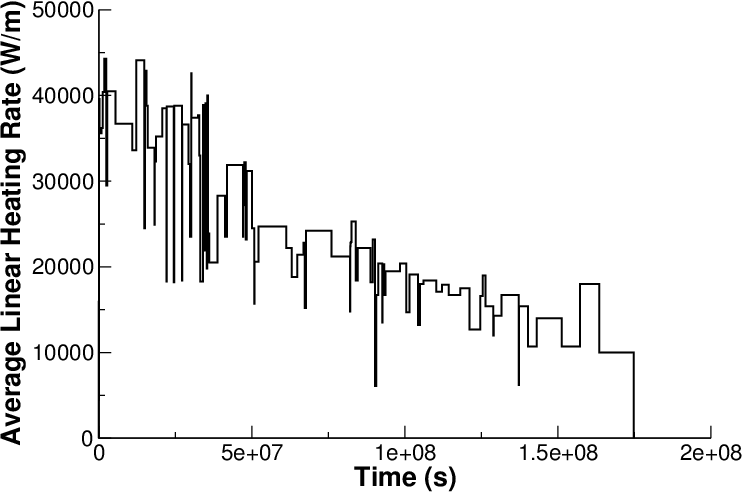
Figure 1: Base irradiation history for fuel segment STR014, carried out at Halden BWR.
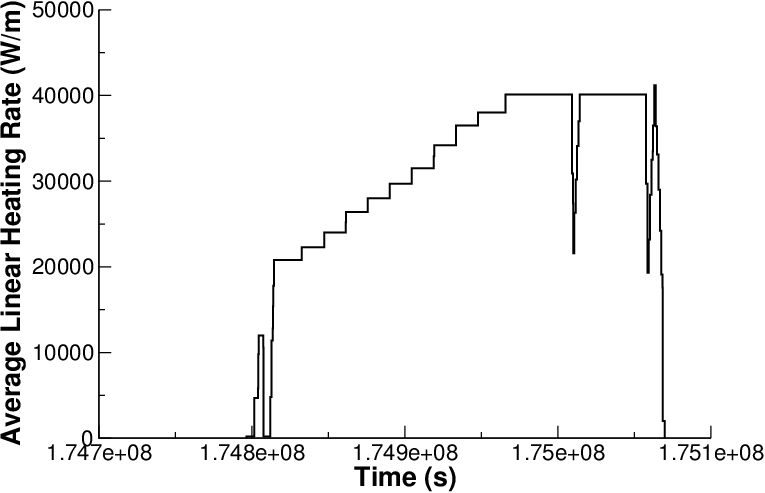
Figure 2: Riso DR3 irradiation period for test II5.
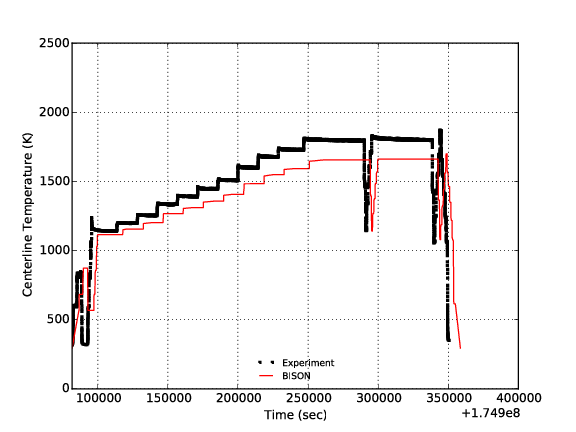
Figure 3: BISON fuel centerline temperature comparison to Riso experimental data
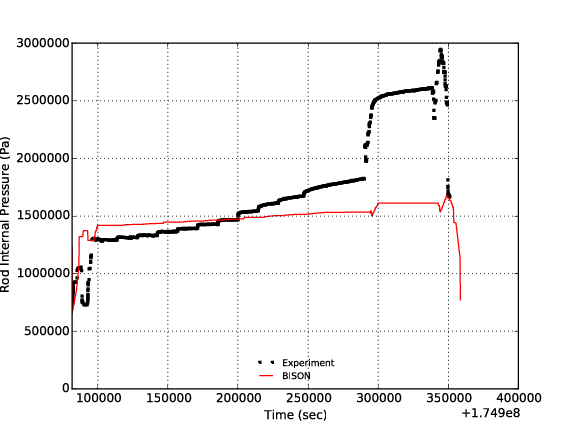
Figure 4: BISON rod internal pressure comparison to Riso experimental data.
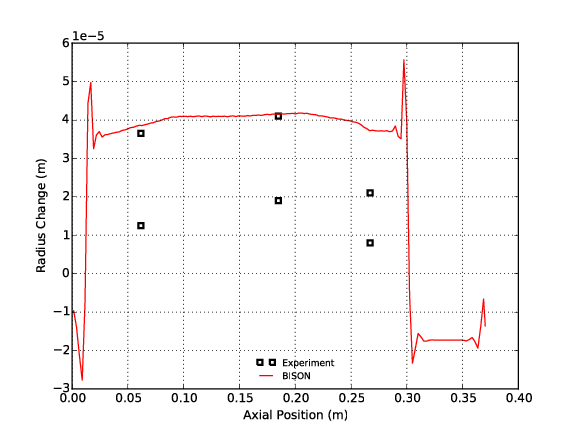
Figure 5: BISON clad diameter comparison to Riso experimental data pre-ramp and post-ramp
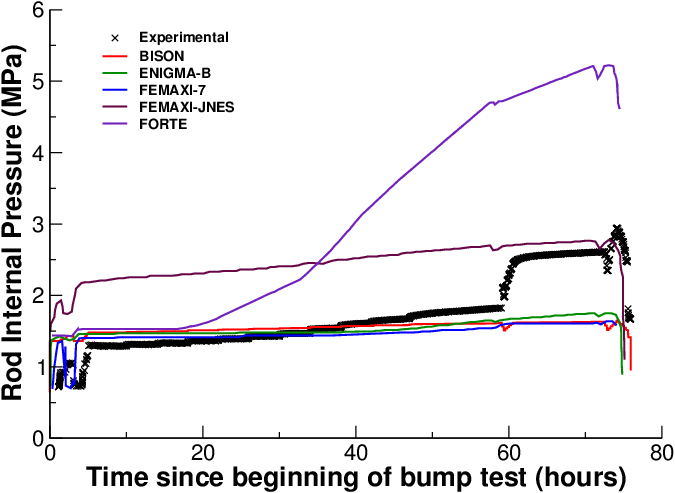
Figure 6: BISON rod internal pressure comparison to experimental data and other well known codes.
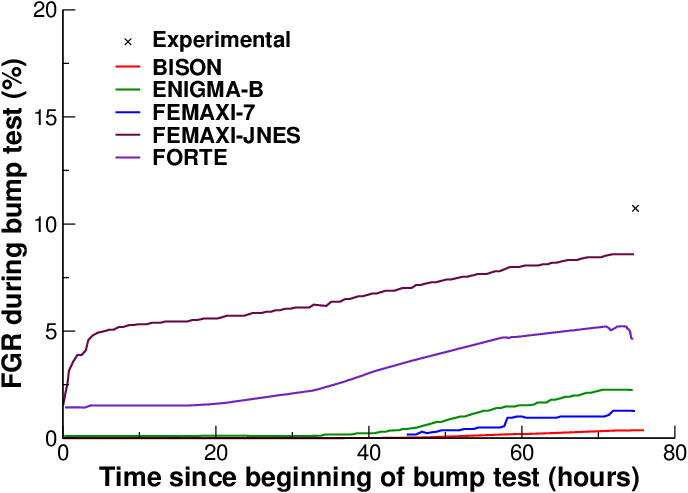
Figure 7: BISON ramp test fission gas release comparison experimental data and other well known codes.
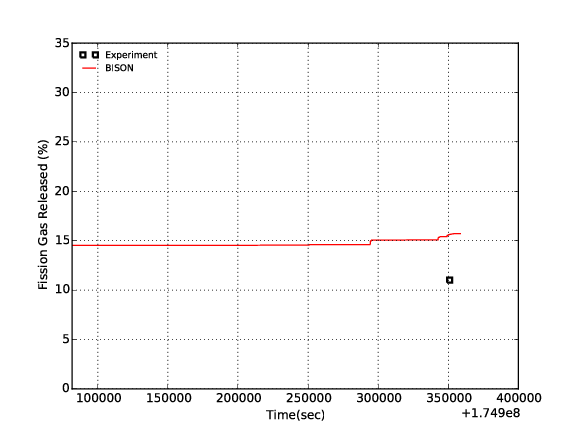
Figure 8: BISON ramp test fission gas release comparison to Riso experimental data.
Model Description
Geometry and Mesh
The re-fabricated rod geometry was modeled for the entire simulation considering a smeared column of flat ended pellets, with the top pellets containing the hole for the thermocouple. The plenum height was adjusted such that the plenum volume at the beginning of the bump test was approximately 8.68 cm.
A 2-dimensional axisymmetric quadratic (Quad8 elements) mesh was used to model the geometry of the rod used in the II5 experiment. The fuel was meshed considering two fuel pellet types. The first pellet type was 1.38 cm in length with a 0.125 cm diameter hole down the center, the second pellet type was 1.297 cm in length with no hole down the center. The first pellet type's mesh is comprised of elements 4.6 mm in the axial direction and 0.460227 mm in the radial direction (for an aspect ratio of 9.995). The second pellet type's mesh is comprised of elements 4.323 mm in the axial direction and 0.4602 mm in the radial direction (for an aspect ratio of 9.393). The clad mesh is comprised of elements 5.353 mm in the axial direction and 0.1438 mm in the radial direction (for an aspect ratio of 37.22).
Input files
The BISON input and all supporting files (power histories, axial power profile, fast neutron flux history, etc.) for this case are provided with the code distribution at bison/assessment/LWR/validation/ and bison/assessment/LWR/validation/Riso_II5/analysis.
To avoid code duplication, the input files are structured in this format: A first base input file contains characteristics common to all the Riso cases: Riso_Base.i. A second base input file contains characteristics common to all the Riso case that do not use the action: Riso_Base_sub.i. For the Riso II5 case, a Riso_II5_Base.i input file contains all the information common to the Riso II5 cases. Input files containing information specific to the fuel rod and the type of problem solving use the !include function to build a complete input file with the base files.
To run a specific assessment, such as the Riso II5 case with the action, run: Riso_II5_action.i. For the case without th action, run Riso_II5.i.
Material and Behavioral Models
The following material and behavioral models for UO fuel were used:
UO2Thermal - NFIR: NFIR model for temperature and burnup dependent thermal properties
ComputeFiniteStrainElasticStress and UO2ElasticityTensor: elastic mechanical behavior
UO2RelocationEigenstrain: relocation strains, relocation activation threshold power set to 5 kW/m
ComputeThermalExpansionEigenstrain: thermal expansion with a constant instanteous thermal expansion coefficient
UO2VolumetricSwellingEigenstrain : volumetric expansion due to solid and gaseous swelling
UO2Sifgrs: fission gas release model used with the gaseous swelling model
UO2VolumetricSwellingEigenstrain(Pastore et al., 2015)
For the insulator pellets, the following material and behavioral models were used:
HeatConductionMaterial: Thermophysical material properties
ComputeFiniteStrainElasticStress and ComputeIsotropicElasticityTensor: elastic mechanical behavior, with a Young's modulus of 3.7510 and a Poisson's ratio value of 0.22
ComputeThermalExpansionEigenstrain: thermal expansion with a constant instantaneous thermal expansion coefficient
For the cladding material, a constant thermal conductivity of 16 W/m-K was used and both thermal and irradiation creep were considered using the Limback model (Limbäck and Andersson, 1996). The following material and thermal behavior models were used for the Zircaloy-4 cladding:
HeatConductionMaterial: Thermophysical material properties
ZryCreepLimbackHoppeUpdate and ZryElasticityTensor: mechanical creep and elastic deformation behavior for Zircaloy-2
ZryIrradiationGrowthEigenstrain: ESCORE model for volumetric swelling due to irradiation exposure
ZryThermalExpansionMATPROEigenstrain: thermal expansion with an instantaneous thermal expansion coefficient that varies according to the MATPRO cthexp model
Details and references for all of these models listed above can be found on the linked BISON documentation pages.
Boundary and Operating Conditions
The Riso DR3 irradiation period for the II5 test shown in Figure 2 was appended to the base irradiation power history shown in Figure 1. It was assumed that the clad temperature during the down time between base irradiation and the Riso test was 273K as per the experimental data. The fast neutron flux was input as a function of power.
Results Comparison
The Riso II5 experiment is used to assess the code's capability to capture the fuel centerline temperature, fission gas release, rod internal pressure, and rod outer diameter. All results were compared against the II5 data found in the FUMEX-III data sets (IAEA, 2008-2012).
Centerline Temperature
BISON predicts the shape of temperature curve well, but fails to reach measured thermocouple temperatures as shown in Figure 3. One possible explanation for the lower predicted temperature is the under prediction of fission gas release as seen in Figure 8. The fuel centerline temperature is taken at a node approximately 38 mm from the top of the fuel stack.
Fission Gas Release
The calculated integral fuel rod fission gas release for the ramp tests is compared to the measured data in Figure 8. For this prediction the fission gas released during the base irradiation is not included. It is observed that BISON significantly underpredicts the fission gas release. The experiment predicts 11% and BISON predicts approximately 0.33%. This significant difference is partly due to the fact the transient burst release model in the Sifgrs fission gas release model in BISON was turned off due to convergence issues. In order to have the burst release model work the interpenteration of the fuel and clad was enormously large at about 12 microns. Therefore, to have acceptable penetration results (less then 3 microns) the transient release model was not used.
Rod Internal Pressure
Figure 4 illustrates the comparison between BISON and the experimental data for the rod internal pressure during the bump test. It is observed that BISON immediately rises to a larger pressure after refabrication. This is due to the difference in temperature between the cladding boundary and the refabrication temperature immediately after refabrication. A further analysis of these results is provided in the Discussion section.
Clad Diameter
Figure 5 shows the comparison between BISON and the experimental data for the cladding diameter for two cases: pre-ramp and post-ramp. In general bison does a reasonable job at predicting the cladding diameter pre-ramp but significantly underpredicts the diameter post-ramp. For the experimental data, the 2 points above one another using the same symbols indicate the maximum and minimum diameters observed at that location due to pellet hourglassing. Since a smeared model was used in BISON a single value was obtained. Ideally this line should fall between the 2 data points. The cause of the discrepancy between BISON and the experimental predictions is because the transient release model was not used for fission gas release. If the burst release model was used a large internal gas pressure would be observed and a higher amount of fission gas swelling would occur within the fuel pellets. A larger swelling would result in a large cladding diameter. In addition, a discrete pellet model would be ideal to capture the hourglassing effect and to predict the maximum and minimum diameter values.
Discussion
In this section, comparison plots of BISON against the experimental data and a variety of well known fuel performance codes is completed for rod internal pressure and fission gas release. Figure 6 illustrates the rod internal pressure comparison. It is observed that despite BISON not matching the experimental data that well it falls within the range of the other codes. In fact ENIGMA-B, FEMAXI-7 and BISON all predict relatively similar trends in the pressure behavior. Similar results are presented in Figure 7 for fission gas release. All the codes presented underpredict the fission gas release. Although BISON predicts the lowest fission gas release, if penetration can be minimized such that the burst release model could be used, BISON would fall within the spread of the fuel performance codes.
References
- IAEA.
Improvement of Computer Codes Used for Fuel Behaviour Simulation (FUMEX-III): Report of a Coordinated Research Project 2008-2012.
Technical Report IAEA-TECDOC-1697, International Atomic Energy Agency, 2008-2012.[BibTeX]
- M. Limbäck and T. Andersson.
A model for analysis of the effect of final annealing on the in- and out-of-reactor creep behavior of zircaloy cladding.
In Zirconium in the Nuclear Industry: Eleventh International Symposium, ASTM STP 1295, 448–468. 1996.[BibTeX]
- G. Pastore, L.P. Swiler, J.D. Hales, S.R. Novascone, D.M. Perez, B.W. Spencer, L. Luzzi, P. Van Uffelen, and R.L. Williamson.
Uncertainty and sensitivity analysis of fission gas behavior in engineering-scale fuel modeling.
Journal of Nuclear Materials, 465:398–408, 2015.[BibTeX]