High Burnup Effects Programme (HBEP) BK363, BK365 and BK370
Overview
The purpose of the High Burnup Effects Programme (HBEP) task 3 rods BK363, BK365 and BK370 was to provide high burnup data on fission gas release (FGR) and fission product distributiions (IAEA, 2002-2007). Rods BK363, BK365 and BK370 were irratiated to 66.7 MWd/KgU, 69.4 MWd/KgU and 50.9 MWd/KgU, respectively, in the BR-3 pressurized water reactor (PWR) (IAEA, 2002-2007). Only end of life FGR predictions were requested from the modellers.
Test Description
The three rods in this series were manufactured by CEA and are identical. The fuel stack consisted of annular pellets and was one meter long. The only difference in experiment build was the initial plenum fill gas pressure (See Table 1). This portion of the HBEP experiments was designed to study the effects of fill gas pressure on FGR. It also provided data on FGR of annualar pellets for use against the solid pellets in the HBEP series (IAEA, 2002-2007).
Table 1: HBEP Test Rod Specifications
| Fuel Rod | Measurement | Unit |
|---|---|---|
| Overall length | 1.0895 | m |
| Fuel stack height | 1.017 | m |
| Nominal plenum height | 72.5 | mm |
| Number of pellets per rod | 102 | |
| Pellet Height | ||
| BK363 | 9.98 | mm |
| BK365 | 9.98 | mm |
| BK370 | 9.98 | mm |
| Fill gas composition | He | |
| Fill gas pressure | ||
| BK363 | 1.40 | MPa |
| BK365 | 2.88 | MPa |
| BK370 | 2.88 | MPa |
| Fuel | Measurement | Unit |
| Material | UO | |
| Enrichment | ||
| BK363 | 7.07 | % |
| BK365 | 7.07 | % |
| BK370 | 7.07 | % |
| Density | 93.2 | % |
| Outer diameter | 8.188 | mm |
| Inner diameter | 2.475 | mm |
| Grain diameter | ||
| All Rods | 13.5 | m |
| Cladding | Measurement | Unit |
| Material | Zr-4 | |
| Outer diameter | 9.515 | mm |
| Inner diameter | 8.3536 | mm |
Operating Conditions and Irradiation History
Rods BK363, BK365 and BK370 were irratited in the BR-3 pressurized water reactor (PWR) in Belgium (HBEP, 2002) at a coolant pressure of 13.73 MPa and coolant inlet temperature of 255 C (IAEA, 2002-2007). Rods BK363 and BK365 were irratiated four cycles to burnups of 66.7 MWd/KgU and 69.4 MWd/KgU, respectively. Rod BK370 was irratiated three cycles to a burnup of 50.9 MWd/KgU. Clad temperatures and local power histories were taken at 10 axial locations and obtained from the FUMEX II data. The plot below, Figure 1, shows the power histories for the BK363, BK365 and BK370 rods. The power histories are similar with BK365 seeing more power in the middle stage. BK370 had a shorter irradiation time than the other 2 rods.
Model Description
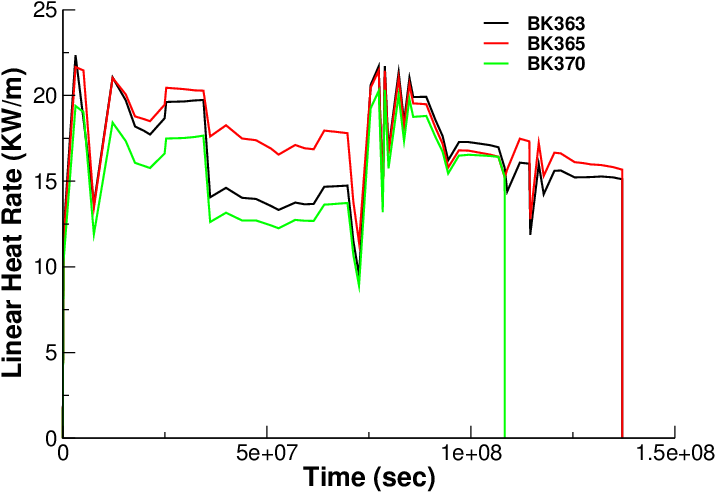
Figure 1: The linear heat rates for BK363, BK365 and BK370.
Geometry and Mesh
All three fuel rods were meshed using 2-D axisymmetric models with quadratic elements. For simplicity, the pellet stack was modeled as a single continuous fuel column (smeared mesh). The rods were identical so the same mesh was used for all runs. The fuel pellets had 306 axial elements and 11 radial elements, and the cladding consisted of 312 axial elements and 4 radial elements.
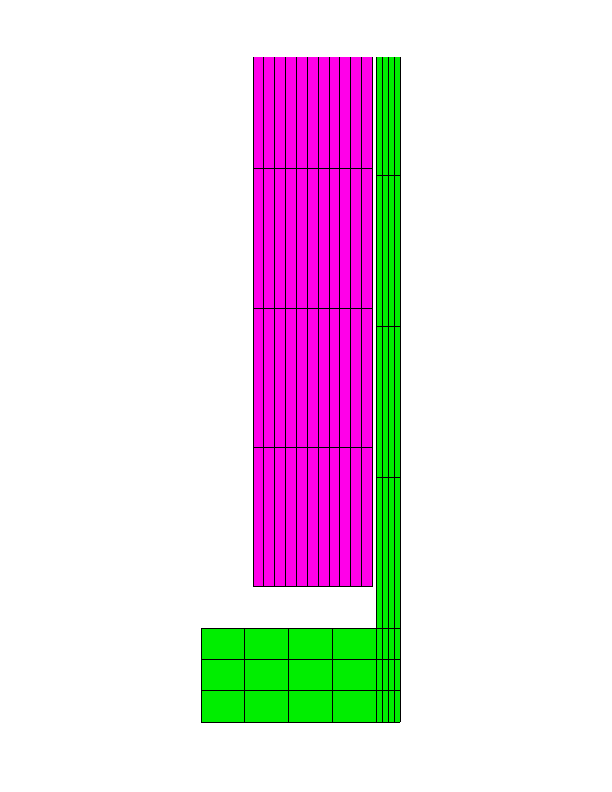
Figure 2: A segment of the fuel and cladding mesh used.
Material and Behavioral Models
The following material and behavioral models were used for the fuel:
UO2Thermal - NFIR: For temperature and burnup dependent thermal properties.
ComputeFiniteStrainElasticStress and UO2ElasticityTensor: elastic mechanical behavior
UO2VolumetricSwellingEigenstrain: volumetric expansion due to solid and gaseous swelling
UO2RelocationEigenstrain: relocation strains, relocation activation threshold power set to 5 kW/m
ComputeThermalExpansionEigenstrain:thermal expansion with a constant instanteous thermal expansion coefficient
UO2Sifgrs: fission gas release model used with the gaseous swelling model
UO2VolumetricSwellingEigenstrain
For the clad material, a constant thermal conductivity of 16 W/m-K was used and both thermal (primary and secondary) and irradiation creep were considered using the Limback creep model (Limbäck and Andersson, 1996). The following material and thermal behavior models were used for the cladding:
HeatConductionMaterial: Thermophysical material properties
ZryCreepLimbackHoppeUpdate and ZryElasticityTensor: mechanical creep and elastic deformation behavior for Zircaloy-2
ZryIrradiationGrowthEigenstrain: ESCORE model for volumetric swelling due to irradiation exposure
ZryThermalExpansionMATPROEigenstrain: thermal expansion of Zircaloy with the MATPRO model
Details and references for all of these models listed above can be found on the linked BISON documentation pages.
Input files
The BISON input and all supporting files (power histories, axial power profile) are provided with the code distribution at bison/assessment/LWR/validation/HBEP/analysis.
Results Comparison
HBEP rods BK363, BK365 and BK370 were designed and built to investigate the effects of initial fill gas pressure on fission gas release. To achieve this the rods were built identically with only the fill gas pressure being changed for BK363 and BK365. These 2 rods were then irradiated to approximately the same burnup. Rod BK370 was filled to the same pressure as BK365, but was only irradiated 3 cycles as opposed to 4 cycles. The following subsections discuss each test individually.
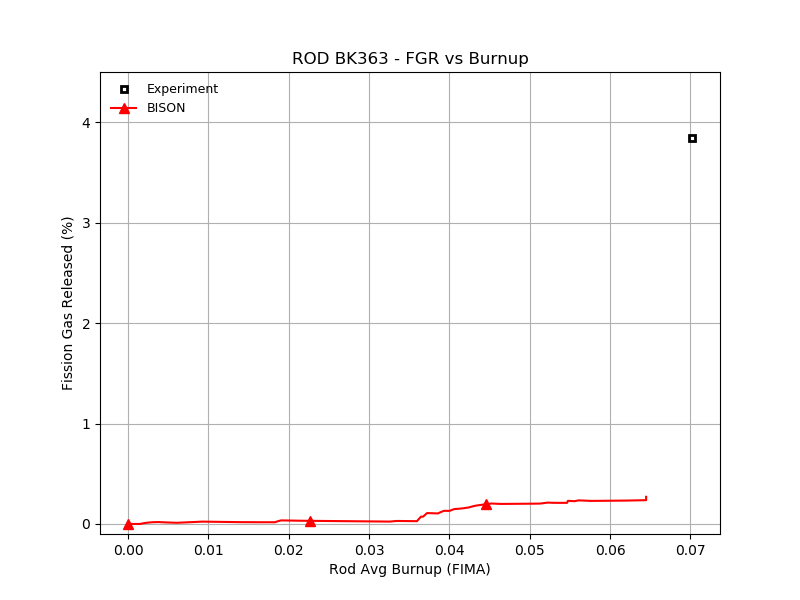
Figure 3: Comparison of measured fission gas release and the BISON prediction
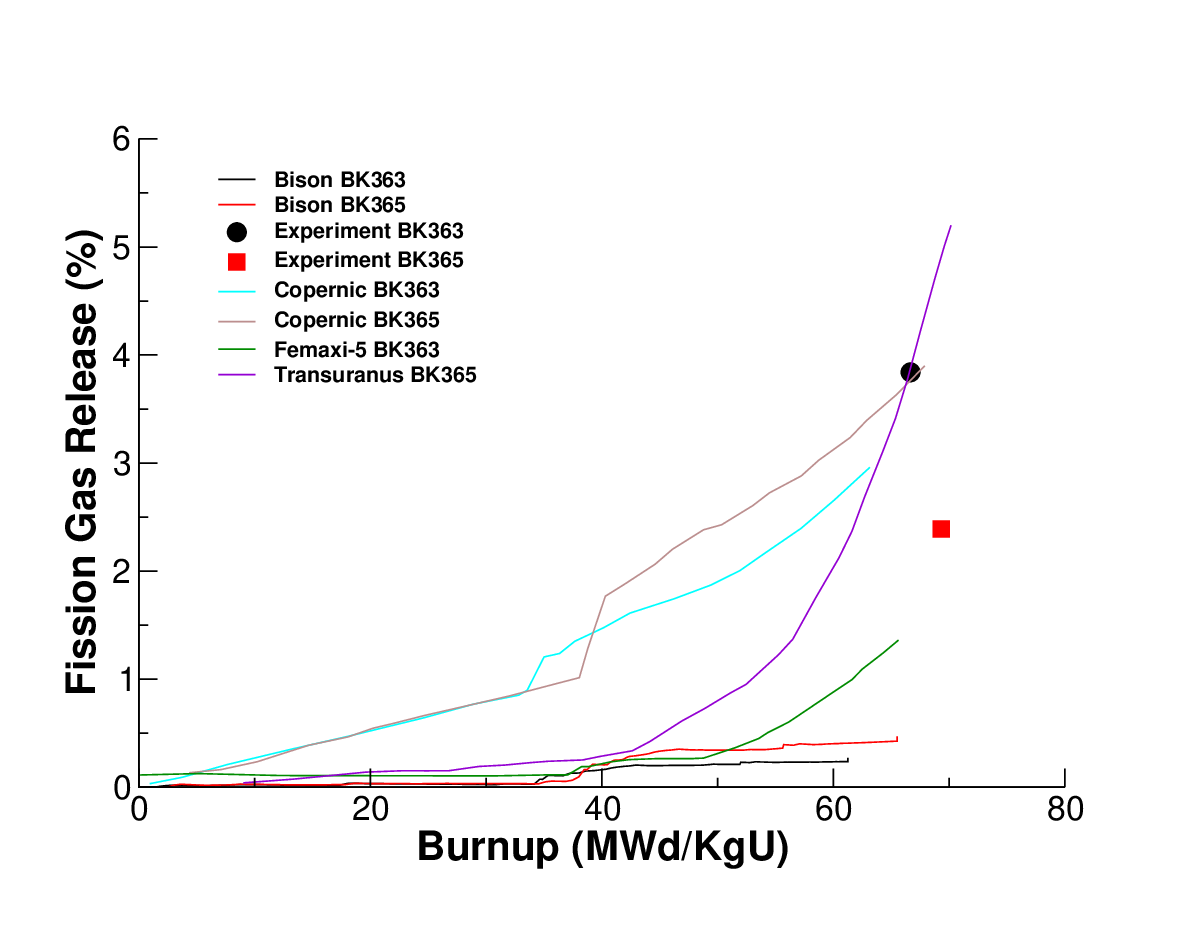
Figure 4: Comparison of measured fission gas release and the predictions of other codes
HBEP, BK363
As can be seen above in Figure 3 and Figure 4 the BISON calculated fission gas release is less than the experiment measured amount, about 0.3% and 4%, respectively. As mentioned above the Sifgrs fission gas release model with the transient release model was used in this case. This rod was held at a lower power at the phase that included 5e7 sec (see Figure 1). It is possible that the model did not produce enough fission gas during this phase and thus was not released in the transient phase. Evidence for this theory may be supported by BK365's performance.
HBEP, BK365
As mentioned in the previous subsection, the BISON performance of the BK365 rod against the experiment was better than the BK363 rod. Shown in Figure 5, Figure 3 and Figure 4 the experiment measured amount was about 2.5% and the BISON calculation was about 0.5%. Figure 5 shows a comparison of the linear heat rate to the calculated fission gas release over the time of the experiment.
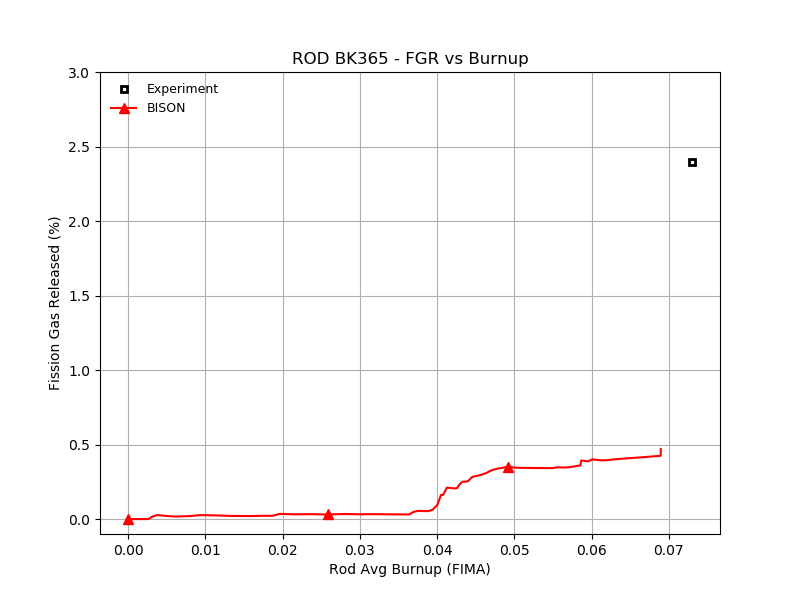
Figure 5: Comparison of Linear Heat Rate and Fission Gas Release for BK365
HBEP, BK370
There was no experimental data collected from this rod. Other codes did simulate this rod, as did BISON, but since there are no experimental results there will be no discussion about this rod.
Discussion
Modeling these three rods was useful to the BISON development as it shows that there is possible work needed in the high burnup structure. In comparing with other codes BISON is on the lower end of the estimates. It needs to be pointed out that for BK363 the difference between the measured and the calculated was about 4% and for BK365 it was about 2%. The amount of fission gas released overall was not much and BISON is within acceptable estimation tolerances.
References
- HBEP.
Summary of the High Burn-up Effects Programme as abstracted from the Programme Final Report.
Technical Report, High Burn-up Effects Programme, December 2002.[BibTeX]
- IAEA.
Fuel Modelling at Extened Burnup (FUMEX-II): Report of a Coordinated Research Project 2002-2007.
Technical Report IAEA-TECDOC-1687, International Atomic Energy Agency, 2002-2007.[BibTeX]
- M. Limbäck and T. Andersson.
A model for analysis of the effect of final annealing on the in- and out-of-reactor creep behavior of zircaloy cladding.
In Zirconium in the Nuclear Industry: Eleventh International Symposium, ASTM STP 1295, 448–468. 1996.[BibTeX]