- layered_average_contact_pressureCoupled layer averaged contact pressure
C++ Type:std::vector<VariableName>
Unit:(no unit assumed)
Controllable:No
Description:Coupled layer averaged contact pressure
- temperatureCoupled temperature
C++ Type:std::vector<VariableName>
Unit:(no unit assumed)
Controllable:No
Description:Coupled temperature
UO2Pulverization
Determines whether or not the fuel has pulverized into small fragments during a Loss of Coolant Accident.
Description
The UO2Pulverization material computes whether or not the UO2 fuel has disintegrated into small fragments. The empirical threshold that determines whether or not pulverization occurs is illustrated in the figure below.
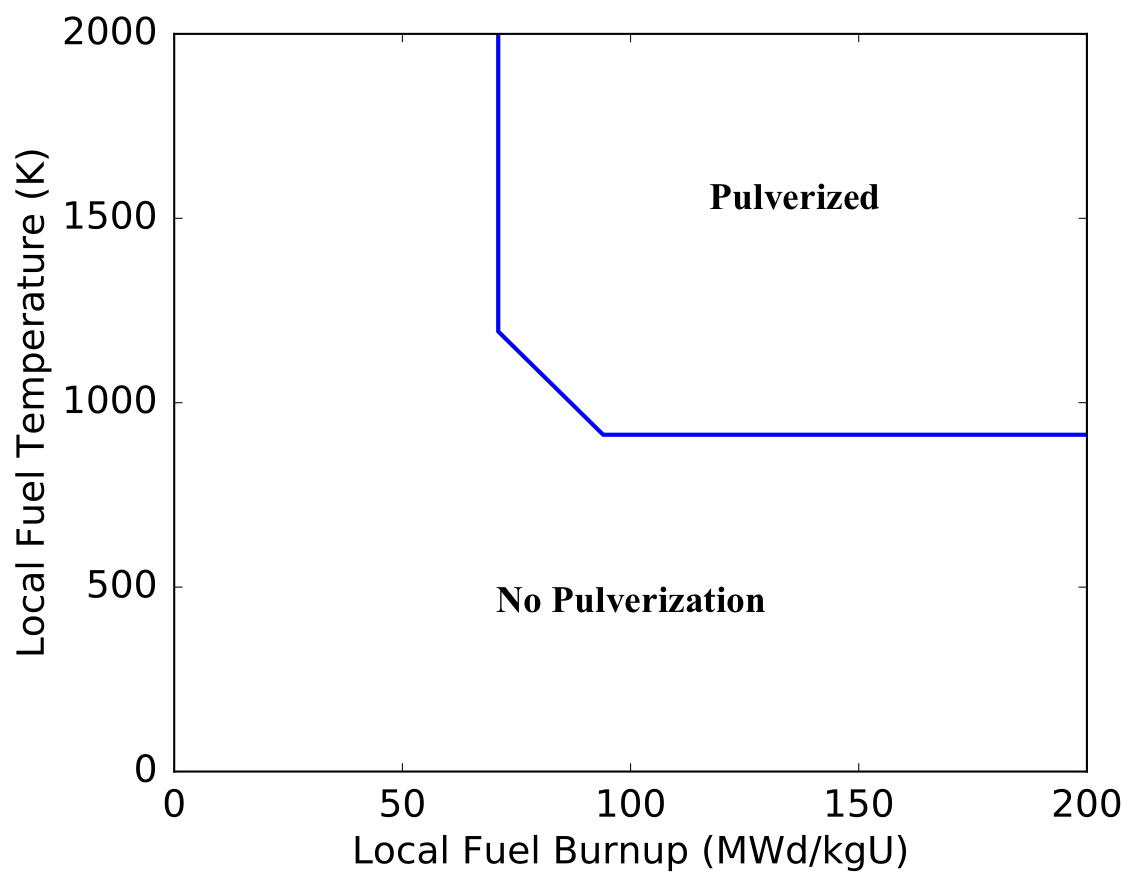
Figure 1: Empirical threshold for fuel pulverization.
It is observed that a minimum local burnup of 71 MWd/kgU is required for pulverization. At this burnup the temperature threshold is 1193.15 K. The threshold decreases linearly with increasing burnup to a value of 913.15 K at a burnup of 94 MWd/kgU, after which it is constant. It should be noted that despite the temperature threshold being exceeded, pulverization will be prevented if the pellet-to-cladding contact pressure at a particular axial location is greater than 50 MPa. Reproduced from Jernkvist and Massih (2015) and Turnbull et al. (2015).
Example Input Syntax
[Materials<<<{"href": "../../syntax/Materials/index.html"}>>>]
  [uo2pulverization]
    type = UO2Pulverization<<<{"description": "Determines whether or not the fuel has pulverized into small fragments during a Loss of Coolant Accident.", "href": "UO2Pulverization.html"}>>>
    block<<<{"description": "The list of blocks (ids or names) that this object will be applied"}>>> = fuel
    layered_average_contact_pressure<<<{"description": "Coupled layer averaged contact pressure"}>>> = layered_average_contact_pressure
    temperature<<<{"description": "Coupled temperature"}>>> = temperature
  []
[]Input Parameters
- blockThe list of blocks (ids or names) that this object will be applied
C++ Type:std::vector<SubdomainName>
Controllable:No
Description:The list of blocks (ids or names) that this object will be applied
- boundaryThe list of boundaries (ids or names) from the mesh where this object applies
C++ Type:std::vector<BoundaryName>
Controllable:No
Description:The list of boundaries (ids or names) from the mesh where this object applies
- burnupCoupled Burnup
C++ Type:std::vector<VariableName>
Unit:(no unit assumed)
Controllable:No
Description:Coupled Burnup
- burnup_functionBurnup function
C++ Type:FunctionName
Unit:(no unit assumed)
Controllable:No
Description:Burnup function
- computeTrueWhen false, MOOSE will not call compute methods on this material. The user must call computeProperties() after retrieving the MaterialBase via MaterialBasePropertyInterface::getMaterialBase(). Non-computed MaterialBases are not sorted for dependencies.
Default:True
C++ Type:bool
Controllable:No
Description:When false, MOOSE will not call compute methods on this material. The user must call computeProperties() after retrieving the MaterialBase via MaterialBasePropertyInterface::getMaterialBase(). Non-computed MaterialBases are not sorted for dependencies.
- constant_onNONEWhen ELEMENT, MOOSE will only call computeQpProperties() for the 0th quadrature point, and then copy that value to the other qps.When SUBDOMAIN, MOOSE will only call computeQpProperties() for the 0th quadrature point, and then copy that value to the other qps. Evaluations on element qps will be skipped
Default:NONE
C++ Type:MooseEnum
Options:NONE, ELEMENT, SUBDOMAIN
Controllable:No
Description:When ELEMENT, MOOSE will only call computeQpProperties() for the 0th quadrature point, and then copy that value to the other qps.When SUBDOMAIN, MOOSE will only call computeQpProperties() for the 0th quadrature point, and then copy that value to the other qps. Evaluations on element qps will be skipped
- declare_suffixAn optional suffix parameter that can be appended to any declared properties. The suffix will be prepended with a '_' character.
C++ Type:MaterialPropertyName
Unit:(no unit assumed)
Controllable:No
Description:An optional suffix parameter that can be appended to any declared properties. The suffix will be prepended with a '_' character.
Optional Parameters
- control_tagsAdds user-defined labels for accessing object parameters via control logic.
C++ Type:std::vector<std::string>
Controllable:No
Description:Adds user-defined labels for accessing object parameters via control logic.
- enableTrueSet the enabled status of the MooseObject.
Default:True
C++ Type:bool
Controllable:Yes
Description:Set the enabled status of the MooseObject.
- implicitTrueDetermines whether this object is calculated using an implicit or explicit form
Default:True
C++ Type:bool
Controllable:No
Description:Determines whether this object is calculated using an implicit or explicit form
- seed0The seed for the master random number generator
Default:0
C++ Type:unsigned int
Controllable:No
Description:The seed for the master random number generator
- use_displaced_meshFalseWhether or not this object should use the displaced mesh for computation. Note that in the case this is true but no displacements are provided in the Mesh block the undisplaced mesh will still be used.
Default:False
C++ Type:bool
Controllable:No
Description:Whether or not this object should use the displaced mesh for computation. Note that in the case this is true but no displacements are provided in the Mesh block the undisplaced mesh will still be used.
Advanced Parameters
- output_propertiesList of material properties, from this material, to output (outputs must also be defined to an output type)
C++ Type:std::vector<std::string>
Controllable:No
Description:List of material properties, from this material, to output (outputs must also be defined to an output type)
- outputsnone Vector of output names where you would like to restrict the output of variables(s) associated with this object
Default:none
C++ Type:std::vector<OutputName>
Controllable:No
Description:Vector of output names where you would like to restrict the output of variables(s) associated with this object
Outputs Parameters
- prop_getter_suffixAn optional suffix parameter that can be appended to any attempt to retrieve/get material properties. The suffix will be prepended with a '_' character.
C++ Type:MaterialPropertyName
Unit:(no unit assumed)
Controllable:No
Description:An optional suffix parameter that can be appended to any attempt to retrieve/get material properties. The suffix will be prepended with a '_' character.
- use_interpolated_stateFalseFor the old and older state use projected material properties interpolated at the quadrature points. To set up projection use the ProjectedStatefulMaterialStorageAction.
Default:False
C++ Type:bool
Controllable:No
Description:For the old and older state use projected material properties interpolated at the quadrature points. To set up projection use the ProjectedStatefulMaterialStorageAction.
Material Property Retrieval Parameters
Input Files
- (test/tests/axial_relocation/mass_relocation_translated.i)
- (assessment/LWR/validation/LOCA_Studsvik/analysis/rod_196/Studsvik_196_part1.i)
- (test/tests/axial_relocation/crumbled_thermal_conductivity.i)
- (test/tests/axial_relocation/uo2_pulverization.i)
- (assessment/LWR/validation/LOCA_Studsvik/analysis/rod_191/Studsvik_191_part1.i)
- (test/tests/axial_relocation/ad_uo2_pulverization.i)
- (test/tests/axial_relocation/mass_relocation.i)
- (examples/axial_relocation/layered1D/single_balloon.i)
- (examples/axial_relocation/layered1D/twin_balloon.i)
- (assessment/LWR/validation/LOCA_Studsvik/analysis/rod_196/Studsvik_196_part2.i)
- (test/tests/axial_relocation/axial_relocation_volume_correction.i)
- (assessment/LWR/validation/LOCA_Studsvik/analysis/rod_191/Studsvik_191_part2.i)
- (assessment/LWR/validation/LOCA_Studsvik/analysis/rod_196/Studsvik_196_part1_1p5d_fr_ffrd.i)
- (test/tests/axial_relocation/packing_fraction.i)
- (test/tests/axial_relocation/axial_relocation_eigenstrain.i)
References
- L. O. Jernkvist and A. Massih.
Model for axial relocation of fragmented and pulverized fuel pellets in distending fuel rods and its effects on fuel rod heat load.
Technical Report SSM-2015:37, Strål säkerhets myndigheten, 2015.[BibTeX]
@TECHREPORT{jernkvist2015, author = "Jernkvist, L. O. and Massih, A.", title = "Model for axial relocation of fragmented and pulverized fuel pellets in distending fuel rods and its effects on fuel rod heat load", year = "2015", number = "SSM-2015:37", institution = {Str\r{a}l s\"{a}kerhets myndigheten} } - J. A. Turnbull, S. K. Yagnik, M. Hirai, D. M. Staicu, and C. T. Walker.
An assessment of the fuel pulverization threshold during loca-type temperature transients.
Nuclear Science and Engineering, 179:477–485, 2015.[BibTeX]
@article{turnbull2015,
    author = "Turnbull, J. A. and Yagnik, S. K. and Hirai, M. and Staicu, D. M. and Walker, C. T.",
    title = "An Assessment of the Fuel Pulverization Threshold During LOCA-Type Temperature Transients",
    journal = "Nuclear Science and Engineering",
    volume = "179",
    year = "2015",
    pages = "477-485"
}
(test/tests/axial_relocation/uo2_pulverization.i)
# The purpose of this test is to calculate the amount of pulverization in
# a high burnup fuel as part of the axial relocation algorithm.  In the test 5
# axial fuel slices are modeled without cladding with an outer fuel radius of 4.5 mm
# and slice height of 0.1 m. Ten radial finite elements are used. The burnup
# increases linearly from the fuel centerline to the fuel surface. The burnup also
# increases as a function of time from 0 to 100 MWd/kgU on the fuel surface over 100 seconds.
#
# The fuel temperature is held constant at 1200 K. And a constant contact pressure
# is applied to the fuel surface of 40 MPa.
#
# The threshold for pulverization is given by an empirical temperature threshold
# as a function of burnup. A local burnup of 71 MWd/kgU is required for pulverization
# to begin. At this burnup the temperature threshold is 1193.15 K. The temperature
# threshold linearly decreases to a value of 913.15 K at 94 MWd/kgU after which
# it is constant.
#
# Based upon the conditions and threshold given above at t = 100 s the outer three
# elements should be completely pulverized.  The inner radius of the third element
# is at a radius of 3.150 mm. Therefore the layered averaged pulverized fuel volume
# (in each layer in this case) is analytically determined by:
#
# V_p = pi * L * (R_o^2 - R_p^2)
#
# where L is the slice height (0.1 m), R_o is the outer fuel radius, and R_p is the
# radius into the fuel at which pulverization ends. Therefore:
#
# V_p = pi * (0.1) * (4.5e-3^2 - 3.150e-3^2)
# V_p = 3.24448e-6 m^3  in each layer.
#
# The layered_pulverized_fuel_volume AuxVariable computed by BISON gives
# a layered volume of pulverized fuel as 3.24448e-6 m^3.
#
# Using command line arguments another test is run where the contact pressure is
# changed to 60 MPa which precludes pulverization for the duration of that test.

[Mesh]
  coord_type = RZ
  [layered1D_mesh]
    type = Layered1DMeshGenerator
    elem_type = EDGE2
    slices_per_block = 5
    pellet_outer_radius = 4.5e-3
    include_clad = false
    fuel_height = 0.5
    include_plenum = false
    nx_p = 10
    pellet_mesh_density = customize
    pellet_bottom_coor = 0.0
  []
  patch_update_strategy = auto
  partitioner = centroid
  centroid_partitioner_direction = y
[]

[Variables]
  [temperature]
    order = FIRST
    family = LAGRANGE
    initial_condition = 1200
  []
[]

[AuxVariables]
  [burnup]
    order = FIRST
    family = LAGRANGE
  []
  [contact_pressure]
    order = CONSTANT
    family = MONOMIAL
  []
  [pulverized]
    order = CONSTANT
    family = MONOMIAL
  []
  [layered_average_contact_pressure]
    order = CONSTANT
    family = MONOMIAL
  []
  [layered_pulverized_fuel_volume]
    order = CONSTANT
    family = MONOMIAL
  []
  [layered_average_burnup]
    order = CONSTANT
    family = MONOMIAL
  []
[]

[Functions]
  [burnup_function]
    type = ParsedFunction
    expression = 'x*t/4.275'
  []
  [contact_pressure_function]
    type = ConstantFunction
    value = 40.0e6
  []
[]

[Kernels]
  [heat]
    type = HeatConduction
    variable = temperature
  []
[]

[AuxKernels]
  [burnup]
    type = FunctionAux
    variable = burnup
    function = burnup_function
    execute_on = 'initial linear'
  []
  [contact_pressure]
    type = FunctionAux
    variable = contact_pressure
    boundary = 10
    function = contact_pressure_function
    execute_on = 'initial timestep_end'
  []
  [pulverized]
    type = MaterialRealAux
    block = fuel
    variable = pulverized
    property = pulverized
    execute_on = 'initial timestep_end'
  []
  [layered_average_contact_pressure]
    type = SpatialUserObjectAux
    variable = layered_average_contact_pressure
    execute_on = timestep_end
    block = fuel
    user_object = layered_average_contact_pressure
  []
  [layered_pulverized_fuel_volume]
    type = SpatialUserObjectAux
    variable = layered_pulverized_fuel_volume
    execute_on = timestep_end
    block = fuel
    user_object = layered_pulverized_fuel_volume
  []
  [layered_average_burnup]
    type = SpatialUserObjectAux
    variable = layered_average_burnup
    execute_on = timestep_end
    block = fuel
    user_object = layered_average_burnup
  []
[]

[BCs]
  [temperature]
    type = DirichletBC
    boundary = '10 12'
    variable = temperature
    value = 1200
  []
[]

[Materials]
  [uo2pulverization]
    type = UO2Pulverization
    block = fuel
    layered_average_contact_pressure = layered_average_contact_pressure
    temperature = temperature
  []
  [thermal]
    type = HeatConductionMaterial
    thermal_conductivity = 1.0
    specific_heat = 1.0
  []
[]

[UserObjects]
  [fuel_pin_geometry]
    type = Layered1DFuelPinGeometry
    include_clad = false
    mesh_generator = layered1D_mesh
  []
  [layered_average_contact_pressure]
    type = LayeredSideAverage
    variable = contact_pressure
    direction = y
    execute_on = 'initial timestep_end'
    boundary = 10
    num_layers = 5
  []
  [layered_pulverized_fuel_volume]
    type = LayeredVariableIntegral
    variable = pulverized
    fuel_pin_geometry = fuel_pin_geometry
    direction = y
    execute_on = 'initial timestep_end'
    block = fuel
    num_layers = 5
  []
  [layered_average_burnup]
    type = LayeredAverage
    variable = burnup
    direction = y
    execute_on = 'initial timestep_end'
    block = fuel
    num_layers = 5
  []
[]

[Executioner]
  type = Transient

  solve_type = PJFNK

  petsc_options = '-snes_ksp_ew'
  petsc_options_iname = '-ksp_gmres_restart'
  petsc_options_value = '101'

  line_search = 'none'

  l_max_its = 100
  nl_max_its = 100
  nl_rel_tol = 1e-8
  nl_abs_tol = 1e-10
  l_tol = 1e-5
  start_time = 0.0
  num_steps = 100
  dt = 1
[]

[Outputs]
  exodus = true
[]
(test/tests/axial_relocation/mass_relocation_translated.i)
# The purpose of this test is to verify the internal loops of the AxialRelocationUserObject
# that keeps track of the mass relocation. A linearly varying burnup is applied through
# the radius of 5 axial fuel slices which are modeled with cladding of 0.56 mm with an outer
# fuel radius of 4.5 mm and slice height of 0.1 m. Ten radial finite elements are used.
# The burnup increases linearly from the fuel centerline to the fuel surface but is
# constant in time. The fuel temperature is held constant at 1200 K and a constant
# contact pressure is applied to the fuel surface of 40 MPa.
#
# The above conditions correspond to the conditions used in the regression test
# packing_fraction.i which verified that an effective packing fraction of 0.828912
# is obtained. Using this packing fraction and applying an axially varying displacement
# on the inner cladding surface in the radial direction described by:
#
# disp_x = 2.0e-5 * t * cos(pi * y / 0.5)
#
# the mass relocation loops are verified. At 24 seconds axial relocation begins.
# The updated  mass fraction relative to the initial mass calculated by BISON
# is tabulated below for each of the layers (0, 1, 2, 3, 4) for a total of 5 layers
# for the end of the time step at 26 seconds.
#
#  Layer       Initial Mass     Current Mass     Mass Fraction
#   (-)            (kg)            (kg)               (-)
#    4           0.066299        0.066299             1.0
#    3           0.066299        0.064207           0.96845
#    2           0.066299        0.068391           1.03155
#    1           0.066299        0.066299             1.0
#    0           0.066299        0.066299             1.0
#
# Using an independent calculation in Microsoft Excel for Mac (included in this
# testing directory) the updated mass fractions are verified to match the results
# of the layered_mass_fraction AuxVariable results at the end of the simulation.

[GlobalParams]
  order = FIRST
  family = LAGRANGE
  displacements = disp_x
  temperature = temperature
[]

[Mesh]
  coord_type = RZ
  [layered1D_mesh]
    type = Layered1DMeshGenerator
    elem_type = EDGE2
    slices_per_block = 5
    pellet_outer_radius = 4.5e-3
    fuel_height = 0.5
    include_plenum = false
    nx_p = 10
    clad_gap_width = 0.0
    pellet_mesh_density = customize
    pellet_bottom_coor = -0.25
  []
  patch_update_strategy = auto
  partitioner = centroid
  centroid_partitioner_direction = y
[]

[Variables]
  [temperature]
    order = FIRST
    family = LAGRANGE
    initial_condition = 1200
  []
[]

[AuxVariables]
  [disp_y]
  []
  [disp_z]
  []
  [burnup]
    order = FIRST
    family = LAGRANGE
  []
  [pulverized]
    order = CONSTANT
    family = MONOMIAL
  []
  [layered_average_contact_pressure]
    order = CONSTANT
    family = MONOMIAL
  []
  [layered_pulverized_fuel_volume]
    order = CONSTANT
    family = MONOMIAL
  []
  [layered_average_burnup]
    order = CONSTANT
    family = MONOMIAL
  []
  [layered_mass_fraction]
    order = CONSTANT
    family = MONOMIAL
  []
  [inner_clad_radius]
    order = FIRST
    family = LAGRANGE
  []
  [layered_maximum_clad_radius]
    order = CONSTANT
    family = MONOMIAL
  []
[]

[Functions]
  [burnup_function]
    type = ParsedFunction
    expression = 'x*100.0/4.275'
  []
  [power]
    type = PiecewiseLinear
    x = '0 100'
    y = '15000 15000'
  []
  [clad_displacement_function]
    type = ParsedFunction
    expression = '2.0e-5 * t * cos(pi * y / 0.5)'
  []
[]

[Kernels]
  [heat]
    type = HeatConduction
    variable = temperature
  []
[]

[Physics]
  [SolidMechanics]
    [Layered1D]
      [gps_fuel]
        add_scalar_variables = true
        add_variables = true
        out_of_plane_strain_name = strain_yy
        fuel_pin_geometry = fuel_pin_geometry
        strain = finite
        block = fuel
        decomposition_method = EigenSolution
        mesh_generator = layered1D_mesh
      []
      [gps_clad]
        add_scalar_variables = true
        add_variables = true
        out_of_plane_strain_name = strain_yy
        fuel_pin_geometry = fuel_pin_geometry
        strain = finite
        block = clad
        decomposition_method = EigenSolution
        mesh_generator = layered1D_mesh
      []
    []
  []
[]

[AuxKernels]
  [burnup]
    type = FunctionAux
    variable = burnup
    function = burnup_function
    execute_on = 'initial linear'
  []
  [pulverized]
    type = MaterialRealAux
    block = fuel
    variable = pulverized
    property = pulverized
    execute_on = 'initial nonlinear'
  []
  [layered_average_contact_pressure]
    type = SpatialUserObjectAux
    variable = layered_average_contact_pressure
    execute_on = timestep_end
    block = fuel
    user_object = layered_average_contact_pressure
  []
  [layered_pulverized_fuel_volume]
    type = SpatialUserObjectAux
    variable = layered_pulverized_fuel_volume
    execute_on = timestep_end
    block = fuel
    user_object = layered_pulverized_fuel_volume
  []
  [layered_average_burnup]
    type = SpatialUserObjectAux
    variable = layered_average_burnup
    execute_on = timestep_end
    block = fuel
    user_object = layered_average_burnup
  []
  [layered_mass_fraction]
    type = AxialRelocationOutputAux
    variable = layered_mass_fraction
    execute_on = timestep_end
    block = fuel
    axial_relocation_user_object = axial_relocation
    output_option = MASS_FRACTION
  []
  [inner_clad_radius]
    type = Radius
    boundary = 5
    variable = inner_clad_radius
    execute_on = 'initial nonlinear'
  []
  [layered_maximum_clad_radius]
    type = SpatialUserObjectAux
    variable = layered_maximum_clad_radius
    execute_on = timestep_end
    block = fuel
    user_object = layered_maximum_clad_radius
  []
[]

[Contact]
  [pellet_clad_mechanical]
    primary = 5
    secondary = 10
    penalty = 1e7
    formulation = kinematic
    model = frictionless
  []
[]

[BCs]
  [temperature]
    type = DirichletBC
    boundary = '10 12 5 2'
    variable = temperature
    value = 1200
  []
  [no_x_all]
    type = DirichletBC
    variable = disp_x
    boundary = 12
    value = 0.0
  []
  [inner_clad_displacement]
    type = FunctionDirichletBC
    variable = disp_x
    boundary = '5'
    function = clad_displacement_function
  []
[]

[Materials]
  [uo2pulverization]
    type = UO2Pulverization
    block = fuel
    burnup = burnup
    layered_average_contact_pressure = layered_average_contact_pressure
    temperature = temperature
  []
  [fuel_thermal]
    type = HeatConductionMaterial
    block = fuel
    thermal_conductivity = 1.0
    specific_heat = 1.0
  []
  [fuel_elasticity_tensor]
    type = ComputeIsotropicElasticityTensor
    block = fuel
    youngs_modulus = 2.e11
    poissons_ratio = .345
  []
  [fuel_stress]
    type = ComputeFiniteStrainElasticStress
    block = fuel
  []
  [clad_elasticity_tensor]
    type = ComputeIsotropicElasticityTensor
    block = clad
    youngs_modulus = 7.5e10
    poissons_ratio = 0.3
  []
  [clad_stress]
    type = ComputeFiniteStrainElasticStress
    block = clad
  []
  [clad_thermal]
    type = HeatConductionMaterial
    block = clad
    thermal_conductivity = 16.0
    specific_heat = 330.0
  []
[]

[UserObjects]
  [fuel_pin_geometry]
    type = Layered1DFuelPinGeometry
    mesh_generator = layered1D_mesh
  []
  [layered_average_contact_pressure]
    type = LayeredSideAverage
    variable = contact_pressure
    direction = y
    execute_on = 'initial timestep_end'
    boundary = 10
    num_layers = 5
  []
  [layered_pulverized_fuel_volume]
    type = LayeredVariableIntegral
    variable = pulverized
    fuel_pin_geometry = fuel_pin_geometry
    direction = y
    execute_on = 'initial timestep_end'
    block = fuel
    num_layers = 5
  []
  [layered_average_burnup]
    type = LayeredAverage
    variable = burnup
    direction = y
    execute_on = 'initial timestep_end'
    block = fuel
    num_layers = 5
  []
  [layered_maximum_clad_radius]
    type = LayeredNodalExtremeValue
    variable = inner_clad_radius
    direction = y
    execute_on = 'initial timestep_end'
    boundary = 5
    layer_bounding_block = fuel
    num_layers = 5
  []
  [layered_clad_internal_volume]
    type = LayeredInternalVolume
    fuel_pin_geometry = fuel_pin_geometry
    out_of_plane_strain = 0
    direction = y
    execute_on = 'initial timestep_end'
    layer_bounding_block = fuel
    boundary = 5
    num_layers = 5
  []
  [axial_relocation]
    type = AxialRelocationUserObject
    block = fuel
    direction = y
    num_layers = 5
    layered_average_burnup = layered_average_burnup
    layered_pulverized_fuel_volume = layered_pulverized_fuel_volume
    layered_maximum_clad_radius = layered_maximum_clad_radius
    layered_clad_internal_volume = layered_clad_internal_volume
    max_linear_heat_generation_rate = maximum_power
    fuel_pin_geometry = fuel_pin_geometry
    execute_on = 'initial timestep_end'
  []
[]

[Postprocessors]
  [rod_input_power]
    type = FunctionValuePostprocessor
    function = power
    execute_on = timestep_end
  []
  [maximum_power]
    type = TimeExtremeValue
    postprocessor = rod_input_power
    value_type = max
    execute_on = timestep_end
  []
[]

[Executioner]
  type = Transient

  solve_type = PJFNK

  petsc_options = '-snes_ksp_ew'
  petsc_options_iname = '-ksp_gmres_restart'
  petsc_options_value = '101'

  line_search = 'none'

  l_max_its = 100
  nl_max_its = 100
  nl_rel_tol = 1e-8
  nl_abs_tol = 1e-10
  l_tol = 1e-5
  start_time = 0.0
  num_steps = 14
  dt = 2
[]

[Outputs]
  exodus = true
[]
(assessment/LWR/validation/LOCA_Studsvik/analysis/rod_196/Studsvik_196_part1.i)
initial_fuel_density = 10431.0

[GlobalParams]
  density = ${initial_fuel_density}
  initial_porosity = 0.05
  order = SECOND
  family = LAGRANGE
  energy_per_fission = 3.2e-11 # J/fission
  volumetric_locking_correction = false
  displacements = 'disp_x disp_y'
[]

[Problem]
  type = ReferenceResidualProblem
  reference_vector = 'ref'
  extra_tag_vectors = 'ref'
[]

[Mesh]
  coord_type = RZ
  [smeared_mesh]
    type = FuelPinMeshGenerator
    clad_top_gap_height = 0.0248576
    pellet_height = 0.2606424
    pellet_quantity = 1
    clad_bot_gap_height = 0.0145
    pellet_outer_radius = 3.92e-3
    clad_gap_width = 80e-6
    clad_thickness = 0.57e-3
    clad_mesh_density = customize
    pellet_mesh_density = customize
    nx_c = 5
    ny_c = 50
    nx_p = 11
    ny_p = 60
    elem_type = QUAD8
  []
  patch_update_strategy = auto
  patch_size = 10 # For contact algorithm
  partitioner = centroid
  centroid_partitioner_direction = y
[]

[Variables]
  # Define dependent variables and initial conditions
  [temperature]
    initial_condition = 295.0 # set initial temp to coolant inlet
  []
[]

[AuxVariables]
  # Define auxilary variables
  [fast_neutron_flux]
    block = clad
  []
  [fast_neutron_fluence]
    block = clad
  []
  [grain_radius]
    block = pellet
    initial_condition = 10e-6
  []
  [creep_strain_rate]
    order = CONSTANT
    family = MONOMIAL
  []
  [effective_creep_strain]
    order = CONSTANT
    family = MONOMIAL
  []
  [creep_strain_mag]
    order = CONSTANT
    family = MONOMIAL
  []
  [hoop_strain]
    order = CONSTANT
    family = MONOMIAL
  []
  [fract_beta_phase] # Fraction of beta phase in Zry
    order = CONSTANT
    family = MONOMIAL
  []
  [scale_thickness] # ZrO2 scale thickness (m)
    order = CONSTANT
    family = MONOMIAL
  []
  [oxywtfract_total] # Current oxigen weight fraction (oxide+metal) (/)
    order = CONSTANT
    family = MONOMIAL
  []
  [oxywtfgain_total] # Gained oxygen weight fraction (oxide+metal) (/)
    order = CONSTANT
    family = MONOMIAL
  []
  [burst_stress] # Hoop stress at cladding burst
    order = CONSTANT
    family = MONOMIAL
  []
  [burst] # Did cladding burst occur?
    order = CONSTANT
    family = MONOMIAL
  []

  [gap_cond]
    order = CONSTANT
    family = MONOMIAL
  []
[]

[Functions]
  [power_history]
    type = PiecewiseLinear
    data_file = power_history.csv
    format = columns
    scale_factor = 1
  []
  [axial_peaking_factors]
    type = ParsedFunction
    expression = 1
  []
  [pressure_ramp] # reads and interpolates input data defining amplitude curve for fill gas pressure
    type = PiecewiseLinear
    x = '-200 0  86400  47386400  47472800  47559200  47645600  94945600  95032000'
    y = '0.0065371 1 1 1 1 1 1 1 0.0065371'
    scale_factor = 15.5e6
  []
  [forced_times]
    type = PiecewiseLinear
    data_file = timestep_limiting.csv
    scale_factor = 1
    format = columns
  []
[]

[Physics/SolidMechanics/QuasiStatic]
  [fuel]
    block = pellet
    add_variables = true
    strain = FINITE
    eigenstrain_names = 'fuel_thermal_eigenstrain fuel_relocation_eigenstrain fuel_volumetric_eigenstrain'
    generate_output = 'vonmises_stress stress_xx stress_yy stress_zz'
    decomposition_method = EigenSolution
    extra_vector_tags = 'ref'
    temperature = temperature
  []
  [clad]
    block = clad
    add_variables = true
    strain = FINITE
    eigenstrain_names = 'clad_thermal_eigenstrain clad_irradiation_eigenstrain'
    generate_output = 'vonmises_stress stress_xx stress_yy stress_zz creep_strain_zz strain_zz'
    extra_vector_tags = 'ref'
    decomposition_method = EigenSolution
    temperature = temperature
  []
[]

[Kernels]
  [gravity]
    type = Gravity
    variable = disp_y
    value = -9.81
  []
  [heat]
    type = HeatConduction
    variable = temperature
    extra_vector_tags = 'ref'
  []
  [heat_ie]
    type = HeatConductionTimeDerivative
    variable = temperature
    extra_vector_tags = 'ref'
  []
  [heat_source]
    type = NeutronHeatSource
    variable = temperature
    extra_vector_tags = 'ref'
    block = pellet
    burnup_function = burnup
  []
[]

[Burnup]
  [burnup]
    block = pellet
    rod_ave_lin_pow = power_history # using the power function defined above
    axial_power_profile = axial_peaking_factors # using the axial power profile function defined above
    num_radial = 80
    num_axial = 11
    fuel_pin_geometry = fuel_pin_geometry
    fuel_volume_ratio = 1.0 # for use with dished pellets (ratio of actual volume to cylinder volume)
    order = CONSTANT
    family = MONOMIAL
    RPF = RPF
    isotopes = 'U235 U238 Pu239 Pu240 Pu241 Pu242'
    isotope_fractions = '0.05 0.95 0 0 0 0'
  []
[]

[AuxKernels]
  # Define auxilliary kernels for each of the aux variables
  [fast_neutron_flux]
    type = FastNeutronFluxAux
    variable = fast_neutron_flux
    block = clad
    rod_ave_lin_pow = power_history
    axial_power_profile = axial_peaking_factors
    factor = 3e13
    execute_on = timestep_begin
  []
  [fast_neutron_fluence]
    type = FastNeutronFluenceAux
    variable = fast_neutron_fluence
    block = clad
    fast_neutron_flux = fast_neutron_flux
    execute_on = timestep_begin
  []
  [grain_radius]
    type = GrainRadiusAux
    block = pellet
    variable = grain_radius
    temperature = temperature
    execute_on = linear
  []
  [creep_strain_rate]
    type = MaterialRealAux
    property = creep_rate
    variable = creep_strain_rate
    block = clad
  []
  [effective_creep_strain]
    type = MaterialRealAux
    property = effective_creep_strain
    variable = effective_creep_strain
    block = clad
    execute_on = timestep_end
  []
  [fract_bphase]
    type = MaterialRealAux
    block = clad
    variable = fract_beta_phase
    property = fract_beta_phase
  []
  [scl_thickness]
    type = MaterialRealAux
    boundary = 2
    variable = scale_thickness
    property = oxide_scale_thickness
  []
  [ofract_total]
    type = MaterialRealAux
    boundary = 2
    variable = oxywtfract_total
    property = current_oxygen_weight_frac_total
  []
  [ofgain_total]
    type = MaterialRealAux
    boundary = 2
    variable = oxywtfgain_total
    property = oxygen_weight_frac_gained_total
  []
  [sigmaburst]
    type = MaterialRealAux
    boundary = 2
    variable = burst_stress
    property = burst_stress
  []
  [hasburst]
    type = MaterialRealAux
    boundary = 2
    variable = burst
    property = failed
    execute_on = timestep_end
  []
  [conductance]
    type = MaterialRealAux
    property = gap_conductance
    variable = gap_cond
    boundary = 10
    execute_on = 'linear'
  []
[]

[Contact]
  [pellet_clad_mechanical]
    primary = 5
    secondary = 10
    formulation = kinematic
    model = frictionless
    penalty = 1e7
  []
[]

[ThermalContact]
  [thermal_contact]
    type = GasGapHeatTransfer
    variable = temperature
    primary = 5
    secondary = 10
    initial_moles = initial_moles
    gas_released = 'fission_gas_released he_prod'
    released_gas_types = 'Kr Xe;
                          He'
    released_fractions = '0.153 0.847;
                          1'
    quadrature = true
    contact_pressure = contact_pressure
    refab_gas_types = He
    refab_fractions = 1
    refab_time = 95032000
    refab_type = 0
  []
[]

[BCs]
  [no_x_all]
    type = DirichletBC
    variable = disp_x
    boundary = 12
    value = 0.0
  []
  [no_y_clad_bottom]
    type = DirichletBC
    variable = disp_y
    boundary = '1'
    value = 0.0
  []
  [no_y_fuel_bottom]
    type = DirichletBC
    variable = disp_y
    boundary = '1020'
    value = 0.0
  []
  [Pressure]
    [coolantPressure]
      boundary = '1 2 3'
      function = pressure_ramp
    []
  []
  [PlenumPressure]
    [plenumPressure]
      boundary = 9
      initial_pressure = 3.44738e6
      startup_time = 0
      R = 8.3143
      output_initial_moles = initial_moles
      temperature = plenum_temp
      volume = plenum_volume
      material_input = 'fission_gas_released he_prod'
      output = plenum_pressure
      refab_time = 95032000
      refab_pressure = 8.2e6
      refab_temperature = 295.0
      refab_volume = 1.04e-05
      cladding_failure_status = burst
      equilibrium_pressure = equilibrium_pressure
      additional_volumes = additional_volume
      temperature_of_additional_volumes = addition_temperature
    []
  []
[]

[UserObjects]
  [fuel_pin_geometry]
    type = FuelPinGeometry
  []
  [terminator]
    type = Terminator
    expression = 'burst > 0'
  []
[]

[PlenumTemperature]
  [plenum_temp]
    boundary = 5
    inner_surfaces = '5'
    outer_surfaces = '10'
    temperature = temperature
  []
[]

[CoolantChannel]
  [convective_clad_surface] # apply convective boundary to clad outer surface
    boundary = 2
    variable = temperature
    inlet_temperature = 580
    inlet_pressure = 15.5e6 # Pa
    inlet_massflux = 3800 # kg/m^2-sec
    rod_diameter = 0.00914 # m
    rod_pitch = 1.26e-2 # m
    compute_enthalpy = false
    linear_heat_rate = power_history
    axial_power_profile = axial_peaking_factors
    output_properties = 'coolant_channel_htype coolant_channel_hmode'
  []
[]

[Materials]
  [uo2_pulverization]
    type = UO2Pulverization
    block = pellet
    layered_average_contact_pressure = contact_pressure
    temperature = temperature
    burnup_function = burnup
    output_properties = pulverized
    outputs = all
  []

  # Define material behavior models and input material property data
  [fuel_thermal] # temperature and burnup dependent thermal properties of UO2 (BISON kernel)
    type = UO2Thermal
    block = pellet
    thermal_conductivity_model = NFIR
    temperature = temperature
    burnup_function = burnup
  []
  [fuel_elasticity_tensor]
    type = UO2IsotropicDamageElasticityTensor
    block = pellet
    fragmentation_model = BARANI
    temperature = temperature
    rod_ave_lin_pow = power_history
  []
  [fuel_elastic_stress]
    type = ComputeMultipleInelasticStress
    tangent_operator = elastic
    inelastic_models = 'fuel_creep'
    block = pellet
  []
  [fuel_creep]
    type = UO2CreepUpdate
    block = pellet
    temperature = temperature
    fission_rate = fission_rate
    initial_grain_radius = 10.0e-6
    oxygen_to_metal_ratio = 2.0
  []
  [fuel_relocation]
    type = UO2RelocationEigenstrain
    block = pellet
    burnup_function = burnup
    fuel_pin_geometry = fuel_pin_geometry
    rod_ave_lin_pow = power_history
    axial_power_profile = axial_peaking_factors
    burnup_relocation_stop = 0.024
    relocation_activation1 = 5000
    relocation_model = ESCORE_modified
    eigenstrain_name = fuel_relocation_eigenstrain
  []
  [fuel_thermal_expansion]
    type = ComputeThermalExpansionEigenstrain
    block = pellet
    thermal_expansion_coeff = 10.0e-6
    temperature = temperature
    stress_free_temperature = 295.0
    eigenstrain_name = fuel_thermal_eigenstrain
  []
  [fuel_volumetric_swelling]
    type = UO2VolumetricSwellingEigenstrain
    gas_swelling_model_type = SIFGRS
    block = pellet
    temperature = temperature
    burnup_function = burnup
    initial_fuel_density = 10431.0
    eigenstrain_name = fuel_volumetric_eigenstrain
  []
  [fission_gas_release]
    type = UO2Sifgrs
    block = pellet
    temperature = temperature
    burnup_function = burnup
    grain_radius = grain_radius
    gbs_model = true
  []

  [clad_density]
    type = StrainAdjustedDensity
    block = clad
    strain_free_density = 6550.
  []
  [clad_thermal]
    block = clad
    type = ZryThermal
    temperature = temperature
  []
  [clad_thermal_expansion]
    type = ZryThermalExpansionMATPROEigenstrain
    block = clad
    temperature = temperature
    stress_free_temperature = 295.0
    eigenstrain_name = clad_thermal_eigenstrain
  []
  [clad_elasticity_tensor]
    type = ZryElasticityTensor
    block = clad
    temperature = temperature
  []
  [zry_thermal_creep]
    type = ZryCreepLOCAUpdate
    block = clad
    temperature = temperature
    model_irradiation_creep = true
    model_primary_creep = true
    model_thermal_creep = true
    max_inelastic_increment = 5e-4
    fast_neutron_flux = fast_neutron_flux
    fast_neutron_fluence = fast_neutron_fluence
    zircaloy_material_type = zirlo
  []
  [clad_stress]
    type = ComputeMultipleInelasticStress
    tangent_operator = elastic
    inelastic_models = 'zry_thermal_creep'
    block = clad
  []
  [clad_irradiation_growth]
    type = ZryIrradiationGrowthEigenstrain
    block = clad
    fast_neutron_fluence = fast_neutron_fluence
    zircaloy_material_type = zirlo
    eigenstrain_name = clad_irradiation_eigenstrain
  []
  [clad_phase]
    type = ZrPhase
    block = clad
    temperature = temperature
    numerical_method = 2
  []
  [clad_oxidation]
    type = ZryOxidation
    boundary = 2
    temperature = temperature
    clad_inner_radius = 4.18e-03
    clad_outer_radius = 4.75e-03
    normal_operating_temperature_model = epri_kwu_ce
    high_temperature_model = leistikow
  []
  [clad_failure_criterion]
    type = ZryCladdingFailure
    boundary = 2
    failure_criterion = overstrain
    #    effective_strain_rate_creep = creep_strain_rate
    #    failure_criterion = combined_overstress_and_plastic_instability
    hoop_stress = stress_zz
    hoop_creep_strain = creep_strain_zz
    fraction_beta_phase = fract_beta_phase
    fraction_oxygen_gain = oxywtfract_total
    temperature = temperature
  []
  [fuel_density]
    type = StrainAdjustedDensity
    block = pellet
    strain_free_density = ${initial_fuel_density}
  []
[]

[Dampers]
  [limitT]
    type = BoundingValueElementDamper
    min_value = 290.0
    max_value = 3000.0
    variable = temperature
  []
  [limitX]
    type = MaxIncrement
    max_increment = 1e-5
    variable = disp_x
  []
[]

[Executioner]
  type = Transient
  solve_type = 'PJFNK'

  petsc_options = '-snes_ksp_ew'
  petsc_options_iname = '-pc_type -pc_factor_mat_solver_package'
  petsc_options_value = 'lu       superlu_dist'

  line_search = 'none'

  l_max_its = 50
  l_tol = 8e-3
  nl_max_its = 15
  nl_rel_tol = 1e-4
  nl_abs_tol = 1e-8
  start_time = -10
  n_startup_steps = 1
  end_time = 95032000
  dtmax = 1e6
  dtmin = 1e-6

  [TimeStepper]
    type = IterationAdaptiveDT
    timestep_limiting_postprocessor = material_timestep
    dt = 10
    optimal_iterations = 20
    iteration_window = 4
    linear_iteration_ratio = 100
    growth_factor = 2
    cutback_factor = .5
    timestep_limiting_function = forced_times
    force_step_every_function_point = true
  []
  [Quadrature]
    order = FIFTH
    side_order = SEVENTH
  []
[]

[Postprocessors]
  [ave_temp_interior]
    type = SideAverageValue
    boundary = 9
    variable = temperature
    execute_on = 'initial linear'
  []
  [clad_inner_vol]
    type = InternalVolume
    boundary = 7
    #outputs = exodus
    execute_on = 'initial timestep_end'
  []
  [fission_gas_produced] # fission gas produced (moles)
    type = ElementIntegralFisGasGeneratedSifgrs
    block = pellet
    execute_on = 'linear'
  []
  [fission_gas_grain]
    type = ElementIntegralFisGasGrainSifgrs
    block = pellet
    outputs = exodus
    execute_on = 'linear'
  []
  [fission_gas_boundary]
    type = ElementIntegralFisGasBoundarySifgrs
    block = pellet
    outputs = exodus
    execute_on = 'linear'
  []
  [flux_from_clad] # area integrated heat flux from the cladding
    type = SideDiffusiveFluxIntegral
    variable = temperature
    boundary = 5
    diffusivity = thermal_conductivity
  []
  [flux_from_fuel] # area integrated heat flux from the fuel
    type = SideDiffusiveFluxIntegral
    variable = temperature
    boundary = 10
    diffusivity = thermal_conductivity
  []

  [rod_total_power]
    type = ElementIntegralPower
    variable = temperature
    burnup_function = burnup
    block = pellet
  []
  [rod_input_power]
    type = FunctionValuePostprocessor
    function = power_history
    scale_factor = 0.1186 # rod height
  []
  [max_fuel_temp]
    type = NodalExtremeValue
    block = pellet
    value_type = max
    variable = temperature
  []
  [max_clad_temp]
    type = NodalExtremeValue
    block = clad
    value_type = max
    variable = temperature
  []
  [max_clad_hoop_strain]
    type = ElementExtremeValue
    block = clad
    value_type = max
    variable = strain_zz
  []
  [material_timestep]
    type = MaterialTimeStepPostprocessor
    block = clad
  []
  [burst]
    type = ElementExtremeValue
    value_type = max
    variable = burst
    block = clad
    execute_on = 'initial timestep_end'
  []
  [he_prod]
    type = IFBAHeProduction
    b10_load = 9.27165354e-5
    b10_enrich = 0.5
    burnup = average_burnup
    zrb2_thick = 10e-6
    fuel_out_rad = 9.32e-3
    ifba_len = 0.3
    u235_enrich = 0.05
  []
  [volume_pulverized]
    type = ElementIntegralMaterialProperty
    mat_prop = pulverized
    block = pellet
  []
  [max_fuel_temp_periphery]
    type = NodalExtremeValue
    value_type = max
    variable = temperature
    boundary = 10
  []
  [additional_volume]
    type = FunctionValuePostprocessor
    function = 8.5e-6
    execute_on = 'initial linear'
  []
  [addition_temperature]
    type = FunctionValuePostprocessor
    function = 300.0
    execute_on = 'initial linear'
  []
  [equilibrium_pressure]
    type = FunctionValuePostprocessor
    function = 101325.0
    execute_on = 'initial linear'
  []
[]

[PerformanceMetricOutputs]
[]

[StandardLWRFuelRodOutputs]
  temperature = temperature
  fuel_pellet_blocks = 3
[]

[Outputs]
  perf_graph = true
  exodus = true
  color = false
  csv = true
  [checkpoint]
    type = Checkpoint
    num_files = 2
  []
  [chkfile]
    type = CSV
    execute_on = FINAL
    show = 'volume_pulverized'
  []
[]
(test/tests/axial_relocation/crumbled_thermal_conductivity.i)
# The purpose of this test is to verify that the thermal conductivity of the fuel
# is properly scaled in regions that have crumbled due to axial relocation. In this
# test at the end of the simulation the middle layer of the 5 (indexed as layer 2)
# has been found to have crumbled (accommodated additional mass). Using the NFIR
# thermal conductivity as the underlying model for the thermal conductivity of the
# fuel which has been verified elsewhere the scaling factor for crumbled fuel is
# calculated.
#
# A constant burnup of 0.07 % FIMA and a constant temperature of 1200 K is applied
# to the fuel.  These conditions result in no pulverization of the fuel. For
# simplicity the packing fraction of both fragments and pulvers are set to 0.828912
# To be consistent with the other tests in this directory. The use of a constant
# burnup is to ensure that the thermal conductivity is constant radially. Before
# crumbling the thermal conductivity calculated by the NFIR model is 2.023185.
#
# By examining the thermal_conductivity AuxVariable, and looking at the thermal
# conductivity of the middle layer it is listed as 1.588923 W/m-K. This value
# is obtained by an analytical calculation for the same conditions in the Excel
# spreadsheet included in this directory.
#

[GlobalParams]
  order = FIRST
  family = LAGRANGE
  displacements = disp_x
  temperature = temperature
[]

[Mesh]
  coord_type = RZ
  [layered1D_mesh]
    type = Layered1DMeshGenerator
    elem_type = EDGE2
    slices_per_block = 5
    pellet_outer_radius = 4.5e-3
    fuel_height = 0.5
    include_plenum = false
    nx_p = 10
    clad_gap_width = 0.0
    pellet_mesh_density = customize
    pellet_bottom_coor = 0.0
  []
  patch_update_strategy = auto
  partitioner = centroid
  centroid_partitioner_direction = y
[]

[Variables]
  [temperature]
    order = FIRST
    family = LAGRANGE
    initial_condition = 1200
  []
[]

[AuxVariables]
  [disp_y]
  []
  [disp_z]
  []
  [burnup]
    order = FIRST
    family = LAGRANGE
  []
  [pulverized]
    order = CONSTANT
    family = MONOMIAL
  []
  [layered_average_contact_pressure]
    order = CONSTANT
    family = MONOMIAL
  []
  [layered_pulverized_fuel_volume]
    order = CONSTANT
    family = MONOMIAL
  []
  [layered_average_burnup]
    order = CONSTANT
    family = MONOMIAL
  []
  [layered_mass_fraction]
    order = CONSTANT
    family = MONOMIAL
  []
  [inner_clad_radius]
    order = FIRST
    family = LAGRANGE
  []
  [layered_maximum_clad_radius]
    order = CONSTANT
    family = MONOMIAL
  []
  [gas_conductivity]
    order = FIRST
    family = LAGRANGE
  []
  [thermal_conductivity]
    order = CONSTANT
    family = MONOMIAL
  []
[]

[Functions]
  [burnup_function]
    type = ParsedFunction
    expression = '0.07'
  []
  [power]
    type = PiecewiseLinear
    x = '0 100'
    y = '15000 15000'
  []
  [clad_displacement_function]
    type = ParsedFunction
    expression = '2.0e-5 * t * sin(pi * y / 0.5)'
  []
  [gas_conductivity_function]
    type = ConstantFunction
    value = 0.15
  []
[]

[Kernels]
  [heat]
    type = HeatConduction
    variable = temperature
  []
[]

[Physics]
  [SolidMechanics]
    [Layered1D]
      [gps_fuel]
        add_scalar_variables = true
        add_variables = true
        out_of_plane_strain_name = strain_yy
        fuel_pin_geometry = fuel_pin_geometry
        strain = finite
        block = fuel
        decomposition_method = EigenSolution
        mesh_generator = layered1D_mesh
      []
      [gps_clad]
        add_scalar_variables = true
        add_variables = true
        out_of_plane_strain_name = strain_yy
        fuel_pin_geometry = fuel_pin_geometry
        strain = finite
        block = clad
        decomposition_method = EigenSolution
        mesh_generator = layered1D_mesh
      []
    []
  []
[]

[AuxKernels]
  [burnup]
    type = FunctionAux
    variable = burnup
    function = burnup_function
    execute_on = 'initial linear'
  []
  [pulverized]
    type = MaterialRealAux
    block = fuel
    variable = pulverized
    property = pulverized
    execute_on = 'initial nonlinear'
  []
  [layered_average_contact_pressure]
    type = SpatialUserObjectAux
    variable = layered_average_contact_pressure
    execute_on = timestep_end
    block = fuel
    user_object = layered_average_contact_pressure
  []
  [layered_pulverized_fuel_volume]
    type = SpatialUserObjectAux
    variable = layered_pulverized_fuel_volume
    execute_on = timestep_end
    block = fuel
    user_object = layered_pulverized_fuel_volume
  []
  [layered_average_burnup]
    type = SpatialUserObjectAux
    variable = layered_average_burnup
    execute_on = timestep_end
    block = fuel
    user_object = layered_average_burnup
  []
  [layered_mass_fraction]
    type = AxialRelocationOutputAux
    variable = layered_mass_fraction
    execute_on = timestep_end
    block = fuel
    axial_relocation_user_object = axial_relocation
    output_option = MASS_FRACTION
  []
  [inner_clad_radius]
    type = Radius
    boundary = 5
    variable = inner_clad_radius
    execute_on = 'initial nonlinear'
  []
  [layered_maximum_clad_radius]
    type = SpatialUserObjectAux
    variable = layered_maximum_clad_radius
    execute_on = timestep_end
    block = fuel
    user_object = layered_maximum_clad_radius
  []
  [gas_conductivity]
    type = FunctionAux
    function = gas_conductivity_function
    variable = gas_conductivity
    execute_on = 'initial linear'
  []
  [th_cond]
    type = MaterialRealAux
    variable = thermal_conductivity
    property = thermal_conductivity
    block = fuel
    execute_on = 'initial linear'
  []
[]

[Contact]
  [pellet_clad_mechanical]
    primary = 5
    secondary = 10
    penalty = 1e7
    formulation = kinematic
    model = frictionless
  []
[]

[BCs]
  [temperature]
    type = DirichletBC
    boundary = '10 12 5 2'
    variable = temperature
    value = 1200
  []
  [no_x_all]
    type = DirichletBC
    variable = disp_x
    boundary = 12
    value = 0.0
  []
  [inner_clad_displacement]
    type = FunctionDirichletBC
    variable = disp_x
    boundary = '5'
    function = clad_displacement_function
  []
[]

[Materials]
  [uo2pulverization]
    type = UO2Pulverization
    block = fuel
    burnup = burnup
    layered_average_contact_pressure = layered_average_contact_pressure
    temperature = temperature
  []
  [fuel_thermal_crumbled]
    type = UO2Thermal
    Gd_content = 0.0
    block = fuel
    burnup = burnup
    initial_porosity = 0.05
    thermal_conductivity_model = NFIR # NFIR k for UO2
    oxy_to_metal_ratio = 2.0
    temperature = temperature
  []
  [fuel_elasticity_tensor]
    type = ComputeIsotropicElasticityTensor
    block = fuel
    youngs_modulus = 2.e11
    poissons_ratio = .345
  []
  [fuel_stress]
    type = ComputeFiniteStrainElasticStress
    block = fuel
  []
  [clad_elasticity_tensor]
    type = ComputeIsotropicElasticityTensor
    block = clad
    youngs_modulus = 7.5e10
    poissons_ratio = 0.3
  []
  [clad_stress]
    type = ComputeFiniteStrainElasticStress
    block = clad
  []
  [clad_thermal]
    type = HeatConductionMaterial
    block = clad
    thermal_conductivity = 16.0
    specific_heat = 330.0
  []
[]

[UserObjects]
  [fuel_pin_geometry]
    type = Layered1DFuelPinGeometry
    mesh_generator = layered1D_mesh
  []
  [layered_average_contact_pressure]
    type = LayeredSideAverage
    variable = contact_pressure
    direction = y
    execute_on = 'initial timestep_end'
    boundary = 10
    num_layers = 5
  []
  [layered_pulverized_fuel_volume]
    type = LayeredVariableIntegral
    variable = pulverized
    fuel_pin_geometry = fuel_pin_geometry
    direction = y
    execute_on = 'initial timestep_end'
    block = fuel
    num_layers = 5
  []
  [layered_average_burnup]
    type = LayeredAverage
    variable = burnup
    direction = y
    execute_on = 'initial timestep_end'
    block = fuel
    num_layers = 5
  []
  [layered_maximum_clad_radius]
    type = LayeredNodalExtremeValue
    variable = inner_clad_radius
    direction = y
    execute_on = 'initial timestep_end'
    boundary = 5
    layer_bounding_block = fuel
    num_layers = 5
  []
  [layered_clad_internal_volume]
    type = LayeredInternalVolume
    fuel_pin_geometry = fuel_pin_geometry
    out_of_plane_strain = 0
    direction = y
    execute_on = 'initial timestep_end'
    boundary = 5
    layer_bounding_block = fuel
    num_layers = 5
  []
  [axial_relocation]
    type = AxialRelocationUserObject
    block = fuel
    direction = y
    num_layers = 5
    layered_average_burnup = layered_average_burnup
    layered_pulverized_fuel_volume = layered_pulverized_fuel_volume
    layered_maximum_clad_radius = layered_maximum_clad_radius
    layered_clad_internal_volume = layered_clad_internal_volume
    max_linear_heat_generation_rate = maximum_power
    fuel_pin_geometry = fuel_pin_geometry
    execute_on = 'initial timestep_end'
    fragment_packing_fraction = 0.828912
    pulver_packing_fraction = 0.828912
  []
[]

[Postprocessors]
  [rod_input_power]
    type = FunctionValuePostprocessor
    function = power
    execute_on = timestep_end
  []
  [maximum_power]
    type = TimeExtremeValue
    postprocessor = rod_input_power
    value_type = max
    execute_on = timestep_end
  []
[]

[Executioner]
  type = Transient

  solve_type = PJFNK

  petsc_options = '-snes_ksp_ew'
  petsc_options_iname = '-ksp_gmres_restart'
  petsc_options_value = '101'

  line_search = 'none'

  l_max_its = 100
  nl_max_its = 100
  nl_rel_tol = 1e-8
  nl_abs_tol = 1e-10
  l_tol = 1e-5
  start_time = 0.0
  num_steps = 14
  dt = 2
[]

[Outputs]
  exodus = true
[]
(test/tests/axial_relocation/uo2_pulverization.i)
# The purpose of this test is to calculate the amount of pulverization in
# a high burnup fuel as part of the axial relocation algorithm.  In the test 5
# axial fuel slices are modeled without cladding with an outer fuel radius of 4.5 mm
# and slice height of 0.1 m. Ten radial finite elements are used. The burnup
# increases linearly from the fuel centerline to the fuel surface. The burnup also
# increases as a function of time from 0 to 100 MWd/kgU on the fuel surface over 100 seconds.
#
# The fuel temperature is held constant at 1200 K. And a constant contact pressure
# is applied to the fuel surface of 40 MPa.
#
# The threshold for pulverization is given by an empirical temperature threshold
# as a function of burnup. A local burnup of 71 MWd/kgU is required for pulverization
# to begin. At this burnup the temperature threshold is 1193.15 K. The temperature
# threshold linearly decreases to a value of 913.15 K at 94 MWd/kgU after which
# it is constant.
#
# Based upon the conditions and threshold given above at t = 100 s the outer three
# elements should be completely pulverized.  The inner radius of the third element
# is at a radius of 3.150 mm. Therefore the layered averaged pulverized fuel volume
# (in each layer in this case) is analytically determined by:
#
# V_p = pi * L * (R_o^2 - R_p^2)
#
# where L is the slice height (0.1 m), R_o is the outer fuel radius, and R_p is the
# radius into the fuel at which pulverization ends. Therefore:
#
# V_p = pi * (0.1) * (4.5e-3^2 - 3.150e-3^2)
# V_p = 3.24448e-6 m^3  in each layer.
#
# The layered_pulverized_fuel_volume AuxVariable computed by BISON gives
# a layered volume of pulverized fuel as 3.24448e-6 m^3.
#
# Using command line arguments another test is run where the contact pressure is
# changed to 60 MPa which precludes pulverization for the duration of that test.

[Mesh]
  coord_type = RZ
  [layered1D_mesh]
    type = Layered1DMeshGenerator
    elem_type = EDGE2
    slices_per_block = 5
    pellet_outer_radius = 4.5e-3
    include_clad = false
    fuel_height = 0.5
    include_plenum = false
    nx_p = 10
    pellet_mesh_density = customize
    pellet_bottom_coor = 0.0
  []
  patch_update_strategy = auto
  partitioner = centroid
  centroid_partitioner_direction = y
[]

[Variables]
  [temperature]
    order = FIRST
    family = LAGRANGE
    initial_condition = 1200
  []
[]

[AuxVariables]
  [burnup]
    order = FIRST
    family = LAGRANGE
  []
  [contact_pressure]
    order = CONSTANT
    family = MONOMIAL
  []
  [pulverized]
    order = CONSTANT
    family = MONOMIAL
  []
  [layered_average_contact_pressure]
    order = CONSTANT
    family = MONOMIAL
  []
  [layered_pulverized_fuel_volume]
    order = CONSTANT
    family = MONOMIAL
  []
  [layered_average_burnup]
    order = CONSTANT
    family = MONOMIAL
  []
[]

[Functions]
  [burnup_function]
    type = ParsedFunction
    expression = 'x*t/4.275'
  []
  [contact_pressure_function]
    type = ConstantFunction
    value = 40.0e6
  []
[]

[Kernels]
  [heat]
    type = HeatConduction
    variable = temperature
  []
[]

[AuxKernels]
  [burnup]
    type = FunctionAux
    variable = burnup
    function = burnup_function
    execute_on = 'initial linear'
  []
  [contact_pressure]
    type = FunctionAux
    variable = contact_pressure
    boundary = 10
    function = contact_pressure_function
    execute_on = 'initial timestep_end'
  []
  [pulverized]
    type = MaterialRealAux
    block = fuel
    variable = pulverized
    property = pulverized
    execute_on = 'initial timestep_end'
  []
  [layered_average_contact_pressure]
    type = SpatialUserObjectAux
    variable = layered_average_contact_pressure
    execute_on = timestep_end
    block = fuel
    user_object = layered_average_contact_pressure
  []
  [layered_pulverized_fuel_volume]
    type = SpatialUserObjectAux
    variable = layered_pulverized_fuel_volume
    execute_on = timestep_end
    block = fuel
    user_object = layered_pulverized_fuel_volume
  []
  [layered_average_burnup]
    type = SpatialUserObjectAux
    variable = layered_average_burnup
    execute_on = timestep_end
    block = fuel
    user_object = layered_average_burnup
  []
[]

[BCs]
  [temperature]
    type = DirichletBC
    boundary = '10 12'
    variable = temperature
    value = 1200
  []
[]

[Materials]
  [uo2pulverization]
    type = UO2Pulverization
    block = fuel
    layered_average_contact_pressure = layered_average_contact_pressure
    temperature = temperature
  []
  [thermal]
    type = HeatConductionMaterial
    thermal_conductivity = 1.0
    specific_heat = 1.0
  []
[]

[UserObjects]
  [fuel_pin_geometry]
    type = Layered1DFuelPinGeometry
    include_clad = false
    mesh_generator = layered1D_mesh
  []
  [layered_average_contact_pressure]
    type = LayeredSideAverage
    variable = contact_pressure
    direction = y
    execute_on = 'initial timestep_end'
    boundary = 10
    num_layers = 5
  []
  [layered_pulverized_fuel_volume]
    type = LayeredVariableIntegral
    variable = pulverized
    fuel_pin_geometry = fuel_pin_geometry
    direction = y
    execute_on = 'initial timestep_end'
    block = fuel
    num_layers = 5
  []
  [layered_average_burnup]
    type = LayeredAverage
    variable = burnup
    direction = y
    execute_on = 'initial timestep_end'
    block = fuel
    num_layers = 5
  []
[]

[Executioner]
  type = Transient

  solve_type = PJFNK

  petsc_options = '-snes_ksp_ew'
  petsc_options_iname = '-ksp_gmres_restart'
  petsc_options_value = '101'

  line_search = 'none'

  l_max_its = 100
  nl_max_its = 100
  nl_rel_tol = 1e-8
  nl_abs_tol = 1e-10
  l_tol = 1e-5
  start_time = 0.0
  num_steps = 100
  dt = 1
[]

[Outputs]
  exodus = true
[]
(assessment/LWR/validation/LOCA_Studsvik/analysis/rod_191/Studsvik_191_part1.i)
initial_fuel_density = 10431.0

[GlobalParams]
  density = ${initial_fuel_density}
  initial_porosity = 0.05
  order = SECOND
  family = LAGRANGE
  energy_per_fission = 3.2e-11 # J/fission
  volumetric_locking_correction = false
  displacements = 'disp_x disp_y'
[]

[Problem]
  type = ReferenceResidualProblem
  reference_vector = 'ref'
  extra_tag_vectors = 'ref'
[]

[Mesh]
  coord_type = RZ
  [smeared_mesh]
    type = FuelPinMeshGenerator
    clad_top_gap_height = 0.021861442
    pellet_height = 0.265388558
    pellet_quantity = 1
    clad_bot_gap_height = 0.01275
    pellet_outer_radius = 4.1e-3
    clad_gap_width = 80e-6
    clad_thickness = 0.57e-3
    clad_mesh_density = customize
    pellet_mesh_density = customize
    nx_c = 5
    ny_c = 50
    nx_p = 11
    ny_p = 60
    elem_type = QUAD8
  []
  patch_update_strategy = auto
  patch_size = 10 # For contact algorithm
  partitioner = centroid
  centroid_partitioner_direction = y
[]

[Variables]
  # Define dependent variables and initial conditions
  [temperature]
    initial_condition = 295.0 # set initial temp to coolant inlet
  []
[]

[AuxVariables]
  # Define auxilary variables
  [fast_neutron_flux]
    block = clad
  []
  [fast_neutron_fluence]
    block = clad
  []
  [grain_radius]
    block = pellet
    initial_condition = 10e-6
  []
  [creep_strain_rate]
    order = CONSTANT
    family = MONOMIAL
  []
  [effective_creep_strain]
    order = CONSTANT
    family = MONOMIAL
  []
  [creep_strain_mag]
    order = CONSTANT
    family = MONOMIAL
  []
  [hoop_strain]
    order = CONSTANT
    family = MONOMIAL
  []
  [fract_beta_phase] # Fraction of beta phase in Zry
    order = CONSTANT
    family = MONOMIAL
  []
  [scale_thickness] # ZrO2 scale thickness (m)
    order = CONSTANT
    family = MONOMIAL
  []
  [oxywtfract_total] # Current oxigen weight fraction (oxide+metal) (/)
    order = CONSTANT
    family = MONOMIAL
  []
  [oxywtfgain_total] # Gained oxygen weight fraction (oxide+metal) (/)
    order = CONSTANT
    family = MONOMIAL
  []
  [burst_stress] # Hoop stress at cladding burst
    order = CONSTANT
    family = MONOMIAL
  []
  [burst] # Did cladding burst occur?
    order = CONSTANT
    family = MONOMIAL
  []

  [gap_cond]
    order = CONSTANT
    family = MONOMIAL
  []
[]

[Functions]
  [power_history]
    type = PiecewiseLinear
    data_file = power_history.csv
    format = columns
    scale_factor = 1
  []
  [axial_peaking_factors]
    type = ParsedFunction
    expression = 1
  []
  [pressure_ramp] # reads and interpolates input data defining amplitude curve for fill gas pressure
    type = PiecewiseLinear
    x = '-200 0  166755600 166842000'
    y = '0.006537 1 1 0.006537'
    scale_factor = 15.5e6
  []
  [forced_times]
    type = PiecewiseLinear
    data_file = timestep_limiting.csv
    scale_factor = 1
    format = columns
  []
[]

[Physics/SolidMechanics/QuasiStatic]
  [fuel]
    block = pellet
    add_variables = true
    strain = FINITE
    eigenstrain_names = 'fuel_thermal_eigenstrain fuel_relocation_eigenstrain fuel_volumetric_eigenstrain'
    generate_output = 'vonmises_stress stress_xx stress_yy stress_zz'
    decomposition_method = EigenSolution
    extra_vector_tags = 'ref'
    temperature = temperature
  []
  [clad]
    block = clad
    add_variables = true
    strain = FINITE
    eigenstrain_names = 'clad_thermal_eigenstrain clad_irradiation_eigenstrain'
    generate_output = 'vonmises_stress stress_xx stress_yy stress_zz creep_strain_zz strain_zz'
    extra_vector_tags = 'ref'
    decomposition_method = EigenSolution
    temperature = temperature
  []
[]

[Kernels]
  [gravity]
    type = Gravity
    variable = disp_y
    value = -9.81
  []
  [heat]
    type = HeatConduction
    variable = temperature
    extra_vector_tags = 'ref'
  []
  [heat_ie]
    type = HeatConductionTimeDerivative
    variable = temperature
    extra_vector_tags = 'ref'
  []
  [heat_source]
    type = NeutronHeatSource
    variable = temperature
    extra_vector_tags = 'ref'
    block = pellet
    burnup_function = burnup
  []
[]

[Burnup]
  [burnup]
    block = pellet
    rod_ave_lin_pow = power_history # using the power function defined above
    axial_power_profile = axial_peaking_factors # using the axial power profile function defined above
    num_radial = 80
    num_axial = 11
    fuel_pin_geometry = fuel_pin_geometry
    fuel_volume_ratio = 1.0 # for use with dished pellets (ratio of actual volume to cylinder volume)
    order = CONSTANT
    family = MONOMIAL
    RPF = RPF
    isotopes = 'U235 U238 Pu239 Pu240 Pu241 Pu242'
    isotope_fractions = '0.05 0.95 0 0 0 0'
  []
[]

[AuxKernels]
  # Define auxilliary kernels for each of the aux variables
  [fast_neutron_flux]
    type = FastNeutronFluxAux
    variable = fast_neutron_flux
    block = clad
    rod_ave_lin_pow = power_history
    axial_power_profile = axial_peaking_factors
    factor = 3e13
    execute_on = timestep_begin
  []
  [fast_neutron_fluence]
    type = FastNeutronFluenceAux
    variable = fast_neutron_fluence
    block = clad
    fast_neutron_flux = fast_neutron_flux
    execute_on = timestep_begin
  []
  [grain_radius]
    type = GrainRadiusAux
    block = pellet
    variable = grain_radius
    temperature = temperature
    execute_on = linear
  []
  [creep_strain_rate]
    type = MaterialRealAux
    property = creep_rate
    variable = creep_strain_rate
    block = clad
  []
  [effective_creep_strain]
    type = MaterialRealAux
    property = effective_creep_strain
    variable = effective_creep_strain
    block = clad
    execute_on = timestep_end
  []
  [fract_bphase]
    type = MaterialRealAux
    block = clad
    variable = fract_beta_phase
    property = fract_beta_phase
  []
  [scl_thickness]
    type = MaterialRealAux
    boundary = 2
    variable = scale_thickness
    property = oxide_scale_thickness
  []
  [ofract_total]
    type = MaterialRealAux
    boundary = 2
    variable = oxywtfract_total
    property = current_oxygen_weight_frac_total
  []
  [ofgain_total]
    type = MaterialRealAux
    boundary = 2
    variable = oxywtfgain_total
    property = oxygen_weight_frac_gained_total
  []
  [sigmaburst]
    type = MaterialRealAux
    boundary = 2
    variable = burst_stress
    property = burst_stress
  []
  [hasburst]
    type = MaterialRealAux
    boundary = 2
    variable = burst
    property = failed
    execute_on = timestep_end
  []
  [conductance]
    type = MaterialRealAux
    property = gap_conductance
    variable = gap_cond
    boundary = 10
    execute_on = 'linear'
  []
[]

[Contact]
  [pellet_clad_mechanical]
    primary = 5
    secondary = 10
    formulation = kinematic
    model = frictionless
    penalty = 1e7
  []
[]

[ThermalContact]
  [thermal_contact]
    type = GasGapHeatTransfer
    variable = temperature
    primary = 5
    secondary = 10
    initial_moles = initial_moles
    gas_released = fission_gas_released
    quadrature = true
    contact_pressure = contact_pressure
    refab_gas_types = He
    refab_fractions = 1
    refab_time = 166842000
    refab_type = 0
  []
[]

[BCs]
  [no_x_all]
    type = DirichletBC
    variable = disp_x
    boundary = 12
    value = 0.0
  []
  [no_y_clad_bottom]
    type = DirichletBC
    variable = disp_y
    boundary = '1'
    value = 0.0
  []
  [no_y_fuel_bottom]
    type = DirichletBC
    variable = disp_y
    boundary = '1020'
    value = 0.0
  []
  [Pressure]
    [coolantPressure]
      boundary = '1 2 3'
      function = pressure_ramp
    []
  []
  [PlenumPressure]
    [plenumPressure]
      boundary = 9
      initial_pressure = 3.44738e6
      startup_time = 0
      R = 8.3143
      output_initial_moles = initial_moles
      temperature = plenum_temp
      volume = plenum_volume
      material_input = fission_gas_released
      output = plenum_pressure
      refab_time = 166842000
      refab_pressure = 11e6
      refab_temperature = 295.0
      refab_volume = 1.04e-05
      cladding_failure_status = burst
      equilibrium_pressure = equilibrium_pressure
      additional_volumes = additional_volume
      temperature_of_additional_volumes = addition_temperature
    []
  []
[]

[UserObjects]
  [fuel_pin_geometry]
    type = FuelPinGeometry
  []
  [terminator]
    type = Terminator
    expression = 'burst > 0'
  []
[]

[PlenumTemperature]
  [plenum_temp]
    boundary = 5
    inner_surfaces = '5'
    outer_surfaces = '10'
    temperature = temperature
  []
[]

[CoolantChannel]
  [convective_clad_surface] # apply convective boundary to clad outer surface
    boundary = 2
    variable = temperature
    inlet_temperature = 580
    inlet_pressure = 15.5e6 # Pa
    inlet_massflux = 3800 # kg/m^2-sec
    rod_diameter = 0.0095 # m
    rod_pitch = 1.26e-2 # m
    compute_enthalpy = false
    linear_heat_rate = power_history
    axial_power_profile = axial_peaking_factors
    output_properties = 'coolant_channel_htype coolant_channel_hmode'
  []
[]

[Materials]
  [uo2_pulverization]
    type = UO2Pulverization
    block = pellet
    layered_average_contact_pressure = contact_pressure
    temperature = temperature
    burnup_function = burnup
    output_properties = pulverized
    outputs = all
  []

  # Define material behavior models and input material property data
  [fuel_thermal] # temperature and burnup dependent thermal properties of UO2 (BISON kernel)
    type = UO2Thermal
    block = pellet
    thermal_conductivity_model = NFIR
    temperature = temperature
    burnup_function = burnup
  []
  [fuel_elasticity_tensor]
    type = UO2IsotropicDamageElasticityTensor
    block = pellet
    fragmentation_model = BARANI
    temperature = temperature
    rod_ave_lin_pow = power_history
  []
  [fuel_elastic_stress]
    type = ComputeMultipleInelasticStress
    tangent_operator = elastic
    inelastic_models = 'fuel_creep'
    block = pellet
  []
  [fuel_creep]
    type = UO2CreepUpdate
    block = pellet
    temperature = temperature
    fission_rate = fission_rate
    initial_grain_radius = 10.0e-6
    oxygen_to_metal_ratio = 2.0
  []
  [fuel_relocation]
    type = UO2RelocationEigenstrain
    block = pellet
    burnup_function = burnup
    fuel_pin_geometry = fuel_pin_geometry
    rod_ave_lin_pow = power_history
    axial_power_profile = axial_peaking_factors
    burnup_relocation_stop = 0.024
    relocation_activation1 = 5000
    relocation_model = ESCORE_modified
    eigenstrain_name = fuel_relocation_eigenstrain
  []
  [fuel_thermal_expansion]
    type = ComputeThermalExpansionEigenstrain
    block = pellet
    thermal_expansion_coeff = 10.0e-6
    temperature = temperature
    stress_free_temperature = 295.0
    eigenstrain_name = fuel_thermal_eigenstrain
  []
  [fuel_volumetric_swelling]
    type = UO2VolumetricSwellingEigenstrain
    gas_swelling_model_type = SIFGRS
    block = pellet
    temperature = temperature
    burnup_function = burnup
    initial_fuel_density = 10431.0
    eigenstrain_name = fuel_volumetric_eigenstrain
  []
  [fission_gas_release]
    type = UO2Sifgrs
    block = pellet
    temperature = temperature
    burnup_function = burnup
    grain_radius = grain_radius
    gbs_model = true
  []

  [clad_density]
    type = StrainAdjustedDensity
    block = clad
    strain_free_density = 6550.
  []
  [clad_thermal]
    block = clad
    type = ZryThermal
    temperature = temperature
  []
  [clad_thermal_expansion]
    type = ZryThermalExpansionMATPROEigenstrain
    block = clad
    temperature = temperature
    stress_free_temperature = 295.0
    eigenstrain_name = clad_thermal_eigenstrain
  []
  [clad_elasticity_tensor]
    type = ZryElasticityTensor
    block = clad
    temperature = temperature
  []
  [zry_thermal_creep]
    type = ZryCreepLOCAUpdate
    block = clad
    temperature = temperature
    model_irradiation_creep = true
    model_primary_creep = true
    model_thermal_creep = true
    max_inelastic_increment = 5e-4
    fast_neutron_flux = fast_neutron_flux
    fast_neutron_fluence = fast_neutron_fluence
    zircaloy_material_type = zirlo
  []
  [clad_stress]
    type = ComputeMultipleInelasticStress
    tangent_operator = elastic
    inelastic_models = 'zry_thermal_creep'
    block = clad
  []
  [clad_irradiation_growth]
    type = ZryIrradiationGrowthEigenstrain
    block = clad
    fast_neutron_fluence = fast_neutron_fluence
    zircaloy_material_type = zirlo
    eigenstrain_name = clad_irradiation_eigenstrain
  []
  [clad_phase]
    type = ZrPhase
    block = clad
    temperature = temperature
    numerical_method = 2
  []
  [clad_oxidation]
    type = ZryOxidation
    boundary = 2
    temperature = temperature
    clad_inner_radius = 4.18e-03
    clad_outer_radius = 4.75e-03
    normal_operating_temperature_model = epri_kwu_ce
    high_temperature_model = leistikow
  []
  [clad_failure_criterion]
    type = ZryCladdingFailure
    boundary = 2
    failure_criterion = overstrain
    #    effective_strain_rate_creep = creep_strain_rate
    #    failure_criterion = combined_overstress_and_plastic_instability
    hoop_stress = stress_zz
    hoop_creep_strain = creep_strain_zz
    fraction_beta_phase = fract_beta_phase
    fraction_oxygen_gain = oxywtfract_total
    temperature = temperature
  []
  [fuel_density]
    type = StrainAdjustedDensity
    block = pellet
    strain_free_density = ${initial_fuel_density}
  []

[]

[Dampers]
  [limitT]
    type = BoundingValueElementDamper
    min_value = 290.0
    max_value = 3000.0
    variable = temperature
  []
  [limitX]
    type = MaxIncrement
    max_increment = 1e-5
    variable = disp_x
  []
[]

[Executioner]
  type = Transient
  solve_type = 'PJFNK'

  petsc_options = '-snes_ksp_ew'
  petsc_options_iname = '-pc_type -pc_factor_mat_solver_package'
  petsc_options_value = 'lu       superlu_dist'

  line_search = 'none'

  l_max_its = 50
  l_tol = 8e-3
  nl_max_its = 15
  nl_rel_tol = 1e-4
  nl_abs_tol = 1e-8
  start_time = -10
  n_startup_steps = 1
  end_time = 166842000
  dtmax = 1e6
  dtmin = 1e-6

  [TimeStepper]
    type = IterationAdaptiveDT
    timestep_limiting_postprocessor = material_timestep
    dt = 10
    optimal_iterations = 20
    iteration_window = 4
    linear_iteration_ratio = 100
    growth_factor = 2
    cutback_factor = .5
    timestep_limiting_function = forced_times
    force_step_every_function_point = true
  []
  [Quadrature]
    order = FIFTH
    side_order = SEVENTH
  []
[]

[Postprocessors]
  [ave_temp_interior]
    type = SideAverageValue
    boundary = 9
    variable = temperature
    execute_on = 'initial linear'
  []
  [clad_inner_vol]
    type = InternalVolume
    boundary = 7
    #outputs = exodus
    execute_on = 'initial timestep_end'
  []
  [fission_gas_produced] # fission gas produced (moles)
    type = ElementIntegralFisGasGeneratedSifgrs
    block = pellet
    execute_on = 'linear'
  []
  [fission_gas_grain]
    type = ElementIntegralFisGasGrainSifgrs
    block = pellet
    outputs = exodus
    execute_on = 'linear'
  []
  [fission_gas_boundary]
    type = ElementIntegralFisGasBoundarySifgrs
    block = pellet
    outputs = exodus
    execute_on = 'linear'
  []
  [flux_from_clad] # area integrated heat flux from the cladding
    type = SideDiffusiveFluxIntegral
    variable = temperature
    boundary = 5
    diffusivity = thermal_conductivity
  []
  [flux_from_fuel] # area integrated heat flux from the fuel
    type = SideDiffusiveFluxIntegral
    variable = temperature
    boundary = 10
    diffusivity = thermal_conductivity
  []

  [rod_total_power]
    type = ElementIntegralPower
    variable = temperature
    burnup_function = burnup
    block = pellet
  []
  [rod_input_power]
    type = FunctionValuePostprocessor
    function = power_history
    scale_factor = 0.1186 # rod height
  []
  [max_fuel_temp]
    type = NodalExtremeValue
    block = pellet
    value_type = max
    variable = temperature
  []
  [max_clad_temp]
    type = NodalExtremeValue
    block = clad
    value_type = max
    variable = temperature
  []
  [max_clad_hoop_strain]
    type = ElementExtremeValue
    block = clad
    value_type = max
    variable = strain_zz
  []
  [material_timestep]
    type = MaterialTimeStepPostprocessor
    block = clad
  []
  [burst]
    type = ElementExtremeValue
    value_type = max
    variable = burst
    block = clad
    execute_on = 'initial timestep_end'
  []
  [volume_pulverized]
    type = ElementIntegralMaterialProperty
    mat_prop = pulverized
    block = pellet
  []
  [max_fuel_temp_periphery]
    type = NodalExtremeValue
    value_type = max
    variable = temperature
    boundary = 10
  []
  [additional_volume]
    type = FunctionValuePostprocessor
    function = 8.5e-6
    execute_on = 'initial linear'
  []
  [addition_temperature]
    type = FunctionValuePostprocessor
    function = 300.0
    execute_on = 'initial linear'
  []
  [equilibrium_pressure]
    type = FunctionValuePostprocessor
    function = 101325.0
    execute_on = 'initial linear'
  []
[]

[PerformanceMetricOutputs]
[]

[StandardLWRFuelRodOutputs]
  temperature = temperature
  fuel_pellet_blocks = 3
[]

[Outputs]
  perf_graph = true
  exodus = true
  color = false
  csv = true
  [checkpoint]
    type = Checkpoint
    num_files = 2
  []
  [chkfile]
    type = CSV
    execute_on = FINAL
    show = 'volume_pulverized'
  []
[]
(test/tests/axial_relocation/ad_uo2_pulverization.i)
# The purpose of this test is to calculate the amount of pulverization in
# a high burnup fuel as part of the axial relocation algorithm.  In the test 5
# axial fuel slices are modeled without cladding with an outer fuel radius of 4.5 mm
# and slice height of 0.1 m. Ten radial finite elements are used. The burnup
# increases linearly from the fuel centerline to the fuel surface. The burnup also
# increases as a function of time from 0 to 100 MWd/kgU on the fuel surface over 100 seconds.
#
# The fuel temperature is held constant at 1200 K. And a constant contact pressure
# is applied to the fuel surface of 40 MPa.
#
# The threshold for pulverization is given by an empirical temperature threshold
# as a function of burnup. A local burnup of 71 MWd/kgU is required for pulverization
# to begin. At this burnup the temperature threshold is 1193.15 K. The temperature
# threshold linearly decreases to a value of 913.15 K at 94 MWd/kgU after which
# it is constant.
#
# Based upon the conditions and threshold given above at t = 100 s the outer three
# elements should be completely pulverized.  The inner radius of the third element
# is at a radius of 3.150 mm. Therefore the layered averaged pulverized fuel volume
# (in each layer in this case) is analytically determined by:
#
# V_p = pi * L * (R_o^2 - R_p^2)
#
# where L is the slice height (0.1 m), R_o is the outer fuel radius, and R_p is the
# radius into the fuel at which pulverization ends. Therefore:
#
# V_p = pi * (0.1) * (4.5e-3^2 - 3.150e-3^2)
# V_p = 3.24448e-6 m^3  in each layer.
#
# The layered_pulverized_fuel_volume AuxVariable computed by BISON gives
# a layered volume of pulverized fuel as 3.24448e-6 m^3.
#
# Using command line arguments another test is run where the contact pressure is
# changed to 60 MPa which precludes pulverization for the duration of that test.

[Mesh]
  coord_type = RZ
  [layered1D_mesh]
    type = Layered1DMeshGenerator
    elem_type = EDGE2
    slices_per_block = 5
    pellet_outer_radius = 4.5e-3
    include_clad = false
    fuel_height = 0.5
    include_plenum = false
    nx_p = 10
    pellet_mesh_density = customize
    pellet_bottom_coor = 0.0
  []
  patch_update_strategy = auto
  partitioner = centroid
  centroid_partitioner_direction = y
[]

[Variables]
  [temperature]
    order = FIRST
    family = LAGRANGE
    initial_condition = 1200
  []
[]

[AuxVariables]
  [burnup]
    order = FIRST
    family = LAGRANGE
  []
  [contact_pressure]
    order = CONSTANT
    family = MONOMIAL
  []
  [pulverized]
    order = CONSTANT
    family = MONOMIAL
  []
  [layered_average_contact_pressure]
    order = CONSTANT
    family = MONOMIAL
  []
  [layered_pulverized_fuel_volume]
    order = CONSTANT
    family = MONOMIAL
  []
  [layered_average_burnup]
    order = CONSTANT
    family = MONOMIAL
  []
[]

[Functions]
  [burnup_function]
    type = ParsedFunction
    expression = 'x*t/4.275'
  []
  [contact_pressure_function]
    type = ConstantFunction
    value = 40.0e6
  []
[]

[Kernels]
  [heat]
    type = ADHeatConduction
    variable = temperature
  []
[]

[AuxKernels]
  [burnup]
    type = FunctionAux
    variable = burnup
    function = burnup_function
    execute_on = 'initial linear'
  []
  [contact_pressure]
    type = FunctionAux
    variable = contact_pressure
    boundary = 10
    function = contact_pressure_function
    execute_on = 'initial timestep_end'
  []
  [pulverized]
    type = ADMaterialRealAux
    block = fuel
    variable = pulverized
    property = pulverized
    execute_on = 'initial timestep_end'
  []
  [layered_average_contact_pressure]
    type = SpatialUserObjectAux
    variable = layered_average_contact_pressure
    execute_on = timestep_end
    block = fuel
    user_object = layered_average_contact_pressure
  []
  [layered_pulverized_fuel_volume]
    type = SpatialUserObjectAux
    variable = layered_pulverized_fuel_volume
    execute_on = timestep_end
    block = fuel
    user_object = layered_pulverized_fuel_volume
  []
  [layered_average_burnup]
    type = SpatialUserObjectAux
    variable = layered_average_burnup
    execute_on = timestep_end
    block = fuel
    user_object = layered_average_burnup
  []
[]

[BCs]
  [temperature]
    type = ADDirichletBC
    boundary = '10 12'
    variable = temperature
    value = 1200
  []
[]

[Materials]
  [uo2pulverization]
    type = ADUO2Pulverization
    block = fuel
    layered_average_contact_pressure = layered_average_contact_pressure
    temperature = temperature
  []
  [thermal]
    type = ADHeatConductionMaterial
    thermal_conductivity = 1.0
    specific_heat = 1.0
  []
[]

[UserObjects]
  [fuel_pin_geometry]
    type = Layered1DFuelPinGeometry
    include_clad = false
    mesh_generator = layered1D_mesh
  []
  [layered_average_contact_pressure]
    type = LayeredSideAverage
    variable = contact_pressure
    direction = y
    execute_on = 'initial timestep_end'
    boundary = 10
    num_layers = 5
  []
  [layered_pulverized_fuel_volume]
    type = LayeredVariableIntegral
    variable = pulverized
    fuel_pin_geometry = fuel_pin_geometry
    direction = y
    execute_on = 'initial timestep_end'
    block = fuel
    num_layers = 5
  []
  [layered_average_burnup]
    type = LayeredAverage
    variable = burnup
    direction = y
    execute_on = 'initial timestep_end'
    block = fuel
    num_layers = 5
  []
[]

[Executioner]
  type = Transient

  solve_type = Newton

  petsc_options = '-snes_ksp_ew'
  petsc_options_iname = '-ksp_gmres_restart'
  petsc_options_value = '101'

  line_search = 'none'

  l_max_its = 100
  nl_max_its = 100
  nl_rel_tol = 1e-8
  nl_abs_tol = 1e-10
  l_tol = 1e-5
  start_time = 0.0
  num_steps = 100
  dt = 1
[]

[Outputs]
  exodus = true
[]
(test/tests/axial_relocation/mass_relocation.i)
# The purpose of this test is to verify the internal loops of the AxialRelocationUserObject
# that keeps track of the mass relocation. A linearly varying burnup is applied through
# the radius of 5 axial fuel slices which are modeled with cladding of 0.56 mm with an outer
# fuel radius of 4.5 mm and slice height of 0.1 m. Ten radial finite elements are used.
# The burnup increases linearly from the fuel centerline to the fuel surface but is
# constant in time. The fuel temperature is held constant at 1200 K and a constant
# contact pressure is applied to the fuel surface of 40 MPa.
#
# The above conditions correspond to the conditions used in the regression test
# packing_fraction.i which verified that an effective packing fraction of 0.828912
# is obtained. Using this packing fraction and applying an axially varying displacement
# on the inner cladding surface in the radial direction described by:
#
# disp_x = 2.0e-5 * t * sin(pi * y / 0.5)
#
# the mass relocation loops are verified. At 24 seconds axial relocation begins.
# The updated  mass fraction relative to the initial mass calculated by BISON
# is tabulated below for each of the layers (0, 1, 2, 3, 4) for a total of 5 layers
# for the end of the time step at 26 seconds.
#
#  Layer       Initial Mass     Current Mass     Mass Fraction
#   (-)            (kg)            (kg)               (-)
#    4           0.066299        0.066299             1.0
#    3           0.066299        0.064207           0.96845
#    2           0.066299        0.068391           1.03155
#    1           0.066299        0.066299             1.0
#    0           0.066299        0.066299             1.0
#
# Using an independent calculation in Microsoft Excel for Mac (included in this
# testing directory) the updated mass fractions are verified to match the results
# of the layered_mass_fraction AuxVariable results at the end of the simulation.

[GlobalParams]
  order = FIRST
  family = LAGRANGE
  displacements = disp_x
  temperature = temperature
[]

[Mesh]
  coord_type = RZ
  [layered1D_mesh]
    type = Layered1DMeshGenerator
    elem_type = EDGE2
    slices_per_block = 5
    pellet_outer_radius = 4.5e-3
    fuel_height = 0.5
    include_plenum = false
    nx_p = 10
    clad_gap_width = 0.0
    pellet_mesh_density = customize
    pellet_bottom_coor = 0.0
  []
  patch_update_strategy = auto
  partitioner = centroid
  centroid_partitioner_direction = y
[]

[Variables]
  [temperature]
    order = FIRST
    family = LAGRANGE
    initial_condition = 1200
  []
[]

[AuxVariables]
  [disp_y]
  []
  [disp_z]
  []
  [burnup]
    order = FIRST
    family = LAGRANGE
  []
  [pulverized]
    order = CONSTANT
    family = MONOMIAL
  []
  [layered_average_contact_pressure]
    order = CONSTANT
    family = MONOMIAL
  []
  [layered_pulverized_fuel_volume]
    order = CONSTANT
    family = MONOMIAL
  []
  [layered_average_burnup]
    order = CONSTANT
    family = MONOMIAL
  []
  [layered_mass_fraction]
    order = CONSTANT
    family = MONOMIAL
  []
  [inner_clad_radius]
    order = FIRST
    family = LAGRANGE
  []
  [layered_maximum_clad_radius]
    order = CONSTANT
    family = MONOMIAL
  []
[]

[Functions]
  [burnup_function]
    type = ParsedFunction
    expression = 'x*100.0/4.275'
  []
  [power]
    type = PiecewiseLinear
    x = '0 100'
    y = '15000 15000'
  []
  [clad_displacement_function]
    type = ParsedFunction
    expression = '2.0e-5 * t * sin(pi * y / 0.5)'
  []
[]

[Kernels]
  [heat]
    type = HeatConduction
    variable = temperature
  []
[]

[Physics]
  [SolidMechanics]
    [Layered1D]
      [gps_fuel]
        add_scalar_variables = true
        add_variables = true
        out_of_plane_strain_name = strain_yy
        fuel_pin_geometry = fuel_pin_geometry
        strain = finite
        block = fuel
        decomposition_method = EigenSolution
        mesh_generator = layered1D_mesh
      []
      [gps_clad]
        add_scalar_variables = true
        add_variables = true
        out_of_plane_strain_name = strain_yy
        fuel_pin_geometry = fuel_pin_geometry
        strain = finite
        block = clad
        decomposition_method = EigenSolution
        mesh_generator = layered1D_mesh
      []
    []
  []
[]

[AuxKernels]
  [burnup]
    type = FunctionAux
    variable = burnup
    function = burnup_function
    execute_on = 'initial linear'
  []
  [pulverized]
    type = MaterialRealAux
    block = fuel
    variable = pulverized
    property = pulverized
    execute_on = 'initial nonlinear'
  []
  [layered_average_contact_pressure]
    type = SpatialUserObjectAux
    variable = layered_average_contact_pressure
    execute_on = timestep_end
    block = fuel
    user_object = layered_average_contact_pressure
  []
  [layered_pulverized_fuel_volume]
    type = SpatialUserObjectAux
    variable = layered_pulverized_fuel_volume
    execute_on = timestep_end
    block = fuel
    user_object = layered_pulverized_fuel_volume
  []
  [layered_average_burnup]
    type = SpatialUserObjectAux
    variable = layered_average_burnup
    execute_on = timestep_end
    block = fuel
    user_object = layered_average_burnup
  []
  [layered_mass_fraction]
    type = AxialRelocationOutputAux
    variable = layered_mass_fraction
    execute_on = timestep_end
    block = fuel
    axial_relocation_user_object = axial_relocation
    output_option = MASS_FRACTION
  []
  [inner_clad_radius]
    type = Radius
    boundary = 5
    variable = inner_clad_radius
    execute_on = 'initial nonlinear'
  []
  [layered_maximum_clad_radius]
    type = SpatialUserObjectAux
    variable = layered_maximum_clad_radius
    execute_on = timestep_end
    block = fuel
    user_object = layered_maximum_clad_radius
  []
[]

[Contact]
  [pellet_clad_mechanical]
    primary = 5
    secondary = 10
    penalty = 1e7
    formulation = kinematic
    model = frictionless
  []
[]

[BCs]
  [temperature]
    type = DirichletBC
    boundary = '10 12 5 2'
    variable = temperature
    value = 1200
  []
  [no_x_all]
    type = DirichletBC
    variable = disp_x
    boundary = 12
    value = 0.0
  []
  [inner_clad_displacement]
    type = FunctionDirichletBC
    variable = disp_x
    boundary = '5'
    function = clad_displacement_function
  []
[]

[Materials]
  [uo2pulverization]
    type = UO2Pulverization
    block = fuel
    burnup = burnup
    layered_average_contact_pressure = layered_average_contact_pressure
    temperature = temperature
  []
  [fuel_thermal]
    type = HeatConductionMaterial
    block = fuel
    thermal_conductivity = 1.0
    specific_heat = 1.0
  []
  [fuel_elasticity_tensor]
    type = ComputeIsotropicElasticityTensor
    block = fuel
    youngs_modulus = 2.e11
    poissons_ratio = .345
  []
  [fuel_stress]
    type = ComputeFiniteStrainElasticStress
    block = fuel
  []
  [clad_elasticity_tensor]
    type = ComputeIsotropicElasticityTensor
    block = clad
    youngs_modulus = 7.5e10
    poissons_ratio = 0.3
  []
  [clad_stress]
    type = ComputeFiniteStrainElasticStress
    block = clad
  []
  [clad_thermal]
    type = HeatConductionMaterial
    block = clad
    thermal_conductivity = 16.0
    specific_heat = 330.0
  []
[]

[UserObjects]
  [fuel_pin_geometry]
    type = Layered1DFuelPinGeometry
    mesh_generator = layered1D_mesh
  []
  [layered_average_contact_pressure]
    type = LayeredSideAverage
    variable = contact_pressure
    direction = y
    execute_on = 'initial timestep_end'
    boundary = 10
    num_layers = 5
  []
  [layered_pulverized_fuel_volume]
    type = LayeredVariableIntegral
    variable = pulverized
    fuel_pin_geometry = fuel_pin_geometry
    direction = y
    execute_on = 'initial timestep_end'
    block = fuel
    num_layers = 5
  []
  [layered_average_burnup]
    type = LayeredAverage
    variable = burnup
    direction = y
    execute_on = 'initial timestep_end'
    block = fuel
    num_layers = 5
  []
  [layered_maximum_clad_radius]
    type = LayeredNodalExtremeValue
    variable = inner_clad_radius
    direction = y
    execute_on = 'initial timestep_end'
    boundary = 5
    layer_bounding_block = fuel
    num_layers = 5
  []
  [layered_clad_internal_volume]
    type = LayeredInternalVolume
    fuel_pin_geometry = fuel_pin_geometry
    out_of_plane_strain = 0.0
    direction = y
    execute_on = 'initial timestep_end'
    boundary = 5
    layer_bounding_block = fuel
    num_layers = 5
  []
  [axial_relocation]
    type = AxialRelocationUserObject
    direction = y
    block = fuel
    num_layers = 5
    layered_average_burnup = layered_average_burnup
    layered_pulverized_fuel_volume = layered_pulverized_fuel_volume
    layered_maximum_clad_radius = layered_maximum_clad_radius
    layered_clad_internal_volume = layered_clad_internal_volume
    max_linear_heat_generation_rate = maximum_power
    fuel_pin_geometry = fuel_pin_geometry
    execute_on = 'initial timestep_end'
  []
[]

[Postprocessors]
  [rod_input_power]
    type = FunctionValuePostprocessor
    function = power
    execute_on = timestep_end
  []
  [maximum_power]
    type = TimeExtremeValue
    postprocessor = rod_input_power
    value_type = max
    execute_on = timestep_end
  []
[]

[Executioner]
  type = Transient

  solve_type = PJFNK

  petsc_options = '-snes_ksp_ew'
  petsc_options_iname = '-ksp_gmres_restart'
  petsc_options_value = '101'

  line_search = 'none'

  l_max_its = 100
  nl_max_its = 100
  nl_rel_tol = 1e-8
  nl_abs_tol = 1e-10
  l_tol = 1e-5
  start_time = 0.0
  num_steps = 14
  dt = 2
[]

[Outputs]
  exodus = true
[]
(examples/axial_relocation/layered1D/single_balloon.i)
initial_fuel_density = 10431.0

[GlobalParams]
  density = ${initial_fuel_density}
  order = FIRST
  family = LAGRANGE
  displacements = disp_x
  temperature = temp
[]

[Mesh]
  coord_type = RZ
  patch_update_strategy = auto
  partitioner = centroid
  centroid_partitioner_direction = y
  [layered1D_mesh]
    type = Layered1DMeshGenerator
    elem_type = EDGE2
    slices_per_block = 36
    pellet_outer_radius = 4.5e-3
    clad_gap_width = 0.0
    clad_thickness = 0.56e-3
    fuel_height = 3.6
    include_plenum = false
    pellet_bottom_coor = 0.0
  []
[]

[Variables]
  [temp]
    initial_condition = 300.0
  []
[]

[Functions]
  [burnup_function]
    type = ParsedFunction
    expression = 0.07
  []
  [clad_displacement_function]
    type = ParsedFunction
    expression = '2.0e-5 * t * sin(pi * y / 3.6)'
  []
  [power]
    type = PiecewiseLinear
    x = '0 100'
    y = '0 15000'
  []
[]

[AuxVariables]
  [disp_y]
  []
  [disp_z]
  []
  [layered_mass_fraction]
    order = CONSTANT
    family = MONOMIAL
  []
  [layered_average_contact_pressure]
    order = CONSTANT
    family = MONOMIAL
  []
  [layered_pulverized_fuel_volume]
    order = CONSTANT
    family = MONOMIAL
  []
  [layered_average_burnup]
    order = CONSTANT
    family = MONOMIAL
  []
  [burnup]
    order = FIRST
    family = LAGRANGE
  []
  [pulverized]
    order = CONSTANT
    family = MONOMIAL
  []
  [inner_clad_radius]
    order = FIRST
    family = LAGRANGE
  []
  [layered_maximum_clad_radius]
    order = CONSTANT
    family = MONOMIAL
  []
  [outer_fuel_radius]
    order = FIRST
    family = LAGRANGE
  []
  [axial_relocation_strain]
    order = CONSTANT
    family = MONOMIAL
  []
[]

[Kernels]
  [heat]
    type = HeatConduction
    variable = temp
  []
[]

[Physics]
  [SolidMechanics]
    [Layered1D]
      [gps_fuel]
        add_scalar_variables = true
        add_variables = true
        out_of_plane_strain_name = strain_yy
        fuel_pin_geometry = pin_geometry
        strain = finite
        block = fuel
        eigenstrain_names = 'axial_relocation'
        decomposition_method = EigenSolution
        mesh_generator = layered1D_mesh
      []
      [gps_clad]
        add_scalar_variables = true
        add_variables = true
        out_of_plane_strain_name = strain_yy
        fuel_pin_geometry = pin_geometry
        strain = finite
        block = clad
        decomposition_method = EigenSolution
        mesh_generator = layered1D_mesh
      []
    []
  []
[]

[AuxKernels]
  [layered_contact_pressure]
    type = SpatialUserObjectAux
    variable = layered_average_contact_pressure
    execute_on = timestep_end
    block = fuel
    user_object = average_contact_pressure
  []
  [layered_mass_fraction]
    type = AxialRelocationOutputAux
    variable = layered_mass_fraction
    execute_on = timestep_end
    block = fuel
    axial_relocation_user_object = axial_relocation
    output_option = MASS_FRACTION
  []
  [burnup]
    type = FunctionAux
    variable = burnup
    function = burnup_function
    execute_on = nonlinear
    block = fuel
  []
  [pulverized]
    type = MaterialRealAux
    property = pulverized
    variable = pulverized
    execute_on = 'initial timestep_end'
    block = fuel
  []
  [inner_clad_radius]
    type = Radius
    boundary = 5
    variable = inner_clad_radius
    execute_on = 'initial nonlinear'
  []
  [outer_fuel_radius]
    type = Radius
    boundary = 10
    variable = outer_fuel_radius
    execute_on = 'initial nonlinear'
  []
  [layered_maximum_clad_radius]
    type = SpatialUserObjectAux
    variable = layered_maximum_clad_radius
    execute_on = timestep_end
    block = fuel
    user_object = layered_maximum_clad_radius
  []
  [axial_relocation_strain]
    type = MaterialRealAux
    variable = axial_relocation_strain
    block = fuel
    property = axial_relocation_strain
    execute_on = 'timestep_end'
  []
[]

[Contact]
  [pellet_clad_mechanical]
    primary = 5
    secondary = 10
    penalty = 1e7
    formulation = kinematic
    model = frictionless
  []
[]

[BCs]
  [no_x_all]
    type = DirichletBC
    variable = disp_x
    boundary = 12
    value = 0.0
  []
  [inner_clad_displacement]
    type = FunctionDirichletBC
    variable = disp_x
    boundary = '5'
    function = clad_displacement_function
  []
  [center]
    type = DirichletBC
    variable = temp
    boundary = 12
    value = 300
  []
  [clad_inner_surface]
    type = DirichletBC
    variable = temp
    boundary = 5
    value = 300
  []
  [clad_outer_surface]
    type = DirichletBC
    variable = temp
    boundary = 2
    value = 300
  []
[]

[UserObjects]
  [pin_geometry]
    type = Layered1DFuelPinGeometry
    mesh_generator = layered1D_mesh
  []
  [average_contact_pressure]
    type = LayeredSideAverage
    variable = contact_pressure
    direction = y
    execute_on = 'initial nonlinear'
    boundary = 10
    num_layers = 36
  []
  [layered_eigenstrain]
    type = LayeredAxialRelocationEigenstrainUserObject
    pellet_outer_radius = outer_fuel_radius
    axial_relocation_object = axial_relocation
    penetration = penetration
    direction = y
    execute_on = 'initial nonlinear'
    boundary = 10
    layer_bounding_block = fuel
    num_layers = 36
  []
  [layered_maximum_clad_radius]
    type = LayeredNodalExtremeValue
    variable = inner_clad_radius
    direction = y
    execute_on = 'initial nonlinear'
    boundary = 5
    layer_bounding_block = fuel
    num_layers = 36
  []
  [layered_clad_internal_volume]
    type = LayeredInternalVolume
    fuel_pin_geometry = pin_geometry
    out_of_plane_strain = 0
    direction = y
    execute_on = 'initial nonlinear'
    boundary = 5
    layer_bounding_block = fuel
    num_layers = 36
  []
  [average_outer_fuel_radius]
    type = LayeredSideAverage
    variable = outer_fuel_radius
    direction = y
    execute_on = 'initial nonlinear'
    boundary = 10
    num_layers = 36
  []
  [layered_average_burnup]
    type = LayeredAverage
    variable = burnup
    direction = y
    execute_on = 'initial nonlinear'
    block = fuel
    num_layers = 36
  []
  [layered_pulverized_fuel_volume]
    type = LayeredVariableIntegral
    fuel_pin_geometry = pin_geometry
    variable = pulverized
    direction = y
    execute_on = 'initial nonlinear'
    block = fuel
    num_layers = 36
  []
  [axial_relocation]
    type = AxialRelocationUserObject
    direction = y
    num_layers = 36
    layered_average_burnup = layered_average_burnup
    layered_pulverized_fuel_volume = layered_pulverized_fuel_volume
    layered_maximum_clad_radius = layered_maximum_clad_radius
    layered_clad_internal_volume = layered_clad_internal_volume
    max_linear_heat_generation_rate = maximum_power
    fuel_pin_geometry = pin_geometry
    fragment_packing_fraction = 0.75 # Set to force overall packing fraction to be 0.75
    pulver_packing_fraction = 0.75 # Set to force overall packing fraction to be 0.75
    pulver_characteristic_length = 0.0001
    nonrelocatable_fuel_fraction = 0.01
    execute_on = 'initial nonlinear'
  []
[]

[Materials]
  [fuel_pulverization]
    type = UO2Pulverization
    burnup = burnup
    block = fuel
    temperature = temp
    layered_average_contact_pressure = layered_average_contact_pressure
  []

  [fuel_thermal]
    type = HeatConductionMaterial
    block = fuel
    thermal_conductivity = 3.0
    specific_heat = 260.0
  []

  [axial_relocation_strain]
    type = UO2AxialRelocationEigenstrain
    block = fuel
    axial_relocation_eigenstrain_object = layered_eigenstrain
    eigenstrain_name = axial_relocation
  []

  [fuel_elasticity_tensor]
    type = ComputeIsotropicElasticityTensor
    block = fuel
    youngs_modulus = 2.e11
    poissons_ratio = .345
  []
  [fuel_stress]
    type = ComputeFiniteStrainElasticStress
    block = fuel
  []

  [clad_elasticity_tensor]
    type = ComputeIsotropicElasticityTensor
    block = clad
    youngs_modulus = 7.5e10
    poissons_ratio = 0.3
  []

  [clad_stress]
    type = ComputeFiniteStrainElasticStress
    block = clad
  []

  [clad_thermal]
    type = HeatConductionMaterial
    block = clad
    thermal_conductivity = 16.0
    specific_heat = 330.0
  []
  [fuel_density]
    type = StrainAdjustedDensity
    block = fuel
    strain_free_density = ${initial_fuel_density}
  []
  [clad_density]
    type = StrainAdjustedDensity
    block = clad
    strain_free_density = 6551.0
  []
[]

[Postprocessors]
  [rod_input_power]
    type = FunctionValuePostprocessor
    function = power
    execute_on = 'timestep_end'
  []
  [maximum_power]
    type = TimeExtremeValue
    postprocessor = rod_input_power
    value_type = max
    execute_on = 'timestep_end'
  []
  [num_lin_it]
    type = NumLinearIterations
  []
  [num_nonlin_it]
    type = NumNonlinearIterations
  []
  [tot_lin_it]
    type = CumulativeValuePostprocessor
    postprocessor = num_lin_it
  []
  [tot_nonlin_it]
    type = CumulativeValuePostprocessor
    postprocessor = num_nonlin_it
  []
  [alive_time]
    type = PerfGraphData
    section_name = Root
    data_type = TOTAL
  []
[]

[VectorPostprocessors]
  [mass_fraction]
    type = LineValueSampler
    start_point = '0 0.05 0'
    end_point = '0 3.55 0'
    num_points = 36
    sort_by = y
    variable = layered_mass_fraction
    outputs = mass_fraction
  []
[]

[Executioner]
  type = Transient
  solve_type = 'PJFNK'

  petsc_options = '-snes_ksp_ew '
  petsc_options_iname = '-pc_type -pc_factor_mat_solver_package -ksp_gmres_restart'
  petsc_options_value = 'lu       superlu_dist                  51'
  l_max_its = 60
  nl_rel_tol = 1e-8
  nl_abs_tol = 1e-10
  l_tol = 1e-5

  dt = 2
  start_time = 0.0
  end_time = 100
[]

[Outputs]
  perf_graph = true
  exodus = true
  [mass_fraction]
    type = CSV
    execute_on = 'final'
    create_final_symlink = true
  []
[]
(examples/axial_relocation/layered1D/twin_balloon.i)
initial_fuel_density = 10431.0

[GlobalParams]
  density = ${initial_fuel_density}
  order = FIRST
  family = LAGRANGE
  displacements = disp_x
  temperature = temp
[]

[Mesh]
  coord_type = RZ
  patch_update_strategy = auto
  partitioner = centroid
  centroid_partitioner_direction = y
  [layered1D_mesh]
    type = Layered1DMeshGenerator
    elem_type = EDGE2
    slices_per_block = 36
    pellet_outer_radius = 4.5e-3
    clad_gap_width = 0.0
    clad_thickness = 0.56e-3
    fuel_height = 3.6
    include_plenum = false
    pellet_bottom_coor = 0.0
  []
[]

[Variables]
  [temp]
    initial_condition = 300.0
  []
[]

[Functions]
  [burnup_function]
    type = ParsedFunction
    expression = 0.07
  []
  [clad_displacement_function]
    type = ParsedFunction
    expression = '2.0e-5 * t * abs(sin(2*pi * y / 3.6))'
  []
  [power]
    type = PiecewiseLinear
    x = '0 100'
    y = '0 15000'
  []
[]

[AuxVariables]
  [disp_y]
  []
  [disp_z]
  []
  [layered_mass_fraction]
    order = CONSTANT
    family = MONOMIAL
  []
  [layered_average_contact_pressure]
    order = CONSTANT
    family = MONOMIAL
  []
  [layered_pulverized_fuel_volume]
    order = CONSTANT
    family = MONOMIAL
  []
  [layered_average_burnup]
    order = CONSTANT
    family = MONOMIAL
  []
  [burnup]
    order = FIRST
    family = LAGRANGE
  []
  [pulverized]
    order = CONSTANT
    family = MONOMIAL
  []
  [inner_clad_radius]
    order = FIRST
    family = LAGRANGE
  []
  [layered_maximum_clad_radius]
    order = CONSTANT
    family = MONOMIAL
  []
  [outer_fuel_radius]
    order = FIRST
    family = LAGRANGE
  []
  [axial_relocation_strain]
    order = CONSTANT
    family = MONOMIAL
  []
[]

[Kernels]
  [heat]
    type = HeatConduction
    variable = temp
  []
[]

[Physics]
  [SolidMechanics]
    [Layered1D]
      [gps_fuel]
        add_scalar_variables = true
        add_variables = true
        out_of_plane_strain_name = strain_yy
        fuel_pin_geometry = pin_geometry
        strain = finite
        block = fuel
        eigenstrain_names = 'axial_relocation'
        decomposition_method = EigenSolution
        mesh_generator = layered1D_mesh
      []
      [gps_clad]
        add_scalar_variables = true
        add_variables = true
        out_of_plane_strain_name = strain_yy
        fuel_pin_geometry = pin_geometry
        strain = finite
        block = clad
        decomposition_method = EigenSolution
        mesh_generator = layered1D_mesh
      []
    []
  []
[]

[AuxKernels]
  [layered_contact_pressure]
    type = SpatialUserObjectAux
    variable = layered_average_contact_pressure
    execute_on = timestep_end
    block = fuel
    user_object = average_contact_pressure
  []
  [layered_mass_fraction]
    type = AxialRelocationOutputAux
    variable = layered_mass_fraction
    execute_on = timestep_end
    block = fuel
    axial_relocation_user_object = axial_relocation
    output_option = MASS_FRACTION
  []
  [burnup]
    type = FunctionAux
    variable = burnup
    function = burnup_function
    execute_on = nonlinear
    block = fuel
  []
  [pulverized]
    type = MaterialRealAux
    property = pulverized
    variable = pulverized
    execute_on = timestep_end
    block = fuel
  []
  [inner_clad_radius]
    type = Radius
    boundary = 5
    variable = inner_clad_radius
    execute_on = 'initial nonlinear'
  []
  [outer_fuel_radius]
    type = Radius
    boundary = 10
    variable = outer_fuel_radius
    execute_on = 'initial nonlinear'
  []
  [layered_maximum_clad_radius]
    type = SpatialUserObjectAux
    variable = layered_maximum_clad_radius
    execute_on = timestep_end
    block = fuel
    user_object = layered_maximum_clad_radius
  []
  [axial_relocation_strain]
    type = MaterialRealAux
    variable = axial_relocation_strain
    block = fuel
    property = axial_relocation_strain
    execute_on = 'timestep_end'
  []
[]

[Contact]
  [pellet_clad_mechanical]
    primary = 5
    secondary = 10
    penalty = 1e7
    formulation = kinematic
    model = frictionless
  []
[]

[BCs]
  [no_x_all]
    type = DirichletBC
    variable = disp_x
    boundary = 12
    value = 0.0
  []
  [inner_clad_displacement]
    type = FunctionDirichletBC
    variable = disp_x
    boundary = '5'
    function = clad_displacement_function
  []
  [center]
    type = DirichletBC
    variable = temp
    boundary = 12
    value = 300
  []
  [clad_inner_surface]
    type = DirichletBC
    variable = temp
    boundary = 5
    value = 300
  []
  [clad_outer_surface]
    type = DirichletBC
    variable = temp
    boundary = 2
    value = 300
  []
[]

[UserObjects]
  [pin_geometry]
    type = Layered1DFuelPinGeometry
    mesh_generator = layered1D_mesh
  []
  [average_contact_pressure]
    type = LayeredSideAverage
    variable = contact_pressure
    direction = y
    execute_on = timestep_end
    boundary = 10
    num_layers = 36
  []
  [layered_eigenstrain]
    type = LayeredAxialRelocationEigenstrainUserObject
    pellet_outer_radius = outer_fuel_radius
    axial_relocation_object = axial_relocation
    penetration = penetration
    direction = y
    execute_on = 'initial nonlinear'
    boundary = 10
    layer_bounding_block = fuel
    num_layers = 36
  []
  [layered_maximum_clad_radius]
    type = LayeredNodalExtremeValue
    variable = inner_clad_radius
    direction = y
    execute_on = 'initial nonlinear'
    boundary = 5
    layer_bounding_block = fuel
    num_layers = 36
  []
  [layered_clad_internal_volume]
    type = LayeredInternalVolume
    fuel_pin_geometry = pin_geometry
    out_of_plane_strain = 0
    direction = y
    execute_on = 'initial nonlinear'
    boundary = 5
    layer_bounding_block = fuel
    num_layers = 36
  []
  [average_outer_fuel_radius]
    type = LayeredSideAverage
    variable = outer_fuel_radius
    direction = y
    execute_on = 'initial nonlinear'
    boundary = 10
    num_layers = 36
  []
  [layered_average_burnup]
    type = LayeredAverage
    variable = burnup
    direction = y
    execute_on = 'initial nonlinear'
    block = fuel
    num_layers = 36
  []
  [layered_pulverized_fuel_volume]
    type = LayeredVariableIntegral
    fuel_pin_geometry = pin_geometry
    variable = pulverized
    direction = y
    execute_on = 'initial nonlinear'
    block = fuel
    num_layers = 36
  []
  [axial_relocation]
    type = AxialRelocationUserObject
    direction = y
    num_layers = 36
    layered_average_burnup = layered_average_burnup
    layered_pulverized_fuel_volume = layered_pulverized_fuel_volume
    layered_maximum_clad_radius = layered_maximum_clad_radius
    layered_clad_internal_volume = layered_clad_internal_volume
    max_linear_heat_generation_rate = maximum_power
    fuel_pin_geometry = pin_geometry
    fragment_packing_fraction = 0.75 # Set to force overall packing fraction to be 0.75
    pulver_packing_fraction = 0.75 # Set to force overall packing fraction to be 0.75
    pulver_characteristic_length = 0.0001
    nonrelocatable_fuel_fraction = 0.01
    execute_on = 'initial nonlinear'
  []
[]

[Materials]
  [fuel_pulverization]
    type = UO2Pulverization
    burnup = burnup
    block = fuel
    temperature = temp
    layered_average_contact_pressure = layered_average_contact_pressure
  []

  [fuel_thermal]
    type = HeatConductionMaterial
    block = fuel
    thermal_conductivity = 3.0
    specific_heat = 260.0
  []

  [axial_relocation_strain]
    type = UO2AxialRelocationEigenstrain
    block = fuel
    axial_relocation_eigenstrain_object = layered_eigenstrain
    eigenstrain_name = axial_relocation
  []

  [fuel_elasticity_tensor]
    type = ComputeIsotropicElasticityTensor
    block = fuel
    youngs_modulus = 2.e11
    poissons_ratio = .345
  []
  [fuel_stress]
    type = ComputeFiniteStrainElasticStress
    block = fuel
  []

  [clad_elasticity_tensor]
    type = ComputeIsotropicElasticityTensor
    block = clad
    youngs_modulus = 7.5e10
    poissons_ratio = 0.3
  []

  [clad_stress]
    type = ComputeFiniteStrainElasticStress
    block = clad
  []

  [clad_thermal]
    type = HeatConductionMaterial
    block = clad
    thermal_conductivity = 16.0
    specific_heat = 330.0
  []
  [fuel_density]
    type = StrainAdjustedDensity
    block = fuel
    strain_free_density = ${initial_fuel_density}
  []
  [clad_density]
    type = StrainAdjustedDensity
    block = clad
    strain_free_density = 6551.0
  []
[]

[Postprocessors]
  [rod_input_power]
    type = FunctionValuePostprocessor
    function = power
    execute_on = timestep_end
  []
  [maximum_power]
    type = TimeExtremeValue
    postprocessor = rod_input_power
    value_type = max
    execute_on = timestep_end
  []
  [num_lin_it]
    type = NumLinearIterations
  []
  [num_nonlin_it]
    type = NumNonlinearIterations
  []
  [tot_lin_it]
    type = CumulativeValuePostprocessor
    postprocessor = num_lin_it
  []
  [tot_nonlin_it]
    type = CumulativeValuePostprocessor
    postprocessor = num_nonlin_it
  []
  [alive_time]
    type = PerfGraphData
    section_name = Root
    data_type = TOTAL
  []
[]

[VectorPostprocessors]
  [mass_fraction]
    type = LineValueSampler
    start_point = '0 0.05 0'
    end_point = '0 3.55 0'
    num_points = 36
    sort_by = y
    variable = layered_mass_fraction
    outputs = mass_fraction
  []
[]

[Executioner]
  type = Transient
  solve_type = 'PJFNK'

  petsc_options = '-snes_ksp_ew '
  petsc_options_iname = '-pc_type -pc_factor_mat_solver_package -ksp_gmres_restart'
  petsc_options_value = 'lu       superlu_dist                  51'
  l_max_its = 60
  nl_rel_tol = 1e-8
  nl_abs_tol = 1e-10
  l_tol = 1e-5

  dt = 2
  start_time = 0.0
  end_time = 100
[]

[Outputs]
  perf_graph = true
  exodus = true
  [mass_fraction]
    type = CSV
    execute_on = 'final'
    create_final_symlink = true
  []
[]
(assessment/LWR/validation/LOCA_Studsvik/analysis/rod_196/Studsvik_196_part2.i)
initial_fuel_density = 10431.0

[GlobalParams]
  density = ${initial_fuel_density}
  initial_porosity = 0.05
  order = SECOND
  family = LAGRANGE
  energy_per_fission = 3.2e-11 # J/fission
  volumetric_locking_correction = false
  displacements = 'disp_x disp_y'
[]

[Problem]
  type = ReferenceResidualProblem
  reference_vector = 'ref'
  extra_tag_vectors = 'ref'
  restart_file_base = 'Studsvik_196_part1_checkpoint_cp/LATEST'
[]

[Mesh]
  coord_type = RZ
  [smeared_mesh]
    type = FuelPinMeshGenerator
    clad_top_gap_height = 0.0248576
    pellet_height = 0.2606424
    pellet_quantity = 1
    clad_bot_gap_height = 0.0145
    pellet_outer_radius = 3.92e-3
    clad_gap_width = 80e-6
    clad_thickness = 0.57e-3
    clad_mesh_density = customize
    pellet_mesh_density = customize
    nx_c = 5
    ny_c = 50
    nx_p = 11
    ny_p = 60
    elem_type = QUAD8
  []
  patch_update_strategy = auto
  patch_size = 10 # For contact algorithm
  partitioner = centroid
  centroid_partitioner_direction = y
[]

[Variables]
  [temperature]
  []
[]

[AuxVariables]
  # Define auxilary variables
  [fast_neutron_flux]
    block = clad
  []
  [fast_neutron_fluence]
    block = clad
  []
  [grain_radius]
    block = pellet
  []
  [creep_strain_rate]
    order = CONSTANT
    family = MONOMIAL
  []
  [effective_creep_strain]
    order = CONSTANT
    family = MONOMIAL
  []
  [creep_strain_mag]
    order = CONSTANT
    family = MONOMIAL
  []
  [hoop_strain]
    order = CONSTANT
    family = MONOMIAL
  []
  [fract_beta_phase] # Fraction of beta phase in Zry
    order = CONSTANT
    family = MONOMIAL
  []
  [scale_thickness] # ZrO2 scale thickness (m)
    order = CONSTANT
    family = MONOMIAL
  []
  [oxywtfract_total] # Current oxigen weight fraction (oxide+metal) (/)
    order = CONSTANT
    family = MONOMIAL
  []
  [oxywtfgain_total] # Gained oxygen weight fraction (oxide+metal) (/)
    order = CONSTANT
    family = MONOMIAL
  []
  [burst_stress] # Hoop stress at cladding burst
    order = CONSTANT
    family = MONOMIAL
  []
  [burst] # Did cladding burst occur?
    order = CONSTANT
    family = MONOMIAL
  []

  [gap_cond]
    order = CONSTANT
    family = MONOMIAL
  []
[]

[Functions]
  [power_history]
    type = PiecewiseLinear
    data_file = power_history.csv
    format = columns
    scale_factor = 1
  []
  [axial_peaking_factors]
    type = ParsedFunction
    expression = 1
  []
  [pressure_ramp] # reads and interpolates input data defining amplitude curve for fill gas pressure
    type = PiecewiseLinear
    x = '-200 0  86400  47386400  47472800  47559200  47645600  94945600  95032000'
    y = '0.0065371 1 1 1 1 1 1 1 0.0065371'
    scale_factor = 15.5e6
  []
  [clad_surface_temperature]
    type = PiecewiseBilinear
    axis = 1
    data_file = clad_temperature.csv
  []
  [forced_times]
    type = PiecewiseLinear
    data_file = timestep_limiting.csv
    scale_factor = 1
    format = columns
  []
[]

[Physics/SolidMechanics/QuasiStatic]
  [fuel]
    block = pellet
    add_variables = true
    strain = FINITE
    eigenstrain_names = 'fuel_thermal_eigenstrain fuel_relocation_eigenstrain fuel_volumetric_eigenstrain'
    generate_output = 'vonmises_stress stress_xx stress_yy stress_zz'
    decomposition_method = EigenSolution
    extra_vector_tags = 'ref'
    temperature = temperature
  []
  [clad]
    block = clad
    add_variables = true
    strain = FINITE
    eigenstrain_names = 'clad_thermal_eigenstrain clad_irradiation_eigenstrain'
    generate_output = 'vonmises_stress stress_xx stress_yy stress_zz creep_strain_zz strain_zz'
    extra_vector_tags = 'ref'
    decomposition_method = EigenSolution
    temperature = temperature
  []
[]

[Kernels]
  [gravity]
    type = Gravity
    variable = disp_y
    value = -9.81
  []
  [heat]
    type = HeatConduction
    variable = temperature
    extra_vector_tags = 'ref'
  []
  [heat_ie]
    type = HeatConductionTimeDerivative
    variable = temperature
    extra_vector_tags = 'ref'
  []
  [heat_source]
    type = NeutronHeatSource
    variable = temperature
    extra_vector_tags = 'ref'
    block = pellet
    burnup_function = burnup
  []
[]

[Burnup]
  [burnup]
    block = pellet
    rod_ave_lin_pow = power_history # using the power function defined above
    axial_power_profile = axial_peaking_factors # using the axial power profile function defined above
    num_radial = 80
    num_axial = 11
    fuel_pin_geometry = fuel_pin_geometry
    fuel_volume_ratio = 1.0 # for use with dished pellets (ratio of actual volume to cylinder volume)
    order = CONSTANT
    family = MONOMIAL
    RPF = RPF
    isotopes = 'U235 U238 Pu239 Pu240 Pu241 Pu242'
    isotope_fractions = '0.05 0.95 0 0 0 0'
  []
[]

[AuxKernels]
  # Define auxilliary kernels for each of the aux variables
  [fast_neutron_flux]
    type = FastNeutronFluxAux
    variable = fast_neutron_flux
    block = clad
    rod_ave_lin_pow = power_history
    axial_power_profile = axial_peaking_factors
    factor = 3e13
    execute_on = timestep_begin
  []
  [fast_neutron_fluence]
    type = FastNeutronFluenceAux
    variable = fast_neutron_fluence
    block = clad
    fast_neutron_flux = fast_neutron_flux
    execute_on = timestep_begin
  []
  [grain_radius]
    type = GrainRadiusAux
    block = pellet
    variable = grain_radius
    temperature = temperature
    execute_on = linear
  []
  [creep_strain_rate]
    type = MaterialRealAux
    property = creep_rate
    variable = creep_strain_rate
    block = clad
  []
  [effective_creep_strain]
    type = MaterialRealAux
    property = effective_creep_strain
    variable = effective_creep_strain
    block = clad
    execute_on = timestep_end
  []
  [fract_bphase]
    type = MaterialRealAux
    block = clad
    variable = fract_beta_phase
    property = fract_beta_phase
  []
  [scl_thickness]
    type = MaterialRealAux
    boundary = 2
    variable = scale_thickness
    property = oxide_scale_thickness
  []
  [ofract_total]
    type = MaterialRealAux
    boundary = 2
    variable = oxywtfract_total
    property = current_oxygen_weight_frac_total
  []
  [ofgain_total]
    type = MaterialRealAux
    boundary = 2
    variable = oxywtfgain_total
    property = oxygen_weight_frac_gained_total
  []
  [sigmaburst]
    type = MaterialRealAux
    boundary = 2
    variable = burst_stress
    property = burst_stress
  []
  [hasburst]
    type = MaterialRealAux
    boundary = 2
    variable = burst
    property = failed
    execute_on = timestep_end
  []
  [conductance]
    type = MaterialRealAux
    property = gap_conductance
    variable = gap_cond
    boundary = 10
    execute_on = 'linear'
  []
[]

[Contact]
  [pellet_clad_mechanical]
    primary = 5
    secondary = 10
    formulation = kinematic
    model = frictionless
    penalty = 1e7
  []
[]

[ThermalContact]
  [thermal_contact]
    type = GasGapHeatTransfer
    variable = temperature
    primary = 5
    secondary = 10
    initial_moles = initial_moles
    gas_released = 'fission_gas_released he_prod'
    released_gas_types = 'Kr Xe;
                          He'
    released_fractions = '0.153 0.847;
                          1'
    quadrature = true
    contact_pressure = contact_pressure
    refab_gas_types = He
    refab_fractions = 1
    refab_time = 95032000
    refab_type = 0
  []
[]

[BCs]
  [no_x_all]
    type = DirichletBC
    variable = disp_x
    boundary = 12
    value = 0.0
  []
  [no_y_clad_bottom]
    type = DirichletBC
    variable = disp_y
    boundary = '1'
    value = 0.0
  []
  [no_y_fuel_bottom]
    type = DirichletBC
    variable = disp_y
    boundary = '1020'
    value = 0.0
  []
  [Pressure]
    [coolantPressure]
      boundary = '1 2 3'
      function = pressure_ramp
    []
  []
  [PlenumPressure]
    [plenumPressure]
      boundary = 9
      initial_pressure = 3.44738e6
      startup_time = 0
      R = 8.3143
      output_initial_moles = initial_moles
      temperature = plenum_temp
      volume = plenum_volume
      material_input = 'fission_gas_released he_prod'
      output = plenum_pressure
      refab_time = 95032000
      refab_pressure = 8.2e6
      refab_temperature = 295.0
      refab_volume = 1.04e-05
      cladding_failure_status = burst
      equilibrium_pressure = equilibrium_pressure
      additional_volumes = additional_volume
      temperature_of_additional_volumes = addition_temperature
    []
  []

  [clad_temp]
    type = FunctionDirichletBC
    function = clad_surface_temperature
    variable = temperature
    boundary = 2
  []
[]

[UserObjects]
  [fuel_pin_geometry]
    type = FuelPinGeometry
  []
  # [terminator]
  #   type = Terminator
  #   expression = 'burst > 0'
  # []
[]

[PlenumTemperature]
  [plenum_temp]
    boundary = 5
    inner_surfaces = '5'
    outer_surfaces = '10'
    temperature = temperature
  []
[]

[CoolantChannel]
  [convective_clad_surface] # apply convective boundary to clad outer surface
    boundary = 2
    variable = temperature
    inlet_temperature = 580
    inlet_pressure = 15.5e6 # Pa
    inlet_massflux = 3800 # kg/m^2-sec
    rod_diameter = 0.00914 # m
    rod_pitch = 1.26e-2 # m
    compute_enthalpy = false
    linear_heat_rate = power_history
    axial_power_profile = axial_peaking_factors
    output_properties = 'coolant_channel_htype coolant_channel_hmode'
  []
[]

[Materials]
  [uo2_pulverization]
    type = UO2Pulverization
    block = pellet
    layered_average_contact_pressure = contact_pressure
    temperature = temperature
    burnup_function = burnup
    output_properties = pulverized
    outputs = all
  []

  # Define material behavior models and input material property data
  [fuel_thermal] # temperature and burnup dependent thermal properties of UO2 (BISON kernel)
    type = UO2Thermal
    block = pellet
    thermal_conductivity_model = NFIR
    temperature = temperature
    burnup_function = burnup
  []
  [fuel_elasticity_tensor]
    type = UO2IsotropicDamageElasticityTensor
    block = pellet
    fragmentation_model = BARANI
    rod_ave_lin_pow = power_history
    temperature = temperature
  []
  [fuel_elastic_stress]
    type = ComputeMultipleInelasticStress
    tangent_operator = elastic
    inelastic_models = 'fuel_creep'
    block = pellet
  []
  [fuel_creep]
    type = UO2CreepUpdate
    block = pellet
    temperature = temperature
    fission_rate = fission_rate
    initial_grain_radius = 10.0e-6
    oxygen_to_metal_ratio = 2.0
  []
  [fuel_relocation]
    type = UO2RelocationEigenstrain
    block = pellet
    burnup_function = burnup
    fuel_pin_geometry = fuel_pin_geometry
    rod_ave_lin_pow = power_history
    axial_power_profile = axial_peaking_factors
    burnup_relocation_stop = 0.024
    relocation_activation1 = 5000
    relocation_model = ESCORE_modified
    eigenstrain_name = fuel_relocation_eigenstrain
  []
  [fuel_thermal_expansion]
    type = ComputeThermalExpansionEigenstrain
    block = pellet
    thermal_expansion_coeff = 10.0e-6
    temperature = temperature
    stress_free_temperature = 295.0
    eigenstrain_name = fuel_thermal_eigenstrain
  []
  [fuel_volumetric_swelling]
    type = UO2VolumetricSwellingEigenstrain
    gas_swelling_model_type = SIFGRS
    block = pellet
    temperature = temperature
    burnup_function = burnup
    initial_fuel_density = 10431.0
    eigenstrain_name = fuel_volumetric_eigenstrain
  []
  [fission_gas_release]
    type = UO2Sifgrs
    block = pellet
    temperature = temperature
    burnup_function = burnup
    grain_radius = grain_radius
    gbs_model = true
  []

  [clad_density]
    type = StrainAdjustedDensity
    block = clad
    strain_free_density = 6550.
  []
  [clad_thermal]
    block = clad
    type = ZryThermal
    temperature = temperature
  []
  [clad_thermal_expansion]
    type = ZryThermalExpansionMATPROEigenstrain
    block = clad
    temperature = temperature
    stress_free_temperature = 295.0
    eigenstrain_name = clad_thermal_eigenstrain
  []
  [clad_elasticity_tensor]
    type = ZryElasticityTensor
    block = clad
    temperature = temperature
  []
  [zry_thermal_creep]
    type = ZryCreepLOCAUpdate
    block = clad
    temperature = temperature
    model_irradiation_creep = true
    model_primary_creep = true
    model_thermal_creep = true
    max_inelastic_increment = 5e-4
    fast_neutron_flux = fast_neutron_flux
    fast_neutron_fluence = fast_neutron_fluence
    zircaloy_material_type = zirlo
  []
  [clad_stress]
    type = ComputeMultipleInelasticStress
    tangent_operator = elastic
    inelastic_models = 'zry_thermal_creep'
    block = clad
  []
  [clad_irradiation_growth]
    type = ZryIrradiationGrowthEigenstrain
    block = clad
    fast_neutron_fluence = fast_neutron_fluence
    zircaloy_material_type = zirlo
    eigenstrain_name = clad_irradiation_eigenstrain
  []
  [clad_phase]
    type = ZrPhase
    block = clad
    temperature = temperature
    numerical_method = 2
  []
  [clad_oxidation]
    type = ZryOxidation
    boundary = 2
    temperature = temperature
    clad_inner_radius = 4.18e-03
    clad_outer_radius = 4.75e-03
    normal_operating_temperature_model = epri_kwu_ce
    high_temperature_model = leistikow
  []
  [clad_failure_criterion]
    type = ZryCladdingFailure
    boundary = 2
    failure_criterion = overstrain
    #    effective_strain_rate_creep = creep_strain_rate
    #    failure_criterion = combined_overstress_and_plastic_instability
    hoop_stress = stress_zz
    hoop_creep_strain = creep_strain_zz
    fraction_beta_phase = fract_beta_phase
    fraction_oxygen_gain = oxywtfract_total
    temperature = temperature
  []
  [fuel_density]
    type = StrainAdjustedDensity
    block = pellet
    strain_free_density = ${initial_fuel_density}
  []

[]

[Dampers]
  [limitT]
    type = BoundingValueElementDamper
    min_value = 290.0
    max_value = 3000.0
    variable = temperature
  []
  [limitX]
    type = MaxIncrement
    max_increment = 1e-5
    variable = disp_x
  []
[]

[Executioner]
  type = Transient
  solve_type = 'PJFNK'

  petsc_options = '-snes_ksp_ew'
  petsc_options_iname = '-pc_type -pc_factor_mat_solver_package'
  petsc_options_value = 'lu       superlu_dist'

  line_search = 'none'

  l_max_its = 50
  l_tol = 8e-3
  nl_max_its = 15
  nl_rel_tol = 1e-4
  nl_abs_tol = 1e-8
  # n_startup_steps = 1
  end_time = 95033429.6
  dtmax = 20
  dtmin = 1e-6

  [TimeStepper]
    type = IterationAdaptiveDT
    timestep_limiting_postprocessor = material_timestep
    dt = 10
    optimal_iterations = 20
    iteration_window = 4
    linear_iteration_ratio = 100
    growth_factor = 2
    cutback_factor = .5
    timestep_limiting_function = forced_times
    force_step_every_function_point = true
  []
  [Quadrature]
    order = FIFTH
    side_order = SEVENTH
  []
[]

[Postprocessors]
  [ave_temp_interior]
    type = SideAverageValue
    boundary = 9
    variable = temperature
    execute_on = 'initial linear'
  []
  [clad_inner_vol]
    type = InternalVolume
    boundary = 7
    #outputs = exodus
    execute_on = 'initial timestep_end'
  []
  [fission_gas_produced] # fission gas produced (moles)
    type = ElementIntegralFisGasGeneratedSifgrs
    block = pellet
    execute_on = 'linear'
  []
  [fission_gas_grain]
    type = ElementIntegralFisGasGrainSifgrs
    block = pellet
    outputs = exodus
    execute_on = 'linear'
  []
  [fission_gas_boundary]
    type = ElementIntegralFisGasBoundarySifgrs
    block = pellet
    outputs = exodus
    execute_on = 'linear'
  []
  [flux_from_clad] # area integrated heat flux from the cladding
    type = SideDiffusiveFluxIntegral
    variable = temperature
    boundary = 5
    diffusivity = thermal_conductivity
  []
  [flux_from_fuel] # area integrated heat flux from the fuel
    type = SideDiffusiveFluxIntegral
    variable = temperature
    boundary = 10
    diffusivity = thermal_conductivity
  []

  [rod_total_power]
    type = ElementIntegralPower
    variable = temperature
    burnup_function = burnup
    block = pellet
  []
  [rod_input_power]
    type = FunctionValuePostprocessor
    function = power_history
    scale_factor = 0.1186 # rod height
  []
  [max_fuel_temp]
    type = NodalExtremeValue
    block = pellet
    value_type = max
    variable = temperature
  []
  [max_clad_temp]
    type = NodalExtremeValue
    block = clad
    value_type = max
    variable = temperature
  []
  [max_clad_hoop_strain]
    type = ElementExtremeValue
    block = clad
    value_type = max
    variable = strain_zz
  []
  [material_timestep]
    type = MaterialTimeStepPostprocessor
    block = clad
  []
  [burst]
    type = ElementExtremeValue
    value_type = max
    variable = burst
    block = clad
    execute_on = 'initial timestep_end'
  []
  [he_prod]
    type = IFBAHeProduction
    b10_load = 9.27165354e-5
    b10_enrich = 0.5
    burnup = average_burnup
    zrb2_thick = 10e-6
    fuel_out_rad = 9.32e-3
    ifba_len = 0.3
    u235_enrich = 0.05
  []
  [volume_pulverized]
    type = ElementIntegralMaterialProperty
    mat_prop = pulverized
    block = pellet
  []
  [max_fuel_temp_periphery]
    type = NodalExtremeValue
    value_type = max
    variable = temperature
    boundary = 10
  []
  [additional_volume]
    type = FunctionValuePostprocessor
    function = 8.5e-6
    execute_on = 'initial linear'
  []
  [addition_temperature]
    type = FunctionValuePostprocessor
    function = 300.0
    execute_on = 'initial linear'
  []
  [equilibrium_pressure]
    type = FunctionValuePostprocessor
    function = 101325.0
    execute_on = 'initial linear'
  []
[]

[PerformanceMetricOutputs]
[]

[StandardLWRFuelRodOutputs]
  temperature = temperature
  fuel_pellet_blocks = 3
[]

[Outputs]
  perf_graph = true
  exodus = true
  color = false
  csv = true
  [chkfile]
    type = CSV
    execute_on = FINAL
    show = 'volume_pulverized'
  []
[]
(test/tests/axial_relocation/axial_relocation_volume_correction.i)
# The purpose of this test is to verify the calculation of the internal gas volume
# in the rod when one or more axial layers have crumbled (accommodated
# additional mass) during axial relocation. This internal volume calculation
# takes into account that in crumbled layers the gas volume is intermixed with
# the porous bed of fuel fragments after the eigenstrain is applied to move the
# mesh to within a small residual gap size fo the inside surface of the cladding.
# In addition, in layers that have lost mass the packing fraction is calculated
# based upon the current mass in the layer via:
#
# phi = (m_frac * m_i) / (rho_f * V_c)
#
# where m_frac is the mass fraction in the layer, m_i is the initial mass in
# the layer, rho_f is the fuel density, and V_c is the internal volume of the
# cladding in the layer.
#
# In order to get the internal gas volume correct the volume of the pellet in
# the layers that have crumbled must be scaled by the packing fraction of that
# layer. This test consists of 5 layers and only the middle layer crumbles and
# experiences relocation.  At the end of the simulation the inner cladding radius
# is calculated ot be 4.5e-3 + 0.00052 = 5.02e-3 m.  Assuming a residual gap of
# 2.0e-6 m the fuel radius in this layer is 5.02e-3 - 2.0e-6 = 5.018e-3m. In all
# other layers the fuel radius remains as the as fabricated fuel radius (4.5e-3 m).
#
# Equal slice heights of 0.1 m are used giving a total pellet volume without the
# correction of:
#
# V_p = (0.1 * pi) * (4 * 4.5e-3^2 + 5.018e-3^2) = 3.335753e-5 m^3
#
# which is the value reported by the pellet_volume1 postprocessor (the postprocessor
# actually reports the negative of this value because of the direction of the normal
# of the pellet exterior). Adding the clad_volume and pellet_volume1 postprocessors
# give the value of postprocessor gas_volume1.
#
# However, the layer with a fuel radius of 5.018e-3 m must be multiplied by the
# packing fraction of 0.828912. In the layer that has lost mass the new packing
# fraction is given by:
#
# phi = (0.968449 * 0.0663592) / (10431.0 * 0.1 * pi * 4.92069e-3^2) = 0.80993
#
# These two corrections give a total pellet volume of:
#
# V_p = (0.1 * pi) * (3 * 4.5e-3^2 + 0.80993 * 4.5e-3^2 + 0.828912 * 5.018e-3^2)
#     = 3.079497e-05 m^3
#
# which is verified to be the negative of the value given by postprocessor
# pellet_volume2.  Adding the clad_volume and pellet_volum2 postprocessors gives
# the corrected gas volume given by the gas_volume2 postprocessor.

[GlobalParams]
  order = FIRST
  family = LAGRANGE
  displacements = disp_x
  temperature = temperature
[]

[Mesh]
  coord_type = RZ
  [layered1D_mesh]
    type = Layered1DMeshGenerator
    elem_type = EDGE2
    slices_per_block = 5
    pellet_outer_radius = 4.5e-3
    fuel_height = 0.5
    include_plenum = false
    nx_p = 10
    clad_gap_width = 0.0
    pellet_mesh_density = customize
    pellet_bottom_coor = 0.0
  []
  patch_update_strategy = auto
  partitioner = centroid
  centroid_partitioner_direction = y
[]

[Variables]
  [temperature]
    order = FIRST
    family = LAGRANGE
    initial_condition = 1200
  []
[]

[AuxVariables]
  [disp_y]
  []
  [disp_z]
  []
  [burnup]
    order = FIRST
    family = LAGRANGE
  []
  [pulverized]
    order = CONSTANT
    family = MONOMIAL
  []
  [layered_average_contact_pressure]
    order = CONSTANT
    family = MONOMIAL
  []
  [layered_pulverized_fuel_volume]
    order = CONSTANT
    family = MONOMIAL
  []
  [layered_average_burnup]
    order = CONSTANT
    family = MONOMIAL
  []
  [layered_mass_fraction]
    order = CONSTANT
    family = MONOMIAL
  []
  [inner_clad_radius]
    order = FIRST
    family = LAGRANGE
  []
  [layered_maximum_clad_radius]
    order = CONSTANT
    family = MONOMIAL
  []
  [outer_fuel_radius]
    order = FIRST
    family = LAGRANGE
  []
  [axial_relocation_strain]
    order = CONSTANT
    family = MONOMIAL
  []
[]

[Functions]
  [burnup_function]
    type = ParsedFunction
    expression = 'x*100.0/4.275'
  []
  [power]
    type = PiecewiseLinear
    x = '0 100'
    y = '15000 15000'
  []
  [clad_displacement_function]
    type = ParsedFunction
    expression = '2.0e-5 * t * sin(pi * y / 0.5)'
  []
  [gas_volume2]
    type = ParsedFunction
    expression = 'clad_volume + pellet_volume2'
    symbol_names = 'clad_volume pellet_volume2'
    symbol_values = 'clad_volume pellet_volume2'
  []
[]

[Kernels]
  [heat]
    type = HeatConduction
    variable = temperature
  []
[]

[Physics]
  [SolidMechanics]
    [Layered1D]
      [gps_fuel]
        add_scalar_variables = true
        add_variables = true
        out_of_plane_strain_name = strain_yy
        fuel_pin_geometry = fuel_pin_geometry
        strain = finite
        block = fuel
        eigenstrain_names = 'axial_relocation'
        decomposition_method = EigenSolution
        mesh_generator = layered1D_mesh
      []
      [gps_clad]
        add_scalar_variables = true
        add_variables = true
        out_of_plane_strain_name = strain_yy
        fuel_pin_geometry = fuel_pin_geometry
        strain = finite
        block = clad
        decomposition_method = EigenSolution
        mesh_generator = layered1D_mesh
      []
    []
  []
[]

[AuxKernels]
  [burnup]
    type = FunctionAux
    variable = burnup
    function = burnup_function
    execute_on = 'initial linear'
  []
  [pulverized]
    type = MaterialRealAux
    block = fuel
    variable = pulverized
    property = pulverized
    execute_on = 'initial nonlinear'
  []
  [layered_average_contact_pressure]
    type = SpatialUserObjectAux
    variable = layered_average_contact_pressure
    execute_on = timestep_end
    block = fuel
    user_object = layered_average_contact_pressure
  []
  [layered_pulverized_fuel_volume]
    type = SpatialUserObjectAux
    variable = layered_pulverized_fuel_volume
    execute_on = timestep_end
    block = fuel
    user_object = layered_pulverized_fuel_volume
  []
  [layered_average_burnup]
    type = SpatialUserObjectAux
    variable = layered_average_burnup
    execute_on = timestep_end
    block = fuel
    user_object = layered_average_burnup
  []
  [layered_mass_fraction]
    type = AxialRelocationOutputAux
    variable = layered_mass_fraction
    execute_on = timestep_end
    block = fuel
    axial_relocation_user_object = axial_relocation
    output_option = MASS_FRACTION
  []
  [inner_clad_radius]
    type = Radius
    boundary = 5
    variable = inner_clad_radius
    execute_on = 'initial nonlinear'
  []
  [outer_fuel_radius]
    type = Radius
    boundary = 10
    variable = outer_fuel_radius
    execute_on = 'initial nonlinear'
  []
  [layered_maximum_clad_radius]
    type = SpatialUserObjectAux
    variable = layered_maximum_clad_radius
    execute_on = timestep_end
    block = fuel
    user_object = layered_maximum_clad_radius
  []
  [axial_relocation_strain]
    type = MaterialRealAux
    variable = axial_relocation_strain
    block = fuel
    property = axial_relocation_strain
    execute_on = 'nonlinear timestep_end'
  []
[]

[Contact]
  [pellet_clad_mechanical]
    primary = 5
    secondary = 10
    penalty = 1e7
    formulation = kinematic
    model = frictionless
  []
[]

[BCs]
  [temperature]
    type = DirichletBC
    boundary = '10 12 5 2'
    variable = temperature
    value = 1200
  []
  [no_x_all]
    type = DirichletBC
    variable = disp_x
    boundary = 12
    value = 0.0
  []
  [inner_clad_displacement]
    type = FunctionDirichletBC
    variable = disp_x
    boundary = '5'
    function = clad_displacement_function
  []
[]

[Materials]
  [uo2pulverization]
    type = UO2Pulverization
    block = fuel
    burnup = burnup
    layered_average_contact_pressure = layered_average_contact_pressure
    temperature = temperature
  []
  [fuel_thermal]
    type = HeatConductionMaterial
    block = fuel
    thermal_conductivity = 1.0
    specific_heat = 1.0
  []
  [fuel_elasticity_tensor]
    type = ComputeIsotropicElasticityTensor
    block = fuel
    youngs_modulus = 2.e11
    poissons_ratio = .345
  []
  [fuel_stress]
    type = ComputeFiniteStrainElasticStress
    block = fuel
  []
  [axial_relocation_strain]
    type = UO2AxialRelocationEigenstrain
    block = fuel
    axial_relocation_eigenstrain_object = layered_eigenstrain
    eigenstrain_name = axial_relocation
  []
  [clad_elasticity_tensor]
    type = ComputeIsotropicElasticityTensor
    block = clad
    youngs_modulus = 7.5e10
    poissons_ratio = 0.3
  []
  [clad_stress]
    type = ComputeFiniteStrainElasticStress
    block = clad
  []
  [clad_thermal]
    type = HeatConductionMaterial
    block = clad
    thermal_conductivity = 16.0
    specific_heat = 330.0
  []
[]

[UserObjects]
  [fuel_pin_geometry]
    type = Layered1DFuelPinGeometry
    mesh_generator = layered1D_mesh
  []
  [layered_eigenstrain]
    type = LayeredAxialRelocationEigenstrainUserObject
    pellet_outer_radius = outer_fuel_radius
    axial_relocation_object = axial_relocation
    penetration = penetration
    direction = y
    execute_on = 'initial timestep_end'
    boundary = 10
    layer_bounding_block = fuel
    num_layers = 5
  []
  [layered_average_contact_pressure]
    type = LayeredSideAverage
    variable = contact_pressure
    direction = y
    execute_on = timestep_end
    boundary = 10
    num_layers = 5
  []
  [layered_pulverized_fuel_volume]
    type = LayeredVariableIntegral
    variable = pulverized
    fuel_pin_geometry = fuel_pin_geometry
    direction = y
    execute_on = 'initial timestep_end'
    block = fuel
    num_layers = 5
  []
  [layered_average_burnup]
    type = LayeredAverage
    variable = burnup
    direction = y
    execute_on = 'initial timestep_end'
    block = fuel
    num_layers = 5
  []
  [layered_maximum_clad_radius]
    type = LayeredNodalExtremeValue
    variable = inner_clad_radius
    direction = y
    execute_on = 'initial timestep_end'
    boundary = 5
    layer_bounding_block = fuel
    num_layers = 5
  []
  [layered_clad_internal_volume]
    type = LayeredInternalVolume
    fuel_pin_geometry = fuel_pin_geometry
    out_of_plane_strain = 0
    direction = y
    execute_on = 'initial timestep_end'
    boundary = 5
    layer_bounding_block = fuel
    num_layers = 5
  []
  [axial_relocation]
    type = AxialRelocationUserObject
    block = fuel
    direction = y
    num_layers = 5
    layered_average_burnup = layered_average_burnup
    layered_pulverized_fuel_volume = layered_pulverized_fuel_volume
    layered_maximum_clad_radius = layered_maximum_clad_radius
    layered_clad_internal_volume = layered_clad_internal_volume
    max_linear_heat_generation_rate = maximum_power
    fuel_pin_geometry = fuel_pin_geometry
    execute_on = 'initial timestep_end'
  []
[]

[Postprocessors]
  [rod_input_power]
    type = FunctionValuePostprocessor
    function = power
    execute_on = timestep_end
  []
  [maximum_power]
    type = TimeExtremeValue
    postprocessor = rod_input_power
    value_type = max
    execute_on = timestep_end
  []
  [pellet_volume1]
    type = LayeredInternalVolumePostprocessor
    boundary = 10
    component = 0
    fuel_pin_geometry = fuel_pin_geometry
    out_of_plane_strain = strain_yy
    execute_on = 'initial timestep_end'
  []
  [pellet_volume2]
    type = LayeredCrumbledInternalVolumePostprocessor
    boundary = 10
    component = 0
    fuel_pin_geometry = fuel_pin_geometry
    out_of_plane_strain = strain_yy
    axial_relocation_object = axial_relocation
    execute_on = 'initial timestep_end'
  []
  [clad_volume]
    type = LayeredInternalVolumePostprocessor
    boundary = 5
    component = 0
    fuel_pin_geometry = fuel_pin_geometry
    out_of_plane_strain = strain_yy
    execute_on = 'initial timestep_end'
  []
  [gas_volume]
    type = LayeredInternalVolumePostprocessor
    boundary = 9
    component = 0
    fuel_pin_geometry = fuel_pin_geometry
    out_of_plane_strain = strain_yy
    execute_on = 'initial timestep_end'
  []
  [gas_volume2]
    type = FunctionValuePostprocessor
    function = gas_volume2
    execute_on = 'initial timestep_end'
  []
[]

[Executioner]
  type = Transient

  solve_type = PJFNK

  petsc_options = '-snes_ksp_ew'
  petsc_options_iname = '-ksp_gmres_restart'
  petsc_options_value = '101'

  line_search = 'none'

  l_max_its = 100
  nl_max_its = 100
  nl_rel_tol = 1e-10
  nl_abs_tol = 1e-10
  l_tol = 1e-5
  start_time = 0.0
  num_steps = 14
  dt = 2
[]

[Outputs]
  exodus = true
  hide = penetration
[]
(assessment/LWR/validation/LOCA_Studsvik/analysis/rod_191/Studsvik_191_part2.i)
initial_fuel_density = 10431.0

[GlobalParams]
  density = ${initial_fuel_density}
  initial_porosity = 0.05
  order = SECOND
  family = LAGRANGE
  energy_per_fission = 3.2e-11 # J/fission
  volumetric_locking_correction = false
  displacements = 'disp_x disp_y'
[]

[Problem]
  type = ReferenceResidualProblem
  reference_vector = 'ref'
  extra_tag_vectors = 'ref'
  restart_file_base = 'Studsvik_191_part1_checkpoint_cp/LATEST'
[]

[Mesh]
  coord_type = RZ
  [smeared_mesh]
    type = FuelPinMeshGenerator
    clad_top_gap_height = 0.021861442
    pellet_height = 0.265388558
    pellet_quantity = 1
    clad_bot_gap_height = 0.01275
    pellet_outer_radius = 4.1e-3
    clad_gap_width = 80e-6
    clad_thickness = 0.57e-3
    clad_mesh_density = customize
    pellet_mesh_density = customize
    nx_c = 5
    ny_c = 50
    nx_p = 11
    ny_p = 60
    elem_type = QUAD8
  []
  patch_update_strategy = auto
  patch_size = 10 # For contact algorithm
  partitioner = centroid
  centroid_partitioner_direction = y
[]

[Variables]
  [temperature]
  []
[]

[AuxVariables]
  # Define auxilary variables
  [fast_neutron_flux]
    block = clad
  []
  [fast_neutron_fluence]
    block = clad
  []
  [grain_radius]
    block = pellet
  []
  [creep_strain_rate]
    order = CONSTANT
    family = MONOMIAL
  []
  [effective_creep_strain]
    order = CONSTANT
    family = MONOMIAL
  []
  [creep_strain_mag]
    order = CONSTANT
    family = MONOMIAL
  []
  [hoop_strain]
    order = CONSTANT
    family = MONOMIAL
  []
  [fract_beta_phase] # Fraction of beta phase in Zry
    order = CONSTANT
    family = MONOMIAL
  []
  [scale_thickness] # ZrO2 scale thickness (m)
    order = CONSTANT
    family = MONOMIAL
  []
  [oxywtfract_total] # Current oxigen weight fraction (oxide+metal) (/)
    order = CONSTANT
    family = MONOMIAL
  []
  [oxywtfgain_total] # Gained oxygen weight fraction (oxide+metal) (/)
    order = CONSTANT
    family = MONOMIAL
  []
  [burst_stress] # Hoop stress at cladding burst
    order = CONSTANT
    family = MONOMIAL
  []
  [burst] # Did cladding burst occur?
    order = CONSTANT
    family = MONOMIAL
  []

  [gap_cond]
    order = CONSTANT
    family = MONOMIAL
  []
[]

[Functions]
  [power_history]
    type = PiecewiseLinear
    data_file = power_history.csv
    format = columns
    scale_factor = 1
  []
  [axial_peaking_factors]
    type = ParsedFunction
    expression = 1
  []
  [pressure_ramp] # reads and interpolates input data defining amplitude curve for fill gas pressure
    type = PiecewiseLinear
    x = '-200 0  166755600 166842000'
    y = '0.006537 1 1 0.006537'
    scale_factor = 15.5e6
  []
  [clad_surface_temperature]
    type = PiecewiseBilinear
    axis = 1
    data_file = clad_temperature.csv
  []
  [forced_times]
    type = PiecewiseLinear
    data_file = timestep_limiting.csv
    scale_factor = 1
    format = columns
  []
[]

[Physics/SolidMechanics/QuasiStatic]
  [fuel]
    block = pellet
    add_variables = true
    strain = FINITE
    eigenstrain_names = 'fuel_thermal_eigenstrain fuel_relocation_eigenstrain fuel_volumetric_eigenstrain'
    generate_output = 'vonmises_stress stress_xx stress_yy stress_zz'
    decomposition_method = EigenSolution
    extra_vector_tags = 'ref'
    temperature = temperature
  []
  [clad]
    block = clad
    add_variables = true
    strain = FINITE
    eigenstrain_names = 'clad_thermal_eigenstrain clad_irradiation_eigenstrain'
    generate_output = 'vonmises_stress stress_xx stress_yy stress_zz creep_strain_zz strain_zz'
    extra_vector_tags = 'ref'
    decomposition_method = EigenSolution
    temperature = temperature
  []
[]

[Kernels]
  [gravity]
    type = Gravity
    variable = disp_y
    value = -9.81
  []
  [heat]
    type = HeatConduction
    variable = temperature
    extra_vector_tags = 'ref'
  []
  [heat_ie]
    type = HeatConductionTimeDerivative
    variable = temperature
    extra_vector_tags = 'ref'
  []
  [heat_source]
    type = NeutronHeatSource
    variable = temperature
    extra_vector_tags = 'ref'
    block = pellet
    burnup_function = burnup
  []
[]

[Burnup]
  [burnup]
    block = pellet
    rod_ave_lin_pow = power_history # using the power function defined above
    axial_power_profile = axial_peaking_factors # using the axial power profile function defined above
    num_radial = 80
    num_axial = 11
    fuel_pin_geometry = fuel_pin_geometry
    fuel_volume_ratio = 1.0 # for use with dished pellets (ratio of actual volume to cylinder volume)
    order = CONSTANT
    family = MONOMIAL
    RPF = RPF
    isotopes = 'U235 U238 Pu239 Pu240 Pu241 Pu242'
    isotope_fractions = '0.05 0.95 0 0 0 0'
  []
[]

[AuxKernels]
  # Define auxilliary kernels for each of the aux variables
  [fast_neutron_flux]
    type = FastNeutronFluxAux
    variable = fast_neutron_flux
    block = clad
    rod_ave_lin_pow = power_history
    axial_power_profile = axial_peaking_factors
    factor = 3e13
    execute_on = timestep_begin
  []
  [fast_neutron_fluence]
    type = FastNeutronFluenceAux
    variable = fast_neutron_fluence
    block = clad
    fast_neutron_flux = fast_neutron_flux
    execute_on = timestep_begin
  []
  [grain_radius]
    type = GrainRadiusAux
    block = pellet
    variable = grain_radius
    temperature = temperature
    execute_on = linear
  []
  [creep_strain_rate]
    type = MaterialRealAux
    property = creep_rate
    variable = creep_strain_rate
    block = clad
  []
  [effective_creep_strain]
    type = MaterialRealAux
    property = effective_creep_strain
    variable = effective_creep_strain
    block = clad
    execute_on = timestep_end
  []
  [fract_bphase]
    type = MaterialRealAux
    block = clad
    variable = fract_beta_phase
    property = fract_beta_phase
  []
  [scl_thickness]
    type = MaterialRealAux
    boundary = 2
    variable = scale_thickness
    property = oxide_scale_thickness
  []
  [ofract_total]
    type = MaterialRealAux
    boundary = 2
    variable = oxywtfract_total
    property = current_oxygen_weight_frac_total
  []
  [ofgain_total]
    type = MaterialRealAux
    boundary = 2
    variable = oxywtfgain_total
    property = oxygen_weight_frac_gained_total
  []
  [sigmaburst]
    type = MaterialRealAux
    boundary = 2
    variable = burst_stress
    property = burst_stress
  []
  [hasburst]
    type = MaterialRealAux
    boundary = 2
    variable = burst
    property = failed
    execute_on = timestep_end
  []
  [conductance]
    type = MaterialRealAux
    property = gap_conductance
    variable = gap_cond
    boundary = 10
    execute_on = 'linear'
  []
[]

[Contact]
  [pellet_clad_mechanical]
    primary = 5
    secondary = 10
    formulation = kinematic
    model = frictionless
    penalty = 1e7
  []
[]

[ThermalContact]
  [thermal_contact]
    type = GasGapHeatTransfer
    variable = temperature
    primary = 5
    secondary = 10
    initial_moles = initial_moles
    gas_released = fission_gas_released
    quadrature = true
    contact_pressure = contact_pressure
    refab_gas_types = He
    refab_fractions = 1
    refab_time = 166842000
    refab_type = 0
  []
[]

[BCs]
  [no_x_all]
    type = DirichletBC
    variable = disp_x
    boundary = 12
    value = 0.0
  []
  [no_y_clad_bottom]
    type = DirichletBC
    variable = disp_y
    boundary = '1'
    value = 0.0
  []
  [no_y_fuel_bottom]
    type = DirichletBC
    variable = disp_y
    boundary = '1020'
    value = 0.0
  []
  [Pressure]
    [coolantPressure]
      boundary = '1 2 3'
      function = pressure_ramp
    []
  []
  [PlenumPressure]
    [plenumPressure]
      boundary = 9
      initial_pressure = 3.44738e6
      startup_time = 0
      R = 8.3143
      output_initial_moles = initial_moles
      temperature = plenum_temp
      volume = plenum_volume
      material_input = fission_gas_released
      output = plenum_pressure
      refab_time = 166842000
      refab_pressure = 11e6
      refab_temperature = 295.0
      refab_volume = 1.04e-05
      cladding_failure_status = burst
      equilibrium_pressure = equilibrium_pressure
      additional_volumes = additional_volume
      temperature_of_additional_volumes = addition_temperature
    []
  []

  [clad_temp]
    type = FunctionDirichletBC
    function = clad_surface_temperature
    variable = temperature
    boundary = 2
  []
[]

[UserObjects]
  [fuel_pin_geometry]
    type = FuelPinGeometry
  []
  # [terminator]
  #   type = Terminator
  #   expression = 'burst > 0'
  # []
[]

[PlenumTemperature]
  [plenum_temp]
    boundary = 5
    inner_surfaces = '5'
    outer_surfaces = '10'
    temperature = temperature
  []
[]

[CoolantChannel]
  [convective_clad_surface] # apply convective boundary to clad outer surface
    boundary = 2
    variable = temperature
    inlet_temperature = 580
    inlet_pressure = 15.5e6 # Pa
    inlet_massflux = 3800 # kg/m^2-sec
    rod_diameter = 0.0095 # m
    rod_pitch = 1.26e-2 # m
    compute_enthalpy = false
    linear_heat_rate = power_history
    axial_power_profile = axial_peaking_factors
    output_properties = 'coolant_channel_htype coolant_channel_hmode'
  []
[]

[Materials]
  [uo2_pulverization]
    type = UO2Pulverization
    block = pellet
    layered_average_contact_pressure = contact_pressure
    temperature = temperature
    burnup_function = burnup
    output_properties = pulverized
    outputs = all
  []

  # Define material behavior models and input material property data
  [fuel_thermal] # temperature and burnup dependent thermal properties of UO2 (BISON kernel)
    type = UO2Thermal
    block = pellet
    thermal_conductivity_model = NFIR
    temperature = temperature
    burnup_function = burnup
  []
  [fuel_elasticity_tensor]
    type = UO2IsotropicDamageElasticityTensor
    block = pellet
    fragmentation_model = BARANI
    rod_ave_lin_pow = power_history
    temperature = temperature
  []
  [fuel_elastic_stress]
    type = ComputeMultipleInelasticStress
    tangent_operator = elastic
    inelastic_models = 'fuel_creep'
    block = pellet
  []
  [fuel_creep]
    type = UO2CreepUpdate
    block = pellet
    temperature = temperature
    fission_rate = fission_rate
    initial_grain_radius = 10.0e-6
    oxygen_to_metal_ratio = 2.0
  []
  [fuel_relocation]
    type = UO2RelocationEigenstrain
    block = pellet
    burnup_function = burnup
    rod_ave_lin_pow = power_history
    axial_power_profile = axial_peaking_factors
    fuel_pin_geometry = fuel_pin_geometry
    burnup_relocation_stop = 0.024
    relocation_activation1 = 5000
    relocation_model = ESCORE_modified
    eigenstrain_name = fuel_relocation_eigenstrain
  []
  [fuel_thermal_expansion]
    type = ComputeThermalExpansionEigenstrain
    block = pellet
    thermal_expansion_coeff = 10.0e-6
    temperature = temperature
    stress_free_temperature = 295.0
    eigenstrain_name = fuel_thermal_eigenstrain
  []
  [fuel_volumetric_swelling]
    type = UO2VolumetricSwellingEigenstrain
    gas_swelling_model_type = SIFGRS
    block = pellet
    temperature = temperature
    burnup_function = burnup
    initial_fuel_density = 10431.0
    eigenstrain_name = fuel_volumetric_eigenstrain
  []
  [fission_gas_release]
    type = UO2Sifgrs
    block = pellet
    temperature = temperature
    burnup_function = burnup
    grain_radius = grain_radius
    gbs_model = true
  []

  [clad_density]
    type = StrainAdjustedDensity
    block = clad
    strain_free_density = 6550.
  []
  [clad_thermal]
    block = clad
    type = ZryThermal
    temperature = temperature
  []
  [clad_thermal_expansion]
    type = ZryThermalExpansionMATPROEigenstrain
    block = clad
    temperature = temperature
    stress_free_temperature = 295.0
    eigenstrain_name = clad_thermal_eigenstrain
  []
  [clad_elasticity_tensor]
    type = ZryElasticityTensor
    block = clad
    temperature = temperature
  []
  [zry_thermal_creep]
    type = ZryCreepLOCAUpdate
    block = clad
    temperature = temperature
    model_irradiation_creep = true
    model_primary_creep = true
    model_thermal_creep = true
    max_inelastic_increment = 5e-4
    fast_neutron_flux = fast_neutron_flux
    fast_neutron_fluence = fast_neutron_fluence
    zircaloy_material_type = zirlo
  []
  [clad_stress]
    type = ComputeMultipleInelasticStress
    tangent_operator = elastic
    inelastic_models = 'zry_thermal_creep'
    block = clad
  []
  [clad_irradiation_growth]
    type = ZryIrradiationGrowthEigenstrain
    block = clad
    fast_neutron_fluence = fast_neutron_fluence
    zircaloy_material_type = zirlo
    eigenstrain_name = clad_irradiation_eigenstrain
  []
  [clad_phase]
    type = ZrPhase
    block = clad
    temperature = temperature
    numerical_method = 2
  []
  [clad_oxidation]
    type = ZryOxidation
    boundary = 2
    temperature = temperature
    clad_inner_radius = 4.18e-03
    clad_outer_radius = 4.75e-03
    normal_operating_temperature_model = epri_kwu_ce
    high_temperature_model = leistikow
  []
  [clad_failure_criterion]
    type = ZryCladdingFailure
    boundary = 2
    failure_criterion = overstrain
    #    effective_strain_rate_creep = creep_strain_rate
    #    failure_criterion = combined_overstress_and_plastic_instability
    hoop_stress = stress_zz
    hoop_creep_strain = creep_strain_zz
    fraction_beta_phase = fract_beta_phase
    fraction_oxygen_gain = oxywtfract_total
    temperature = temperature
  []
  [fuel_density]
    type = StrainAdjustedDensity
    block = pellet
    strain_free_density = ${initial_fuel_density}
  []

[]

[Dampers]
  [limitT]
    type = MaxIncrement
    max_increment = 100
    variable = temperature
  []
  [limitX]
    type = MaxIncrement
    max_increment = 1e-5
    variable = disp_x
  []
[]

[Executioner]
  type = Transient
  solve_type = 'PJFNK'

  petsc_options = '-snes_ksp_ew'
  petsc_options_iname = '-pc_type -pc_factor_mat_solver_package'
  petsc_options_value = 'lu       superlu_dist'

  line_search = 'none'

  l_max_its = 50
  l_tol = 8e-3
  nl_max_its = 15
  nl_rel_tol = 1e-4
  nl_abs_tol = 1e-8
  # n_startup_steps = 1
  end_time = 166843509.6
  dtmax = 20
  dtmin = 1e-6

  [TimeStepper]
    type = IterationAdaptiveDT
    timestep_limiting_postprocessor = material_timestep
    dt = 10
    optimal_iterations = 20
    iteration_window = 4
    linear_iteration_ratio = 100
    growth_factor = 2
    cutback_factor = .5
    timestep_limiting_function = forced_times
    force_step_every_function_point = true
  []
  [Quadrature]
    order = FIFTH
    side_order = SEVENTH
  []
[]

[Postprocessors]
  [ave_temp_interior]
    type = SideAverageValue
    boundary = 9
    variable = temperature
    execute_on = 'initial linear'
  []
  [clad_inner_vol]
    type = InternalVolume
    boundary = 7
    #outputs = exodus
    execute_on = 'initial timestep_end'
  []
  [fission_gas_produced] # fission gas produced (moles)
    type = ElementIntegralFisGasGeneratedSifgrs
    block = pellet
    execute_on = 'linear'
  []
  [fission_gas_grain]
    type = ElementIntegralFisGasGrainSifgrs
    block = pellet
    outputs = exodus
    execute_on = 'linear'
  []
  [fission_gas_boundary]
    type = ElementIntegralFisGasBoundarySifgrs
    block = pellet
    outputs = exodus
    execute_on = 'linear'
  []
  [flux_from_clad] # area integrated heat flux from the cladding
    type = SideDiffusiveFluxIntegral
    variable = temperature
    boundary = 5
    diffusivity = thermal_conductivity
  []
  [flux_from_fuel] # area integrated heat flux from the fuel
    type = SideDiffusiveFluxIntegral
    variable = temperature
    boundary = 10
    diffusivity = thermal_conductivity
  []

  [rod_total_power]
    type = ElementIntegralPower
    variable = temperature
    burnup_function = burnup
    block = pellet
  []
  [rod_input_power]
    type = FunctionValuePostprocessor
    function = power_history
    scale_factor = 0.1186 # rod height
  []
  [max_fuel_temp]
    type = NodalExtremeValue
    block = pellet
    value_type = max
    variable = temperature
  []
  [max_clad_temp]
    type = NodalExtremeValue
    block = clad
    value_type = max
    variable = temperature
  []
  [max_clad_hoop_strain]
    type = ElementExtremeValue
    block = clad
    value_type = max
    variable = strain_zz
  []
  [material_timestep]
    type = MaterialTimeStepPostprocessor
    block = clad
  []
  [burst]
    type = ElementExtremeValue
    value_type = max
    variable = burst
    block = clad
    execute_on = 'initial timestep_end'
  []
  [volume_pulverized]
    type = ElementIntegralMaterialProperty
    mat_prop = pulverized
    block = pellet
  []
  [max_fuel_temp_periphery]
    type = NodalExtremeValue
    value_type = max
    variable = temperature
    boundary = 10
  []
  [additional_volume]
    type = FunctionValuePostprocessor
    function = 8.5e-6
    execute_on = 'initial linear'
  []
  [addition_temperature]
    type = FunctionValuePostprocessor
    function = 300.0
    execute_on = 'initial linear'
  []
  [equilibrium_pressure]
    type = FunctionValuePostprocessor
    function = 101325.0
    execute_on = 'initial linear'
  []
[]

[PerformanceMetricOutputs]
[]

[StandardLWRFuelRodOutputs]
  temperature = temperature
  fuel_pellet_blocks = 3
[]

[Outputs]
  perf_graph = true
  exodus = true
  color = false
  csv = true
  [chkfile]
    type = CSV
    execute_on = FINAL
    show = 'volume_pulverized'
  []
[]
(assessment/LWR/validation/LOCA_Studsvik/analysis/rod_196/Studsvik_196_part1_1p5d_fr_ffrd.i)
initial_fuel_density = 10431.0

[GlobalParams]
  density = ${initial_fuel_density}
  initial_porosity = 0.05
  order = SECOND
  family = LAGRANGE
  energy_per_fission = 3.2e-11 # J/fission
  volumetric_locking_correction = false
  displacements = 'disp_x'
[]

[Problem]
  type = ReferenceResidualProblem
  reference_vector = 'ref'
  extra_tag_vectors = 'ref'
[]

[Mesh]
  coord_type = RZ
  [layered1D_mesh]
    type = Layered1DMeshGenerator
    slices_per_block = 10
    clad_gap_width = 80e-6
    plenum_height = 0.0393576
    pellet_outer_radius = 3.92e-3
    clad_thickness = 0.57e-3
    fuel_height = 0.2606424
    # nx_c = 2
    # nx_p = 11
    elem_type = EDGE3
  []
  patch_update_strategy = auto
  patch_size = 10 # For contact algorithm
  partitioner = centroid
  centroid_partitioner_direction = y
[]

[Variables]
  # Define dependent variables and initial conditions
  [temperature]
    initial_condition = 295.0 # set initial temp to coolant inlet
  []
[]

[AuxVariables]
  # Define auxilary variables
  [strain_yy_0]
    order = CONSTANT
    family = MONOMIAL
  []
  [tangential_contact_pressure_aux]
    block = fuel
  []
  [fast_neutron_flux]
    block = clad
  []
  [fast_neutron_fluence]
    block = clad
  []
  [grain_radius]
    block = fuel
    initial_condition = 10e-6
  []
  [creep_strain_rate]
    order = CONSTANT
    family = MONOMIAL
  []
  [effective_creep_strain]
    order = CONSTANT
    family = MONOMIAL
  []
  [creep_strain_mag]
    order = CONSTANT
    family = MONOMIAL
  []
  [hoop_strain]
    order = CONSTANT
    family = MONOMIAL
  []
  [fract_beta_phase] # Fraction of beta phase in Zry
    order = CONSTANT
    family = MONOMIAL
  []
  [scale_thickness] # ZrO2 scale thickness (m)
    order = CONSTANT
    family = MONOMIAL
  []
  [oxywtfract_total] # Current oxigen weight fraction (oxide+metal) (/)
    order = CONSTANT
    family = MONOMIAL
  []
  [oxywtfgain_total] # Gained oxygen weight fraction (oxide+metal) (/)
    order = CONSTANT
    family = MONOMIAL
  []
  [burst_stress] # Hoop stress at cladding burst
    order = CONSTANT
    family = MONOMIAL
  []
  [burst] # Did cladding burst occur?
    order = CONSTANT
    family = MONOMIAL
  []

  [gap_cond]
    order = CONSTANT
    family = MONOMIAL
  []
[]

[Functions]
  [power_history]
    type = PiecewiseLinear
    data_file = power_history.csv
    format = columns
    scale_factor = 1
  []
  [axial_peaking_factors]
    type = ParsedFunction
    expression = 1
  []
  [pressure_ramp] # reads and interpolates input data defining amplitude curve for fill gas pressure
    type = PiecewiseLinear
    x = '-200 0  86400  47386400  47472800  47559200  47645600  94945600  95032000'
    y = '0.0065371 1 1 1 1 1 1 1 0.0065371'
    scale_factor = 15.5e6
  []
  [forced_times]
    type = PiecewiseLinear
    data_file = timestep_limiting.csv
    scale_factor = 1
    format = columns
  []
  [clad_axial_pressure]
    type = CladdingAxialPressureFunction
    plenum_pressure = plenum_pressure
    coolant_pressure = pressure_ramp
    coolant_pressure_scaling_factor = 1.0
    fuel_pin_geometry = fuel_pin_geometry
  []
  [fuel_axial_pressure]
    type = ParsedFunction
    expression = plenum_pressure
    symbol_names = plenum_pressure
    symbol_values = plenum_pressure
  []
[]

[Physics]
  [SolidMechanics]
    [Layered1D]
      [fuel]
        block = fuel
        add_variables = true
        add_scalar_variables = true
        strain = FINITE
        out_of_plane_strain_name = strain_yy
        eigenstrain_names = 'fuel_thermal_eigenstrain fuel_volumetric_eigenstrain axial_relocation_eigenstrain'
        generate_output = 'stress_xx stress_yy stress_zz vonmises_stress strain_xx hoop_stress creep_strain_zz strain_zz'
        extra_vector_tags = 'ref'
        fuel_pin_geometry = fuel_pin_geometry
        group_scalar_vars_in_reference_residual = true
        mesh_generator = layered1D_mesh
        decomposition_method = EigenSolution
        temperature = temperature
        out_of_plane_pressure_function = fuel_axial_pressure
        layer_friction_user_object = 1DFriction_secondary
      []
      [clad]
        block = clad
        add_variables = true
        add_scalar_variables = true
        strain = FINITE
        out_of_plane_strain_name = strain_yy
        eigenstrain_names = 'clad_thermal_eigenstrain clad_irradiation_eigenstrain'
        generate_output = 'stress_xx stress_yy stress_zz vonmises_stress strain_xx hoop_stress creep_strain_zz strain_zz'
        extra_vector_tags = 'ref'
        fuel_pin_geometry = fuel_pin_geometry
        group_scalar_vars_in_reference_residual = true
        mesh_generator = layered1D_mesh
        decomposition_method = EigenSolution
        temperature = temperature
        out_of_plane_pressure_function = clad_axial_pressure
        layer_friction_user_object = 1DFriction_primary
      []
    []
  []
[]

[Kernels]
  [heat]
    type = HeatConduction
    variable = temperature
    extra_vector_tags = 'ref'
  []
  [heat_ie]
    type = HeatConductionTimeDerivative
    variable = temperature
    extra_vector_tags = 'ref'
  []
  [heat_source]
    type = NeutronHeatSource
    variable = temperature
    extra_vector_tags = 'ref'
    block = fuel
    burnup_function = burnup
    axial_relocation_object = axial_relocation
  []
[]

[Burnup]
  [burnup]
    block = fuel
    rod_ave_lin_pow = power_history # using the power function defined above
    axial_power_profile = axial_peaking_factors # using the axial power profile function defined above
    num_radial = 80
    num_axial = 11
    fuel_pin_geometry = fuel_pin_geometry
    fuel_volume_ratio = 1.0 # for use with dished fuels (ratio of actual volume to cylinder volume)
    order = CONSTANT
    family = MONOMIAL
    RPF = RPF
    isotopes = 'U235 U238 Pu239 Pu240 Pu241 Pu242'
    isotope_fractions = '0.05 0.95 0 0 0 0'
  []
[]

[AuxKernels]
  # Define auxilliary kernels for each of the aux variables
  [fast_neutron_flux]
    type = FastNeutronFluxAux
    variable = fast_neutron_flux
    block = clad
    rod_ave_lin_pow = power_history
    axial_power_profile = axial_peaking_factors
    factor = 3e13
    execute_on = timestep_begin
  []
  [fast_neutron_fluence]
    type = FastNeutronFluenceAux
    variable = fast_neutron_fluence
    block = clad
    fast_neutron_flux = fast_neutron_flux
    execute_on = timestep_begin
  []
  [grain_radius]
    type = GrainRadiusAux
    block = fuel
    variable = grain_radius
    temperature = temperature
    execute_on = linear
  []
  [creep_strain_rate]
    type = MaterialRealAux
    property = creep_rate
    variable = creep_strain_rate
    block = clad
  []
  [effective_creep_strain]
    type = MaterialRealAux
    property = effective_creep_strain
    variable = effective_creep_strain
    block = clad
    execute_on = timestep_end
  []
  [fract_bphase]
    type = MaterialRealAux
    block = clad
    variable = fract_beta_phase
    property = fract_beta_phase
  []
  [scl_thickness]
    type = MaterialRealAux
    boundary = 2
    variable = scale_thickness
    property = oxide_scale_thickness
  []
  [ofract_total]
    type = MaterialRealAux
    boundary = 2
    variable = oxywtfract_total
    property = current_oxygen_weight_frac_total
  []
  [ofgain_total]
    type = MaterialRealAux
    boundary = 2
    variable = oxywtfgain_total
    property = oxygen_weight_frac_gained_total
  []
  [sigmaburst]
    type = MaterialRealAux
    boundary = 2
    variable = burst_stress
    property = burst_stress
  []
  [hasburst]
    type = MaterialRealAux
    boundary = 2
    variable = burst
    property = failed
    execute_on = timestep_end
  []
  [conductance]
    type = MaterialRealAux
    property = gap_conductance
    variable = gap_cond
    boundary = 10
    execute_on = 'linear'
  []
  [tangential_contact_pressure_aux]
    type = SpatialUserObjectAux
    variable = tangential_contact_pressure_aux
    user_object = 1DFriction_secondary
    block = fuel
    execute_on = 'TIMESTEP_END'
  []
[]

[Contact]
  [pellet_clad_mechanical]
    primary = 5
    secondary = 10
    formulation = kinematic
    model = frictionless
    penalty = 1e7
  []
[]

[ThermalContact]
  [thermal_contact]
    type = GasGapHeatTransfer
    variable = temperature
    primary = 5
    secondary = 10
    initial_moles = initial_moles
    gas_released = 'fission_gas_released he_prod'
    released_gas_types = 'Kr Xe;
                          He'
    released_fractions = '0.153 0.847;
                          1'
    quadrature = true
    contact_pressure = contact_pressure
    refab_gas_types = He
    refab_fractions = 1
    refab_time = 95032000
    refab_type = 0
  []
[]

[BCs]
  [no_x_all]
    type = DirichletBC
    variable = disp_x
    boundary = 12
    value = 0.0
  []
  [Pressure]
    [coolantPressure]
      boundary = '2'
      function = pressure_ramp
    []
  []
  [PlenumPressure]
    [plenumPressure]
      boundary = 9
      initial_pressure = 3.44738e6
      startup_time = 0
      R = 8.3143
      output_initial_moles = initial_moles
      temperature = plenum_temp
      volume = plenum_volume
      material_input = 'fission_gas_released he_prod'
      output = plenum_pressure
      refab_time = 95032000
      refab_pressure = 8.2e6
      refab_temperature = 295.0
      refab_volume = 1.04e-05
      cladding_failure_status = burst
      equilibrium_pressure = equilibrium_pressure
      additional_volumes = additional_volume
      temperature_of_additional_volumes = addition_temperature
    []
  []
[]

[UserObjects]
  [layered_average_hoop_strain]
    type = LayeredAverage
    block = clad
    num_layers = 10
    direction = y
    variable = strain_zz
  []
  [cladding_strain_yy]
    type = LayeredAverage
    block = clad
    num_layers = 11
    direction = y
    variable = strain_yy
    execute_on = 'initial timestep_end'
  []
  [fuel_strain_yy]
    type = LayeredAverage
    block = fuel
    num_layers = 10
    direction = y
    variable = strain_yy
    execute_on = 'initial timestep_end'
  []
  # [fuel_pin_geometry]
  #   type = Layered1DFuelPinGeometry
  #   mesh_generator = layered1D_mesh
  # []
  [terminator]
    type = Terminator
    expression = 'burst > 0'
  []
  # We could have two element UOs to obtain interface stress
  [1DContactStressOOP_fuel]
    type = Layered1DContactInterfaceStress
    direction = y
    stress_name = stress
    num_layers = 10
    # If we do not provide the numbers below, it will look at the mesh, in all blocks to set the layer number. Then, it will
    # be wrong because the cladding has more height and won't be able to identify layers in the fuel.
    direction_min = 0.01306
    direction_max = 0.24761028

    block = fuel
    execute_on = 'LINEAR NONLINEAR'
  []
  [1DContactStressOOP_cladding]
    type = Layered1DContactInterfaceStress
    direction = y
    stress_name = stress
    num_layers = 10
    # If we do not provide the numbers below, it will look at the mesh, in all blocks to set the layer number. Then, it will
    # be wrong because the cladding has more height and won't be able to identify layers in the fuel.
    direction_min = 0.01306
    direction_max = 0.24761028

    block = clad
    execute_on = 'LINEAR NONLINEAR'
  []
  [1DFriction_secondary]
    type = Layered1DFrictionalForce
    force_postaux = true
    contact_pressure = contact_pressure
    direction = y
    boundary = pellet_outer_radial_surface
    num_layers = 10
    interface_oop_stress_provider_fuel = 1DContactStressOOP_fuel
    interface_oop_stress_provider_cladding = 1DContactStressOOP_cladding
    is_secondary_side = true
    tangential_pressure = tangential_contact_pressure_aux
    friction_coefficient = 0.2
    thickness = 0.02606424
    penalty_factor = 1.0e13
    # If we do not provide the numbers below, it will look at the mesh, in all blocks to set the layer number. Then, it will
    # be wrong because the cladding has more height and won't be able to identify layers in the fuel.
    direction_min = 0.01306
    direction_max = 0.24761028

    scalar_var_name_base_fuel = scalar_strain_yy_fuel
    scalar_num_variable_fuel = 10
    scalar_var_name_base_cladding = scalar_strain_yy_clad
    scalar_num_variable_cladding = 10

    execute_on = 'LINEAR NONLINEAR'
  []
  [1DFriction_primary]
    type = Layered1DFrictionalForce
    force_postaux = true
    contact_pressure = contact_pressure
    direction = y

    boundary = clad_inside_right
    num_layers = 10
    # If we do not provide the numbers below, it will look at the mesh, in all blocks to set the layer number. Then, it will
    # be wrong because the cladding has more height and won't be able to identify layers in the fuel.
    direction_min = 0.0165094
    direction_max = 0.24761028

    interface_oop_stress_provider_fuel = 1DContactStressOOP_fuel
    interface_oop_stress_provider_cladding = 1DContactStressOOP_cladding
    is_secondary_side = false
    secondary_side_frictional_user_object = 1DFriction_secondary
    friction_coefficient = 0.2
    thickness = 0.02606424
    penalty_factor = 1.0e13
    scalar_var_name_base_fuel = scalar_strain_yy_fuel
    scalar_num_variable_fuel = 10
    scalar_var_name_base_cladding = scalar_strain_yy_clad
    scalar_num_variable_cladding = 10

    execute_on = 'LINEAR NONLINEAR'
  []
[]

[PlenumTemperature]
  [plenum_temp]
    boundary = 5
    inner_surfaces = '5'
    outer_surfaces = '10'
    temperature = temperature
  []
[]

[CoolantChannel]
  [convective_clad_surface] # apply convective boundary to clad outer surface
    boundary = 2
    variable = temperature
    inlet_temperature = 580
    inlet_pressure = 15.5e6 # Pa
    inlet_massflux = 3800 # kg/m^2-sec
    rod_diameter = 0.00914 # m
    rod_pitch = 1.26e-2 # m
    compute_enthalpy = false
    linear_heat_rate = power_history
    axial_power_profile = axial_peaking_factors
    output_properties = 'coolant_channel_htype coolant_channel_hmode'
  []
[]

[Materials]
  # [uo2_pulverization]
  #   type = UO2Pulverization
  #   block = fuel
  #   layered_average_contact_pressure = contact_pressure
  #   temperature = temperature
  #   burnup_function = burnup
  #   output_properties = pulverized
  #   outputs = all
  # []
  [fuel_dispersal]
    type = UO2Dispersal
    block = fuel
    axial_relocation_object = axial_relocation
    layered_average_burnup = layered_average_burnup
    layered_average_hoop_strain = layered_average_hoop_strain
    dispersal_model = ONE_MM_TWO_PERCENT_STRAIN
  []

  # Define material behavior models and input material property data
  [fuel_thermal] # temperature and burnup dependent thermal properties of UO2 (BISON kernel)
    type = UO2Thermal
    block = fuel
    thermal_conductivity_model = NFIR
    temperature = temperature
    burnup_function = burnup
    axial_relocation_object = axial_relocation
    gap_thermal_conductivity = layered_average_gap_conductivity
  []
  [fuel_elasticity_tensor]
    type = UO2IsotropicDamageElasticityTensor
    block = fuel
    fragmentation_model = BARANI
    temperature = temperature
    rod_ave_lin_pow = power_history
    axial_relocation_object = axial_relocation
  []
  [fuel_elastic_stress]
    type = ComputeMultipleInelasticStress
    tangent_operator = elastic
    inelastic_models = 'fuel_creep'
    block = fuel
  []
  [fuel_creep]
    type = UO2CreepUpdate
    block = fuel
    temperature = temperature
    fission_rate = fission_rate
    initial_grain_radius = 10.0e-6
    oxygen_to_metal_ratio = 2.0
  []
  # [fuel_relocation]
  #   type = UO2RelocationEigenstrain
  #   block = fuel
  #   burnup_function = burnup
  #   fuel_pin_geometry = fuel_pin_geometry
  #   rod_ave_lin_pow = power_history
  #   axial_power_profile = axial_peaking_factors
  #   burnup_relocation_stop = 0.024
  #   relocation_activation1 = 5000
  #   relocation_model = ESCORE_modified
  #   eigenstrain_name = fuel_relocation_eigenstrain
  # []
  [fuel_thermal_expansion]
    type = ComputeThermalExpansionEigenstrain
    block = fuel
    thermal_expansion_coeff = 10.0e-6
    temperature = temperature
    stress_free_temperature = 295.0
    eigenstrain_name = fuel_thermal_eigenstrain
  []
  [fuel_volumetric_swelling]
    type = UO2VolumetricSwellingEigenstrain
    gas_swelling_model_type = SIFGRS
    block = fuel
    temperature = temperature
    burnup_function = burnup
    initial_fuel_density = 10431.0
    eigenstrain_name = fuel_volumetric_eigenstrain
  []
  [fission_gas_release]
    type = UO2Sifgrs
    block = fuel
    temperature = temperature
    burnup_function = burnup
    grain_radius = grain_radius
    gbs_model = true
  []

  [clad_density]
    type = StrainAdjustedDensity
    block = clad
    strain_free_density = 6550.
  []
  [clad_thermal]
    block = clad
    type = ZryThermal
    temperature = temperature
  []
  [clad_thermal_expansion]
    type = ZryThermalExpansionMATPROEigenstrain
    block = clad
    temperature = temperature
    stress_free_temperature = 295.0
    eigenstrain_name = clad_thermal_eigenstrain
  []
  [clad_elasticity_tensor]
    type = ZryElasticityTensor
    block = clad
    temperature = temperature
  []
  [zry_thermal_creep]
    type = ZryCreepLOCAUpdate
    block = clad
    temperature = temperature
    model_irradiation_creep = true
    model_primary_creep = true
    model_thermal_creep = true
    max_inelastic_increment = 5e-4
    fast_neutron_flux = fast_neutron_flux
    fast_neutron_fluence = fast_neutron_fluence
    zircaloy_material_type = zirlo
  []
  [clad_stress]
    type = ComputeMultipleInelasticStress
    tangent_operator = elastic
    inelastic_models = 'zry_thermal_creep'
    block = clad
  []
  [clad_irradiation_growth]
    type = ZryIrradiationGrowthEigenstrain
    block = clad
    fast_neutron_fluence = fast_neutron_fluence
    zircaloy_material_type = zirlo
    eigenstrain_name = clad_irradiation_eigenstrain
  []
  [clad_phase]
    type = ZrPhase
    block = clad
    temperature = temperature
    numerical_method = 2
  []
  [clad_oxidation]
    type = ZryOxidation
    boundary = 2
    temperature = temperature
    clad_inner_radius = 4.18e-03
    clad_outer_radius = 4.75e-03
    normal_operating_temperature_model = epri_kwu_ce
    high_temperature_model = leistikow
  []
  [clad_failure_criterion]
    type = ZryCladdingFailure
    boundary = 2
    failure_criterion = overstrain
    #    effective_strain_rate_creep = creep_strain_rate
    #    failure_criterion = combined_overstress_and_plastic_instability
    hoop_stress = hoop_stress
    hoop_creep_strain = creep_strain_zz
    fraction_beta_phase = fract_beta_phase
    fraction_oxygen_gain = oxywtfract_total
    temperature = temperature
  []
  [fuel_density]
    type = StrainAdjustedDensity
    block = fuel
    strain_free_density = ${initial_fuel_density}
  []
[]

[VectorPostprocessors]
  [cladding_outer]
    type = NodalValueSampler
    boundary = 5
    variable = disp_x
    sort_by = y
  []
[]

[AxialRelocation]
  [relocation]
    rod_ave_lin_pow = power_history
    axial_direction = y
    fuel_blocks = fuel
    clad_blocks = clad
    contact_pressure_variable = contact_pressure
    out_of_plane_strain_variable = strain_yy_0
    penetration_variable = penetration
    clad_inner_volume_addition = 0
    burnup_variable = burnup
    temperature = temperature
    axial_relocation_output_options = MASS_FRACTION
    mesh_generator = layered1D_mesh
    # CHANGE
    gap_thickness_threshold = 0.000050
  []
[]

[Postprocessors]
  [volume_fuel_dispersed]
    type = LayeredElementIntegralMaterialProperty
    block = fuel
    mat_prop = dispersed
    fuel_pin_geometry = fuel_pin_geometry
    execute_on = 'initial timestep_end'
  []
  [mass_fuel_dispersed]
    type = ParsedPostprocessor
    pp_names = volume_fuel_dispersed
    expression = '10431 * volume_fuel_dispersed'
    execute_on = 'initial timestep_end'
  []
[]

[Executioner]
  type = Transient
  solve_type = 'PJFNK'

  petsc_options = '-snes_ksp_ew'
  petsc_options_iname = '-pc_type -pc_factor_mat_solver_package'
  petsc_options_value = 'lu       superlu_dist'

  line_search = 'none'

  l_max_its = 50
  l_tol = 8e-3
  nl_max_its = 15
  nl_rel_tol = 1e-4
  nl_abs_tol = 1e-8
  start_time = -10
  n_startup_steps = 1
  end_time = 95032000
  dtmax = 1e6
  dtmin = 1e-6

  [TimeStepper]
    type = IterationAdaptiveDT
    timestep_limiting_postprocessor = material_timestep
    dt = 10
    optimal_iterations = 20
    iteration_window = 4
    linear_iteration_ratio = 100
    growth_factor = 2
    cutback_factor = .5
    timestep_limiting_function = forced_times
    force_step_every_function_point = true
  []
  [Quadrature]
    order = FIFTH
    side_order = SEVENTH
  []
[]

[Postprocessors]
  [ave_temp_interior]
    type = SideAverageValue
    boundary = 9
    variable = temperature
    execute_on = 'initial linear'
  []
  [clad_inner_vol]
    type = InternalVolume
    boundary = 7
    #outputs = exodus
    execute_on = 'initial timestep_end'
  []
  [fission_gas_produced] # fission gas produced (moles)
    type = ElementIntegralFisGasGeneratedSifgrs
    block = fuel
    execute_on = 'linear'
  []
  [fission_gas_grain]
    type = ElementIntegralFisGasGrainSifgrs
    block = fuel
    outputs = exodus
    execute_on = 'linear'
  []
  [fission_gas_boundary]
    type = ElementIntegralFisGasBoundarySifgrs
    block = fuel
    outputs = exodus
    execute_on = 'linear'
  []
  [flux_from_clad] # area integrated heat flux from the cladding
    type = SideDiffusiveFluxIntegral
    variable = temperature
    boundary = 5
    diffusivity = thermal_conductivity
  []
  [flux_from_fuel] # area integrated heat flux from the fuel
    type = SideDiffusiveFluxIntegral
    variable = temperature
    boundary = 10
    diffusivity = thermal_conductivity
  []

  [rod_total_power]
    type = ElementIntegralPower
    variable = temperature
    burnup_function = burnup
    block = fuel
  []
  [max_fuel_temp]
    type = NodalExtremeValue
    block = fuel
    value_type = max
    variable = temperature
  []
  [max_clad_temp]
    type = NodalExtremeValue
    block = clad
    value_type = max
    variable = temperature
  []
  [max_clad_hoop_strain]
    type = ElementExtremeValue
    block = clad
    value_type = max
    variable = strain_zz
  []
  [material_timestep]
    type = MaterialTimeStepPostprocessor
    block = clad
  []
  [burst]
    type = ElementExtremeValue
    value_type = max
    variable = burst
    block = clad
    execute_on = 'initial timestep_end'
  []
  [he_prod]
    type = IFBAHeProduction
    b10_load = 9.27165354e-5
    b10_enrich = 0.5
    burnup = average_burnup
    zrb2_thick = 10e-6
    fuel_out_rad = 9.32e-3
    ifba_len = 0.3
    u235_enrich = 0.05
  []
  [volume_pulverized]
    type = ElementIntegralMaterialProperty
    mat_prop = pulverized
    block = fuel
  []
  [max_fuel_temp_periphery]
    type = NodalExtremeValue
    value_type = max
    variable = temperature
    boundary = 10
  []
  [additional_volume]
    type = FunctionValuePostprocessor
    function = 8.5e-6
    execute_on = 'initial linear'
  []
  [addition_temperature]
    type = FunctionValuePostprocessor
    function = 300.0
    execute_on = 'initial linear'
  []
  [equilibrium_pressure]
    type = FunctionValuePostprocessor
    function = 101325.0
    execute_on = 'initial linear'
  []
[]

[PerformanceMetricOutputs]
[]

[StandardLWRFuelRodOutputs]
  layered = true
  fuel_pin_geometry = fuel_pin_geometry
  fuel_pellet_blocks = 'fuel'
[]

[Outputs]
  perf_graph = true
  exodus = true
  color = false
  csv = true
  [checkpoint]
    type = Checkpoint
    num_files = 2
  []
  [chkfile]
    type = CSV
    execute_on = FINAL
    show = 'volume_pulverized'
  []
[]
(test/tests/axial_relocation/packing_fraction.i)
# The purpose of this test is to calculate the effective packing fraction of crumbled
# fuel that is a mixture of larger fragments and smaller pulvers. A linearly varying
# burnup is applied through the radius of 5 axial fuel slices which are modeled with
# cladding of 0.56 mm with an outer fuel radius of 4.5 mm and slice height of 0.1 m.
# Ten radial finite elements are used. The burnup increases linearly from the fuel
# centerline to the fuel surface but is constant in time.
#
# The fuel temperature is held constant at 1200 K. The burnup function applied corresponds
# to the pulverization profile observed at the end of the uo2_pulverization.i test.
# This yielded a layered pulverized fuel volume of 3.24448e-6 m^3 in each layer.
#
# Given this layered average pulverized fuel volume and using the defaults of the
# AxialRelocationUserObject the effective fuel packing fraction can then be calculated
# by solving the following equation using a Newton iteration scheme:
#
# a^2 + 2Gab + b^2 = 1
#
# where a, b, and G are complex functions of the pulver_packing_fraction,
# fragment_packing_fraction, pulver_characteristic_length, calculated fragment
# characteristic length, pulver mass fraction and fragment mass fraction and
# packing fraction of the mixture.  These functions are defined in the theory
# documentation of the AxialRelocationUserObject. A maximum power of 15000 W/m
# is applied to determine the fragment characteristic length.
#
# Using an independent calculation in Microsoft Excel for Mac (included in this
# testing directory) the packing fraction is determined to be 0.828912 for the
# Coindreau model, 0.831398 for the Walton model, and 0.833519 for the Barani model.
# In layers that have not gained or lost mass the the packing fraction is
# changed to 1.0.  In layers that have lost mass the packing fraction is
# recalculated based upon the current mass.  The verification of packing fraction in
# the layers that have lost mass is completed in the volume correction test.
#
# Examining the output of the layered_packing_fraction AuxVariable confirms
# the result.

[GlobalParams]
  order = FIRST
  family = LAGRANGE
  displacements = disp_x
  temperature = temperature
[]

[Mesh]
  coord_type = RZ
  [layered1D_mesh]
    type = Layered1DMeshGenerator
    elem_type = EDGE2
    slices_per_block = 5
    pellet_outer_radius = 4.5e-3
    fuel_height = 0.5
    include_plenum = false
    nx_p = 10
    clad_gap_width = 0.0
    pellet_mesh_density = customize
    pellet_bottom_coor = 0.0
  []
  patch_update_strategy = auto
  partitioner = centroid
  centroid_partitioner_direction = y
[]

[Variables]
  [temperature]
    order = FIRST
    family = LAGRANGE
    initial_condition = 1200
  []
[]

[AuxVariables]
  [disp_y]
  []
  [disp_z]
  []
  [burnup]
    order = FIRST
    family = LAGRANGE
  []
  [pulverized]
    order = CONSTANT
    family = MONOMIAL
  []
  [layered_average_contact_pressure]
    order = CONSTANT
    family = MONOMIAL
  []
  [layered_pulverized_fuel_volume]
    order = CONSTANT
    family = MONOMIAL
  []
  [layered_average_burnup]
    order = CONSTANT
    family = MONOMIAL
  []
  [layered_packing_fraction]
    order = CONSTANT
    family = MONOMIAL
  []
  [inner_clad_radius]
    order = FIRST
    family = LAGRANGE
  []
  [layered_maximum_clad_radius]
    order = CONSTANT
    family = MONOMIAL
  []
[]

[Functions]
  [burnup_function]
    type = ParsedFunction
    expression = 'x*100.0/4.275'
  []
  [power]
    type = PiecewiseLinear
    x = '0 100'
    y = '15000 15000'
  []
  [clad_displacement_function]
    type = ParsedFunction
    expression = '2.0e-5 * t * sin(pi * y / 0.5)'
  []
[]

[Kernels]
  [heat]
    type = HeatConduction
    variable = temperature
  []
[]

[Physics]
  [SolidMechanics]
    [Layered1D]
      [gps_fuel]
        add_scalar_variables = true
        add_variables = true
        out_of_plane_strain_name = strain_yy
        fuel_pin_geometry = fuel_pin_geometry
        strain = finite
        block = fuel
        decomposition_method = EigenSolution
        mesh_generator = layered1D_mesh
      []
      [gps_clad]
        add_scalar_variables = true
        add_variables = true
        out_of_plane_strain_name = strain_yy
        fuel_pin_geometry = fuel_pin_geometry
        strain = finite
        block = clad
        decomposition_method = EigenSolution
        mesh_generator = layered1D_mesh
      []
    []
  []
[]

[AuxKernels]
  [burnup]
    type = FunctionAux
    variable = burnup
    function = burnup_function
    execute_on = 'initial linear'
  []
  [pulverized]
    type = MaterialRealAux
    block = fuel
    variable = pulverized
    property = pulverized
    execute_on = 'initial nonlinear'
  []
  [layered_average_contact_pressure]
    type = SpatialUserObjectAux
    variable = layered_average_contact_pressure
    execute_on = timestep_end
    block = fuel
    user_object = layered_average_contact_pressure
  []
  [layered_pulverized_fuel_volume]
    type = SpatialUserObjectAux
    variable = layered_pulverized_fuel_volume
    execute_on = timestep_end
    block = fuel
    user_object = layered_pulverized_fuel_volume
  []
  [layered_average_burnup]
    type = SpatialUserObjectAux
    variable = layered_average_burnup
    execute_on = timestep_end
    block = fuel
    user_object = layered_average_burnup
  []
  [layered_packing_fraction]
    type = AxialRelocationOutputAux
    variable = layered_packing_fraction
    execute_on = timestep_end
    block = fuel
    axial_relocation_user_object = axial_relocation
    output_option = PACKING_FRACTION
  []
  [inner_clad_radius]
    type = Radius
    boundary = 5
    variable = inner_clad_radius
    execute_on = 'initial nonlinear'
  []
  [layered_maximum_clad_radius]
    type = SpatialUserObjectAux
    variable = layered_maximum_clad_radius
    execute_on = timestep_end
    block = fuel
    user_object = layered_maximum_clad_radius
  []
[]

[Contact]
  [pellet_clad_mechanical]
    primary = 5
    secondary = 10
    penalty = 1e7
    formulation = kinematic
    model = frictionless
  []
[]

[BCs]
  [temperature]
    type = DirichletBC
    boundary = '10 12 5 2'
    variable = temperature
    value = 1200
  []
  [no_x_all]
    type = DirichletBC
    variable = disp_x
    boundary = 12
    value = 0.0
  []
  [inner_clad_displacement]
    type = FunctionDirichletBC
    variable = disp_x
    boundary = '5'
    function = clad_displacement_function
  []
[]

[Materials]
  [uo2pulverization]
    type = UO2Pulverization
    block = fuel
    burnup = burnup
    layered_average_contact_pressure = layered_average_contact_pressure
    temperature = temperature
  []
  [fuel_thermal]
    type = HeatConductionMaterial
    block = fuel
    thermal_conductivity = 1.0
    specific_heat = 1.0
  []
  [fuel_elasticity_tensor]
    type = ComputeIsotropicElasticityTensor
    block = fuel
    youngs_modulus = 2.e11
    poissons_ratio = .345
  []
  [fuel_stress]
    type = ComputeFiniteStrainElasticStress
    block = fuel
  []
  [clad_elasticity_tensor]
    type = ComputeIsotropicElasticityTensor
    block = clad
    youngs_modulus = 7.5e10
    poissons_ratio = 0.3
  []
  [clad_stress]
    type = ComputeFiniteStrainElasticStress
    block = clad
  []
  [clad_thermal]
    type = HeatConductionMaterial
    block = clad
    thermal_conductivity = 16.0
    specific_heat = 330.0
  []
[]

[UserObjects]
  [fuel_pin_geometry]
    type = Layered1DFuelPinGeometry
    mesh_generator = layered1D_mesh
  []
  [layered_average_contact_pressure]
    type = LayeredSideAverage
    variable = contact_pressure
    direction = y
    execute_on = 'initial timestep_end'
    boundary = 10
    num_layers = 5
  []
  [layered_pulverized_fuel_volume]
    type = LayeredVariableIntegral
    variable = pulverized
    fuel_pin_geometry = fuel_pin_geometry
    direction = y
    execute_on = 'initial timestep_end'
    block = fuel
    num_layers = 5
  []
  [layered_average_burnup]
    type = LayeredAverage
    variable = burnup
    direction = y
    execute_on = 'initial timestep_end'
    block = fuel
    num_layers = 5
  []
  [layered_maximum_clad_radius]
    type = LayeredNodalExtremeValue
    variable = inner_clad_radius
    direction = y
    execute_on = 'initial timestep_end'
    boundary = 5
    layer_bounding_block = fuel
    num_layers = 5
  []
  [layered_clad_internal_volume]
    type = LayeredInternalVolume
    fuel_pin_geometry = fuel_pin_geometry
    out_of_plane_strain = 0
    direction = y
    execute_on = 'initial timestep_end'
    boundary = 5
    layer_bounding_block = fuel
    num_layers = 5
  []
  [axial_relocation]
    type = AxialRelocationUserObject
    block = fuel
    direction = y
    num_layers = 5
    layered_average_burnup = layered_average_burnup
    layered_pulverized_fuel_volume = layered_pulverized_fuel_volume
    layered_maximum_clad_radius = layered_maximum_clad_radius
    layered_clad_internal_volume = layered_clad_internal_volume
    max_linear_heat_generation_rate = maximum_power
    fuel_pin_geometry = fuel_pin_geometry
    execute_on = 'initial timestep_end'
  []
[]

[Postprocessors]
  [rod_input_power]
    type = FunctionValuePostprocessor
    function = power
    execute_on = timestep_end
  []
  [maximum_power]
    type = TimeExtremeValue
    postprocessor = rod_input_power
    value_type = max
    execute_on = timestep_end
  []
[]

[Executioner]
  type = Transient

  solve_type = PJFNK

  petsc_options = '-snes_ksp_ew'
  petsc_options_iname = '-ksp_gmres_restart'
  petsc_options_value = '101'

  line_search = 'none'

  l_max_its = 100
  nl_max_its = 100
  nl_rel_tol = 1e-8
  nl_abs_tol = 1e-10
  l_tol = 1e-5
  start_time = 0.0
  num_steps = 14
  dt = 2
[]

[Outputs]
  exodus = true
[]
(test/tests/axial_relocation/axial_relocation_eigenstrain.i)
# The purpose of this test is to verify the calculation of the eigenstrain
# applied to the fuel in the event that an axial layer has crumbled (accommodated
# additional mass) during axial relocation in Layered 1D. This eigenstrain is used
# to move the outer radius of the fuel to within a small residual gap size of the
# inside surface of the cladding.
#
# The eigenstrain is calculated as:
#
# epsilon = ln(1.0 + (R_fcurr + g_width - R_fo - g^r) / R_fo)
#
# where R_fcurr is the current outer radius of the pellet in the layer,
# g_width is the current fuel-to-clad gap width, g^r is the residual gap size
# (default of 2.0e-6 m), and R_fo is the fuel radius at the time the fuel begins
# to move to that layer.  In this test case since there is no thermal expansion
# or other radial displacements of the fuel, R_fo is the as-fabricated fuel radius.
#
# In this test crumbling of the middle layer of 5 (layer 2 since indexing of
# the layers begins at zero) occurs at the end of the simulation. Since only this
# layer is deemed crumbled it is only this layer to which the eigenstrain is applied.
# At this time the inner cladding radius is calculated to be 4.5e-3 + 0.00052 =
# 5.02e-3 m. Therefore, the axial relocation eigenstrain is calculated to be:
#
# epsilon = ln(1.0 + (5.02e-3 - 4.5e-3 - 2.0e-6) / 4.5e-3)
#
# epsilon = 0.108954
#
# This is verified by checking the value of the axial_relocation_strain column in the
# outputs vector postprocessor.

[GlobalParams]
  order = FIRST
  family = LAGRANGE
  displacements = disp_x
  temperature = temperature
[]

[Mesh]
  coord_type = RZ
  [layered1D_mesh]
    type = Layered1DMeshGenerator
    elem_type = EDGE2
    slices_per_block = 5
    pellet_outer_radius = 4.5e-3
    fuel_height = 0.5
    include_plenum = false
    nx_p = 10
    clad_gap_width = 0.0
    pellet_mesh_density = customize
    pellet_bottom_coor = 0.0
  []
  patch_update_strategy = auto
[]

[Variables]
  [temperature]
    order = FIRST
    family = LAGRANGE
    initial_condition = 1200
  []
[]

[AuxVariables]
  [disp_y]
  []
  [disp_z]
  []
  [burnup]
    order = FIRST
    family = LAGRANGE
  []
  [pulverized]
    order = CONSTANT
    family = MONOMIAL
  []
  [layered_average_contact_pressure]
    order = CONSTANT
    family = MONOMIAL
  []
  [layered_pulverized_fuel_volume]
    order = CONSTANT
    family = MONOMIAL
  []
  [layered_average_burnup]
    order = CONSTANT
    family = MONOMIAL
  []
  [layered_mass_fraction]
    order = CONSTANT
    family = MONOMIAL
  []
  [layered_packing_fraction]
    order = CONSTANT
    family = MONOMIAL
  []
  [inner_clad_radius]
    order = FIRST
    family = LAGRANGE
  []
  [layered_maximum_clad_radius]
    order = CONSTANT
    family = MONOMIAL
  []
  [layered_clad_internal_volume]
    order = CONSTANT
    family = MONOMIAL
  []
  [layered_average_gap_conductivity]
    order = CONSTANT
    family = MONOMIAL
  []
  [outer_fuel_radius]
    order = FIRST
    family = LAGRANGE
  []
  [axial_relocation_strain]
    order = CONSTANT
    family = MONOMIAL
  []
  [gap_thermal_conductivity]
    order = CONSTANT
    family = MONOMIAL
  []
  [strain_yy_0]
    order = CONSTANT
    family = MONOMIAL
  []
[]

[Functions]
  [burnup_function]
    type = ParsedFunction
    expression = 'x*100.0/4.275'
  []
  [power]
    type = PiecewiseLinear
    x = '0 100'
    y = '15000 15000'
  []
  [clad_displacement_function]
    type = ParsedFunction
    expression = '2.0e-5 * t * sin(pi * y / 0.5)'
  []
[]

[Kernels]
  [heat]
    type = HeatConduction
    variable = temperature
  []
[]

[Physics]
  [SolidMechanics]
    [Layered1D]
      [gps_fuel]
        add_scalar_variables = true
        add_variables = true
        out_of_plane_strain_name = strain_yy
        fuel_pin_geometry = fuel_pin_geometry
        strain = finite
        block = fuel
        eigenstrain_names = 'axial_relocation'
        decomposition_method = EigenSolution
        mesh_generator = layered1D_mesh
      []
      [gps_clad]
        add_scalar_variables = true
        add_variables = true
        out_of_plane_strain_name = strain_yy
        fuel_pin_geometry = fuel_pin_geometry
        strain = finite
        block = clad
        decomposition_method = EigenSolution
        mesh_generator = layered1D_mesh
      []
    []
  []
[]

[AuxKernels]
  [burnup]
    type = FunctionAux
    variable = burnup
    function = burnup_function
    execute_on = 'initial linear'
  []
  [pulverized]
    type = MaterialRealAux
    block = fuel
    variable = pulverized
    property = pulverized
    execute_on = 'initial nonlinear'
  []
  [layered_average_contact_pressure]
    type = SpatialUserObjectAux
    variable = layered_average_contact_pressure
    execute_on = timestep_end
    block = fuel
    user_object = layered_average_contact_pressure
  []
  [layered_pulverized_fuel_volume]
    type = SpatialUserObjectAux
    variable = layered_pulverized_fuel_volume
    execute_on = timestep_end
    block = fuel
    user_object = layered_pulverized_fuel_volume
  []
  [layered_average_burnup]
    type = SpatialUserObjectAux
    variable = layered_average_burnup
    execute_on = timestep_end
    block = fuel
    user_object = layered_average_burnup
  []
  [layered_mass_fraction]
    type = AxialRelocationOutputAux
    variable = layered_mass_fraction
    execute_on = timestep_end
    block = fuel
    axial_relocation_user_object = axial_relocation
    output_option = MASS_FRACTION
  []
  [layered_packing_fraction]
    type = AxialRelocationOutputAux
    variable = layered_packing_fraction
    execute_on = timestep_end
    block = fuel
    axial_relocation_user_object = axial_relocation
    output_option = PACKING_FRACTION
  []
  [inner_clad_radius]
    type = Radius
    boundary = 5
    variable = inner_clad_radius
    execute_on = 'initial nonlinear'
  []
  [outer_fuel_radius]
    type = Radius
    boundary = 10
    variable = outer_fuel_radius
    execute_on = 'initial nonlinear'
  []
  [layered_maximum_clad_radius]
    type = SpatialUserObjectAux
    variable = layered_maximum_clad_radius
    execute_on = timestep_end
    block = fuel
    user_object = layered_maximum_clad_radius
  []
  [layered_clad_internal_volume]
    type = SpatialUserObjectAux
    variable = layered_clad_internal_volume
    execute_on = timestep_end
    block = fuel
    user_object = layered_clad_internal_volume
  []
  [layered_average_gap_conductivity]
    type = SpatialUserObjectAux
    variable = layered_average_gap_conductivity
    execute_on = timestep_end
    block = fuel
    user_object = layered_average_gap_conductivity
  []
  [axial_relocation_strain]
    type = MaterialRealAux
    variable = axial_relocation_strain
    block = fuel
    property = axial_relocation_strain
    execute_on = 'nonlinear timestep_end'
  []
  [gap_thermal_conductivity]
    type = MaterialRealAux
    variable = gap_thermal_conductivity
    property = gap_conductivity
    boundary = 10
    execute_on = 'initial linear'
  []
[]

[Contact]
  [pellet_clad_mechanical]
    primary = 5
    secondary = 10
    penalty = 1e7
    formulation = kinematic
    model = frictionless
  []
[]

[ThermalContact]
  [thermal_contact]
    type = GasGapHeatTransfer
    variable = temperature
    primary = 5
    secondary = 10
    gap_conductivity = 1
  []
[]

[BCs]
  [temperature]
    type = DirichletBC
    boundary = '10 12 5 2'
    variable = temperature
    value = 1200
  []
  [no_x_all]
    type = DirichletBC
    variable = disp_x
    boundary = 12
    value = 0.0
  []
  [inner_clad_displacement]
    type = FunctionDirichletBC
    variable = disp_x
    boundary = '5'
    function = clad_displacement_function
  []
[]

[Materials]
  [uo2pulverization]
    type = UO2Pulverization
    block = fuel
    burnup = burnup
    layered_average_contact_pressure = layered_average_contact_pressure
    temperature = temperature
  []
  [fuel_thermal]
    type = HeatConductionMaterial
    block = fuel
    thermal_conductivity = 1.0
    specific_heat = 1.0
  []
  [fuel_elasticity_tensor]
    type = ComputeIsotropicElasticityTensor
    block = fuel
    youngs_modulus = 2.e11
    poissons_ratio = .345
  []
  [fuel_stress]
    type = ComputeFiniteStrainElasticStress
    block = fuel
  []
  [axial_relocation_strain]
    type = UO2AxialRelocationEigenstrain
    block = fuel
    axial_relocation_eigenstrain_object = layered_eigenstrain
    eigenstrain_name = axial_relocation
  []
  [clad_elasticity_tensor]
    type = ComputeIsotropicElasticityTensor
    block = clad
    youngs_modulus = 7.5e10
    poissons_ratio = 0.3
  []
  [clad_stress]
    type = ComputeFiniteStrainElasticStress
    block = clad
  []
  [clad_thermal]
    type = HeatConductionMaterial
    block = clad
    thermal_conductivity = 16.0
    specific_heat = 330.0
  []
[]

[UserObjects]
  [fuel_pin_geometry]
    type = Layered1DFuelPinGeometry
    mesh_generator = layered1D_mesh
  []
  [layered_average_contact_pressure]
    type = LayeredSideAverage
    variable = contact_pressure
    direction = y
    execute_on = timestep_end
    boundary = 10
    num_layers = 5
  []
  [layered_average_gap_conductivity]
    type = LayeredSideAverage
    variable = gap_thermal_conductivity
    direction = y
    execute_on = timestep_end
    boundary = 10
    num_layers = 5
  []
  [layered_eigenstrain]
    type = LayeredAxialRelocationEigenstrainUserObject
    pellet_outer_radius = outer_fuel_radius
    axial_relocation_object = axial_relocation
    penetration = penetration
    direction = y
    execute_on = 'initial timestep_end'
    boundary = 10
    layer_bounding_block = fuel
    num_layers = 5
  []
  [layered_pulverized_fuel_volume]
    type = LayeredVariableIntegral
    variable = pulverized
    fuel_pin_geometry = fuel_pin_geometry
    direction = y
    execute_on = 'initial timestep_end'
    block = fuel
    num_layers = 5
  []
  [layered_average_burnup]
    type = LayeredAverage
    variable = burnup
    direction = y
    execute_on = 'initial timestep_end'
    block = fuel
    num_layers = 5
  []
  [layered_maximum_clad_radius]
    type = LayeredNodalExtremeValue
    variable = inner_clad_radius
    direction = y
    execute_on = 'initial timestep_end'
    boundary = 5
    layer_bounding_block = fuel
    num_layers = 5
  []
  [layered_clad_internal_volume]
    type = LayeredInternalVolume
    fuel_pin_geometry = fuel_pin_geometry
    out_of_plane_strain = 0
    direction = y
    execute_on = 'timestep_begin final'
    boundary = 5
    layer_bounding_block = fuel
    num_layers = 5
  []
  [axial_relocation]
    type = AxialRelocationUserObject
    block = fuel
    direction = y
    num_layers = 5
    layered_average_burnup = layered_average_burnup
    layered_pulverized_fuel_volume = layered_pulverized_fuel_volume
    layered_maximum_clad_radius = layered_maximum_clad_radius
    layered_clad_internal_volume = layered_clad_internal_volume
    max_linear_heat_generation_rate = maximum_power
    fuel_pin_geometry = fuel_pin_geometry
    execute_on = 'initial timestep_end'
  []
[]

[Postprocessors]
  [rod_input_power]
    type = FunctionValuePostprocessor
    function = power
    execute_on = timestep_end
  []
  [maximum_power]
    type = TimeExtremeValue
    postprocessor = rod_input_power
    value_type = max
    execute_on = timestep_end
  []
  [clad_volume]
    type = LayeredInternalVolumePostprocessor
    addition = 0
    boundary = 5
    component = 0
    execute_on = 'INITIAL LINEAR'
    fuel_pin_geometry = fuel_pin_geometry
    out_of_plane_strain = strain_yy_0
    use_displaced_mesh = true
  []
  [pellet_volume]
    type = LayeredCrumbledInternalVolumePostprocessor
    axial_relocation_object = axial_relocation
    boundary = 10
    component = 0
    execute_on = 'INITIAL LINEAR'
    fuel_pin_geometry = fuel_pin_geometry
    out_of_plane_strain = strain_yy_0
    use_displaced_mesh = true
  []
  [gas_volume]
    type = LinearCombinationPostprocessor
    execute_on = 'INITIAL LINEAR'
    pp_coefs = '1 1'
    pp_names = 'clad_volume pellet_volume'
  []
[]

[Executioner]
  type = Transient

  solve_type = PJFNK

  petsc_options = '-snes_ksp_ew'
  petsc_options_iname = '-ksp_gmres_restart'
  petsc_options_value = '101'

  line_search = 'none'

  l_max_its = 100
  nl_max_its = 100
  nl_rel_tol = 1e-10
  nl_abs_tol = 1e-10
  l_tol = 1e-5
  start_time = 0.0
  num_steps = 14
  dt = 2
[]

[VectorPostprocessors]
  [vpp]
    type = LineValueSampler
    start_point = '2.25e-3 0.05 0'
    end_point = '2.25e-3 0.45 0'
    num_points = 5
    sort_by = y
    variable = 'axial_relocation_strain layered_packing_fraction'
    outputs = results
  []
[]

[Outputs]
  hide = penetration
  [results]
    type = CSV
    execute_on = final
    create_final_symlink = true
  []
[]