N-Sided Regular Polygon Unit
The CSGNPolygonUnit is a built-in engineering unit that represents a regular N-sided polygon as a CSGSurfaceEngUnit. It provides a convenient way to define a regular polygonal prism from two parameters, the number of sides and the apothem, instead of manually constructing and combining the individual planes that form each face. General information on how engineering units are created, used, and expanded within a CSGBase instance can be found in Engineering Units.
Geometry and Orientation
A CSGNPolygonUnit represents a regular polygon that is infinite along the z-axis (i.e., a prismatic region). By default, the polygon is centered at the origin with the right-most edge parallel to the y-axis, as shown in Figure 1. This default orientation can be changed by applying transformations to the unit.
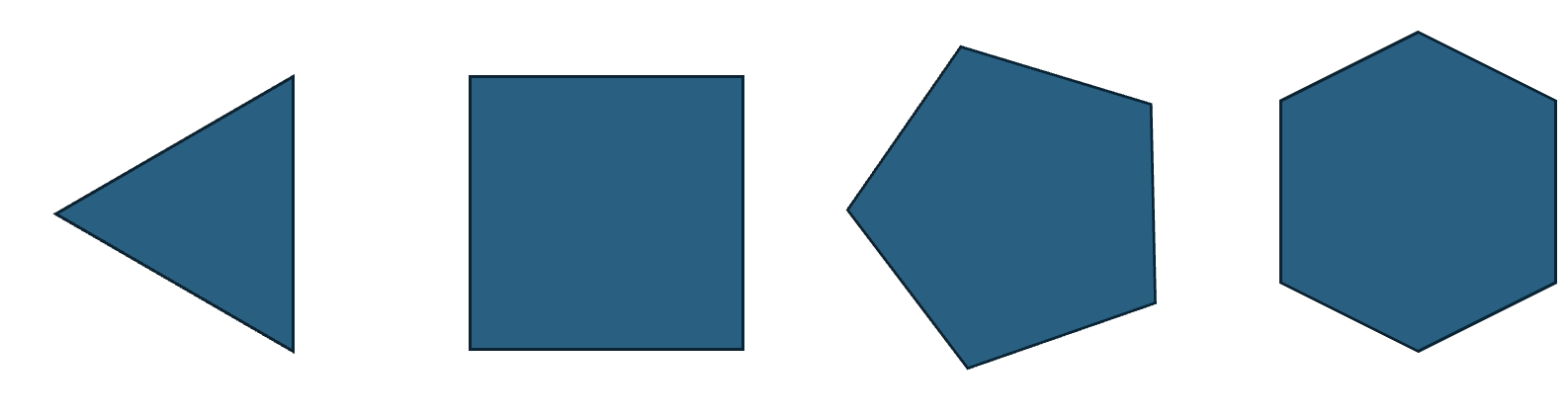
Figure 1: Depiction of the assumed default orientation of an N-sided polygon engineering unit.
The polygon is defined by infinite planes, one per side. The -th plane (where and the 0th face is the right-most face) is described by the equation
where is the apothem (the center-to-flat distance). In the general plane form , this corresponds to coefficients , , , and . The interior of the polygon is the intersection of the negative half-spaces of these planes.
Construction
A CSGNPolygonUnit is created like any other engineering unit by constructing a unique pointer and adding it to the CSGBase instance with addEngUnit() (see Engineering Units). The constructor requires a unique name, the number of sides (), and the apothem ():
  // define a 4-sided polygon
  std::unique_ptr<CSGNPolygonUnit> poly_ptr =
      std::make_unique<CSGNPolygonUnit>("polygon_unit", 4, 2.0);
  const auto & poly = csg_obj->addEngUnit(std::move(poly_ptr)); // returns CSGEngUnit type
  // make a 4-sided polygon with apothem length 2.0
  std::unique_ptr<CSGNPolygonUnit> poly_ptr = std::make_unique<CSGNPolygonUnit>(name, 4, 2.0);
  // add to base and return as CSGNPolygonUnit type
  const auto & poly = csg_obj->addEngUnit<CSGNPolygonUnit>(std::move(poly_ptr));
Attributes
The getAttributes() method returns a map containing the two defining parameters of the polygon:
| Attribute | Type | Description |
|---|---|---|
num_sides | int | number of sides of the regular polygon |
apothem | Real | distance from the center to a side (flat) |
These attributes are the minimum information needed to fully define the polygon for downstream connected codes and are what get written to the CSG JSON output when the unit is not expanded.
In addition to the attributes above, several convenience getter methods are provided to retrieve other geometric quantities derived from the number of sides and apothem:
getNumSides(): returns the number of sidesgetApothem(): returns the apothem (center-to-flat distance)getSideLength(): returns the edge length, computed asgetRadius(): returns the circumradius (center-to-vertex distance), computed as
Use as a Surface
Because CSGNPolygonUnit is a CSGSurfaceEngUnit, it can be used in place of a CSGSurface when defining the region of a CSGCell. The "negative" half-space of the unit corresponds to the interior of the polygon. The example below creates a square (a 4-sided polygon with apothem 2.0, i.e., a side length of 4.0) and uses its interior as the region of a material-filled cell:
  // make a cell that uses the polygon unit in the region definition as if it were a regular surface
  std::unique_ptr<CSGNPolygonUnit> poly_ptr =
      std::make_unique<CSGNPolygonUnit>("polygon_unit", 4, 2.0);
  const auto & poly = csg_obj->addEngUnit(std::move(poly_ptr));
  const auto & cell = csg_obj->createCell("my_cell", "my_mat", -poly); // negative half-space
Half-space Determination
As a CSGSurfaceEngUnit, the polygon implements evaluateSurfaceEquationAtPoint, which is used by getHalfspaceFromPoint to determine whether a point lies inside or outside the polygon. For a point , the method evaluates
for each side and returns the maximum value over all sides. A point is interior to the polygon only if this value is negative for every side, so returning the maximum yields a negative value when the point is inside, a positive value when it is outside, and zero when it lies exactly on a side. This evaluation uses the stored geometric parameters directly and therefore can be performed before the unit is expanded.
Expansion
When a CSGNPolygonUnit is expanded (see Expansion), its expandUnit() implementation creates CSGPlane surfaces, one for each side of the polygon. Each generated plane is named using the scheme [UnitName]_expanded_surf_[k], where k is the side index. For each plane, the half-space containing the origin is determined and intersected with the accumulating region so that final CSGRegion defines the interior of the polygon. When the unit is expanded within a CSGBase instance, the unit is replaced by this new CSGRegion and the generated CSGPlane surfaces are added to the base.
Example Use Case
The following is an end-to-end example of a mesh generator that produces an N-sided polygon unit, with the option to expand it into its rudimentary components. Within the generateCSG method, the polygon unit is created and added to the CSGBase instance, used as the region of a material cell, and optionally expanded based on the expand_unit input parameter.
  // name of the current mesh generator to use for naming generated objects
  auto mg_name = this->name();

  // initialize a CSGBase object
  auto csg_obj = std::make_unique<CSG::CSGBase>();

  // create an CSGNPolygonUnit for the surface
  std::unique_ptr<CSG::CSGNPolygonUnit> poly_ptr =
      std::make_unique<CSG::CSGNPolygonUnit>(mg_name + "_poly_surf", _num_sides, _apothem);
  const auto & poly = csg_obj->addEngUnit(std::move(poly_ptr));

  // create the cell with region defined by the polygon
  const auto cell_name = mg_name + "_poly_cell";
  const auto material_name = "poly_material";
  csg_obj->createCell(cell_name, material_name, -poly);

  // expand polygon unit if requested
  if (_expand)
    csg_obj->expandEngUnit(poly);

  return csg_obj;
When run without expansion, the engineering unit itself is the final output. For example, the following input creates an infinite triangular prism (a 3-sided polygon with an apothem of 4):
[Mesh<<<{"href": "../../syntax/Mesh/index.html"}>>>]
  [tri_prism]
    type = TestPolygonUnitMeshGenerator
    apothem = 4
    num_sides = 3
  []
[]This produces the CSG JSON output below, where the polygon unit is reported directly using its attributes (num_sides and apothem):
{
  "cells": {
    "tri_prism_poly_cell": {
      "fill": "poly_material",
      "filltype": "CSG_MATERIAL",
      "region_infix": [
        "-tri_prism_poly_surf"
      ],
      "region_postfix": [
        "tri_prism_poly_surf",
        "-"
      ]
    }
  },
  "units": {
    "tri_prism_poly_surf": {
      "attributes": {
        "apothem": 4.0,
        "num_sides": 3
      },
      "behavior": "SURFACE",
      "unit_type": "CSG::CSGNPolygonUnit"
    }
  },
  "universes": {
    "ROOT_UNIVERSE": {
      "cells": [
        "tri_prism_poly_cell"
      ],
      "root": true
    }
  }
}
When expand_unit = true, the polygon unit is removed from the output and replaced with the corresponding plane surfaces and the interior region:
[Mesh<<<{"href": "../../syntax/Mesh/index.html"}>>>]
  [tri_prism]
    type = TestPolygonUnitMeshGenerator
    apothem = 4
    num_sides = 3
    expand_unit = true
  []
[]The resulting output shows the three generated CSGPlane surfaces (named following the [UnitName]_expanded_surf_[k] scheme) and the cell region defined by their intersection:
{
  "cells": {
    "tri_prism_poly_cell": {
      "fill": "poly_material",
      "filltype": "CSG_MATERIAL",
      "region_infix": [
        "-tri_prism_poly_surf_expanded_surf_0",
        "&",
        "-tri_prism_poly_surf_expanded_surf_1",
        "&",
        "-tri_prism_poly_surf_expanded_surf_2"
      ],
      "region_postfix": [
        "tri_prism_poly_surf_expanded_surf_0",
        "-",
        "tri_prism_poly_surf_expanded_surf_1",
        "-",
        "&",
        "tri_prism_poly_surf_expanded_surf_2",
        "-",
        "&"
      ]
    }
  },
  "surfaces": {
    "tri_prism_poly_surf_expanded_surf_0": {
      "coefficients": {
        "a": 1.0,
        "b": 0.0,
        "c": 0.0,
        "d": 4.0
      },
      "type": "CSG::CSGPlane"
    },
    "tri_prism_poly_surf_expanded_surf_1": {
      "coefficients": {
        "a": -0.49999999999999983,
        "b": 0.8660254037844387,
        "c": 0.0,
        "d": 4.0
      },
      "type": "CSG::CSGPlane"
    },
    "tri_prism_poly_surf_expanded_surf_2": {
      "coefficients": {
        "a": -0.5000000000000004,
        "b": -0.8660254037844384,
        "c": 0.0,
        "d": 4.0
      },
      "type": "CSG::CSGPlane"
    }
  },
  "universes": {
    "ROOT_UNIVERSE": {
      "cells": [
        "tri_prism_poly_cell"
      ],
      "root": true
    }
  }
}
(unit/src/CSGBaseTest.C)
// This file is part of the MOOSE framework
// https://mooseframework.inl.gov
//
// All rights reserved, see COPYRIGHT for full restrictions
// https://github.com/idaholab/moose/blob/master/COPYRIGHT
//
// Licensed under LGPL 2.1, please see LICENSE for details
// https://www.gnu.org/licenses/lgpl-2.1.html
#include "gtest/gtest.h"
#include "CSGBase.h"
#include "CSGSphere.h"
#include "CSGPlane.h"
#include "CSGXCylinder.h"
#include "CSGCartesianLattice.h"
#include "CSGHexagonalLattice.h"
#include "CSGTransformationHelper.h"
#include "CSGNPolygonUnit.h"
#include "CSGEngUnitTest.h"
#include "CSGRegionTestHelper.h"
#include "MooseUnitUtils.h"
namespace CSG
{
/**
* Tests associated with CSGSurfaceList functionality as called through CSGBase
*/
/// tests CSG[Base/SurfaceList]::addSurface() and CSG[Base/SurfaceList]::getSurfaceByName()
TEST(CSGBaseTest, testAddGetSurface)
{
// initialize a CSGBase object
auto csg_obj = std::make_unique<CSG::CSGBase>();
// make two surfaces that have the same name
std::unique_ptr<CSG::CSGSphere> surf_ptr1 = std::make_unique<CSG::CSGSphere>("surf", 1.0);
std::unique_ptr<CSG::CSGSphere> surf_ptr2 = std::make_unique<CSG::CSGSphere>("surf", 2.0);
// add one surface to base initially
const auto & added_surf = csg_obj->addSurface(std::move(surf_ptr1));
// assert surface is present after adding by successfully using getSurfaceByName
{
// check for whether surface with given name exists in CSGBase
ASSERT_FALSE(csg_obj->hasSurface("dummy"));
ASSERT_TRUE(csg_obj->hasSurface("surf"));
// public method, returns const
ASSERT_TRUE(added_surf == csg_obj->getSurfaceByName("surf"));
// private method, returns non-const
ASSERT_TRUE(added_surf == csg_obj->getSurface("surf"));
}
// try to add surface that already exists of the same name, should raise error
{
Moose::UnitUtils::assertThrows([&csg_obj, &surf_ptr2]()
{ csg_obj->addSurface(std::move(surf_ptr2)); },
"Surface with name surf already exists in geometry.");
}
// try to get surface that doesn't exist in base, should raise error
{
Moose::UnitUtils::assertThrows([&csg_obj]() { csg_obj->getSurfaceByName("fake_name"); },
"No surface by name fake_name exists in the geometry.");
}
}
/// tests CSG[Base/SurfaceList]::getAllSurfaces
TEST(CSGBaseTest, testGetAllSurfaces)
{
// initialize a CSGBase object
auto csg_obj = std::make_unique<CSG::CSGBase>();
// make two surfaces to add to base
std::unique_ptr<CSG::CSGSphere> surf_ptr1 = std::make_unique<CSG::CSGSphere>("surf1", 1.0);
std::unique_ptr<CSG::CSGSphere> surf_ptr2 = std::make_unique<CSG::CSGSphere>("surf2", 2.0);
csg_obj->addSurface(std::move(surf_ptr1));
csg_obj->addSurface(std::move(surf_ptr2));
auto all_surfs = csg_obj->getAllSurfaces();
ASSERT_EQ(2, all_surfs.size());
}
/// tests CSG[Base/SurfaceList]::renameSurface
TEST(CSGBaseTest, testRenameSurface)
{
// initialize a CSGBase object
auto csg_obj = std::make_unique<CSG::CSGBase>();
// make two surfaces to add to base
std::unique_ptr<CSG::CSGSphere> surf_ptr1 = std::make_unique<CSG::CSGSphere>("surf1", 1.0);
std::unique_ptr<CSG::CSGSphere> surf_ptr2 = std::make_unique<CSG::CSGSphere>("surf2", 2.0);
const auto & s1 = csg_obj->addSurface(std::move(surf_ptr1));
const auto & s2 = csg_obj->addSurface(std::move(surf_ptr2));
// successfully rename surface
{
csg_obj->renameSurface(s1, "george");
ASSERT_EQ("george", s1.getName());
}
// error should be raised if try to rename to a name that already exists
{
Moose::UnitUtils::assertThrows([&csg_obj, &s2]() { csg_obj->renameSurface(s2, "george"); },
"Surface with name george already exists in geometry");
}
// error should be raised if trying to rename a surface that is not a part of this instance
{
// initialize a new CSGBase object
auto csg_obj_new = std::make_unique<CSG::CSGBase>();
// make new surface to add to new base
std::unique_ptr<CSG::CSGSphere> surf_ptr3 = std::make_unique<CSG::CSGSphere>("surf3", 1.0);
const auto & s3 = csg_obj_new->addSurface(std::move(surf_ptr3));
// try to rename s3 via original base where it was not added
Moose::UnitUtils::assertThrows([&csg_obj, &s3]() { csg_obj->renameSurface(s3, "ringo"); },
"cannot be renamed to ringo as it does not exist");
}
}
/// tests CSGBase::checkRegionSurfaces
TEST(CSGBaseTest, testCheckRegionSurfaces)
{
// make two sets of surfaces that are identical but different base ownership
// create a region from surfaces in base 1 and make sure that base 2 recognizes the surfaces as
// not available in that base even though names exist
auto csg_obj1 = std::make_unique<CSG::CSGBase>();
std::unique_ptr<CSG::CSGSphere> surf1 = std::make_unique<CSG::CSGSphere>("surf", 1.0);
const auto & s1 = csg_obj1->addSurface(std::move(surf1));
auto csg_obj2 = std::make_unique<CSG::CSGBase>();
std::unique_ptr<CSG::CSGSphere> surf2 = std::make_unique<CSG::CSGSphere>("surf", 1.0);
csg_obj2->addSurface(std::move(surf2));
auto reg1 = +s1; // uses surfaces from base 1
// expect error when surfaces are checked in base2
Moose::UnitUtils::assertThrows([&csg_obj2, ®1]() { csg_obj2->checkRegionSurfaces(reg1); },
"Region is being set with a surface named surf that is different "
"from the surface of the same name in the CSGBase instance.");
}
/// tests CSGBase::deleteSurface
TEST(CSGBaseTest, testDeleteSurface)
{
// initialize a CSGBase object
auto csg_obj = std::make_unique<CSG::CSGBase>();
// make a surface and add it to base
std::unique_ptr<CSG::CSGSphere> surf_ptr1 =
std::make_unique<CSG::CSGSphere>("surf_to_delete", 1.0);
const auto & surf_to_delete = csg_obj->addSurface(std::move(surf_ptr1));
ASSERT_TRUE(csg_obj->hasSurface("surf_to_delete"));
// delete surface and confirm it no longer exists in base
csg_obj->deleteSurface(surf_to_delete);
ASSERT_FALSE(csg_obj->hasSurface("surf_to_delete"));
// create a new surface that is used in a cell region definition
std::unique_ptr<CSG::CSGSphere> surf_ptr2 =
std::make_unique<CSG::CSGSphere>("surf_cannot_delete", 2.0);
const auto & surf_cannot_delete = csg_obj->addSurface(std::move(surf_ptr2));
const auto & cell = csg_obj->createCell("cell", +surf_cannot_delete);
// try to delete this surface, this should not be allowable as a cell depends on this surface
{
Moose::UnitUtils::assertThrows(
[&csg_obj, &surf_cannot_delete]() { csg_obj->deleteSurface(surf_cannot_delete); },
"Cannot delete surface with name surf_cannot_delete as it is used in region definition");
}
// try to delete this surface by deleting cell first
csg_obj->deleteCell(cell);
csg_obj->deleteSurface(surf_cannot_delete);
ASSERT_FALSE(csg_obj->hasSurface("surf_cannot_delete"));
}
/**
* Tests associated with CSGCellList or CSGCell functionality as called through CSGBase
*/
/// tests CSG[Base/CellList]::createCell
TEST(CSGBaseTest, testCreateCell)
{
// create each type of cell, each w/ or w/out add_to_univ specified to test universe ownership
// initialize a CSGBase object
auto csg_obj = std::make_unique<CSG::CSGBase>();
// surfaces for regions for cell
std::unique_ptr<CSG::CSGSphere> surf1 = std::make_unique<CSG::CSGSphere>("surf1", 1.0);
const auto & s1 = csg_obj->addSurface(std::move(surf1));
auto reg1 = +s1;
// make a new universe to which the new cells can be added at time of creation
auto & add_to_univ = csg_obj->createUniverse("add_univ");
// root universe to check in tests
auto & root_univ = csg_obj->getRootUniverse();
// create lattice to be used as fill
auto & lat_univ1 = csg_obj->createUniverse("latt_univ1");
std::unique_ptr<CSG::CSGCartesianLattice> lat_ptr = std::make_unique<CSG::CSGCartesianLattice>(
"lat1",
1.0,
std::vector<std::vector<std::reference_wrapper<const CSGUniverse>>>{
{std::cref(lat_univ1), std::cref(lat_univ1)}});
const auto & lattice = csg_obj->addLattice<CSG::CSGCartesianLattice>(std::move(lat_ptr));
// make void cells and check universe ownership
{
// create cell to be auto added to root universe
std::string cname1 = "void_cell1";
// create a void cell with name cname1 and defined by region reg1
csg_obj->createCell(cname1, reg1);
// create a cell and add to different universe, not root
std::string cname2 = "void_cell2";
csg_obj->createCell(cname2, reg1, &add_to_univ);
// cname1 should exist in root but not the other universe
ASSERT_TRUE(root_univ.hasCell(cname1));
ASSERT_FALSE(add_to_univ.hasCell(cname1));
// cname2 should exist in add_to_univ but not root
ASSERT_TRUE(add_to_univ.hasCell(cname2));
ASSERT_FALSE(root_univ.hasCell(cname2));
}
// make material cells and check universe ownership
{
// create cell to be auto added to root universe
std::string cname1 = "mat_cell1";
// create a material-filled cell with name cname1, a fill with material matname,
// and defined by region reg1
csg_obj->createCell(cname1, "matname", reg1);
// create a cell and add to different universe, not root
std::string cname2 = "mat_cell2";
csg_obj->createCell(cname2, "matname", reg1, &add_to_univ);
// cname1 should exist in root but not the other universe
ASSERT_TRUE(root_univ.hasCell(cname1));
ASSERT_FALSE(add_to_univ.hasCell(cname1));
// cname2 should exist in add_to_univ but not root
ASSERT_TRUE(add_to_univ.hasCell(cname2));
ASSERT_FALSE(root_univ.hasCell(cname2));
}
// make universe cells and check universe ownership
{
auto new_univ = csg_obj->createUniverse("new_univ");
// create cell to be auto added to root universe
std::string cname1 = "univ_cell1";
// create a universe-filled cell with name cname1, a fill of universe new_univ,
// and defined by region reg1
csg_obj->createCell(cname1, new_univ, reg1);
// create a cell and add to different universe, not root
std::string cname2 = "univ_cell2";
csg_obj->createCell(cname2, new_univ, reg1, &add_to_univ);
// cname1 should exist in root but not the other universe
ASSERT_TRUE(root_univ.hasCell(cname1));
ASSERT_FALSE(add_to_univ.hasCell(cname1));
// cname2 should exist in add_to_univ but not root
ASSERT_TRUE(add_to_univ.hasCell(cname2));
ASSERT_FALSE(root_univ.hasCell(cname2));
}
// expected error: create a universe cell and add it to the same universe
{
Moose::UnitUtils::assertThrows(
[&csg_obj, &add_to_univ, ®1]()
{ csg_obj->createCell("c", add_to_univ, reg1, &add_to_univ); },
"cannot be filled with the same universe to which it is being added");
}
// make lattice cells and check universe ownership
{
// create cell to be auto added to root universe
std::string cname1 = "latt_cell1";
// create a lattice-filled cell with name cname1, a fill of lattice,
// and defined by region reg1
csg_obj->createCell(cname1, lattice, reg1);
// create a cell and add to different universe, not root
std::string cname2 = "latt_cell2";
csg_obj->createCell(cname2, lattice, reg1, &add_to_univ);
// cname1 should exist in root but not the other universe
ASSERT_TRUE(root_univ.hasCell(cname1));
ASSERT_FALSE(add_to_univ.hasCell(cname1));
// cname2 should exist in add_to_univ but not root
ASSERT_TRUE(add_to_univ.hasCell(cname2));
ASSERT_FALSE(root_univ.hasCell(cname2));
}
// expected error: create a lattice cell and add it to a universe that exists in the lattice
// itself
{
Moose::UnitUtils::assertThrows(
[&csg_obj, &lattice, &lat_univ1, ®1]()
{ csg_obj->createCell("c", lattice, reg1, &lat_univ1); },
"cannot be filled with a lattice containing the same universe to which it is being added");
}
// expect error: create a cell with existing name
{
Moose::UnitUtils::assertThrows([&csg_obj, ®1]() { csg_obj->createCell("void_cell1", reg1); },
"Cell with name void_cell1 already exists");
}
}
/// tests CSG[Base/CellList]::getAllCells
TEST(CSGBaseTest, testGetAllCells)
{
auto csg_obj = std::make_unique<CSG::CSGBase>();
std::unique_ptr<CSG::CSGSphere> surf1 = std::make_unique<CSG::CSGSphere>("surf1", 1.0);
const auto & s1 = csg_obj->addSurface(std::move(surf1));
csg_obj->createCell("c1", +s1);
csg_obj->createCell("c2", -s1);
// expect the 2 cells to be present
auto all_cells = csg_obj->getAllCells();
ASSERT_EQ(2, all_cells.size());
}
/// tests CSGBase::getCellByName / CSGCellList::getCell
TEST(CSGBaseTest, testGetCellByName)
{
auto csg_obj = std::make_unique<CSG::CSGBase>();
std::unique_ptr<CSG::CSGSphere> surf1 = std::make_unique<CSG::CSGSphere>("surf1", 1.0);
const auto & s1 = csg_obj->addSurface(std::move(surf1));
auto c1 = csg_obj->createCell("c1", +s1);
// get cell that exists
{
auto c1_get = csg_obj->getCellByName("c1");
ASSERT_EQ(c1, c1_get);
}
// try to get cell that doesn't exist in base, should raise error
{
Moose::UnitUtils::assertThrows([&csg_obj]() { csg_obj->getCellByName("fake_name"); },
"No cell by name fake_name exists in the geometry.");
}
}
/// tests CSG[Base/CellList]::renameCell
TEST(CSGBaseTest, testRenameCell)
{
auto csg_obj = std::make_unique<CSG::CSGBase>();
std::unique_ptr<CSG::CSGSphere> surf1 = std::make_unique<CSG::CSGSphere>("surf1", 1.0);
const auto & s1 = csg_obj->addSurface(std::move(surf1));
auto & c1 = csg_obj->createCell("c1", +s1);
// rename success
{
csg_obj->renameCell(c1, "paul");
ASSERT_EQ("paul", c1.getName());
}
// rename cell to existing name
{
// make a second cell
auto & c2 = csg_obj->createCell("c2", -s1);
Moose::UnitUtils::assertThrows([&csg_obj, &c2]() { csg_obj->renameCell(c2, "paul"); },
"Cell with name paul already exists");
}
// rename cell that does not exist in this base
{
// make an identical cell in a different base
auto csg_obj2 = std::make_unique<CSG::CSGBase>();
std::unique_ptr<CSG::CSGSphere> surf2 = std::make_unique<CSG::CSGSphere>("surf1", 1.0);
const auto & s2 = csg_obj2->addSurface(std::move(surf2));
auto & c2 = csg_obj2->createCell("c1", +s2);
// try to rename from the first base
Moose::UnitUtils::assertThrows([&csg_obj, &c2]() { csg_obj->renameCell(c2, "john"); },
"cannot be renamed to john as it does not exist");
}
}
/// tests CSGBase::updateCellRegion
TEST(CSGBaseTest, testUpdateCellRegion)
{
auto csg_obj = std::make_unique<CSG::CSGBase>();
std::unique_ptr<CSG::CSGSphere> surf1 = std::make_unique<CSG::CSGSphere>("surf1", 1.0);
const auto & s1 = csg_obj->addSurface(std::move(surf1));
auto & c1 = csg_obj->createCell("c1", +s1);
// successfully update cell region to new region
{
csg_obj->updateCellRegion(c1, -s1);
ASSERT_EQ(-s1, c1.getRegion());
}
// try to update cell not in this base
{
// make an identical cell in a different base
auto csg_obj2 = std::make_unique<CSG::CSGBase>();
std::unique_ptr<CSG::CSGSphere> surf2 = std::make_unique<CSG::CSGSphere>("surf1", 1.0);
const auto & s2 = csg_obj2->addSurface(std::move(surf2));
auto & c2 = csg_obj2->createCell("c1", +s2);
Moose::UnitUtils::assertThrows([&csg_obj, &c2, &s1]() { csg_obj->updateCellRegion(c2, -s1); },
"that is being updated is different from the cell of the same "
"name in the CSGBase instance.");
}
}
/// tests CSGBase::updateCellFill and CSGBase::resetCellFill
TEST(CSGBaseTest, testUpdateCellFill)
{
auto csg_obj = std::make_unique<CSG::CSGBase>();
std::unique_ptr<CSG::CSGSphere> surf1 = std::make_unique<CSG::CSGSphere>("surf1", 1.0);
const auto & s1 = csg_obj->addSurface(std::move(surf1));
auto & c1 = csg_obj->createCell("c1", "mat", +s1);
// successfully update cell fill to a new material name
{
csg_obj->updateCellFill(c1, "new_mat");
ASSERT_EQ("new_mat", c1.getFillMaterial());
}
{
// successfully update cell fill to a universe
const auto & univ = csg_obj->createUniverse("universe");
csg_obj->updateCellFill(c1, &univ);
ASSERT_EQ(univ, c1.getFillUniverse());
// safely remove universe by resetting cell fill type
csg_obj->resetCellFill(c1);
csg_obj->deleteUniverse(univ);
ASSERT_FALSE(csg_obj->hasUniverse("universe"));
}
{
// successfully update cell fill to a lattice
std::unique_ptr<CSGCartesianLattice> lat_ptr =
std::make_unique<CSGCartesianLattice>("lattice", 1.0);
const auto & lattice = csg_obj->addLattice(std::move(lat_ptr));
csg_obj->updateCellFill(c1, &lattice);
ASSERT_EQ(lattice, c1.getFillLattice());
// safely remove lattice by resetting cell fill type
csg_obj->resetCellFill(c1);
csg_obj->deleteLattice(lattice);
ASSERT_FALSE(csg_obj->hasLattice("lattice"));
}
// successfully reset cell fill to void
{
csg_obj->resetCellFill(c1);
ASSERT_EQ("VOID", c1.getFillType());
}
}
/// tests CSGBase::deleteCell
TEST(CSGBaseTest, testDeleteCell)
{
// initialize a CSGBase object
auto csg_obj = std::make_unique<CSG::CSGBase>();
// make a cell and add it to base
CSGRegion empty_region;
const auto & cell_to_delete = csg_obj->createCell("cell_to_delete", empty_region);
ASSERT_TRUE(csg_obj->hasCell("cell_to_delete"));
// delete cell and confirm it no longer exists in base
csg_obj->deleteCell(cell_to_delete);
ASSERT_FALSE(csg_obj->hasCell("cell_to_delete"));
// create a cell that is used in a universe definition
const auto & universe = csg_obj->createUniverse("universe");
const auto & cell_cannot_delete =
csg_obj->createCell("cell_cannot_delete", empty_region, &universe);
// try to delete this cell, this should throw a warning that a universe depends on this cell
{
Moose::UnitUtils::assertThrows([&csg_obj, &cell_cannot_delete]()
{ csg_obj->deleteCell(cell_cannot_delete); },
"Removing cell cell_cannot_delete from universe");
}
// try to delete this cell by deleting universe first
csg_obj->deleteUniverse(universe);
csg_obj->deleteCell(cell_cannot_delete);
ASSERT_FALSE(csg_obj->hasCell("cell_cannot_delete"));
}
/**
* Tests associated with CSGUniverseList and CSGUniverse functionality as called through CSGBase
*/
/// tests CSGBase::createUniverse
TEST(CSGBaseTest, testCreateUniverse)
{
auto csg_obj = std::make_unique<CSG::CSGBase>();
// create empty universe
{
auto & univ = csg_obj->createUniverse("thelma");
ASSERT_NO_THROW(csg_obj->getUniverseByName("thelma")); // no throw confirms existence
ASSERT_EQ(0, univ.getAllCells().size()); // confirms empty
}
// create universe from cells
{
std::unique_ptr<CSG::CSGSphere> surf1 = std::make_unique<CSG::CSGSphere>("surf1", 1.0);
const auto & s1 = csg_obj->addSurface(std::move(surf1));
auto & c1 = csg_obj->createCell("c1", +s1);
auto & c2 = csg_obj->createCell("c2", -s1);
// create a list of cells to be added to the universe
std::vector<std::reference_wrapper<const CSG::CSGCell>> cells = {c1, c2};
auto & univ = csg_obj->createUniverse("louise", cells);
ASSERT_NO_THROW(csg_obj->getUniverseByName("louise")); // no throw confirms existence
ASSERT_EQ(2, univ.getAllCells().size()); // confirms has cells
}
// create universe for name that already exists
{
Moose::UnitUtils::assertThrows([&csg_obj]() { csg_obj->createUniverse("louise"); },
"Universe with name louise already exists in geometry.");
}
}
/// tests CSG[Base/UniverseList]::renameUniverse and CSGBase::renameRootUniverse
TEST(CSGBaseTest, renameUniverse)
{
auto csg_obj = std::make_unique<CSG::CSGBase>();
auto & root = csg_obj->getRootUniverse();
std::string new_name_1 = "simon";
std::string new_name_2 = "alvin";
std::string new_name_3 = "theo";
// rename root through root-specific function
{
csg_obj->renameRootUniverse(new_name_1);
ASSERT_EQ(new_name_1, root.getName());
}
// rename root by passing to method explicitly
{
csg_obj->renameUniverse(root, new_name_2);
ASSERT_EQ(new_name_2, root.getName());
}
// rename a different universe to name that already exists, should raise error
{
auto & univ = csg_obj->createUniverse("new_univ");
Moose::UnitUtils::assertThrows([&csg_obj, &univ, &new_name_2]()
{ csg_obj->renameUniverse(univ, new_name_2); },
"Universe with name " + new_name_2 + " already exists");
}
// rename a universe that doesn't exist in the current base
{
auto csg_obj2 = std::make_unique<CSG::CSGBase>();
auto & univ = csg_obj2->createUniverse("new_univ");
Moose::UnitUtils::assertThrows([&csg_obj, &univ, &new_name_3]()
{ csg_obj->renameUniverse(univ, new_name_3); },
"cannot be renamed to " + new_name_3 + " as it does not exist");
}
}
/// tests CSGBase::addCell[s]ToUniverse
TEST(CSGBaseTest, testAddCellToUniverse)
{
auto csg_obj = std::make_unique<CSG::CSGBase>();
std::unique_ptr<CSG::CSGSphere> surf1 = std::make_unique<CSG::CSGSphere>("surf1", 1.0);
const auto & s1 = csg_obj->addSurface(std::move(surf1));
auto & c1 = csg_obj->createCell("c1", +s1);
auto & c2 = csg_obj->createCell("c2", -s1);
auto & c3 = csg_obj->createCell("c3", -s1 | +s1);
auto & univ = csg_obj->createUniverse("univ");
// add a list of cells to an existing universe
{
std::vector<std::reference_wrapper<const CSG::CSGCell>> cells = {c1, c2};
csg_obj->addCellsToUniverse(univ, cells);
ASSERT_EQ(2, univ.getAllCells().size());
}
// add individual cell
{
csg_obj->addCellToUniverse(univ, c3);
ASSERT_EQ(3, univ.getAllCells().size());
}
// add cell that is not in current base but has the same name and attributes, should raise error
{
auto csg_obj2 = std::make_unique<CSG::CSGBase>();
std::unique_ptr<CSG::CSGSphere> surf2 = std::make_unique<CSG::CSGSphere>("surf1", 1.0);
const auto & s2 = csg_obj2->addSurface(std::move(surf2));
auto & c4 = csg_obj2->createCell("c1", +s2);
Moose::UnitUtils::assertThrows([&csg_obj, &univ, &c4]()
{ csg_obj->addCellToUniverse(univ, c4); },
"is being added to universe univ that is different from the "
"cell of the same name in the CSGBase instance.");
}
// add cell that is in the base a universe that is not in the base, should raise error
{
auto csg_obj2 = std::make_unique<CSG::CSGBase>();
auto & univ_new = csg_obj2->createUniverse("univ");
Moose::UnitUtils::assertThrows(
[&csg_obj, &univ_new, &c1]() { csg_obj->addCellToUniverse(univ_new, c1); },
"Cells are being added to a universe named univ that is different "
"from the universe of the same name in the CSGBase instance.");
}
}
/// tests CSGBase::removeCell[s]FromUniverse
TEST(CSGBaseTest, testRemoveCellFromUniverse)
{
auto csg_obj = std::make_unique<CSG::CSGBase>();
std::unique_ptr<CSG::CSGSphere> surf1 = std::make_unique<CSG::CSGSphere>("surf1", 1.0);
const auto & s1 = csg_obj->addSurface(std::move(surf1));
auto & c1 = csg_obj->createCell("c1", +s1);
auto & c2 = csg_obj->createCell("c2", -s1);
auto & c3 = csg_obj->createCell("c3", -s1 | +s1);
std::vector<std::reference_wrapper<const CSG::CSGCell>> cells = {c1, c2, c3};
auto & univ = csg_obj->createUniverse("univ", cells);
// remove inidividual cell
{
csg_obj->removeCellFromUniverse(univ, c1);
ASSERT_EQ(2, univ.getAllCells().size());
}
// remove list of cells
{
std::vector<std::reference_wrapper<const CSG::CSGCell>> cells_remove = {c2, c3};
csg_obj->removeCellsFromUniverse(univ, cells_remove);
ASSERT_EQ(0, univ.getAllCells().size());
}
// remove cell that is not in current base but has the same name and attributes, should raise
// error
{
auto csg_obj2 = std::make_unique<CSG::CSGBase>();
std::unique_ptr<CSG::CSGSphere> surf2 = std::make_unique<CSG::CSGSphere>("surf1", 1.0);
const auto & s2 = csg_obj2->addSurface(std::move(surf2));
auto & c4 = csg_obj2->createCell("c1", +s2);
Moose::UnitUtils::assertThrows([&csg_obj, &univ, &c4]()
{ csg_obj->removeCellFromUniverse(univ, c4); },
"is being removed from universe univ that is different from the "
"cell of the same name in the CSGBase instance.");
}
// remove cell that is in the base a universe that is not in the base, should raise error
{
auto csg_obj2 = std::make_unique<CSG::CSGBase>();
auto & univ_new = csg_obj2->createUniverse("univ");
Moose::UnitUtils::assertThrows(
[&csg_obj, &univ_new, &c1]() { csg_obj->removeCellFromUniverse(univ_new, c1); },
"Cells are being removed from a universe named univ that is different "
"from the universe of the same name in the CSGBase instance.");
}
}
/// tests CSGBase::get*Universe* methods
TEST(CSGBaseTest, testGetUniverse)
{
auto csg_obj = std::make_unique<CSG::CSGBase>();
auto & univ = csg_obj->createUniverse("harry");
// get root
{
auto & root = csg_obj->getRootUniverse();
ASSERT_TRUE(root.isRoot());
}
// successful getUniverseByName call
{
auto & univ_get = csg_obj->getUniverseByName("harry");
ASSERT_EQ(univ, univ_get);
}
// get universe for name that does not exist, expect error
{
Moose::UnitUtils::assertThrows([&csg_obj]() { csg_obj->getUniverseByName("potter"); },
"No universe by name potter exists in the geometry.");
}
// getAllUniverses
{
// two universes expected: ROOT_UNIVERSE and harry
auto all_univs = csg_obj->getAllUniverses();
ASSERT_EQ(2, all_univs.size());
}
}
/// tests CSGBase::deleteUniverse
TEST(CSGBaseTest, testDeleteUniverse)
{
// initialize a CSGBase object
auto csg_obj = std::make_unique<CSG::CSGBase>();
// try to delete the root universe, this is not allowable
{
Moose::UnitUtils::assertThrows([&csg_obj]()
{ csg_obj->deleteUniverse(csg_obj->getRootUniverse()); },
"Cannot delete root universe");
}
// make a universe and add it to base
const auto & universe_to_delete = csg_obj->createUniverse("universe_to_delete");
ASSERT_TRUE(csg_obj->hasUniverse("universe_to_delete"));
// delete universe and confirm it no longer exists in base
csg_obj->deleteUniverse(universe_to_delete);
ASSERT_FALSE(csg_obj->hasUniverse("universe_to_delete"));
// create a universe that is used as a cell fill
const auto & universe_cannot_delete = csg_obj->createUniverse("universe_cannot_delete");
CSGRegion empty_region;
const auto & cell = csg_obj->createCell("cell", universe_cannot_delete, empty_region);
// try to delete this universe, this should throw an error that a cell depends on this universe
{
Moose::UnitUtils::assertThrows([&csg_obj, &universe_cannot_delete]()
{ csg_obj->deleteUniverse(universe_cannot_delete); },
"Cannot delete universe with name universe_cannot_delete as it "
"is used as the fill of cell");
}
// try to delete this universe by deleting cell first
csg_obj->deleteCell(cell);
csg_obj->deleteUniverse(universe_cannot_delete);
ASSERT_FALSE(csg_obj->hasUniverse("universe_cannot_delete"));
// create two universes - one that is used as the outer of a lattice and one that is used to
// define the lattice itself
const auto & outer_univ = csg_obj->createUniverse("universe_cannot_delete2");
const auto & lattice_univ = csg_obj->createUniverse("universe_cannot_delete3");
std::vector<std::vector<std::reference_wrapper<const CSGUniverse>>> univs = {{lattice_univ},
{lattice_univ}};
std::unique_ptr<CSGCartesianLattice> lat_ptr =
std::make_unique<CSGCartesianLattice>("lattice_to_delete", 1.0);
const auto & lattice = csg_obj->addLattice(std::move(lat_ptr));
csg_obj->setLatticeOuter(lattice, outer_univ);
csg_obj->setLatticeUniverses(lattice, univs);
// try to delete the outer universe, this should throw an error that a lattice depends on this
// universe
{
Moose::UnitUtils::assertThrows([&csg_obj, &outer_univ]()
{ csg_obj->deleteUniverse(outer_univ); },
"Cannot delete universe with name universe_cannot_delete2 as it "
"is used as the outer universe");
}
// try to delete the lattice universe, this should throw an error that a lattice depends on this
// universe
{
Moose::UnitUtils::assertThrows(
[&csg_obj, &lattice_univ]() { csg_obj->deleteUniverse(lattice_univ); },
"Cannot delete universe with name universe_cannot_delete3 as it is used in lattice");
}
// try to delete these universes by deleting lattice first
csg_obj->deleteLattice(lattice);
csg_obj->deleteUniverse(outer_univ);
csg_obj->deleteUniverse(lattice_univ);
ASSERT_FALSE(csg_obj->hasUniverse("universe_cannot_delete2"));
ASSERT_FALSE(csg_obj->hasUniverse("universe_cannot_delete3"));
}
/**
* Tests associated with CSGLattice or CSGLatticeList functionality through CSGBase
*/
/// tests the [re]setLatticeOuter methods
TEST(CSGBaseTest, testLatticeOuter)
{
auto csg_obj = std::make_unique<CSG::CSGBase>();
std::unique_ptr<CSG::CSGCartesianLattice> lat_ptr =
std::make_unique<CSG::CSGCartesianLattice>("lat1", 1.0);
const auto & lat = csg_obj->addLattice<CSG::CSGCartesianLattice>(std::move(lat_ptr));
// initial outer should be VOID
{
ASSERT_TRUE(lat.getOuterType() == "VOID");
}
// update to CSG_MATERIAL type
{
csg_obj->setLatticeOuter(lat, "mat_outer");
ASSERT_TRUE(lat.getOuterType() == "CSG_MATERIAL");
ASSERT_TRUE(lat.getOuterMaterial() == "mat_outer");
}
// update to UNIVERSE type
{
auto & u_out = csg_obj->createUniverse("univ_outer"); // universe for lattice outer
csg_obj->setLatticeOuter(lat, u_out);
ASSERT_TRUE(lat.getOuterType() == "UNIVERSE");
ASSERT_TRUE(lat.getOuterUniverse() == u_out);
}
// reset back to VOID
{
csg_obj->resetLatticeOuter(lat);
ASSERT_TRUE(lat.getOuterType() == "VOID");
}
// try to set outer universe that is not in this base
{
auto csg_obj2 = std::make_unique<CSG::CSGBase>();
auto & u_out2 = csg_obj2->createUniverse("univ_outer");
Moose::UnitUtils::assertThrows([&csg_obj, &lat, &u_out2]()
{ csg_obj->setLatticeOuter(lat, u_out2); },
"Cannot set outer universe for lattice lat1. Outer universe "
"univ_outer is not in the CSGBase instance.");
}
}
/// tests CSGBase::addLattice
TEST(CSGBaseTest, testAddLattice)
{
auto csg_obj = std::make_unique<CSG::CSGBase>();
auto & univ = csg_obj->createUniverse("uni");
auto csg_obj2 = std::make_unique<CSG::CSGBase>(); // used for error checking
auto & univ2 = csg_obj2->createUniverse("uni"); // universe of same name from different base
{
// create a lattice as a unique pointer and manually add it to the CSGBase
std::vector<std::vector<std::reference_wrapper<const CSGUniverse>>> univs = {{univ}};
std::unique_ptr<CSGCartesianLattice> custom_lat =
std::make_unique<CSGCartesianLattice>("custom_lat", 1.0, univs);
// add to CSGBase
const auto & lat_ref = csg_obj->addLattice(std::move(custom_lat));
// check that it exists in the base now
auto all_lats = csg_obj->getAllLattices();
ASSERT_EQ(1, all_lats.size());
ASSERT_EQ(lat_ref, all_lats[0]);
}
{
// create a custom lattice containing a universe that was not in this base (raise error)
std::vector<std::vector<std::reference_wrapper<const CSGUniverse>>> univs2 = {{univ2}};
std::unique_ptr<CSGCartesianLattice> custom_lat2 =
std::make_unique<CSGCartesianLattice>("custom_lat2", 1.0, univs2);
// try to add to first CSGBase - raises error because universe is not in this base
Moose::UnitUtils::assertThrows([&csg_obj, &custom_lat2]()
{ csg_obj->addLattice(std::move(custom_lat2)); },
"Cannot add lattice custom_lat2 of type "
"CSG::CSGCartesianLattice. Universe uni is not in the CSGBase "
"instance.");
}
{
// create a custom lattice with a universe outer that is not a part of this base
std::vector<std::vector<std::reference_wrapper<const CSGUniverse>>> univs = {{univ}};
std::unique_ptr<CSGCartesianLattice> custom_lat3 =
std::make_unique<CSGCartesianLattice>("custom_lat3", 1.0, univs);
// set outer universe to one from different base
custom_lat3->updateOuter(univ2);
// try to add to first CSGBase - raises error because outer universe is not in this base
Moose::UnitUtils::assertThrows([&csg_obj, &custom_lat3]()
{ csg_obj->addLattice(std::move(custom_lat3)); },
"Cannot add lattice custom_lat3 of type "
"CSG::CSGCartesianLattice. Outer universe uni is not in the "
"CSGBase instance.");
}
}
/// tests errors are properly raised when adding a lattice that uses universe engineering units that
/// have not been added to CSGBase
TEST(CSGBaseTest, testAddLatticeEngUnitError)
{
// make units but do not add them to base before adding lattice
auto csg_obj = std::make_unique<CSG::CSGBase>();
std::string ele_name = "unit_element";
std::string outer_name = "unit_outer";
auto uele = TestUnivEngUnit(ele_name);
auto uout = TestUnivEngUnit(outer_name);
// make a lattice using these the units as elements (no outer)
std::vector<std::vector<std::reference_wrapper<const CSGUniverse>>> univs = {{uele, uele},
{uele, uele}};
std::unique_ptr<CSGCartesianLattice> lat_ptr1 =
std::make_unique<CSGCartesianLattice>("lat1", 1.0, univs);
// make a lattice with outer units (no elements)
std::unique_ptr<CSGCartesianLattice> lat_ptr2 =
std::make_unique<CSGCartesianLattice>("lat2", 1.0, uout);
// adding either of these lattices should raise an error that the units/universes are not in the
// base instance
Moose::UnitUtils::assertThrows([&csg_obj, &lat_ptr1]()
{ csg_obj->addLattice(std::move(lat_ptr1)); },
"No universe by name unit_element exists in the geometry.");
Moose::UnitUtils::assertThrows([&csg_obj, &lat_ptr2]()
{ csg_obj->addLattice(std::move(lat_ptr2)); },
"No universe by name unit_outer exists in the geometry.");
}
/// tests the CSGBase::setUniverseAtLatticeIndex method
TEST(CSGBaseTest, testSetUniverseAtLatticeIndex)
{
auto csg_obj = std::make_unique<CSG::CSGBase>();
auto & univ1 = csg_obj->createUniverse("spidey");
auto & univ2 = csg_obj->createUniverse("spin");
std::vector<std::vector<std::reference_wrapper<const CSGUniverse>>> univs = {{univ1}, {univ1}};
std::unique_ptr<CSGCartesianLattice> lat_ptr =
std::make_unique<CSGCartesianLattice>("spiderverse", 1.0, univs);
const auto & lat = csg_obj->addLattice(std::move(lat_ptr));
{
// test valid add new univ
csg_obj->setUniverseAtLatticeIndex(lat, univ2, std::make_pair<int, int>(1, 0));
auto all_univs = lat.getUniverses();
ASSERT_EQ(all_univs[0][0].get(), univ1);
ASSERT_EQ(all_univs[1][0].get(), univ2);
}
{
// try to add a universe that is not from this base
auto csg_obj2 = std::make_unique<CSG::CSGBase>();
auto & univ3 = csg_obj2->createUniverse("spidey");
Moose::UnitUtils::assertThrows(
[&csg_obj, &lat, &univ3]()
{ csg_obj->setUniverseAtLatticeIndex(lat, univ3, std::make_pair<int, int>(1, 0)); },
"Cannot add universe spidey to lattice spiderverse. Universe is not in the CSGBase "
"instance.");
}
}
/// tests the CSGBase::setLatticeUniverses method
TEST(CSGBaseTest, testSetLatticeUniverses)
{
auto csg_obj = std::make_unique<CSG::CSGBase>();
auto & univ1 = csg_obj->createUniverse("batman");
auto & univ2 = csg_obj->createUniverse("robin");
std::vector<std::vector<std::reference_wrapper<const CSGUniverse>>> univs = {{univ1}, {univ1}};
std::unique_ptr<CSGCartesianLattice> lat_ptr =
std::make_unique<CSGCartesianLattice>("batverse", 1.0, univs);
const auto & cartlat = csg_obj->addLattice(std::move(lat_ptr));
{
// test valid set universes - overwrite old universes
std::vector<std::vector<std::reference_wrapper<const CSGUniverse>>> new_univs = {{univ2},
{univ2}};
csg_obj->setLatticeUniverses(cartlat, new_univs);
auto all_univs = cartlat.getUniverses();
ASSERT_EQ(all_univs[0][0].get(), univ2);
ASSERT_EQ(all_univs[1][0].get(), univ2);
}
{
// try to set universes with one that is not from this base
auto csg_obj2 = std::make_unique<CSG::CSGBase>();
auto & univ3 = csg_obj2->createUniverse("batman");
std::vector<std::vector<std::reference_wrapper<const CSGUniverse>>> new_univs = {{univ3},
{univ2}};
Moose::UnitUtils::assertThrows(
[&csg_obj, &cartlat, &new_univs]() { csg_obj->setLatticeUniverses(cartlat, new_univs); },
"Cannot set universes for lattice batverse. Universe batman is not in the CSGBase "
"instance.");
}
{
// initialize a lattice without universes and then add universes with setLatticeUniverses
std::unique_ptr<CSGCartesianLattice> new_lat_ptr =
std::make_unique<CSGCartesianLattice>("new_lattice", 1.0);
const auto & lat = csg_obj->addLattice(std::move(new_lat_ptr));
std::vector<std::vector<std::reference_wrapper<const CSGUniverse>>> new_univs = {{univ1},
{univ1}};
csg_obj->setLatticeUniverses(lat, new_univs);
auto all_univs = lat.getUniverses();
ASSERT_EQ(all_univs[0][0].get(), univ1);
ASSERT_EQ(all_univs[1][0].get(), univ1);
}
}
/// tests CSGBase::renameLattice
TEST(CSGBaseTest, testRenameLattice)
{
auto csg_obj = std::make_unique<CSG::CSGBase>();
std::unique_ptr<CSGCartesianLattice> lat_ptr =
std::make_unique<CSGCartesianLattice>("original_name", 1.0);
const auto & lat = csg_obj->addLattice(std::move(lat_ptr));
{
// successful rename
csg_obj->renameLattice(lat, "new_name");
ASSERT_EQ("new_name", lat.getName());
}
{
// try to rename to existing name
std::unique_ptr<CSGCartesianLattice> lat_ptr2 =
std::make_unique<CSGCartesianLattice>("another_lattice", 1.0);
const auto & lat2 = csg_obj->addLattice(std::move(lat_ptr2));
Moose::UnitUtils::assertThrows([&csg_obj, &lat2]()
{ csg_obj->renameLattice(lat2, "new_name"); },
"Lattice with name new_name already exists in geometry.");
}
{
// try to rename lattice that does not exist in this base
auto csg_obj2 = std::make_unique<CSG::CSGBase>();
std::unique_ptr<CSGCartesianLattice> lat_ptr3 =
std::make_unique<CSGCartesianLattice>("another_lattice", 1.0);
const auto & lat3 = csg_obj2->addLattice(std::move(lat_ptr3));
Moose::UnitUtils::assertThrows([&csg_obj, &lat3]()
{ csg_obj->renameLattice(lat3, "some_name"); },
"another_lattice cannot be renamed to some_name as it does not "
"exist in this CSGBase instance.");
}
}
/// tests CSGBase::getLatticeByName and CSGBase::getAllLattices
TEST(CSGBaseTest, testGetLatticeMethods)
{
auto csg_obj = std::make_unique<CSG::CSGBase>();
std::unique_ptr<CSGCartesianLattice> lat_ptr =
std::make_unique<CSGCartesianLattice>("lattice1", 1.0);
const auto & lat = csg_obj->addLattice(std::move(lat_ptr));
{
// get lattice by name successfully
const auto & lat_get = csg_obj->getLatticeByName<CSGCartesianLattice>("lattice1");
ASSERT_EQ(lat, lat_get);
ASSERT_EQ(typeid(lat_get), typeid(CSGCartesianLattice));
}
{
// get lattice by name without specifying type, assumes default CSGLattice
const auto & lat_get = csg_obj->getLatticeByName("lattice1");
ASSERT_EQ(lat, lat_get);
static_assert(std::is_same<decltype(lat_get), const CSGLattice &>::value);
}
{
// try to get lattice by name that does not exist
Moose::UnitUtils::assertThrows([&csg_obj]()
{ csg_obj->getLatticeByName<CSGCartesianLattice>("fake_name"); },
"No lattice by name fake_name exists in the geometry.");
}
{
// try to get lattice by name with wrong type
Moose::UnitUtils::assertThrows(
[&csg_obj]() { csg_obj->getLatticeByName<CSGHexagonalLattice>("lattice1"); },
"Cannot get lattice lattice1. Lattice is not of specified type CSG::CSGHexagonalLattice");
}
{
// get all lattices
std::unique_ptr<CSGCartesianLattice> lat_ptr2 =
std::make_unique<CSGCartesianLattice>("lattice2", 1.0);
const auto & lat2 = csg_obj->addLattice(std::move(lat_ptr2));
auto all_lats = csg_obj->getAllLattices();
ASSERT_EQ(2, all_lats.size());
ASSERT_TRUE(((all_lats[0].get() == lat) && (all_lats[1].get() == lat2)) ||
((all_lats[0].get() == lat2) && (all_lats[1].get() == lat)));
}
}
/// tests CSGBase::deleteLattice
TEST(CSGBaseTest, testDeleteLattice)
{
// initialize a CSGBase object
auto csg_obj = std::make_unique<CSG::CSGBase>();
// make a lattice and add it to base
std::unique_ptr<CSGCartesianLattice> lat_ptr =
std::make_unique<CSGCartesianLattice>("lattice_to_delete", 1.0);
const auto & lattice_to_delete = csg_obj->addLattice(std::move(lat_ptr));
ASSERT_TRUE(csg_obj->hasLattice("lattice_to_delete"));
// delete lattice and confirm it no longer exists in base
csg_obj->deleteLattice(lattice_to_delete);
ASSERT_FALSE(csg_obj->hasLattice("lattice_to_delete"));
// create a lattice that is used as a cell fill
std::unique_ptr<CSGCartesianLattice> lat_ptr2 =
std::make_unique<CSGCartesianLattice>("lattice_cannot_delete", 1.0);
const auto & lattice_cannot_delete = csg_obj->addLattice(std::move(lat_ptr2));
CSGRegion empty_region;
const auto & cell = csg_obj->createCell("cell", lattice_cannot_delete, empty_region);
// try to delete this lattice, this should throw an error that a cell depends on this lattice
{
Moose::UnitUtils::assertThrows(
[&csg_obj, &lattice_cannot_delete]() { csg_obj->deleteLattice(lattice_cannot_delete); },
"Cannot delete lattice with name lattice_cannot_delete as it is used as the fill of cell");
}
// try to delete this lattice by deleting cell first
csg_obj->deleteCell(cell);
csg_obj->deleteLattice(lattice_cannot_delete);
ASSERT_FALSE(csg_obj->hasLattice("lattice_cannot_delete"));
}
/**
* Engineering Units Tests - test usage of all 3 types using:
* CSGSurfaceEngUnit - uses CSGNPolygonUnit
* CSGCellEngUnit - uses TestCellEngUnit (which also uses FakeSurfaceEngUnit for nested units)
* CSGUnivEngUnit - uses TestUnivEngUnit
*/
/// tests addEngUnit for surface-type units
TEST(CSGBaseTest, testSurfEngUnitAdd)
{
auto csg_obj = std::make_unique<CSG::CSGBase>();
// define a 4-sided polygon
std::unique_ptr<CSGNPolygonUnit> poly_ptr =
std::make_unique<CSGNPolygonUnit>("polygon_unit", 4, 2.0);
const auto & poly = csg_obj->addEngUnit(std::move(poly_ptr)); // returns CSGEngUnit type
// check that this is registered as a "surface" and an engineering unit in CSGBase
ASSERT_EQ(1, csg_obj->getAllSurfaces().size());
ASSERT_EQ(1, csg_obj->getAllEngUnits().size());
ASSERT_EQ(1, csg_obj->getAllSurfaceEngUnits().size());
ASSERT_TRUE(csg_obj->hasSurface("polygon_unit"));
ASSERT_TRUE(csg_obj->hasEngUnit("polygon_unit"));
// should be able to retrieve as a surface or engineering unit
// check that objects are the same in-memory
ASSERT_EQ(&poly, &csg_obj->getSurfaceByName("polygon_unit"));
ASSERT_EQ(&poly, &csg_obj->getEngUnitByName("polygon_unit"));
}
/// tests the different mechanisms for renaming a surface-type engineering unit
TEST(CSGBaseTest, testSurfEngUnitRename)
{
// renaming allowable either through renameSurface or renameEngUnit
auto csg_obj = std::make_unique<CSG::CSGBase>();
std::unique_ptr<CSGNPolygonUnit> poly_ptr =
std::make_unique<CSGNPolygonUnit>("polygon_unit", 4, 2.0);
const auto & poly = csg_obj->addEngUnit(std::move(poly_ptr));
// starting name
ASSERT_EQ(poly.getName(), "polygon_unit");
// rename using renameSurface()
csg_obj->renameSurface(poly, "new_name_for_surf");
ASSERT_EQ(poly.getName(), "new_name_for_surf");
// rename using renameEngUnit()
csg_obj->renameEngUnit(poly, "another_name");
ASSERT_EQ(poly.getName(), "another_name");
}
/// tests that errors are raised properly for renaming surfaces and surface engineering units
TEST(CSGBaseTest, testSurfEngUnitRenameErrors)
{
std::string eng_unit_name = "polygon_unit";
std::string surf_name = "duplicate_name";
// need to recreate unit/surf for each error check because when the error is thrown during rename,
// it leaves the lists in a corrupted state. This is fine in practice because we don't need to
// continue if the error is raised. For testing, make a new pointer each time.
auto make_csg = [&]()
{
auto csg_obj = std::make_unique<CSG::CSGBase>();
auto poly_ptr = std::make_unique<CSGNPolygonUnit>(eng_unit_name, 4, 2.0);
csg_obj->addEngUnit(std::move(poly_ptr));
auto sptr = std::make_unique<CSGSphere>(surf_name, 2.0);
csg_obj->addSurface(std::move(sptr));
return csg_obj;
};
// renaming unit via renameEngUnit to same name as existing surface raises error
{
auto csg_obj = make_csg();
const auto & poly = csg_obj->getEngUnitByName(eng_unit_name); // get as generic CSGEngUnit type
Moose::UnitUtils::assertThrows(
[&csg_obj, &poly, &surf_name]() { csg_obj->renameEngUnit(poly, surf_name); },
"Surface with name " + surf_name + " already exists in geometry.");
}
// renaming unit via renameSurface to same name as existing surface raises error
{
auto csg_obj = make_csg();
const auto & poly = csg_obj->getEngUnitByName<CSGNPolygonUnit>(
eng_unit_name); // need to specify type to be able to call renameSurface
Moose::UnitUtils::assertThrows(
[&csg_obj, &poly, &surf_name]() { csg_obj->renameSurface(poly, surf_name); },
"Surface with name " + surf_name + " already exists in geometry.");
}
// renaming surface to same name as engineering unit raises error
{
auto csg_obj = make_csg();
const auto & surf = csg_obj->getSurfaceByName(surf_name);
Moose::UnitUtils::assertThrows(
[&csg_obj, &surf, &eng_unit_name]() { csg_obj->renameSurface(surf, eng_unit_name); },
"Surface with name " + eng_unit_name + " already exists in geometry.");
}
// add a cell-type engineering unit and try to rename the surface engineering unit via
// renameSurface to the same name as the cell unit. This should also raise an error because a unit
// with that name already exists.
{
auto csg_obj = make_csg();
auto unit_ptr = std::make_unique<TestCellEngUnit>("other_name");
csg_obj->addEngUnit(std::move(unit_ptr));
const auto & poly = csg_obj->getEngUnitByName<CSGNPolygonUnit>(
eng_unit_name); // need to specify type to be able to call renameSurface
Moose::UnitUtils::assertThrows([&csg_obj, &poly]()
{ csg_obj->renameSurface(poly, "other_name"); },
" is an engineering unit and a unit with name ");
}
// add a cell-type engineering unit and try to rename the surface engineering unit via
// renameEngUnit to the same name as the cell unit. This calls renameSurface and so it should
// raise the same error as above that a unit of that name already exists.
{
auto csg_obj = make_csg();
auto unit_ptr = std::make_unique<TestCellEngUnit>("other_name");
csg_obj->addEngUnit(std::move(unit_ptr));
const auto & poly = csg_obj->getEngUnitByName(eng_unit_name); // get as generic CSGEngUnit type
Moose::UnitUtils::assertThrows([&csg_obj, &poly]()
{ csg_obj->renameEngUnit(poly, "other_name"); },
" is an engineering unit and a unit with name ");
}
}
/// tests error is raised via addSurface for engineering units
TEST(CSGBaseTest, testSurfEngUnitAddErrors)
{
// trying to add unit via addSurface will raise error
auto csg_obj = std::make_unique<CSG::CSGBase>();
// make the unit a surface pointer instead so that we can try to add it via addSurface
std::unique_ptr<CSGSurface> poly_ptr = std::make_unique<CSGNPolygonUnit>("polygon_unit", 4, 2.0);
Moose::UnitUtils::assertThrows([&csg_obj, &poly_ptr]()
{ csg_obj->addSurface(std::move(poly_ptr)); },
" is a CSGSurfaceEngUnit and must be added via addEngUnit()");
}
/// tests deleteSurface and deleteEngUnit for a surface engineering unit
TEST(CSGBaseTest, testSurfEngUnitDelete)
{
// make 2 units to delete
auto csg_obj = std::make_unique<CSG::CSGBase>();
std::string name1 = "polygon_unit1";
std::unique_ptr<CSGNPolygonUnit> poly_ptr1 = std::make_unique<CSGNPolygonUnit>(name1, 4, 2.0);
const auto & poly1 = csg_obj->addEngUnit(std::move(poly_ptr1));
std::string name2 = "polygon_unit2";
std::unique_ptr<CSGNPolygonUnit> poly_ptr2 = std::make_unique<CSGNPolygonUnit>(name2, 4, 2.0);
csg_obj->addEngUnit(std::move(poly_ptr2));
// check that it has both registered as a surface and as an engineering unit
ASSERT_TRUE(csg_obj->hasSurface(name1));
ASSERT_TRUE(csg_obj->hasSurface(name2));
ASSERT_TRUE(csg_obj->hasEngUnit(name1));
ASSERT_TRUE(csg_obj->hasEngUnit(name2));
// delete one as an engineering unit
csg_obj->deleteEngUnit(poly1);
ASSERT_FALSE(csg_obj->hasSurface(name1));
ASSERT_FALSE(csg_obj->hasEngUnit(name1));
// delete the other as if it were a surface (get as surface to have the right type)
const auto & poly2 = csg_obj->getSurfaceByName(name2);
csg_obj->deleteSurface(poly2);
ASSERT_FALSE(csg_obj->hasSurface(name2));
ASSERT_FALSE(csg_obj->hasEngUnit(name2));
}
/// test the successful expandUnit for surface units via base
TEST(CSGBaseTest, testSurfEngUnitExpand)
{
std::string name = "polygon_unit";
auto csg_obj = std::make_unique<CSG::CSGBase>();
// make a 4-sided polygon with apothem length 2.0
std::unique_ptr<CSGNPolygonUnit> poly_ptr = std::make_unique<CSGNPolygonUnit>(name, 4, 2.0);
// add to base and return as CSGNPolygonUnit type
const auto & poly = csg_obj->addEngUnit<CSGNPolygonUnit>(std::move(poly_ptr));
// check number of surfaces and units pre-expansion
ASSERT_EQ(1, csg_obj->getAllSurfaces().size());
ASSERT_EQ(1, csg_obj->getAllSurfaceEngUnits().size());
ASSERT_EQ(1, csg_obj->getAllEngUnits().size());
// include transformation on the unit (to check that it transfers with expansion)
csg_obj->applyAxisRotation(poly, RotationAxisType::Z, 30.0);
// expand the unit
csg_obj->expandEngUnit(poly);
// no units should be in base, but should have 4 surfaces
ASSERT_EQ(4, csg_obj->getAllSurfaces().size());
ASSERT_EQ(0, csg_obj->getAllSurfaceEngUnits().size());
ASSERT_EQ(0, csg_obj->getAllEngUnits().size());
// expandUnit method in CSGNPolygonUnit renames surfaces to "<name>_exp_<k>". Original
// "polygon_unit" should not exist as a surface or an engineering unit.
ASSERT_FALSE(csg_obj->hasSurface(name));
ASSERT_FALSE(csg_obj->hasEngUnit(name));
for (int k = 0; k < 4; ++k)
{
std::string new_name = name + "_expanded_surf_" + std::to_string(k);
ASSERT_TRUE(csg_obj->hasSurface(new_name));
}
// all surfaces should also have the transformations applied
std::pair<TransformationType, std::tuple<Real, Real, Real>> exp_trans = {
TransformationType::ROTATION, std::make_tuple(30, 0, 0)};
auto all_surfs = csg_obj->getAllSurfaces();
for (const CSGSurface & s : all_surfs)
{
auto trans = s.getTransformations();
ASSERT_EQ(1, trans.size());
ASSERT_EQ(exp_trans, trans[0]);
}
}
/// tests that uses of the engineering unit are properly updated in cell regions after expansion
/// when the original region was a negative "half-space"
TEST(CSGBaseTest, testUseSurfEngUnit)
{
auto csg_obj = std::make_unique<CSG::CSGBase>();
// make a cell that uses the polygon unit in the region definition as if it were a regular surface
std::unique_ptr<CSGNPolygonUnit> poly_ptr =
std::make_unique<CSGNPolygonUnit>("polygon_unit", 4, 2.0);
const auto & poly = csg_obj->addEngUnit(std::move(poly_ptr));
const auto & cell = csg_obj->createCell("my_cell", "my_mat", -poly); // negative half-space
// check cell region has just one surface associated with it
auto pre_reg = cell.getRegion();
auto pre_surfs = pre_reg.getSurfaces();
ASSERT_EQ(1, pre_surfs.size());
// original region should be considered a halfspace (one surface)
ASSERT_EQ("HALFSPACE", pre_reg.getRegionTypeString());
ASSERT_EQ("(-polygon_unit)", infixJSONToString(pre_reg.toInfixJSON()));
// surface should be exactly the polygon unit
ASSERT_TRUE(cast_ref<const CSGSurface &>(poly) == pre_surfs[0]);
// expand unit and check surface of cell region again
csg_obj->expandEngUnit(poly);
// should no longer have the unit at all
ASSERT_FALSE(csg_obj->hasEngUnit("polygon_unit"));
// new cell region should be 4 surfaces and considered an intersection instead
auto post_reg = cell.getRegion();
auto post_surfs = post_reg.getSurfaces();
ASSERT_EQ(4, post_surfs.size());
std::string reg_str_out = infixJSONToString(post_reg.toInfixJSON());
std::string reg_str_exp = "(-polygon_unit_expanded_surf_0 & -polygon_unit_expanded_surf_1 & "
"-polygon_unit_expanded_surf_2 & -polygon_unit_expanded_surf_3)";
ASSERT_EQ(reg_str_exp, reg_str_out);
ASSERT_EQ("INTERSECTION", post_reg.getRegionTypeString());
}
/// tests that the surface references in a region definition are properly updated when original unit
/// was used as a positive half-sapce
TEST(CSGBaseTest, testUseSurfEngUnitAsPos)
{
// make a cell that uses the POSITIVE halfspace of the polygon unit in the region definition
auto csg_obj = std::make_unique<CSG::CSGBase>();
std::unique_ptr<CSGNPolygonUnit> poly_ptr =
std::make_unique<CSGNPolygonUnit>("polygon_unit", 4, 2.0);
const auto & poly = csg_obj->addEngUnit(std::move(poly_ptr));
const auto & cell = csg_obj->createCell("my_cell", "my_mat", +poly);
// check cell region - should be considered positive halfspace
auto pre_reg = cell.getRegion();
// original region should be considered a halfspace (one surface)
ASSERT_EQ("HALFSPACE", pre_reg.getRegionTypeString());
ASSERT_EQ("(+polygon_unit)", infixJSONToString(pre_reg.toInfixJSON()));
// expand unit and check surface of cell region again
csg_obj->expandEngUnit(poly);
// new region should be a complement of the negative "half-space" representation
auto post_reg = cell.getRegion();
std::string reg_str_out = infixJSONToString(post_reg.toInfixJSON());
std::string reg_str_exp = "(~ (-polygon_unit_expanded_surf_0 & -polygon_unit_expanded_surf_1 & "
"-polygon_unit_expanded_surf_2 & -polygon_unit_expanded_surf_3))";
ASSERT_EQ(reg_str_exp, reg_str_out);
ASSERT_EQ("COMPLEMENT", post_reg.getRegionTypeString());
}
/// tests that cell region is updated properly with mix of surface units and regular surfaces
TEST(CSGBaseTest, testUseSurfEngUnitComplex)
{
// create a cell with a region that uses a mix of surface units and regular surfaces
auto csg_obj = std::make_unique<CSG::CSGBase>();
std::unique_ptr<CSGNPolygonUnit> poly_ptr =
std::make_unique<CSGNPolygonUnit>("polygon_unit", 4, 2.0);
const auto & poly = csg_obj->addEngUnit(std::move(poly_ptr));
// make normal plane at z=2
std::unique_ptr<CSGPlane> surf_ptr = std::make_unique<CSGPlane>("plane", 0, 0, 1, 2);
const auto & surf = csg_obj->addSurface(std::move(surf_ptr));
// make the region use the positive halfspace to check proper accounting of neg/pos halfspace
const auto & cell = csg_obj->createCell("my_cell", "my_mat", +poly & -surf);
// original region should have just 2 surfaces
// check cell region has just one surface associated with it
auto pre_reg = cell.getRegion();
auto pre_surfs = pre_reg.getSurfaces();
ASSERT_EQ(2, pre_surfs.size());
// original region should be considered an intersection
ASSERT_EQ("INTERSECTION", pre_reg.getRegionTypeString());
std::string pre_reg_str_out = infixJSONToString(pre_reg.toInfixJSON());
std::string pre_reg_str_exp = "(+polygon_unit & -plane)";
ASSERT_EQ(pre_reg_str_exp, pre_reg_str_out);
// when expanded, only the "polygon_unit" in the region should be replaced
csg_obj->expandEngUnit(poly);
// new region should contain a complement of the negative "half-space" representation but
// ultimately still be an intersection
auto post_reg = cell.getRegion();
std::string post_reg_str_out = infixJSONToString(post_reg.toInfixJSON());
std::string post_reg_str_exp = "(~ (-polygon_unit_expanded_surf_0 & "
"-polygon_unit_expanded_surf_1 & -polygon_unit_expanded_surf_2 & "
"-polygon_unit_expanded_surf_3) & -plane)";
ASSERT_EQ(post_reg_str_exp, post_reg_str_out);
ASSERT_EQ("INTERSECTION", post_reg.getRegionTypeString());
}
/// tests addEngUnit for cell-type units
TEST(CSGBaseTest, testCellEngUnitAdd)
{
// make a cell engineering unit
auto csg_obj = std::make_unique<CSG::CSGBase>();
std::unique_ptr<TestCellEngUnit> cell_ptr = std::make_unique<TestCellEngUnit>("cell_unit");
const auto & cu = csg_obj->addEngUnit(std::move(cell_ptr));
// check that this is registered as a "cell" and an engineering unit in CSGBase
ASSERT_EQ(1, csg_obj->getAllCells().size());
ASSERT_EQ(1, csg_obj->getAllEngUnits().size());
ASSERT_EQ(1, csg_obj->getAllCellEngUnits().size());
ASSERT_TRUE(csg_obj->hasCell("cell_unit"));
ASSERT_TRUE(csg_obj->hasEngUnit("cell_unit"));
// cell unit did not specify a universe to add to, so it should be in root by default
ASSERT_TRUE(csg_obj->getRootUniverse().hasCell("cell_unit"));
// should be able to retrieve as a cell or engineering unit
// check that objects are the same in-memory
ASSERT_EQ(&cu, &csg_obj->getCellByName("cell_unit"));
ASSERT_EQ(&cu, &csg_obj->getEngUnitByName("cell_unit"));
}
/// tests that addEngUnit adds a cell unit to a different universe (not root) if specified
TEST(CSGBaseTest, testCellEngUnitAddToUniv)
{
// make a cell engineering unit and add it to a universe right away to bypass root
auto csg_obj = std::make_unique<CSG::CSGBase>();
const auto & univ = csg_obj->createUniverse("extra_univ");
std::unique_ptr<TestCellEngUnit> cell_ptr = std::make_unique<TestCellEngUnit>("cell_unit");
csg_obj->addEngUnit(std::move(cell_ptr), &univ);
// cell should not be in root
ASSERT_FALSE(csg_obj->getRootUniverse().hasCell("cell_unit"));
ASSERT_TRUE(univ.hasCell("cell_unit"));
}
/// tests the different mechanisms for renaming a cell-type engineering unit
TEST(CSGBaseTest, testCellEngUnitRename)
{
// renaming allowable either through renameSurface or renameEngUnit
auto csg_obj = std::make_unique<CSG::CSGBase>();
std::unique_ptr<TestCellEngUnit> cell_ptr = std::make_unique<TestCellEngUnit>("cell_unit");
const auto & cu = csg_obj->addEngUnit(std::move(cell_ptr));
// starting name
ASSERT_EQ(cu.getName(), "cell_unit");
// rename using renameCell()
csg_obj->renameCell(cu, "new_name_for_cell");
ASSERT_EQ(cu.getName(), "new_name_for_cell");
// rename using renameEngUnit()
csg_obj->renameEngUnit(cu, "another_name");
ASSERT_EQ(cu.getName(), "another_name");
}
/// tests that errors are raised properly for renaming cells and cell engineering units
TEST(CSGBaseTest, testCellEngUnitRenameErrors)
{
std::string eng_unit_name = "cell_unit";
std::string cell_name = "duplicate_name";
// need to recreate unit/cell for each error check because when the error is thrown during rename,
// it leaves the lists in a corrupted state. This is fine in practice because we don't need to
// continue if the error is raised. For testing, make a new pointer each time.
auto make_csg = [&]()
{
auto csg_obj = std::make_unique<CSG::CSGBase>();
std::unique_ptr<TestCellEngUnit> cu_ptr = std::make_unique<TestCellEngUnit>(eng_unit_name);
csg_obj->addEngUnit(std::move(cu_ptr));
auto sptr = std::make_unique<CSGSphere>("sphere", 2.0);
auto & sph = csg_obj->addSurface(std::move(sptr));
csg_obj->createCell(cell_name, -sph);
return csg_obj;
};
// renaming unit via renameEngUnit to same name as existing cell raises error
{
auto csg_obj = make_csg();
const auto & unit = csg_obj->getEngUnitByName(eng_unit_name); // get as generic CSGEngUnit type
Moose::UnitUtils::assertThrows([&csg_obj, &unit, &cell_name]()
{ csg_obj->renameEngUnit(unit, cell_name); },
"Cell with name " + cell_name + " already exists in geometry.");
}
// renaming unit via renameCell to same name as existing cell raises error
{
auto csg_obj = make_csg();
const auto & unit = csg_obj->getEngUnitByName<TestCellEngUnit>(
eng_unit_name); // need to specify type to be able to call renameCell
Moose::UnitUtils::assertThrows([&csg_obj, &unit, &cell_name]()
{ csg_obj->renameCell(unit, cell_name); },
"Cell with name " + cell_name + " already exists in geometry.");
}
// renaming cell to same name as engineering unit raises error
{
auto csg_obj = make_csg();
const auto & cell = csg_obj->getCellByName(cell_name);
Moose::UnitUtils::assertThrows(
[&csg_obj, &cell, &eng_unit_name]() { csg_obj->renameCell(cell, eng_unit_name); },
"Cell with name " + eng_unit_name + " already exists in geometry.");
}
// add a surface-type engineering unit and try to rename the cell engineering unit via
// renameCell to the same name as the surface unit. This should also raise an error because a unit
// with that name already exists.
{
auto csg_obj = make_csg();
auto unit_ptr = std::make_unique<TestSurfEngUnit>("other_name");
csg_obj->addEngUnit(std::move(unit_ptr));
const auto & unit = csg_obj->getEngUnitByName<TestCellEngUnit>(
eng_unit_name); // need to specify type to be able to call renameCell
Moose::UnitUtils::assertThrows([&csg_obj, &unit]() { csg_obj->renameCell(unit, "other_name"); },
" is an engineering unit and a unit with name ");
}
// add a surface-type engineering unit and try to rename the cell engineering unit via
// renameEngUnit to the same name as the surface unit. This calls renameCell and so it should
// raise the same error as above that a unit of that name already exists.
{
auto csg_obj = make_csg();
auto unit_ptr = std::make_unique<TestSurfEngUnit>("other_name");
csg_obj->addEngUnit(std::move(unit_ptr));
const auto & unit = csg_obj->getEngUnitByName(eng_unit_name); // get as generic CSGEngUnit type
Moose::UnitUtils::assertThrows([&csg_obj, &unit]()
{ csg_obj->renameEngUnit(unit, "other_name"); },
" is an engineering unit and a unit with name ");
}
}
/// tests error is raised via addCellToList (private) for engineering units
TEST(CSGBaseTest, testCellEngUnitAddErrors)
{
// Note - this method of adding a cell is not done in practice as it is a private method, but
// it is being tested for sake of robustness
// trying to add unit via addCellToList will raise error
auto csg_obj = std::make_unique<CSG::CSGBase>();
// make the unit as a normal ref to use addCellToList (not done in practice)
const auto & cu = TestCellEngUnit("cell_unit");
Moose::UnitUtils::assertThrows([&csg_obj, &cu]() { csg_obj->addCellToList(cu); },
" is a CSGCellEngUnit and must be added via addEngUnit()");
}
/// tests deleteCell and deleteEngUnit for a cell engineering unit
TEST(CSGBaseTest, testCellEngUnitDelete)
{
// make 2 units to delete
auto csg_obj = std::make_unique<CSG::CSGBase>();
std::string name1 = "unit1";
std::unique_ptr<TestCellEngUnit> unit_ptr1 = std::make_unique<TestCellEngUnit>(name1);
csg_obj->addEngUnit(std::move(unit_ptr1));
std::string name2 = "unit2";
std::unique_ptr<TestCellEngUnit> unit_ptr2 = std::make_unique<TestCellEngUnit>(name2);
csg_obj->addEngUnit(std::move(unit_ptr2));
// check that it has both registered as a cell and as an engineering unit
ASSERT_TRUE(csg_obj->hasCell(name1));
ASSERT_TRUE(csg_obj->hasCell(name2));
ASSERT_TRUE(csg_obj->hasEngUnit(name1));
ASSERT_TRUE(csg_obj->hasEngUnit(name2));
// delete one as an engineering unit
const auto & unit1 = csg_obj->getEngUnitByName(name1);
csg_obj->deleteEngUnit(unit1);
ASSERT_FALSE(csg_obj->hasCell(name1));
ASSERT_FALSE(csg_obj->hasEngUnit(name1));
// delete the other as if it were a cell (get as cell to have the right type)
const auto & unit2 = csg_obj->getCellByName(name2);
csg_obj->deleteCell(unit2);
ASSERT_FALSE(csg_obj->hasCell(name2));
ASSERT_FALSE(csg_obj->hasEngUnit(name2));
}
/// test the successful expandUnit for cell units via base
TEST(CSGBaseTest, testCellEngUnitExpand)
{
std::string name = "cell_unit";
auto csg_obj = std::make_unique<CSG::CSGBase>();
std::unique_ptr<TestCellEngUnit> cell_ptr = std::make_unique<TestCellEngUnit>(name);
const auto & cell_unit = csg_obj->addEngUnit<TestCellEngUnit>(std::move(cell_ptr));
// create an extra universe to add the cell unit to; should also still be a part of root because
// a different universe was not specified at the time of adding the cell unit
const auto & univ = csg_obj->createUniverse("extra_univ");
csg_obj->addCellToUniverse(univ, cell_unit);
// assert num cells, eng units, surfaces, and universes pre-expansion
ASSERT_EQ(1, csg_obj->getAllCells().size());
ASSERT_EQ(1, csg_obj->getAllCellEngUnits().size());
ASSERT_EQ(1, csg_obj->getAllEngUnits().size());
ASSERT_EQ(0, csg_obj->getAllSurfaces().size());
ASSERT_EQ(2, csg_obj->getAllUniverses().size()); // root + extra that contains the unit
// assert that cell unit is in the extra universe and in root
ASSERT_TRUE(csg_obj->getRootUniverse().hasCell(name));
ASSERT_TRUE(univ.hasCell(name));
// include transformation on the unit (to check that it transfers with expansion)
csg_obj->applyAxisRotation(cell_unit, RotationAxisType::Z, 30.0);
// expand the unit - returns the cell that was created
auto cell_expanded = csg_obj->expandEngUnit(cell_unit);
// TestCellEngUnit intentionally includes the creation of another engineering unit during the
// expansion process to test the handling of such nested units.
// Expect 1 unit in base (different from original, surface-type), 1 cell, no cell units, and 2
// additional universe (beyond root)
ASSERT_EQ(1, csg_obj->getAllSurfaces().size()); // this is the generated surface-type unit
ASSERT_EQ(1, csg_obj->getAllSurfaceEngUnits().size()); // surface unit created in expansion
ASSERT_EQ(0, csg_obj->getAllCellEngUnits().size());
ASSERT_EQ(1, csg_obj->getAllEngUnits().size());
ASSERT_EQ(3, csg_obj->getAllUniverses().size()); // root, extra, and one created during expansion
// expansion should remove the original cell unit
ASSERT_FALSE(csg_obj->hasCell(name));
ASSERT_FALSE(csg_obj->hasEngUnit(name));
// new cell should belong to the extra universe and root
ASSERT_TRUE(univ.hasCell(cell_expanded.getName()));
ASSERT_TRUE(
csg_obj->getRootUniverse().hasCell(cell_expanded.getName())); // root should contain new cell
// new cell should also have the transformations applied
std::pair<TransformationType, std::tuple<Real, Real, Real>> exp_trans = {
TransformationType::ROTATION, std::make_tuple(30, 0, 0)};
auto trans = cell_expanded.getTransformations();
ASSERT_EQ(1, trans.size());
ASSERT_EQ(exp_trans, trans[0]);
}
/// tests addEngUnit for universe-type units
TEST(CSGBaseTest, testUniverseEngUnitAdd)
{
// make a universe engineering unit
auto csg_obj = std::make_unique<CSG::CSGBase>();
std::unique_ptr<TestUnivEngUnit> uptr = std::make_unique<TestUnivEngUnit>("univ_unit");
const auto & unit = csg_obj->addEngUnit(std::move(uptr));
// check that this is registered as a "universe" and an engineering unit in CSGBase
ASSERT_EQ(2, csg_obj->getAllUniverses().size()); // root and unit
ASSERT_EQ(1, csg_obj->getAllEngUnits().size());
ASSERT_EQ(1, csg_obj->getAllUniverseEngUnits().size());
ASSERT_TRUE(csg_obj->hasUniverse("univ_unit"));
ASSERT_TRUE(csg_obj->hasEngUnit("univ_unit"));
// should be able to retrieve as a universe or engineering unit
// check that objects are the same in-memory
ASSERT_EQ(&unit, &csg_obj->getUniverseByName("univ_unit"));
ASSERT_EQ(&unit, &csg_obj->getEngUnitByName("univ_unit"));
}
/// tests the different mechanisms for renaming a universe-type engineering unit
TEST(CSGBaseTest, testUniverseEngUnitRename)
{
// renaming allowable either through renameSurface or renameEngUnit
auto csg_obj = std::make_unique<CSG::CSGBase>();
std::unique_ptr<TestUnivEngUnit> uptr = std::make_unique<TestUnivEngUnit>("univ_unit");
const auto & unit = csg_obj->addEngUnit(std::move(uptr));
// starting name
ASSERT_EQ(unit.getName(), "univ_unit");
// rename using renameUniverse()
csg_obj->renameUniverse(unit, "new_name_for_univ");
ASSERT_EQ(unit.getName(), "new_name_for_univ");
// rename using renameEngUnit()
csg_obj->renameEngUnit(unit, "another_name");
ASSERT_EQ(unit.getName(), "another_name");
}
/// tests that errors are raised properly for renaming universes and universe engineering units
TEST(CSGBaseTest, testUnivEngUnitRenameErrors)
{
std::string eng_unit_name = "univ_unit";
std::string univ_name = "duplicate_name";
// need to recreate unit/univ for each error check because when the error is thrown during rename,
// it leaves the lists in a corrupted state. This is fine in practice because we don't need to
// continue if the error is raised. For testing, make a new pointer each time.
auto make_csg = [&]()
{
auto csg_obj = std::make_unique<CSG::CSGBase>();
std::unique_ptr<TestUnivEngUnit> uptr = std::make_unique<TestUnivEngUnit>(eng_unit_name);
csg_obj->addEngUnit(std::move(uptr));
csg_obj->createUniverse(univ_name);
return csg_obj;
};
// renaming unit via renameEngUnit to same name as existing universe raises error
{
auto csg_obj = make_csg();
const auto & unit = csg_obj->getEngUnitByName(eng_unit_name); // get as generic CSGEngUnit type
Moose::UnitUtils::assertThrows(
[&csg_obj, &unit, &univ_name]() { csg_obj->renameEngUnit(unit, univ_name); },
"Universe with name " + univ_name + " already exists in geometry.");
}
// renaming unit via renameUniverse to same name as existing universe raises error
{
auto csg_obj = make_csg();
const auto & unit = csg_obj->getEngUnitByName<TestUnivEngUnit>(
eng_unit_name); // need to specify type to be able to call renameUniverse
Moose::UnitUtils::assertThrows(
[&csg_obj, &unit, &univ_name]() { csg_obj->renameUniverse(unit, univ_name); },
"Universe with name " + univ_name + " already exists in geometry.");
}
// renaming universe to same name as engineering unit raises error
{
auto csg_obj = make_csg();
const auto & univ = csg_obj->getUniverseByName(univ_name);
Moose::UnitUtils::assertThrows(
[&csg_obj, &univ, &eng_unit_name]() { csg_obj->renameUniverse(univ, eng_unit_name); },
"Universe with name " + eng_unit_name + " already exists in geometry.");
}
// add a surface-type engineering unit and try to rename the universe engineering unit via
// renameUniverse to the same name as the surface unit. This should also raise an error because a
// unit with that name already exists.
{
auto csg_obj = make_csg();
auto unit_ptr = std::make_unique<TestSurfEngUnit>("other_name");
csg_obj->addEngUnit(std::move(unit_ptr));
const auto & unit = csg_obj->getEngUnitByName<TestUnivEngUnit>(
eng_unit_name); // need to specify type to be able to call renameUniverse
Moose::UnitUtils::assertThrows([&csg_obj, &unit]()
{ csg_obj->renameUniverse(unit, "other_name"); },
" is an engineering unit and a unit with name ");
}
// add a surface-type engineering unit and try to rename the universe engineering unit via
// renameEngUnit to the same name as the surface unit. This calls renameUniverse and so it should
// raise the same error as above that a unit of that name already exists.
{
auto csg_obj = make_csg();
auto unit_ptr = std::make_unique<TestSurfEngUnit>("other_name");
csg_obj->addEngUnit(std::move(unit_ptr));
const auto & unit = csg_obj->getEngUnitByName(eng_unit_name); // get as generic CSGEngUnit type
Moose::UnitUtils::assertThrows([&csg_obj, &unit]()
{ csg_obj->renameEngUnit(unit, "other_name"); },
" is an engineering unit and a unit with name ");
}
}
/// tests error is raised via addUniverseToList (private) for engineering units
TEST(CSGBaseTest, testUnivEngUnitAddErrors)
{
// Note - this method of adding a universe is not done in practice as it is a private method, but
// it is being tested for sake of robustness
// trying to add unit via addUniverseToList will raise error
auto csg_obj = std::make_unique<CSG::CSGBase>();
// make the unit as a normal ref to use addUniverseToList (not done in practice)
const auto & unit = TestUnivEngUnit("universe_unit");
Moose::UnitUtils::assertThrows([&csg_obj, &unit]() { csg_obj->addUniverseToList(unit); },
" is a CSGUniverseEngUnit and must be added via addEngUnit()");
}
/// tests deleteUniverse and deleteEngUnit for a universe engineering unit
TEST(CSGBaseTest, testUnivEngUnitDelete)
{
// make 2 units to delete
auto csg_obj = std::make_unique<CSG::CSGBase>();
std::string name1 = "unit1";
std::unique_ptr<TestUnivEngUnit> unit_ptr1 = std::make_unique<TestUnivEngUnit>(name1);
csg_obj->addEngUnit(std::move(unit_ptr1));
std::string name2 = "unit2";
std::unique_ptr<TestUnivEngUnit> unit_ptr2 = std::make_unique<TestUnivEngUnit>(name2);
csg_obj->addEngUnit(std::move(unit_ptr2));
// check that it has both registered as a universe and as an engineering unit
ASSERT_TRUE(csg_obj->hasUniverse(name1));
ASSERT_TRUE(csg_obj->hasUniverse(name2));
ASSERT_TRUE(csg_obj->hasEngUnit(name1));
ASSERT_TRUE(csg_obj->hasEngUnit(name2));
// delete one as an engineering unit
const auto & unit1 = csg_obj->getEngUnitByName(name1);
csg_obj->deleteEngUnit(unit1);
ASSERT_FALSE(csg_obj->hasUniverse(name1));
ASSERT_FALSE(csg_obj->hasEngUnit(name1));
// delete the other as if it were a universe (get as universe to have the right type)
const auto & unit2 = csg_obj->getUniverseByName(name2);
csg_obj->deleteUniverse(unit2);
ASSERT_FALSE(csg_obj->hasUniverse(name2));
ASSERT_FALSE(csg_obj->hasEngUnit(name2));
}
/// test the successful expandUnit for universe units via base
TEST(CSGBaseTest, testUnivEngUnitExpand)
{
std::string name = "univ_unit";
auto csg_obj = std::make_unique<CSG::CSGBase>();
std::unique_ptr<TestUnivEngUnit> uptr = std::make_unique<TestUnivEngUnit>(name);
const auto & unit = csg_obj->addEngUnit<TestUnivEngUnit>(std::move(uptr));
// create a cell with a fill that is the universe unit (needs surface for cell region)
std::unique_ptr<CSGSurface> sptr = std::make_unique<CSGSphere>("sph", 3.0);
auto & sph = csg_obj->addSurface(std::move(sptr));
auto & cell = csg_obj->createCell("extra_cell", unit, -sph);
// assert num cells, eng units, surfaces, and universes pre-expansion
ASSERT_EQ(1, csg_obj->getAllCells().size());
ASSERT_EQ(2, csg_obj->getAllUniverses().size()); // unit + root
ASSERT_EQ(1, csg_obj->getAllUniverseEngUnits().size());
ASSERT_EQ(1, csg_obj->getAllEngUnits().size());
ASSERT_EQ(1, csg_obj->getAllSurfaces().size());
// assert that cell fill is the universe unit object
ASSERT_TRUE(&unit == &cell.getFillUniverse());
// include transformation on the unit (to check that it transfers with expansion)
csg_obj->applyAxisRotation(unit, RotationAxisType::Z, 30.0);
// expand the unit - returns the universe that was created
const auto & univ_expanded = csg_obj->expandEngUnit(unit);
// TestUnivEngUnit creates a TestCellEngUnit and a real cell, both in the root of the internal
// base (which is taken to be the expanded universe). This expanded universe (root) becomes a
// named non-root universe in this CSGBase upon expansion and cells only belong to the expanded
// universe.
//
// Post expansion expected objects:
// - 2 universes: root + expanded univ
// - 0 universe engineering units
// - 2 real surfaces (1 created during expansion, and original surface for original cell above)
// - 0 surface units
// - 1 cell unit
// - 2 real cells (original created above and the one created in the expansion)
//
// Expected Cell/Universe tree/relationships:
// - original "extra_cell" should still have a univ fill but it should be the expanded universe
// - generated cell engineering unit and real cell from unit expansion should both be a part of
// expanded universe, but not root
// check number and types of objects generated
ASSERT_EQ(2, csg_obj->getAllUniverses().size());
ASSERT_EQ(0, csg_obj->getAllUniverseEngUnits().size());
ASSERT_EQ(2, csg_obj->getAllSurfaces().size());
ASSERT_EQ(0, csg_obj->getAllSurfaceEngUnits().size());
ASSERT_EQ(3, csg_obj->getAllCells().size()); // 2 real + 1 unit
ASSERT_EQ(1, csg_obj->getAllCellEngUnits().size());
// expansion should remove the original universe unit
ASSERT_FALSE(csg_obj->hasUniverse(name));
ASSERT_FALSE(csg_obj->hasEngUnit(name));
// Check cell/universe relationships (see notes above about expected relationships)
ASSERT_TRUE(&univ_expanded == &cell.getFillUniverse());
std::string cell_unit_name = name + "_c1_unit";
ASSERT_TRUE(univ_expanded.hasCell(cell_unit_name));
ASSERT_FALSE(csg_obj->getRootUniverse().hasCell(cell_unit_name));
std::string real_cell_name = name + "_c2";
ASSERT_TRUE(univ_expanded.hasCell(real_cell_name));
ASSERT_FALSE(csg_obj->getRootUniverse().hasCell(real_cell_name));
// new universe should also have the transformations applied
std::pair<TransformationType, std::tuple<Real, Real, Real>> exp_trans = {
TransformationType::ROTATION, std::make_tuple(30, 0, 0)};
auto trans = univ_expanded.getTransformations();
ASSERT_EQ(1, trans.size());
ASSERT_EQ(exp_trans, trans[0]);
}
/// test expansion of universe units when used in a lattice
TEST(CSGBaseTest, testUnivEngUnitExpandLattice)
{
// make two univ units - one to use as lattice elements and one to use as lattice outer
auto csg_obj = std::make_unique<CSG::CSGBase>();
std::string ele_name = "unit_element";
std::string outer_name = "unit_outer";
std::unique_ptr<TestUnivEngUnit> uptr1 = std::make_unique<TestUnivEngUnit>(ele_name);
std::unique_ptr<TestUnivEngUnit> uptr2 = std::make_unique<TestUnivEngUnit>(outer_name);
const auto & uele = csg_obj->addEngUnit<TestUnivEngUnit>(std::move(uptr1));
const auto & uout = csg_obj->addEngUnit<TestUnivEngUnit>(std::move(uptr2));
// make a lattice using these universe units
std::vector<std::vector<std::reference_wrapper<const CSGUniverse>>> univs = {{uele, uele},
{uele, uele}};
std::unique_ptr<CSGCartesianLattice> lat_ptr =
std::make_unique<CSGCartesianLattice>("lat", 1.0, univs, uout);
auto & lat = csg_obj->addLattice(std::move(lat_ptr));
// pre-expansion: all universe elements and outer should be the exact units above
auto univ_eles = lat.getUniverses();
for (auto urow : univ_eles)
for (auto & u : urow)
ASSERT_TRUE(&u.get() == &uele);
ASSERT_TRUE(&uout == &lat.getOuterUniverse());
// expand just the universe elements first and check refs (all elements should be new expanded
// universes, and outer should still be the unit)
auto & u_ele_exp = csg_obj->expandEngUnit(uele);
auto univs_exp = lat.getUniverses();
for (auto urow : univs_exp)
for (auto & u : urow)
ASSERT_TRUE(&u.get() == &u_ele_exp);
// outer universe is still the original unit
ASSERT_TRUE(&uout == &lat.getOuterUniverse());
// expand the outer too and check refs again (elements should be unchanged from last expansion,
// outer should be new expanded universe)
auto & u_out_exp = csg_obj->expandEngUnit(uout);
auto univs_exp2 = lat.getUniverses();
for (auto urow : univs_exp2) // these should not change from above
for (auto & u : urow)
ASSERT_TRUE(&u.get() == &u_ele_exp);
// outer universe is expanded now
ASSERT_TRUE(&u_out_exp == &lat.getOuterUniverse());
}
/// tests CSGBase::expandAllEngUnits()
TEST(CSGBaseTest, testExpandAllUnits)
{
// create two engineering units that do not create any other engineering units when expanded
auto csg_obj = std::make_unique<CSG::CSGBase>();
std::unique_ptr<CSGNPolygonUnit> ptr1 = std::make_unique<CSGNPolygonUnit>("u1", 4, 2.0);
csg_obj->addEngUnit(std::move(ptr1));
std::unique_ptr<CSGNPolygonUnit> ptr2 = std::make_unique<CSGNPolygonUnit>("u2", 3, 1.0);
csg_obj->addEngUnit(std::move(ptr2));
// before expansion: should have 2 surfaces which are 2 engineering units
ASSERT_EQ(2, csg_obj->getAllSurfaces().size());
ASSERT_EQ(2, csg_obj->getAllSurfaceEngUnits().size());
ASSERT_EQ(2, csg_obj->getAllEngUnits().size());
// expand all
csg_obj->expandAllEngUnits();
// after expansion: should have 7 real surfaces and no engineering units
ASSERT_EQ(7, csg_obj->getAllSurfaces().size());
ASSERT_EQ(0, csg_obj->getAllSurfaceEngUnits().size());
ASSERT_EQ(0, csg_obj->getAllEngUnits().size());
}
/// tests CSGBase::expandAllUnits() when unit expansion recursively creates more units that need
/// to be subsequently expanded as well.
TEST(CSGBaseTest, testExpandAllRecursive)
{
// create a TestUnivEngUnit which should cause a recursion of depth 2 during expansion.
// - TestUnivEngUnit will create TestCellEngUnit
// - TestCellEngUnit will create TestSurfEngUnit
// create just a single universe unit
std::string name = "original_unit";
auto csg_obj = std::make_unique<CSG::CSGBase>();
std::unique_ptr<TestUnivEngUnit> uptr = std::make_unique<TestUnivEngUnit>(name);
csg_obj->addEngUnit<TestUnivEngUnit>(std::move(uptr));
// check number of expected objects before expansion: 2 univs (root + unit), 1 universe unit, &
// no other object types
ASSERT_EQ(2, csg_obj->getAllUniverses().size());
ASSERT_EQ(1, csg_obj->getAllUniverseEngUnits().size());
ASSERT_EQ(0, csg_obj->getAllSurfaces().size());
ASSERT_EQ(0, csg_obj->getAllSurfaceEngUnits().size());
ASSERT_EQ(0, csg_obj->getAllCells().size());
ASSERT_EQ(0, csg_obj->getAllCellEngUnits().size());
// expand all - should expand TestUnivEngUnit, then TestCellEngUnit, and then TestSurfEngUnit
csg_obj->expandAllEngUnits();
// Expected objects after expansion
// - 0 units of any type
// - 3 surfaces (1 from TestUnivEngUnit and 2 from TestCellEngUnit)
// - 2 cells (1 from TestUnivEngUnit and 1 from TestCellEngUnit)
// - 3 universes (root, 1 from TestUnivEngUnit, and 1 from TestCellEngUnit (used as a fill))
ASSERT_EQ(0, csg_obj->getAllEngUnits().size());
ASSERT_EQ(3, csg_obj->getAllSurfaces().size());
ASSERT_EQ(0, csg_obj->getAllSurfaceEngUnits().size());
ASSERT_EQ(2, csg_obj->getAllCells().size());
ASSERT_EQ(0, csg_obj->getAllCellEngUnits().size());
ASSERT_EQ(3, csg_obj->getAllUniverses().size());
ASSERT_EQ(0, csg_obj->getAllUniverseEngUnits().size());
// Expected cell/universe relationships after expansion
// - root universe should be empty (no cells leaked from universe unit expansion)
// - expanded universe <name>_expanded_root should contain <name>_c2, <name>_c1_unit_real_cell
// (recursively generated)
// - cell <name>_c1_unit_real_cell should use <name>_c1_unit_fill_univ for the cell fill
// - <name>_c1_unit_fill_univ should not contain any cells (used only as a fill)
std::string exp_univ_name = name + "_expanded_root"; // universe eng unit's expanded root universe
// should be automatically renamed to this
auto exp_univ = csg_obj->getUniverseByName(exp_univ_name);
auto root = csg_obj->getRootUniverse();
auto exp_cell = csg_obj->getCellByName(name + "_c1_unit_real_cell");
auto fill_univ = csg_obj->getUniverseByName(name + "_c1_unit_fill_univ");
std::string c2_name = name + "_c2";
ASSERT_FALSE(root.hasCell(c2_name)); // cells stay in expanded universe, not leaked to root
ASSERT_EQ(0, root.getAllCells().size());
ASSERT_TRUE(exp_univ.hasCell(c2_name));
ASSERT_TRUE(exp_univ.hasCell(name + "_c1_unit_real_cell"));
ASSERT_EQ(2, exp_univ.getAllCells().size()); // should only contain the 2
ASSERT_TRUE(exp_cell.getFillUniverse() == fill_univ);
ASSERT_EQ(0, fill_univ.getAllCells().size()); // should not have any cells added to it
// expected cell region surface names:
// - exp_cell <name>_c1_unit_real_cell (created as a TestCellEngUnit) should use the two surfaces
// created by TestSurfEngUnit when fully expanded: <name>_c1_unit_s1_s[1/2]
// - c2 cell <name>_c2 uses one real surface <name>_s1 (should never be modified after it is
// first created)
// checking the exp_cell surfaces
auto c1_surfs = exp_cell.getRegion().getSurfaces();
ASSERT_EQ(2, c1_surfs.size());
bool found_1 = false; // <name>_c1_unit_s1_s1
bool found_2 = false; // <name>_c1_unit_s1_s2
for (auto & s : c1_surfs)
{
auto s_name = s.get().getName();
if (s_name == name + "_c1_unit_s1_s1")
found_1 = true;
if (s_name == name + "_c1_unit_s1_s2")
found_2 = true;
}
ASSERT_TRUE(found_1);
ASSERT_TRUE(found_2);
// checking the c2 cell surface (should only have one)
auto c2_cell = csg_obj->getCellByName(c2_name);
auto c2_surfs = c2_cell.getRegion().getSurfaces();
ASSERT_EQ(1, c2_surfs.size());
ASSERT_TRUE(c2_surfs[0].get().getName() == name + "_s1");
}
/// tests that expandAllEngUnits raises an error when a circular dependency exists between unit types
TEST(CSGBaseTest, testExpandAllCyclicError)
{
auto csg_obj = std::make_unique<CSG::CSGBase>();
csg_obj->addEngUnit(std::make_unique<TestCycleUnivEngUnit>("cycle_unit"));
Moose::UnitUtils::assertThrows([&csg_obj]() { csg_obj->expandAllEngUnits(); },
"Circular dependency detected in engineering unit expansion");
}
/// tests that expandAllEngUnits will not raise an error in the case where there are multiple of one
/// type of unit after an expansion pass but not a cyclic relationship
TEST(CSGBaseTest, testExpandAllMulti)
{
// make two units where one expands to create the other but in a non-cyclic manner
// (TestUnivEngUnit creates TestCellEngUnit)
auto csg_obj = std::make_unique<CSG::CSGBase>();
csg_obj->addEngUnit(std::make_unique<TestUnivEngUnit>("unit1"));
csg_obj->addEngUnit(std::make_unique<TestCellEngUnit>("unit2"));
// the fact that there are two TestCellEngUnits after TestUnivEngUnit is expanded should not
// trigger the repetition error that checks for cyclic behavior because the TestCellEngUnits are
// both unique and do not cycle.
ASSERT_NO_THROW(csg_obj->expandAllEngUnits());
}
/// tests that expanding a surface engineering unit that incorrectly creates cells or universes
/// raises an error
TEST(CSGBaseTest, testSurfBadExpansion)
{
auto csg_obj = std::make_unique<CSG::CSGBase>();
const auto & unit = csg_obj->addEngUnit(std::make_unique<TestSurfBadExpansion>("bad_surf"));
Moose::UnitUtils::assertThrows([&csg_obj, &unit]() { csg_obj->expandEngUnit(unit); },
"contains either cells or universes");
}
/// tests that expanding a cell engineering unit whose expandUnit() creates more than one cell in
/// root raises an error
TEST(CSGBaseTest, testCellBadExpansionMulti)
{
auto csg_obj = std::make_unique<CSG::CSGBase>();
const auto & unit =
csg_obj->addEngUnit(std::make_unique<TestCellBadExpansionMulti>("bad_cell_multi"));
Moose::UnitUtils::assertThrows([&csg_obj, &unit]() { csg_obj->expandEngUnit(unit); },
"exactly one cell");
}
/// tests that expanding a cell engineering unit whose expandUnit() leaves an orphaned universe
/// raises an error
TEST(CSGBaseTest, testCellBadExpansionUnlinked)
{
auto csg_obj = std::make_unique<CSG::CSGBase>();
const auto & unit =
csg_obj->addEngUnit(std::make_unique<TestCellBadExpansionUnlinked>("bad_cell_unlinked"));
Moose::UnitUtils::assertThrows([&csg_obj, &unit]() { csg_obj->expandEngUnit(unit); },
"unlinked universes or cells");
}
/// tests that expanding a universe engineering unit whose expandUnit() leaves an orphaned universe
/// at the same level as root raises an error
TEST(CSGBaseTest, testUnivBadExpansion)
{
auto csg_obj = std::make_unique<CSG::CSGBase>();
const auto & unit =
csg_obj->addEngUnit(std::make_unique<TestUnivEngUnitBadExpansion>("bad_univ_unit"));
Moose::UnitUtils::assertThrows([&csg_obj, &unit]() { csg_obj->expandEngUnit(unit); },
"unlinked universes or cells");
}
/// tests getEngUnitByName
TEST(CSGBaseTest, testGetEngUnit)
{
auto csg_obj = std::make_unique<CSG::CSGBase>();
std::string name = "polygon_unit";
std::unique_ptr<CSGNPolygonUnit> poly_ptr = std::make_unique<CSGNPolygonUnit>(name, 4, 1.0);
csg_obj->addEngUnit(std::move(poly_ptr));
// get unit without specifying type (should default to return CSGEngUnit type)
const auto & eng_obj = csg_obj->getEngUnitByName(name);
ASSERT_TRUE((std::is_same_v<decltype(eng_obj), const CSGEngUnit &>));
// specify the specific unit type
const auto & poly_obj = csg_obj->getEngUnitByName<CSGNPolygonUnit>(name);
ASSERT_TRUE((std::is_same_v<decltype(poly_obj), const CSGNPolygonUnit &>));
// specify the wrong unit type - should raise error
Moose::UnitUtils::assertThrows([&csg_obj, &name]()
{ csg_obj->getEngUnitByName<TestUnivEngUnit>(name); },
"Engineering unit is not of specified type CSG::TestUnivEngUnit");
// try to get unit using name that doesn't exist - should raise error
Moose::UnitUtils::assertThrows(
[&csg_obj]() { csg_obj->getEngUnitByName("fake_name"); },
"Engineering unit with name 'fake_name' does not exist in this CSGBase.");
}
/// tests the error checks in CSGBase::addEngUnitError
TEST(CSGBaseTest, addEngUnitError)
{
auto csg_obj = std::make_unique<CSG::CSGBase>();
std::string name = "polygon_unit";
std::unique_ptr<CSGNPolygonUnit> poly_ptr = std::make_unique<CSGNPolygonUnit>(name, 4, 3.0);
csg_obj->addEngUnit(std::move(poly_ptr));
// try to add another engineering unit of the same derived type with the same name
std::unique_ptr<TestSurfEngUnit> sptr = std::make_unique<TestSurfEngUnit>(name);
Moose::UnitUtils::assertThrows(
[&csg_obj, &sptr]() { csg_obj->addEngUnit(std::move(sptr)); },
"An engineering unit with name 'polygon_unit' already exists in geometry.");
// try to add another engineering unit of a different derived type with the same name
// should capture at the addEngUnit level
std::unique_ptr<TestCellEngUnit> cptr = std::make_unique<TestCellEngUnit>(name);
Moose::UnitUtils::assertThrows(
[&csg_obj, &cptr]() { csg_obj->addEngUnit(std::move(cptr)); },
"An engineering unit with name 'polygon_unit' already exists in geometry.");
ASSERT_FALSE(csg_obj->hasCell(name));
// try to add a unit of the same base type that has the same name (ie CSGSurfaceEngUnit has same
// name as existing CSGSurface)
std::string sname = "new_surf";
std::unique_ptr<CSGSphere> sp_ptr = std::make_unique<CSGSphere>(sname, 2.0);
csg_obj->addSurface(std::move(sp_ptr));
// make a surface unit of the same name and try to add it (error should be captured by addSurface)
std::unique_ptr<CSGNPolygonUnit> new_poly = std::make_unique<CSGNPolygonUnit>(sname, 4, 2.0);
Moose::UnitUtils::assertThrows([&csg_obj, &new_poly]()
{ csg_obj->addEngUnit(std::move(new_poly)); },
"Surface with name new_surf already exists in geometry.");
// should not have a unit with this name
ASSERT_FALSE(csg_obj->hasEngUnit(sname));
}
/// tests that for the various add/create methods for CSGSurfaces, CSGCells, and CSGUniverses, that
/// errors are raised when an engineering unit of the same base type already exists with that name.
TEST(CSGBaseTest, testAddObjUnitErrors)
{
/// make engineering units of each of the 3 base types
auto csg_obj = std::make_unique<CSG::CSGBase>();
std::string sname = "curly";
std::unique_ptr<TestSurfEngUnit> su_ptr = std::make_unique<TestSurfEngUnit>(sname);
auto & surf = csg_obj->addEngUnit(std::move(su_ptr));
std::string cname = "larry";
std::unique_ptr<TestCellEngUnit> cu_ptr = std::make_unique<TestCellEngUnit>(cname);
csg_obj->addEngUnit(std::move(cu_ptr));
std::string uname = "moe";
std::unique_ptr<TestUnivEngUnit> uu_ptr = std::make_unique<TestUnivEngUnit>(uname);
csg_obj->addEngUnit(std::move(uu_ptr));
// Try to make/add each of the real types of the same names. This should raise errors for
// identical base types, but not other types. Ie, a CSGSurface named sname is not allowed, but one
// named cname or uname is allowable.
// CSGSurface
{
// same name as CSGSurfaceEngUnit: error
std::unique_ptr<CSGSphere> s_ptr1 = std::make_unique<CSGSphere>(sname, 1.0);
Moose::UnitUtils::assertThrows([&csg_obj, &s_ptr1]()
{ csg_obj->addSurface(std::move(s_ptr1)); },
"Surface with name curly already exists in geometry.");
// same name as CSGCellEngUnit: allowable
std::unique_ptr<CSGSphere> s_ptr2 = std::make_unique<CSGSphere>(cname, 1.0);
ASSERT_NO_THROW(csg_obj->addSurface(std::move(s_ptr2)));
// same name as CSGUniverseEngUnit: allowable
std::unique_ptr<CSGSphere> s_ptr3 = std::make_unique<CSGSphere>(uname, 1.0);
ASSERT_NO_THROW(csg_obj->addSurface(std::move(s_ptr3)));
}
// CSGCell
{
// same name as CSGSurfaceEngUnit: allowable
ASSERT_NO_THROW(csg_obj->createCell(sname, -surf));
// same name as CSGCellEngUnit: error
Moose::UnitUtils::assertThrows([&csg_obj, &cname, &surf]()
{ csg_obj->createCell(cname, -surf); },
"Cell with name larry already exists in geometry.");
// same name as CSGUniverseEngUnit: allowable
ASSERT_NO_THROW(csg_obj->createCell(uname, -surf));
}
// CSGUniverse
{
// same name as CSGSurfaceEngUnit: allowable
ASSERT_NO_THROW(csg_obj->createUniverse(sname));
// same name as CSGCellEngUnit: allowable
ASSERT_NO_THROW(csg_obj->createUniverse(cname));
// same name as CSGUniverseEngUnit: error
Moose::UnitUtils::assertThrows([&csg_obj, &uname]() { csg_obj->createUniverse(uname); },
"Universe with name moe already exists in geometry.");
}
}
/**
* CSGBase::addTransformation methods
*/
/// Helper function to create a CSGBase object and various CSG objects for transformation tests
void
setupTransformationTestObjects(std::unique_ptr<CSGBase> & csg_obj,
const CSGSurface *& surf,
CSGRegion & reg,
const CSGCell *& cell,
const CSGUniverse *& univ,
const CSGLattice *& lat)
{
csg_obj = std::make_unique<CSGBase>();
// create various objects to apply transformations to
std::unique_ptr<CSGXCylinder> surf_ptr = std::make_unique<CSGXCylinder>("cyl", 0.0, 0.0, 1.0);
surf = &(csg_obj->addSurface(std::move(surf_ptr)));
reg = +(*surf);
cell = &(csg_obj->createCell("cell", reg));
std::vector<std::reference_wrapper<const CSGCell>> cells = {std::cref(*cell)};
univ = &(csg_obj->createUniverse("univ", cells));
std::vector<std::vector<std::reference_wrapper<const CSGUniverse>>> univs = {{std::cref(*univ)}};
std::unique_ptr<CSGCartesianLattice> lat_ptr =
std::make_unique<CSGCartesianLattice>("lat", 1.0, univs);
lat = &(csg_obj->addLattice(std::move(lat_ptr)));
}
/// tests the various CSGBase::apply*Rotation convenience methods
TEST(CSGBaseTest, testApplyRotation)
{
// Setup objects for testing
std::unique_ptr<CSGBase> csg_obj;
const CSGSurface * surf;
CSGRegion reg = CSGRegion();
const CSGCell * cell;
const CSGUniverse * univ;
const CSGLattice * lat;
setupTransformationTestObjects(csg_obj, surf, reg, cell, univ, lat);
// rotation values to use for all tests
// simple axis rotation around each axis (x, y, z)
Real angle = 45.0;
// euler rotation
std::tuple<Real, Real, Real> euler_angles = {30.0, 45.0, 60.0};
// expected vector of rotations to be applied in this order (x, y, z, euler):
std::vector<std::pair<TransformationType, std::tuple<Real, Real, Real>>> expected_rotations = {
{TransformationType::ROTATION, {0.0, angle, 0.0}}, // around x-axis
{TransformationType::ROTATION, {90.0, angle, -90.0}}, // around y-axis
{TransformationType::ROTATION, {angle, 0.0, 0.0}}, // around z-axis
{TransformationType::ROTATION, euler_angles}}; // euler angless
// apply to surface
{
csg_obj->applyAxisRotation(*surf, RotationAxisType::X, angle);
csg_obj->applyAxisRotation(*surf, RotationAxisType::Y, angle);
csg_obj->applyAxisRotation(*surf, RotationAxisType::Z, angle);
csg_obj->applyRotation(*surf, euler_angles);
ASSERT_EQ(surf->getTransformations(), expected_rotations);
}
// apply to cell
{
csg_obj->applyAxisRotation(*cell, RotationAxisType::X, angle);
csg_obj->applyAxisRotation(*cell, RotationAxisType::Y, angle);
csg_obj->applyAxisRotation(*cell, RotationAxisType::Z, angle);
csg_obj->applyRotation(*cell, euler_angles);
ASSERT_EQ(cell->getTransformations(), expected_rotations);
}
// apply to universe
{
csg_obj->applyAxisRotation(*univ, RotationAxisType::X, angle);
csg_obj->applyAxisRotation(*univ, RotationAxisType::Y, angle);
csg_obj->applyAxisRotation(*univ, RotationAxisType::Z, angle);
csg_obj->applyRotation(*univ, euler_angles);
ASSERT_EQ(univ->getTransformations(), expected_rotations);
}
// apply to lattice
{
csg_obj->applyAxisRotation(*lat, RotationAxisType::X, angle);
csg_obj->applyAxisRotation(*lat, RotationAxisType::Y, angle);
csg_obj->applyAxisRotation(*lat, RotationAxisType::Z, angle);
csg_obj->applyRotation(*lat, euler_angles);
ASSERT_EQ(lat->getTransformations(), expected_rotations);
}
// apply to region (should apply to the surface)
{
csg_obj->applyAxisRotation(reg, RotationAxisType::X, angle);
csg_obj->applyAxisRotation(reg, RotationAxisType::Y, angle);
csg_obj->applyAxisRotation(reg, RotationAxisType::Z, angle);
csg_obj->applyRotation(reg, euler_angles);
// surface should have the transformations applied x2 (from the above transformations applied
// directly to the surface and then from the region)
auto double_rotations = expected_rotations;
double_rotations.insert(
double_rotations.end(), expected_rotations.begin(), expected_rotations.end());
ASSERT_EQ(surf->getTransformations(), double_rotations);
}
}
/// tests the various CSGBase::apply*Translation convenience methods
TEST(CSGBaseTest, testApplyTranslation)
{
// Setup objects for testing
std::unique_ptr<CSGBase> csg_obj;
const CSGSurface * surf;
CSGRegion reg = CSGRegion();
const CSGCell * cell;
const CSGUniverse * univ;
const CSGLattice * lat;
setupTransformationTestObjects(csg_obj, surf, reg, cell, univ, lat);
// apply multidirectional translations
std::tuple<Real, Real, Real> dists1 = {1.0, -2.0, 3.0};
std::tuple<Real, Real, Real> dists2 = {4.0, 5.0, -6.0};
// expected vector of translations to be applied in this order (dists1, dists2):
std::vector<std::pair<TransformationType, std::tuple<Real, Real, Real>>> expected_trans = {
{TransformationType::TRANSLATION, dists1}, {TransformationType::TRANSLATION, dists2}};
// apply to surface
{
csg_obj->applyTranslation(*surf, dists1);
csg_obj->applyTranslation(*surf, dists2);
ASSERT_EQ(surf->getTransformations(), expected_trans);
}
// apply to cell
{
csg_obj->applyTranslation(*cell, dists1);
csg_obj->applyTranslation(*cell, dists2);
ASSERT_EQ(cell->getTransformations(), expected_trans);
}
// apply to universe
{
csg_obj->applyTranslation(*univ, dists1);
csg_obj->applyTranslation(*univ, dists2);
ASSERT_EQ(univ->getTransformations(), expected_trans);
}
// apply to lattice
{
csg_obj->applyTranslation(*lat, dists1);
csg_obj->applyTranslation(*lat, dists2);
ASSERT_EQ(lat->getTransformations(), expected_trans);
}
// apply to region (should apply to the surface)
{
csg_obj->applyTranslation(reg, dists1);
csg_obj->applyTranslation(reg, dists2);
// surface should have the transformations applied x2 (from the above transformations applied
// directly to the surface and then from the region)
auto double_trans = expected_trans;
double_trans.insert(double_trans.end(), expected_trans.begin(), expected_trans.end());
ASSERT_EQ(surf->getTransformations(), double_trans);
}
}
/// tests the CSGBase::applyScaling method
TEST(CSGBaseTest, testApplyScaling)
{
// Setup objects for testing
std::unique_ptr<CSGBase> csg_obj;
const CSGSurface * surf;
CSGRegion reg = CSGRegion();
const CSGCell * cell;
const CSGUniverse * univ;
const CSGLattice * lat;
setupTransformationTestObjects(csg_obj, surf, reg, cell, univ, lat);
// scaling vector
std::tuple<Real, Real, Real> scales = {-2.0, 1.0, 4.0};
// expected vector of scalings to be applied (only one scaling transformation):
std::vector<std::pair<TransformationType, std::tuple<Real, Real, Real>>> expected_scaling = {
{TransformationType::SCALE, scales}};
// apply to surface
{
csg_obj->applyScaling(*surf, scales);
ASSERT_EQ(surf->getTransformations(), expected_scaling);
}
// apply to cell
{
csg_obj->applyScaling(*cell, scales);
ASSERT_EQ(cell->getTransformations(), expected_scaling);
}
// apply to universe
{
csg_obj->applyScaling(*univ, scales);
ASSERT_EQ(univ->getTransformations(), expected_scaling);
}
// apply to lattice
{
csg_obj->applyScaling(*lat, scales);
ASSERT_EQ(lat->getTransformations(), expected_scaling);
}
// apply to region (should apply to the surface)
{
csg_obj->applyScaling(reg, scales);
// surface should have the scaling transformation applied twice (from the above transformations
// applied directly to the surface and then from the region)
auto double_scaling = expected_scaling;
double_scaling.insert(double_scaling.end(), expected_scaling.begin(), expected_scaling.end());
ASSERT_EQ(surf->getTransformations(), double_scaling);
}
}
/// tests errors are properly raised in CSGBase::ApplyTransromation methods
TEST(CSGBaseTest, testAddTransformationErrors)
{
// Setup objects for testing
std::unique_ptr<CSGBase> csg_obj;
const CSGSurface * surf;
CSGRegion reg = CSGRegion();
const CSGCell * cell;
const CSGUniverse * univ;
const CSGLattice * lat;
setupTransformationTestObjects(csg_obj, surf, reg, cell, univ, lat);
// second set of objects in different CSGBase instance
std::unique_ptr<CSGBase> csg_obj2;
const CSGSurface * surf2;
CSGRegion reg2 = CSGRegion();
const CSGCell * cell2;
const CSGUniverse * univ2;
const CSGLattice * lat2;
setupTransformationTestObjects(csg_obj2, surf2, reg2, cell2, univ2, lat2);
// try to apply transformations to each object via the first base, should raise errors
{
Moose::UnitUtils::assertThrows(
[&csg_obj, &surf2]() { csg_obj->applyAxisRotation(*surf2, RotationAxisType::X, 90); },
"Cannot apply transformation to surface cyl that is not in this CSGBase instance.");
Moose::UnitUtils::assertThrows([&csg_obj, ®2]()
{ csg_obj->applyAxisRotation(reg2, RotationAxisType::X, 90); },
"Cannot apply transformation to region with surface cyl that is "
"not in this CSGBase instance.");
Moose::UnitUtils::assertThrows(
[&csg_obj, &cell2]() { csg_obj->applyAxisRotation(*cell2, RotationAxisType::X, 90); },
"Cannot apply transformation to cell cell that is not in this CSGBase instance.");
Moose::UnitUtils::assertThrows(
[&csg_obj, &univ2]() { csg_obj->applyAxisRotation(*univ2, RotationAxisType::X, 90); },
"Cannot apply transformation to universe univ that is not in this CSGBase instance.");
Moose::UnitUtils::assertThrows(
[&csg_obj, &lat2]() { csg_obj->applyAxisRotation(*lat2, RotationAxisType::X, 90); },
"Cannot apply transformation to lattice lat that is not in this CSGBase instance.");
}
// try to apply an invalid value for a transformation
{
Moose::UnitUtils::assertThrows(
[&csg_obj, &surf]()
{
csg_obj->addTransformation(
*surf, TransformationType::SCALE, std::make_tuple(0.0, 0.0, 0.0));
},
"Invalid transformation values provided for transformation type ");
}
}
/**
* CSGBase::joinOtherBase methods
*/
/// test CSGBase::joinOtherBase no passed name
TEST(CSGBaseTest, joinOtherBaseJoinRoot)
{
// Case 1(a): Create two CSGBase objects to join together into a single root
// uses plain universes in lattice
// CSGBase 1: only one cell containing a lattice of one universe, which lives in the ROOT_UNIVERSE
std::unique_ptr<CSGBase> base1 = std::make_unique<CSG::CSGBase>();
std::unique_ptr<CSG::CSGSphere> surf_ptr1 = std::make_unique<CSG::CSGSphere>("s1", 1.0);
const auto & surf1 = base1->addSurface(std::move(surf_ptr1));
// create a lattice of one universe
auto & univ_in_lat = base1->createUniverse("univ_in_lat");
std::vector<std::vector<std::reference_wrapper<const CSGUniverse>>> univs = {{univ_in_lat}};
std::unique_ptr<CSGCartesianLattice> lat_ptr =
std::make_unique<CSGCartesianLattice>("lat1", 1.0, univs);
const auto & lat = base1->addLattice(std::move(lat_ptr));
// create cell containing lattice
auto & c1 = base1->createCell("c1", lat, +surf1);
// CSGBase 2: two total unverses (ROOT_UNIVERSE and extra_univ) with a cell in each
std::unique_ptr<CSGBase> base2 = std::make_unique<CSG::CSGBase>();
std::unique_ptr<CSG::CSGSphere> surf_ptr2 = std::make_unique<CSG::CSGSphere>("s2", 1.0);
const auto & surf2 = base2->addSurface(std::move(surf_ptr2));
auto & c2 = base2->createCell("c2", +surf2);
auto & extra_univ = base2->createUniverse("extra_univ");
auto & c3 = base2->createCell("c3", -surf2, &extra_univ);
// Joining: two universes will remain
// base1 ROOT_UNIVERSE will gain all cells from base2 ROOT_UNIVERSE
// base2 ROOT_UNIVERSE will not exist as a separate universe
// the "extra_univ" from base2 and "univ_in_lat" from base1 will remain separate universes
base1->joinOtherBase(std::move(base2), false);
// expect 3 universes: root, extra, lattice universe
// 3 cells: 2 owned by root, 1 owned by extra
ASSERT_EQ(3, base1->getAllUniverses().size());
auto & root = base1->getRootUniverse();
ASSERT_EQ(3, base1->getAllCells().size());
ASSERT_EQ(2, root.getAllCells().size());
ASSERT_TRUE(root.hasCell(c1.getName()));
ASSERT_TRUE(root.hasCell(c2.getName()));
auto & new_extra = base1->getUniverseByName("extra_univ");
ASSERT_EQ(1, new_extra.getAllCells().size());
ASSERT_TRUE(new_extra.hasCell(c3.getName()));
// expect 2 surfaces
ASSERT_EQ(2, base1->getAllSurfaces().size());
// expect 1 lattice
ASSERT_EQ(1, base1->getAllLattices().size());
}
/// test CSGBase::joinOtherBase no passed name - use engineering units
TEST(CSGBaseTest, joinOtherBaseJoinRootEngUnit)
{
// Case 1(b): Create two CSGBase objects to join together into a single root
// uses engineering units in lattice
// CSGBase 1: only one cell containing a lattice of one universe, which lives in the ROOT_UNIVERSE
std::unique_ptr<CSGBase> base1 = std::make_unique<CSG::CSGBase>();
std::unique_ptr<CSG::CSGSphere> surf_ptr1 = std::make_unique<CSG::CSGSphere>("s1", 1.0);
const auto & surf1 = base1->addSurface(std::move(surf_ptr1));
// create a lattice of one universe engineering unit
std::unique_ptr<TestUnivEngUnit> uu_ptr = std::make_unique<TestUnivEngUnit>("univ_in_lat");
auto & univ_in_lat = base1->addEngUnit(std::move(uu_ptr));
std::vector<std::vector<std::reference_wrapper<const CSGUniverse>>> univs = {{univ_in_lat}};
std::unique_ptr<CSGCartesianLattice> lat_ptr =
std::make_unique<CSGCartesianLattice>("lat1", 1.0, univs);
const auto & lat = base1->addLattice(std::move(lat_ptr));
// create cell containing lattice
auto & c1 = base1->createCell("c1", lat, +surf1);
// CSGBase 2: two total unverses (ROOT_UNIVERSE and extra_univ) with a cell in each
std::unique_ptr<CSGBase> base2 = std::make_unique<CSG::CSGBase>();
std::unique_ptr<CSG::CSGSphere> surf_ptr2 = std::make_unique<CSG::CSGSphere>("s2", 1.0);
const auto & surf2 = base2->addSurface(std::move(surf_ptr2));
auto & c2 = base2->createCell("c2", +surf2);
auto & extra_univ = base2->createUniverse("extra_univ");
auto & c3 = base2->createCell("c3", -surf2, &extra_univ);
// Joining: two universes will remain
// base1 ROOT_UNIVERSE will gain all cells from base2 ROOT_UNIVERSE
// base2 ROOT_UNIVERSE will not exist as a separate universe
// the "extra_univ" from base2 and "univ_in_lat" from base1 will remain separate universes
base1->joinOtherBase(std::move(base2), false);
// expect 3 universes: root, extra, lattice universe
// 3 cells: 2 owned by root, 1 owned by extra
ASSERT_EQ(3, base1->getAllUniverses().size());
auto & root = base1->getRootUniverse();
ASSERT_EQ(3, base1->getAllCells().size());
ASSERT_EQ(2, root.getAllCells().size());
ASSERT_TRUE(root.hasCell(c1.getName()));
ASSERT_TRUE(root.hasCell(c2.getName()));
auto & new_extra = base1->getUniverseByName("extra_univ");
ASSERT_EQ(1, new_extra.getAllCells().size());
ASSERT_TRUE(new_extra.hasCell(c3.getName()));
// expect 2 surfaces
ASSERT_EQ(2, base1->getAllSurfaces().size());
// expect 1 lattice
ASSERT_EQ(1, base1->getAllLattices().size());
// expect 1 engineering unit (universe-type)
ASSERT_EQ(1, base1->getAllEngUnits().size());
ASSERT_EQ(1, base1->getAllUniverseEngUnits().size());
}
/// test CSGBase::joinOtherBase one passed name
TEST(CSGBaseTest, joinOtherBaseOneNewRoot)
{
// Case 2(a): Create two CSGBase objects to join together but keep incoming root separate
// uses plain universes in lattice
// CSGBase 1: only one cell containing a lattice of one universe, which lives in the ROOT_UNIVERSE
std::unique_ptr<CSGBase> base1 = std::make_unique<CSG::CSGBase>();
std::unique_ptr<CSG::CSGSphere> surf_ptr1 = std::make_unique<CSG::CSGSphere>("s1", 1.0);
const auto & surf1 = base1->addSurface(std::move(surf_ptr1));
// create a lattice of one universe
auto & univ_in_lat = base1->createUniverse("univ_in_lat");
std::vector<std::vector<std::reference_wrapper<const CSG::CSGUniverse>>> univs = {{univ_in_lat}};
std::unique_ptr<CSGCartesianLattice> lat_ptr =
std::make_unique<CSGCartesianLattice>("lat1", 1.0, univs);
const auto & lat = base1->addLattice(std::move(lat_ptr));
// create cell containing lattice
auto & c1 = base1->createCell("c1", lat, +surf1);
// CSGBase 2: two total unverses (ROOT_UNIVERSE and extra_univ) with a cell in each
std::unique_ptr<CSGBase> base2 = std::make_unique<CSG::CSGBase>();
std::unique_ptr<CSG::CSGSphere> surf_ptr2 = std::make_unique<CSG::CSGSphere>("s2", 1.0);
const auto & surf2 = base2->addSurface(std::move(surf_ptr2));
auto & c2 = base2->createCell("c2", +surf2);
auto & extra_univ = base2->createUniverse("extra_univ");
auto & c3 = base2->createCell("c3", -surf2, &extra_univ);
// Joining: 4 universes will remain
// base1 ROOT_UNIVERSE and univ_in_lat will remain untouched
// all cells from ROOT_UNIVERSE in base2 create new universe called "new_univ"
// the "extra_univ" from base2 and "univ_in_lat" from base1 will remain separate universes
std::string new_root_name = "new_univ";
base1->joinOtherBase(std::move(base2), false, new_root_name);
// expect 4 universes: root, extra, new, and lat
// 3 cells: 1 owned by root, 1 owned by new, 1 owned by extra
ASSERT_EQ(4, base1->getAllUniverses().size());
auto & root = base1->getRootUniverse();
ASSERT_EQ(3, base1->getAllCells().size());
// root should have c1 from original root
ASSERT_EQ(1, root.getAllCells().size());
ASSERT_TRUE(root.hasCell(c1.getName()));
// new_univ should have c2 from root of base 2
auto new_univ = base1->getUniverseByName(new_root_name);
ASSERT_EQ(1, new_univ.getAllCells().size());
ASSERT_TRUE(new_univ.hasCell(c2.getName()));
// original existing extra universe should still only have c3
auto & new_extra = base1->getUniverseByName("extra_univ");
ASSERT_EQ(1, new_extra.getAllCells().size());
ASSERT_TRUE(new_extra.hasCell(c3.getName()));
// expect 2 surfaces
ASSERT_EQ(2, base1->getAllSurfaces().size());
// expect 1 lattice
ASSERT_EQ(1, base1->getAllLattices().size());
}
/// test CSGBase::joinOtherBase one passed name - uses engineering unit
TEST(CSGBaseTest, joinOtherBaseOneNewRootEngUnit)
{
// Case 2(b): Create two CSGBase objects to join together but keep incoming root separate
// uses universe engineering unit in lattice
// CSGBase 1: only one cell containing a lattice of one universe, which lives in the ROOT_UNIVERSE
std::unique_ptr<CSGBase> base1 = std::make_unique<CSG::CSGBase>();
std::unique_ptr<CSG::CSGSphere> surf_ptr1 = std::make_unique<CSG::CSGSphere>("s1", 1.0);
const auto & surf1 = base1->addSurface(std::move(surf_ptr1));
// create a lattice of one universe engineering unit
std::unique_ptr<TestUnivEngUnit> uu_ptr = std::make_unique<TestUnivEngUnit>("univ_in_lat");
auto & univ_in_lat = base1->addEngUnit(std::move(uu_ptr));
std::vector<std::vector<std::reference_wrapper<const CSG::CSGUniverse>>> univs = {{univ_in_lat}};
std::unique_ptr<CSGCartesianLattice> lat_ptr =
std::make_unique<CSGCartesianLattice>("lat1", 1.0, univs);
const auto & lat = base1->addLattice(std::move(lat_ptr));
// create cell containing lattice
auto & c1 = base1->createCell("c1", lat, +surf1);
// CSGBase 2: two total unverses (ROOT_UNIVERSE and extra_univ) with a cell in each
std::unique_ptr<CSGBase> base2 = std::make_unique<CSG::CSGBase>();
std::unique_ptr<CSG::CSGSphere> surf_ptr2 = std::make_unique<CSG::CSGSphere>("s2", 1.0);
const auto & surf2 = base2->addSurface(std::move(surf_ptr2));
auto & c2 = base2->createCell("c2", +surf2);
auto & extra_univ = base2->createUniverse("extra_univ");
auto & c3 = base2->createCell("c3", -surf2, &extra_univ);
// Joining: 4 universes will remain
// base1 ROOT_UNIVERSE and univ_in_lat will remain untouched
// all cells from ROOT_UNIVERSE in base2 create new universe called "new_univ"
// the "extra_univ" from base2 and "univ_in_lat" from base1 will remain separate universes
std::string new_root_name = "new_univ";
base1->joinOtherBase(std::move(base2), false, new_root_name);
// expect 4 universes: root, extra, new, and lat
// 3 cells: 1 owned by root, 1 owned by new, 1 owned by extra
ASSERT_EQ(4, base1->getAllUniverses().size());
auto & root = base1->getRootUniverse();
ASSERT_EQ(3, base1->getAllCells().size());
// root should have c1 from original root
ASSERT_EQ(1, root.getAllCells().size());
ASSERT_TRUE(root.hasCell(c1.getName()));
// new_univ should have c2 from root of base 2
auto new_univ = base1->getUniverseByName(new_root_name);
ASSERT_EQ(1, new_univ.getAllCells().size());
ASSERT_TRUE(new_univ.hasCell(c2.getName()));
// original existing extra universe should still only have c3
auto & new_extra = base1->getUniverseByName("extra_univ");
ASSERT_EQ(1, new_extra.getAllCells().size());
ASSERT_TRUE(new_extra.hasCell(c3.getName()));
// expect 2 surfaces
ASSERT_EQ(2, base1->getAllSurfaces().size());
// expect 1 lattice
ASSERT_EQ(1, base1->getAllLattices().size());
// expect 1 engineering unit (universe-type)
ASSERT_EQ(1, base1->getAllEngUnits().size());
ASSERT_EQ(1, base1->getAllUniverseEngUnits().size());
}
/// test CSGBase::joinOtherBase two passed names
TEST(CSGBaseTest, joinOtherBaseTwoNewRoot)
{
// Case 3(a): Create two CSGBase objects to join together with each root becoming a new universe
// This cases uses basic universes in the lattice
// CSGBase 1: only one cell containing a lattice of one universe, which lives in the ROOT_UNIVERSE
std::unique_ptr<CSGBase> base1 = std::make_unique<CSG::CSGBase>();
std::unique_ptr<CSG::CSGSphere> surf_ptr1 = std::make_unique<CSG::CSGSphere>("s1", 1.0);
const auto & surf1 = base1->addSurface(std::move(surf_ptr1));
// create a lattice of one universe
auto & univ_in_lat = base1->createUniverse("univ_in_lat");
std::vector<std::vector<std::reference_wrapper<const CSGUniverse>>> univs = {{univ_in_lat}};
std::unique_ptr<CSGCartesianLattice> lat_ptr =
std::make_unique<CSGCartesianLattice>("lat1", 1.0, univs);
const auto & lat = base1->addLattice(std::move(lat_ptr));
// create cell containing lattice
auto & c1 = base1->createCell("c1", lat, +surf1);
// CSGBase 2: two total unverses (ROOT_UNIVERSE and extra_univ) with a cell in each
std::unique_ptr<CSGBase> base2 = std::make_unique<CSG::CSGBase>();
std::unique_ptr<CSG::CSGSphere> surf_ptr2 = std::make_unique<CSG::CSGSphere>("s2", 1.0);
const auto & surf2 = base2->addSurface(std::move(surf_ptr2));
auto & c2 = base2->createCell("c2", +surf2);
auto & extra_univ = base2->createUniverse("extra_univ");
auto & c3 = base2->createCell("c3", -surf2, &extra_univ);
// Joining: 5 universes will remain
// all cells from base1 ROOT_UNIVERSE will be moved to a new universe called "new_univ1"
// all cells from base2 ROOT_UNIVERSE will be moved to a new universe called "new_univ2"
// base1 ROOT_UNIVERSE will be empty
// the "extra_univ" from base2 and "univ_in_lat" from base1 will remain separate universes
std::string new_name1 = "new_univ1";
std::string new_name2 = "new_univ2";
base1->joinOtherBase(std::move(base2), false, new_name1, new_name2);
// expect 5 universes: root, extra, lat, new1 and new2
// 3 cells: 0 owned by root, 1 owned by new1, 1 owned by new2, 1 owned by extra
ASSERT_EQ(5, base1->getAllUniverses().size());
auto & root = base1->getRootUniverse();
ASSERT_EQ(3, base1->getAllCells().size());
// root should have 0 cells since all were moved
ASSERT_EQ(0, root.getAllCells().size());
// new_univ1 should have c1 from original root of base 1
auto new_univ1 = base1->getUniverseByName(new_name1);
ASSERT_TRUE(new_univ1.hasCell(c1.getName()));
// new_univ2 should have c2 from original root of base 2
auto new_univ2 = base1->getUniverseByName(new_name2);
ASSERT_TRUE(new_univ2.hasCell(c2.getName()));
// original existing extra universe should still only have c3
auto & new_extra = base1->getUniverseByName("extra_univ");
ASSERT_TRUE(new_extra.hasCell(c3.getName()));
ASSERT_EQ(1, new_extra.getAllCells().size());
// expect 2 surfaces
ASSERT_EQ(2, base1->getAllSurfaces().size());
// expect 1 lattice
ASSERT_EQ(1, base1->getAllLattices().size());
}
/// test CSGBase::joinOtherBase two passed names - uses engineering units
TEST(CSGBaseTest, joinOtherBaseTwoNewRootEngUnit)
{
// Case 3(b): Create two CSGBase objects to join together with each root becoming a new universe
// This case uses universe engineering unit in the lattice
// CSGBase 1: only one cell containing a lattice of one universe, which lives in the ROOT_UNIVERSE
std::unique_ptr<CSGBase> base1 = std::make_unique<CSG::CSGBase>();
std::unique_ptr<CSG::CSGSphere> surf_ptr1 = std::make_unique<CSG::CSGSphere>("s1", 1.0);
const auto & surf1 = base1->addSurface(std::move(surf_ptr1));
// create a lattice of one universe engineering unit
std::unique_ptr<TestUnivEngUnit> uu_ptr = std::make_unique<TestUnivEngUnit>("univ_in_lat");
auto & univ_in_lat = base1->addEngUnit(std::move(uu_ptr));
std::vector<std::vector<std::reference_wrapper<const CSGUniverse>>> univs = {{univ_in_lat}};
std::unique_ptr<CSGCartesianLattice> lat_ptr =
std::make_unique<CSGCartesianLattice>("lat1", 1.0, univs);
const auto & lat = base1->addLattice(std::move(lat_ptr));
// create cell containing lattice
auto & c1 = base1->createCell("c1", lat, +surf1);
// CSGBase 2: two total unverses (ROOT_UNIVERSE and extra_univ) with a cell in each
std::unique_ptr<CSGBase> base2 = std::make_unique<CSG::CSGBase>();
std::unique_ptr<CSG::CSGSphere> surf_ptr2 = std::make_unique<CSG::CSGSphere>("s2", 1.0);
const auto & surf2 = base2->addSurface(std::move(surf_ptr2));
auto & c2 = base2->createCell("c2", +surf2);
auto & extra_univ = base2->createUniverse("extra_univ");
auto & c3 = base2->createCell("c3", -surf2, &extra_univ);
// Joining: 5 universes will remain
// all cells from base1 ROOT_UNIVERSE will be moved to a new universe called "new_univ1"
// all cells from base2 ROOT_UNIVERSE will be moved to a new universe called "new_univ2"
// base1 ROOT_UNIVERSE will be empty
// the "extra_univ" from base2 and "univ_in_lat" from base1 will remain separate universes
std::string new_name1 = "new_univ1";
std::string new_name2 = "new_univ2";
base1->joinOtherBase(std::move(base2), false, new_name1, new_name2);
// expect 5 universes: root, extra, lat, new1 and new2
// 3 cells: 0 owned by root, 1 owned by new1, 1 owned by new2, 1 owned by extra
ASSERT_EQ(5, base1->getAllUniverses().size());
auto & root = base1->getRootUniverse();
ASSERT_EQ(3, base1->getAllCells().size());
// root should have 0 cells since all were moved
ASSERT_EQ(0, root.getAllCells().size());
// new_univ1 should have c1 from original root of base 1
auto new_univ1 = base1->getUniverseByName(new_name1);
ASSERT_TRUE(new_univ1.hasCell(c1.getName()));
// new_univ2 should have c2 from original root of base 2
auto new_univ2 = base1->getUniverseByName(new_name2);
ASSERT_TRUE(new_univ2.hasCell(c2.getName()));
// original existing extra universe should still only have c3
auto & new_extra = base1->getUniverseByName("extra_univ");
ASSERT_TRUE(new_extra.hasCell(c3.getName()));
ASSERT_EQ(1, new_extra.getAllCells().size());
// expect 2 surfaces
ASSERT_EQ(2, base1->getAllSurfaces().size());
// expect 1 lattice
ASSERT_EQ(1, base1->getAllLattices().size());
// expect 1 engineering unit (universe-type)
ASSERT_EQ(1, base1->getAllEngUnits().size());
ASSERT_EQ(1, base1->getAllUniverseEngUnits().size());
}
/// test CSGBase::joinOtherBase with identical surfaces
TEST(CSGBaseTest, joinOtherBaseIgnoreIdenticalSurface)
{
// Create two CSGBase objects to join together into a single root
// Both of these CSGBase objects will contain the same surfaces (one real surface and one
// engineering unit) based on its member data.
// Upon joining these CSGBases, the identical surfaces will be discarded and not inserted
// into the combined CSGBase object.
// CSGBase 1: only one cell with a region defined by the positive halfspace of a plane intersected
// with the positive half-space of a polygon
std::unique_ptr<CSGBase> base1 = std::make_unique<CSG::CSGBase>();
std::unique_ptr<CSG::CSGPlane> surf_ptr1 = std::make_unique<CSG::CSGPlane>("s1", 1, 1, 1, 1);
const auto & surf1 = base1->addSurface(std::move(surf_ptr1));
std::unique_ptr<CSGNPolygonUnit> poly_ptr1 = std::make_unique<CSGNPolygonUnit>("s2", 4, 2.0);
const auto & poly1 = base1->addEngUnit(std::move(poly_ptr1));
base1->createCell("c1", +surf1 & +poly1);
// CSGBase 2: only one cell with a region defined by the negative halfspace of the same plane
// intersected with the negative half-space of the same polygon
std::unique_ptr<CSGBase> base2 = std::make_unique<CSG::CSGBase>();
std::unique_ptr<CSG::CSGPlane> surf_ptr2 = std::make_unique<CSG::CSGPlane>("s1", 1, 1, 1, 1);
const auto & surf2 = base2->addSurface(std::move(surf_ptr2));
std::unique_ptr<CSGNPolygonUnit> poly_ptr2 = std::make_unique<CSGNPolygonUnit>("s2", 4, 2.0);
const auto & poly2 = base2->addEngUnit(std::move(poly_ptr2));
base2->createCell("c2", -surf2 & -poly2);
// CSGBase 3: deep copy of base2, used in following error check
auto base3 = base2->clone();
// Joining: without setting ignore_identical_components to true, an error should occur because the
// surface name already exists
{
Moose::UnitUtils::assertThrows([&base1, &base3]()
{ base1->joinOtherBase(std::move(base3), false); },
"Surface with name s1 already exists in geometry.");
}
// CSGBase 4: deep copy of base2, but s1 has a transformation applied and is no longer identical
// to original s1
auto base4 = base2->clone();
auto & surf = base4->getSurfaceByName("s1");
base4->addTransformation(surf, TransformationType::SCALE, std::make_tuple(10, 10, 10));
// Joining: with ignore_identical_components set to true, an error still occurs because the
// two surfaces are not identical (different transformations) even though they have the same name
{
Moose::UnitUtils::assertThrows([&base1, &base4]()
{ base1->joinOtherBase(std::move(base4), true); },
"cannot be discarded as it is not an identical surface.");
}
// Joining: by setting ignore_identical_components to true, base1 and base2
// can be combined properly
base1->joinOtherBase(std::move(base2), true);
// We now rename the s1 and s2 surface. Both regions of c1 and c2 should point to
// the renamed surfaces
base1->renameSurface(surf1, "s1_rename");
base1->renameSurface(poly1, "s2_rename");
auto c1 = base1->getCellByName("c1");
std::string exp_reg_str_c1 = "(+s1_rename & +s2_rename)";
ASSERT_EQ(exp_reg_str_c1, infixJSONToString(c1.getRegion().toInfixJSON()));
auto c2 = base1->getCellByName("c2");
std::string exp_reg_str_c2 = "(-s1_rename & -s2_rename)";
ASSERT_EQ(exp_reg_str_c2, infixJSONToString(c2.getRegion().toInfixJSON()));
// Check that there are only 2 surfaces in base1, one of which should be a surface eng unit
ASSERT_EQ(base1->getAllSurfaces().size(), 2);
ASSERT_EQ(base1->getAllEngUnits().size(), 1);
ASSERT_EQ(base1->getAllSurfaceEngUnits().size(), 1);
}
/// test CSGBase::joinOtherBase with identical cells that have a universe fill
TEST(CSGBaseTest, joinOtherBaseIgnoreIdenticalCellsUniverseFill)
{
// Create two CSGBase objects to join together into a single root
// Both of these CSGBase objects will contain the identical cell based on its member data
// Upon joining these CSGBases, the identical cell will be discarded and not inserted
// into the combined CSGBase object
// CSGBase 1: one cell with a universe fill, added to another universe
std::unique_ptr<CSGBase> base1 = std::make_unique<CSG::CSGBase>();
auto & add_to_univ1 = base1->createUniverse("add_to_univ1");
auto & fill_univ1 = base1->createUniverse("fill_univ");
CSGRegion empty_region;
auto c1 = base1->createCell("c1", fill_univ1, empty_region, &add_to_univ1);
// CSGBase 2: clone of CSGBase 1 but cell belongs to a renamed universe
std::unique_ptr<CSGBase> base2 = base1->clone();
auto & add_to_univ2 = base2->getUniverseByName("add_to_univ1");
base2->renameUniverse(add_to_univ2, "add_to_univ2");
// CSGBase 3: deep copy of base2, used in following error check.
auto base3 = base2->clone();
// Joining: without setting ignore_identical_components to true, an error should occur because the
// cell name already exists
{
Moose::UnitUtils::assertThrows([&base1, &base3]()
{ base1->joinOtherBase(std::move(base3), false); },
"Cell with name c1 already exists in geometry.");
}
// CSGBase 4: deep copy of base2, but c1 has a transformation applied and is no longer identical
// to original c1
auto base4 = base2->clone();
auto & cell = base4->getCellByName("c1");
base4->addTransformation(cell, TransformationType::SCALE, std::make_tuple(10, 10, 10));
// Joining: with ignore_identical_components set to true, an error still occurs because the
// two cells are not identical (different transformations) even though they have the same name
{
Moose::UnitUtils::assertThrows([&base1, &base4]()
{ base1->joinOtherBase(std::move(base4), true); },
"cannot be discarded as it is not an identical cell.");
}
// Joining: by setting ignore_identical_components to true, base1 and base2
// can be combined properly
base1->joinOtherBase(std::move(base2), true);
// We now rename the c1 cell. Both cells of add_to_univ1 and add_to_univ2 should point to
// the renamed cell
auto & c1_rename = base1->getCellByName("c1");
base1->renameCell(c1_rename, "c1_rename");
auto u1 = base1->getUniverseByName("add_to_univ1");
ASSERT_TRUE(u1.hasCell("c1_rename"));
ASSERT_FALSE(u1.hasCell("c1"));
auto u2 = base1->getUniverseByName("add_to_univ2");
ASSERT_TRUE(u2.hasCell("c1_rename"));
ASSERT_FALSE(u2.hasCell("c1"));
// Check that there is only one cell defined in base1
ASSERT_EQ(base1->getAllCells().size(), 1);
// Check that there are four universes defined in base1 (root universe, fill universe, and two
// universes that contain c1)
ASSERT_EQ(base1->getAllUniverses().size(), 4);
}
/// test CSGBase::joinOtherBase with identical cells that have a lattice fill
TEST(CSGBaseTest, joinOtherBaseIgnoreIdenticalCellsLatticeFill)
{
// Create two CSGBase objects to join together into a single root
// Both of these CSGBase objects will contain the identical cell based on its member data
// Upon joining these CSGBases, the identical cell will be discarded and not inserted
// into the combined CSGBase object
// CSGBase 1: one cell with a lattice fill, added to another universe
std::unique_ptr<CSGBase> base1 = std::make_unique<CSG::CSGBase>();
auto & add_to_univ1 = base1->createUniverse("add_to_univ1");
auto & lat_univ = base1->createUniverse("lat_univ");
std::vector<std::vector<std::reference_wrapper<const CSGUniverse>>> univs = {{lat_univ}};
std::unique_ptr<CSGCartesianLattice> lat_ptr =
std::make_unique<CSGCartesianLattice>("lat", 1.0, univs);
const auto & fill_lat = base1->addLattice(std::move(lat_ptr));
const auto & outer_univ = base1->createUniverse("outer_univ");
base1->setLatticeOuter(fill_lat, outer_univ);
CSGRegion empty_region;
auto c1 = base1->createCell("c1", fill_lat, empty_region, &add_to_univ1);
// CSGBase 2: clone of CSGBase 1 but cell belongs to a renamed universe
std::unique_ptr<CSGBase> base2 = base1->clone();
auto & add_to_univ2 = base2->getUniverseByName("add_to_univ1");
base2->renameUniverse(add_to_univ2, "add_to_univ2");
// CSGBase 3: deep copy of base2, used in following error check
auto base3 = base2->clone();
// Joining: without setting ignore_identical_components to true, an error should occur because the
// cell name already exists
{
Moose::UnitUtils::assertThrows([&base1, &base3]()
{ base1->joinOtherBase(std::move(base3), false); },
"Cell with name c1 already exists in geometry.");
}
// CSGBase 4: deep copy of base2, but lattice universe is renamed and is no longer identical to
// original lattice
auto base4 = base2->clone();
auto & lat_univ_rename = base4->getUniverseByName("lat_univ");
base4->renameUniverse(lat_univ_rename, "lat_univ_rename");
// Joining: with ignore_identical_components set to true, an error still occurs because the
// two fill lattices' elements do not contain the same universe even though they have the same
// name
{
Moose::UnitUtils::assertThrows([&base1, &base4]()
{ base1->joinOtherBase(std::move(base4), true); },
"cannot be discarded as it is not an identical lattice.");
}
// CSGBase 5: deep copy of base2, but lattice outer is renamed and is no longer identical to
// original lattice's outer
auto base5 = base2->clone();
auto & outer_univ_rename = base5->getUniverseByName("outer_univ");
base5->renameUniverse(outer_univ_rename, "outer_univ_rename");
// Joining: with ignore_identical_components set to true, an error still occurs because the
// two fill lattices do not have the same outer universe even though they have the same name
{
Moose::UnitUtils::assertThrows([&base1, &base5]()
{ base1->joinOtherBase(std::move(base5), true); },
"cannot be discarded as it is not an identical lattice.");
}
// Joining: by setting ignore_identical_components to true, base1 and base2
// can be combined properly
base1->joinOtherBase(std::move(base2), true);
// We now rename the c1 cell. Both cells of add_to_univ1 and add_to_univ2 should point to
// the renamed cell
auto & c1_rename = base1->getCellByName("c1");
base1->renameCell(c1_rename, "c1_rename");
auto u1 = base1->getUniverseByName("add_to_univ1");
ASSERT_TRUE(u1.hasCell("c1_rename"));
ASSERT_FALSE(u1.hasCell("c1"));
auto u2 = base1->getUniverseByName("add_to_univ2");
ASSERT_TRUE(u2.hasCell("c1_rename"));
ASSERT_FALSE(u2.hasCell("c1"));
// Check that there is only one cell defined in base1
ASSERT_EQ(base1->getAllCells().size(), 1);
// Check that there are five universes defined in base1 (root universe, two universes that contain
// c1, and two universes that define the lattice)
ASSERT_EQ(base1->getAllUniverses().size(), 5);
// Check that there is only one lattice defined in base1 (fill lattice of cell)
ASSERT_EQ(base1->getAllLattices().size(), 1);
}
/// test CSGBase::joinOtherBase with identical universes
TEST(CSGBaseTest, joinOtherBaseIgnoreIdenticalUniverses)
{
// Create two CSGBase objects to join together into a single root
// Both of these CSGBase objects will contain the identical universe based on its member data
// Upon joining these CSGBases, the identical universe will be discarded and not inserted
// into the combined CSGBase object
// CSGBase 1: one cell with a universe fill that contains a material cell
std::unique_ptr<CSGBase> base1 = std::make_unique<CSG::CSGBase>();
auto & fill_univ = base1->createUniverse("fill_univ");
CSGRegion empty_region;
auto c1 = base1->createCell("c1", fill_univ, empty_region);
// CSGBase 2: clone of CSGBase 1 but cell with universe fill is renamed
std::unique_ptr<CSGBase> base2 = base1->clone();
auto & c1_rename = base2->getCellByName("c1");
base2->renameCell(c1_rename, "c1_rename");
// CSGBase 3: deep copy of base2, used in following error check. Clone of base1 is
// also created as it gets modified by the error check
auto base3 = base2->clone();
auto base1_copy = base1->clone();
// Joining: without setting ignore_identical_components to true, an error should occur because the
// universe name already exits
{
Moose::UnitUtils::assertThrows([&base1_copy, &base3]()
{ base1_copy->joinOtherBase(std::move(base3), false); },
"Universe with name fill_univ already exists in geometry.");
}
// CSGBase 4: deep copy of base2, but fill_univ has a transformation applied and is no longer
// identical to original fill_univ
auto base4 = base2->clone();
auto & fill_univ_transform = base4->getUniverseByName("fill_univ");
base4->addTransformation(
fill_univ_transform, TransformationType::SCALE, std::make_tuple(10, 10, 10));
// Joining: with ignore_identical_components set to true, an error still occurs because the
// two universes are not identical even though they have the same name
{
Moose::UnitUtils::assertThrows([&base1, &base4]()
{ base1->joinOtherBase(std::move(base4), true); },
"cannot be discarded as it is not an identical universe.");
}
// Joining: by setting ignore_identical_components to true, base1 and base2
// can be combined properly
base1->joinOtherBase(std::move(base2), true);
// We now rename the fill_univ universe. Both fills of of c1 and c1_rename should point to
// the renamed universe
auto & fill_univ_rename = base1->getUniverseByName("fill_univ");
base1->renameUniverse(fill_univ_rename, "fill_univ_rename");
auto & c1_join = base1->getCellByName("c1");
ASSERT_EQ(c1_join.getFillName(), "fill_univ_rename");
auto & c1_rename_join = base1->getCellByName("c1_rename");
ASSERT_EQ(c1_rename_join.getFillName(), "fill_univ_rename");
// Check that there are two cells defined in base1
ASSERT_EQ(base1->getAllCells().size(), 2);
// Check that there are two universes defined in base1 (root universe and fill universe)
ASSERT_EQ(base1->getAllUniverses().size(), 2);
}
/// test CSGBase::checkUniverseLinking / getLinkedCSGObjects
TEST(CSGBaseTest, testUniverseLinking)
{
auto csg_obj = std::make_unique<CSG::CSGBase>();
auto & univ1 = csg_obj->createUniverse("univ1");
// new universe is not inherently linked to ROOT_UNIVERSE, should raise warning when checked
Moose::UnitUtils::assertThrows([&csg_obj]() { csg_obj->checkUniverseLinking(); },
"Universe with name univ1 is not linked to root universe.");
// link the universe by adding it to a cell that is created in root
std::unique_ptr<CSG::CSGSphere> surf1 = std::make_unique<CSG::CSGSphere>("surf1", 1.0);
const auto & s1 = csg_obj->addSurface(std::move(surf1));
csg_obj->createCell("c1", univ1, +s1);
// no warning should be raised because it is a part of c1, which is a part of root
// linking tree: ROOT_UNIVERSE -> c1 -> univ1
ASSERT_NO_THROW(csg_obj->checkUniverseLinking());
// create a lattice of universes that is not linked to root, should raise warning when checked
auto & univ2 = csg_obj->createUniverse("univ2");
std::vector<std::vector<std::reference_wrapper<const CSGUniverse>>> univs = {{univ2}};
std::unique_ptr<CSGCartesianLattice> lat_ptr =
std::make_unique<CSGCartesianLattice>("lat1", 1.0, univs);
const auto & lat = csg_obj->addLattice(std::move(lat_ptr));
Moose::UnitUtils::assertThrows([&csg_obj]() { csg_obj->checkUniverseLinking(); },
"Universe with name univ2 is not linked to root universe.");
// set the outer to a universe, universe should also not be linked
auto & univ_out = csg_obj->createUniverse("univ_out");
csg_obj->setLatticeOuter(lat, univ_out);
Moose::UnitUtils::assertThrows([&csg_obj]() { csg_obj->checkUniverseLinking(); },
"Universe with name univ_out is not linked to root universe.");
// fill a new cell with the lattice, linking it to root, confirm no warning is raised when checked
// linking tree: ROOT_UNIVERSE -> c2 -> lat1 -> univ2 + univ_out
csg_obj->createCell("c2", lat, +s1);
ASSERT_NO_THROW(csg_obj->checkUniverseLinking());
// create cell that is added to root universe
CSGRegion empty_region;
auto & cell1 = csg_obj->createCell("cell1", empty_region);
// remove cell from root universe so that it is orphaned
csg_obj->removeCellFromUniverse(csg_obj->getRootUniverse(), cell1);
// since this cell is orphaned, a warning should be raised
Moose::UnitUtils::assertThrows([&csg_obj]() { csg_obj->checkUniverseLinking(); },
"Cell with name cell1 is not linked to root universe.");
// link this cell to another universe, now the cell should no longer be orphaned
csg_obj->addCellToUniverse(univ1, cell1);
ASSERT_NO_THROW(csg_obj->checkUniverseLinking());
}
/// test that CSGBase::checkUniverseLinking correctly identifies universe and cell engineering units
/// as linked (or not) to the root universe, just like plain universes and cells
TEST(CSGBaseTest, testEngUnitLinking)
{
auto csg_obj = std::make_unique<CSG::CSGBase>();
// surface used for cell regions throughout the test
const auto & s1 = csg_obj->addSurface(std::make_unique<CSG::CSGSphere>("surf1", 1.0));
// Universe engineering unit - to be used as a cell fill eventually
const auto & univ_unit = csg_obj->addEngUnit(std::make_unique<TestUnivEngUnit>("univ_unit"));
// not used anywhere yet, so it is not linked to root
Moose::UnitUtils::assertThrows([&csg_obj]() { csg_obj->checkUniverseLinking(); },
"Universe with name univ_unit is not linked to root universe.");
// use it as the fill of a cell in root: ROOT_UNIVERSE -> c1 -> univ_unit
csg_obj->createCell("c1", univ_unit, +s1);
ASSERT_NO_THROW(csg_obj->checkUniverseLinking());
// Cell engineering unit: like a plain cell, it is linked once it belongs to a linked universe
const auto & cell_unit = csg_obj->addEngUnit(std::make_unique<TestCellEngUnit>("cell_unit"));
// added to the root universe by default, so it is linked
ASSERT_NO_THROW(csg_obj->checkUniverseLinking());
// orphan it by removing it from root; it should now be flagged as not linked
csg_obj->removeCellFromUniverse(csg_obj->getRootUniverse(), cell_unit);
Moose::UnitUtils::assertThrows([&csg_obj]() { csg_obj->checkUniverseLinking(); },
"Cell with name cell_unit is not linked to root universe.");
// re-link it by adding it back to the root universe
csg_obj->addCellToUniverse(csg_obj->getRootUniverse(), cell_unit);
ASSERT_NO_THROW(csg_obj->checkUniverseLinking());
}
/**
* Tests associated with CSGBase::clone
*/
/// test CSGBase::clone and equality operators for CSGBase and CSG[Surface|Cell|Universe|Lattice]List
TEST(CSGBaseTest, testCSGBaseClone)
{
auto csg_obj = std::make_unique<CSG::CSGBase>();
auto & inner_univ = csg_obj->createUniverse("univ1");
std::unique_ptr<CSG::CSGSurface> sphere_ptr_inner =
std::make_unique<CSG::CSGSphere>("inner_surf", 3.0);
auto & csg_sphere_inner = csg_obj->addSurface(std::move(sphere_ptr_inner));
csg_obj->createCell("cell_inner", "mat1", -csg_sphere_inner, &inner_univ);
// create cell with universe fill
std::unique_ptr<CSG::CSGSurface> sphere_ptr_outer =
std::make_unique<CSG::CSGSphere>("outer_surf", 5.0);
auto & csg_sphere_outer = csg_obj->addSurface(std::move(sphere_ptr_outer));
csg_obj->createCell("cell_univ_fill", inner_univ, -csg_sphere_outer);
csg_obj->createCell("cell_void", +csg_sphere_outer);
// create lattice and cell with lattice fill
auto & lat_univ = csg_obj->createUniverse("lat_univ");
std::vector<std::vector<std::reference_wrapper<const CSGUniverse>>> univs = {{lat_univ}};
auto & outer_univ = csg_obj->createUniverse("outer_univ");
std::unique_ptr<CSGCartesianLattice> lat_ptr =
std::make_unique<CSGCartesianLattice>("lat1", 2.0, univs);
const auto & lat = csg_obj->addLattice(std::move(lat_ptr));
csg_obj->setLatticeOuter(lat, outer_univ);
csg_obj->createCell("cell_lat_fill", lat, -csg_sphere_outer);
// create each type of engineering unit
std::unique_ptr<TestSurfEngUnit> su_ptr = std::make_unique<TestSurfEngUnit>("surf_unit_name");
csg_obj->addEngUnit(std::move(su_ptr));
std::unique_ptr<TestCellEngUnit> cu_ptr = std::make_unique<TestCellEngUnit>("cell_unit_name");
csg_obj->addEngUnit(std::move(cu_ptr));
std::unique_ptr<TestUnivEngUnit> uu_ptr = std::make_unique<TestUnivEngUnit>("univ_unit_name");
csg_obj->addEngUnit(std::move(uu_ptr));
auto csg_obj_clone = csg_obj->clone();
ASSERT_TRUE(*csg_obj == *csg_obj_clone);
// Add new surface to csg_obj, csg_obj and csg_obj_clone should no longer be equal
std::unique_ptr<CSG::CSGSurface> sphere_ptr_new =
std::make_unique<CSG::CSGSphere>("new_surf", 6.0);
csg_obj->addSurface(std::move(sphere_ptr_new));
ASSERT_TRUE(*csg_obj != *csg_obj_clone);
// Add same surface to cloned csg_obj, so that csg_obj and csg_obj_clone are equal again
sphere_ptr_new = std::make_unique<CSG::CSGSphere>("new_surf", 6.0);
csg_obj_clone->addSurface(std::move(sphere_ptr_new));
ASSERT_TRUE(*csg_obj == *csg_obj_clone);
// Reset outer universe in csg_obj and test equality of csg_obj and csg_obj_clone
csg_obj->resetLatticeOuter(lat);
ASSERT_TRUE(*csg_obj != *csg_obj_clone);
}
}
(unit/src/CSGBaseTest.C)
// This file is part of the MOOSE framework
// https://mooseframework.inl.gov
//
// All rights reserved, see COPYRIGHT for full restrictions
// https://github.com/idaholab/moose/blob/master/COPYRIGHT
//
// Licensed under LGPL 2.1, please see LICENSE for details
// https://www.gnu.org/licenses/lgpl-2.1.html
#include "gtest/gtest.h"
#include "CSGBase.h"
#include "CSGSphere.h"
#include "CSGPlane.h"
#include "CSGXCylinder.h"
#include "CSGCartesianLattice.h"
#include "CSGHexagonalLattice.h"
#include "CSGTransformationHelper.h"
#include "CSGNPolygonUnit.h"
#include "CSGEngUnitTest.h"
#include "CSGRegionTestHelper.h"
#include "MooseUnitUtils.h"
namespace CSG
{
/**
* Tests associated with CSGSurfaceList functionality as called through CSGBase
*/
/// tests CSG[Base/SurfaceList]::addSurface() and CSG[Base/SurfaceList]::getSurfaceByName()
TEST(CSGBaseTest, testAddGetSurface)
{
// initialize a CSGBase object
auto csg_obj = std::make_unique<CSG::CSGBase>();
// make two surfaces that have the same name
std::unique_ptr<CSG::CSGSphere> surf_ptr1 = std::make_unique<CSG::CSGSphere>("surf", 1.0);
std::unique_ptr<CSG::CSGSphere> surf_ptr2 = std::make_unique<CSG::CSGSphere>("surf", 2.0);
// add one surface to base initially
const auto & added_surf = csg_obj->addSurface(std::move(surf_ptr1));
// assert surface is present after adding by successfully using getSurfaceByName
{
// check for whether surface with given name exists in CSGBase
ASSERT_FALSE(csg_obj->hasSurface("dummy"));
ASSERT_TRUE(csg_obj->hasSurface("surf"));
// public method, returns const
ASSERT_TRUE(added_surf == csg_obj->getSurfaceByName("surf"));
// private method, returns non-const
ASSERT_TRUE(added_surf == csg_obj->getSurface("surf"));
}
// try to add surface that already exists of the same name, should raise error
{
Moose::UnitUtils::assertThrows([&csg_obj, &surf_ptr2]()
{ csg_obj->addSurface(std::move(surf_ptr2)); },
"Surface with name surf already exists in geometry.");
}
// try to get surface that doesn't exist in base, should raise error
{
Moose::UnitUtils::assertThrows([&csg_obj]() { csg_obj->getSurfaceByName("fake_name"); },
"No surface by name fake_name exists in the geometry.");
}
}
/// tests CSG[Base/SurfaceList]::getAllSurfaces
TEST(CSGBaseTest, testGetAllSurfaces)
{
// initialize a CSGBase object
auto csg_obj = std::make_unique<CSG::CSGBase>();
// make two surfaces to add to base
std::unique_ptr<CSG::CSGSphere> surf_ptr1 = std::make_unique<CSG::CSGSphere>("surf1", 1.0);
std::unique_ptr<CSG::CSGSphere> surf_ptr2 = std::make_unique<CSG::CSGSphere>("surf2", 2.0);
csg_obj->addSurface(std::move(surf_ptr1));
csg_obj->addSurface(std::move(surf_ptr2));
auto all_surfs = csg_obj->getAllSurfaces();
ASSERT_EQ(2, all_surfs.size());
}
/// tests CSG[Base/SurfaceList]::renameSurface
TEST(CSGBaseTest, testRenameSurface)
{
// initialize a CSGBase object
auto csg_obj = std::make_unique<CSG::CSGBase>();
// make two surfaces to add to base
std::unique_ptr<CSG::CSGSphere> surf_ptr1 = std::make_unique<CSG::CSGSphere>("surf1", 1.0);
std::unique_ptr<CSG::CSGSphere> surf_ptr2 = std::make_unique<CSG::CSGSphere>("surf2", 2.0);
const auto & s1 = csg_obj->addSurface(std::move(surf_ptr1));
const auto & s2 = csg_obj->addSurface(std::move(surf_ptr2));
// successfully rename surface
{
csg_obj->renameSurface(s1, "george");
ASSERT_EQ("george", s1.getName());
}
// error should be raised if try to rename to a name that already exists
{
Moose::UnitUtils::assertThrows([&csg_obj, &s2]() { csg_obj->renameSurface(s2, "george"); },
"Surface with name george already exists in geometry");
}
// error should be raised if trying to rename a surface that is not a part of this instance
{
// initialize a new CSGBase object
auto csg_obj_new = std::make_unique<CSG::CSGBase>();
// make new surface to add to new base
std::unique_ptr<CSG::CSGSphere> surf_ptr3 = std::make_unique<CSG::CSGSphere>("surf3", 1.0);
const auto & s3 = csg_obj_new->addSurface(std::move(surf_ptr3));
// try to rename s3 via original base where it was not added
Moose::UnitUtils::assertThrows([&csg_obj, &s3]() { csg_obj->renameSurface(s3, "ringo"); },
"cannot be renamed to ringo as it does not exist");
}
}
/// tests CSGBase::checkRegionSurfaces
TEST(CSGBaseTest, testCheckRegionSurfaces)
{
// make two sets of surfaces that are identical but different base ownership
// create a region from surfaces in base 1 and make sure that base 2 recognizes the surfaces as
// not available in that base even though names exist
auto csg_obj1 = std::make_unique<CSG::CSGBase>();
std::unique_ptr<CSG::CSGSphere> surf1 = std::make_unique<CSG::CSGSphere>("surf", 1.0);
const auto & s1 = csg_obj1->addSurface(std::move(surf1));
auto csg_obj2 = std::make_unique<CSG::CSGBase>();
std::unique_ptr<CSG::CSGSphere> surf2 = std::make_unique<CSG::CSGSphere>("surf", 1.0);
csg_obj2->addSurface(std::move(surf2));
auto reg1 = +s1; // uses surfaces from base 1
// expect error when surfaces are checked in base2
Moose::UnitUtils::assertThrows([&csg_obj2, ®1]() { csg_obj2->checkRegionSurfaces(reg1); },
"Region is being set with a surface named surf that is different "
"from the surface of the same name in the CSGBase instance.");
}
/// tests CSGBase::deleteSurface
TEST(CSGBaseTest, testDeleteSurface)
{
// initialize a CSGBase object
auto csg_obj = std::make_unique<CSG::CSGBase>();
// make a surface and add it to base
std::unique_ptr<CSG::CSGSphere> surf_ptr1 =
std::make_unique<CSG::CSGSphere>("surf_to_delete", 1.0);
const auto & surf_to_delete = csg_obj->addSurface(std::move(surf_ptr1));
ASSERT_TRUE(csg_obj->hasSurface("surf_to_delete"));
// delete surface and confirm it no longer exists in base
csg_obj->deleteSurface(surf_to_delete);
ASSERT_FALSE(csg_obj->hasSurface("surf_to_delete"));
// create a new surface that is used in a cell region definition
std::unique_ptr<CSG::CSGSphere> surf_ptr2 =
std::make_unique<CSG::CSGSphere>("surf_cannot_delete", 2.0);
const auto & surf_cannot_delete = csg_obj->addSurface(std::move(surf_ptr2));
const auto & cell = csg_obj->createCell("cell", +surf_cannot_delete);
// try to delete this surface, this should not be allowable as a cell depends on this surface
{
Moose::UnitUtils::assertThrows(
[&csg_obj, &surf_cannot_delete]() { csg_obj->deleteSurface(surf_cannot_delete); },
"Cannot delete surface with name surf_cannot_delete as it is used in region definition");
}
// try to delete this surface by deleting cell first
csg_obj->deleteCell(cell);
csg_obj->deleteSurface(surf_cannot_delete);
ASSERT_FALSE(csg_obj->hasSurface("surf_cannot_delete"));
}
/**
* Tests associated with CSGCellList or CSGCell functionality as called through CSGBase
*/
/// tests CSG[Base/CellList]::createCell
TEST(CSGBaseTest, testCreateCell)
{
// create each type of cell, each w/ or w/out add_to_univ specified to test universe ownership
// initialize a CSGBase object
auto csg_obj = std::make_unique<CSG::CSGBase>();
// surfaces for regions for cell
std::unique_ptr<CSG::CSGSphere> surf1 = std::make_unique<CSG::CSGSphere>("surf1", 1.0);
const auto & s1 = csg_obj->addSurface(std::move(surf1));
auto reg1 = +s1;
// make a new universe to which the new cells can be added at time of creation
auto & add_to_univ = csg_obj->createUniverse("add_univ");
// root universe to check in tests
auto & root_univ = csg_obj->getRootUniverse();
// create lattice to be used as fill
auto & lat_univ1 = csg_obj->createUniverse("latt_univ1");
std::unique_ptr<CSG::CSGCartesianLattice> lat_ptr = std::make_unique<CSG::CSGCartesianLattice>(
"lat1",
1.0,
std::vector<std::vector<std::reference_wrapper<const CSGUniverse>>>{
{std::cref(lat_univ1), std::cref(lat_univ1)}});
const auto & lattice = csg_obj->addLattice<CSG::CSGCartesianLattice>(std::move(lat_ptr));
// make void cells and check universe ownership
{
// create cell to be auto added to root universe
std::string cname1 = "void_cell1";
// create a void cell with name cname1 and defined by region reg1
csg_obj->createCell(cname1, reg1);
// create a cell and add to different universe, not root
std::string cname2 = "void_cell2";
csg_obj->createCell(cname2, reg1, &add_to_univ);
// cname1 should exist in root but not the other universe
ASSERT_TRUE(root_univ.hasCell(cname1));
ASSERT_FALSE(add_to_univ.hasCell(cname1));
// cname2 should exist in add_to_univ but not root
ASSERT_TRUE(add_to_univ.hasCell(cname2));
ASSERT_FALSE(root_univ.hasCell(cname2));
}
// make material cells and check universe ownership
{
// create cell to be auto added to root universe
std::string cname1 = "mat_cell1";
// create a material-filled cell with name cname1, a fill with material matname,
// and defined by region reg1
csg_obj->createCell(cname1, "matname", reg1);
// create a cell and add to different universe, not root
std::string cname2 = "mat_cell2";
csg_obj->createCell(cname2, "matname", reg1, &add_to_univ);
// cname1 should exist in root but not the other universe
ASSERT_TRUE(root_univ.hasCell(cname1));
ASSERT_FALSE(add_to_univ.hasCell(cname1));
// cname2 should exist in add_to_univ but not root
ASSERT_TRUE(add_to_univ.hasCell(cname2));
ASSERT_FALSE(root_univ.hasCell(cname2));
}
// make universe cells and check universe ownership
{
auto new_univ = csg_obj->createUniverse("new_univ");
// create cell to be auto added to root universe
std::string cname1 = "univ_cell1";
// create a universe-filled cell with name cname1, a fill of universe new_univ,
// and defined by region reg1
csg_obj->createCell(cname1, new_univ, reg1);
// create a cell and add to different universe, not root
std::string cname2 = "univ_cell2";
csg_obj->createCell(cname2, new_univ, reg1, &add_to_univ);
// cname1 should exist in root but not the other universe
ASSERT_TRUE(root_univ.hasCell(cname1));
ASSERT_FALSE(add_to_univ.hasCell(cname1));
// cname2 should exist in add_to_univ but not root
ASSERT_TRUE(add_to_univ.hasCell(cname2));
ASSERT_FALSE(root_univ.hasCell(cname2));
}
// expected error: create a universe cell and add it to the same universe
{
Moose::UnitUtils::assertThrows(
[&csg_obj, &add_to_univ, ®1]()
{ csg_obj->createCell("c", add_to_univ, reg1, &add_to_univ); },
"cannot be filled with the same universe to which it is being added");
}
// make lattice cells and check universe ownership
{
// create cell to be auto added to root universe
std::string cname1 = "latt_cell1";
// create a lattice-filled cell with name cname1, a fill of lattice,
// and defined by region reg1
csg_obj->createCell(cname1, lattice, reg1);
// create a cell and add to different universe, not root
std::string cname2 = "latt_cell2";
csg_obj->createCell(cname2, lattice, reg1, &add_to_univ);
// cname1 should exist in root but not the other universe
ASSERT_TRUE(root_univ.hasCell(cname1));
ASSERT_FALSE(add_to_univ.hasCell(cname1));
// cname2 should exist in add_to_univ but not root
ASSERT_TRUE(add_to_univ.hasCell(cname2));
ASSERT_FALSE(root_univ.hasCell(cname2));
}
// expected error: create a lattice cell and add it to a universe that exists in the lattice
// itself
{
Moose::UnitUtils::assertThrows(
[&csg_obj, &lattice, &lat_univ1, ®1]()
{ csg_obj->createCell("c", lattice, reg1, &lat_univ1); },
"cannot be filled with a lattice containing the same universe to which it is being added");
}
// expect error: create a cell with existing name
{
Moose::UnitUtils::assertThrows([&csg_obj, ®1]() { csg_obj->createCell("void_cell1", reg1); },
"Cell with name void_cell1 already exists");
}
}
/// tests CSG[Base/CellList]::getAllCells
TEST(CSGBaseTest, testGetAllCells)
{
auto csg_obj = std::make_unique<CSG::CSGBase>();
std::unique_ptr<CSG::CSGSphere> surf1 = std::make_unique<CSG::CSGSphere>("surf1", 1.0);
const auto & s1 = csg_obj->addSurface(std::move(surf1));
csg_obj->createCell("c1", +s1);
csg_obj->createCell("c2", -s1);
// expect the 2 cells to be present
auto all_cells = csg_obj->getAllCells();
ASSERT_EQ(2, all_cells.size());
}
/// tests CSGBase::getCellByName / CSGCellList::getCell
TEST(CSGBaseTest, testGetCellByName)
{
auto csg_obj = std::make_unique<CSG::CSGBase>();
std::unique_ptr<CSG::CSGSphere> surf1 = std::make_unique<CSG::CSGSphere>("surf1", 1.0);
const auto & s1 = csg_obj->addSurface(std::move(surf1));
auto c1 = csg_obj->createCell("c1", +s1);
// get cell that exists
{
auto c1_get = csg_obj->getCellByName("c1");
ASSERT_EQ(c1, c1_get);
}
// try to get cell that doesn't exist in base, should raise error
{
Moose::UnitUtils::assertThrows([&csg_obj]() { csg_obj->getCellByName("fake_name"); },
"No cell by name fake_name exists in the geometry.");
}
}
/// tests CSG[Base/CellList]::renameCell
TEST(CSGBaseTest, testRenameCell)
{
auto csg_obj = std::make_unique<CSG::CSGBase>();
std::unique_ptr<CSG::CSGSphere> surf1 = std::make_unique<CSG::CSGSphere>("surf1", 1.0);
const auto & s1 = csg_obj->addSurface(std::move(surf1));
auto & c1 = csg_obj->createCell("c1", +s1);
// rename success
{
csg_obj->renameCell(c1, "paul");
ASSERT_EQ("paul", c1.getName());
}
// rename cell to existing name
{
// make a second cell
auto & c2 = csg_obj->createCell("c2", -s1);
Moose::UnitUtils::assertThrows([&csg_obj, &c2]() { csg_obj->renameCell(c2, "paul"); },
"Cell with name paul already exists");
}
// rename cell that does not exist in this base
{
// make an identical cell in a different base
auto csg_obj2 = std::make_unique<CSG::CSGBase>();
std::unique_ptr<CSG::CSGSphere> surf2 = std::make_unique<CSG::CSGSphere>("surf1", 1.0);
const auto & s2 = csg_obj2->addSurface(std::move(surf2));
auto & c2 = csg_obj2->createCell("c1", +s2);
// try to rename from the first base
Moose::UnitUtils::assertThrows([&csg_obj, &c2]() { csg_obj->renameCell(c2, "john"); },
"cannot be renamed to john as it does not exist");
}
}
/// tests CSGBase::updateCellRegion
TEST(CSGBaseTest, testUpdateCellRegion)
{
auto csg_obj = std::make_unique<CSG::CSGBase>();
std::unique_ptr<CSG::CSGSphere> surf1 = std::make_unique<CSG::CSGSphere>("surf1", 1.0);
const auto & s1 = csg_obj->addSurface(std::move(surf1));
auto & c1 = csg_obj->createCell("c1", +s1);
// successfully update cell region to new region
{
csg_obj->updateCellRegion(c1, -s1);
ASSERT_EQ(-s1, c1.getRegion());
}
// try to update cell not in this base
{
// make an identical cell in a different base
auto csg_obj2 = std::make_unique<CSG::CSGBase>();
std::unique_ptr<CSG::CSGSphere> surf2 = std::make_unique<CSG::CSGSphere>("surf1", 1.0);
const auto & s2 = csg_obj2->addSurface(std::move(surf2));
auto & c2 = csg_obj2->createCell("c1", +s2);
Moose::UnitUtils::assertThrows([&csg_obj, &c2, &s1]() { csg_obj->updateCellRegion(c2, -s1); },
"that is being updated is different from the cell of the same "
"name in the CSGBase instance.");
}
}
/// tests CSGBase::updateCellFill and CSGBase::resetCellFill
TEST(CSGBaseTest, testUpdateCellFill)
{
auto csg_obj = std::make_unique<CSG::CSGBase>();
std::unique_ptr<CSG::CSGSphere> surf1 = std::make_unique<CSG::CSGSphere>("surf1", 1.0);
const auto & s1 = csg_obj->addSurface(std::move(surf1));
auto & c1 = csg_obj->createCell("c1", "mat", +s1);
// successfully update cell fill to a new material name
{
csg_obj->updateCellFill(c1, "new_mat");
ASSERT_EQ("new_mat", c1.getFillMaterial());
}
{
// successfully update cell fill to a universe
const auto & univ = csg_obj->createUniverse("universe");
csg_obj->updateCellFill(c1, &univ);
ASSERT_EQ(univ, c1.getFillUniverse());
// safely remove universe by resetting cell fill type
csg_obj->resetCellFill(c1);
csg_obj->deleteUniverse(univ);
ASSERT_FALSE(csg_obj->hasUniverse("universe"));
}
{
// successfully update cell fill to a lattice
std::unique_ptr<CSGCartesianLattice> lat_ptr =
std::make_unique<CSGCartesianLattice>("lattice", 1.0);
const auto & lattice = csg_obj->addLattice(std::move(lat_ptr));
csg_obj->updateCellFill(c1, &lattice);
ASSERT_EQ(lattice, c1.getFillLattice());
// safely remove lattice by resetting cell fill type
csg_obj->resetCellFill(c1);
csg_obj->deleteLattice(lattice);
ASSERT_FALSE(csg_obj->hasLattice("lattice"));
}
// successfully reset cell fill to void
{
csg_obj->resetCellFill(c1);
ASSERT_EQ("VOID", c1.getFillType());
}
}
/// tests CSGBase::deleteCell
TEST(CSGBaseTest, testDeleteCell)
{
// initialize a CSGBase object
auto csg_obj = std::make_unique<CSG::CSGBase>();
// make a cell and add it to base
CSGRegion empty_region;
const auto & cell_to_delete = csg_obj->createCell("cell_to_delete", empty_region);
ASSERT_TRUE(csg_obj->hasCell("cell_to_delete"));
// delete cell and confirm it no longer exists in base
csg_obj->deleteCell(cell_to_delete);
ASSERT_FALSE(csg_obj->hasCell("cell_to_delete"));
// create a cell that is used in a universe definition
const auto & universe = csg_obj->createUniverse("universe");
const auto & cell_cannot_delete =
csg_obj->createCell("cell_cannot_delete", empty_region, &universe);
// try to delete this cell, this should throw a warning that a universe depends on this cell
{
Moose::UnitUtils::assertThrows([&csg_obj, &cell_cannot_delete]()
{ csg_obj->deleteCell(cell_cannot_delete); },
"Removing cell cell_cannot_delete from universe");
}
// try to delete this cell by deleting universe first
csg_obj->deleteUniverse(universe);
csg_obj->deleteCell(cell_cannot_delete);
ASSERT_FALSE(csg_obj->hasCell("cell_cannot_delete"));
}
/**
* Tests associated with CSGUniverseList and CSGUniverse functionality as called through CSGBase
*/
/// tests CSGBase::createUniverse
TEST(CSGBaseTest, testCreateUniverse)
{
auto csg_obj = std::make_unique<CSG::CSGBase>();
// create empty universe
{
auto & univ = csg_obj->createUniverse("thelma");
ASSERT_NO_THROW(csg_obj->getUniverseByName("thelma")); // no throw confirms existence
ASSERT_EQ(0, univ.getAllCells().size()); // confirms empty
}
// create universe from cells
{
std::unique_ptr<CSG::CSGSphere> surf1 = std::make_unique<CSG::CSGSphere>("surf1", 1.0);
const auto & s1 = csg_obj->addSurface(std::move(surf1));
auto & c1 = csg_obj->createCell("c1", +s1);
auto & c2 = csg_obj->createCell("c2", -s1);
// create a list of cells to be added to the universe
std::vector<std::reference_wrapper<const CSG::CSGCell>> cells = {c1, c2};
auto & univ = csg_obj->createUniverse("louise", cells);
ASSERT_NO_THROW(csg_obj->getUniverseByName("louise")); // no throw confirms existence
ASSERT_EQ(2, univ.getAllCells().size()); // confirms has cells
}
// create universe for name that already exists
{
Moose::UnitUtils::assertThrows([&csg_obj]() { csg_obj->createUniverse("louise"); },
"Universe with name louise already exists in geometry.");
}
}
/// tests CSG[Base/UniverseList]::renameUniverse and CSGBase::renameRootUniverse
TEST(CSGBaseTest, renameUniverse)
{
auto csg_obj = std::make_unique<CSG::CSGBase>();
auto & root = csg_obj->getRootUniverse();
std::string new_name_1 = "simon";
std::string new_name_2 = "alvin";
std::string new_name_3 = "theo";
// rename root through root-specific function
{
csg_obj->renameRootUniverse(new_name_1);
ASSERT_EQ(new_name_1, root.getName());
}
// rename root by passing to method explicitly
{
csg_obj->renameUniverse(root, new_name_2);
ASSERT_EQ(new_name_2, root.getName());
}
// rename a different universe to name that already exists, should raise error
{
auto & univ = csg_obj->createUniverse("new_univ");
Moose::UnitUtils::assertThrows([&csg_obj, &univ, &new_name_2]()
{ csg_obj->renameUniverse(univ, new_name_2); },
"Universe with name " + new_name_2 + " already exists");
}
// rename a universe that doesn't exist in the current base
{
auto csg_obj2 = std::make_unique<CSG::CSGBase>();
auto & univ = csg_obj2->createUniverse("new_univ");
Moose::UnitUtils::assertThrows([&csg_obj, &univ, &new_name_3]()
{ csg_obj->renameUniverse(univ, new_name_3); },
"cannot be renamed to " + new_name_3 + " as it does not exist");
}
}
/// tests CSGBase::addCell[s]ToUniverse
TEST(CSGBaseTest, testAddCellToUniverse)
{
auto csg_obj = std::make_unique<CSG::CSGBase>();
std::unique_ptr<CSG::CSGSphere> surf1 = std::make_unique<CSG::CSGSphere>("surf1", 1.0);
const auto & s1 = csg_obj->addSurface(std::move(surf1));
auto & c1 = csg_obj->createCell("c1", +s1);
auto & c2 = csg_obj->createCell("c2", -s1);
auto & c3 = csg_obj->createCell("c3", -s1 | +s1);
auto & univ = csg_obj->createUniverse("univ");
// add a list of cells to an existing universe
{
std::vector<std::reference_wrapper<const CSG::CSGCell>> cells = {c1, c2};
csg_obj->addCellsToUniverse(univ, cells);
ASSERT_EQ(2, univ.getAllCells().size());
}
// add individual cell
{
csg_obj->addCellToUniverse(univ, c3);
ASSERT_EQ(3, univ.getAllCells().size());
}
// add cell that is not in current base but has the same name and attributes, should raise error
{
auto csg_obj2 = std::make_unique<CSG::CSGBase>();
std::unique_ptr<CSG::CSGSphere> surf2 = std::make_unique<CSG::CSGSphere>("surf1", 1.0);
const auto & s2 = csg_obj2->addSurface(std::move(surf2));
auto & c4 = csg_obj2->createCell("c1", +s2);
Moose::UnitUtils::assertThrows([&csg_obj, &univ, &c4]()
{ csg_obj->addCellToUniverse(univ, c4); },
"is being added to universe univ that is different from the "
"cell of the same name in the CSGBase instance.");
}
// add cell that is in the base a universe that is not in the base, should raise error
{
auto csg_obj2 = std::make_unique<CSG::CSGBase>();
auto & univ_new = csg_obj2->createUniverse("univ");
Moose::UnitUtils::assertThrows(
[&csg_obj, &univ_new, &c1]() { csg_obj->addCellToUniverse(univ_new, c1); },
"Cells are being added to a universe named univ that is different "
"from the universe of the same name in the CSGBase instance.");
}
}
/// tests CSGBase::removeCell[s]FromUniverse
TEST(CSGBaseTest, testRemoveCellFromUniverse)
{
auto csg_obj = std::make_unique<CSG::CSGBase>();
std::unique_ptr<CSG::CSGSphere> surf1 = std::make_unique<CSG::CSGSphere>("surf1", 1.0);
const auto & s1 = csg_obj->addSurface(std::move(surf1));
auto & c1 = csg_obj->createCell("c1", +s1);
auto & c2 = csg_obj->createCell("c2", -s1);
auto & c3 = csg_obj->createCell("c3", -s1 | +s1);
std::vector<std::reference_wrapper<const CSG::CSGCell>> cells = {c1, c2, c3};
auto & univ = csg_obj->createUniverse("univ", cells);
// remove inidividual cell
{
csg_obj->removeCellFromUniverse(univ, c1);
ASSERT_EQ(2, univ.getAllCells().size());
}
// remove list of cells
{
std::vector<std::reference_wrapper<const CSG::CSGCell>> cells_remove = {c2, c3};
csg_obj->removeCellsFromUniverse(univ, cells_remove);
ASSERT_EQ(0, univ.getAllCells().size());
}
// remove cell that is not in current base but has the same name and attributes, should raise
// error
{
auto csg_obj2 = std::make_unique<CSG::CSGBase>();
std::unique_ptr<CSG::CSGSphere> surf2 = std::make_unique<CSG::CSGSphere>("surf1", 1.0);
const auto & s2 = csg_obj2->addSurface(std::move(surf2));
auto & c4 = csg_obj2->createCell("c1", +s2);
Moose::UnitUtils::assertThrows([&csg_obj, &univ, &c4]()
{ csg_obj->removeCellFromUniverse(univ, c4); },
"is being removed from universe univ that is different from the "
"cell of the same name in the CSGBase instance.");
}
// remove cell that is in the base a universe that is not in the base, should raise error
{
auto csg_obj2 = std::make_unique<CSG::CSGBase>();
auto & univ_new = csg_obj2->createUniverse("univ");
Moose::UnitUtils::assertThrows(
[&csg_obj, &univ_new, &c1]() { csg_obj->removeCellFromUniverse(univ_new, c1); },
"Cells are being removed from a universe named univ that is different "
"from the universe of the same name in the CSGBase instance.");
}
}
/// tests CSGBase::get*Universe* methods
TEST(CSGBaseTest, testGetUniverse)
{
auto csg_obj = std::make_unique<CSG::CSGBase>();
auto & univ = csg_obj->createUniverse("harry");
// get root
{
auto & root = csg_obj->getRootUniverse();
ASSERT_TRUE(root.isRoot());
}
// successful getUniverseByName call
{
auto & univ_get = csg_obj->getUniverseByName("harry");
ASSERT_EQ(univ, univ_get);
}
// get universe for name that does not exist, expect error
{
Moose::UnitUtils::assertThrows([&csg_obj]() { csg_obj->getUniverseByName("potter"); },
"No universe by name potter exists in the geometry.");
}
// getAllUniverses
{
// two universes expected: ROOT_UNIVERSE and harry
auto all_univs = csg_obj->getAllUniverses();
ASSERT_EQ(2, all_univs.size());
}
}
/// tests CSGBase::deleteUniverse
TEST(CSGBaseTest, testDeleteUniverse)
{
// initialize a CSGBase object
auto csg_obj = std::make_unique<CSG::CSGBase>();
// try to delete the root universe, this is not allowable
{
Moose::UnitUtils::assertThrows([&csg_obj]()
{ csg_obj->deleteUniverse(csg_obj->getRootUniverse()); },
"Cannot delete root universe");
}
// make a universe and add it to base
const auto & universe_to_delete = csg_obj->createUniverse("universe_to_delete");
ASSERT_TRUE(csg_obj->hasUniverse("universe_to_delete"));
// delete universe and confirm it no longer exists in base
csg_obj->deleteUniverse(universe_to_delete);
ASSERT_FALSE(csg_obj->hasUniverse("universe_to_delete"));
// create a universe that is used as a cell fill
const auto & universe_cannot_delete = csg_obj->createUniverse("universe_cannot_delete");
CSGRegion empty_region;
const auto & cell = csg_obj->createCell("cell", universe_cannot_delete, empty_region);
// try to delete this universe, this should throw an error that a cell depends on this universe
{
Moose::UnitUtils::assertThrows([&csg_obj, &universe_cannot_delete]()
{ csg_obj->deleteUniverse(universe_cannot_delete); },
"Cannot delete universe with name universe_cannot_delete as it "
"is used as the fill of cell");
}
// try to delete this universe by deleting cell first
csg_obj->deleteCell(cell);
csg_obj->deleteUniverse(universe_cannot_delete);
ASSERT_FALSE(csg_obj->hasUniverse("universe_cannot_delete"));
// create two universes - one that is used as the outer of a lattice and one that is used to
// define the lattice itself
const auto & outer_univ = csg_obj->createUniverse("universe_cannot_delete2");
const auto & lattice_univ = csg_obj->createUniverse("universe_cannot_delete3");
std::vector<std::vector<std::reference_wrapper<const CSGUniverse>>> univs = {{lattice_univ},
{lattice_univ}};
std::unique_ptr<CSGCartesianLattice> lat_ptr =
std::make_unique<CSGCartesianLattice>("lattice_to_delete", 1.0);
const auto & lattice = csg_obj->addLattice(std::move(lat_ptr));
csg_obj->setLatticeOuter(lattice, outer_univ);
csg_obj->setLatticeUniverses(lattice, univs);
// try to delete the outer universe, this should throw an error that a lattice depends on this
// universe
{
Moose::UnitUtils::assertThrows([&csg_obj, &outer_univ]()
{ csg_obj->deleteUniverse(outer_univ); },
"Cannot delete universe with name universe_cannot_delete2 as it "
"is used as the outer universe");
}
// try to delete the lattice universe, this should throw an error that a lattice depends on this
// universe
{
Moose::UnitUtils::assertThrows(
[&csg_obj, &lattice_univ]() { csg_obj->deleteUniverse(lattice_univ); },
"Cannot delete universe with name universe_cannot_delete3 as it is used in lattice");
}
// try to delete these universes by deleting lattice first
csg_obj->deleteLattice(lattice);
csg_obj->deleteUniverse(outer_univ);
csg_obj->deleteUniverse(lattice_univ);
ASSERT_FALSE(csg_obj->hasUniverse("universe_cannot_delete2"));
ASSERT_FALSE(csg_obj->hasUniverse("universe_cannot_delete3"));
}
/**
* Tests associated with CSGLattice or CSGLatticeList functionality through CSGBase
*/
/// tests the [re]setLatticeOuter methods
TEST(CSGBaseTest, testLatticeOuter)
{
auto csg_obj = std::make_unique<CSG::CSGBase>();
std::unique_ptr<CSG::CSGCartesianLattice> lat_ptr =
std::make_unique<CSG::CSGCartesianLattice>("lat1", 1.0);
const auto & lat = csg_obj->addLattice<CSG::CSGCartesianLattice>(std::move(lat_ptr));
// initial outer should be VOID
{
ASSERT_TRUE(lat.getOuterType() == "VOID");
}
// update to CSG_MATERIAL type
{
csg_obj->setLatticeOuter(lat, "mat_outer");
ASSERT_TRUE(lat.getOuterType() == "CSG_MATERIAL");
ASSERT_TRUE(lat.getOuterMaterial() == "mat_outer");
}
// update to UNIVERSE type
{
auto & u_out = csg_obj->createUniverse("univ_outer"); // universe for lattice outer
csg_obj->setLatticeOuter(lat, u_out);
ASSERT_TRUE(lat.getOuterType() == "UNIVERSE");
ASSERT_TRUE(lat.getOuterUniverse() == u_out);
}
// reset back to VOID
{
csg_obj->resetLatticeOuter(lat);
ASSERT_TRUE(lat.getOuterType() == "VOID");
}
// try to set outer universe that is not in this base
{
auto csg_obj2 = std::make_unique<CSG::CSGBase>();
auto & u_out2 = csg_obj2->createUniverse("univ_outer");
Moose::UnitUtils::assertThrows([&csg_obj, &lat, &u_out2]()
{ csg_obj->setLatticeOuter(lat, u_out2); },
"Cannot set outer universe for lattice lat1. Outer universe "
"univ_outer is not in the CSGBase instance.");
}
}
/// tests CSGBase::addLattice
TEST(CSGBaseTest, testAddLattice)
{
auto csg_obj = std::make_unique<CSG::CSGBase>();
auto & univ = csg_obj->createUniverse("uni");
auto csg_obj2 = std::make_unique<CSG::CSGBase>(); // used for error checking
auto & univ2 = csg_obj2->createUniverse("uni"); // universe of same name from different base
{
// create a lattice as a unique pointer and manually add it to the CSGBase
std::vector<std::vector<std::reference_wrapper<const CSGUniverse>>> univs = {{univ}};
std::unique_ptr<CSGCartesianLattice> custom_lat =
std::make_unique<CSGCartesianLattice>("custom_lat", 1.0, univs);
// add to CSGBase
const auto & lat_ref = csg_obj->addLattice(std::move(custom_lat));
// check that it exists in the base now
auto all_lats = csg_obj->getAllLattices();
ASSERT_EQ(1, all_lats.size());
ASSERT_EQ(lat_ref, all_lats[0]);
}
{
// create a custom lattice containing a universe that was not in this base (raise error)
std::vector<std::vector<std::reference_wrapper<const CSGUniverse>>> univs2 = {{univ2}};
std::unique_ptr<CSGCartesianLattice> custom_lat2 =
std::make_unique<CSGCartesianLattice>("custom_lat2", 1.0, univs2);
// try to add to first CSGBase - raises error because universe is not in this base
Moose::UnitUtils::assertThrows([&csg_obj, &custom_lat2]()
{ csg_obj->addLattice(std::move(custom_lat2)); },
"Cannot add lattice custom_lat2 of type "
"CSG::CSGCartesianLattice. Universe uni is not in the CSGBase "
"instance.");
}
{
// create a custom lattice with a universe outer that is not a part of this base
std::vector<std::vector<std::reference_wrapper<const CSGUniverse>>> univs = {{univ}};
std::unique_ptr<CSGCartesianLattice> custom_lat3 =
std::make_unique<CSGCartesianLattice>("custom_lat3", 1.0, univs);
// set outer universe to one from different base
custom_lat3->updateOuter(univ2);
// try to add to first CSGBase - raises error because outer universe is not in this base
Moose::UnitUtils::assertThrows([&csg_obj, &custom_lat3]()
{ csg_obj->addLattice(std::move(custom_lat3)); },
"Cannot add lattice custom_lat3 of type "
"CSG::CSGCartesianLattice. Outer universe uni is not in the "
"CSGBase instance.");
}
}
/// tests errors are properly raised when adding a lattice that uses universe engineering units that
/// have not been added to CSGBase
TEST(CSGBaseTest, testAddLatticeEngUnitError)
{
// make units but do not add them to base before adding lattice
auto csg_obj = std::make_unique<CSG::CSGBase>();
std::string ele_name = "unit_element";
std::string outer_name = "unit_outer";
auto uele = TestUnivEngUnit(ele_name);
auto uout = TestUnivEngUnit(outer_name);
// make a lattice using these the units as elements (no outer)
std::vector<std::vector<std::reference_wrapper<const CSGUniverse>>> univs = {{uele, uele},
{uele, uele}};
std::unique_ptr<CSGCartesianLattice> lat_ptr1 =
std::make_unique<CSGCartesianLattice>("lat1", 1.0, univs);
// make a lattice with outer units (no elements)
std::unique_ptr<CSGCartesianLattice> lat_ptr2 =
std::make_unique<CSGCartesianLattice>("lat2", 1.0, uout);
// adding either of these lattices should raise an error that the units/universes are not in the
// base instance
Moose::UnitUtils::assertThrows([&csg_obj, &lat_ptr1]()
{ csg_obj->addLattice(std::move(lat_ptr1)); },
"No universe by name unit_element exists in the geometry.");
Moose::UnitUtils::assertThrows([&csg_obj, &lat_ptr2]()
{ csg_obj->addLattice(std::move(lat_ptr2)); },
"No universe by name unit_outer exists in the geometry.");
}
/// tests the CSGBase::setUniverseAtLatticeIndex method
TEST(CSGBaseTest, testSetUniverseAtLatticeIndex)
{
auto csg_obj = std::make_unique<CSG::CSGBase>();
auto & univ1 = csg_obj->createUniverse("spidey");
auto & univ2 = csg_obj->createUniverse("spin");
std::vector<std::vector<std::reference_wrapper<const CSGUniverse>>> univs = {{univ1}, {univ1}};
std::unique_ptr<CSGCartesianLattice> lat_ptr =
std::make_unique<CSGCartesianLattice>("spiderverse", 1.0, univs);
const auto & lat = csg_obj->addLattice(std::move(lat_ptr));
{
// test valid add new univ
csg_obj->setUniverseAtLatticeIndex(lat, univ2, std::make_pair<int, int>(1, 0));
auto all_univs = lat.getUniverses();
ASSERT_EQ(all_univs[0][0].get(), univ1);
ASSERT_EQ(all_univs[1][0].get(), univ2);
}
{
// try to add a universe that is not from this base
auto csg_obj2 = std::make_unique<CSG::CSGBase>();
auto & univ3 = csg_obj2->createUniverse("spidey");
Moose::UnitUtils::assertThrows(
[&csg_obj, &lat, &univ3]()
{ csg_obj->setUniverseAtLatticeIndex(lat, univ3, std::make_pair<int, int>(1, 0)); },
"Cannot add universe spidey to lattice spiderverse. Universe is not in the CSGBase "
"instance.");
}
}
/// tests the CSGBase::setLatticeUniverses method
TEST(CSGBaseTest, testSetLatticeUniverses)
{
auto csg_obj = std::make_unique<CSG::CSGBase>();
auto & univ1 = csg_obj->createUniverse("batman");
auto & univ2 = csg_obj->createUniverse("robin");
std::vector<std::vector<std::reference_wrapper<const CSGUniverse>>> univs = {{univ1}, {univ1}};
std::unique_ptr<CSGCartesianLattice> lat_ptr =
std::make_unique<CSGCartesianLattice>("batverse", 1.0, univs);
const auto & cartlat = csg_obj->addLattice(std::move(lat_ptr));
{
// test valid set universes - overwrite old universes
std::vector<std::vector<std::reference_wrapper<const CSGUniverse>>> new_univs = {{univ2},
{univ2}};
csg_obj->setLatticeUniverses(cartlat, new_univs);
auto all_univs = cartlat.getUniverses();
ASSERT_EQ(all_univs[0][0].get(), univ2);
ASSERT_EQ(all_univs[1][0].get(), univ2);
}
{
// try to set universes with one that is not from this base
auto csg_obj2 = std::make_unique<CSG::CSGBase>();
auto & univ3 = csg_obj2->createUniverse("batman");
std::vector<std::vector<std::reference_wrapper<const CSGUniverse>>> new_univs = {{univ3},
{univ2}};
Moose::UnitUtils::assertThrows(
[&csg_obj, &cartlat, &new_univs]() { csg_obj->setLatticeUniverses(cartlat, new_univs); },
"Cannot set universes for lattice batverse. Universe batman is not in the CSGBase "
"instance.");
}
{
// initialize a lattice without universes and then add universes with setLatticeUniverses
std::unique_ptr<CSGCartesianLattice> new_lat_ptr =
std::make_unique<CSGCartesianLattice>("new_lattice", 1.0);
const auto & lat = csg_obj->addLattice(std::move(new_lat_ptr));
std::vector<std::vector<std::reference_wrapper<const CSGUniverse>>> new_univs = {{univ1},
{univ1}};
csg_obj->setLatticeUniverses(lat, new_univs);
auto all_univs = lat.getUniverses();
ASSERT_EQ(all_univs[0][0].get(), univ1);
ASSERT_EQ(all_univs[1][0].get(), univ1);
}
}
/// tests CSGBase::renameLattice
TEST(CSGBaseTest, testRenameLattice)
{
auto csg_obj = std::make_unique<CSG::CSGBase>();
std::unique_ptr<CSGCartesianLattice> lat_ptr =
std::make_unique<CSGCartesianLattice>("original_name", 1.0);
const auto & lat = csg_obj->addLattice(std::move(lat_ptr));
{
// successful rename
csg_obj->renameLattice(lat, "new_name");
ASSERT_EQ("new_name", lat.getName());
}
{
// try to rename to existing name
std::unique_ptr<CSGCartesianLattice> lat_ptr2 =
std::make_unique<CSGCartesianLattice>("another_lattice", 1.0);
const auto & lat2 = csg_obj->addLattice(std::move(lat_ptr2));
Moose::UnitUtils::assertThrows([&csg_obj, &lat2]()
{ csg_obj->renameLattice(lat2, "new_name"); },
"Lattice with name new_name already exists in geometry.");
}
{
// try to rename lattice that does not exist in this base
auto csg_obj2 = std::make_unique<CSG::CSGBase>();
std::unique_ptr<CSGCartesianLattice> lat_ptr3 =
std::make_unique<CSGCartesianLattice>("another_lattice", 1.0);
const auto & lat3 = csg_obj2->addLattice(std::move(lat_ptr3));
Moose::UnitUtils::assertThrows([&csg_obj, &lat3]()
{ csg_obj->renameLattice(lat3, "some_name"); },
"another_lattice cannot be renamed to some_name as it does not "
"exist in this CSGBase instance.");
}
}
/// tests CSGBase::getLatticeByName and CSGBase::getAllLattices
TEST(CSGBaseTest, testGetLatticeMethods)
{
auto csg_obj = std::make_unique<CSG::CSGBase>();
std::unique_ptr<CSGCartesianLattice> lat_ptr =
std::make_unique<CSGCartesianLattice>("lattice1", 1.0);
const auto & lat = csg_obj->addLattice(std::move(lat_ptr));
{
// get lattice by name successfully
const auto & lat_get = csg_obj->getLatticeByName<CSGCartesianLattice>("lattice1");
ASSERT_EQ(lat, lat_get);
ASSERT_EQ(typeid(lat_get), typeid(CSGCartesianLattice));
}
{
// get lattice by name without specifying type, assumes default CSGLattice
const auto & lat_get = csg_obj->getLatticeByName("lattice1");
ASSERT_EQ(lat, lat_get);
static_assert(std::is_same<decltype(lat_get), const CSGLattice &>::value);
}
{
// try to get lattice by name that does not exist
Moose::UnitUtils::assertThrows([&csg_obj]()
{ csg_obj->getLatticeByName<CSGCartesianLattice>("fake_name"); },
"No lattice by name fake_name exists in the geometry.");
}
{
// try to get lattice by name with wrong type
Moose::UnitUtils::assertThrows(
[&csg_obj]() { csg_obj->getLatticeByName<CSGHexagonalLattice>("lattice1"); },
"Cannot get lattice lattice1. Lattice is not of specified type CSG::CSGHexagonalLattice");
}
{
// get all lattices
std::unique_ptr<CSGCartesianLattice> lat_ptr2 =
std::make_unique<CSGCartesianLattice>("lattice2", 1.0);
const auto & lat2 = csg_obj->addLattice(std::move(lat_ptr2));
auto all_lats = csg_obj->getAllLattices();
ASSERT_EQ(2, all_lats.size());
ASSERT_TRUE(((all_lats[0].get() == lat) && (all_lats[1].get() == lat2)) ||
((all_lats[0].get() == lat2) && (all_lats[1].get() == lat)));
}
}
/// tests CSGBase::deleteLattice
TEST(CSGBaseTest, testDeleteLattice)
{
// initialize a CSGBase object
auto csg_obj = std::make_unique<CSG::CSGBase>();
// make a lattice and add it to base
std::unique_ptr<CSGCartesianLattice> lat_ptr =
std::make_unique<CSGCartesianLattice>("lattice_to_delete", 1.0);
const auto & lattice_to_delete = csg_obj->addLattice(std::move(lat_ptr));
ASSERT_TRUE(csg_obj->hasLattice("lattice_to_delete"));
// delete lattice and confirm it no longer exists in base
csg_obj->deleteLattice(lattice_to_delete);
ASSERT_FALSE(csg_obj->hasLattice("lattice_to_delete"));
// create a lattice that is used as a cell fill
std::unique_ptr<CSGCartesianLattice> lat_ptr2 =
std::make_unique<CSGCartesianLattice>("lattice_cannot_delete", 1.0);
const auto & lattice_cannot_delete = csg_obj->addLattice(std::move(lat_ptr2));
CSGRegion empty_region;
const auto & cell = csg_obj->createCell("cell", lattice_cannot_delete, empty_region);
// try to delete this lattice, this should throw an error that a cell depends on this lattice
{
Moose::UnitUtils::assertThrows(
[&csg_obj, &lattice_cannot_delete]() { csg_obj->deleteLattice(lattice_cannot_delete); },
"Cannot delete lattice with name lattice_cannot_delete as it is used as the fill of cell");
}
// try to delete this lattice by deleting cell first
csg_obj->deleteCell(cell);
csg_obj->deleteLattice(lattice_cannot_delete);
ASSERT_FALSE(csg_obj->hasLattice("lattice_cannot_delete"));
}
/**
* Engineering Units Tests - test usage of all 3 types using:
* CSGSurfaceEngUnit - uses CSGNPolygonUnit
* CSGCellEngUnit - uses TestCellEngUnit (which also uses FakeSurfaceEngUnit for nested units)
* CSGUnivEngUnit - uses TestUnivEngUnit
*/
/// tests addEngUnit for surface-type units
TEST(CSGBaseTest, testSurfEngUnitAdd)
{
auto csg_obj = std::make_unique<CSG::CSGBase>();
// define a 4-sided polygon
std::unique_ptr<CSGNPolygonUnit> poly_ptr =
std::make_unique<CSGNPolygonUnit>("polygon_unit", 4, 2.0);
const auto & poly = csg_obj->addEngUnit(std::move(poly_ptr)); // returns CSGEngUnit type
// check that this is registered as a "surface" and an engineering unit in CSGBase
ASSERT_EQ(1, csg_obj->getAllSurfaces().size());
ASSERT_EQ(1, csg_obj->getAllEngUnits().size());
ASSERT_EQ(1, csg_obj->getAllSurfaceEngUnits().size());
ASSERT_TRUE(csg_obj->hasSurface("polygon_unit"));
ASSERT_TRUE(csg_obj->hasEngUnit("polygon_unit"));
// should be able to retrieve as a surface or engineering unit
// check that objects are the same in-memory
ASSERT_EQ(&poly, &csg_obj->getSurfaceByName("polygon_unit"));
ASSERT_EQ(&poly, &csg_obj->getEngUnitByName("polygon_unit"));
}
/// tests the different mechanisms for renaming a surface-type engineering unit
TEST(CSGBaseTest, testSurfEngUnitRename)
{
// renaming allowable either through renameSurface or renameEngUnit
auto csg_obj = std::make_unique<CSG::CSGBase>();
std::unique_ptr<CSGNPolygonUnit> poly_ptr =
std::make_unique<CSGNPolygonUnit>("polygon_unit", 4, 2.0);
const auto & poly = csg_obj->addEngUnit(std::move(poly_ptr));
// starting name
ASSERT_EQ(poly.getName(), "polygon_unit");
// rename using renameSurface()
csg_obj->renameSurface(poly, "new_name_for_surf");
ASSERT_EQ(poly.getName(), "new_name_for_surf");
// rename using renameEngUnit()
csg_obj->renameEngUnit(poly, "another_name");
ASSERT_EQ(poly.getName(), "another_name");
}
/// tests that errors are raised properly for renaming surfaces and surface engineering units
TEST(CSGBaseTest, testSurfEngUnitRenameErrors)
{
std::string eng_unit_name = "polygon_unit";
std::string surf_name = "duplicate_name";
// need to recreate unit/surf for each error check because when the error is thrown during rename,
// it leaves the lists in a corrupted state. This is fine in practice because we don't need to
// continue if the error is raised. For testing, make a new pointer each time.
auto make_csg = [&]()
{
auto csg_obj = std::make_unique<CSG::CSGBase>();
auto poly_ptr = std::make_unique<CSGNPolygonUnit>(eng_unit_name, 4, 2.0);
csg_obj->addEngUnit(std::move(poly_ptr));
auto sptr = std::make_unique<CSGSphere>(surf_name, 2.0);
csg_obj->addSurface(std::move(sptr));
return csg_obj;
};
// renaming unit via renameEngUnit to same name as existing surface raises error
{
auto csg_obj = make_csg();
const auto & poly = csg_obj->getEngUnitByName(eng_unit_name); // get as generic CSGEngUnit type
Moose::UnitUtils::assertThrows(
[&csg_obj, &poly, &surf_name]() { csg_obj->renameEngUnit(poly, surf_name); },
"Surface with name " + surf_name + " already exists in geometry.");
}
// renaming unit via renameSurface to same name as existing surface raises error
{
auto csg_obj = make_csg();
const auto & poly = csg_obj->getEngUnitByName<CSGNPolygonUnit>(
eng_unit_name); // need to specify type to be able to call renameSurface
Moose::UnitUtils::assertThrows(
[&csg_obj, &poly, &surf_name]() { csg_obj->renameSurface(poly, surf_name); },
"Surface with name " + surf_name + " already exists in geometry.");
}
// renaming surface to same name as engineering unit raises error
{
auto csg_obj = make_csg();
const auto & surf = csg_obj->getSurfaceByName(surf_name);
Moose::UnitUtils::assertThrows(
[&csg_obj, &surf, &eng_unit_name]() { csg_obj->renameSurface(surf, eng_unit_name); },
"Surface with name " + eng_unit_name + " already exists in geometry.");
}
// add a cell-type engineering unit and try to rename the surface engineering unit via
// renameSurface to the same name as the cell unit. This should also raise an error because a unit
// with that name already exists.
{
auto csg_obj = make_csg();
auto unit_ptr = std::make_unique<TestCellEngUnit>("other_name");
csg_obj->addEngUnit(std::move(unit_ptr));
const auto & poly = csg_obj->getEngUnitByName<CSGNPolygonUnit>(
eng_unit_name); // need to specify type to be able to call renameSurface
Moose::UnitUtils::assertThrows([&csg_obj, &poly]()
{ csg_obj->renameSurface(poly, "other_name"); },
" is an engineering unit and a unit with name ");
}
// add a cell-type engineering unit and try to rename the surface engineering unit via
// renameEngUnit to the same name as the cell unit. This calls renameSurface and so it should
// raise the same error as above that a unit of that name already exists.
{
auto csg_obj = make_csg();
auto unit_ptr = std::make_unique<TestCellEngUnit>("other_name");
csg_obj->addEngUnit(std::move(unit_ptr));
const auto & poly = csg_obj->getEngUnitByName(eng_unit_name); // get as generic CSGEngUnit type
Moose::UnitUtils::assertThrows([&csg_obj, &poly]()
{ csg_obj->renameEngUnit(poly, "other_name"); },
" is an engineering unit and a unit with name ");
}
}
/// tests error is raised via addSurface for engineering units
TEST(CSGBaseTest, testSurfEngUnitAddErrors)
{
// trying to add unit via addSurface will raise error
auto csg_obj = std::make_unique<CSG::CSGBase>();
// make the unit a surface pointer instead so that we can try to add it via addSurface
std::unique_ptr<CSGSurface> poly_ptr = std::make_unique<CSGNPolygonUnit>("polygon_unit", 4, 2.0);
Moose::UnitUtils::assertThrows([&csg_obj, &poly_ptr]()
{ csg_obj->addSurface(std::move(poly_ptr)); },
" is a CSGSurfaceEngUnit and must be added via addEngUnit()");
}
/// tests deleteSurface and deleteEngUnit for a surface engineering unit
TEST(CSGBaseTest, testSurfEngUnitDelete)
{
// make 2 units to delete
auto csg_obj = std::make_unique<CSG::CSGBase>();
std::string name1 = "polygon_unit1";
std::unique_ptr<CSGNPolygonUnit> poly_ptr1 = std::make_unique<CSGNPolygonUnit>(name1, 4, 2.0);
const auto & poly1 = csg_obj->addEngUnit(std::move(poly_ptr1));
std::string name2 = "polygon_unit2";
std::unique_ptr<CSGNPolygonUnit> poly_ptr2 = std::make_unique<CSGNPolygonUnit>(name2, 4, 2.0);
csg_obj->addEngUnit(std::move(poly_ptr2));
// check that it has both registered as a surface and as an engineering unit
ASSERT_TRUE(csg_obj->hasSurface(name1));
ASSERT_TRUE(csg_obj->hasSurface(name2));
ASSERT_TRUE(csg_obj->hasEngUnit(name1));
ASSERT_TRUE(csg_obj->hasEngUnit(name2));
// delete one as an engineering unit
csg_obj->deleteEngUnit(poly1);
ASSERT_FALSE(csg_obj->hasSurface(name1));
ASSERT_FALSE(csg_obj->hasEngUnit(name1));
// delete the other as if it were a surface (get as surface to have the right type)
const auto & poly2 = csg_obj->getSurfaceByName(name2);
csg_obj->deleteSurface(poly2);
ASSERT_FALSE(csg_obj->hasSurface(name2));
ASSERT_FALSE(csg_obj->hasEngUnit(name2));
}
/// test the successful expandUnit for surface units via base
TEST(CSGBaseTest, testSurfEngUnitExpand)
{
std::string name = "polygon_unit";
auto csg_obj = std::make_unique<CSG::CSGBase>();
// make a 4-sided polygon with apothem length 2.0
std::unique_ptr<CSGNPolygonUnit> poly_ptr = std::make_unique<CSGNPolygonUnit>(name, 4, 2.0);
// add to base and return as CSGNPolygonUnit type
const auto & poly = csg_obj->addEngUnit<CSGNPolygonUnit>(std::move(poly_ptr));
// check number of surfaces and units pre-expansion
ASSERT_EQ(1, csg_obj->getAllSurfaces().size());
ASSERT_EQ(1, csg_obj->getAllSurfaceEngUnits().size());
ASSERT_EQ(1, csg_obj->getAllEngUnits().size());
// include transformation on the unit (to check that it transfers with expansion)
csg_obj->applyAxisRotation(poly, RotationAxisType::Z, 30.0);
// expand the unit
csg_obj->expandEngUnit(poly);
// no units should be in base, but should have 4 surfaces
ASSERT_EQ(4, csg_obj->getAllSurfaces().size());
ASSERT_EQ(0, csg_obj->getAllSurfaceEngUnits().size());
ASSERT_EQ(0, csg_obj->getAllEngUnits().size());
// expandUnit method in CSGNPolygonUnit renames surfaces to "<name>_exp_<k>". Original
// "polygon_unit" should not exist as a surface or an engineering unit.
ASSERT_FALSE(csg_obj->hasSurface(name));
ASSERT_FALSE(csg_obj->hasEngUnit(name));
for (int k = 0; k < 4; ++k)
{
std::string new_name = name + "_expanded_surf_" + std::to_string(k);
ASSERT_TRUE(csg_obj->hasSurface(new_name));
}
// all surfaces should also have the transformations applied
std::pair<TransformationType, std::tuple<Real, Real, Real>> exp_trans = {
TransformationType::ROTATION, std::make_tuple(30, 0, 0)};
auto all_surfs = csg_obj->getAllSurfaces();
for (const CSGSurface & s : all_surfs)
{
auto trans = s.getTransformations();
ASSERT_EQ(1, trans.size());
ASSERT_EQ(exp_trans, trans[0]);
}
}
/// tests that uses of the engineering unit are properly updated in cell regions after expansion
/// when the original region was a negative "half-space"
TEST(CSGBaseTest, testUseSurfEngUnit)
{
auto csg_obj = std::make_unique<CSG::CSGBase>();
// make a cell that uses the polygon unit in the region definition as if it were a regular surface
std::unique_ptr<CSGNPolygonUnit> poly_ptr =
std::make_unique<CSGNPolygonUnit>("polygon_unit", 4, 2.0);
const auto & poly = csg_obj->addEngUnit(std::move(poly_ptr));
const auto & cell = csg_obj->createCell("my_cell", "my_mat", -poly); // negative half-space
// check cell region has just one surface associated with it
auto pre_reg = cell.getRegion();
auto pre_surfs = pre_reg.getSurfaces();
ASSERT_EQ(1, pre_surfs.size());
// original region should be considered a halfspace (one surface)
ASSERT_EQ("HALFSPACE", pre_reg.getRegionTypeString());
ASSERT_EQ("(-polygon_unit)", infixJSONToString(pre_reg.toInfixJSON()));
// surface should be exactly the polygon unit
ASSERT_TRUE(cast_ref<const CSGSurface &>(poly) == pre_surfs[0]);
// expand unit and check surface of cell region again
csg_obj->expandEngUnit(poly);
// should no longer have the unit at all
ASSERT_FALSE(csg_obj->hasEngUnit("polygon_unit"));
// new cell region should be 4 surfaces and considered an intersection instead
auto post_reg = cell.getRegion();
auto post_surfs = post_reg.getSurfaces();
ASSERT_EQ(4, post_surfs.size());
std::string reg_str_out = infixJSONToString(post_reg.toInfixJSON());
std::string reg_str_exp = "(-polygon_unit_expanded_surf_0 & -polygon_unit_expanded_surf_1 & "
"-polygon_unit_expanded_surf_2 & -polygon_unit_expanded_surf_3)";
ASSERT_EQ(reg_str_exp, reg_str_out);
ASSERT_EQ("INTERSECTION", post_reg.getRegionTypeString());
}
/// tests that the surface references in a region definition are properly updated when original unit
/// was used as a positive half-sapce
TEST(CSGBaseTest, testUseSurfEngUnitAsPos)
{
// make a cell that uses the POSITIVE halfspace of the polygon unit in the region definition
auto csg_obj = std::make_unique<CSG::CSGBase>();
std::unique_ptr<CSGNPolygonUnit> poly_ptr =
std::make_unique<CSGNPolygonUnit>("polygon_unit", 4, 2.0);
const auto & poly = csg_obj->addEngUnit(std::move(poly_ptr));
const auto & cell = csg_obj->createCell("my_cell", "my_mat", +poly);
// check cell region - should be considered positive halfspace
auto pre_reg = cell.getRegion();
// original region should be considered a halfspace (one surface)
ASSERT_EQ("HALFSPACE", pre_reg.getRegionTypeString());
ASSERT_EQ("(+polygon_unit)", infixJSONToString(pre_reg.toInfixJSON()));
// expand unit and check surface of cell region again
csg_obj->expandEngUnit(poly);
// new region should be a complement of the negative "half-space" representation
auto post_reg = cell.getRegion();
std::string reg_str_out = infixJSONToString(post_reg.toInfixJSON());
std::string reg_str_exp = "(~ (-polygon_unit_expanded_surf_0 & -polygon_unit_expanded_surf_1 & "
"-polygon_unit_expanded_surf_2 & -polygon_unit_expanded_surf_3))";
ASSERT_EQ(reg_str_exp, reg_str_out);
ASSERT_EQ("COMPLEMENT", post_reg.getRegionTypeString());
}
/// tests that cell region is updated properly with mix of surface units and regular surfaces
TEST(CSGBaseTest, testUseSurfEngUnitComplex)
{
// create a cell with a region that uses a mix of surface units and regular surfaces
auto csg_obj = std::make_unique<CSG::CSGBase>();
std::unique_ptr<CSGNPolygonUnit> poly_ptr =
std::make_unique<CSGNPolygonUnit>("polygon_unit", 4, 2.0);
const auto & poly = csg_obj->addEngUnit(std::move(poly_ptr));
// make normal plane at z=2
std::unique_ptr<CSGPlane> surf_ptr = std::make_unique<CSGPlane>("plane", 0, 0, 1, 2);
const auto & surf = csg_obj->addSurface(std::move(surf_ptr));
// make the region use the positive halfspace to check proper accounting of neg/pos halfspace
const auto & cell = csg_obj->createCell("my_cell", "my_mat", +poly & -surf);
// original region should have just 2 surfaces
// check cell region has just one surface associated with it
auto pre_reg = cell.getRegion();
auto pre_surfs = pre_reg.getSurfaces();
ASSERT_EQ(2, pre_surfs.size());
// original region should be considered an intersection
ASSERT_EQ("INTERSECTION", pre_reg.getRegionTypeString());
std::string pre_reg_str_out = infixJSONToString(pre_reg.toInfixJSON());
std::string pre_reg_str_exp = "(+polygon_unit & -plane)";
ASSERT_EQ(pre_reg_str_exp, pre_reg_str_out);
// when expanded, only the "polygon_unit" in the region should be replaced
csg_obj->expandEngUnit(poly);
// new region should contain a complement of the negative "half-space" representation but
// ultimately still be an intersection
auto post_reg = cell.getRegion();
std::string post_reg_str_out = infixJSONToString(post_reg.toInfixJSON());
std::string post_reg_str_exp = "(~ (-polygon_unit_expanded_surf_0 & "
"-polygon_unit_expanded_surf_1 & -polygon_unit_expanded_surf_2 & "
"-polygon_unit_expanded_surf_3) & -plane)";
ASSERT_EQ(post_reg_str_exp, post_reg_str_out);
ASSERT_EQ("INTERSECTION", post_reg.getRegionTypeString());
}
/// tests addEngUnit for cell-type units
TEST(CSGBaseTest, testCellEngUnitAdd)
{
// make a cell engineering unit
auto csg_obj = std::make_unique<CSG::CSGBase>();
std::unique_ptr<TestCellEngUnit> cell_ptr = std::make_unique<TestCellEngUnit>("cell_unit");
const auto & cu = csg_obj->addEngUnit(std::move(cell_ptr));
// check that this is registered as a "cell" and an engineering unit in CSGBase
ASSERT_EQ(1, csg_obj->getAllCells().size());
ASSERT_EQ(1, csg_obj->getAllEngUnits().size());
ASSERT_EQ(1, csg_obj->getAllCellEngUnits().size());
ASSERT_TRUE(csg_obj->hasCell("cell_unit"));
ASSERT_TRUE(csg_obj->hasEngUnit("cell_unit"));
// cell unit did not specify a universe to add to, so it should be in root by default
ASSERT_TRUE(csg_obj->getRootUniverse().hasCell("cell_unit"));
// should be able to retrieve as a cell or engineering unit
// check that objects are the same in-memory
ASSERT_EQ(&cu, &csg_obj->getCellByName("cell_unit"));
ASSERT_EQ(&cu, &csg_obj->getEngUnitByName("cell_unit"));
}
/// tests that addEngUnit adds a cell unit to a different universe (not root) if specified
TEST(CSGBaseTest, testCellEngUnitAddToUniv)
{
// make a cell engineering unit and add it to a universe right away to bypass root
auto csg_obj = std::make_unique<CSG::CSGBase>();
const auto & univ = csg_obj->createUniverse("extra_univ");
std::unique_ptr<TestCellEngUnit> cell_ptr = std::make_unique<TestCellEngUnit>("cell_unit");
csg_obj->addEngUnit(std::move(cell_ptr), &univ);
// cell should not be in root
ASSERT_FALSE(csg_obj->getRootUniverse().hasCell("cell_unit"));
ASSERT_TRUE(univ.hasCell("cell_unit"));
}
/// tests the different mechanisms for renaming a cell-type engineering unit
TEST(CSGBaseTest, testCellEngUnitRename)
{
// renaming allowable either through renameSurface or renameEngUnit
auto csg_obj = std::make_unique<CSG::CSGBase>();
std::unique_ptr<TestCellEngUnit> cell_ptr = std::make_unique<TestCellEngUnit>("cell_unit");
const auto & cu = csg_obj->addEngUnit(std::move(cell_ptr));
// starting name
ASSERT_EQ(cu.getName(), "cell_unit");
// rename using renameCell()
csg_obj->renameCell(cu, "new_name_for_cell");
ASSERT_EQ(cu.getName(), "new_name_for_cell");
// rename using renameEngUnit()
csg_obj->renameEngUnit(cu, "another_name");
ASSERT_EQ(cu.getName(), "another_name");
}
/// tests that errors are raised properly for renaming cells and cell engineering units
TEST(CSGBaseTest, testCellEngUnitRenameErrors)
{
std::string eng_unit_name = "cell_unit";
std::string cell_name = "duplicate_name";
// need to recreate unit/cell for each error check because when the error is thrown during rename,
// it leaves the lists in a corrupted state. This is fine in practice because we don't need to
// continue if the error is raised. For testing, make a new pointer each time.
auto make_csg = [&]()
{
auto csg_obj = std::make_unique<CSG::CSGBase>();
std::unique_ptr<TestCellEngUnit> cu_ptr = std::make_unique<TestCellEngUnit>(eng_unit_name);
csg_obj->addEngUnit(std::move(cu_ptr));
auto sptr = std::make_unique<CSGSphere>("sphere", 2.0);
auto & sph = csg_obj->addSurface(std::move(sptr));
csg_obj->createCell(cell_name, -sph);
return csg_obj;
};
// renaming unit via renameEngUnit to same name as existing cell raises error
{
auto csg_obj = make_csg();
const auto & unit = csg_obj->getEngUnitByName(eng_unit_name); // get as generic CSGEngUnit type
Moose::UnitUtils::assertThrows([&csg_obj, &unit, &cell_name]()
{ csg_obj->renameEngUnit(unit, cell_name); },
"Cell with name " + cell_name + " already exists in geometry.");
}
// renaming unit via renameCell to same name as existing cell raises error
{
auto csg_obj = make_csg();
const auto & unit = csg_obj->getEngUnitByName<TestCellEngUnit>(
eng_unit_name); // need to specify type to be able to call renameCell
Moose::UnitUtils::assertThrows([&csg_obj, &unit, &cell_name]()
{ csg_obj->renameCell(unit, cell_name); },
"Cell with name " + cell_name + " already exists in geometry.");
}
// renaming cell to same name as engineering unit raises error
{
auto csg_obj = make_csg();
const auto & cell = csg_obj->getCellByName(cell_name);
Moose::UnitUtils::assertThrows(
[&csg_obj, &cell, &eng_unit_name]() { csg_obj->renameCell(cell, eng_unit_name); },
"Cell with name " + eng_unit_name + " already exists in geometry.");
}
// add a surface-type engineering unit and try to rename the cell engineering unit via
// renameCell to the same name as the surface unit. This should also raise an error because a unit
// with that name already exists.
{
auto csg_obj = make_csg();
auto unit_ptr = std::make_unique<TestSurfEngUnit>("other_name");
csg_obj->addEngUnit(std::move(unit_ptr));
const auto & unit = csg_obj->getEngUnitByName<TestCellEngUnit>(
eng_unit_name); // need to specify type to be able to call renameCell
Moose::UnitUtils::assertThrows([&csg_obj, &unit]() { csg_obj->renameCell(unit, "other_name"); },
" is an engineering unit and a unit with name ");
}
// add a surface-type engineering unit and try to rename the cell engineering unit via
// renameEngUnit to the same name as the surface unit. This calls renameCell and so it should
// raise the same error as above that a unit of that name already exists.
{
auto csg_obj = make_csg();
auto unit_ptr = std::make_unique<TestSurfEngUnit>("other_name");
csg_obj->addEngUnit(std::move(unit_ptr));
const auto & unit = csg_obj->getEngUnitByName(eng_unit_name); // get as generic CSGEngUnit type
Moose::UnitUtils::assertThrows([&csg_obj, &unit]()
{ csg_obj->renameEngUnit(unit, "other_name"); },
" is an engineering unit and a unit with name ");
}
}
/// tests error is raised via addCellToList (private) for engineering units
TEST(CSGBaseTest, testCellEngUnitAddErrors)
{
// Note - this method of adding a cell is not done in practice as it is a private method, but
// it is being tested for sake of robustness
// trying to add unit via addCellToList will raise error
auto csg_obj = std::make_unique<CSG::CSGBase>();
// make the unit as a normal ref to use addCellToList (not done in practice)
const auto & cu = TestCellEngUnit("cell_unit");
Moose::UnitUtils::assertThrows([&csg_obj, &cu]() { csg_obj->addCellToList(cu); },
" is a CSGCellEngUnit and must be added via addEngUnit()");
}
/// tests deleteCell and deleteEngUnit for a cell engineering unit
TEST(CSGBaseTest, testCellEngUnitDelete)
{
// make 2 units to delete
auto csg_obj = std::make_unique<CSG::CSGBase>();
std::string name1 = "unit1";
std::unique_ptr<TestCellEngUnit> unit_ptr1 = std::make_unique<TestCellEngUnit>(name1);
csg_obj->addEngUnit(std::move(unit_ptr1));
std::string name2 = "unit2";
std::unique_ptr<TestCellEngUnit> unit_ptr2 = std::make_unique<TestCellEngUnit>(name2);
csg_obj->addEngUnit(std::move(unit_ptr2));
// check that it has both registered as a cell and as an engineering unit
ASSERT_TRUE(csg_obj->hasCell(name1));
ASSERT_TRUE(csg_obj->hasCell(name2));
ASSERT_TRUE(csg_obj->hasEngUnit(name1));
ASSERT_TRUE(csg_obj->hasEngUnit(name2));
// delete one as an engineering unit
const auto & unit1 = csg_obj->getEngUnitByName(name1);
csg_obj->deleteEngUnit(unit1);
ASSERT_FALSE(csg_obj->hasCell(name1));
ASSERT_FALSE(csg_obj->hasEngUnit(name1));
// delete the other as if it were a cell (get as cell to have the right type)
const auto & unit2 = csg_obj->getCellByName(name2);
csg_obj->deleteCell(unit2);
ASSERT_FALSE(csg_obj->hasCell(name2));
ASSERT_FALSE(csg_obj->hasEngUnit(name2));
}
/// test the successful expandUnit for cell units via base
TEST(CSGBaseTest, testCellEngUnitExpand)
{
std::string name = "cell_unit";
auto csg_obj = std::make_unique<CSG::CSGBase>();
std::unique_ptr<TestCellEngUnit> cell_ptr = std::make_unique<TestCellEngUnit>(name);
const auto & cell_unit = csg_obj->addEngUnit<TestCellEngUnit>(std::move(cell_ptr));
// create an extra universe to add the cell unit to; should also still be a part of root because
// a different universe was not specified at the time of adding the cell unit
const auto & univ = csg_obj->createUniverse("extra_univ");
csg_obj->addCellToUniverse(univ, cell_unit);
// assert num cells, eng units, surfaces, and universes pre-expansion
ASSERT_EQ(1, csg_obj->getAllCells().size());
ASSERT_EQ(1, csg_obj->getAllCellEngUnits().size());
ASSERT_EQ(1, csg_obj->getAllEngUnits().size());
ASSERT_EQ(0, csg_obj->getAllSurfaces().size());
ASSERT_EQ(2, csg_obj->getAllUniverses().size()); // root + extra that contains the unit
// assert that cell unit is in the extra universe and in root
ASSERT_TRUE(csg_obj->getRootUniverse().hasCell(name));
ASSERT_TRUE(univ.hasCell(name));
// include transformation on the unit (to check that it transfers with expansion)
csg_obj->applyAxisRotation(cell_unit, RotationAxisType::Z, 30.0);
// expand the unit - returns the cell that was created
auto cell_expanded = csg_obj->expandEngUnit(cell_unit);
// TestCellEngUnit intentionally includes the creation of another engineering unit during the
// expansion process to test the handling of such nested units.
// Expect 1 unit in base (different from original, surface-type), 1 cell, no cell units, and 2
// additional universe (beyond root)
ASSERT_EQ(1, csg_obj->getAllSurfaces().size()); // this is the generated surface-type unit
ASSERT_EQ(1, csg_obj->getAllSurfaceEngUnits().size()); // surface unit created in expansion
ASSERT_EQ(0, csg_obj->getAllCellEngUnits().size());
ASSERT_EQ(1, csg_obj->getAllEngUnits().size());
ASSERT_EQ(3, csg_obj->getAllUniverses().size()); // root, extra, and one created during expansion
// expansion should remove the original cell unit
ASSERT_FALSE(csg_obj->hasCell(name));
ASSERT_FALSE(csg_obj->hasEngUnit(name));
// new cell should belong to the extra universe and root
ASSERT_TRUE(univ.hasCell(cell_expanded.getName()));
ASSERT_TRUE(
csg_obj->getRootUniverse().hasCell(cell_expanded.getName())); // root should contain new cell
// new cell should also have the transformations applied
std::pair<TransformationType, std::tuple<Real, Real, Real>> exp_trans = {
TransformationType::ROTATION, std::make_tuple(30, 0, 0)};
auto trans = cell_expanded.getTransformations();
ASSERT_EQ(1, trans.size());
ASSERT_EQ(exp_trans, trans[0]);
}
/// tests addEngUnit for universe-type units
TEST(CSGBaseTest, testUniverseEngUnitAdd)
{
// make a universe engineering unit
auto csg_obj = std::make_unique<CSG::CSGBase>();
std::unique_ptr<TestUnivEngUnit> uptr = std::make_unique<TestUnivEngUnit>("univ_unit");
const auto & unit = csg_obj->addEngUnit(std::move(uptr));
// check that this is registered as a "universe" and an engineering unit in CSGBase
ASSERT_EQ(2, csg_obj->getAllUniverses().size()); // root and unit
ASSERT_EQ(1, csg_obj->getAllEngUnits().size());
ASSERT_EQ(1, csg_obj->getAllUniverseEngUnits().size());
ASSERT_TRUE(csg_obj->hasUniverse("univ_unit"));
ASSERT_TRUE(csg_obj->hasEngUnit("univ_unit"));
// should be able to retrieve as a universe or engineering unit
// check that objects are the same in-memory
ASSERT_EQ(&unit, &csg_obj->getUniverseByName("univ_unit"));
ASSERT_EQ(&unit, &csg_obj->getEngUnitByName("univ_unit"));
}
/// tests the different mechanisms for renaming a universe-type engineering unit
TEST(CSGBaseTest, testUniverseEngUnitRename)
{
// renaming allowable either through renameSurface or renameEngUnit
auto csg_obj = std::make_unique<CSG::CSGBase>();
std::unique_ptr<TestUnivEngUnit> uptr = std::make_unique<TestUnivEngUnit>("univ_unit");
const auto & unit = csg_obj->addEngUnit(std::move(uptr));
// starting name
ASSERT_EQ(unit.getName(), "univ_unit");
// rename using renameUniverse()
csg_obj->renameUniverse(unit, "new_name_for_univ");
ASSERT_EQ(unit.getName(), "new_name_for_univ");
// rename using renameEngUnit()
csg_obj->renameEngUnit(unit, "another_name");
ASSERT_EQ(unit.getName(), "another_name");
}
/// tests that errors are raised properly for renaming universes and universe engineering units
TEST(CSGBaseTest, testUnivEngUnitRenameErrors)
{
std::string eng_unit_name = "univ_unit";
std::string univ_name = "duplicate_name";
// need to recreate unit/univ for each error check because when the error is thrown during rename,
// it leaves the lists in a corrupted state. This is fine in practice because we don't need to
// continue if the error is raised. For testing, make a new pointer each time.
auto make_csg = [&]()
{
auto csg_obj = std::make_unique<CSG::CSGBase>();
std::unique_ptr<TestUnivEngUnit> uptr = std::make_unique<TestUnivEngUnit>(eng_unit_name);
csg_obj->addEngUnit(std::move(uptr));
csg_obj->createUniverse(univ_name);
return csg_obj;
};
// renaming unit via renameEngUnit to same name as existing universe raises error
{
auto csg_obj = make_csg();
const auto & unit = csg_obj->getEngUnitByName(eng_unit_name); // get as generic CSGEngUnit type
Moose::UnitUtils::assertThrows(
[&csg_obj, &unit, &univ_name]() { csg_obj->renameEngUnit(unit, univ_name); },
"Universe with name " + univ_name + " already exists in geometry.");
}
// renaming unit via renameUniverse to same name as existing universe raises error
{
auto csg_obj = make_csg();
const auto & unit = csg_obj->getEngUnitByName<TestUnivEngUnit>(
eng_unit_name); // need to specify type to be able to call renameUniverse
Moose::UnitUtils::assertThrows(
[&csg_obj, &unit, &univ_name]() { csg_obj->renameUniverse(unit, univ_name); },
"Universe with name " + univ_name + " already exists in geometry.");
}
// renaming universe to same name as engineering unit raises error
{
auto csg_obj = make_csg();
const auto & univ = csg_obj->getUniverseByName(univ_name);
Moose::UnitUtils::assertThrows(
[&csg_obj, &univ, &eng_unit_name]() { csg_obj->renameUniverse(univ, eng_unit_name); },
"Universe with name " + eng_unit_name + " already exists in geometry.");
}
// add a surface-type engineering unit and try to rename the universe engineering unit via
// renameUniverse to the same name as the surface unit. This should also raise an error because a
// unit with that name already exists.
{
auto csg_obj = make_csg();
auto unit_ptr = std::make_unique<TestSurfEngUnit>("other_name");
csg_obj->addEngUnit(std::move(unit_ptr));
const auto & unit = csg_obj->getEngUnitByName<TestUnivEngUnit>(
eng_unit_name); // need to specify type to be able to call renameUniverse
Moose::UnitUtils::assertThrows([&csg_obj, &unit]()
{ csg_obj->renameUniverse(unit, "other_name"); },
" is an engineering unit and a unit with name ");
}
// add a surface-type engineering unit and try to rename the universe engineering unit via
// renameEngUnit to the same name as the surface unit. This calls renameUniverse and so it should
// raise the same error as above that a unit of that name already exists.
{
auto csg_obj = make_csg();
auto unit_ptr = std::make_unique<TestSurfEngUnit>("other_name");
csg_obj->addEngUnit(std::move(unit_ptr));
const auto & unit = csg_obj->getEngUnitByName(eng_unit_name); // get as generic CSGEngUnit type
Moose::UnitUtils::assertThrows([&csg_obj, &unit]()
{ csg_obj->renameEngUnit(unit, "other_name"); },
" is an engineering unit and a unit with name ");
}
}
/// tests error is raised via addUniverseToList (private) for engineering units
TEST(CSGBaseTest, testUnivEngUnitAddErrors)
{
// Note - this method of adding a universe is not done in practice as it is a private method, but
// it is being tested for sake of robustness
// trying to add unit via addUniverseToList will raise error
auto csg_obj = std::make_unique<CSG::CSGBase>();
// make the unit as a normal ref to use addUniverseToList (not done in practice)
const auto & unit = TestUnivEngUnit("universe_unit");
Moose::UnitUtils::assertThrows([&csg_obj, &unit]() { csg_obj->addUniverseToList(unit); },
" is a CSGUniverseEngUnit and must be added via addEngUnit()");
}
/// tests deleteUniverse and deleteEngUnit for a universe engineering unit
TEST(CSGBaseTest, testUnivEngUnitDelete)
{
// make 2 units to delete
auto csg_obj = std::make_unique<CSG::CSGBase>();
std::string name1 = "unit1";
std::unique_ptr<TestUnivEngUnit> unit_ptr1 = std::make_unique<TestUnivEngUnit>(name1);
csg_obj->addEngUnit(std::move(unit_ptr1));
std::string name2 = "unit2";
std::unique_ptr<TestUnivEngUnit> unit_ptr2 = std::make_unique<TestUnivEngUnit>(name2);
csg_obj->addEngUnit(std::move(unit_ptr2));
// check that it has both registered as a universe and as an engineering unit
ASSERT_TRUE(csg_obj->hasUniverse(name1));
ASSERT_TRUE(csg_obj->hasUniverse(name2));
ASSERT_TRUE(csg_obj->hasEngUnit(name1));
ASSERT_TRUE(csg_obj->hasEngUnit(name2));
// delete one as an engineering unit
const auto & unit1 = csg_obj->getEngUnitByName(name1);
csg_obj->deleteEngUnit(unit1);
ASSERT_FALSE(csg_obj->hasUniverse(name1));
ASSERT_FALSE(csg_obj->hasEngUnit(name1));
// delete the other as if it were a universe (get as universe to have the right type)
const auto & unit2 = csg_obj->getUniverseByName(name2);
csg_obj->deleteUniverse(unit2);
ASSERT_FALSE(csg_obj->hasUniverse(name2));
ASSERT_FALSE(csg_obj->hasEngUnit(name2));
}
/// test the successful expandUnit for universe units via base
TEST(CSGBaseTest, testUnivEngUnitExpand)
{
std::string name = "univ_unit";
auto csg_obj = std::make_unique<CSG::CSGBase>();
std::unique_ptr<TestUnivEngUnit> uptr = std::make_unique<TestUnivEngUnit>(name);
const auto & unit = csg_obj->addEngUnit<TestUnivEngUnit>(std::move(uptr));
// create a cell with a fill that is the universe unit (needs surface for cell region)
std::unique_ptr<CSGSurface> sptr = std::make_unique<CSGSphere>("sph", 3.0);
auto & sph = csg_obj->addSurface(std::move(sptr));
auto & cell = csg_obj->createCell("extra_cell", unit, -sph);
// assert num cells, eng units, surfaces, and universes pre-expansion
ASSERT_EQ(1, csg_obj->getAllCells().size());
ASSERT_EQ(2, csg_obj->getAllUniverses().size()); // unit + root
ASSERT_EQ(1, csg_obj->getAllUniverseEngUnits().size());
ASSERT_EQ(1, csg_obj->getAllEngUnits().size());
ASSERT_EQ(1, csg_obj->getAllSurfaces().size());
// assert that cell fill is the universe unit object
ASSERT_TRUE(&unit == &cell.getFillUniverse());
// include transformation on the unit (to check that it transfers with expansion)
csg_obj->applyAxisRotation(unit, RotationAxisType::Z, 30.0);
// expand the unit - returns the universe that was created
const auto & univ_expanded = csg_obj->expandEngUnit(unit);
// TestUnivEngUnit creates a TestCellEngUnit and a real cell, both in the root of the internal
// base (which is taken to be the expanded universe). This expanded universe (root) becomes a
// named non-root universe in this CSGBase upon expansion and cells only belong to the expanded
// universe.
//
// Post expansion expected objects:
// - 2 universes: root + expanded univ
// - 0 universe engineering units
// - 2 real surfaces (1 created during expansion, and original surface for original cell above)
// - 0 surface units
// - 1 cell unit
// - 2 real cells (original created above and the one created in the expansion)
//
// Expected Cell/Universe tree/relationships:
// - original "extra_cell" should still have a univ fill but it should be the expanded universe
// - generated cell engineering unit and real cell from unit expansion should both be a part of
// expanded universe, but not root
// check number and types of objects generated
ASSERT_EQ(2, csg_obj->getAllUniverses().size());
ASSERT_EQ(0, csg_obj->getAllUniverseEngUnits().size());
ASSERT_EQ(2, csg_obj->getAllSurfaces().size());
ASSERT_EQ(0, csg_obj->getAllSurfaceEngUnits().size());
ASSERT_EQ(3, csg_obj->getAllCells().size()); // 2 real + 1 unit
ASSERT_EQ(1, csg_obj->getAllCellEngUnits().size());
// expansion should remove the original universe unit
ASSERT_FALSE(csg_obj->hasUniverse(name));
ASSERT_FALSE(csg_obj->hasEngUnit(name));
// Check cell/universe relationships (see notes above about expected relationships)
ASSERT_TRUE(&univ_expanded == &cell.getFillUniverse());
std::string cell_unit_name = name + "_c1_unit";
ASSERT_TRUE(univ_expanded.hasCell(cell_unit_name));
ASSERT_FALSE(csg_obj->getRootUniverse().hasCell(cell_unit_name));
std::string real_cell_name = name + "_c2";
ASSERT_TRUE(univ_expanded.hasCell(real_cell_name));
ASSERT_FALSE(csg_obj->getRootUniverse().hasCell(real_cell_name));
// new universe should also have the transformations applied
std::pair<TransformationType, std::tuple<Real, Real, Real>> exp_trans = {
TransformationType::ROTATION, std::make_tuple(30, 0, 0)};
auto trans = univ_expanded.getTransformations();
ASSERT_EQ(1, trans.size());
ASSERT_EQ(exp_trans, trans[0]);
}
/// test expansion of universe units when used in a lattice
TEST(CSGBaseTest, testUnivEngUnitExpandLattice)
{
// make two univ units - one to use as lattice elements and one to use as lattice outer
auto csg_obj = std::make_unique<CSG::CSGBase>();
std::string ele_name = "unit_element";
std::string outer_name = "unit_outer";
std::unique_ptr<TestUnivEngUnit> uptr1 = std::make_unique<TestUnivEngUnit>(ele_name);
std::unique_ptr<TestUnivEngUnit> uptr2 = std::make_unique<TestUnivEngUnit>(outer_name);
const auto & uele = csg_obj->addEngUnit<TestUnivEngUnit>(std::move(uptr1));
const auto & uout = csg_obj->addEngUnit<TestUnivEngUnit>(std::move(uptr2));
// make a lattice using these universe units
std::vector<std::vector<std::reference_wrapper<const CSGUniverse>>> univs = {{uele, uele},
{uele, uele}};
std::unique_ptr<CSGCartesianLattice> lat_ptr =
std::make_unique<CSGCartesianLattice>("lat", 1.0, univs, uout);
auto & lat = csg_obj->addLattice(std::move(lat_ptr));
// pre-expansion: all universe elements and outer should be the exact units above
auto univ_eles = lat.getUniverses();
for (auto urow : univ_eles)
for (auto & u : urow)
ASSERT_TRUE(&u.get() == &uele);
ASSERT_TRUE(&uout == &lat.getOuterUniverse());
// expand just the universe elements first and check refs (all elements should be new expanded
// universes, and outer should still be the unit)
auto & u_ele_exp = csg_obj->expandEngUnit(uele);
auto univs_exp = lat.getUniverses();
for (auto urow : univs_exp)
for (auto & u : urow)
ASSERT_TRUE(&u.get() == &u_ele_exp);
// outer universe is still the original unit
ASSERT_TRUE(&uout == &lat.getOuterUniverse());
// expand the outer too and check refs again (elements should be unchanged from last expansion,
// outer should be new expanded universe)
auto & u_out_exp = csg_obj->expandEngUnit(uout);
auto univs_exp2 = lat.getUniverses();
for (auto urow : univs_exp2) // these should not change from above
for (auto & u : urow)
ASSERT_TRUE(&u.get() == &u_ele_exp);
// outer universe is expanded now
ASSERT_TRUE(&u_out_exp == &lat.getOuterUniverse());
}
/// tests CSGBase::expandAllEngUnits()
TEST(CSGBaseTest, testExpandAllUnits)
{
// create two engineering units that do not create any other engineering units when expanded
auto csg_obj = std::make_unique<CSG::CSGBase>();
std::unique_ptr<CSGNPolygonUnit> ptr1 = std::make_unique<CSGNPolygonUnit>("u1", 4, 2.0);
csg_obj->addEngUnit(std::move(ptr1));
std::unique_ptr<CSGNPolygonUnit> ptr2 = std::make_unique<CSGNPolygonUnit>("u2", 3, 1.0);
csg_obj->addEngUnit(std::move(ptr2));
// before expansion: should have 2 surfaces which are 2 engineering units
ASSERT_EQ(2, csg_obj->getAllSurfaces().size());
ASSERT_EQ(2, csg_obj->getAllSurfaceEngUnits().size());
ASSERT_EQ(2, csg_obj->getAllEngUnits().size());
// expand all
csg_obj->expandAllEngUnits();
// after expansion: should have 7 real surfaces and no engineering units
ASSERT_EQ(7, csg_obj->getAllSurfaces().size());
ASSERT_EQ(0, csg_obj->getAllSurfaceEngUnits().size());
ASSERT_EQ(0, csg_obj->getAllEngUnits().size());
}
/// tests CSGBase::expandAllUnits() when unit expansion recursively creates more units that need
/// to be subsequently expanded as well.
TEST(CSGBaseTest, testExpandAllRecursive)
{
// create a TestUnivEngUnit which should cause a recursion of depth 2 during expansion.
// - TestUnivEngUnit will create TestCellEngUnit
// - TestCellEngUnit will create TestSurfEngUnit
// create just a single universe unit
std::string name = "original_unit";
auto csg_obj = std::make_unique<CSG::CSGBase>();
std::unique_ptr<TestUnivEngUnit> uptr = std::make_unique<TestUnivEngUnit>(name);
csg_obj->addEngUnit<TestUnivEngUnit>(std::move(uptr));
// check number of expected objects before expansion: 2 univs (root + unit), 1 universe unit, &
// no other object types
ASSERT_EQ(2, csg_obj->getAllUniverses().size());
ASSERT_EQ(1, csg_obj->getAllUniverseEngUnits().size());
ASSERT_EQ(0, csg_obj->getAllSurfaces().size());
ASSERT_EQ(0, csg_obj->getAllSurfaceEngUnits().size());
ASSERT_EQ(0, csg_obj->getAllCells().size());
ASSERT_EQ(0, csg_obj->getAllCellEngUnits().size());
// expand all - should expand TestUnivEngUnit, then TestCellEngUnit, and then TestSurfEngUnit
csg_obj->expandAllEngUnits();
// Expected objects after expansion
// - 0 units of any type
// - 3 surfaces (1 from TestUnivEngUnit and 2 from TestCellEngUnit)
// - 2 cells (1 from TestUnivEngUnit and 1 from TestCellEngUnit)
// - 3 universes (root, 1 from TestUnivEngUnit, and 1 from TestCellEngUnit (used as a fill))
ASSERT_EQ(0, csg_obj->getAllEngUnits().size());
ASSERT_EQ(3, csg_obj->getAllSurfaces().size());
ASSERT_EQ(0, csg_obj->getAllSurfaceEngUnits().size());
ASSERT_EQ(2, csg_obj->getAllCells().size());
ASSERT_EQ(0, csg_obj->getAllCellEngUnits().size());
ASSERT_EQ(3, csg_obj->getAllUniverses().size());
ASSERT_EQ(0, csg_obj->getAllUniverseEngUnits().size());
// Expected cell/universe relationships after expansion
// - root universe should be empty (no cells leaked from universe unit expansion)
// - expanded universe <name>_expanded_root should contain <name>_c2, <name>_c1_unit_real_cell
// (recursively generated)
// - cell <name>_c1_unit_real_cell should use <name>_c1_unit_fill_univ for the cell fill
// - <name>_c1_unit_fill_univ should not contain any cells (used only as a fill)
std::string exp_univ_name = name + "_expanded_root"; // universe eng unit's expanded root universe
// should be automatically renamed to this
auto exp_univ = csg_obj->getUniverseByName(exp_univ_name);
auto root = csg_obj->getRootUniverse();
auto exp_cell = csg_obj->getCellByName(name + "_c1_unit_real_cell");
auto fill_univ = csg_obj->getUniverseByName(name + "_c1_unit_fill_univ");
std::string c2_name = name + "_c2";
ASSERT_FALSE(root.hasCell(c2_name)); // cells stay in expanded universe, not leaked to root
ASSERT_EQ(0, root.getAllCells().size());
ASSERT_TRUE(exp_univ.hasCell(c2_name));
ASSERT_TRUE(exp_univ.hasCell(name + "_c1_unit_real_cell"));
ASSERT_EQ(2, exp_univ.getAllCells().size()); // should only contain the 2
ASSERT_TRUE(exp_cell.getFillUniverse() == fill_univ);
ASSERT_EQ(0, fill_univ.getAllCells().size()); // should not have any cells added to it
// expected cell region surface names:
// - exp_cell <name>_c1_unit_real_cell (created as a TestCellEngUnit) should use the two surfaces
// created by TestSurfEngUnit when fully expanded: <name>_c1_unit_s1_s[1/2]
// - c2 cell <name>_c2 uses one real surface <name>_s1 (should never be modified after it is
// first created)
// checking the exp_cell surfaces
auto c1_surfs = exp_cell.getRegion().getSurfaces();
ASSERT_EQ(2, c1_surfs.size());
bool found_1 = false; // <name>_c1_unit_s1_s1
bool found_2 = false; // <name>_c1_unit_s1_s2
for (auto & s : c1_surfs)
{
auto s_name = s.get().getName();
if (s_name == name + "_c1_unit_s1_s1")
found_1 = true;
if (s_name == name + "_c1_unit_s1_s2")
found_2 = true;
}
ASSERT_TRUE(found_1);
ASSERT_TRUE(found_2);
// checking the c2 cell surface (should only have one)
auto c2_cell = csg_obj->getCellByName(c2_name);
auto c2_surfs = c2_cell.getRegion().getSurfaces();
ASSERT_EQ(1, c2_surfs.size());
ASSERT_TRUE(c2_surfs[0].get().getName() == name + "_s1");
}
/// tests that expandAllEngUnits raises an error when a circular dependency exists between unit types
TEST(CSGBaseTest, testExpandAllCyclicError)
{
auto csg_obj = std::make_unique<CSG::CSGBase>();
csg_obj->addEngUnit(std::make_unique<TestCycleUnivEngUnit>("cycle_unit"));
Moose::UnitUtils::assertThrows([&csg_obj]() { csg_obj->expandAllEngUnits(); },
"Circular dependency detected in engineering unit expansion");
}
/// tests that expandAllEngUnits will not raise an error in the case where there are multiple of one
/// type of unit after an expansion pass but not a cyclic relationship
TEST(CSGBaseTest, testExpandAllMulti)
{
// make two units where one expands to create the other but in a non-cyclic manner
// (TestUnivEngUnit creates TestCellEngUnit)
auto csg_obj = std::make_unique<CSG::CSGBase>();
csg_obj->addEngUnit(std::make_unique<TestUnivEngUnit>("unit1"));
csg_obj->addEngUnit(std::make_unique<TestCellEngUnit>("unit2"));
// the fact that there are two TestCellEngUnits after TestUnivEngUnit is expanded should not
// trigger the repetition error that checks for cyclic behavior because the TestCellEngUnits are
// both unique and do not cycle.
ASSERT_NO_THROW(csg_obj->expandAllEngUnits());
}
/// tests that expanding a surface engineering unit that incorrectly creates cells or universes
/// raises an error
TEST(CSGBaseTest, testSurfBadExpansion)
{
auto csg_obj = std::make_unique<CSG::CSGBase>();
const auto & unit = csg_obj->addEngUnit(std::make_unique<TestSurfBadExpansion>("bad_surf"));
Moose::UnitUtils::assertThrows([&csg_obj, &unit]() { csg_obj->expandEngUnit(unit); },
"contains either cells or universes");
}
/// tests that expanding a cell engineering unit whose expandUnit() creates more than one cell in
/// root raises an error
TEST(CSGBaseTest, testCellBadExpansionMulti)
{
auto csg_obj = std::make_unique<CSG::CSGBase>();
const auto & unit =
csg_obj->addEngUnit(std::make_unique<TestCellBadExpansionMulti>("bad_cell_multi"));
Moose::UnitUtils::assertThrows([&csg_obj, &unit]() { csg_obj->expandEngUnit(unit); },
"exactly one cell");
}
/// tests that expanding a cell engineering unit whose expandUnit() leaves an orphaned universe
/// raises an error
TEST(CSGBaseTest, testCellBadExpansionUnlinked)
{
auto csg_obj = std::make_unique<CSG::CSGBase>();
const auto & unit =
csg_obj->addEngUnit(std::make_unique<TestCellBadExpansionUnlinked>("bad_cell_unlinked"));
Moose::UnitUtils::assertThrows([&csg_obj, &unit]() { csg_obj->expandEngUnit(unit); },
"unlinked universes or cells");
}
/// tests that expanding a universe engineering unit whose expandUnit() leaves an orphaned universe
/// at the same level as root raises an error
TEST(CSGBaseTest, testUnivBadExpansion)
{
auto csg_obj = std::make_unique<CSG::CSGBase>();
const auto & unit =
csg_obj->addEngUnit(std::make_unique<TestUnivEngUnitBadExpansion>("bad_univ_unit"));
Moose::UnitUtils::assertThrows([&csg_obj, &unit]() { csg_obj->expandEngUnit(unit); },
"unlinked universes or cells");
}
/// tests getEngUnitByName
TEST(CSGBaseTest, testGetEngUnit)
{
auto csg_obj = std::make_unique<CSG::CSGBase>();
std::string name = "polygon_unit";
std::unique_ptr<CSGNPolygonUnit> poly_ptr = std::make_unique<CSGNPolygonUnit>(name, 4, 1.0);
csg_obj->addEngUnit(std::move(poly_ptr));
// get unit without specifying type (should default to return CSGEngUnit type)
const auto & eng_obj = csg_obj->getEngUnitByName(name);
ASSERT_TRUE((std::is_same_v<decltype(eng_obj), const CSGEngUnit &>));
// specify the specific unit type
const auto & poly_obj = csg_obj->getEngUnitByName<CSGNPolygonUnit>(name);
ASSERT_TRUE((std::is_same_v<decltype(poly_obj), const CSGNPolygonUnit &>));
// specify the wrong unit type - should raise error
Moose::UnitUtils::assertThrows([&csg_obj, &name]()
{ csg_obj->getEngUnitByName<TestUnivEngUnit>(name); },
"Engineering unit is not of specified type CSG::TestUnivEngUnit");
// try to get unit using name that doesn't exist - should raise error
Moose::UnitUtils::assertThrows(
[&csg_obj]() { csg_obj->getEngUnitByName("fake_name"); },
"Engineering unit with name 'fake_name' does not exist in this CSGBase.");
}
/// tests the error checks in CSGBase::addEngUnitError
TEST(CSGBaseTest, addEngUnitError)
{
auto csg_obj = std::make_unique<CSG::CSGBase>();
std::string name = "polygon_unit";
std::unique_ptr<CSGNPolygonUnit> poly_ptr = std::make_unique<CSGNPolygonUnit>(name, 4, 3.0);
csg_obj->addEngUnit(std::move(poly_ptr));
// try to add another engineering unit of the same derived type with the same name
std::unique_ptr<TestSurfEngUnit> sptr = std::make_unique<TestSurfEngUnit>(name);
Moose::UnitUtils::assertThrows(
[&csg_obj, &sptr]() { csg_obj->addEngUnit(std::move(sptr)); },
"An engineering unit with name 'polygon_unit' already exists in geometry.");
// try to add another engineering unit of a different derived type with the same name
// should capture at the addEngUnit level
std::unique_ptr<TestCellEngUnit> cptr = std::make_unique<TestCellEngUnit>(name);
Moose::UnitUtils::assertThrows(
[&csg_obj, &cptr]() { csg_obj->addEngUnit(std::move(cptr)); },
"An engineering unit with name 'polygon_unit' already exists in geometry.");
ASSERT_FALSE(csg_obj->hasCell(name));
// try to add a unit of the same base type that has the same name (ie CSGSurfaceEngUnit has same
// name as existing CSGSurface)
std::string sname = "new_surf";
std::unique_ptr<CSGSphere> sp_ptr = std::make_unique<CSGSphere>(sname, 2.0);
csg_obj->addSurface(std::move(sp_ptr));
// make a surface unit of the same name and try to add it (error should be captured by addSurface)
std::unique_ptr<CSGNPolygonUnit> new_poly = std::make_unique<CSGNPolygonUnit>(sname, 4, 2.0);
Moose::UnitUtils::assertThrows([&csg_obj, &new_poly]()
{ csg_obj->addEngUnit(std::move(new_poly)); },
"Surface with name new_surf already exists in geometry.");
// should not have a unit with this name
ASSERT_FALSE(csg_obj->hasEngUnit(sname));
}
/// tests that for the various add/create methods for CSGSurfaces, CSGCells, and CSGUniverses, that
/// errors are raised when an engineering unit of the same base type already exists with that name.
TEST(CSGBaseTest, testAddObjUnitErrors)
{
/// make engineering units of each of the 3 base types
auto csg_obj = std::make_unique<CSG::CSGBase>();
std::string sname = "curly";
std::unique_ptr<TestSurfEngUnit> su_ptr = std::make_unique<TestSurfEngUnit>(sname);
auto & surf = csg_obj->addEngUnit(std::move(su_ptr));
std::string cname = "larry";
std::unique_ptr<TestCellEngUnit> cu_ptr = std::make_unique<TestCellEngUnit>(cname);
csg_obj->addEngUnit(std::move(cu_ptr));
std::string uname = "moe";
std::unique_ptr<TestUnivEngUnit> uu_ptr = std::make_unique<TestUnivEngUnit>(uname);
csg_obj->addEngUnit(std::move(uu_ptr));
// Try to make/add each of the real types of the same names. This should raise errors for
// identical base types, but not other types. Ie, a CSGSurface named sname is not allowed, but one
// named cname or uname is allowable.
// CSGSurface
{
// same name as CSGSurfaceEngUnit: error
std::unique_ptr<CSGSphere> s_ptr1 = std::make_unique<CSGSphere>(sname, 1.0);
Moose::UnitUtils::assertThrows([&csg_obj, &s_ptr1]()
{ csg_obj->addSurface(std::move(s_ptr1)); },
"Surface with name curly already exists in geometry.");
// same name as CSGCellEngUnit: allowable
std::unique_ptr<CSGSphere> s_ptr2 = std::make_unique<CSGSphere>(cname, 1.0);
ASSERT_NO_THROW(csg_obj->addSurface(std::move(s_ptr2)));
// same name as CSGUniverseEngUnit: allowable
std::unique_ptr<CSGSphere> s_ptr3 = std::make_unique<CSGSphere>(uname, 1.0);
ASSERT_NO_THROW(csg_obj->addSurface(std::move(s_ptr3)));
}
// CSGCell
{
// same name as CSGSurfaceEngUnit: allowable
ASSERT_NO_THROW(csg_obj->createCell(sname, -surf));
// same name as CSGCellEngUnit: error
Moose::UnitUtils::assertThrows([&csg_obj, &cname, &surf]()
{ csg_obj->createCell(cname, -surf); },
"Cell with name larry already exists in geometry.");
// same name as CSGUniverseEngUnit: allowable
ASSERT_NO_THROW(csg_obj->createCell(uname, -surf));
}
// CSGUniverse
{
// same name as CSGSurfaceEngUnit: allowable
ASSERT_NO_THROW(csg_obj->createUniverse(sname));
// same name as CSGCellEngUnit: allowable
ASSERT_NO_THROW(csg_obj->createUniverse(cname));
// same name as CSGUniverseEngUnit: error
Moose::UnitUtils::assertThrows([&csg_obj, &uname]() { csg_obj->createUniverse(uname); },
"Universe with name moe already exists in geometry.");
}
}
/**
* CSGBase::addTransformation methods
*/
/// Helper function to create a CSGBase object and various CSG objects for transformation tests
void
setupTransformationTestObjects(std::unique_ptr<CSGBase> & csg_obj,
const CSGSurface *& surf,
CSGRegion & reg,
const CSGCell *& cell,
const CSGUniverse *& univ,
const CSGLattice *& lat)
{
csg_obj = std::make_unique<CSGBase>();
// create various objects to apply transformations to
std::unique_ptr<CSGXCylinder> surf_ptr = std::make_unique<CSGXCylinder>("cyl", 0.0, 0.0, 1.0);
surf = &(csg_obj->addSurface(std::move(surf_ptr)));
reg = +(*surf);
cell = &(csg_obj->createCell("cell", reg));
std::vector<std::reference_wrapper<const CSGCell>> cells = {std::cref(*cell)};
univ = &(csg_obj->createUniverse("univ", cells));
std::vector<std::vector<std::reference_wrapper<const CSGUniverse>>> univs = {{std::cref(*univ)}};
std::unique_ptr<CSGCartesianLattice> lat_ptr =
std::make_unique<CSGCartesianLattice>("lat", 1.0, univs);
lat = &(csg_obj->addLattice(std::move(lat_ptr)));
}
/// tests the various CSGBase::apply*Rotation convenience methods
TEST(CSGBaseTest, testApplyRotation)
{
// Setup objects for testing
std::unique_ptr<CSGBase> csg_obj;
const CSGSurface * surf;
CSGRegion reg = CSGRegion();
const CSGCell * cell;
const CSGUniverse * univ;
const CSGLattice * lat;
setupTransformationTestObjects(csg_obj, surf, reg, cell, univ, lat);
// rotation values to use for all tests
// simple axis rotation around each axis (x, y, z)
Real angle = 45.0;
// euler rotation
std::tuple<Real, Real, Real> euler_angles = {30.0, 45.0, 60.0};
// expected vector of rotations to be applied in this order (x, y, z, euler):
std::vector<std::pair<TransformationType, std::tuple<Real, Real, Real>>> expected_rotations = {
{TransformationType::ROTATION, {0.0, angle, 0.0}}, // around x-axis
{TransformationType::ROTATION, {90.0, angle, -90.0}}, // around y-axis
{TransformationType::ROTATION, {angle, 0.0, 0.0}}, // around z-axis
{TransformationType::ROTATION, euler_angles}}; // euler angless
// apply to surface
{
csg_obj->applyAxisRotation(*surf, RotationAxisType::X, angle);
csg_obj->applyAxisRotation(*surf, RotationAxisType::Y, angle);
csg_obj->applyAxisRotation(*surf, RotationAxisType::Z, angle);
csg_obj->applyRotation(*surf, euler_angles);
ASSERT_EQ(surf->getTransformations(), expected_rotations);
}
// apply to cell
{
csg_obj->applyAxisRotation(*cell, RotationAxisType::X, angle);
csg_obj->applyAxisRotation(*cell, RotationAxisType::Y, angle);
csg_obj->applyAxisRotation(*cell, RotationAxisType::Z, angle);
csg_obj->applyRotation(*cell, euler_angles);
ASSERT_EQ(cell->getTransformations(), expected_rotations);
}
// apply to universe
{
csg_obj->applyAxisRotation(*univ, RotationAxisType::X, angle);
csg_obj->applyAxisRotation(*univ, RotationAxisType::Y, angle);
csg_obj->applyAxisRotation(*univ, RotationAxisType::Z, angle);
csg_obj->applyRotation(*univ, euler_angles);
ASSERT_EQ(univ->getTransformations(), expected_rotations);
}
// apply to lattice
{
csg_obj->applyAxisRotation(*lat, RotationAxisType::X, angle);
csg_obj->applyAxisRotation(*lat, RotationAxisType::Y, angle);
csg_obj->applyAxisRotation(*lat, RotationAxisType::Z, angle);
csg_obj->applyRotation(*lat, euler_angles);
ASSERT_EQ(lat->getTransformations(), expected_rotations);
}
// apply to region (should apply to the surface)
{
csg_obj->applyAxisRotation(reg, RotationAxisType::X, angle);
csg_obj->applyAxisRotation(reg, RotationAxisType::Y, angle);
csg_obj->applyAxisRotation(reg, RotationAxisType::Z, angle);
csg_obj->applyRotation(reg, euler_angles);
// surface should have the transformations applied x2 (from the above transformations applied
// directly to the surface and then from the region)
auto double_rotations = expected_rotations;
double_rotations.insert(
double_rotations.end(), expected_rotations.begin(), expected_rotations.end());
ASSERT_EQ(surf->getTransformations(), double_rotations);
}
}
/// tests the various CSGBase::apply*Translation convenience methods
TEST(CSGBaseTest, testApplyTranslation)
{
// Setup objects for testing
std::unique_ptr<CSGBase> csg_obj;
const CSGSurface * surf;
CSGRegion reg = CSGRegion();
const CSGCell * cell;
const CSGUniverse * univ;
const CSGLattice * lat;
setupTransformationTestObjects(csg_obj, surf, reg, cell, univ, lat);
// apply multidirectional translations
std::tuple<Real, Real, Real> dists1 = {1.0, -2.0, 3.0};
std::tuple<Real, Real, Real> dists2 = {4.0, 5.0, -6.0};
// expected vector of translations to be applied in this order (dists1, dists2):
std::vector<std::pair<TransformationType, std::tuple<Real, Real, Real>>> expected_trans = {
{TransformationType::TRANSLATION, dists1}, {TransformationType::TRANSLATION, dists2}};
// apply to surface
{
csg_obj->applyTranslation(*surf, dists1);
csg_obj->applyTranslation(*surf, dists2);
ASSERT_EQ(surf->getTransformations(), expected_trans);
}
// apply to cell
{
csg_obj->applyTranslation(*cell, dists1);
csg_obj->applyTranslation(*cell, dists2);
ASSERT_EQ(cell->getTransformations(), expected_trans);
}
// apply to universe
{
csg_obj->applyTranslation(*univ, dists1);
csg_obj->applyTranslation(*univ, dists2);
ASSERT_EQ(univ->getTransformations(), expected_trans);
}
// apply to lattice
{
csg_obj->applyTranslation(*lat, dists1);
csg_obj->applyTranslation(*lat, dists2);
ASSERT_EQ(lat->getTransformations(), expected_trans);
}
// apply to region (should apply to the surface)
{
csg_obj->applyTranslation(reg, dists1);
csg_obj->applyTranslation(reg, dists2);
// surface should have the transformations applied x2 (from the above transformations applied
// directly to the surface and then from the region)
auto double_trans = expected_trans;
double_trans.insert(double_trans.end(), expected_trans.begin(), expected_trans.end());
ASSERT_EQ(surf->getTransformations(), double_trans);
}
}
/// tests the CSGBase::applyScaling method
TEST(CSGBaseTest, testApplyScaling)
{
// Setup objects for testing
std::unique_ptr<CSGBase> csg_obj;
const CSGSurface * surf;
CSGRegion reg = CSGRegion();
const CSGCell * cell;
const CSGUniverse * univ;
const CSGLattice * lat;
setupTransformationTestObjects(csg_obj, surf, reg, cell, univ, lat);
// scaling vector
std::tuple<Real, Real, Real> scales = {-2.0, 1.0, 4.0};
// expected vector of scalings to be applied (only one scaling transformation):
std::vector<std::pair<TransformationType, std::tuple<Real, Real, Real>>> expected_scaling = {
{TransformationType::SCALE, scales}};
// apply to surface
{
csg_obj->applyScaling(*surf, scales);
ASSERT_EQ(surf->getTransformations(), expected_scaling);
}
// apply to cell
{
csg_obj->applyScaling(*cell, scales);
ASSERT_EQ(cell->getTransformations(), expected_scaling);
}
// apply to universe
{
csg_obj->applyScaling(*univ, scales);
ASSERT_EQ(univ->getTransformations(), expected_scaling);
}
// apply to lattice
{
csg_obj->applyScaling(*lat, scales);
ASSERT_EQ(lat->getTransformations(), expected_scaling);
}
// apply to region (should apply to the surface)
{
csg_obj->applyScaling(reg, scales);
// surface should have the scaling transformation applied twice (from the above transformations
// applied directly to the surface and then from the region)
auto double_scaling = expected_scaling;
double_scaling.insert(double_scaling.end(), expected_scaling.begin(), expected_scaling.end());
ASSERT_EQ(surf->getTransformations(), double_scaling);
}
}
/// tests errors are properly raised in CSGBase::ApplyTransromation methods
TEST(CSGBaseTest, testAddTransformationErrors)
{
// Setup objects for testing
std::unique_ptr<CSGBase> csg_obj;
const CSGSurface * surf;
CSGRegion reg = CSGRegion();
const CSGCell * cell;
const CSGUniverse * univ;
const CSGLattice * lat;
setupTransformationTestObjects(csg_obj, surf, reg, cell, univ, lat);
// second set of objects in different CSGBase instance
std::unique_ptr<CSGBase> csg_obj2;
const CSGSurface * surf2;
CSGRegion reg2 = CSGRegion();
const CSGCell * cell2;
const CSGUniverse * univ2;
const CSGLattice * lat2;
setupTransformationTestObjects(csg_obj2, surf2, reg2, cell2, univ2, lat2);
// try to apply transformations to each object via the first base, should raise errors
{
Moose::UnitUtils::assertThrows(
[&csg_obj, &surf2]() { csg_obj->applyAxisRotation(*surf2, RotationAxisType::X, 90); },
"Cannot apply transformation to surface cyl that is not in this CSGBase instance.");
Moose::UnitUtils::assertThrows([&csg_obj, ®2]()
{ csg_obj->applyAxisRotation(reg2, RotationAxisType::X, 90); },
"Cannot apply transformation to region with surface cyl that is "
"not in this CSGBase instance.");
Moose::UnitUtils::assertThrows(
[&csg_obj, &cell2]() { csg_obj->applyAxisRotation(*cell2, RotationAxisType::X, 90); },
"Cannot apply transformation to cell cell that is not in this CSGBase instance.");
Moose::UnitUtils::assertThrows(
[&csg_obj, &univ2]() { csg_obj->applyAxisRotation(*univ2, RotationAxisType::X, 90); },
"Cannot apply transformation to universe univ that is not in this CSGBase instance.");
Moose::UnitUtils::assertThrows(
[&csg_obj, &lat2]() { csg_obj->applyAxisRotation(*lat2, RotationAxisType::X, 90); },
"Cannot apply transformation to lattice lat that is not in this CSGBase instance.");
}
// try to apply an invalid value for a transformation
{
Moose::UnitUtils::assertThrows(
[&csg_obj, &surf]()
{
csg_obj->addTransformation(
*surf, TransformationType::SCALE, std::make_tuple(0.0, 0.0, 0.0));
},
"Invalid transformation values provided for transformation type ");
}
}
/**
* CSGBase::joinOtherBase methods
*/
/// test CSGBase::joinOtherBase no passed name
TEST(CSGBaseTest, joinOtherBaseJoinRoot)
{
// Case 1(a): Create two CSGBase objects to join together into a single root
// uses plain universes in lattice
// CSGBase 1: only one cell containing a lattice of one universe, which lives in the ROOT_UNIVERSE
std::unique_ptr<CSGBase> base1 = std::make_unique<CSG::CSGBase>();
std::unique_ptr<CSG::CSGSphere> surf_ptr1 = std::make_unique<CSG::CSGSphere>("s1", 1.0);
const auto & surf1 = base1->addSurface(std::move(surf_ptr1));
// create a lattice of one universe
auto & univ_in_lat = base1->createUniverse("univ_in_lat");
std::vector<std::vector<std::reference_wrapper<const CSGUniverse>>> univs = {{univ_in_lat}};
std::unique_ptr<CSGCartesianLattice> lat_ptr =
std::make_unique<CSGCartesianLattice>("lat1", 1.0, univs);
const auto & lat = base1->addLattice(std::move(lat_ptr));
// create cell containing lattice
auto & c1 = base1->createCell("c1", lat, +surf1);
// CSGBase 2: two total unverses (ROOT_UNIVERSE and extra_univ) with a cell in each
std::unique_ptr<CSGBase> base2 = std::make_unique<CSG::CSGBase>();
std::unique_ptr<CSG::CSGSphere> surf_ptr2 = std::make_unique<CSG::CSGSphere>("s2", 1.0);
const auto & surf2 = base2->addSurface(std::move(surf_ptr2));
auto & c2 = base2->createCell("c2", +surf2);
auto & extra_univ = base2->createUniverse("extra_univ");
auto & c3 = base2->createCell("c3", -surf2, &extra_univ);
// Joining: two universes will remain
// base1 ROOT_UNIVERSE will gain all cells from base2 ROOT_UNIVERSE
// base2 ROOT_UNIVERSE will not exist as a separate universe
// the "extra_univ" from base2 and "univ_in_lat" from base1 will remain separate universes
base1->joinOtherBase(std::move(base2), false);
// expect 3 universes: root, extra, lattice universe
// 3 cells: 2 owned by root, 1 owned by extra
ASSERT_EQ(3, base1->getAllUniverses().size());
auto & root = base1->getRootUniverse();
ASSERT_EQ(3, base1->getAllCells().size());
ASSERT_EQ(2, root.getAllCells().size());
ASSERT_TRUE(root.hasCell(c1.getName()));
ASSERT_TRUE(root.hasCell(c2.getName()));
auto & new_extra = base1->getUniverseByName("extra_univ");
ASSERT_EQ(1, new_extra.getAllCells().size());
ASSERT_TRUE(new_extra.hasCell(c3.getName()));
// expect 2 surfaces
ASSERT_EQ(2, base1->getAllSurfaces().size());
// expect 1 lattice
ASSERT_EQ(1, base1->getAllLattices().size());
}
/// test CSGBase::joinOtherBase no passed name - use engineering units
TEST(CSGBaseTest, joinOtherBaseJoinRootEngUnit)
{
// Case 1(b): Create two CSGBase objects to join together into a single root
// uses engineering units in lattice
// CSGBase 1: only one cell containing a lattice of one universe, which lives in the ROOT_UNIVERSE
std::unique_ptr<CSGBase> base1 = std::make_unique<CSG::CSGBase>();
std::unique_ptr<CSG::CSGSphere> surf_ptr1 = std::make_unique<CSG::CSGSphere>("s1", 1.0);
const auto & surf1 = base1->addSurface(std::move(surf_ptr1));
// create a lattice of one universe engineering unit
std::unique_ptr<TestUnivEngUnit> uu_ptr = std::make_unique<TestUnivEngUnit>("univ_in_lat");
auto & univ_in_lat = base1->addEngUnit(std::move(uu_ptr));
std::vector<std::vector<std::reference_wrapper<const CSGUniverse>>> univs = {{univ_in_lat}};
std::unique_ptr<CSGCartesianLattice> lat_ptr =
std::make_unique<CSGCartesianLattice>("lat1", 1.0, univs);
const auto & lat = base1->addLattice(std::move(lat_ptr));
// create cell containing lattice
auto & c1 = base1->createCell("c1", lat, +surf1);
// CSGBase 2: two total unverses (ROOT_UNIVERSE and extra_univ) with a cell in each
std::unique_ptr<CSGBase> base2 = std::make_unique<CSG::CSGBase>();
std::unique_ptr<CSG::CSGSphere> surf_ptr2 = std::make_unique<CSG::CSGSphere>("s2", 1.0);
const auto & surf2 = base2->addSurface(std::move(surf_ptr2));
auto & c2 = base2->createCell("c2", +surf2);
auto & extra_univ = base2->createUniverse("extra_univ");
auto & c3 = base2->createCell("c3", -surf2, &extra_univ);
// Joining: two universes will remain
// base1 ROOT_UNIVERSE will gain all cells from base2 ROOT_UNIVERSE
// base2 ROOT_UNIVERSE will not exist as a separate universe
// the "extra_univ" from base2 and "univ_in_lat" from base1 will remain separate universes
base1->joinOtherBase(std::move(base2), false);
// expect 3 universes: root, extra, lattice universe
// 3 cells: 2 owned by root, 1 owned by extra
ASSERT_EQ(3, base1->getAllUniverses().size());
auto & root = base1->getRootUniverse();
ASSERT_EQ(3, base1->getAllCells().size());
ASSERT_EQ(2, root.getAllCells().size());
ASSERT_TRUE(root.hasCell(c1.getName()));
ASSERT_TRUE(root.hasCell(c2.getName()));
auto & new_extra = base1->getUniverseByName("extra_univ");
ASSERT_EQ(1, new_extra.getAllCells().size());
ASSERT_TRUE(new_extra.hasCell(c3.getName()));
// expect 2 surfaces
ASSERT_EQ(2, base1->getAllSurfaces().size());
// expect 1 lattice
ASSERT_EQ(1, base1->getAllLattices().size());
// expect 1 engineering unit (universe-type)
ASSERT_EQ(1, base1->getAllEngUnits().size());
ASSERT_EQ(1, base1->getAllUniverseEngUnits().size());
}
/// test CSGBase::joinOtherBase one passed name
TEST(CSGBaseTest, joinOtherBaseOneNewRoot)
{
// Case 2(a): Create two CSGBase objects to join together but keep incoming root separate
// uses plain universes in lattice
// CSGBase 1: only one cell containing a lattice of one universe, which lives in the ROOT_UNIVERSE
std::unique_ptr<CSGBase> base1 = std::make_unique<CSG::CSGBase>();
std::unique_ptr<CSG::CSGSphere> surf_ptr1 = std::make_unique<CSG::CSGSphere>("s1", 1.0);
const auto & surf1 = base1->addSurface(std::move(surf_ptr1));
// create a lattice of one universe
auto & univ_in_lat = base1->createUniverse("univ_in_lat");
std::vector<std::vector<std::reference_wrapper<const CSG::CSGUniverse>>> univs = {{univ_in_lat}};
std::unique_ptr<CSGCartesianLattice> lat_ptr =
std::make_unique<CSGCartesianLattice>("lat1", 1.0, univs);
const auto & lat = base1->addLattice(std::move(lat_ptr));
// create cell containing lattice
auto & c1 = base1->createCell("c1", lat, +surf1);
// CSGBase 2: two total unverses (ROOT_UNIVERSE and extra_univ) with a cell in each
std::unique_ptr<CSGBase> base2 = std::make_unique<CSG::CSGBase>();
std::unique_ptr<CSG::CSGSphere> surf_ptr2 = std::make_unique<CSG::CSGSphere>("s2", 1.0);
const auto & surf2 = base2->addSurface(std::move(surf_ptr2));
auto & c2 = base2->createCell("c2", +surf2);
auto & extra_univ = base2->createUniverse("extra_univ");
auto & c3 = base2->createCell("c3", -surf2, &extra_univ);
// Joining: 4 universes will remain
// base1 ROOT_UNIVERSE and univ_in_lat will remain untouched
// all cells from ROOT_UNIVERSE in base2 create new universe called "new_univ"
// the "extra_univ" from base2 and "univ_in_lat" from base1 will remain separate universes
std::string new_root_name = "new_univ";
base1->joinOtherBase(std::move(base2), false, new_root_name);
// expect 4 universes: root, extra, new, and lat
// 3 cells: 1 owned by root, 1 owned by new, 1 owned by extra
ASSERT_EQ(4, base1->getAllUniverses().size());
auto & root = base1->getRootUniverse();
ASSERT_EQ(3, base1->getAllCells().size());
// root should have c1 from original root
ASSERT_EQ(1, root.getAllCells().size());
ASSERT_TRUE(root.hasCell(c1.getName()));
// new_univ should have c2 from root of base 2
auto new_univ = base1->getUniverseByName(new_root_name);
ASSERT_EQ(1, new_univ.getAllCells().size());
ASSERT_TRUE(new_univ.hasCell(c2.getName()));
// original existing extra universe should still only have c3
auto & new_extra = base1->getUniverseByName("extra_univ");
ASSERT_EQ(1, new_extra.getAllCells().size());
ASSERT_TRUE(new_extra.hasCell(c3.getName()));
// expect 2 surfaces
ASSERT_EQ(2, base1->getAllSurfaces().size());
// expect 1 lattice
ASSERT_EQ(1, base1->getAllLattices().size());
}
/// test CSGBase::joinOtherBase one passed name - uses engineering unit
TEST(CSGBaseTest, joinOtherBaseOneNewRootEngUnit)
{
// Case 2(b): Create two CSGBase objects to join together but keep incoming root separate
// uses universe engineering unit in lattice
// CSGBase 1: only one cell containing a lattice of one universe, which lives in the ROOT_UNIVERSE
std::unique_ptr<CSGBase> base1 = std::make_unique<CSG::CSGBase>();
std::unique_ptr<CSG::CSGSphere> surf_ptr1 = std::make_unique<CSG::CSGSphere>("s1", 1.0);
const auto & surf1 = base1->addSurface(std::move(surf_ptr1));
// create a lattice of one universe engineering unit
std::unique_ptr<TestUnivEngUnit> uu_ptr = std::make_unique<TestUnivEngUnit>("univ_in_lat");
auto & univ_in_lat = base1->addEngUnit(std::move(uu_ptr));
std::vector<std::vector<std::reference_wrapper<const CSG::CSGUniverse>>> univs = {{univ_in_lat}};
std::unique_ptr<CSGCartesianLattice> lat_ptr =
std::make_unique<CSGCartesianLattice>("lat1", 1.0, univs);
const auto & lat = base1->addLattice(std::move(lat_ptr));
// create cell containing lattice
auto & c1 = base1->createCell("c1", lat, +surf1);
// CSGBase 2: two total unverses (ROOT_UNIVERSE and extra_univ) with a cell in each
std::unique_ptr<CSGBase> base2 = std::make_unique<CSG::CSGBase>();
std::unique_ptr<CSG::CSGSphere> surf_ptr2 = std::make_unique<CSG::CSGSphere>("s2", 1.0);
const auto & surf2 = base2->addSurface(std::move(surf_ptr2));
auto & c2 = base2->createCell("c2", +surf2);
auto & extra_univ = base2->createUniverse("extra_univ");
auto & c3 = base2->createCell("c3", -surf2, &extra_univ);
// Joining: 4 universes will remain
// base1 ROOT_UNIVERSE and univ_in_lat will remain untouched
// all cells from ROOT_UNIVERSE in base2 create new universe called "new_univ"
// the "extra_univ" from base2 and "univ_in_lat" from base1 will remain separate universes
std::string new_root_name = "new_univ";
base1->joinOtherBase(std::move(base2), false, new_root_name);
// expect 4 universes: root, extra, new, and lat
// 3 cells: 1 owned by root, 1 owned by new, 1 owned by extra
ASSERT_EQ(4, base1->getAllUniverses().size());
auto & root = base1->getRootUniverse();
ASSERT_EQ(3, base1->getAllCells().size());
// root should have c1 from original root
ASSERT_EQ(1, root.getAllCells().size());
ASSERT_TRUE(root.hasCell(c1.getName()));
// new_univ should have c2 from root of base 2
auto new_univ = base1->getUniverseByName(new_root_name);
ASSERT_EQ(1, new_univ.getAllCells().size());
ASSERT_TRUE(new_univ.hasCell(c2.getName()));
// original existing extra universe should still only have c3
auto & new_extra = base1->getUniverseByName("extra_univ");
ASSERT_EQ(1, new_extra.getAllCells().size());
ASSERT_TRUE(new_extra.hasCell(c3.getName()));
// expect 2 surfaces
ASSERT_EQ(2, base1->getAllSurfaces().size());
// expect 1 lattice
ASSERT_EQ(1, base1->getAllLattices().size());
// expect 1 engineering unit (universe-type)
ASSERT_EQ(1, base1->getAllEngUnits().size());
ASSERT_EQ(1, base1->getAllUniverseEngUnits().size());
}
/// test CSGBase::joinOtherBase two passed names
TEST(CSGBaseTest, joinOtherBaseTwoNewRoot)
{
// Case 3(a): Create two CSGBase objects to join together with each root becoming a new universe
// This cases uses basic universes in the lattice
// CSGBase 1: only one cell containing a lattice of one universe, which lives in the ROOT_UNIVERSE
std::unique_ptr<CSGBase> base1 = std::make_unique<CSG::CSGBase>();
std::unique_ptr<CSG::CSGSphere> surf_ptr1 = std::make_unique<CSG::CSGSphere>("s1", 1.0);
const auto & surf1 = base1->addSurface(std::move(surf_ptr1));
// create a lattice of one universe
auto & univ_in_lat = base1->createUniverse("univ_in_lat");
std::vector<std::vector<std::reference_wrapper<const CSGUniverse>>> univs = {{univ_in_lat}};
std::unique_ptr<CSGCartesianLattice> lat_ptr =
std::make_unique<CSGCartesianLattice>("lat1", 1.0, univs);
const auto & lat = base1->addLattice(std::move(lat_ptr));
// create cell containing lattice
auto & c1 = base1->createCell("c1", lat, +surf1);
// CSGBase 2: two total unverses (ROOT_UNIVERSE and extra_univ) with a cell in each
std::unique_ptr<CSGBase> base2 = std::make_unique<CSG::CSGBase>();
std::unique_ptr<CSG::CSGSphere> surf_ptr2 = std::make_unique<CSG::CSGSphere>("s2", 1.0);
const auto & surf2 = base2->addSurface(std::move(surf_ptr2));
auto & c2 = base2->createCell("c2", +surf2);
auto & extra_univ = base2->createUniverse("extra_univ");
auto & c3 = base2->createCell("c3", -surf2, &extra_univ);
// Joining: 5 universes will remain
// all cells from base1 ROOT_UNIVERSE will be moved to a new universe called "new_univ1"
// all cells from base2 ROOT_UNIVERSE will be moved to a new universe called "new_univ2"
// base1 ROOT_UNIVERSE will be empty
// the "extra_univ" from base2 and "univ_in_lat" from base1 will remain separate universes
std::string new_name1 = "new_univ1";
std::string new_name2 = "new_univ2";
base1->joinOtherBase(std::move(base2), false, new_name1, new_name2);
// expect 5 universes: root, extra, lat, new1 and new2
// 3 cells: 0 owned by root, 1 owned by new1, 1 owned by new2, 1 owned by extra
ASSERT_EQ(5, base1->getAllUniverses().size());
auto & root = base1->getRootUniverse();
ASSERT_EQ(3, base1->getAllCells().size());
// root should have 0 cells since all were moved
ASSERT_EQ(0, root.getAllCells().size());
// new_univ1 should have c1 from original root of base 1
auto new_univ1 = base1->getUniverseByName(new_name1);
ASSERT_TRUE(new_univ1.hasCell(c1.getName()));
// new_univ2 should have c2 from original root of base 2
auto new_univ2 = base1->getUniverseByName(new_name2);
ASSERT_TRUE(new_univ2.hasCell(c2.getName()));
// original existing extra universe should still only have c3
auto & new_extra = base1->getUniverseByName("extra_univ");
ASSERT_TRUE(new_extra.hasCell(c3.getName()));
ASSERT_EQ(1, new_extra.getAllCells().size());
// expect 2 surfaces
ASSERT_EQ(2, base1->getAllSurfaces().size());
// expect 1 lattice
ASSERT_EQ(1, base1->getAllLattices().size());
}
/// test CSGBase::joinOtherBase two passed names - uses engineering units
TEST(CSGBaseTest, joinOtherBaseTwoNewRootEngUnit)
{
// Case 3(b): Create two CSGBase objects to join together with each root becoming a new universe
// This case uses universe engineering unit in the lattice
// CSGBase 1: only one cell containing a lattice of one universe, which lives in the ROOT_UNIVERSE
std::unique_ptr<CSGBase> base1 = std::make_unique<CSG::CSGBase>();
std::unique_ptr<CSG::CSGSphere> surf_ptr1 = std::make_unique<CSG::CSGSphere>("s1", 1.0);
const auto & surf1 = base1->addSurface(std::move(surf_ptr1));
// create a lattice of one universe engineering unit
std::unique_ptr<TestUnivEngUnit> uu_ptr = std::make_unique<TestUnivEngUnit>("univ_in_lat");
auto & univ_in_lat = base1->addEngUnit(std::move(uu_ptr));
std::vector<std::vector<std::reference_wrapper<const CSGUniverse>>> univs = {{univ_in_lat}};
std::unique_ptr<CSGCartesianLattice> lat_ptr =
std::make_unique<CSGCartesianLattice>("lat1", 1.0, univs);
const auto & lat = base1->addLattice(std::move(lat_ptr));
// create cell containing lattice
auto & c1 = base1->createCell("c1", lat, +surf1);
// CSGBase 2: two total unverses (ROOT_UNIVERSE and extra_univ) with a cell in each
std::unique_ptr<CSGBase> base2 = std::make_unique<CSG::CSGBase>();
std::unique_ptr<CSG::CSGSphere> surf_ptr2 = std::make_unique<CSG::CSGSphere>("s2", 1.0);
const auto & surf2 = base2->addSurface(std::move(surf_ptr2));
auto & c2 = base2->createCell("c2", +surf2);
auto & extra_univ = base2->createUniverse("extra_univ");
auto & c3 = base2->createCell("c3", -surf2, &extra_univ);
// Joining: 5 universes will remain
// all cells from base1 ROOT_UNIVERSE will be moved to a new universe called "new_univ1"
// all cells from base2 ROOT_UNIVERSE will be moved to a new universe called "new_univ2"
// base1 ROOT_UNIVERSE will be empty
// the "extra_univ" from base2 and "univ_in_lat" from base1 will remain separate universes
std::string new_name1 = "new_univ1";
std::string new_name2 = "new_univ2";
base1->joinOtherBase(std::move(base2), false, new_name1, new_name2);
// expect 5 universes: root, extra, lat, new1 and new2
// 3 cells: 0 owned by root, 1 owned by new1, 1 owned by new2, 1 owned by extra
ASSERT_EQ(5, base1->getAllUniverses().size());
auto & root = base1->getRootUniverse();
ASSERT_EQ(3, base1->getAllCells().size());
// root should have 0 cells since all were moved
ASSERT_EQ(0, root.getAllCells().size());
// new_univ1 should have c1 from original root of base 1
auto new_univ1 = base1->getUniverseByName(new_name1);
ASSERT_TRUE(new_univ1.hasCell(c1.getName()));
// new_univ2 should have c2 from original root of base 2
auto new_univ2 = base1->getUniverseByName(new_name2);
ASSERT_TRUE(new_univ2.hasCell(c2.getName()));
// original existing extra universe should still only have c3
auto & new_extra = base1->getUniverseByName("extra_univ");
ASSERT_TRUE(new_extra.hasCell(c3.getName()));
ASSERT_EQ(1, new_extra.getAllCells().size());
// expect 2 surfaces
ASSERT_EQ(2, base1->getAllSurfaces().size());
// expect 1 lattice
ASSERT_EQ(1, base1->getAllLattices().size());
// expect 1 engineering unit (universe-type)
ASSERT_EQ(1, base1->getAllEngUnits().size());
ASSERT_EQ(1, base1->getAllUniverseEngUnits().size());
}
/// test CSGBase::joinOtherBase with identical surfaces
TEST(CSGBaseTest, joinOtherBaseIgnoreIdenticalSurface)
{
// Create two CSGBase objects to join together into a single root
// Both of these CSGBase objects will contain the same surfaces (one real surface and one
// engineering unit) based on its member data.
// Upon joining these CSGBases, the identical surfaces will be discarded and not inserted
// into the combined CSGBase object.
// CSGBase 1: only one cell with a region defined by the positive halfspace of a plane intersected
// with the positive half-space of a polygon
std::unique_ptr<CSGBase> base1 = std::make_unique<CSG::CSGBase>();
std::unique_ptr<CSG::CSGPlane> surf_ptr1 = std::make_unique<CSG::CSGPlane>("s1", 1, 1, 1, 1);
const auto & surf1 = base1->addSurface(std::move(surf_ptr1));
std::unique_ptr<CSGNPolygonUnit> poly_ptr1 = std::make_unique<CSGNPolygonUnit>("s2", 4, 2.0);
const auto & poly1 = base1->addEngUnit(std::move(poly_ptr1));
base1->createCell("c1", +surf1 & +poly1);
// CSGBase 2: only one cell with a region defined by the negative halfspace of the same plane
// intersected with the negative half-space of the same polygon
std::unique_ptr<CSGBase> base2 = std::make_unique<CSG::CSGBase>();
std::unique_ptr<CSG::CSGPlane> surf_ptr2 = std::make_unique<CSG::CSGPlane>("s1", 1, 1, 1, 1);
const auto & surf2 = base2->addSurface(std::move(surf_ptr2));
std::unique_ptr<CSGNPolygonUnit> poly_ptr2 = std::make_unique<CSGNPolygonUnit>("s2", 4, 2.0);
const auto & poly2 = base2->addEngUnit(std::move(poly_ptr2));
base2->createCell("c2", -surf2 & -poly2);
// CSGBase 3: deep copy of base2, used in following error check
auto base3 = base2->clone();
// Joining: without setting ignore_identical_components to true, an error should occur because the
// surface name already exists
{
Moose::UnitUtils::assertThrows([&base1, &base3]()
{ base1->joinOtherBase(std::move(base3), false); },
"Surface with name s1 already exists in geometry.");
}
// CSGBase 4: deep copy of base2, but s1 has a transformation applied and is no longer identical
// to original s1
auto base4 = base2->clone();
auto & surf = base4->getSurfaceByName("s1");
base4->addTransformation(surf, TransformationType::SCALE, std::make_tuple(10, 10, 10));
// Joining: with ignore_identical_components set to true, an error still occurs because the
// two surfaces are not identical (different transformations) even though they have the same name
{
Moose::UnitUtils::assertThrows([&base1, &base4]()
{ base1->joinOtherBase(std::move(base4), true); },
"cannot be discarded as it is not an identical surface.");
}
// Joining: by setting ignore_identical_components to true, base1 and base2
// can be combined properly
base1->joinOtherBase(std::move(base2), true);
// We now rename the s1 and s2 surface. Both regions of c1 and c2 should point to
// the renamed surfaces
base1->renameSurface(surf1, "s1_rename");
base1->renameSurface(poly1, "s2_rename");
auto c1 = base1->getCellByName("c1");
std::string exp_reg_str_c1 = "(+s1_rename & +s2_rename)";
ASSERT_EQ(exp_reg_str_c1, infixJSONToString(c1.getRegion().toInfixJSON()));
auto c2 = base1->getCellByName("c2");
std::string exp_reg_str_c2 = "(-s1_rename & -s2_rename)";
ASSERT_EQ(exp_reg_str_c2, infixJSONToString(c2.getRegion().toInfixJSON()));
// Check that there are only 2 surfaces in base1, one of which should be a surface eng unit
ASSERT_EQ(base1->getAllSurfaces().size(), 2);
ASSERT_EQ(base1->getAllEngUnits().size(), 1);
ASSERT_EQ(base1->getAllSurfaceEngUnits().size(), 1);
}
/// test CSGBase::joinOtherBase with identical cells that have a universe fill
TEST(CSGBaseTest, joinOtherBaseIgnoreIdenticalCellsUniverseFill)
{
// Create two CSGBase objects to join together into a single root
// Both of these CSGBase objects will contain the identical cell based on its member data
// Upon joining these CSGBases, the identical cell will be discarded and not inserted
// into the combined CSGBase object
// CSGBase 1: one cell with a universe fill, added to another universe
std::unique_ptr<CSGBase> base1 = std::make_unique<CSG::CSGBase>();
auto & add_to_univ1 = base1->createUniverse("add_to_univ1");
auto & fill_univ1 = base1->createUniverse("fill_univ");
CSGRegion empty_region;
auto c1 = base1->createCell("c1", fill_univ1, empty_region, &add_to_univ1);
// CSGBase 2: clone of CSGBase 1 but cell belongs to a renamed universe
std::unique_ptr<CSGBase> base2 = base1->clone();
auto & add_to_univ2 = base2->getUniverseByName("add_to_univ1");
base2->renameUniverse(add_to_univ2, "add_to_univ2");
// CSGBase 3: deep copy of base2, used in following error check.
auto base3 = base2->clone();
// Joining: without setting ignore_identical_components to true, an error should occur because the
// cell name already exists
{
Moose::UnitUtils::assertThrows([&base1, &base3]()
{ base1->joinOtherBase(std::move(base3), false); },
"Cell with name c1 already exists in geometry.");
}
// CSGBase 4: deep copy of base2, but c1 has a transformation applied and is no longer identical
// to original c1
auto base4 = base2->clone();
auto & cell = base4->getCellByName("c1");
base4->addTransformation(cell, TransformationType::SCALE, std::make_tuple(10, 10, 10));
// Joining: with ignore_identical_components set to true, an error still occurs because the
// two cells are not identical (different transformations) even though they have the same name
{
Moose::UnitUtils::assertThrows([&base1, &base4]()
{ base1->joinOtherBase(std::move(base4), true); },
"cannot be discarded as it is not an identical cell.");
}
// Joining: by setting ignore_identical_components to true, base1 and base2
// can be combined properly
base1->joinOtherBase(std::move(base2), true);
// We now rename the c1 cell. Both cells of add_to_univ1 and add_to_univ2 should point to
// the renamed cell
auto & c1_rename = base1->getCellByName("c1");
base1->renameCell(c1_rename, "c1_rename");
auto u1 = base1->getUniverseByName("add_to_univ1");
ASSERT_TRUE(u1.hasCell("c1_rename"));
ASSERT_FALSE(u1.hasCell("c1"));
auto u2 = base1->getUniverseByName("add_to_univ2");
ASSERT_TRUE(u2.hasCell("c1_rename"));
ASSERT_FALSE(u2.hasCell("c1"));
// Check that there is only one cell defined in base1
ASSERT_EQ(base1->getAllCells().size(), 1);
// Check that there are four universes defined in base1 (root universe, fill universe, and two
// universes that contain c1)
ASSERT_EQ(base1->getAllUniverses().size(), 4);
}
/// test CSGBase::joinOtherBase with identical cells that have a lattice fill
TEST(CSGBaseTest, joinOtherBaseIgnoreIdenticalCellsLatticeFill)
{
// Create two CSGBase objects to join together into a single root
// Both of these CSGBase objects will contain the identical cell based on its member data
// Upon joining these CSGBases, the identical cell will be discarded and not inserted
// into the combined CSGBase object
// CSGBase 1: one cell with a lattice fill, added to another universe
std::unique_ptr<CSGBase> base1 = std::make_unique<CSG::CSGBase>();
auto & add_to_univ1 = base1->createUniverse("add_to_univ1");
auto & lat_univ = base1->createUniverse("lat_univ");
std::vector<std::vector<std::reference_wrapper<const CSGUniverse>>> univs = {{lat_univ}};
std::unique_ptr<CSGCartesianLattice> lat_ptr =
std::make_unique<CSGCartesianLattice>("lat", 1.0, univs);
const auto & fill_lat = base1->addLattice(std::move(lat_ptr));
const auto & outer_univ = base1->createUniverse("outer_univ");
base1->setLatticeOuter(fill_lat, outer_univ);
CSGRegion empty_region;
auto c1 = base1->createCell("c1", fill_lat, empty_region, &add_to_univ1);
// CSGBase 2: clone of CSGBase 1 but cell belongs to a renamed universe
std::unique_ptr<CSGBase> base2 = base1->clone();
auto & add_to_univ2 = base2->getUniverseByName("add_to_univ1");
base2->renameUniverse(add_to_univ2, "add_to_univ2");
// CSGBase 3: deep copy of base2, used in following error check
auto base3 = base2->clone();
// Joining: without setting ignore_identical_components to true, an error should occur because the
// cell name already exists
{
Moose::UnitUtils::assertThrows([&base1, &base3]()
{ base1->joinOtherBase(std::move(base3), false); },
"Cell with name c1 already exists in geometry.");
}
// CSGBase 4: deep copy of base2, but lattice universe is renamed and is no longer identical to
// original lattice
auto base4 = base2->clone();
auto & lat_univ_rename = base4->getUniverseByName("lat_univ");
base4->renameUniverse(lat_univ_rename, "lat_univ_rename");
// Joining: with ignore_identical_components set to true, an error still occurs because the
// two fill lattices' elements do not contain the same universe even though they have the same
// name
{
Moose::UnitUtils::assertThrows([&base1, &base4]()
{ base1->joinOtherBase(std::move(base4), true); },
"cannot be discarded as it is not an identical lattice.");
}
// CSGBase 5: deep copy of base2, but lattice outer is renamed and is no longer identical to
// original lattice's outer
auto base5 = base2->clone();
auto & outer_univ_rename = base5->getUniverseByName("outer_univ");
base5->renameUniverse(outer_univ_rename, "outer_univ_rename");
// Joining: with ignore_identical_components set to true, an error still occurs because the
// two fill lattices do not have the same outer universe even though they have the same name
{
Moose::UnitUtils::assertThrows([&base1, &base5]()
{ base1->joinOtherBase(std::move(base5), true); },
"cannot be discarded as it is not an identical lattice.");
}
// Joining: by setting ignore_identical_components to true, base1 and base2
// can be combined properly
base1->joinOtherBase(std::move(base2), true);
// We now rename the c1 cell. Both cells of add_to_univ1 and add_to_univ2 should point to
// the renamed cell
auto & c1_rename = base1->getCellByName("c1");
base1->renameCell(c1_rename, "c1_rename");
auto u1 = base1->getUniverseByName("add_to_univ1");
ASSERT_TRUE(u1.hasCell("c1_rename"));
ASSERT_FALSE(u1.hasCell("c1"));
auto u2 = base1->getUniverseByName("add_to_univ2");
ASSERT_TRUE(u2.hasCell("c1_rename"));
ASSERT_FALSE(u2.hasCell("c1"));
// Check that there is only one cell defined in base1
ASSERT_EQ(base1->getAllCells().size(), 1);
// Check that there are five universes defined in base1 (root universe, two universes that contain
// c1, and two universes that define the lattice)
ASSERT_EQ(base1->getAllUniverses().size(), 5);
// Check that there is only one lattice defined in base1 (fill lattice of cell)
ASSERT_EQ(base1->getAllLattices().size(), 1);
}
/// test CSGBase::joinOtherBase with identical universes
TEST(CSGBaseTest, joinOtherBaseIgnoreIdenticalUniverses)
{
// Create two CSGBase objects to join together into a single root
// Both of these CSGBase objects will contain the identical universe based on its member data
// Upon joining these CSGBases, the identical universe will be discarded and not inserted
// into the combined CSGBase object
// CSGBase 1: one cell with a universe fill that contains a material cell
std::unique_ptr<CSGBase> base1 = std::make_unique<CSG::CSGBase>();
auto & fill_univ = base1->createUniverse("fill_univ");
CSGRegion empty_region;
auto c1 = base1->createCell("c1", fill_univ, empty_region);
// CSGBase 2: clone of CSGBase 1 but cell with universe fill is renamed
std::unique_ptr<CSGBase> base2 = base1->clone();
auto & c1_rename = base2->getCellByName("c1");
base2->renameCell(c1_rename, "c1_rename");
// CSGBase 3: deep copy of base2, used in following error check. Clone of base1 is
// also created as it gets modified by the error check
auto base3 = base2->clone();
auto base1_copy = base1->clone();
// Joining: without setting ignore_identical_components to true, an error should occur because the
// universe name already exits
{
Moose::UnitUtils::assertThrows([&base1_copy, &base3]()
{ base1_copy->joinOtherBase(std::move(base3), false); },
"Universe with name fill_univ already exists in geometry.");
}
// CSGBase 4: deep copy of base2, but fill_univ has a transformation applied and is no longer
// identical to original fill_univ
auto base4 = base2->clone();
auto & fill_univ_transform = base4->getUniverseByName("fill_univ");
base4->addTransformation(
fill_univ_transform, TransformationType::SCALE, std::make_tuple(10, 10, 10));
// Joining: with ignore_identical_components set to true, an error still occurs because the
// two universes are not identical even though they have the same name
{
Moose::UnitUtils::assertThrows([&base1, &base4]()
{ base1->joinOtherBase(std::move(base4), true); },
"cannot be discarded as it is not an identical universe.");
}
// Joining: by setting ignore_identical_components to true, base1 and base2
// can be combined properly
base1->joinOtherBase(std::move(base2), true);
// We now rename the fill_univ universe. Both fills of of c1 and c1_rename should point to
// the renamed universe
auto & fill_univ_rename = base1->getUniverseByName("fill_univ");
base1->renameUniverse(fill_univ_rename, "fill_univ_rename");
auto & c1_join = base1->getCellByName("c1");
ASSERT_EQ(c1_join.getFillName(), "fill_univ_rename");
auto & c1_rename_join = base1->getCellByName("c1_rename");
ASSERT_EQ(c1_rename_join.getFillName(), "fill_univ_rename");
// Check that there are two cells defined in base1
ASSERT_EQ(base1->getAllCells().size(), 2);
// Check that there are two universes defined in base1 (root universe and fill universe)
ASSERT_EQ(base1->getAllUniverses().size(), 2);
}
/// test CSGBase::checkUniverseLinking / getLinkedCSGObjects
TEST(CSGBaseTest, testUniverseLinking)
{
auto csg_obj = std::make_unique<CSG::CSGBase>();
auto & univ1 = csg_obj->createUniverse("univ1");
// new universe is not inherently linked to ROOT_UNIVERSE, should raise warning when checked
Moose::UnitUtils::assertThrows([&csg_obj]() { csg_obj->checkUniverseLinking(); },
"Universe with name univ1 is not linked to root universe.");
// link the universe by adding it to a cell that is created in root
std::unique_ptr<CSG::CSGSphere> surf1 = std::make_unique<CSG::CSGSphere>("surf1", 1.0);
const auto & s1 = csg_obj->addSurface(std::move(surf1));
csg_obj->createCell("c1", univ1, +s1);
// no warning should be raised because it is a part of c1, which is a part of root
// linking tree: ROOT_UNIVERSE -> c1 -> univ1
ASSERT_NO_THROW(csg_obj->checkUniverseLinking());
// create a lattice of universes that is not linked to root, should raise warning when checked
auto & univ2 = csg_obj->createUniverse("univ2");
std::vector<std::vector<std::reference_wrapper<const CSGUniverse>>> univs = {{univ2}};
std::unique_ptr<CSGCartesianLattice> lat_ptr =
std::make_unique<CSGCartesianLattice>("lat1", 1.0, univs);
const auto & lat = csg_obj->addLattice(std::move(lat_ptr));
Moose::UnitUtils::assertThrows([&csg_obj]() { csg_obj->checkUniverseLinking(); },
"Universe with name univ2 is not linked to root universe.");
// set the outer to a universe, universe should also not be linked
auto & univ_out = csg_obj->createUniverse("univ_out");
csg_obj->setLatticeOuter(lat, univ_out);
Moose::UnitUtils::assertThrows([&csg_obj]() { csg_obj->checkUniverseLinking(); },
"Universe with name univ_out is not linked to root universe.");
// fill a new cell with the lattice, linking it to root, confirm no warning is raised when checked
// linking tree: ROOT_UNIVERSE -> c2 -> lat1 -> univ2 + univ_out
csg_obj->createCell("c2", lat, +s1);
ASSERT_NO_THROW(csg_obj->checkUniverseLinking());
// create cell that is added to root universe
CSGRegion empty_region;
auto & cell1 = csg_obj->createCell("cell1", empty_region);
// remove cell from root universe so that it is orphaned
csg_obj->removeCellFromUniverse(csg_obj->getRootUniverse(), cell1);
// since this cell is orphaned, a warning should be raised
Moose::UnitUtils::assertThrows([&csg_obj]() { csg_obj->checkUniverseLinking(); },
"Cell with name cell1 is not linked to root universe.");
// link this cell to another universe, now the cell should no longer be orphaned
csg_obj->addCellToUniverse(univ1, cell1);
ASSERT_NO_THROW(csg_obj->checkUniverseLinking());
}
/// test that CSGBase::checkUniverseLinking correctly identifies universe and cell engineering units
/// as linked (or not) to the root universe, just like plain universes and cells
TEST(CSGBaseTest, testEngUnitLinking)
{
auto csg_obj = std::make_unique<CSG::CSGBase>();
// surface used for cell regions throughout the test
const auto & s1 = csg_obj->addSurface(std::make_unique<CSG::CSGSphere>("surf1", 1.0));
// Universe engineering unit - to be used as a cell fill eventually
const auto & univ_unit = csg_obj->addEngUnit(std::make_unique<TestUnivEngUnit>("univ_unit"));
// not used anywhere yet, so it is not linked to root
Moose::UnitUtils::assertThrows([&csg_obj]() { csg_obj->checkUniverseLinking(); },
"Universe with name univ_unit is not linked to root universe.");
// use it as the fill of a cell in root: ROOT_UNIVERSE -> c1 -> univ_unit
csg_obj->createCell("c1", univ_unit, +s1);
ASSERT_NO_THROW(csg_obj->checkUniverseLinking());
// Cell engineering unit: like a plain cell, it is linked once it belongs to a linked universe
const auto & cell_unit = csg_obj->addEngUnit(std::make_unique<TestCellEngUnit>("cell_unit"));
// added to the root universe by default, so it is linked
ASSERT_NO_THROW(csg_obj->checkUniverseLinking());
// orphan it by removing it from root; it should now be flagged as not linked
csg_obj->removeCellFromUniverse(csg_obj->getRootUniverse(), cell_unit);
Moose::UnitUtils::assertThrows([&csg_obj]() { csg_obj->checkUniverseLinking(); },
"Cell with name cell_unit is not linked to root universe.");
// re-link it by adding it back to the root universe
csg_obj->addCellToUniverse(csg_obj->getRootUniverse(), cell_unit);
ASSERT_NO_THROW(csg_obj->checkUniverseLinking());
}
/**
* Tests associated with CSGBase::clone
*/
/// test CSGBase::clone and equality operators for CSGBase and CSG[Surface|Cell|Universe|Lattice]List
TEST(CSGBaseTest, testCSGBaseClone)
{
auto csg_obj = std::make_unique<CSG::CSGBase>();
auto & inner_univ = csg_obj->createUniverse("univ1");
std::unique_ptr<CSG::CSGSurface> sphere_ptr_inner =
std::make_unique<CSG::CSGSphere>("inner_surf", 3.0);
auto & csg_sphere_inner = csg_obj->addSurface(std::move(sphere_ptr_inner));
csg_obj->createCell("cell_inner", "mat1", -csg_sphere_inner, &inner_univ);
// create cell with universe fill
std::unique_ptr<CSG::CSGSurface> sphere_ptr_outer =
std::make_unique<CSG::CSGSphere>("outer_surf", 5.0);
auto & csg_sphere_outer = csg_obj->addSurface(std::move(sphere_ptr_outer));
csg_obj->createCell("cell_univ_fill", inner_univ, -csg_sphere_outer);
csg_obj->createCell("cell_void", +csg_sphere_outer);
// create lattice and cell with lattice fill
auto & lat_univ = csg_obj->createUniverse("lat_univ");
std::vector<std::vector<std::reference_wrapper<const CSGUniverse>>> univs = {{lat_univ}};
auto & outer_univ = csg_obj->createUniverse("outer_univ");
std::unique_ptr<CSGCartesianLattice> lat_ptr =
std::make_unique<CSGCartesianLattice>("lat1", 2.0, univs);
const auto & lat = csg_obj->addLattice(std::move(lat_ptr));
csg_obj->setLatticeOuter(lat, outer_univ);
csg_obj->createCell("cell_lat_fill", lat, -csg_sphere_outer);
// create each type of engineering unit
std::unique_ptr<TestSurfEngUnit> su_ptr = std::make_unique<TestSurfEngUnit>("surf_unit_name");
csg_obj->addEngUnit(std::move(su_ptr));
std::unique_ptr<TestCellEngUnit> cu_ptr = std::make_unique<TestCellEngUnit>("cell_unit_name");
csg_obj->addEngUnit(std::move(cu_ptr));
std::unique_ptr<TestUnivEngUnit> uu_ptr = std::make_unique<TestUnivEngUnit>("univ_unit_name");
csg_obj->addEngUnit(std::move(uu_ptr));
auto csg_obj_clone = csg_obj->clone();
ASSERT_TRUE(*csg_obj == *csg_obj_clone);
// Add new surface to csg_obj, csg_obj and csg_obj_clone should no longer be equal
std::unique_ptr<CSG::CSGSurface> sphere_ptr_new =
std::make_unique<CSG::CSGSphere>("new_surf", 6.0);
csg_obj->addSurface(std::move(sphere_ptr_new));
ASSERT_TRUE(*csg_obj != *csg_obj_clone);
// Add same surface to cloned csg_obj, so that csg_obj and csg_obj_clone are equal again
sphere_ptr_new = std::make_unique<CSG::CSGSphere>("new_surf", 6.0);
csg_obj_clone->addSurface(std::move(sphere_ptr_new));
ASSERT_TRUE(*csg_obj == *csg_obj_clone);
// Reset outer universe in csg_obj and test equality of csg_obj and csg_obj_clone
csg_obj->resetLatticeOuter(lat);
ASSERT_TRUE(*csg_obj != *csg_obj_clone);
}
}
(unit/src/CSGBaseTest.C)
// This file is part of the MOOSE framework
// https://mooseframework.inl.gov
//
// All rights reserved, see COPYRIGHT for full restrictions
// https://github.com/idaholab/moose/blob/master/COPYRIGHT
//
// Licensed under LGPL 2.1, please see LICENSE for details
// https://www.gnu.org/licenses/lgpl-2.1.html
#include "gtest/gtest.h"
#include "CSGBase.h"
#include "CSGSphere.h"
#include "CSGPlane.h"
#include "CSGXCylinder.h"
#include "CSGCartesianLattice.h"
#include "CSGHexagonalLattice.h"
#include "CSGTransformationHelper.h"
#include "CSGNPolygonUnit.h"
#include "CSGEngUnitTest.h"
#include "CSGRegionTestHelper.h"
#include "MooseUnitUtils.h"
namespace CSG
{
/**
* Tests associated with CSGSurfaceList functionality as called through CSGBase
*/
/// tests CSG[Base/SurfaceList]::addSurface() and CSG[Base/SurfaceList]::getSurfaceByName()
TEST(CSGBaseTest, testAddGetSurface)
{
// initialize a CSGBase object
auto csg_obj = std::make_unique<CSG::CSGBase>();
// make two surfaces that have the same name
std::unique_ptr<CSG::CSGSphere> surf_ptr1 = std::make_unique<CSG::CSGSphere>("surf", 1.0);
std::unique_ptr<CSG::CSGSphere> surf_ptr2 = std::make_unique<CSG::CSGSphere>("surf", 2.0);
// add one surface to base initially
const auto & added_surf = csg_obj->addSurface(std::move(surf_ptr1));
// assert surface is present after adding by successfully using getSurfaceByName
{
// check for whether surface with given name exists in CSGBase
ASSERT_FALSE(csg_obj->hasSurface("dummy"));
ASSERT_TRUE(csg_obj->hasSurface("surf"));
// public method, returns const
ASSERT_TRUE(added_surf == csg_obj->getSurfaceByName("surf"));
// private method, returns non-const
ASSERT_TRUE(added_surf == csg_obj->getSurface("surf"));
}
// try to add surface that already exists of the same name, should raise error
{
Moose::UnitUtils::assertThrows([&csg_obj, &surf_ptr2]()
{ csg_obj->addSurface(std::move(surf_ptr2)); },
"Surface with name surf already exists in geometry.");
}
// try to get surface that doesn't exist in base, should raise error
{
Moose::UnitUtils::assertThrows([&csg_obj]() { csg_obj->getSurfaceByName("fake_name"); },
"No surface by name fake_name exists in the geometry.");
}
}
/// tests CSG[Base/SurfaceList]::getAllSurfaces
TEST(CSGBaseTest, testGetAllSurfaces)
{
// initialize a CSGBase object
auto csg_obj = std::make_unique<CSG::CSGBase>();
// make two surfaces to add to base
std::unique_ptr<CSG::CSGSphere> surf_ptr1 = std::make_unique<CSG::CSGSphere>("surf1", 1.0);
std::unique_ptr<CSG::CSGSphere> surf_ptr2 = std::make_unique<CSG::CSGSphere>("surf2", 2.0);
csg_obj->addSurface(std::move(surf_ptr1));
csg_obj->addSurface(std::move(surf_ptr2));
auto all_surfs = csg_obj->getAllSurfaces();
ASSERT_EQ(2, all_surfs.size());
}
/// tests CSG[Base/SurfaceList]::renameSurface
TEST(CSGBaseTest, testRenameSurface)
{
// initialize a CSGBase object
auto csg_obj = std::make_unique<CSG::CSGBase>();
// make two surfaces to add to base
std::unique_ptr<CSG::CSGSphere> surf_ptr1 = std::make_unique<CSG::CSGSphere>("surf1", 1.0);
std::unique_ptr<CSG::CSGSphere> surf_ptr2 = std::make_unique<CSG::CSGSphere>("surf2", 2.0);
const auto & s1 = csg_obj->addSurface(std::move(surf_ptr1));
const auto & s2 = csg_obj->addSurface(std::move(surf_ptr2));
// successfully rename surface
{
csg_obj->renameSurface(s1, "george");
ASSERT_EQ("george", s1.getName());
}
// error should be raised if try to rename to a name that already exists
{
Moose::UnitUtils::assertThrows([&csg_obj, &s2]() { csg_obj->renameSurface(s2, "george"); },
"Surface with name george already exists in geometry");
}
// error should be raised if trying to rename a surface that is not a part of this instance
{
// initialize a new CSGBase object
auto csg_obj_new = std::make_unique<CSG::CSGBase>();
// make new surface to add to new base
std::unique_ptr<CSG::CSGSphere> surf_ptr3 = std::make_unique<CSG::CSGSphere>("surf3", 1.0);
const auto & s3 = csg_obj_new->addSurface(std::move(surf_ptr3));
// try to rename s3 via original base where it was not added
Moose::UnitUtils::assertThrows([&csg_obj, &s3]() { csg_obj->renameSurface(s3, "ringo"); },
"cannot be renamed to ringo as it does not exist");
}
}
/// tests CSGBase::checkRegionSurfaces
TEST(CSGBaseTest, testCheckRegionSurfaces)
{
// make two sets of surfaces that are identical but different base ownership
// create a region from surfaces in base 1 and make sure that base 2 recognizes the surfaces as
// not available in that base even though names exist
auto csg_obj1 = std::make_unique<CSG::CSGBase>();
std::unique_ptr<CSG::CSGSphere> surf1 = std::make_unique<CSG::CSGSphere>("surf", 1.0);
const auto & s1 = csg_obj1->addSurface(std::move(surf1));
auto csg_obj2 = std::make_unique<CSG::CSGBase>();
std::unique_ptr<CSG::CSGSphere> surf2 = std::make_unique<CSG::CSGSphere>("surf", 1.0);
csg_obj2->addSurface(std::move(surf2));
auto reg1 = +s1; // uses surfaces from base 1
// expect error when surfaces are checked in base2
Moose::UnitUtils::assertThrows([&csg_obj2, ®1]() { csg_obj2->checkRegionSurfaces(reg1); },
"Region is being set with a surface named surf that is different "
"from the surface of the same name in the CSGBase instance.");
}
/// tests CSGBase::deleteSurface
TEST(CSGBaseTest, testDeleteSurface)
{
// initialize a CSGBase object
auto csg_obj = std::make_unique<CSG::CSGBase>();
// make a surface and add it to base
std::unique_ptr<CSG::CSGSphere> surf_ptr1 =
std::make_unique<CSG::CSGSphere>("surf_to_delete", 1.0);
const auto & surf_to_delete = csg_obj->addSurface(std::move(surf_ptr1));
ASSERT_TRUE(csg_obj->hasSurface("surf_to_delete"));
// delete surface and confirm it no longer exists in base
csg_obj->deleteSurface(surf_to_delete);
ASSERT_FALSE(csg_obj->hasSurface("surf_to_delete"));
// create a new surface that is used in a cell region definition
std::unique_ptr<CSG::CSGSphere> surf_ptr2 =
std::make_unique<CSG::CSGSphere>("surf_cannot_delete", 2.0);
const auto & surf_cannot_delete = csg_obj->addSurface(std::move(surf_ptr2));
const auto & cell = csg_obj->createCell("cell", +surf_cannot_delete);
// try to delete this surface, this should not be allowable as a cell depends on this surface
{
Moose::UnitUtils::assertThrows(
[&csg_obj, &surf_cannot_delete]() { csg_obj->deleteSurface(surf_cannot_delete); },
"Cannot delete surface with name surf_cannot_delete as it is used in region definition");
}
// try to delete this surface by deleting cell first
csg_obj->deleteCell(cell);
csg_obj->deleteSurface(surf_cannot_delete);
ASSERT_FALSE(csg_obj->hasSurface("surf_cannot_delete"));
}
/**
* Tests associated with CSGCellList or CSGCell functionality as called through CSGBase
*/
/// tests CSG[Base/CellList]::createCell
TEST(CSGBaseTest, testCreateCell)
{
// create each type of cell, each w/ or w/out add_to_univ specified to test universe ownership
// initialize a CSGBase object
auto csg_obj = std::make_unique<CSG::CSGBase>();
// surfaces for regions for cell
std::unique_ptr<CSG::CSGSphere> surf1 = std::make_unique<CSG::CSGSphere>("surf1", 1.0);
const auto & s1 = csg_obj->addSurface(std::move(surf1));
auto reg1 = +s1;
// make a new universe to which the new cells can be added at time of creation
auto & add_to_univ = csg_obj->createUniverse("add_univ");
// root universe to check in tests
auto & root_univ = csg_obj->getRootUniverse();
// create lattice to be used as fill
auto & lat_univ1 = csg_obj->createUniverse("latt_univ1");
std::unique_ptr<CSG::CSGCartesianLattice> lat_ptr = std::make_unique<CSG::CSGCartesianLattice>(
"lat1",
1.0,
std::vector<std::vector<std::reference_wrapper<const CSGUniverse>>>{
{std::cref(lat_univ1), std::cref(lat_univ1)}});
const auto & lattice = csg_obj->addLattice<CSG::CSGCartesianLattice>(std::move(lat_ptr));
// make void cells and check universe ownership
{
// create cell to be auto added to root universe
std::string cname1 = "void_cell1";
// create a void cell with name cname1 and defined by region reg1
csg_obj->createCell(cname1, reg1);
// create a cell and add to different universe, not root
std::string cname2 = "void_cell2";
csg_obj->createCell(cname2, reg1, &add_to_univ);
// cname1 should exist in root but not the other universe
ASSERT_TRUE(root_univ.hasCell(cname1));
ASSERT_FALSE(add_to_univ.hasCell(cname1));
// cname2 should exist in add_to_univ but not root
ASSERT_TRUE(add_to_univ.hasCell(cname2));
ASSERT_FALSE(root_univ.hasCell(cname2));
}
// make material cells and check universe ownership
{
// create cell to be auto added to root universe
std::string cname1 = "mat_cell1";
// create a material-filled cell with name cname1, a fill with material matname,
// and defined by region reg1
csg_obj->createCell(cname1, "matname", reg1);
// create a cell and add to different universe, not root
std::string cname2 = "mat_cell2";
csg_obj->createCell(cname2, "matname", reg1, &add_to_univ);
// cname1 should exist in root but not the other universe
ASSERT_TRUE(root_univ.hasCell(cname1));
ASSERT_FALSE(add_to_univ.hasCell(cname1));
// cname2 should exist in add_to_univ but not root
ASSERT_TRUE(add_to_univ.hasCell(cname2));
ASSERT_FALSE(root_univ.hasCell(cname2));
}
// make universe cells and check universe ownership
{
auto new_univ = csg_obj->createUniverse("new_univ");
// create cell to be auto added to root universe
std::string cname1 = "univ_cell1";
// create a universe-filled cell with name cname1, a fill of universe new_univ,
// and defined by region reg1
csg_obj->createCell(cname1, new_univ, reg1);
// create a cell and add to different universe, not root
std::string cname2 = "univ_cell2";
csg_obj->createCell(cname2, new_univ, reg1, &add_to_univ);
// cname1 should exist in root but not the other universe
ASSERT_TRUE(root_univ.hasCell(cname1));
ASSERT_FALSE(add_to_univ.hasCell(cname1));
// cname2 should exist in add_to_univ but not root
ASSERT_TRUE(add_to_univ.hasCell(cname2));
ASSERT_FALSE(root_univ.hasCell(cname2));
}
// expected error: create a universe cell and add it to the same universe
{
Moose::UnitUtils::assertThrows(
[&csg_obj, &add_to_univ, ®1]()
{ csg_obj->createCell("c", add_to_univ, reg1, &add_to_univ); },
"cannot be filled with the same universe to which it is being added");
}
// make lattice cells and check universe ownership
{
// create cell to be auto added to root universe
std::string cname1 = "latt_cell1";
// create a lattice-filled cell with name cname1, a fill of lattice,
// and defined by region reg1
csg_obj->createCell(cname1, lattice, reg1);
// create a cell and add to different universe, not root
std::string cname2 = "latt_cell2";
csg_obj->createCell(cname2, lattice, reg1, &add_to_univ);
// cname1 should exist in root but not the other universe
ASSERT_TRUE(root_univ.hasCell(cname1));
ASSERT_FALSE(add_to_univ.hasCell(cname1));
// cname2 should exist in add_to_univ but not root
ASSERT_TRUE(add_to_univ.hasCell(cname2));
ASSERT_FALSE(root_univ.hasCell(cname2));
}
// expected error: create a lattice cell and add it to a universe that exists in the lattice
// itself
{
Moose::UnitUtils::assertThrows(
[&csg_obj, &lattice, &lat_univ1, ®1]()
{ csg_obj->createCell("c", lattice, reg1, &lat_univ1); },
"cannot be filled with a lattice containing the same universe to which it is being added");
}
// expect error: create a cell with existing name
{
Moose::UnitUtils::assertThrows([&csg_obj, ®1]() { csg_obj->createCell("void_cell1", reg1); },
"Cell with name void_cell1 already exists");
}
}
/// tests CSG[Base/CellList]::getAllCells
TEST(CSGBaseTest, testGetAllCells)
{
auto csg_obj = std::make_unique<CSG::CSGBase>();
std::unique_ptr<CSG::CSGSphere> surf1 = std::make_unique<CSG::CSGSphere>("surf1", 1.0);
const auto & s1 = csg_obj->addSurface(std::move(surf1));
csg_obj->createCell("c1", +s1);
csg_obj->createCell("c2", -s1);
// expect the 2 cells to be present
auto all_cells = csg_obj->getAllCells();
ASSERT_EQ(2, all_cells.size());
}
/// tests CSGBase::getCellByName / CSGCellList::getCell
TEST(CSGBaseTest, testGetCellByName)
{
auto csg_obj = std::make_unique<CSG::CSGBase>();
std::unique_ptr<CSG::CSGSphere> surf1 = std::make_unique<CSG::CSGSphere>("surf1", 1.0);
const auto & s1 = csg_obj->addSurface(std::move(surf1));
auto c1 = csg_obj->createCell("c1", +s1);
// get cell that exists
{
auto c1_get = csg_obj->getCellByName("c1");
ASSERT_EQ(c1, c1_get);
}
// try to get cell that doesn't exist in base, should raise error
{
Moose::UnitUtils::assertThrows([&csg_obj]() { csg_obj->getCellByName("fake_name"); },
"No cell by name fake_name exists in the geometry.");
}
}
/// tests CSG[Base/CellList]::renameCell
TEST(CSGBaseTest, testRenameCell)
{
auto csg_obj = std::make_unique<CSG::CSGBase>();
std::unique_ptr<CSG::CSGSphere> surf1 = std::make_unique<CSG::CSGSphere>("surf1", 1.0);
const auto & s1 = csg_obj->addSurface(std::move(surf1));
auto & c1 = csg_obj->createCell("c1", +s1);
// rename success
{
csg_obj->renameCell(c1, "paul");
ASSERT_EQ("paul", c1.getName());
}
// rename cell to existing name
{
// make a second cell
auto & c2 = csg_obj->createCell("c2", -s1);
Moose::UnitUtils::assertThrows([&csg_obj, &c2]() { csg_obj->renameCell(c2, "paul"); },
"Cell with name paul already exists");
}
// rename cell that does not exist in this base
{
// make an identical cell in a different base
auto csg_obj2 = std::make_unique<CSG::CSGBase>();
std::unique_ptr<CSG::CSGSphere> surf2 = std::make_unique<CSG::CSGSphere>("surf1", 1.0);
const auto & s2 = csg_obj2->addSurface(std::move(surf2));
auto & c2 = csg_obj2->createCell("c1", +s2);
// try to rename from the first base
Moose::UnitUtils::assertThrows([&csg_obj, &c2]() { csg_obj->renameCell(c2, "john"); },
"cannot be renamed to john as it does not exist");
}
}
/// tests CSGBase::updateCellRegion
TEST(CSGBaseTest, testUpdateCellRegion)
{
auto csg_obj = std::make_unique<CSG::CSGBase>();
std::unique_ptr<CSG::CSGSphere> surf1 = std::make_unique<CSG::CSGSphere>("surf1", 1.0);
const auto & s1 = csg_obj->addSurface(std::move(surf1));
auto & c1 = csg_obj->createCell("c1", +s1);
// successfully update cell region to new region
{
csg_obj->updateCellRegion(c1, -s1);
ASSERT_EQ(-s1, c1.getRegion());
}
// try to update cell not in this base
{
// make an identical cell in a different base
auto csg_obj2 = std::make_unique<CSG::CSGBase>();
std::unique_ptr<CSG::CSGSphere> surf2 = std::make_unique<CSG::CSGSphere>("surf1", 1.0);
const auto & s2 = csg_obj2->addSurface(std::move(surf2));
auto & c2 = csg_obj2->createCell("c1", +s2);
Moose::UnitUtils::assertThrows([&csg_obj, &c2, &s1]() { csg_obj->updateCellRegion(c2, -s1); },
"that is being updated is different from the cell of the same "
"name in the CSGBase instance.");
}
}
/// tests CSGBase::updateCellFill and CSGBase::resetCellFill
TEST(CSGBaseTest, testUpdateCellFill)
{
auto csg_obj = std::make_unique<CSG::CSGBase>();
std::unique_ptr<CSG::CSGSphere> surf1 = std::make_unique<CSG::CSGSphere>("surf1", 1.0);
const auto & s1 = csg_obj->addSurface(std::move(surf1));
auto & c1 = csg_obj->createCell("c1", "mat", +s1);
// successfully update cell fill to a new material name
{
csg_obj->updateCellFill(c1, "new_mat");
ASSERT_EQ("new_mat", c1.getFillMaterial());
}
{
// successfully update cell fill to a universe
const auto & univ = csg_obj->createUniverse("universe");
csg_obj->updateCellFill(c1, &univ);
ASSERT_EQ(univ, c1.getFillUniverse());
// safely remove universe by resetting cell fill type
csg_obj->resetCellFill(c1);
csg_obj->deleteUniverse(univ);
ASSERT_FALSE(csg_obj->hasUniverse("universe"));
}
{
// successfully update cell fill to a lattice
std::unique_ptr<CSGCartesianLattice> lat_ptr =
std::make_unique<CSGCartesianLattice>("lattice", 1.0);
const auto & lattice = csg_obj->addLattice(std::move(lat_ptr));
csg_obj->updateCellFill(c1, &lattice);
ASSERT_EQ(lattice, c1.getFillLattice());
// safely remove lattice by resetting cell fill type
csg_obj->resetCellFill(c1);
csg_obj->deleteLattice(lattice);
ASSERT_FALSE(csg_obj->hasLattice("lattice"));
}
// successfully reset cell fill to void
{
csg_obj->resetCellFill(c1);
ASSERT_EQ("VOID", c1.getFillType());
}
}
/// tests CSGBase::deleteCell
TEST(CSGBaseTest, testDeleteCell)
{
// initialize a CSGBase object
auto csg_obj = std::make_unique<CSG::CSGBase>();
// make a cell and add it to base
CSGRegion empty_region;
const auto & cell_to_delete = csg_obj->createCell("cell_to_delete", empty_region);
ASSERT_TRUE(csg_obj->hasCell("cell_to_delete"));
// delete cell and confirm it no longer exists in base
csg_obj->deleteCell(cell_to_delete);
ASSERT_FALSE(csg_obj->hasCell("cell_to_delete"));
// create a cell that is used in a universe definition
const auto & universe = csg_obj->createUniverse("universe");
const auto & cell_cannot_delete =
csg_obj->createCell("cell_cannot_delete", empty_region, &universe);
// try to delete this cell, this should throw a warning that a universe depends on this cell
{
Moose::UnitUtils::assertThrows([&csg_obj, &cell_cannot_delete]()
{ csg_obj->deleteCell(cell_cannot_delete); },
"Removing cell cell_cannot_delete from universe");
}
// try to delete this cell by deleting universe first
csg_obj->deleteUniverse(universe);
csg_obj->deleteCell(cell_cannot_delete);
ASSERT_FALSE(csg_obj->hasCell("cell_cannot_delete"));
}
/**
* Tests associated with CSGUniverseList and CSGUniverse functionality as called through CSGBase
*/
/// tests CSGBase::createUniverse
TEST(CSGBaseTest, testCreateUniverse)
{
auto csg_obj = std::make_unique<CSG::CSGBase>();
// create empty universe
{
auto & univ = csg_obj->createUniverse("thelma");
ASSERT_NO_THROW(csg_obj->getUniverseByName("thelma")); // no throw confirms existence
ASSERT_EQ(0, univ.getAllCells().size()); // confirms empty
}
// create universe from cells
{
std::unique_ptr<CSG::CSGSphere> surf1 = std::make_unique<CSG::CSGSphere>("surf1", 1.0);
const auto & s1 = csg_obj->addSurface(std::move(surf1));
auto & c1 = csg_obj->createCell("c1", +s1);
auto & c2 = csg_obj->createCell("c2", -s1);
// create a list of cells to be added to the universe
std::vector<std::reference_wrapper<const CSG::CSGCell>> cells = {c1, c2};
auto & univ = csg_obj->createUniverse("louise", cells);
ASSERT_NO_THROW(csg_obj->getUniverseByName("louise")); // no throw confirms existence
ASSERT_EQ(2, univ.getAllCells().size()); // confirms has cells
}
// create universe for name that already exists
{
Moose::UnitUtils::assertThrows([&csg_obj]() { csg_obj->createUniverse("louise"); },
"Universe with name louise already exists in geometry.");
}
}
/// tests CSG[Base/UniverseList]::renameUniverse and CSGBase::renameRootUniverse
TEST(CSGBaseTest, renameUniverse)
{
auto csg_obj = std::make_unique<CSG::CSGBase>();
auto & root = csg_obj->getRootUniverse();
std::string new_name_1 = "simon";
std::string new_name_2 = "alvin";
std::string new_name_3 = "theo";
// rename root through root-specific function
{
csg_obj->renameRootUniverse(new_name_1);
ASSERT_EQ(new_name_1, root.getName());
}
// rename root by passing to method explicitly
{
csg_obj->renameUniverse(root, new_name_2);
ASSERT_EQ(new_name_2, root.getName());
}
// rename a different universe to name that already exists, should raise error
{
auto & univ = csg_obj->createUniverse("new_univ");
Moose::UnitUtils::assertThrows([&csg_obj, &univ, &new_name_2]()
{ csg_obj->renameUniverse(univ, new_name_2); },
"Universe with name " + new_name_2 + " already exists");
}
// rename a universe that doesn't exist in the current base
{
auto csg_obj2 = std::make_unique<CSG::CSGBase>();
auto & univ = csg_obj2->createUniverse("new_univ");
Moose::UnitUtils::assertThrows([&csg_obj, &univ, &new_name_3]()
{ csg_obj->renameUniverse(univ, new_name_3); },
"cannot be renamed to " + new_name_3 + " as it does not exist");
}
}
/// tests CSGBase::addCell[s]ToUniverse
TEST(CSGBaseTest, testAddCellToUniverse)
{
auto csg_obj = std::make_unique<CSG::CSGBase>();
std::unique_ptr<CSG::CSGSphere> surf1 = std::make_unique<CSG::CSGSphere>("surf1", 1.0);
const auto & s1 = csg_obj->addSurface(std::move(surf1));
auto & c1 = csg_obj->createCell("c1", +s1);
auto & c2 = csg_obj->createCell("c2", -s1);
auto & c3 = csg_obj->createCell("c3", -s1 | +s1);
auto & univ = csg_obj->createUniverse("univ");
// add a list of cells to an existing universe
{
std::vector<std::reference_wrapper<const CSG::CSGCell>> cells = {c1, c2};
csg_obj->addCellsToUniverse(univ, cells);
ASSERT_EQ(2, univ.getAllCells().size());
}
// add individual cell
{
csg_obj->addCellToUniverse(univ, c3);
ASSERT_EQ(3, univ.getAllCells().size());
}
// add cell that is not in current base but has the same name and attributes, should raise error
{
auto csg_obj2 = std::make_unique<CSG::CSGBase>();
std::unique_ptr<CSG::CSGSphere> surf2 = std::make_unique<CSG::CSGSphere>("surf1", 1.0);
const auto & s2 = csg_obj2->addSurface(std::move(surf2));
auto & c4 = csg_obj2->createCell("c1", +s2);
Moose::UnitUtils::assertThrows([&csg_obj, &univ, &c4]()
{ csg_obj->addCellToUniverse(univ, c4); },
"is being added to universe univ that is different from the "
"cell of the same name in the CSGBase instance.");
}
// add cell that is in the base a universe that is not in the base, should raise error
{
auto csg_obj2 = std::make_unique<CSG::CSGBase>();
auto & univ_new = csg_obj2->createUniverse("univ");
Moose::UnitUtils::assertThrows(
[&csg_obj, &univ_new, &c1]() { csg_obj->addCellToUniverse(univ_new, c1); },
"Cells are being added to a universe named univ that is different "
"from the universe of the same name in the CSGBase instance.");
}
}
/// tests CSGBase::removeCell[s]FromUniverse
TEST(CSGBaseTest, testRemoveCellFromUniverse)
{
auto csg_obj = std::make_unique<CSG::CSGBase>();
std::unique_ptr<CSG::CSGSphere> surf1 = std::make_unique<CSG::CSGSphere>("surf1", 1.0);
const auto & s1 = csg_obj->addSurface(std::move(surf1));
auto & c1 = csg_obj->createCell("c1", +s1);
auto & c2 = csg_obj->createCell("c2", -s1);
auto & c3 = csg_obj->createCell("c3", -s1 | +s1);
std::vector<std::reference_wrapper<const CSG::CSGCell>> cells = {c1, c2, c3};
auto & univ = csg_obj->createUniverse("univ", cells);
// remove inidividual cell
{
csg_obj->removeCellFromUniverse(univ, c1);
ASSERT_EQ(2, univ.getAllCells().size());
}
// remove list of cells
{
std::vector<std::reference_wrapper<const CSG::CSGCell>> cells_remove = {c2, c3};
csg_obj->removeCellsFromUniverse(univ, cells_remove);
ASSERT_EQ(0, univ.getAllCells().size());
}
// remove cell that is not in current base but has the same name and attributes, should raise
// error
{
auto csg_obj2 = std::make_unique<CSG::CSGBase>();
std::unique_ptr<CSG::CSGSphere> surf2 = std::make_unique<CSG::CSGSphere>("surf1", 1.0);
const auto & s2 = csg_obj2->addSurface(std::move(surf2));
auto & c4 = csg_obj2->createCell("c1", +s2);
Moose::UnitUtils::assertThrows([&csg_obj, &univ, &c4]()
{ csg_obj->removeCellFromUniverse(univ, c4); },
"is being removed from universe univ that is different from the "
"cell of the same name in the CSGBase instance.");
}
// remove cell that is in the base a universe that is not in the base, should raise error
{
auto csg_obj2 = std::make_unique<CSG::CSGBase>();
auto & univ_new = csg_obj2->createUniverse("univ");
Moose::UnitUtils::assertThrows(
[&csg_obj, &univ_new, &c1]() { csg_obj->removeCellFromUniverse(univ_new, c1); },
"Cells are being removed from a universe named univ that is different "
"from the universe of the same name in the CSGBase instance.");
}
}
/// tests CSGBase::get*Universe* methods
TEST(CSGBaseTest, testGetUniverse)
{
auto csg_obj = std::make_unique<CSG::CSGBase>();
auto & univ = csg_obj->createUniverse("harry");
// get root
{
auto & root = csg_obj->getRootUniverse();
ASSERT_TRUE(root.isRoot());
}
// successful getUniverseByName call
{
auto & univ_get = csg_obj->getUniverseByName("harry");
ASSERT_EQ(univ, univ_get);
}
// get universe for name that does not exist, expect error
{
Moose::UnitUtils::assertThrows([&csg_obj]() { csg_obj->getUniverseByName("potter"); },
"No universe by name potter exists in the geometry.");
}
// getAllUniverses
{
// two universes expected: ROOT_UNIVERSE and harry
auto all_univs = csg_obj->getAllUniverses();
ASSERT_EQ(2, all_univs.size());
}
}
/// tests CSGBase::deleteUniverse
TEST(CSGBaseTest, testDeleteUniverse)
{
// initialize a CSGBase object
auto csg_obj = std::make_unique<CSG::CSGBase>();
// try to delete the root universe, this is not allowable
{
Moose::UnitUtils::assertThrows([&csg_obj]()
{ csg_obj->deleteUniverse(csg_obj->getRootUniverse()); },
"Cannot delete root universe");
}
// make a universe and add it to base
const auto & universe_to_delete = csg_obj->createUniverse("universe_to_delete");
ASSERT_TRUE(csg_obj->hasUniverse("universe_to_delete"));
// delete universe and confirm it no longer exists in base
csg_obj->deleteUniverse(universe_to_delete);
ASSERT_FALSE(csg_obj->hasUniverse("universe_to_delete"));
// create a universe that is used as a cell fill
const auto & universe_cannot_delete = csg_obj->createUniverse("universe_cannot_delete");
CSGRegion empty_region;
const auto & cell = csg_obj->createCell("cell", universe_cannot_delete, empty_region);
// try to delete this universe, this should throw an error that a cell depends on this universe
{
Moose::UnitUtils::assertThrows([&csg_obj, &universe_cannot_delete]()
{ csg_obj->deleteUniverse(universe_cannot_delete); },
"Cannot delete universe with name universe_cannot_delete as it "
"is used as the fill of cell");
}
// try to delete this universe by deleting cell first
csg_obj->deleteCell(cell);
csg_obj->deleteUniverse(universe_cannot_delete);
ASSERT_FALSE(csg_obj->hasUniverse("universe_cannot_delete"));
// create two universes - one that is used as the outer of a lattice and one that is used to
// define the lattice itself
const auto & outer_univ = csg_obj->createUniverse("universe_cannot_delete2");
const auto & lattice_univ = csg_obj->createUniverse("universe_cannot_delete3");
std::vector<std::vector<std::reference_wrapper<const CSGUniverse>>> univs = {{lattice_univ},
{lattice_univ}};
std::unique_ptr<CSGCartesianLattice> lat_ptr =
std::make_unique<CSGCartesianLattice>("lattice_to_delete", 1.0);
const auto & lattice = csg_obj->addLattice(std::move(lat_ptr));
csg_obj->setLatticeOuter(lattice, outer_univ);
csg_obj->setLatticeUniverses(lattice, univs);
// try to delete the outer universe, this should throw an error that a lattice depends on this
// universe
{
Moose::UnitUtils::assertThrows([&csg_obj, &outer_univ]()
{ csg_obj->deleteUniverse(outer_univ); },
"Cannot delete universe with name universe_cannot_delete2 as it "
"is used as the outer universe");
}
// try to delete the lattice universe, this should throw an error that a lattice depends on this
// universe
{
Moose::UnitUtils::assertThrows(
[&csg_obj, &lattice_univ]() { csg_obj->deleteUniverse(lattice_univ); },
"Cannot delete universe with name universe_cannot_delete3 as it is used in lattice");
}
// try to delete these universes by deleting lattice first
csg_obj->deleteLattice(lattice);
csg_obj->deleteUniverse(outer_univ);
csg_obj->deleteUniverse(lattice_univ);
ASSERT_FALSE(csg_obj->hasUniverse("universe_cannot_delete2"));
ASSERT_FALSE(csg_obj->hasUniverse("universe_cannot_delete3"));
}
/**
* Tests associated with CSGLattice or CSGLatticeList functionality through CSGBase
*/
/// tests the [re]setLatticeOuter methods
TEST(CSGBaseTest, testLatticeOuter)
{
auto csg_obj = std::make_unique<CSG::CSGBase>();
std::unique_ptr<CSG::CSGCartesianLattice> lat_ptr =
std::make_unique<CSG::CSGCartesianLattice>("lat1", 1.0);
const auto & lat = csg_obj->addLattice<CSG::CSGCartesianLattice>(std::move(lat_ptr));
// initial outer should be VOID
{
ASSERT_TRUE(lat.getOuterType() == "VOID");
}
// update to CSG_MATERIAL type
{
csg_obj->setLatticeOuter(lat, "mat_outer");
ASSERT_TRUE(lat.getOuterType() == "CSG_MATERIAL");
ASSERT_TRUE(lat.getOuterMaterial() == "mat_outer");
}
// update to UNIVERSE type
{
auto & u_out = csg_obj->createUniverse("univ_outer"); // universe for lattice outer
csg_obj->setLatticeOuter(lat, u_out);
ASSERT_TRUE(lat.getOuterType() == "UNIVERSE");
ASSERT_TRUE(lat.getOuterUniverse() == u_out);
}
// reset back to VOID
{
csg_obj->resetLatticeOuter(lat);
ASSERT_TRUE(lat.getOuterType() == "VOID");
}
// try to set outer universe that is not in this base
{
auto csg_obj2 = std::make_unique<CSG::CSGBase>();
auto & u_out2 = csg_obj2->createUniverse("univ_outer");
Moose::UnitUtils::assertThrows([&csg_obj, &lat, &u_out2]()
{ csg_obj->setLatticeOuter(lat, u_out2); },
"Cannot set outer universe for lattice lat1. Outer universe "
"univ_outer is not in the CSGBase instance.");
}
}
/// tests CSGBase::addLattice
TEST(CSGBaseTest, testAddLattice)
{
auto csg_obj = std::make_unique<CSG::CSGBase>();
auto & univ = csg_obj->createUniverse("uni");
auto csg_obj2 = std::make_unique<CSG::CSGBase>(); // used for error checking
auto & univ2 = csg_obj2->createUniverse("uni"); // universe of same name from different base
{
// create a lattice as a unique pointer and manually add it to the CSGBase
std::vector<std::vector<std::reference_wrapper<const CSGUniverse>>> univs = {{univ}};
std::unique_ptr<CSGCartesianLattice> custom_lat =
std::make_unique<CSGCartesianLattice>("custom_lat", 1.0, univs);
// add to CSGBase
const auto & lat_ref = csg_obj->addLattice(std::move(custom_lat));
// check that it exists in the base now
auto all_lats = csg_obj->getAllLattices();
ASSERT_EQ(1, all_lats.size());
ASSERT_EQ(lat_ref, all_lats[0]);
}
{
// create a custom lattice containing a universe that was not in this base (raise error)
std::vector<std::vector<std::reference_wrapper<const CSGUniverse>>> univs2 = {{univ2}};
std::unique_ptr<CSGCartesianLattice> custom_lat2 =
std::make_unique<CSGCartesianLattice>("custom_lat2", 1.0, univs2);
// try to add to first CSGBase - raises error because universe is not in this base
Moose::UnitUtils::assertThrows([&csg_obj, &custom_lat2]()
{ csg_obj->addLattice(std::move(custom_lat2)); },
"Cannot add lattice custom_lat2 of type "
"CSG::CSGCartesianLattice. Universe uni is not in the CSGBase "
"instance.");
}
{
// create a custom lattice with a universe outer that is not a part of this base
std::vector<std::vector<std::reference_wrapper<const CSGUniverse>>> univs = {{univ}};
std::unique_ptr<CSGCartesianLattice> custom_lat3 =
std::make_unique<CSGCartesianLattice>("custom_lat3", 1.0, univs);
// set outer universe to one from different base
custom_lat3->updateOuter(univ2);
// try to add to first CSGBase - raises error because outer universe is not in this base
Moose::UnitUtils::assertThrows([&csg_obj, &custom_lat3]()
{ csg_obj->addLattice(std::move(custom_lat3)); },
"Cannot add lattice custom_lat3 of type "
"CSG::CSGCartesianLattice. Outer universe uni is not in the "
"CSGBase instance.");
}
}
/// tests errors are properly raised when adding a lattice that uses universe engineering units that
/// have not been added to CSGBase
TEST(CSGBaseTest, testAddLatticeEngUnitError)
{
// make units but do not add them to base before adding lattice
auto csg_obj = std::make_unique<CSG::CSGBase>();
std::string ele_name = "unit_element";
std::string outer_name = "unit_outer";
auto uele = TestUnivEngUnit(ele_name);
auto uout = TestUnivEngUnit(outer_name);
// make a lattice using these the units as elements (no outer)
std::vector<std::vector<std::reference_wrapper<const CSGUniverse>>> univs = {{uele, uele},
{uele, uele}};
std::unique_ptr<CSGCartesianLattice> lat_ptr1 =
std::make_unique<CSGCartesianLattice>("lat1", 1.0, univs);
// make a lattice with outer units (no elements)
std::unique_ptr<CSGCartesianLattice> lat_ptr2 =
std::make_unique<CSGCartesianLattice>("lat2", 1.0, uout);
// adding either of these lattices should raise an error that the units/universes are not in the
// base instance
Moose::UnitUtils::assertThrows([&csg_obj, &lat_ptr1]()
{ csg_obj->addLattice(std::move(lat_ptr1)); },
"No universe by name unit_element exists in the geometry.");
Moose::UnitUtils::assertThrows([&csg_obj, &lat_ptr2]()
{ csg_obj->addLattice(std::move(lat_ptr2)); },
"No universe by name unit_outer exists in the geometry.");
}
/// tests the CSGBase::setUniverseAtLatticeIndex method
TEST(CSGBaseTest, testSetUniverseAtLatticeIndex)
{
auto csg_obj = std::make_unique<CSG::CSGBase>();
auto & univ1 = csg_obj->createUniverse("spidey");
auto & univ2 = csg_obj->createUniverse("spin");
std::vector<std::vector<std::reference_wrapper<const CSGUniverse>>> univs = {{univ1}, {univ1}};
std::unique_ptr<CSGCartesianLattice> lat_ptr =
std::make_unique<CSGCartesianLattice>("spiderverse", 1.0, univs);
const auto & lat = csg_obj->addLattice(std::move(lat_ptr));
{
// test valid add new univ
csg_obj->setUniverseAtLatticeIndex(lat, univ2, std::make_pair<int, int>(1, 0));
auto all_univs = lat.getUniverses();
ASSERT_EQ(all_univs[0][0].get(), univ1);
ASSERT_EQ(all_univs[1][0].get(), univ2);
}
{
// try to add a universe that is not from this base
auto csg_obj2 = std::make_unique<CSG::CSGBase>();
auto & univ3 = csg_obj2->createUniverse("spidey");
Moose::UnitUtils::assertThrows(
[&csg_obj, &lat, &univ3]()
{ csg_obj->setUniverseAtLatticeIndex(lat, univ3, std::make_pair<int, int>(1, 0)); },
"Cannot add universe spidey to lattice spiderverse. Universe is not in the CSGBase "
"instance.");
}
}
/// tests the CSGBase::setLatticeUniverses method
TEST(CSGBaseTest, testSetLatticeUniverses)
{
auto csg_obj = std::make_unique<CSG::CSGBase>();
auto & univ1 = csg_obj->createUniverse("batman");
auto & univ2 = csg_obj->createUniverse("robin");
std::vector<std::vector<std::reference_wrapper<const CSGUniverse>>> univs = {{univ1}, {univ1}};
std::unique_ptr<CSGCartesianLattice> lat_ptr =
std::make_unique<CSGCartesianLattice>("batverse", 1.0, univs);
const auto & cartlat = csg_obj->addLattice(std::move(lat_ptr));
{
// test valid set universes - overwrite old universes
std::vector<std::vector<std::reference_wrapper<const CSGUniverse>>> new_univs = {{univ2},
{univ2}};
csg_obj->setLatticeUniverses(cartlat, new_univs);
auto all_univs = cartlat.getUniverses();
ASSERT_EQ(all_univs[0][0].get(), univ2);
ASSERT_EQ(all_univs[1][0].get(), univ2);
}
{
// try to set universes with one that is not from this base
auto csg_obj2 = std::make_unique<CSG::CSGBase>();
auto & univ3 = csg_obj2->createUniverse("batman");
std::vector<std::vector<std::reference_wrapper<const CSGUniverse>>> new_univs = {{univ3},
{univ2}};
Moose::UnitUtils::assertThrows(
[&csg_obj, &cartlat, &new_univs]() { csg_obj->setLatticeUniverses(cartlat, new_univs); },
"Cannot set universes for lattice batverse. Universe batman is not in the CSGBase "
"instance.");
}
{
// initialize a lattice without universes and then add universes with setLatticeUniverses
std::unique_ptr<CSGCartesianLattice> new_lat_ptr =
std::make_unique<CSGCartesianLattice>("new_lattice", 1.0);
const auto & lat = csg_obj->addLattice(std::move(new_lat_ptr));
std::vector<std::vector<std::reference_wrapper<const CSGUniverse>>> new_univs = {{univ1},
{univ1}};
csg_obj->setLatticeUniverses(lat, new_univs);
auto all_univs = lat.getUniverses();
ASSERT_EQ(all_univs[0][0].get(), univ1);
ASSERT_EQ(all_univs[1][0].get(), univ1);
}
}
/// tests CSGBase::renameLattice
TEST(CSGBaseTest, testRenameLattice)
{
auto csg_obj = std::make_unique<CSG::CSGBase>();
std::unique_ptr<CSGCartesianLattice> lat_ptr =
std::make_unique<CSGCartesianLattice>("original_name", 1.0);
const auto & lat = csg_obj->addLattice(std::move(lat_ptr));
{
// successful rename
csg_obj->renameLattice(lat, "new_name");
ASSERT_EQ("new_name", lat.getName());
}
{
// try to rename to existing name
std::unique_ptr<CSGCartesianLattice> lat_ptr2 =
std::make_unique<CSGCartesianLattice>("another_lattice", 1.0);
const auto & lat2 = csg_obj->addLattice(std::move(lat_ptr2));
Moose::UnitUtils::assertThrows([&csg_obj, &lat2]()
{ csg_obj->renameLattice(lat2, "new_name"); },
"Lattice with name new_name already exists in geometry.");
}
{
// try to rename lattice that does not exist in this base
auto csg_obj2 = std::make_unique<CSG::CSGBase>();
std::unique_ptr<CSGCartesianLattice> lat_ptr3 =
std::make_unique<CSGCartesianLattice>("another_lattice", 1.0);
const auto & lat3 = csg_obj2->addLattice(std::move(lat_ptr3));
Moose::UnitUtils::assertThrows([&csg_obj, &lat3]()
{ csg_obj->renameLattice(lat3, "some_name"); },
"another_lattice cannot be renamed to some_name as it does not "
"exist in this CSGBase instance.");
}
}
/// tests CSGBase::getLatticeByName and CSGBase::getAllLattices
TEST(CSGBaseTest, testGetLatticeMethods)
{
auto csg_obj = std::make_unique<CSG::CSGBase>();
std::unique_ptr<CSGCartesianLattice> lat_ptr =
std::make_unique<CSGCartesianLattice>("lattice1", 1.0);
const auto & lat = csg_obj->addLattice(std::move(lat_ptr));
{
// get lattice by name successfully
const auto & lat_get = csg_obj->getLatticeByName<CSGCartesianLattice>("lattice1");
ASSERT_EQ(lat, lat_get);
ASSERT_EQ(typeid(lat_get), typeid(CSGCartesianLattice));
}
{
// get lattice by name without specifying type, assumes default CSGLattice
const auto & lat_get = csg_obj->getLatticeByName("lattice1");
ASSERT_EQ(lat, lat_get);
static_assert(std::is_same<decltype(lat_get), const CSGLattice &>::value);
}
{
// try to get lattice by name that does not exist
Moose::UnitUtils::assertThrows([&csg_obj]()
{ csg_obj->getLatticeByName<CSGCartesianLattice>("fake_name"); },
"No lattice by name fake_name exists in the geometry.");
}
{
// try to get lattice by name with wrong type
Moose::UnitUtils::assertThrows(
[&csg_obj]() { csg_obj->getLatticeByName<CSGHexagonalLattice>("lattice1"); },
"Cannot get lattice lattice1. Lattice is not of specified type CSG::CSGHexagonalLattice");
}
{
// get all lattices
std::unique_ptr<CSGCartesianLattice> lat_ptr2 =
std::make_unique<CSGCartesianLattice>("lattice2", 1.0);
const auto & lat2 = csg_obj->addLattice(std::move(lat_ptr2));
auto all_lats = csg_obj->getAllLattices();
ASSERT_EQ(2, all_lats.size());
ASSERT_TRUE(((all_lats[0].get() == lat) && (all_lats[1].get() == lat2)) ||
((all_lats[0].get() == lat2) && (all_lats[1].get() == lat)));
}
}
/// tests CSGBase::deleteLattice
TEST(CSGBaseTest, testDeleteLattice)
{
// initialize a CSGBase object
auto csg_obj = std::make_unique<CSG::CSGBase>();
// make a lattice and add it to base
std::unique_ptr<CSGCartesianLattice> lat_ptr =
std::make_unique<CSGCartesianLattice>("lattice_to_delete", 1.0);
const auto & lattice_to_delete = csg_obj->addLattice(std::move(lat_ptr));
ASSERT_TRUE(csg_obj->hasLattice("lattice_to_delete"));
// delete lattice and confirm it no longer exists in base
csg_obj->deleteLattice(lattice_to_delete);
ASSERT_FALSE(csg_obj->hasLattice("lattice_to_delete"));
// create a lattice that is used as a cell fill
std::unique_ptr<CSGCartesianLattice> lat_ptr2 =
std::make_unique<CSGCartesianLattice>("lattice_cannot_delete", 1.0);
const auto & lattice_cannot_delete = csg_obj->addLattice(std::move(lat_ptr2));
CSGRegion empty_region;
const auto & cell = csg_obj->createCell("cell", lattice_cannot_delete, empty_region);
// try to delete this lattice, this should throw an error that a cell depends on this lattice
{
Moose::UnitUtils::assertThrows(
[&csg_obj, &lattice_cannot_delete]() { csg_obj->deleteLattice(lattice_cannot_delete); },
"Cannot delete lattice with name lattice_cannot_delete as it is used as the fill of cell");
}
// try to delete this lattice by deleting cell first
csg_obj->deleteCell(cell);
csg_obj->deleteLattice(lattice_cannot_delete);
ASSERT_FALSE(csg_obj->hasLattice("lattice_cannot_delete"));
}
/**
* Engineering Units Tests - test usage of all 3 types using:
* CSGSurfaceEngUnit - uses CSGNPolygonUnit
* CSGCellEngUnit - uses TestCellEngUnit (which also uses FakeSurfaceEngUnit for nested units)
* CSGUnivEngUnit - uses TestUnivEngUnit
*/
/// tests addEngUnit for surface-type units
TEST(CSGBaseTest, testSurfEngUnitAdd)
{
auto csg_obj = std::make_unique<CSG::CSGBase>();
// define a 4-sided polygon
std::unique_ptr<CSGNPolygonUnit> poly_ptr =
std::make_unique<CSGNPolygonUnit>("polygon_unit", 4, 2.0);
const auto & poly = csg_obj->addEngUnit(std::move(poly_ptr)); // returns CSGEngUnit type
// check that this is registered as a "surface" and an engineering unit in CSGBase
ASSERT_EQ(1, csg_obj->getAllSurfaces().size());
ASSERT_EQ(1, csg_obj->getAllEngUnits().size());
ASSERT_EQ(1, csg_obj->getAllSurfaceEngUnits().size());
ASSERT_TRUE(csg_obj->hasSurface("polygon_unit"));
ASSERT_TRUE(csg_obj->hasEngUnit("polygon_unit"));
// should be able to retrieve as a surface or engineering unit
// check that objects are the same in-memory
ASSERT_EQ(&poly, &csg_obj->getSurfaceByName("polygon_unit"));
ASSERT_EQ(&poly, &csg_obj->getEngUnitByName("polygon_unit"));
}
/// tests the different mechanisms for renaming a surface-type engineering unit
TEST(CSGBaseTest, testSurfEngUnitRename)
{
// renaming allowable either through renameSurface or renameEngUnit
auto csg_obj = std::make_unique<CSG::CSGBase>();
std::unique_ptr<CSGNPolygonUnit> poly_ptr =
std::make_unique<CSGNPolygonUnit>("polygon_unit", 4, 2.0);
const auto & poly = csg_obj->addEngUnit(std::move(poly_ptr));
// starting name
ASSERT_EQ(poly.getName(), "polygon_unit");
// rename using renameSurface()
csg_obj->renameSurface(poly, "new_name_for_surf");
ASSERT_EQ(poly.getName(), "new_name_for_surf");
// rename using renameEngUnit()
csg_obj->renameEngUnit(poly, "another_name");
ASSERT_EQ(poly.getName(), "another_name");
}
/// tests that errors are raised properly for renaming surfaces and surface engineering units
TEST(CSGBaseTest, testSurfEngUnitRenameErrors)
{
std::string eng_unit_name = "polygon_unit";
std::string surf_name = "duplicate_name";
// need to recreate unit/surf for each error check because when the error is thrown during rename,
// it leaves the lists in a corrupted state. This is fine in practice because we don't need to
// continue if the error is raised. For testing, make a new pointer each time.
auto make_csg = [&]()
{
auto csg_obj = std::make_unique<CSG::CSGBase>();
auto poly_ptr = std::make_unique<CSGNPolygonUnit>(eng_unit_name, 4, 2.0);
csg_obj->addEngUnit(std::move(poly_ptr));
auto sptr = std::make_unique<CSGSphere>(surf_name, 2.0);
csg_obj->addSurface(std::move(sptr));
return csg_obj;
};
// renaming unit via renameEngUnit to same name as existing surface raises error
{
auto csg_obj = make_csg();
const auto & poly = csg_obj->getEngUnitByName(eng_unit_name); // get as generic CSGEngUnit type
Moose::UnitUtils::assertThrows(
[&csg_obj, &poly, &surf_name]() { csg_obj->renameEngUnit(poly, surf_name); },
"Surface with name " + surf_name + " already exists in geometry.");
}
// renaming unit via renameSurface to same name as existing surface raises error
{
auto csg_obj = make_csg();
const auto & poly = csg_obj->getEngUnitByName<CSGNPolygonUnit>(
eng_unit_name); // need to specify type to be able to call renameSurface
Moose::UnitUtils::assertThrows(
[&csg_obj, &poly, &surf_name]() { csg_obj->renameSurface(poly, surf_name); },
"Surface with name " + surf_name + " already exists in geometry.");
}
// renaming surface to same name as engineering unit raises error
{
auto csg_obj = make_csg();
const auto & surf = csg_obj->getSurfaceByName(surf_name);
Moose::UnitUtils::assertThrows(
[&csg_obj, &surf, &eng_unit_name]() { csg_obj->renameSurface(surf, eng_unit_name); },
"Surface with name " + eng_unit_name + " already exists in geometry.");
}
// add a cell-type engineering unit and try to rename the surface engineering unit via
// renameSurface to the same name as the cell unit. This should also raise an error because a unit
// with that name already exists.
{
auto csg_obj = make_csg();
auto unit_ptr = std::make_unique<TestCellEngUnit>("other_name");
csg_obj->addEngUnit(std::move(unit_ptr));
const auto & poly = csg_obj->getEngUnitByName<CSGNPolygonUnit>(
eng_unit_name); // need to specify type to be able to call renameSurface
Moose::UnitUtils::assertThrows([&csg_obj, &poly]()
{ csg_obj->renameSurface(poly, "other_name"); },
" is an engineering unit and a unit with name ");
}
// add a cell-type engineering unit and try to rename the surface engineering unit via
// renameEngUnit to the same name as the cell unit. This calls renameSurface and so it should
// raise the same error as above that a unit of that name already exists.
{
auto csg_obj = make_csg();
auto unit_ptr = std::make_unique<TestCellEngUnit>("other_name");
csg_obj->addEngUnit(std::move(unit_ptr));
const auto & poly = csg_obj->getEngUnitByName(eng_unit_name); // get as generic CSGEngUnit type
Moose::UnitUtils::assertThrows([&csg_obj, &poly]()
{ csg_obj->renameEngUnit(poly, "other_name"); },
" is an engineering unit and a unit with name ");
}
}
/// tests error is raised via addSurface for engineering units
TEST(CSGBaseTest, testSurfEngUnitAddErrors)
{
// trying to add unit via addSurface will raise error
auto csg_obj = std::make_unique<CSG::CSGBase>();
// make the unit a surface pointer instead so that we can try to add it via addSurface
std::unique_ptr<CSGSurface> poly_ptr = std::make_unique<CSGNPolygonUnit>("polygon_unit", 4, 2.0);
Moose::UnitUtils::assertThrows([&csg_obj, &poly_ptr]()
{ csg_obj->addSurface(std::move(poly_ptr)); },
" is a CSGSurfaceEngUnit and must be added via addEngUnit()");
}
/// tests deleteSurface and deleteEngUnit for a surface engineering unit
TEST(CSGBaseTest, testSurfEngUnitDelete)
{
// make 2 units to delete
auto csg_obj = std::make_unique<CSG::CSGBase>();
std::string name1 = "polygon_unit1";
std::unique_ptr<CSGNPolygonUnit> poly_ptr1 = std::make_unique<CSGNPolygonUnit>(name1, 4, 2.0);
const auto & poly1 = csg_obj->addEngUnit(std::move(poly_ptr1));
std::string name2 = "polygon_unit2";
std::unique_ptr<CSGNPolygonUnit> poly_ptr2 = std::make_unique<CSGNPolygonUnit>(name2, 4, 2.0);
csg_obj->addEngUnit(std::move(poly_ptr2));
// check that it has both registered as a surface and as an engineering unit
ASSERT_TRUE(csg_obj->hasSurface(name1));
ASSERT_TRUE(csg_obj->hasSurface(name2));
ASSERT_TRUE(csg_obj->hasEngUnit(name1));
ASSERT_TRUE(csg_obj->hasEngUnit(name2));
// delete one as an engineering unit
csg_obj->deleteEngUnit(poly1);
ASSERT_FALSE(csg_obj->hasSurface(name1));
ASSERT_FALSE(csg_obj->hasEngUnit(name1));
// delete the other as if it were a surface (get as surface to have the right type)
const auto & poly2 = csg_obj->getSurfaceByName(name2);
csg_obj->deleteSurface(poly2);
ASSERT_FALSE(csg_obj->hasSurface(name2));
ASSERT_FALSE(csg_obj->hasEngUnit(name2));
}
/// test the successful expandUnit for surface units via base
TEST(CSGBaseTest, testSurfEngUnitExpand)
{
std::string name = "polygon_unit";
auto csg_obj = std::make_unique<CSG::CSGBase>();
// make a 4-sided polygon with apothem length 2.0
std::unique_ptr<CSGNPolygonUnit> poly_ptr = std::make_unique<CSGNPolygonUnit>(name, 4, 2.0);
// add to base and return as CSGNPolygonUnit type
const auto & poly = csg_obj->addEngUnit<CSGNPolygonUnit>(std::move(poly_ptr));
// check number of surfaces and units pre-expansion
ASSERT_EQ(1, csg_obj->getAllSurfaces().size());
ASSERT_EQ(1, csg_obj->getAllSurfaceEngUnits().size());
ASSERT_EQ(1, csg_obj->getAllEngUnits().size());
// include transformation on the unit (to check that it transfers with expansion)
csg_obj->applyAxisRotation(poly, RotationAxisType::Z, 30.0);
// expand the unit
csg_obj->expandEngUnit(poly);
// no units should be in base, but should have 4 surfaces
ASSERT_EQ(4, csg_obj->getAllSurfaces().size());
ASSERT_EQ(0, csg_obj->getAllSurfaceEngUnits().size());
ASSERT_EQ(0, csg_obj->getAllEngUnits().size());
// expandUnit method in CSGNPolygonUnit renames surfaces to "<name>_exp_<k>". Original
// "polygon_unit" should not exist as a surface or an engineering unit.
ASSERT_FALSE(csg_obj->hasSurface(name));
ASSERT_FALSE(csg_obj->hasEngUnit(name));
for (int k = 0; k < 4; ++k)
{
std::string new_name = name + "_expanded_surf_" + std::to_string(k);
ASSERT_TRUE(csg_obj->hasSurface(new_name));
}
// all surfaces should also have the transformations applied
std::pair<TransformationType, std::tuple<Real, Real, Real>> exp_trans = {
TransformationType::ROTATION, std::make_tuple(30, 0, 0)};
auto all_surfs = csg_obj->getAllSurfaces();
for (const CSGSurface & s : all_surfs)
{
auto trans = s.getTransformations();
ASSERT_EQ(1, trans.size());
ASSERT_EQ(exp_trans, trans[0]);
}
}
/// tests that uses of the engineering unit are properly updated in cell regions after expansion
/// when the original region was a negative "half-space"
TEST(CSGBaseTest, testUseSurfEngUnit)
{
auto csg_obj = std::make_unique<CSG::CSGBase>();
// make a cell that uses the polygon unit in the region definition as if it were a regular surface
std::unique_ptr<CSGNPolygonUnit> poly_ptr =
std::make_unique<CSGNPolygonUnit>("polygon_unit", 4, 2.0);
const auto & poly = csg_obj->addEngUnit(std::move(poly_ptr));
const auto & cell = csg_obj->createCell("my_cell", "my_mat", -poly); // negative half-space
// check cell region has just one surface associated with it
auto pre_reg = cell.getRegion();
auto pre_surfs = pre_reg.getSurfaces();
ASSERT_EQ(1, pre_surfs.size());
// original region should be considered a halfspace (one surface)
ASSERT_EQ("HALFSPACE", pre_reg.getRegionTypeString());
ASSERT_EQ("(-polygon_unit)", infixJSONToString(pre_reg.toInfixJSON()));
// surface should be exactly the polygon unit
ASSERT_TRUE(cast_ref<const CSGSurface &>(poly) == pre_surfs[0]);
// expand unit and check surface of cell region again
csg_obj->expandEngUnit(poly);
// should no longer have the unit at all
ASSERT_FALSE(csg_obj->hasEngUnit("polygon_unit"));
// new cell region should be 4 surfaces and considered an intersection instead
auto post_reg = cell.getRegion();
auto post_surfs = post_reg.getSurfaces();
ASSERT_EQ(4, post_surfs.size());
std::string reg_str_out = infixJSONToString(post_reg.toInfixJSON());
std::string reg_str_exp = "(-polygon_unit_expanded_surf_0 & -polygon_unit_expanded_surf_1 & "
"-polygon_unit_expanded_surf_2 & -polygon_unit_expanded_surf_3)";
ASSERT_EQ(reg_str_exp, reg_str_out);
ASSERT_EQ("INTERSECTION", post_reg.getRegionTypeString());
}
/// tests that the surface references in a region definition are properly updated when original unit
/// was used as a positive half-sapce
TEST(CSGBaseTest, testUseSurfEngUnitAsPos)
{
// make a cell that uses the POSITIVE halfspace of the polygon unit in the region definition
auto csg_obj = std::make_unique<CSG::CSGBase>();
std::unique_ptr<CSGNPolygonUnit> poly_ptr =
std::make_unique<CSGNPolygonUnit>("polygon_unit", 4, 2.0);
const auto & poly = csg_obj->addEngUnit(std::move(poly_ptr));
const auto & cell = csg_obj->createCell("my_cell", "my_mat", +poly);
// check cell region - should be considered positive halfspace
auto pre_reg = cell.getRegion();
// original region should be considered a halfspace (one surface)
ASSERT_EQ("HALFSPACE", pre_reg.getRegionTypeString());
ASSERT_EQ("(+polygon_unit)", infixJSONToString(pre_reg.toInfixJSON()));
// expand unit and check surface of cell region again
csg_obj->expandEngUnit(poly);
// new region should be a complement of the negative "half-space" representation
auto post_reg = cell.getRegion();
std::string reg_str_out = infixJSONToString(post_reg.toInfixJSON());
std::string reg_str_exp = "(~ (-polygon_unit_expanded_surf_0 & -polygon_unit_expanded_surf_1 & "
"-polygon_unit_expanded_surf_2 & -polygon_unit_expanded_surf_3))";
ASSERT_EQ(reg_str_exp, reg_str_out);
ASSERT_EQ("COMPLEMENT", post_reg.getRegionTypeString());
}
/// tests that cell region is updated properly with mix of surface units and regular surfaces
TEST(CSGBaseTest, testUseSurfEngUnitComplex)
{
// create a cell with a region that uses a mix of surface units and regular surfaces
auto csg_obj = std::make_unique<CSG::CSGBase>();
std::unique_ptr<CSGNPolygonUnit> poly_ptr =
std::make_unique<CSGNPolygonUnit>("polygon_unit", 4, 2.0);
const auto & poly = csg_obj->addEngUnit(std::move(poly_ptr));
// make normal plane at z=2
std::unique_ptr<CSGPlane> surf_ptr = std::make_unique<CSGPlane>("plane", 0, 0, 1, 2);
const auto & surf = csg_obj->addSurface(std::move(surf_ptr));
// make the region use the positive halfspace to check proper accounting of neg/pos halfspace
const auto & cell = csg_obj->createCell("my_cell", "my_mat", +poly & -surf);
// original region should have just 2 surfaces
// check cell region has just one surface associated with it
auto pre_reg = cell.getRegion();
auto pre_surfs = pre_reg.getSurfaces();
ASSERT_EQ(2, pre_surfs.size());
// original region should be considered an intersection
ASSERT_EQ("INTERSECTION", pre_reg.getRegionTypeString());
std::string pre_reg_str_out = infixJSONToString(pre_reg.toInfixJSON());
std::string pre_reg_str_exp = "(+polygon_unit & -plane)";
ASSERT_EQ(pre_reg_str_exp, pre_reg_str_out);
// when expanded, only the "polygon_unit" in the region should be replaced
csg_obj->expandEngUnit(poly);
// new region should contain a complement of the negative "half-space" representation but
// ultimately still be an intersection
auto post_reg = cell.getRegion();
std::string post_reg_str_out = infixJSONToString(post_reg.toInfixJSON());
std::string post_reg_str_exp = "(~ (-polygon_unit_expanded_surf_0 & "
"-polygon_unit_expanded_surf_1 & -polygon_unit_expanded_surf_2 & "
"-polygon_unit_expanded_surf_3) & -plane)";
ASSERT_EQ(post_reg_str_exp, post_reg_str_out);
ASSERT_EQ("INTERSECTION", post_reg.getRegionTypeString());
}
/// tests addEngUnit for cell-type units
TEST(CSGBaseTest, testCellEngUnitAdd)
{
// make a cell engineering unit
auto csg_obj = std::make_unique<CSG::CSGBase>();
std::unique_ptr<TestCellEngUnit> cell_ptr = std::make_unique<TestCellEngUnit>("cell_unit");
const auto & cu = csg_obj->addEngUnit(std::move(cell_ptr));
// check that this is registered as a "cell" and an engineering unit in CSGBase
ASSERT_EQ(1, csg_obj->getAllCells().size());
ASSERT_EQ(1, csg_obj->getAllEngUnits().size());
ASSERT_EQ(1, csg_obj->getAllCellEngUnits().size());
ASSERT_TRUE(csg_obj->hasCell("cell_unit"));
ASSERT_TRUE(csg_obj->hasEngUnit("cell_unit"));
// cell unit did not specify a universe to add to, so it should be in root by default
ASSERT_TRUE(csg_obj->getRootUniverse().hasCell("cell_unit"));
// should be able to retrieve as a cell or engineering unit
// check that objects are the same in-memory
ASSERT_EQ(&cu, &csg_obj->getCellByName("cell_unit"));
ASSERT_EQ(&cu, &csg_obj->getEngUnitByName("cell_unit"));
}
/// tests that addEngUnit adds a cell unit to a different universe (not root) if specified
TEST(CSGBaseTest, testCellEngUnitAddToUniv)
{
// make a cell engineering unit and add it to a universe right away to bypass root
auto csg_obj = std::make_unique<CSG::CSGBase>();
const auto & univ = csg_obj->createUniverse("extra_univ");
std::unique_ptr<TestCellEngUnit> cell_ptr = std::make_unique<TestCellEngUnit>("cell_unit");
csg_obj->addEngUnit(std::move(cell_ptr), &univ);
// cell should not be in root
ASSERT_FALSE(csg_obj->getRootUniverse().hasCell("cell_unit"));
ASSERT_TRUE(univ.hasCell("cell_unit"));
}
/// tests the different mechanisms for renaming a cell-type engineering unit
TEST(CSGBaseTest, testCellEngUnitRename)
{
// renaming allowable either through renameSurface or renameEngUnit
auto csg_obj = std::make_unique<CSG::CSGBase>();
std::unique_ptr<TestCellEngUnit> cell_ptr = std::make_unique<TestCellEngUnit>("cell_unit");
const auto & cu = csg_obj->addEngUnit(std::move(cell_ptr));
// starting name
ASSERT_EQ(cu.getName(), "cell_unit");
// rename using renameCell()
csg_obj->renameCell(cu, "new_name_for_cell");
ASSERT_EQ(cu.getName(), "new_name_for_cell");
// rename using renameEngUnit()
csg_obj->renameEngUnit(cu, "another_name");
ASSERT_EQ(cu.getName(), "another_name");
}
/// tests that errors are raised properly for renaming cells and cell engineering units
TEST(CSGBaseTest, testCellEngUnitRenameErrors)
{
std::string eng_unit_name = "cell_unit";
std::string cell_name = "duplicate_name";
// need to recreate unit/cell for each error check because when the error is thrown during rename,
// it leaves the lists in a corrupted state. This is fine in practice because we don't need to
// continue if the error is raised. For testing, make a new pointer each time.
auto make_csg = [&]()
{
auto csg_obj = std::make_unique<CSG::CSGBase>();
std::unique_ptr<TestCellEngUnit> cu_ptr = std::make_unique<TestCellEngUnit>(eng_unit_name);
csg_obj->addEngUnit(std::move(cu_ptr));
auto sptr = std::make_unique<CSGSphere>("sphere", 2.0);
auto & sph = csg_obj->addSurface(std::move(sptr));
csg_obj->createCell(cell_name, -sph);
return csg_obj;
};
// renaming unit via renameEngUnit to same name as existing cell raises error
{
auto csg_obj = make_csg();
const auto & unit = csg_obj->getEngUnitByName(eng_unit_name); // get as generic CSGEngUnit type
Moose::UnitUtils::assertThrows([&csg_obj, &unit, &cell_name]()
{ csg_obj->renameEngUnit(unit, cell_name); },
"Cell with name " + cell_name + " already exists in geometry.");
}
// renaming unit via renameCell to same name as existing cell raises error
{
auto csg_obj = make_csg();
const auto & unit = csg_obj->getEngUnitByName<TestCellEngUnit>(
eng_unit_name); // need to specify type to be able to call renameCell
Moose::UnitUtils::assertThrows([&csg_obj, &unit, &cell_name]()
{ csg_obj->renameCell(unit, cell_name); },
"Cell with name " + cell_name + " already exists in geometry.");
}
// renaming cell to same name as engineering unit raises error
{
auto csg_obj = make_csg();
const auto & cell = csg_obj->getCellByName(cell_name);
Moose::UnitUtils::assertThrows(
[&csg_obj, &cell, &eng_unit_name]() { csg_obj->renameCell(cell, eng_unit_name); },
"Cell with name " + eng_unit_name + " already exists in geometry.");
}
// add a surface-type engineering unit and try to rename the cell engineering unit via
// renameCell to the same name as the surface unit. This should also raise an error because a unit
// with that name already exists.
{
auto csg_obj = make_csg();
auto unit_ptr = std::make_unique<TestSurfEngUnit>("other_name");
csg_obj->addEngUnit(std::move(unit_ptr));
const auto & unit = csg_obj->getEngUnitByName<TestCellEngUnit>(
eng_unit_name); // need to specify type to be able to call renameCell
Moose::UnitUtils::assertThrows([&csg_obj, &unit]() { csg_obj->renameCell(unit, "other_name"); },
" is an engineering unit and a unit with name ");
}
// add a surface-type engineering unit and try to rename the cell engineering unit via
// renameEngUnit to the same name as the surface unit. This calls renameCell and so it should
// raise the same error as above that a unit of that name already exists.
{
auto csg_obj = make_csg();
auto unit_ptr = std::make_unique<TestSurfEngUnit>("other_name");
csg_obj->addEngUnit(std::move(unit_ptr));
const auto & unit = csg_obj->getEngUnitByName(eng_unit_name); // get as generic CSGEngUnit type
Moose::UnitUtils::assertThrows([&csg_obj, &unit]()
{ csg_obj->renameEngUnit(unit, "other_name"); },
" is an engineering unit and a unit with name ");
}
}
/// tests error is raised via addCellToList (private) for engineering units
TEST(CSGBaseTest, testCellEngUnitAddErrors)
{
// Note - this method of adding a cell is not done in practice as it is a private method, but
// it is being tested for sake of robustness
// trying to add unit via addCellToList will raise error
auto csg_obj = std::make_unique<CSG::CSGBase>();
// make the unit as a normal ref to use addCellToList (not done in practice)
const auto & cu = TestCellEngUnit("cell_unit");
Moose::UnitUtils::assertThrows([&csg_obj, &cu]() { csg_obj->addCellToList(cu); },
" is a CSGCellEngUnit and must be added via addEngUnit()");
}
/// tests deleteCell and deleteEngUnit for a cell engineering unit
TEST(CSGBaseTest, testCellEngUnitDelete)
{
// make 2 units to delete
auto csg_obj = std::make_unique<CSG::CSGBase>();
std::string name1 = "unit1";
std::unique_ptr<TestCellEngUnit> unit_ptr1 = std::make_unique<TestCellEngUnit>(name1);
csg_obj->addEngUnit(std::move(unit_ptr1));
std::string name2 = "unit2";
std::unique_ptr<TestCellEngUnit> unit_ptr2 = std::make_unique<TestCellEngUnit>(name2);
csg_obj->addEngUnit(std::move(unit_ptr2));
// check that it has both registered as a cell and as an engineering unit
ASSERT_TRUE(csg_obj->hasCell(name1));
ASSERT_TRUE(csg_obj->hasCell(name2));
ASSERT_TRUE(csg_obj->hasEngUnit(name1));
ASSERT_TRUE(csg_obj->hasEngUnit(name2));
// delete one as an engineering unit
const auto & unit1 = csg_obj->getEngUnitByName(name1);
csg_obj->deleteEngUnit(unit1);
ASSERT_FALSE(csg_obj->hasCell(name1));
ASSERT_FALSE(csg_obj->hasEngUnit(name1));
// delete the other as if it were a cell (get as cell to have the right type)
const auto & unit2 = csg_obj->getCellByName(name2);
csg_obj->deleteCell(unit2);
ASSERT_FALSE(csg_obj->hasCell(name2));
ASSERT_FALSE(csg_obj->hasEngUnit(name2));
}
/// test the successful expandUnit for cell units via base
TEST(CSGBaseTest, testCellEngUnitExpand)
{
std::string name = "cell_unit";
auto csg_obj = std::make_unique<CSG::CSGBase>();
std::unique_ptr<TestCellEngUnit> cell_ptr = std::make_unique<TestCellEngUnit>(name);
const auto & cell_unit = csg_obj->addEngUnit<TestCellEngUnit>(std::move(cell_ptr));
// create an extra universe to add the cell unit to; should also still be a part of root because
// a different universe was not specified at the time of adding the cell unit
const auto & univ = csg_obj->createUniverse("extra_univ");
csg_obj->addCellToUniverse(univ, cell_unit);
// assert num cells, eng units, surfaces, and universes pre-expansion
ASSERT_EQ(1, csg_obj->getAllCells().size());
ASSERT_EQ(1, csg_obj->getAllCellEngUnits().size());
ASSERT_EQ(1, csg_obj->getAllEngUnits().size());
ASSERT_EQ(0, csg_obj->getAllSurfaces().size());
ASSERT_EQ(2, csg_obj->getAllUniverses().size()); // root + extra that contains the unit
// assert that cell unit is in the extra universe and in root
ASSERT_TRUE(csg_obj->getRootUniverse().hasCell(name));
ASSERT_TRUE(univ.hasCell(name));
// include transformation on the unit (to check that it transfers with expansion)
csg_obj->applyAxisRotation(cell_unit, RotationAxisType::Z, 30.0);
// expand the unit - returns the cell that was created
auto cell_expanded = csg_obj->expandEngUnit(cell_unit);
// TestCellEngUnit intentionally includes the creation of another engineering unit during the
// expansion process to test the handling of such nested units.
// Expect 1 unit in base (different from original, surface-type), 1 cell, no cell units, and 2
// additional universe (beyond root)
ASSERT_EQ(1, csg_obj->getAllSurfaces().size()); // this is the generated surface-type unit
ASSERT_EQ(1, csg_obj->getAllSurfaceEngUnits().size()); // surface unit created in expansion
ASSERT_EQ(0, csg_obj->getAllCellEngUnits().size());
ASSERT_EQ(1, csg_obj->getAllEngUnits().size());
ASSERT_EQ(3, csg_obj->getAllUniverses().size()); // root, extra, and one created during expansion
// expansion should remove the original cell unit
ASSERT_FALSE(csg_obj->hasCell(name));
ASSERT_FALSE(csg_obj->hasEngUnit(name));
// new cell should belong to the extra universe and root
ASSERT_TRUE(univ.hasCell(cell_expanded.getName()));
ASSERT_TRUE(
csg_obj->getRootUniverse().hasCell(cell_expanded.getName())); // root should contain new cell
// new cell should also have the transformations applied
std::pair<TransformationType, std::tuple<Real, Real, Real>> exp_trans = {
TransformationType::ROTATION, std::make_tuple(30, 0, 0)};
auto trans = cell_expanded.getTransformations();
ASSERT_EQ(1, trans.size());
ASSERT_EQ(exp_trans, trans[0]);
}
/// tests addEngUnit for universe-type units
TEST(CSGBaseTest, testUniverseEngUnitAdd)
{
// make a universe engineering unit
auto csg_obj = std::make_unique<CSG::CSGBase>();
std::unique_ptr<TestUnivEngUnit> uptr = std::make_unique<TestUnivEngUnit>("univ_unit");
const auto & unit = csg_obj->addEngUnit(std::move(uptr));
// check that this is registered as a "universe" and an engineering unit in CSGBase
ASSERT_EQ(2, csg_obj->getAllUniverses().size()); // root and unit
ASSERT_EQ(1, csg_obj->getAllEngUnits().size());
ASSERT_EQ(1, csg_obj->getAllUniverseEngUnits().size());
ASSERT_TRUE(csg_obj->hasUniverse("univ_unit"));
ASSERT_TRUE(csg_obj->hasEngUnit("univ_unit"));
// should be able to retrieve as a universe or engineering unit
// check that objects are the same in-memory
ASSERT_EQ(&unit, &csg_obj->getUniverseByName("univ_unit"));
ASSERT_EQ(&unit, &csg_obj->getEngUnitByName("univ_unit"));
}
/// tests the different mechanisms for renaming a universe-type engineering unit
TEST(CSGBaseTest, testUniverseEngUnitRename)
{
// renaming allowable either through renameSurface or renameEngUnit
auto csg_obj = std::make_unique<CSG::CSGBase>();
std::unique_ptr<TestUnivEngUnit> uptr = std::make_unique<TestUnivEngUnit>("univ_unit");
const auto & unit = csg_obj->addEngUnit(std::move(uptr));
// starting name
ASSERT_EQ(unit.getName(), "univ_unit");
// rename using renameUniverse()
csg_obj->renameUniverse(unit, "new_name_for_univ");
ASSERT_EQ(unit.getName(), "new_name_for_univ");
// rename using renameEngUnit()
csg_obj->renameEngUnit(unit, "another_name");
ASSERT_EQ(unit.getName(), "another_name");
}
/// tests that errors are raised properly for renaming universes and universe engineering units
TEST(CSGBaseTest, testUnivEngUnitRenameErrors)
{
std::string eng_unit_name = "univ_unit";
std::string univ_name = "duplicate_name";
// need to recreate unit/univ for each error check because when the error is thrown during rename,
// it leaves the lists in a corrupted state. This is fine in practice because we don't need to
// continue if the error is raised. For testing, make a new pointer each time.
auto make_csg = [&]()
{
auto csg_obj = std::make_unique<CSG::CSGBase>();
std::unique_ptr<TestUnivEngUnit> uptr = std::make_unique<TestUnivEngUnit>(eng_unit_name);
csg_obj->addEngUnit(std::move(uptr));
csg_obj->createUniverse(univ_name);
return csg_obj;
};
// renaming unit via renameEngUnit to same name as existing universe raises error
{
auto csg_obj = make_csg();
const auto & unit = csg_obj->getEngUnitByName(eng_unit_name); // get as generic CSGEngUnit type
Moose::UnitUtils::assertThrows(
[&csg_obj, &unit, &univ_name]() { csg_obj->renameEngUnit(unit, univ_name); },
"Universe with name " + univ_name + " already exists in geometry.");
}
// renaming unit via renameUniverse to same name as existing universe raises error
{
auto csg_obj = make_csg();
const auto & unit = csg_obj->getEngUnitByName<TestUnivEngUnit>(
eng_unit_name); // need to specify type to be able to call renameUniverse
Moose::UnitUtils::assertThrows(
[&csg_obj, &unit, &univ_name]() { csg_obj->renameUniverse(unit, univ_name); },
"Universe with name " + univ_name + " already exists in geometry.");
}
// renaming universe to same name as engineering unit raises error
{
auto csg_obj = make_csg();
const auto & univ = csg_obj->getUniverseByName(univ_name);
Moose::UnitUtils::assertThrows(
[&csg_obj, &univ, &eng_unit_name]() { csg_obj->renameUniverse(univ, eng_unit_name); },
"Universe with name " + eng_unit_name + " already exists in geometry.");
}
// add a surface-type engineering unit and try to rename the universe engineering unit via
// renameUniverse to the same name as the surface unit. This should also raise an error because a
// unit with that name already exists.
{
auto csg_obj = make_csg();
auto unit_ptr = std::make_unique<TestSurfEngUnit>("other_name");
csg_obj->addEngUnit(std::move(unit_ptr));
const auto & unit = csg_obj->getEngUnitByName<TestUnivEngUnit>(
eng_unit_name); // need to specify type to be able to call renameUniverse
Moose::UnitUtils::assertThrows([&csg_obj, &unit]()
{ csg_obj->renameUniverse(unit, "other_name"); },
" is an engineering unit and a unit with name ");
}
// add a surface-type engineering unit and try to rename the universe engineering unit via
// renameEngUnit to the same name as the surface unit. This calls renameUniverse and so it should
// raise the same error as above that a unit of that name already exists.
{
auto csg_obj = make_csg();
auto unit_ptr = std::make_unique<TestSurfEngUnit>("other_name");
csg_obj->addEngUnit(std::move(unit_ptr));
const auto & unit = csg_obj->getEngUnitByName(eng_unit_name); // get as generic CSGEngUnit type
Moose::UnitUtils::assertThrows([&csg_obj, &unit]()
{ csg_obj->renameEngUnit(unit, "other_name"); },
" is an engineering unit and a unit with name ");
}
}
/// tests error is raised via addUniverseToList (private) for engineering units
TEST(CSGBaseTest, testUnivEngUnitAddErrors)
{
// Note - this method of adding a universe is not done in practice as it is a private method, but
// it is being tested for sake of robustness
// trying to add unit via addUniverseToList will raise error
auto csg_obj = std::make_unique<CSG::CSGBase>();
// make the unit as a normal ref to use addUniverseToList (not done in practice)
const auto & unit = TestUnivEngUnit("universe_unit");
Moose::UnitUtils::assertThrows([&csg_obj, &unit]() { csg_obj->addUniverseToList(unit); },
" is a CSGUniverseEngUnit and must be added via addEngUnit()");
}
/// tests deleteUniverse and deleteEngUnit for a universe engineering unit
TEST(CSGBaseTest, testUnivEngUnitDelete)
{
// make 2 units to delete
auto csg_obj = std::make_unique<CSG::CSGBase>();
std::string name1 = "unit1";
std::unique_ptr<TestUnivEngUnit> unit_ptr1 = std::make_unique<TestUnivEngUnit>(name1);
csg_obj->addEngUnit(std::move(unit_ptr1));
std::string name2 = "unit2";
std::unique_ptr<TestUnivEngUnit> unit_ptr2 = std::make_unique<TestUnivEngUnit>(name2);
csg_obj->addEngUnit(std::move(unit_ptr2));
// check that it has both registered as a universe and as an engineering unit
ASSERT_TRUE(csg_obj->hasUniverse(name1));
ASSERT_TRUE(csg_obj->hasUniverse(name2));
ASSERT_TRUE(csg_obj->hasEngUnit(name1));
ASSERT_TRUE(csg_obj->hasEngUnit(name2));
// delete one as an engineering unit
const auto & unit1 = csg_obj->getEngUnitByName(name1);
csg_obj->deleteEngUnit(unit1);
ASSERT_FALSE(csg_obj->hasUniverse(name1));
ASSERT_FALSE(csg_obj->hasEngUnit(name1));
// delete the other as if it were a universe (get as universe to have the right type)
const auto & unit2 = csg_obj->getUniverseByName(name2);
csg_obj->deleteUniverse(unit2);
ASSERT_FALSE(csg_obj->hasUniverse(name2));
ASSERT_FALSE(csg_obj->hasEngUnit(name2));
}
/// test the successful expandUnit for universe units via base
TEST(CSGBaseTest, testUnivEngUnitExpand)
{
std::string name = "univ_unit";
auto csg_obj = std::make_unique<CSG::CSGBase>();
std::unique_ptr<TestUnivEngUnit> uptr = std::make_unique<TestUnivEngUnit>(name);
const auto & unit = csg_obj->addEngUnit<TestUnivEngUnit>(std::move(uptr));
// create a cell with a fill that is the universe unit (needs surface for cell region)
std::unique_ptr<CSGSurface> sptr = std::make_unique<CSGSphere>("sph", 3.0);
auto & sph = csg_obj->addSurface(std::move(sptr));
auto & cell = csg_obj->createCell("extra_cell", unit, -sph);
// assert num cells, eng units, surfaces, and universes pre-expansion
ASSERT_EQ(1, csg_obj->getAllCells().size());
ASSERT_EQ(2, csg_obj->getAllUniverses().size()); // unit + root
ASSERT_EQ(1, csg_obj->getAllUniverseEngUnits().size());
ASSERT_EQ(1, csg_obj->getAllEngUnits().size());
ASSERT_EQ(1, csg_obj->getAllSurfaces().size());
// assert that cell fill is the universe unit object
ASSERT_TRUE(&unit == &cell.getFillUniverse());
// include transformation on the unit (to check that it transfers with expansion)
csg_obj->applyAxisRotation(unit, RotationAxisType::Z, 30.0);
// expand the unit - returns the universe that was created
const auto & univ_expanded = csg_obj->expandEngUnit(unit);
// TestUnivEngUnit creates a TestCellEngUnit and a real cell, both in the root of the internal
// base (which is taken to be the expanded universe). This expanded universe (root) becomes a
// named non-root universe in this CSGBase upon expansion and cells only belong to the expanded
// universe.
//
// Post expansion expected objects:
// - 2 universes: root + expanded univ
// - 0 universe engineering units
// - 2 real surfaces (1 created during expansion, and original surface for original cell above)
// - 0 surface units
// - 1 cell unit
// - 2 real cells (original created above and the one created in the expansion)
//
// Expected Cell/Universe tree/relationships:
// - original "extra_cell" should still have a univ fill but it should be the expanded universe
// - generated cell engineering unit and real cell from unit expansion should both be a part of
// expanded universe, but not root
// check number and types of objects generated
ASSERT_EQ(2, csg_obj->getAllUniverses().size());
ASSERT_EQ(0, csg_obj->getAllUniverseEngUnits().size());
ASSERT_EQ(2, csg_obj->getAllSurfaces().size());
ASSERT_EQ(0, csg_obj->getAllSurfaceEngUnits().size());
ASSERT_EQ(3, csg_obj->getAllCells().size()); // 2 real + 1 unit
ASSERT_EQ(1, csg_obj->getAllCellEngUnits().size());
// expansion should remove the original universe unit
ASSERT_FALSE(csg_obj->hasUniverse(name));
ASSERT_FALSE(csg_obj->hasEngUnit(name));
// Check cell/universe relationships (see notes above about expected relationships)
ASSERT_TRUE(&univ_expanded == &cell.getFillUniverse());
std::string cell_unit_name = name + "_c1_unit";
ASSERT_TRUE(univ_expanded.hasCell(cell_unit_name));
ASSERT_FALSE(csg_obj->getRootUniverse().hasCell(cell_unit_name));
std::string real_cell_name = name + "_c2";
ASSERT_TRUE(univ_expanded.hasCell(real_cell_name));
ASSERT_FALSE(csg_obj->getRootUniverse().hasCell(real_cell_name));
// new universe should also have the transformations applied
std::pair<TransformationType, std::tuple<Real, Real, Real>> exp_trans = {
TransformationType::ROTATION, std::make_tuple(30, 0, 0)};
auto trans = univ_expanded.getTransformations();
ASSERT_EQ(1, trans.size());
ASSERT_EQ(exp_trans, trans[0]);
}
/// test expansion of universe units when used in a lattice
TEST(CSGBaseTest, testUnivEngUnitExpandLattice)
{
// make two univ units - one to use as lattice elements and one to use as lattice outer
auto csg_obj = std::make_unique<CSG::CSGBase>();
std::string ele_name = "unit_element";
std::string outer_name = "unit_outer";
std::unique_ptr<TestUnivEngUnit> uptr1 = std::make_unique<TestUnivEngUnit>(ele_name);
std::unique_ptr<TestUnivEngUnit> uptr2 = std::make_unique<TestUnivEngUnit>(outer_name);
const auto & uele = csg_obj->addEngUnit<TestUnivEngUnit>(std::move(uptr1));
const auto & uout = csg_obj->addEngUnit<TestUnivEngUnit>(std::move(uptr2));
// make a lattice using these universe units
std::vector<std::vector<std::reference_wrapper<const CSGUniverse>>> univs = {{uele, uele},
{uele, uele}};
std::unique_ptr<CSGCartesianLattice> lat_ptr =
std::make_unique<CSGCartesianLattice>("lat", 1.0, univs, uout);
auto & lat = csg_obj->addLattice(std::move(lat_ptr));
// pre-expansion: all universe elements and outer should be the exact units above
auto univ_eles = lat.getUniverses();
for (auto urow : univ_eles)
for (auto & u : urow)
ASSERT_TRUE(&u.get() == &uele);
ASSERT_TRUE(&uout == &lat.getOuterUniverse());
// expand just the universe elements first and check refs (all elements should be new expanded
// universes, and outer should still be the unit)
auto & u_ele_exp = csg_obj->expandEngUnit(uele);
auto univs_exp = lat.getUniverses();
for (auto urow : univs_exp)
for (auto & u : urow)
ASSERT_TRUE(&u.get() == &u_ele_exp);
// outer universe is still the original unit
ASSERT_TRUE(&uout == &lat.getOuterUniverse());
// expand the outer too and check refs again (elements should be unchanged from last expansion,
// outer should be new expanded universe)
auto & u_out_exp = csg_obj->expandEngUnit(uout);
auto univs_exp2 = lat.getUniverses();
for (auto urow : univs_exp2) // these should not change from above
for (auto & u : urow)
ASSERT_TRUE(&u.get() == &u_ele_exp);
// outer universe is expanded now
ASSERT_TRUE(&u_out_exp == &lat.getOuterUniverse());
}
/// tests CSGBase::expandAllEngUnits()
TEST(CSGBaseTest, testExpandAllUnits)
{
// create two engineering units that do not create any other engineering units when expanded
auto csg_obj = std::make_unique<CSG::CSGBase>();
std::unique_ptr<CSGNPolygonUnit> ptr1 = std::make_unique<CSGNPolygonUnit>("u1", 4, 2.0);
csg_obj->addEngUnit(std::move(ptr1));
std::unique_ptr<CSGNPolygonUnit> ptr2 = std::make_unique<CSGNPolygonUnit>("u2", 3, 1.0);
csg_obj->addEngUnit(std::move(ptr2));
// before expansion: should have 2 surfaces which are 2 engineering units
ASSERT_EQ(2, csg_obj->getAllSurfaces().size());
ASSERT_EQ(2, csg_obj->getAllSurfaceEngUnits().size());
ASSERT_EQ(2, csg_obj->getAllEngUnits().size());
// expand all
csg_obj->expandAllEngUnits();
// after expansion: should have 7 real surfaces and no engineering units
ASSERT_EQ(7, csg_obj->getAllSurfaces().size());
ASSERT_EQ(0, csg_obj->getAllSurfaceEngUnits().size());
ASSERT_EQ(0, csg_obj->getAllEngUnits().size());
}
/// tests CSGBase::expandAllUnits() when unit expansion recursively creates more units that need
/// to be subsequently expanded as well.
TEST(CSGBaseTest, testExpandAllRecursive)
{
// create a TestUnivEngUnit which should cause a recursion of depth 2 during expansion.
// - TestUnivEngUnit will create TestCellEngUnit
// - TestCellEngUnit will create TestSurfEngUnit
// create just a single universe unit
std::string name = "original_unit";
auto csg_obj = std::make_unique<CSG::CSGBase>();
std::unique_ptr<TestUnivEngUnit> uptr = std::make_unique<TestUnivEngUnit>(name);
csg_obj->addEngUnit<TestUnivEngUnit>(std::move(uptr));
// check number of expected objects before expansion: 2 univs (root + unit), 1 universe unit, &
// no other object types
ASSERT_EQ(2, csg_obj->getAllUniverses().size());
ASSERT_EQ(1, csg_obj->getAllUniverseEngUnits().size());
ASSERT_EQ(0, csg_obj->getAllSurfaces().size());
ASSERT_EQ(0, csg_obj->getAllSurfaceEngUnits().size());
ASSERT_EQ(0, csg_obj->getAllCells().size());
ASSERT_EQ(0, csg_obj->getAllCellEngUnits().size());
// expand all - should expand TestUnivEngUnit, then TestCellEngUnit, and then TestSurfEngUnit
csg_obj->expandAllEngUnits();
// Expected objects after expansion
// - 0 units of any type
// - 3 surfaces (1 from TestUnivEngUnit and 2 from TestCellEngUnit)
// - 2 cells (1 from TestUnivEngUnit and 1 from TestCellEngUnit)
// - 3 universes (root, 1 from TestUnivEngUnit, and 1 from TestCellEngUnit (used as a fill))
ASSERT_EQ(0, csg_obj->getAllEngUnits().size());
ASSERT_EQ(3, csg_obj->getAllSurfaces().size());
ASSERT_EQ(0, csg_obj->getAllSurfaceEngUnits().size());
ASSERT_EQ(2, csg_obj->getAllCells().size());
ASSERT_EQ(0, csg_obj->getAllCellEngUnits().size());
ASSERT_EQ(3, csg_obj->getAllUniverses().size());
ASSERT_EQ(0, csg_obj->getAllUniverseEngUnits().size());
// Expected cell/universe relationships after expansion
// - root universe should be empty (no cells leaked from universe unit expansion)
// - expanded universe <name>_expanded_root should contain <name>_c2, <name>_c1_unit_real_cell
// (recursively generated)
// - cell <name>_c1_unit_real_cell should use <name>_c1_unit_fill_univ for the cell fill
// - <name>_c1_unit_fill_univ should not contain any cells (used only as a fill)
std::string exp_univ_name = name + "_expanded_root"; // universe eng unit's expanded root universe
// should be automatically renamed to this
auto exp_univ = csg_obj->getUniverseByName(exp_univ_name);
auto root = csg_obj->getRootUniverse();
auto exp_cell = csg_obj->getCellByName(name + "_c1_unit_real_cell");
auto fill_univ = csg_obj->getUniverseByName(name + "_c1_unit_fill_univ");
std::string c2_name = name + "_c2";
ASSERT_FALSE(root.hasCell(c2_name)); // cells stay in expanded universe, not leaked to root
ASSERT_EQ(0, root.getAllCells().size());
ASSERT_TRUE(exp_univ.hasCell(c2_name));
ASSERT_TRUE(exp_univ.hasCell(name + "_c1_unit_real_cell"));
ASSERT_EQ(2, exp_univ.getAllCells().size()); // should only contain the 2
ASSERT_TRUE(exp_cell.getFillUniverse() == fill_univ);
ASSERT_EQ(0, fill_univ.getAllCells().size()); // should not have any cells added to it
// expected cell region surface names:
// - exp_cell <name>_c1_unit_real_cell (created as a TestCellEngUnit) should use the two surfaces
// created by TestSurfEngUnit when fully expanded: <name>_c1_unit_s1_s[1/2]
// - c2 cell <name>_c2 uses one real surface <name>_s1 (should never be modified after it is
// first created)
// checking the exp_cell surfaces
auto c1_surfs = exp_cell.getRegion().getSurfaces();
ASSERT_EQ(2, c1_surfs.size());
bool found_1 = false; // <name>_c1_unit_s1_s1
bool found_2 = false; // <name>_c1_unit_s1_s2
for (auto & s : c1_surfs)
{
auto s_name = s.get().getName();
if (s_name == name + "_c1_unit_s1_s1")
found_1 = true;
if (s_name == name + "_c1_unit_s1_s2")
found_2 = true;
}
ASSERT_TRUE(found_1);
ASSERT_TRUE(found_2);
// checking the c2 cell surface (should only have one)
auto c2_cell = csg_obj->getCellByName(c2_name);
auto c2_surfs = c2_cell.getRegion().getSurfaces();
ASSERT_EQ(1, c2_surfs.size());
ASSERT_TRUE(c2_surfs[0].get().getName() == name + "_s1");
}
/// tests that expandAllEngUnits raises an error when a circular dependency exists between unit types
TEST(CSGBaseTest, testExpandAllCyclicError)
{
auto csg_obj = std::make_unique<CSG::CSGBase>();
csg_obj->addEngUnit(std::make_unique<TestCycleUnivEngUnit>("cycle_unit"));
Moose::UnitUtils::assertThrows([&csg_obj]() { csg_obj->expandAllEngUnits(); },
"Circular dependency detected in engineering unit expansion");
}
/// tests that expandAllEngUnits will not raise an error in the case where there are multiple of one
/// type of unit after an expansion pass but not a cyclic relationship
TEST(CSGBaseTest, testExpandAllMulti)
{
// make two units where one expands to create the other but in a non-cyclic manner
// (TestUnivEngUnit creates TestCellEngUnit)
auto csg_obj = std::make_unique<CSG::CSGBase>();
csg_obj->addEngUnit(std::make_unique<TestUnivEngUnit>("unit1"));
csg_obj->addEngUnit(std::make_unique<TestCellEngUnit>("unit2"));
// the fact that there are two TestCellEngUnits after TestUnivEngUnit is expanded should not
// trigger the repetition error that checks for cyclic behavior because the TestCellEngUnits are
// both unique and do not cycle.
ASSERT_NO_THROW(csg_obj->expandAllEngUnits());
}
/// tests that expanding a surface engineering unit that incorrectly creates cells or universes
/// raises an error
TEST(CSGBaseTest, testSurfBadExpansion)
{
auto csg_obj = std::make_unique<CSG::CSGBase>();
const auto & unit = csg_obj->addEngUnit(std::make_unique<TestSurfBadExpansion>("bad_surf"));
Moose::UnitUtils::assertThrows([&csg_obj, &unit]() { csg_obj->expandEngUnit(unit); },
"contains either cells or universes");
}
/// tests that expanding a cell engineering unit whose expandUnit() creates more than one cell in
/// root raises an error
TEST(CSGBaseTest, testCellBadExpansionMulti)
{
auto csg_obj = std::make_unique<CSG::CSGBase>();
const auto & unit =
csg_obj->addEngUnit(std::make_unique<TestCellBadExpansionMulti>("bad_cell_multi"));
Moose::UnitUtils::assertThrows([&csg_obj, &unit]() { csg_obj->expandEngUnit(unit); },
"exactly one cell");
}
/// tests that expanding a cell engineering unit whose expandUnit() leaves an orphaned universe
/// raises an error
TEST(CSGBaseTest, testCellBadExpansionUnlinked)
{
auto csg_obj = std::make_unique<CSG::CSGBase>();
const auto & unit =
csg_obj->addEngUnit(std::make_unique<TestCellBadExpansionUnlinked>("bad_cell_unlinked"));
Moose::UnitUtils::assertThrows([&csg_obj, &unit]() { csg_obj->expandEngUnit(unit); },
"unlinked universes or cells");
}
/// tests that expanding a universe engineering unit whose expandUnit() leaves an orphaned universe
/// at the same level as root raises an error
TEST(CSGBaseTest, testUnivBadExpansion)
{
auto csg_obj = std::make_unique<CSG::CSGBase>();
const auto & unit =
csg_obj->addEngUnit(std::make_unique<TestUnivEngUnitBadExpansion>("bad_univ_unit"));
Moose::UnitUtils::assertThrows([&csg_obj, &unit]() { csg_obj->expandEngUnit(unit); },
"unlinked universes or cells");
}
/// tests getEngUnitByName
TEST(CSGBaseTest, testGetEngUnit)
{
auto csg_obj = std::make_unique<CSG::CSGBase>();
std::string name = "polygon_unit";
std::unique_ptr<CSGNPolygonUnit> poly_ptr = std::make_unique<CSGNPolygonUnit>(name, 4, 1.0);
csg_obj->addEngUnit(std::move(poly_ptr));
// get unit without specifying type (should default to return CSGEngUnit type)
const auto & eng_obj = csg_obj->getEngUnitByName(name);
ASSERT_TRUE((std::is_same_v<decltype(eng_obj), const CSGEngUnit &>));
// specify the specific unit type
const auto & poly_obj = csg_obj->getEngUnitByName<CSGNPolygonUnit>(name);
ASSERT_TRUE((std::is_same_v<decltype(poly_obj), const CSGNPolygonUnit &>));
// specify the wrong unit type - should raise error
Moose::UnitUtils::assertThrows([&csg_obj, &name]()
{ csg_obj->getEngUnitByName<TestUnivEngUnit>(name); },
"Engineering unit is not of specified type CSG::TestUnivEngUnit");
// try to get unit using name that doesn't exist - should raise error
Moose::UnitUtils::assertThrows(
[&csg_obj]() { csg_obj->getEngUnitByName("fake_name"); },
"Engineering unit with name 'fake_name' does not exist in this CSGBase.");
}
/// tests the error checks in CSGBase::addEngUnitError
TEST(CSGBaseTest, addEngUnitError)
{
auto csg_obj = std::make_unique<CSG::CSGBase>();
std::string name = "polygon_unit";
std::unique_ptr<CSGNPolygonUnit> poly_ptr = std::make_unique<CSGNPolygonUnit>(name, 4, 3.0);
csg_obj->addEngUnit(std::move(poly_ptr));
// try to add another engineering unit of the same derived type with the same name
std::unique_ptr<TestSurfEngUnit> sptr = std::make_unique<TestSurfEngUnit>(name);
Moose::UnitUtils::assertThrows(
[&csg_obj, &sptr]() { csg_obj->addEngUnit(std::move(sptr)); },
"An engineering unit with name 'polygon_unit' already exists in geometry.");
// try to add another engineering unit of a different derived type with the same name
// should capture at the addEngUnit level
std::unique_ptr<TestCellEngUnit> cptr = std::make_unique<TestCellEngUnit>(name);
Moose::UnitUtils::assertThrows(
[&csg_obj, &cptr]() { csg_obj->addEngUnit(std::move(cptr)); },
"An engineering unit with name 'polygon_unit' already exists in geometry.");
ASSERT_FALSE(csg_obj->hasCell(name));
// try to add a unit of the same base type that has the same name (ie CSGSurfaceEngUnit has same
// name as existing CSGSurface)
std::string sname = "new_surf";
std::unique_ptr<CSGSphere> sp_ptr = std::make_unique<CSGSphere>(sname, 2.0);
csg_obj->addSurface(std::move(sp_ptr));
// make a surface unit of the same name and try to add it (error should be captured by addSurface)
std::unique_ptr<CSGNPolygonUnit> new_poly = std::make_unique<CSGNPolygonUnit>(sname, 4, 2.0);
Moose::UnitUtils::assertThrows([&csg_obj, &new_poly]()
{ csg_obj->addEngUnit(std::move(new_poly)); },
"Surface with name new_surf already exists in geometry.");
// should not have a unit with this name
ASSERT_FALSE(csg_obj->hasEngUnit(sname));
}
/// tests that for the various add/create methods for CSGSurfaces, CSGCells, and CSGUniverses, that
/// errors are raised when an engineering unit of the same base type already exists with that name.
TEST(CSGBaseTest, testAddObjUnitErrors)
{
/// make engineering units of each of the 3 base types
auto csg_obj = std::make_unique<CSG::CSGBase>();
std::string sname = "curly";
std::unique_ptr<TestSurfEngUnit> su_ptr = std::make_unique<TestSurfEngUnit>(sname);
auto & surf = csg_obj->addEngUnit(std::move(su_ptr));
std::string cname = "larry";
std::unique_ptr<TestCellEngUnit> cu_ptr = std::make_unique<TestCellEngUnit>(cname);
csg_obj->addEngUnit(std::move(cu_ptr));
std::string uname = "moe";
std::unique_ptr<TestUnivEngUnit> uu_ptr = std::make_unique<TestUnivEngUnit>(uname);
csg_obj->addEngUnit(std::move(uu_ptr));
// Try to make/add each of the real types of the same names. This should raise errors for
// identical base types, but not other types. Ie, a CSGSurface named sname is not allowed, but one
// named cname or uname is allowable.
// CSGSurface
{
// same name as CSGSurfaceEngUnit: error
std::unique_ptr<CSGSphere> s_ptr1 = std::make_unique<CSGSphere>(sname, 1.0);
Moose::UnitUtils::assertThrows([&csg_obj, &s_ptr1]()
{ csg_obj->addSurface(std::move(s_ptr1)); },
"Surface with name curly already exists in geometry.");
// same name as CSGCellEngUnit: allowable
std::unique_ptr<CSGSphere> s_ptr2 = std::make_unique<CSGSphere>(cname, 1.0);
ASSERT_NO_THROW(csg_obj->addSurface(std::move(s_ptr2)));
// same name as CSGUniverseEngUnit: allowable
std::unique_ptr<CSGSphere> s_ptr3 = std::make_unique<CSGSphere>(uname, 1.0);
ASSERT_NO_THROW(csg_obj->addSurface(std::move(s_ptr3)));
}
// CSGCell
{
// same name as CSGSurfaceEngUnit: allowable
ASSERT_NO_THROW(csg_obj->createCell(sname, -surf));
// same name as CSGCellEngUnit: error
Moose::UnitUtils::assertThrows([&csg_obj, &cname, &surf]()
{ csg_obj->createCell(cname, -surf); },
"Cell with name larry already exists in geometry.");
// same name as CSGUniverseEngUnit: allowable
ASSERT_NO_THROW(csg_obj->createCell(uname, -surf));
}
// CSGUniverse
{
// same name as CSGSurfaceEngUnit: allowable
ASSERT_NO_THROW(csg_obj->createUniverse(sname));
// same name as CSGCellEngUnit: allowable
ASSERT_NO_THROW(csg_obj->createUniverse(cname));
// same name as CSGUniverseEngUnit: error
Moose::UnitUtils::assertThrows([&csg_obj, &uname]() { csg_obj->createUniverse(uname); },
"Universe with name moe already exists in geometry.");
}
}
/**
* CSGBase::addTransformation methods
*/
/// Helper function to create a CSGBase object and various CSG objects for transformation tests
void
setupTransformationTestObjects(std::unique_ptr<CSGBase> & csg_obj,
const CSGSurface *& surf,
CSGRegion & reg,
const CSGCell *& cell,
const CSGUniverse *& univ,
const CSGLattice *& lat)
{
csg_obj = std::make_unique<CSGBase>();
// create various objects to apply transformations to
std::unique_ptr<CSGXCylinder> surf_ptr = std::make_unique<CSGXCylinder>("cyl", 0.0, 0.0, 1.0);
surf = &(csg_obj->addSurface(std::move(surf_ptr)));
reg = +(*surf);
cell = &(csg_obj->createCell("cell", reg));
std::vector<std::reference_wrapper<const CSGCell>> cells = {std::cref(*cell)};
univ = &(csg_obj->createUniverse("univ", cells));
std::vector<std::vector<std::reference_wrapper<const CSGUniverse>>> univs = {{std::cref(*univ)}};
std::unique_ptr<CSGCartesianLattice> lat_ptr =
std::make_unique<CSGCartesianLattice>("lat", 1.0, univs);
lat = &(csg_obj->addLattice(std::move(lat_ptr)));
}
/// tests the various CSGBase::apply*Rotation convenience methods
TEST(CSGBaseTest, testApplyRotation)
{
// Setup objects for testing
std::unique_ptr<CSGBase> csg_obj;
const CSGSurface * surf;
CSGRegion reg = CSGRegion();
const CSGCell * cell;
const CSGUniverse * univ;
const CSGLattice * lat;
setupTransformationTestObjects(csg_obj, surf, reg, cell, univ, lat);
// rotation values to use for all tests
// simple axis rotation around each axis (x, y, z)
Real angle = 45.0;
// euler rotation
std::tuple<Real, Real, Real> euler_angles = {30.0, 45.0, 60.0};
// expected vector of rotations to be applied in this order (x, y, z, euler):
std::vector<std::pair<TransformationType, std::tuple<Real, Real, Real>>> expected_rotations = {
{TransformationType::ROTATION, {0.0, angle, 0.0}}, // around x-axis
{TransformationType::ROTATION, {90.0, angle, -90.0}}, // around y-axis
{TransformationType::ROTATION, {angle, 0.0, 0.0}}, // around z-axis
{TransformationType::ROTATION, euler_angles}}; // euler angless
// apply to surface
{
csg_obj->applyAxisRotation(*surf, RotationAxisType::X, angle);
csg_obj->applyAxisRotation(*surf, RotationAxisType::Y, angle);
csg_obj->applyAxisRotation(*surf, RotationAxisType::Z, angle);
csg_obj->applyRotation(*surf, euler_angles);
ASSERT_EQ(surf->getTransformations(), expected_rotations);
}
// apply to cell
{
csg_obj->applyAxisRotation(*cell, RotationAxisType::X, angle);
csg_obj->applyAxisRotation(*cell, RotationAxisType::Y, angle);
csg_obj->applyAxisRotation(*cell, RotationAxisType::Z, angle);
csg_obj->applyRotation(*cell, euler_angles);
ASSERT_EQ(cell->getTransformations(), expected_rotations);
}
// apply to universe
{
csg_obj->applyAxisRotation(*univ, RotationAxisType::X, angle);
csg_obj->applyAxisRotation(*univ, RotationAxisType::Y, angle);
csg_obj->applyAxisRotation(*univ, RotationAxisType::Z, angle);
csg_obj->applyRotation(*univ, euler_angles);
ASSERT_EQ(univ->getTransformations(), expected_rotations);
}
// apply to lattice
{
csg_obj->applyAxisRotation(*lat, RotationAxisType::X, angle);
csg_obj->applyAxisRotation(*lat, RotationAxisType::Y, angle);
csg_obj->applyAxisRotation(*lat, RotationAxisType::Z, angle);
csg_obj->applyRotation(*lat, euler_angles);
ASSERT_EQ(lat->getTransformations(), expected_rotations);
}
// apply to region (should apply to the surface)
{
csg_obj->applyAxisRotation(reg, RotationAxisType::X, angle);
csg_obj->applyAxisRotation(reg, RotationAxisType::Y, angle);
csg_obj->applyAxisRotation(reg, RotationAxisType::Z, angle);
csg_obj->applyRotation(reg, euler_angles);
// surface should have the transformations applied x2 (from the above transformations applied
// directly to the surface and then from the region)
auto double_rotations = expected_rotations;
double_rotations.insert(
double_rotations.end(), expected_rotations.begin(), expected_rotations.end());
ASSERT_EQ(surf->getTransformations(), double_rotations);
}
}
/// tests the various CSGBase::apply*Translation convenience methods
TEST(CSGBaseTest, testApplyTranslation)
{
// Setup objects for testing
std::unique_ptr<CSGBase> csg_obj;
const CSGSurface * surf;
CSGRegion reg = CSGRegion();
const CSGCell * cell;
const CSGUniverse * univ;
const CSGLattice * lat;
setupTransformationTestObjects(csg_obj, surf, reg, cell, univ, lat);
// apply multidirectional translations
std::tuple<Real, Real, Real> dists1 = {1.0, -2.0, 3.0};
std::tuple<Real, Real, Real> dists2 = {4.0, 5.0, -6.0};
// expected vector of translations to be applied in this order (dists1, dists2):
std::vector<std::pair<TransformationType, std::tuple<Real, Real, Real>>> expected_trans = {
{TransformationType::TRANSLATION, dists1}, {TransformationType::TRANSLATION, dists2}};
// apply to surface
{
csg_obj->applyTranslation(*surf, dists1);
csg_obj->applyTranslation(*surf, dists2);
ASSERT_EQ(surf->getTransformations(), expected_trans);
}
// apply to cell
{
csg_obj->applyTranslation(*cell, dists1);
csg_obj->applyTranslation(*cell, dists2);
ASSERT_EQ(cell->getTransformations(), expected_trans);
}
// apply to universe
{
csg_obj->applyTranslation(*univ, dists1);
csg_obj->applyTranslation(*univ, dists2);
ASSERT_EQ(univ->getTransformations(), expected_trans);
}
// apply to lattice
{
csg_obj->applyTranslation(*lat, dists1);
csg_obj->applyTranslation(*lat, dists2);
ASSERT_EQ(lat->getTransformations(), expected_trans);
}
// apply to region (should apply to the surface)
{
csg_obj->applyTranslation(reg, dists1);
csg_obj->applyTranslation(reg, dists2);
// surface should have the transformations applied x2 (from the above transformations applied
// directly to the surface and then from the region)
auto double_trans = expected_trans;
double_trans.insert(double_trans.end(), expected_trans.begin(), expected_trans.end());
ASSERT_EQ(surf->getTransformations(), double_trans);
}
}
/// tests the CSGBase::applyScaling method
TEST(CSGBaseTest, testApplyScaling)
{
// Setup objects for testing
std::unique_ptr<CSGBase> csg_obj;
const CSGSurface * surf;
CSGRegion reg = CSGRegion();
const CSGCell * cell;
const CSGUniverse * univ;
const CSGLattice * lat;
setupTransformationTestObjects(csg_obj, surf, reg, cell, univ, lat);
// scaling vector
std::tuple<Real, Real, Real> scales = {-2.0, 1.0, 4.0};
// expected vector of scalings to be applied (only one scaling transformation):
std::vector<std::pair<TransformationType, std::tuple<Real, Real, Real>>> expected_scaling = {
{TransformationType::SCALE, scales}};
// apply to surface
{
csg_obj->applyScaling(*surf, scales);
ASSERT_EQ(surf->getTransformations(), expected_scaling);
}
// apply to cell
{
csg_obj->applyScaling(*cell, scales);
ASSERT_EQ(cell->getTransformations(), expected_scaling);
}
// apply to universe
{
csg_obj->applyScaling(*univ, scales);
ASSERT_EQ(univ->getTransformations(), expected_scaling);
}
// apply to lattice
{
csg_obj->applyScaling(*lat, scales);
ASSERT_EQ(lat->getTransformations(), expected_scaling);
}
// apply to region (should apply to the surface)
{
csg_obj->applyScaling(reg, scales);
// surface should have the scaling transformation applied twice (from the above transformations
// applied directly to the surface and then from the region)
auto double_scaling = expected_scaling;
double_scaling.insert(double_scaling.end(), expected_scaling.begin(), expected_scaling.end());
ASSERT_EQ(surf->getTransformations(), double_scaling);
}
}
/// tests errors are properly raised in CSGBase::ApplyTransromation methods
TEST(CSGBaseTest, testAddTransformationErrors)
{
// Setup objects for testing
std::unique_ptr<CSGBase> csg_obj;
const CSGSurface * surf;
CSGRegion reg = CSGRegion();
const CSGCell * cell;
const CSGUniverse * univ;
const CSGLattice * lat;
setupTransformationTestObjects(csg_obj, surf, reg, cell, univ, lat);
// second set of objects in different CSGBase instance
std::unique_ptr<CSGBase> csg_obj2;
const CSGSurface * surf2;
CSGRegion reg2 = CSGRegion();
const CSGCell * cell2;
const CSGUniverse * univ2;
const CSGLattice * lat2;
setupTransformationTestObjects(csg_obj2, surf2, reg2, cell2, univ2, lat2);
// try to apply transformations to each object via the first base, should raise errors
{
Moose::UnitUtils::assertThrows(
[&csg_obj, &surf2]() { csg_obj->applyAxisRotation(*surf2, RotationAxisType::X, 90); },
"Cannot apply transformation to surface cyl that is not in this CSGBase instance.");
Moose::UnitUtils::assertThrows([&csg_obj, ®2]()
{ csg_obj->applyAxisRotation(reg2, RotationAxisType::X, 90); },
"Cannot apply transformation to region with surface cyl that is "
"not in this CSGBase instance.");
Moose::UnitUtils::assertThrows(
[&csg_obj, &cell2]() { csg_obj->applyAxisRotation(*cell2, RotationAxisType::X, 90); },
"Cannot apply transformation to cell cell that is not in this CSGBase instance.");
Moose::UnitUtils::assertThrows(
[&csg_obj, &univ2]() { csg_obj->applyAxisRotation(*univ2, RotationAxisType::X, 90); },
"Cannot apply transformation to universe univ that is not in this CSGBase instance.");
Moose::UnitUtils::assertThrows(
[&csg_obj, &lat2]() { csg_obj->applyAxisRotation(*lat2, RotationAxisType::X, 90); },
"Cannot apply transformation to lattice lat that is not in this CSGBase instance.");
}
// try to apply an invalid value for a transformation
{
Moose::UnitUtils::assertThrows(
[&csg_obj, &surf]()
{
csg_obj->addTransformation(
*surf, TransformationType::SCALE, std::make_tuple(0.0, 0.0, 0.0));
},
"Invalid transformation values provided for transformation type ");
}
}
/**
* CSGBase::joinOtherBase methods
*/
/// test CSGBase::joinOtherBase no passed name
TEST(CSGBaseTest, joinOtherBaseJoinRoot)
{
// Case 1(a): Create two CSGBase objects to join together into a single root
// uses plain universes in lattice
// CSGBase 1: only one cell containing a lattice of one universe, which lives in the ROOT_UNIVERSE
std::unique_ptr<CSGBase> base1 = std::make_unique<CSG::CSGBase>();
std::unique_ptr<CSG::CSGSphere> surf_ptr1 = std::make_unique<CSG::CSGSphere>("s1", 1.0);
const auto & surf1 = base1->addSurface(std::move(surf_ptr1));
// create a lattice of one universe
auto & univ_in_lat = base1->createUniverse("univ_in_lat");
std::vector<std::vector<std::reference_wrapper<const CSGUniverse>>> univs = {{univ_in_lat}};
std::unique_ptr<CSGCartesianLattice> lat_ptr =
std::make_unique<CSGCartesianLattice>("lat1", 1.0, univs);
const auto & lat = base1->addLattice(std::move(lat_ptr));
// create cell containing lattice
auto & c1 = base1->createCell("c1", lat, +surf1);
// CSGBase 2: two total unverses (ROOT_UNIVERSE and extra_univ) with a cell in each
std::unique_ptr<CSGBase> base2 = std::make_unique<CSG::CSGBase>();
std::unique_ptr<CSG::CSGSphere> surf_ptr2 = std::make_unique<CSG::CSGSphere>("s2", 1.0);
const auto & surf2 = base2->addSurface(std::move(surf_ptr2));
auto & c2 = base2->createCell("c2", +surf2);
auto & extra_univ = base2->createUniverse("extra_univ");
auto & c3 = base2->createCell("c3", -surf2, &extra_univ);
// Joining: two universes will remain
// base1 ROOT_UNIVERSE will gain all cells from base2 ROOT_UNIVERSE
// base2 ROOT_UNIVERSE will not exist as a separate universe
// the "extra_univ" from base2 and "univ_in_lat" from base1 will remain separate universes
base1->joinOtherBase(std::move(base2), false);
// expect 3 universes: root, extra, lattice universe
// 3 cells: 2 owned by root, 1 owned by extra
ASSERT_EQ(3, base1->getAllUniverses().size());
auto & root = base1->getRootUniverse();
ASSERT_EQ(3, base1->getAllCells().size());
ASSERT_EQ(2, root.getAllCells().size());
ASSERT_TRUE(root.hasCell(c1.getName()));
ASSERT_TRUE(root.hasCell(c2.getName()));
auto & new_extra = base1->getUniverseByName("extra_univ");
ASSERT_EQ(1, new_extra.getAllCells().size());
ASSERT_TRUE(new_extra.hasCell(c3.getName()));
// expect 2 surfaces
ASSERT_EQ(2, base1->getAllSurfaces().size());
// expect 1 lattice
ASSERT_EQ(1, base1->getAllLattices().size());
}
/// test CSGBase::joinOtherBase no passed name - use engineering units
TEST(CSGBaseTest, joinOtherBaseJoinRootEngUnit)
{
// Case 1(b): Create two CSGBase objects to join together into a single root
// uses engineering units in lattice
// CSGBase 1: only one cell containing a lattice of one universe, which lives in the ROOT_UNIVERSE
std::unique_ptr<CSGBase> base1 = std::make_unique<CSG::CSGBase>();
std::unique_ptr<CSG::CSGSphere> surf_ptr1 = std::make_unique<CSG::CSGSphere>("s1", 1.0);
const auto & surf1 = base1->addSurface(std::move(surf_ptr1));
// create a lattice of one universe engineering unit
std::unique_ptr<TestUnivEngUnit> uu_ptr = std::make_unique<TestUnivEngUnit>("univ_in_lat");
auto & univ_in_lat = base1->addEngUnit(std::move(uu_ptr));
std::vector<std::vector<std::reference_wrapper<const CSGUniverse>>> univs = {{univ_in_lat}};
std::unique_ptr<CSGCartesianLattice> lat_ptr =
std::make_unique<CSGCartesianLattice>("lat1", 1.0, univs);
const auto & lat = base1->addLattice(std::move(lat_ptr));
// create cell containing lattice
auto & c1 = base1->createCell("c1", lat, +surf1);
// CSGBase 2: two total unverses (ROOT_UNIVERSE and extra_univ) with a cell in each
std::unique_ptr<CSGBase> base2 = std::make_unique<CSG::CSGBase>();
std::unique_ptr<CSG::CSGSphere> surf_ptr2 = std::make_unique<CSG::CSGSphere>("s2", 1.0);
const auto & surf2 = base2->addSurface(std::move(surf_ptr2));
auto & c2 = base2->createCell("c2", +surf2);
auto & extra_univ = base2->createUniverse("extra_univ");
auto & c3 = base2->createCell("c3", -surf2, &extra_univ);
// Joining: two universes will remain
// base1 ROOT_UNIVERSE will gain all cells from base2 ROOT_UNIVERSE
// base2 ROOT_UNIVERSE will not exist as a separate universe
// the "extra_univ" from base2 and "univ_in_lat" from base1 will remain separate universes
base1->joinOtherBase(std::move(base2), false);
// expect 3 universes: root, extra, lattice universe
// 3 cells: 2 owned by root, 1 owned by extra
ASSERT_EQ(3, base1->getAllUniverses().size());
auto & root = base1->getRootUniverse();
ASSERT_EQ(3, base1->getAllCells().size());
ASSERT_EQ(2, root.getAllCells().size());
ASSERT_TRUE(root.hasCell(c1.getName()));
ASSERT_TRUE(root.hasCell(c2.getName()));
auto & new_extra = base1->getUniverseByName("extra_univ");
ASSERT_EQ(1, new_extra.getAllCells().size());
ASSERT_TRUE(new_extra.hasCell(c3.getName()));
// expect 2 surfaces
ASSERT_EQ(2, base1->getAllSurfaces().size());
// expect 1 lattice
ASSERT_EQ(1, base1->getAllLattices().size());
// expect 1 engineering unit (universe-type)
ASSERT_EQ(1, base1->getAllEngUnits().size());
ASSERT_EQ(1, base1->getAllUniverseEngUnits().size());
}
/// test CSGBase::joinOtherBase one passed name
TEST(CSGBaseTest, joinOtherBaseOneNewRoot)
{
// Case 2(a): Create two CSGBase objects to join together but keep incoming root separate
// uses plain universes in lattice
// CSGBase 1: only one cell containing a lattice of one universe, which lives in the ROOT_UNIVERSE
std::unique_ptr<CSGBase> base1 = std::make_unique<CSG::CSGBase>();
std::unique_ptr<CSG::CSGSphere> surf_ptr1 = std::make_unique<CSG::CSGSphere>("s1", 1.0);
const auto & surf1 = base1->addSurface(std::move(surf_ptr1));
// create a lattice of one universe
auto & univ_in_lat = base1->createUniverse("univ_in_lat");
std::vector<std::vector<std::reference_wrapper<const CSG::CSGUniverse>>> univs = {{univ_in_lat}};
std::unique_ptr<CSGCartesianLattice> lat_ptr =
std::make_unique<CSGCartesianLattice>("lat1", 1.0, univs);
const auto & lat = base1->addLattice(std::move(lat_ptr));
// create cell containing lattice
auto & c1 = base1->createCell("c1", lat, +surf1);
// CSGBase 2: two total unverses (ROOT_UNIVERSE and extra_univ) with a cell in each
std::unique_ptr<CSGBase> base2 = std::make_unique<CSG::CSGBase>();
std::unique_ptr<CSG::CSGSphere> surf_ptr2 = std::make_unique<CSG::CSGSphere>("s2", 1.0);
const auto & surf2 = base2->addSurface(std::move(surf_ptr2));
auto & c2 = base2->createCell("c2", +surf2);
auto & extra_univ = base2->createUniverse("extra_univ");
auto & c3 = base2->createCell("c3", -surf2, &extra_univ);
// Joining: 4 universes will remain
// base1 ROOT_UNIVERSE and univ_in_lat will remain untouched
// all cells from ROOT_UNIVERSE in base2 create new universe called "new_univ"
// the "extra_univ" from base2 and "univ_in_lat" from base1 will remain separate universes
std::string new_root_name = "new_univ";
base1->joinOtherBase(std::move(base2), false, new_root_name);
// expect 4 universes: root, extra, new, and lat
// 3 cells: 1 owned by root, 1 owned by new, 1 owned by extra
ASSERT_EQ(4, base1->getAllUniverses().size());
auto & root = base1->getRootUniverse();
ASSERT_EQ(3, base1->getAllCells().size());
// root should have c1 from original root
ASSERT_EQ(1, root.getAllCells().size());
ASSERT_TRUE(root.hasCell(c1.getName()));
// new_univ should have c2 from root of base 2
auto new_univ = base1->getUniverseByName(new_root_name);
ASSERT_EQ(1, new_univ.getAllCells().size());
ASSERT_TRUE(new_univ.hasCell(c2.getName()));
// original existing extra universe should still only have c3
auto & new_extra = base1->getUniverseByName("extra_univ");
ASSERT_EQ(1, new_extra.getAllCells().size());
ASSERT_TRUE(new_extra.hasCell(c3.getName()));
// expect 2 surfaces
ASSERT_EQ(2, base1->getAllSurfaces().size());
// expect 1 lattice
ASSERT_EQ(1, base1->getAllLattices().size());
}
/// test CSGBase::joinOtherBase one passed name - uses engineering unit
TEST(CSGBaseTest, joinOtherBaseOneNewRootEngUnit)
{
// Case 2(b): Create two CSGBase objects to join together but keep incoming root separate
// uses universe engineering unit in lattice
// CSGBase 1: only one cell containing a lattice of one universe, which lives in the ROOT_UNIVERSE
std::unique_ptr<CSGBase> base1 = std::make_unique<CSG::CSGBase>();
std::unique_ptr<CSG::CSGSphere> surf_ptr1 = std::make_unique<CSG::CSGSphere>("s1", 1.0);
const auto & surf1 = base1->addSurface(std::move(surf_ptr1));
// create a lattice of one universe engineering unit
std::unique_ptr<TestUnivEngUnit> uu_ptr = std::make_unique<TestUnivEngUnit>("univ_in_lat");
auto & univ_in_lat = base1->addEngUnit(std::move(uu_ptr));
std::vector<std::vector<std::reference_wrapper<const CSG::CSGUniverse>>> univs = {{univ_in_lat}};
std::unique_ptr<CSGCartesianLattice> lat_ptr =
std::make_unique<CSGCartesianLattice>("lat1", 1.0, univs);
const auto & lat = base1->addLattice(std::move(lat_ptr));
// create cell containing lattice
auto & c1 = base1->createCell("c1", lat, +surf1);
// CSGBase 2: two total unverses (ROOT_UNIVERSE and extra_univ) with a cell in each
std::unique_ptr<CSGBase> base2 = std::make_unique<CSG::CSGBase>();
std::unique_ptr<CSG::CSGSphere> surf_ptr2 = std::make_unique<CSG::CSGSphere>("s2", 1.0);
const auto & surf2 = base2->addSurface(std::move(surf_ptr2));
auto & c2 = base2->createCell("c2", +surf2);
auto & extra_univ = base2->createUniverse("extra_univ");
auto & c3 = base2->createCell("c3", -surf2, &extra_univ);
// Joining: 4 universes will remain
// base1 ROOT_UNIVERSE and univ_in_lat will remain untouched
// all cells from ROOT_UNIVERSE in base2 create new universe called "new_univ"
// the "extra_univ" from base2 and "univ_in_lat" from base1 will remain separate universes
std::string new_root_name = "new_univ";
base1->joinOtherBase(std::move(base2), false, new_root_name);
// expect 4 universes: root, extra, new, and lat
// 3 cells: 1 owned by root, 1 owned by new, 1 owned by extra
ASSERT_EQ(4, base1->getAllUniverses().size());
auto & root = base1->getRootUniverse();
ASSERT_EQ(3, base1->getAllCells().size());
// root should have c1 from original root
ASSERT_EQ(1, root.getAllCells().size());
ASSERT_TRUE(root.hasCell(c1.getName()));
// new_univ should have c2 from root of base 2
auto new_univ = base1->getUniverseByName(new_root_name);
ASSERT_EQ(1, new_univ.getAllCells().size());
ASSERT_TRUE(new_univ.hasCell(c2.getName()));
// original existing extra universe should still only have c3
auto & new_extra = base1->getUniverseByName("extra_univ");
ASSERT_EQ(1, new_extra.getAllCells().size());
ASSERT_TRUE(new_extra.hasCell(c3.getName()));
// expect 2 surfaces
ASSERT_EQ(2, base1->getAllSurfaces().size());
// expect 1 lattice
ASSERT_EQ(1, base1->getAllLattices().size());
// expect 1 engineering unit (universe-type)
ASSERT_EQ(1, base1->getAllEngUnits().size());
ASSERT_EQ(1, base1->getAllUniverseEngUnits().size());
}
/// test CSGBase::joinOtherBase two passed names
TEST(CSGBaseTest, joinOtherBaseTwoNewRoot)
{
// Case 3(a): Create two CSGBase objects to join together with each root becoming a new universe
// This cases uses basic universes in the lattice
// CSGBase 1: only one cell containing a lattice of one universe, which lives in the ROOT_UNIVERSE
std::unique_ptr<CSGBase> base1 = std::make_unique<CSG::CSGBase>();
std::unique_ptr<CSG::CSGSphere> surf_ptr1 = std::make_unique<CSG::CSGSphere>("s1", 1.0);
const auto & surf1 = base1->addSurface(std::move(surf_ptr1));
// create a lattice of one universe
auto & univ_in_lat = base1->createUniverse("univ_in_lat");
std::vector<std::vector<std::reference_wrapper<const CSGUniverse>>> univs = {{univ_in_lat}};
std::unique_ptr<CSGCartesianLattice> lat_ptr =
std::make_unique<CSGCartesianLattice>("lat1", 1.0, univs);
const auto & lat = base1->addLattice(std::move(lat_ptr));
// create cell containing lattice
auto & c1 = base1->createCell("c1", lat, +surf1);
// CSGBase 2: two total unverses (ROOT_UNIVERSE and extra_univ) with a cell in each
std::unique_ptr<CSGBase> base2 = std::make_unique<CSG::CSGBase>();
std::unique_ptr<CSG::CSGSphere> surf_ptr2 = std::make_unique<CSG::CSGSphere>("s2", 1.0);
const auto & surf2 = base2->addSurface(std::move(surf_ptr2));
auto & c2 = base2->createCell("c2", +surf2);
auto & extra_univ = base2->createUniverse("extra_univ");
auto & c3 = base2->createCell("c3", -surf2, &extra_univ);
// Joining: 5 universes will remain
// all cells from base1 ROOT_UNIVERSE will be moved to a new universe called "new_univ1"
// all cells from base2 ROOT_UNIVERSE will be moved to a new universe called "new_univ2"
// base1 ROOT_UNIVERSE will be empty
// the "extra_univ" from base2 and "univ_in_lat" from base1 will remain separate universes
std::string new_name1 = "new_univ1";
std::string new_name2 = "new_univ2";
base1->joinOtherBase(std::move(base2), false, new_name1, new_name2);
// expect 5 universes: root, extra, lat, new1 and new2
// 3 cells: 0 owned by root, 1 owned by new1, 1 owned by new2, 1 owned by extra
ASSERT_EQ(5, base1->getAllUniverses().size());
auto & root = base1->getRootUniverse();
ASSERT_EQ(3, base1->getAllCells().size());
// root should have 0 cells since all were moved
ASSERT_EQ(0, root.getAllCells().size());
// new_univ1 should have c1 from original root of base 1
auto new_univ1 = base1->getUniverseByName(new_name1);
ASSERT_TRUE(new_univ1.hasCell(c1.getName()));
// new_univ2 should have c2 from original root of base 2
auto new_univ2 = base1->getUniverseByName(new_name2);
ASSERT_TRUE(new_univ2.hasCell(c2.getName()));
// original existing extra universe should still only have c3
auto & new_extra = base1->getUniverseByName("extra_univ");
ASSERT_TRUE(new_extra.hasCell(c3.getName()));
ASSERT_EQ(1, new_extra.getAllCells().size());
// expect 2 surfaces
ASSERT_EQ(2, base1->getAllSurfaces().size());
// expect 1 lattice
ASSERT_EQ(1, base1->getAllLattices().size());
}
/// test CSGBase::joinOtherBase two passed names - uses engineering units
TEST(CSGBaseTest, joinOtherBaseTwoNewRootEngUnit)
{
// Case 3(b): Create two CSGBase objects to join together with each root becoming a new universe
// This case uses universe engineering unit in the lattice
// CSGBase 1: only one cell containing a lattice of one universe, which lives in the ROOT_UNIVERSE
std::unique_ptr<CSGBase> base1 = std::make_unique<CSG::CSGBase>();
std::unique_ptr<CSG::CSGSphere> surf_ptr1 = std::make_unique<CSG::CSGSphere>("s1", 1.0);
const auto & surf1 = base1->addSurface(std::move(surf_ptr1));
// create a lattice of one universe engineering unit
std::unique_ptr<TestUnivEngUnit> uu_ptr = std::make_unique<TestUnivEngUnit>("univ_in_lat");
auto & univ_in_lat = base1->addEngUnit(std::move(uu_ptr));
std::vector<std::vector<std::reference_wrapper<const CSGUniverse>>> univs = {{univ_in_lat}};
std::unique_ptr<CSGCartesianLattice> lat_ptr =
std::make_unique<CSGCartesianLattice>("lat1", 1.0, univs);
const auto & lat = base1->addLattice(std::move(lat_ptr));
// create cell containing lattice
auto & c1 = base1->createCell("c1", lat, +surf1);
// CSGBase 2: two total unverses (ROOT_UNIVERSE and extra_univ) with a cell in each
std::unique_ptr<CSGBase> base2 = std::make_unique<CSG::CSGBase>();
std::unique_ptr<CSG::CSGSphere> surf_ptr2 = std::make_unique<CSG::CSGSphere>("s2", 1.0);
const auto & surf2 = base2->addSurface(std::move(surf_ptr2));
auto & c2 = base2->createCell("c2", +surf2);
auto & extra_univ = base2->createUniverse("extra_univ");
auto & c3 = base2->createCell("c3", -surf2, &extra_univ);
// Joining: 5 universes will remain
// all cells from base1 ROOT_UNIVERSE will be moved to a new universe called "new_univ1"
// all cells from base2 ROOT_UNIVERSE will be moved to a new universe called "new_univ2"
// base1 ROOT_UNIVERSE will be empty
// the "extra_univ" from base2 and "univ_in_lat" from base1 will remain separate universes
std::string new_name1 = "new_univ1";
std::string new_name2 = "new_univ2";
base1->joinOtherBase(std::move(base2), false, new_name1, new_name2);
// expect 5 universes: root, extra, lat, new1 and new2
// 3 cells: 0 owned by root, 1 owned by new1, 1 owned by new2, 1 owned by extra
ASSERT_EQ(5, base1->getAllUniverses().size());
auto & root = base1->getRootUniverse();
ASSERT_EQ(3, base1->getAllCells().size());
// root should have 0 cells since all were moved
ASSERT_EQ(0, root.getAllCells().size());
// new_univ1 should have c1 from original root of base 1
auto new_univ1 = base1->getUniverseByName(new_name1);
ASSERT_TRUE(new_univ1.hasCell(c1.getName()));
// new_univ2 should have c2 from original root of base 2
auto new_univ2 = base1->getUniverseByName(new_name2);
ASSERT_TRUE(new_univ2.hasCell(c2.getName()));
// original existing extra universe should still only have c3
auto & new_extra = base1->getUniverseByName("extra_univ");
ASSERT_TRUE(new_extra.hasCell(c3.getName()));
ASSERT_EQ(1, new_extra.getAllCells().size());
// expect 2 surfaces
ASSERT_EQ(2, base1->getAllSurfaces().size());
// expect 1 lattice
ASSERT_EQ(1, base1->getAllLattices().size());
// expect 1 engineering unit (universe-type)
ASSERT_EQ(1, base1->getAllEngUnits().size());
ASSERT_EQ(1, base1->getAllUniverseEngUnits().size());
}
/// test CSGBase::joinOtherBase with identical surfaces
TEST(CSGBaseTest, joinOtherBaseIgnoreIdenticalSurface)
{
// Create two CSGBase objects to join together into a single root
// Both of these CSGBase objects will contain the same surfaces (one real surface and one
// engineering unit) based on its member data.
// Upon joining these CSGBases, the identical surfaces will be discarded and not inserted
// into the combined CSGBase object.
// CSGBase 1: only one cell with a region defined by the positive halfspace of a plane intersected
// with the positive half-space of a polygon
std::unique_ptr<CSGBase> base1 = std::make_unique<CSG::CSGBase>();
std::unique_ptr<CSG::CSGPlane> surf_ptr1 = std::make_unique<CSG::CSGPlane>("s1", 1, 1, 1, 1);
const auto & surf1 = base1->addSurface(std::move(surf_ptr1));
std::unique_ptr<CSGNPolygonUnit> poly_ptr1 = std::make_unique<CSGNPolygonUnit>("s2", 4, 2.0);
const auto & poly1 = base1->addEngUnit(std::move(poly_ptr1));
base1->createCell("c1", +surf1 & +poly1);
// CSGBase 2: only one cell with a region defined by the negative halfspace of the same plane
// intersected with the negative half-space of the same polygon
std::unique_ptr<CSGBase> base2 = std::make_unique<CSG::CSGBase>();
std::unique_ptr<CSG::CSGPlane> surf_ptr2 = std::make_unique<CSG::CSGPlane>("s1", 1, 1, 1, 1);
const auto & surf2 = base2->addSurface(std::move(surf_ptr2));
std::unique_ptr<CSGNPolygonUnit> poly_ptr2 = std::make_unique<CSGNPolygonUnit>("s2", 4, 2.0);
const auto & poly2 = base2->addEngUnit(std::move(poly_ptr2));
base2->createCell("c2", -surf2 & -poly2);
// CSGBase 3: deep copy of base2, used in following error check
auto base3 = base2->clone();
// Joining: without setting ignore_identical_components to true, an error should occur because the
// surface name already exists
{
Moose::UnitUtils::assertThrows([&base1, &base3]()
{ base1->joinOtherBase(std::move(base3), false); },
"Surface with name s1 already exists in geometry.");
}
// CSGBase 4: deep copy of base2, but s1 has a transformation applied and is no longer identical
// to original s1
auto base4 = base2->clone();
auto & surf = base4->getSurfaceByName("s1");
base4->addTransformation(surf, TransformationType::SCALE, std::make_tuple(10, 10, 10));
// Joining: with ignore_identical_components set to true, an error still occurs because the
// two surfaces are not identical (different transformations) even though they have the same name
{
Moose::UnitUtils::assertThrows([&base1, &base4]()
{ base1->joinOtherBase(std::move(base4), true); },
"cannot be discarded as it is not an identical surface.");
}
// Joining: by setting ignore_identical_components to true, base1 and base2
// can be combined properly
base1->joinOtherBase(std::move(base2), true);
// We now rename the s1 and s2 surface. Both regions of c1 and c2 should point to
// the renamed surfaces
base1->renameSurface(surf1, "s1_rename");
base1->renameSurface(poly1, "s2_rename");
auto c1 = base1->getCellByName("c1");
std::string exp_reg_str_c1 = "(+s1_rename & +s2_rename)";
ASSERT_EQ(exp_reg_str_c1, infixJSONToString(c1.getRegion().toInfixJSON()));
auto c2 = base1->getCellByName("c2");
std::string exp_reg_str_c2 = "(-s1_rename & -s2_rename)";
ASSERT_EQ(exp_reg_str_c2, infixJSONToString(c2.getRegion().toInfixJSON()));
// Check that there are only 2 surfaces in base1, one of which should be a surface eng unit
ASSERT_EQ(base1->getAllSurfaces().size(), 2);
ASSERT_EQ(base1->getAllEngUnits().size(), 1);
ASSERT_EQ(base1->getAllSurfaceEngUnits().size(), 1);
}
/// test CSGBase::joinOtherBase with identical cells that have a universe fill
TEST(CSGBaseTest, joinOtherBaseIgnoreIdenticalCellsUniverseFill)
{
// Create two CSGBase objects to join together into a single root
// Both of these CSGBase objects will contain the identical cell based on its member data
// Upon joining these CSGBases, the identical cell will be discarded and not inserted
// into the combined CSGBase object
// CSGBase 1: one cell with a universe fill, added to another universe
std::unique_ptr<CSGBase> base1 = std::make_unique<CSG::CSGBase>();
auto & add_to_univ1 = base1->createUniverse("add_to_univ1");
auto & fill_univ1 = base1->createUniverse("fill_univ");
CSGRegion empty_region;
auto c1 = base1->createCell("c1", fill_univ1, empty_region, &add_to_univ1);
// CSGBase 2: clone of CSGBase 1 but cell belongs to a renamed universe
std::unique_ptr<CSGBase> base2 = base1->clone();
auto & add_to_univ2 = base2->getUniverseByName("add_to_univ1");
base2->renameUniverse(add_to_univ2, "add_to_univ2");
// CSGBase 3: deep copy of base2, used in following error check.
auto base3 = base2->clone();
// Joining: without setting ignore_identical_components to true, an error should occur because the
// cell name already exists
{
Moose::UnitUtils::assertThrows([&base1, &base3]()
{ base1->joinOtherBase(std::move(base3), false); },
"Cell with name c1 already exists in geometry.");
}
// CSGBase 4: deep copy of base2, but c1 has a transformation applied and is no longer identical
// to original c1
auto base4 = base2->clone();
auto & cell = base4->getCellByName("c1");
base4->addTransformation(cell, TransformationType::SCALE, std::make_tuple(10, 10, 10));
// Joining: with ignore_identical_components set to true, an error still occurs because the
// two cells are not identical (different transformations) even though they have the same name
{
Moose::UnitUtils::assertThrows([&base1, &base4]()
{ base1->joinOtherBase(std::move(base4), true); },
"cannot be discarded as it is not an identical cell.");
}
// Joining: by setting ignore_identical_components to true, base1 and base2
// can be combined properly
base1->joinOtherBase(std::move(base2), true);
// We now rename the c1 cell. Both cells of add_to_univ1 and add_to_univ2 should point to
// the renamed cell
auto & c1_rename = base1->getCellByName("c1");
base1->renameCell(c1_rename, "c1_rename");
auto u1 = base1->getUniverseByName("add_to_univ1");
ASSERT_TRUE(u1.hasCell("c1_rename"));
ASSERT_FALSE(u1.hasCell("c1"));
auto u2 = base1->getUniverseByName("add_to_univ2");
ASSERT_TRUE(u2.hasCell("c1_rename"));
ASSERT_FALSE(u2.hasCell("c1"));
// Check that there is only one cell defined in base1
ASSERT_EQ(base1->getAllCells().size(), 1);
// Check that there are four universes defined in base1 (root universe, fill universe, and two
// universes that contain c1)
ASSERT_EQ(base1->getAllUniverses().size(), 4);
}
/// test CSGBase::joinOtherBase with identical cells that have a lattice fill
TEST(CSGBaseTest, joinOtherBaseIgnoreIdenticalCellsLatticeFill)
{
// Create two CSGBase objects to join together into a single root
// Both of these CSGBase objects will contain the identical cell based on its member data
// Upon joining these CSGBases, the identical cell will be discarded and not inserted
// into the combined CSGBase object
// CSGBase 1: one cell with a lattice fill, added to another universe
std::unique_ptr<CSGBase> base1 = std::make_unique<CSG::CSGBase>();
auto & add_to_univ1 = base1->createUniverse("add_to_univ1");
auto & lat_univ = base1->createUniverse("lat_univ");
std::vector<std::vector<std::reference_wrapper<const CSGUniverse>>> univs = {{lat_univ}};
std::unique_ptr<CSGCartesianLattice> lat_ptr =
std::make_unique<CSGCartesianLattice>("lat", 1.0, univs);
const auto & fill_lat = base1->addLattice(std::move(lat_ptr));
const auto & outer_univ = base1->createUniverse("outer_univ");
base1->setLatticeOuter(fill_lat, outer_univ);
CSGRegion empty_region;
auto c1 = base1->createCell("c1", fill_lat, empty_region, &add_to_univ1);
// CSGBase 2: clone of CSGBase 1 but cell belongs to a renamed universe
std::unique_ptr<CSGBase> base2 = base1->clone();
auto & add_to_univ2 = base2->getUniverseByName("add_to_univ1");
base2->renameUniverse(add_to_univ2, "add_to_univ2");
// CSGBase 3: deep copy of base2, used in following error check
auto base3 = base2->clone();
// Joining: without setting ignore_identical_components to true, an error should occur because the
// cell name already exists
{
Moose::UnitUtils::assertThrows([&base1, &base3]()
{ base1->joinOtherBase(std::move(base3), false); },
"Cell with name c1 already exists in geometry.");
}
// CSGBase 4: deep copy of base2, but lattice universe is renamed and is no longer identical to
// original lattice
auto base4 = base2->clone();
auto & lat_univ_rename = base4->getUniverseByName("lat_univ");
base4->renameUniverse(lat_univ_rename, "lat_univ_rename");
// Joining: with ignore_identical_components set to true, an error still occurs because the
// two fill lattices' elements do not contain the same universe even though they have the same
// name
{
Moose::UnitUtils::assertThrows([&base1, &base4]()
{ base1->joinOtherBase(std::move(base4), true); },
"cannot be discarded as it is not an identical lattice.");
}
// CSGBase 5: deep copy of base2, but lattice outer is renamed and is no longer identical to
// original lattice's outer
auto base5 = base2->clone();
auto & outer_univ_rename = base5->getUniverseByName("outer_univ");
base5->renameUniverse(outer_univ_rename, "outer_univ_rename");
// Joining: with ignore_identical_components set to true, an error still occurs because the
// two fill lattices do not have the same outer universe even though they have the same name
{
Moose::UnitUtils::assertThrows([&base1, &base5]()
{ base1->joinOtherBase(std::move(base5), true); },
"cannot be discarded as it is not an identical lattice.");
}
// Joining: by setting ignore_identical_components to true, base1 and base2
// can be combined properly
base1->joinOtherBase(std::move(base2), true);
// We now rename the c1 cell. Both cells of add_to_univ1 and add_to_univ2 should point to
// the renamed cell
auto & c1_rename = base1->getCellByName("c1");
base1->renameCell(c1_rename, "c1_rename");
auto u1 = base1->getUniverseByName("add_to_univ1");
ASSERT_TRUE(u1.hasCell("c1_rename"));
ASSERT_FALSE(u1.hasCell("c1"));
auto u2 = base1->getUniverseByName("add_to_univ2");
ASSERT_TRUE(u2.hasCell("c1_rename"));
ASSERT_FALSE(u2.hasCell("c1"));
// Check that there is only one cell defined in base1
ASSERT_EQ(base1->getAllCells().size(), 1);
// Check that there are five universes defined in base1 (root universe, two universes that contain
// c1, and two universes that define the lattice)
ASSERT_EQ(base1->getAllUniverses().size(), 5);
// Check that there is only one lattice defined in base1 (fill lattice of cell)
ASSERT_EQ(base1->getAllLattices().size(), 1);
}
/// test CSGBase::joinOtherBase with identical universes
TEST(CSGBaseTest, joinOtherBaseIgnoreIdenticalUniverses)
{
// Create two CSGBase objects to join together into a single root
// Both of these CSGBase objects will contain the identical universe based on its member data
// Upon joining these CSGBases, the identical universe will be discarded and not inserted
// into the combined CSGBase object
// CSGBase 1: one cell with a universe fill that contains a material cell
std::unique_ptr<CSGBase> base1 = std::make_unique<CSG::CSGBase>();
auto & fill_univ = base1->createUniverse("fill_univ");
CSGRegion empty_region;
auto c1 = base1->createCell("c1", fill_univ, empty_region);
// CSGBase 2: clone of CSGBase 1 but cell with universe fill is renamed
std::unique_ptr<CSGBase> base2 = base1->clone();
auto & c1_rename = base2->getCellByName("c1");
base2->renameCell(c1_rename, "c1_rename");
// CSGBase 3: deep copy of base2, used in following error check. Clone of base1 is
// also created as it gets modified by the error check
auto base3 = base2->clone();
auto base1_copy = base1->clone();
// Joining: without setting ignore_identical_components to true, an error should occur because the
// universe name already exits
{
Moose::UnitUtils::assertThrows([&base1_copy, &base3]()
{ base1_copy->joinOtherBase(std::move(base3), false); },
"Universe with name fill_univ already exists in geometry.");
}
// CSGBase 4: deep copy of base2, but fill_univ has a transformation applied and is no longer
// identical to original fill_univ
auto base4 = base2->clone();
auto & fill_univ_transform = base4->getUniverseByName("fill_univ");
base4->addTransformation(
fill_univ_transform, TransformationType::SCALE, std::make_tuple(10, 10, 10));
// Joining: with ignore_identical_components set to true, an error still occurs because the
// two universes are not identical even though they have the same name
{
Moose::UnitUtils::assertThrows([&base1, &base4]()
{ base1->joinOtherBase(std::move(base4), true); },
"cannot be discarded as it is not an identical universe.");
}
// Joining: by setting ignore_identical_components to true, base1 and base2
// can be combined properly
base1->joinOtherBase(std::move(base2), true);
// We now rename the fill_univ universe. Both fills of of c1 and c1_rename should point to
// the renamed universe
auto & fill_univ_rename = base1->getUniverseByName("fill_univ");
base1->renameUniverse(fill_univ_rename, "fill_univ_rename");
auto & c1_join = base1->getCellByName("c1");
ASSERT_EQ(c1_join.getFillName(), "fill_univ_rename");
auto & c1_rename_join = base1->getCellByName("c1_rename");
ASSERT_EQ(c1_rename_join.getFillName(), "fill_univ_rename");
// Check that there are two cells defined in base1
ASSERT_EQ(base1->getAllCells().size(), 2);
// Check that there are two universes defined in base1 (root universe and fill universe)
ASSERT_EQ(base1->getAllUniverses().size(), 2);
}
/// test CSGBase::checkUniverseLinking / getLinkedCSGObjects
TEST(CSGBaseTest, testUniverseLinking)
{
auto csg_obj = std::make_unique<CSG::CSGBase>();
auto & univ1 = csg_obj->createUniverse("univ1");
// new universe is not inherently linked to ROOT_UNIVERSE, should raise warning when checked
Moose::UnitUtils::assertThrows([&csg_obj]() { csg_obj->checkUniverseLinking(); },
"Universe with name univ1 is not linked to root universe.");
// link the universe by adding it to a cell that is created in root
std::unique_ptr<CSG::CSGSphere> surf1 = std::make_unique<CSG::CSGSphere>("surf1", 1.0);
const auto & s1 = csg_obj->addSurface(std::move(surf1));
csg_obj->createCell("c1", univ1, +s1);
// no warning should be raised because it is a part of c1, which is a part of root
// linking tree: ROOT_UNIVERSE -> c1 -> univ1
ASSERT_NO_THROW(csg_obj->checkUniverseLinking());
// create a lattice of universes that is not linked to root, should raise warning when checked
auto & univ2 = csg_obj->createUniverse("univ2");
std::vector<std::vector<std::reference_wrapper<const CSGUniverse>>> univs = {{univ2}};
std::unique_ptr<CSGCartesianLattice> lat_ptr =
std::make_unique<CSGCartesianLattice>("lat1", 1.0, univs);
const auto & lat = csg_obj->addLattice(std::move(lat_ptr));
Moose::UnitUtils::assertThrows([&csg_obj]() { csg_obj->checkUniverseLinking(); },
"Universe with name univ2 is not linked to root universe.");
// set the outer to a universe, universe should also not be linked
auto & univ_out = csg_obj->createUniverse("univ_out");
csg_obj->setLatticeOuter(lat, univ_out);
Moose::UnitUtils::assertThrows([&csg_obj]() { csg_obj->checkUniverseLinking(); },
"Universe with name univ_out is not linked to root universe.");
// fill a new cell with the lattice, linking it to root, confirm no warning is raised when checked
// linking tree: ROOT_UNIVERSE -> c2 -> lat1 -> univ2 + univ_out
csg_obj->createCell("c2", lat, +s1);
ASSERT_NO_THROW(csg_obj->checkUniverseLinking());
// create cell that is added to root universe
CSGRegion empty_region;
auto & cell1 = csg_obj->createCell("cell1", empty_region);
// remove cell from root universe so that it is orphaned
csg_obj->removeCellFromUniverse(csg_obj->getRootUniverse(), cell1);
// since this cell is orphaned, a warning should be raised
Moose::UnitUtils::assertThrows([&csg_obj]() { csg_obj->checkUniverseLinking(); },
"Cell with name cell1 is not linked to root universe.");
// link this cell to another universe, now the cell should no longer be orphaned
csg_obj->addCellToUniverse(univ1, cell1);
ASSERT_NO_THROW(csg_obj->checkUniverseLinking());
}
/// test that CSGBase::checkUniverseLinking correctly identifies universe and cell engineering units
/// as linked (or not) to the root universe, just like plain universes and cells
TEST(CSGBaseTest, testEngUnitLinking)
{
auto csg_obj = std::make_unique<CSG::CSGBase>();
// surface used for cell regions throughout the test
const auto & s1 = csg_obj->addSurface(std::make_unique<CSG::CSGSphere>("surf1", 1.0));
// Universe engineering unit - to be used as a cell fill eventually
const auto & univ_unit = csg_obj->addEngUnit(std::make_unique<TestUnivEngUnit>("univ_unit"));
// not used anywhere yet, so it is not linked to root
Moose::UnitUtils::assertThrows([&csg_obj]() { csg_obj->checkUniverseLinking(); },
"Universe with name univ_unit is not linked to root universe.");
// use it as the fill of a cell in root: ROOT_UNIVERSE -> c1 -> univ_unit
csg_obj->createCell("c1", univ_unit, +s1);
ASSERT_NO_THROW(csg_obj->checkUniverseLinking());
// Cell engineering unit: like a plain cell, it is linked once it belongs to a linked universe
const auto & cell_unit = csg_obj->addEngUnit(std::make_unique<TestCellEngUnit>("cell_unit"));
// added to the root universe by default, so it is linked
ASSERT_NO_THROW(csg_obj->checkUniverseLinking());
// orphan it by removing it from root; it should now be flagged as not linked
csg_obj->removeCellFromUniverse(csg_obj->getRootUniverse(), cell_unit);
Moose::UnitUtils::assertThrows([&csg_obj]() { csg_obj->checkUniverseLinking(); },
"Cell with name cell_unit is not linked to root universe.");
// re-link it by adding it back to the root universe
csg_obj->addCellToUniverse(csg_obj->getRootUniverse(), cell_unit);
ASSERT_NO_THROW(csg_obj->checkUniverseLinking());
}
/**
* Tests associated with CSGBase::clone
*/
/// test CSGBase::clone and equality operators for CSGBase and CSG[Surface|Cell|Universe|Lattice]List
TEST(CSGBaseTest, testCSGBaseClone)
{
auto csg_obj = std::make_unique<CSG::CSGBase>();
auto & inner_univ = csg_obj->createUniverse("univ1");
std::unique_ptr<CSG::CSGSurface> sphere_ptr_inner =
std::make_unique<CSG::CSGSphere>("inner_surf", 3.0);
auto & csg_sphere_inner = csg_obj->addSurface(std::move(sphere_ptr_inner));
csg_obj->createCell("cell_inner", "mat1", -csg_sphere_inner, &inner_univ);
// create cell with universe fill
std::unique_ptr<CSG::CSGSurface> sphere_ptr_outer =
std::make_unique<CSG::CSGSphere>("outer_surf", 5.0);
auto & csg_sphere_outer = csg_obj->addSurface(std::move(sphere_ptr_outer));
csg_obj->createCell("cell_univ_fill", inner_univ, -csg_sphere_outer);
csg_obj->createCell("cell_void", +csg_sphere_outer);
// create lattice and cell with lattice fill
auto & lat_univ = csg_obj->createUniverse("lat_univ");
std::vector<std::vector<std::reference_wrapper<const CSGUniverse>>> univs = {{lat_univ}};
auto & outer_univ = csg_obj->createUniverse("outer_univ");
std::unique_ptr<CSGCartesianLattice> lat_ptr =
std::make_unique<CSGCartesianLattice>("lat1", 2.0, univs);
const auto & lat = csg_obj->addLattice(std::move(lat_ptr));
csg_obj->setLatticeOuter(lat, outer_univ);
csg_obj->createCell("cell_lat_fill", lat, -csg_sphere_outer);
// create each type of engineering unit
std::unique_ptr<TestSurfEngUnit> su_ptr = std::make_unique<TestSurfEngUnit>("surf_unit_name");
csg_obj->addEngUnit(std::move(su_ptr));
std::unique_ptr<TestCellEngUnit> cu_ptr = std::make_unique<TestCellEngUnit>("cell_unit_name");
csg_obj->addEngUnit(std::move(cu_ptr));
std::unique_ptr<TestUnivEngUnit> uu_ptr = std::make_unique<TestUnivEngUnit>("univ_unit_name");
csg_obj->addEngUnit(std::move(uu_ptr));
auto csg_obj_clone = csg_obj->clone();
ASSERT_TRUE(*csg_obj == *csg_obj_clone);
// Add new surface to csg_obj, csg_obj and csg_obj_clone should no longer be equal
std::unique_ptr<CSG::CSGSurface> sphere_ptr_new =
std::make_unique<CSG::CSGSphere>("new_surf", 6.0);
csg_obj->addSurface(std::move(sphere_ptr_new));
ASSERT_TRUE(*csg_obj != *csg_obj_clone);
// Add same surface to cloned csg_obj, so that csg_obj and csg_obj_clone are equal again
sphere_ptr_new = std::make_unique<CSG::CSGSphere>("new_surf", 6.0);
csg_obj_clone->addSurface(std::move(sphere_ptr_new));
ASSERT_TRUE(*csg_obj == *csg_obj_clone);
// Reset outer universe in csg_obj and test equality of csg_obj and csg_obj_clone
csg_obj->resetLatticeOuter(lat);
ASSERT_TRUE(*csg_obj != *csg_obj_clone);
}
}
(test/src/csg/TestPolygonUnitMeshGenerator.C)
// This file is part of the MOOSE framework
// https://mooseframework.inl.gov
//
// All rights reserved, see COPYRIGHT for full restrictions
// https://github.com/idaholab/moose/blob/master/COPYRIGHT
//
// Licensed under LGPL 2.1, please see LICENSE for details
// https://www.gnu.org/licenses/lgpl-2.1.html

#include "TestPolygonUnitMeshGenerator.h"
#include "CSGBase.h"
#include "CSGNPolygonUnit.h"

registerMooseObject("MooseTestApp", TestPolygonUnitMeshGenerator);

InputParameters
TestPolygonUnitMeshGenerator::validParams()
{
  InputParameters params = MeshGenerator::validParams();

  params.addRequiredParam<Real>("apothem", "apothem distance (center-to-flat) for the polygon.");
  params.addRequiredParam<int>("num_sides", "number of sides for for the polygon (>= 3)");
  params.addParam<bool>("expand_unit", false, "expand the polygon into plain surfaces");
  // Declare that this generator has a generateCSG method
  MeshGenerator::setHasGenerateCSG(params);
  return params;
}

TestPolygonUnitMeshGenerator::TestPolygonUnitMeshGenerator(const InputParameters & params)
  : MeshGenerator(params),
    _apothem(getParam<Real>("apothem")),
    _num_sides(getParam<int>("num_sides")),
    _expand(getParam<bool>("expand_unit"))
{
}

std::unique_ptr<MeshBase>
TestPolygonUnitMeshGenerator::generate()
{
  auto null_mesh = nullptr;
  return null_mesh;
}

std::unique_ptr<CSG::CSGBase>
TestPolygonUnitMeshGenerator::generateCSG()
{
  // name of the current mesh generator to use for naming generated objects
  auto mg_name = this->name();

  // initialize a CSGBase object
  auto csg_obj = std::make_unique<CSG::CSGBase>();

  // create an CSGNPolygonUnit for the surface
  std::unique_ptr<CSG::CSGNPolygonUnit> poly_ptr =
      std::make_unique<CSG::CSGNPolygonUnit>(mg_name + "_poly_surf", _num_sides, _apothem);
  const auto & poly = csg_obj->addEngUnit(std::move(poly_ptr));

  // create the cell with region defined by the polygon
  const auto cell_name = mg_name + "_poly_cell";
  const auto material_name = "poly_material";
  csg_obj->createCell(cell_name, material_name, -poly);

  // expand polygon unit if requested
  if (_expand)
    csg_obj->expandEngUnit(poly);

  return csg_obj;
}
(test/tests/csg/csg_only_poly_unit.i)
[Mesh]
  [tri_prism]
    type = TestPolygonUnitMeshGenerator
    apothem = 4
    num_sides = 3
  []
[]
(test/tests/csg/gold/csg_only_poly_unit_out_csg.json)
{
  "cells": {
    "tri_prism_poly_cell": {
      "fill": "poly_material",
      "filltype": "CSG_MATERIAL",
      "region_infix": [
        "-tri_prism_poly_surf"
      ],
      "region_postfix": [
        "tri_prism_poly_surf",
        "-"
      ]
    }
  },
  "units": {
    "tri_prism_poly_surf": {
      "attributes": {
        "apothem": 4.0,
        "num_sides": 3
      },
      "behavior": "SURFACE",
      "unit_type": "CSG::CSGNPolygonUnit"
    }
  },
  "universes": {
    "ROOT_UNIVERSE": {
      "cells": [
        "tri_prism_poly_cell"
      ],
      "root": true
    }
  }
}(test/tests/csg/csg_only_poly_unit_expand.i)
[Mesh]
  [tri_prism]
    type = TestPolygonUnitMeshGenerator
    apothem = 4
    num_sides = 3
    expand_unit = true
  []
[]
(test/tests/csg/gold/csg_only_poly_unit_expand_out_csg.json)
{
  "cells": {
    "tri_prism_poly_cell": {
      "fill": "poly_material",
      "filltype": "CSG_MATERIAL",
      "region_infix": [
        "-tri_prism_poly_surf_expanded_surf_0",
        "&",
        "-tri_prism_poly_surf_expanded_surf_1",
        "&",
        "-tri_prism_poly_surf_expanded_surf_2"
      ],
      "region_postfix": [
        "tri_prism_poly_surf_expanded_surf_0",
        "-",
        "tri_prism_poly_surf_expanded_surf_1",
        "-",
        "&",
        "tri_prism_poly_surf_expanded_surf_2",
        "-",
        "&"
      ]
    }
  },
  "surfaces": {
    "tri_prism_poly_surf_expanded_surf_0": {
      "coefficients": {
        "a": 1.0,
        "b": 0.0,
        "c": 0.0,
        "d": 4.0
      },
      "type": "CSG::CSGPlane"
    },
    "tri_prism_poly_surf_expanded_surf_1": {
      "coefficients": {
        "a": -0.49999999999999983,
        "b": 0.8660254037844387,
        "c": 0.0,
        "d": 4.0
      },
      "type": "CSG::CSGPlane"
    },
    "tri_prism_poly_surf_expanded_surf_2": {
      "coefficients": {
        "a": -0.5000000000000004,
        "b": -0.8660254037844384,
        "c": 0.0,
        "d": 4.0
      },
      "type": "CSG::CSGPlane"
    }
  },
  "universes": {
    "ROOT_UNIVERSE": {
      "cells": [
        "tri_prism_poly_cell"
      ],
      "root": true
    }
  }
}