Stokes Flow
NekRS provides the option to solve unsteady Stokes flow with constant or variable viscosity. The channel case verifies the Stokes flow solver using the Method of Manufactured Solution (MMS). The problem is solved in a quasi-two-dimensional square domain with edge length 2 and an arbitrary user-specified orientation angle .
Governing equations
The nondimensional unsteady Stokes equations for an incompressible fluid with spatially varying kinematic viscosity are
(1)where is the velocity vector, is the hydrodynamic pressure, is the kinematic viscosity, and is a prescribed forcing function. The nonlinear advection term is omitted from the momentum equation, distinguishing Stokes flow from the full incompressible Navier-Stokes equations.
Manufactured solution
The manufactured steady-state velocity solution is
(2)The manufactured viscosity field is
(3)where is the Reynolds number, is a user-specified velocity scale, is a user-specified viscosity scaling parameter, and and are the velocity components in the and directions, respectively. The spatial variation in viscosity introduces an additional contribution to the viscous operator through . The corresponding manufactured forcing function is
(4)Verification criteria
The simulations are performed using a polynomial order of seven and two geometrical configurations. The first configuration uses the original geometry, while the second rotates the geometry by . Errors are evaluated at ; because the initial condition is the exact solution, this time is short enough for the test to run quickly, but long enough such that any code changes or inconsistencies in the implementation would manifest as errors. The volume-integrated velocity error is defined as
(5)Figure 1 and Figure 2 present the volume-integrated error norms for the two configurations. The results demonstrate spectral convergence of the velocity solution, thereby verifying the accuracy of the Stokes flow solver.
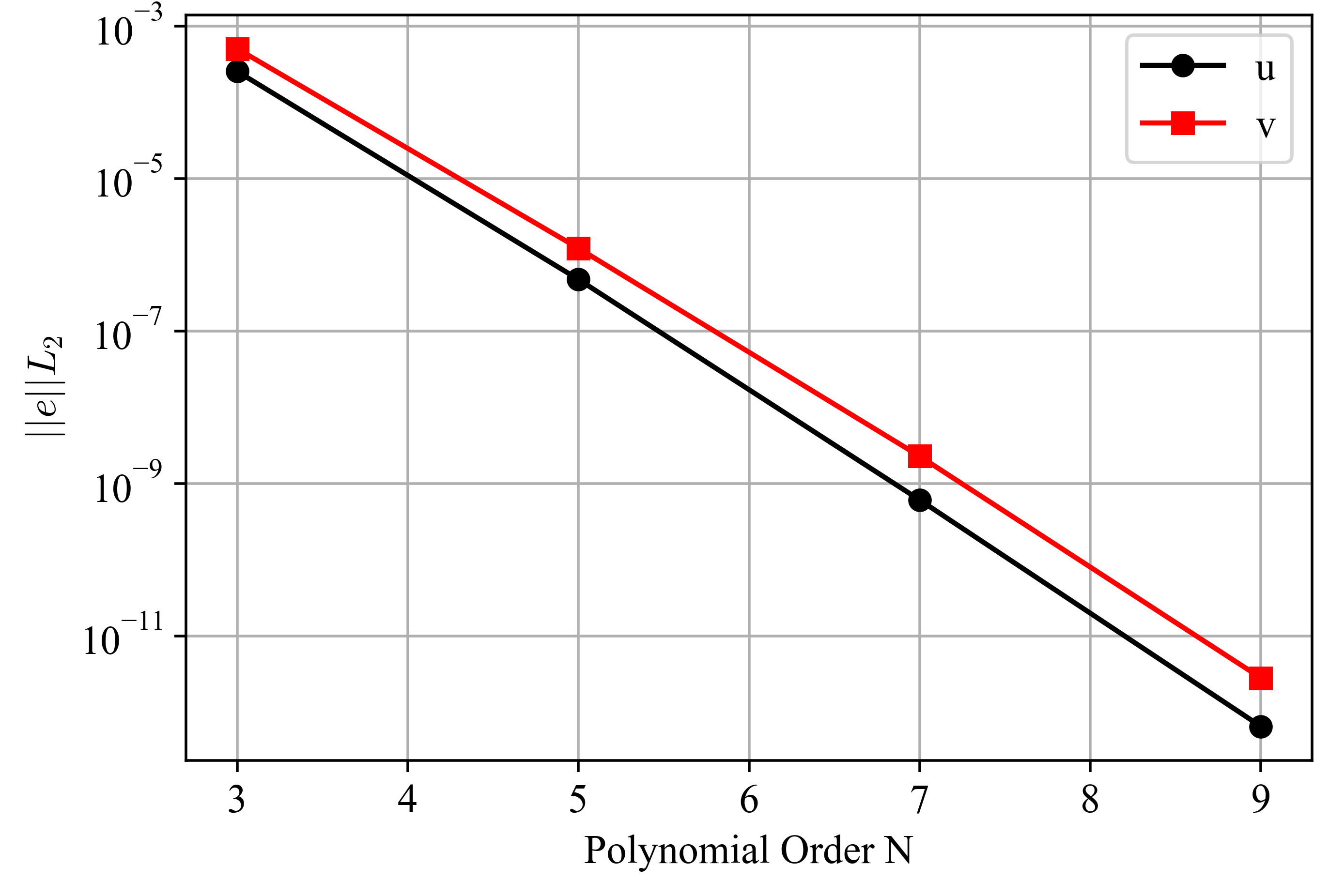
Figure 1: Volume-integrated error norms for the channel case with original geometry
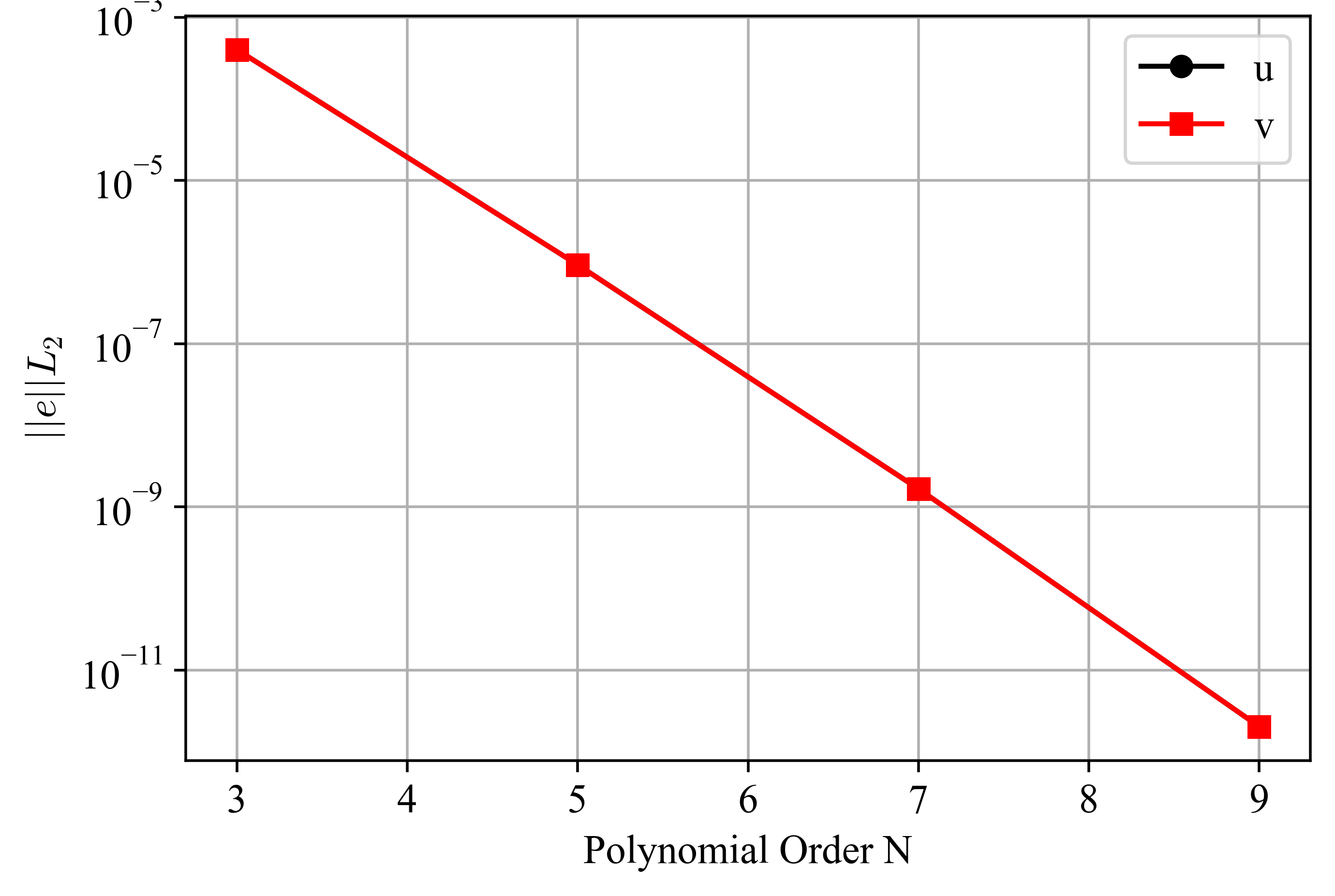
Figure 2: Volume-integrated error norms for the channel case using rotated geometry